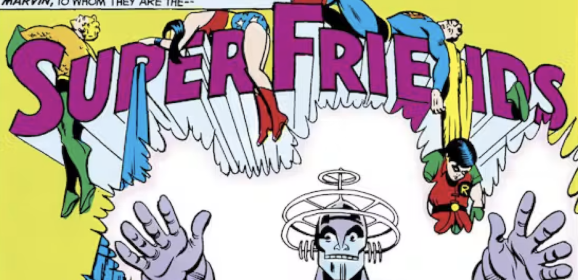
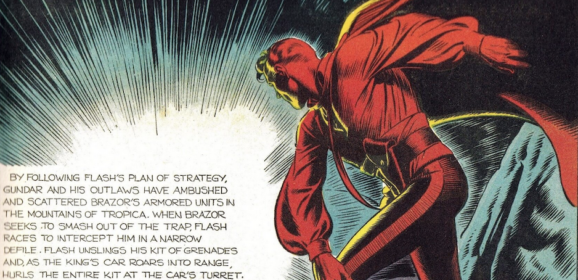
PAUL KUPPERBERG: My 13 Favorite RAMONA FRADON Splash Pages That Aren’t Solo AQUAMAN
The celebrated Mr. K pays a birthday tribute… By PAUL KUPPERBERG Ramona Fradon (October 2, 1926 – February 24, 2024) grew up in Westchester County, New York, in a household where art was very much part of the family business. Her father, Peter Dom, was a commercial lettering artist whose clients included Elizabeth Arden, Camel cigarettes, and Lord & Taylor. He also designed the typeface Dom Casual, and his work provided Fradon with an early introduction to professional illustration and graphic design. Although she never read comic books as a child, she was an enthusiastic reader of newspaper comic strips, and her father encouraged her interest in art, eventually steering her toward the Art Students’ League in New York. After graduation, Ramona married Dana Fradon, a cartoonist whose work would become a familiar feature of The New Yorker. Dana’s experience in cartooning and his encouragement helped her consider a career in the field. A friend of her husband’s, comic book letterer George Ward, suggested she submit samples of her work to publishers, which led to an opportunity at DC Comics in 1950, marking the beginning of a career that would span more than seven decades, during most of which she would be one of the few working women artists, along with Marie Severin, in the business. I never had the professional pleasure of working with Ramona myself, but I grew up on her art and long before I knew her name, I was a fan of her work on the Aquaman feature in Adventure Comics, a character she will forever be associated with from that 1951-61 run. But Ramona wasn’t just some one-trick fish! Except for a hiatus from 1965 to 1972 to raise her daughter, she followed her stint on Aquaman with several other fondly remembered features that demonstrated her artistic versatility. From superheroes and science fiction to humor and newspaper comics, she brought her distinctive combination of expressive characters, clean lines, and storytelling sensibility to everything she drew. Before her leave in the ’60s, she famously teamed with writer Bob Haney to create Metamorpho, a character whose constantly changing body gave her an opportunity to stretch her cartooning in ways the more conventional superheroes hadn’t. In an interview in Back issue #71, Ramona said, “I never had an experience like I had working with Bob Haney on Metamorpho....
Read more