
A BIRTHDAY SALUTE: The late artist was born 104 years ago…
By PETER BOSCH
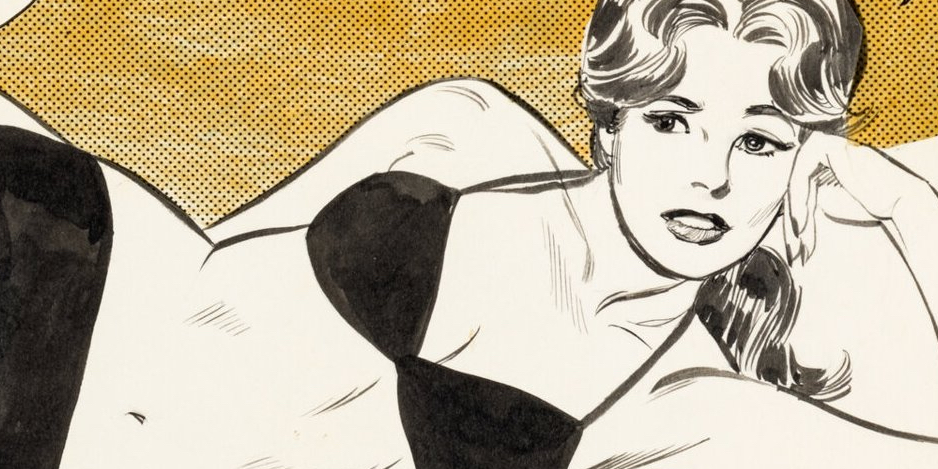
Hard as it is to believe, The Heart of Juliet Jones, one of the really great soap-opera comic strips, ran for almost 47 years. And that its co-creator, Stan Drake, was illustrating comics in one form or other for almost 60 years. For his birthday, November 9, here is a tribute to his life and work.
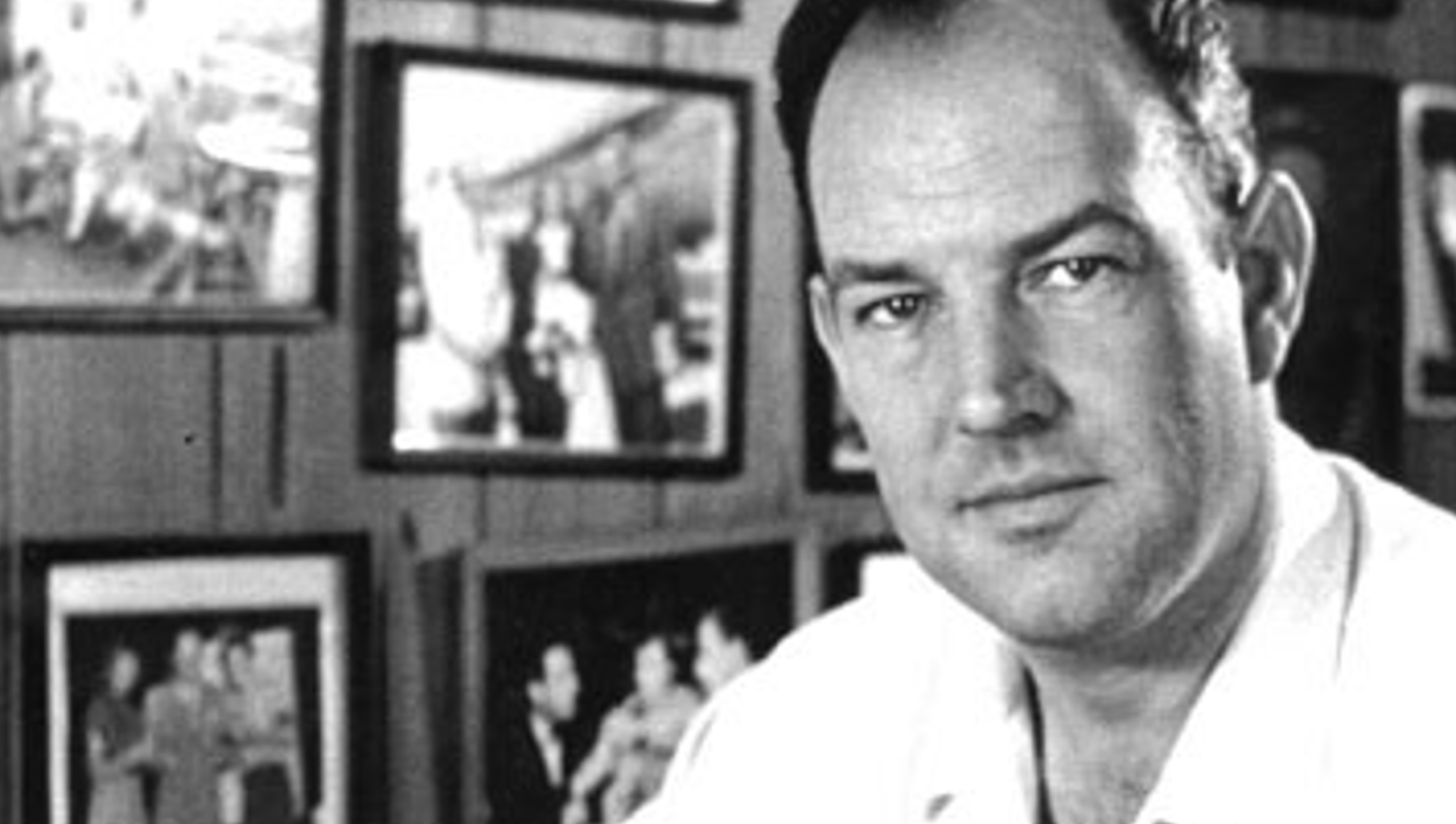
He was born Stanley Albert Drake in 1921 in Brooklyn. During his formative, early teen school years, he worked for a dollar a day as a doughnut seller off the back of a truck. On weekends, he was a movie-theater usher.
However, what he really wanted to do with his life was to be an artist. Showing promise, he not only studied at the Art Students League of New York, he sold illustrations to a publisher of pulp magazines. Not even out of his teens, he got his dream. He was officially a professional artist.
He joined Funnies Inc., a comic-book packaging group of artists and writers, and his work appeared in several early comics, including drawing the Golden Age version of the Black Widow for Timely (now Marvel).
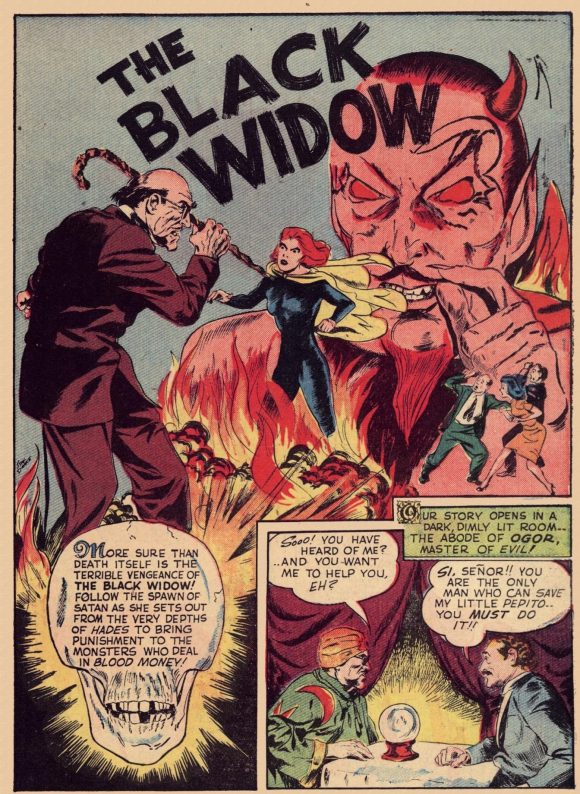
All Select Comics #1 (Fall 1943, Timely), writer unknown.
However, before his career had a chance to really bloom, Drake went into the military during World War II and his service included working on Stars and Stripes.
After World War II, Drake returned to New York where he joined an advertising firm.
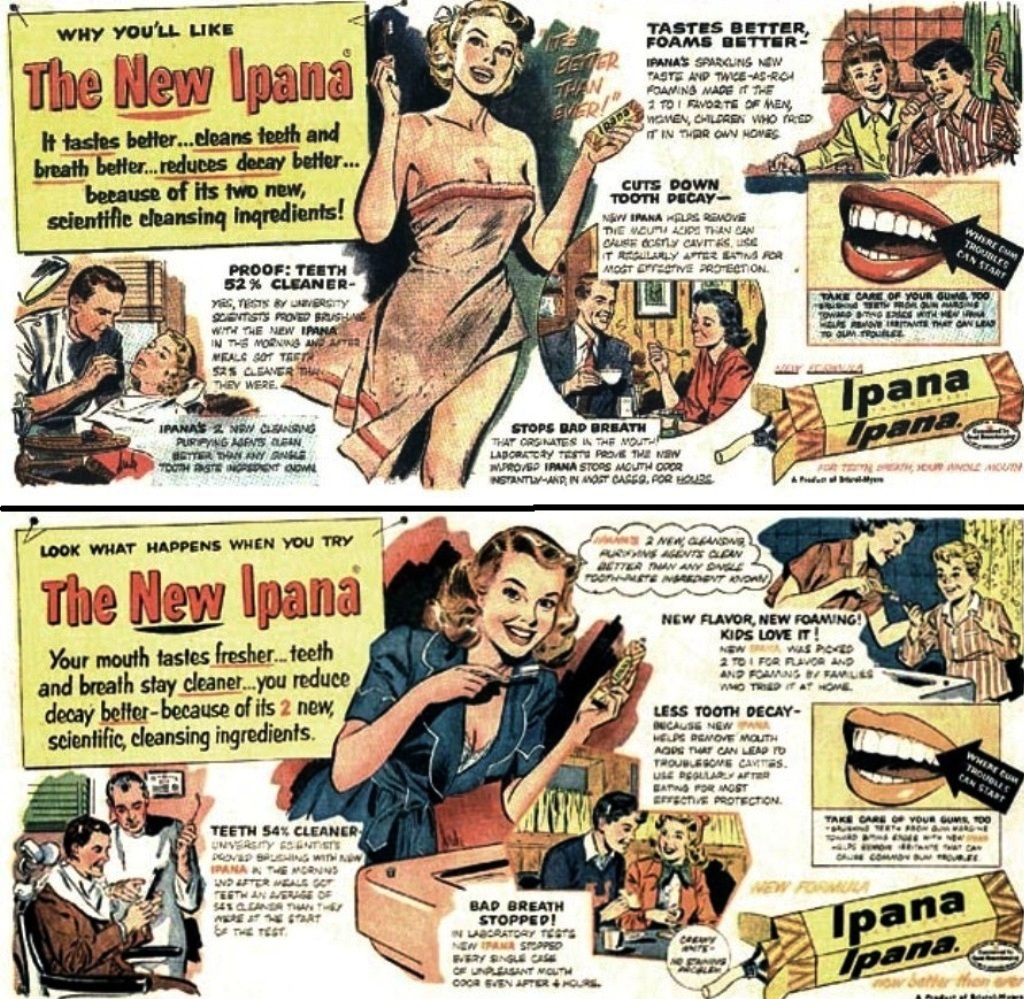
Early 1950s advertising with art by Drake.
He came to regret being so good at it because he was constantly in demand and this required daily commutes from his home to the city. The pressures of that and his job’s increasing and overwhelming workload led to a severe emotional breakdown. His friend, comic artist Bob Lubbers, told him to try getting work drawing a newspaper strip because then he could work from home and concentrate on just one regular assignment. Out of that came his being hired for The Heart of Juliet Jones.
King Features Syndicate had the idea for the strip before Drake entered the picture. They had approached Margaret Mitchell, author of Gone With the Wind, about writing a dramatic comic strip. She never got beyond doing a short treatment of it, though. The syndicate brought together Elliot Caplin, a prolific newspaper-strip writer (and the brother of Al Capp), and Drake, whose photo-realistic art style was perfect for the feature.
The Heart of Juliet Jones debuted Monday, March 9, 1953, but even before the first strip saw print, the series was a great success, having been pre-sold to dozens of newspapers across the country. (It was estimated that at its peak, it was appearing in approximately 600 daily newspapers.)
The strip’s two main characters were sisters Juliet and Eve: Brunette Juliet was the staid one, while blonde Eve was a wildcat, denying the strict confines of society’s rules.
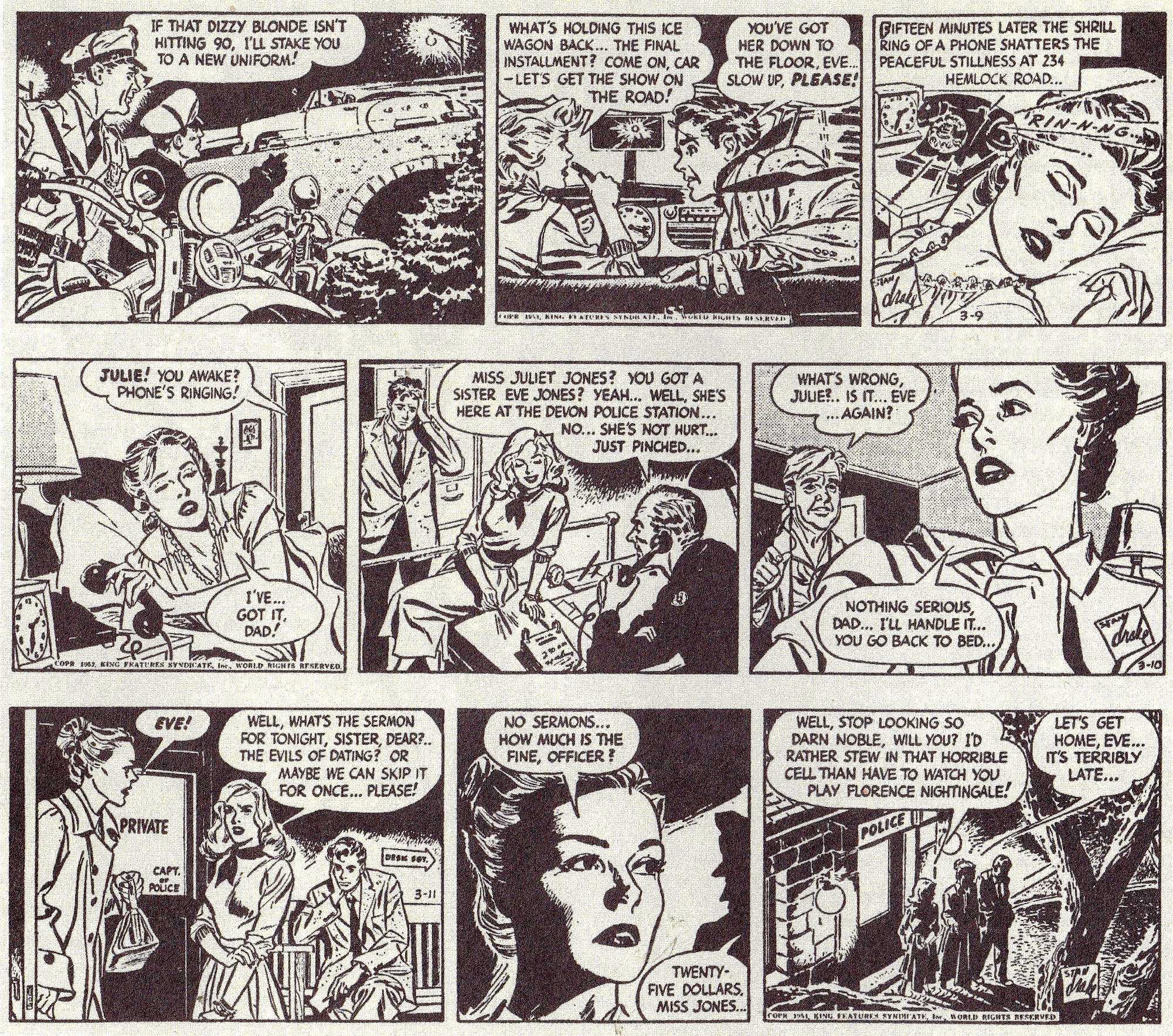
The first three daily strips of The Heart of Juliet Jones, March 9-11, 1953. Script by Elliot Caplin. (King Features Syndicate).
Over the years, Eve would remain adventurous but more appreciative and loving of her sister. (At one point, years later, when a crazy man slashed Juliet’s face, Eve put her own life in jeopardy, helping to set a trap for him by putting on a brown wig and pretending to be her sister.) Eve became many readers’ favorite character.
The Heart of Juliet Jones was so successful right from the start, it was parodied in Panic #12 (Dec. 1955-Jan. 1956, EC Comics) by writers Nick Meglin (story) and Al Feldstein (script), with art by Bill Elder:
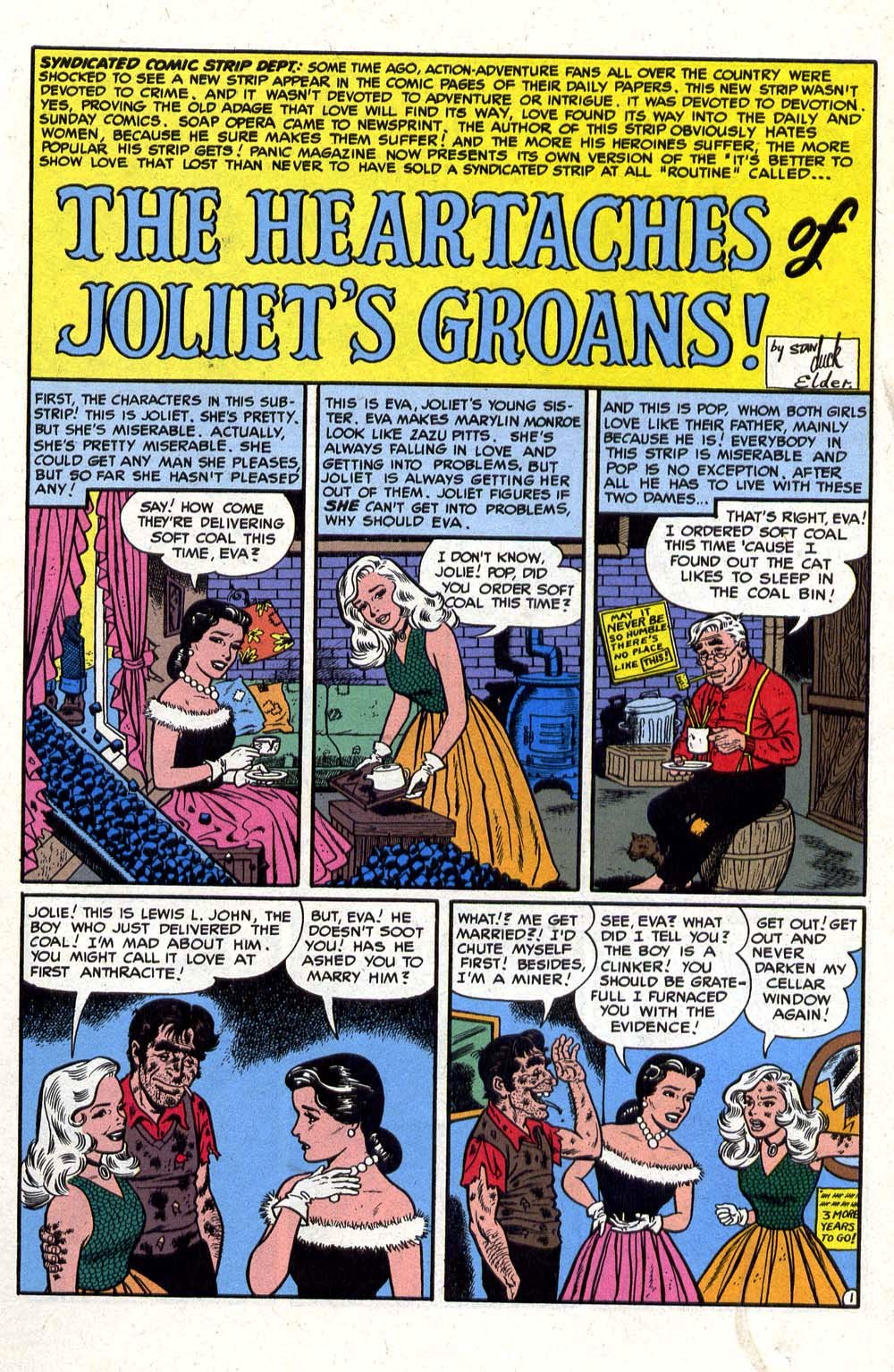
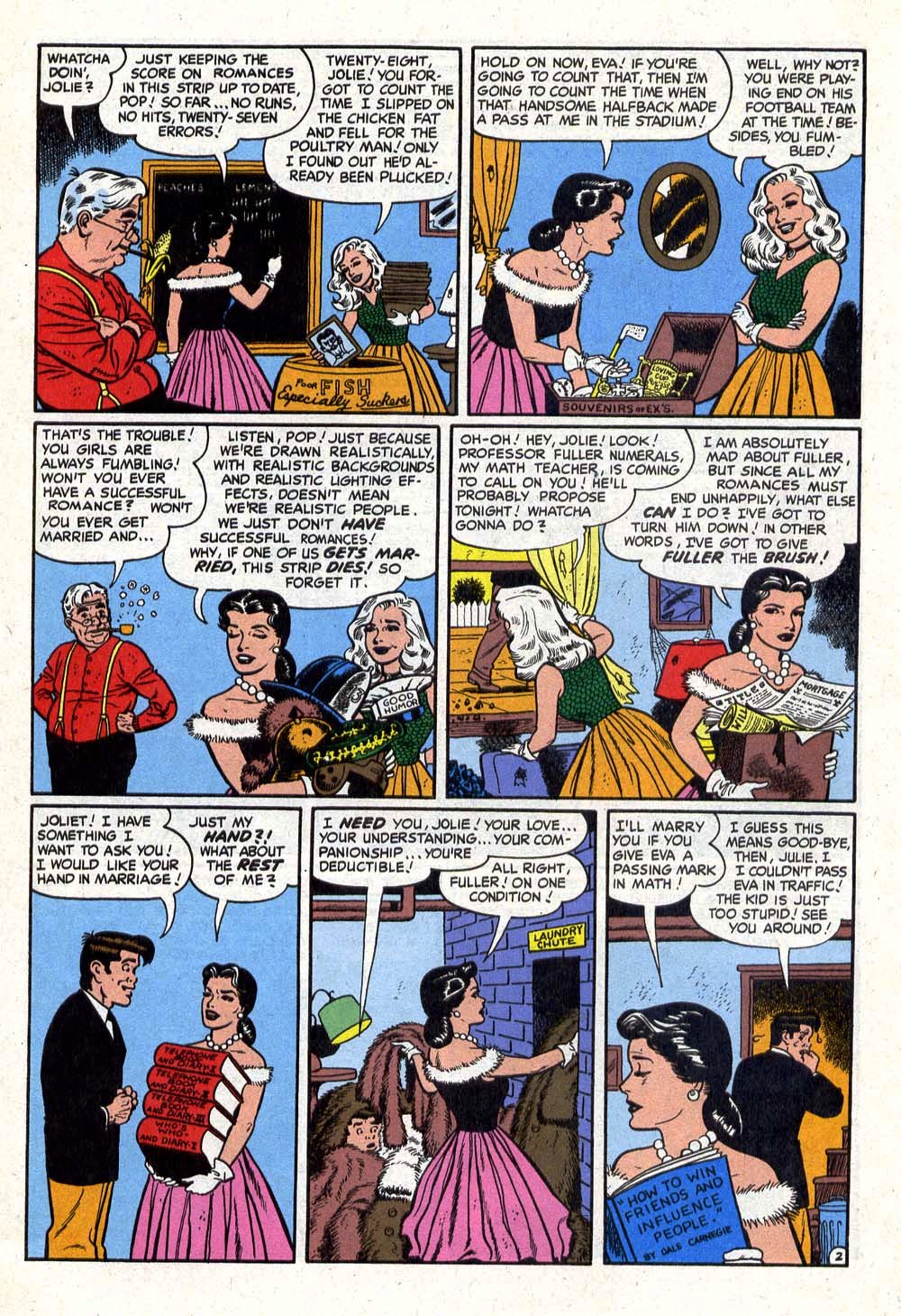
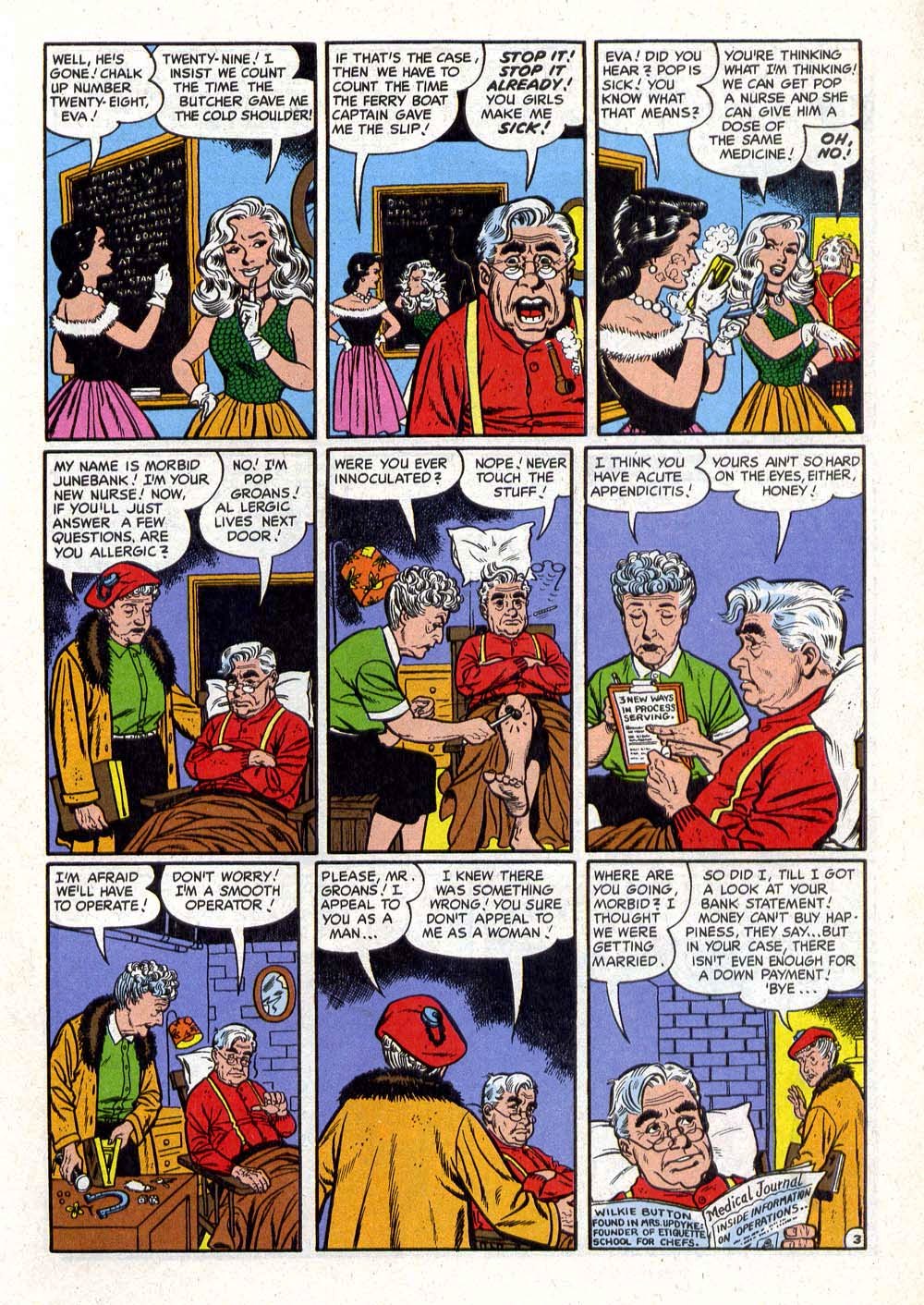
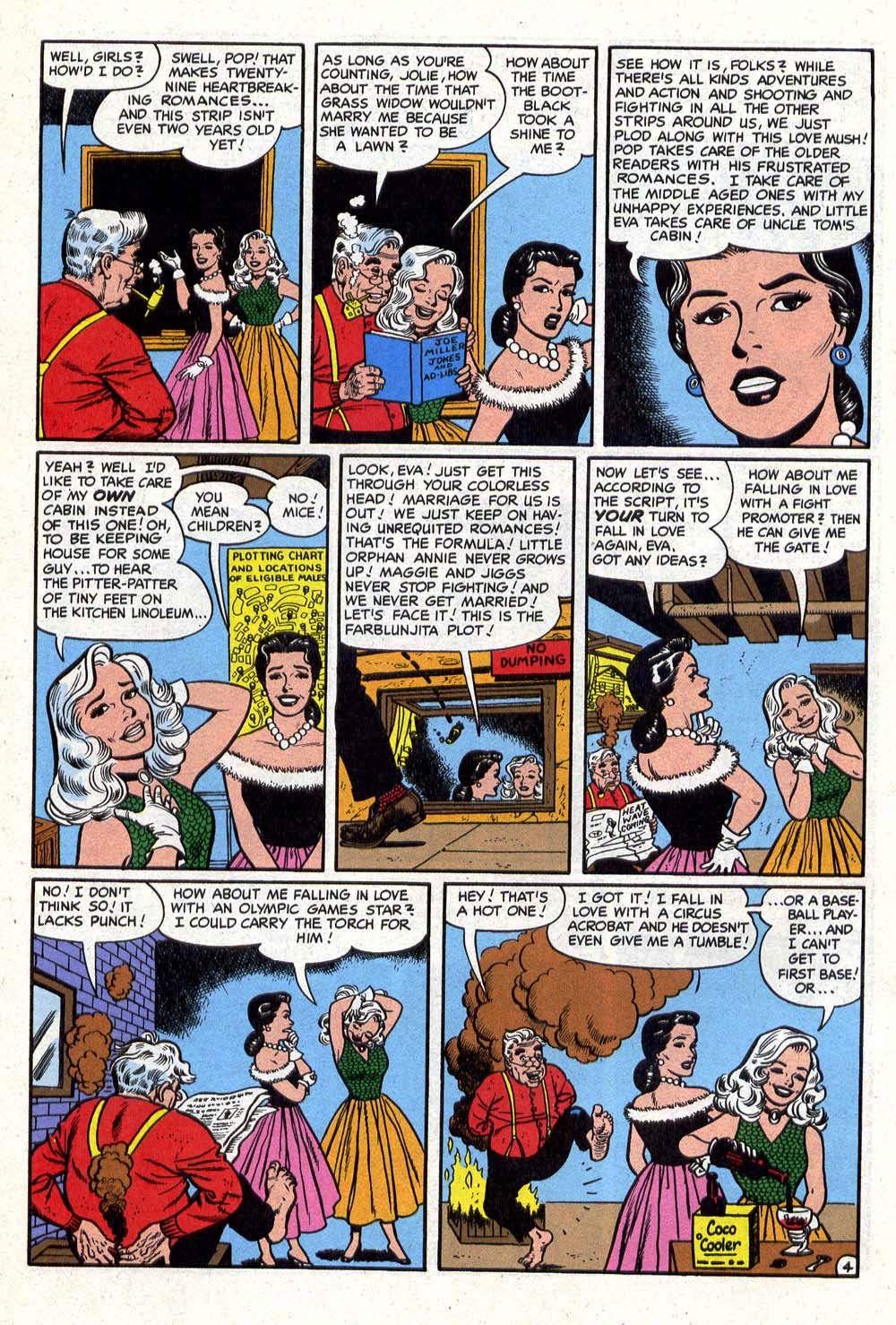
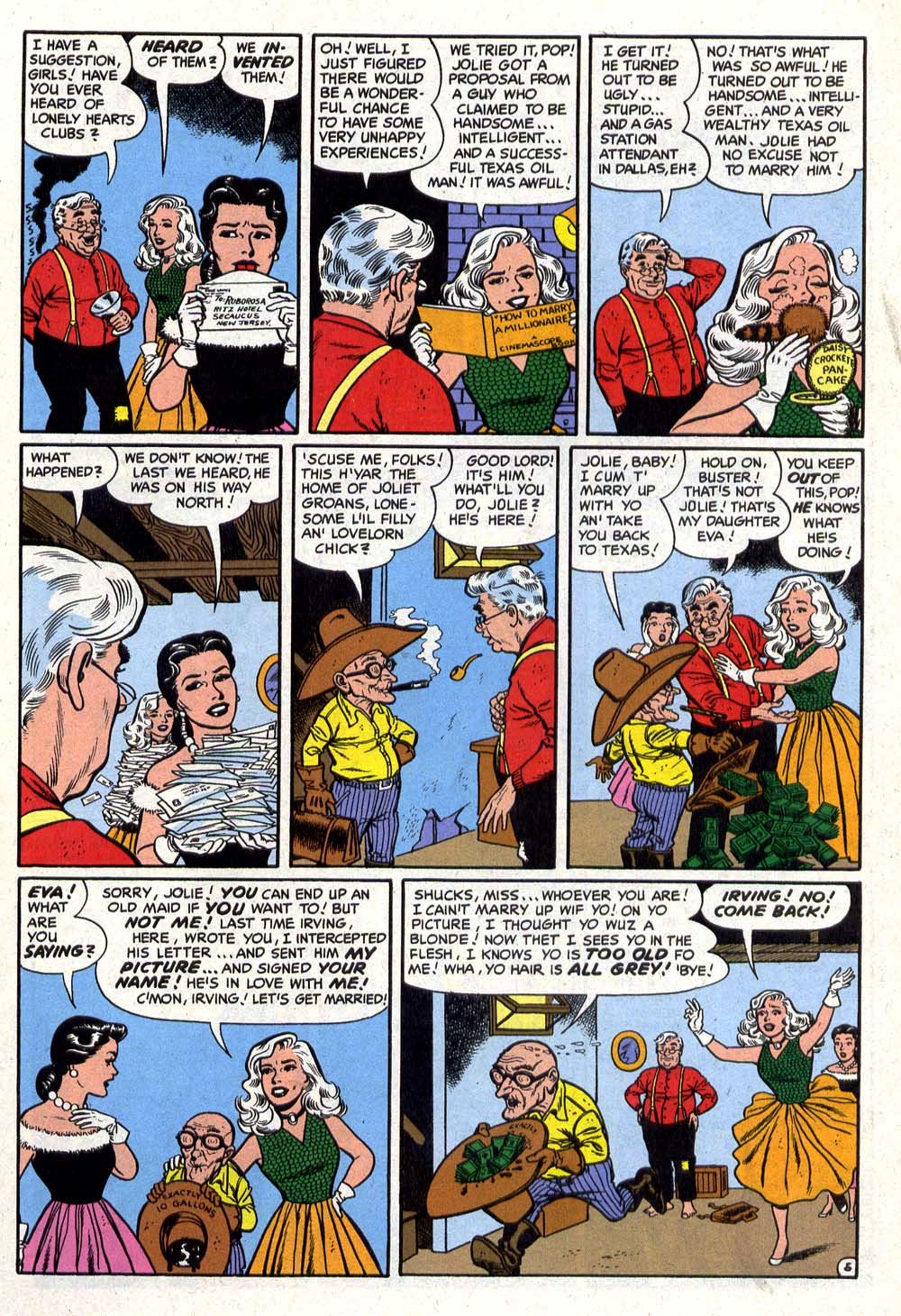
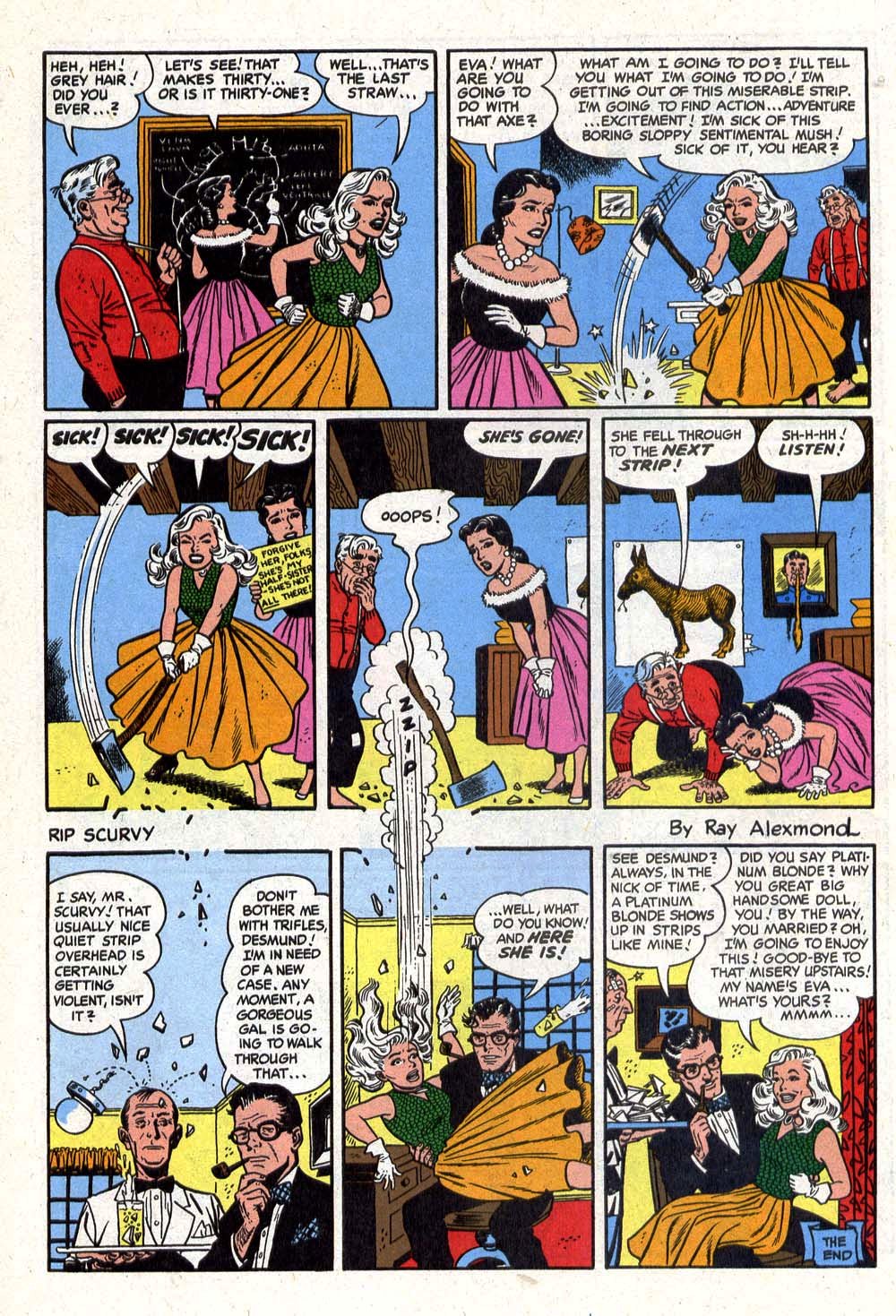
However, despite all the great success Drake was having, on September 6, 1956, one of the most shocking and devastating events in his life occurred:
The New York Times, September 7, 1956: “Westport, Conn., Sept. 6 – Alex Raymond, cartoonist, was killed today when a sports car he was driving overturned on a wet road and crashed into a tree. A passenger was injured.” The article went on to report, “Mr. Raymond was pronounced dead on arrival at Norwalk Hospital. His companion, Stanley H. Drake (sic), another cartoonist of King Features Syndicate, suffered a fractured shoulder and possible internal injuries. The accident occurred on South Morningside Drive in the outskirts of Westport.”
The rest of the article went on to give a detailed history of Raymond’s life but no more about Drake. However, Cullen Murphy, the son of John Cullen Murphy (Big Ben Bolt, Prince Valiant, and a friend of Drake’s), recounts in his book Cartoon County (Farrar, Straus and Giroux, 2017) the accident in more detail:
“Stan Drake, who was with Raymond in the car, would sometimes talk about the accident, and I heard his account myself on one occasion. It has also been written about. Raymond and Drake hadn’t known each other well, but Raymond had taken to stopping by Drake’s Westport studio, in part to see how Drake was using Polaroids to help create realistic poses and nuanced expressions. The technique was new to Raymond. Like Milton Caniff and others, he had sometimes hired live models, but usually relied on a blend of art school training and pure instinct born of long experience – he had probably drawn a human figure in published comic strips seventy-five thousand times by then.
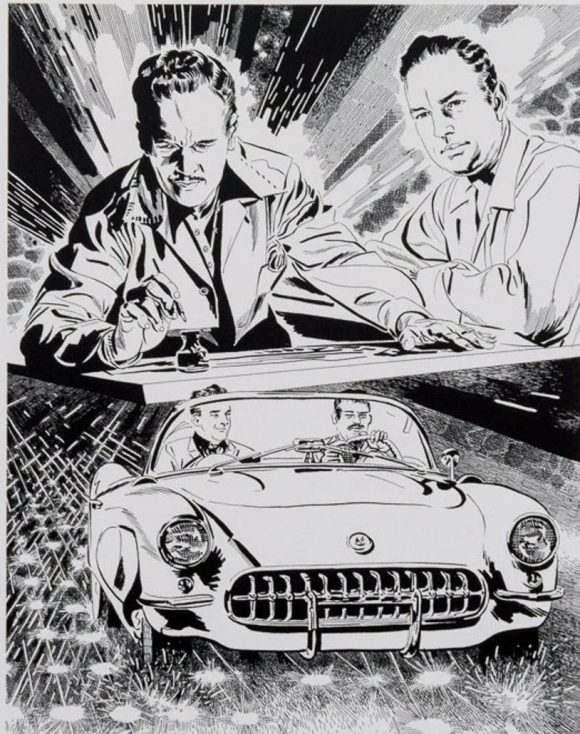
Bookplate featuring images of Alex Raymond and Stan Drake, by Dave Sim and Carson Grubaugh, for The Strange Death of Alex Raymond (Living the Line, 2021)
“Drake had just bought a white Corvette convertible, and Raymond, who owned a Bandini and a gullwing Mercedes, and raced cars for a hobby, one day asked if he could take the Corvette for a drive. He was at the wheel on a narrow road in Westport, top down, driving about twice the speed limit, but still going only about forty. Drake was in the passenger seat. A light, misting rain had begun to fall, but Raymond didn’t want to put up the top. They came to a stop sign at the crest of a hill.
“As Drake would recount the story, Raymond suddenly said, ‘Oh!’ – that was all – and the car shot forward and hung for a moment in the air. Drake remembered a pencil that had been on the dashboard seeming to float before his eyes. The car went off the road and smashed into a tree, killing Raymond instantly. No one knows exactly what caused the accident. Raymond was known to be reckless. Most likely his foot just slipped on a wet pedal and he hit the accelerator instead of the brake…
“Drake had been thrown thirty-five feet from the car. His shoulder was broken. Portions of his ears had been torn… The accident replayed in Drake’s head throughout his life. Five years afterward, he went back to the scene. Bits of metal and plastic were still embedded in the tree.”
Whether Raymond lost control of the car or whether it was a deliberate attempt at suicide has been speculated on for decades. Dave Sim, of Cerebus fame, even wrote and drew a metaphysical storyline about the tragedy in The Strange Death of Alex Raymond (2021).
Drake needed time to recuperate from the accident and to recover emotionally. Bob Lubbers, who had recommended Drake take on a newspaper strip in the first place, stepped in to draw The Heart of Juliet Jones until Drake was well enough to resume. (This was a not an unusual practice for comic artists… but it was a special thing to do from one friend to another. When John Cullen Murphy was hospitalized for pneumonia in 1960, Drake drew three weeks’ worth of Big Ben Bolt for him, which included bringing the finished strips to the hospital and picking up new scripts to draw.)
In the years following, The Heart of Juliet Jones continued to be a success, and with art like this how could there be any doubt?
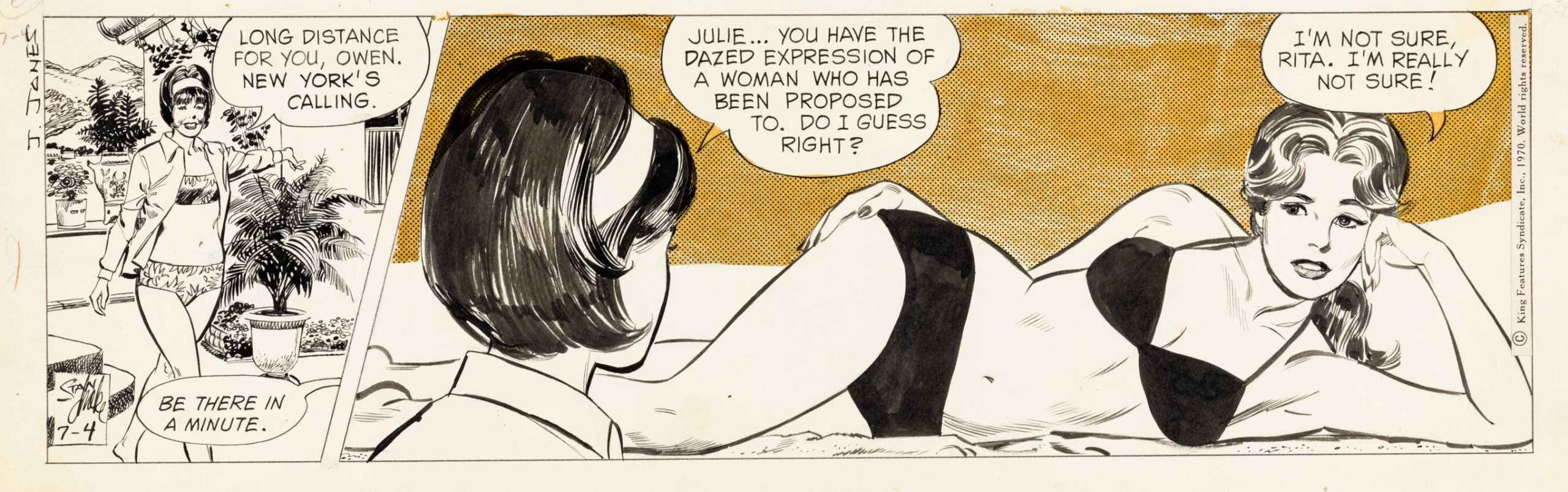
Original art for July 4, 1970. Writer: Caplin. (King Features Syndicate).
In 1967, the songwriting team of Garry Bonner and Alan Gordon penned “The Heart of Juliet Jones.” That same year, the pair also wrote “Happy Together,” which was a No. 1 hit for The Turtles.
Speaking of songs, while still working on The Heart of Juliet Jones strip, Drake also drew a 1979-80 daily and Sunday newspaper trivia feature, Pop Idols and the Disco Scene, written by Brendan Boyd.
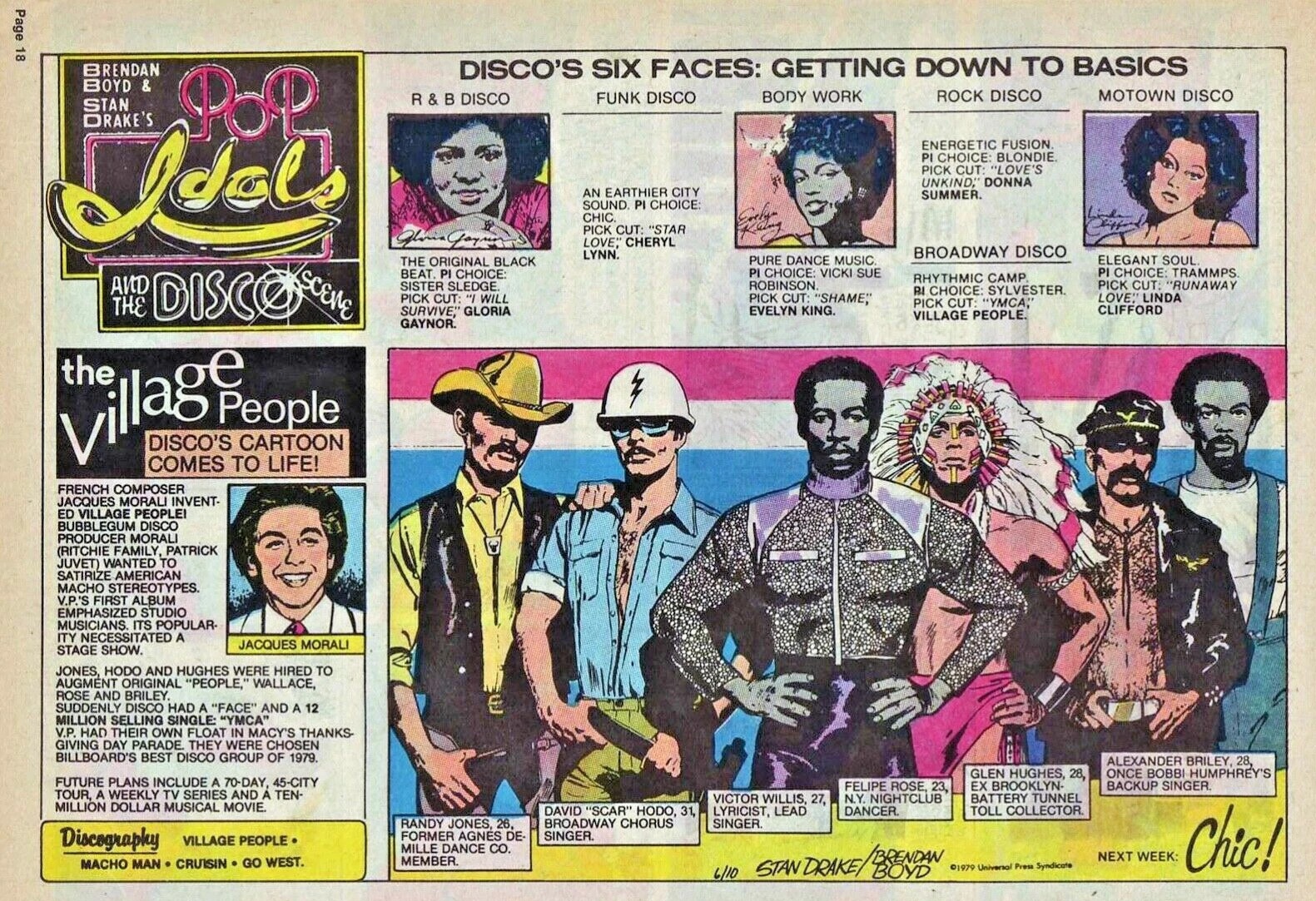
June 10, 1979. Writer: Brendan Boyd.
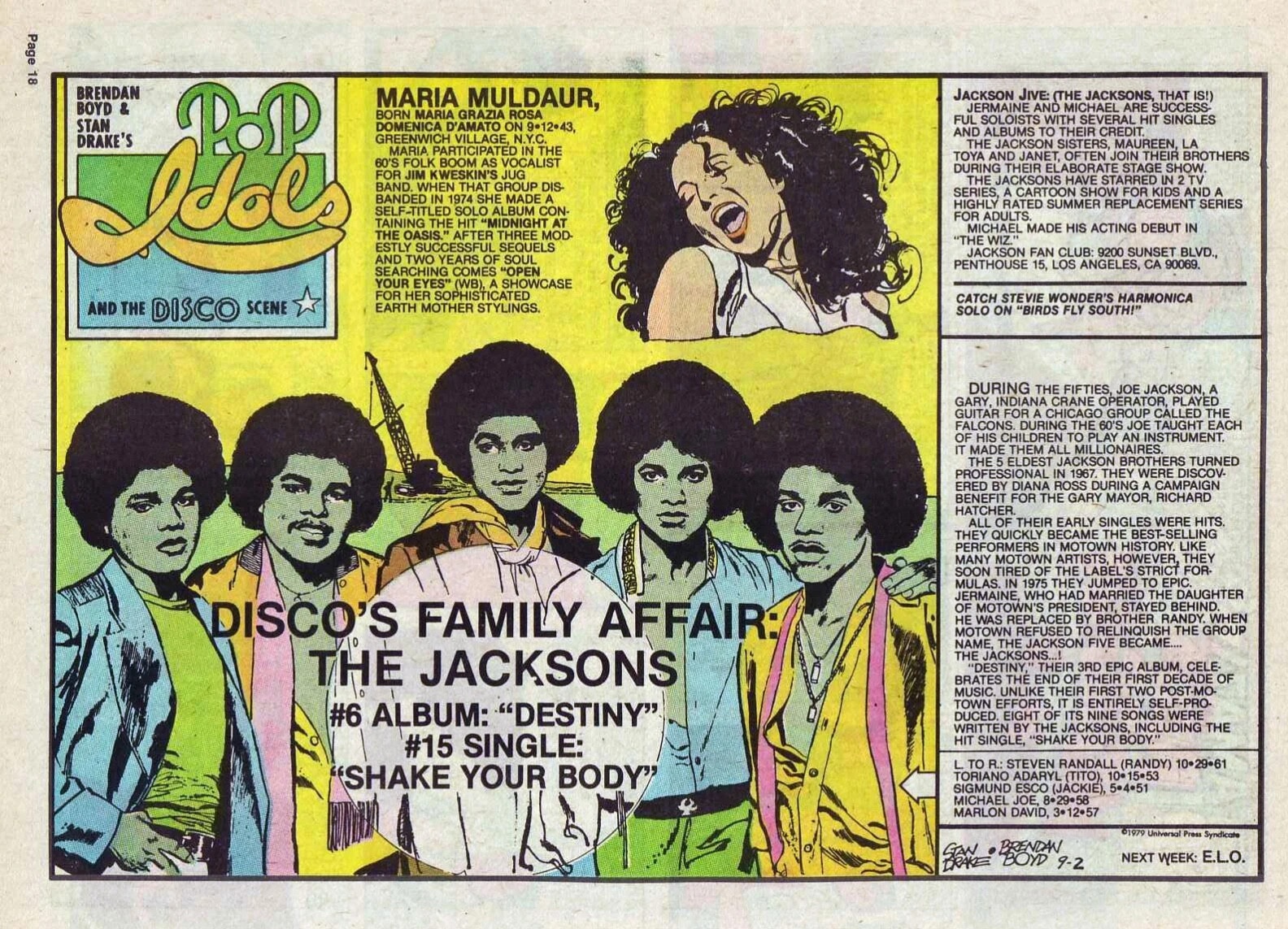
September 2, 1979. Writer: Boyd.
In the 1980s, Drake was sharing a studio with Leonard Starr and together they created Kelly Green, a black-and-white adult feature for the French magazine Pilote. The stories involved a police officer being murdered and his widow (Kelly Green) taking on dangerous assignments as a go-between, delivering payment regarding ransom or blackmail. The tales were collected together in France in five graphic novels. The first four of these were printed in English for America. The fifth volume was not released in the U.S. as a standalone graphic novel, but was included in Kelly Green: The Complete Collection (2015, Classic Comics Press) with the story centered around the San Diego Comic Con.)
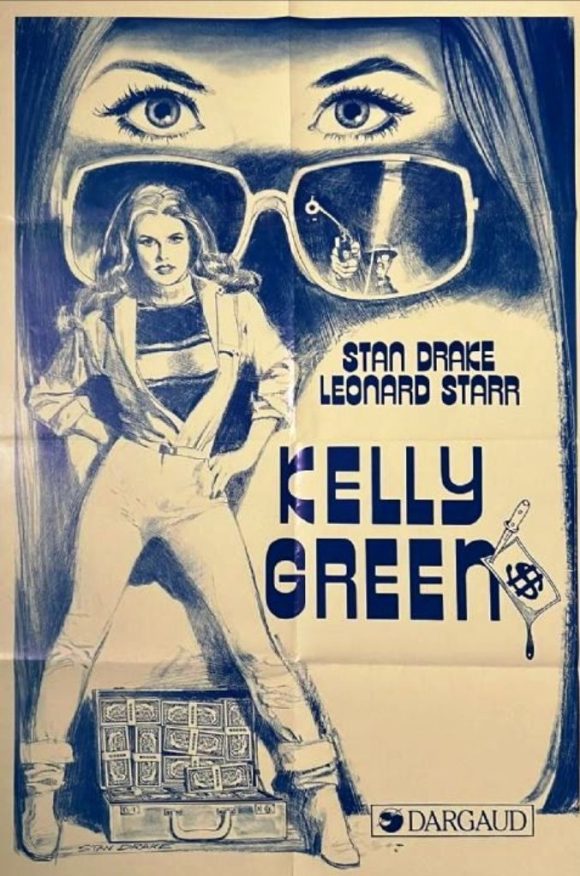
Promo poster by Drake.
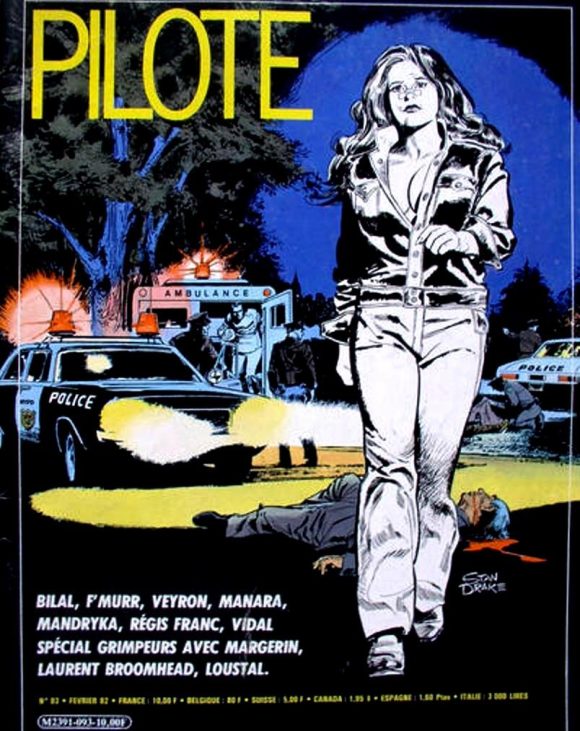
Pilote Mensuel #93 (Feb. 1982). Drake cover.
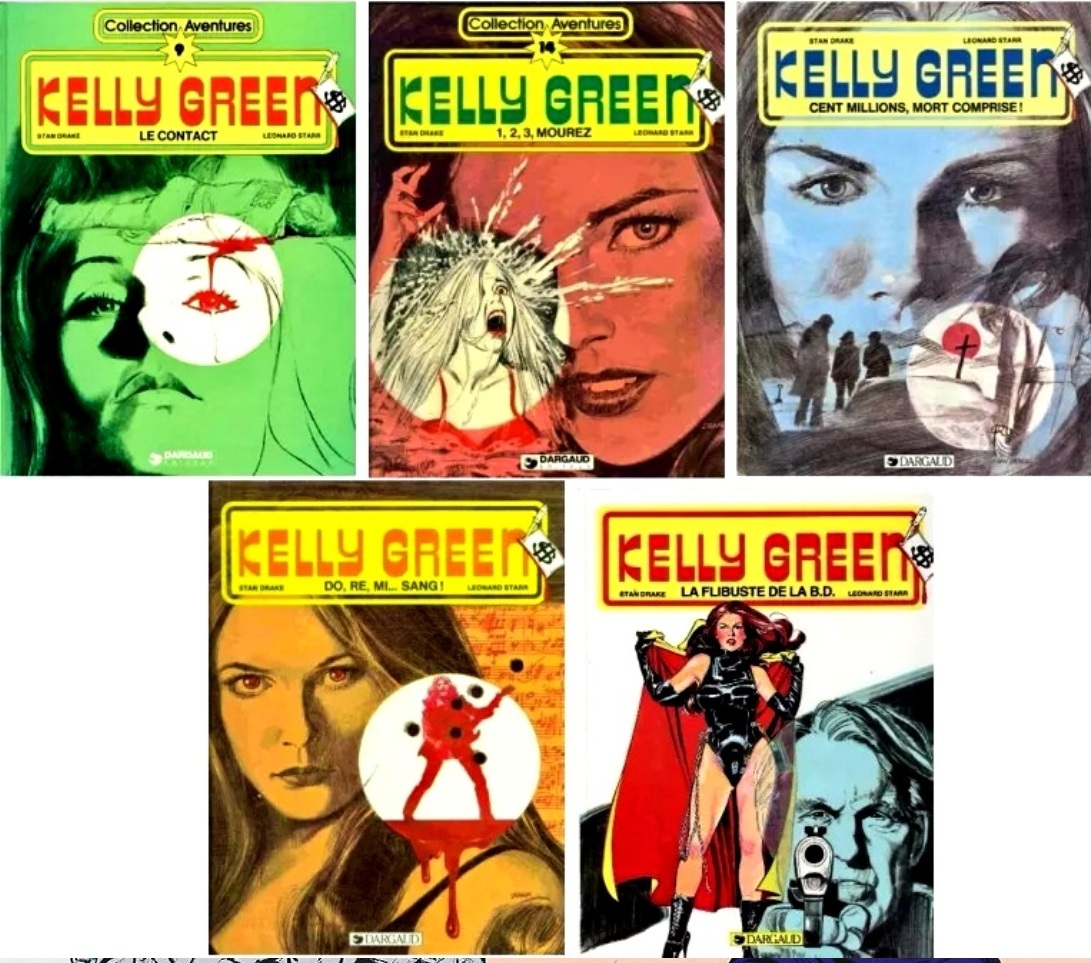
Drake covers for France’s five Kelly Green graphic novels (1982-1984, Dargaud).
Drake was still feeling prolific and added the Blondie newspaper strip to his workload in 1984.
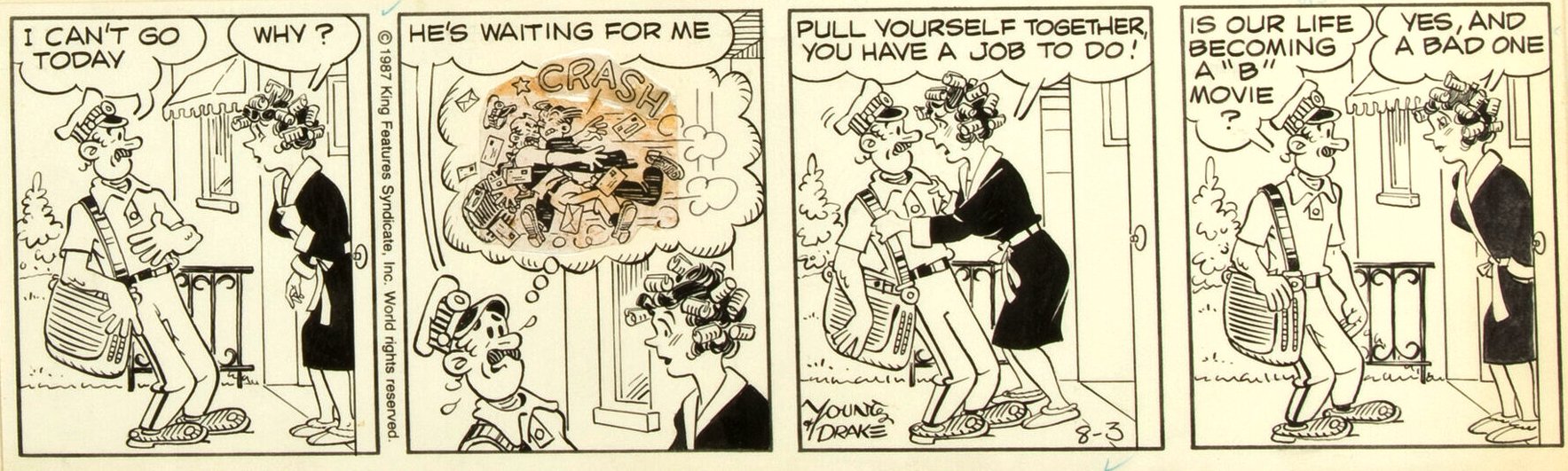
August 3, 1987.
In addition, he inked several Marvel comics in the 1980s and early 1990s.
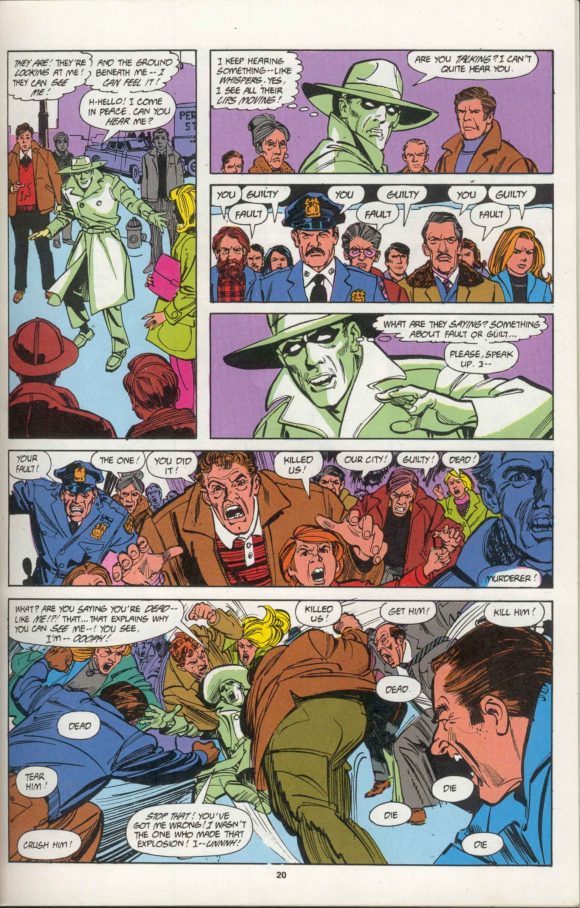
Marvel Graphic Novel: The Pitt (1987, Marvel). Script: John Byrne and Mark Gruenwald. Pencils: Sal Buscema. Inks: Drake.
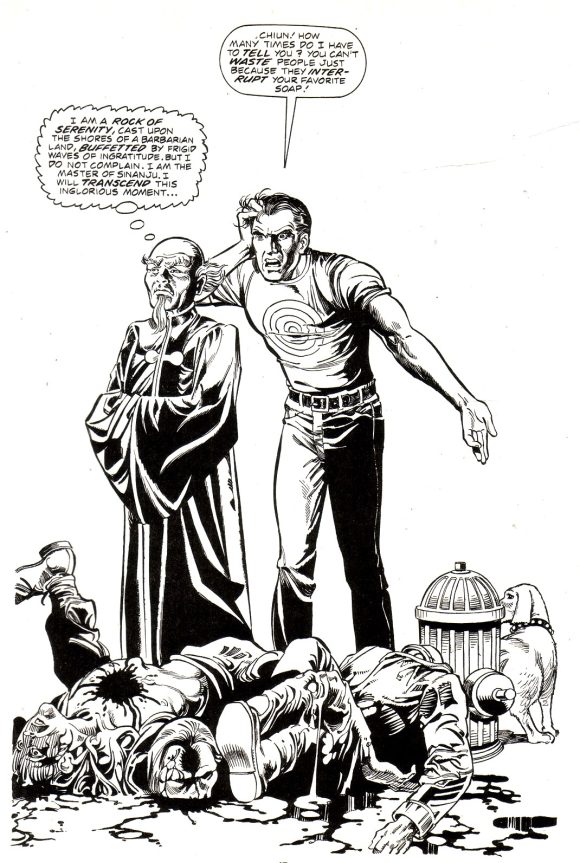
The Destroyer #6 (Mar. 1990, Marvel)
In order to concentrate on Blondie, however, he decided to leave The Heart of Juliet Jones, with his last strip appearing May 20, 1989. He turned Juliet Jones over to his assistant, Frank Bolle, who stayed with it until it ended January 1, 2000.
During his lifetime, Drake won the National Cartoonists Society Award three times (1969, 1970, and 1972) for The Heart of Juliet Jones, as well as an Inkpot Award in 1984.
He died March 10, 1997, at the age of 75. Between 1965 and 1970, he donated much of his life’s work to the Syracuse University Library’s Special Collections Research Center. This collection resides there still, and it includes personal papers and correspondence… and the original art for 1,740 daily strips and 297 Sundays of The Heart of Juliet Jones, published between 1957-1963 and 1965-1967.
Now, that’s a very rich legacy.
—
MORE
— MARY PERKINS ON STAGE: A Salute to the Late LEONARD STARR, Born 100 Years Ago. Click here.
— 13 GREAT ILLUSTRATIONS: The ‘Good Girl’ Art of BOB LUBBERS. Click here.
—
13th Dimension contributor-at-large PETER BOSCH’s first book, American TV Comic Books: 1940s-1980s – From the Small Screen to the Printed Page, was published by TwoMorrows. (You can buy it here.) A sequel, American Movie Comic Books: 1930s-1970s — From the Silver Screen to the Printed Page, is out now. (Buy it here.) Peter has written articles and conducted celebrity interviews for various magazines and newspapers. He lives in Hollywood.


November 9, 2025
I think Anthony Tollin told me about Stan Drake and Alex Raymond. Interesting article and images. I remember cutting out at least one ‘bathing suit pose’ from a Sunday strip he did. His rendering style reminded me of Neal Adams…I guess it should have been kind of the other way around if I had known more.
November 15, 2025
Adams’ art was once characterized as a mix of Drake (rendering) and Kirby (high energy).
November 9, 2025
What an unexpected pleasure it is to see you give these great tributes to first Leonard Starr a few weeks back, and now Stan Drake. Mary Perkins On Stage and The Heart of Juliet Jones are my two favourites strips (even if I discovered both long after they had finished) and Starr’s Annie, as well as Kelly Green are pretty great too.
In general, I find the “soap opera” strips fascinating (Mary Perkins is kind of a fascinating soap opera/adventure hybrid) and wish they would get some of the love and respect that the other classic serializes strips do (I can only guess that some of the reason for this is sexism due to the perception that these strips were targeted towards female readers.) For the most part, they still seem to be left out of books and even blogs that cover the golden age of serial strips, and collections of them have been few and haphazard. Which is why I’m so thankful to Classic Comics Press for releasing all of Mary Perkins (even though being out of print, one volume still eludes me due to the price it goes for now) and four volumes worth of Juliet Jones (if only sales had been better we might have had the planned complete collection of Stan Drake’s run.) It should be noted though that the Classic Comic Press edition of Kelly Green is available again in softcover and hardcover though print on demand site, Lulu, with more CCP releases set to go that route! (So maybe we’ll see Mary Perkins reprints and further Juliet Jones… sometime.)
Juliet Jones of course stands out among the other soap opera strips not just for its stunning art, but also I think for Elliot Caplin’s scripts. His dialogue is always entertaining to read, as are the elaborate ways they tried to stretch the soap opera genre in the types of stories told. But honestly, my dream would be to help put together a book that covers these types of strips in general–giving fair due as well to Mary Worth, and writer Nick Dallis’ trio of strips, Rex Morgan, Judge Parker and Apartment 3-G, which stood out with its great Alex Kotzky art. Of course three of these are still around–but due to many factors, aren’t remotely at the same level they once were (and the final years of Apartment 3-G were a fascinating example of a once great strip falling apart.) I have not read a lot of Juliet Jones’ final decade with Frank Bolle’s art, but it ended without even a proper conclusion (I assume they just stopped once Elliot Caplin got sick–a few months before his death.) Eve and Juliet were stuck on a plane that had been hijacked in those final strips…
November 10, 2025
I should add the details I’ve found out about Margaret Mitchell’s original treatment for The Heart of Juliet Jones. She died of course, in an accident in 1949, so wasn’t around when the strip started. The first storyline in the strip has Eve as an antagonist to Juliet Jones–Juliet is dating Eve’s math teacher, and Eve, who is doing badly in his class, decides to seduce him herself (ah, the 1950s when this seemed a good story idea 😉 ) The seeds of this storyline were in Mitchell’s treatment, as well as the small town setting, and the role of Pops. I think Elliot Caplin, perhaps with Stan Drake’s help (he was known to get involved in the overall stories) realized that keeping Eve as a young, femme fatale villain, didn’t leave the character open to an endless stream of storylines, and right after that first story, they VERY quickly course correct and recast Eve as the loving younger sister, a bit naive but not remotely malicious.
Still, you’d think when the strip launched they would have publicly used Mitchell’s name–Margaret Mitchell’s The Heart of Juliet Jones, or something, but maybe there were legal reasons that they didn’t.
November 15, 2025
Mitchell’s involvement is highly speculative–strongly suggested, not too well confirmed.
Alo, by the time the strip started, she was long deceased so maybe there was a dealing with an estate problem.
November 18, 2025
I admit I hadn’t thought too deeply into this (besides the fact that it seemed like vestiges of Mitchell’s ideas were gone after that initial HOJJ storyline) but that’s a very good point. Juliet premiering almost five years after Mitchell’s death, and the fuzziness about the claim in the first place, probably made it unwise to use her name (I can only imagine if the syndicate felt they could, they would have.)
November 15, 2025
A footnote to Drake and Raymond: Dave Sim followed up Cerebus with what can be called a very overdone series of speculations on and surrounding the accident. At least one speculation as based on a complete misunderstanding of US (more so Connecticut) real estate law. And some of his speculation is just baseless.
Last I know, he’s still milking that cow.
November 18, 2025
Somehow I forgot all about Sim’s book–I only ever had a chance to flip through it, and it has some nice art, as is to be expected, but… Umm, yeah. And doesn’t he connect Margaret Mitchell and her own death in a car accident (though not a car she was in…) with Raymond’s death? Oy,