
A BIRTHDAY TRIBUTE to the popular comic-strip artist…
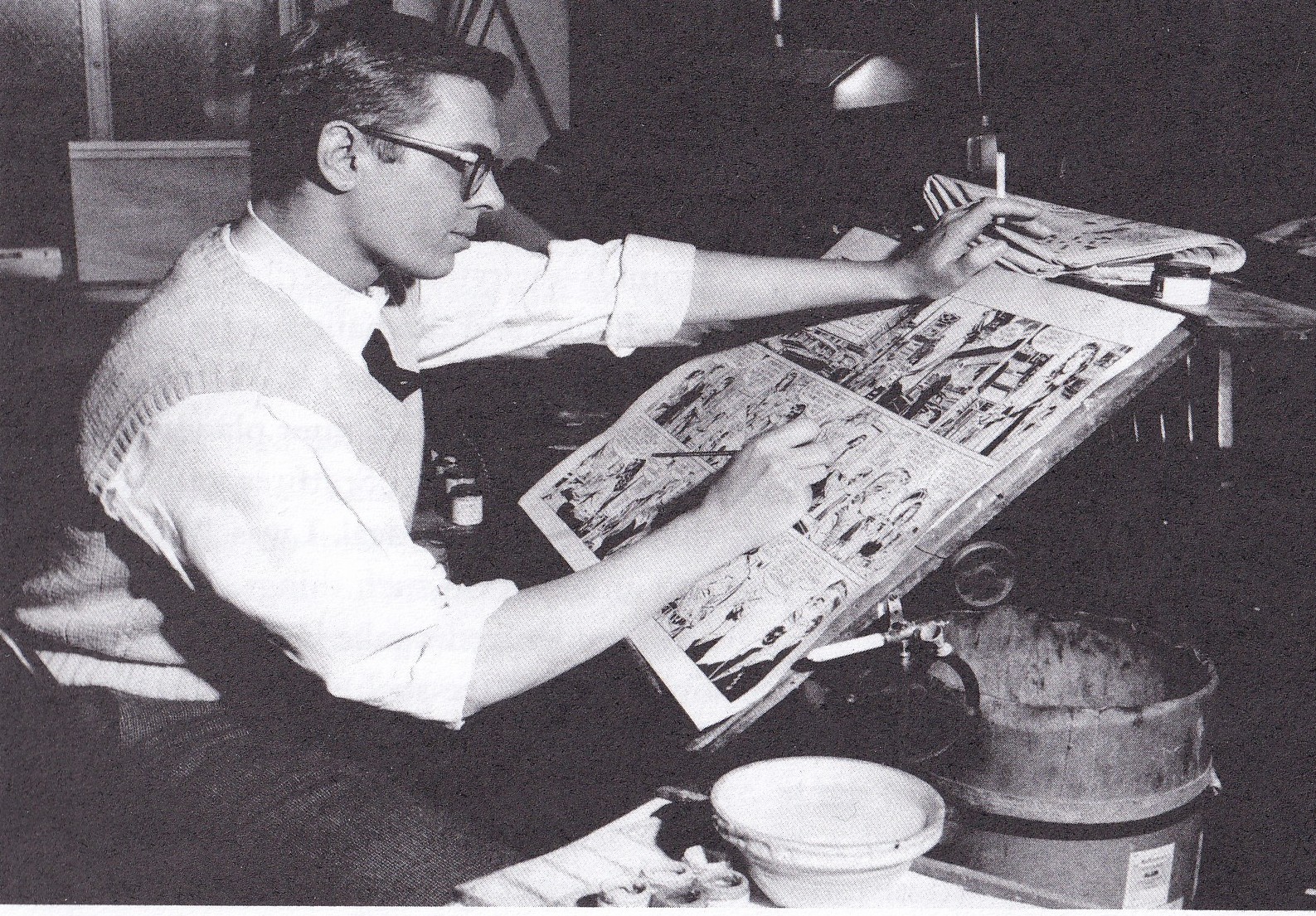
Leonard Starr working on the 2nd Sunday page of On Stage.
By PETER BOSCH
It was exactly 100 years ago that Leonard Starr (yes, that was his real name) was born on October 28, 1925, in New York City, not far from the heart of Broadway, which is where he would set his greatest work in the comic strip Mary Perkins On Stage.
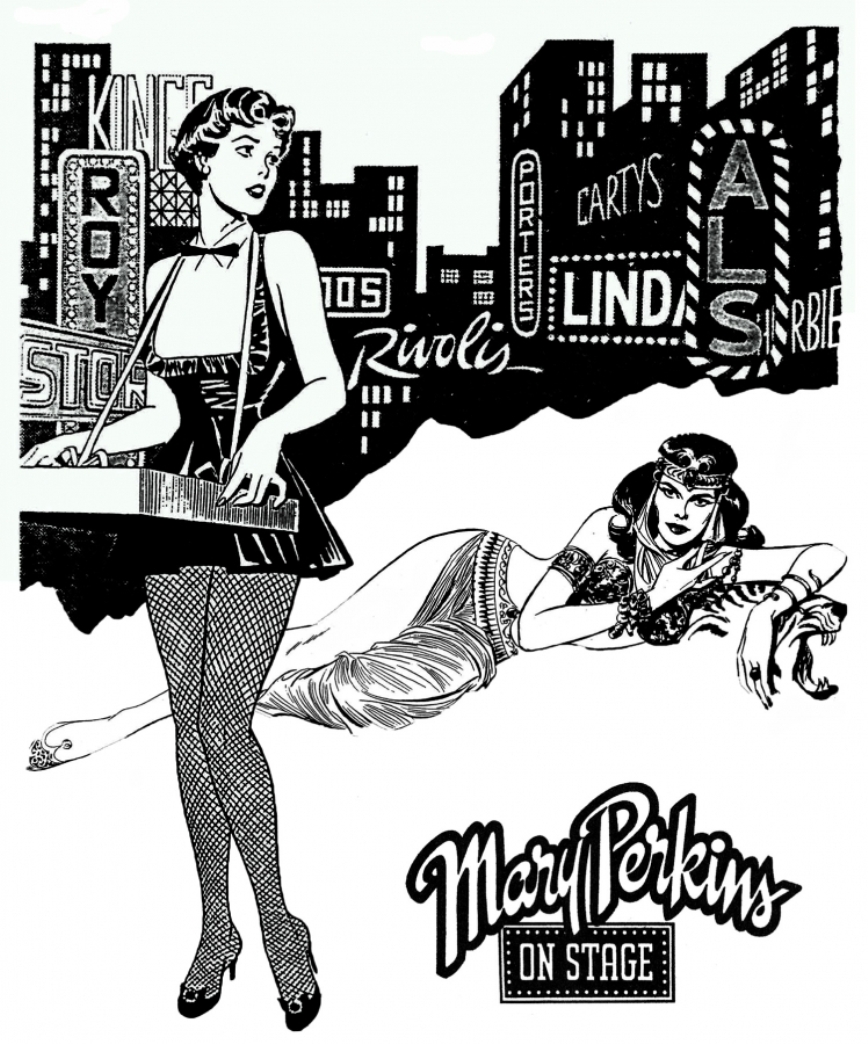
Note: On Stage, Mary Perkins On Stage, and Annie images are © Tribune Media Services.
Starr was the son of Russian immigrants who somehow managed to put enough together to send him to medical school. However, he had a penchant for drawing and was fascinated by comic strips when he was young, particularly Alex Raymond’s Flash Gordon and Milton Caniff’s Terry and the Pirates.
In agreement with his parents, he gave up the idea of continuing his medical studies and went to study at art schools. At one, he saw a notice on the bulletin board that Funnies Inc. was looking for assistants. Funnies Inc. was a company that put together all the elements of a comic book (writing, art, etc.) and packaged it for comic publishers that did not have full comic staffs. Starr applied and, by 1942, was drawing backgrounds for other artists. Jump ahead a year and he was also inking and occasionally drawing stories that appeared in a number of comics published by various companies, including Timely (now Marvel) where he worked on the Human Torch and the Sub-Mariner features.
He left Funnies Inc. and joined up for a time with the Chesler Shop, another packaging firm. It wasn’t long before he took his leave and teamed up with artist Frank Bolle to freelance their work, which appeared in a number of titles for a number of publishers. Included in his work in the late Forties and early Fifties, Starr drew The Heap and other features in Airboy Comics for Hillman Periodicals, and several romance, horror, and Westerns for Joe Simon and Jack Kirby.
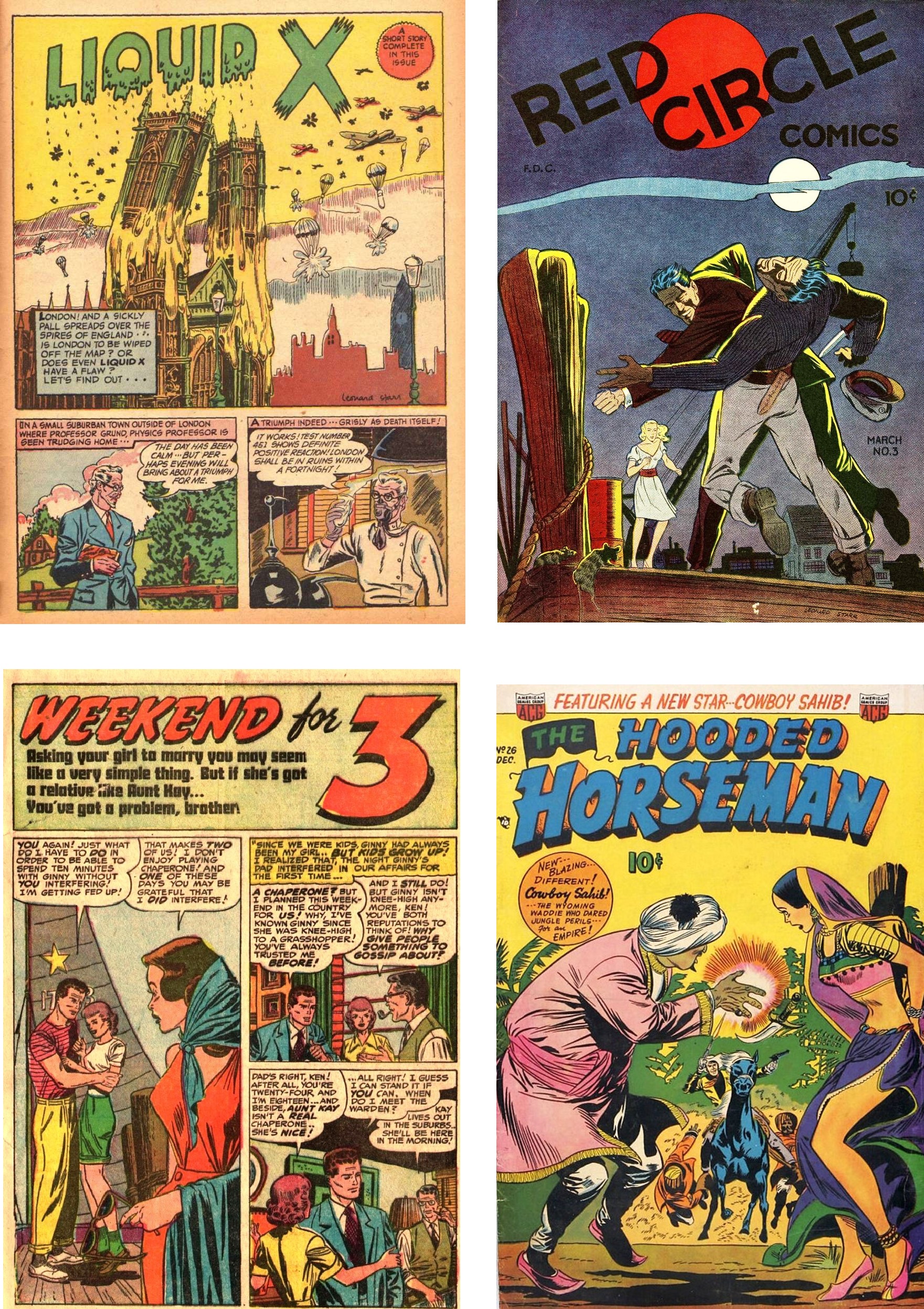
A smattering of early pages and covers by Starr. Top row (left to right): A Lucky Comics #1 splash page (Jan. 1944, Consolidated Magazines) and the cover for Red Circle Comics #3 (March 1945, Rural Home). Bottom row (left to right): Young Romance #30 splash page (Feb. 1951, Prize) and cover for The Hooded Horseman #26 (Nov.-Dec. 1952, ACG).
Starr also had a lengthy stint at DC Comics on many of their non-superhero titles during the first half of the Fifties.
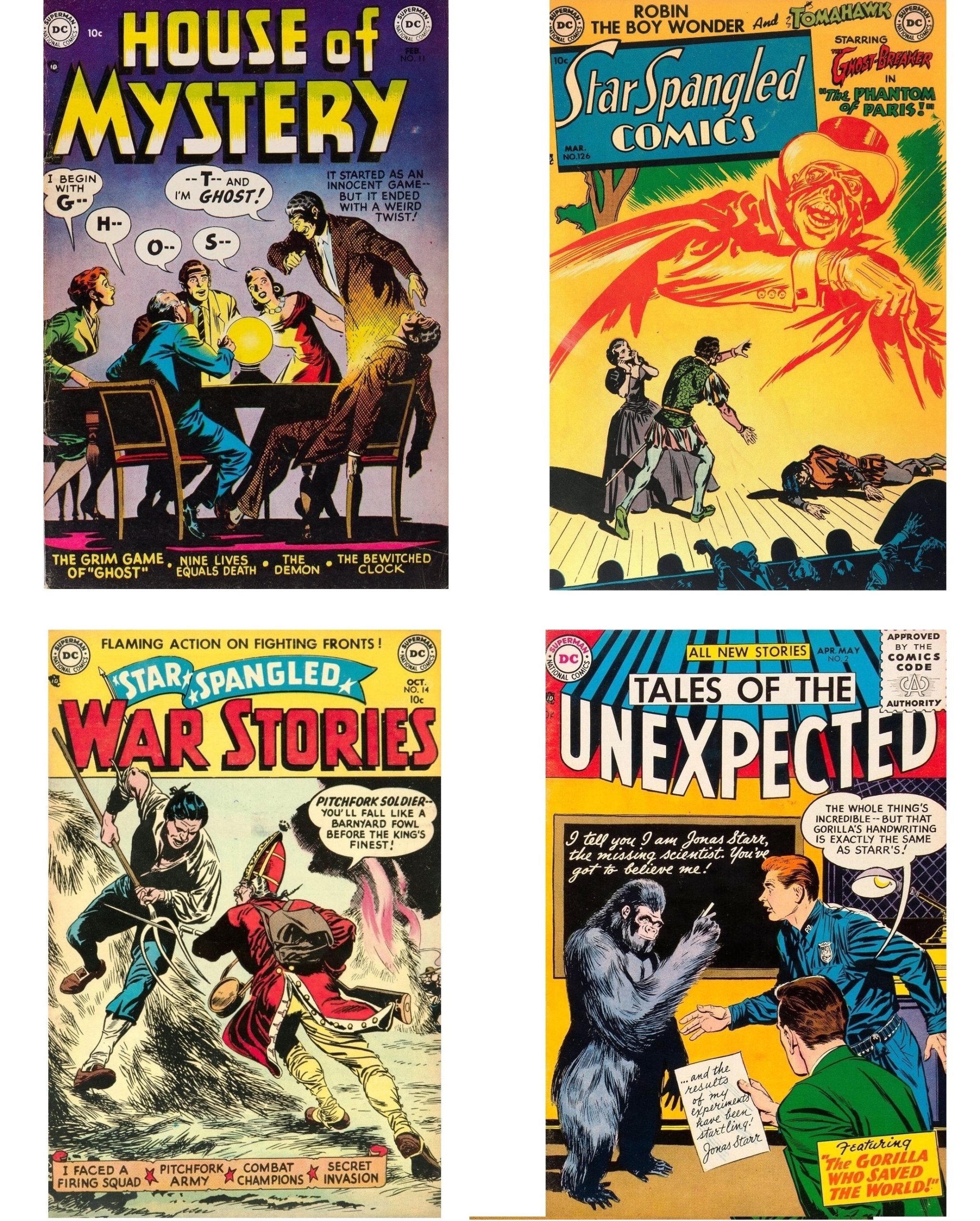
Four of Starr’s many DC covers featuring various genres. He even got to draw a DC gorilla cover! Top row (left to right): House of Mystery #11 (Feb. 1953) and Star Spangled Comics #126 (Mar. 1952). Bottom row (left to right): Star Spangled War Stories #14 (Oct. 1953) and Tales of the Unexpected #2 (Apr.-May 1956).
Starr basically left comics in the mid-1950s to work in advertising, but he soon realized his salary was not as much as he had been making from drawing comics. He decided to go back… but what he really wanted to do was create a newspaper comic strip. Starr contacted an acquaintance of his, Sylvan Byck, an editor at King Features Syndicate, and pitched several ideas to him. Byck liked Starr and his work but he didn’t buy any of features. Starr took them over to another editor, Maurice (“Mo”) C. Riley, at the Chicago Tribune-New York News Syndicate, who was most interested in one of the proposals, On Stage. He and asked Starr to work up a week’s worth of strips that he could pitch.
And then late in 1956, when Starr was sharing an apartment with fellow comic book artist John Prentice (both were going through divorces), they were shocked by the news that Alex Raymond had been suddenly killed in a car crash. It was also a shock to King Features Syndicate because they needed to find a replacement right away on the Rip Kirby strip that Raymond had been doing. Sylvan was quickly on the phone to Starr about taking over the strip. Starr said no, reluctantly, because he had hopes On Stage would soon sell. In his place, though, he recommended Prentice (who got the strip).
At the same time, Mo Riley was on a commuter train and, upon learning of Raymond’s sudden death, he knew that Byck would be calling Starr to take over Rip Kirby. Riley got off at the next train stop and sent Starr a telegram that the Chicago Tribune-New York News Syndicate was buying the On Stage strip.
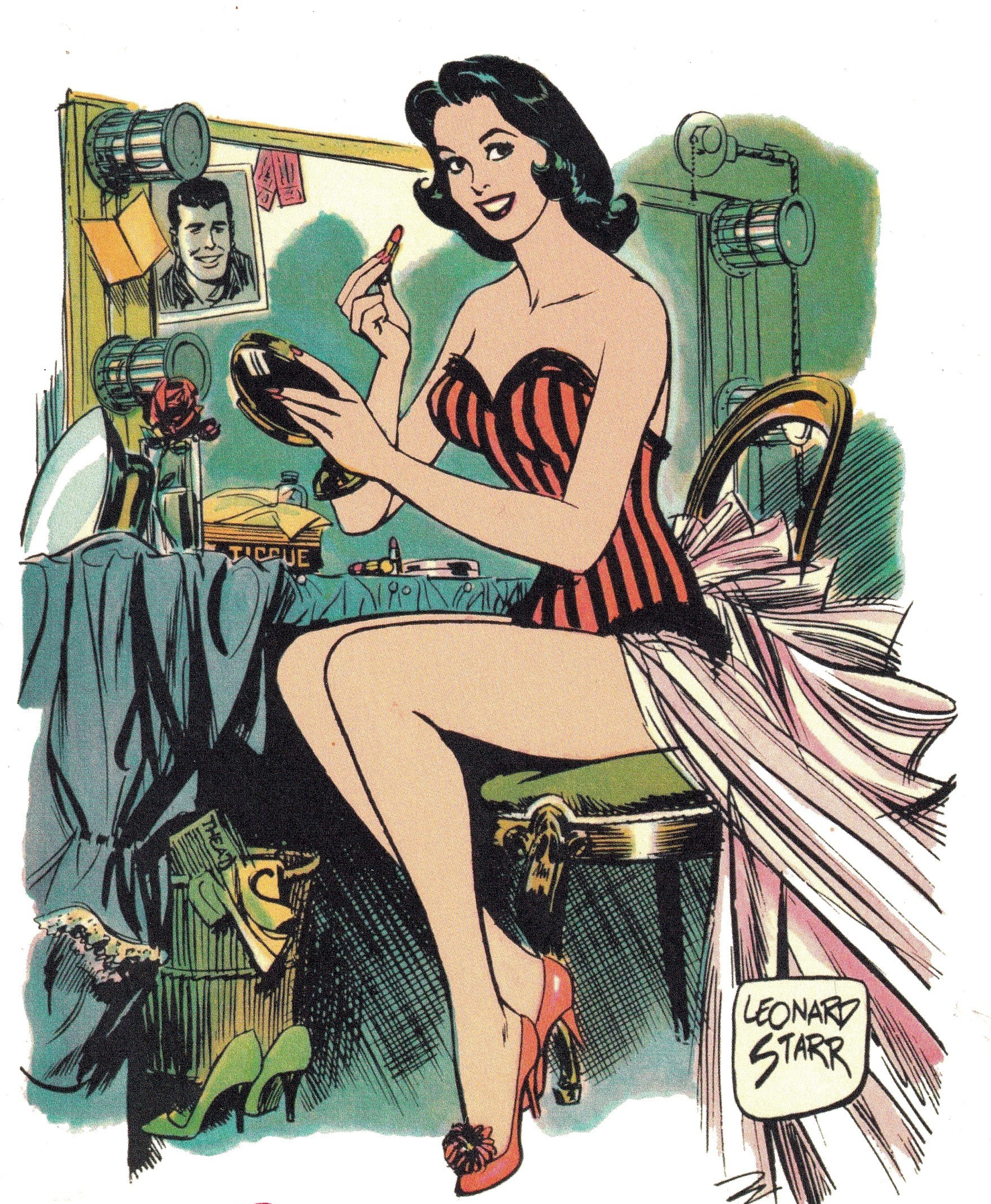
On Stage was great fun to read, and Starr had many plans for Broadway hopeful Mary Perkins. (The strip was originally called On Stage and didn’t add “Mary Perkins” to the official title until a few years later.) Readers, as well as the townspeople of Holmesfield, were right there with Mary in the debut strip on February 10, 1957, as she took on the daunting task of having to leave her beloved small hometown to head to New York City.
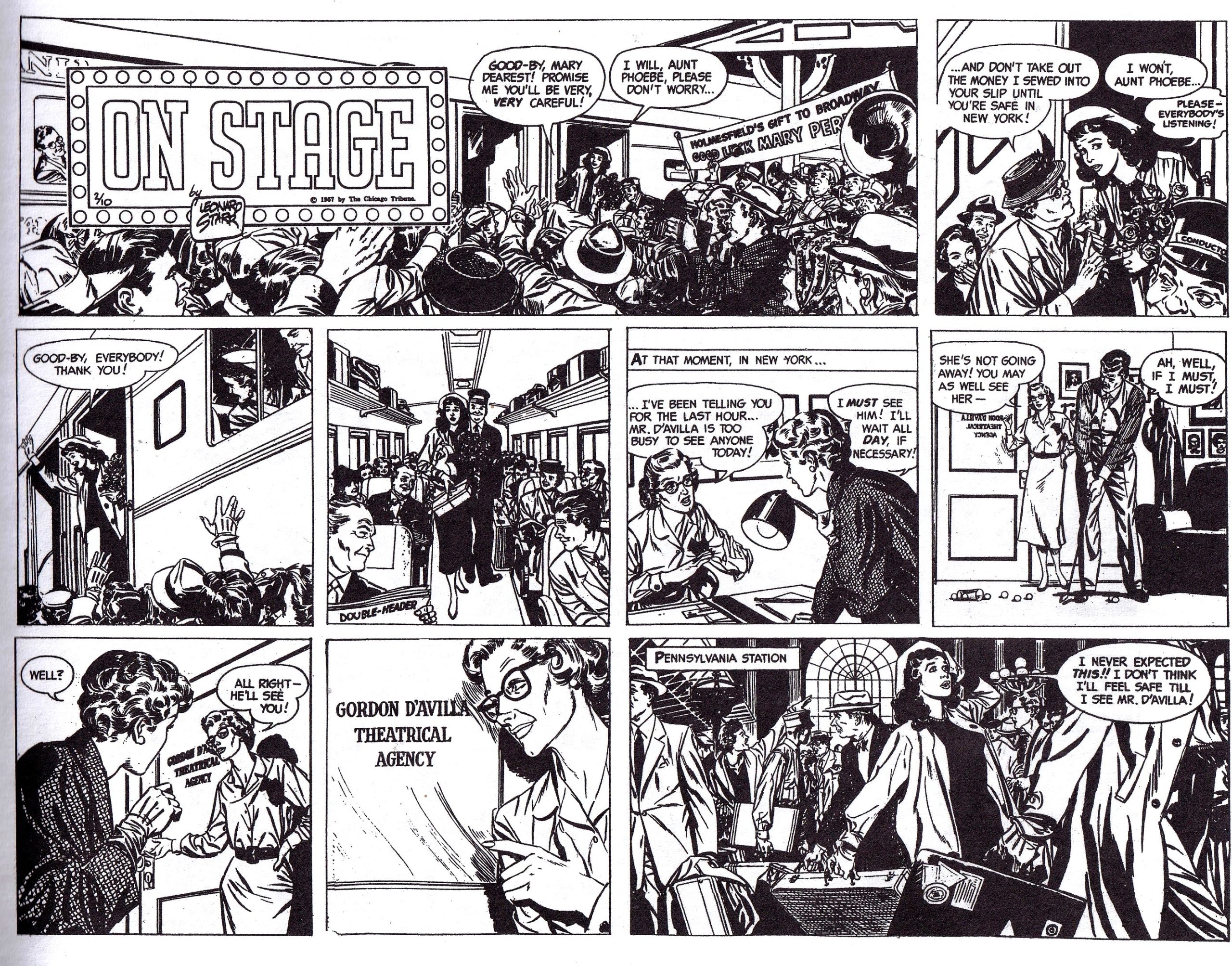
The first Sunday strip, February 10, 1957. The daily would continue with the same storyline starting the next day.
From that arrival at Penn Station, she was about to be thrust into an incredible number of fantastic adventures. Within the first year alone, Mary lost her savings to a crooked agent, was taken under the training of a former Broadway legend (clearly modeled visually on Tallulah Bankhead), became the deadly obsession of a mad stage director, initiated a film career in addition to her stage work, and was engaged to be married…twice!
The strip was filled with exceptional stories (all written by Starr), with art to match through all its years. Here are some artistic highlights from the Sunday strips:
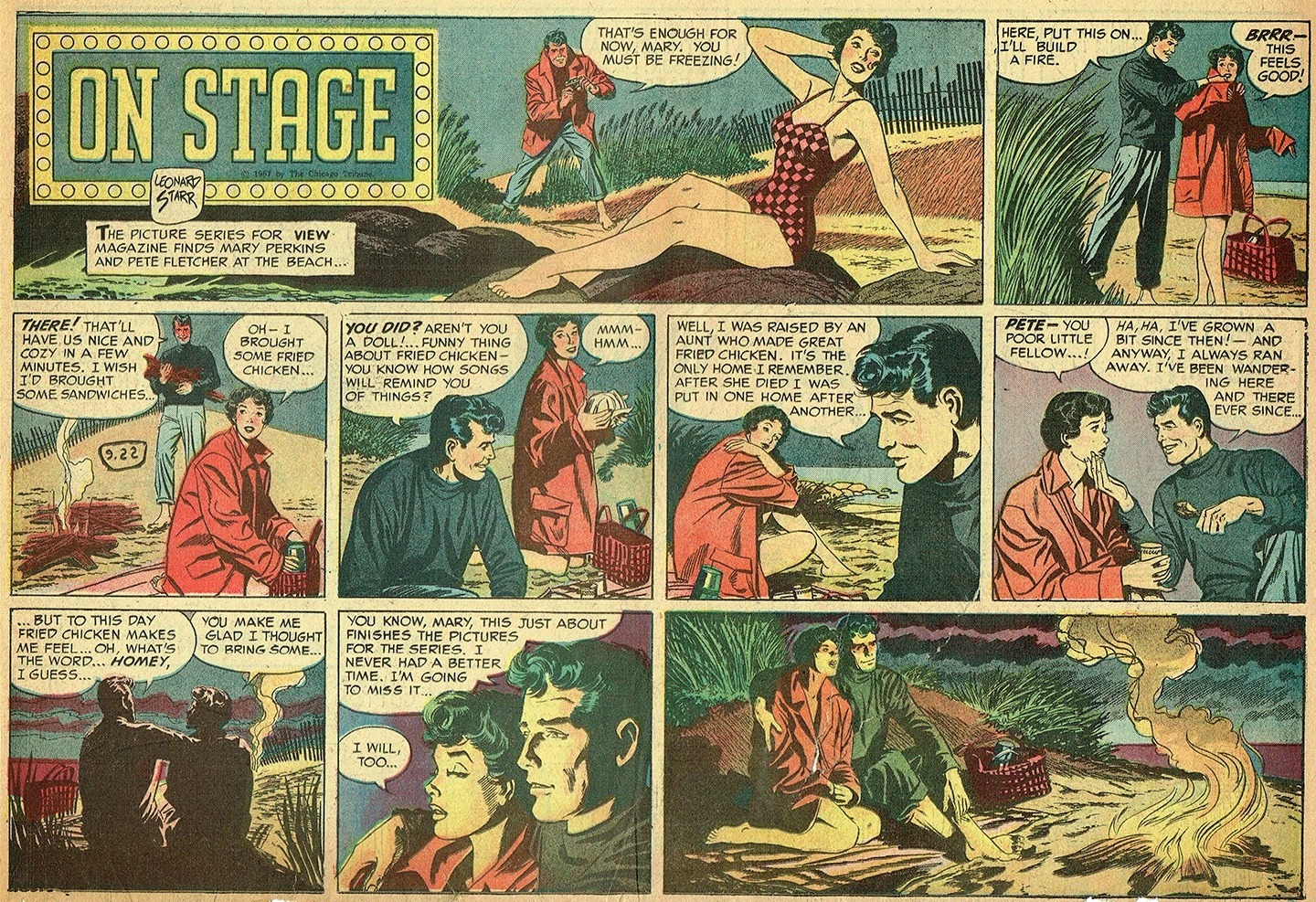
It took Li’l Abner 18 years before he married Daisy Mae, but Mary and Pete Fletcher couldn’t bear to wait that long. They were married just two years after the strip began. This Sunday is from the start of their relationship. September 22, 1957.
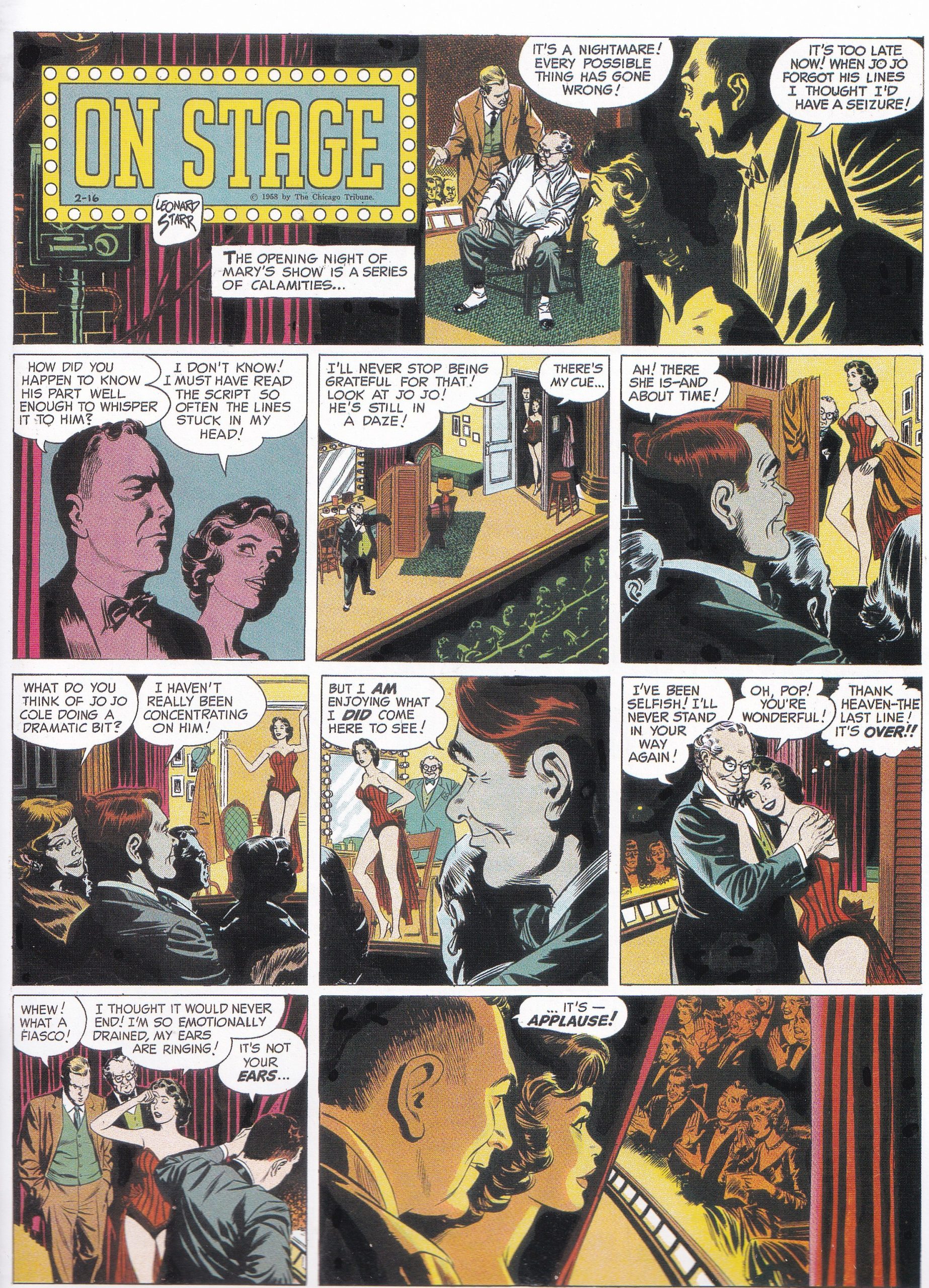
“What is it that we’re living for? Applause, applause!” February 16, 1958.
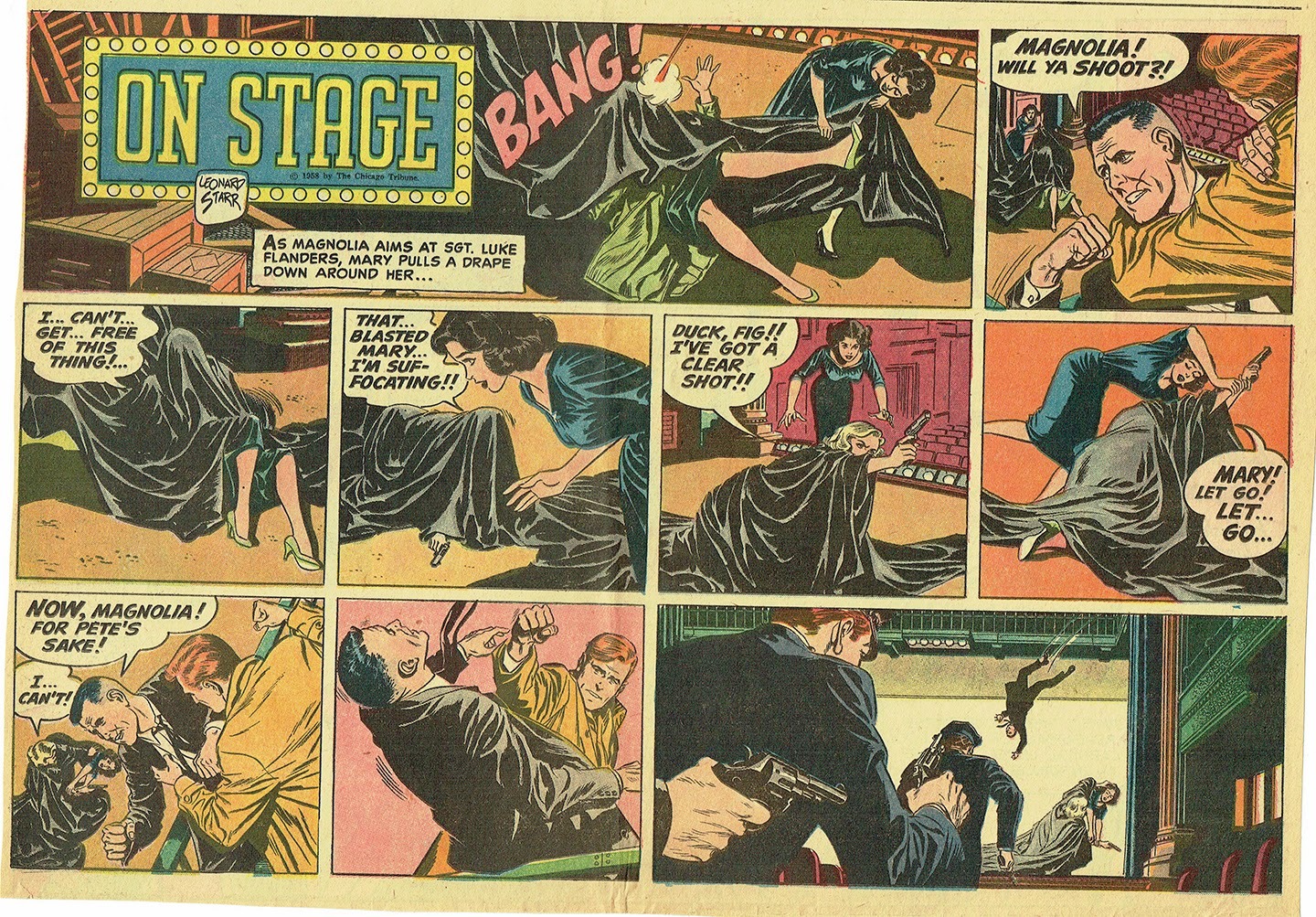
Call On Stage a soap opera strip, if you must, but when’s the last time you saw Mary Worth wrestle someone to the ground? May 18, 1958.
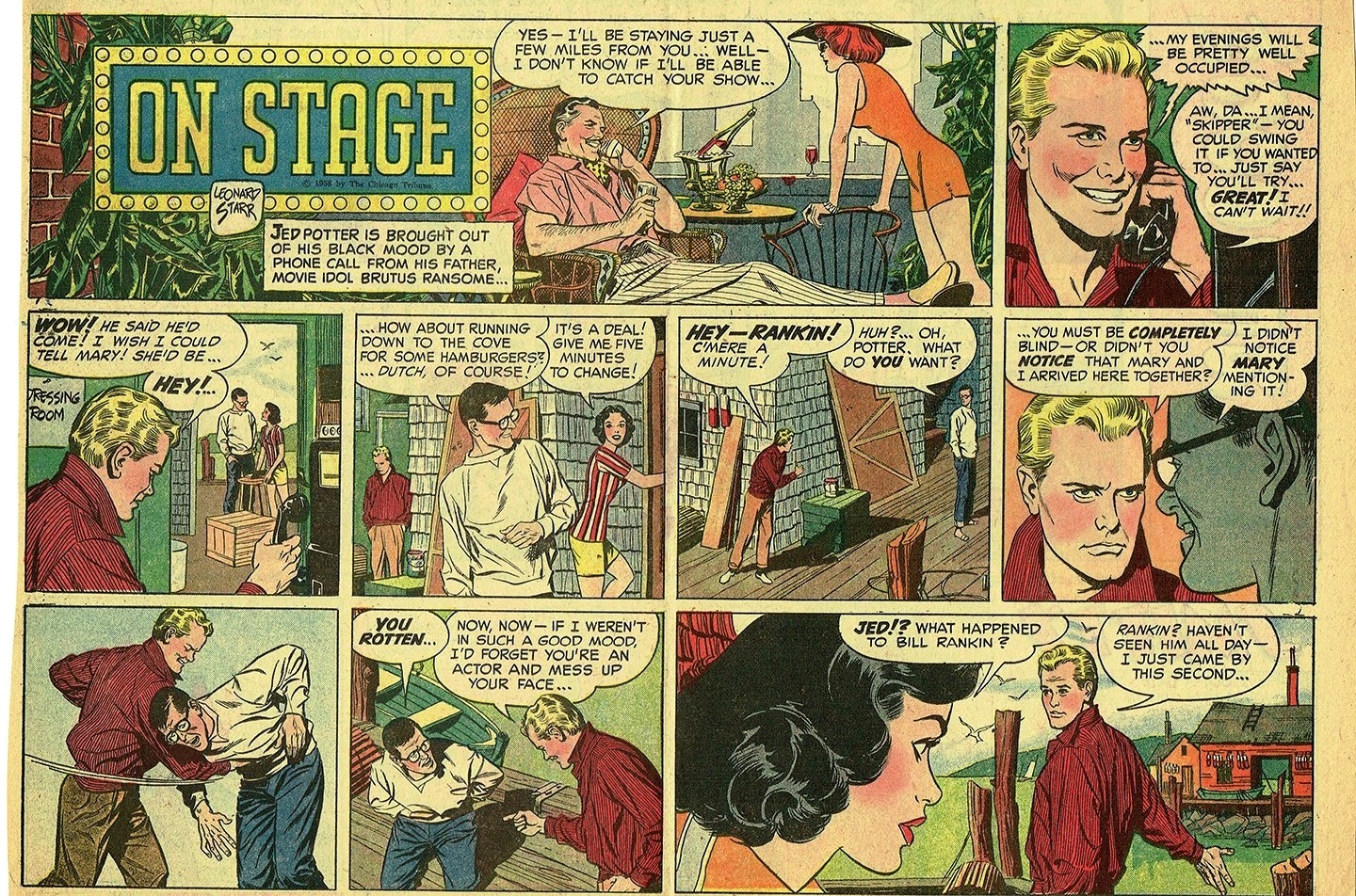
If the blond character happens to remind you of Larry Hagman, you’re not wrong. Hagman was a good friend of Starr’s and his appearance was drawn into the strip. June 22, 1958.
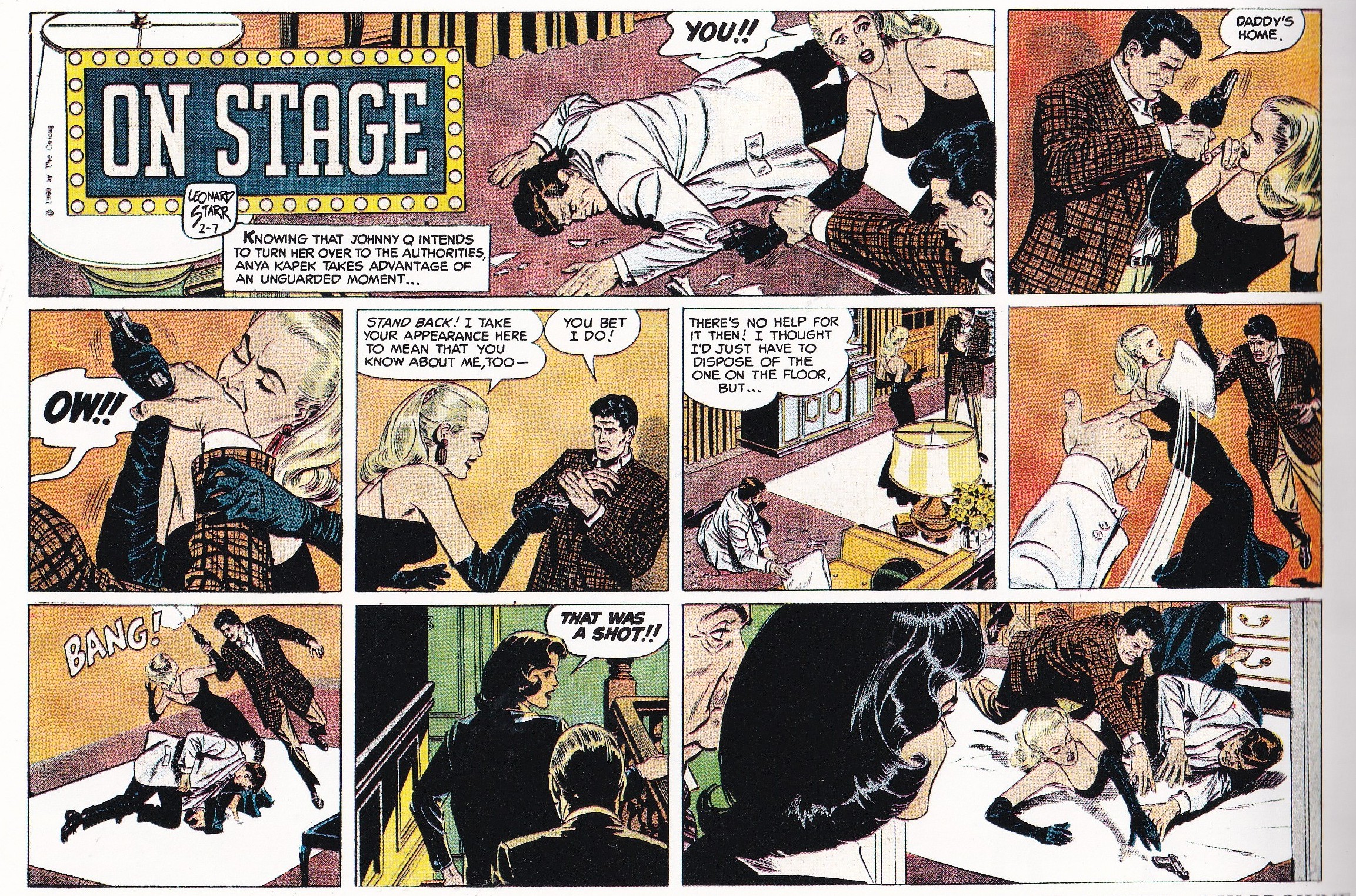
More action, featuring Anya Kapek, also known as “the Black Nurse”! Three years later, she returned, intending to kill Mary. February 7, 1960.
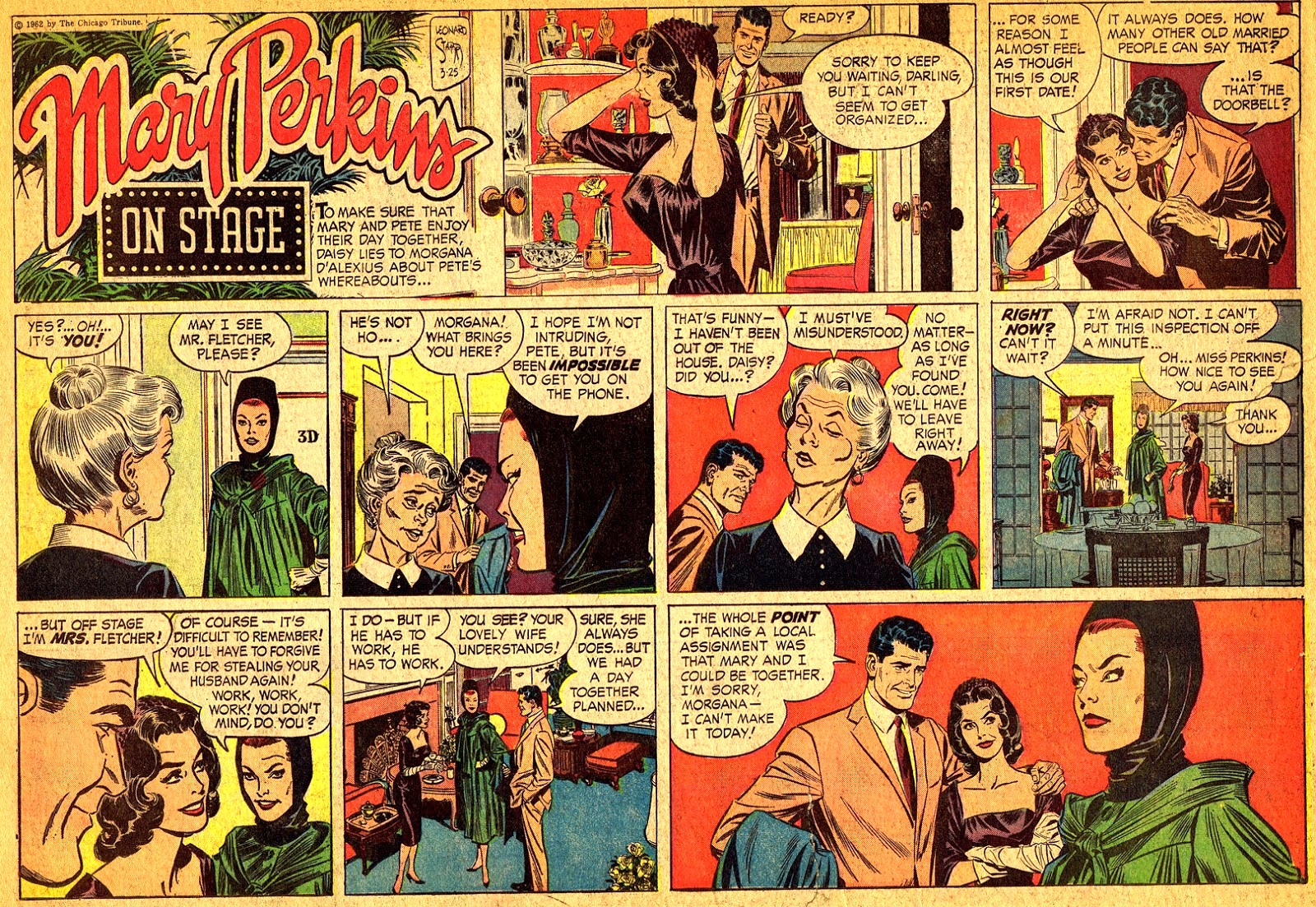
Morgana D’Alexius, a conniving rich woman, plans to steal Pete away from Mary, but discovers Mary is onto her. I love Mary’s sly, knowing grin in the last panel. Mar. 15, 1962.
The next four examples feature a storyline with a Phantom of the Opera/Quasimodo-like character. Starr showed what a craftsman he was, highlighting the mysterious figure in theatrical low illumination. Almost Grand Guignol in nature.
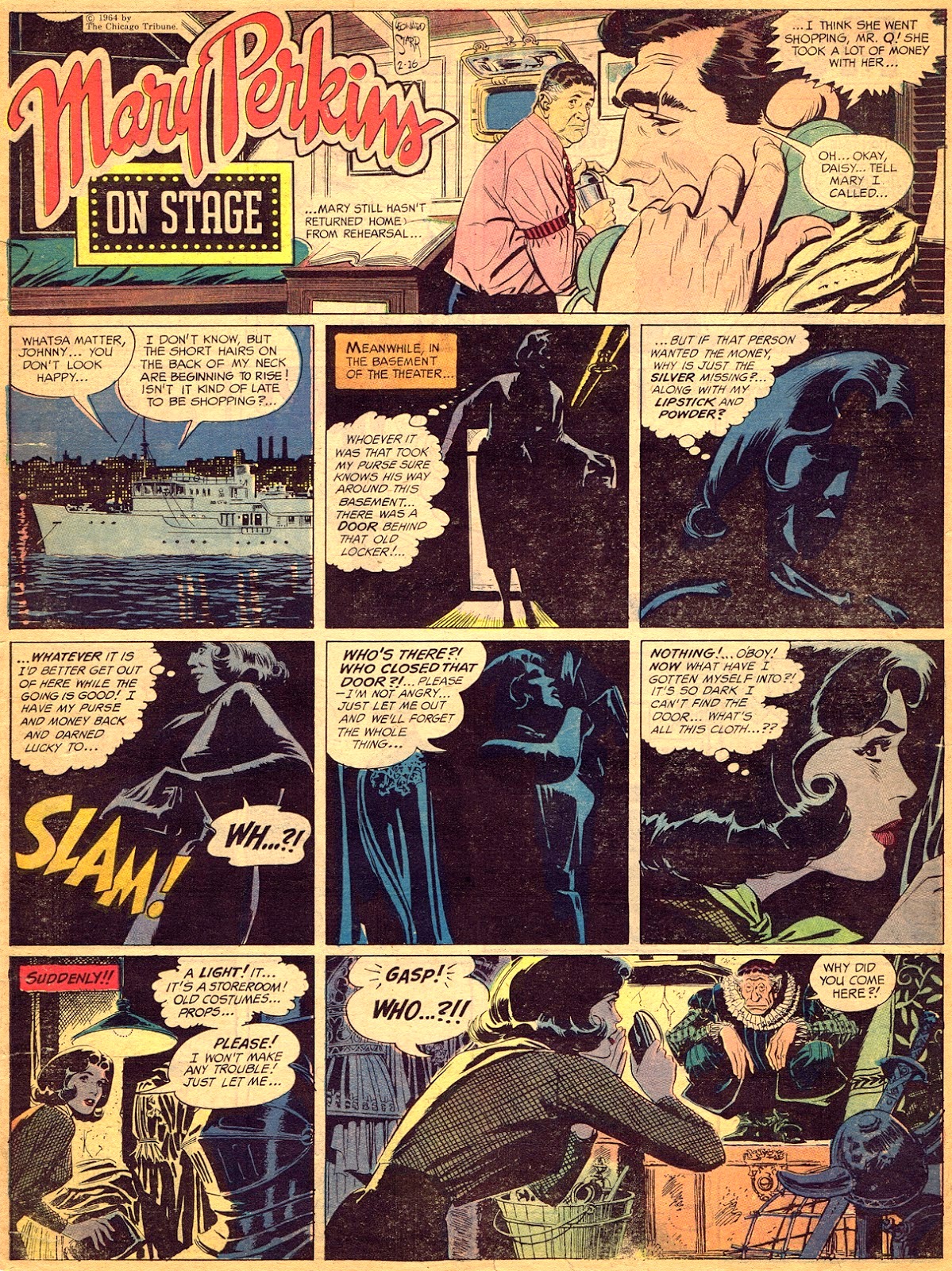
February 16, 1964
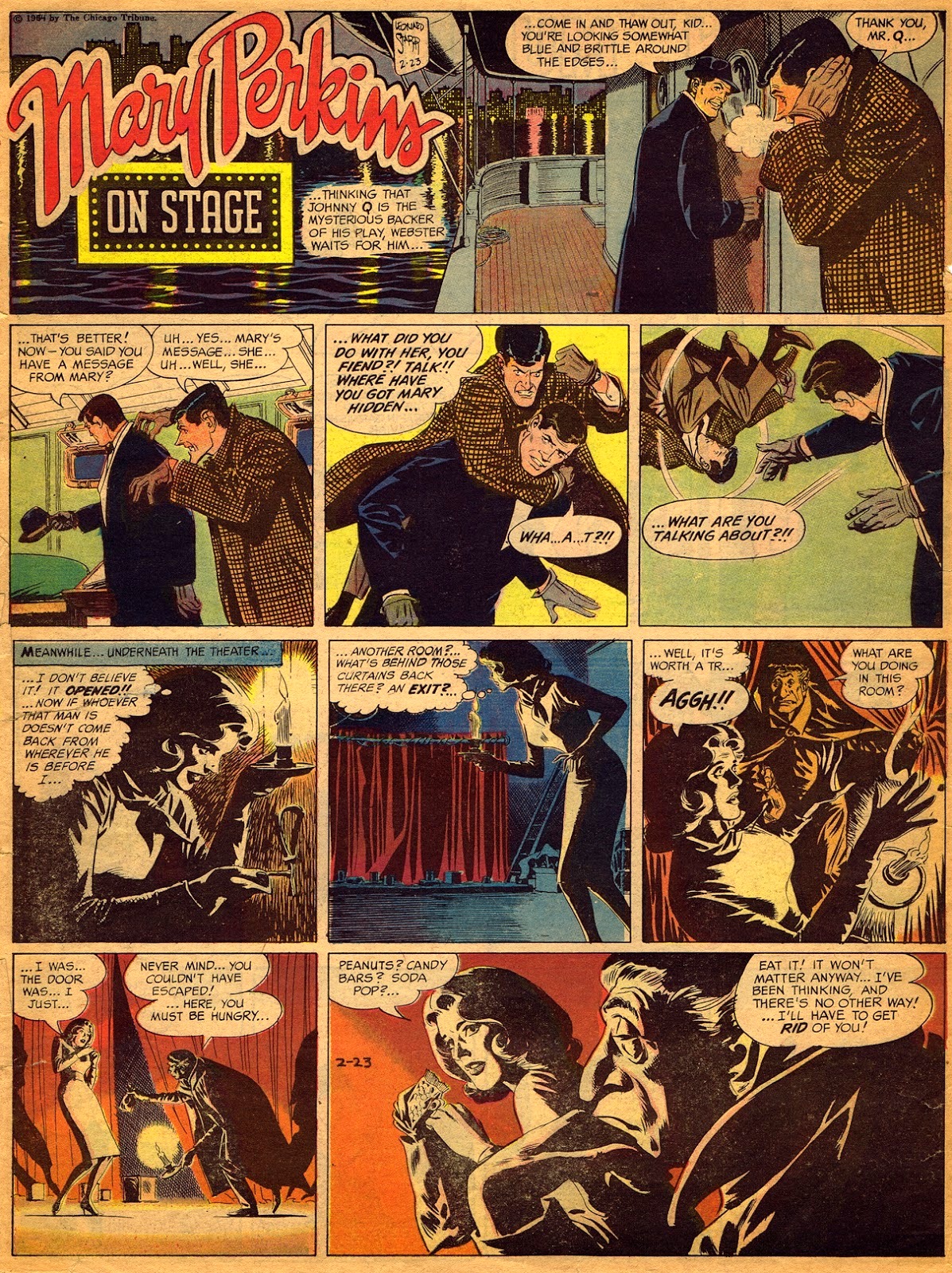
February 23, 1964.
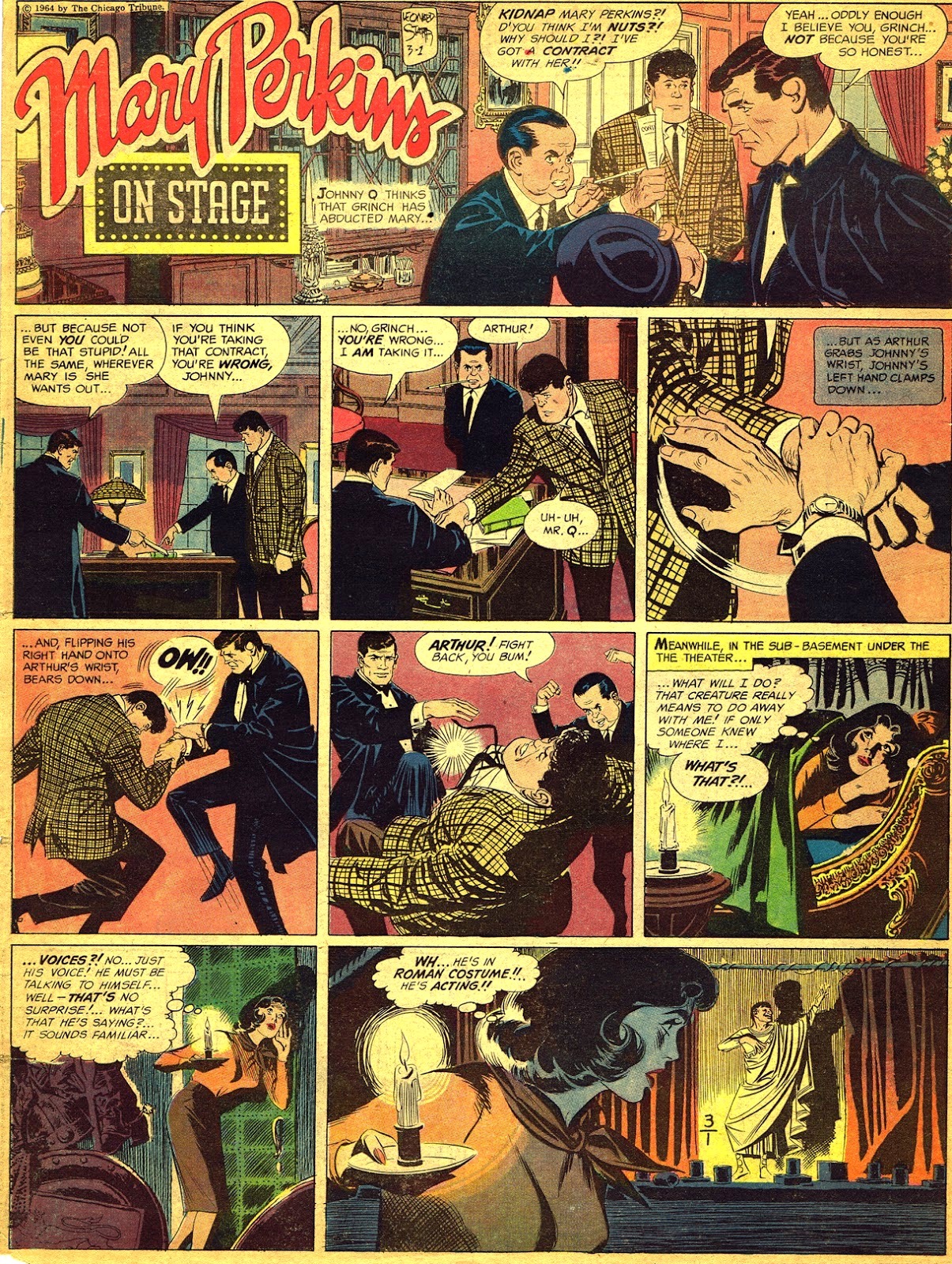
March 1, 1964.
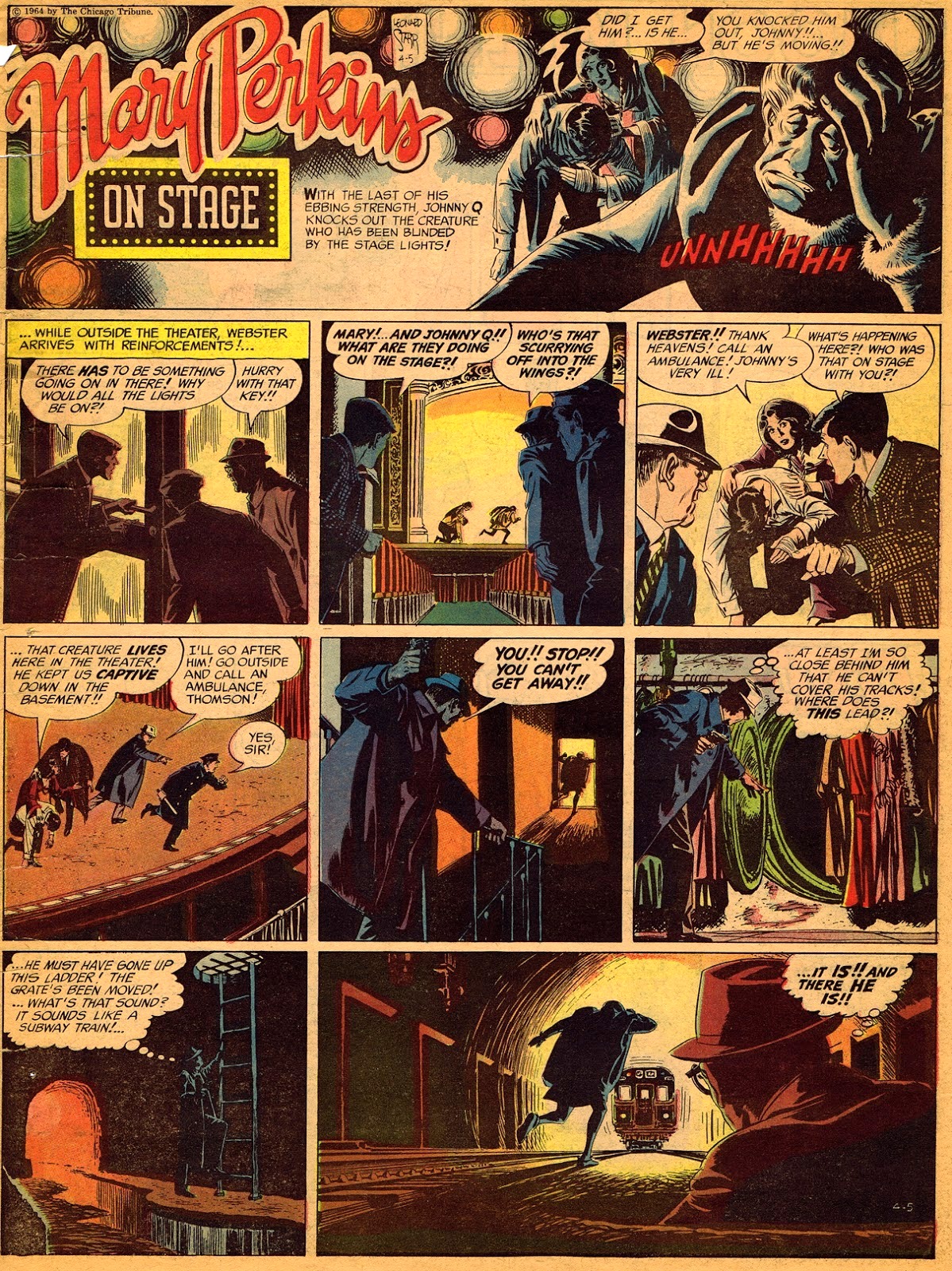
April 5, 1964.
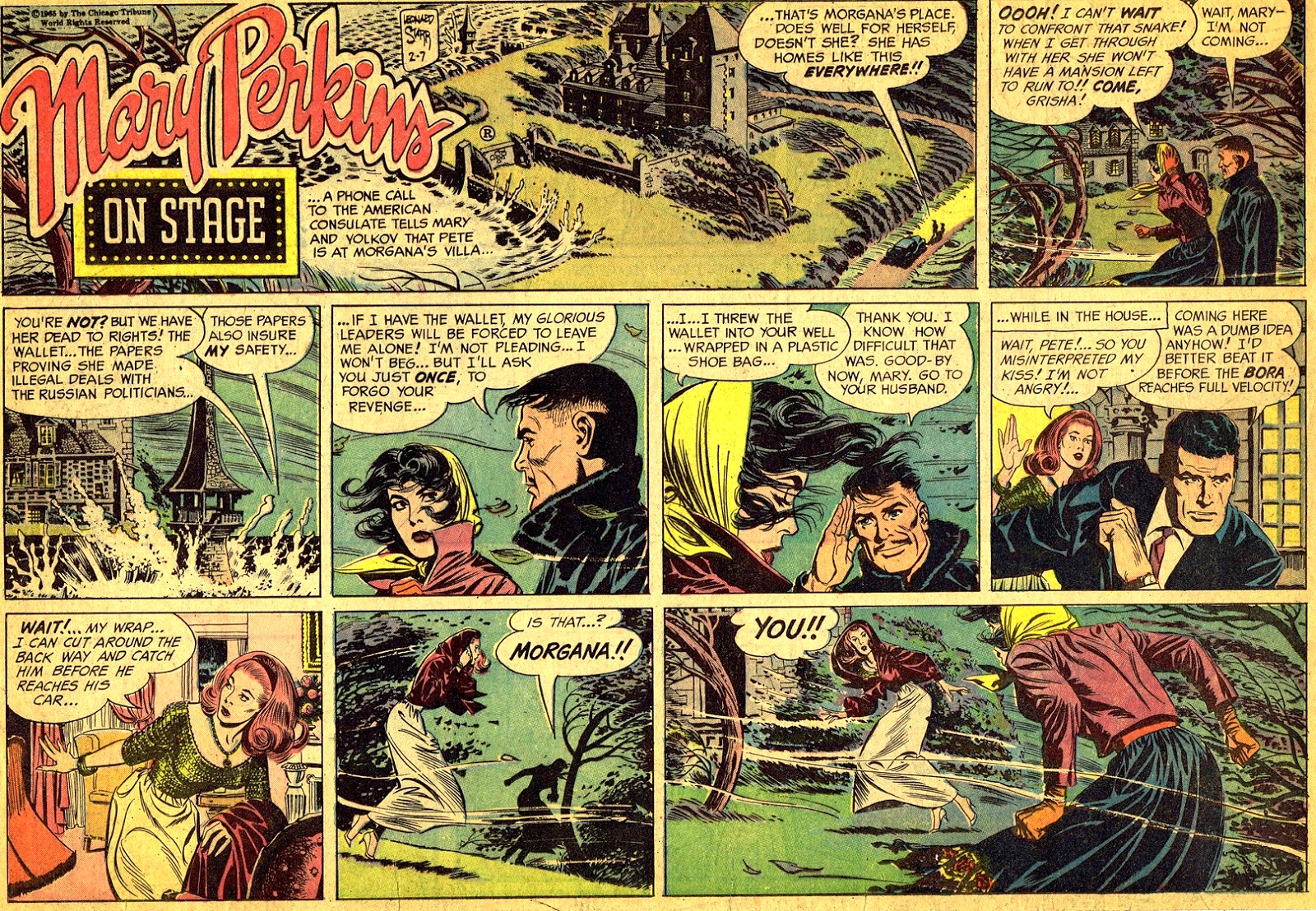
February 7, 1965. Morgana D’Alexius returned and this forceful page was near the climax of the story.
During the 1960s, Dell published one comic book featuring On Stage, with story art that is believed to be by Frank Bolle but closely resembled Mike Sekowsky.
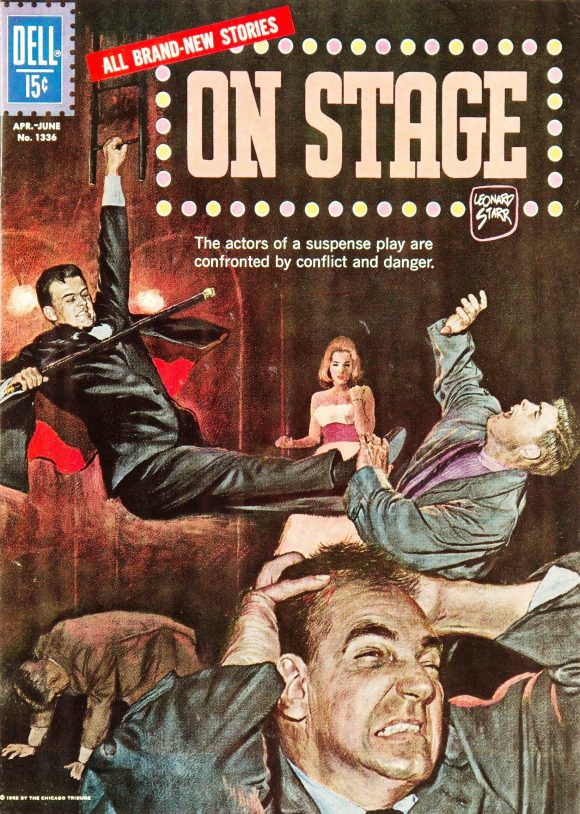
Four Color #1336 (Apr.-June 1962, Dell). Cover painting by Robert William Meyers.
It truly was a great adventure strip. However, in 1979, 22 years after the feature began, it was starting to lose its readership. The syndicate came to Starr with an offer. They had been having little success with the Little Orphan Annie strip since its creator Harold Gray died in 1968. They had done reprints, brought in others to take over the strip, and went back to reprints. They were now turning to Starr to help them by having him end Mary Perkins On Stage and write and draw Annie (the new name since the hit Broadway musical). Starr accepted and Mary Perkins On Stage came to a close on September 9, 1979.
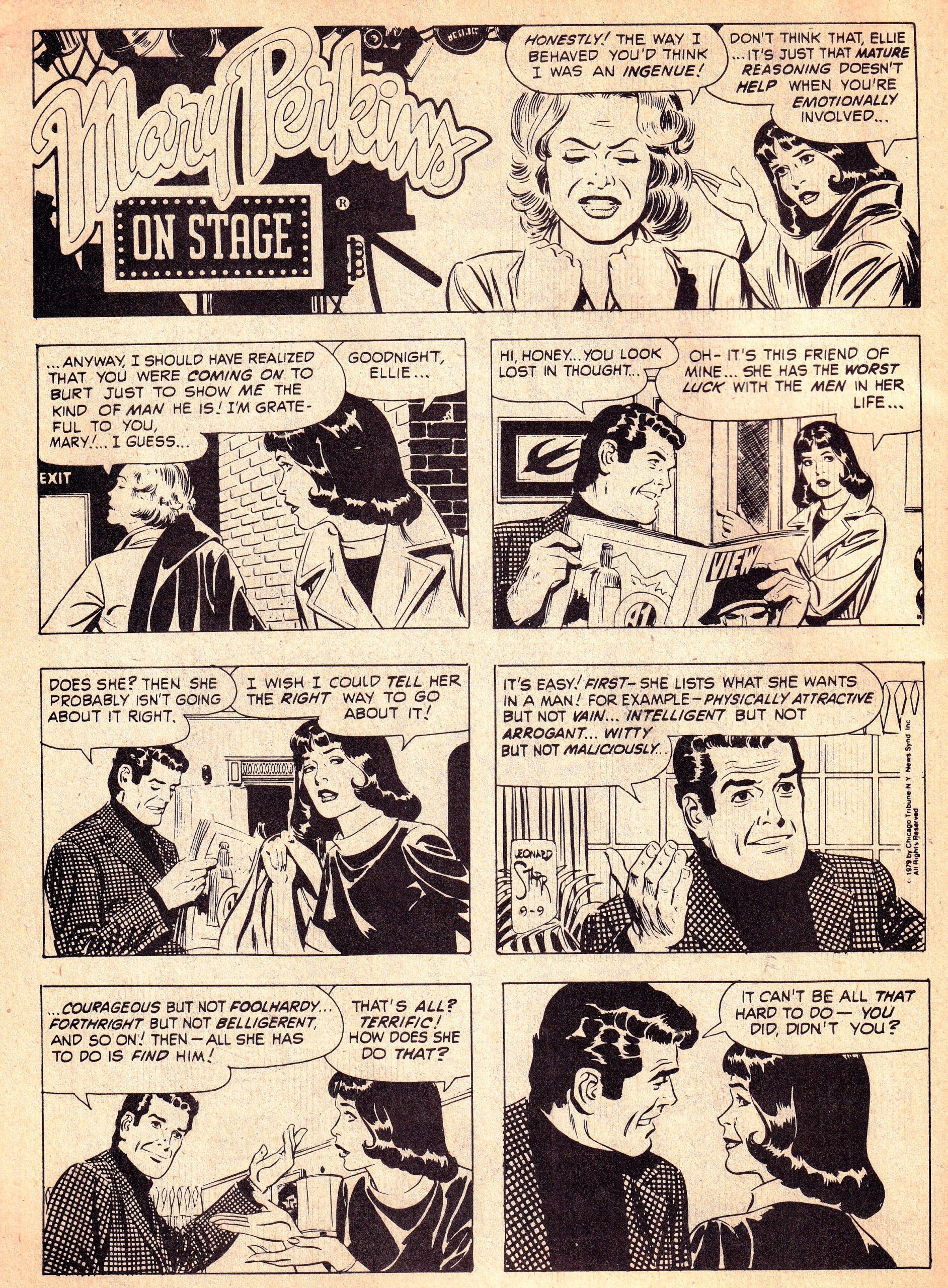
The last strip, September 9, 1979.
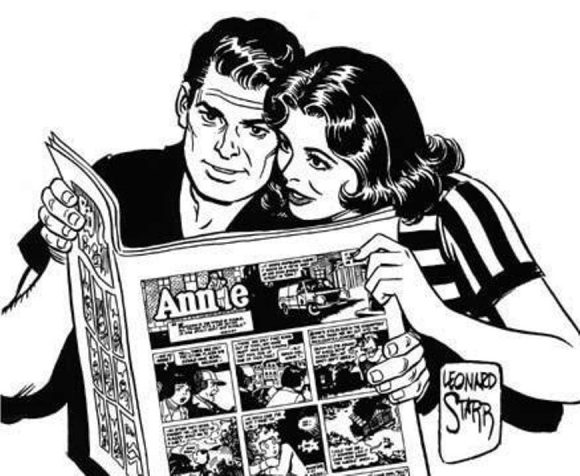
A nice transition drawing by Starr of Mary and her husband, Pete, looking at the Annie newspaper strip.
Though the style for Annie was far different from the realistic look of Mary Perkins On Stage, it was often just as dramatic and powerful as On Stage had been. Starr’s use of solid black was very dominant.
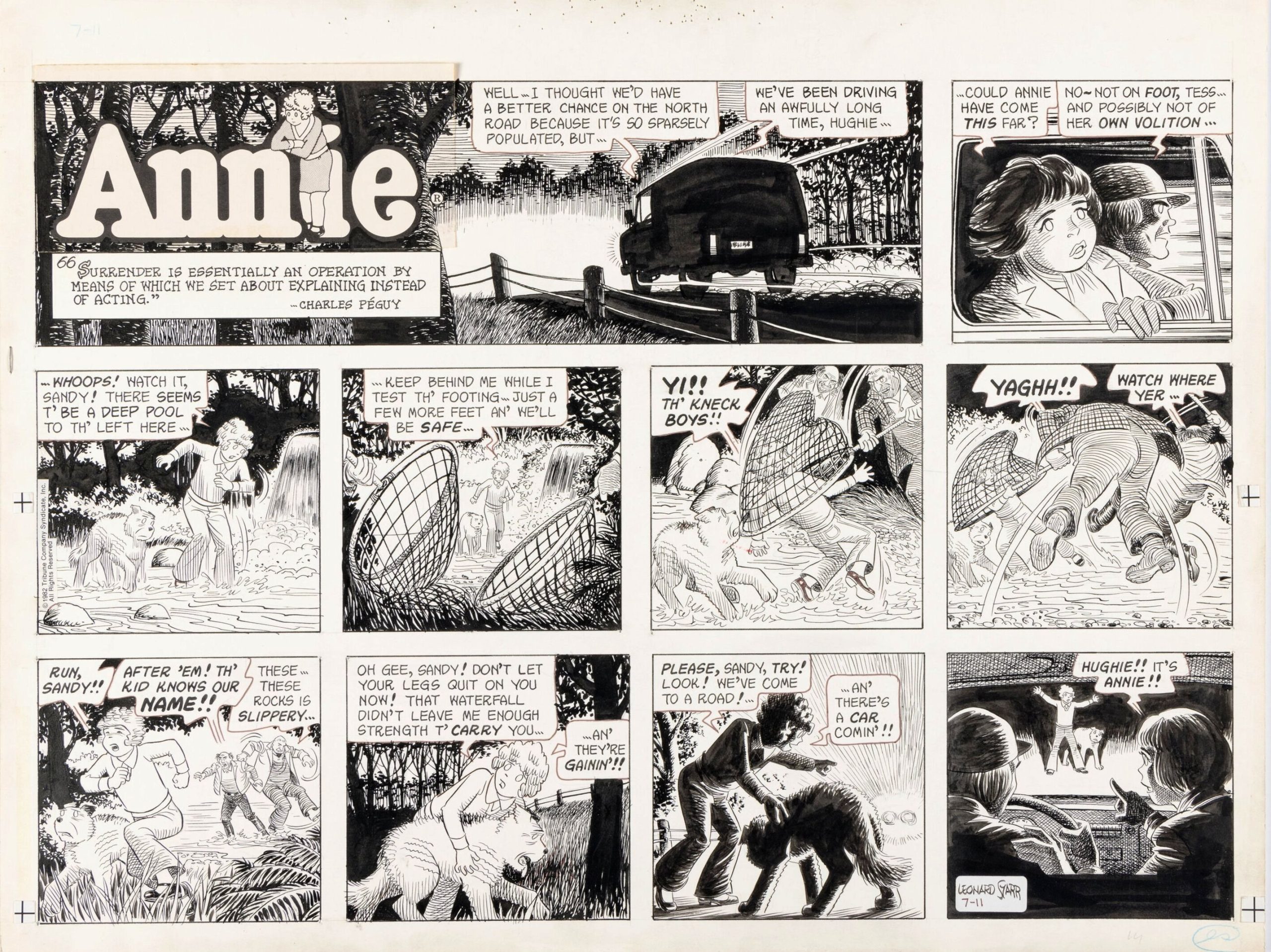
Original art for the July 11, 1982 Sunday Annie strip.
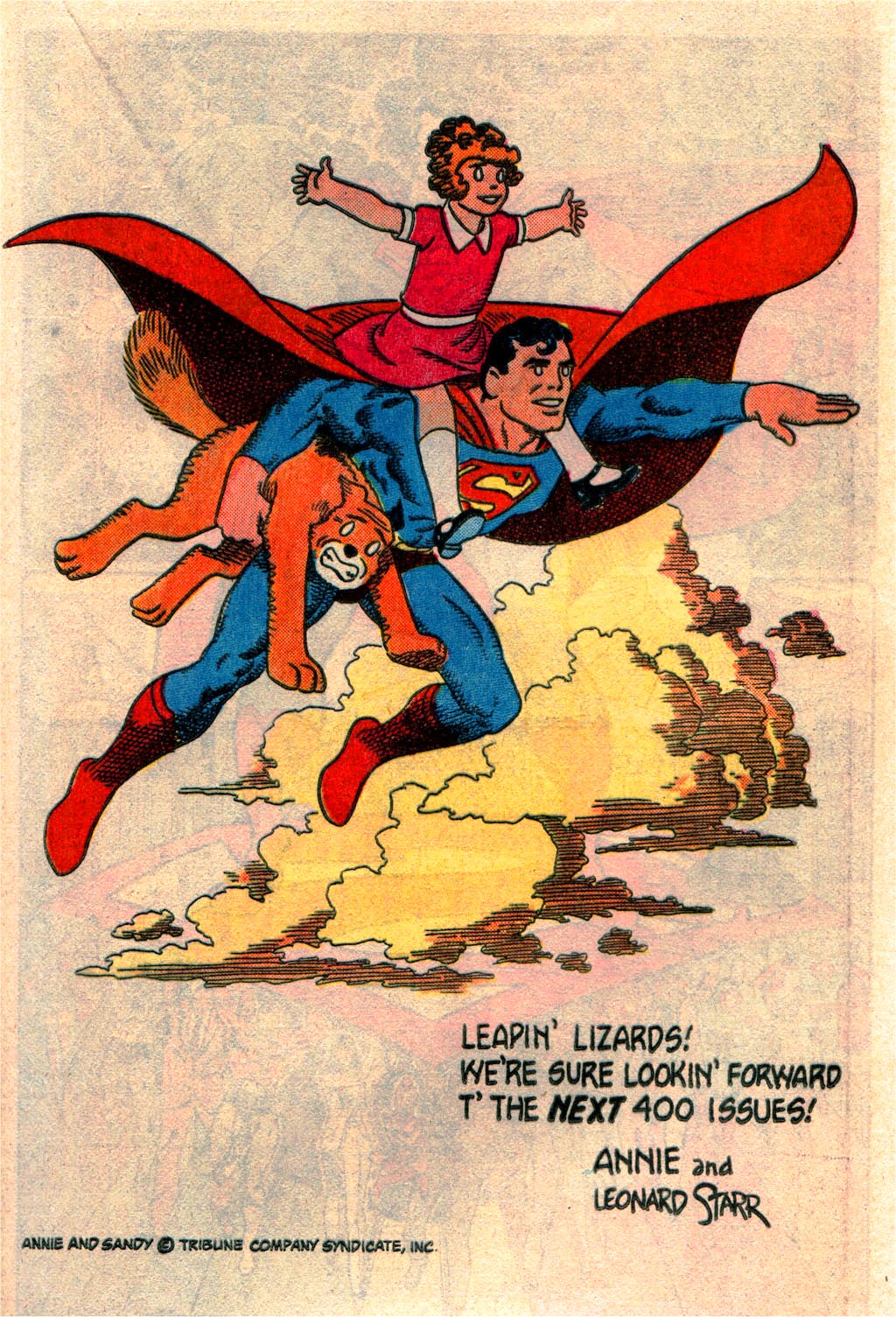
Special salute page by Leonard Starr for Superman #400 (Oct. 1984, DC). (Starr would also co-ink with Keith Williams a Superman story pencilled by John Byrne in Action Comics #597, Feb. 1988.)
However, Annie was not the only thing he worked on during that time. In the early Eighties, Starr was approached by an agent of the French publisher Dargaud to create a series of graphic novels, or “albums” as they’re termed, but the stories were on a much more adult level than either On Stage or Annie were. He teamed up with friend Stan Drake (The Heart of Juliet Jones) to create Kelly Green, a tale with another female lead but one who was bent on vengeance against whomever it was that was responsible for the death of her police officer husband.
Starr did the writing with Drake handing the art and they produced five different graphic novels. (Only four saw print in the States until the fifth was included in a special hardcover collection.) But more about Kelly Green next month when we salute the birthday of Stan Drake.
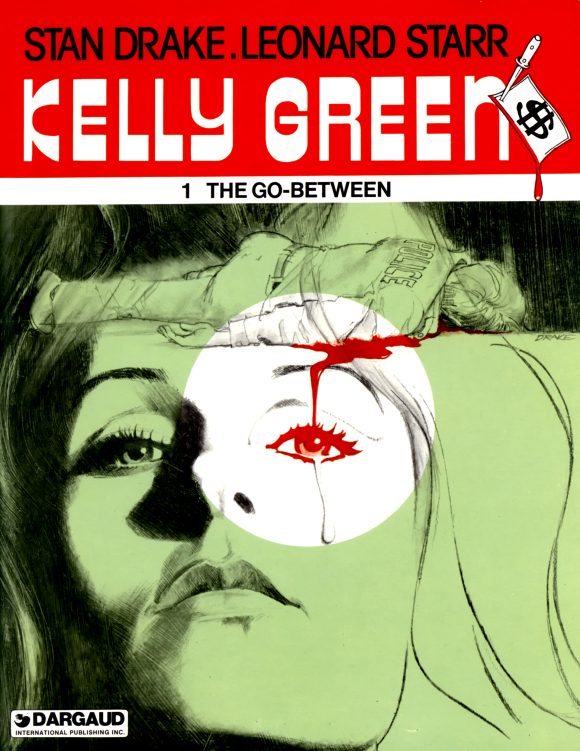
Cover illustration by Stan Drake for the first Kelly Green graphic novel, The Go-Between (1982).
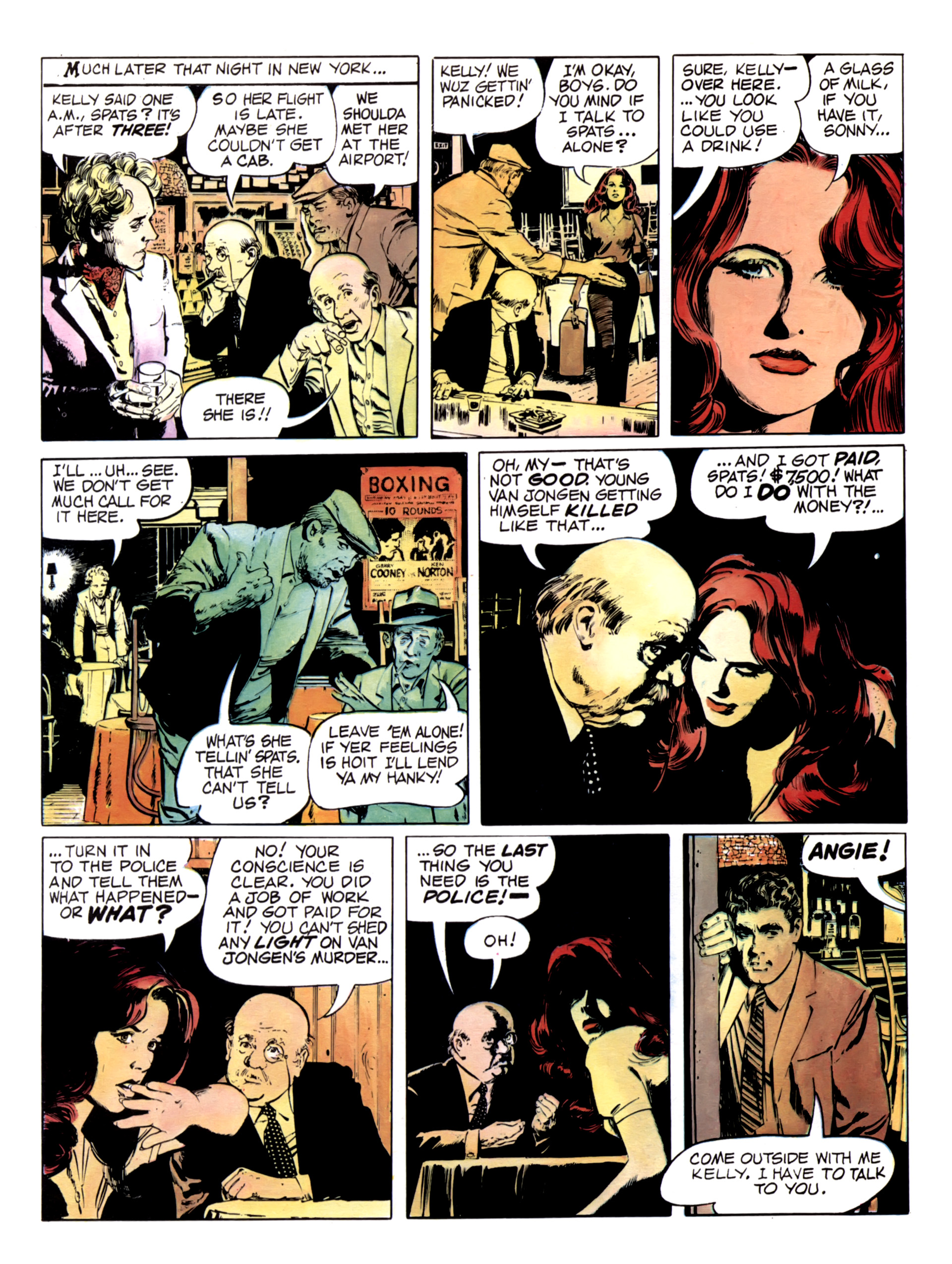
Interior page of the first Kelly Green graphic novel. Written by Starr and art by Drake.
Starr also became active in the field of animation, becoming head writer in the mid-1980s for the TV series ThunderCats. In addition, he would write for another animated series, SilverHawks. (He was not exactly new to animation as he had written the script for the humorous TV special, The Red Baron in 1972.)
During his career, he had been honored four times with a National Cartoonist Society Award, as well as an Inkpot Award. He continued writing and drawing Annie through the February 20, 2000, strip, at which time he retired at age 74 — though, starting in 2006, he produced new art for the covers of a 15-volume reprint series of Mary Perkins On Stage.
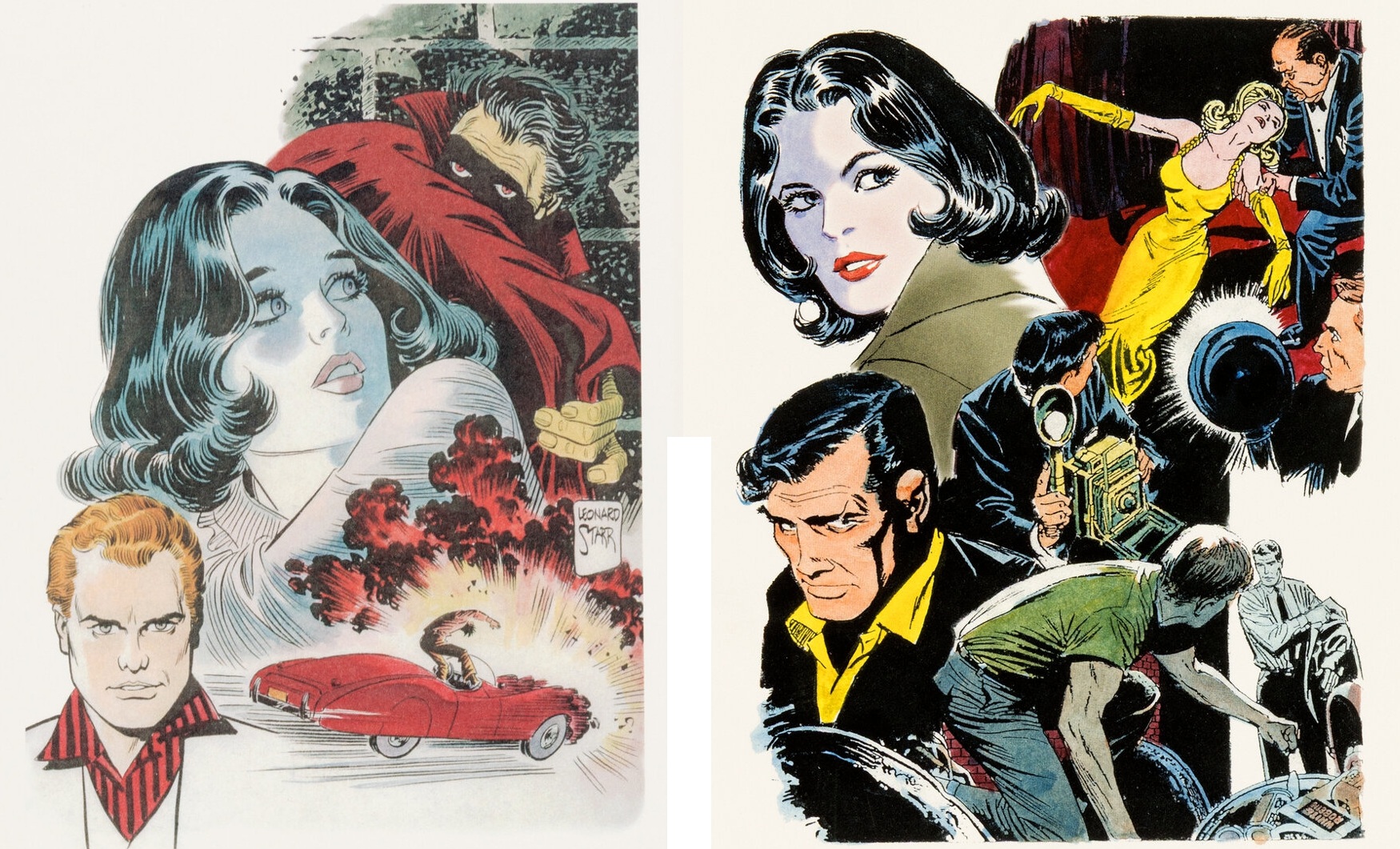
Sample new cover art created by Leonard Starr for reprints of the Mary Perkins On Stage strip published by Classic Comics Press.
Leonard Starr died June 30, 2015, just months before the publication of the last volume. He was 89 years old.
—
MORE
— PEANUTS AT 75: A Salute to the Greatest Comic Strip of Them All. Click here.
— 60 YEARS LATER: JOE KUBERT and the Complicated Legacy of TALES OF THE GREEN BERET. Click here.
—
13th Dimension contributor-at-large PETER BOSCH’s first book, American TV Comic Books: 1940s-1980s – From the Small Screen to the Printed Page, was published by TwoMorrows. (You can buy it here.) A sequel, American Movie Comic Books: 1930s-1970s — From the Silver Screen to the Printed Page, is out now. (Buy it here.) Peter has written articles and conducted celebrity interviews for various magazines and newspapers. He lives in Hollywood.

October 29, 2025
Great piece, Peter. I didn’t know much about Starr beyond Annie and his DC work, and honestly never heard of Mary Perkins On Stage before this, but the art is gorgeous! Thanks for the education and sharing all the wonderful illustrations.
October 29, 2025
So thr gorilla on the cover of Tales of the Unexpected says his name is Jonas Starr. I wonder if he was a relative?
November 1, 2025
Such a fun strip – it should be made into a Netflix series
November 4, 2025
A brilliant tribute! I’m a huge fan of Mary Perkins (as well as Starr’s Annie–which I think I prefer over Harold Gray’s run.) I just wish I had known about and collected the reprints of the books from Classic Comic Press when they were still in print–I’m still missing about half of the 15 volumes and keep hoping I’ll come across some decently price copies at some point. However, Classic Comic Press HAS reprinted just this past year, through Lulu print on demand, their collection of all five Kelly Green volumes. (It just so happens that Kelly Green artist Stan Drake, who was so close to Starr that eventually they shared a studio, drew my OTHER favourite soap opera strip–The Heart of Juliet Jones which is much more of a pure soap/romance strip than Mary Perkins’ soap/adventure hybrid, so it’s incredible that they collaborated together. I do have all four Classic Comic Press volumes of Juliet Jones though it’s a tragedy the plan to do a complete set fell through do to lack of sales. Some of the best comic strip art and story telling was in these strips but they simply don’t have the collectible market reprints of the more male-oriented pure adventure strips like Rip Kirby or Steve Canyon have I guess.
November 9, 2025
Thank you for your kind words. I hope you like my article on November 9 saluting Stan Drake.