
1966 WEEK! A MORRISON MONDAYS bonus saluting the 60th anniversary of a groundbreaking work — on a Thursday!
—
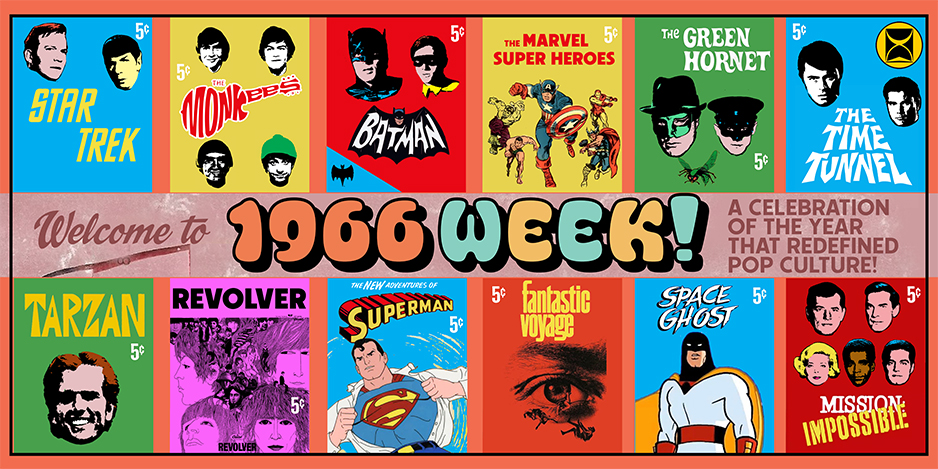
Welcome to 1966 WEEK — a 60th anniversary celebration of an extraordinary, landmark year in popular culture. For seven days, we’re bringing you a whole host of features on everything from Star Trek, to Batman, to the Beatles, to the Monkees, and much, much more. (Just check out Walt Grogan’s latest fab banner, above!) Click here for more of the far out fun! — Dan
—
By BILL MORRISON
When my graphic novel adaptation of The Beatles’ Yellow Submarine was being launched, I did several interviews for radio and the press, and the question that almost every reporter asked me was “What is your favorite Beatles album?”
Depending on my mood, I vacillated between two — Rubber Soul and Revolver, the latter of which was released 60 years ago last month. Both records are from the Beatles’ middle period when they were transitioning from straight pop songs that dealt mostly with love and relationships, to more experimental music with interesting themes like death, existentialism, racial inequality, and the dangers of eating too much candy. I consider this the sweet spot of the Beatles’ musical output. Sort of the best of both worlds.
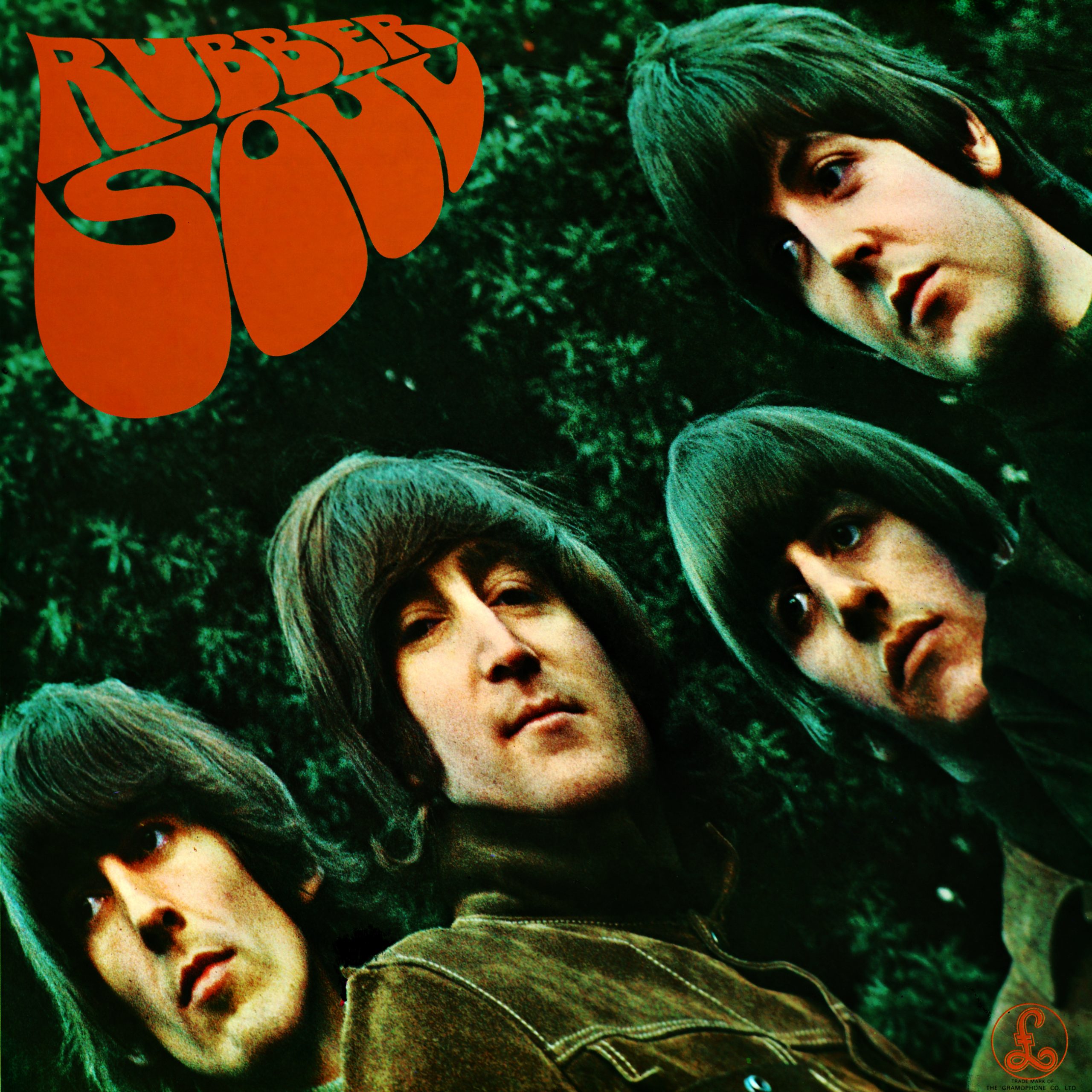
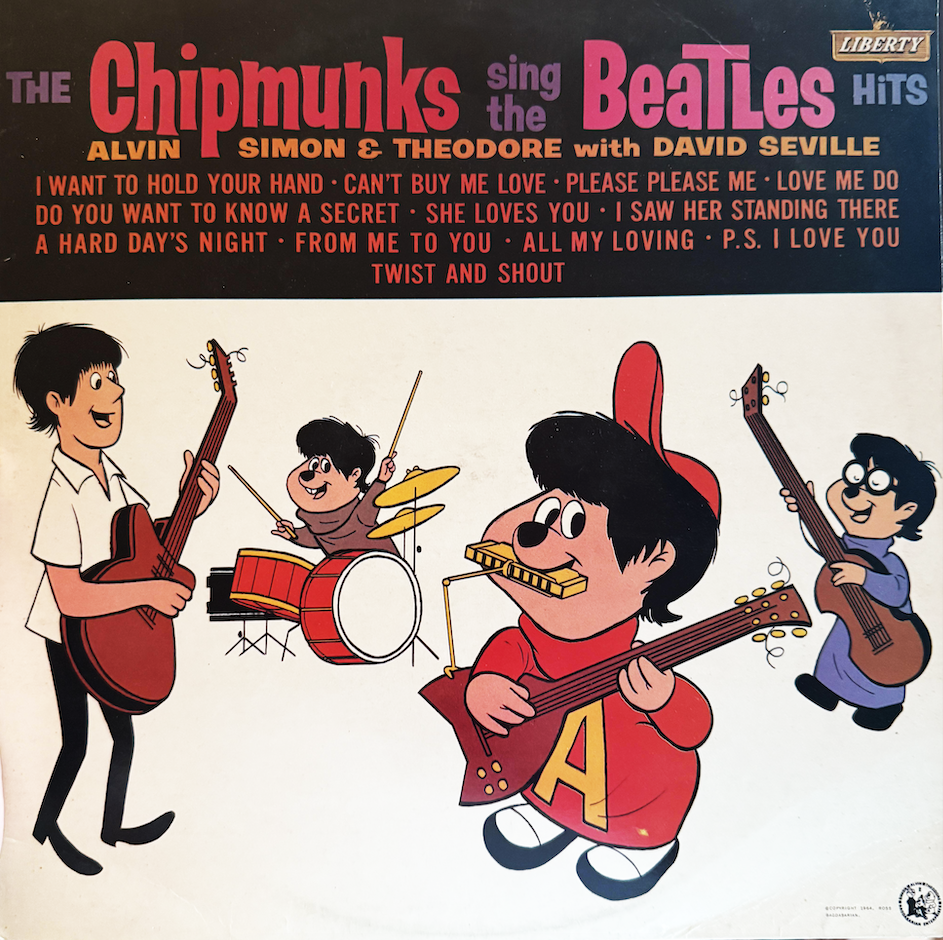
While growing up, I lived in a house that was full of Beatles music. I had a brother and two older sisters who all bought and played Beatles records at one time or another, so from 1964 to 1970, I had a lot of exposure to the Fab Four’s music. I didn’t own any Beatles records myself back then, unless you count the first record I remember having, Alvin and the Chipmunks Sing the Beatles Hits. But in addition to loving that album, I also enjoyed the official Mop Top music that my siblings played.
I shared a room with my brother, Don, so I got the most exposure to what he put on the record player, and I remember Rubber Soul and Revolver getting a lot of spin time whenever he and his friends were hanging out. As I got older and started buying my own Beatles records during the second wave of Beatlemania in the ’70s, I found that I gravitated toward the solid pop sound of the songs on those albums, but was also fascinated by the experimentation that was evident in the way they were recorded, and the many different styles of music that were employed in the writing. These songs weren’t just influenced by Chuck Berry, Motown, and Buddy Holly, they also had their roots in Hindustani classical music, funk, classical chamber music, and more.
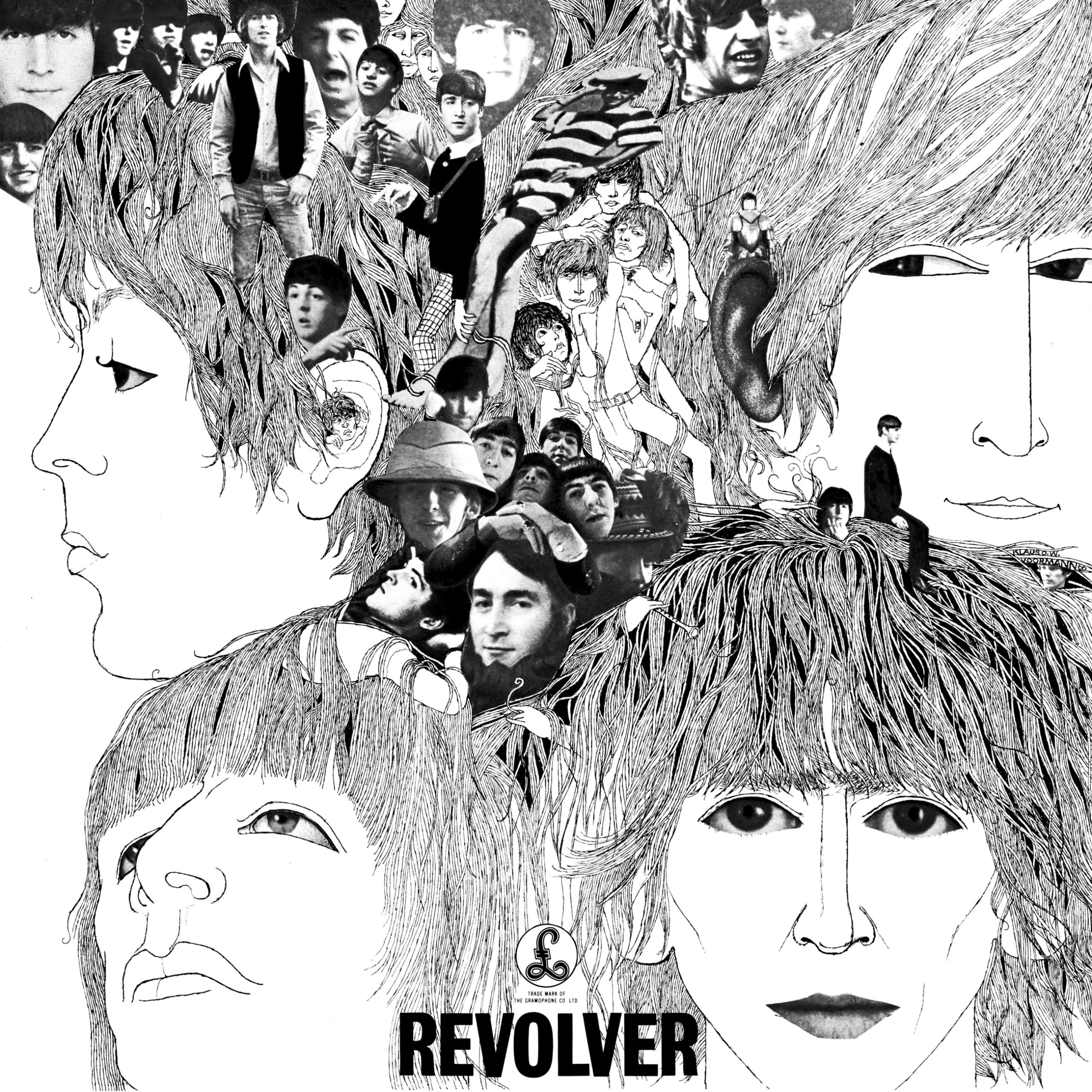
So, since today is the 60th anniversary of the day Revolver hit No. 1 in the US, that album is my favorite today, and I’m going to share a few reasons why. Thirteen reasons, to be exact. The album is all killer and no filler, so I suppose I could just take the fourteen tracks and eliminate my least favorite, but what fun is that? I’m going to get a little more personal, so here are 13 THINGS I LOVE ABOUT REVOLVER, in no particular order:
—
1. George Harrison is my favorite Beatle, and Revolver was the first album to include more than two songs by him. And you could argue that it’s actually the only one if you consider that The White Album, which had four songs by George, was a double disk set. So, the ratio of Harrison songs to Lennon and McCartney songs was the equivalent of only two songs per album. Getting three George songs, “Taxman,” “Love You To,” and “I Want To Tell You,” is a real treat!
—
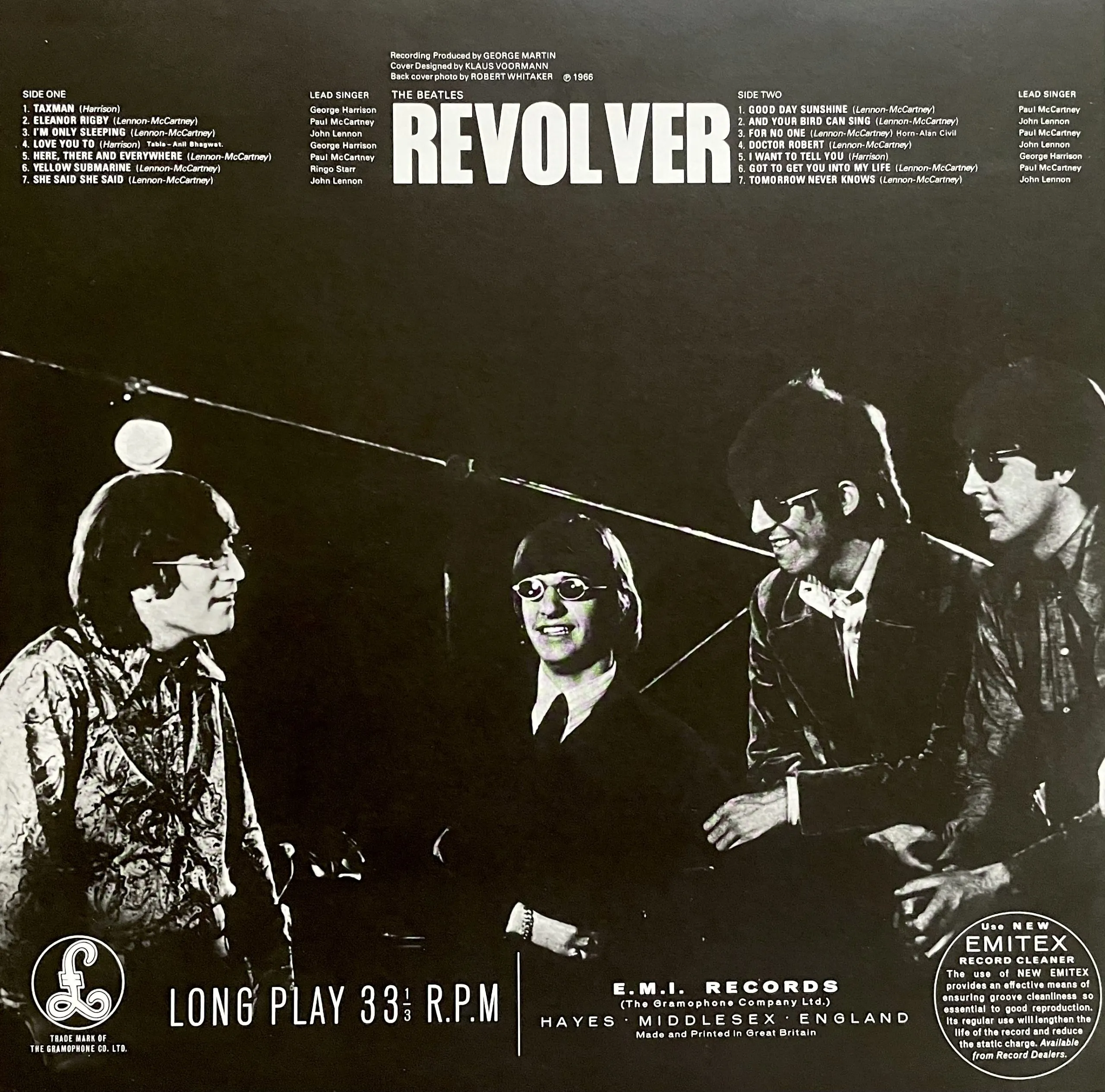
2. Being an illustrator, I’ve always been attracted to paintings and drawings over photography when it comes to album cover art, and Revolver was the first Beatles album to have an illustrated sleeve. The iconic mixed media graphic/collage was created by Beatles pal Klaus Voorman — an artist and Manfred Mann bass player — and it won a Grammy Award the following year for Album Cover, Graphic Arts.
—
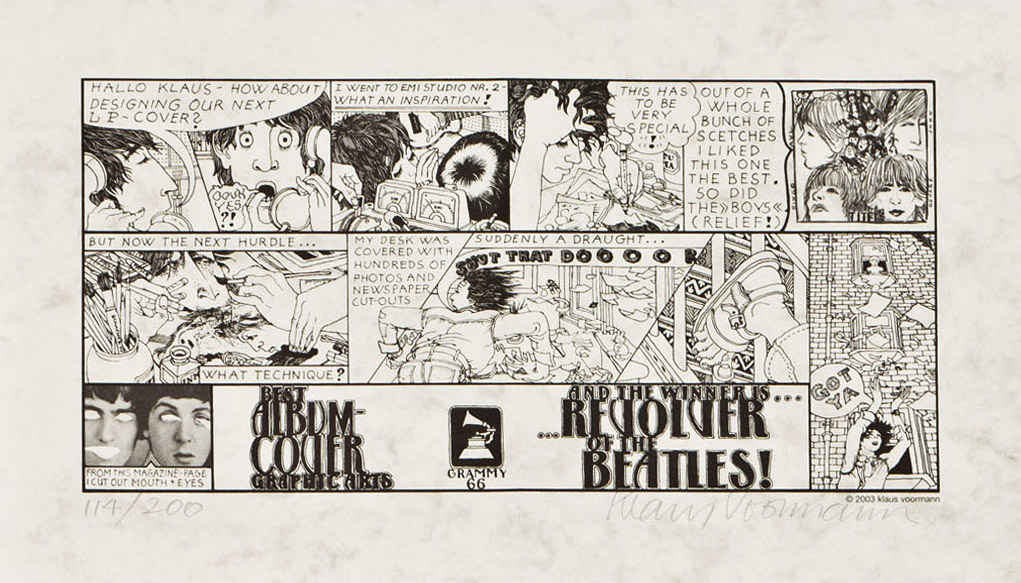
3. Revolver was the last Beatles album to have fewer songs on the US version than on the original British version. Starting with Sgt. Pepper’s Lonely Hearts Club Band, we Yanks got the same Beatles albums as our British cousins, and we would no longer have to buy extra records like Something New and Yesterday and Today just to get all the Beatles’ music. At the time, the group was in the process of renegotiating its deal with EMI, and one of their demands was that all future LPs were to be released with the same track lists as the original British discs. (Though 1970’s Hey Jude album would give us a collection of single-only songs, it had no UK counterpart.)
—
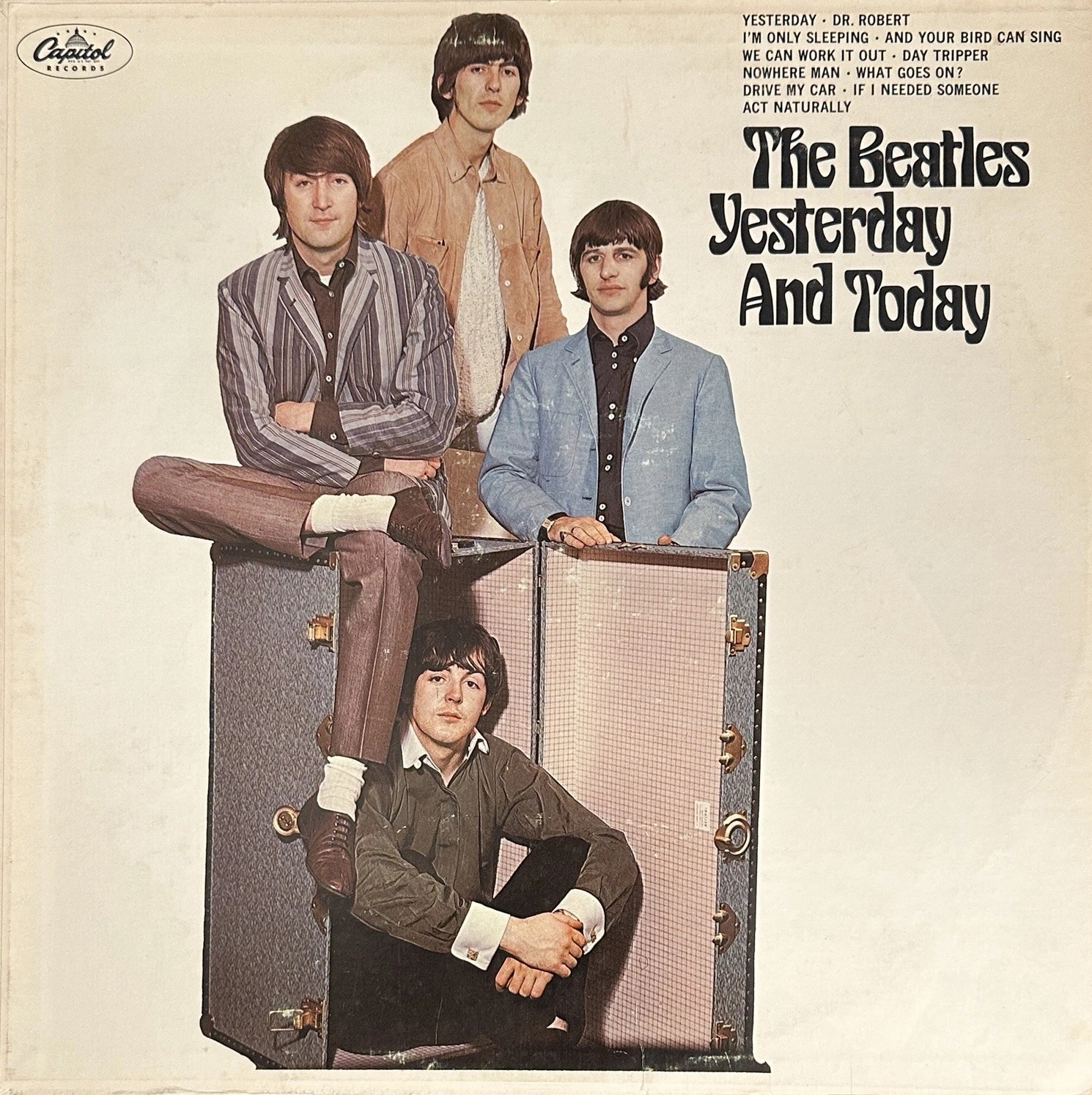
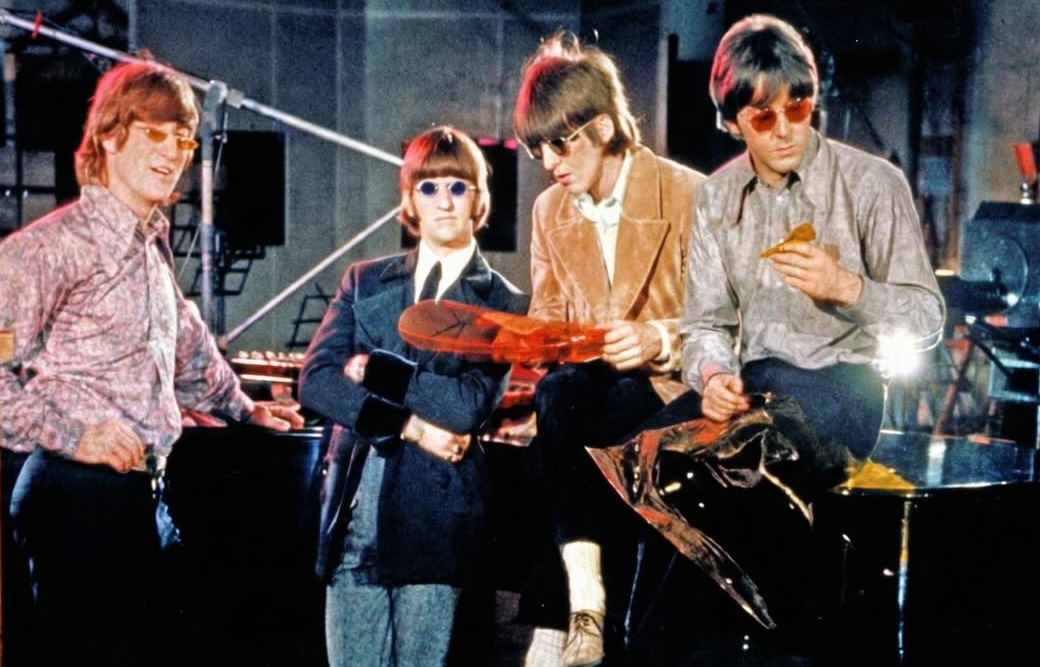
4. The album was finished three days before the start of the band’s final tour, and the recordings reflect the freedom that came with knowing they would not have to perform the songs live. They were allowed to experiment and create music that would never have to be replicated on stage, and that added a whole new dimension to their music.
—
5. You’d think that George would have played the guitar solo on his composition, “Taxman,” but it was actually done by Paul. It perfectly communicates the anger and frustration of the lyrics, and it’s a wonderful example of how versatile Paul is as a musician.
—
6. Speaking of “Taxman,” this is probably my favorite cut on the album. I think George really came into his own as a writer with this song, from the funk-inspired tune to the cleverly biting lyrics. “Now my advice for those who die/Declare the pennies on your eyes,” is a favorite line, and a reference to the British Estate Duty that reached as high as 80% in the mid-’60s. Also, I think it’s the first overt protest song by the Beatles. Everyone thinks of John when it comes to protest songs, but George got there first with this one.
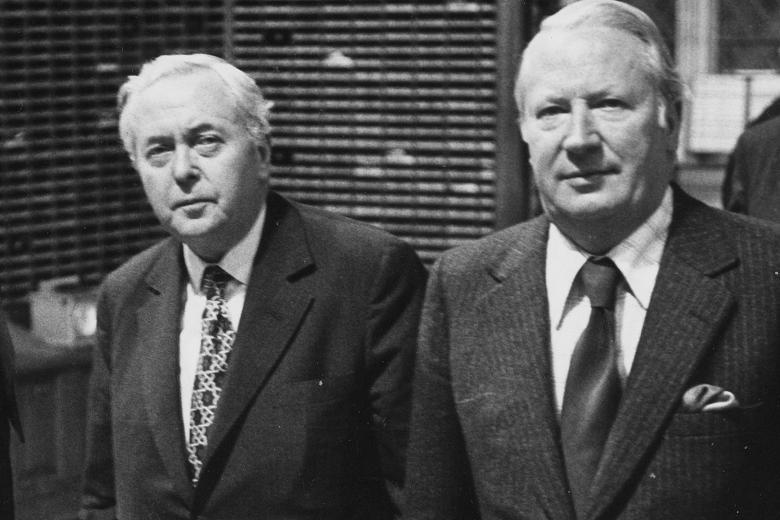
Prime Minster Harold Wilson of the Labour Party, and opposition leader Edward Heath of the Conservative Party. The “Mr. Wilson” and “Mr. Heath” George mentions.
—
7. I love the sheer variety of songs on the album. Paul’s “Got To Get You Into My Life” couldn’t be more different from John’s “Tomorrow Never Knows,” and they appear back to back. Every tune has its own sound and identity, and yet, somehow, it all sounds like the Beatles.
—
8. I love the part in “Doctor Robert” where Paul joins John with a killer vocal harmony for the chorus. It gives me a little tingle at the back of my neck every time I hear it.
—
9. I’m an amateur drummer, and since learning to play 15 years ago or so, I can’t help but hear the drum parts of songs. They just jump out at me in a way that they never did before I learned to play. And I just love Ringo’s drumming on “She Said She Said.” He’s doing a lot of interesting stuff that inspires me every time I hear it.
—
10. My wife, Kayre and I renewed our vows for our 25th wedding anniversary, and we had a big reception afterward. When planning our first dance, we considered several pop songs, finally deciding on “In My Life” from Rubber Soul, but one major contender was Revolver’s “Here, There, and Everywhere.” I think it’s my favorite romantic song, and the lyrics always make me think of Kayre. They perfectly capture the way I feel about her.
—
11. I love the French horn solo by session musician Alan Civil on “For No One.” It’s one of those riffs that always makes my fingers dance.
—
12. On “I Want to Tell You” there’s a dissonant two-note piano part that I love, which comes in at the middle of each line of verse. It’s so simple and odd for a pop song, but it hauntingly captures the feeling of a man trying to communicate his feelings to a woman, but not being quite able to do it when he’s around her.
—
13. I’ll end with a bit of trivia. The album had many working titles before they decided on Revolver, and one of them was Fat Man and Bobby, an obvious Batman reference. It would have been a terrible title, so thank goodness they went with Revolver. But I love that fact that even the Beatles in the midst of Beatlemania were influenced by the Batmania that consumed the world in 1966.
—
Want more 1966 WEEK? Click here!
Want more MORRISON MONDAYS? Come back next week! Want a commission? See below!
—
MORE
— The Complete 1966 WEEK INDEX of Features. Click here.
— MORRISON MONDAYS: While BATMAN Was Campy and Fun, THE GREEN HORNET Was Just Plain Cool. Click here.
—
Eisner winner BILL MORRISON has been working in comics and publishing since 1993 when he co-founded Bongo Entertainment with Matt Groening, Cindy Vance and Steve Vance. At Bongo, and later as Executive Editor of Mad Magazine, he parodied the comics images he loved as a kid every chance he got. Not much has changed.
Bill is on Instagram (@atomicbattery) and Facebook (Bill Morrison/Atomic Battery Studios), and regularly takes commissions and sells published art through 4C Comics.

September 10, 2026
#6 – Ahhhhh! So that’s who Mr. Wilson and Mr. Heath are!!
I’d always thought they were just names picked at random. I should have known.
September 10, 2026
I remember many years ago when working in a mall, going to the music store on my break and buying myself Revolver, Sgt Pepper, and Magical Mystery Tour.
Weeks on end, just cycling through listening to those CDs nonstop. Top to bottom, Revolver is one of The Beetles most listenable albums. Great stuff!!
September 10, 2026
Stevie Ray Vaughan did a killer cover of Tax Man. Recommended.
September 10, 2026
Someone needs to create a list of the 13 best (or “most interesting”) British references in Beatles songs. I’d mentioned the idea to a couple of podcasts, but nobody took up the gauntlet.
September 10, 2026
I love that idea, Mark! I’ll talk to the boss about it!
September 10, 2026
Did not know I needed a deep dive into Revolver, but what a great read! Breakfast would not be the same without some fresh squeezed 13th Dimension.
September 10, 2026
That means a lot! Thanks, Jeff!
September 10, 2026
There’s a cool story about Joe Walsh learning to play “And Your Bird Can Sing,” not knowing it was two separate guitar parts. He found out later from Ringo that it was two parts and he later joked to the Chicago Tribune that he was the only guy who could play George’s guitar part on the song, including George.
I also go between Revolver and Rubber Soul as my two favorite Beatle albums.
September 10, 2026
When you listen to the opening of Tomorrow Never Knows, you realize that the Beatles created the jumping off point for “Deck and Drum” Techno Music that flourished in the 1990s. So freakin’ cool.
September 10, 2026
I think you may be correct about Taxman being “the first overt protest song by the Beatles.” Which is kind of hilarious given what is being protested is high taxes to fund the British welfare state. Our countercultural champions are amplifying Tory talking points? Oy Vey!
September 12, 2026
My favorite also!