A BIRTHDAY TRIBUTE: Superman (of course)! The Spectre! Slam Bradley! MORE!
By PAUL KUPPERBERG
Who’s to say if Jerry Siegel (October 17, 1914 – January 28, 1996) and Joe Shuster hadn’t created Superman, some other creator(s) wouldn’t have come along with some other character that would have captured the public imagination and kickstarted the fledging comic book industry. But the fact is, some other creator(s) didn’t, and Siegel and Shuster and Superman are the reason we’re all gathered here today!
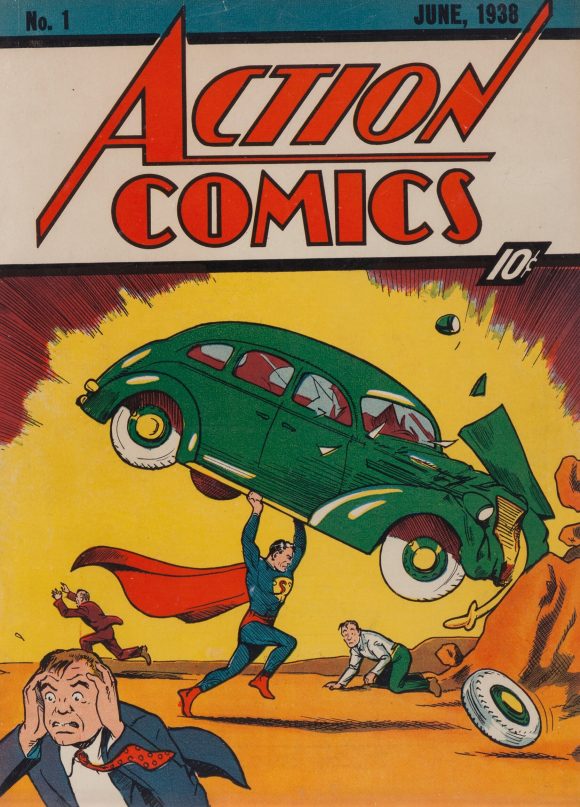
For having co-created one of the most successful characters in popular literature, there are few figures in comic book history whose careers illustrate both the possibilities and the pitfalls of the business quite as clearly as Jerry Siegel. In 1938, Siegel and artist Joe Shuster, his friend and collaborator, introduced Superman in Action Comics #1, a character whose success helped launch the superhero genre. The two young Clevelanders had been trying for years to sell their creation and were ecstatic when Detective Comics Inc., a forerunner of today’s DC Comics, finally agreed to publish the feature. But they signed away the rights for a modest sum — only $130 for that first 13-page story.
The comic book business then and now ran on a “work-made-for-hire” basis, that is, the contracted writers and artists did the actual work but the corporate entities that paid them were its legally acknowledged creators and owners. Siegel and Shuster had no way of knowing that the Man of Steel would become one of the most valuable fictional properties in history.
For most of the 1940s, the duo did well. Exhibits filed in their 1947 lawsuit against National Periodical Publications (another DC Comics forerunner) to reclaim rights to their creation revealed that in 1942 they had earned more than $60,000, or around $1.3 million today, adjusted for inflation.
Siegel and Shuster were fired by DC following their lawsuit over Superman’s ownership, but Siegel didn’t abandon comics or the hope of creating another successful character. He wrote Funnyman, tried his hand at newspaper strips, worked for Ziff-Davis, and continued freelancing for various publishers.
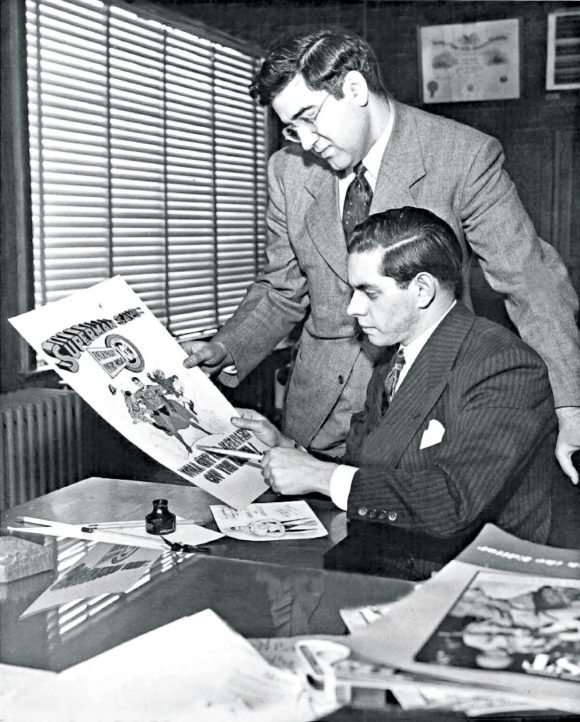
Siegel (seated) and Shuster
In 1959, he was rehired by DC to write Superman stories, along with adventures starring Supergirl and the Legion of Super-Heroes. There was, however, a humiliating condition attached to his return: He couldn’t publicly acknowledge that he was the man who had created Superman, and his new stories appeared without his credit attached to them.
Siegel continued writing for other publishers, including Marvel, Archie, and Charlton, always looking for the next character or concept that might catch on. But the years of professional disappointments, legal battles, and financial uncertainty took their toll. By the early 1970s, his health was declining, his opportunities were limited, and he was working as a typist in a Los Angeles municipal office. The creator of the world’s most recognizable superhero was struggling to make ends meet while that superhero was becoming increasingly lucrative for DC and its corporate owners.
In 1975, with the first Superman feature film in development, Siegel went public about the treatment he and Shuster had received. The resulting publicity, with the flames fanned by such industry stalwarts as Jerry Robinson and Neal Adams, helped bring about an agreement with Warner Communications that provided both men with annual payments, medical benefits, and, most importantly, the restoration of their creator credits on Superman-related productions.
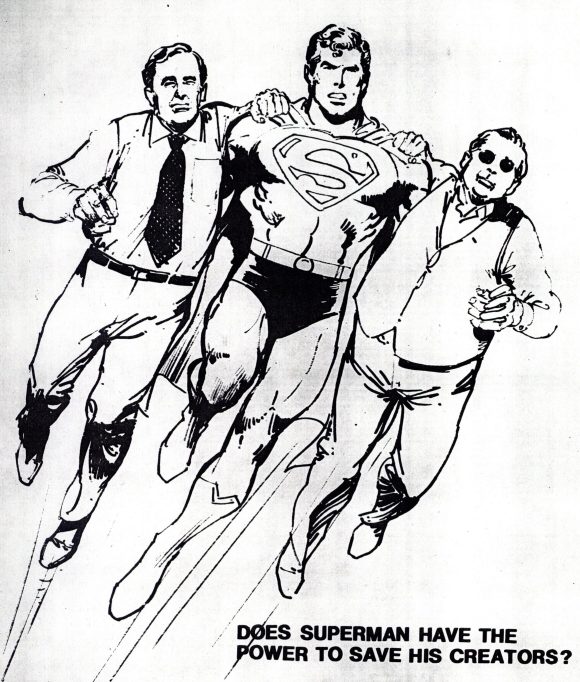
Jerry Siegel, Superman, Joe Shuster, by Neal Adams
The compensation was a small fraction of the wealth their creation had generated, but it provided some measure of financial security and public recognition. Siegel died in 1996, having lived long enough to see Superman become a worldwide phenomenon, even if he never received anything approaching the rewards his contribution might have suggested.
I fell in love with the Man of Steel through the 1940s Fleischer Studios Superman cartoons and episodes of the 1950s Adventures of Superman I saw on black-and-white TV, only later discovering the comics, and later still, learning that the man who had created the prototypical comic book superhero was behind writing some of the most memorable stories of my childhood.
Here then, MY 13 FAVORITE JERRY SIEGEL STORIES. (Dates are publication dates.)
—
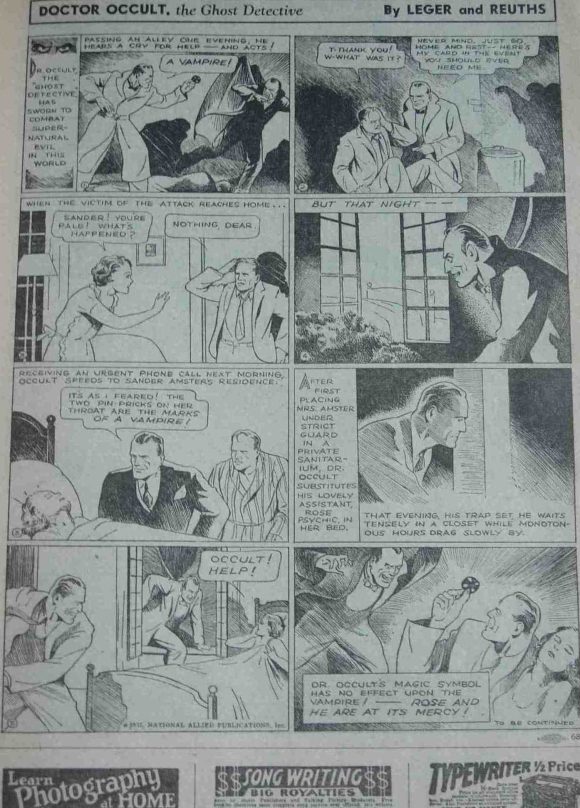
Doctor Occult, the Mystic Detective (New Fun Comics #6, October 1935). Siegel and Shuster’s first major continuing feature for National/DC, credited to “Leger and Reuths,” and an early example of Siegel’s interest in supernatural adventure.
—
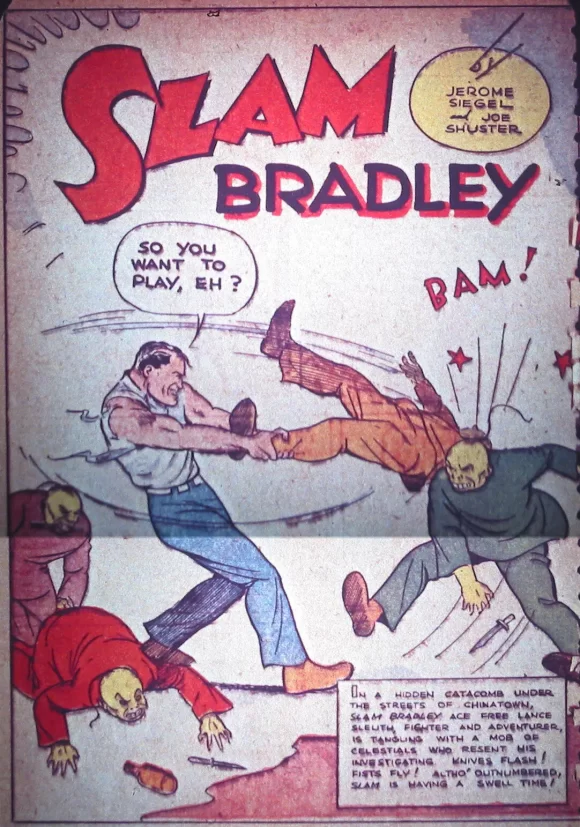
Slam Bradley (Detective Comics #1, March 1937). Siegel and Shuster’s hard-boiled adventure strip, predating Superman and showing that Jerry’s heroes didn’t need superpowers to save the day.
—
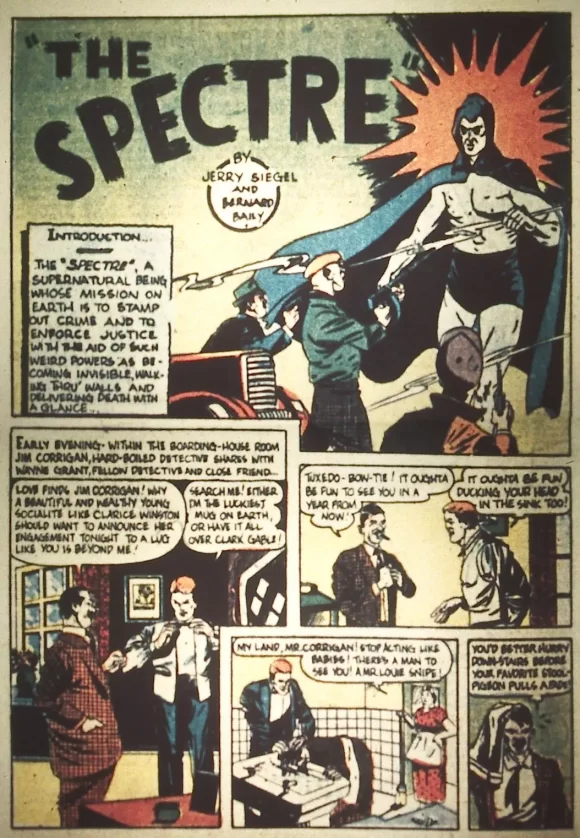
The Spectre (More Fun Comics #52, February 1940). Siegel and Bernard Baily’s introduction of Jim Corrigan and the supernatural Spirit of Vengeance. The entire Golden Age Spectre run through More Fun Comics #70 was written by Siegel.
—
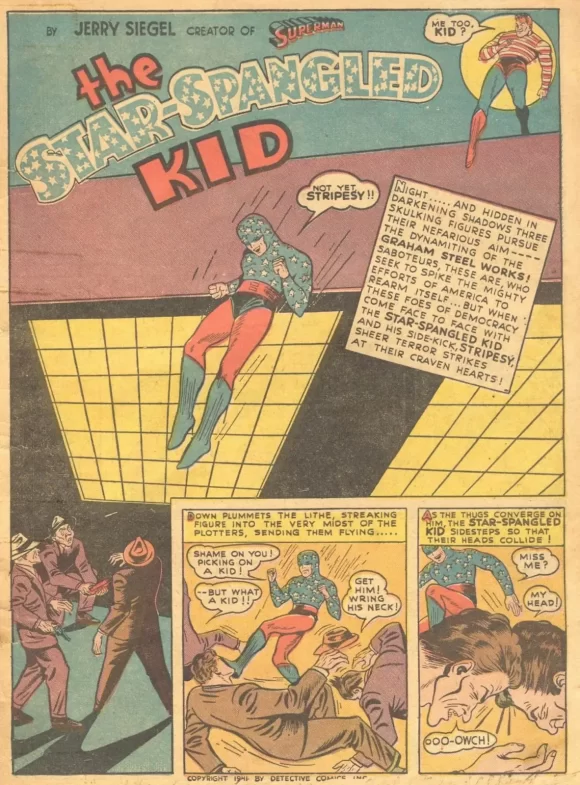
The Star-Spangled Kid (Star Spangled Comics #1, October 1941). Pulling the old switcheroo on the “kid sidekick” conceit, Siegel and artist Hal Sherman introduced teenage hero Sylvester Pemberton and his adult sidekick.
—
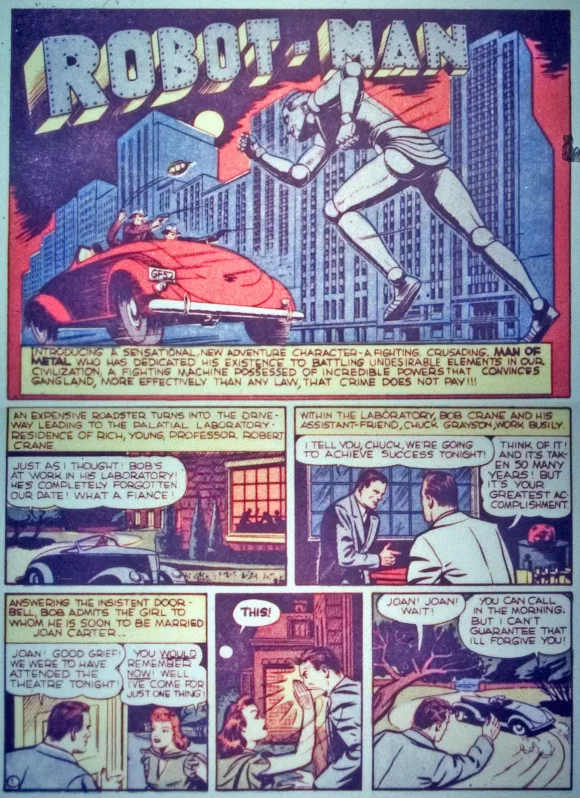
Robotman (Star Spangled Comics #7, May 1942). Brilliant scientist Robert Crane creates a robot body that can host a human brain and sustain life… just in time to save himself when he’s shot by criminals trying to steal his creation. Art by Leo Nowak and Paul Cassidy.
—
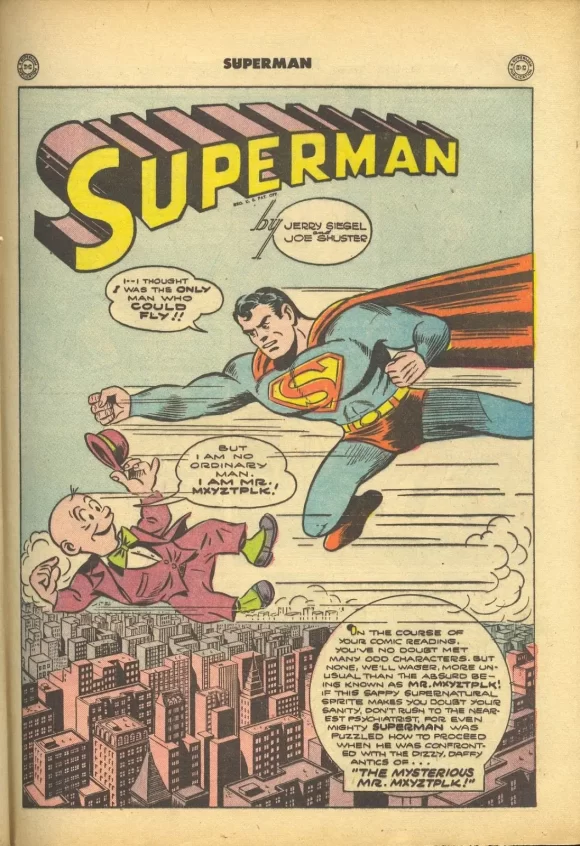
“The Mysterious Mr. Mxyzptlk!” (Superman #30, September/October 1944). The introduction of Superman’s Fifth Dimensional nemesis, whose reality-bending powers allowed Siegel to take Superman stories into outright fantasy. Art by Shuster and Ira Yarborough.
—
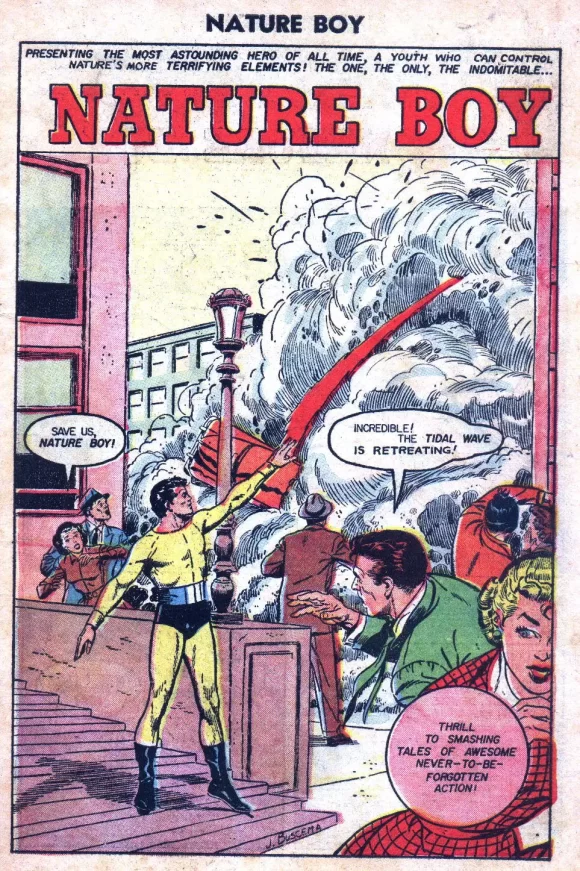
Nature Boy (Nature Boy #3, 1955). Another attempt at a new superhero was Nature Boy, aka young David Crandall, who is washed overboard during a treacherous storm at sea but is rescued by a gathering of supernatural element-commanding gods and monarchs who give him control over the forces of nature, including wind, rain, fire, earth, electricity, and even love, to fight crime and defend the weak. Bonus points: Nature Boy featured the work of John Buscema.
—
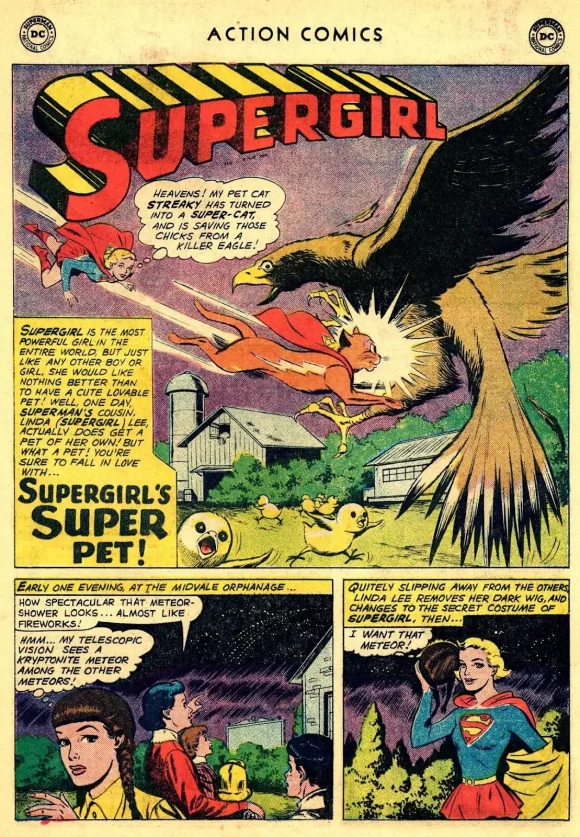
“Supergirl’s Super Pet!” (Action Comics #261, February 1961). After Superman, one of my favorite strips of the early- to mid-1960s was the Supergirl feature in Action Comics. Siegel began an (at the time uncredited) run on the strip beginning with “Supergirl’s Superpet,” introducing Streaky the Supercat into the Superman Family. Art by Jim Mooney.
—
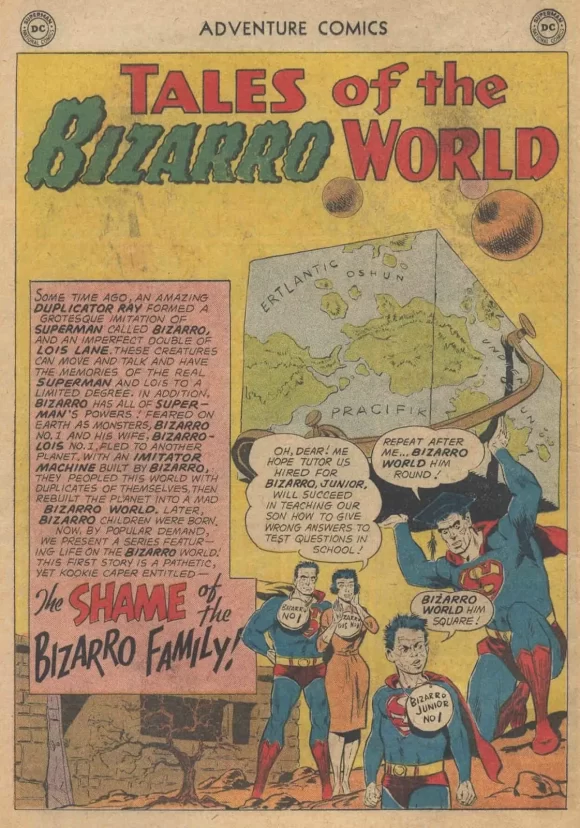
“The Shame of the Bizarro Family!” (Adventure Comics #285, June 1961). His whole experience returning to Superman in the 1960s must have felt like being in the Bizarro World! Art by Wayne Boring and Stan Kaye.
—
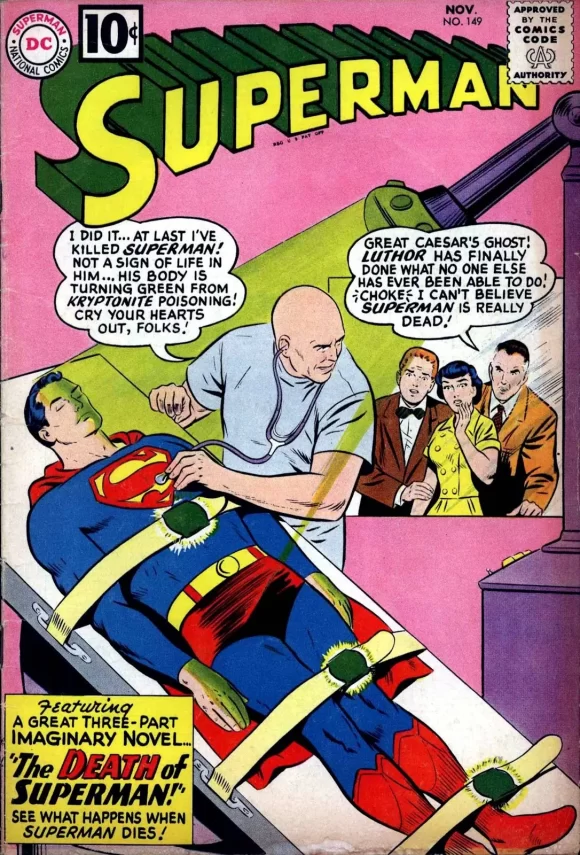
“The Death of Superman!” (Superman #149, November 1961). One of Siegel’s most famous Silver Age Superman stories: Lex Luthor pretends to reform before ultimately engineering Superman’s death. It remains one of the classic “imaginary” Superman stories, with art by Curt Swan and Kaye.
—
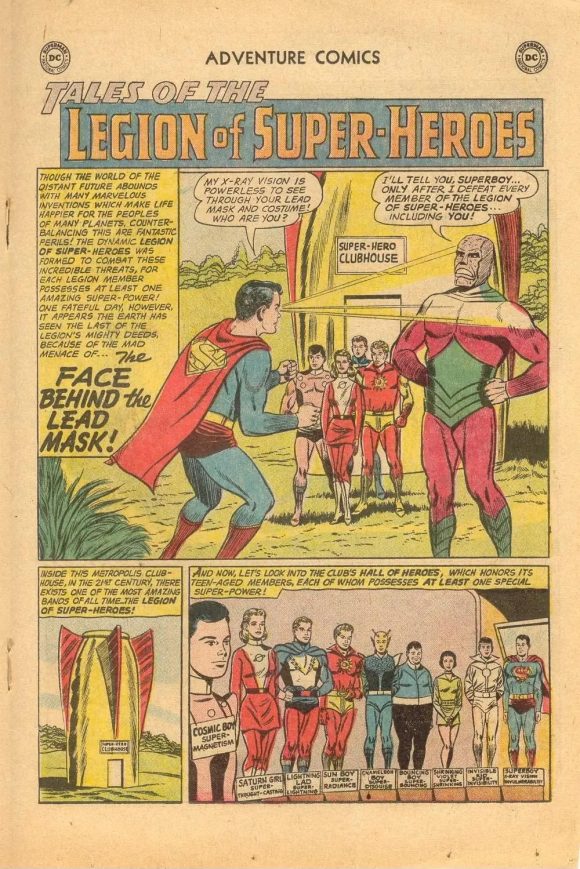
The Legion of Super-Heroes (Adventure Comics #300, September 1962). Big doings as the Legion takes over the lead slot of Adventure. Superboy frees Mon-El from the Phantom Zone, and Siegel brings his science-fiction chops to “The Face Behind the Lead Mask,” with art by John Forte and Al Plastino.
—
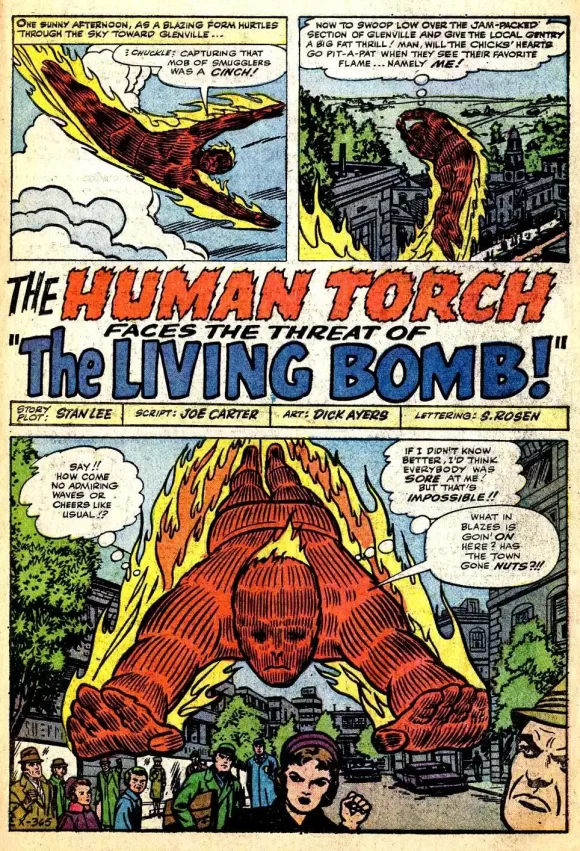
The Human Torch in “The Living Bomb!” (Strange Tales #112, September 1963). Siegel branched out, trying his hand at a few stories for Marvel Comics, albeit as “Joe Carter,” to get around the prohibition against working for the competition. Art by Dick Ayers.
—
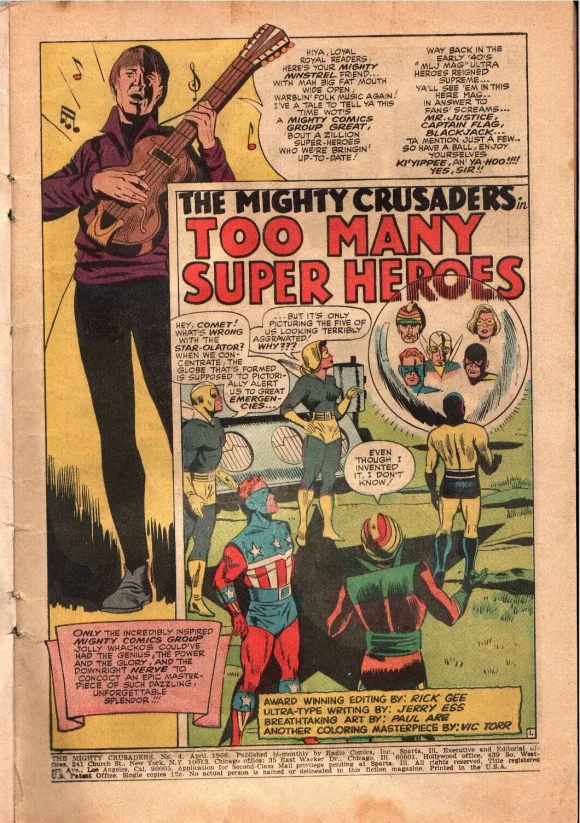
The Mighty Crusaders (Mighty Crusaders #4, April 1966). One of my childhood favorites, the overstuffed brawl called “Too Many Super Heroes” that reunited all the Golden Age MLJ/Archie superheroes. The story is credited to writer “Jerry Ess” (Siegel), artist “Paul Are” (Paul Reinman), and colorist “Vic Torr” (Victor Gorelick).
—
MORE
— 13 SUPER STORIES: A JERRY SIEGEL Birthday Celebration. Click here.
— Celebrate JERRY SIEGEL: Read the Single Comics Page That Changed the World. Click here.
—
PAUL KUPPERBERG was a Silver Age fan who grew up to become a Bronze Age comic book creator, writer of Superman, the Doom Patrol, and Green Lantern, creator of Arion Lord of Atlantis, Checkmate, and Takion, and slayer of Aquababy, Archie, and Vigilante. He is the Harvey and Eisner Award nominated writer of Archie Comics’ Life with Archie, and his YA novel Kevin was nominated for a GLAAD media award and won a Scribe Award from the IAMTW. Check out his memoir, Panel by Panel: My Comic Book Life.
Website: https://www.paulkupperberg.net/
Shop: https://www.paulkupperberg.net/shop-1