
The late, great cartoonist and educator was born 100 years ago…
By PAUL KUPPERBERG
Joe Kubert called himself a cartoonist.
“I am a cartoonist—first, last, and always,” Joe said in a 2007 interview with Bryan Stroud reprinted in 2017 on Nerdteam30.com.
In a 1994 interview with Gary Groth for The Comics Journal, the artist described the core of his comics career, “I believe that the job of the cartoonist is not to merely draw pretty pictures, but to tell a story with his pictures. If he does not accomplish that, he’s not doing the job of a cartoonist.”
Joe Kubert was one hell of a cartoonist!
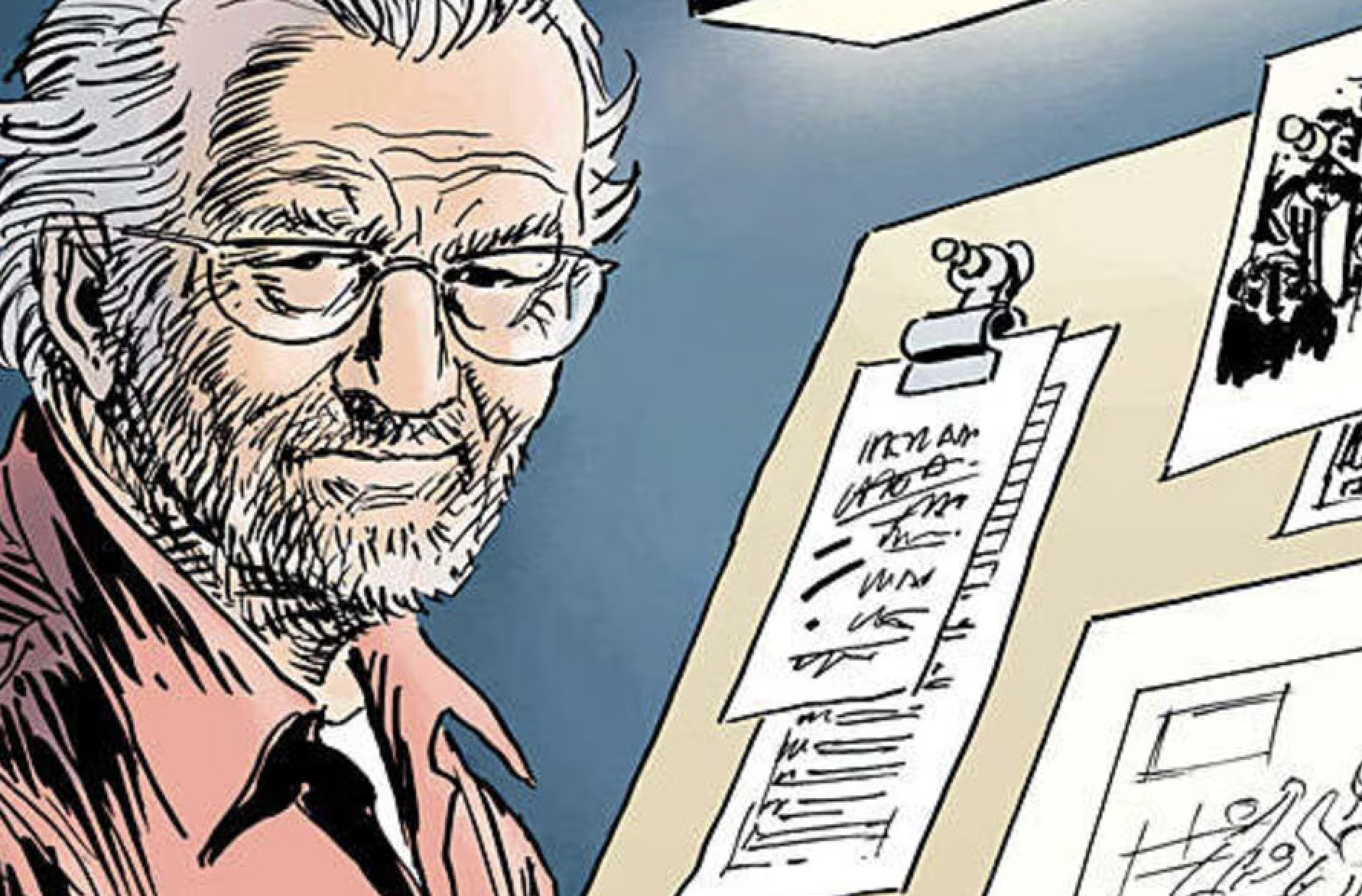
One of the all-time greats, as a matter of fact. One of the very few artists with careers that long — 70 years! — whose work not only didn’t start to slip after a certain age, but who only continued to get better with every passing year.
In our talk for Direct Conversations: Talks With Fellow DC Comics Bronze Age Creators, inker, filmmaker, and former DC Comics production artist Steve Mitchell called Joe “a humble Titan,” and I can’t think of a better descriptor.
In the short time he was my editor on Arion, Lord of Atlantis in the early 1980s, Joe never tried forcing his personal taste or opinion on my stories. The previous editor had removed me from the series, which I had co-created with artist Jan Duursema, his reason being, essentially, that I didn’t understand the character and couldn’t come up with a plot to satisfy him. When that editor was fired and Joe given the assignment, he put me back on the book, because “You created it, nobody else should be writing it.” When he did have a note, it was never an editorial edict but always in the form of a suggestion. And usually correct.
That was Joe. He was a mensch. And he understood every job involved in making a comic book because he had done them all.
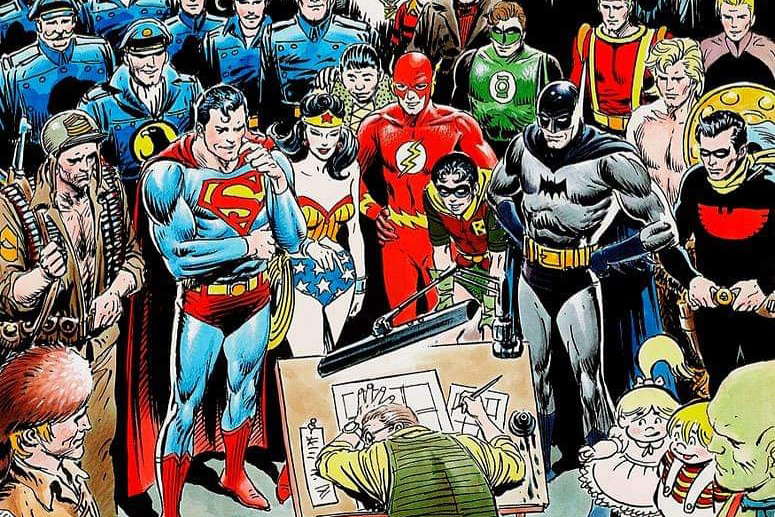
Joe Kubert (September 18, 1926 – August 12, 2012 ) was born in Yzeran, Poland, and came to the United States with his family as a child, growing up in Brooklyn. He was drawing professionally while still in his teens, entering the comic-book business during its early years on features like Blue Beetle, Phantom Lady, Vigilante, Johnny Quick, Hawkman, and The Flash.
Joe’s long association with DC Comics, originally National Periodical Publications, included later, defining runs on Sgt. Rock, Enemy Ace, Hawkman, and Tor, among many others. His rugged, expressive drawing style and mastery of storytelling through pictures made his work immediately recognizable — in that same talk with Steve Mitchell, he remembered that Joe “once told me that it was good storytelling if you could follow the story without reading the word balloons.”
On top of being an artist, he was also writer, letterer, colorist, editor, and production artist, not to mention a teacher, founding the Joe Kubert School of Cartoon and Graphic Art in 1976, creating a training ground for generations of aspiring cartoonists. His students included Timothy Truman, Lee Weeks, Eric Shanover, Jan Duursema, Tom Mandrake, John Totleben, Ed Piskor, Scott Kolins, Bart Sears, and scores more who went on to careers in comics. For Joe, cartooning was a discipline that could be taught with the seriousness and rigor usually reserved for fine art.
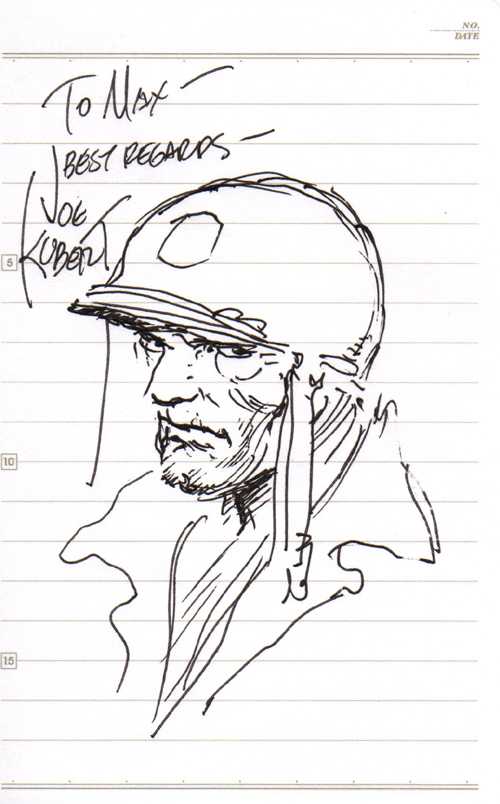
Two quick stories about Joe, the man: I took my son Max, then 12 years old, to the 2008 New York Comic Con at the Javits Center. Number One on his wish list for the day was to meet Joe Kubert and perhaps, maybe, hopefully, get a Sgt. Rock sketch. I warned him that Joe might not be in a position to do a sketch for him on the convention floor because that could trigger a stampede of fans looking for one as well. When we finally ran into Joe, I introduced them and Max held up the little lined notepad he was collecting sketches in and asked Joe to please do a sketch. Joe looked around at the fans swarming past him in all directions, then down at the hopeful kid in front of him, and then he broke into his patented big grin, said, “Sure!” and took the pad to dash off this quick sketch.
In 2011, at another New York convention, a string of coincidental meetings in the aisle of the show floor brought about a chance reunion of members of what was known as DC Comics’ Junior Woodchucks, the nickname given the company’s early-1970s assistant editors (you can catch a recent great talk with and about the Woodchucks on Dollar Bin Bandits).
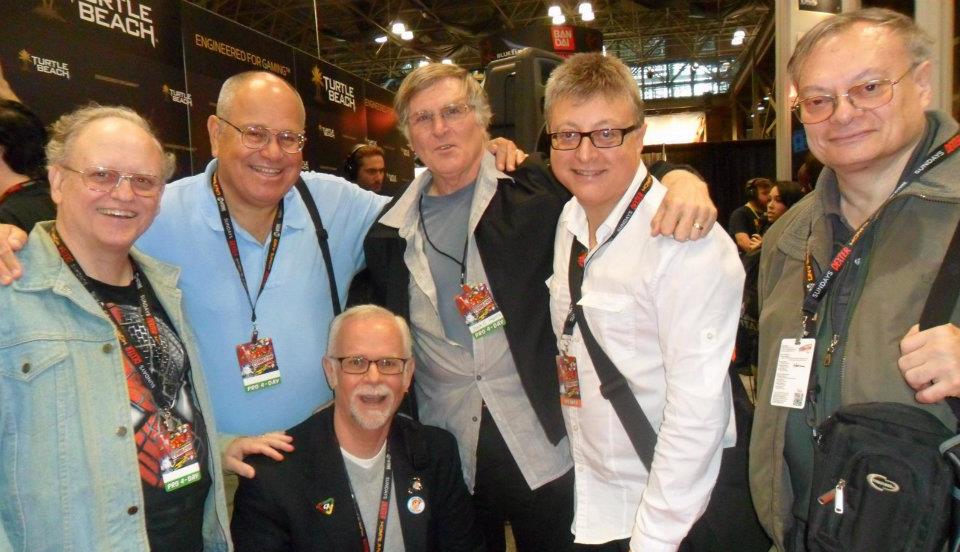
I wasn’t officially a Woodchuck, but I could be described as “Woodchuck adjacent,” so I was happy to be there when (from left to right) John Workman, Bob Rozakis, Jack C. Harris, Michael Uslan, and Allan Asherman were reunited. As we all caught up, someone mentioned that Joe was doing a signing at a nearby booth and we should go and surprise him.
We trooped on over, coming up on his table from the side where he couldn’t see our approach, and it was Bob Rozakis who said in a loud, nerdy voice, “Excuse me, Mr. Kubert, but do you think I’ve got a chance to make it in comic books?” Joe turned to see who was talking to him and found himself facing half a dozen old guys who he’d known since we were all kids, and out came that grin again and he said, “Sure,” then pointed at me and said, “But not you.”
Joe’s career spanned pretty much the entire history of the American comic book, from the Golden Age through the modern era, and he remained, by his own description, a cartoonist “first, last and always.”
Here then, in no particular order, My 13 Reasons to Celebrate 100 Years of Joe Kubert.
—
1. Sgt. Rock and the Combat Happy Joes of Easy Company. War! What is it good for? In this case, some of the best comics published by DC in the later 1950s and early 1960s! While superheroes like Superman, Batman, and Wonder Woman were dealing with preposterous criminal plots, silly aliens, and genies and dragons, DC’s war titles were dealing with the down and dirty reality (as much as was allowed by the Comics Code) of war… science fiction themed series like “The War That Time Forgot” notwithstanding.
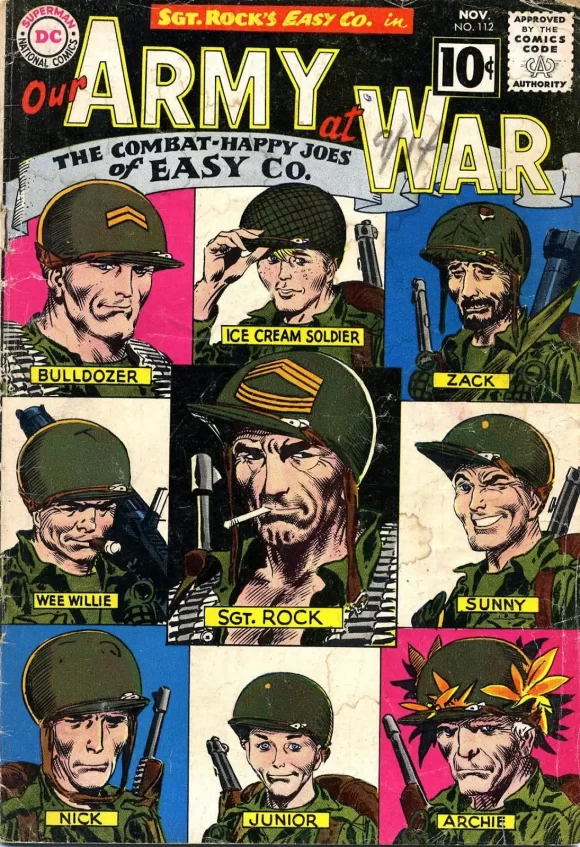
And the credit for the gritty realism was largely due to the talents of writer Robert Kanigher and artist Joe Kubert, although ironically the poster child for DC war heroes, Sgt. Rock, was first written by Bob Haney and illustrated by Ross Andru and Mike Esposito. But Rock would come to be Kanigher and Kubert’s signature character, their collaboration bringing depth and humanity to Frank Rock and the rest of the men of Easy Company.
—
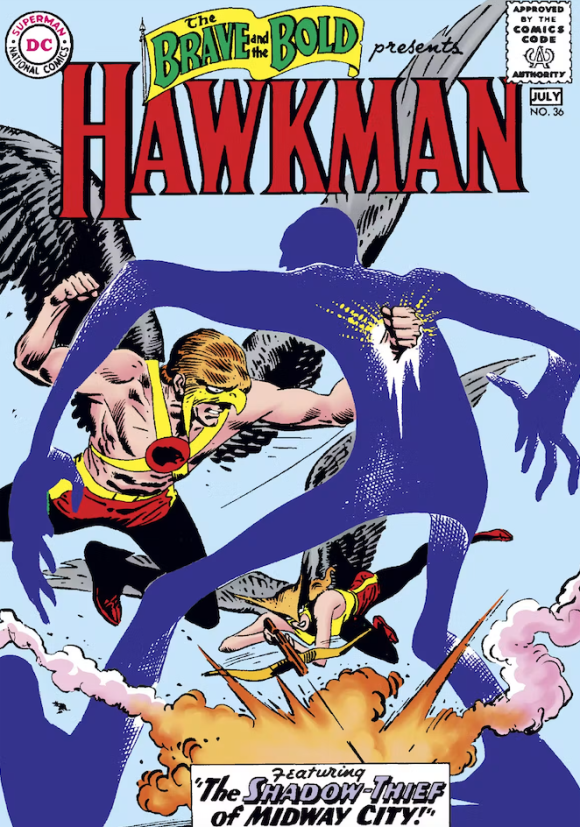
2. Hawkman. No offense to anyone and everyone who followed Joe Kubert on the Hawkman character after his legendary six-issue Silver Age relaunch of the Winged Warrior in The Brave and the Bold #34-36 and #42–44, but nobody would do it better!
—
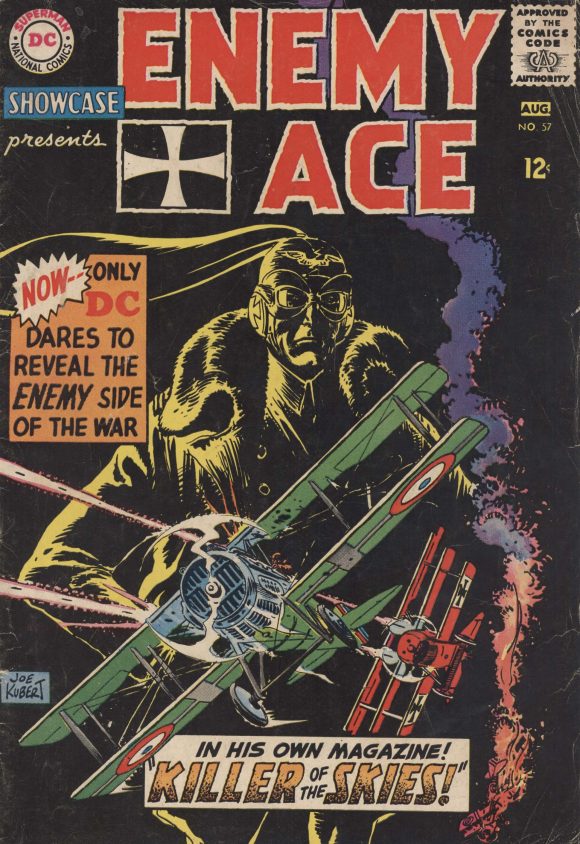
3. Enemy Ace. Co-created with Kanigher, Enemy Ace was the story of Hans von Hammer, an aristocratic German flying ace who served during World War I and World War II. The strip dealt in moral complexities, presenting a protagonist who was neither a villain nor a Nazi sympathizer but a deeply introspective, chivalrous anti-hero bound by a strict code of personal honor.
—
4. Tarzan. How good was Joe’s work on Tarzan? I’ll let Steve Mitchell share this memory from 1972, as told in Direct Conversations: “I was there the day Joe Kubert brought in his first DC Comics issue of Tarzan. Joe wasn’t a violent guy, but he probably would have killed anybody who had gotten in his way of getting that gig. And he was absolutely the right man for the job…
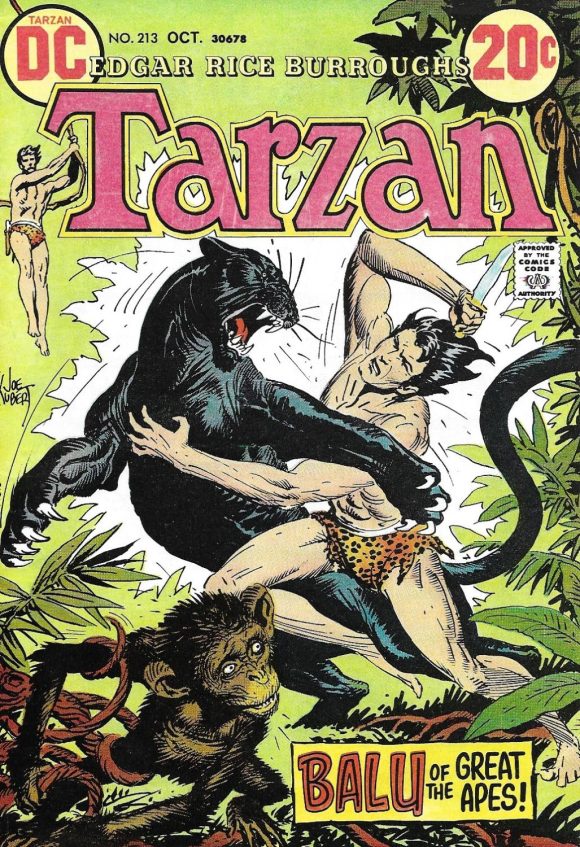
“Anyway, one day Neal (Adams) came in with a drawing he’d done of Tarzan to sort of prove to Joe that, well, he could do that too. Neal and Joe were very competitive. Neal would probably be the first one to admit that Joe was great. And I think Joe would admit that Neal was great, but I think Neal was always trying to play on Joe’s level. Neal was super talented but not a great storyteller. Joe was probably one of the top five storytellers in comics history. … So, Joe looked at Neal’s drawing and asked if he could borrow it. He took it back to his office, put a piece of tracing paper over it, and, with a red marker, started outlining changes.
“Neal made Tarzan very buff, very muscular, but Joe drew him as lean and athletic, with more of a swimmer’s build. Joe marked up Neal’s pencils on this overlay, not being snide or nasty, just showing Neal how Joe saw Tarzan. And Neal just had to grin and bear it. Neal was always looking for a fight because he always thought he was right, and a lot of times, he was. As far as I’m concerned, Neal is right up there on the (comics) Mount Rushmore alongside Joe, but I always got the feeling he might have thought Kubert was just a little bit better than him.”
—
5. Tor. Joe’s prehistoric hero, Tor was co-created with writer and fellow cartoonist Norman Maurer in 1953. A caveman living in a world of dinosaurs, primitive tribes, and natural dangers, Tor was less a conventional superhero than an adventure character built around his fascination with the prehistoric world.
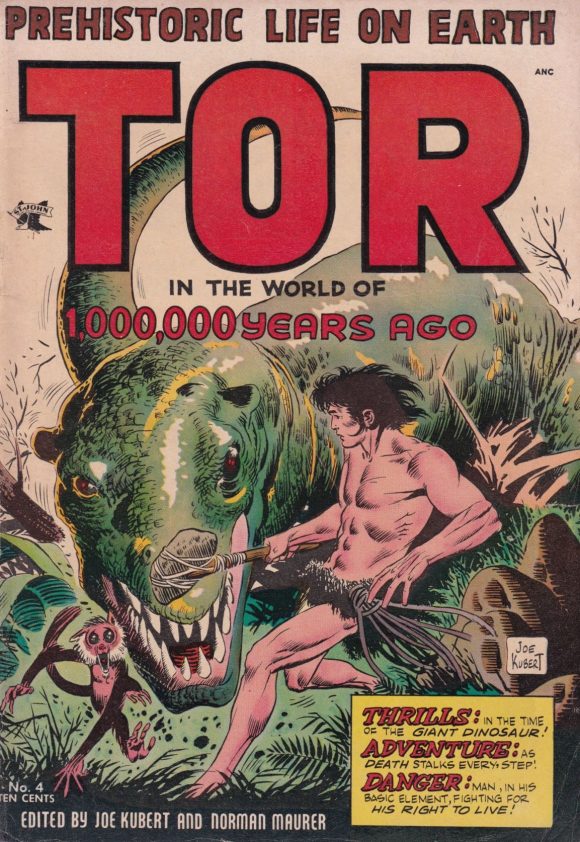
The series gave Joe an opportunity to indulge in expressive figure work, dramatic landscapes, and storytelling driven less by dialogue and more by action and atmosphere. Tor’s original run was brief, but Joe kept returning to him over the decades in new stories and graphic novels, becoming one of his most personal creations.
—
6. The Viking Prince. Another Kanigher/Kubert cocreation, the character debuted in The Brave and the Bold #1 (August 1955). Set during the Viking Age, the series featured a young Norse warrior whose adventures were a mix of historical legend and the high adventure genre that was so popular in the films of the time.
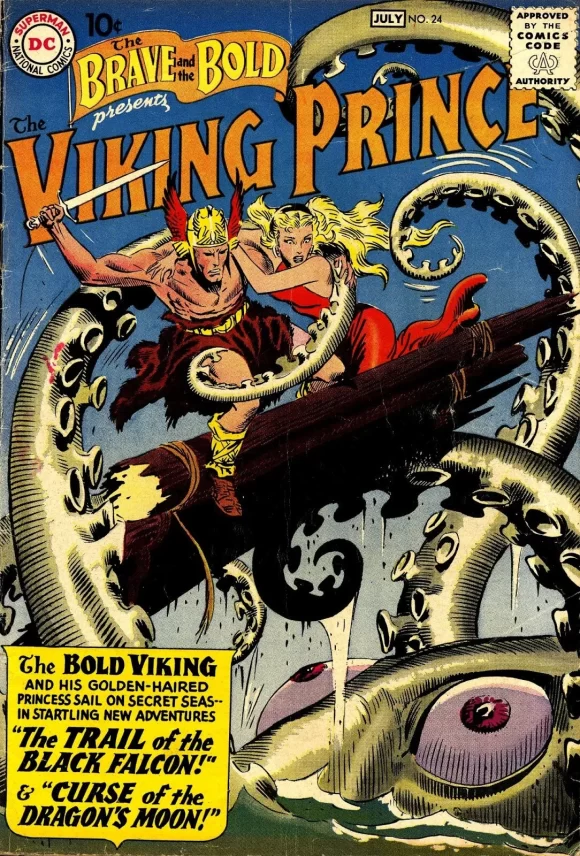
The Prince traveled through a world of rival Vikings, raiders, kings, monsters, and hostile kingdoms, fighting to defend his people and uphold his personal code of honor. As ever, Joe’s dynamic artwork gave the strip a distinctive sense of movement and atmosphere, while his detailed depiction of ships, weapons, costumes, and landscapes helped establish its historical setting.
—
7. Tales of the Green Beret. This syndicated newspaper strip was based on Robin Moore’s 1965 book about the U.S. Army Special Forces. Illustrated by Joe, the strip followed Green Berets serving in Vietnam and other trouble spots, combining military action with stories of duty, danger, and camaraderie.
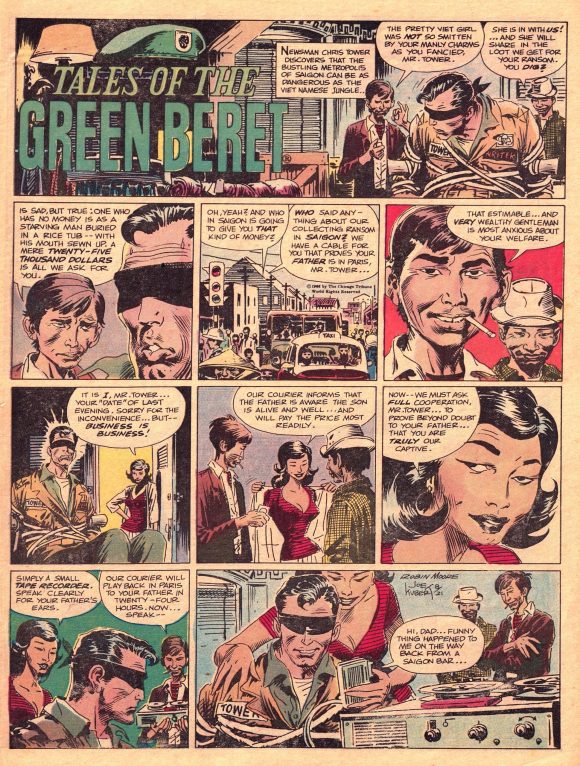
Joe’s powerful draftsmanship and experience with war comics gave the strip a visual authority, while his detailed depictions of soldiers, weapons, vehicles, and combat distinguished it from many contemporary adventure strips. Joe drew the strip from 1965 until 1967.
—
8. Fax from Sarajevo. Published in 1996, this was Joe’s graphic novel account of the Bosnian War, based on the experiences of his friend Ervin Rustemagić and his family. Trapped in Sarajevo during the siege, Rustemagić communicated with Joe through a series of faxes, documenting the destruction around him and his family’s desperate efforts to escape.
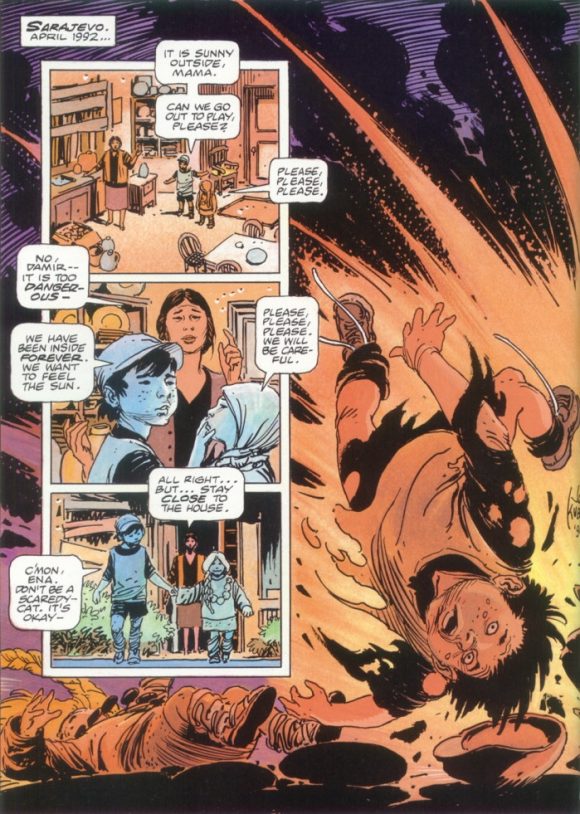
Kubert transformed those messages into a powerful work of nonfiction comics, bringing the immediacy of the faxes to life with his dramatic storytelling and draftsmanship. The book marked an important late career departure for Joe, bringing his skills as a cartoonist to a contemporary real world conflict and earning him Eisner and Harvey Awards.
—
9. Yossel: April 19, 1943. Published in 2003, Yossel is a personal graphic novel about the Warsaw Ghetto Uprising. Drawing on his own family history and Jewish heritage, Joe imagined himself as Yossel, a young Jewish artist living in the ghetto who records the events around him through his drawings.
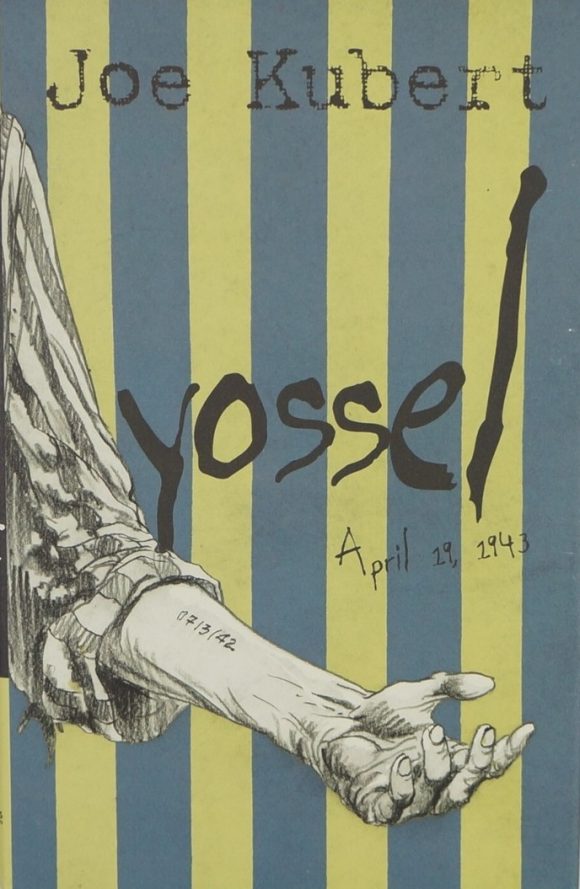
Instead of presenting the uprising as a conventional action story, Joe created rough, expressive artwork and a sketchbook-like visual approach to convey the fear, deprivation, and desperation of life under Nazi occupation.
—
10. The Unknown Soldier. Yet another Kanigher/Kubert joint, the Unknown Soldier debuted in Star Spangled War Stories #151 (June/July 1970). He was a mysterious World War II operative, a master of disguise whose face—or what was left of it—was concealed beneath bandages.
. 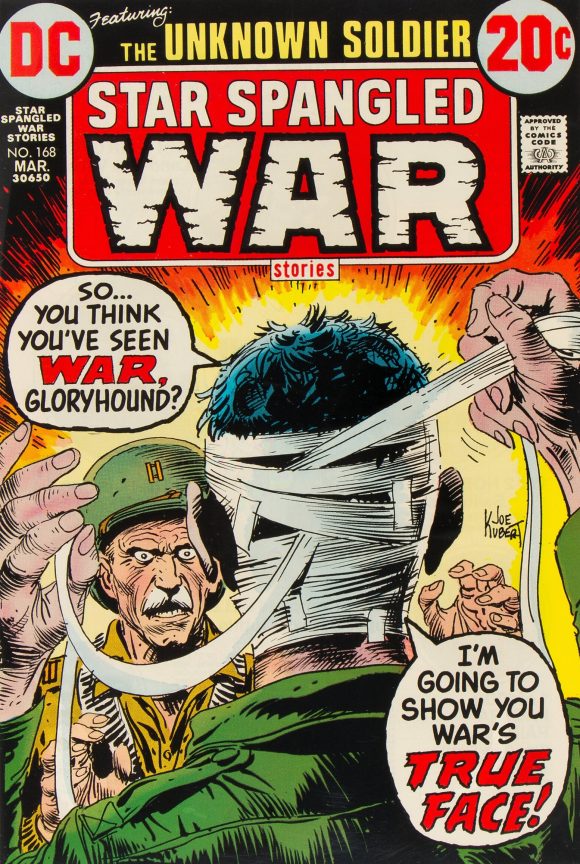
Kubert’s detailed, atmospheric art brought a sense of realism and human drama to these World War II espionage and combat adventures. The “man who no one knows—but—is known by everyone!” proved popular enough that SSWS changed its title to Unknown Soldier with #205 (April/May 1977) and ran until 1982.
—
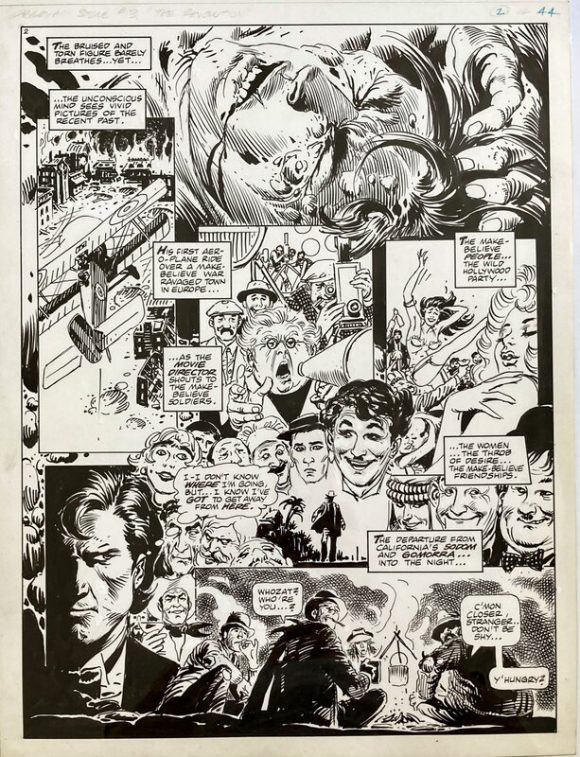
11. Abraham Stone. Joe’s Abraham Stone was a series of graphic novels following a young Jewish immigrant in early 20th century New York. The character first appeared in Country Mouse, City Rat (1995), which introduced Stone as he arrived in America and encountered the rough-and-tumble world of the Lower East Side. The story continued in The Prophecy (2000) and The Iron Chain (2004), expanding the character’s adventures while exploring immigrant life, family, violence, and survival, with Joe showing off every bit of his storytelling chops.
—
12. Firehair. Created by Joe for DC, Firehair, who debuted in Showcase #85 (September 1969), was the sole survivor of a wagon-train massacre, a red-haired white infant adopted by Grey Cloud, a Blackfoot chief, and raised within the tribe. The child was named Firehair and grew into a skilled young warrior caught between two cultures.
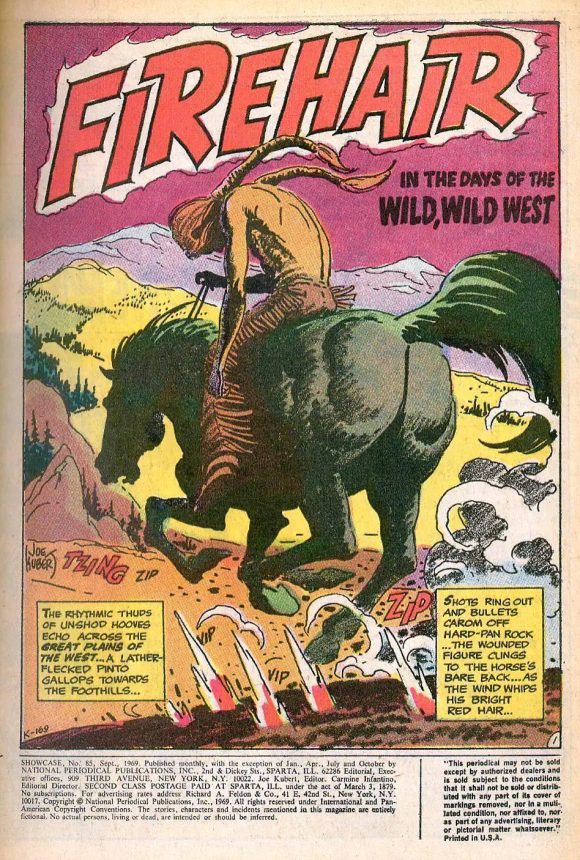
Kubert wrote, drew, and edited the three Showcase stories, which followed Firehair’s adventures in the American West of the 1830s. The tryout didn’t lead to a series, and, after a three-issue run as a back-up feature in Son of Tomahawk #131-133 (November/December – March/April 1971), Firehawk rode off into the sunset.
—
13. 3-D Comics. Joe and his partner Norm Maurer helped bring three-dimensional comics into the postwar boom with 1953’s 3-D Comics. Using stereoscopic artwork and red-and-blue glasses, the comic created the illusion of images projecting from the printed page.
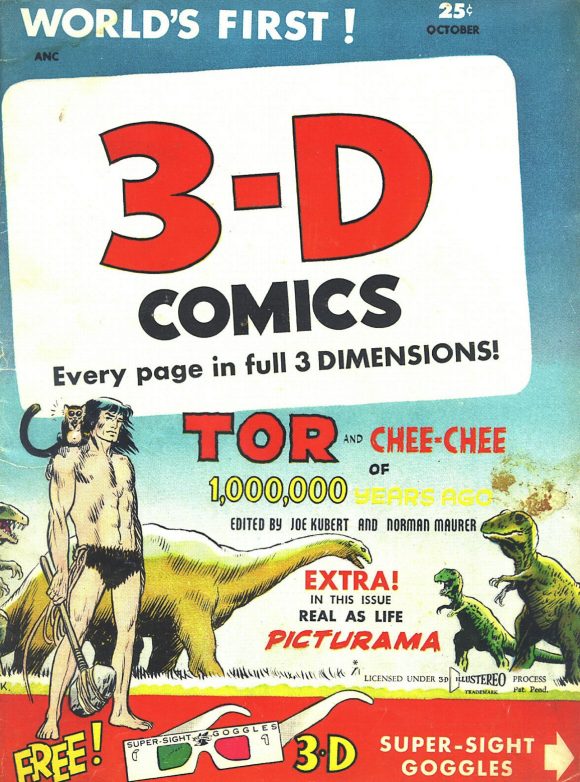
Kubert handled most of the artwork, while Norm developed and refined the production techniques that made the effect possible. Published by St. John Publications, 3-D Comics became an immediate success, selling millions of copies and inspiring a wave of competing titles before the short-lived craze ran its course.
—
MORE
— DC Unveils Covers for Its September JOE KUBERT CENTENNIAL SPECIALS. Click here.
— JOE KUBERT: 100 YEARS — A LIFE IN COVERS #1: DC Quietly Adds a Striking FOIL VARIANT to This Week’s Tribute Issue. Click here.
—
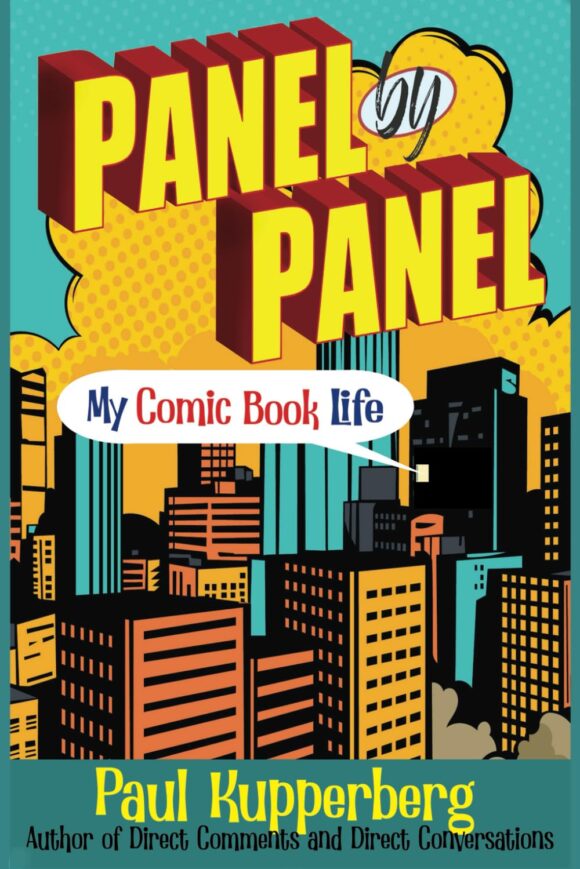
PAUL KUPPERBERG was a Silver Age fan who grew up to become a Bronze Age comic book creator, writer of Superman, the Doom Patrol, and Green Lantern, creator of Arion Lord of Atlantis, Checkmate, and Takion, and slayer of Aquababy, Archie, and Vigilante. He is the Harvey and Eisner Award nominated writer of Archie Comics’ Life with Archie, and his YA novel Kevin was nominated for a GLAAD media award and won a Scribe Award from the IAMTW. Check out his memoir, Panel by Panel: My Comic Book Life.
Website: https://www.paulkupperberg.net/
Shop: https://www.paulkupperberg.net/shop-1

September 18, 2026
So glad to see the Unknown Soldier on this list. I’m hoping we get a DC Finest series featuring the character.
September 18, 2026
I think I had just about every DC issue of Tarzan. Kubert was such a great storyteller. A lot of those issues had a minimum of dialogue, but were so easy to follow. My version of Tarzan is Kubert’s.