The TOP 13 GEORGE PEREZ Countdown: #2 — CRISIS
Worlds lived, worlds died — and Perez made it look amazing…
The TOP 13 GEORGE PEREZ Countdown: #4 — THE AVENGERS
Perez assembles an impressive resume…
AN ANNIVERSARY SPECIAL: The first theatrical short premiered 85 years ago! — UPDATED 9/26/26: The first Fleischer Superman theatrical short premiered 85 years ago, on September 26, 1941! Perfect time to reprint this piece from July 2021 celebrating Max Fleischer’s birthday! Swell! — Dan — By FRED VAN LENTE The pioneering animator and inventor Max Fleischer’s birthdate is July 19, 1883, and is it any coincidence that on July 20, 2021, the trade paperback of The Comic Book History of Animation – by artist Ryan Dunlavey and me — arrived on store shelves worldwide? I mean, yes, it absolutely was a coincidence, Ryan and I are not smart enough to plan these things, but you hardly need an excuse to celebrate the achievements of Max Fleischer, a true pioneer in the field. In CBHOA, Ryan and I elaborate on his humble beginnings in the industry: After working for cartoon studio mogul J.R. Bray, Max and his brothers opened their own studio in Times Square, where they produced classic series like “Out of the Inkwell,” “Betty Boop” and “Popeye the Sailor,” adapted Einstein’s Theory of Relativity into an animated short, and even invented the famous “Follow the Bouncing Ball.” Unfortunately, labor troubles embittered Max against his own employees, and he moved his studio to more management-friendly Miami. Sadly, this was the beginning of the end for him. Even though he produced a well-received feature, Gulliver’s Travels, to compete with Walt Disney’s output, the studio’s remote (by 1940s standards) location caused constant cost overruns and personnel shortages. But the worst was yet to come. As Ryan and I explain: They may have caused huge challenges at the studio, but there’s a lot to love about the Fleischers’ Superman toons. With all due respect to Margot Kidder and Dana Delaney, they have my favorite depiction of Lois Lane, ever. The Fleischers’ Lois has the über-confidence of a cokehead on an all-night bender and the self-preservation skills of a toddler chasing a ball onto an eight-lane highway. How she survived this long before the guy from Smallville arrived is a complete mystery. For some reason she is the character with the fewest lines in her face, just daubs of color, so maybe she’s some kind of invincible pillow person? The corporate shenanigans behind these cartoons were so FUBAR that they fell into public domain...
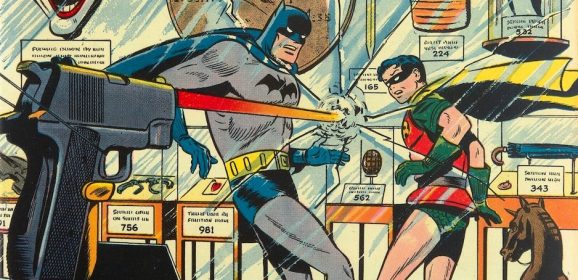
With the Facsimile Edition coming in December, the beloved issue’s editor takes you inside… By PAUL LEVITZ 1980’s Detective Comics #500 — which will be re-released as a Facsimile Edition in December — was pretty much my farewell to comics editing, after eight years as an assistant editor and editor. I was about to shift to the business side of the company, and I really wanted to go out with a bang. I already had enough control over our publishing plans that I was able to schedule it for 80 pages — the largest original anniversary issue DC had ever celebrated (Superman Annual #7 was themed to the Man of Steel’s Silver Anniversary, but that was all reprint). And every page was going to be special… Here are 13 THINGS I LOVED ABOUT PUTTING TOGETHER DETECTIVE COMICS #500: — 1. It even had a spine! I loved comics with “perfect binding” spines, back to DC’s old 80-Page Giants that introduced me to so many classic stories, and the early Marvel annuals with their milestone stories like the wedding of Sue and Reed. — 2. The lead story was by Alan Brennert, an old friend and award-winning television writer and novelist. “To Kill A Legend,” with art by Dick Giordano, my about-to-be successor as editor of the title, became the most often reprinted and praised story in the issue. It also gave the Phantom Stranger a moment in the book — the first character whose series I got to write. — 3. It was always a pleasure to work with Len Wein, my old poker buddy. Reuniting him with Jim Aparo, his collaborator on a great run of Phantom Stranger issues that established Len’s reputation as an important comics writer, was an extra treat. And they jammed a squad of detectives who had filled the comic’s pages over the years into a 13-page mystery — everyone from Roy Raymond to Pow-Wow Smith. — 4. Speaking of Len, he borrowed from Snoopy (or Charles Schulz) for a sweet, swift two pager with Walt Simonson, whose reputation was made with is award-winning Manhunter run in Detective. — 5. Mike W. Barr contributed a tale of Edgar Allan Poe, considered to be the father of the detective story, and the Elongated Man, whose more than 50 appearances in Detective stretched through most of...
Worlds lived, worlds died — and Perez made it look amazing…
Perez assembles an impressive resume…