
From The Outer Limits to the printed page…
By PETER STONE
When the name Marshall Rogers comes up, the first series people mention is his late-’70s run on Detective Comics with Steve Englehart, plus stories written by Len Wein and Denny O’Neil. These are tales that are trendsetting to this day: The wonderful interactions with the gorgeous Silver St. Cloud, the creation of Clayface III, and the infamous Joker Fish! The redesign of Deadshot! It’s one of the best Batman runs in history.
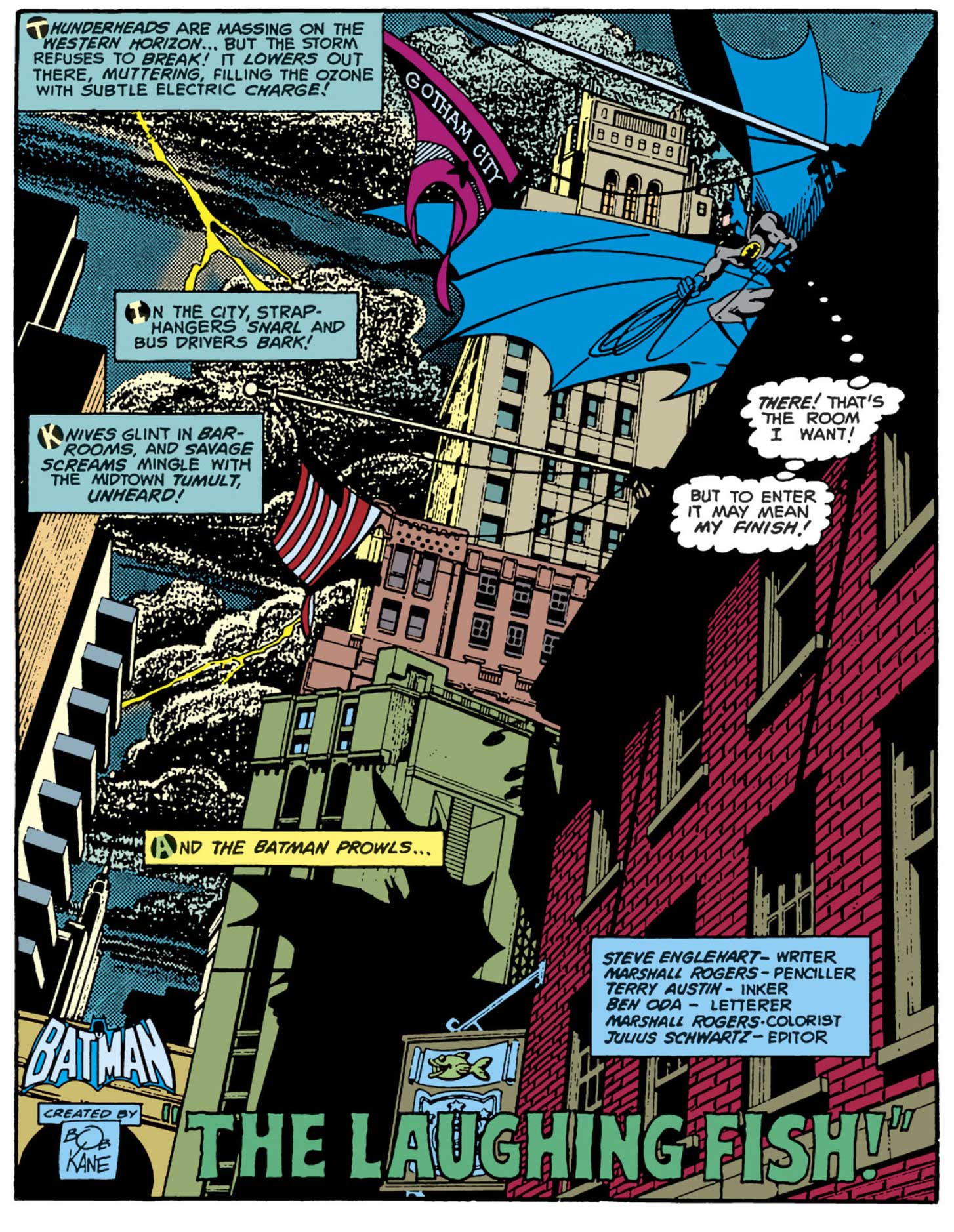
Detective Comics #475
But Marshall Rogers did a lot of other comics as well.
Harlan Ellison is thought of as one of the greatest science-fiction writers of the 20th (and 21st) century. His work was tremendously influential among novelists and screenwriters alike. He wrote the A Boy and His Dog series, which was made into a cult-favorite film starring a young Don Johnson. He wrote a plethora of teleplays for various shows, like The Outer Limits, The Man From UNCLE, Alfred Hitchcock and Star Trek.
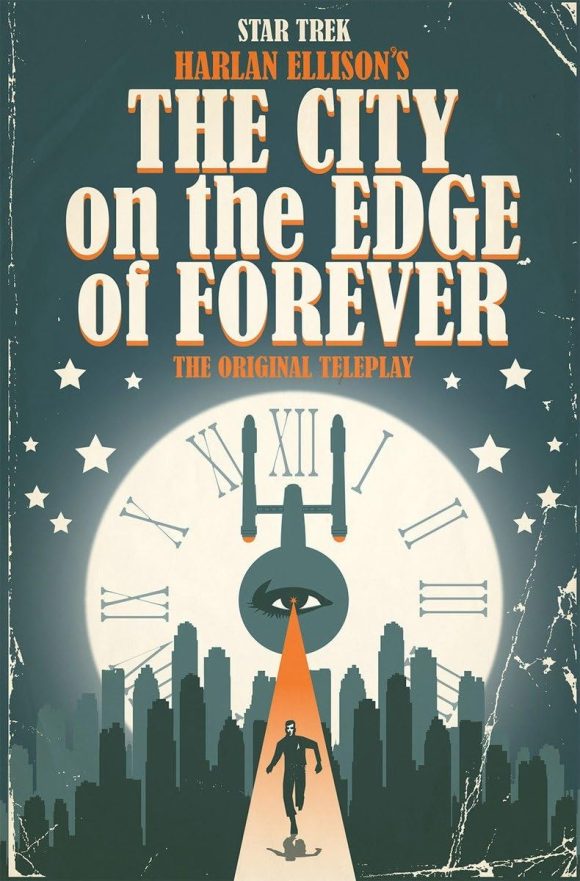
(The Trek episode, The City of the Edge of Forever, veered in key ways from Ellison’s original treatment, but is considered one of the series’ best. That treatment was adapted by 13th Dimension’s Scott Tipton, his brother David, and artist J.K. Woodward.)
But Harlan Ellison wrote a ton of other things as well.
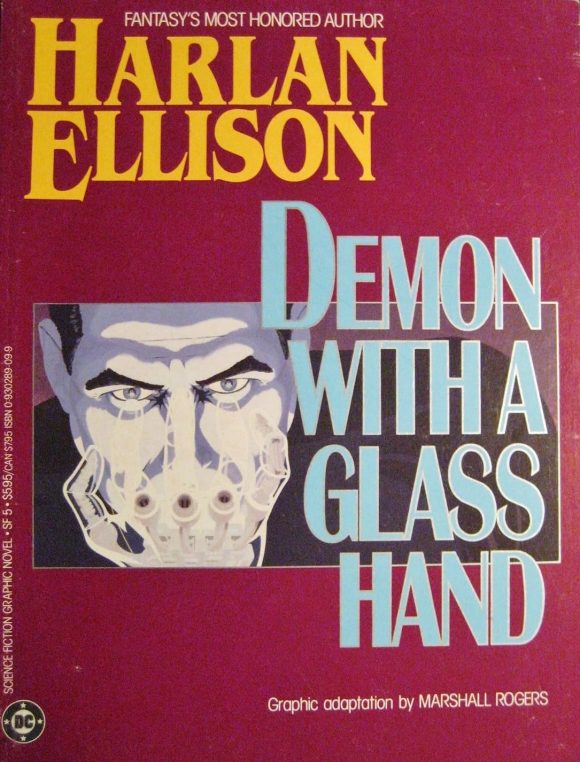
In 1986, Ellison and Rogers were paired for the fifth issue of the experimental DC series Science Fiction Graphic Novel. The ish was an adaptation of Ellison’s 1964 Outer Limits episode, Demon With a Glass Hand. (The book series also featured the likes of Robert Bloch, Ray Bradbury, Gene Colan and Keith Giffen.)
Ellison gave the Demon With a Glass Hand teleplay to Rogers, who adapted and expanded it.
The TV episode stars Robert Culp as an amnesiac named Trent, who has a hand made of glass and is being hunted by humanoid aliens called the Kyben. It was filmed at Los Angeles’ landmark Bradbury Building (called the Dixon Building in the episode and the Seeleg Building in the graphic novel).
Moody and shadowed, the building features an elevator constructed with metal filigree so the interior can be easily viewed from the outside. The chase scenes are vertical, not horizontal, which adds a unique feel to the action, and the roof is made of high, vaulted glass. It is such a fascinating building that Ridley Scott used it for a scene in Blade Runner.
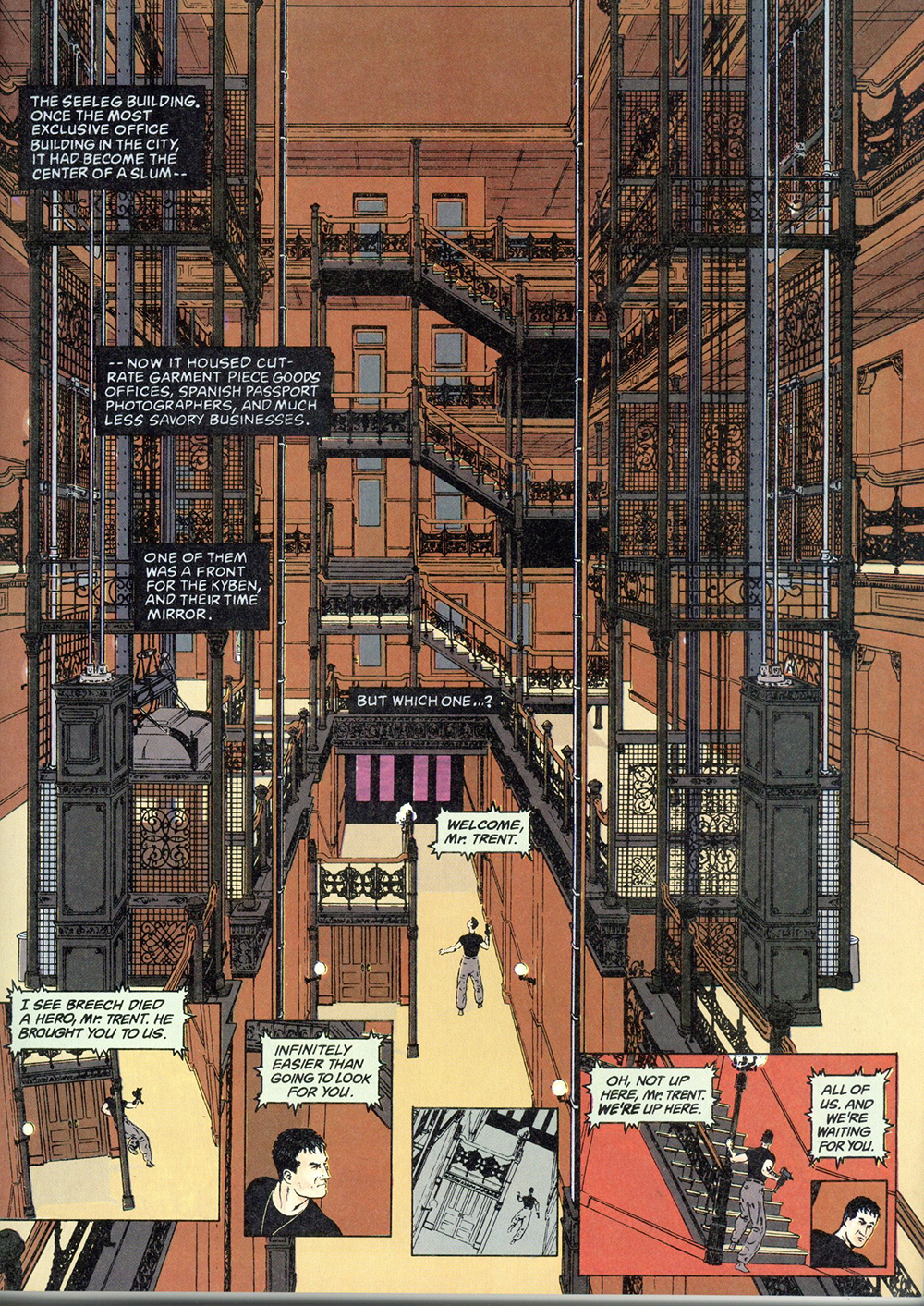
Rogers, a trained architect, saw no reason to change it, so his version uses the same building. The details and film noir feel of the structure must have been hard to turn down.
The important elements of the story remain the same: the glass hand, the woman Trent meets along the way (Consuelo), the medallions around the necks of the Kyben, and the conclusion. (Consuelo, however, is not a blonde, white woman as portrayed on the show by Arlene Martel, but a Latina, as her name implies. Harlan was a stickler about his stories, so it is not a surprise to me.)
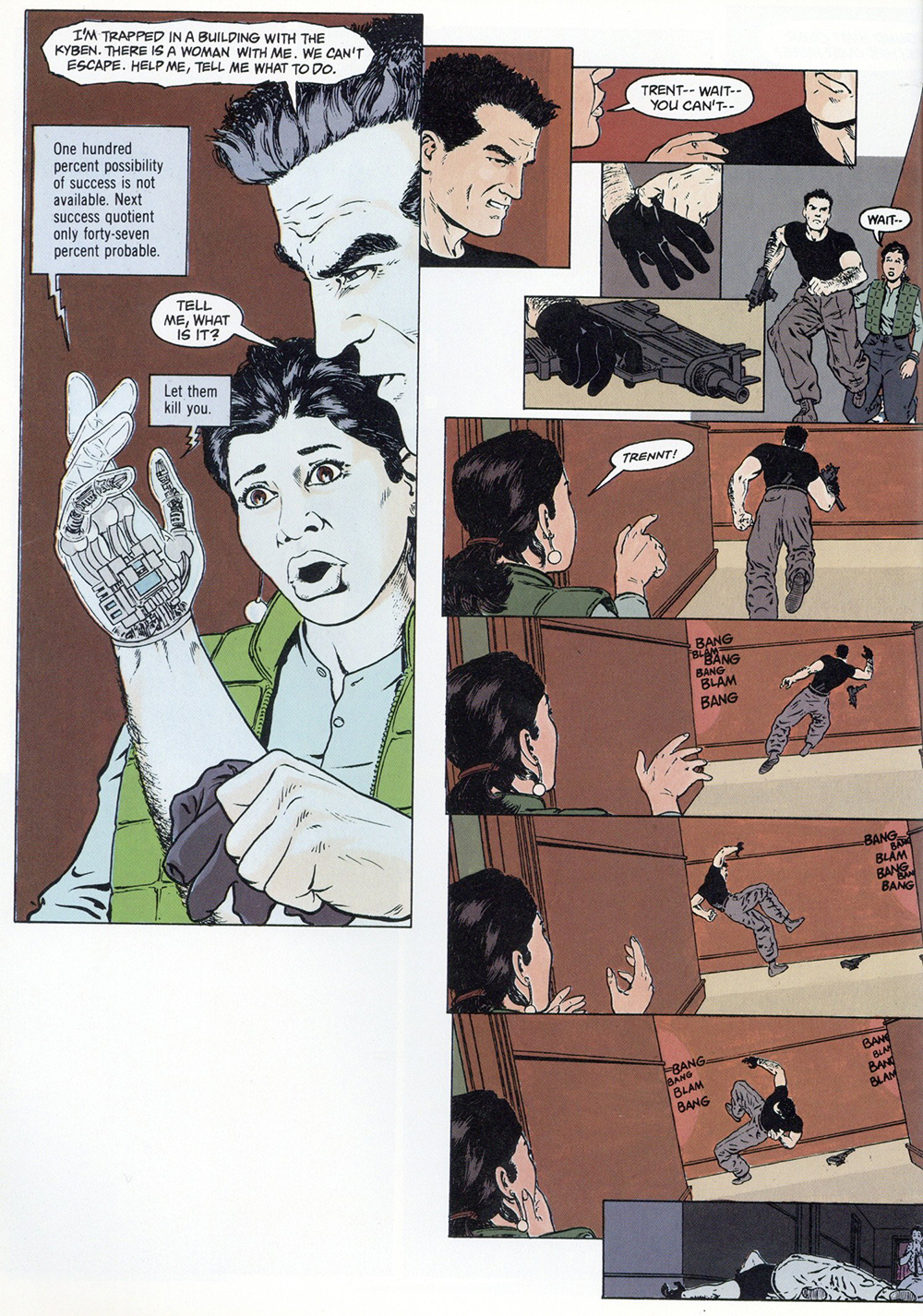
Rogers drew the figures in a much more dramatic fashion than they were filmed. The action is extended and more realistic. Rogers, at the peak of his game, turns out a wonderfully readable story. The science fiction elements are not too complicated, and the stakes are massive. As you read the last page, you understand Trent’s plight and Consuela’s fear. It redefines the concept of loneliness.
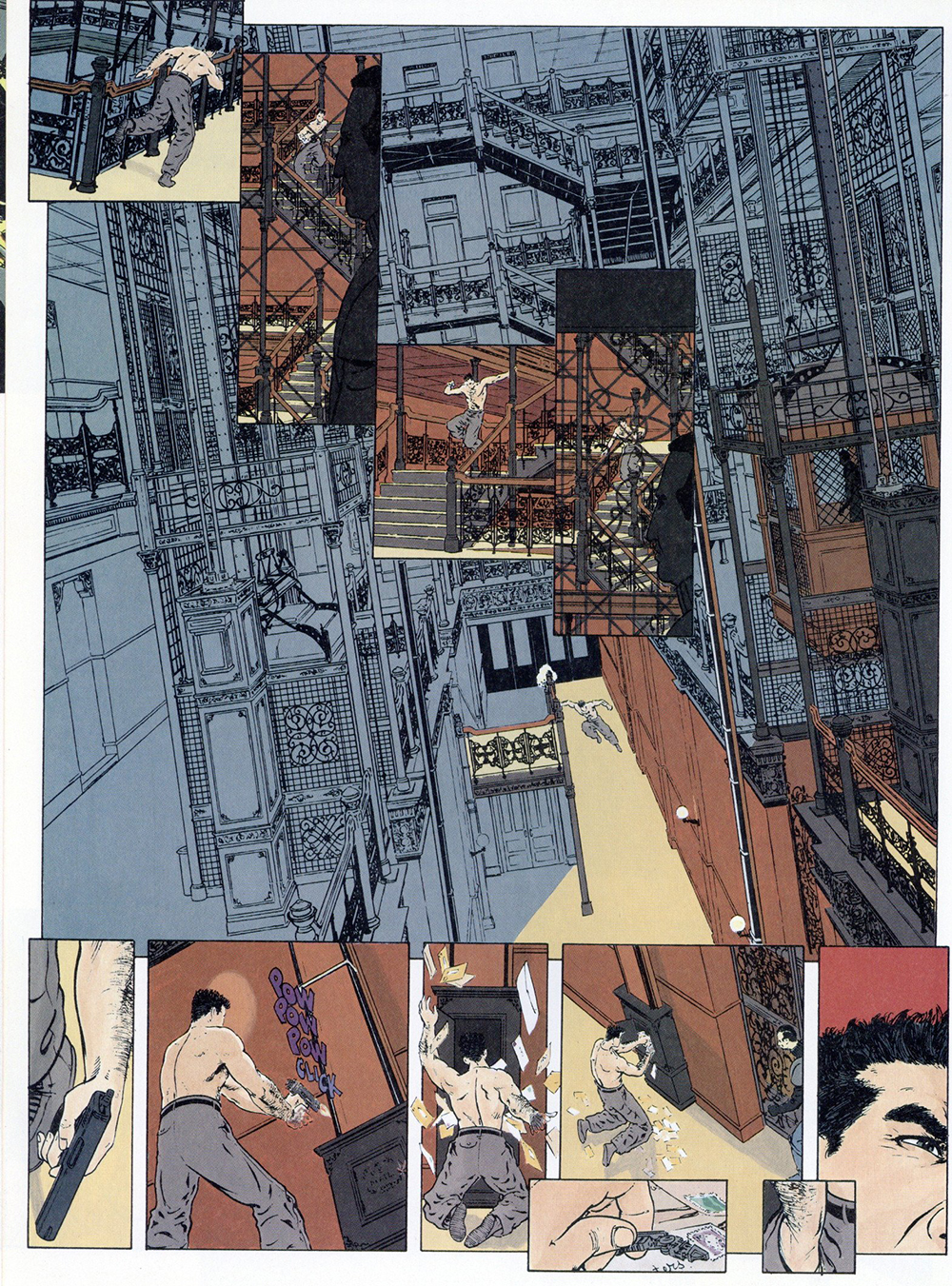
Of the six Science Fiction Graphic Novel entries, Demon With a Glass Hand is perhaps the best. Ellison and Rogers mesh perfectly. The book harkens back to The Outer Limits episode — from the classic era of science-fiction television, when the idea was king and the characters were thought out concisely — but also expands upon it, bringing it into a more modern era.
The TV episode is available on Tubi for nothing. (It’s Season 2, Episode 5.) The graphic novel is readily available on the secondary market.
—
MORE
— BURIED TREASURE: Bruce Jones, April Campbell and Brent Anderson’s 1980s SOMERSET HOLMES. Click here.
— BURIED TREASURE: Archie Goodwin and Walt Simonson’s ALIEN. Click here.
—
PETER STONE is a writer and son-in-law of the late Neal Adams. Be sure to check out the family’s online Facebook auctions, as well as the NealAdamsStore.com.

July 16, 2026
as a longtime fan of Marshall’s, thank you Peter for the reminder of this. I literally just went and found a copy and bought it
July 16, 2026
You can read more about Marshall Rogers’ work on DEMON WITH A GLASS HAND, including Harlan Ellison’s reaction to Rogers’ art on the story and Marshall’s feelings about this graphic novel in our TwoMorrows book about the life, work, and legacy of Marshall—MARSHALL ROGERS: BRIGHTEST DAYS AND DARKEST KNIGHTS. If you’re a Marshall Rogers fan, its a must have! Available to order on the TwoMorrows website or through your LCS.
July 16, 2026
If you want to know more about Marshall Rogers work on DEMON WITH A GLASS HAND, along with original art pages, Harlan Ellison’s reaction to Marshall’s work on this book, and what Marshall had to say about this project, then you should read our TwoMorrows book MARSHALL ROGERS: BRIGHTEST DAYS AND DARKEST KNIGHTS. Its the first and only book dedicated exclusively about the life, work , and legacy of Marshall Rogers. Available at your LCS or at the TwoMorrows website.
July 16, 2026
This is a stone-cold classic, unjustly obscure today.
July 17, 2026
Technical nitpick – there are actually seven volumes of the DC Science Fiction Graphic Novel series, not the six you cite in the penultimate paragraph (Hell On Earth, Nightwings, Frost And Fire, The Merchants Of Venus, Demon With A Glass Hand, The Magic Goes Away and Sandkings).
Demon is far and away the best of them, but several of the others are well worth reading.