
A six-issue thriller that was part of a revolution…
By PETER STONE
In the 1980s, the entire world of comics exploded: The industry, which had long been dominated by Marvel and DC (not to mention Archie, Charlton and Gold Key), saw a proliferation of new publishers boasting creator-owned work, much of it well beyond the world of superheroes.
Companies like Dark Horse, Eclipse, Comico, First Comics, Mirage, and Pacific Comics emerged, with titles such as Eastman and Laird’s Teenage Mutant Ninja Turtles, Matt Wagner’s Grendel, Baron and Rude’s Nexus, and Chaykin’s American Flagg!. It was a bona fide revolution (often in black and white).
One of the first that hit with a bang was Pacific Comics, run by two brothers who started as retailers, moved into distribution, and then finally took a shot at publishing. To gain fans, they went right after top talent and landed creators like Jack Kirby (with Captain Victory and the Galactic Rangers); Sergio Aragones (Groo); Neal Adams (Ms. Mystic); Dave Stevens (The Rocketeer); and Bruce Jones and April Campbell, with Twisted Tales, Alien Worlds — and, our subject here, 1983-84’s six-issue, color miniseries Somerset Holmes.
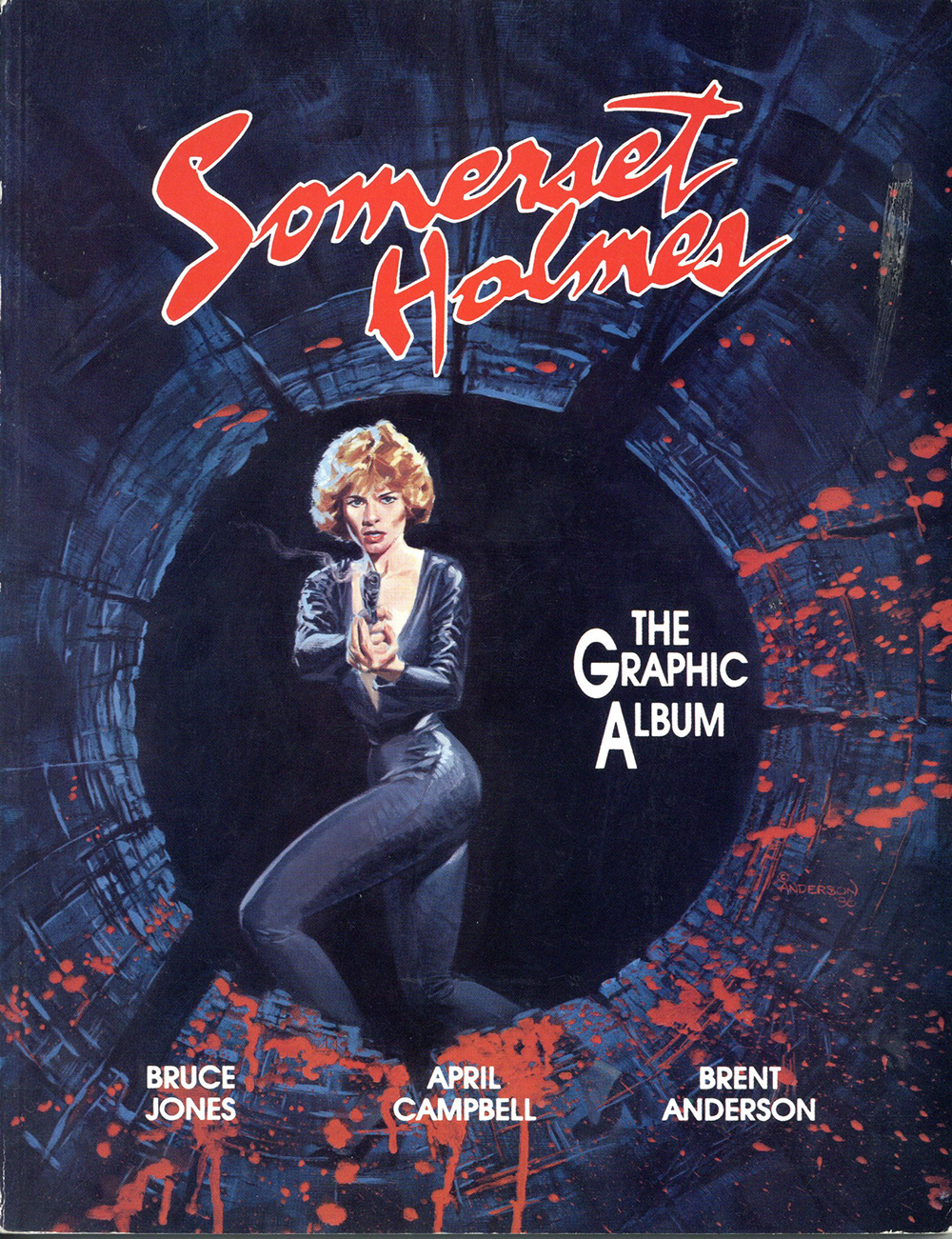
Jones and Campbell, who were married, worked with artist Brent Anderson to create a noir-inspired story featuring an amnesiac woman who finds herself the target of some very dangerous men. Although Jones loved the noir movies of the ’40s, I found that Somerset Holmes drifted into more of an Alfred Hitchcock-style ’50s-and-’60s suspense movie. I was reminded of North by Northwest, or perhaps The 39 Steps, or even Suspicion. The people you think are helpful turn out to be working for a mysterious organization bent on making a fortune or collecting secret information.
Somerset Holmes is struck by a car as she walks along the side of a dark road. Her identification is lost in the woods, and she awakens with no memory of her identity or past. She makes up a name based on the housing community she is driven by, getting a ride from a kindly motorist. The local doctor offers to examine her for any internal hemorrhaging or concussion. But, sure enough, he is killed by a mysterious man, forcing Somerset to flee. Thus begins her adventure to stay alive and discover her real name and past.
(Unfortunately, Pacific Comics went out of business in 1984, sending Somerset Holmes to Eclipse for the last two issues and a collection.)
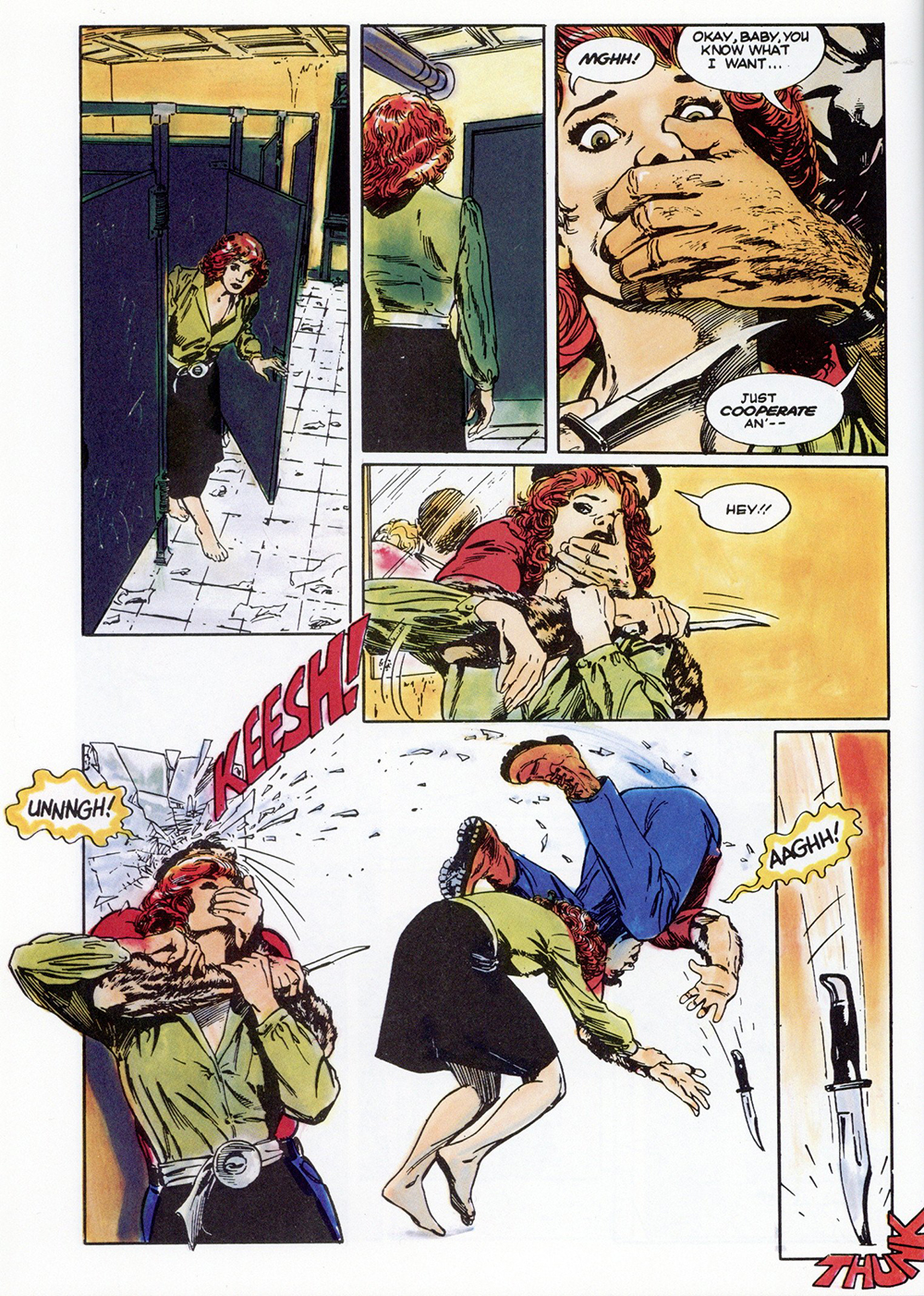
The amnesiac who is drawn into a larger plot has become a trope in movies and television. TV has Blindspot, Doc, and John Doe, all created many years after Somerset Holmes. Movies are even more exciting, with features like Memento, The Bourne Identity, 50 First Dates, and Mulholland Drive. Again, these were all made post-Somerset Holmes. It was hardly the very first amnesiac story, but Jones, Campbell, and Anderson were actively creating a pre-storyboarded movie concept.
Jones and his Campbell wanted to be involved in Hollywood, and Somerset Holmes was indeed optioned as a movie, but “development hell” is more like a purgatory. It’s a place where movies go to languish and sometimes die. The duo continue to write novels, so you never know what might happen to one of their ideas. Hollywood is the land of make-believe but sometimes dreams really do come true there.
***
A few thoughts about the artist Brent Anderson:
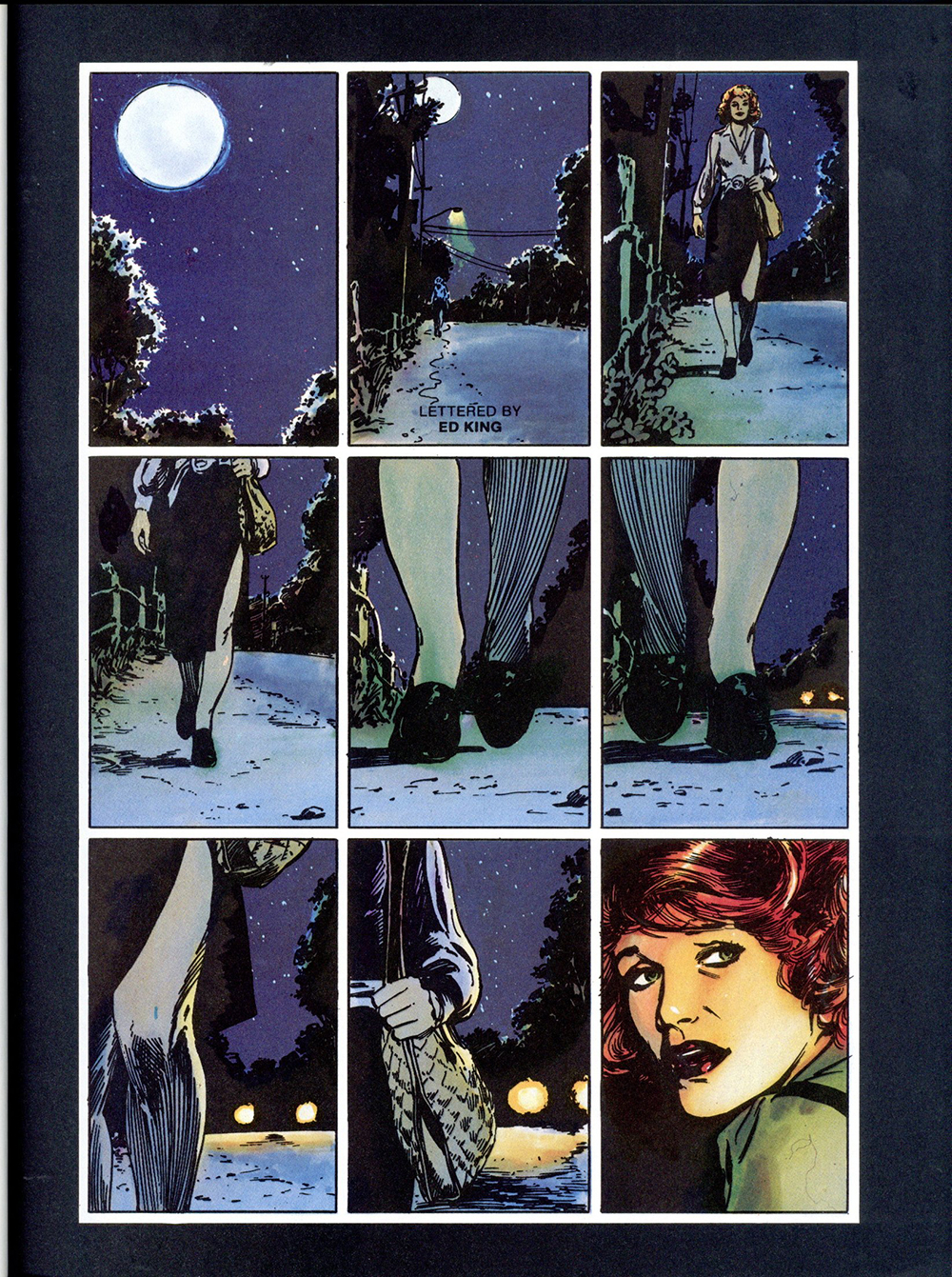
Having discovered the world of comics with 1967’s Fantastic Four #69 — “By Ben Betrayed!” — he drew in his school notebooks before he finally was able to contribute to fanzines. Eventually, he got his first regular series at Marvel Comics — Ka-Zar the Savage, written by (gasp!) Bruce Jones. After that, he worked with Chris Claremont on the well-received X-Men graphic novel God Loves, Man Kills. He then co-created and drew Strikeforce: Morituri for Marvel. During this time period, he also drew comics for Pacific and Eclipse, including the well-received Somerset Holmes. (His best-known and most critically acclaimed series is Astro City, with Kurt Busiek and the brilliant Alex Ross.)
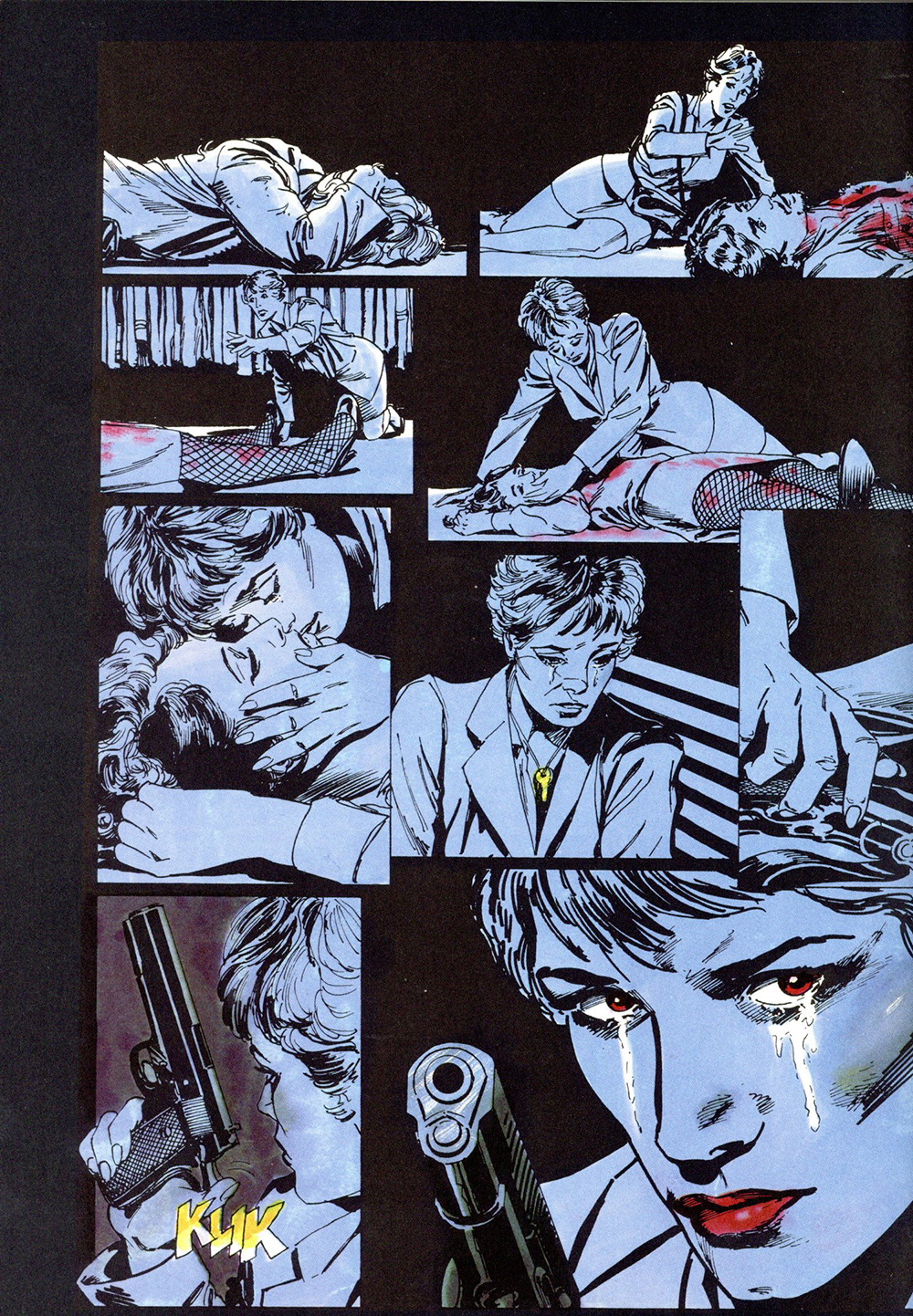
Anderson’s storytelling is never confusing or misleading. This is what made him perfect for the cinematic feel of Somerset Holmes. (Campbell, a model at one point, was the model for Somerset.)
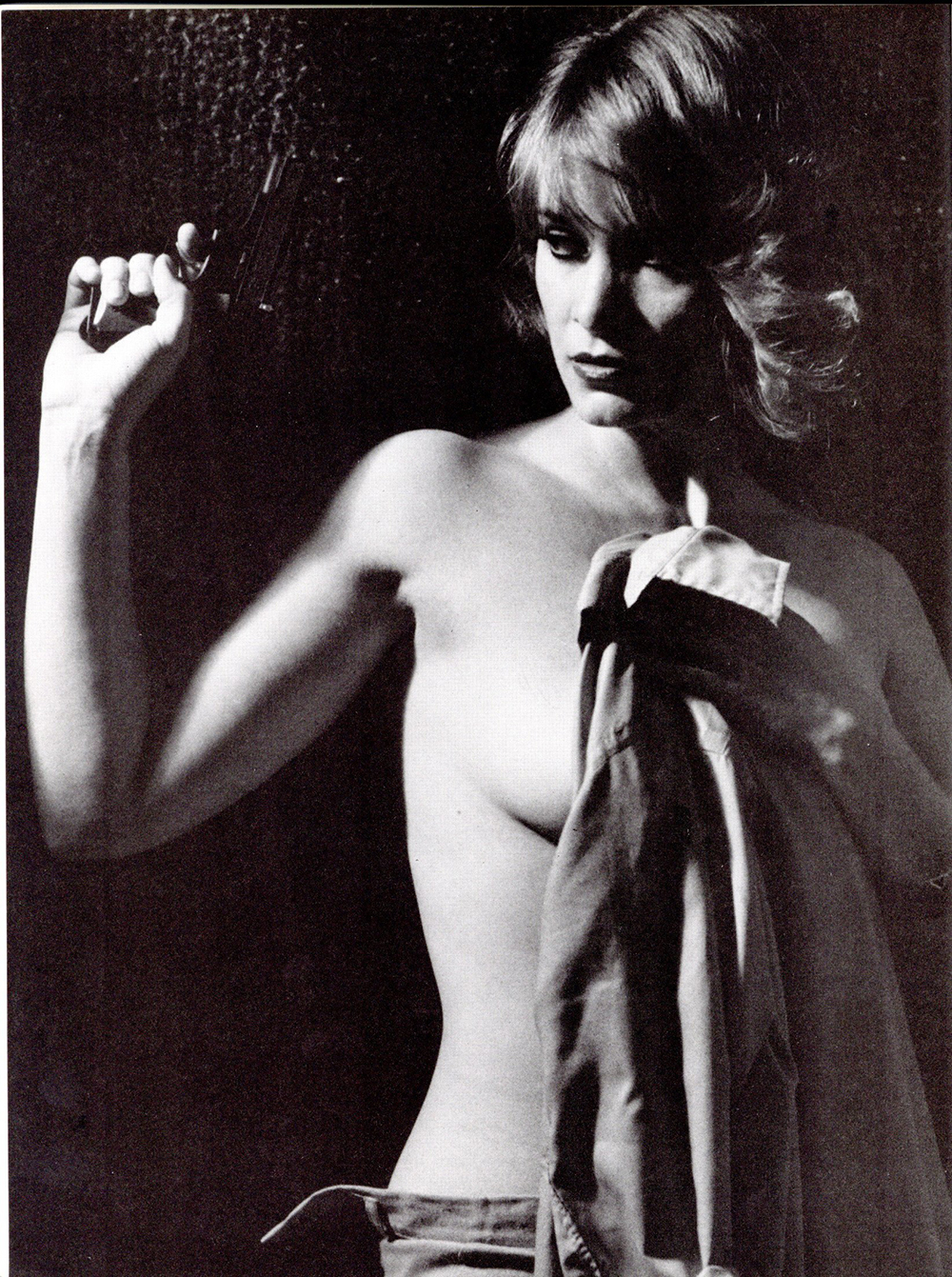
Somerset Holmes was not just a six-issue series done for a burgeoning comics company; it was part of a revolution. Having lived through that time period, it was glorious. Every week, there was something new and different — whether from the upstarts, or the Big Two trying to outdo each other. (DC usually came out on top with projects like Watchmen and The Dark Knight Returns.) Major creatives were no longer tied to the largest companies, and up-and-comers were getting a chance to break into the majors because they had already been published.
The Somerset Holmes collection has a nice intro by Jones and is not very expensive on the secondary market. It’s still a good read and a little gem by Brent Anderson.
—
MORE
— BURIED TREASURE: Archie Goodwin and Walt Simonson’s ALIEN. Click here.
— BURIED TREASURE: The ALIEN LEGION of LARRY STROMAN. Click here.
—
PETER STONE is a writer and son-in-law of the late Neal Adams. Be sure to check out the family’s online Facebook auctions, as well as the NealAdamsStore.com.

July 7, 2026
Thank you for posting this appreciation of what was an outstanding noir series. Amnesia-Noir was a legit trend in vintage film noir and we’ve featured a couple of stories about it in our magazine, NOIR CITY (published by the Film Noir Foundation). I hope that someone will one day write a feature about Somerset Holmes for our magazine. We’ve done a special Noir Comics issue of NOIR CITY in the past, which included a top ten noir comics list by me and TCM host Eddie Muller, and an interview with Ed Brubaker and Sean Philips.
July 7, 2026
Talk about an ALL TIME FAVE mini-series. If I recall, there were rumors at one time about a film or TV adaption. The mood, the art, the modern noir. Such a classic/gem. What I wouldn’t give for a sequel or further adventures of
July 7, 2026
Doh….mentioned in the article. At least I wasn’t crazy 😉
July 7, 2026
>>Neal Adams (Ms. Mystic);
>>
Why was that when Mr. Adams was already a publisher? Is there more to this story?
July 7, 2026
Sounds interesting. Thanks for sharing about it.
July 14, 2026
Pacific Comics was awesome…
Alien Worlds…Twisted Tales…The Rocketeer…Groo the Wanderer…Somerset Holmes…
Gone far too soon.