
Everyone’s talking about the Unknown Soldier this week…
By PETER STONE
The Tomb of the Unknown Soldier at Arlington National Cemetery — which was thrust into the news this week — was originally the burial site of a World War I soldier whose remains were unidentifiable. The site now also includes the gravesites of two other unknowns, one from World War II and one from the Korean War. (A fallen Vietnam War soldier was once buried there but his remains were later identified and given to his family.)
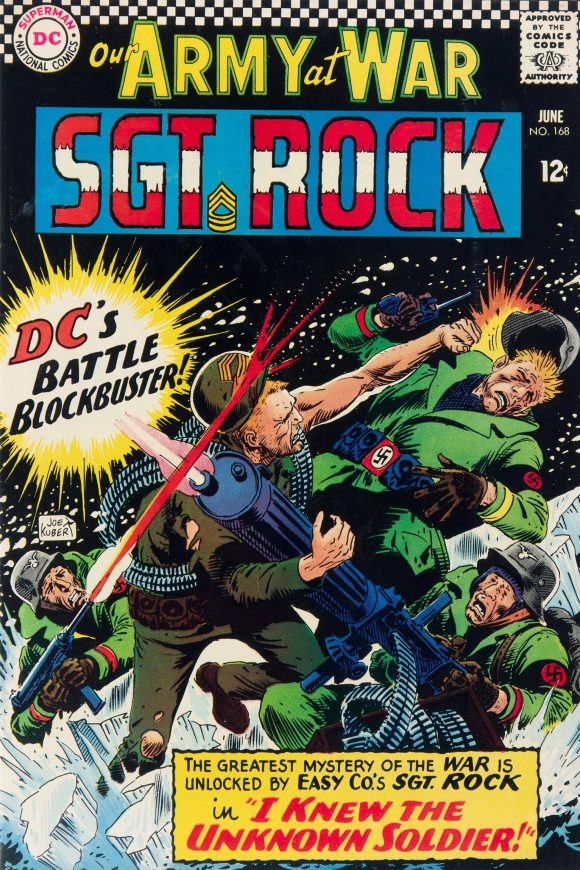
The concept of the Unknown Soldier stretches around the world and into popular culture. Longtime fans of DC Comics, for example, have followed the adventures of the publisher’s own version of the Unknown Soldier for 60 years, when the bandaged master of disguise debuted in April 1966’s Our Army at War #168.
He’s been reinvented many times over the decades, and one of his most memorable versions was a four-issue 1997 Vertigo miniseries, Unknown Soldier, by Garth Ennis and Kilian Plunkett, with covers by Tim Bradstreet:
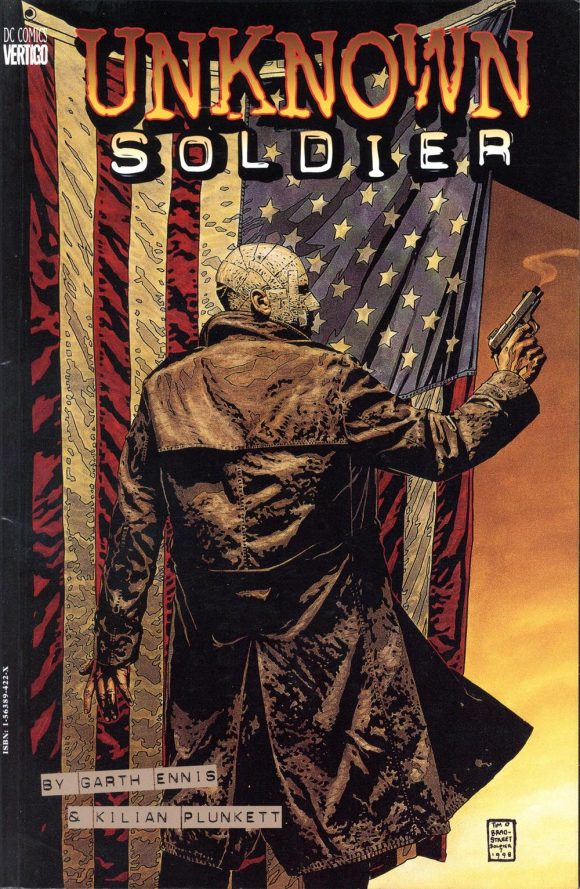
This is a story about a young CIA agent and his journey through the history of the United States in conflict since World War II.
Agent William Clyde, a goody-two-shoes and die-hard American, gets a name on a list he doesn’t recognize. No one knows where it came from, so he starts investigating Joshua Markeiwicz. Markeiwicz is an old man, a survivor of the Second World War. The old man mentions meeting “the Unknown Soldier.”
“Where did you meet this soldier?” Clyde asks.
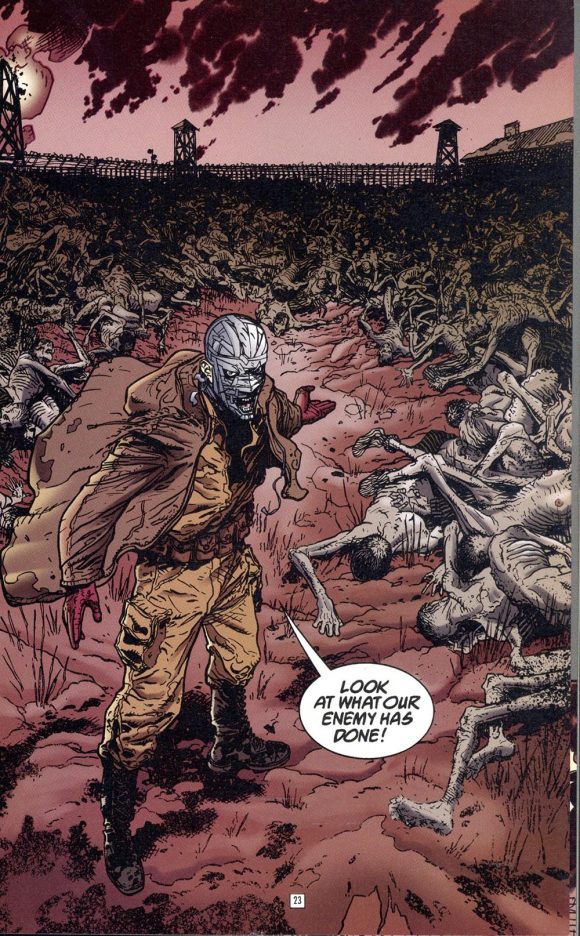
The old man’s eyes go distant as he pauses for a long minute to recall the experience. “Where did I meet him? In Hell on earth. Dachau, post-freedom.” In his memory, Markeiwicz, 18 years old, sees “the Soldier” arrive in a jeep. “The Soldier” sees the mounds of Jewish bodies and loses his mind. He snatches a Thompson submachine gun and slaughters the captured Germans.
Clyde checks his email list again and discovers three more names. Searching for them, he discovers two of them are already dead, thanks to the expert shooting of an assassin named Screwball.
The last man on the list lives in Alaska, but Clyde tracks him down and hears a story about Vietnam and the “Unknown Soldier.” General William Westmoreland orders the air cavalry to liquidate all the men, women, and children in a village. Westmoreland turns out to be the “Unknown Soldier” in disguise.
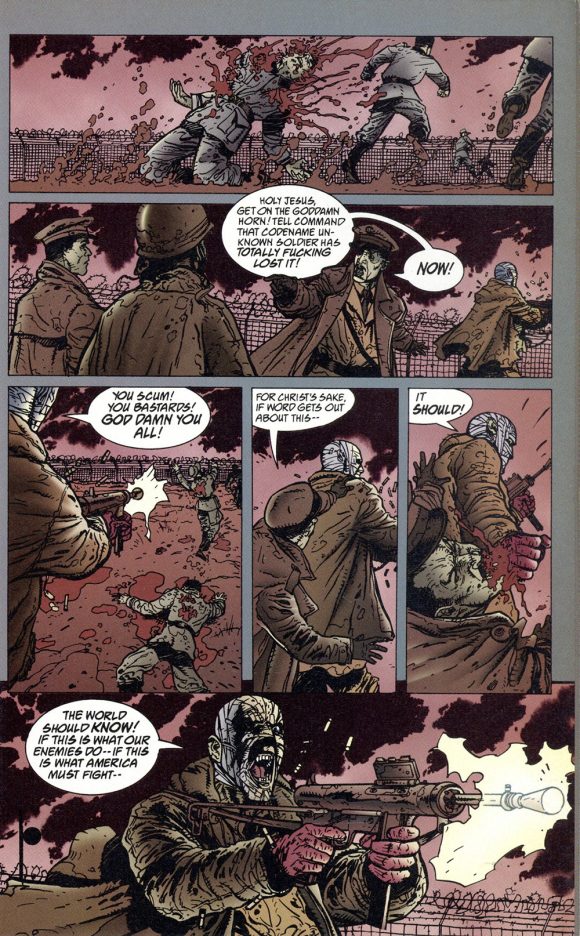
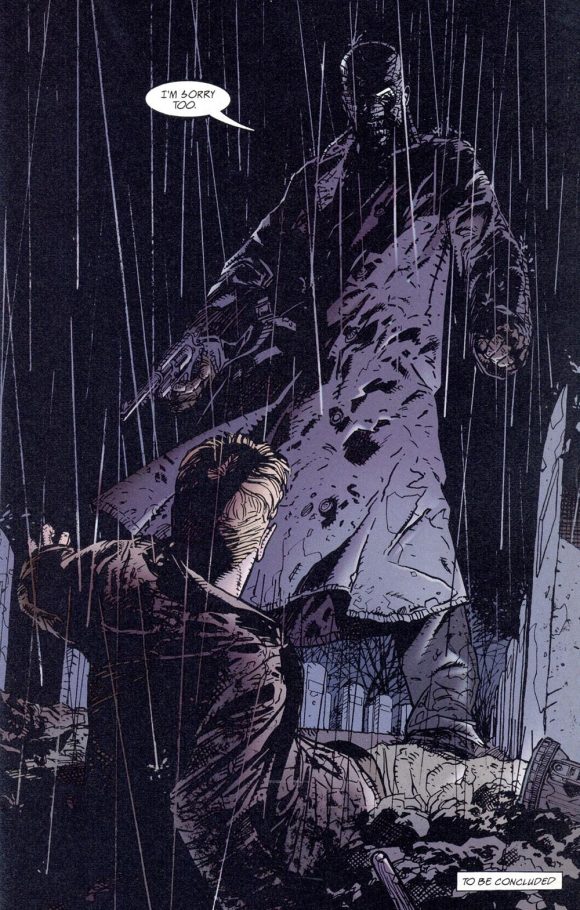
Then comes a final, brutal showdown between Clyde and the “Unknown Soldier,” who is revealed to be a hardcore American in the best and worst possible ways. Clyde, on the other hand, is an American who understands the law and empathy that a modern American can and should have.
Ennis, the writer known for Preacher, The Boys and The Punisher, understands war and the terrible cost it exacts on men’s souls. His understanding of the quasi-reality of superheroes and the violence that comes along with them is hauntingly good. Unknown Soldier is an excellent example of misplaced vengeance and patriotism gone awry.
In this series, Plunkett was a rough but very talented artist: You can see an echo of Joe Kubert — who co-created DC’s original Unknown Soldier. (He evolved into a more precise draftsman, his storytelling becoming smoother and more humanistic.)
Together, these two boys from England and Ireland created an inherently American story. Like Sergio Leone directing his spaghetti Westerns with Clint Eastwood. How does a European understand this country better than someone who was born here?
Perhaps the conclusion we are stuck with is the rift between the America we believe in and the America that we truly are. What is the United States’ real moral code? The ultimate soldier, the Unknown Soldier, or the average man in the military? The conclusion is left up to the reader.
Unknown Soldier is well crafted from start to finish, from the writing, to the art, to the covers. It’s a fascinating exploration of American conflicts of the past 80 years. The shift in morality, the erosion of ethics and honor, the subtle movement of goodness and decency. A powerful story that makes the reader think about more than just superheroes and violent brawls.
—
MORE
— BURIED TREASURE — O’Neil and Kaluta’s THE SHADOW 1941: HITLER’S ASTROLOGER. Click here.
— BURIED TREASURE: Revisiting the Horror of CLAYFACE. Click here.
—
PETER STONE is a writer and son-in-law of the late Neal Adams. Be sure to check out the family’s online Facebook auctions, as well as the NealAdamsStore.com.
