
AKA 1988’s Marvel Graphic Novel #35…
By PETER STONE
“WHO KNOWS WHAT EVIL LURKS IN THE HEARTS OF MEN… THE SHADOW KNOWS. HAHAHAHAHAHA!”
Neal Adams would say that any time the Shadow was mentioned. (And, yes, it became a bit exhausting, especially because Neal’s voice could be quite theatrical and would echo through Continuity Associates’ offices. He loved doing this… and who wouldn’t if they had a nice, booming voice that reminds you of Orson Welles.)
Neal and I both had read the pulp-fiction novels, listened to the various radio personalities (Orson Welles being, of course, the best), and Neal even contributed to the Shadow mythos by drawing the licensing art for the Alec Baldwin movie.

But this is about comics, not all the other stuff. DC published its first The Shadow series from 1973 to 1975. It ran for 12 issues, and the smartest decision they made was hiring Mike Kaluta as the initial artist. Denny O’Neil was the obvious choice as writer since he had made his reputation with Batman, drawn by many different artists, including (as we all know) Neal Adams.
Kaluta pencilled five of the first six issues, and despite the fact that the Shadow as a character was dated, many art lovers believe this is some of the best work produced by DC Comics at the time. Other series followed, but Kaluta was not involved.

In 1988, however, Lamont Cranston landed at Marvel for a standalone graphic novel, reuniting O’Neil and Kaluta, with inks by Russ Heath. Marvel Graphic Novel #35: The Shadow (1941: Hitler’s Astrologer) is based on a real-life Nazi “mystic” named Karl Ernst Krafft. The creative team brought its best work to the project and, artistically, the book is exceptional.
The cast of characters features the upper leadership of the Nazi regime, carefully researched and rendered. The Shadow himself is shaped by the radio program, movies, and novels, with his network of aides: a taxi driver, a man-about-town, a technological genius, and a beautiful socialite, Margo Lane.
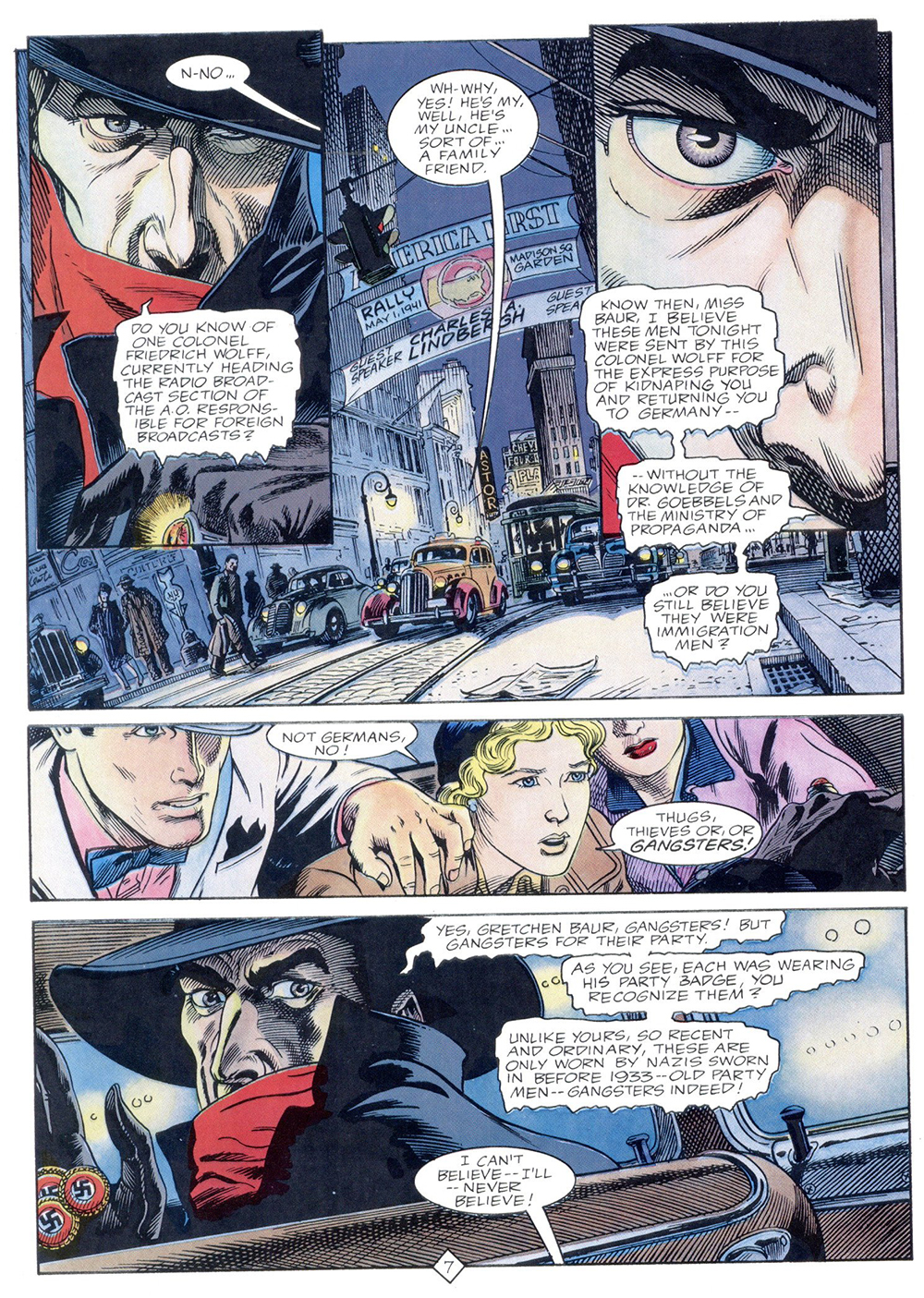
Hitler’s Astrologer is full of actual events from before the United States got involved in World War II. The death of Nicholas II, the last tsar of Russia; Rudolph Hess’ journey to England; and Hitler’s decision to betray and attack Russia despite a non-aggression treaty. That’s where the fiction comes in: It turns out der Fuhrer’s ill-fated move was orchestrated by the Shadow himself.
Using Hitler’s Astrologer, the Shadow convinces the German madman to invade the Soviet Union and attempt to take Leningrad in the summer of 1941. When the winter sets in months later, Hitler’s Eastern Front becomes a frozen hell — but that was exactly what The Shadow was planning.
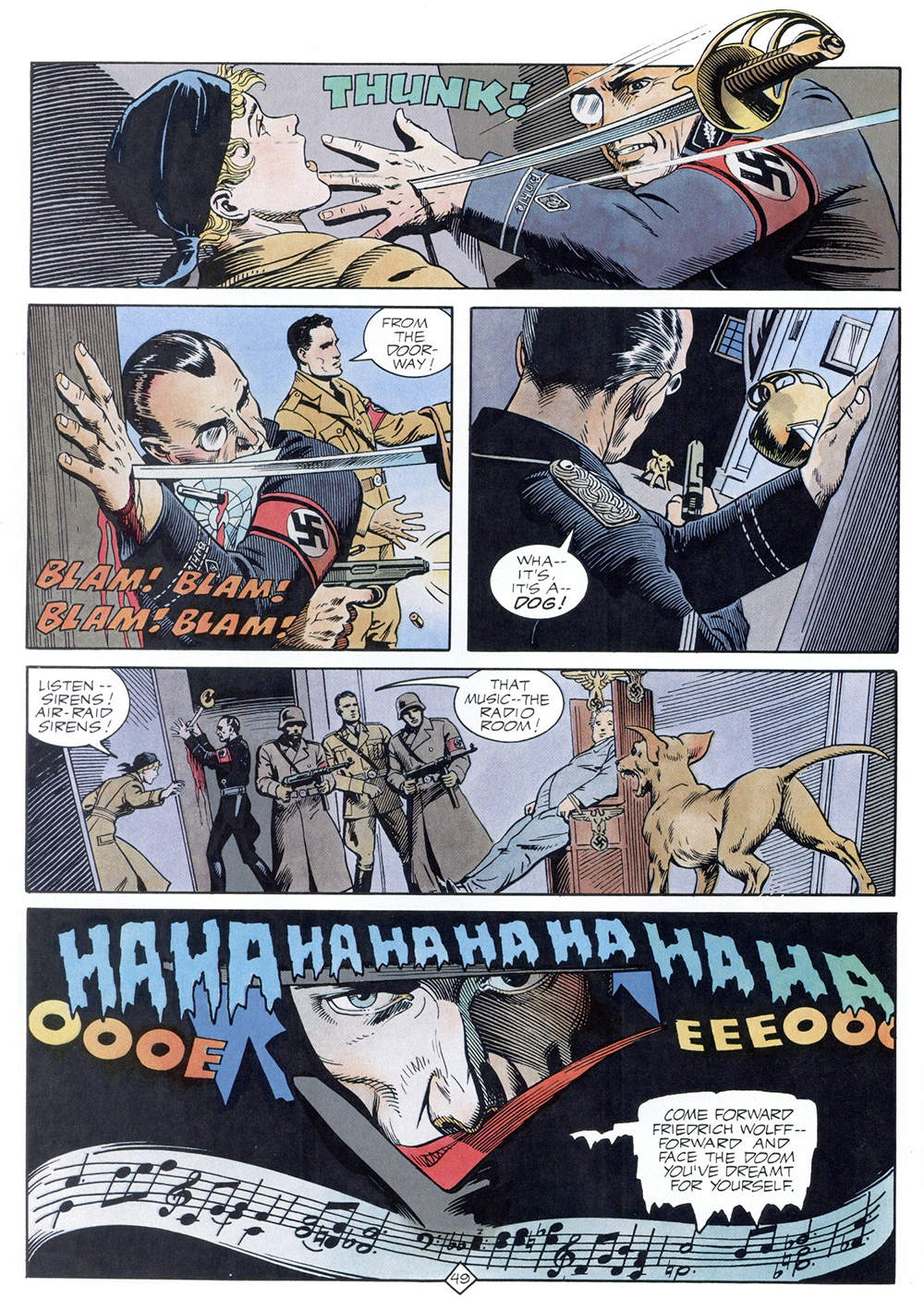
The story features plenty of action, political intrigue, the best villains ever (the Nazis), character work, and even a love story. Margo and a woman named Gretchen Baur discuss the Shadow and why these people follow him. Meanwhile, Harry Vincent — the Shadow’s man-about-town — falls in love with the comely Miss Baur. All this as the Shadow uses his opponents and comrades to implement his desperate plan to save England and convince Hitler to launch Operation Barbarossa.
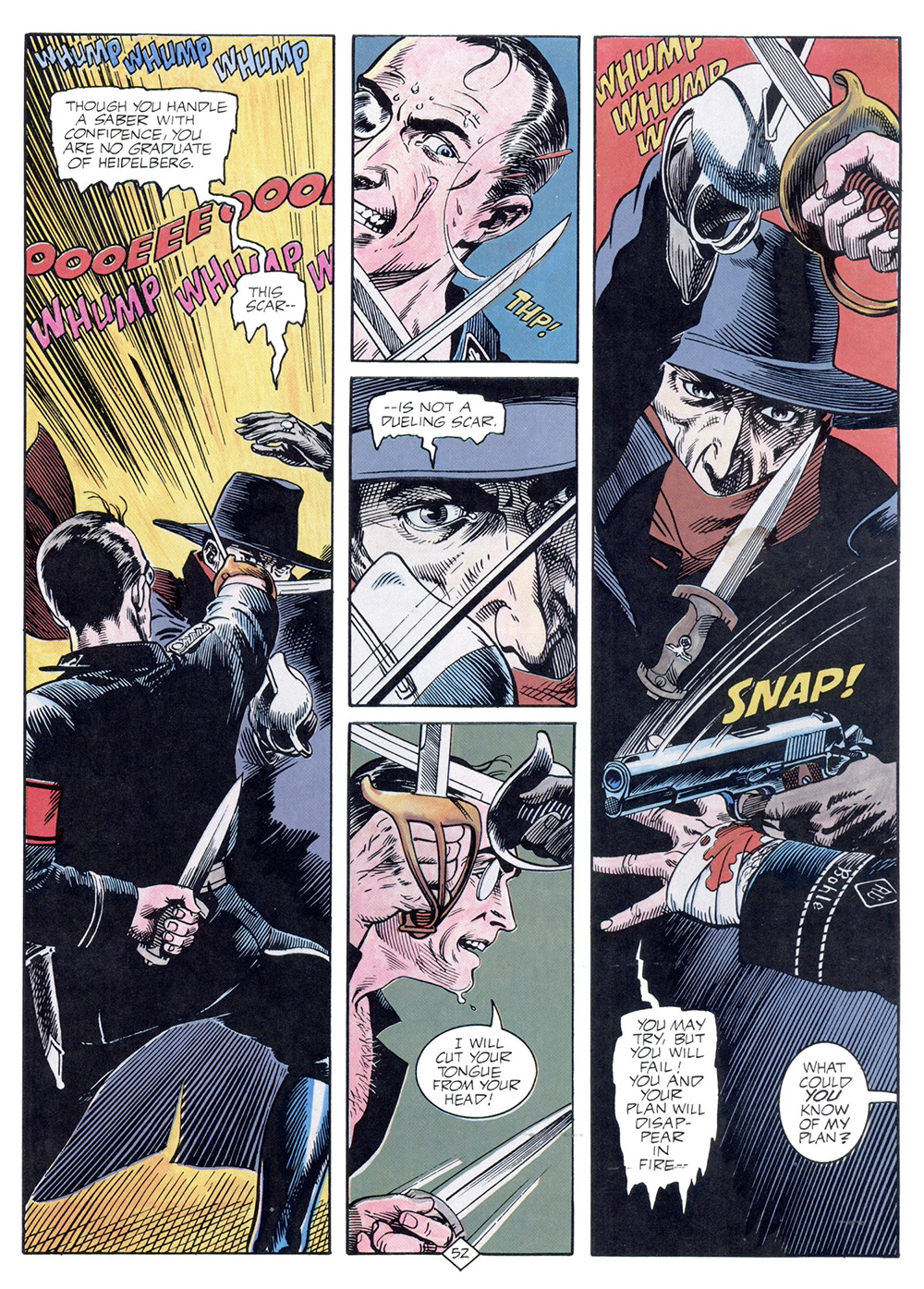
The Shadow is an icon in the world of radio and pulp novels, which led directly to the birth of superheroes like Batman. It’s great fun to see the roots in this graphic novel. O’Neil, Kaluta and Heath have put together a great read — because only the Shadow knows the evil that lurks in the hearts of men!
—
MORE
— BURIED TREASURE: Revisiting the Horror of CLAYFACE. Click here.
— BURIED TREASURE: Moench and Gulacy’s SIX FROM SIRIUS. Click here.
—
PETER STONE is a writer and son-in-law of the late Neal Adams. Be sure to check out the family’s online Facebook auctions, as well as the NealAdamsStore.com.

November 7, 2026
I wish there was something published for The Shadow, like a compendium collecting a bunch of his early stories. Similar to how DC has their golden age collections.
I’ve heard my father used to tell me about The Shadow, quoting the line from the famous radio program. But other than that I know almost nothing about him.
November 7, 2026
Hey, Peter. Another great gem you have here today. I’m going to dig this one out. I was a huge fan of the character in the ‘70s. I wasn’t a fan of every take. “My” Shadow lives in the 1930s, fires twin 45s and is always one step ahead of the evil running loose. Might be time for PETER BOSCH to add to your story here as well. You can never have too much discussion around The Shadow.
November 7, 2026
I have this volume and haven’t read it in years. I remember my big complaint when I read it is that Kaluta’s ar looked too soft in comparison to his art in the 1970s issues of THE SHADOW. And I like Russ Heath. Looking at the panels included in today’s article, I wonder why I ever thought that.
I would like to have a Shadow collection — oversized, of course — that included Batman #253 and #259, The Shadow (1973) #1-12, and The Shadow: 1941 (Hitler’s Astrologer). Not that I would get rid of he individual issues; some things are worth having in multiple formats.