
The surprise hit movie makes us revisit a 1987 Batman classic by Alan Moore and George Freeman…
By PETER STONE
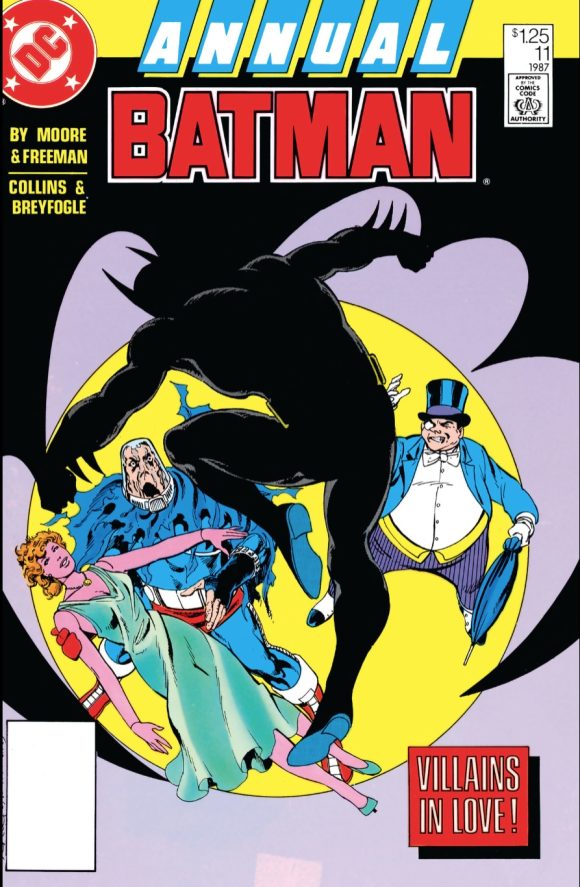
Although 1987’s Batman Annual #11 was discussed a year ago here at 13th Dimension, I feel it deserves another look, now that the Clayface movie has hit the big screen. Despite the movie not having Batman in it, there is no reason to ignore this wonderful villain who has tormented the Dark Knight for many, many years.
The comic book Clayface is actually a series of different people from throughout Batman’s history. In 1940, the first Clayface was a washed-up actor named Basil Karlo, created by Bill Finger and Bob Kane. In 1961, a new Clayface appeared named Matt Hagen, created by Finger and Sheldon Moldoff. He’s the one who had the shape-shifting abilities.
Then, in 1978, Len Wein and Marshall Rogers introduced us to Preston Payne, whose melting body is contained in a hulking, sci-fi exoskeleton. He suffers terrible headaches, and only when he takes off his gloves to melt someone does the blinding pain subside. (Payne was a scientist who’d injected himself with the second Clayface’s blood to cure his hyperpituitarism. He was able to transform his looks, but that only lasted a short while, before his body degenerated into a gooey mass.)
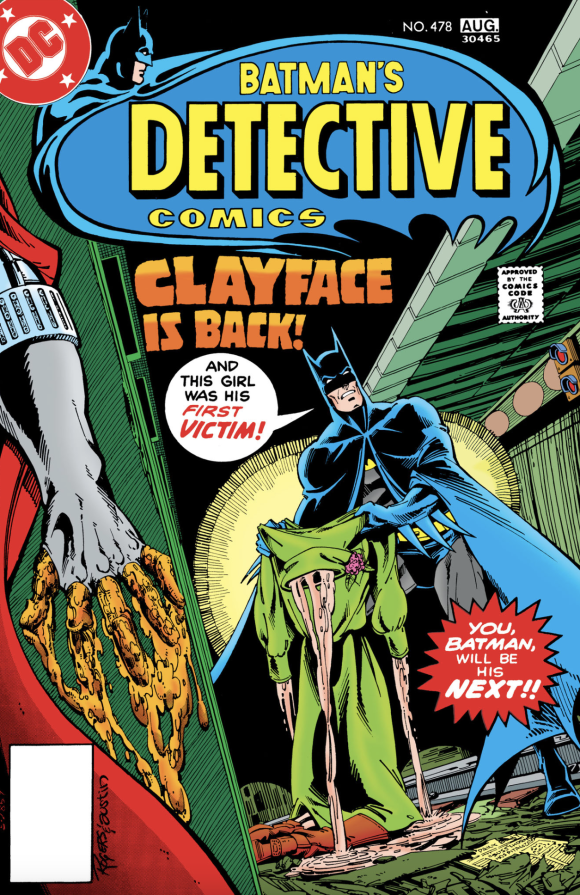
But Clayface III suffers from something far worse than his physical disease. He has a deep-seated mental illness that disrupts his view of the world, and he falls in love with a mannequin that he believes is real. He calls her Helena, but tragically for him, she’s destroyed in a fire.
Alan Moore and artist George Freeman pick up the threads in “Mortal Clay” from Batman Annual #11: Clayface searches through Gotham for Helena, convinced that he will eventually find her. She’s alive, he is convinced of that. He will find her.
And he does. In a department store, in the front display window, Clayface sees her dressed to the nines. Of course, he thinks, she’s a woman, so she’s gone to a department store where all the nice clothes are. That there are countless other mannequins who look just like the original escapes him.
Clayface sets up a home within the department store. His insanity allows him to see what he wants and accept the world around him as a danger, but he does not let that interfere with his created world. He and Helena have dinner together at beautifully ornate tables, they sleep in wonderful beds, and have a “normal” life. Until one night, when he discovers Helena missing.
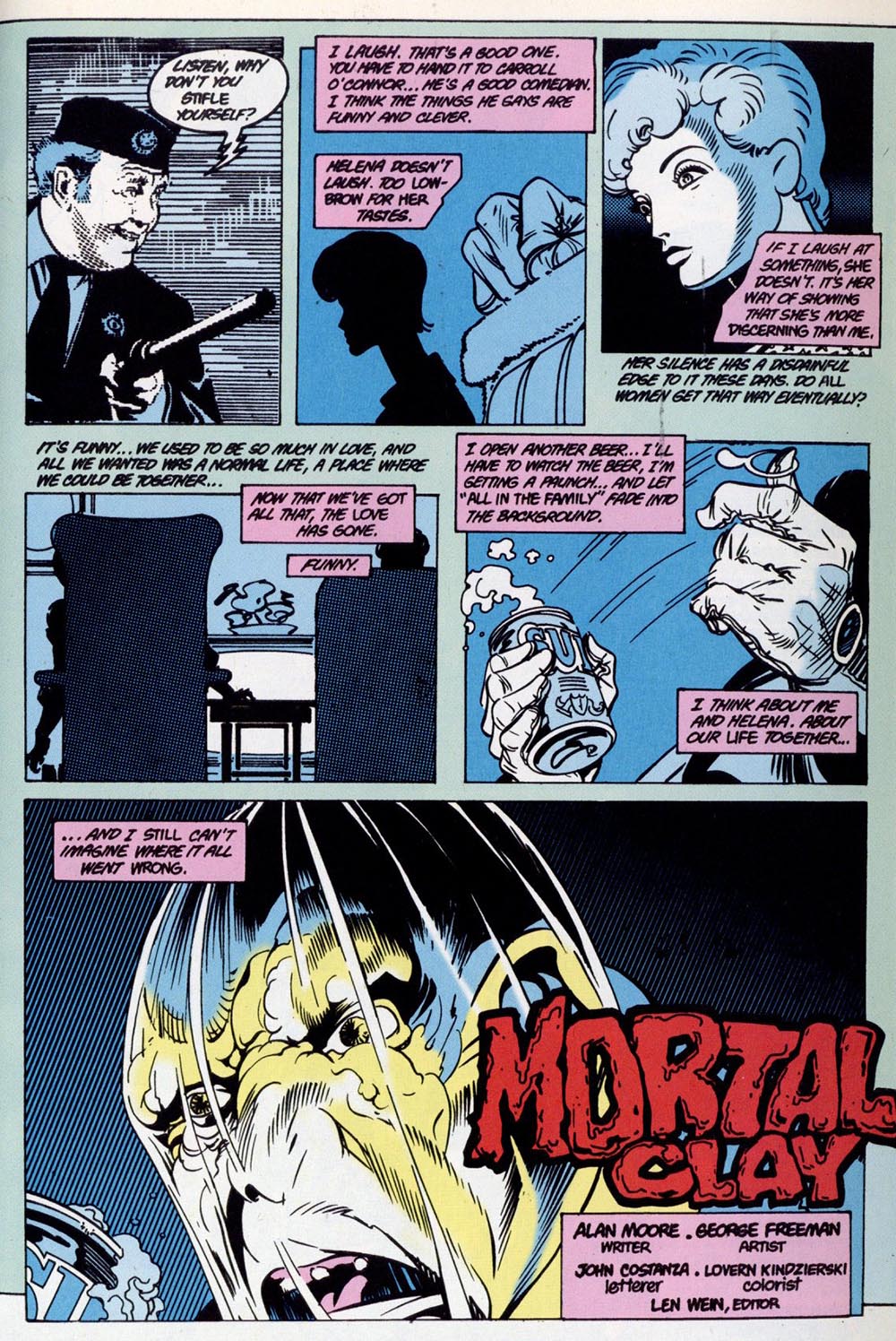
Clayface searches and searches for Helena until he finds her in the lingerie department, scantily dressed. She must be having an affair! With the security guard! Overcome with grief, rage and a splitting migraine, he melts the security guard with his hands.
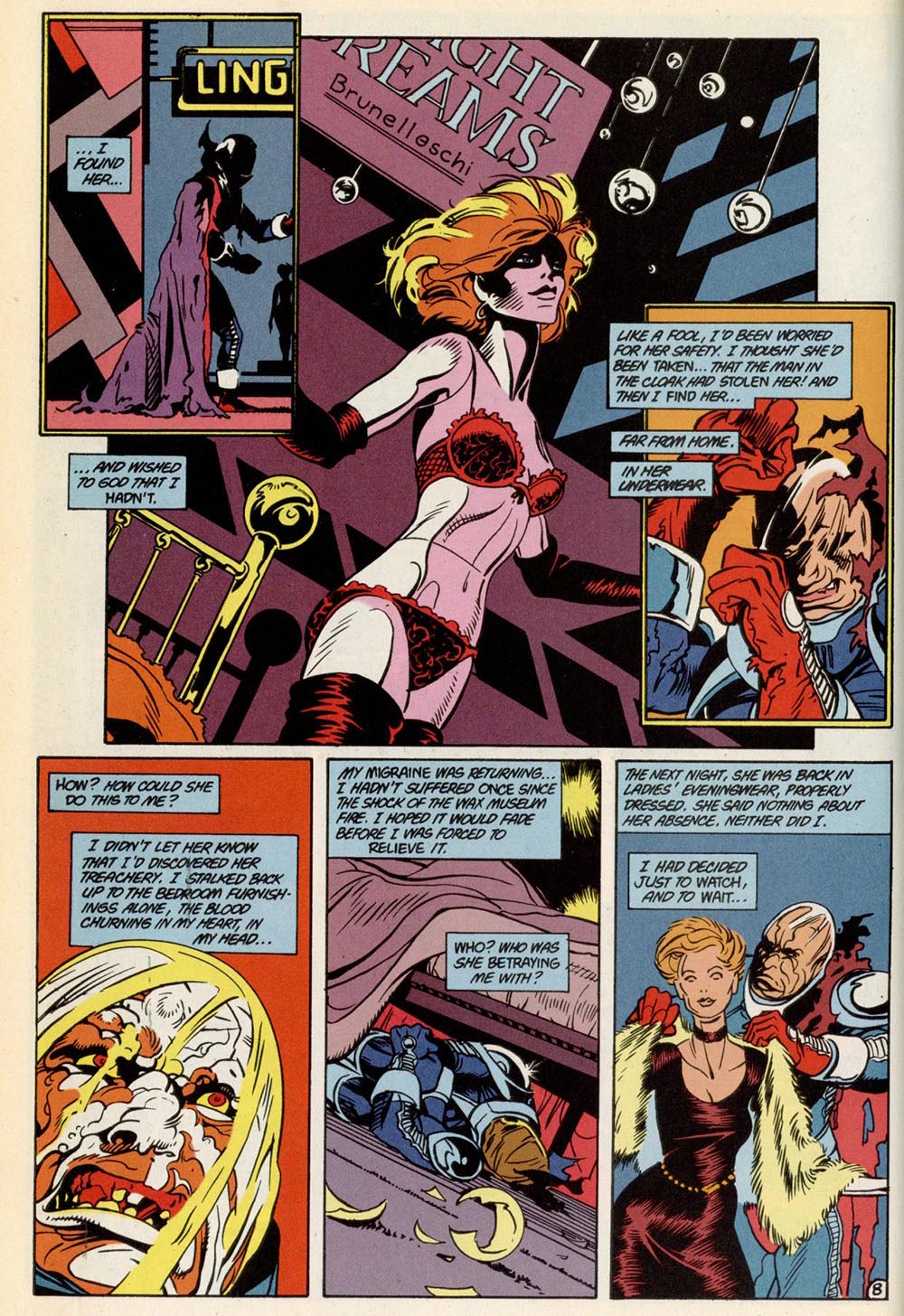
Batman shows up, there’s a brief fight, and the hero recognizes how his adversary is suffering. The Masked Manhunter offers his hand out to Clayface, and uses his fortune to set up a cell that lets Payne live with his “wife,” Helena. It’s a normal life, thinks Clayface… except Helena is no longer in love with him. Perhaps a divorce? Then again, thinks Clayface, she can’t live forever.
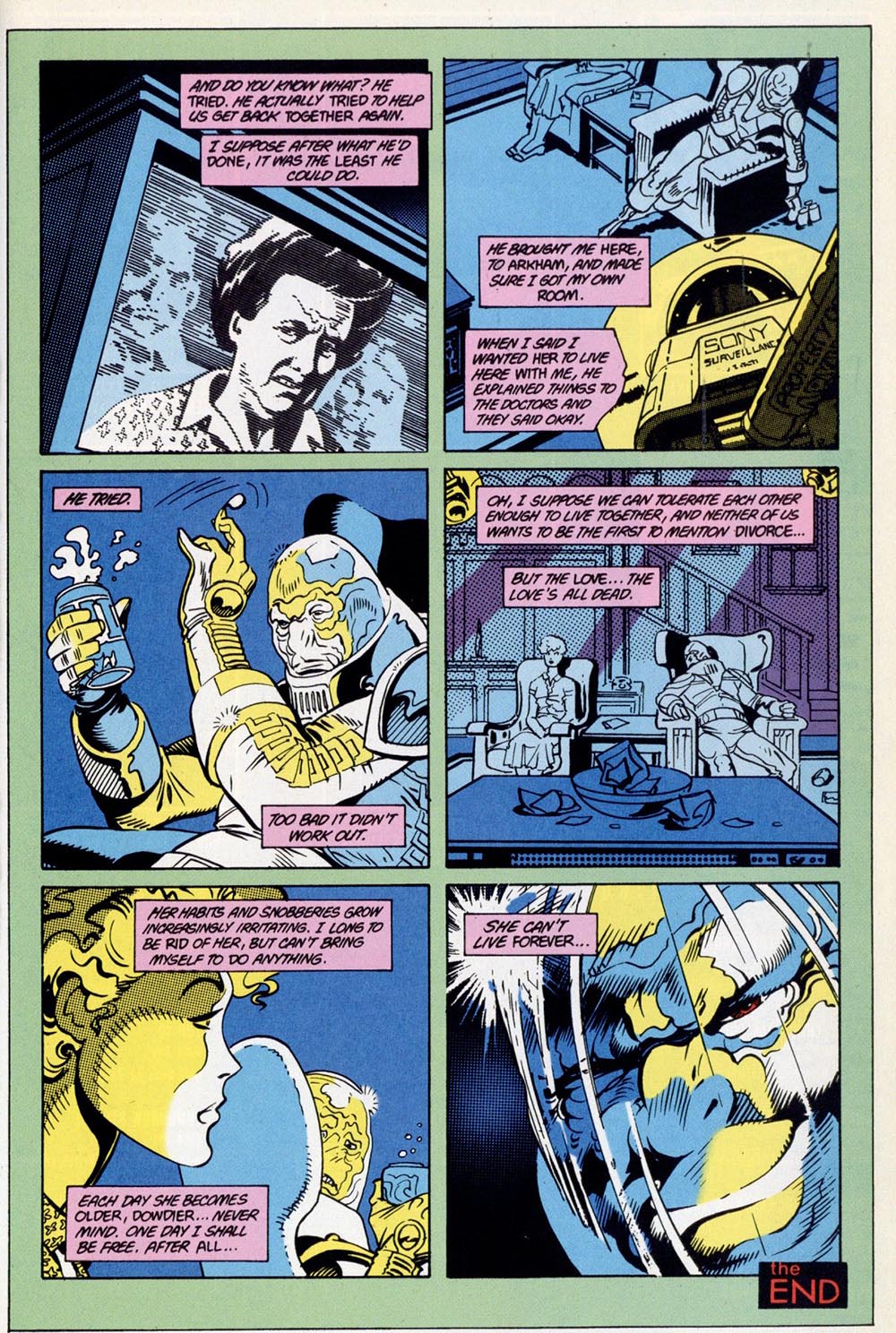
A brilliant story by Moore, with Freeman showing off what he can do with a brush, it’s right up there with The Killing Joke and many of the writer’s other DC short stories.
—
MORE
— 13 Reasons 1987’s MORTAL CLAY Might Actually Be ALAN MOORE’s Best BATMAN Story. Click here.
— BURIED TREASURE: Moench and Gulacy’s SIX FROM SIRIUS. Click here.
—
PETER STONE is a writer and son-in-law of the late Neal Adams. Be sure to check out the family’s online Facebook auctions, as well as the NealAdamsStore.com.
