
Spider-Man/Superman #1 is out this week… so let’s talk about Batman’s crossovers!
By JASON CZERNICH
Thirty-five years ago, in 1991, intercompany crossovers started up again in full force after years of layoff, and Batman was leading the charge, eventually co-starring in at least 30 such projects. His outings have resulted in tales of varying quality, but occasionally you get a tale that is among the best to ever feature the Darknight Detective.
Here are THE TOP 13 BATMAN INTERCOMPANY CROSSOVERS — RANKED:
—
13. Batman/Teenage Mutant Ninja Turtles Adventures, (DC/IDW, 2016). This may rank the lowest on the list, but it is an accomplishment in and of itself that it beat out the other three times the Caped Crusader encountered the Heroes on the Half Shell. What makes this work better than those other crossovers? These pair the animated incarnations of the characters rather than their mainstream ones, resulting in an adventure that was easier for readers to follow since there was a lot less continuity to know going in.
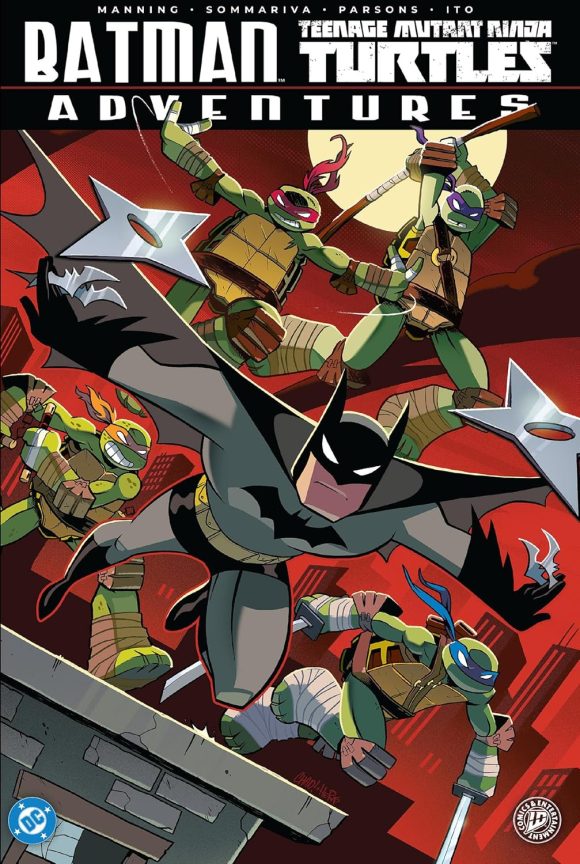
“That pairing was hammered out by editorial at DC and IDW,” series writer Matthew K. Manning told me. “I was writing Beware the Batman and TMNT: New Animated Adventures around that time, so I was one of the people asked to pitch for the crossover. Originally, the plan was for the Turtles to meet the animated Justice League. I wrote up a pitch for that, and was then told that the higher-ups switched gears to Batman/TMNT. So I scrapped my original story and came up with the plot that eventually became Batman/TMNT Adventures.
“The series was originally written as a 5-issue mini. But the sales were way better than expected, and IDW asked if I’d write a sixth issue, as their contract with DC allowed it. The only problem was that I’d already written all five scripts at that point. So I pitched a standalone one shot/sequel set not during the Batman: The Animated Series show, but during The New Batman Adventures. Then I added a quick cliffhanger at the end of Issue #5. It worked out well and let us include characters like Tim Drake.”
—
12. Batman vs. Predator 3, (DC/Dark Horse, 1997). Batman vs. Predator 3 isn’t just an enjoyable read, it’s a time capsule for ’90s Batman. Chuck Dixon, who wrote Detective Comics, Nightwing, and Robin back then, was joined by penciller Rodolfo Damaggio, himself no stranger to the Batbooks.
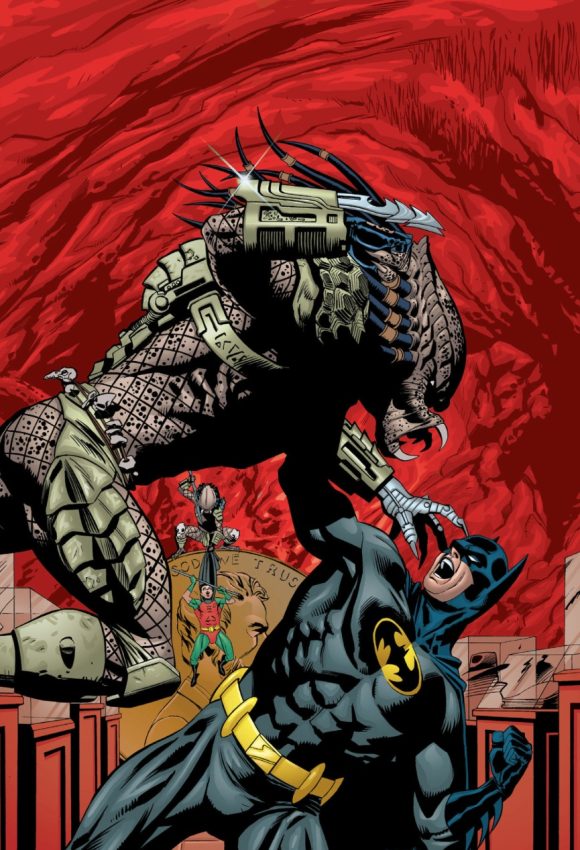
Dixon’s use of supporting characters Harvey Bullock, Renee Montoya, and others give the feel that this could have been an arc of Detective with the Predators guest starring, and it totally works. The twist that the Predators are after Robin this time, as well as a clever use of Mr. Freeze, also make this one worth tracking down.
—
11. Batman & Spider-Man: New Age Dawning (DC/Marvel, 1997). The first Spider-Man/Batman meeting just seemed a little too… schlocky for me. It seemed more flash than substance. The pairing of Joker and Carnage did not work as their personalities and motivations are too alike.
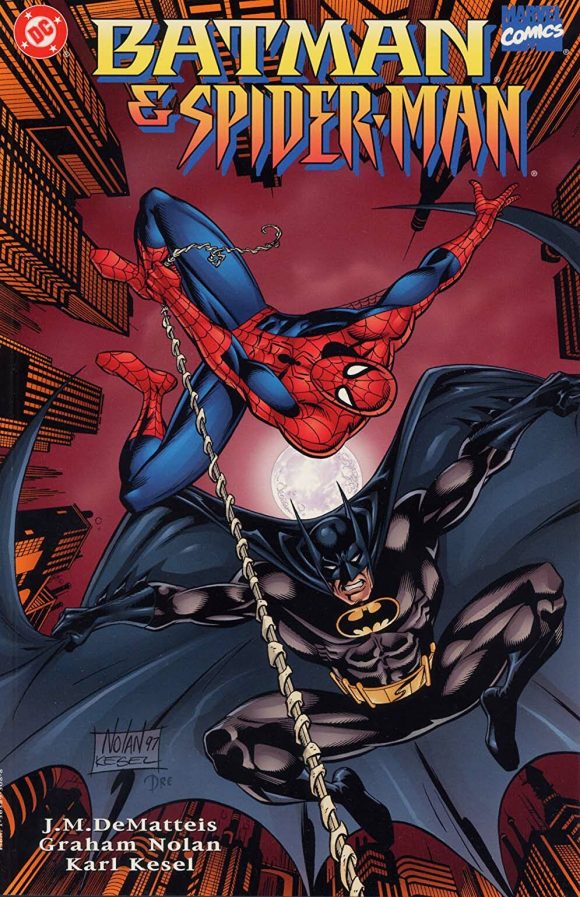
New Age Dawning, also written by J.M. DeMatteis, has our heroes facing off against the Kingpin and Ra’s al Ghul, who share similar Machiavellian personalities but are just different enough to serve the plot better. The art by Graham Nolan grounds the action this time and is not over the top. Throw in Talia, Vanessa Fisk, and plot twists that keep you entertained until the very last page and you have a much improved effort than the first time the Caped Crusader and wall-crawler crossed paths.
—
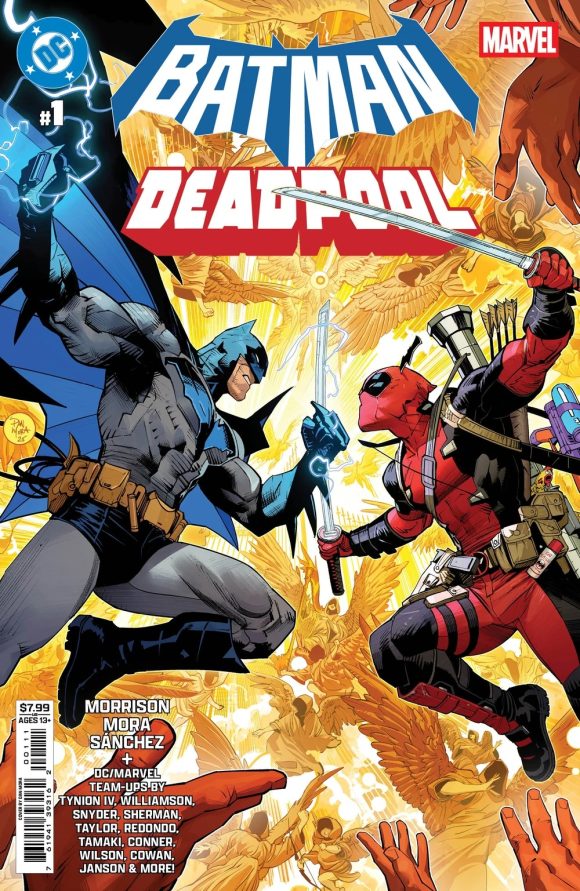
10. Batman/Deadpool #1 (DC/Marvel, 2025). As previously discussed in the TOP 13 DC/MARVEL CROSSOVERS — RANKED, this was the better of the two 2025 one-shots. Grant Morrison and Dan Mora could have easily phoned it in and it still would have sold copies. However, being the pros they are, they put in full effort and the fans greatly benefited.
—
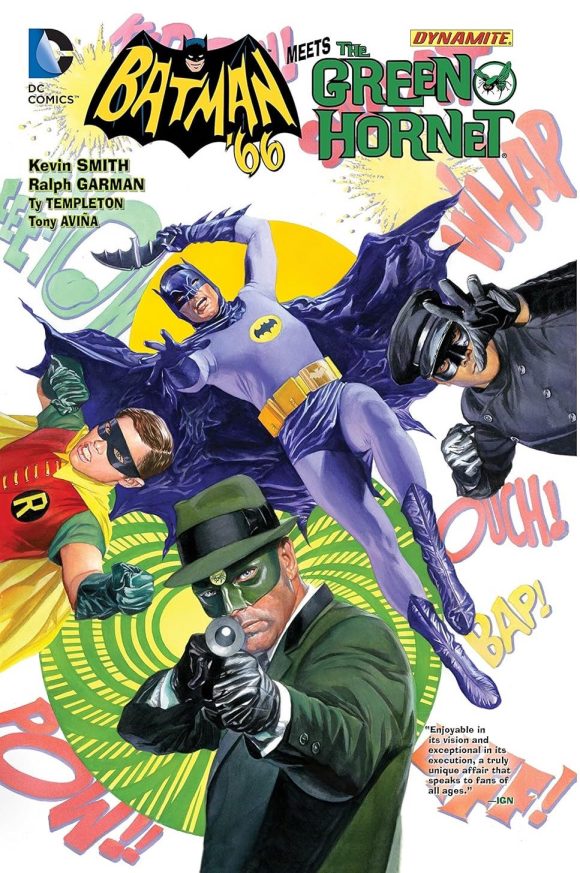
9. Batman ’66 Meets the Green Hornet (DC/Dynamite, 2014). Of all the Batman ’66 comics crossovers, this one is by far the best. It does not overload the narrative with unnecessary supporting characters or villains, it builds on their first team up — from the TV show itself, of course — and its six-issue length gives the feel of watching a special, live-action three parter. The script by Kevin Smith and Ralph Garman hit all the right notes. And who doesn’t like Alex Ross covers?
Ty Templeton was the main penciller for the miniseries and captured well the likenesses of all the characters while moving this ambitious story along visually. He explained to me how he got onto the ongoing Batman ’66 series to begin with.
“I pushed my way onto Batman ’66 when I heard about the project, some months before it came out, from a friend or someone,” Templeton said. “I sent the editor drawings of the various actors, to show off I could do likenesses, and told them I was ready to do the book for them, and was politely told the gig was filled.
“So I sent them MORE drawings, of Adam (West) and Burt (Ward) in action shots, and said I’d be willing to do a fill-in issue, or a cover. Again, the gig was taken. So I waited a week before I sent in a continuity page I made up with the Penguin, and was told Penguin was featured in the second issue and would I be able to draw Issue #2? Basically I pestered my way onto the project.”
—
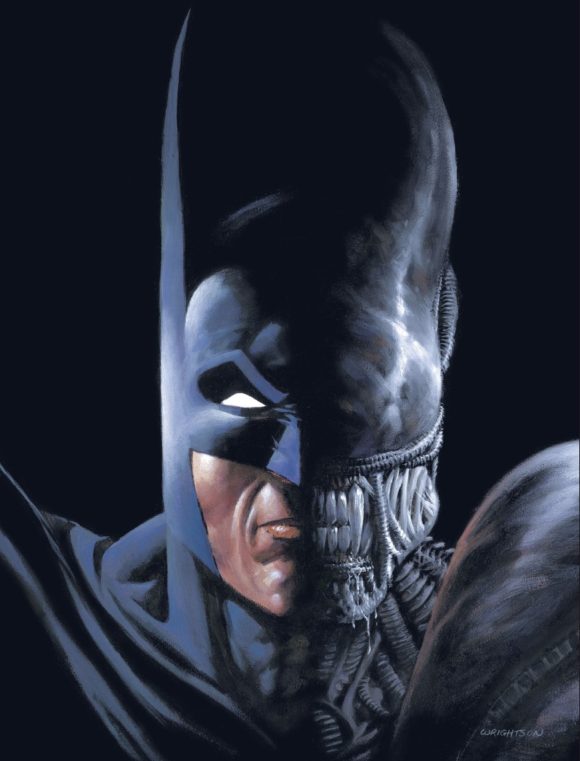
8. Batman/Aliens (DC/Dark Horse Comics, 1997). No xenomorphs goofily crossed with the DNA of Arkham inmates. No unnecessary additions of Superman or Predators to the mix. The first Batman/Aliens mini gets it right the first time without any gimmicks. Writer Ron Marz keeps the tale to just two installments and selects isolated ruins on the Mexican-Guatemalan border for the setting. Master of the macabre Bernie Wrightson’s art further infuses this encounter with terror and the visual detail it requires.
—
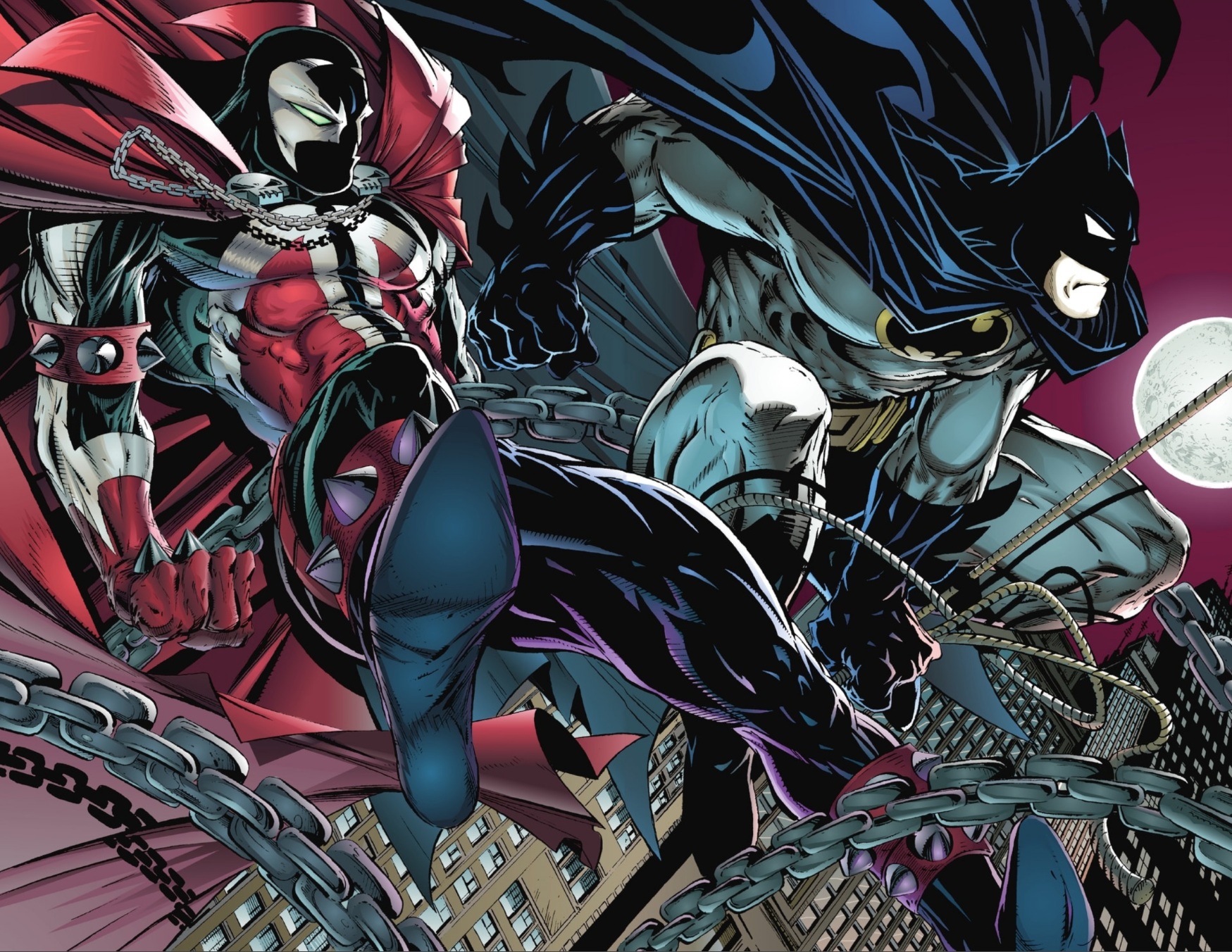
7. Spawn/Batman (DC/Image, 1994). Frank Miller. Todd McFarlane. Spawn. Batman. When those four main ingredients combined, fandom got this intense, action-packed romp that was sprinkled with a little humor and a lot of fantastically drawn capes. Both creators showed exactly how much they had further honed their skills since gracing Batman with their talent in the 1980s by delivering this memorable ’90s back alley slugfest.
—
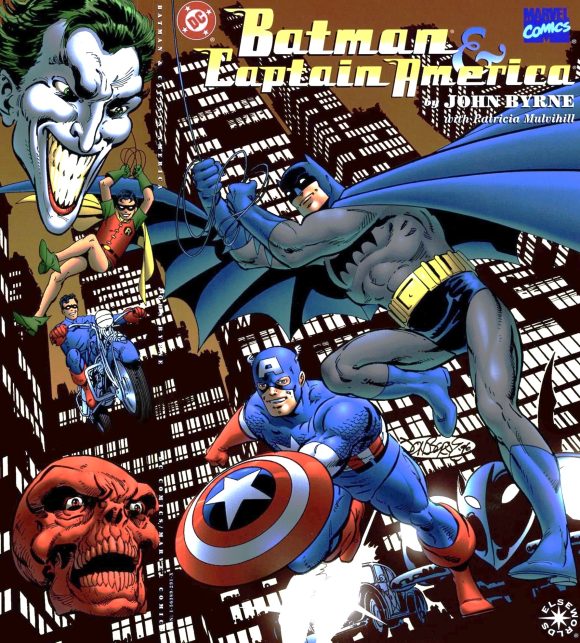
6. Batman & Captain America (DC/Marvel, 1996). John Byrne pairs Bruce Wayne and Steve Rogers for a fun one-shot at a time when Batman wasn’t known as, well, fun. Coupling these legends in the Golden Age of comics, as opposed to the grim-and-gritty ’90s, opened more storytelling possibilities and led to a book that is still fondly remembered by the fans of both characters.
—
5. Batman vs. The Incredible Hulk (DC/Marvel, 1981). Some fans do not believe that the Caped Crusader’s very first intercompany crossover should be on a best-of list. I wholeheartedly disagree for reasons cited in the TOP 13 DC/MARVEL CROSSOVERS and the fact that this treasury-size comic is simply just a well-drawn (by Jose Luis Garcia-Lopez), well-scripted tale. Period.
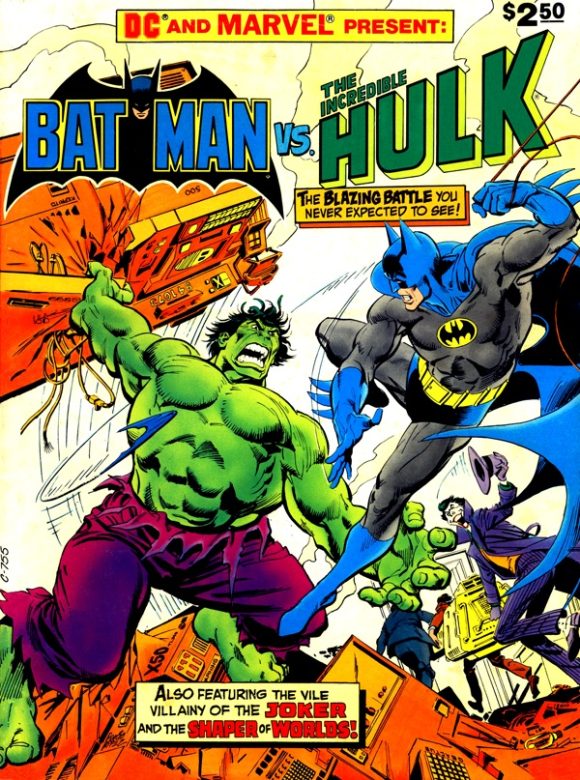
The main complaint that fans cite with the story is Batman defeating Hulk in the opening round via gas capsules and a well-placed kick to the solar plexus. What they never seem to mention is that it’s the only time that trick works. When Bruce attempts the same tactic pages later, Hulk drops a building on him. Even writer Len Wein knew Batman could defeat the Hulk under the right circumstances.
—
4. Punisher/Batman: Deadly Knights (DC/Marvel, 1994). In the early ’90s, Batman could not escape comparisons to antiheroes such as Wolverine and the Punisher. It eventually led to the Batbooks replacing Bruce Wayne with Azrael as Batman to show how relevant the original Caped Crusader still was.
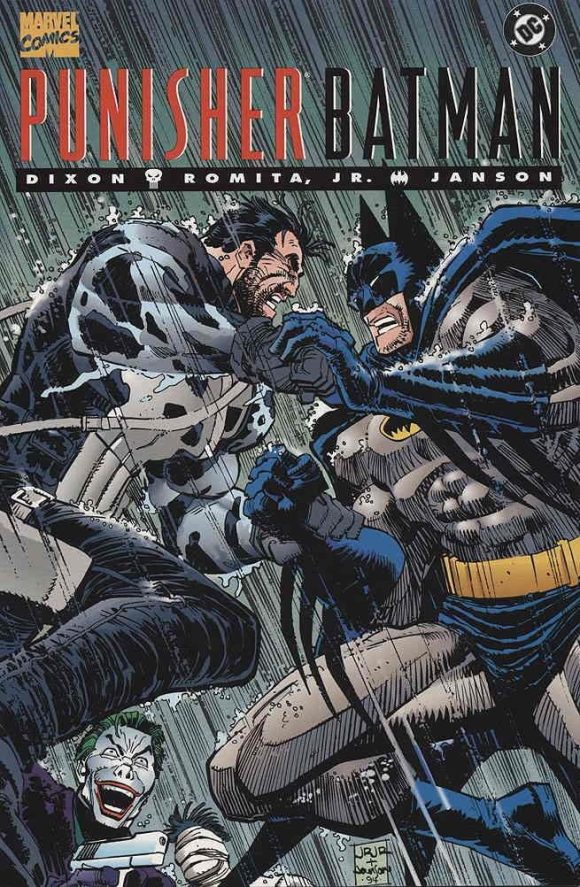
Azrael-Batman co-starred with Frank Castle in the earlier Batman/Punisher: Lake of Fire. It didn’t quite work because both Azbats and Frank were too close in accepting the use of lethal force. Deadly Knights, by Dixon, John Romita Jr. and Klaus Janson, was more dramatic because the best-known murderous vigilante faced the original Batman and his strict no-kill rule.
—
3. Batman/Judge Dredd: Judgement on Gotham (DC/Fleetway, 1991). This co-publication kicked off the new age of crossovers by starting with a left field pairing. How was a mainstream superhero going to mix with a sci-fi lawman from another time? Would the fans actually buy it?
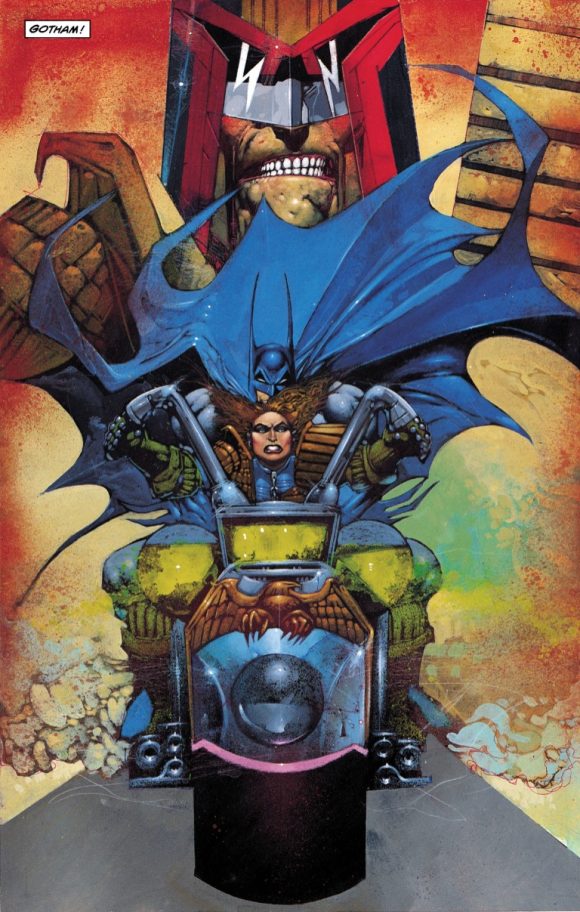
The key to its success lay with writers who were familiar to both franchises: Alan Grant and John Wagner. They came up with the “how” it could happen. Also, Simon Bisley’s art stood out on the racks at a time when painted comics were not as common as they are today. And fans did end up liking it as sales were so successful it was followed by three sequels.
—
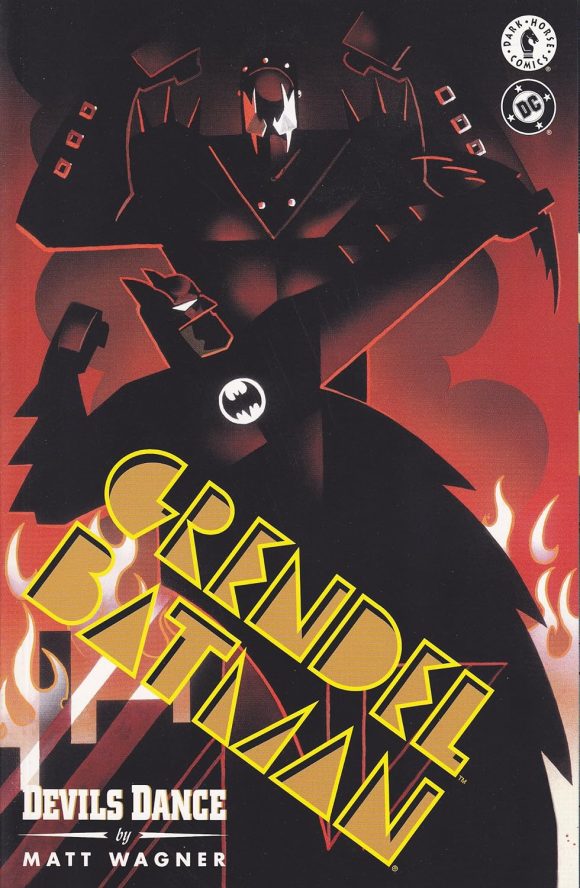
2. Batman/Grendel (DC/Comico, 1993) and Grendel/Batman (DC/Dark Horse, 1996). When I got my hands on the first Batman/Grendel crossover I was blown away by the creative page layouts, the mature subject matter, and how writer/artist Matt Wagner split the narrative between Bruce Wayne, Hunter Rose, and two innocent bystanders caught up in their conflict. The second crossover, with Grendel Prime, is also included here as it feels like a spiritual continuation of its predecessor while having more of a superhero tone.
I reached out to Matt Wagner to find out how the Devil and the Dark Knight came to cross swords:
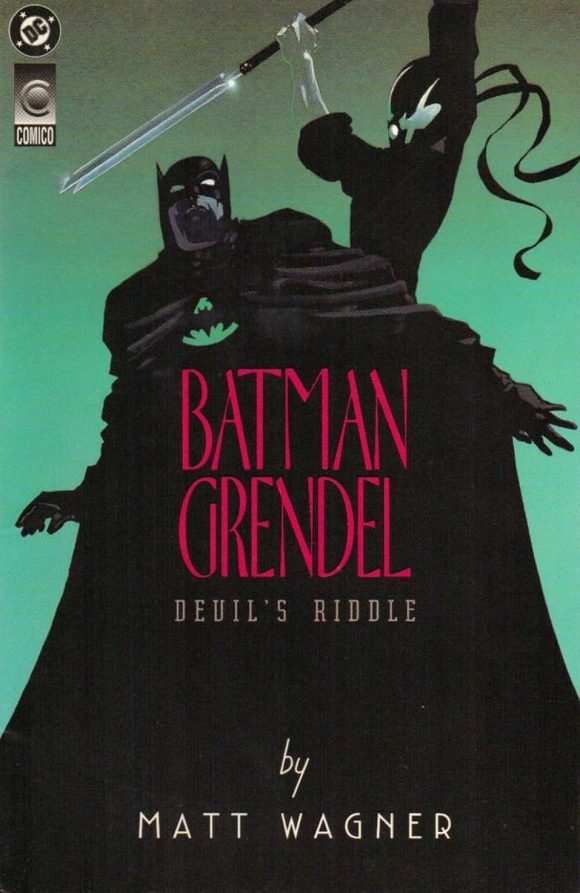
“Very surprisingly, I had little to do with getting the ball rolling on the first Batman/Grendel team-up,” he said. “Which is highly unusual because practically every project I’ve ever done for mainstream publishers has been a result of me approaching them with an idea or pitch.
“But in those heady days of the early indie comics scene, DC wanted to tap into what they saw as a ripe vein of both creativity and profitability. And so they established certain business dealings with Comico, my publisher at the time. From that symbiosis arose the idea to do a company crossover event and the match-up of Batman and Grendel seemed like a natural choice to everyone.
“For my part, when I was first approached with the possibility of this opportunity — DC’s first time pairing of one of their flagship properties with a creator-owned, independent character — I of course leapt at the chance, fully aware of what a monumental and historic project this would become.
“As many people know, during the production of the first crossover, Comico ran into financial difficulties and filed for bankruptcy protection. This soured their deal with DC and threw the entire Batman/Grendel project into a legal and publishing limbo. But, when the series finally did see print, it was a huge financial success and so everyone immediately agreed that we should attempt to make lightning strike twice… and this time with a different Grendel.
“I’ve always been the sort of creator who likes to mix things up whenever I can so I decided (and everyone involved agreed) to feature the Grendel Prime version of my character in the second crossover with Batman. And I made sure that both tonally and visually, the two storylines would be polar opposites of each other. Whereas the first crossover featured Hunter Rose and was more of a dense crime noir thriller, the second event was a balls-to-the-wall action fest. Even the coloring schemes for both series were contrasts, with the first series using dark and moody hues and the second one featuring garish neon colors.
“Further contrasting the different versions of Grendel, in the first one, Batman is more of a detective and in the second one, he’s more of a superhero. I thought this was the perfect way to highlight and make use of the broader platform to show readers the vast scope and narrative complexities of Grendel.”
—
1. Batman vs. Predator (DC/Dark Horse, 1991). This was another unconventional crossover choice in 1991 that was a runaway success. Taking on a non-powered lawman from Mega City One was one thing, but fighting a threat from outer space? What would that be like in this era? In short, Batman gets his ass handed to him — then goes from one of his worst defeats to one of his greatest comebacks.
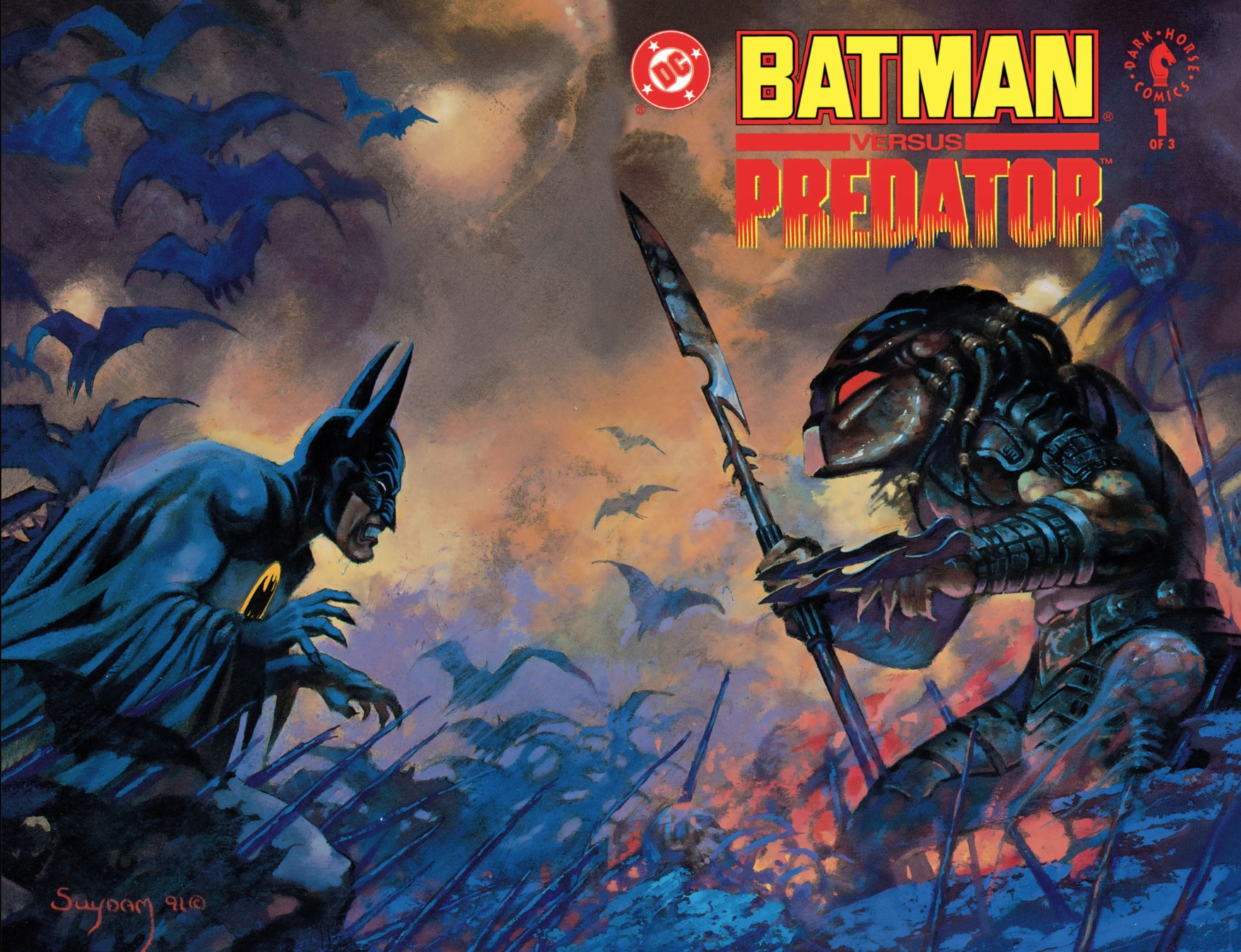
The script by Dave Gibbons, powerhouse pencils by Andy Kubert, well-defined inks by Adam Kubert, and mood-setting colors by Sharon Van Valkenburgh work together like a well-oiled machine. The result feels like a suspenseful action film on paper — bringing together sci-fi and mainstream superhero fare to present us with one of comic’s best intercompany skirmishes.
—
MORE
— 13 Classic BATMAN HARDCOVERS to Celebrate His Anniversary. Click here.
— The TOP 13 DC/MARVEL Crossovers — RANKED. Click here.
—
JASON CZERNICH was born smack dab in the middle of the Bronze Age of Comics. Early memories of Power Records and other Batman merchandise, as well as watching reruns of the 1966 Batman series on TV38 in Boston, imprinted on him heavily. Today, he lives and works as a clinical social worker in central Massachusetts with his wife, child, cat, and beloved French bulldog.

April 21, 2026
Nice list. Some of my favorites have always been Batman/Punisher Deadly Knights, Batman/Dread Die Laughing and topping my list Batman/Dredd Judgement on Gotham. That one for me has always had the perfect balance of introducing each character along with giving a good sense of tension between the heroes and their different approaches towards Justice. And a formidable threat that they have to put aside any differences to overcome. Plus Simon Bisley’s art in that story always blows me away.
April 21, 2026
Your regular reminder that the two Batman/Punisher crossovers tie into both Archie Meets the Punisher and Zero Hour!
April 21, 2026
Batman/Grendel was amazing then both Bats/Punisher. Showed how Batman considered murderous heroes as trash.
April 21, 2026
@Eddie – Hahaha Yeah. I love how Batman threatens to lock up Punisher in Arkham Asylum if he ever sees him in Gotham again.
April 21, 2026
I love the Batman/Captain America crossover. The art is superb – especially Byrnes rendering of the Batmobile and the Bat Cave. The rivalry between Bucky and Robin was a nice touch. Especially since Bucky was so intent that he and Cap were the better team and Robin didn’t feel the need to engage in such childish rivalry.
April 23, 2026
No Archie/Predator? No Gen 13 #13? Those both should have made the list over and of the Batman ones.
April 23, 2026
Did you read the headline?
April 24, 2026
What about Batman and The Maxx