
Scott and Dan hit up the comics racks from 55 years ago…
This week for RETRO HOT PICKS, Scott and I are selecting comics that came out the week of March 11, 1971.
Last time for RETRO HOT PICKS, it was the week of March 4, 1978. Click here to check it out.
(Keep in mind that comics came out on multiple days, so these are the comics that went on sale between March 8 and March 14.)

So, let’s set the scene: THE FIGHT OF THE CENTURY! And for once, it lived up to the hype. On March 8, the worlds of sports, popular culture and politics intersected for a powerhouse night at Madison Square Garden, where Muhammad Ali, stripped of his heavyweight crown in 1967 for refusing to be drafted into the Vietnam War, made his comeback title bout against Joe Frazier, who had since become champ.
Both fighters were undefeated and, in the public’s mind, stood for diametrically opposed viewpoints. Ali gleefully represented the rebellious counterculture while Frazier, who backed U.S. involvement in the war, was adopted as a stand-in by more conservative elements. Ali, meanwhile, had fought just twice since returning to the ring the previous fall after his forced 3 1/2-year layoff, and, at 29, was two years older than Frazier, who held three belts and was at the top of his game.
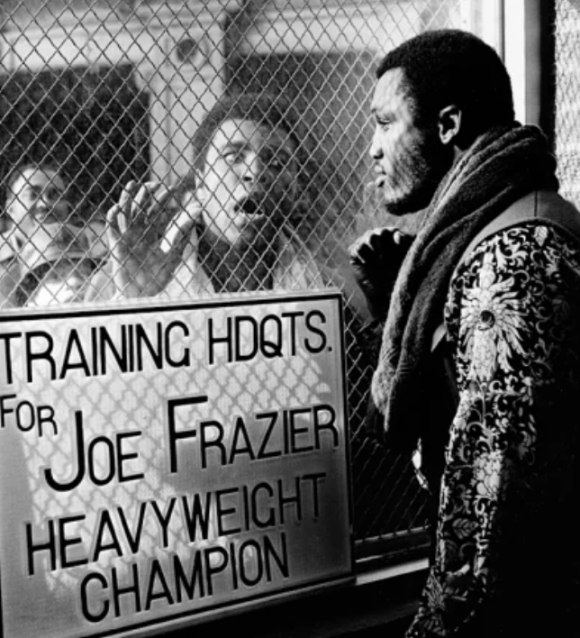
Frazier and Ali had actually been friends, with Smokin’ Joe lending his buddy money while the latter was in exile, and rigorously pushing for his right to fight. But in the lead-up to the event, Ali blasted Frazier as an Uncle Tom and Frazier insisted on calling the former champ by his birth name, Cassius Clay.
It was ugly, so naturally it captured the attention of the masses. The bout was televised at venues internationally on closed-circuit and the Garden itself drew a raft of the biggest stars in the world, among them Burt Lancaster (who served as color commentator!), Bob Dylan, Robert Redford, Count Basie, Duke Ellington, Barbra Streisand, Sammy Davis Jr., Diana Ross, Miles Davis, Gene Kelly, Dustin Hoffman, Hugh Hefner, and Woody Allen. The top tickets cost $150 apiece, or $1,200 in 2026 dollars.

Most famously, Frank Sinatra photographed the fight for Life magazine — because, the story goes, even the Chairman of the Board couldn’t get a ringside seat. (That may or may not be true.) Norman Mailer wrote the story for the mag, which used four of Sinatra’s pictures, including the cover shot (much to the consternation of professional shooters).
The fight itself didn’t disappoint, going the the full 15 rounds. Ali dominated early but tired, allowing Frazier to get the upper glove as the bout carried on. Frazier took the momentum and staggered Ali, most notably knocking him down in the 15th. At the final bell, the judges were unanimous: Frazier was the victor.
But the aftermath was dramatic. Ali, though outclassed that night, was back in the ring and became the biggest sports star of the 1970s, beating Frazier twice, including the Thrilla in Manila, and famously defeating George Foreman in the Rumble in the Jungle, their only tussle. And that doesn’t even count his three epic fights against Ken Norton.
Boxing’s heavyweight division was in its Golden Age but there was no doubt: Muhammad Ali was the Greatest.
IN OTHER NEWS
— In a bit of karmic payback, on the night of the fight, activists broke into an FBI office in Pennsylvania, correctly figuring security would be preoccupied with the bout. They stole documents that they later released to the media that exposed the Bureau’s COINTELPRO program that illegally spied on American citizens — including Muhammad Ali. J. Edgar Hoover, one of history’s most notorious hypocrites, shut the program down in April amid harsh criticism of “secret police” tactics.

— Hoover was hardly the only one in the upper echelons of the government with a voracious appetite for illegal surveillance and underhanded tactics. On March 11, the Committee to Re-elect the President, the fundraising arm for Republican President Richard Nixon’s 1972 campaign, approved spending $250,000 — that’s more than $2,000,000 today — for so-called intelligence gathering against the Democrats. That fateful move led to a “third-rate burglary” little more than a year later. At Washington’s Watergate complex.
— On March 10, the Senate approved lowering the voting age from 21 to 18.
— On March 13, Explorer 43, the first orbiting satellite to carry its own computer, was launched from Cape Kennedy.
— On March 15, chatrooms were used for the first time on ARPANET, the forerunner of the internet.
— Harold Lloyd, one of the greatest stars of the Silent Era who was widely known for performing his own outlandishly dangerous stunts, could cheat death no longer. On March 8, he of died of prostate cancer at the age of 77.
The romantic drama Love Story was a box-office juggernaut, with other favorites including The Owl and the Pussycat; Get Carter; and A New Leaf, Elaine May’s directorial debut. Opening this week were two sci-fi thrillers: The Andromeda Strain and the unsettling THX 1138, the first theatrical film directed by George Lucas. (His next feature, 1973’s American Grafitti, was a much bigger deal, and the one after that was, well, Star Wars.)
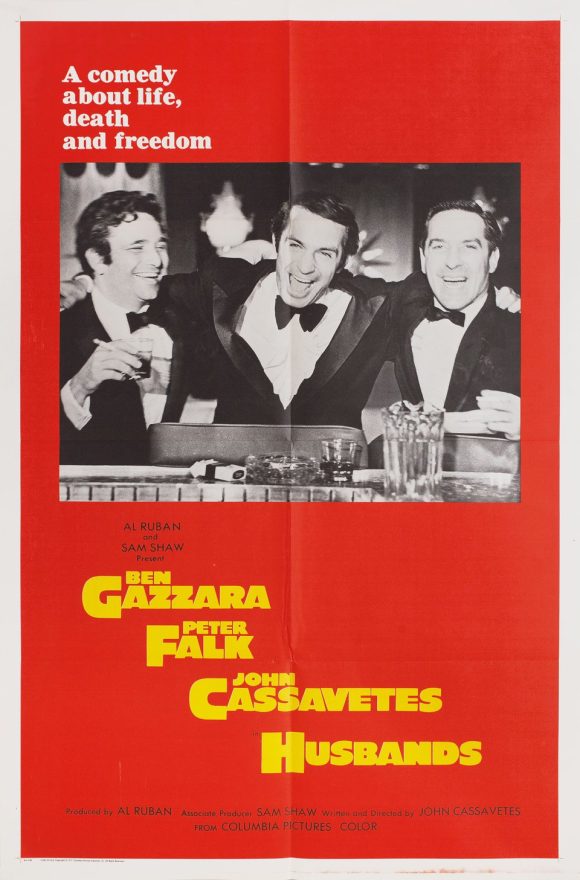
It was also a hell of a time for independent film: John Cassavetes’ classic Husbands was in theaters, as was Barbara Loden’s Wanda. The cult-favorite Vanishing Point opened March 13.
Flip Wilson was the most popular show on television, with other big hits including Marcus Welby, M.D.; Hawaii Five-O; Mayberry RFD; Here’s Lucy; and Ironside. Barbra Streisand appeared on a CBS Burt Bacharach special on March 14. And, an era was about to end: On March 15, the final original episode of The Red Skelton Show would air after 20 years on TV.
The music-listening public was, shall we say, a little schizophrenic: The No. 1 song was One Bad Apple by the Osmonds. No. 2? Me and Bobby McGee by Janis Joplin, who’d died the year before. Get your head around that for a moment. (Janis’ posthumously released album Pearl was a massive seller, in the third week of a nine-week run at No. 1 on the Billboard LP chart. Jesus Christ Superstar and George Harrison’s magnum opus All Things Must Pass were also big hits.)
Anyway, on March 12 and 13, the Allman Brothers recorded one of the best concert albums of all time, At Fillmore East. On March 8, the North Vietnamese decided — hilariously — to flip the bird at America with propaganda station Radio Hanoi beginning its first broadcast with Jimi Hendrix’s Woodstock version of The Star-Spangled Banner.
On March 11, dissipated Doors frontman Jim Morrison, reeling from drug and legal problems, left for Paris to get his head on straight. He would never return to the U.S., found dead in July.
Morrison wasn’t the only one headed to France. This week, the Rolling Stones, the Greatest Rock and Roll Band in the World, played a series of shows in Scotland and England, wrapping up March 14 in London. The band was at the end of its rope financially, buckling under crushing debt thanks in part to enormous tax bills and an onerous contract with Allen Klein.
But the rich don’t go broke like the rest of us, so the Stones — who had a new album coming out in April called Sticky Fingers — had decided to move to the south of France, ultimately headquartering themselves that spring and summer at Keith Richards’ rented villa on the Côte d’Azur, where they would record the backbone of Exile on Main Street, the Greatest Rock and Roll Album in the History of the World. (I will brook no dissent.)
—
Dan Greenfield, editor, 13th Dimension
Batman #231, DC. DC was mostly laying off villain types for Batman during this time, relying more on gothic spookiness or true-to-life criminals and plots. Here, writer Frank Robbins throws in a little body horror, with the second appearance of Philip Reardon, the Ten-Eyed Man, who was blinded in an explosion and whose optic nerves were connected by a doctor to his fingertips, so he could see by using his hands.

His first appearance was five issues earlier and in this sequel, Reardon, a Vietnam vet, lures Batman to the Southeast Asian nation so he can kill him. Reardon is one of the stranger characters to pop up in this period and he never really stuck. He did make a comeback of sorts in 1975’s Man-Bat #2, where he was given a ludicrous costume festooned with large images of eyes down the front. He died in Crisis on Infinite Earths but was later rebooted. He’s still never made it off the Z-List, though. (Side note: Thanks to the Neal Adams cover — with that great yellow logo — this was a wall book at the comics stall I frequented at the Route 1 Flea Market in New Brunswick, N.J., when I was a young teen.)
Scott adds: So. Damned. Creepy. I saw this cover at reduced size in black-and-white in a reprint book as a kid and it still freaked me out.
—
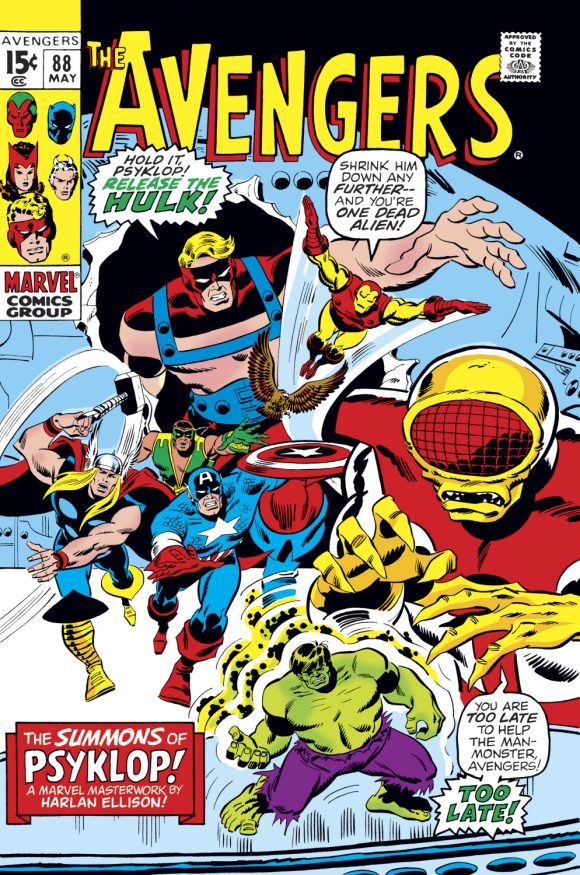
The Avengers #88, Marvel. Harlan Ellison — cover-blurbed, no less — stops in to plot this tale inspired by H.P. Lovecraft’s The Call of Cthulhu, with dialogue by Roy Thomas and art by Sal Buscema and Jim Mooney.
—
Captain America #138, Marvel. Here’s what I wrote about this cover five years ago, in the BRONZE AGE BONANZA column covering March 1971: “I’ll say this: It’s an uncommonly busy John Romita cover and you’re not always sure where to look. But when you take it in, boy does it put you in the center of the action – what a sense of place! The latticework is tremendous, the neighborhood grim – and there are no less than 18 distinct onlookers. A very effective mix of the real and the fantastic.”

—
Bugs Bunny #135, Gold Key. Any Gold Key Bugs Bunny fans out there? In my not-so-humble opinion, Bugs is easily the most entertaining cartoon character of all time but I have a hard time believing that these comics were able to come within a mile of capturing the wildly anarchic subversiveness of the shorts. Am I wrong?

—
Young Love #86, DC. I’m going to start wearing a neckerchief.

—
House of Mystery #192, DC. Neal Adams. Always with the kids.

—
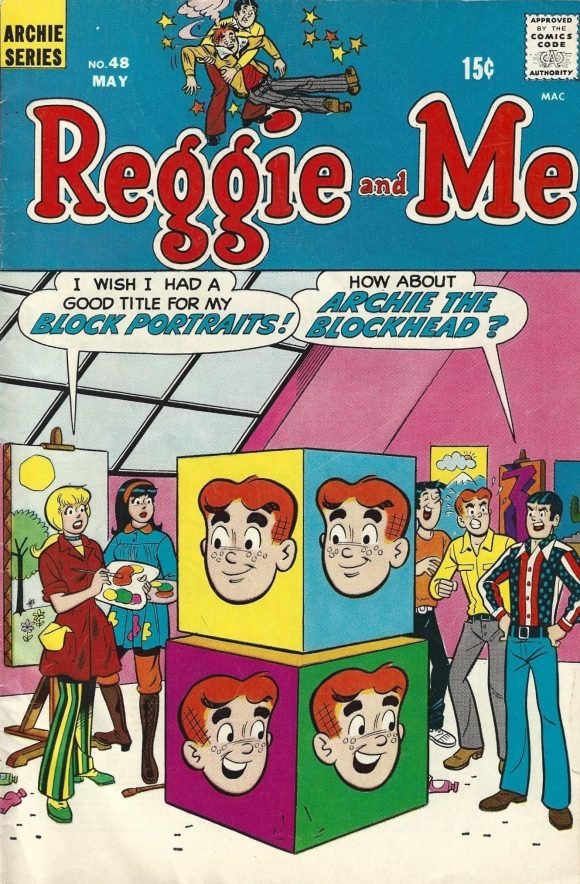
Reggie and Me #48, Archie. For once, Reggie is right: Archie is a blockhead. He doesn’t deserve Betty at all.
—
Scott Tipton, contributor-at-large, 13th Dimension
Amazing Spider-Man #97, Marvel. Spidey covers just don’t get more iconic. By John Romita.

Dan adds: Also compelling is what’s missing: the Comics Code seal. This is the second of three consecutive issues without it because the multipart story dealt with — gasp! — drugs. (Check out Dakota Alexander’s alternate version of the cover over here.)
—
Superboy #174, DC. A Super-Collection of Super-Animals! Sold.

—
The Incredible Hulk #140, Marvel. The Hulk’s legendary microscopic romance with Jarella, also brought to us by the great Harlan Ellison.

—
MORE
— RETRO HOT PICKS! On Sale The Week of March 4 — in 1978! Click here.
— RETRO HOT PICKS! On Sale The Week of February 25 — in 1958! Click here.
—
Comics sources: Mike’s Amazing World of Comics and the Grand Comics Database.

March 11, 2026
Did Wrightson ink Adams on that HoM cover? Something about the feathering textures on the beard.
As for Bugs Bunny, my personal opinion/recollection is that, no, none of the Gold Key books captured what made the original Loony Tunes characters great.
March 12, 2026
There is something special about seeing a Robert McKimson or Chuck Jones cartoon, along with Mel Blank’s voice artistry. Gold Key comics can never capture the essence of a 40’s or 50’s era cartoon.
March 11, 2026
Ali’s fight with Frazier was not his comeback bout after his exile. His comeback fight was against Jerry Quarry in Atlanta, October 1970. Who he defeated via TKO. Ali then fought Oscar Bonavena at Madison Square Garden on Dec. 7, 1970. He defeated Bonavena via KO in the 15th round. So, his fight with Frazier was his third fight since his exile.
March 11, 2026
Excellent point, Michael!
March 11, 2026
The House of Mystery cover looks like something that would have inspired Norm Breyfogle!
March 11, 2026
Gold Key took a lot of license, not only with the Looney Tunes titles but with many of their cartoon titles in general, has to how they interpreted the characters. Characters like the Road Runner, Henry and the Pink Panther talked. I don’t believe the writers of Snagglepuss ever saw a single cartoon with this star. In most cases the art was superior (especially when compared to later Charlton renditions) but the storylines usually disappointed.
March 12, 2026
Exile on Main Street is my favorite album. The Ten-Eyed Man is my favorite lame Batman villain. Perfection!
March 12, 2026
The title of the story in Hulk #140 is a riff on Ellison’s “The Beast That Shouted Love At The Heart Of The World”.
March 13, 2026
Batman #231 came out about the time Stephen King’s story “I Am the Doorway” did. The cover story of his collection “Night Shift.” Remember? The hand with the eyes in it? And while I love te cover of Captain America #138, anything I have to say about Falcon’s green outfit would include the word “Yuck.”