
Scott and Dan hit up the comics racks from 65 years ago…
This week for RETRO HOT PICKS, Scott and I are selecting comics that came out the week of Aug. 5, 1961.
Last time for RETRO HOT PICKS, it was the week of July 29, 1959. Click here to check it out.
(Keep in mind that comics came out on multiple days, so these are the issues that went on sale between Aug. 2 and Aug. 8.)
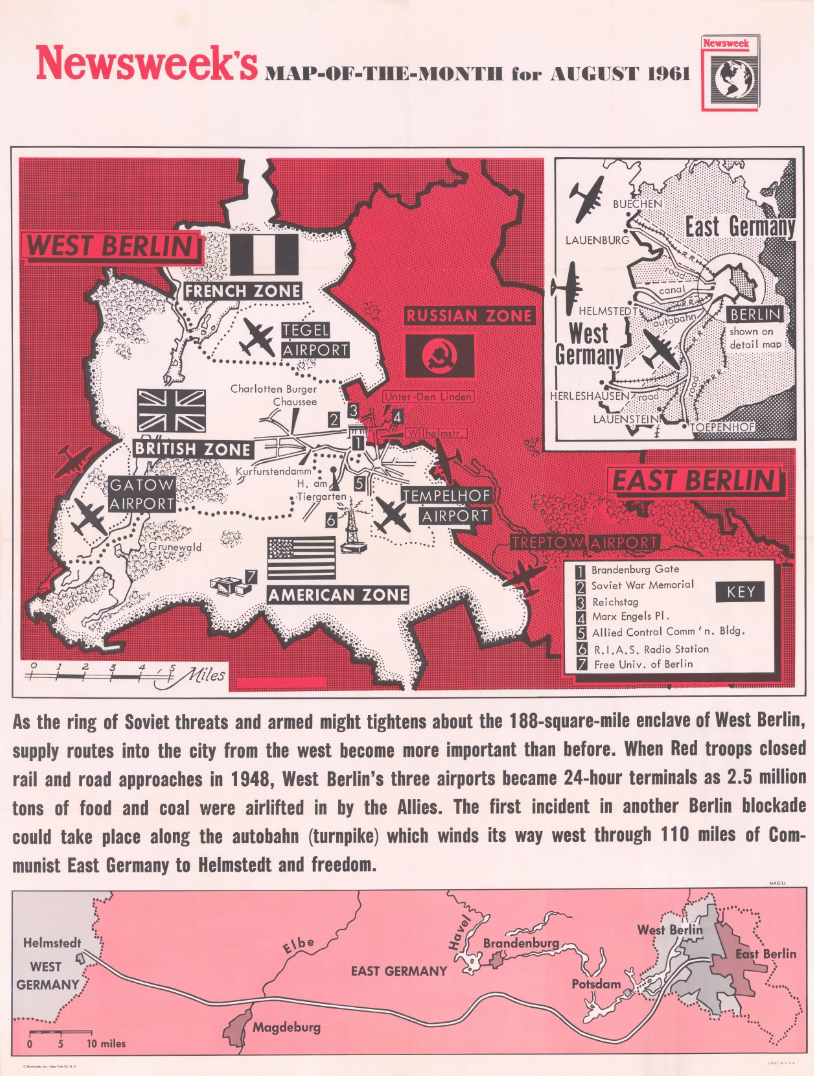
Just before the Wall was built…
So, let’s set the scene: Tensions over the divided Berlin were reaching a peak, and decisions were being made that would radically alter the geopolitical landscape for decades to come.
On August 5, the communist Warsaw Pact nations announced that they’d unanimously agreed to a peace deal with East Germany, with the goal of ousting the American, British and French forces from Berlin. They also desperately wanted to stop the flow of East Germans pouring into the West. (Millions had bolted since the late ’40s.)
At the same meeting, Soviet Premier Nikita Khrushchev gave East German leader Walter Ulbricht his approval for shutting down the border with West Berlin using a barbed-wire fence — the first steps in building the Berlin Wall. The fencing would go up eight days later.
The Berlin Crisis of 1961 had begun.
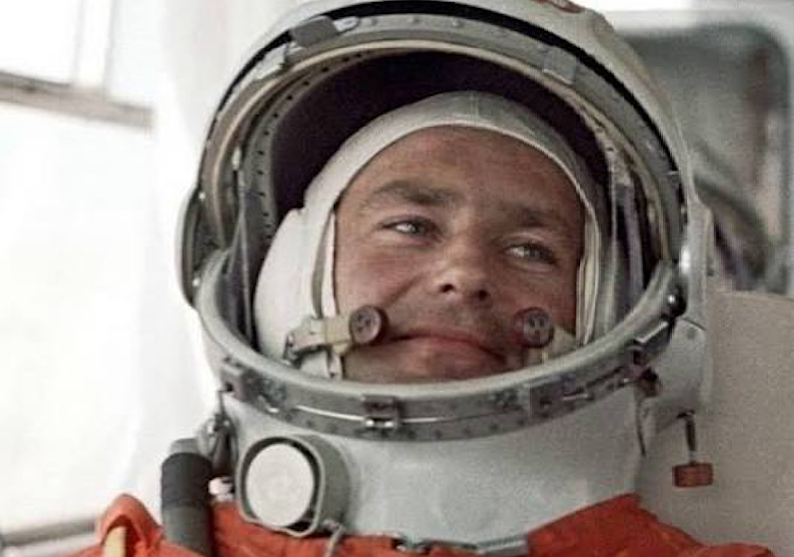
As the Soviets tightened their grip, they were also succeeding in the Space Race. On Aug. 6, cosmonaut Gherman Titov was launched into orbit, staying up for more than a day and becoming the first human to sleep in space (and also the first to vomit in space). To this day, Titov, at 25, was the youngest person ever to go into orbit, and the second overall. The U.S. had yet to send someone beyond the Earth’s gravitational pull.
On Aug. 7, the day Titov returned to the planet, the U.S. Congress approved almost $1.7 trillion to bolster the nation’s space program. There wasn’t even a roll-call vote! The bill included more than $470 million to fund a crewed mission to the Moon.
IN OTHER NEWS
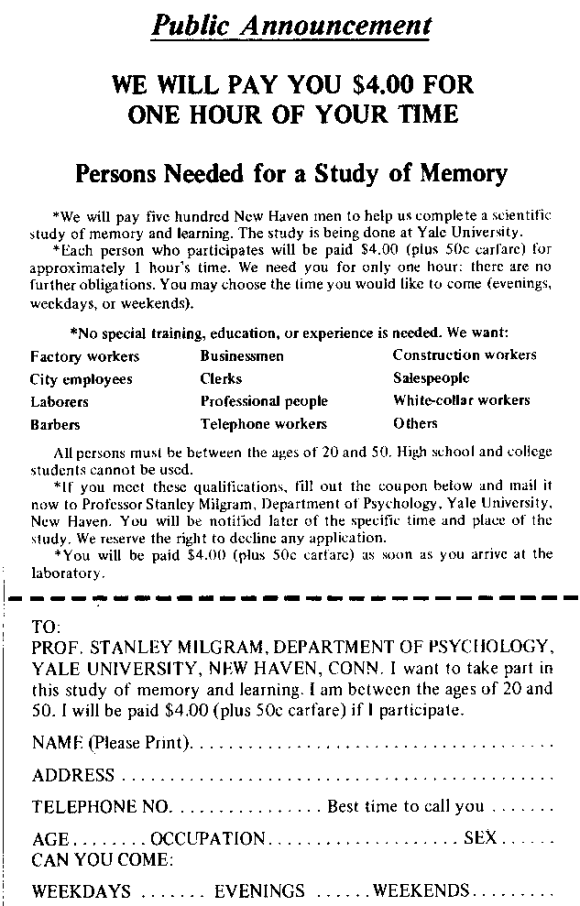
— It wouldn’t be revealed for another two years, but on Aug. 7, the horrifying Milgram Experiment began on the campus of Yale University. Inspired by the trial of Nazi war criminal Adolf Eichmann, psychologist Stanley Milgram tested just how willing an average person would be to torture others rather than disobey an authority figure.
Milgram would have a subject — who thought they were helping in some sort of memory test — use a device called a “shock generator” that supposedly could blast up to 450 volts into someone on the other side of a wall. (They would see the person strapped into an electric chair first.) All were willing to go up to 300 volts, even as their counterparts banged on the wall or pretended to scream in pain (or a recording played sounds of agony) — and almost two-thirds were willing to shock their counterparts to the full 450 volts, even as the other person fell silent.
“Just following orders,” indeed.

— At the other end of the spectrum, it was fun, fun, fun in the Lone Star State, as the Six Flags Over Texas amusement park, located in Arlington, officially opened. The park was the first of 31 that have been part of the franchise,
— Nobody but his parents and family cared at the time, but on Aug. 4, a baby named Barack Obama was born in Honolulu. In Hawaii. In the United States. The United States.
The bombastic, testosterone-driven epic The Guns of Navarone, starring Gregory Peck, David Niven, and Anthony Quinn, dominated the August box office. Other hits included Fanny, The Parent Trap, and Irwin Allen’s Voyage to the Bottom of the Sea.
The new TV season was about a month away, so it was still summer reruns. The most popular shows included Gunsmoke, Have Gun — Will Travel, Ed Sullivan, The Untouchables, and What’s My Line?
Tossin’ and Turnin’ by Bobby Lewis was the No. 1 single, followed by I Like It Like That (Part 1), by Chris Kenner. There was also Chubby Checker’s Let’s Twist Again, and Every Beat of My Heart, the first hit for a family band from Atlanta — Gladys Knight & the Pips.
The Beatles, completely unknown on these shores, were wildly popular in their English hometown of Liverpool. John Lennon, Paul McCartney, George Harrison, and Pete Best were the main attraction at the Cavern Club. Also around town was Rory Storm and the Hurricanes drummer Ringo Starr, who on Aug. 5 would be photographed with Harrison — the first known picture of Starr with a member of the band.
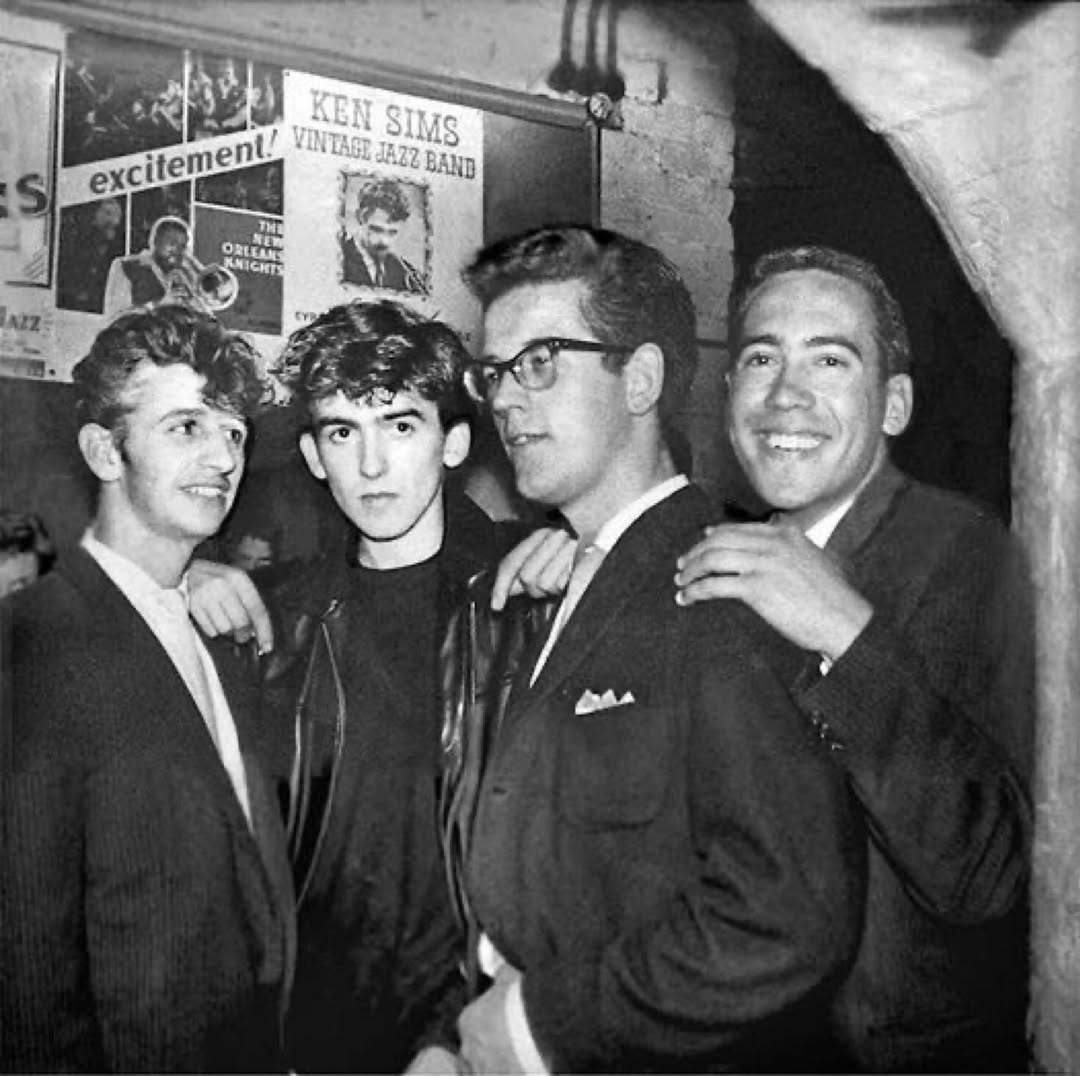
Ringo, George, Lou Walters of Rory Storm and the Hurricanes, and… somebody. Published in Mersey Beat (Aug. 17-31, 1961).
Meanwhile, up-and-coming folk musician Bob Dylan was playing in the Village.
All this as Elvis Presley was filming and recording for his ninth movie — Follow That Dream.
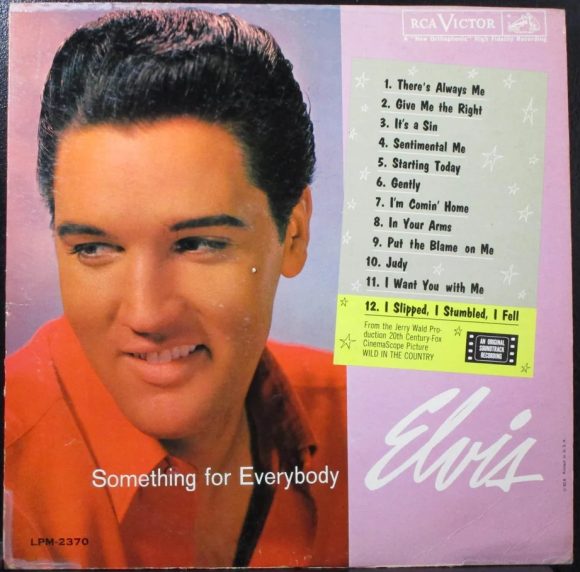
The top-selling LPs were the Camelot Broadway cast recording, the Exodus film soundtrack, the Carnival! Broadway cast album — and the King’s Something for Everybody.
—
Scott Tipton, contributor-at-large, 13th Dimension
Fantastic Four #1, Marvel. In 1961, a moderately successful comics publisher called Marvel (or Atlas, or Timely, depending on what month it was and who you asked) was eking out a living by pretty much treading water and following the trends. If Westerns were in vogue, they’d crank out Westerns by the bushel. If romance seemed to be moving pretty well, then, it’d be love stories all around.
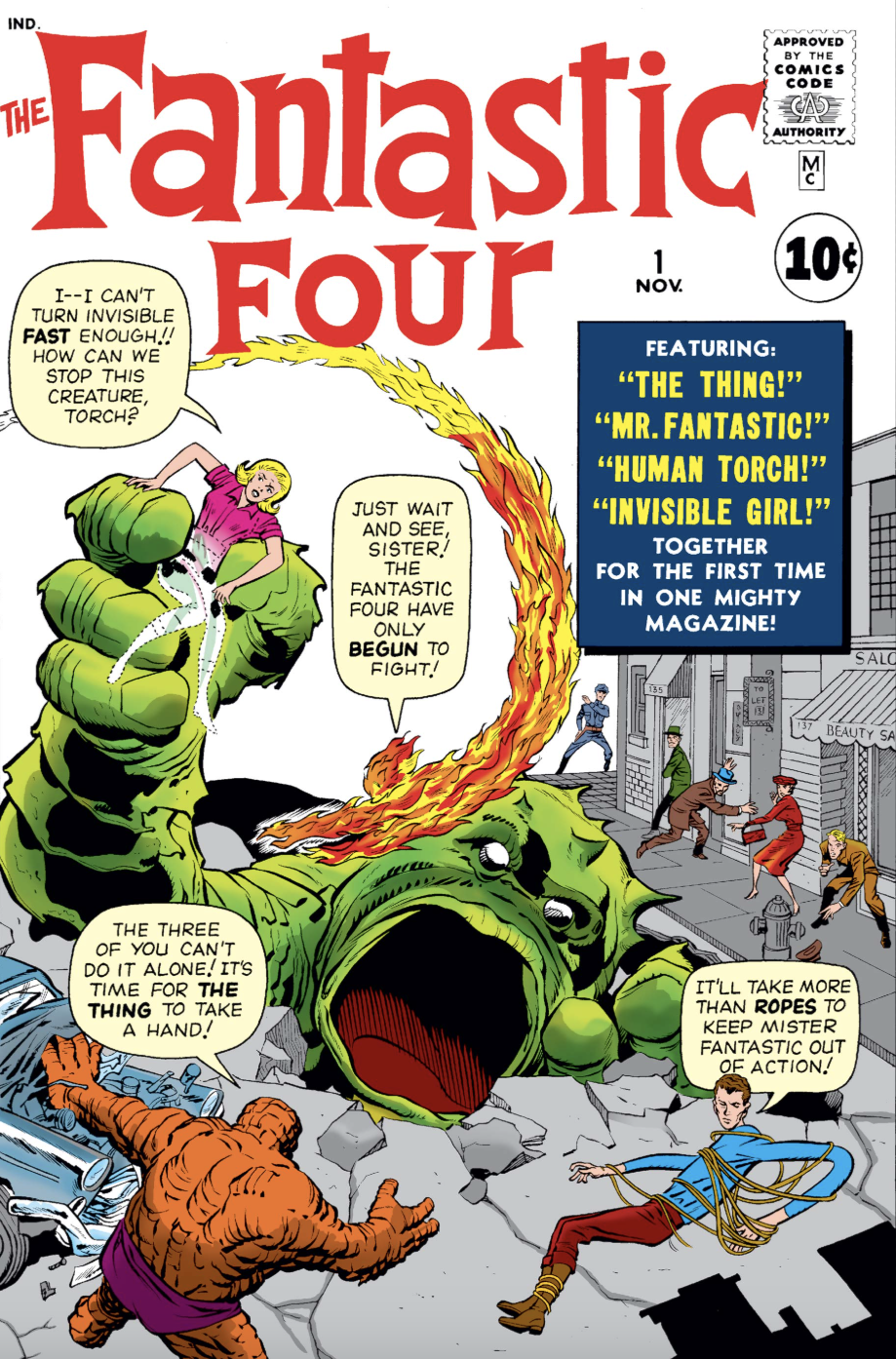
At the time, the trend was monster comics, so Atlas was turning out monster stories like you wouldn’t believe, mostly “Godzilla-type” knockoffs and the like. The managing editor and art director was a fellow named Stanley Martin Lieber, although you might be more familiar with his sobriquet: Stan Lee.
Lieber had been working at the publisher since he was 17, having risen through the ranks from office boy, and although the monster comics were doing OK, Stan was bored, bored, bored, and about ready to leave comics for good.
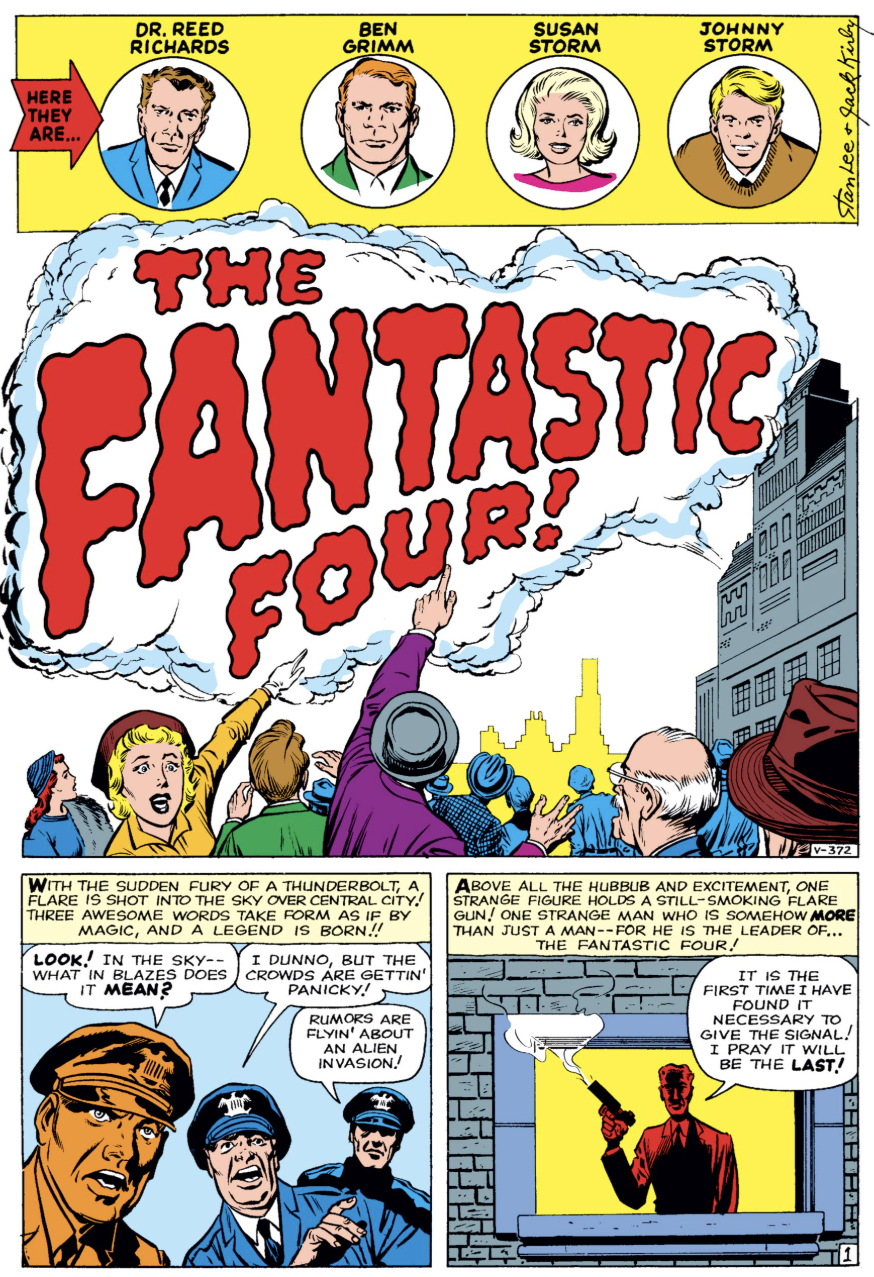
Meanwhile, publisher Martin Goodman, Lee’s relative by marriage, played a legendary — legendary, as in perhaps apocryphal — golf game with DC Comics publisher Jack Liebowitz. Liebowitz told Goodman what a big success they were having with their new Justice League of America magazine. When Goodman left the links, he called Lee, and told him to get to work on a superhero team comic book, and fast.
According to Lee’s account, he was considering this new directive from his boss, when he heard from another important influence: his wife, Joan. As Lee told it years later in Origins of Marvel Comics, Joan set him on the right track by reminding him that since he was ready to quit anyway, why not do whatever he wanted with this new book instead of following the same comic-book clichés he’d been repeating for years. If it didn’t work, what’s the harm?
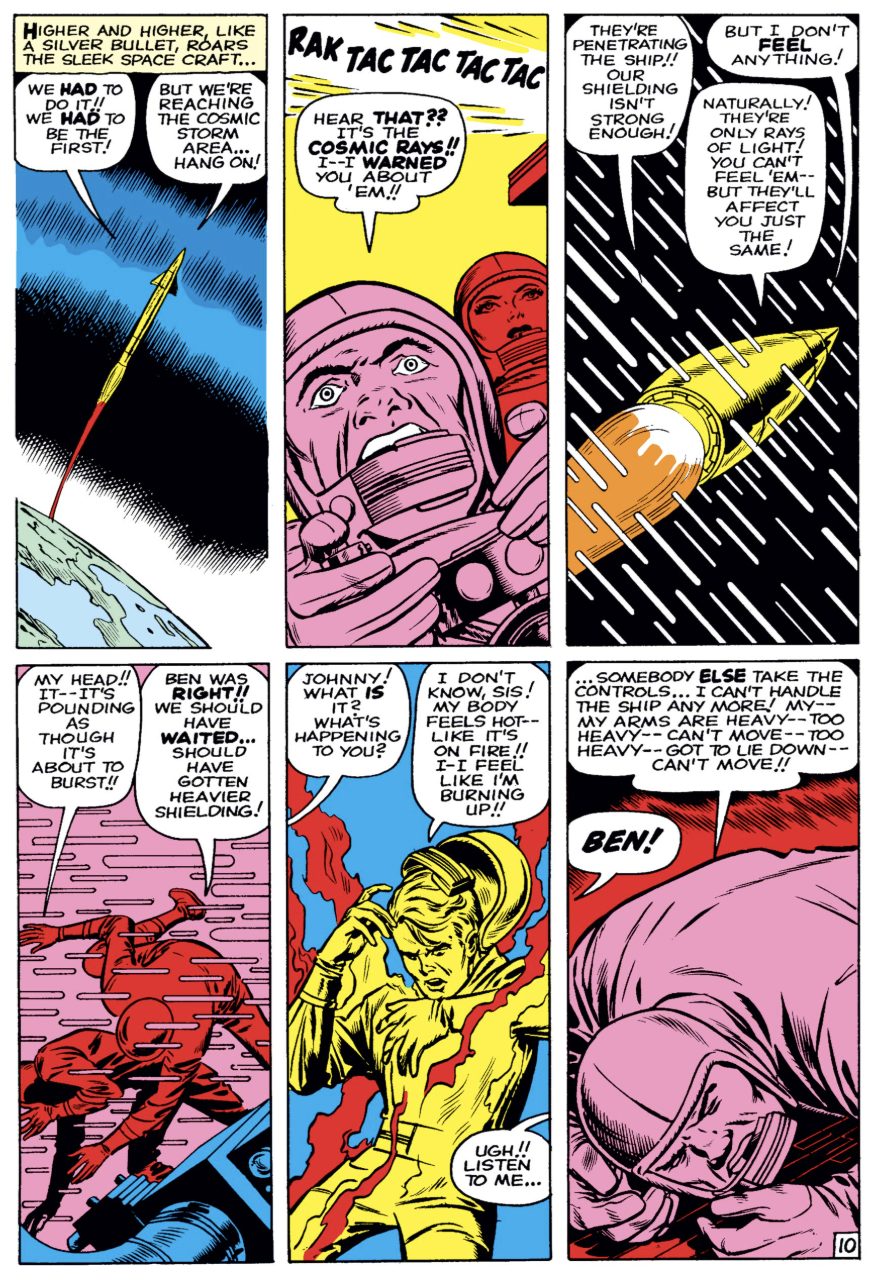
Inspired, Lee began to flesh out his new concept for the book. First to go were secret identities. As Lee reasoned, if he himself had superpowers, he’d never be able to keep it secret, so why should they? Next, out was the classic superhero love triangle in which Our Hero’s girlfriend would really fall for him if only she knew who he really was.
Instead, not only would the girl know who the hero really was, they’d both be on the team, and treated as equals. Also, no costumes. Again, Lee couldn’t see himself wearing tights and a cape, so neither would his new characters. (Of course, this rule didn’t last too long; about two issues, as a matter of fact. Still, they kept to the spirit of the concept by wearing what felt more like utilitarian uniforms or coveralls, rather than gaudy costumes.)
Finally, this new team wouldn’t always get along; they’d bicker, they’d squabble; in fact, sometimes it would seem that certain members outright hated each other.
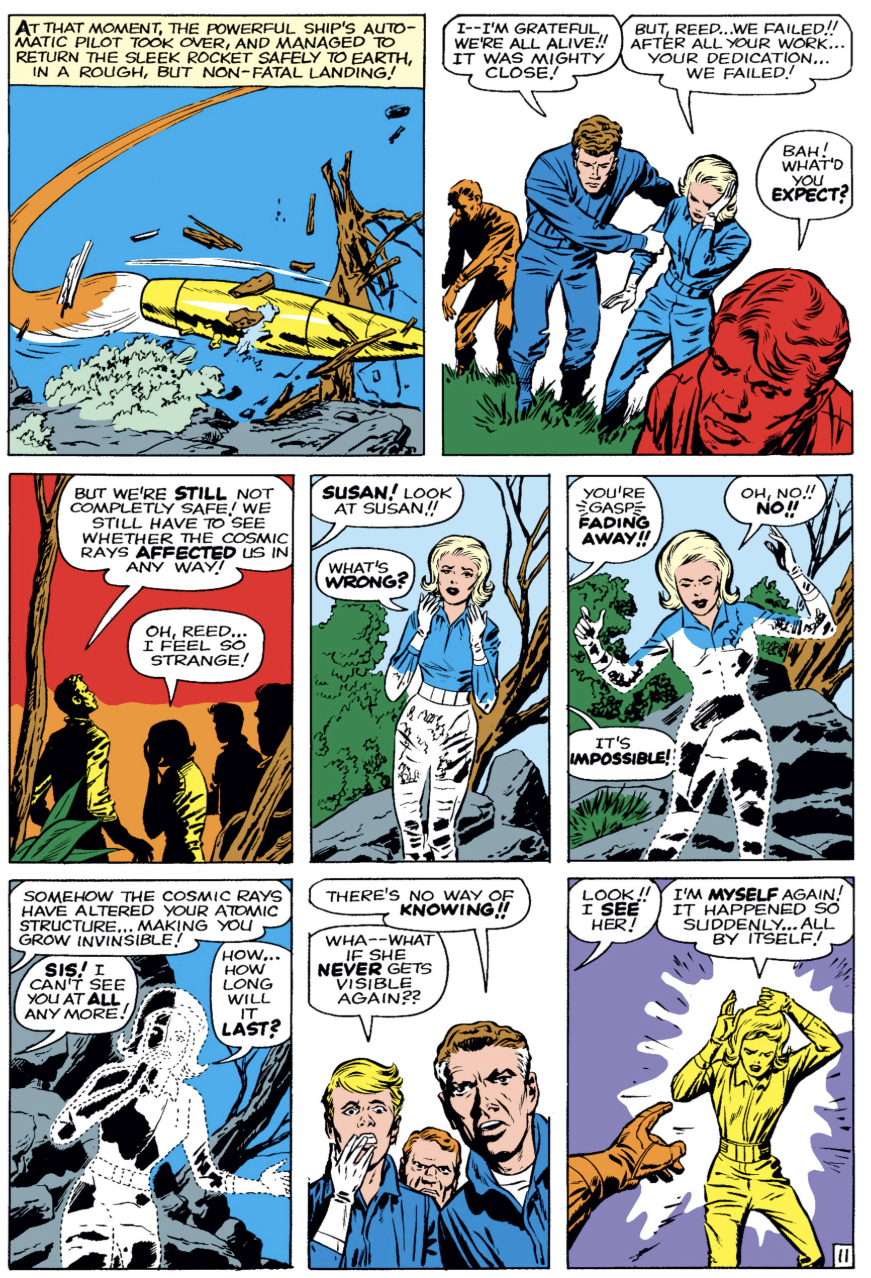
Having decided the direction he wanted this new series to take, Lee typed up a synopsis for the series and the premiere issue and handed it off to his ace in the hole: artist Jack Kirby.
Kirby had just returned from a stint at DC, and was currently keeping Marvel/Timely/Atlas/Whatever afloat with his work on the monster comics. As would become the pattern for the two, Kirby would take Lee’s synopsis and expand on it, which would then inspire Lee to even further develop the concepts and characters when he would go back to write the dialogue based on Kirby’s finished art.
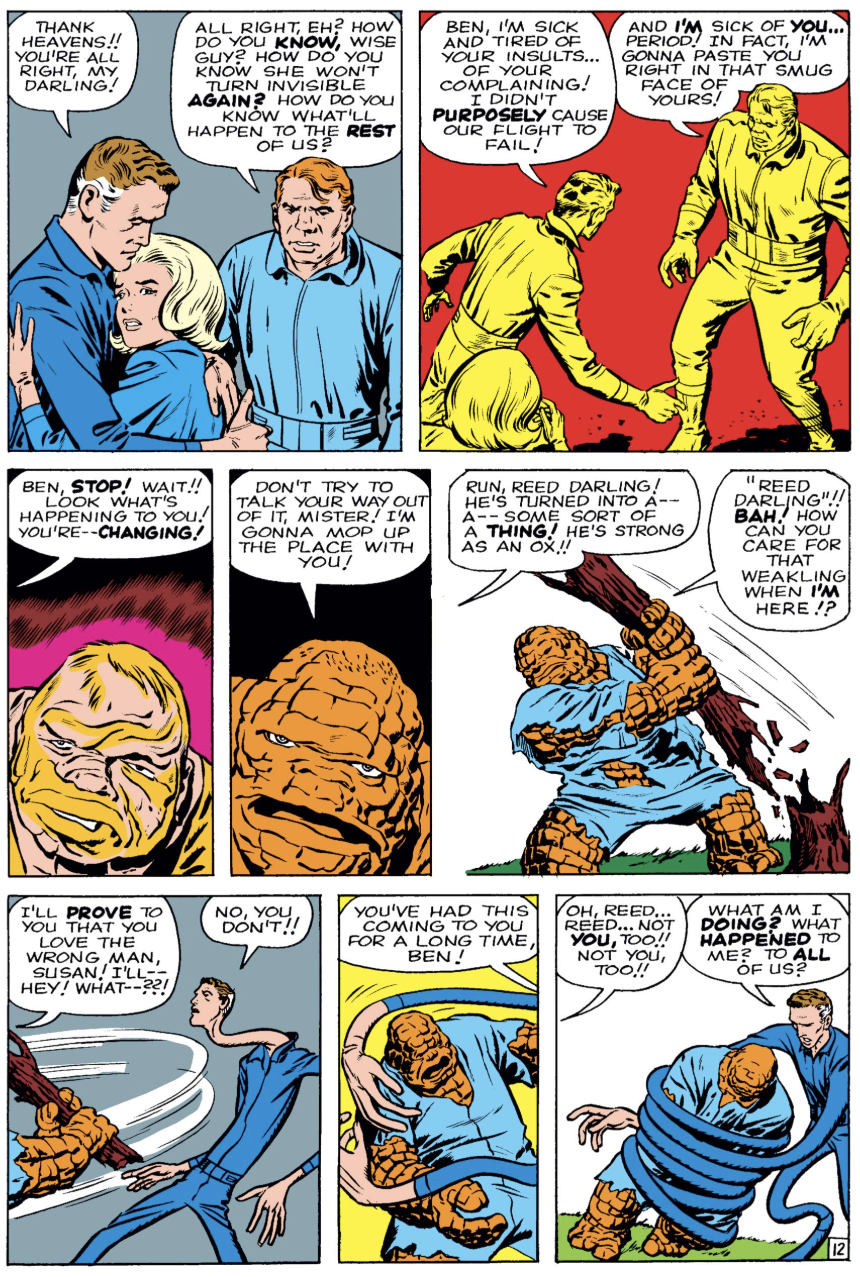
For the next nine years, the Lee/Kirby partnership would flourish, generating not only 102 consecutive issues of Fantastic Four (an amazing body of work), but also a sizable portion of what would become the Marvel Universe, and then wither away as Kirby left for DC over what most assumed were issues of credit and creative control.
But all that, the good times and the bad, were yet to come. Neither man had any idea that the comic book they’d created would launch a publishing, merchandising — and cinematic — empire.
Dan adds: What Scott said. Also: We’ll have FF coverage coming Saturday, Aug. 8, the actual anniversary.
—
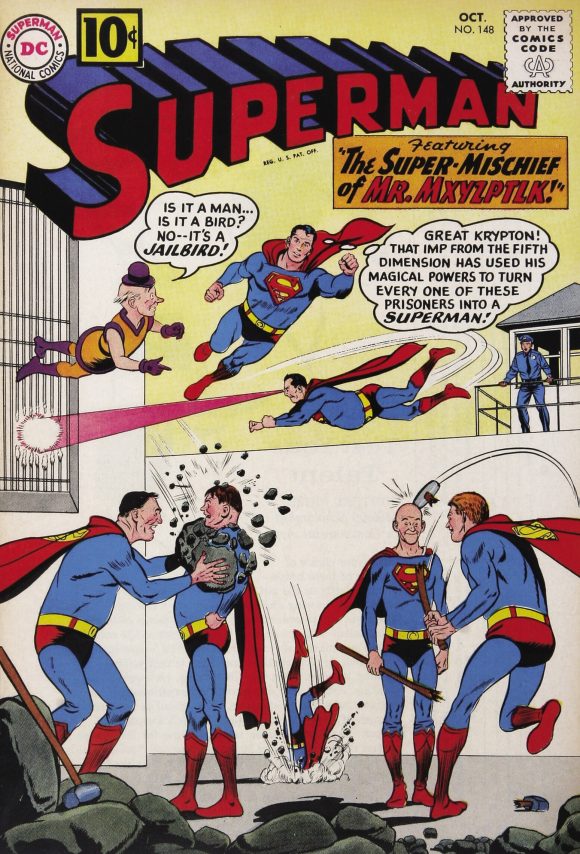
Superman #148, DC. Anytime Mr. Mxyzptlk got a cover appearance, it was a must-buy.
—
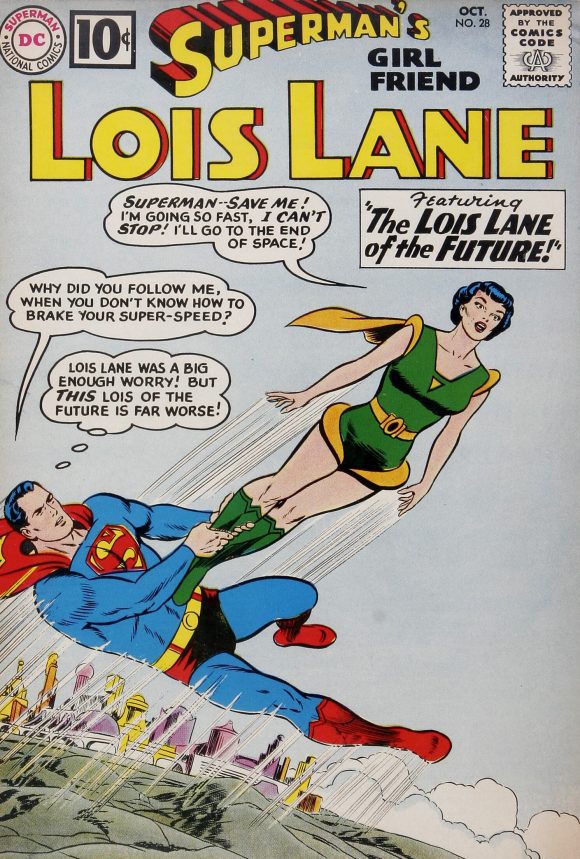
Superman’s Girl Friend, Lois Lane #28, DC. How can that be Lois Lane from the future? She doesn’t even have a giant head!
—
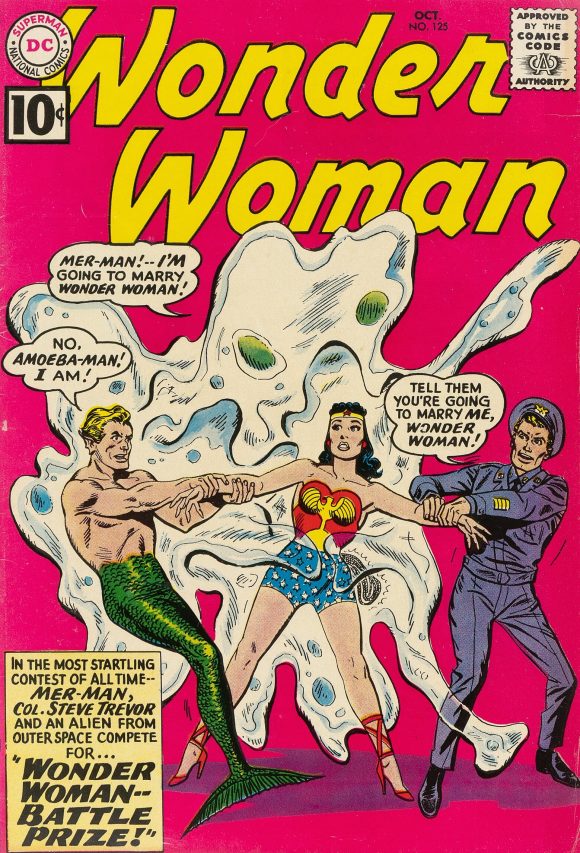
Wonder Woman #125, DC Comics. You know, I’ll bet Amoeba-Man is a real sweetheart when you get to know him.
—
Dan Greenfield, editor, 13th Dimension
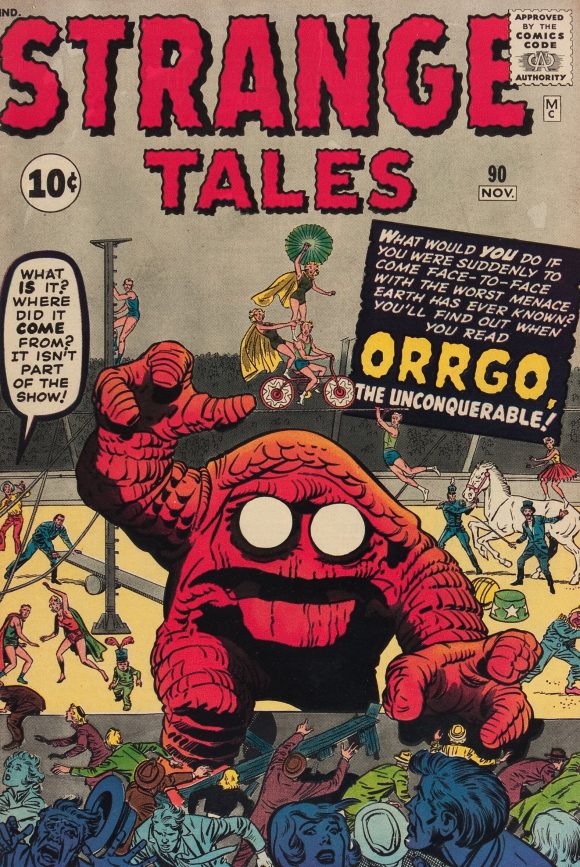
Strange Tales #90, Marvel. Speaking of those monster comics…
—
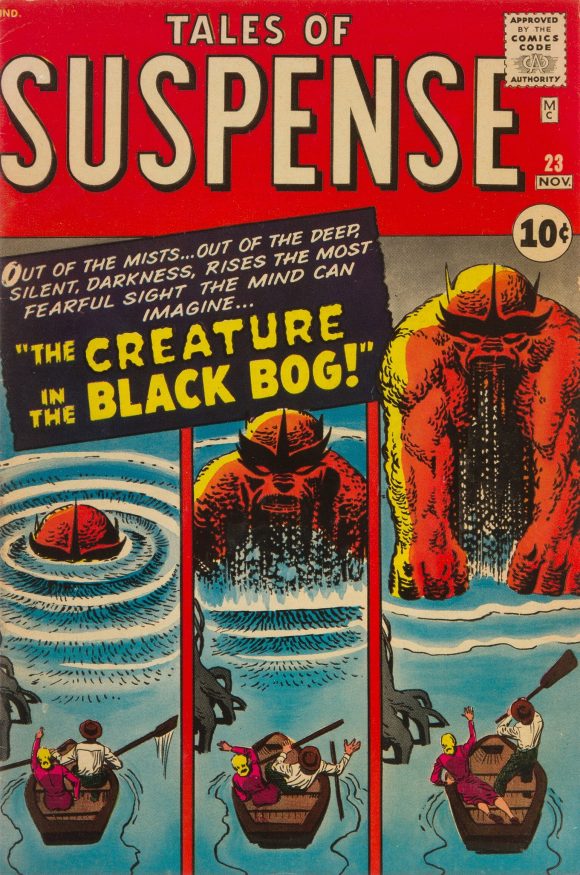
Tales of Suspense #23, Marvel. Like I said…
—
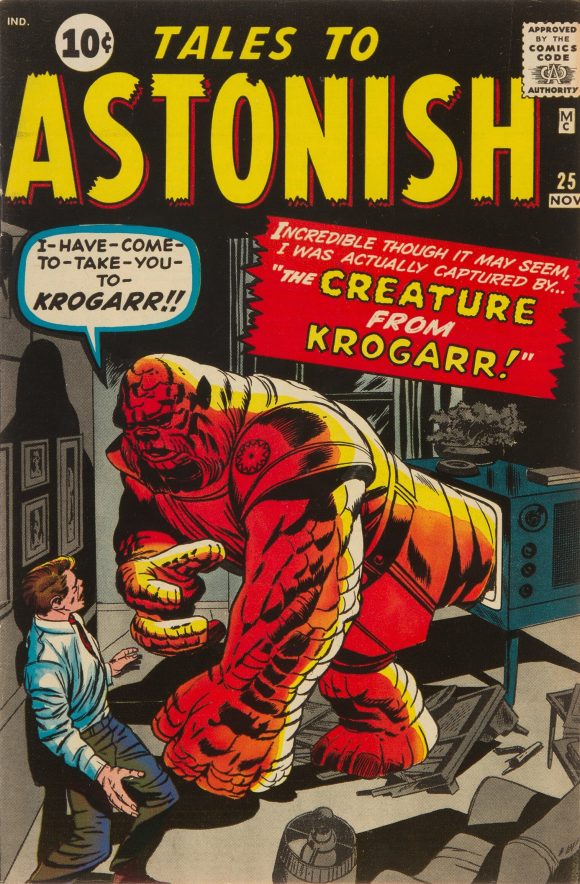
Tales to Astonish #25, Marvel. Yup.
—
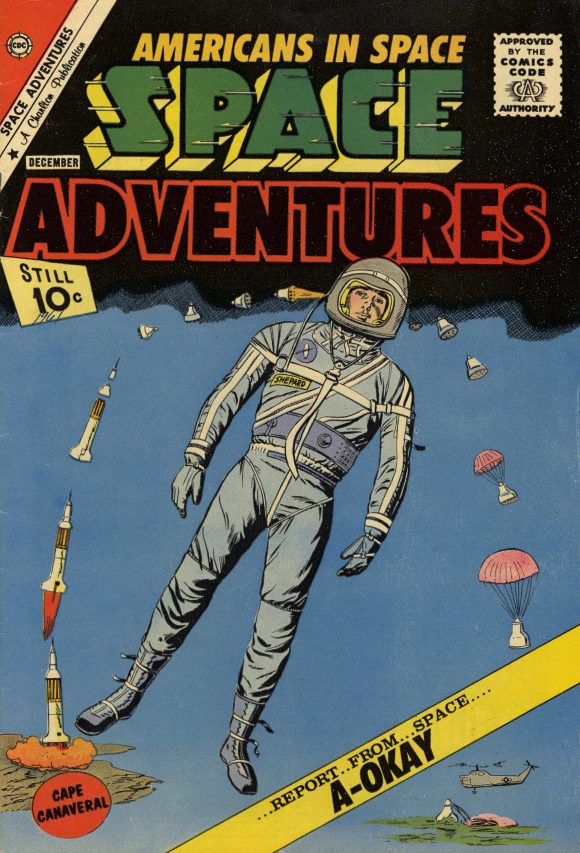
Space Adventures #43, Charlton. Except the Russians were better at it, at this point.
—
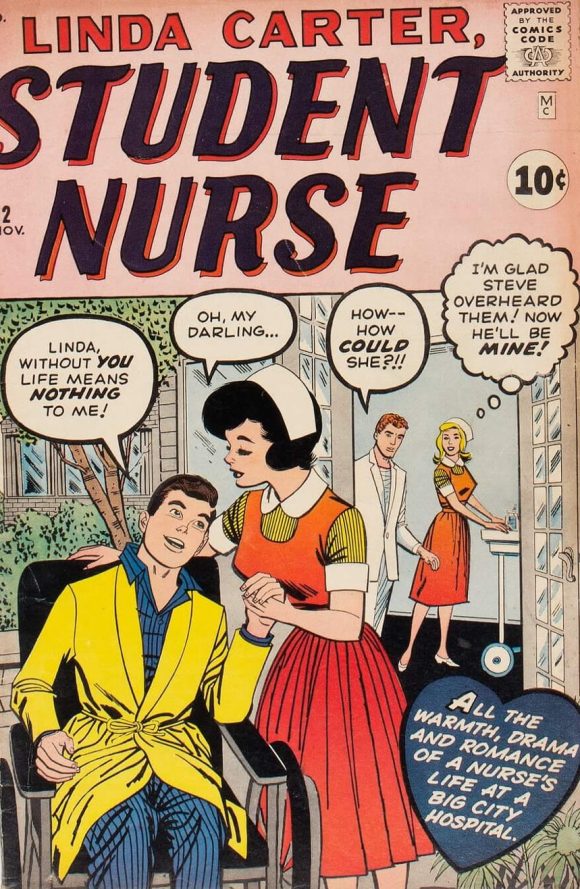
Linda Carter, Student Nurse #2, Marvel. No relation to Lynda Carter, Wonder Woman, who had just turned 10.
—

August 5, 2026
So Orrgo ISN’T part of the show? Glad he cleared that up.