
A Halloween edition of Fred Van Lente’s COMIC BOOK DEATH MATCH!
By FRED VAN LENTE
When I was a kid in New Jersey in the late 1970s, I wore out my library card checking out the “Monster Press” books from Crestwood House, with their B-movie poster title fonts and pumpkin-orange spines. I honestly can’t say which I discovered first, the classic Universal and Hammer monster movies aired on Channel 11 WPIX’s Chiller Theater or the kid-friendly synopses of those movies in this slim book series, illustrated with chilling black and white stills and mostly written by Ian Thorne, a male pseudonym for scribe Julian May.
The back cover of every book had King Kong throwing up his mighty paws below the list of spine-tingling titles: Godzilla! Mad Scientists! The Blob! Dracula! And my favorite: The Wolf Man. Sure, that image on the Crestwood cover is actually from 1935’s The Werewolf of London, but the book cemented my love for the tale of doomed lycanthropic failson Larry Talbot, indelibly portrayed by Babe Ruth-lookalike Lon Chaney, Jr.
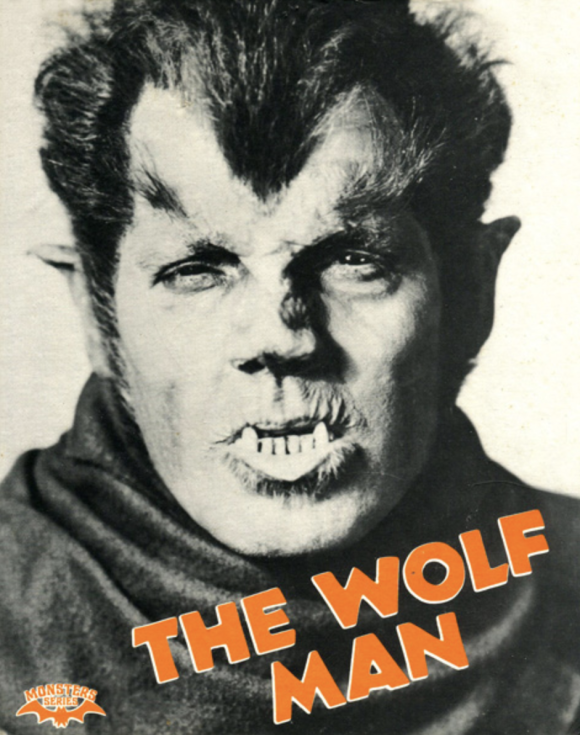
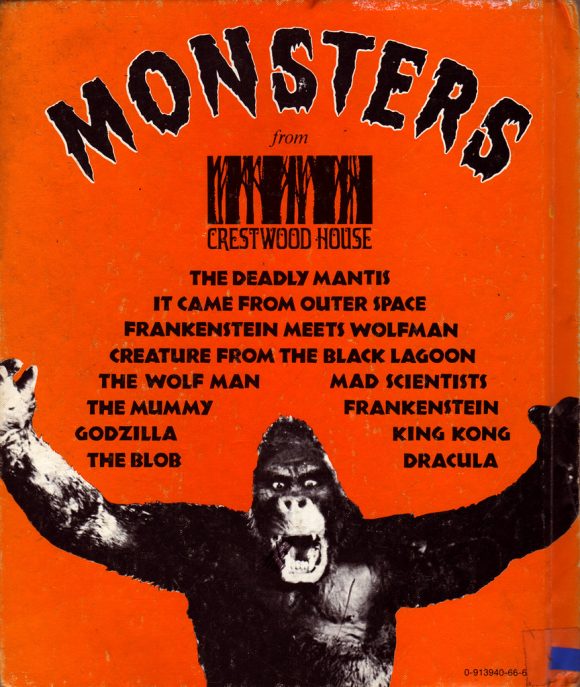
I bring up the Monster Press line of children’s books only to underscore the pure idiocy of the original 1954 Comics Code, which specifically prohibited “scenes dealing with, or instruments associated with walking dead, torture, vampires and vampirism, ghouls, cannibalism, and werewolfism.” Granted, this ban was instituted primarily to run Tales From the Crypt publisher William M. Gaines out of business, as the industry blamed him for inflaming public ire during his disastrous Senate testimony. But it had the actual effect of pointlessly kicking most movie monsters off the comics stands for the next 17 years under the dubious goal of protecting kids’ psyches.
Finally, in 1971, the Comics Code was revised, and saner heads prevailed: “Vampires, ghouls and werewolves shall be permitted to be used when handled in the classic tradition such as Frankenstein, Dracula, and other high calibre literary works written by Edgar Allen Poe, Saki, Conan Doyle and other respected authors whose works are read in schools around the world,” sniffed the high-minded scolds in the Comics Magazine Association of America.
That crack in the crypt door was enough for kids’ favorite monsters to come rushing back onto the comics racks, and Marvel led the way with their own Wolf Man, Werewolf by Night, and the public-domain Tomb of Dracula. In this HALLOWEEN BOOK DEATH MATCH, I’ll pit the two flagship titles of the Bronze Age Marvel monster revival against each other in a battle seemingly ripped from the pages of Crestwood:
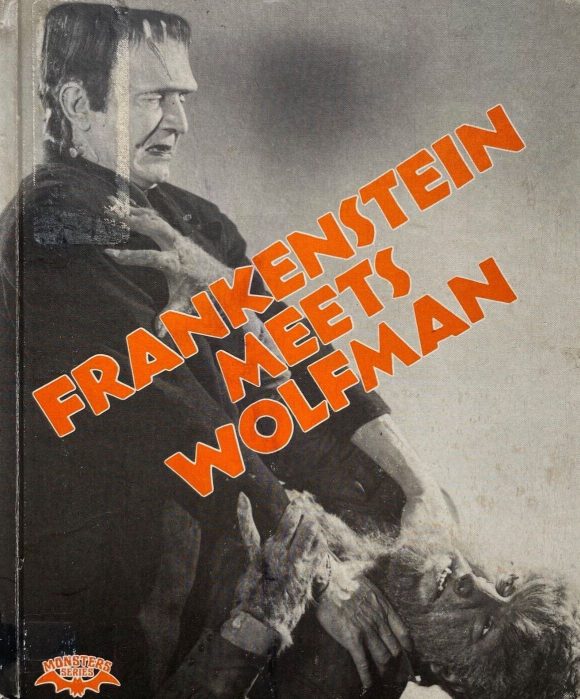
Oops, wrong match-up. But you get the idea.
Werewolf! Dracula! FIGHT!
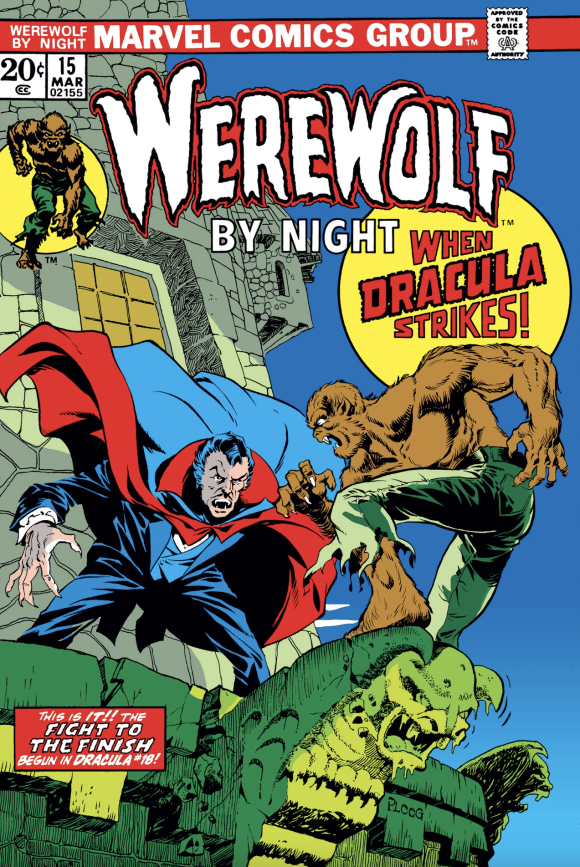
They fought each other in Werewolf by Night #15 and Tomb of Dracula #18. I don’t talk about them below because, beyond that, they’re not all that interesting. But the imagery is cool!
—
SEPTEMBER and NOVEMBER 1971
Marvel Spotlight #2: “Werewolf by Night”
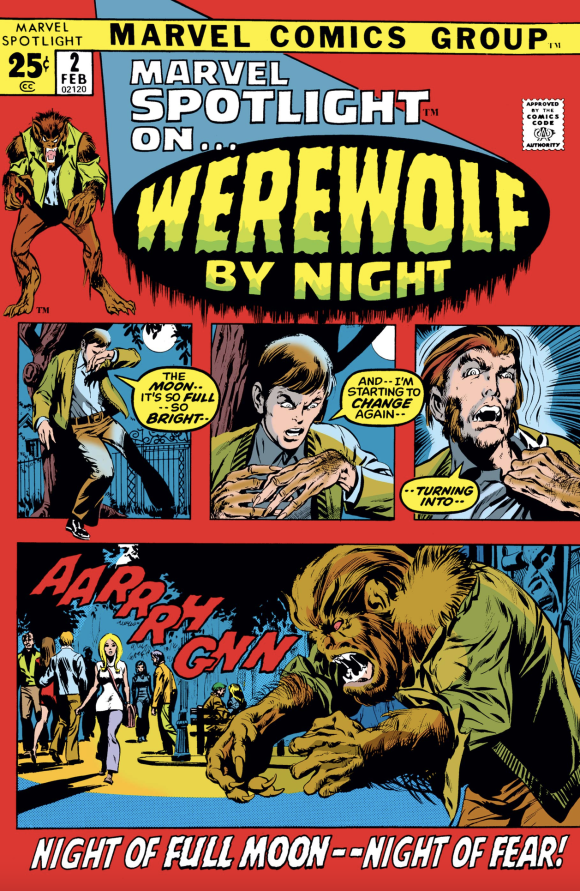
Two auspicious beginnings in this mag: the strip itself and the great artist Mike Ploog, who makes his Marvel debut in stunning fashion. His drippy, shadowy, Eisnerian pencils are perfect for depicting Gerry Conway’s tale of Jack Russell, whose 18th birthday party is ruined by the unhappy discovery that he becomes “a wolf when the wolfsbane blooms,” doggerel from The Wolf Man that is quoted at issue’s opening. (Letter-writers complain that Jack is a bit of a Peter Parker stereotype, though I think that’s just because longtime Spidey scribe Conway is scripting.) Here begins the tortured tale of the cursed Russell line, thanks to Jack’s birth-father assembling Marvel’s Necronomicon, the Darkhold. I love how Conway sets in motion the tradition of calling out the “First Night” and “Second Night” and so on, of the full moon to keep track of Russell’s transformations. Great stuff.
—
Tomb of Dracula #1: “Dracula”
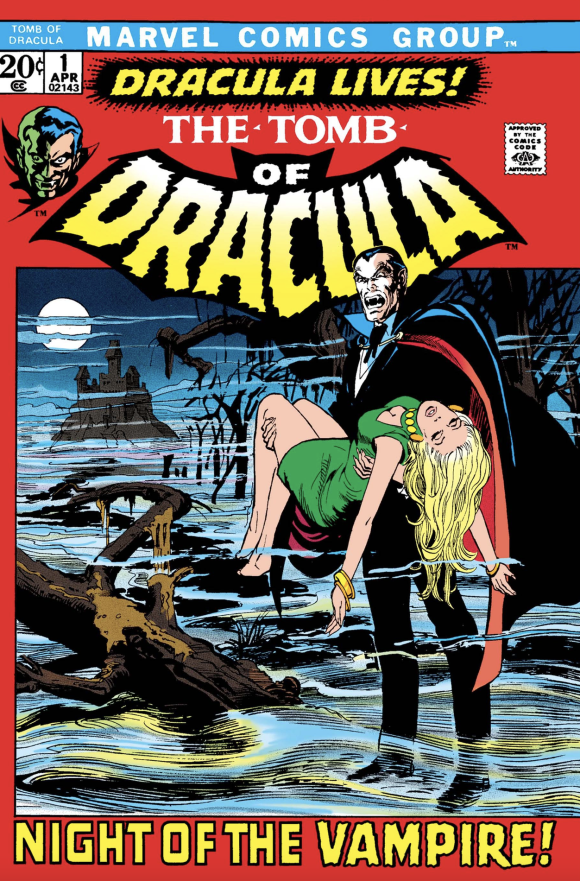
While writing this column I was inspired to rewatch all the classic Universal monster movies in more or less chronological order (check my review thread on BlueSky, if you’re not already tired of my opinions) and I can’t help but notice most of them feature a character I like to call The Drip Fiancee, the ineffectual male partner of the lead actress. Universal contract player David Manners plays The Drip in both Dracula (1931) and The Mummy (1933).
I bring this up in this context (Conway does double-monster duty as scripter here, with born-to-do-this Gene Colan as regular penciller from jump) because Tomb makes the Drip Fiancee the lead: Frank Drake, a failson Dracula (the family name presumably shortened at Ellis Island) arrives in Transylvania to claim an inherited castle. Along the way he meets the Universal-standard terrified villagers, the Hammer-standard wanton barmaid destined for a toothy fate, and a basement coffin with a staked skeleton inside. Frank’s dumbass romantic rival (a Drip’s Drip, if you will) removes the stake and the Lord of Vampires is in business. Frank’s fiancee is turned by Drac, inspiring him to become the stake-carrying Wile E. Coyote to a vampiric Road Runner.
WINNER: WEREWOLF
—
JUNE 1972
Werewolf by Night #1: “Eye of the Beholder!”
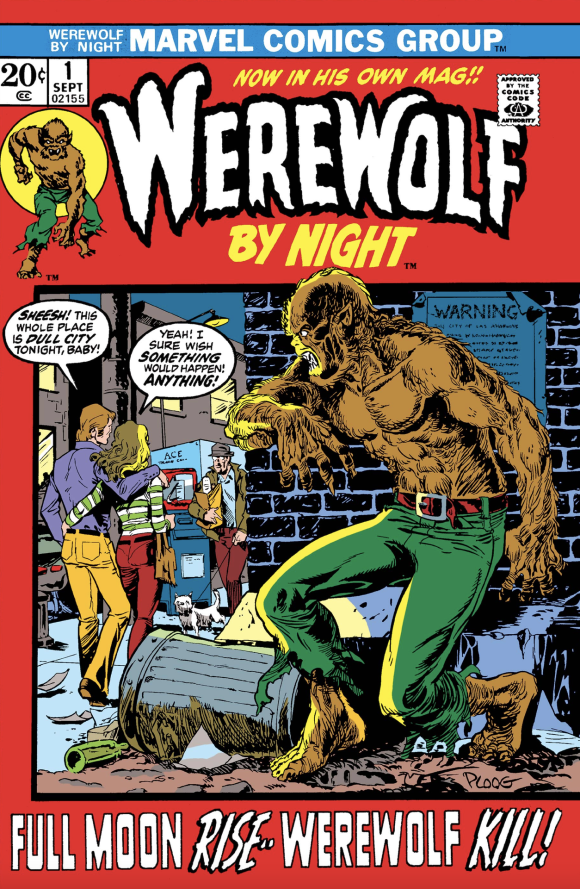
Jack’s regular series picks up where his Marvel Spotlight strips ends: In this Conway/Ploog joint, the wolf man’s been turned to stone by a mutant gorgon who has taken up residence in Russell (née Russoff) Castle, brought stone by stone from Mount Wundagore to SoCal. Fortunately, when he turns back to Jack, he loses his stone form too, and he hightails it out of there. The medusa and her family are after the Darkhold, though, and take the entire Russell clan hostage; unfortunately they don’t get its location out of Jack before the moon rises, so the werewolf can save the day. The family dynamics are great and Ploog’s art shines.
—
Tomb of Dracula #4: “Through a Mirror Darkly!”
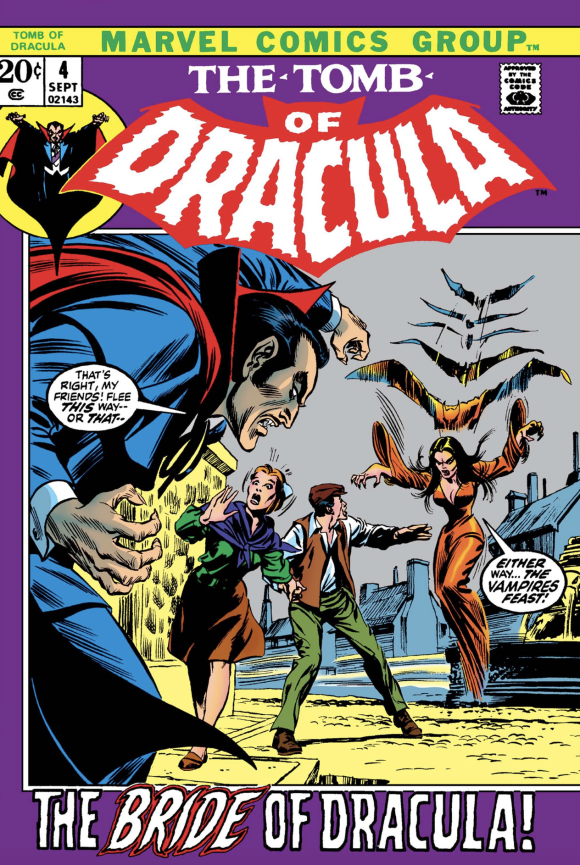
Maintaining a long-running comics series where the main character is the villain is a tricky thing; usually you do it by pitting your evil lead against antagonists that are even worse than he is. In this story by Archie Goodwin and Colan, that role is filled by a graying model who gives Dracula an enchanted mirror in exchange for turning her into a vampire, thereby, she thinks, halting her aging. Instead, it just turns her kill-crazy, forcing Drake and his new allies Rachel Van Helsing and silent Indian giant Taj to take her out before returning their sights to their main quarry, hitting him with flashlights with crosses embedded in them (which I thought was cool). Drac flees into the dimension beyond the mirror, pulling Taj with him.
Robert Kirkman has said that The Walking Dead is a George Romero movie that never ends; Tomb is a Christopher Lee movie where the final credits never roll. Dracula’s mustache, prominently referenced in Bram Stoker’s novel, is likely here to stave off trademark attacks from screen Dracs like cross-embedded flashlights.
WINNER: WEREWOLF
—
OCTOBER 1973
Werewolf by Night #13: “His Name Is Taboo”
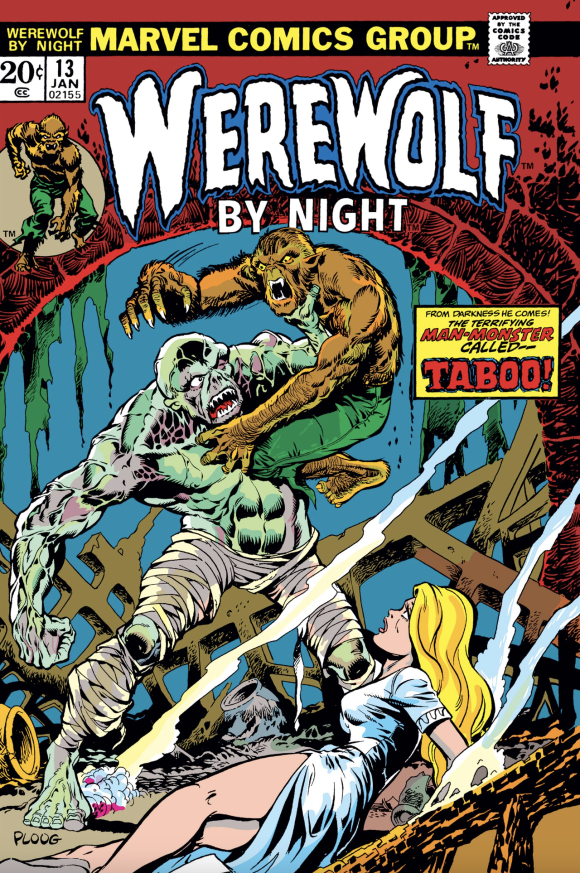
This issue has me from its opening splash, in which Ploog homages/swipes his mentor Will Eisner in his introduction of Jack’s off-/on-again love interest Topaz, a platinum-blonde Indian telepath (?) under sway of the titular wizard. Taboo is after the Darkhold, the MacGuffin for the early part of this series, and has locked up the werewolf with his hated stepfather (and uncle, Hamlet anyone?) to find it. Beautifully rendered by Ploog from a Marv Wolfman script, even if much of it is exposition of our villains’ backstory.
—
Tomb of Dracula #17: “Death Rides the Rails!”
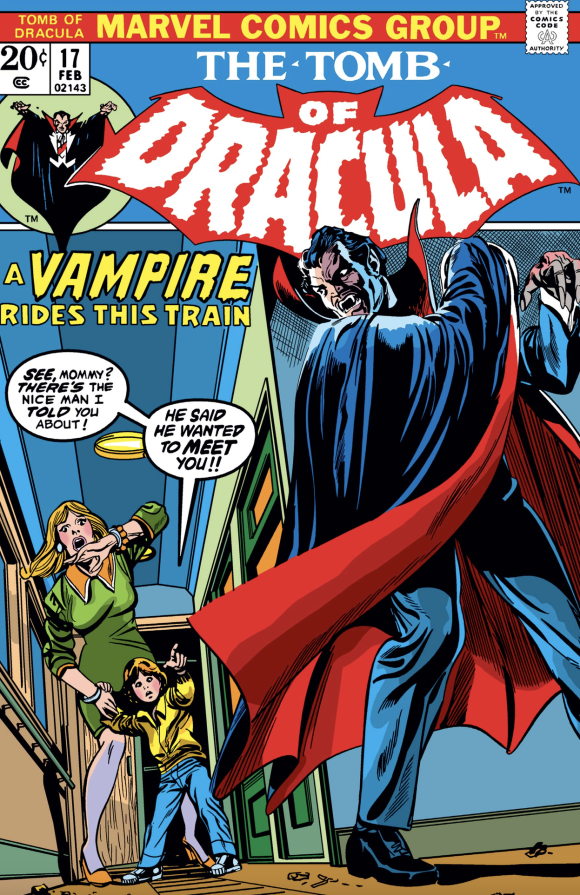
Wolfman is firmly installed as this book’s main writer, paired with Colan; Blade, memorably introduced a few issues before, destroys all but one of Dracula’s back-up coffins in Paris; Drac seemingly drains Blade of blood in retaliation (the beginning of his slow transformation into a “daywalker”) and packs his last dirt-box on a train to Transylvania. Unfortunately for him, also on this train are his arch-enemies Frank Drake and Rachel Van Helsing, two paranoid industrial spies, and the world’s most annoying kid; shortly, very entertaining hell is unleashed.
WINNER: DRACULA
—
JUNE 1974
Werewolf by Night #21: “One Wolf’s Cure… Another’s Poison!”
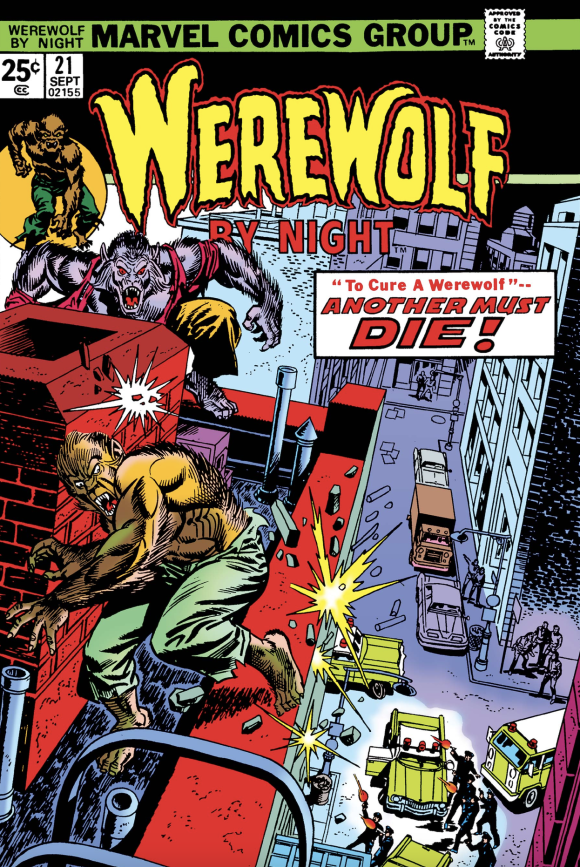
One of the more fun ongoing subplots in this book has been Jack’s neighbor, Paul Coker, who is also a werewolf. Coker has stumbled upon a cure for lycanthropy in a grimoire: All he has to do is kill another werewolf. High stakes! Well, regular writer Doug Moench and new penciller Don Perlin solve this hairy (see what I did there) problem by introducing a third werewolf, an asshole detective. In a threeway-throwdown, Coker knocks the carnivorous cop into a vat of molten steel, T-1000 style. Coker is thus cured while Jack scampers off into the night. Good stuff.
—
Tomb of Dracula #24: “A Night for the Living… a Morning for the Dead!”
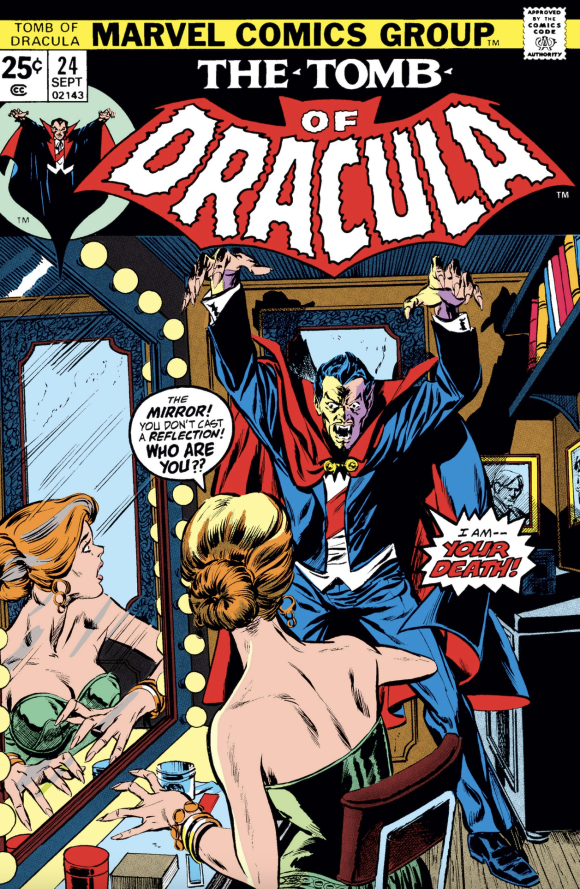
Wolfman has unleashed so many subplots and multi-issue storylines with various secondary characters that this series makes Claremont’s X-Men look like a tightly drawn character piece. The threads here involve Drake and Van Helsing; Blade, his girlfriend and his girlfriend’s neighbor, a showgirl menaced by Dracula; a woman rescued in Giant-Size Dracula who has fallen in love with the vampire; and Taj, who has returned to India and his estranged wife and vampirism-infected son. Blade and Dracula have a cool fight in a darkened department store, but, man, there is a lot going on in this comic.
WINNER: WEREWOLF
—
MAY 1975
Werewolf by Night #32: “—The Stalker Called Moon Knight!”
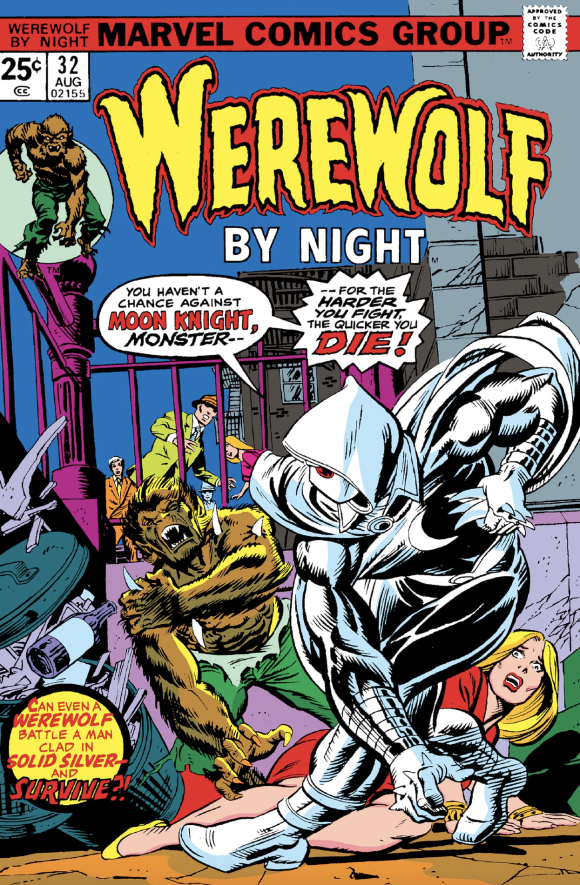
Hey, look everybody, it’s the first appearance of Moon Knight, a character I could not give two hoots about if Bill Sienkewicz isn’t drawing him. The Committee, the criminal cabal that wants to study the werewolf, hires Mark Spector to bring Jack in and gives him a fancy suit that makes him look like, Jack says, a “lunar Crusader Rabbit.” Moonie pursues the werewolf through the streets of L.A. while a very sleazy Frenchie debuts to kidnap Topaz and Jack’s sister, Lissa. There’s little indication here of the heights Moench and Perlin’s creation would later reach.
—
Tomb of Dracula #35: “Hell Hath No Fury…”
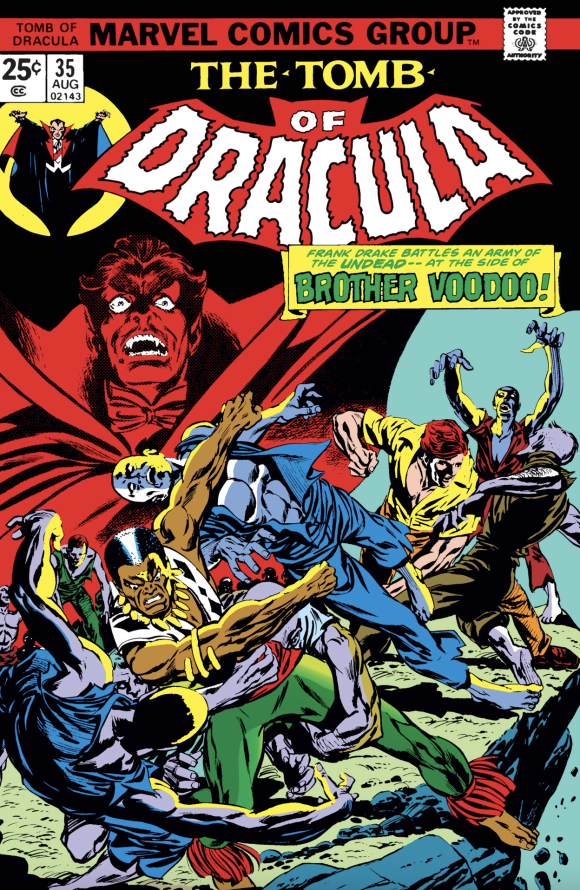
A conniving fashion designer gets Dracula to kill all her rivals in exchange for dirt on his enemy, Chinese brain-in-a-jar Dr. Sun. Drac gleefully complies, but when she gives him the info he needs, he reveals he killed them by turning them all into vampires, who fall on her en masse. Oh, and Drake and Brother Voodoo (a personal favorite) fight zombies. Wolfman has finally perfected his formula of lacing long-running subplots within a solid, single-issue A storyline. Bravo!
WINNER: DRACULA
—
OCTOBER 1976
Werewolf by Night #42: “The Marauder and the Man of Iron”
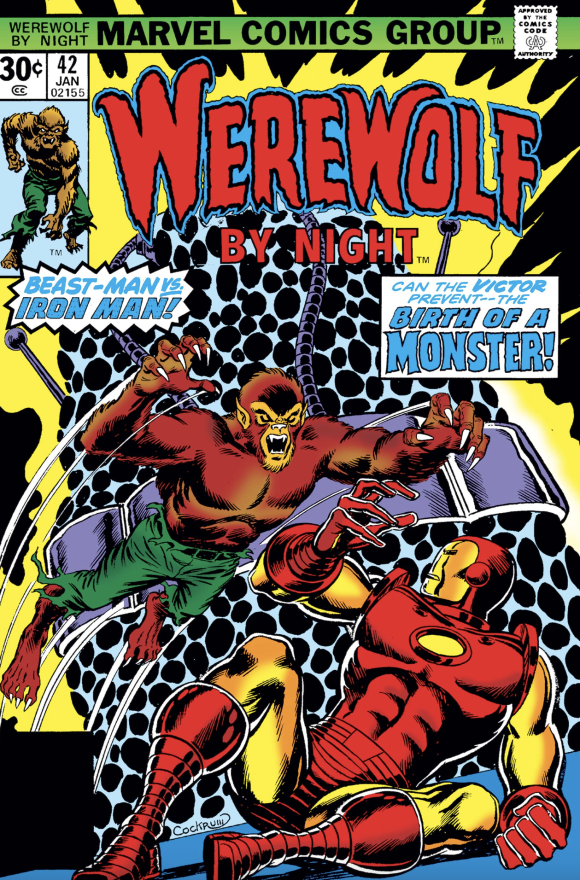
As you can tell from the cover, this series has… taken a turn. Supernatural shenanigans have allowed Jack to retain his human mind and speech as the werewolf, and now he can turn into the werewolf at will, making him, essentially, a poorly-dressed superhero. He and Iron Man both try to foil everyone’s least favorite Daredevil foe, the Masked Marauder from doing crimes, leading to the inevitable mistaken-for-a-villain brawl. Iron Man takes Jack to Avengers Mansion, where Jarvis gets so excited by watching Jack turn into the werewolf that he literally pets him. The Marauder tractor-beams an alligator, a gorilla and a cheetah out of the zoo to fuse them into a single super-monster. Yes, really.
You can just smell the flop sweat of desperate editorial changes to shore up failing sales wafting off this one. Moench and Perlin do their darnedest to turn the strip into a Marvel-y action book, but Werewolf is euthanized next issue.
—
Tomb of Dracula #52: “Demons in the Mind!”
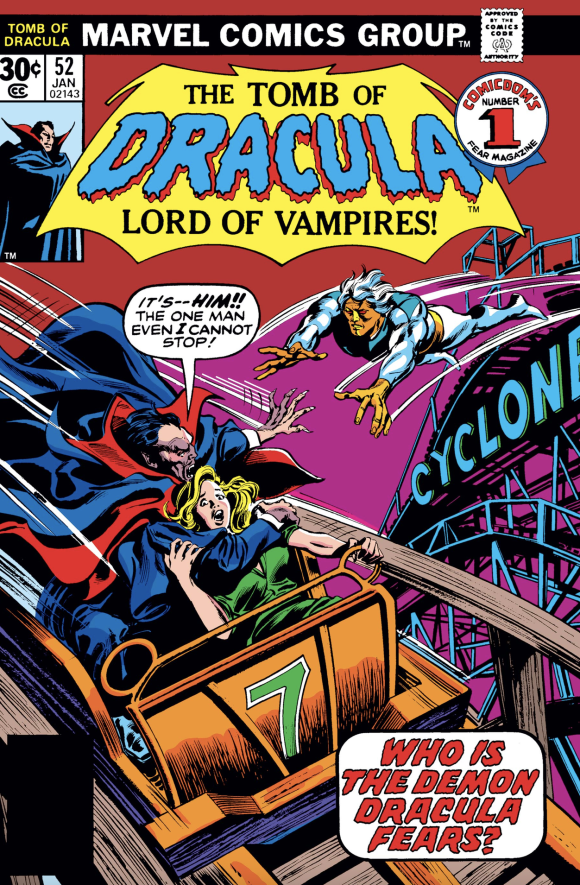
Dracula fights Jesus! Sorry to spoil the twist ending of this story, but it’s too bonkers not to front-load. This alien-superhero-looking dude from the cover shows up to spoil Dracula’s schemes, as he has throughout the Count’s undead existence. Drac, for reasons Wolfman doesn’t do a really great job of selling, assumes he is a demon sent by Satan because Lucifer is mad Drac keeps calling himself “The Lord of Evil” across the previous 51 issues. They do battle in Coney Island until Drac drives the human onlookers insane. While “the demon” deals with them, Drac literally stabs him in the back. With his dying words, Drac’s opponent sends the vampire to a church, where he realizes the true identity of his fallen foe, and it freaks him the heck out.
This seems as good a place as any to mention that Bela Lugosi played Jesus on stage in his native Hungary in 1909. He wound up in Hollywood after having to flee his native land because of his socialist leanings. So maybe this pairing isn’t as strange as it sounds.
WINNER: DRACULA
—
When Werewolf was drawn by Ploog, it was the superior strip; but with his departure it suffers a slow, then extremely steep decline. Tomb, on the other hand, is consistent throughout, helped by maintaining the same creative team over a many-years’ span. The unsatisfying-yet-accurate conclusion must be:
FINAL VERDICT: DRAW
May all your Halloween candy bags be filed with comics, F(r)ight Fans!
—
MORE
— The Complete COMIC BOOK DEATH MATCH Index. Click here.
— SWAMP THING vs. MAN-THING: 1972-75. Click here.
—
Comics writer/playwright/bon vivant Fred Van Lente is a funny guy. Sign up for updates on his upcoming projects and check out the trailer for his comics-writing course at his web site, fredvanlente.com.
