
Cap’n Fred Van Lente of the new series Vampyrates! sails through…
By FRED VAN LENTE
On Wednesday, July 8, my latest creator-owned comic comes out from Boom! Studios, Vampyrates! Created with my Weapon X compadre Luca Pizzari, who did both the interiors and main covers, this series is a bloodsucking, swashbuckling adventure set among the pirates of the Night Isles, a world ruled entirely vampires beneath a thousand-year eclipse. I am extremely proud of it and encourage everybody to pick it up; but don’t take my word for it, check out the amazing book trailer Boom! made for it:
In honor of Vampyrates! #1’s arrival, I’m ranking my favorite comics pirates here at 13th Dimension. Maybe I’ll have to do a Top 13 Comics Vampires when the trade comes out?
—
13. Empress Nira de Winter (1st app. Vampyrates! #1, Boom!). My incredible modesty prevents me from ranking my own creation higher on the list, but the hope of course is that you all pick up the first issue of Vampyrates! and prove me right.
When Nira, Empress of the Vampyrium, is overthrown in a violent coup by her own cousin, she (accidentally) stows away on a pirate ship to escape, and has to work her way up from lowly swab under the mysterious Captain Akeyo to a command of her own while staying one league ahead of execution.
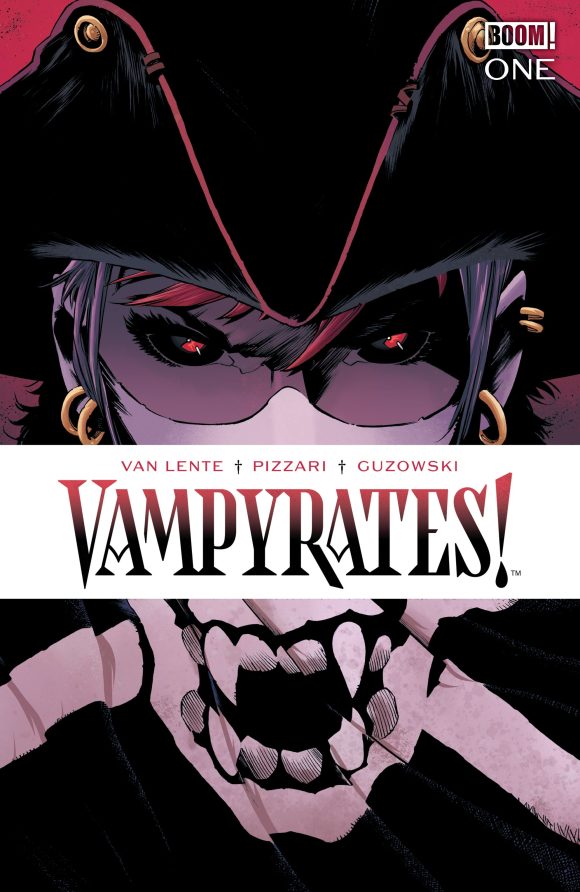
Oh, and did I mention the vampire sharks? There are vampire sharks. Enjoy!
—
12. Blackbeard (1st app. IRL c. 1680-1718). Edward Teach is the most famous pirate in history, and therefore the most oft-used IRL pirate in fiction, because even as an early 18th century nautical psycho he understood the importance of branding. He has a cool nickname, which he underscored by putting gunpowder in said beard and lighting the freakin’ thing on fire. You’re gonna remember a guy like that! And, more importantly, you’re going to tell other people about a guy like that.
Blackbeard went viral in the Caribbean in 1716. Of course, he was killed by the British Navy in 1718, so, you know, there’s a downside to that level of infamy.
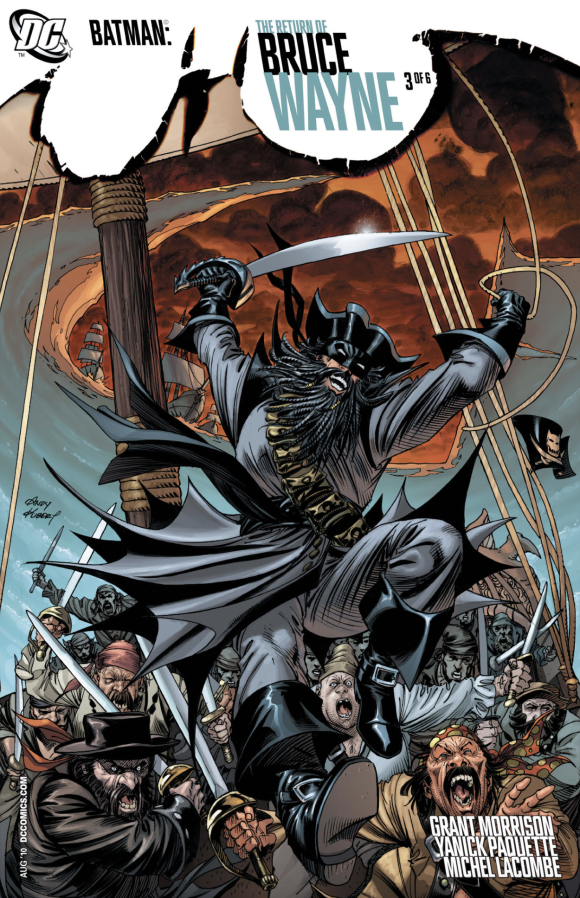
In a span of those two short years he managed to menace Batman in The Return of Bruce Wayne, and battle the Eternal Warrior on behalf of the zero-cult The Null in the pages of my Archer & Armstrong run. Oh, and see No. 1 on this list.
Though I will say the best fictional Blackbeard comes from one of my all time favorite fantasy novels, On Stranger Tides by Tim Powers, the title and basic premise of which (but not much else) was appropriated for the fourth, forgettable Pirates of the Caribbean movie. Not even Ian McShane could enliven that mess; the book is far superior.
—
11. Captain Fear (1st app. Adventure Comics #425, DC.) This deeply weird strip was created by the prolific Robert Kanigher, with stunning art by Alex Niño. “Captain Fear” is the history-and geography-defying saga of Fero, a Carib Indian who escapes slavery and takes over a Chinese pirate junk despite never changing out of his loincloth and not speaking, as far as I can tell, a word of Cantonese. He bounces between Asia and the Caribbean as effortlessly as if the Panama Canal had already been dug, constantly getting captured by various baddies until inevitably escaping again.
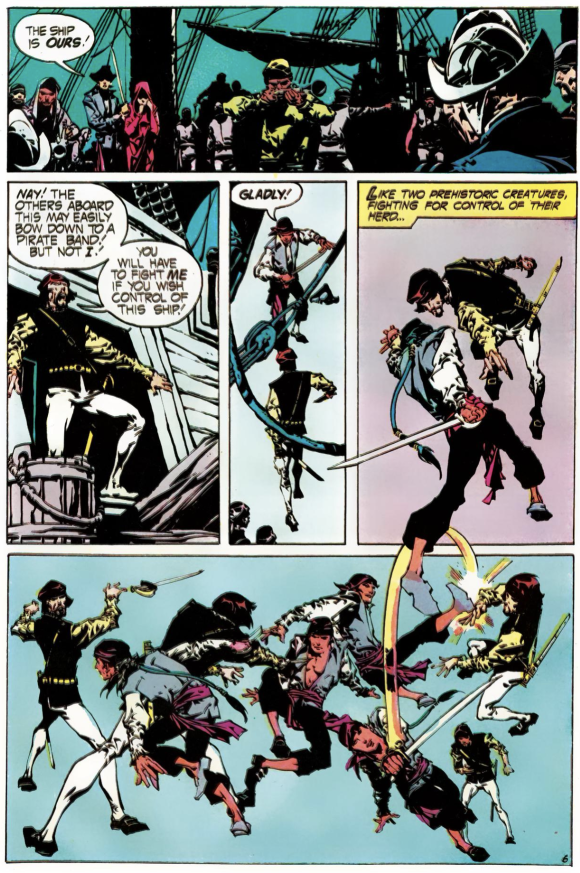
Very little actual piracy occurs, and Fear doesn’t even get a proper command until the very end of the serial. Niño’s amazing art demands inclusion on the list, though.
—
10. “The Privateer” (1st app. Piracy #1, EC.) Captain Ballard James is your typical EC Comics protagonist-who-has-it-coming. This failed plantation owner becomes a privateer, which is to say, a legal pirate, holding a “letter of marque” from one colonial power to plunder the ships of another. However, he gets greedier and greedier as he robs more and more ships until finally he goes full-on illegal pirate, sailing toward a grim end.
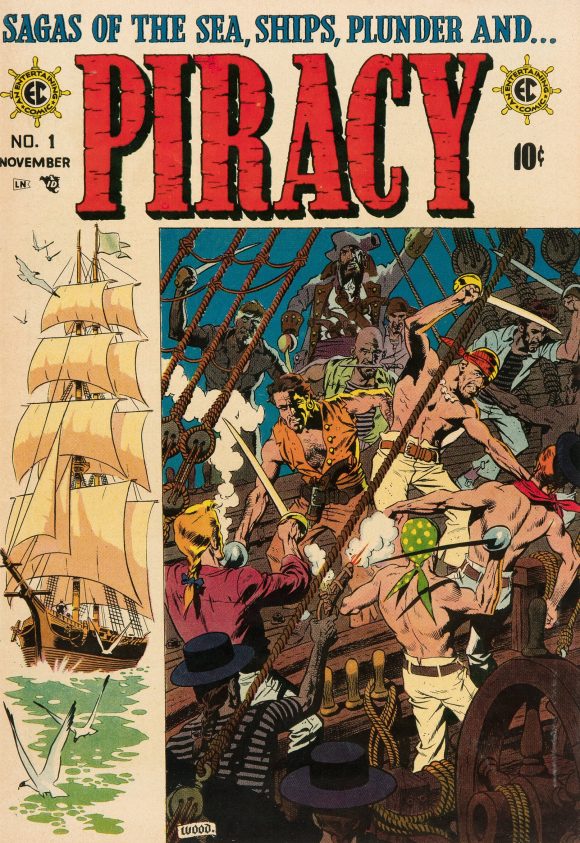
Piracy was probably the best of the post-Senate hearing “New Trend” EC Comics, though all the titles were too text-heavy for my tastes. I include this story partly because our Captain Akeyo in Vampyrates! travels a similar path from privateer to pirate, though in her case it’s much less voluntary…! (You’ll see what I mean when you read our comic.)
—
9. The Black Pirate (1st app. Action Comics #23, DC.) The Prince Valiant style of comics storytelling, with all the copy appearing in narrative captions with no live dialogue balloons, is not my favorite, but I am a sucker for a pirate story from somebody who knows what they’re doing, in this case Golden Age mainstay Sheldon Moldoff.
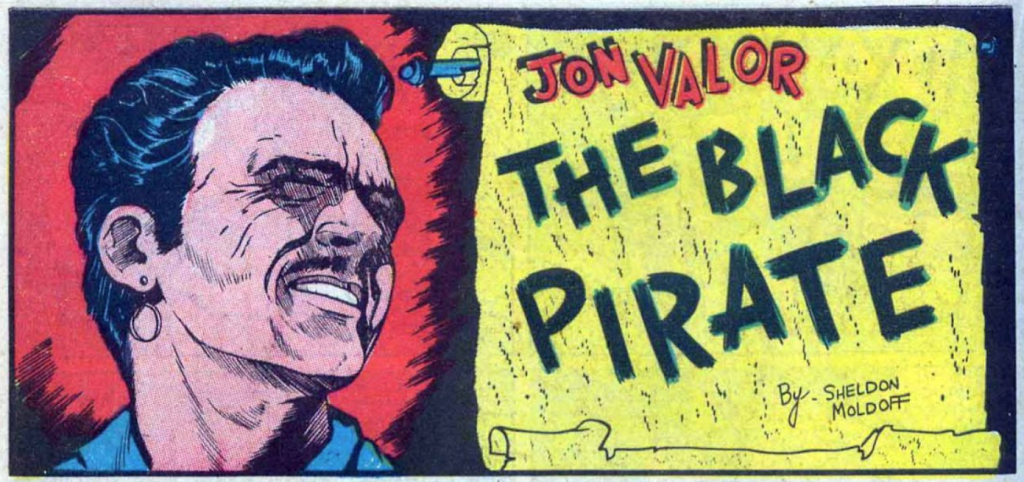
Jon Valor, the Black Pirate, is neither Black, nor, because he doesn’t appear to have a ship, a pirate, but he does like foiling other pirates’ plans. Moldoff had been providing backups to Superman since Action #1, but this is by far his best effort, and the high adventure depicted here explains why he was tapped to take over the Hawkman strip.
Valor would go on to join the Five Warriors from Forever to fight the JLA and JSA, and appears as a ghost ally for Jack Knight in Starman.
—
8. Pirate Kitty (1st app. Uncanny X-Men #153, Marvel.) This is a fun story by Claremont and Cockrum I’ve praised before on this site. “Kitty’s Fairy Tale” stars herself and Colossus, — big brother to Ilyana Rasputin, who is being told this tale, sick in bed, Princess Bride–style — as two Dread Pirate Roberts in a Sinbad-esque fantasy land. The wizard Xavier and his right-hand man, Cyclops, hire Kitty’s ship to go after the evil Dark Phoenix. She conjures a dragon, Lockheed, to fly them off toward adventure (this predates Kitty acquiring an actual, little alien dragon, whom she names after the creature from this tale).
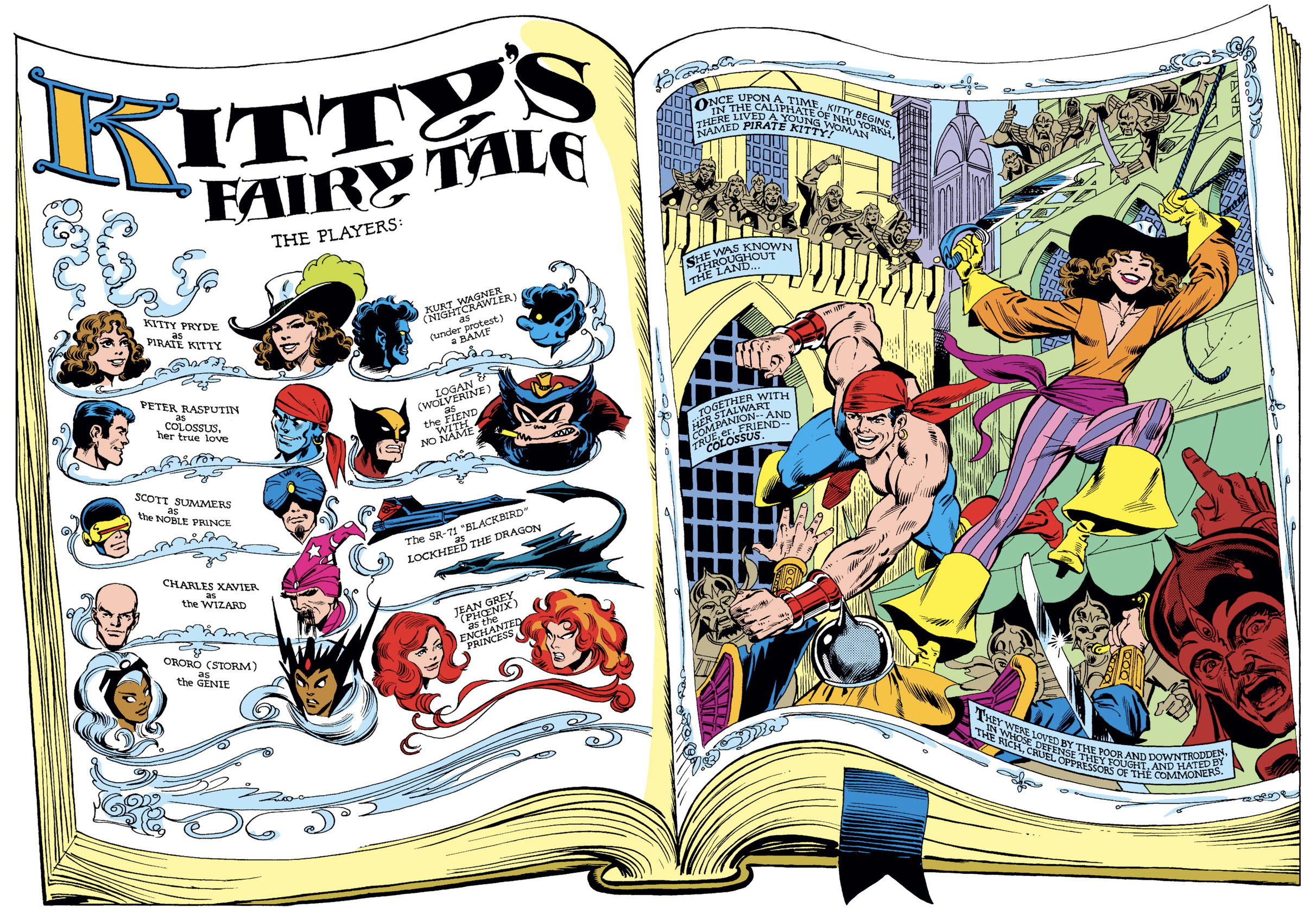
They pick up a bunch of other fantasized X-Men before the final battle with Dark Phoenix—whom, unlike in reality, survives. People loved this issue so much that the world it depicts has popped up a lot over the years, particularly the Smurf-esque “Bamf” versions of Nightcrawler.
—
7. Captain Fate (1st app. Man-Thing #13, Marvel.) Of all the random Marvel pirate villains, Captain Fate is my favorite, star of one of the best two-parters from Steve Gerber’s amazing run on Man-Thing, a personal favorite.
As drawn by Big John Buscema, the muck-monster shambles by accident onto a research ship headed for the Bermuda Triangle. Captain Fate’s ghost brigantine flies out of the sky to take them hostage, believing the head scientist on board is the reincarnation of his beloved pirate queen, Maura.
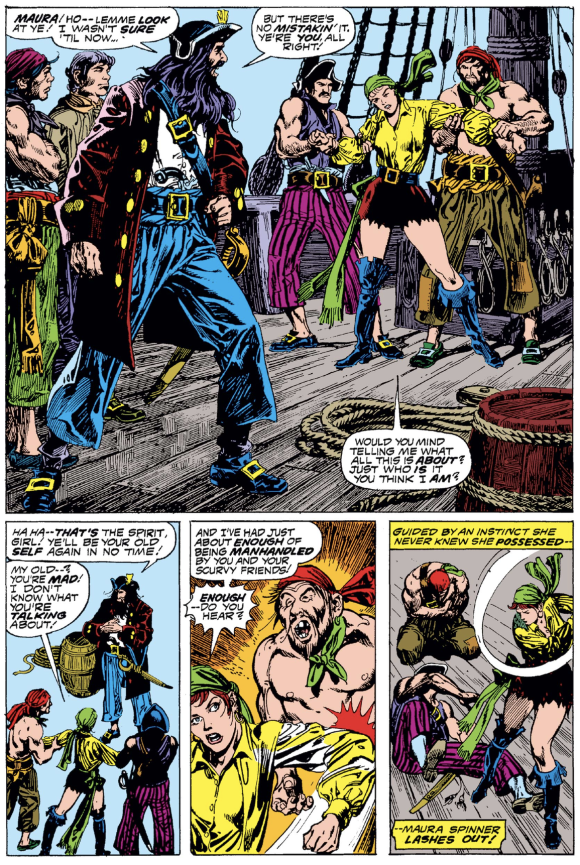
The second part is drawn by the legendary Alfredo Alcala and is even more awesome: Maura and Fate attack the tower fortress of a satyr wizard named Khordes. I liked Captain Fate so much I had Mary Jane co-star in a movie about his exploits in Amazing Spider-Man…!
—
6. Leatherwing (1st app. Detective Comics Annual #7, DC.) In the 17th century, English nobleman Bruce Wayne sails out on the Flying Fox with his trusty first mate Alfredo to capture Spanish prizes and sell them to English Governor James Gordon.
His nemeses are the green-haired, white-skinned Laughing Man, captain of the rival privateer Pescado (that means fish, as in Laughing Fish, get it?) and Donessa Felina and her cat-o’-nine-tails. The villains capture Robin, Prince of Urchins, who leads them to Leatherwing’s treasure, hidden in the caves of Bat’s Bay for a tall-ship showdown.
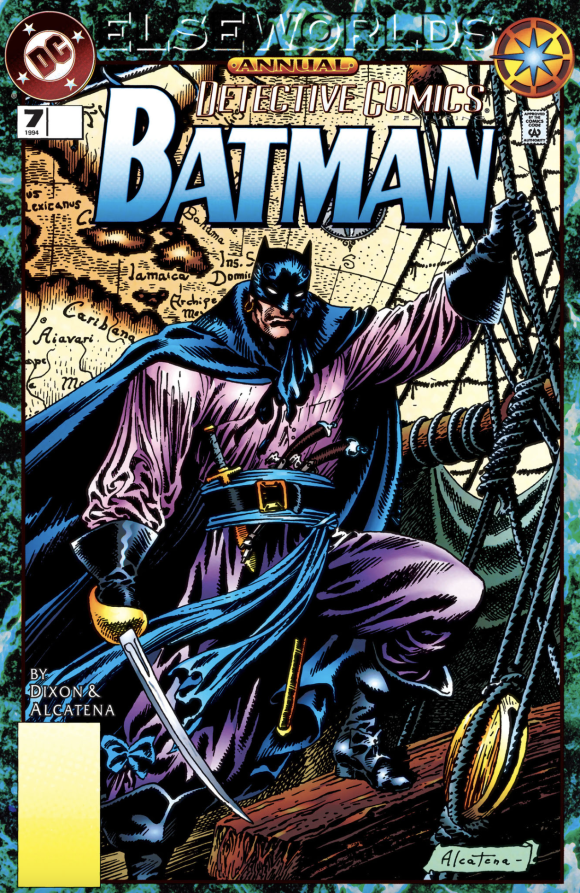
By the time DC trotted out Elseworlds annuals in 1994, these alternate universe stories had something of a stale, Mad Libs quality to them. That said, writer Chuck Dixon actually knows something about the Age of Piracy and sprinkles fun historical detail throughout, and the art by Argentinian master Enrique Alcatena is absolutely stunning (Vampyrates’ Luca Pizzari is a huge fan), making this one of the label’s superior efforts.
—
5. Corpse Raft Guy (1st app. Watchmen #3, DC.). One of the many impressive things about Moore, Gibbons and Higgins’ Watchmen is its careful attention to detail. In its world of real-life superheroes, fictional superheroes fell out of fashion and stayed there, allowing the pirate genre to dominate the American comics market. We are told that the most popular pirate comic is DC’s Tales of the Black Freighter, and a significant chunk of Watchmen (way too significant, I’ve argued on this site before) is the comic-within-a-comic of a marooned sailor who lashes together a bunch of corpses into a raft to try and float back to his wife and kids.
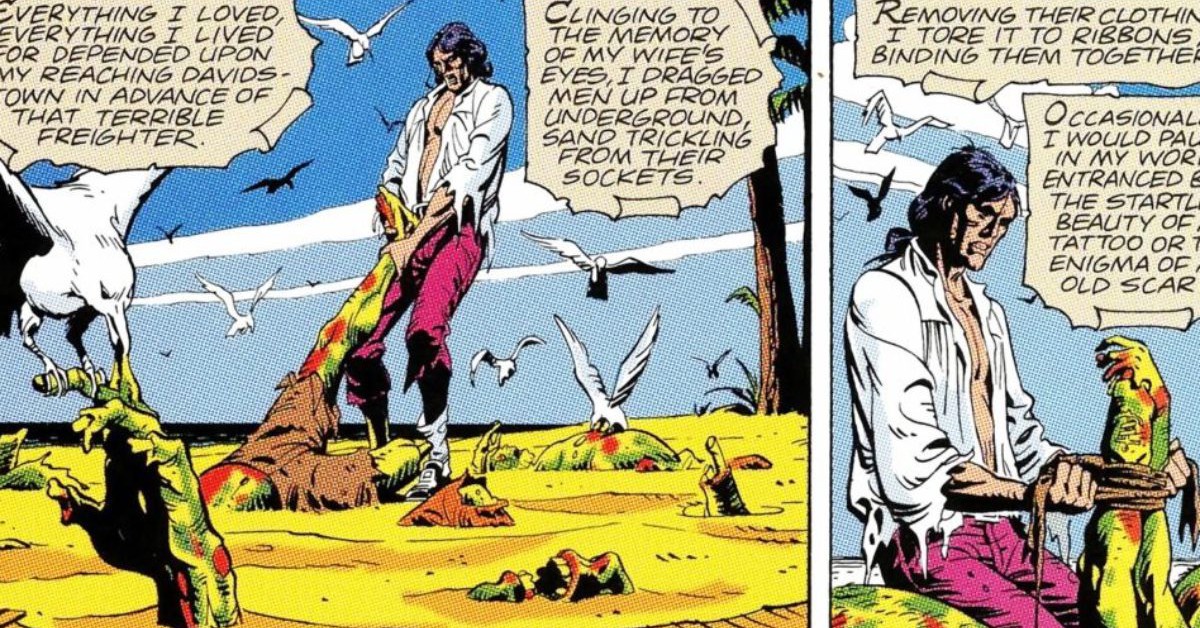
Technically, our unnamed narrator doesn’t become a pirate until he is picked up by the titular Black Freighter after his disastrous homecoming, a metaphor for the oncoming nuclear apocalypse faced by the Watchmen characters, but this masterpiece’s ubiquity on comics reading lists means this might be the most-read comics pirate ever… except for the next one on our list, of course.
—
4. Monkey D. Luffy (1st app. Weekly Shonen Jump, July 19, 1997, Shueisha.). Look, I couldn’t exactly ignore the fact that the biggest comic in the world right now is a pirate comic, and the excessively exuberant Luffy is its star. I will admit that while I’ve seen a One Piece anime and a few episodes of the Netflix live-action adaptation, I have not fallen in love with Eiichiro Oda’s creation as much as, well, everyone else on Planet Earth.
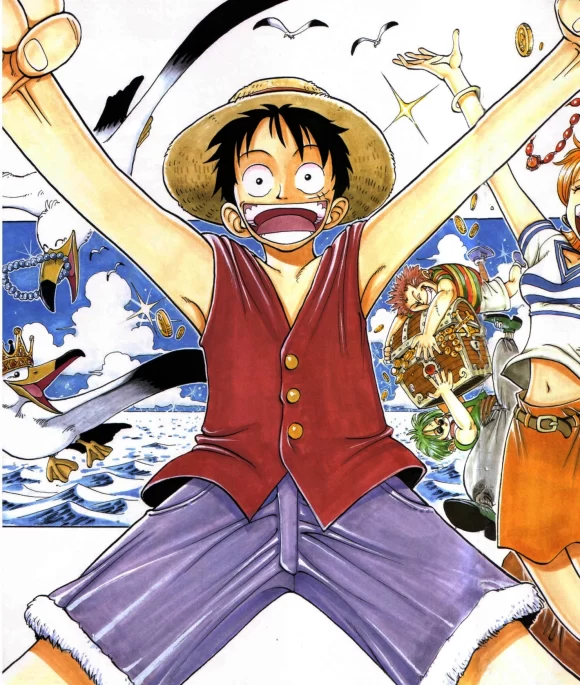
While it has its charms, it’s a little too goofy for me. I prefer my pirates, if not necessarily more realistic (I’m doing a pirate book about vampires for goodness’ sake), then a little more grim-and-gritty. I got to smell some blood on the deck, you know? One Piece is just good, wholesome fantasy fun.
BTW, look for Luffy’s sort-of cameo in Vampyrates! #2…
—
3. Hawk (of the Seas) (1st [comics] app. Jumbo Comics #4, Fiction House). It’s legit annoying how talented Will Eisner was. At 19 years of age, pre-Spirit, he created the whiz-bang syndicated Sunday-only strip Hawks of the Seas under his “Willis B. Rensie” pseudonym (spell it backwards) that was largely syndicated to newspapers here and across the globe.
In his introduction to the 1986 Kitchen Sink collection, Al Williamson remembers loving it as a boy in Bogotá, Colombia, as “Aguila Azul,” the Blue Eagle. It’s really incredible how well it holds up today, and it shows off Eisner’s humanism that he’d later explore in The Spirit and his graphic novels like A Contact with God: the dashing Hawk and his pirates target slave ships, freeing their human cargo.
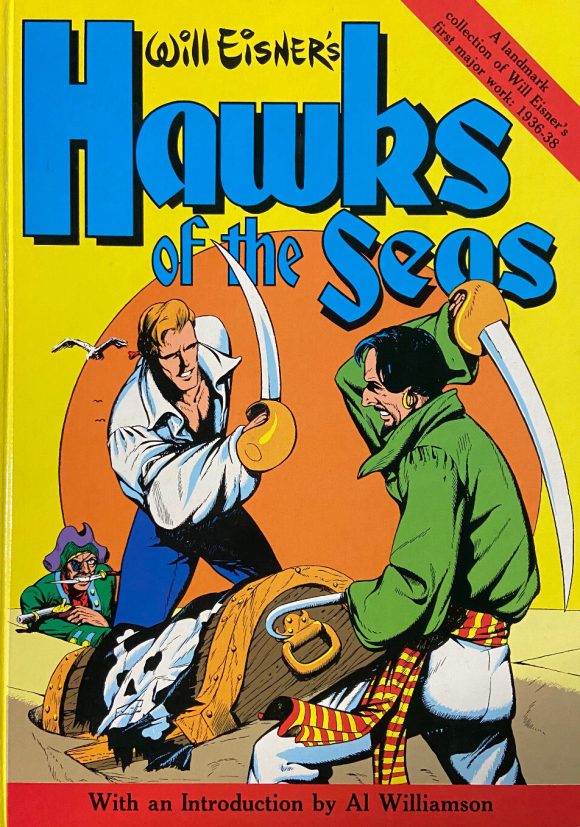
This strip is a huge influence on Vampyrates! if only because we do our own dark fantasy spin on this premise, where our heroes save humans trafficked by bloodsuckers for food…
—
2. Lord Ironwolf (1st app. Weird Worlds #8, DC.) When DC acquired the rights to the works of Edgar Rice Burroughs, Tarzan got his own book of course, as did his son Korak, while John Carter and David Innes of hollow Pellucidar were relegated to the anthology Weird Worlds.
When WW’s sales were good enough to keep the title going but not good enough to pay the ERB license, a brand-new hero was born, Howard Chaykin’s space pirate, Iron-Wolf (as the title was originally spelled), who replaced these pulp mainstays.
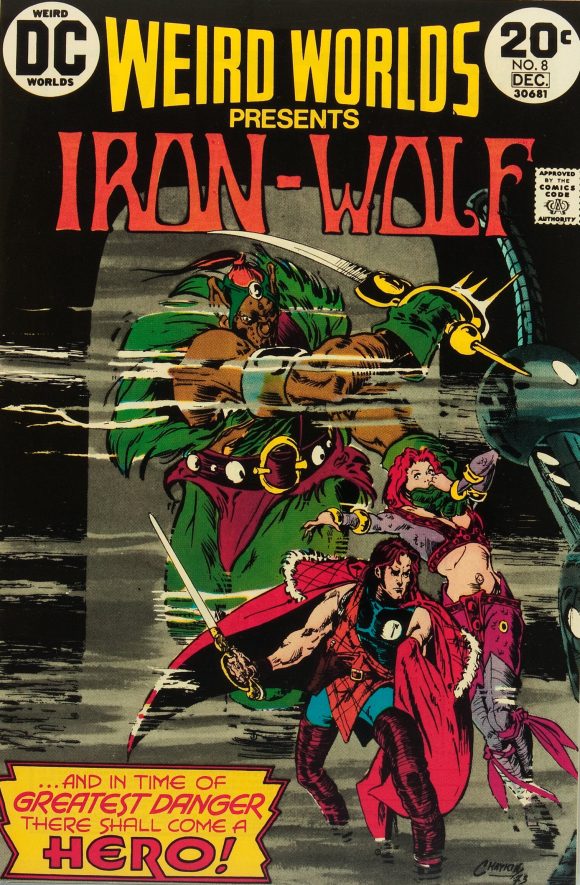
I love this bonkers strip, which I discovered in musty back issues right before we began work on Vampyrates! Lord Ironwolf rules a planet where grow the trees that produce gravity-defying wood for spaceships, Because he refuses to give it over to the evil galactic Empress, he is soon forced to become a pirate and a fugitive. And did I mention there are vampires too?
Later Chaykin would team up with Mike Mignola and P. Craig Russell to continue Ironwolf’s story in the spectacular graphic novel, Fires of the Revolution. Luca and I both dig Ironwolf so much we named one of the ships in Vampyrates! after his Lonesome Rake.
—
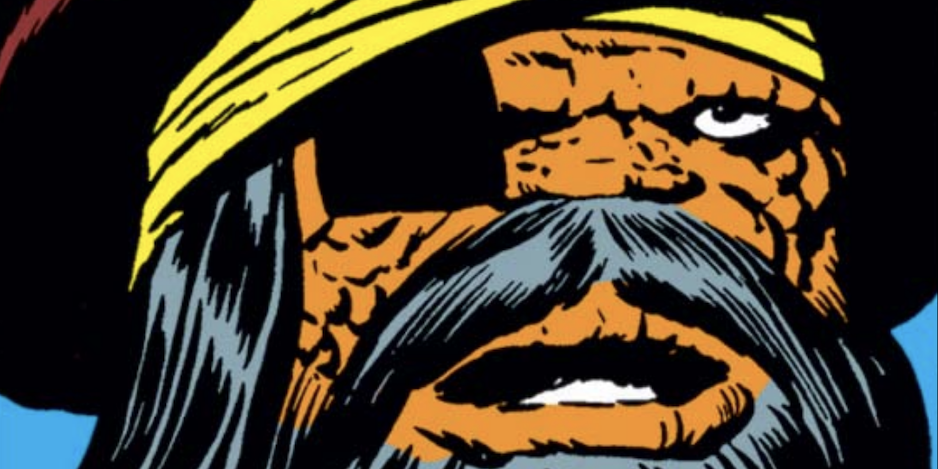
1. Benjamin J. Grimm (1st app. [as Blackbeard]: Fantastic Four #5). As his first act as the FF’s archnemesis, Dr. Doom takes Sue Storm hostage, then orders the other three to go back in time to retrieve the lost treasure of No. 12 on this list. He’s staying behind because someone has to operate the time machine, duh.
In Pirate Times, Reed and Johnny disguise the Thing with an eyepatch and black beard, then promptly get roofied in a seaside tavern and wake up shanghaied on a pirate ship. The Fantastic Three promptly take over the vessel, then defeat another ship that attacks, discovering its chest-load of booty. Reed wisely realizes that if Doom wants this treasure, they should not let him have it (as it happens, it contains magic baubles created by Merlin himself).
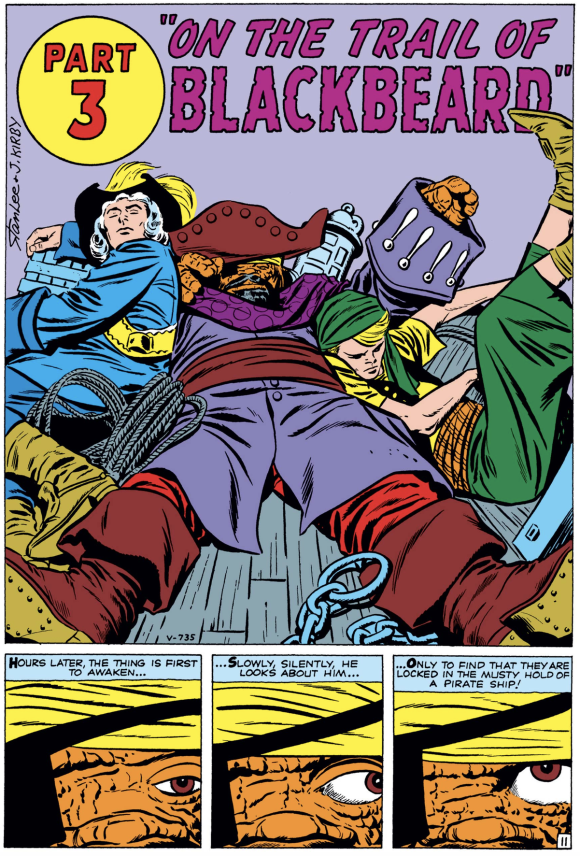
However, Thing, now called “Blackbeard” by the crew, wants to stay in Pirate Times instead of going back to 1962 where he’s treated like a freak. Ben promptly turns on his teammates and defeats them (Ben Grimm’s favorite pastime for like the first 35 or so issues of FF), only to have his plans undone by an untimely typhoon and getting summoned back to the present by Doom.
Part of the reason people went nuts for Fantastic Four in the first place was the Thing’s anti-hero behavior. His greed, ruthlessness and lust for the high seas makes him an ideal pirate, even if his career only lasted eight pages. After all, the real Blackbeard only made it two years!
—
Buy Vampyrates! #1, landlubbers!
—
MORE From FRED VAN LENTE
— COMIC BOOK DEATH MATCH: SWAMP THING vs. MAN-THING: 1972-75. Click here.
— COMIC BOOK DEATH MATCH: WATCHMEN vs. SQUADRON SUPREME. Click here.
—
Occasional 13th Dimension contributor FRED VAN LENTE is a comics writer, historian and playwright. He’s also tall. He’ll be having a signing at my local comics shop on Saturday: Aw Yeah Comics, in Harrison, N.Y., from 12 to 2 p.m.

July 8, 2026
No one ever swashed a buckle (or buckled a swash?) like Benjamin J. Grimm. Well deserved No. 1 ranking here!
July 8, 2026
I’m surprised there wasn’t a What If…? issue with Ben as a pirate. He looks great with the beard and patch!
July 9, 2026
That would have been a must-read!
July 8, 2026
I forgot to mention I am signing VAMPYRATES! #1 on Saturday, July 11 at 13th Dimensioner Franco’s own store, Aw Yeah! Comics in Harrison NY, from noon to 2pm. C’mon by! https://www.awyeahcomics.com/
July 8, 2026
It’s in there, my man!
July 8, 2026
My man!
July 8, 2026
Oddly enough, I just read Captain Fear’s last 3 appearances by David Michelinie & Walt Simonson. Wild stuff!
July 8, 2026
Limerick Rake
July 8, 2026
What, no love for Cursed Pirate Girl by Jeremy Bastian? Great stuff if you haven’t seen it already:
https://www.penguinrandomhouse.com/books/805935/cursed-pirate-girl-malodious-mutiny-by-jeremy-bastian/
July 9, 2026
What about the 1985 series sword of the swashbucklers by Bill Mantlo and Jackson guice or 1985 Nightcrawler miniseries?