
Old-time radio shows and their comics connections…
By PETER BOSCH
Welcome back, my fellow Four Color Radio devotees. I am your host, the rajah of old time radio, the curator of classic comics characters on the air.
This time around, we’re featuring one of the most popular radio programs ever — America’s ace of the airwaves, CAPTAIN MIDNIGHT!
Captain Midnight was developed by an advertising firm and the scripts and characters were created by Wilfred Moore and Robert Burtt, a writing team coming off the success of their previous radio hit, The Air Adventures of Jimmie Allen. (Both writers had also been aviators in World War I.)
The Captain’s adventures began October 17, 1938 (not 1939 as sometimes reported) on WGN in Chicago and a few other areas where the original sponsor, the Skelly Oil Company, had a presence with their gas stations.
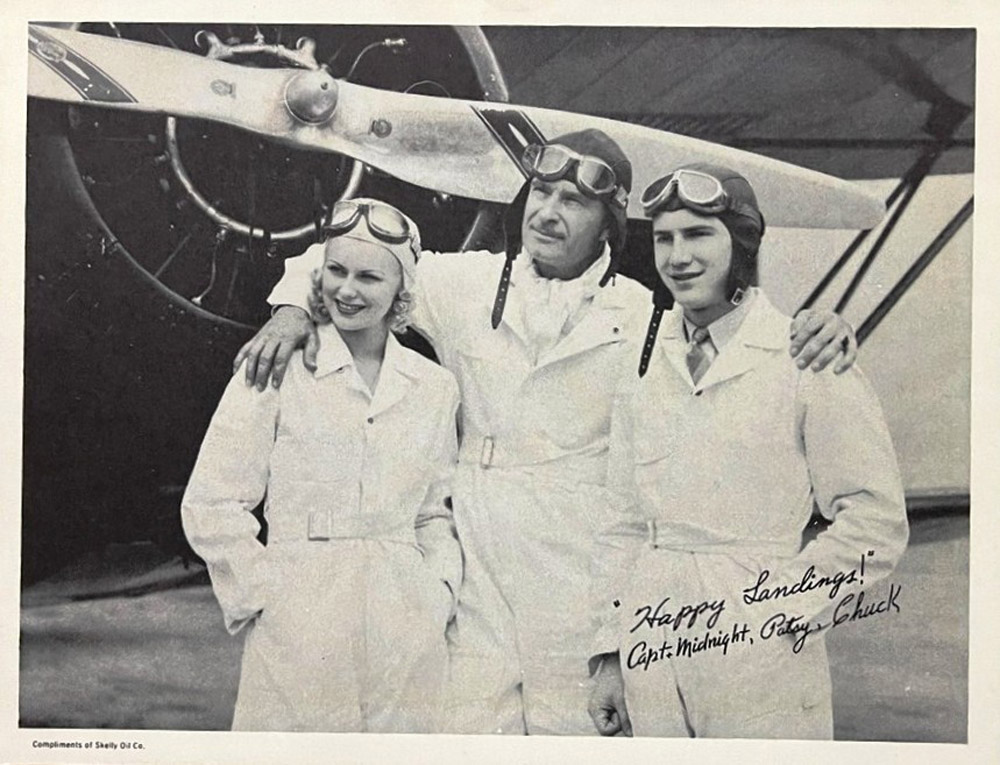
Skelly Oil promotional giveaway, 1938-39
Midnight’s heroic deeds were first briefly told in back story, beginning in World War I when he was Captain Jim Albright completing a dangerous nighttime mission.
Captain Midnight’s origin was retold when Ovaltine took over the sponsorship with this September 30, 1940, program.
It has been reported over the years that Bill Bouchey was the original Captain when the series began in 1938 but, according to radio historian Jim Harmon’s interview with actor Ed Prentiss, it was actually Prentiss in the starring role at first.
Bouchey played it after that for one season, and when Ovaltine became the new sponsor (and took the series national over the Mutual radio network) Prentiss was rehired starting with the September 30, 1940 broadcast. Prentiss continued portraying Captain Midnight for most of the series’ run and only when the series was coming to an end in 1949 was Paul Barnes given the part.
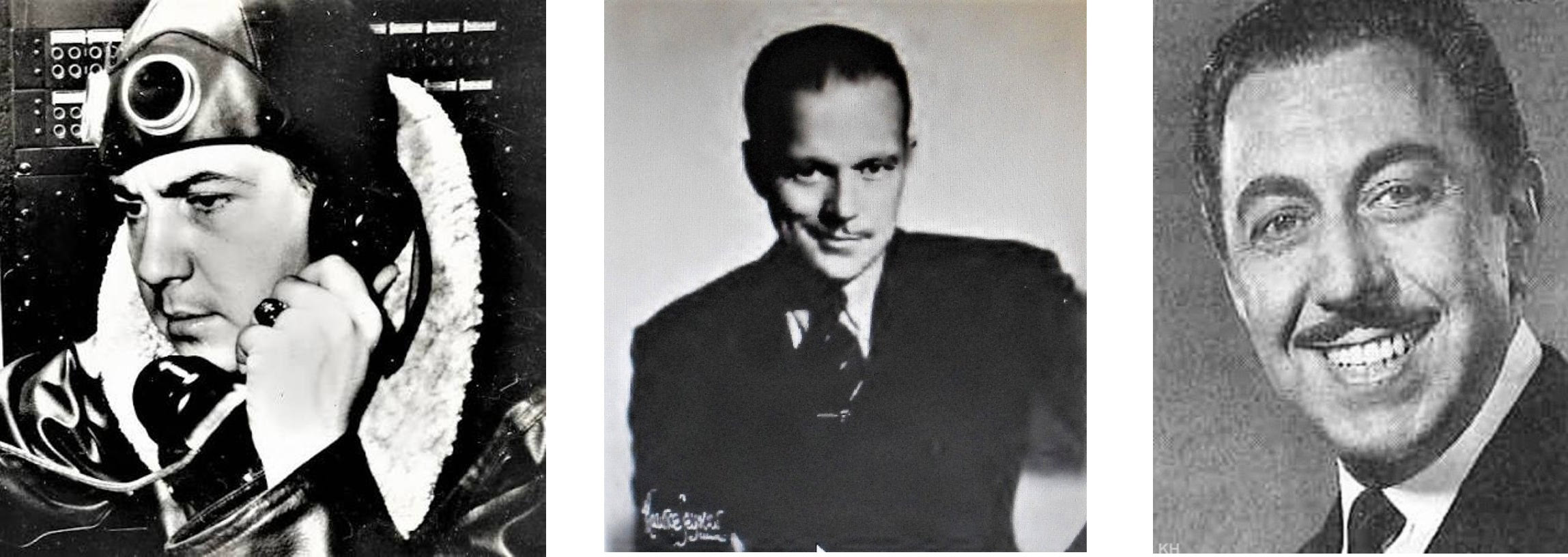
Left to right: Ed Prentiss (the first Captain Midnight), Bill Bouchey (the second Captain), and Boris Aplon (Ivan Shark)
As the saying goes, a hero is only as good as the villain he must face. In the case of Captain Midnight, there was one menace that stood above the rest — Ivan Shark. It was a role played with relish by Boris Aplon for the length of the series. Even more deranged was Ivan’s poisonous daughter, Fury (voiced first by Rene Rodier and then by Sharon Grainger). Together or apart, when Ivan and Fury appeared within the program storylines, it was a worrisome affair for the heroes.
March 15, 1940, radio broadcast featuring Ivan and Fury Shark
The Captain’s buddies, who were also his Flight Patrol teammates, were young Chuck Ramsey and Patsy Donovan. (The latter character became Joyce Ryan when the series was picked up by Mutual). Another part of the crew was Midnight’s mechanic, Ichabod Mudd. A rotation of radio actors of the day took on these roles over the show’s decade-long run.
Soon after the series began, Skelly offered radio premiums tied to the show — and someone in advertising came up with a brilliant idea on how to distribute them. Instead of sending out the premiums by mail to the young members of their “Captain Midnight Flight Patrol” fan club, the company would offer the tie-ins through their local service stations — but Dad or Mom had to fill up their tanks first in order to get them.
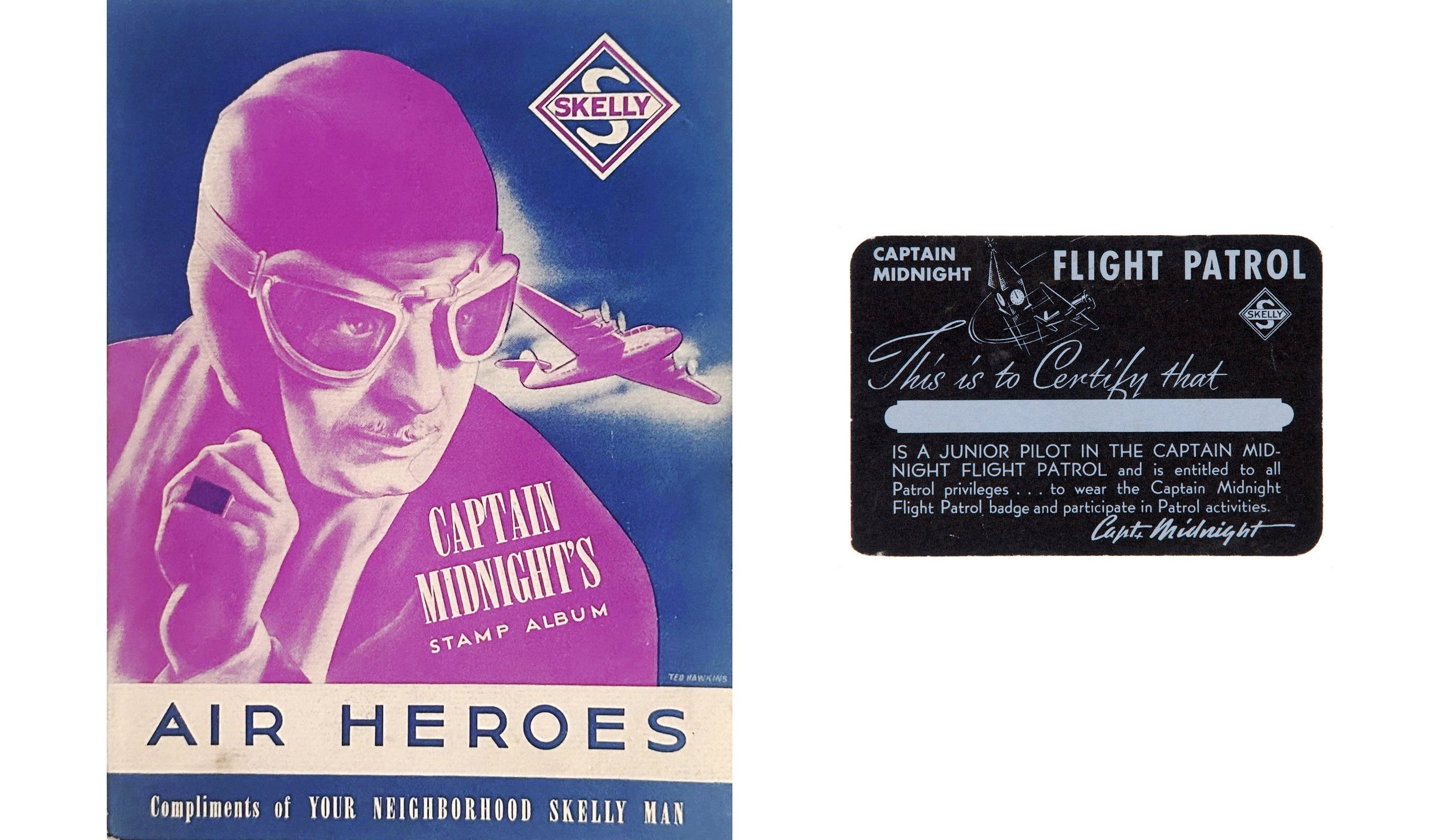
Two of Skelly’s 1939 radio premiums: a Captain Midnight stamp album of air heroes and a membership card in the Flight Patrol fan club
While Skelly produced a good number of giveaways for the series, when it came to radio premiums, they were vastly outdone by the Ovaltine publicity machine. Ovaltine had gone sour on sponsoring the Little Orphan Annie radio show by 1940 and they turned their enormous efforts to Captain Midnight — and the drink manufacturer came up with a new Captain Midnight fan club to replace Skelly’s Flight Patrol: the Secret Squadron!
Below are several pages from Ovaltine’s 1941 membership manual and code book to show just how elaborate they were!
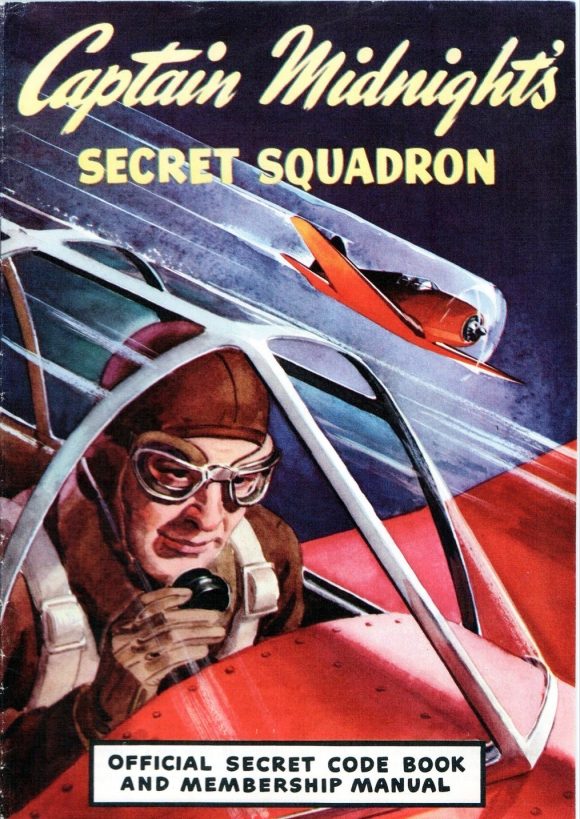
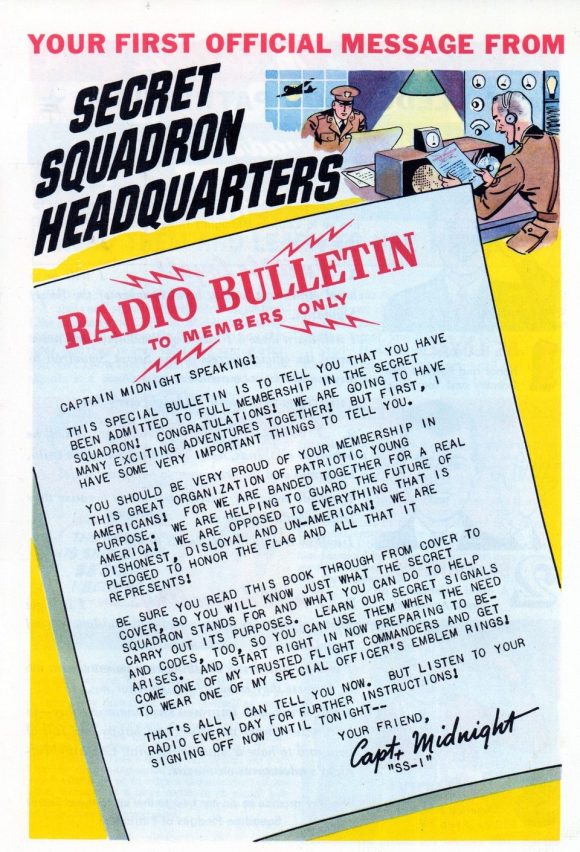
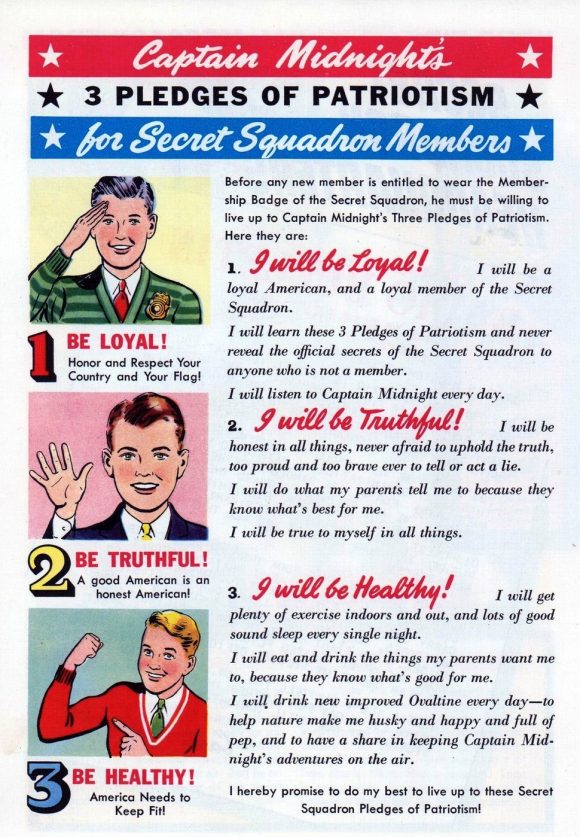
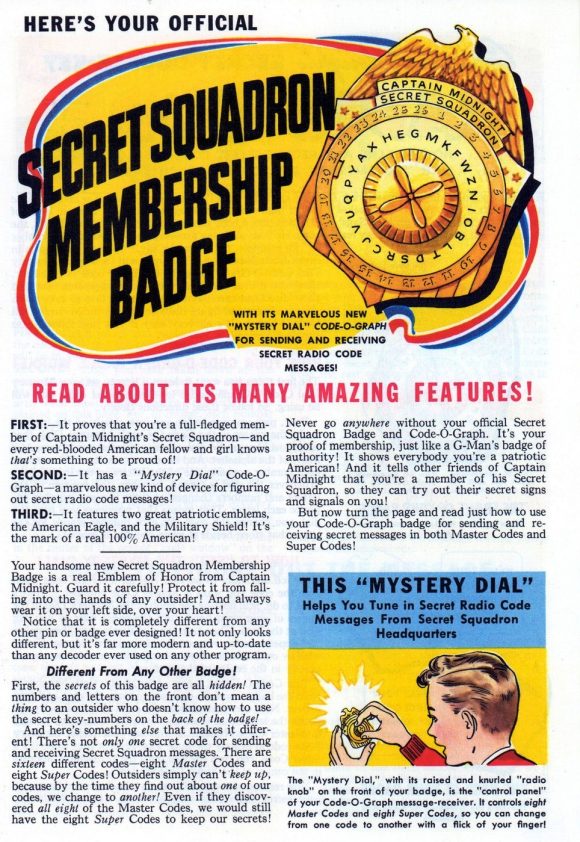
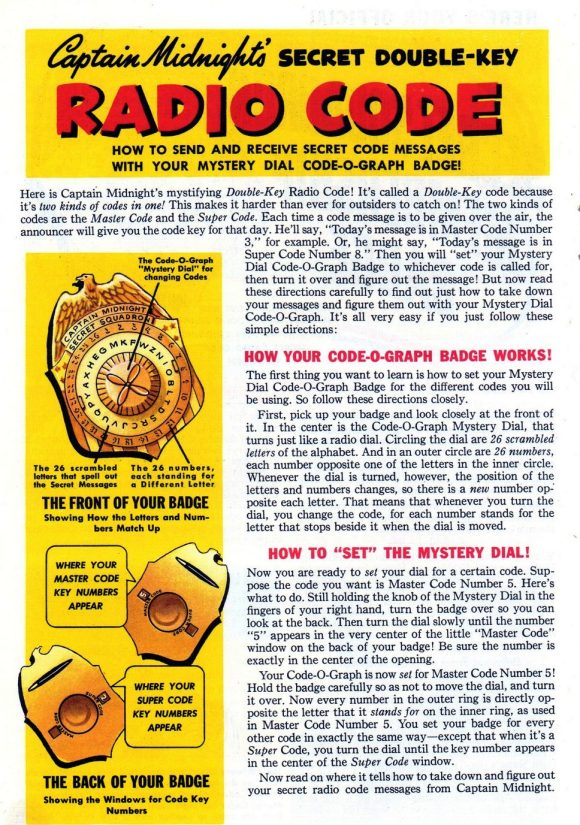
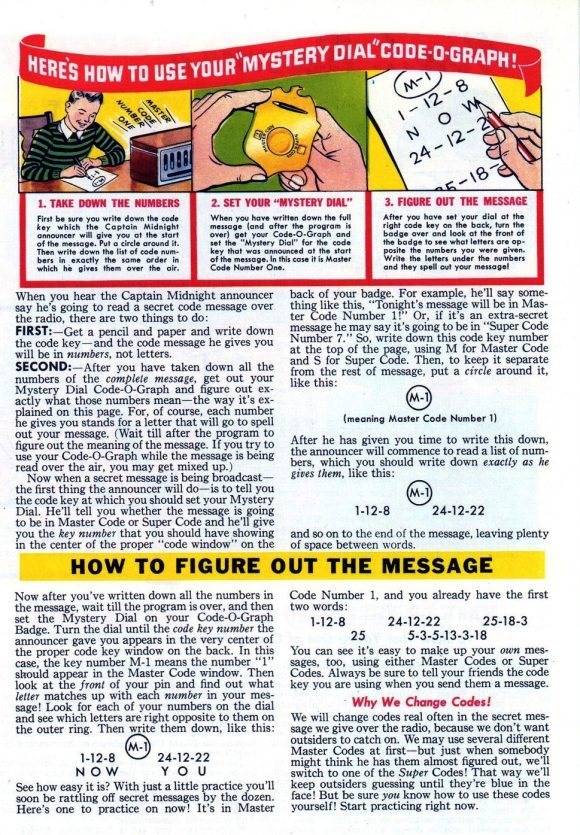
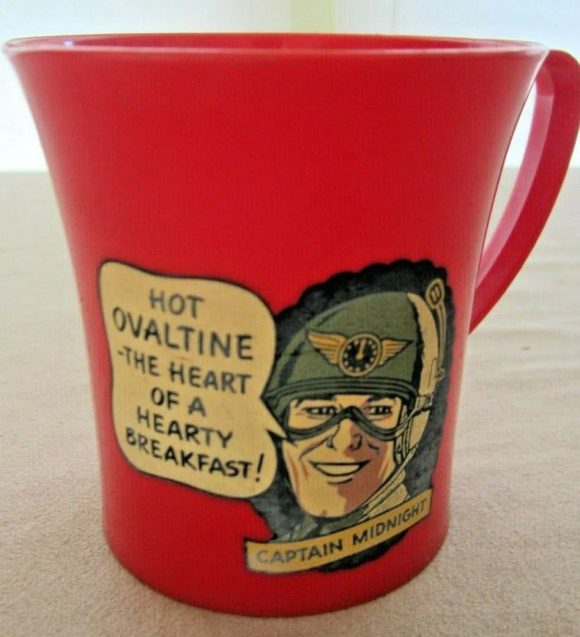
The Secret Squadron became one of the most popular fan clubs ever on radio, with evidently over a million members. And within the Captain Midnight radio shows, the plugging of Ovaltine seemed to go on forever. But, dang, they certainly came up with great gimmicks for kids to send away for: manuals, cards, rings, decoders, badges, whistles, pins, patches, photos, booklets, ribbons, folders, toy airplanes, games, spy scopes, and mugs (what else would you drink your Ovaltine from?).
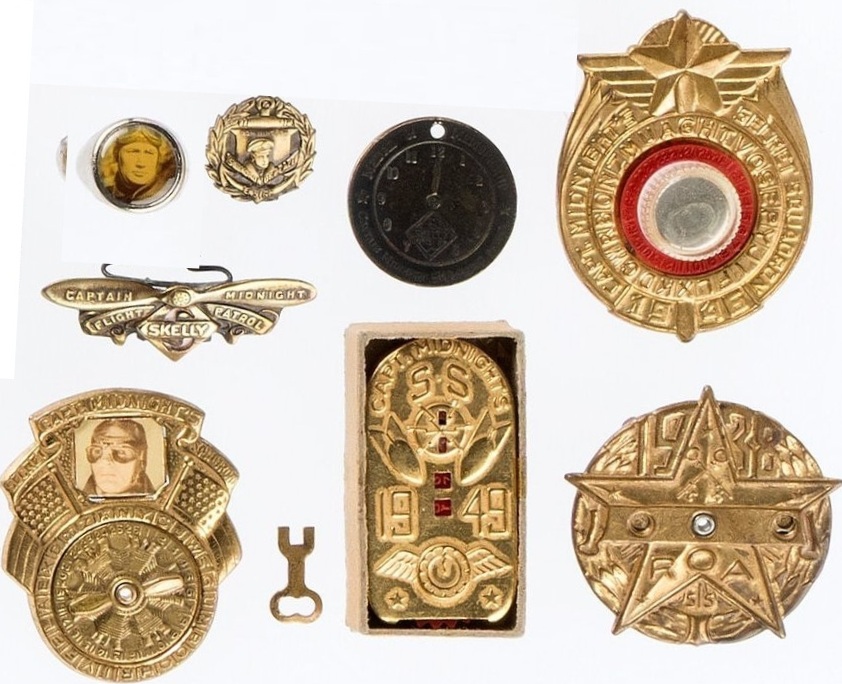
A very tiny display of Ovaltine’s Captain Midnight radio premiums.
Seeing such success, it was natural for comic publishers to come calling. Captain Midnight expanded to the four-color field with Dell’s The Funnies #57 (July 1941).
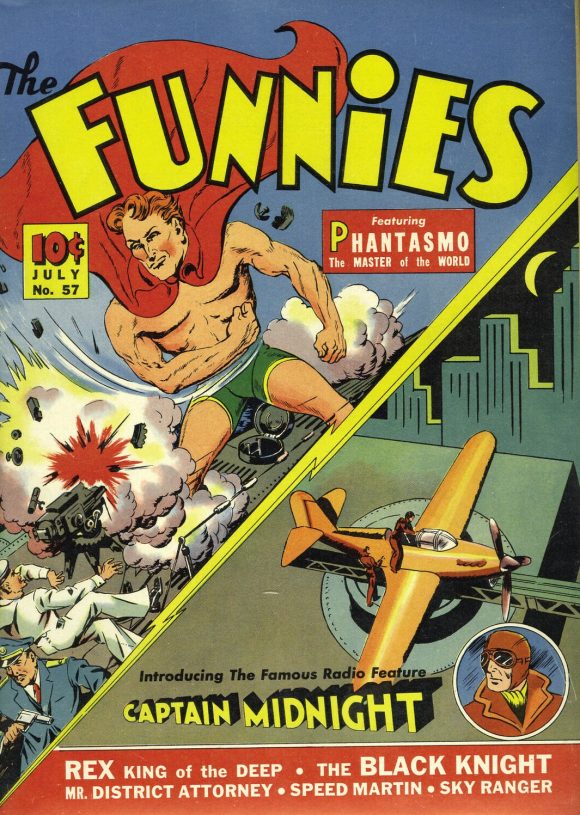
Cover artist unknown.
The issue featured a 10-page origin story that brought over Chuck and Joyce, as well as Ivan and Fury Shark.
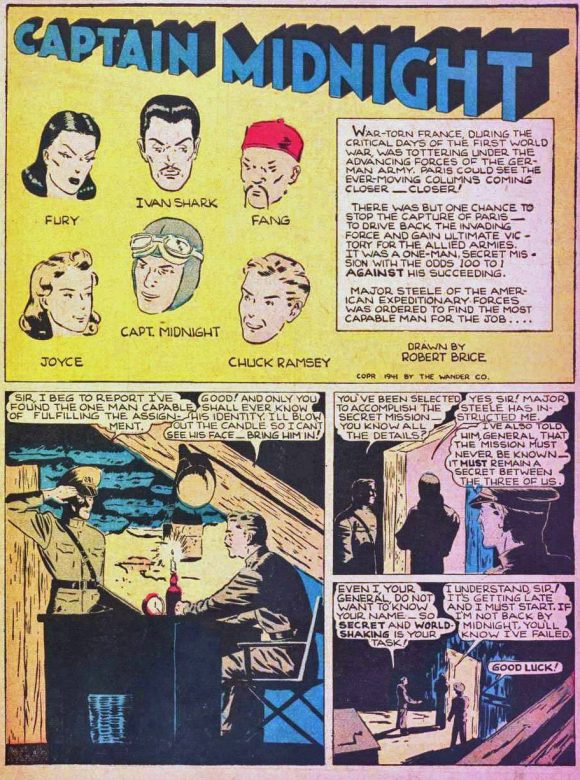
Splash page for the first Captain Midnight comic book story. Writer: Unknown. Artist: Robert Brice.
(Oh, in case you were wondering about the copyright for the Wander Co. shown in tiny print on the splash page, they were the makers of Ovaltine… and their control of the Captain Midnight brand name would come into play later on.)
The daring pilot appeared in The Funnies through #63 (Mar. 1942) and then switched over to Popular Comics (also Dell) from #76 (June 1942) through #78 (Aug. 1942).
In 1941, Whitman Publishing released the first of four Big Little Books featuring the Captain, with Erwin L. Hess illustrating all. The following year, Whitman published the hardcover spinoff of the radio series, Joyce of the Secret Squadron.
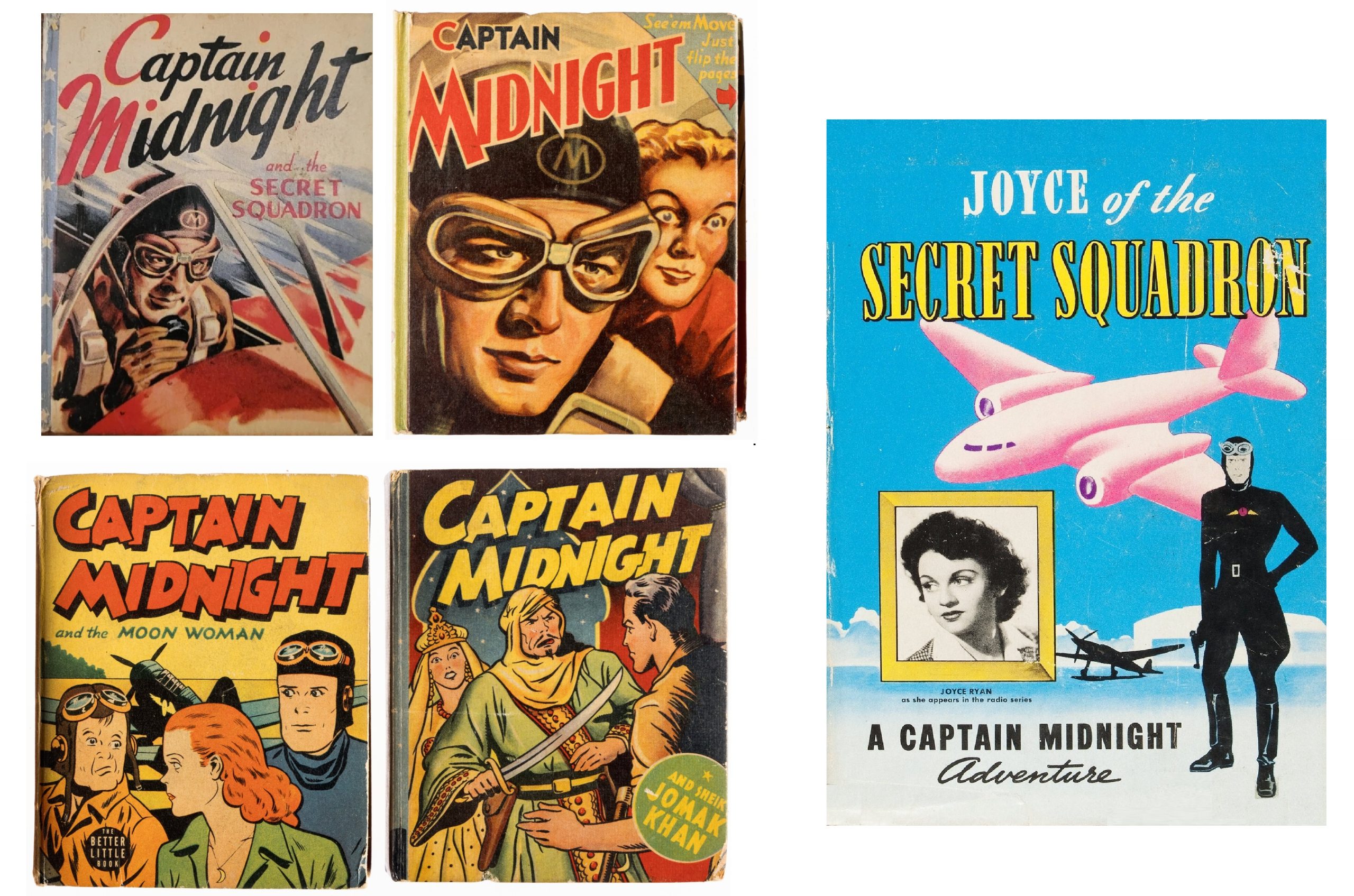
Big Little Books top row: Captain Midnight and the Secret Squadron (1941) and Captain Midnight vs. The Terror of the Orient (1942). Bottom row: Captain Midnight and the Moon Woman (1943) and Captain Midnight and Sheik Jamak Khan (1946). Right: Joyce of the Secret Squadron (1942). All from Whitman Publishing.
The year 1942 turned out to be a monumental one for the Captain. First up was a jump to the big screen in Columbia Pictures’ 15-chapter Captain Midnight movie serial (starring former stuntman Dave O’Brien in the title role).
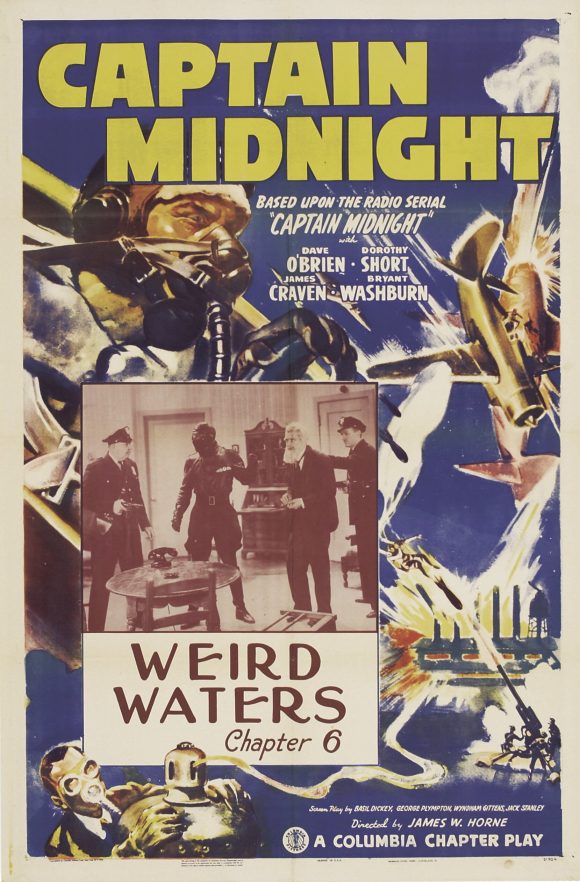
Film poster for Chapter 6 (1942, Columbia)
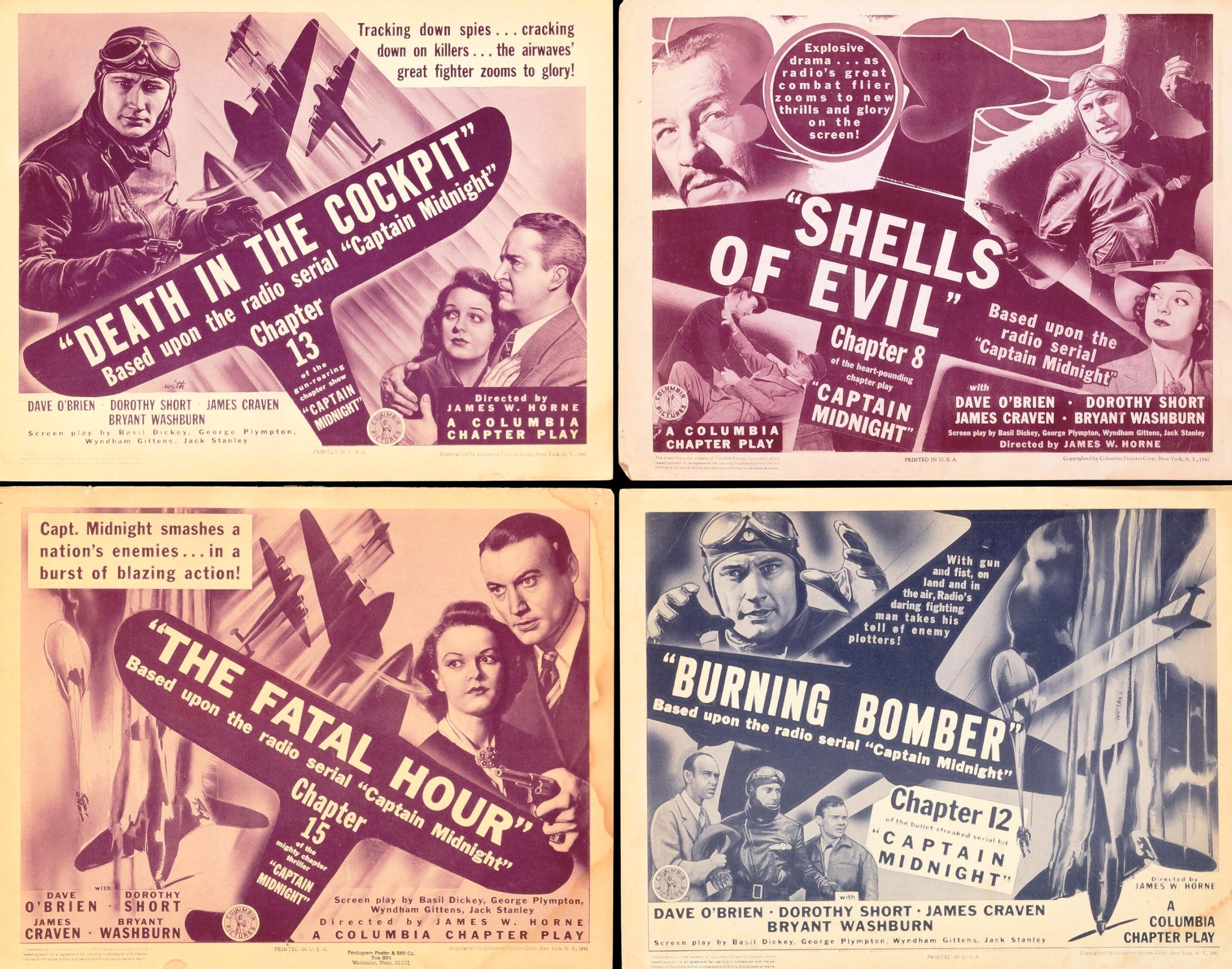
A selection of title cards for four of the serial’s chapters
The public domain Captain Midnight serial can be seen in its entirety here:
In the same year, the Captain Midnight franchise added a daily and Sunday newspaper strip that started June 29, 1942, and continued to April 15, 1945. It was written by Ed Herron and drawn by Erwin L. Hess (using the pseudonym “Jonwan”) who also illustrated the Big Little Books.
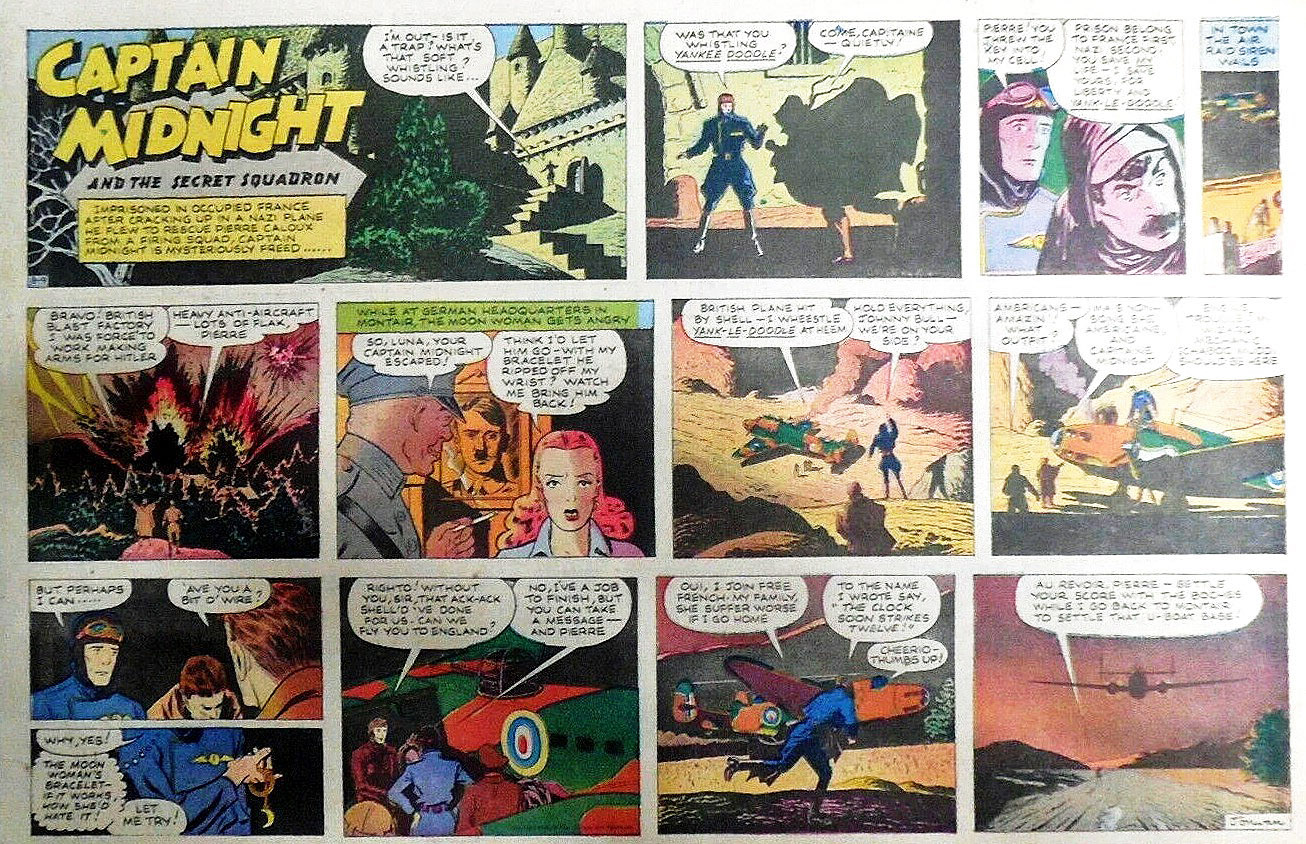
Sunday newspaper strip for Aug. 19, 1942
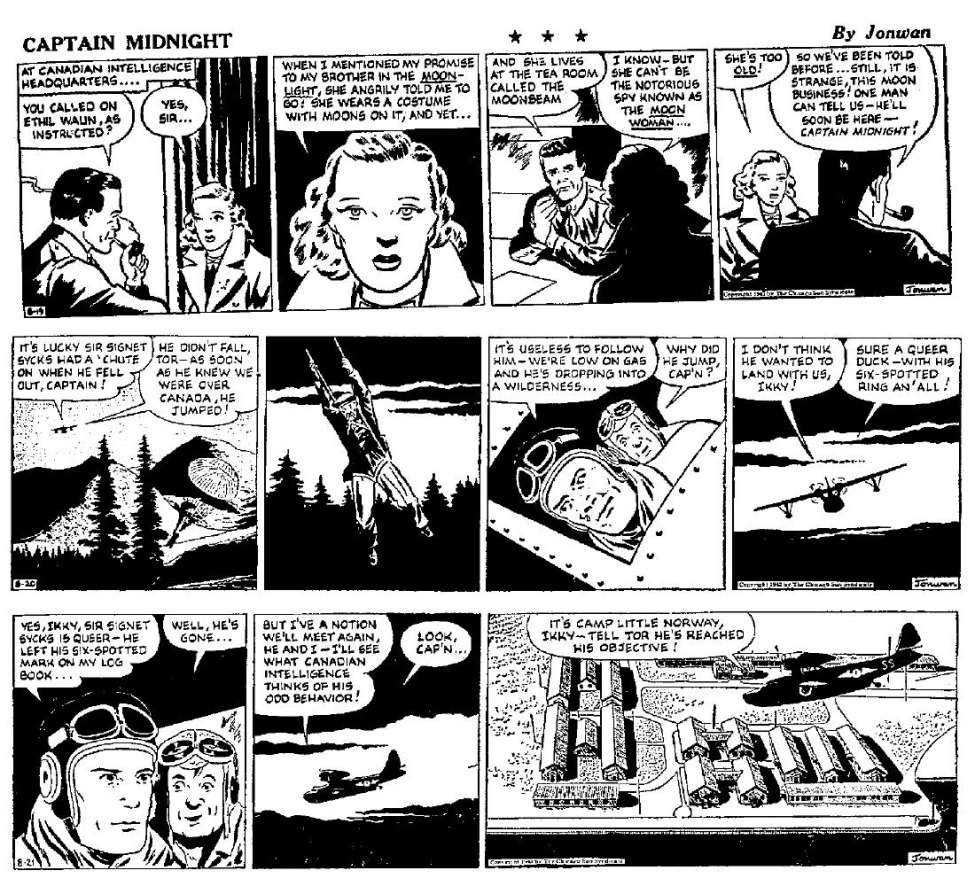
Dailies for Aug. 19-21, 1943
The year 1942 continued to be a busy one for the aviator. Taking off from Dell Comics, he landed at Fawcett to star in his own comic-book title, which ended in 1948 after 67 issues.
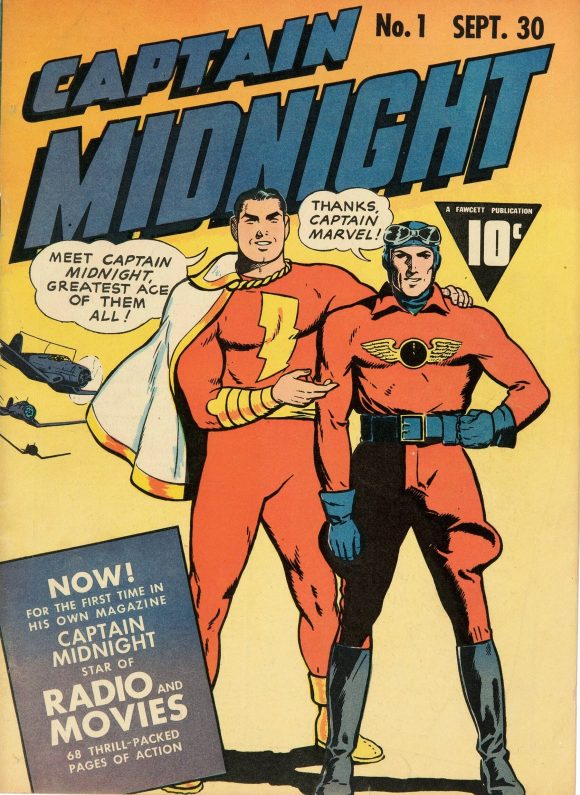
Fawcett’s Captain Midnight #1 (Sept. 30, 1942 — which actually went on sale August 19, 1942). Artist unconfirmed but likely Jack Binder.
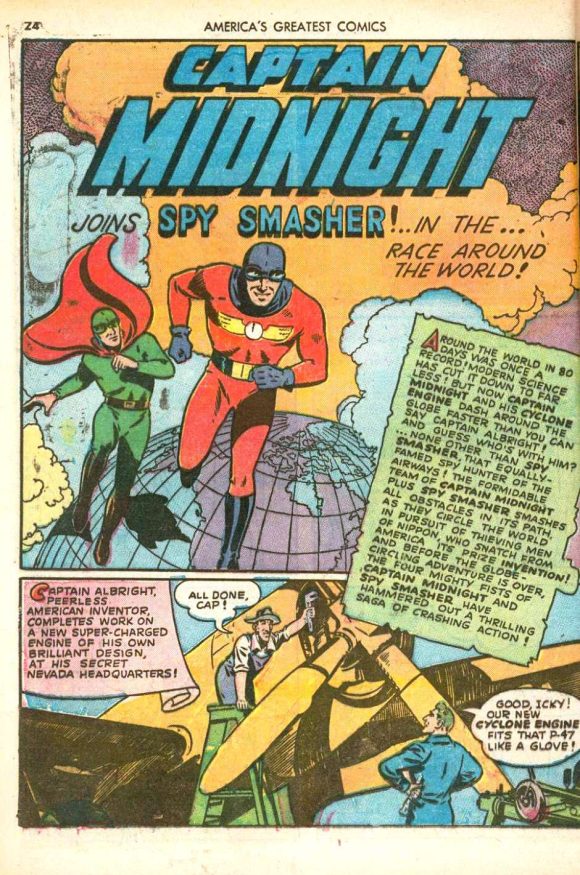
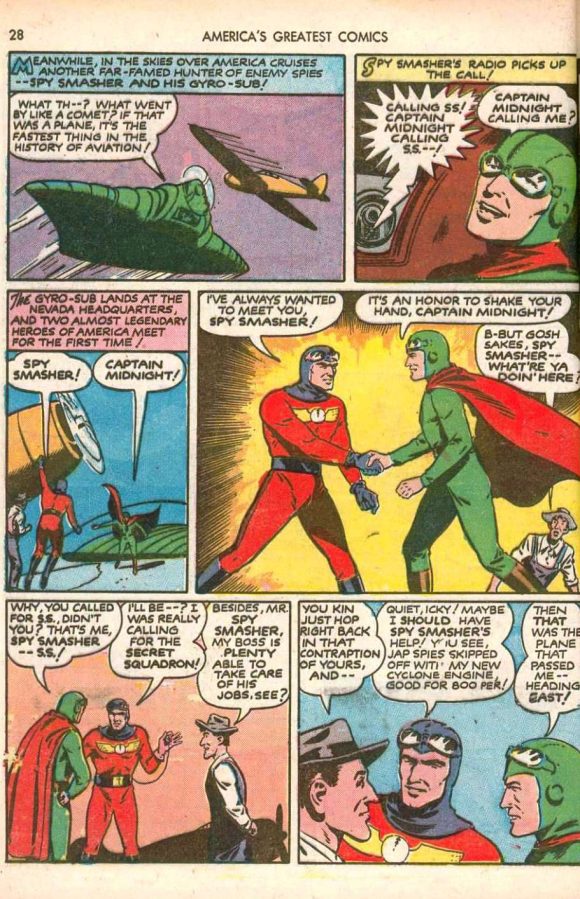
While at Fawcett, the good Captain also could be found in All Hero Comics #1 (Mar. 1943) and Whiz Comics #47 (Oct. 1943). One very special issue was America’s Greatest Comics #8 (Summer 1943) in which he teamed up for 15 pages with Spy Smasher, two pages of which are below (writer and artist unknown).
The radio series came to an end December 15, 1949, but five years later, a Captain Midnight television program appeared on CBS. From September 9, 1954, to January 21, 1956, Richard Webb played the famous hero, with Ovaltine again as the sponsor for the 39-episode series.
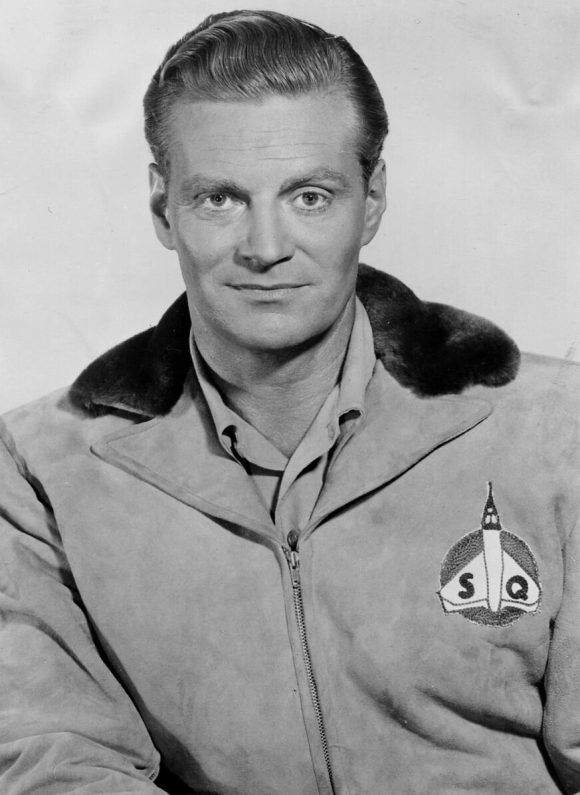
Richard Webb, the television version of Captain Midnight from 1954 to 1956
The “Flight to the Unknown” episode, which aired December 31, 1955, on CBS.
When the program was sold into syndication without Ovaltine’s sponsorship, the company forced the program’s distributor to alter the name of the series. Captain Midnight became Jet Jackson, Flying Commando. Each episode required a dubbing of “Jet Jackson” whenever the “Captain Midnight” name was spoken, in addition to altering the title credit.
An example of a Captain Midnight episode in syndication, retitled as Jet Jackson, Flying Commando and dubbed.
It was a long time before Captain Midnight would be seen again — 65 years after the last Fawcett comic book in 1948, and the storyline reflected that. The new Captain Midnight 25-issue series (#0, June 2013, to #24, June 2015) from Dark Horse Comics had the pilot disappearing over the Bermuda Triangle in 1944 and reappearing in 2013. The series ended with the possibility for future adventures.
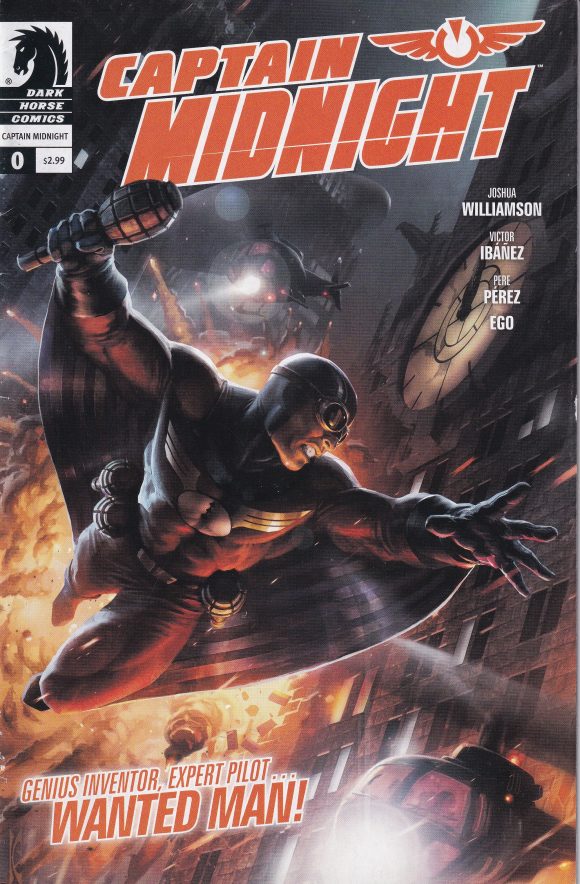
Captain Midnight #0 (June 2013). Cover painting by Raymond Swanland.
While we wait for that to happen, there are approximately 100 radio episodes available online. Just make sure when you listen, you have your Captain Midnight decoder and an Ovaltine mug!
See you next time!
—
MORE
— FOUR COLOR RADIO: The GREEN HORNET. Click here.
— FOUR COLOR RADIO: The All-Time Classic THE LONE RANGER. Click here.
—
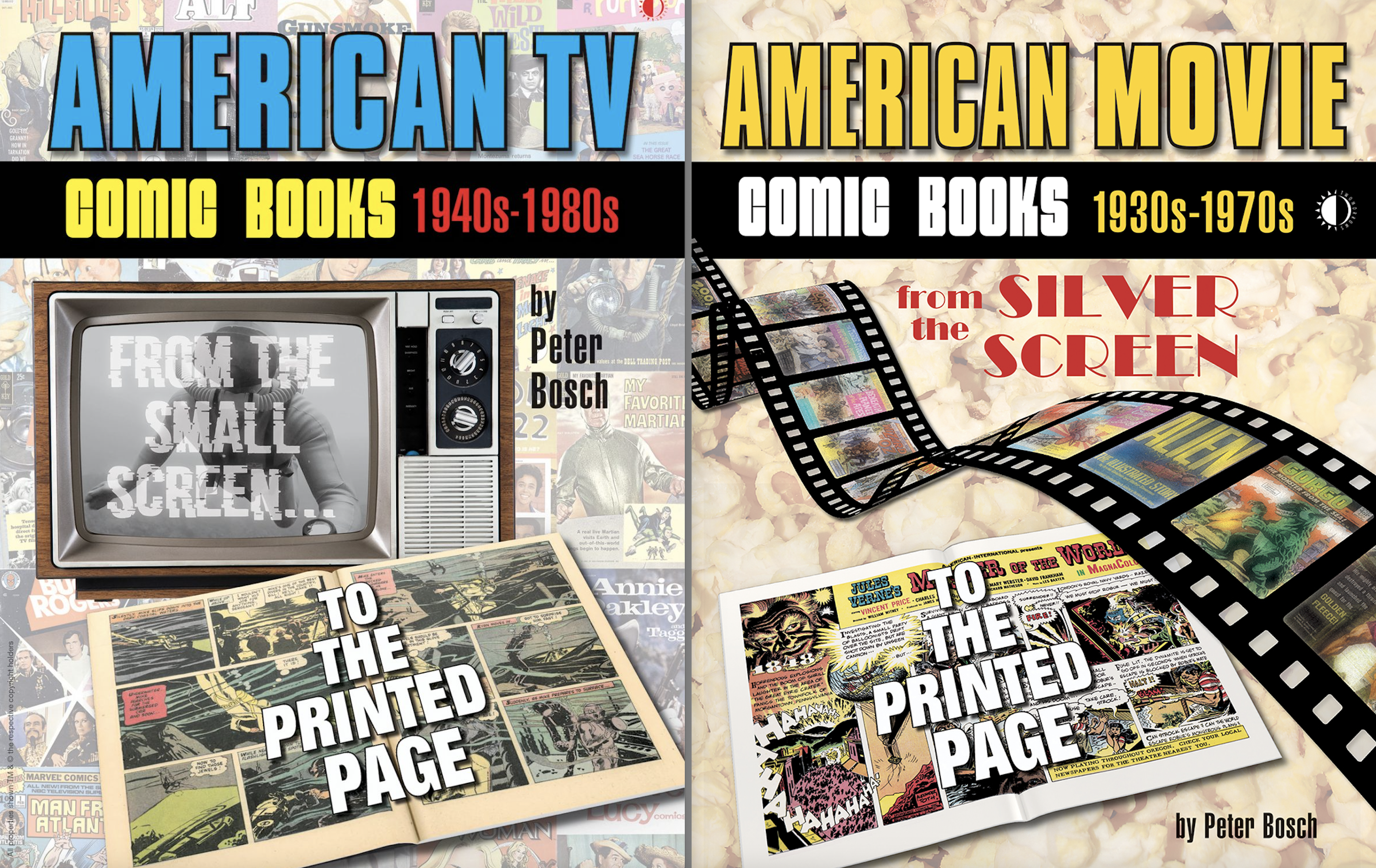
13th Dimension contributor-at-large PETER BOSCH’s first book, American TV Comic Books: 1940s-1980s – From the Small Screen to the Printed Page, was published by TwoMorrows. (You can buy it here.) A sequel, American Movie Comic Books: 1930s-1970s — From the Silver Screen to the Printed Page, is out now. (Buy it here.) Peter has written articles and conducted celebrity interviews for various magazines and newspapers. He lives in Hollywood.

August 29, 2026
Peter, I always love reading your column. I’m especially thrilled when it lands on a Saturday morning. It must be the hint of Ovaltine….the morning cuppa is made so much better. Thanks for sharing your love of the old radio shows.
If we could only go back to a much simpler age. If only.
August 29, 2026
Thanks, Buck.
August 29, 2026
Thank you kind sir. Good piece. I love the books. in the FCA section of Alter Ego mentioning was made by Paul of a short lived Captain Marvel radio series. I would love to know more about that series and whether anyone has found either scripts of voice recordings.
August 31, 2026
Hi, Joe. Actually, there isn’t much of anything to be written about a Captain Marvel radio program. Details are very sketchy, other than it possibly had a very short run in 1943 in New York City and then Chicago. Burt Boyar apparently played Billy Batson. And that’s about it. No shows have made an appearance.
August 29, 2026
Nicely done. I co-wrote the section on Captain Midnight’s newspaper strip in Larry Zdeb’s definitive 2-volume history of Captain Midnight. I read the entire run via the online newspaper archives. It’s actually very well written and drawn, if sometimes severely hampered by the switch between dailies and Sundays. Wish somebody could reprint it, though.
August 29, 2026
Hi, Steven. I tried finding the Zdeb books but they were small a print run, apparently, that nobody seemed to want to part with them.
August 30, 2026
They sure put a lot of effort into that decoder badge! Thanks for this extensive look at Captain Midnight.