
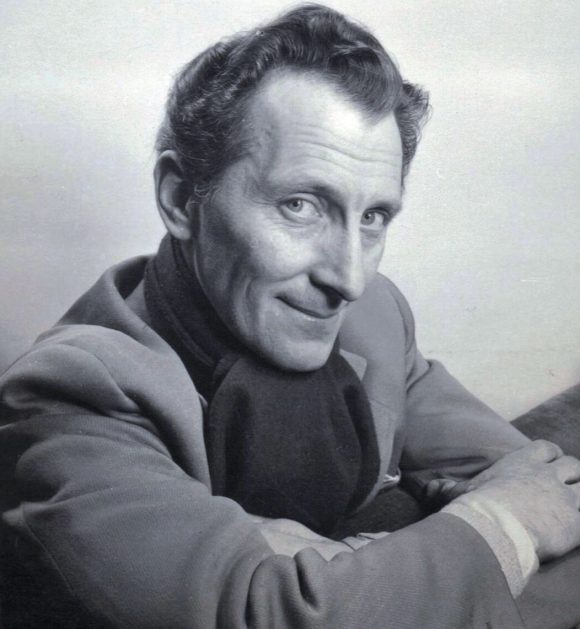
A BIRTHDAY TRIBUTE to one of screendom’s greats…
By CHRIS FRANKLIN
“Who wants to see me as Hamlet? Very few. But millions want to see me as Frankenstein so that’s the one I do.” – Peter Cushing (May 26, 1913 – August 11, 1994)
Unlike his frequent co-star and close friend Christopher Lee — whose birthday is tomorrow — fellow horror icon Peter Cushing did not fear typecasting. After years of screen and stage work, Cushing found stardom later than most, already 41 when he first came to acclaim in the BBC’s television production of George Orwell’s Nineteen Eighty-Four. It was his first brush with science fiction, but certainly not his last. He became Britain’s most popular television actor of the time, and so when homegrown studio Hammer Films began production on a color adaptation of Mary Shelley’s Frankenstein, Cushing had the clout to go after the lead role. The movie not only launched Hammer as the heir apparent to Universal when it came to Gothic horror but also set both Lee and Cushing on the course to superstardom.
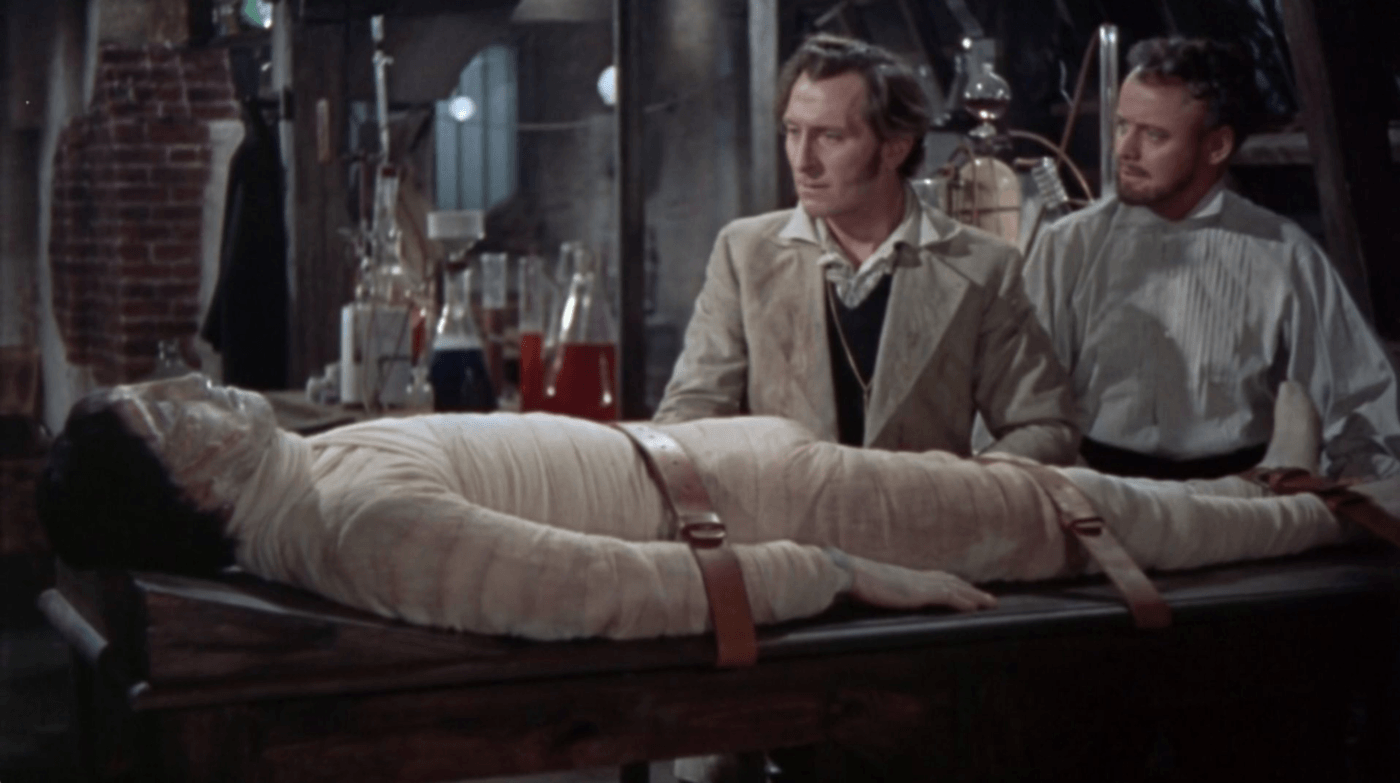
Christopher Lee, Cushing and Robert Urquhart in The Curse of Frankenstein (1957)
Cushing embraced the continuous offers to appear in macabre or fantastical tales, equally adept at essaying the valiant hero or the vile antagonist. He was meticulous in creating his screen characters, often asking questions like what they would keep in their pockets, and sourcing props to do so. He would make suggestions outside of the script that greatly enhanced the films. Some filmmakers may consider this intrusive, but by all accounts, Cushing was one of the most pleasant people in the film industry, so no one seemed to mind.
His gentle nature was in opposition to the types of roles he often played, as was his love for collecting and painting metal soldier figurines, making him perhaps the earliest known celebrity toy collector. His real love though was his wife Helen, who often helped him prepare for his roles. When she died in 1971, it was a blow he never fully recovered from. His already thin features became gaunt, and he openly longed for the day he could join her again. He channeled his grief into even more work than before, and his later roles often reflect his melancholy state.
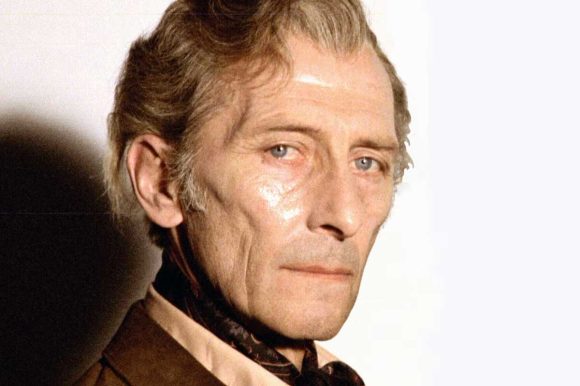
Cushing in Dracula AD 1972
His last significant screen role was as the main adversary in a little film called Star Wars. Perhaps you’ve heard of it? Cushing didn’t always work with such large budgets and visionary filmmakers. In his later years, he took many roles just to keep busy, in productions far beneath him. But no matter the budget or the level of schlock, he always gave a performance worthy of an actor of his caliber, and elevated whatever he was in. To celebrate the 113th anniversary of his birth, let’s open the lab and take a look at 13 of his greatest genre film roles — RANKED.
—
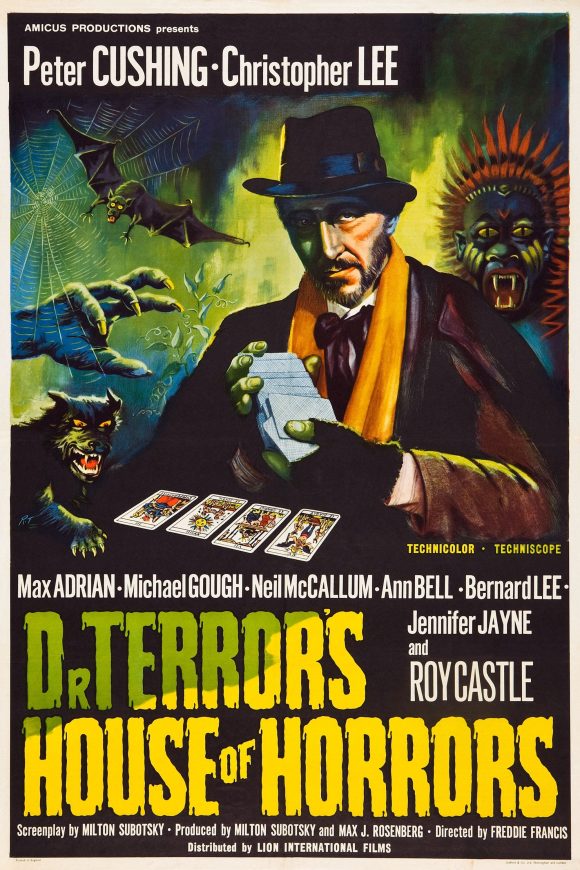
13. Dr. Terror – Dr. Terror’s House of Horrors (1965). In this first horror anthology film from Amicus Productions, Cushing plays the titular Dr. Terror, who holds court in a crowded train car, telling the occupants their fates via a deck of Tarot cards. This is the device that links five vignettes together. Cushing takes on a character far removed from his usual roles: older, a bit disheveled with bushy eyebrows and facial hair, as well as a thick Eastern European accent. He’s the perfect foil to his audience, which includes Christopher Lee and a very young Donald Sutherland. Cushing seems to be having fun with the role, and so does the Doctor, setting his fellow travelers up for a horrible reckoning.
—
12. Dr. Blyss – Captain Clegg aka Night Creatures (1962). Based on Russell Thorndike’s novel Doctor Syn: A Tale of Romney Marsh, Hammer was forced to change names and elements to avoid legal trouble with Disney, who were also developing the property as The Scarecrow of Romney Marsh. Cushing plays Doctor Blyss, the local vicar who leads his parish in worship… and in smuggling to circumvent the English Crown’s unfair taxation. When a British Navy captain (Patrick Allen) and his men come to town looking for the contraband, they run afoul of the skeletal marsh phantoms that haunt the countryside and uncover secrets about the supposedly dead notorious pirate Captain Clegg.
More in line with Hammer’s concurrent pirate films than their horrors, the film allows Cushing to display his flair for droll humor, constantly taking potshots at the flustered captain while smiling to his face. He also gets his fair share of action as his past catches up with him, leading to a rather shocking and sad denouement. An early film for a young Oliver Reed, who made his name with Hammer. Studio regular Michael Ripper gets one of his best chances to shine as well, as Blyss’ righthand man Mr. Mipps.
—
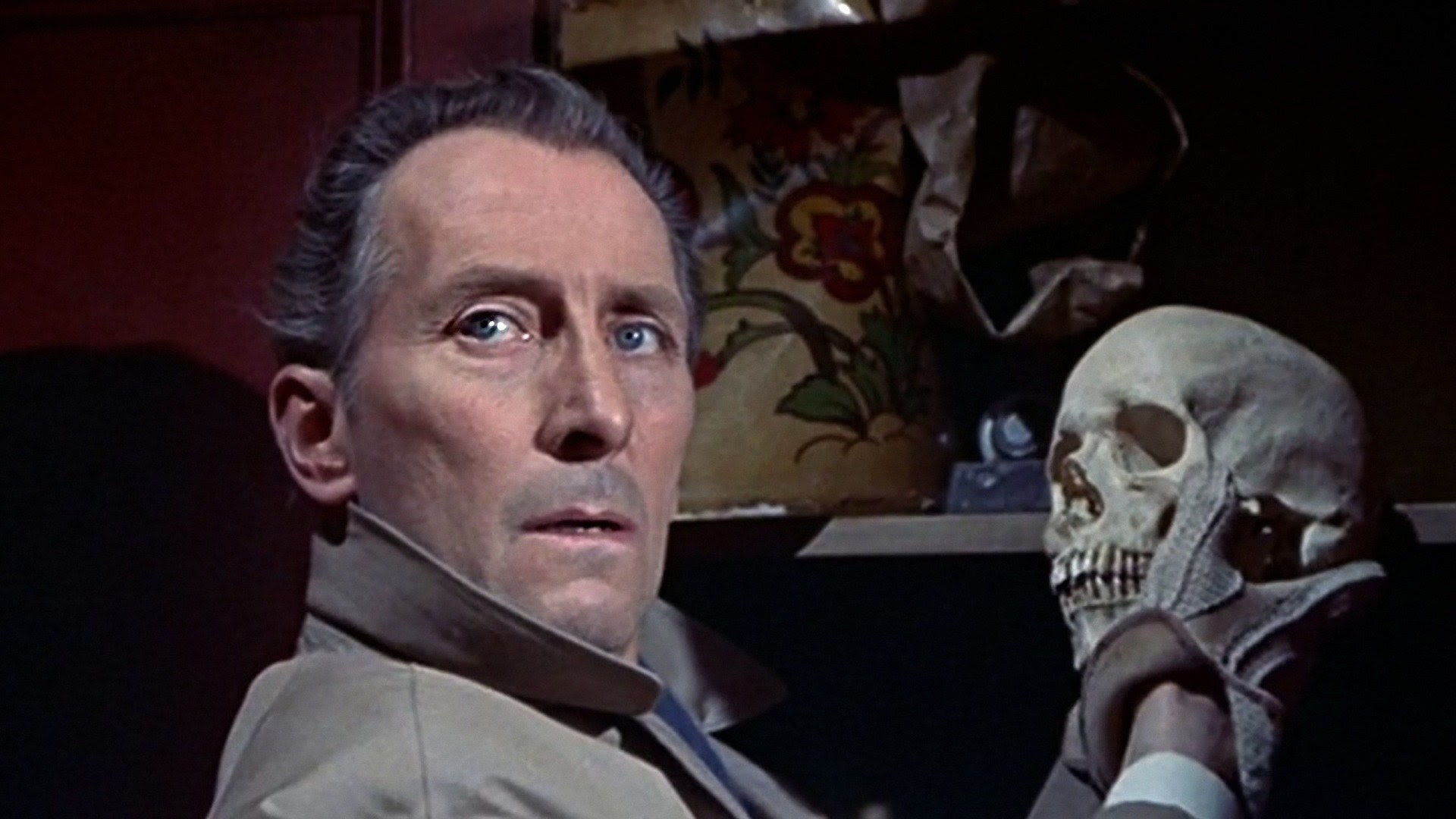
11. Christopher Maitland – The Skull (1965). Although Amicus is best known for their horror anthologies, they also made standard horror films as well. Cushing plays Christopher Maitland, an author and collector obsessed with the occult. When a dealer (Patrick Wymark) tries to sell him the skull of the Marquis de Sade, his friend Sir Matthew Phillips (Christopher Lee) warns him against it, citing that the skull is possessed of a horrible evil. Maitland disregards his pleas, and his life shortly spirals out of control, forced to commit acts of violence on the skull’s behalf. Based on a story by Robert (Psycho) Bloch, this dark film gives Cushing the rare chance to play a man driven mad by forces he’s willingly allowed himself contact with. The premise is a bit thin for a feature-length film, but Cushing’s engrossing performance and director Freddie Francis’ inventive staging overcome that easily.
—
10. Dr. Wells – Horror Express (1972). Cushing was talked into taking a role in this film by Christopher Lee in an effort to occupy his mind and keep him close after the death of his wife. Lee plays Professor Saxton, the anthropologist who brings an ancient ape man aboard the Trans-Siberian Express, only to find it’s inhabited by a murderous alien intelligence that can possess the bodies of others. Cushing is his friendly rival, Dr. Wells, who lightens the mood with some show-stopping lines, delivered impeccably by Cushing, who had a great flair for comedy. When the police inspector (Julio Pena), who is actually possessed by the alien, proposes Saxton or Wells may be the monster in hiding, Cushing responds “Monster? We’re British, you know!” Lee and Cushing made over 20 films together, but this one seems to capture their actual friendship more than any other, with the brusque and dashing Lee and the effortlessly charming Cushing making a great double act.
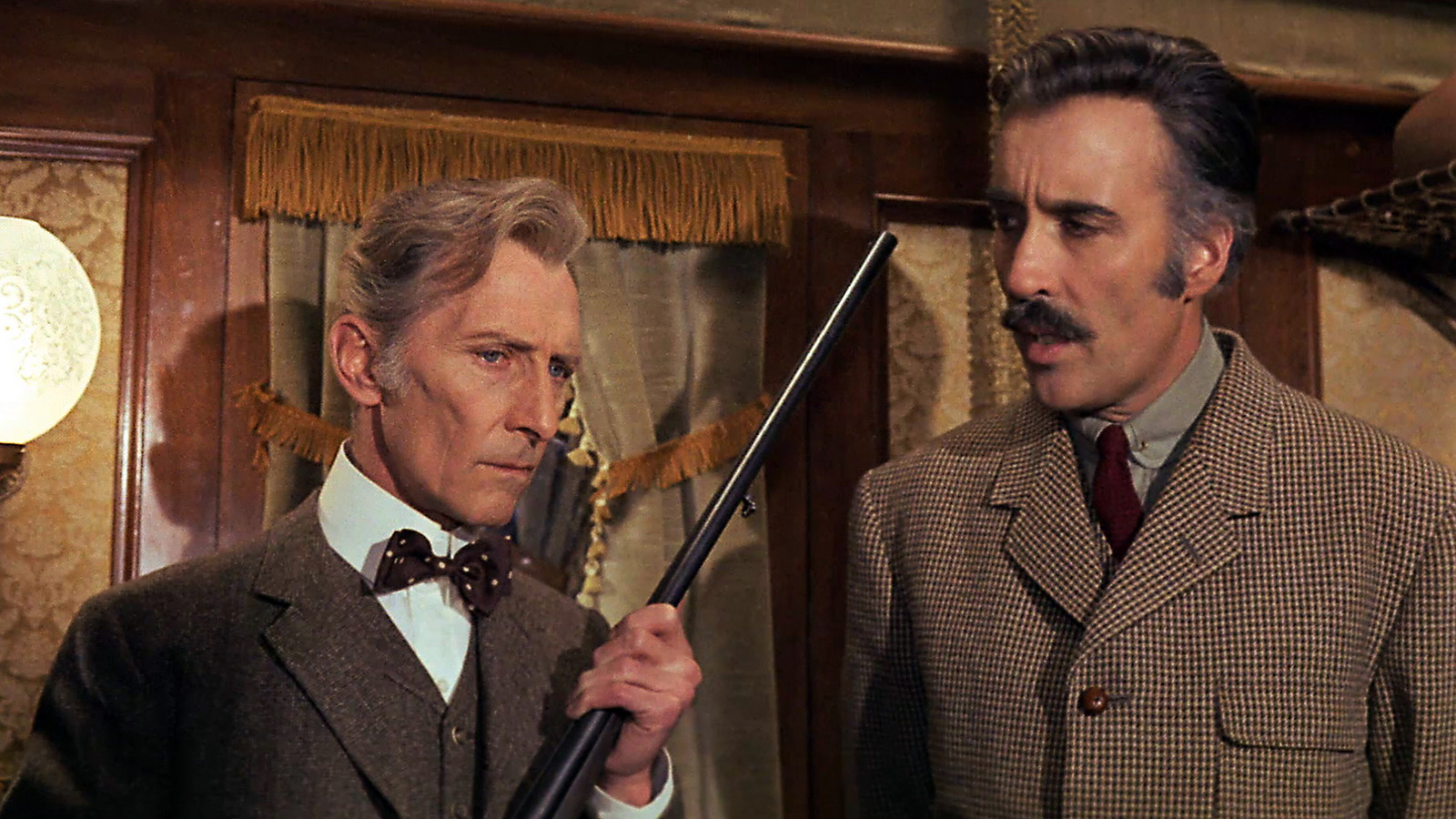
Cushing and Christopher Lee in Horror Express
—
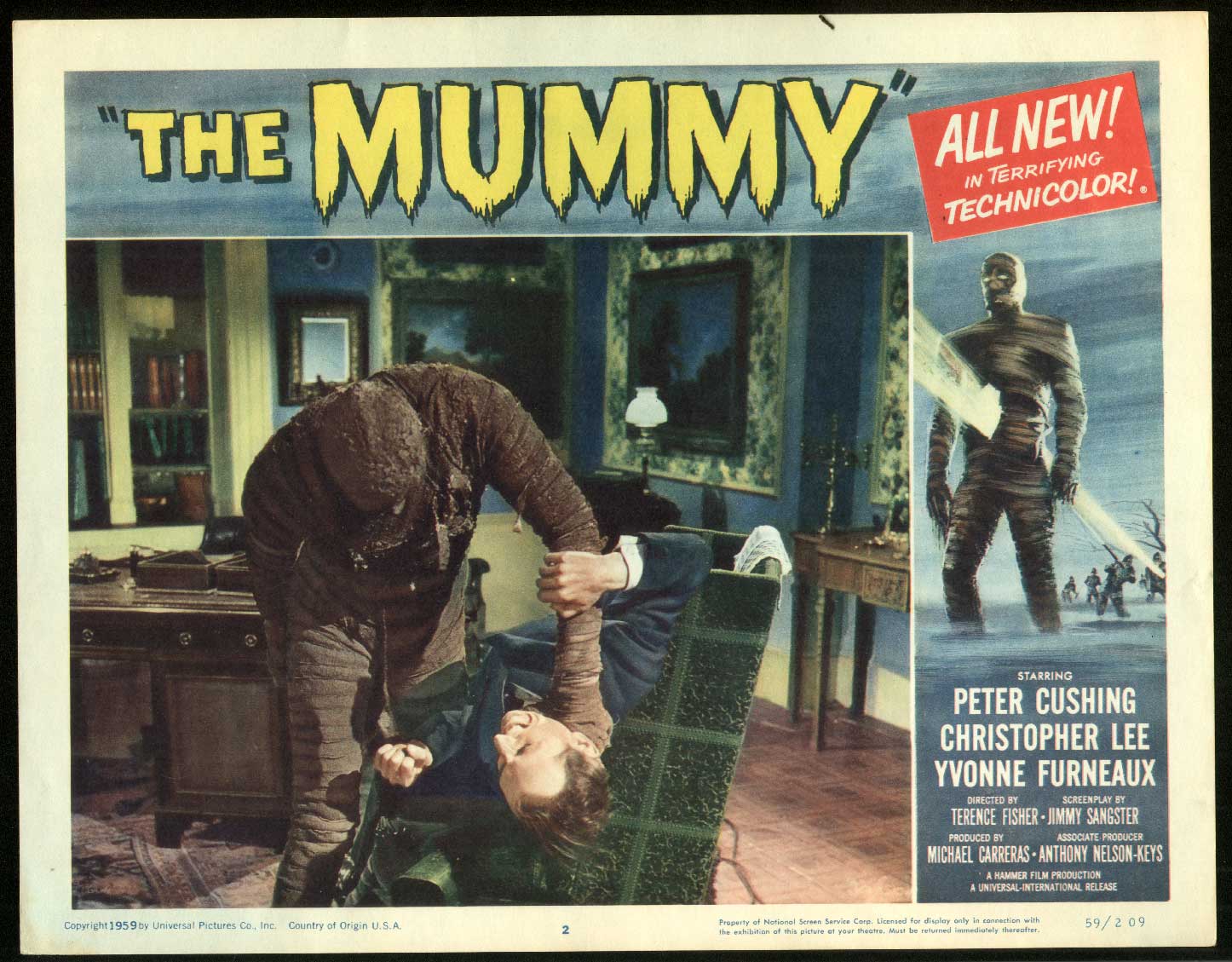
9. John Banning – The Mummy (1959). Cushing and Lee continued their famous on-screen rivalry in Hammer’s interpretation of Universal’s Mummy film series, directed by their frequent collaborator Terence Fisher. Affable archaeologist John Banning is the last man standing from a family expedition that disturbed the ancient Egyptian tomb of Princess Ananka (Yvonne Furneaux). Banning engages in a philosophical debate on the matter with Ananka’s follower, Mehemet Bey (George Pastell), whose honestly modern views on rampant colonialism tend to make us side more with him than our hero. But Bey has unleashed the rampaging mummy Kharis (Lee) to seek his revenge, and when he comes after Banning, it’s a showstopper.
Like many Hammer films, the poster for The Mummy was developed before production began, to drum up interest from backers. It showed the lumbering revenant with a large hole through his torso, and a flashlight beaming through the void. Wanting to give his audience what they paid for, Cushing suggested to director Terence Fisher they should recreate that onscreen, with Banning running Kharis through with a spear. The result is one of the most memorable scenes in the film, and one of Hammer’s best action set pieces.
—
8. Dr. John Rollason – The Abominable Snowman aka The Abominable Snowman of the Himalayas (1957). In his second Hammer film, Cushing followed up his first outing as Baron Frankenstein with a scientist of a much kindlier stripe, Dr. John Rollason. He had previously played the role in the BBC production The Creature, on which this film is based. A botanist studying flora in Tibet, Rollason becomes involved in an expedition led by an American fortune hunter named Tom Friend (Forrest Tucker) who is determined to prove the existence of the mythical Yeti.
When Rollason finds out Friend isn’t who he seems and plans to exploit the creature, the two clash over their ideologies, with both actors giving it their all. The finale leaves Rollason a shattered man, and Cushing’s haunted expression says volumes about the unspeakable things he has witnessed on his journey. Produced between Hammer’s two gothic horror triumphs of Frankenstein and Dracula, this taut, intelligent thriller is often unjustly forgotten.
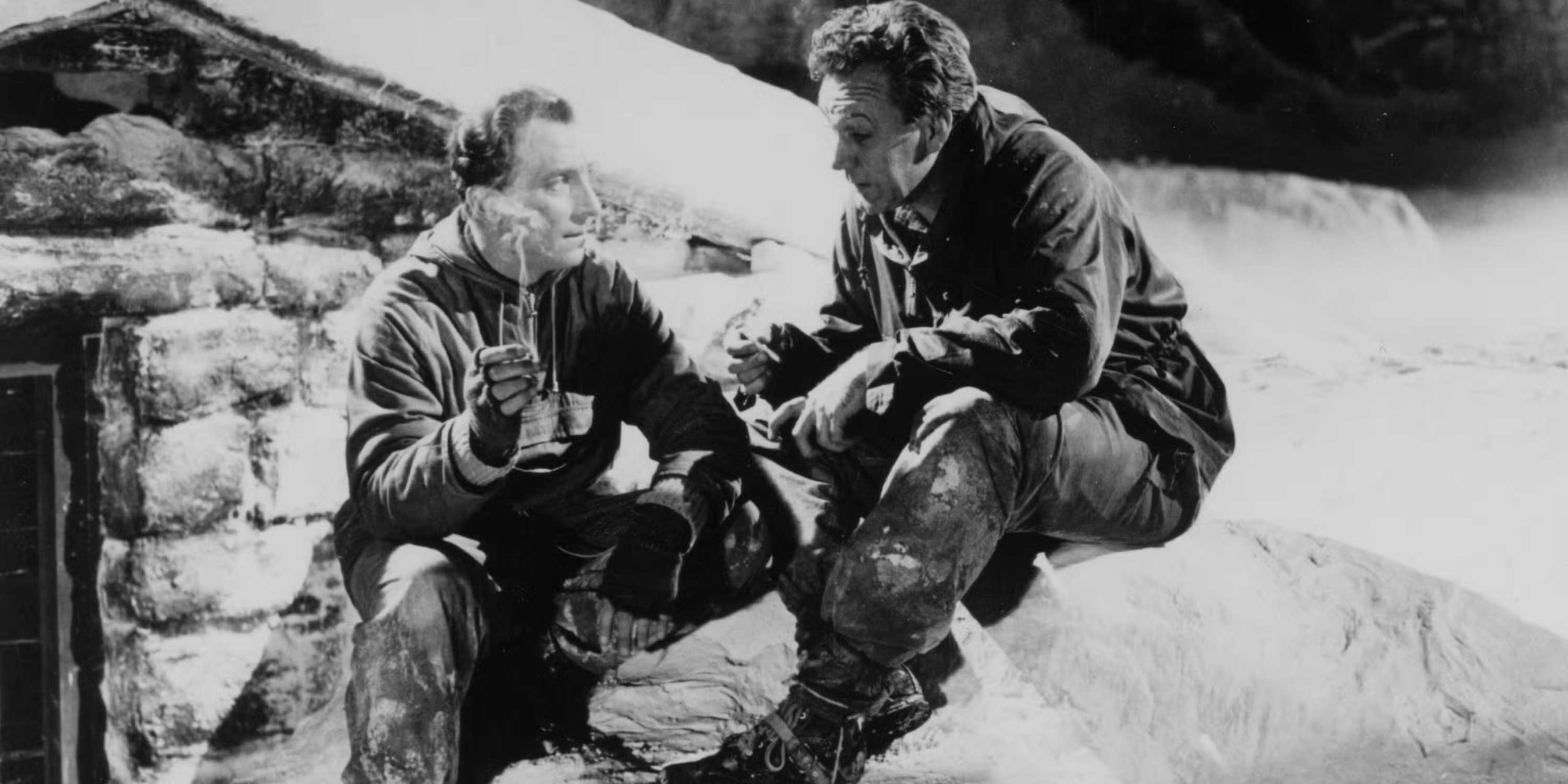
Cushing and Forrest Tucker in The Abominable Snowman
—
7. Sherlock Holmes – The Hound of the Baskervilles (1959), Sherlock Holmes and the Masks of Death (TV movie, 1984). Cushing played the world’s most famous detective more times than any other character. He was a great fan of Sir Arthur Conan Doyle’s stories, collecting the original printings in The Strand Magazine. Hammer’s adaptation of The Hound of the Baskervilles also included two of their other headlining stars, with Andre Morell as a very competent Dr. Watson and Christopher Lee as the intended victim, Sir Henry Baskerville. Cushing sourced his own clothes to match Sidney Paget’s original Holmes’ illustrations, and he physically resembled the depiction as well. He also suggested script changes that allowed him to utter Conan Doyle’s dialogue unchanged. His Holmes is a bit arrogant and prickly, but no less heroic.
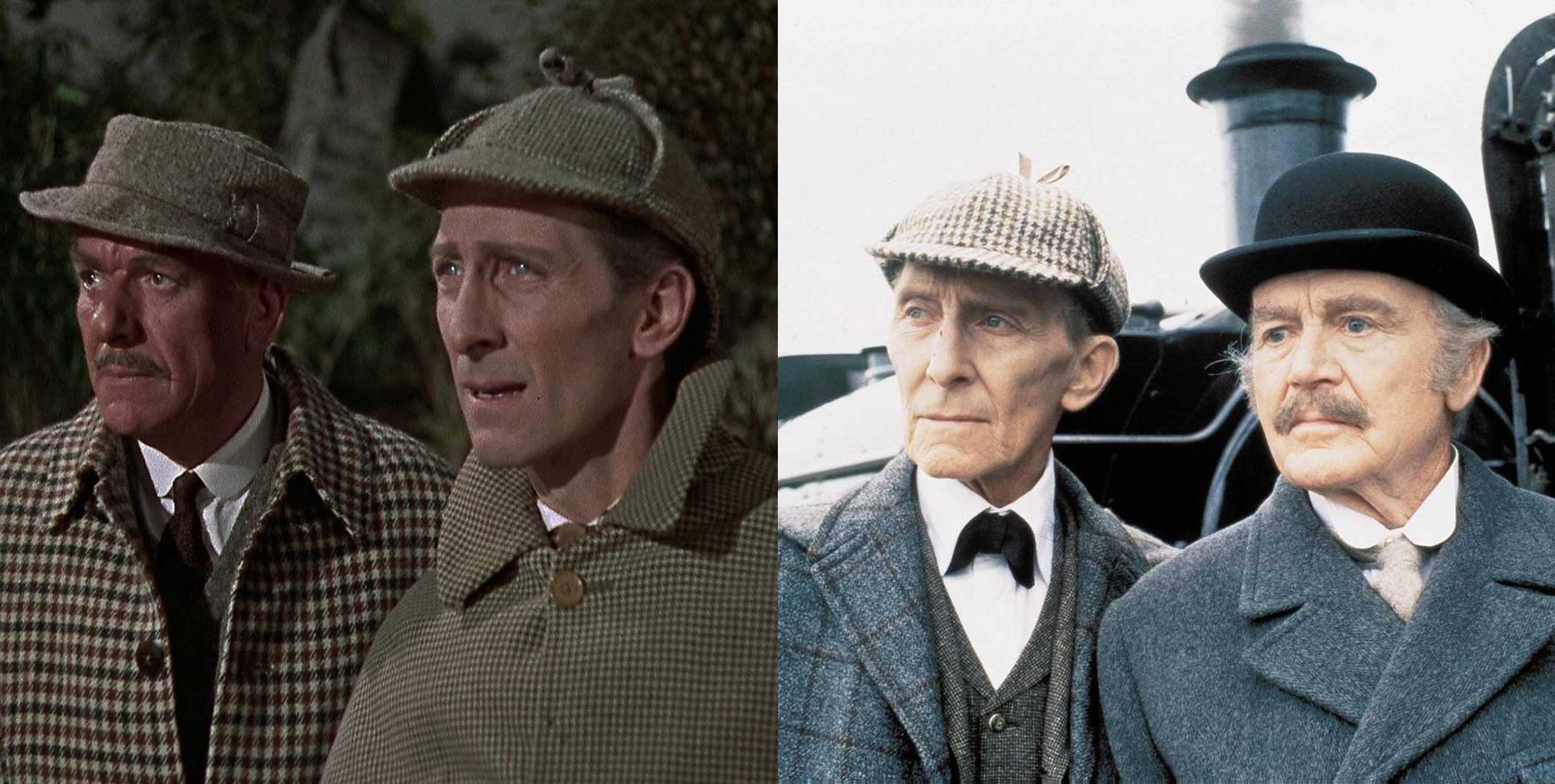
Andre Morell as Watson and Cushing as Sherlock Holmes in The Hound of the Baskervilles. Cushing and John Mills as Watson in Sherlock Holmes and the Masks of Death.
Although Hammer increased the horror mood in the story, audiences who expected real monsters were disappointed, and plans for follow-up films were scrapped. Cushing reprised the role in the second season of the BBC TV series Sherlock Holmes in 1968 after Douglas Wilmer vacated the show. Many of Cushing’s episodes are unfortunately lost due to the BBC wiping the master video tapes. He got one last puff at the pipe in a TV film in 1984, playing a much older Holmes. It was his last television role, followed by his last feature film Biggles: Adventures in Time two years later.
—
6. Grand Moff Tarkin – Star Wars (1977). Undoubtedly Cushing’s most well-known performance outside of horror, Grand Moff Tarkin has the distinction of bossing around cinema’s most famous villain, Darth Vader, and not getting Force-choked for it. Even the Dark Lord of the Sith respects and obeys Tarkin, and Cushing’s cold authoritative manner sells it. Incidentally, Vader actor David Prowse had played Frankenstein’s last creation only a few years before in Frankenstein and the Monster from Hell, the final entry in that Hammer Films series.
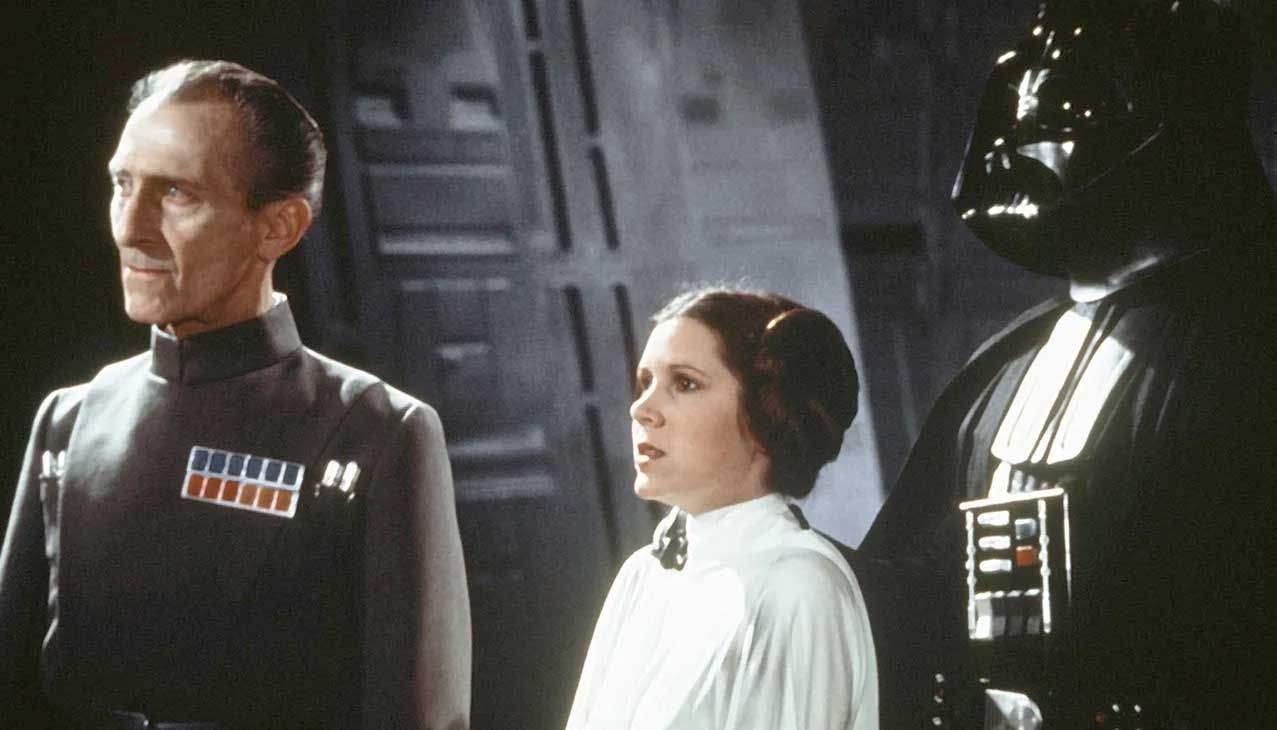
Cushing, Carrie Fisher and David Prowse in Star Wars
Despite his convincing performance, young Carrie Fisher was so charmed by the gentlemanly Cushing, she had a hard time conveying Princess Leia’s anger at him, even after he blew up her planet. That act gets glossed over a bit with all the whiz-bang action of the film, but Tarkin’s willingness to commit genocide to prove his power is a startling example of fascism on film. Made even more ironic when you learn Cushing was wearing comfortable slippers during everything but long shots, since his black jackboots didn’t fit properly.
—
5. Arthur Grimsdyke – Tales from the Crypt (1972). This Amicus anthology film based on EC Comics’ famous horror comic features the segment “Poetic Justice,” adapted from a story in Haunt of Fear #12 by Al Feldstein and Graham Ingles. Cushing’s Arthur Grimsdyke is a kindly garbage collector who takes in stray pets, fixes up toys and performs puppet shows for the neighborhood children, while pining for his departed wife, whom he still tries to communicate with. But his wealthy neighbors (played by Robin Phillips and David Markham) despise him, and set about to destroy him, costing him his job, his pets, and discrediting him as some kind of pervert to the children’s parents. A distraught Grimsdyke takes his life, but his dabbling in the occult allows him to return for revenge.
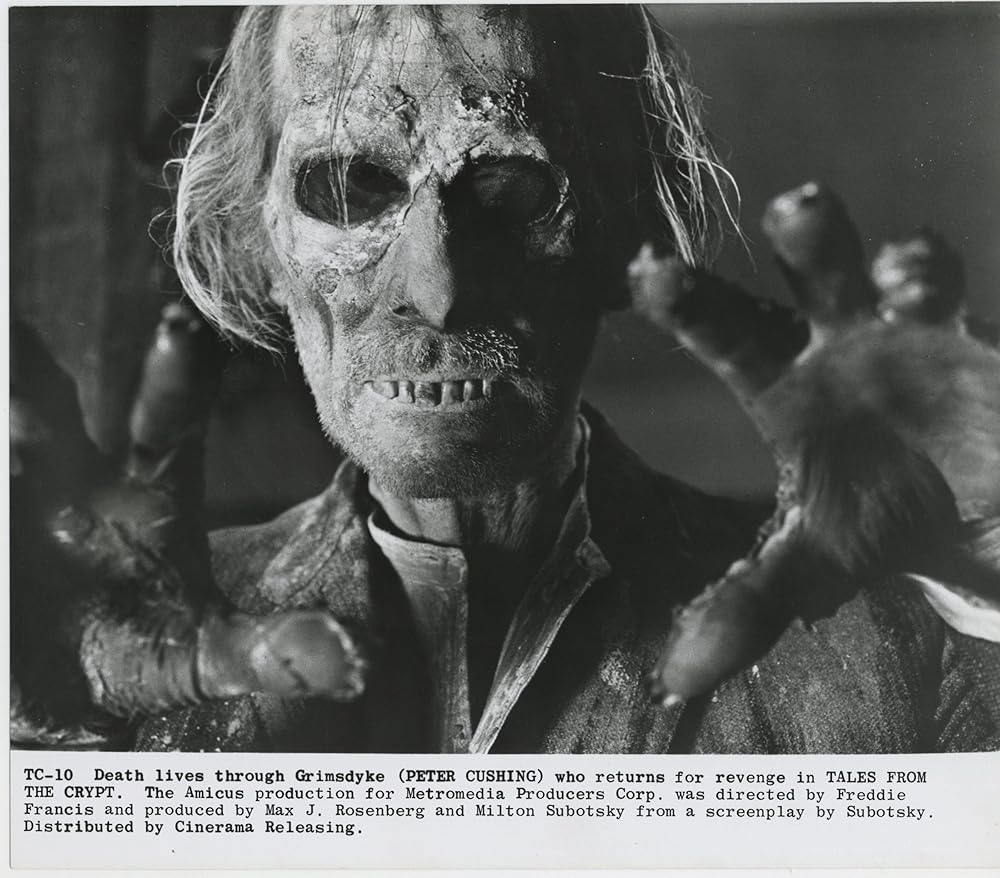
Cushing was offered a role in another segment “Wish You Were Here” but chose the role of Grimsdyke, who, like him, was grieving for his recently deceased wife. Helen Cushing’s real photo is even used in the film. The actor’s sensitive portrayal of the kindly Grimsdyke evokes nothing but sympathy, and it’s hard to watch his life destroyed by his horrid neighbors. But Roy Ashton’s superb makeup and Cushing’s own physicality make for a very satisfying ending when Grimsdyke rises from the grave.
—
4. Harry Fordyce – Cash On Demand (1961). Cushing was never primmer and stuffier than as Harry Fordcye, the cold bank manager who finds himself embroiled in a robbery heist on the day before Christmas Eve in this outlier in Hammer’s catalog. The rigid Fordyce is instantly unlikeable, treating his bank staff like lowly subordinates and poo-pooing any kind of social fraternization, even during the holidays. He meets his match in another Hammer star, Andre Morell, playing a sophisticated bank robber posing as Colonel Gore Hepburn, an agent sent from the bank’s insurance company.
Hepburn is far more humorous and charming, and generally more pleasant than Fordyce, and the two actors play off each other masterfully. When Hepburn threatens Fordyce’s wife and child if he doesn’t cooperate, we begin to see that there is a heart beneath the martinet’s exterior. Thematically, the film is a very loose adaptation of Dickens’ classic A Christmas Carol, but is a tense, claustrophobic thriller, never leaving the confines of the bank building. It all comes down to Morell and Cushing’s gripping portrayals in this overlooked gem.
—
3. Gustav Weil – Twins of Evil (1971). Cushing had appeared in a small but significant supporting part in Hammer’s The Vampire Lovers, the first film in their “Karnstein Trilogy,” based on Sheridan Le Fanu’s pre-Dracula vampire novella Carmilla. But his role in the third film in the series was the standout. Cushing plays Gustav Weil (appropriately pronounced as “vile”), Puritan witch hunter, and leader of the fanatical Brotherhood, which burns at the stake women whom they believe to be in league with the Devil, with little to no evidence needed.
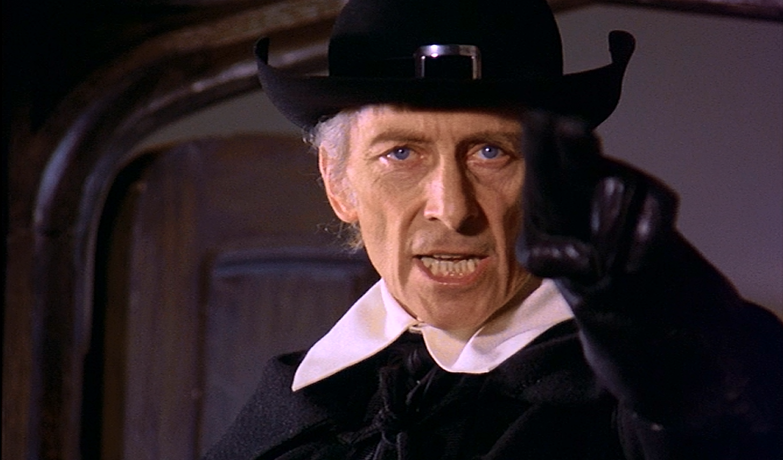
Weil’s’ twin nieces Maria and Freida Gellhorn (Mary and Madeleine Collinson) come to live with him, and the wild Frieda willfully gives herself to vampire Count Karnstein (Damien Thomas), becoming one of the undead herself. Discovering the real monsters among his community, Weil nearly destroys the wrong twin, and all his beliefs and indignation come crashing down on him. This was the first film Cushing completed after the death of his wife, and one can only imagine he channeled his grief into the masterful performance. His Weil is a narrow-minded, self-righteous epitome of fanaticism, until he realizes his actions may have been every bit as evil as the forces he set out to destroy.
—
2. Doctor Van Helsing – Dracula aka Horror of Dracula (1958), The Brides of Dracula (1960), Dracula A.D. 1972 (1972), The Satanic Rites of Dracula (1973), The Legend of the Seven Golden Vampires (1974). Although he played a variety of roles for Hammer and was their most prolific leading man during their heyday, Peter Cushing is most closely associated with two roles that are the opposites of one another: the Baron Victor Frankenstein (more on him later), and Doctor Van Helsing. He played several members of the vampire-hunting family across a century, but for all intents and purposes, it’s essentially the same performance. And what a performance!
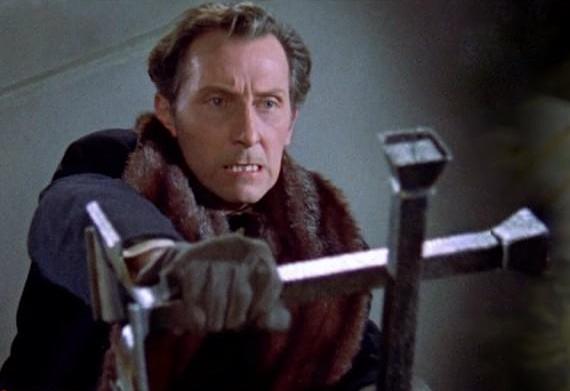
The virtuous Van Helsing is dogged in his pursuit of “the cult of the undead,” but he can also show compassion to those victimized by them. Just look at the time he takes to comfort little Tania (Janina Faye) after her encounter with her resurrected aunt Lucy (Carol Marsh) in Horror Dracula. Or how he offers a merciful end and eternal peace to Baroness Meinster (Martita Hunt), turned by her own vampire son (David Peel) in Brides of Dracula. Yet he was also a man of action, bringing the house and the curtains down in the all-time great finale to the original film. And then there’s the scene in Brides where Van Helsing cauterizes his own vampire bite wound with holy water and an iron fresh from hot coals. Cushing sells every moment flawlessly.
Despite their deep friendship, he and Christopher Lee had one of cinema’s greatest screen rivalries, and it’s a shame they didn’t get more chances to battle it out in more installments. But the original film with Lee, and its sequel without him, stand as two of Hammer’s best, largely due to Cushing’s leading presence.
—
1. Baron Victor Frankenstein – The Curse of Frankenstein (1957), The Revenge of Frankenstein (1958), The Evil of Frankenstein (1964), Frankenstein Created Woman (1967), Frankenstein Must Be Destroyed (1969), Frankenstein and the Monster from Hell (1974). Cushing’s first role for Hammer is arguably his greatest, playing a singular character across seven films and three decades. Although Christopher Lee made for a striking, pitiable monster in director Terence Fisher’s The Curse of Frankenstein, Hammer chose to disregard Universal’s formula with the property, and followed the creator, not the creature. This was an easy choice given Cushing’s magnetic performance. Victor Frankenstein was a sociopathic genius, hellbent on creating life, and willing to maim and murder to achieve his goals. Cushing sells that burning desire, and the sinister depths he’s willing to descend into. But his natural charm and wry wit make us root for his success, despite ourselves.
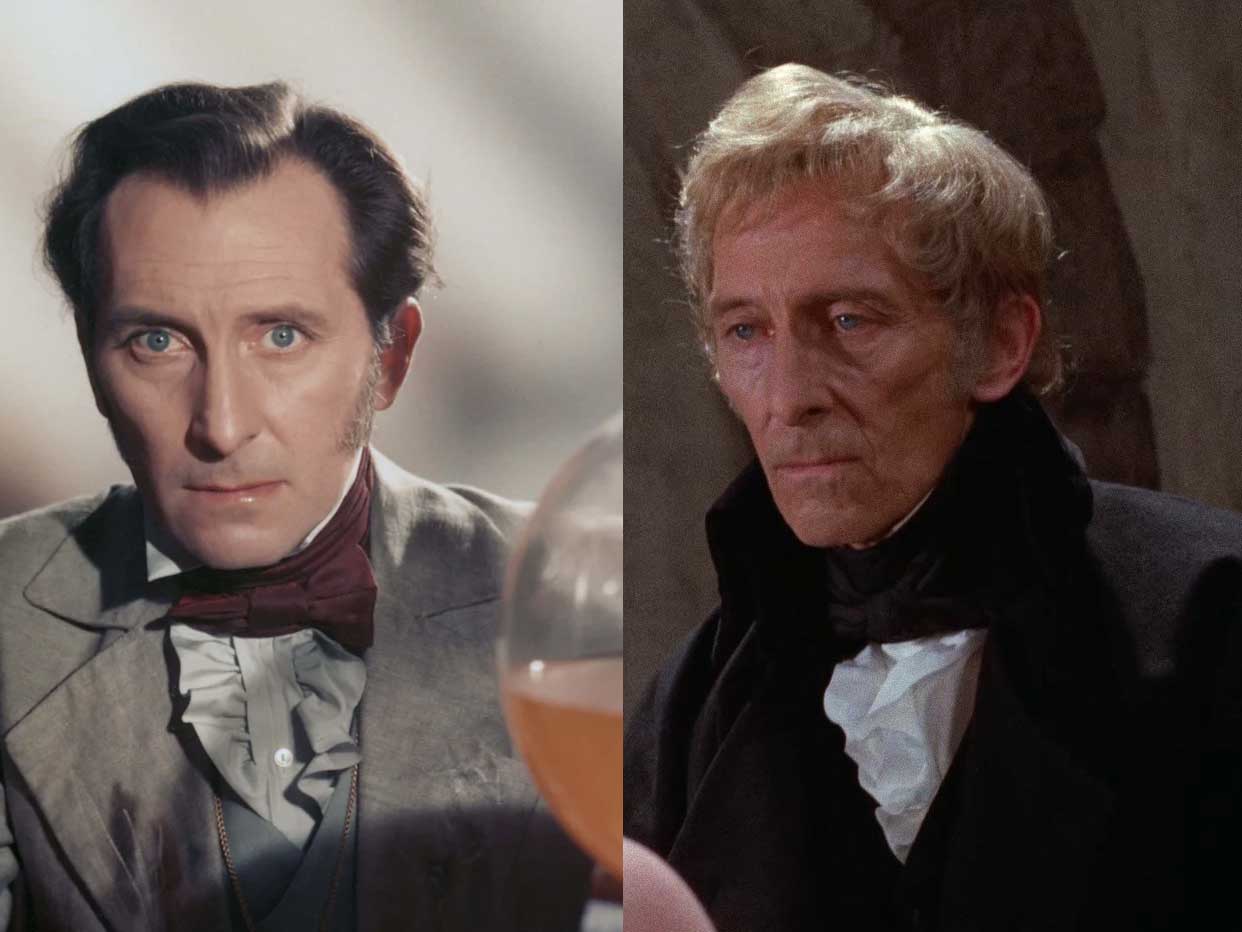
Cushing in The Curse of Frankenstein and Frankenstein and the Monster from Hell
Aside from the first two entries, continuity across the films were practically non-existent, with the Baron’s levels of mania and flashes of compassion varying from one medical misadventure to another. In the final film, Frankenstein and the Monster from Hell (also directed by Fisher), an older, withered Cushing portrays on his face all the setbacks, mistakes and sins the Baron has suffered and perpetrated in the name of science. He even bursts into fits of laughter, the last vestiges of sanity now out of his grasp. It’s a compelling performance, and a poignant way to close the book on both Cushing’s Frankenstein lineage, and Hammer’s gothic horrors.
The Baron at his superior best in the courtroom scene from Frankenstein Created Woman (1967)
—
MORE
— REEL RETRO CINEMA: 1986’s BIGGLES: The Great PETER CUSHING’s Last Hurrah. Click here.
— REEL RETRO CINEMA: THE SCARECROW OF ROMNEY MARSH: The Strange Disappearance of DISNEY’s DR. SYN. Click here.
—
13th Dimension contributor Chris Franklin is a graphic designer, illustrator, writer, and podcaster, who co-hosts and produces several shows on the Fire and Water Podcast Network, including the “House of Franklin-Stein” series on the Super Mates podcast with Cindy Franklin. Check out his illustrative and design work at chrisfranklincreative.com.

May 26, 2026
This is great, Chris! I hope you’re reading TwoMorrows’ CRYPTOLOGY magazine where we regularly cover Cushing’s career an Hammer films.
May 26, 2026
Thanks Michael! I get every issue of Cryptology from my LCS, Heroes Realm in Lexington, KY! Great mag!
May 26, 2026
A nice look at Cushing’s career. Horror Express is one of my favorites, and Arthur Grimsdyke is different from Cushing’s usual roles and one he makes very sympathetic.
May 26, 2026
I’m a big fan of both of those films, and Cushing’s peformances in them! I’ve discussed Horror Express with my wife Cindy on our Super Mates podcast, and Tales From the Crypt with Billy D on the podcast Magazines and Monsters.