THE SPIRIT AT 85: An Anniversary Tribute to WILL EISNER’S Enduring Legacy
13 SPLASH PAGES — and then some more, and then some more…
What WAS the COMICS BATTLE OF THE 20th CENTURY? Find Out Here!
SUNDAY FUNNIES WITH KERRY CALLEN!
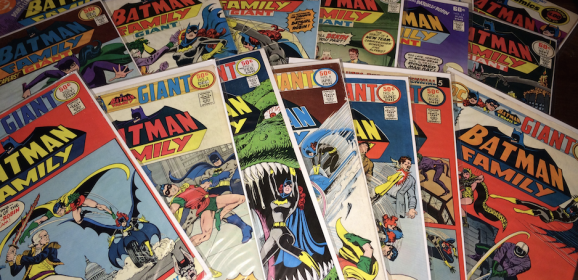
PART 1 of BATMAN FAMILY ALBUM: An interview series with Bob Rozakis — who turns 75! — UPDATED 4/4/26: Bob Rozakis turns 75! Perfect time to reprint our four-part interview series with the Bronze Age stalwart — BATMAN FAMILY ALBUM — from 2015. Dig it. — Dan — The two best Batman runs of the ’70s were by Denny O’Neil and Neal Adams at the beginning of the decade, and Steve Englehart and Marshall Rogers at the end of it. Their stories, simply put, set the foundation of the modern Dark Knight. There were also mighty contributions from the likes of Bob Haney and Jim Aparo in Brave and the Bold, as well as Irv Novick and Len Wein, to name just a few. But over the course of the decade, all three titles starring Batman — JLA and World’s Finest are separate animals — had their ups and downs. There were dozens of memorably unmemorable stories tucked between the masterpieces. Enter Batman Family, the most consistently entertaining Batbook of the 1970s. Of course, we’re only talking 20 issues, many of which were stocked with heavy doses of reprints, but no comic was more fun, issue in and issue out. A lot of that was down to the sensibilities of Bob Rozakis, who crafted much of the book’s content and sense of whimsy. Batman Family was also highly influential: While a number of features and reprints centered on the various supporting characters and villains of Gotham, the focus was on the Batgirl and Robin team — the so-called Dynamite Duo — and their will-they-or-won’t-they relationship. Before Batman Family, there was no sexual spark between the two — at the time the book debuted, Barbara Gordon was a congresswoman and Dick Grayson was a college student. Today, through retcons borne from the seeds sown in the title, Babs and Dick have become DC’s great, star-crossed lovers, youthful contemporaries who learned at Batman’s side in roughly parallel fashion. But that’s something we’ll explore down the road. In this, our first installment of BATMAN FAMILY ALBUM, Bob Rozakis talks about how he ended up with the gig … — Dan Greenfield: It’ll probably be dating both of us by putting it this way, but I grew up reading Batman Family. (Bob laughs) It’s one of those books that I absolutely loved and...
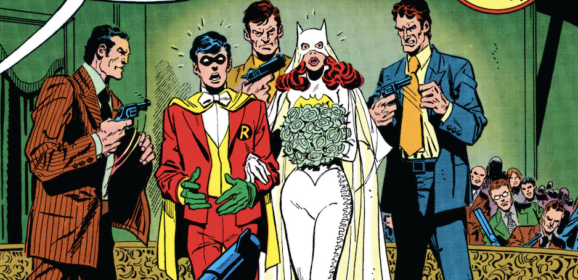
PART 2 of BATMAN FAMILY ALBUM: Writer/editor Bob Rozakis on the love that was never meant to be… — UPDATED 4/4/26: Bob Rozakis turns 75! Perfect time to reprint our four-part interview series with the Bronze Age stalwart — BATMAN FAMILY ALBUM — from 2015. Dig it. — Dan — — In my adolescence, Bruce Wayne was the ideal adult, the man I could aspire to be: Driven by his demons but not consumed by them. Dick Grayson, on the other hand, was someone I could more directly relate to. His problems were more accessible. He went out and fought bad guys, sure, but he also had to do homework. Then there were the girls. Bruce had Silver St. Cloud and Selina Kyle. Thing is, I wasn’t likely to start dating a cosmopolitan career woman or a reformed super-criminal any time soon. Dick had a girlfriend named Lori Elton at Hudson University, but she seemed so … average. Relatable, sure. But not terribly exciting. Enter Barbara Gordon, the perfect objet du crush: Unattainable, yet … maybe not. See, now, in the days of Batman Family, which launched in 1975, Dick was toiling at Hudson while Babs was a congresswoman representing Gotham. He was 19, 20 at best. She was, what, 28? 30? An unlikely match-up, to be sure. But there she was, like that senior girl who was just close enough to make a freshman boy wonder “… Do I have a chance? Nah…. Unless… “ The powers that be at DC decided that the crux of the mag was going to be the Batgirl-Robin partnership, the ostensibly platonic Dynamite Duo. But right off in that first issue, Elliot S! Maggin threw in that sexual tension at the end of their debut story, helped in no small part by Mike Grell’s alluring artwork. That was followed up by the all-reprint Issue #2, which spotlighted this Freudian concept first published in Detective #369: So by Issue #3, when Dick and Barbara established that they’d figured out each other’s identities, all the cards were there to play. Except for that pesky age difference. Batgirl and Robin’s will-they-or-won’t-they, um, dynamic became the underpinning of the title — and arguments on the letters pages. These stories so influenced the decades that followed that eventually both were made the same age and their bat-crossed...
13 SPLASH PAGES — and then some more, and then some more…
SUNDAY FUNNIES WITH KERRY CALLEN!