
AN ANNIVERSARY SPOTLIGHT: One of comics’ most important issues was released Nov. 22, 1940…
By PETER BOSCH
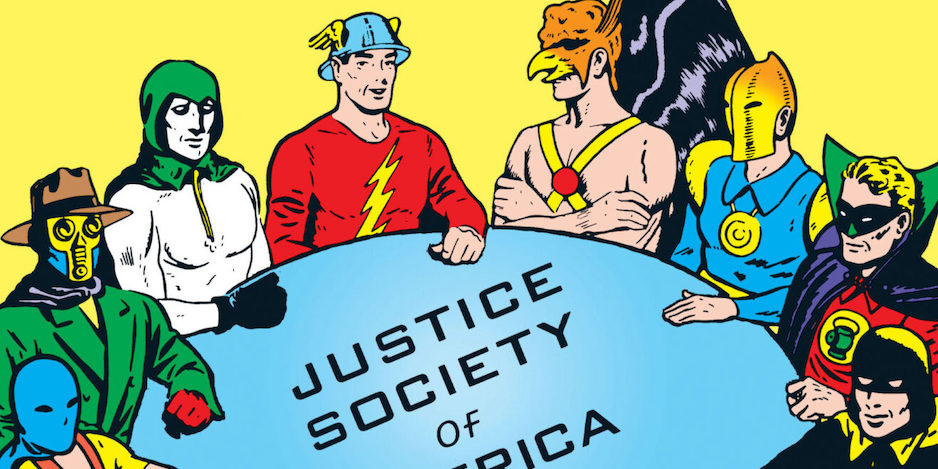
It was 85 years ago, on November 22, 1940, that All-Star Comics #3 (Winter 1940) was published, just one issue away from the first time the Justice Society of America worked as a team to bring down the forces of villainy. For the time being, though, this issue laid the groundwork. It was a momentous occasion, DC’s mightiest heroes – well, those that weren’t Superman, Batman, and Robin – gathered together.
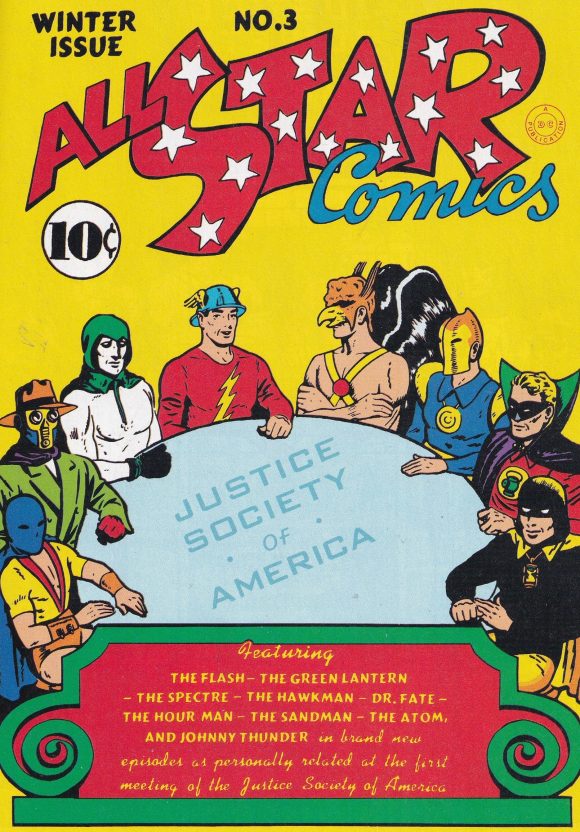
All-Star Comics #3 (Winter 1940). Art by E.E. Hibbard.
So, sit back and let me tell you 13 things about that meeting of the very first superhero team in comic book history.
—
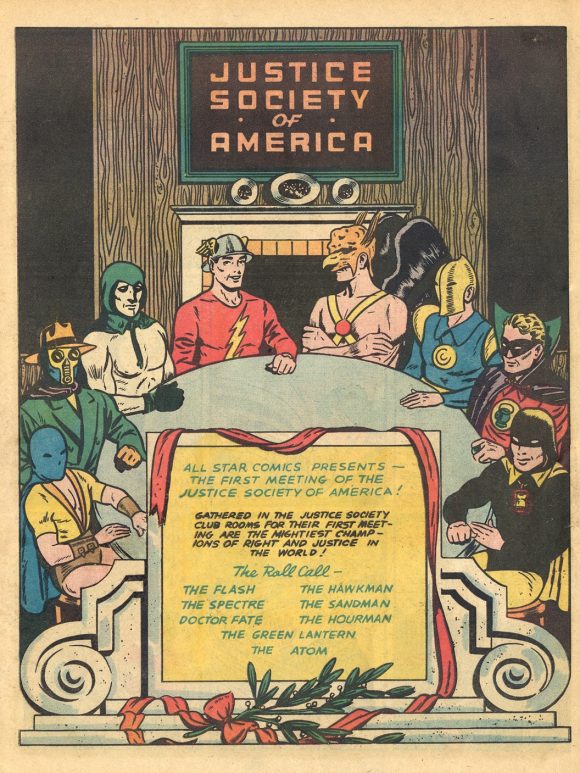
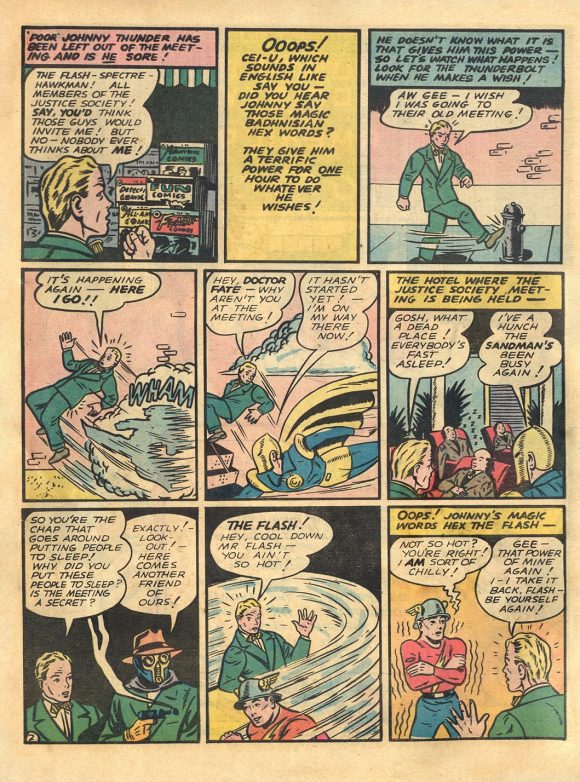
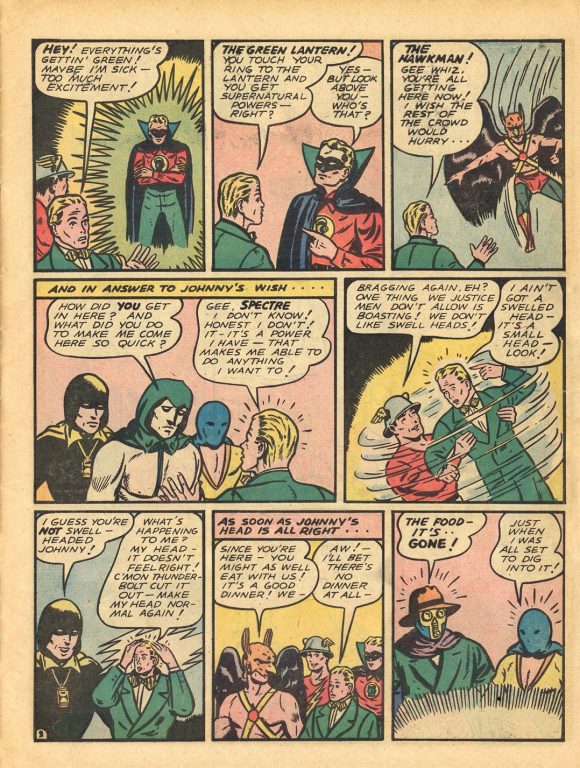
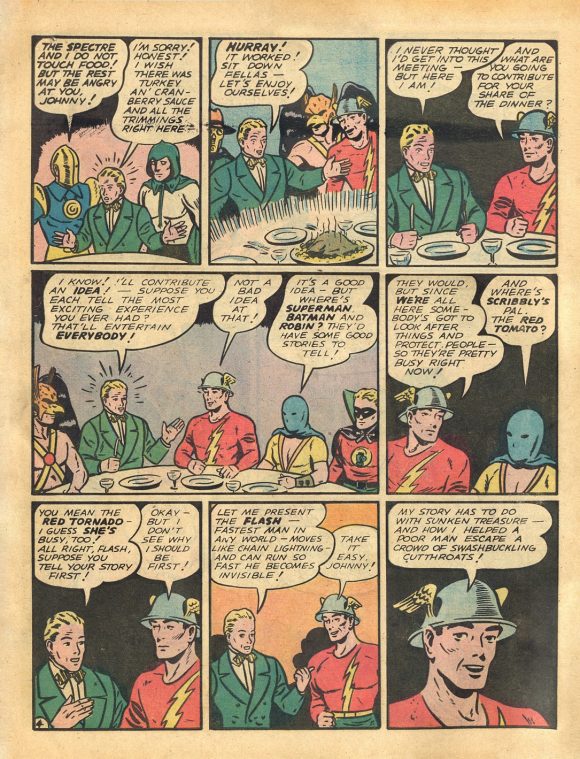
1. It all began with Johnny Thunder accidentally using his Cei-U Thunderbolt to crash the JSA meeting at a hotel (no dingy cave for them). Scribe Gardner Fox and artist E.E. Hibbard started off the comic’s round robin of talent with these four pages. And, as you see below, it was Johnny who put forth the suggestion of each hero there telling of their “most exciting adventure.”
—
2. First up to tell his tale was the Flash, using his speed in a most unusual place — underwater — in order to locate a sunken treasure in the quickest way possible to help out a friend of Joan Williams, while stopping a criminal gang (a term you are going to have to get used to in these summaries).
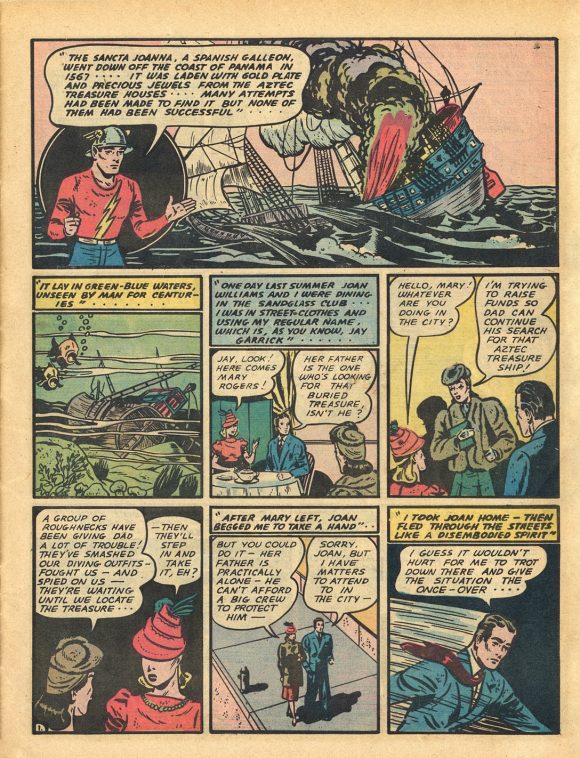
Writer: Gardner Fox. Artist: Hibbard.
—
3. The Flash handed off the storytelling to Hawkman in a tale with Shiera Sanders (pre-Hawkgirl). His take involved a superstitious group of natives fearing supposed fire dwellers from inside a volcano. The Shelly Moldoff art was the most impressive in the book – what with it actually being a collection of lifted panels originally drawn by Alex Raymond for Flash Gordon and Hal Foster for Prince Valiant.
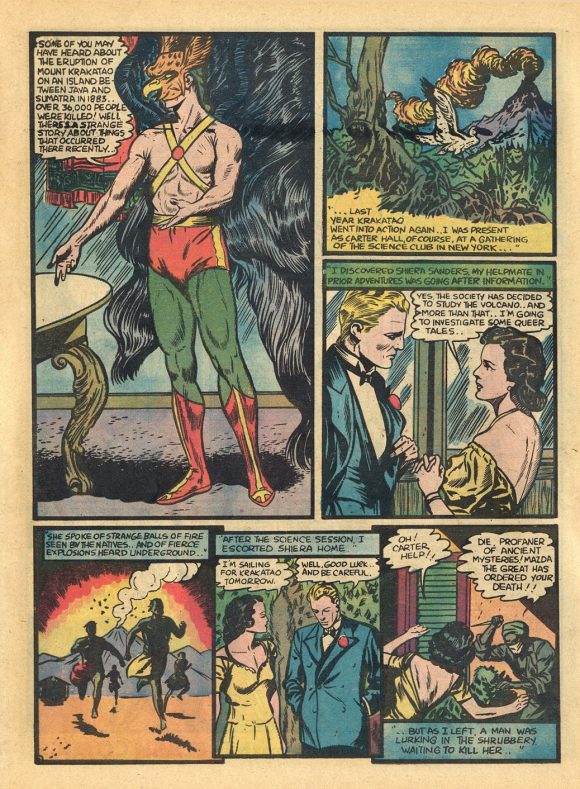
Writer: Fox. Artist: Shelly Moldoff.
—
4. The Spectre was the next in line, with his story of a demon from the moon inhabiting a monstrous-looking statue whenever there was a night with a full moon, seeking one victim after another to kill.
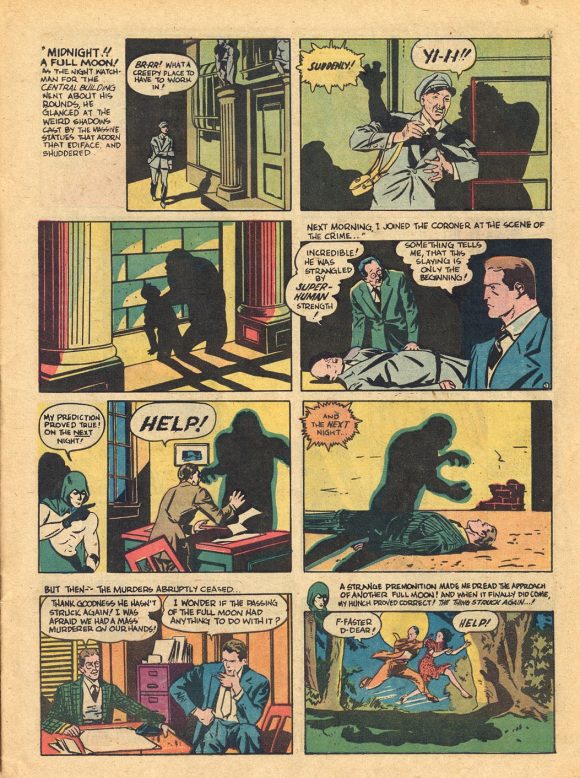
Writer: Jerry Siegel. Artist: Bernard Baily.
—
5. The Hourman told of a criminal gang (see, told you) impersonating him at a costume ball and robbing the patrons there. Luckily, Rex Tyler was already there in his real Hourman costume, and swallowed one of his power-inducing pills to take them on.
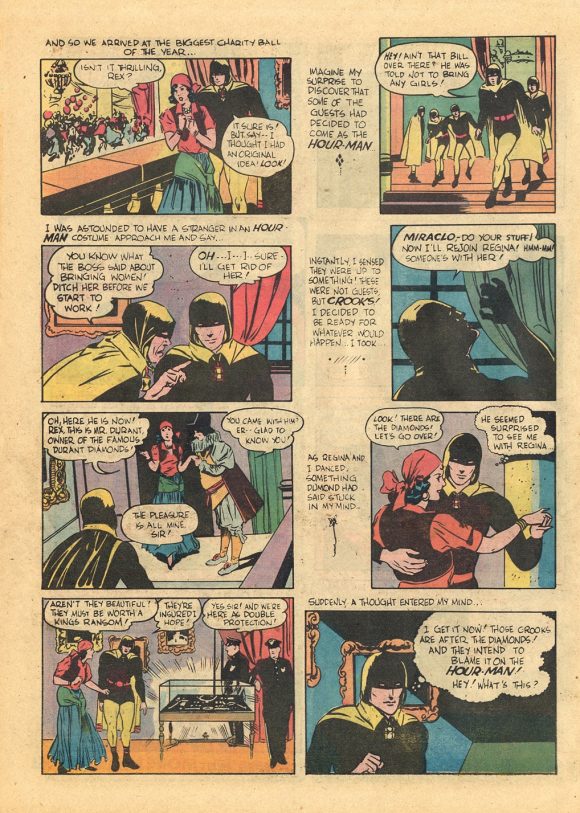
Writer: Ken Fitch. Artist: Baily.
—
6. The Hourman was ready to turn the proceedings over to the Sandman (in his Green Hornet-imitation days) but they were interrupted by Ma Hunkel, the Red Tomato — er, the Red Tornado.
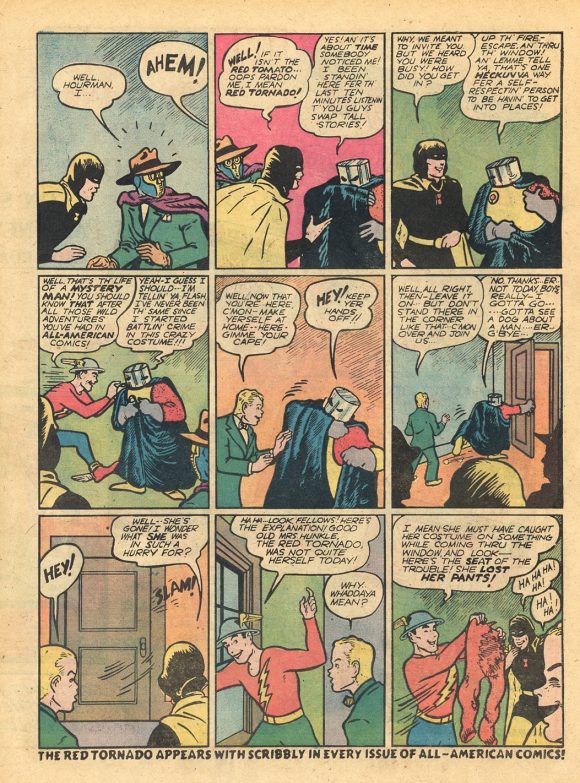
Writer and artist: Sheldon Mayer.
Ma was introduced back in All-American Comics #3 (June 1939) within the Scribbly feature (created, written, and drawn by Sheldon Mayer) as the mother of a new pal of Scribbly’s.
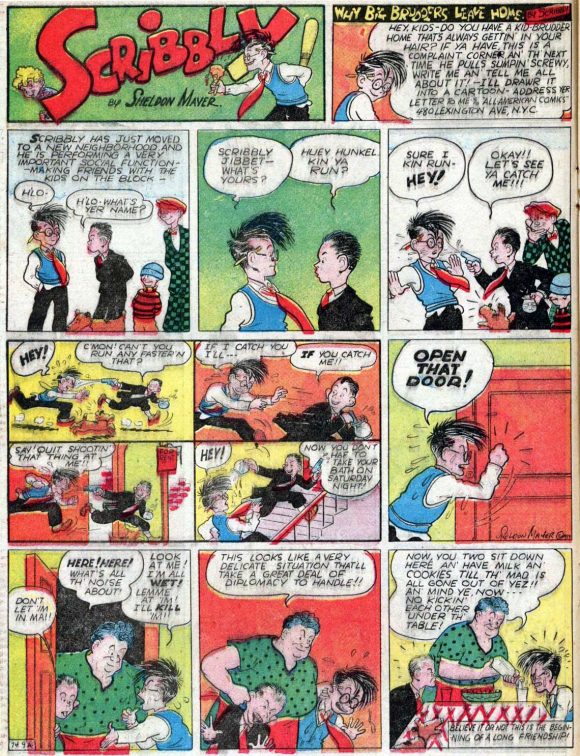
First appearance of Ma Hunkel in All-American Comics #3 (June 1939), written and drawn by Mayer.
In All-American Comics #20 (Nov. 1940), when two kids, including Ma Hunkel’s little girl, were kidnapped by a criminal gang (sigh), Scribbly told Ma and the rest of the group that if Green Lantern were here, he’d rush in and rescue them. Ma had never heard of him but was very interested when Scribbly said his real identity was unknown, so he didn’t worry about having to follow the guidelines of the law as the police do. At the end of the story, a peculiar and poorly-costumed character entered the fray, tantalizing the audience to buy the next issue to find out who he — er, she — was.
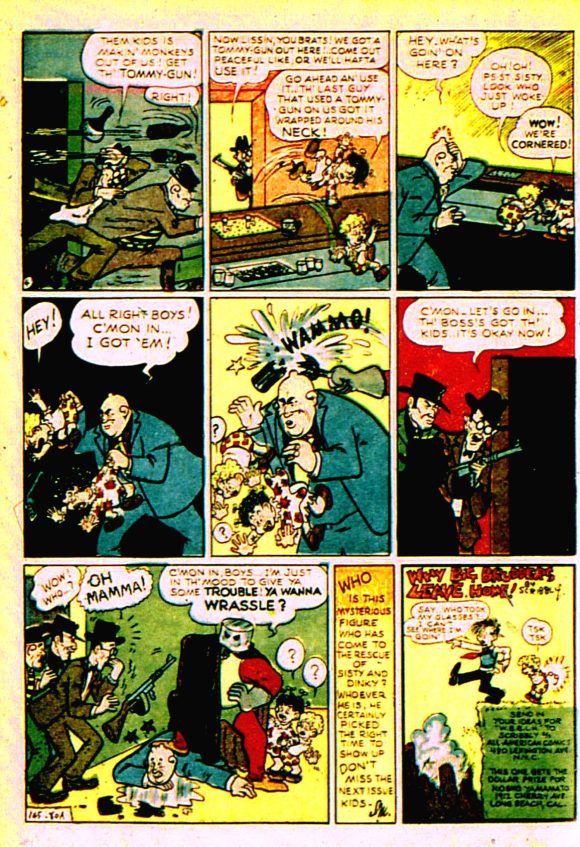
First appearance of the Red Tornado. All-American Comics #20 (Nov. 1940), written and drawn by Mayer.
By the way, don’t bother looking for Wonder Woman. It would be a year before Princess Diana would be making her comic book debut in All-Star Comics #8 (Dec. 1941-Jan. 1942) in a separate tale from the JSA adventure that issue. She would be welcomed into the JSA in #11 (June-July 1942)… as the group’s secretary.
—
7. Anyway, let’s get back to the stories. The Sandman told a horror story of how he encountered menacing giant creatures that were later found to be large masses of flesh with smaller bones inside. Of course, a mad scientist was behind it all.
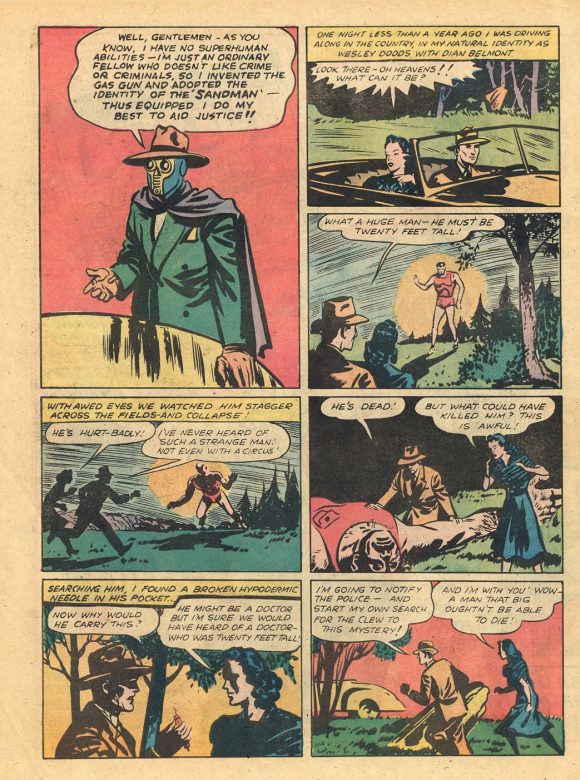
Writer: Fox. Artists: Hibbard (first panel) and Chad Grothkopf.
—
8. Dr. Fate’s fateful story was about body possession by ancient spirits and magic.
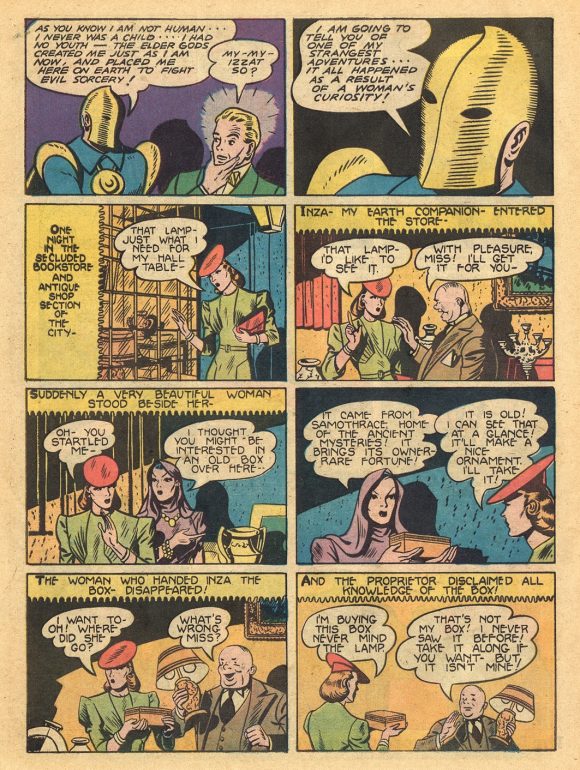
Writer: Fox. Artists: Hibbard (first two panels) and Howard Sherman.
—
9. Johnny Thunder’s tale was related in a two-page text story. A text feature was needed in comics in order to satisfy a rule that would allow them to be sent by the post office’s lower shipping rate of Second Class. (This was why letter columns were introduced.)
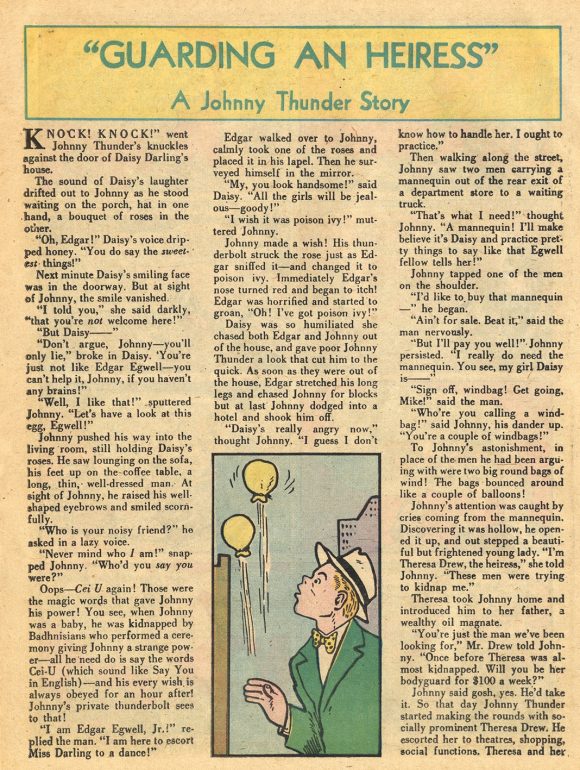
Writer: Evelyn Gaines. Spot illustration artist: Mayer.
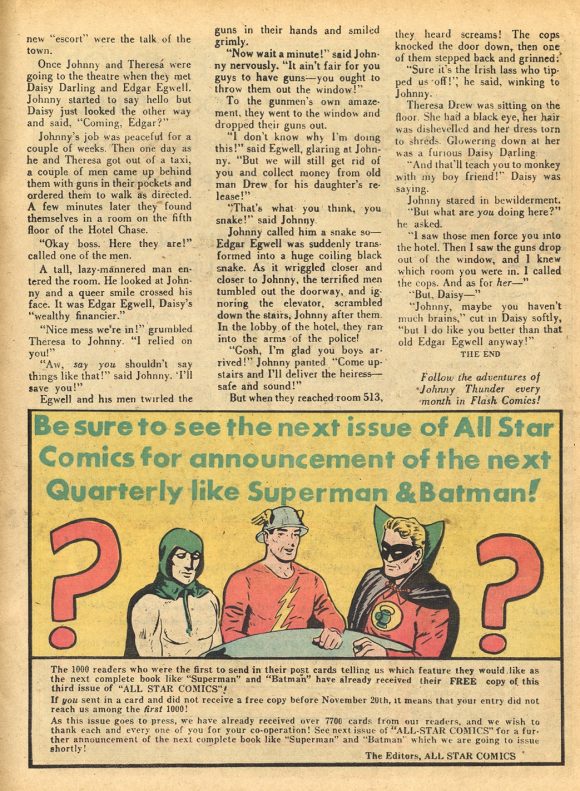
Writer: Evelyn Gaines. Spot illustration artist: Mayer.
—
10. The Atom was up and at ’em in his tale of a criminal gang out to heist millions in gold from a depository.
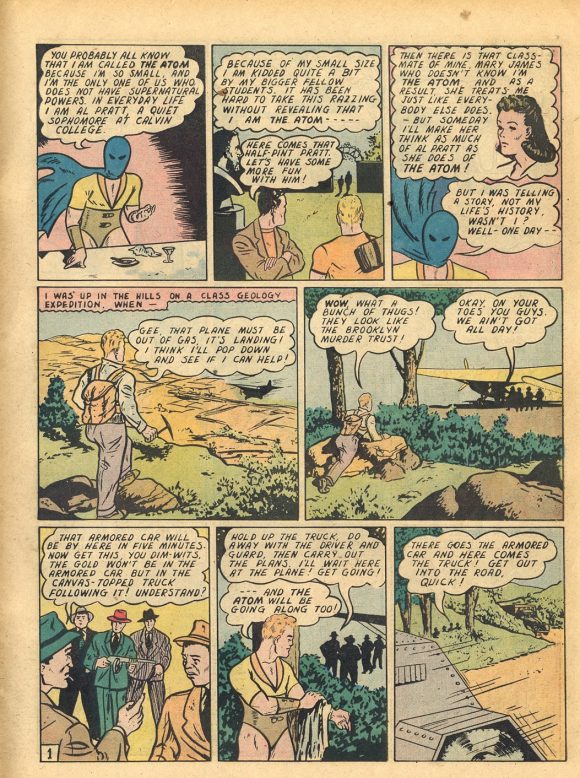
Writer: Bill O’Connor. Artist: Ben Flinton.
—
11. Green Lantern finished up the accounts with a cliché story of a police commissioner being framed for bribery in order to rally public support around a strict law-and-order candidate for the job. No need to tell you who the secret boss was behind the criminal gang raging throughout the city.
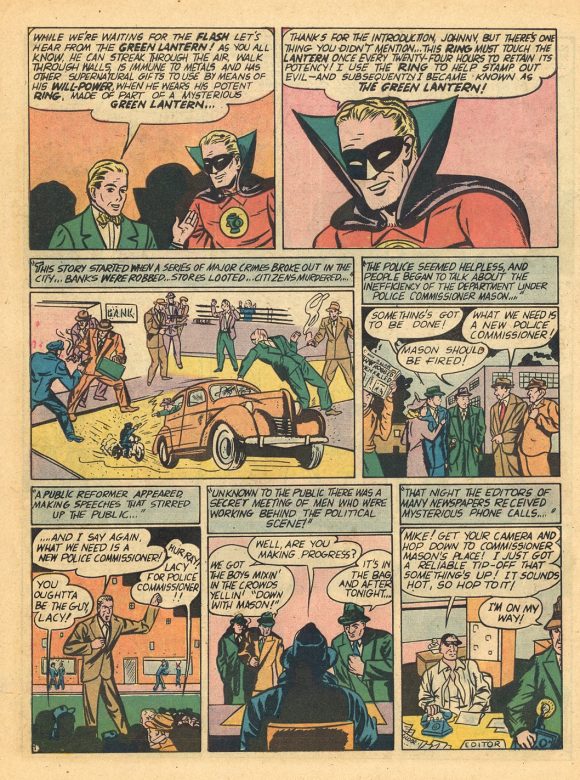
Writer: Fox. Artists: Hibbard (first two panels) and Martin Nodell.
—
12. However, just prior to GL going into his tale, a messenger showed up with a request from the head of the FBI. (J. Edgar Hoover was not named).
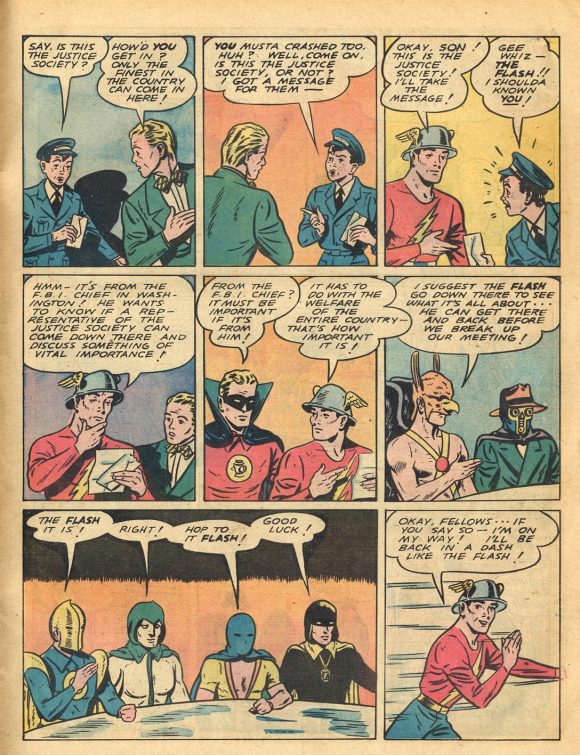
Writer: Fox. Artist: Hibbard.
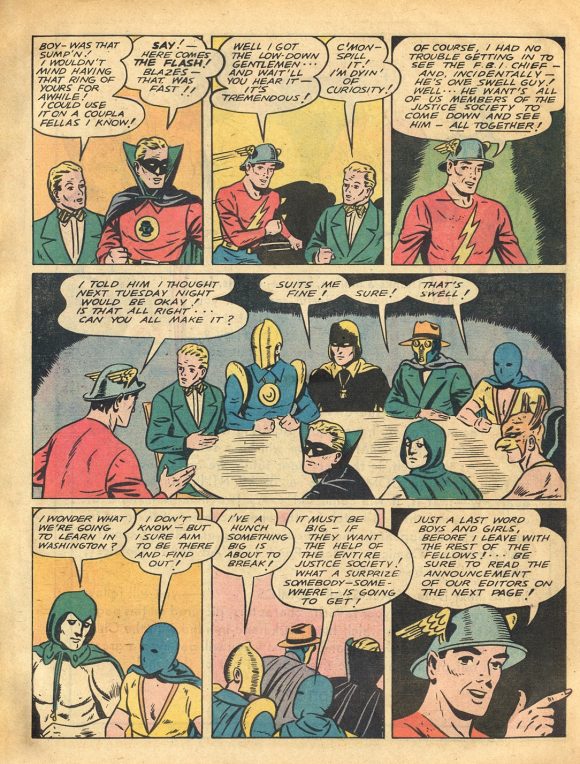
Writer: Fox. Artist: Hibbard.
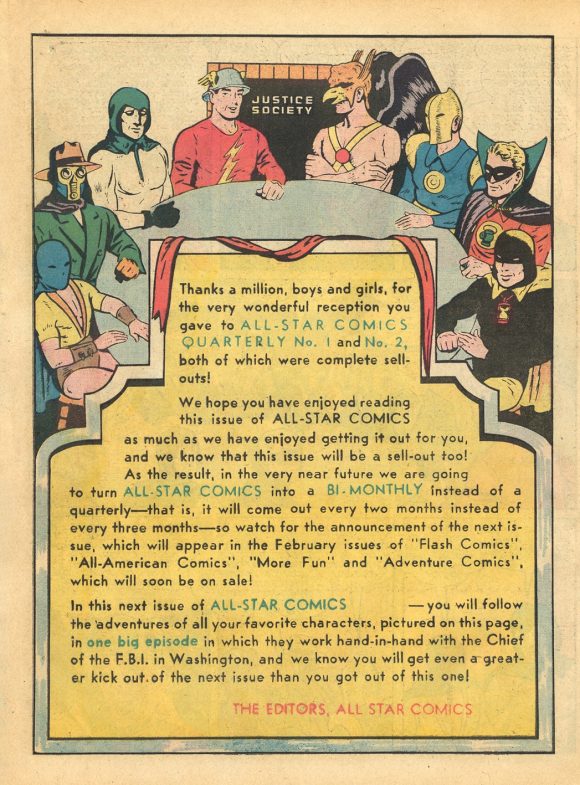
—
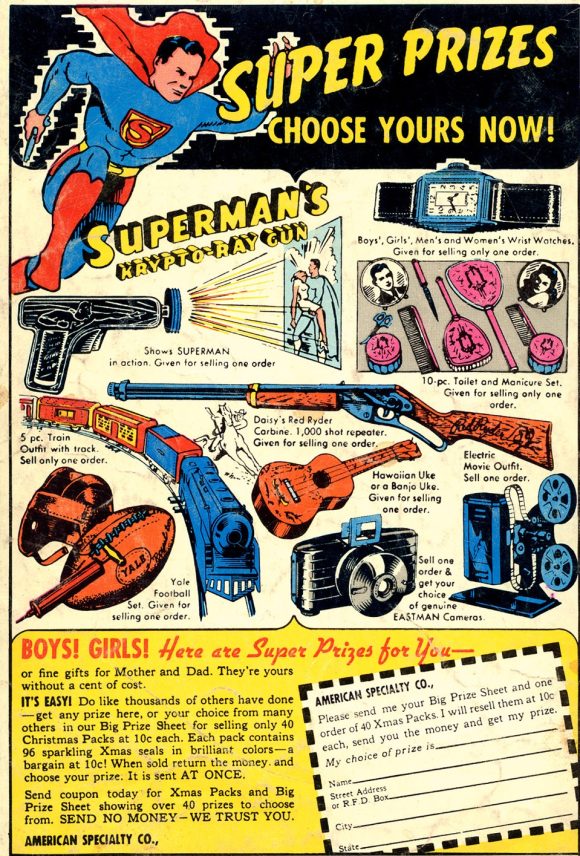
13. If you think all of the above made a terrific issue — there were also DC character-related ads!
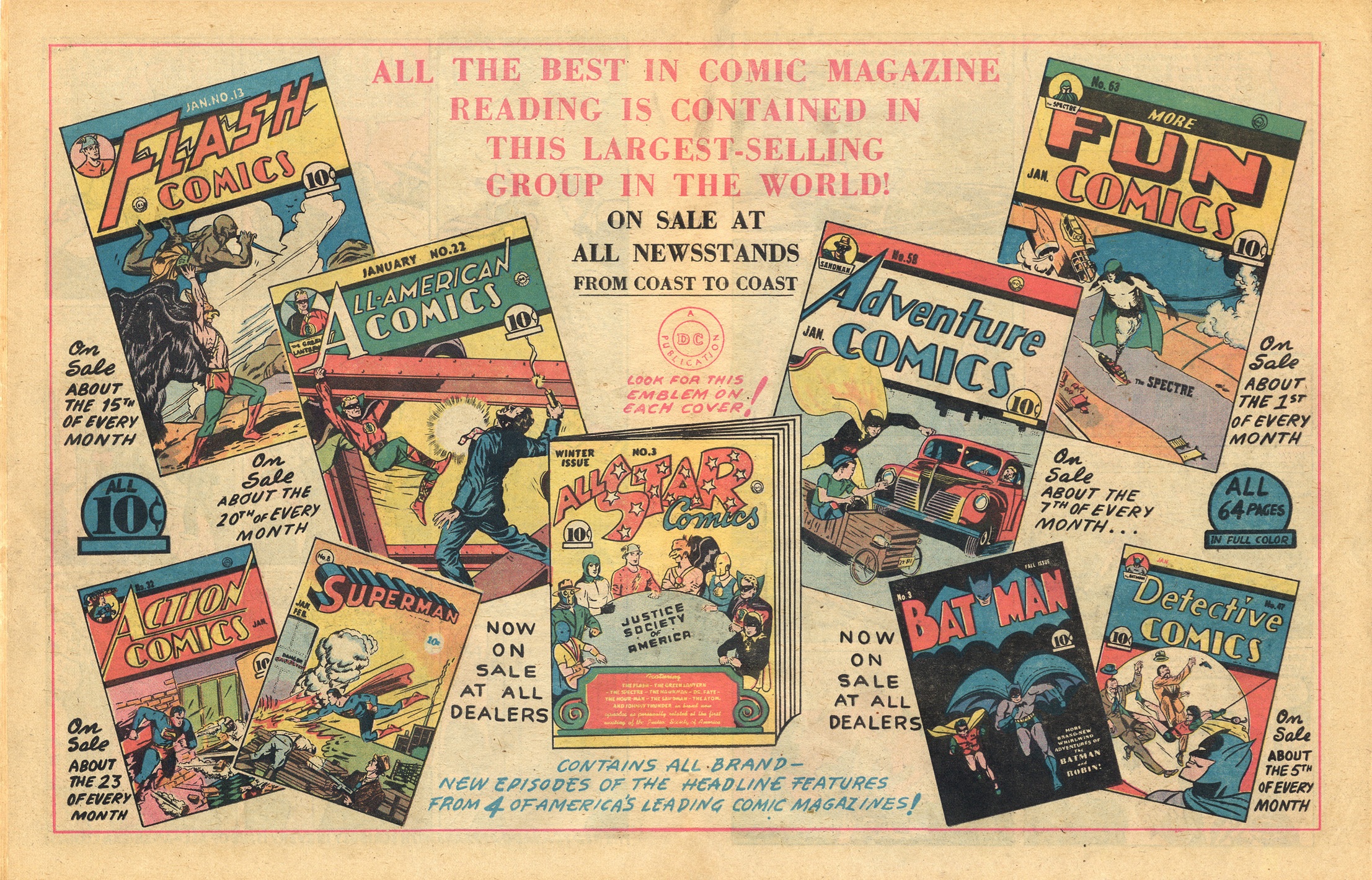
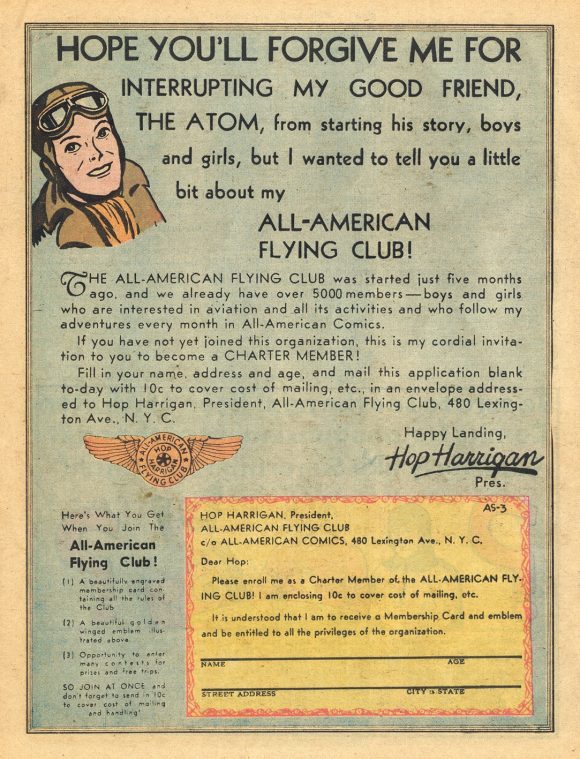
—
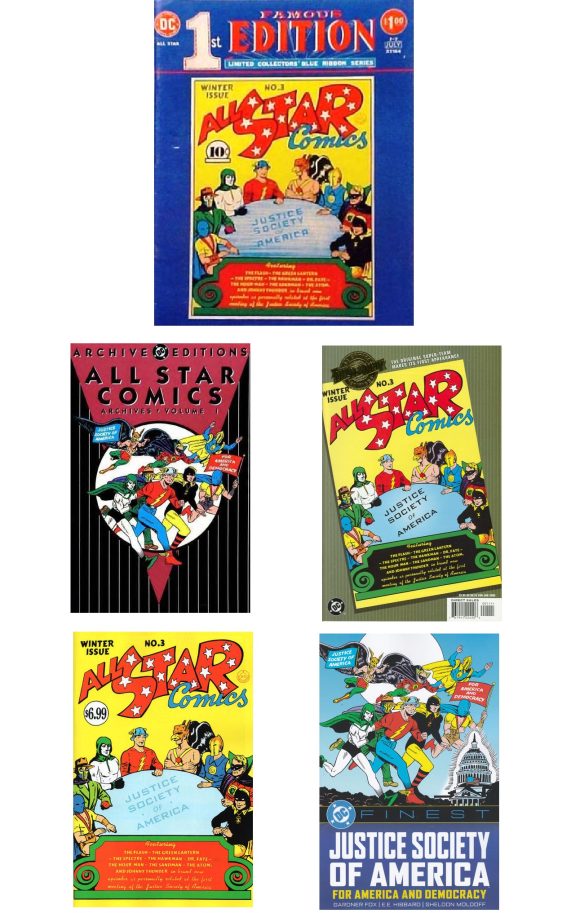
So, dig out your copy of All-Star Comics #3 to re-read on its 85th anniversary. Oh, just in case you don’t have one, it’s been reprinted (sometimes without the above ads) in Famous First Edition #F-7 (June-July 1975), and subsequently in All-Star Comics Archives #1 (1992), as Millennium Edition: All-Star Comics No. 3 (June 2000), as a Facsimile Edition (in 2024), and most recently in DC Finest: Justice Society of America: For America and Democracy (2024).
—
MORE
— 13 JUSTICE SOCIETY OF AMERICA Toys That Do Them Justice. Click here.
— JSA: YEAR ONE Kicks Off in November. Click here.
—
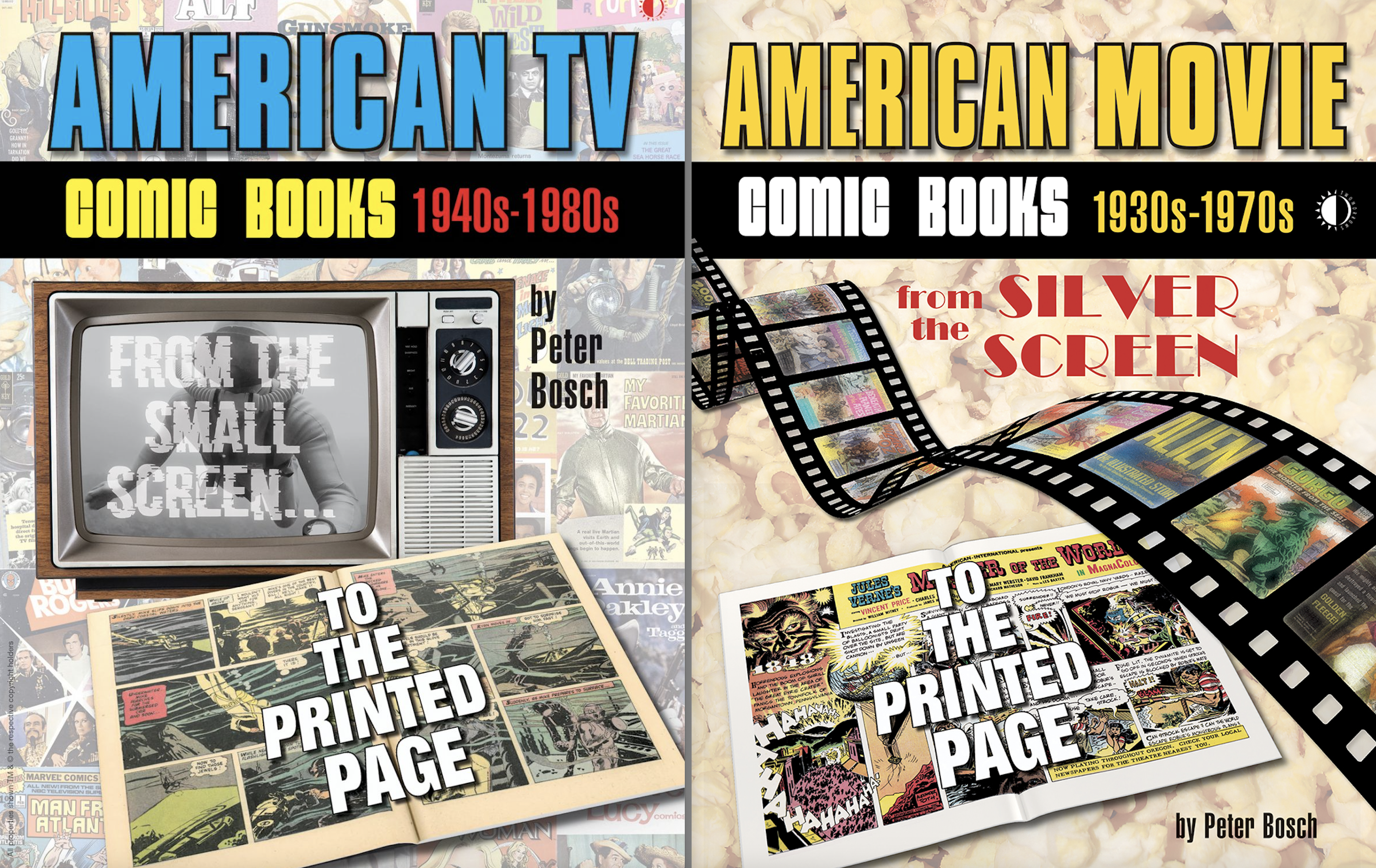
13th Dimension contributor-at-large PETER BOSCH’s first book, American TV Comic Books: 1940s-1980s – From the Small Screen to the Printed Page, was published by TwoMorrows. (You can buy it here.) A sequel, American Movie Comic Books: 1930s-1970s — From the Silver Screen to the Printed Page, is out now. (Buy it here.) Peter has written articles and conducted celebrity interviews for various magazines and newspapers. He lives in Hollywood.

November 22, 2025
Fun stuff, glad to see this landmark issue get a spotlight. One thing to add: Shelly Mayer spelled his own character’s name wrong (“Hunkle” vs. Hunkel). Also, this story proves that Ma, despite what everyone believes for some reason, was never, ever an official JSAer. She had a shot, maybe, but it’s clear she didn’t stick around.
November 22, 2025
Moldoff’s was indeed impressive. I’ve often wondered how his style might have evolved if he hadn’t spent thirty years ghosting Bob Kane.
November 22, 2025
Hmmm….so, why was Hourman admitting to the fact they had “wanted” to invite her. So why invite her unless to make her an offer to be a part of their group? And earlier the Atom voiced an awareness that she was missing. Put me down for team member- yes.
November 23, 2025
JUSTICE LEAGUE OF AMERICA #67 states very plainly that she was not a member. The confusion started because of her inclusion in the classic Murphy Anderson pin-up in JLA #76. Beyond all that, she never took part in any JSA adventure throughout the run of ALL-STAR COMICS.
November 23, 2025
Was just having a little fun with the piece.
November 22, 2025
On the other hand, I realized recently the way it’s phrased about Superman, Batman, and Robin, it can be read as Robin being considered a member. On the other hand, in Batman’s 2 later appearances with the JSA*, Robin doesn’t show up, and of course he’s formally inducted as an adult in a much later JSA-JLA team-up.
*Stupidly, I didn’t realize until recently that the first time Batman and Superman appear together in a story is in the final panels of All-Star #7, due to Johnny Thunder bringing all three of the then honorary members (at that point, Jay-Flash was the other one) to bail him out on a fund-raising promise.
November 22, 2025
All Star Comics #s 1 & 2 were anthology books with Flash, Green Lantern, etc appearing in separate stories. Cross overs weren’t yet a thing. All Star 3 started something that is now commonplace in comics.
November 22, 2025
I would love to see DC redo this issue with more recent/ legendary artists like Ordway, Frenz Banks, Epting, Mcleod,Jones etc. I am not in love with the currently popular manga/cartoon art style that relies so heavily on colorists to complete their work.
November 22, 2025
This is the comic I own the most copies of (I have all the reprints above plus the Don Maris) and is the comic I most wish I had the original—unslabbed!
December 5, 2025
I don’t know how many times I read this before realizing something was weird about The Red Tornado’s scene. Flash holds up part of her costume to show that she snagged her bottom and ripped her pants…but instead of holding up the part that would have been torn off–the rear end–he holds up the OTHER part of her long johns, implying that instead of walking around hiding a bare bum under her cape, she was in her undies! (Just look, the legs are intact, so those pants weren’t coming off unless she *took* them off intentionally!)
December 5, 2025
No more stranger than this https://13thdimension.com/wp-content/uploads/2016/03/BATMAN-244-1.jpg