
Actually it was Timely then, but you get the gist…
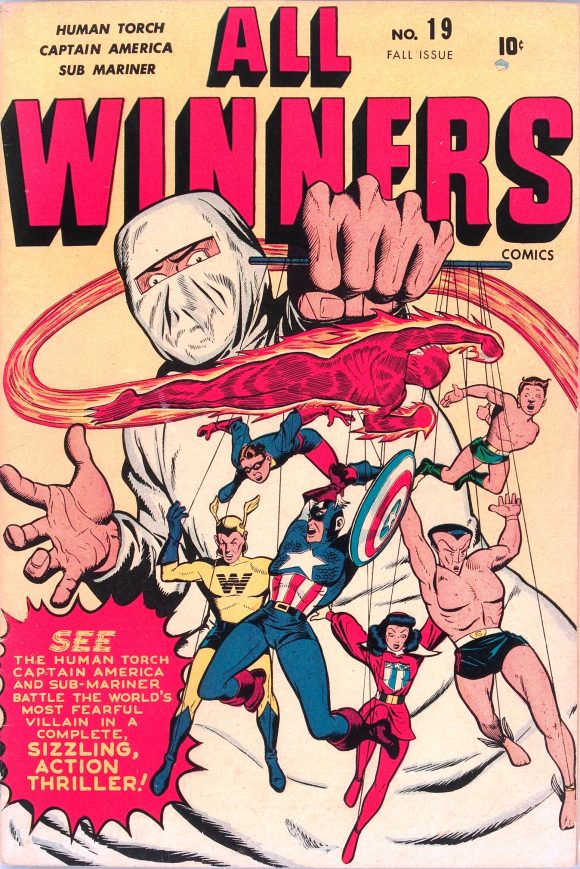
All Winners #19 (Fall 1946, Timely/Marvel). Unidentified cover artist.
By PETER BOSCH
It was 80 years ago, on July 24, 1946, that Timely (later Marvel) Comics put their greatest heroes together for the first time as a team. Known as the All Winners Squad, Captain America, Bucky, the Sub-Mariner, the Human Torch, Toro, Miss America, and the Whizzer may well indeed have been mighty, but not enough to keep the squad going for more than one other adventure after this.
By 1946, Timely was not very timely. It took until All Winners #19 (Fall 1946), a full five years since the introduction of the title, for the publisher to follow in the footsteps of DC Comics’ Justice Society of America in All-Star Comics. Superhero teams were big for different publishers during World War II, but Timely didn’t try it until after the war — when interest in costumed characters was quickly waning.
Even though many previous covers of All Winners Comics (largely by Alex Schomburg) featured Axis entanglements with our heroes together, they never teamed up inside. And that was with Stan Lee as Timely’s youthful editor-in-chief at the time!
And, then — after All Winners Comics #19 — the Squad was gone from #20! (More about the mystery of that supposedly unpublished issue following the story pages below from All Winners Comics #19, the first Squad tale.)
The story, believed to have been written by Bill Finger, had the team already formed in this opening chapter (with art by Syd Shores)…
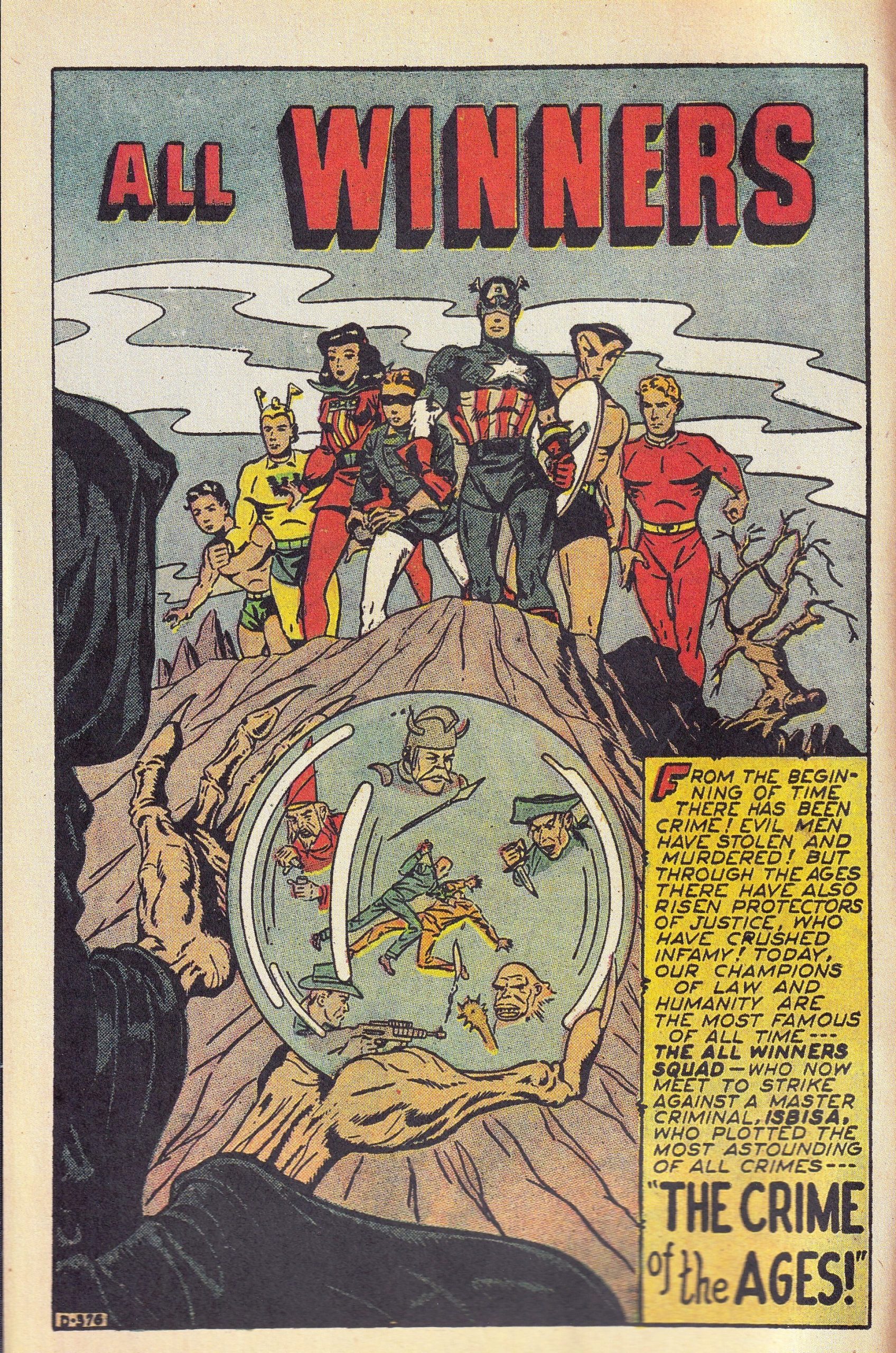
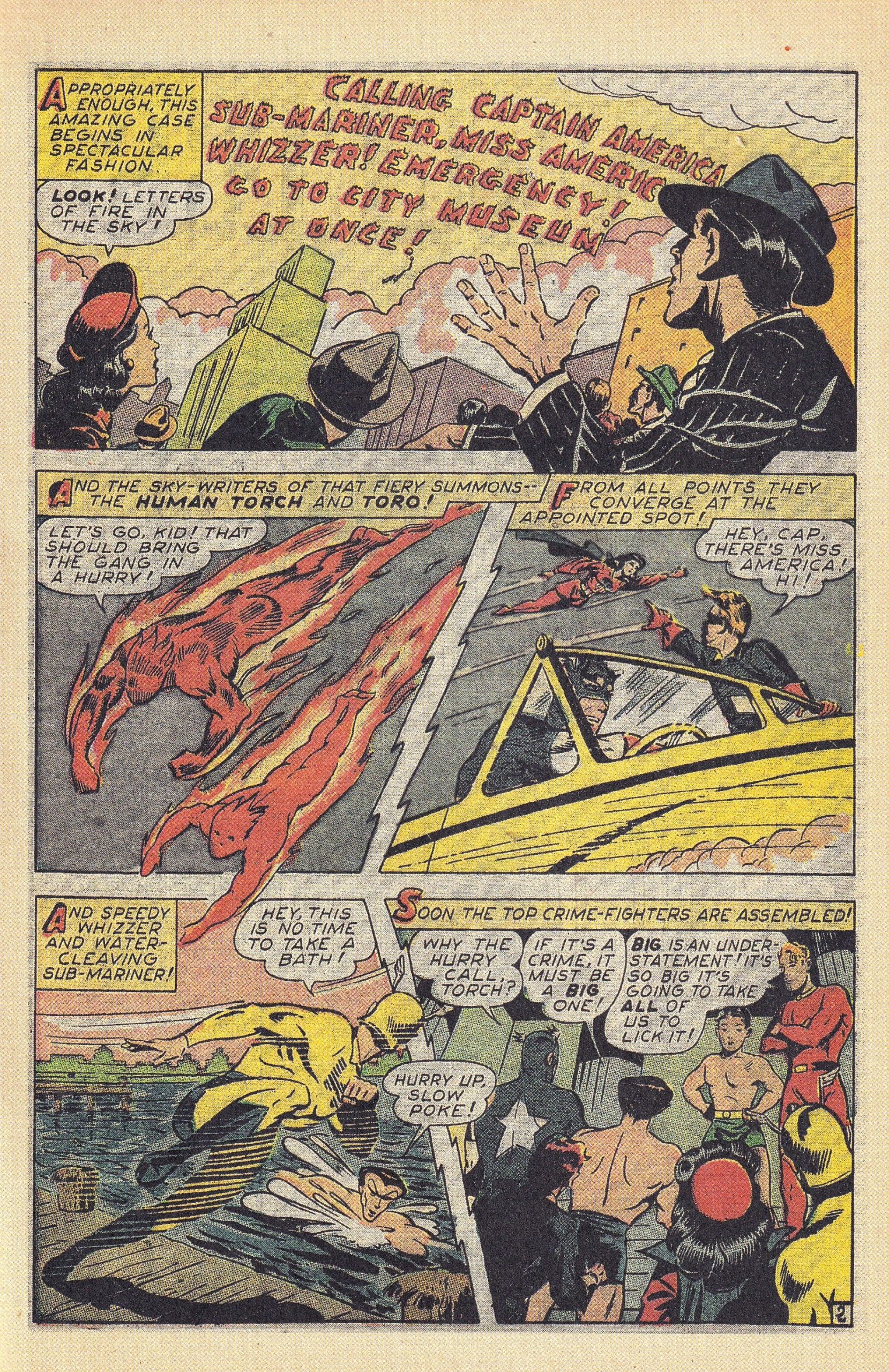
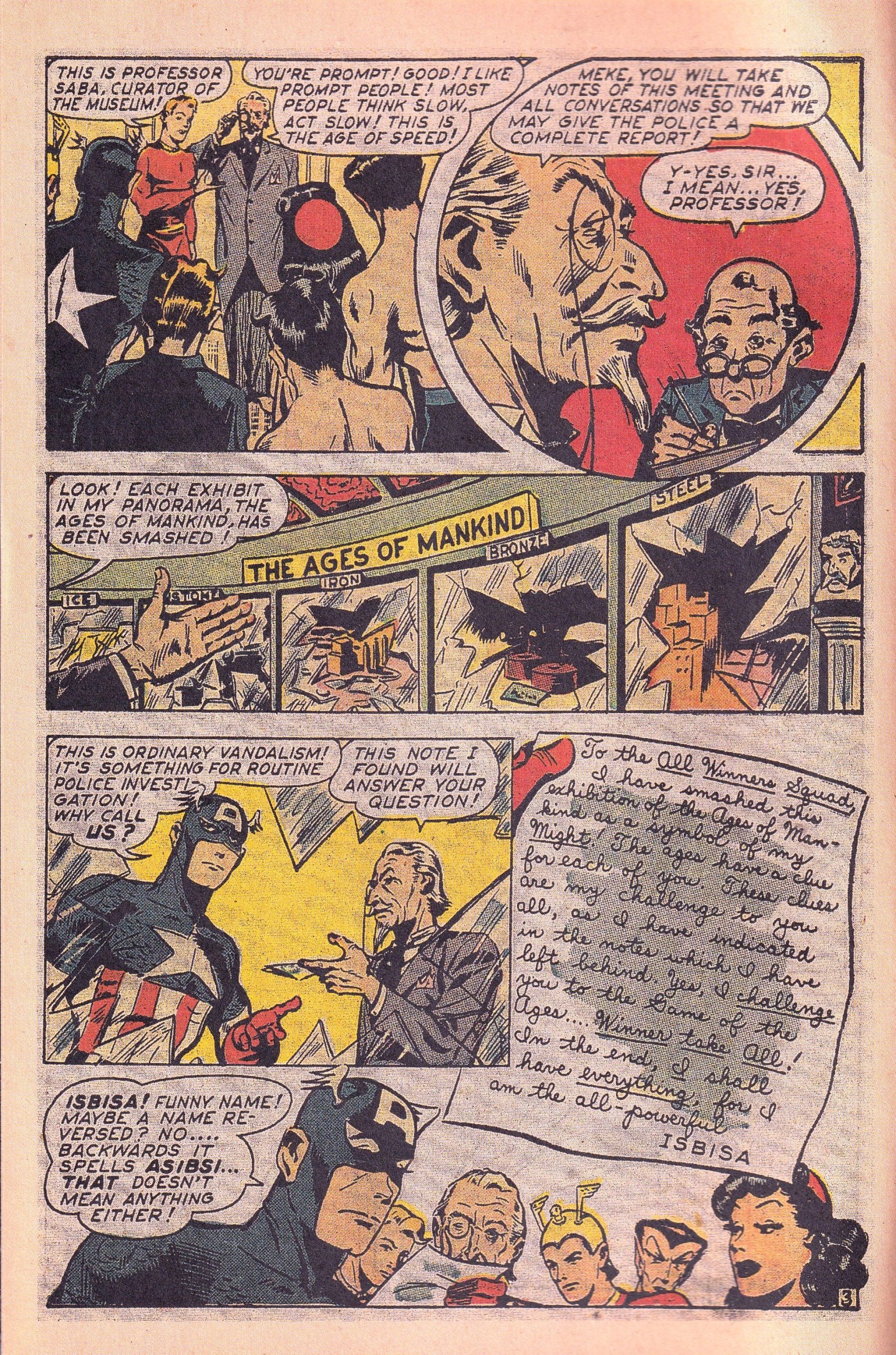
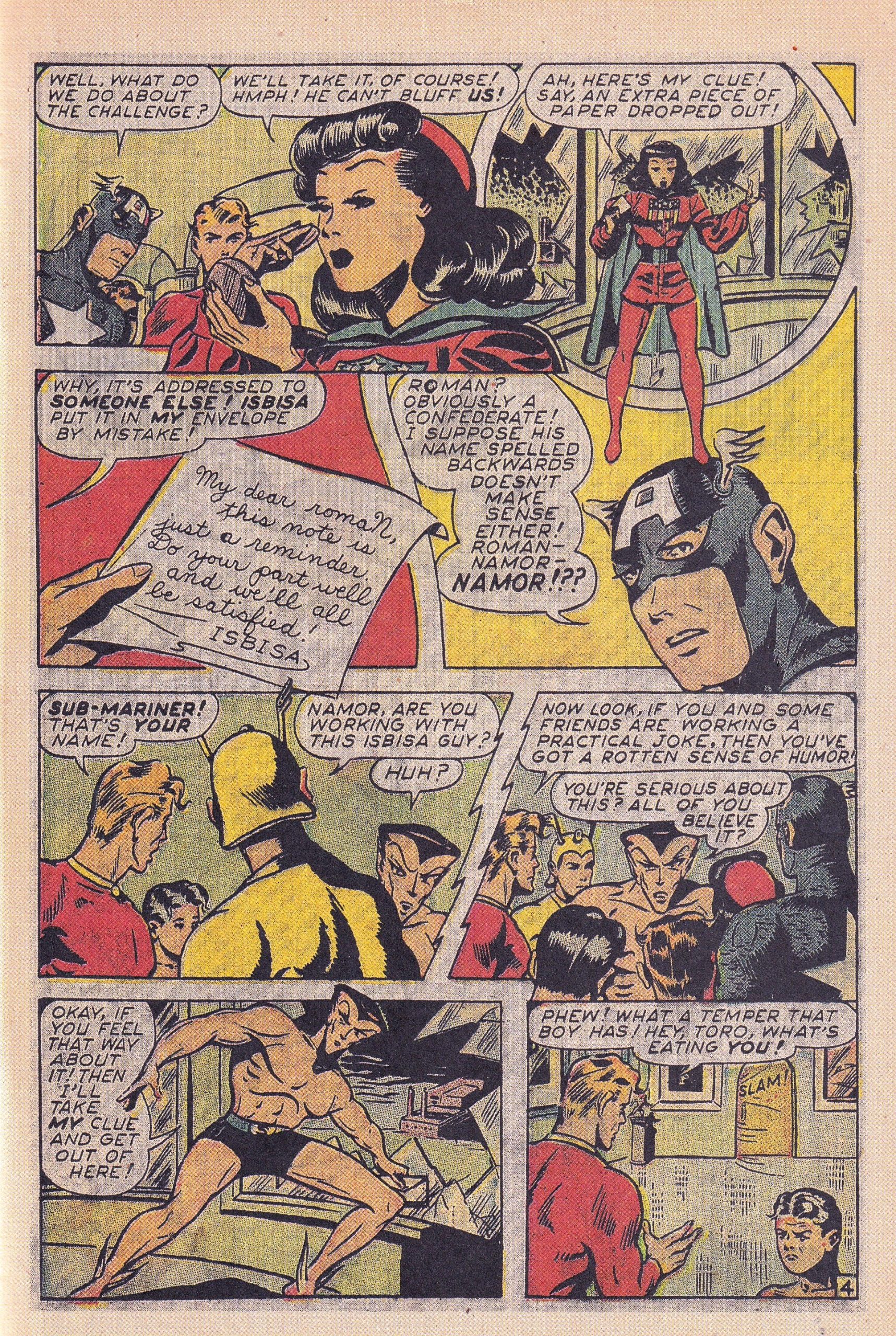
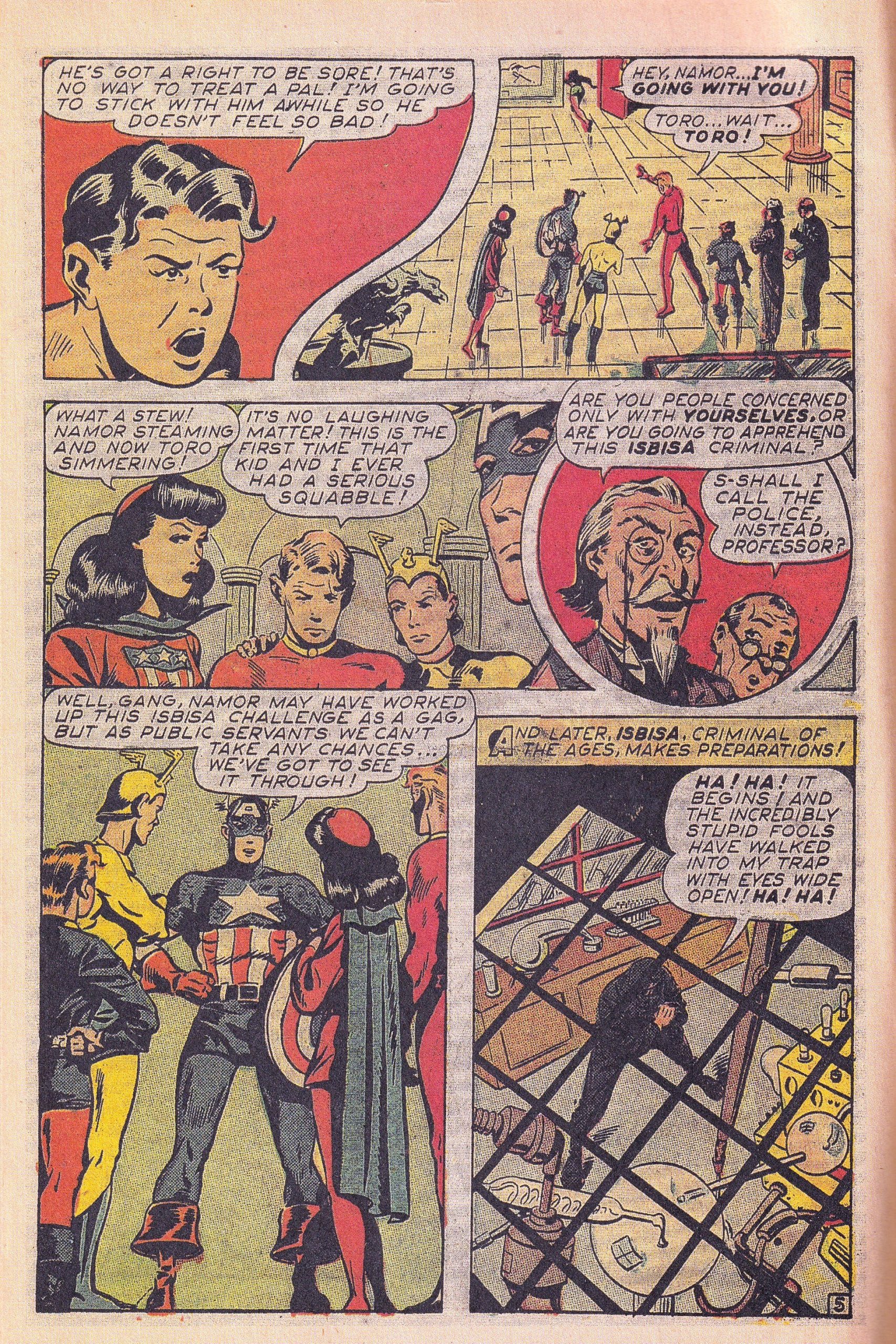
(Please note: Positive artist identification throughout the issue is limited. Even Marvel later had trouble confirming the illustrators. Roy Thomas, in his editorial for an All Winners #19 reprint in 1999, recruited Gil Kane – who had been drawing for Marvel since 1943 – to aid in determining the artists but found it a futile effort, other than identifying Syd Shores drawing the pages for the opening chapter above, the Miss America story, and the closing pages below.)
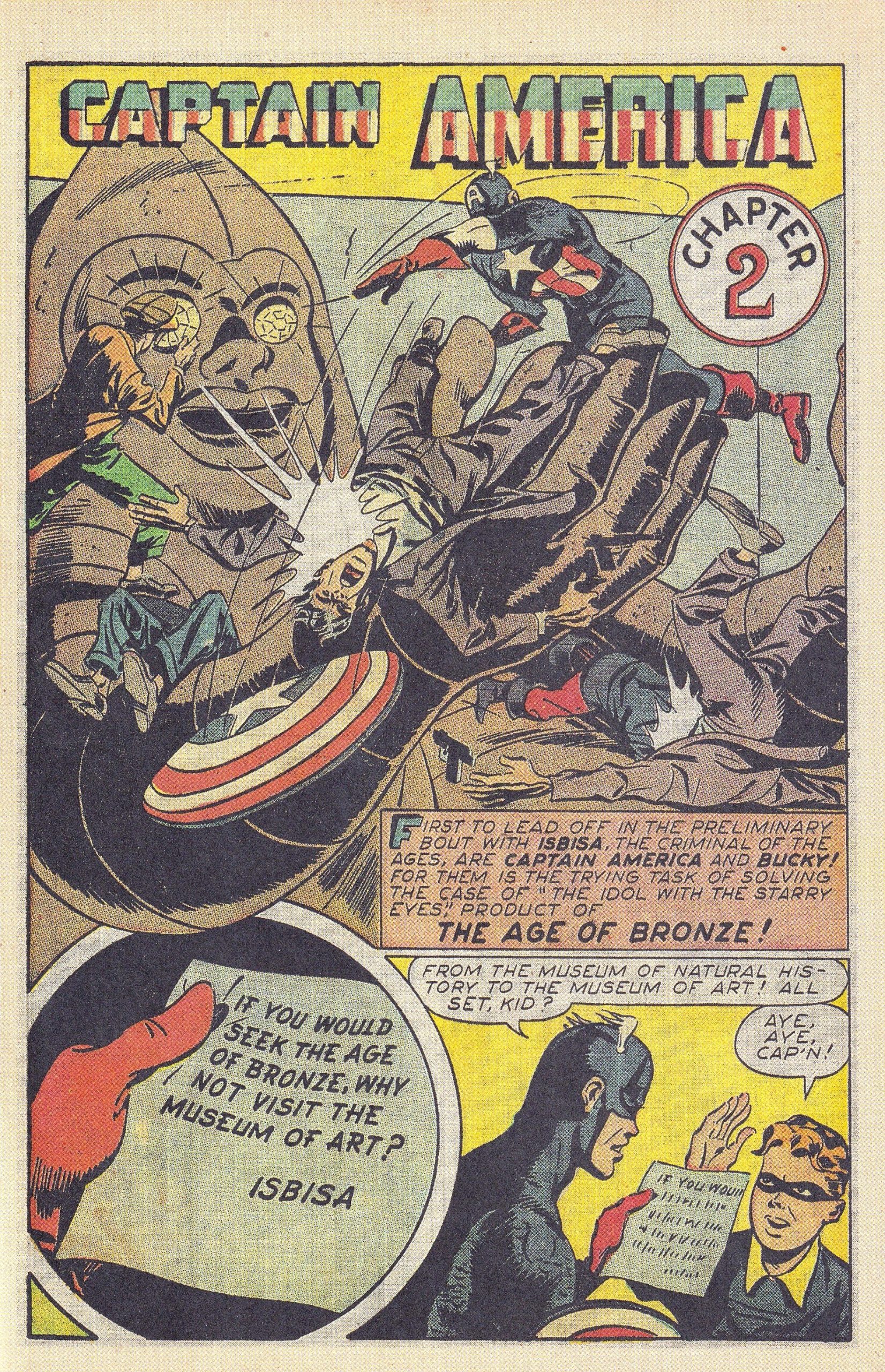
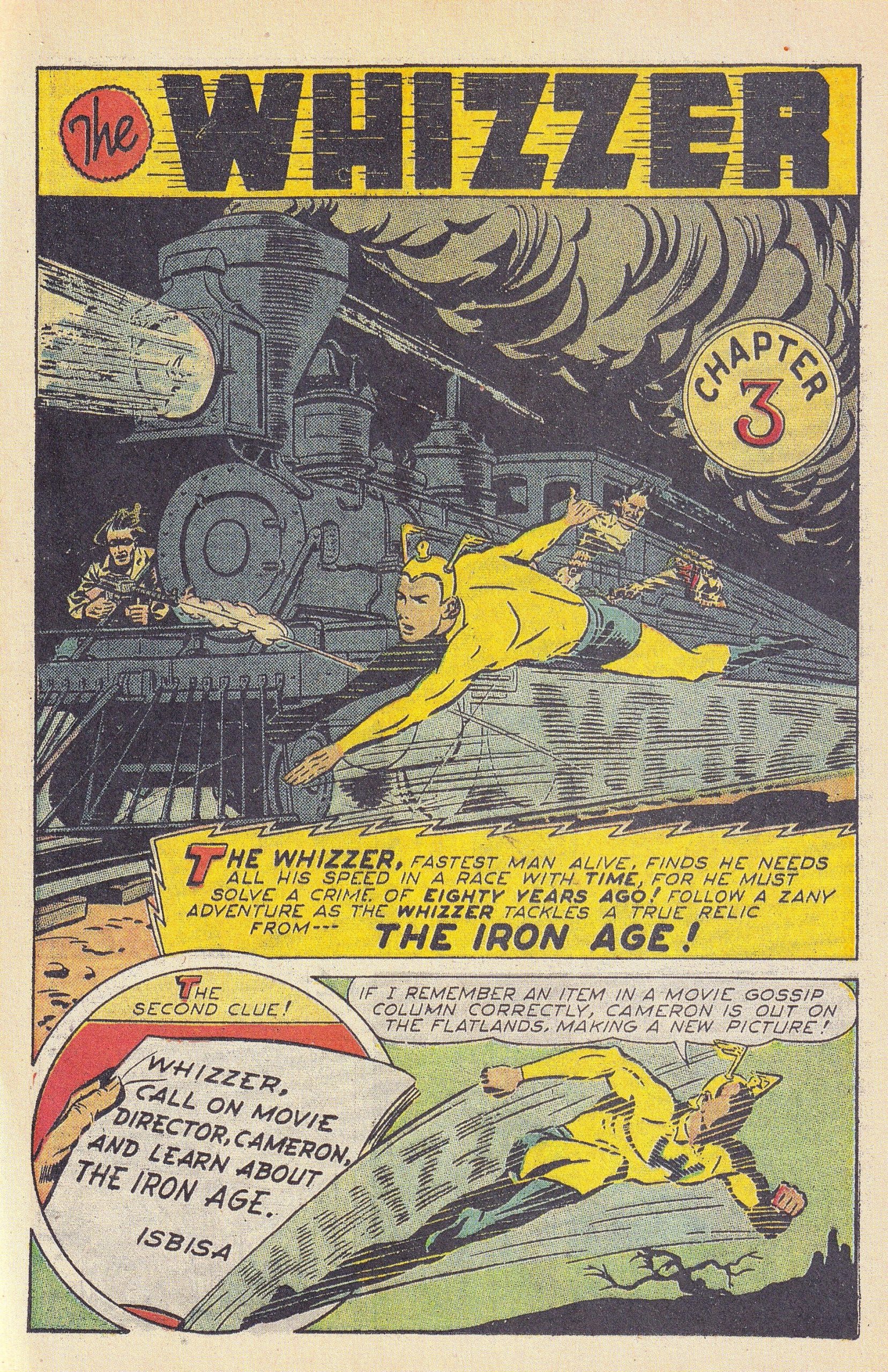
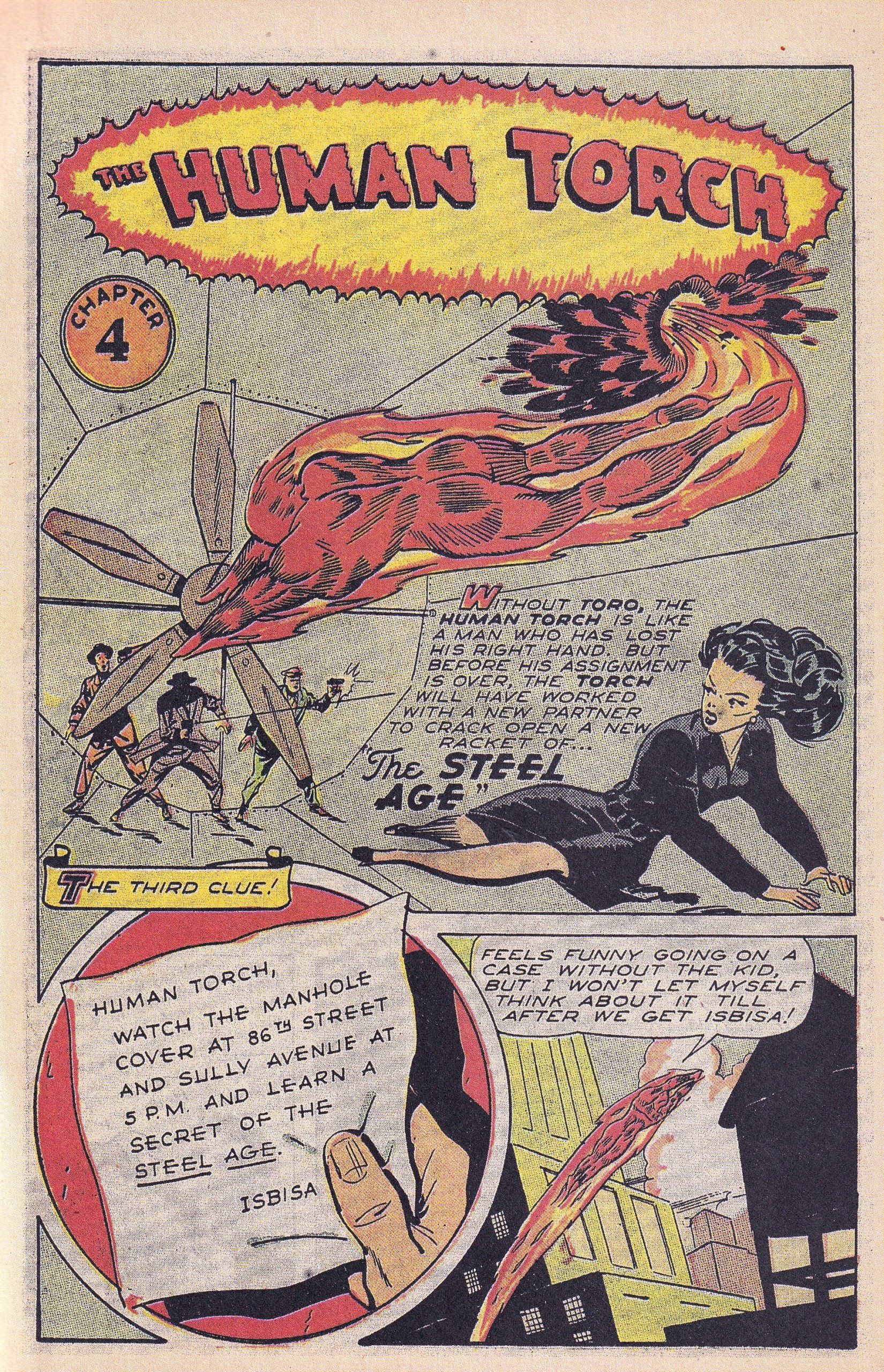
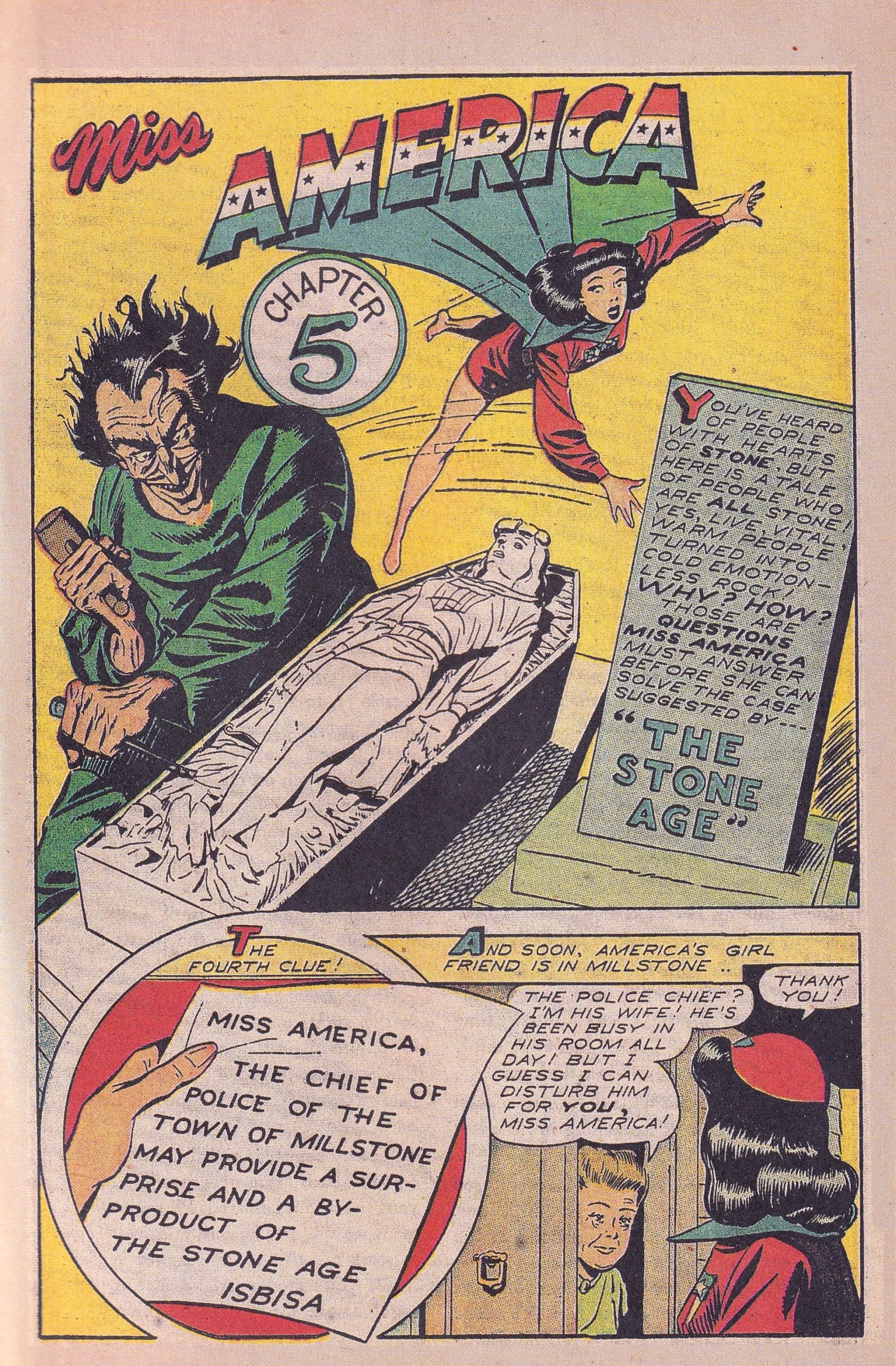
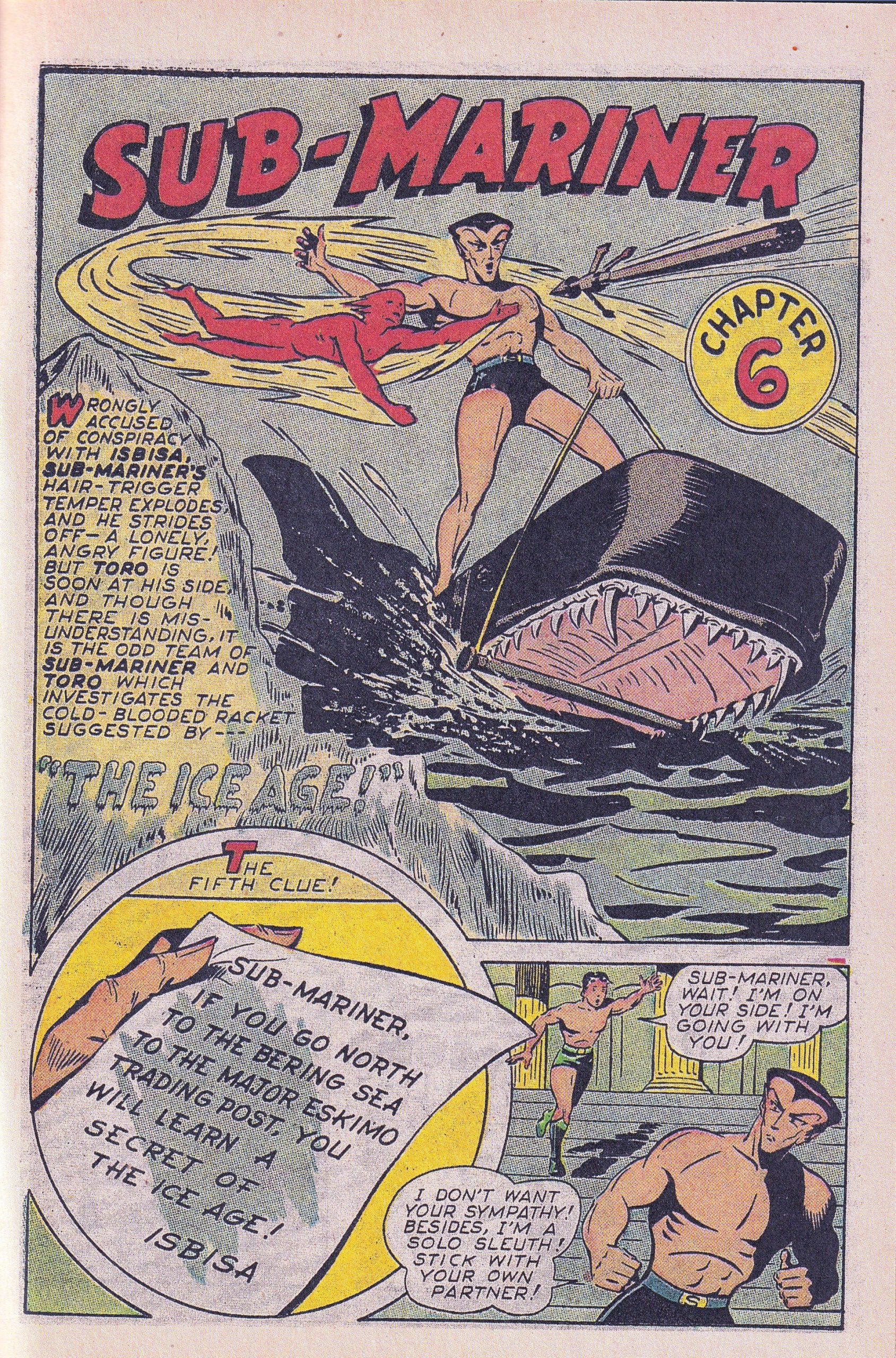
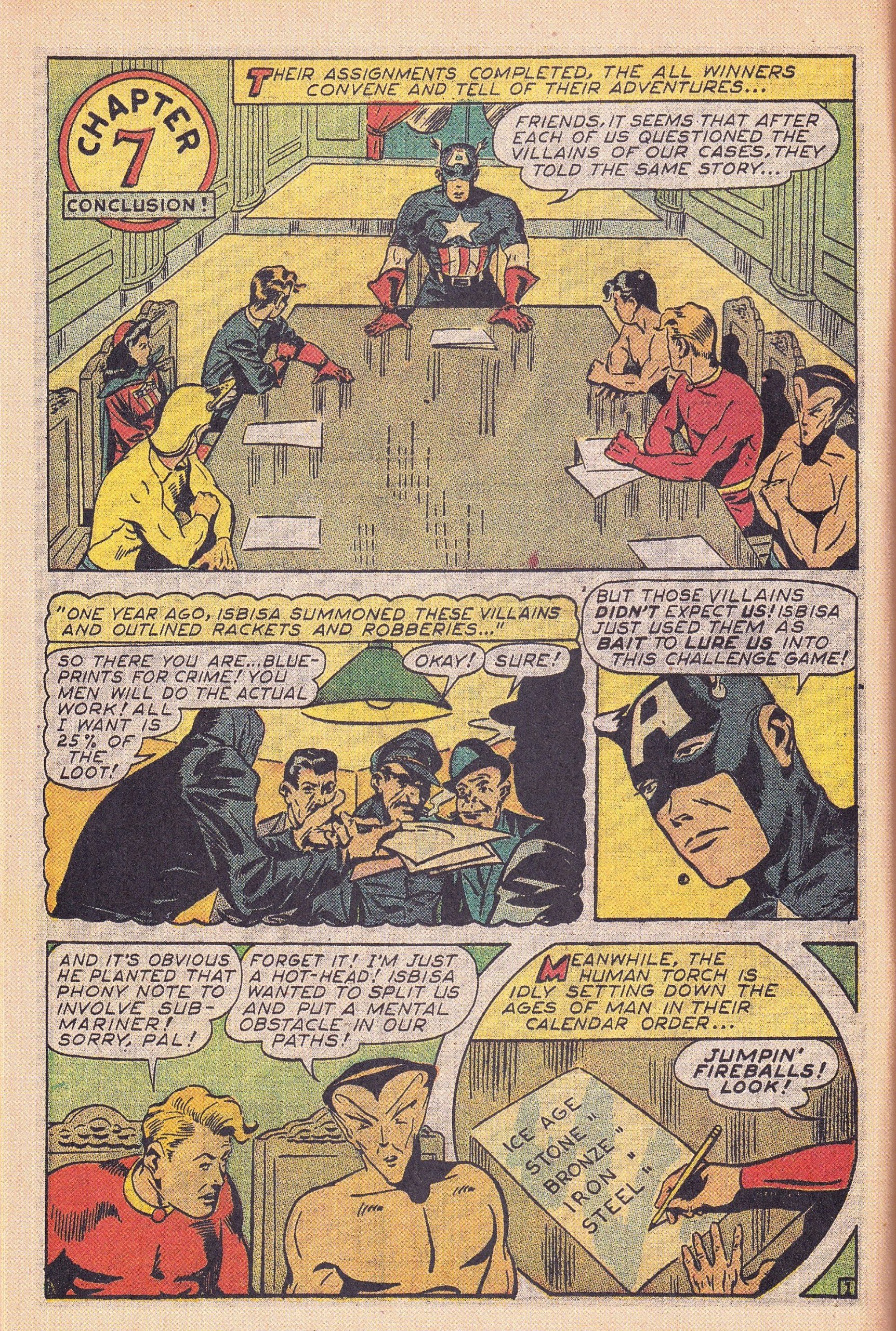
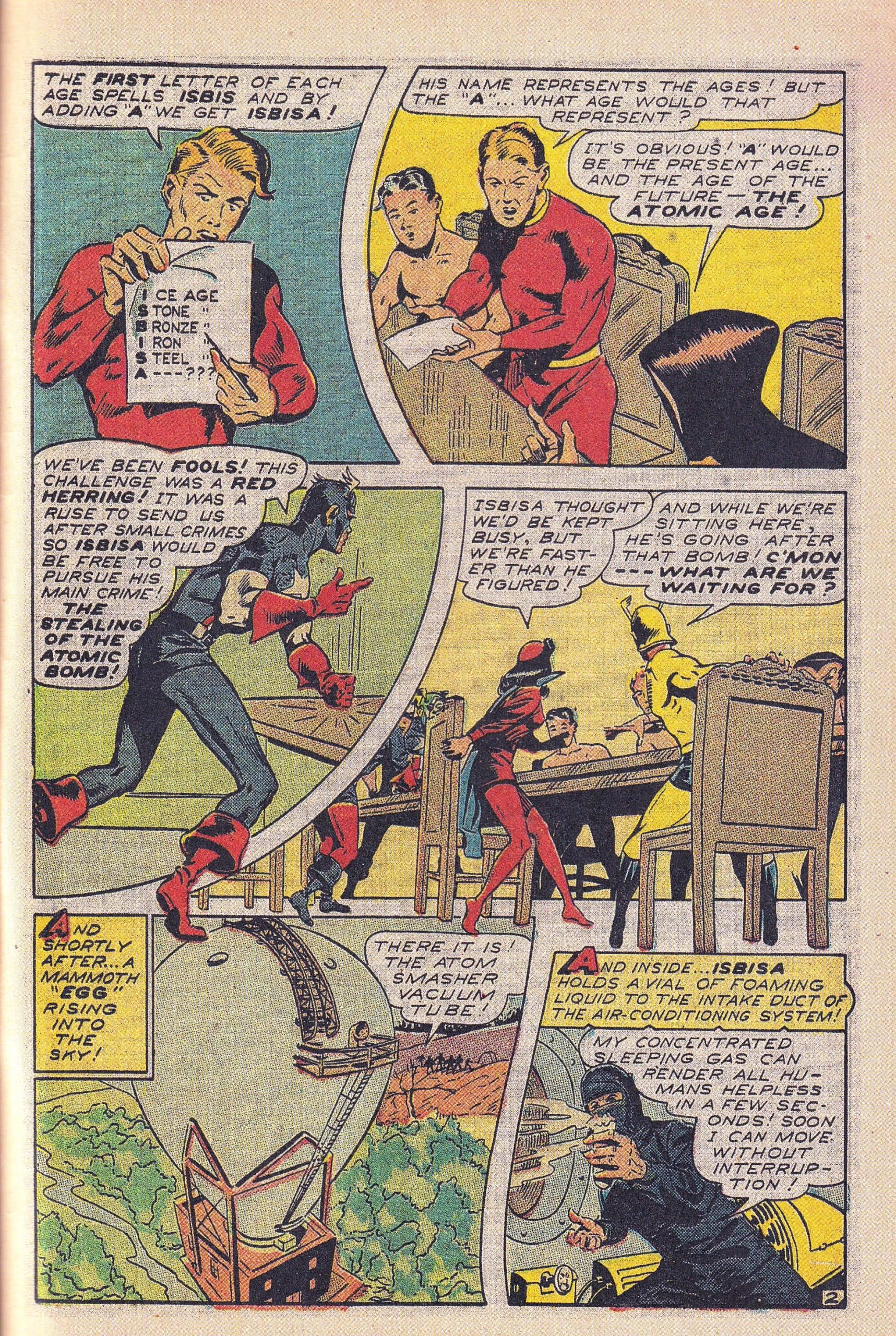
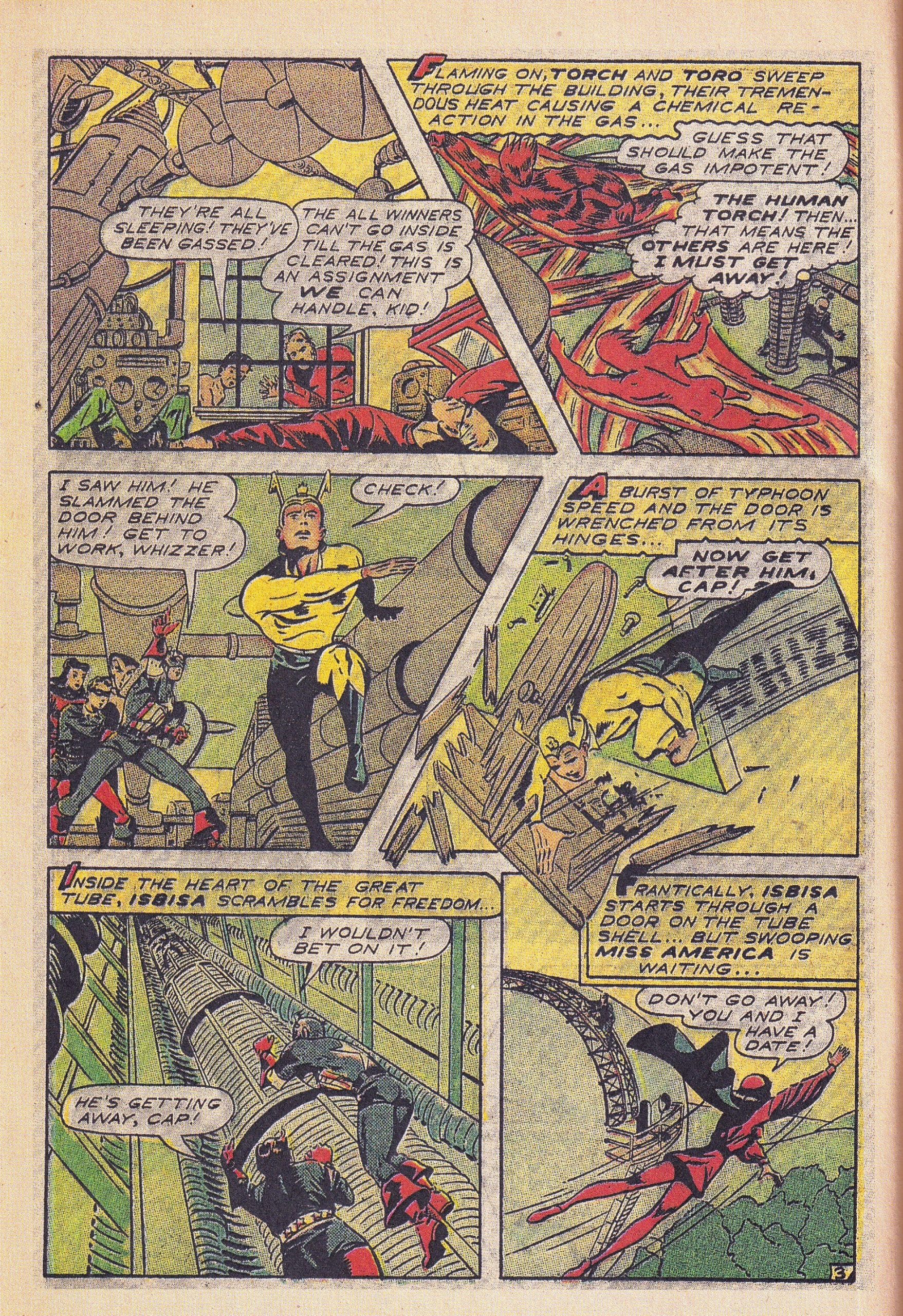
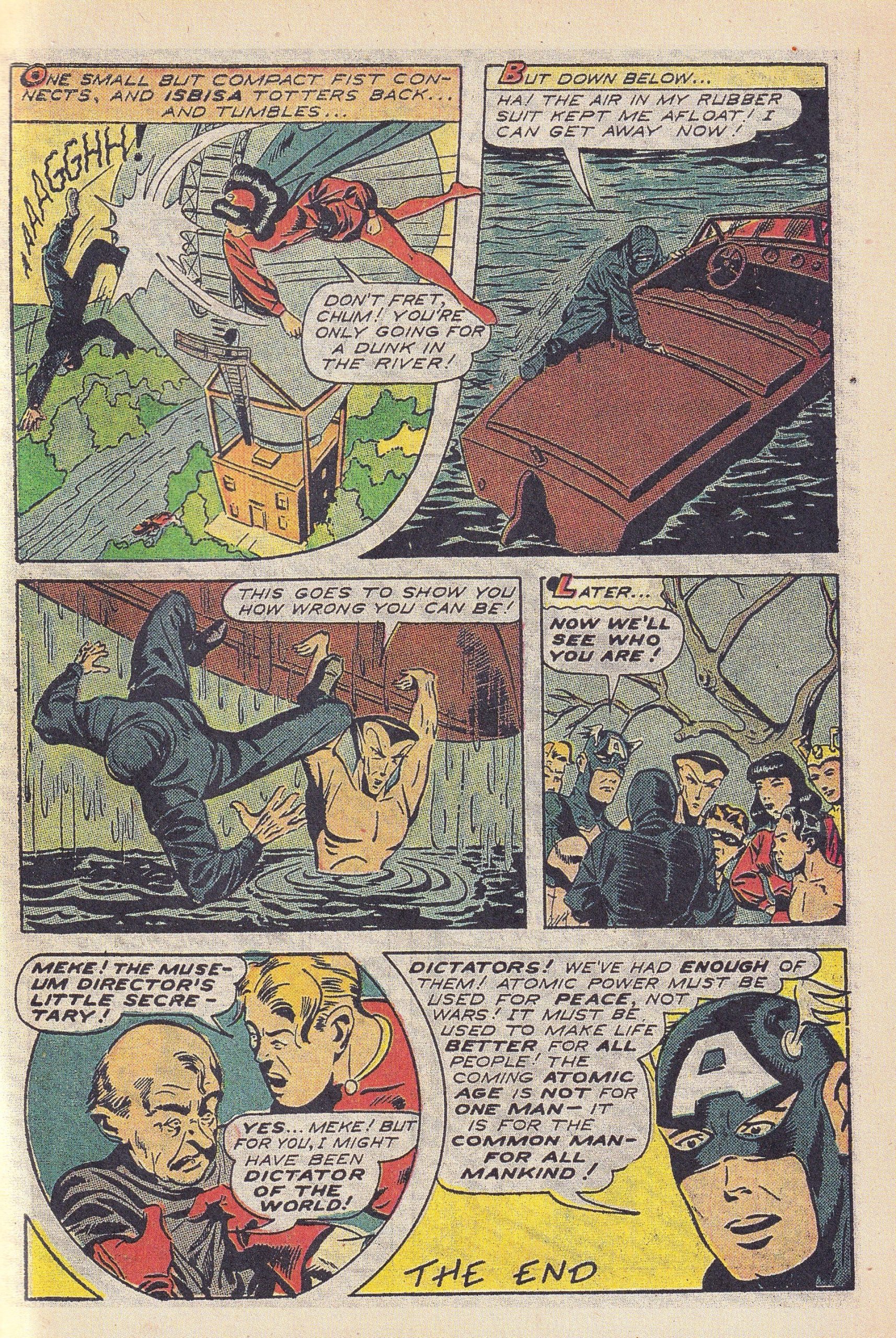
Anyone who didn’t figure out by Page 3 who the villain would be needs to hand in their deerstalker hat. “Meke” as the name of the meek secretary? Come on, Mr. Finger!
So, the first adventure of the All Winners Squad was done. But then came…
—
THE MYSTERY OF ISSUE #20 (AND #21)
Popular belief is that after All Winners Comics #19, the next issue was #21, somehow skipping #20. Well, that’s true and yet it is far off from what actually happened.
Let’s go back to All Winners #19 for a moment. After that issue was published, the comic book title was actually cancelled! Well, as far as the publisher was concerned, it was. However, Timely continued using the numbering for a brand new title, All Teen Comics, with the debut issue being #20 (Jan. 1947). This was a common, though not exactly legit, practice by magazine and comic book publishers in order to save on the cost of having to purchase another second-class mailing permit from the U.S. Postal Service for a new publication.
The next issue after All Teen Comics #20 was not All Winners Comics #21. Yes, the 21st issue did have a change of name again, but it went from All Teen Comics (#20) to Teen Comics, which ran from #21 (Apr. 1947) to #35 (May 1950). You can picture it this way:
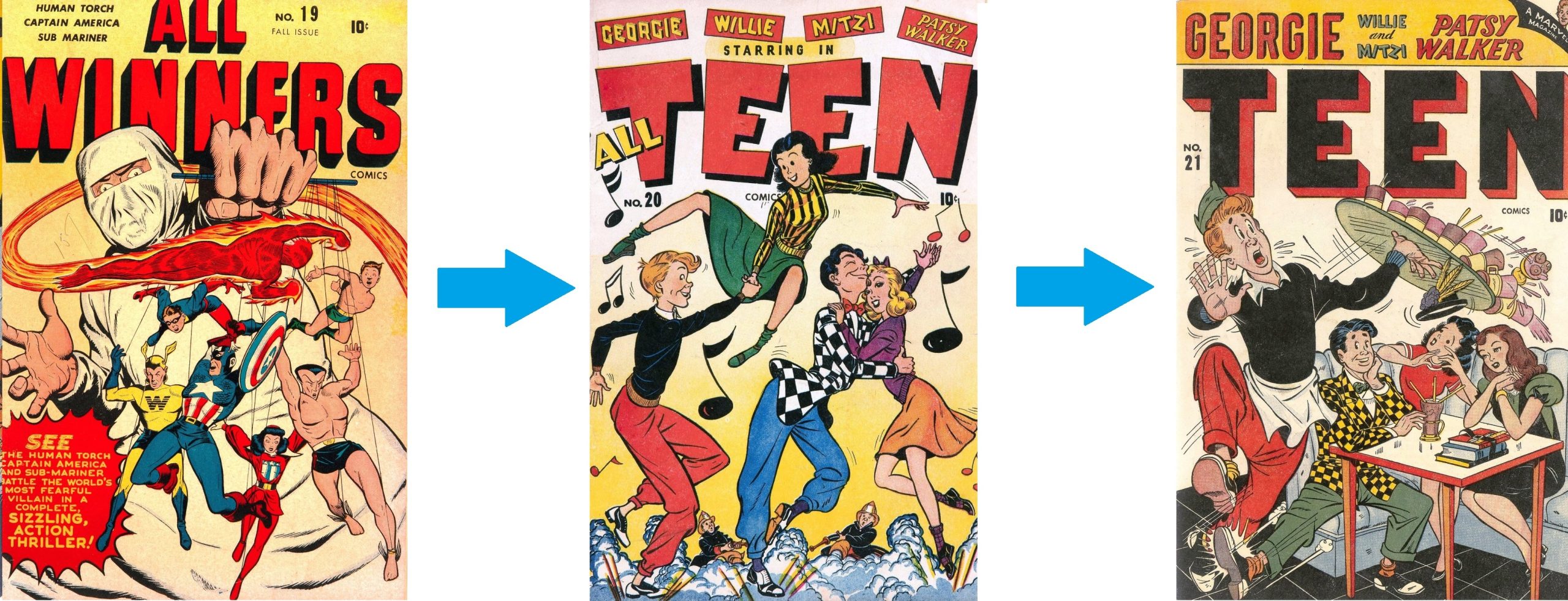
All Winners Comics #19 (Fall 1946) was followed by All Teen Comics #20 (Jan. 1947), which then became Teen Comics #21 (Apr. 1947). Artist credits: #19 and #20 — unknown. Issue #21 — possibly Mike Sekowsky, pencils, unidentified inker.
OK, so where did All Winners Comics #21 fit in? Well, it didn’t and it did. We have to switch over to another Timely title, Young Allies — which ceased with its 20th issue (Oct. 1946). All Winners Comics #21 (Winter 1946-47) used the Young Allies numbering for just one issue, and then the series numbering was borrowed by another new title, Hedy De Vine Comics from #22 (Aug 1947) to #35 (Oct. 1949).
Let’s go visual again:
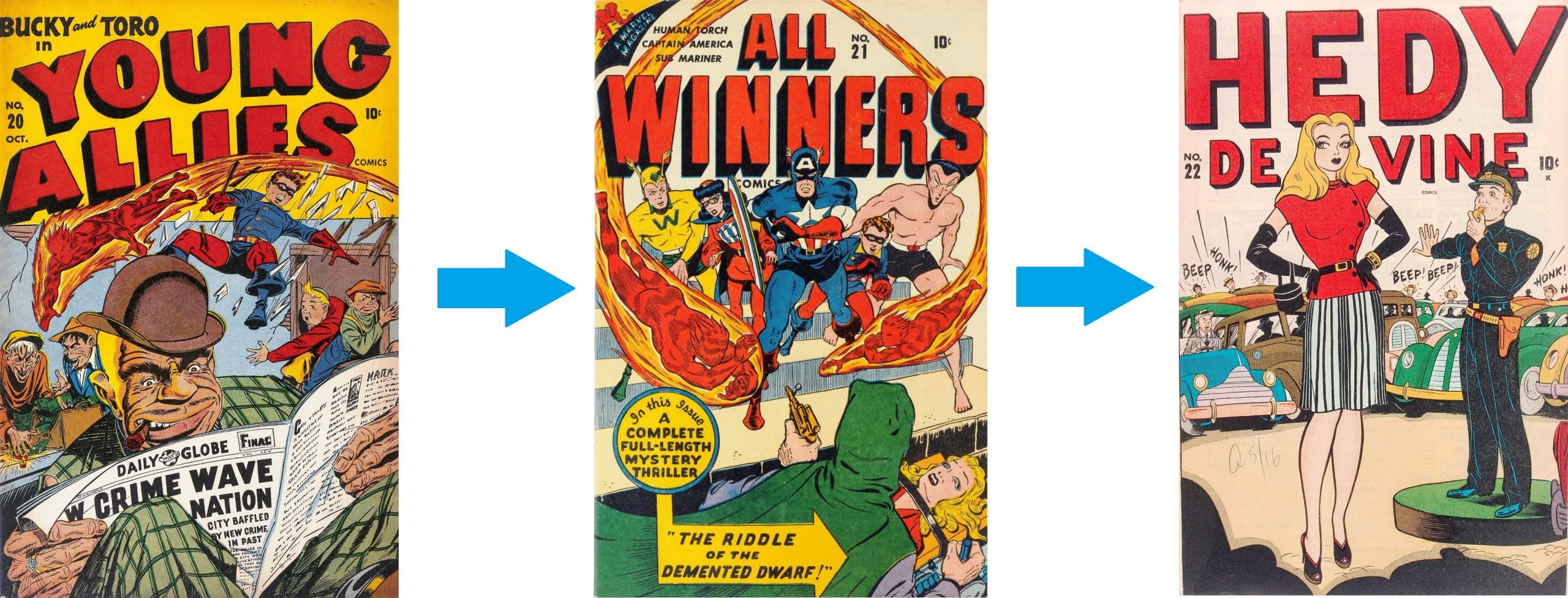
Young Allies #20 (Oct. 1946) was followed by All Winners Comics #21 (Winter 1946-47), which then became Hedy De Vine Comics #22 (Apr. 1947). Artist credits: #20 — Syd Shores; #21 — Shores, penciller, but inker undetermined; and #22 — Ed Winiarski, pencils, and Christopher Rule, inks.
All Winners Comics #21 featured the last All Winners Squad for the Golden Age era, even though about two years later there was a new All Winners #1 (Aug. 1948), which featured individual tales of Cap, Namor, the Torch, and the Blonde Phantom. And, yes, you guessed it, with the second issue it changed its title.
Are you sure you are ready for this??? All Winners #1 became All Western Winners with #2 (Winter 1948) and then Western Winners with #5 (June 1949) — which became Black Rider with #8 (March 1950)… and Western Tales of Black Rider with #28 (May 1955)… and Gunsmoke Western with #32 (Dec. 1955).
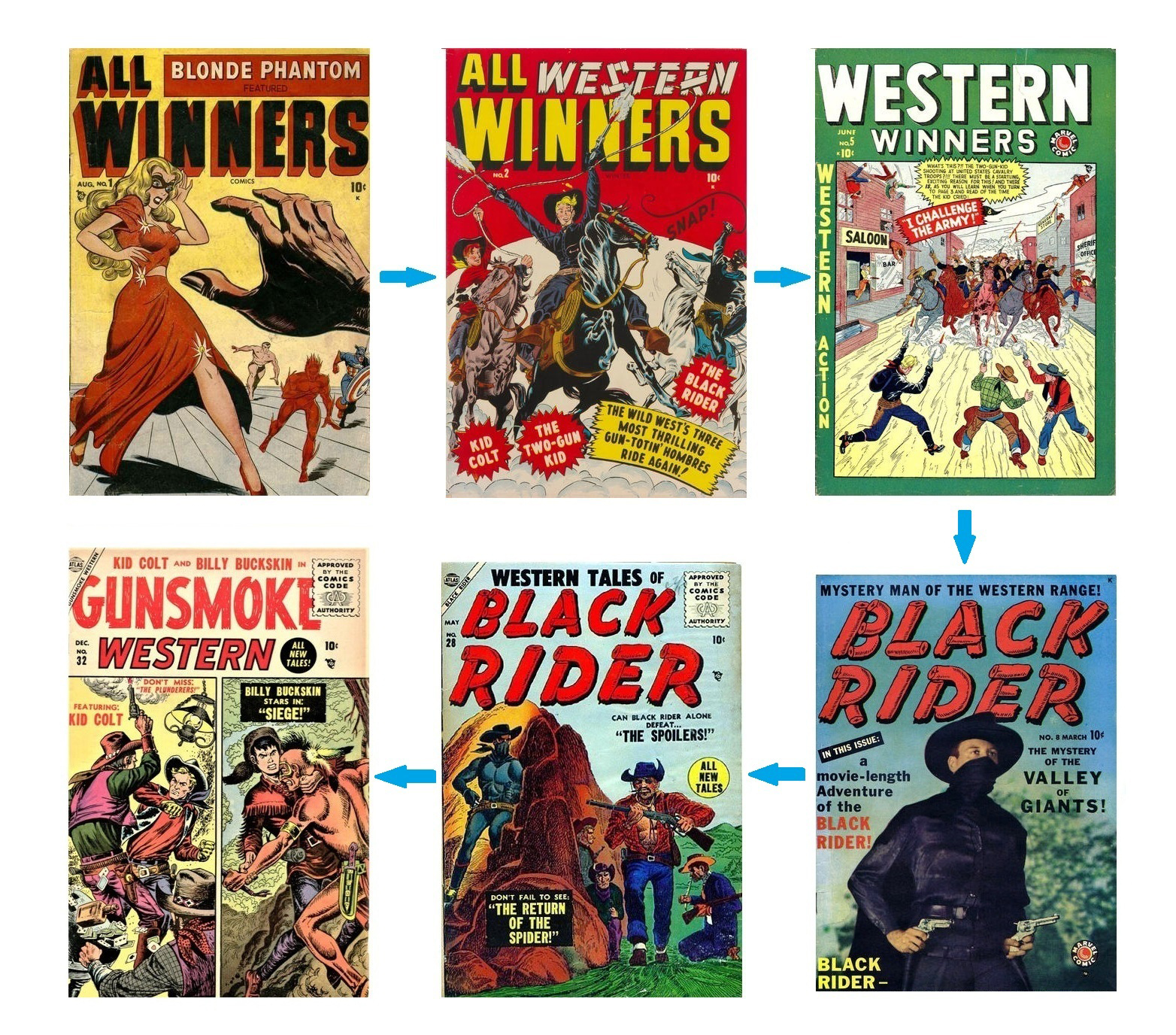
Follow the comic title’s progression, clockwise from top left: All Winners #1 to All Western Winners #2 to Western Winners #5 to Black Rider #8 to Western Tales of Black Rider #28 to Gunsmoke Western #32. Cover art credits: #1 — artist unknown; #2 — Syd Shores; #5 — penciller: John Buscema, inker: unconfirmed; #8 — photo of Stan Lee as Black Rider; #28 — Carl Burgos; and #32 — John Severin doing “Kid Colt” and Joe Maneely drawing “Billy Buckskin.”
Aren’t you sorry now you ever wondered what happened to that missing #20 issue?
—
MORE
— BATWOMAN AT 70: An Anniversary Celebration of 1956’s DETECTIVE COMICS #233 — and Beyond. Click here.
— PLASTIC MAN AT 85: An Anniversary Celebration of 1941’s POLICE COMICS #1 — and Beyond. Click here.
—
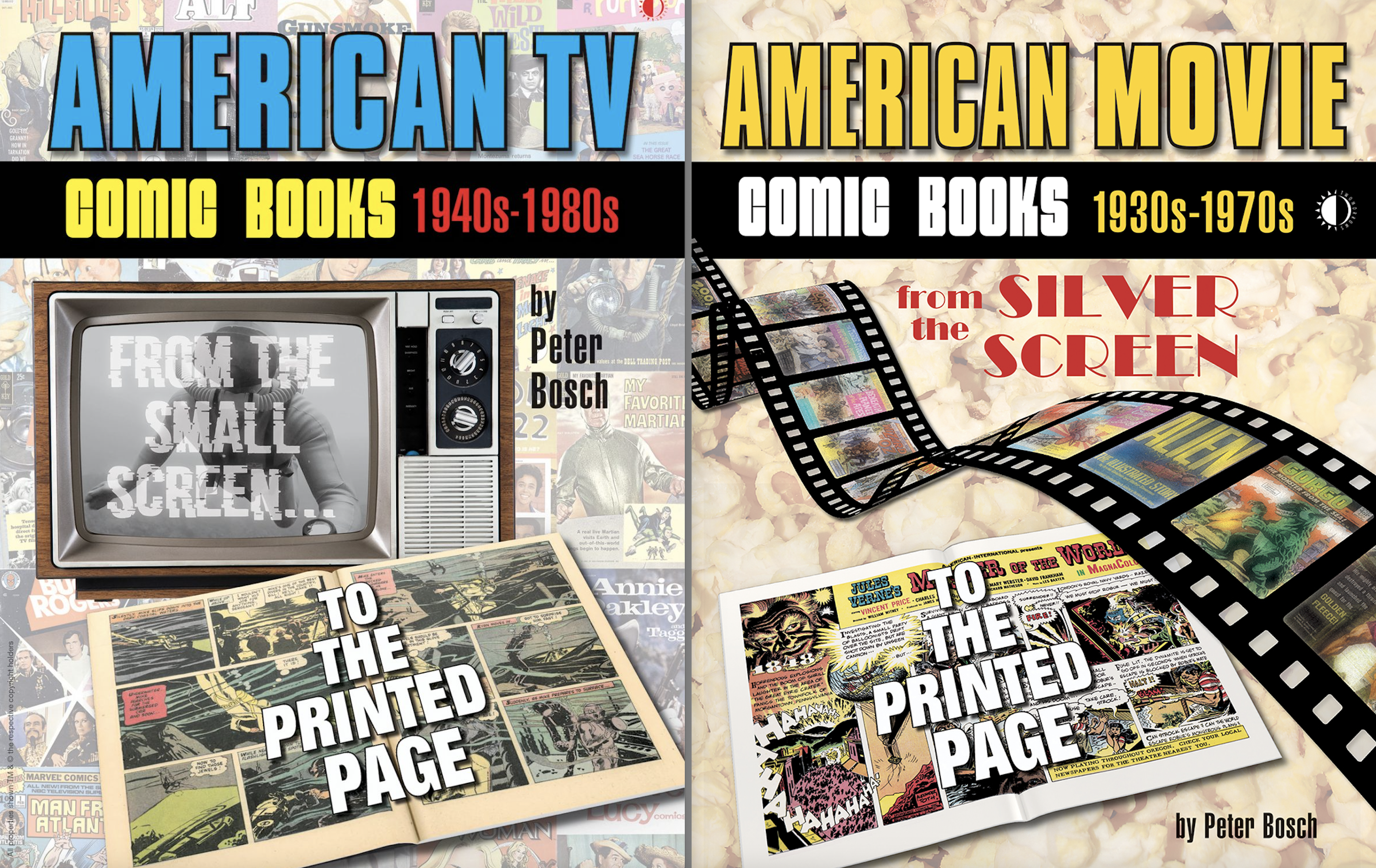
13th Dimension contributor-at-large PETER BOSCH’s first book, American TV Comic Books: 1940s-1980s – From the Small Screen to the Printed Page, was published by TwoMorrows. (You can buy it here.) A sequel, American Movie Comic Books: 1930s-1970s — From the Silver Screen to the Printed Page, is out now. (Buy it here.) Peter has written articles and conducted celebrity interviews for various magazines and newspapers. He lives in Hollywood.

July 24, 2026
Fascinating, thanks for sharing this history of Timely’s multiple tittles.
July 24, 2026
There was a comic in 1977, “what if” v.1, #4, showing the “missing” all-winners squad adventure.
July 24, 2026
“What If The Invaders Stayed Together After WW2”?
July 24, 2026
I’m always struck at how text driven comics were in this period. Compared to a lot of modern storytelling I’ve seen, (that can have a page or two in a row of visual narrative only), you have to think a letterer’s job back then would have been exhausting.
July 24, 2026
So Bill Finger, co-creator of Batman, also wrote for Marvel/Timely. I did not realize that. What other Marvel characters did he write?
July 24, 2026
Great article. Funny, but all this time and I never realized that Namor is Roman backwards 😀 .
I’ll have to track down those Timely reprints. Would love to see Marvel do some facsimiles, too.
July 24, 2026
Were superteams really big for diffrent publishers then? National/All-American had two, the JSA and the Seven Soldiers, and then the next closest thing I can think of would be the Marvel Family. I guess you could count the Young Allies with Bucky and Toro, if you were so inclined.
July 25, 2026
It’s interesting that even going back to the 40s, when Marvel wasn’t Marvel yet, the relationships among the members of the All Winners Squad had more drama than DC’s Justice Society. Namor being accused of working with the bad guy and angrily storming out. Toro leaving the Torch to team up with Namor because he didn’t like how Namor was treated. Torch getting emotional over the first spat between Toro and himself. You just didn’t see that kind of drama with the JSA. On another note – what in the heck was up with Namor’s noggin back in these early days? Even for the 40s his triangle head looked ridiculous.
July 25, 2026
The missing 20 is even more strange than what I had heard!
July 25, 2026
Thanks for the info! From the references to the All-Winners Squad in comics in the 70s, I assumed they’d had plenty of comic book adventures as a team. And this one was just so-so in my opinion. (And according to the retconning of the continuity, that’s not “Our” Cap and Bucky by this time!)
July 25, 2026
Thanks for this article Peter. Someone can correct me if I am wrong on this, but I think All-Winners 19 has “our” Steve as Cap and James Buchanan Barnes as Bucky. What If? #4, which Roy Thomas retconned as the story that took place right after 19, and becomes a pseudo All-Winners 20, established that Steve and James disappeared and were replaced by others. So it would only be in All-Winners 21 that Steve and James would no longer be in the roles of Cap and Bucky.
July 26, 2026
Thanks for the article! And wild how Timely let the titling and numbering of its comics at the time get so out of hand. I know continuity and serialized storytelling weren’t as unwieldly back then as they are today, but just keeping track of what titles are what must have been a nightmare.
Also, and this may be my pro-superhero bias speaking, but the downgrade from superhero to other genres is just staggering. I understand that people were getting tired of superheroes after World War II, but I couldn’t imagine going from reading the adventures of Captain America to reading those teen comics. Westerns never did it for me either.
Also also, Namor’s head lol
July 31, 2026
Looks like a Carl Pfuefer Namor, with the triangle head and really beady eyes.