
Scott and Dan hit up the comics racks from 75 years ago…
This week for RETRO HOT PICKS, Scott and I are selecting comics that came out the week of May 20, 1951.
Last time for RETRO HOT PICKS, it was the week of May 13, 1984. Click here to check it out.
(Keep in mind that comics came out on multiple days, so these are the issues that went on sale between May 17 and May 23.)
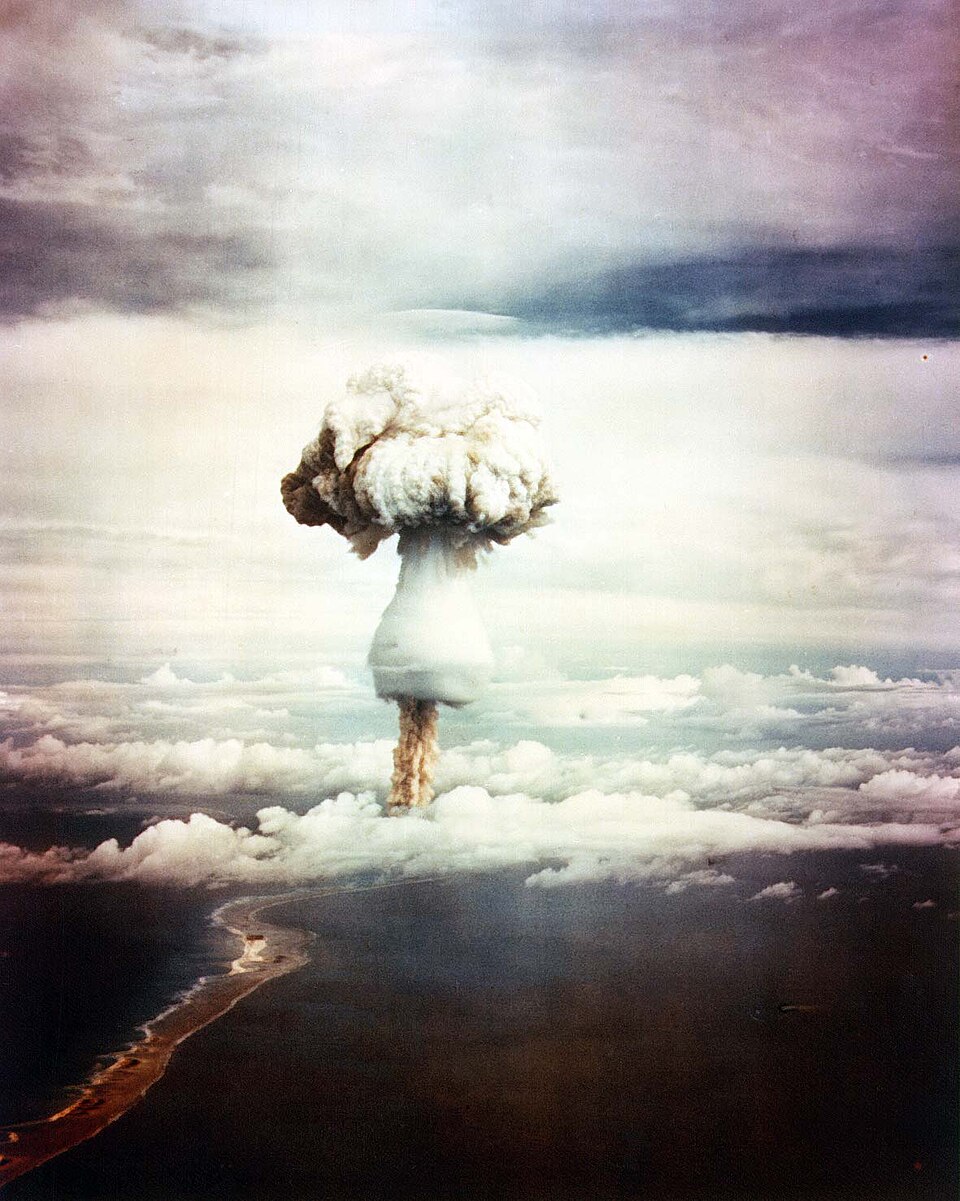
So, let’s set the scene: The U.S. government was feverishly looking to strengthen its weapons stock by amping up its nuclear arsenal, and in May 1951, scientists and military leaders were about to conclude tests — dubbed Operation Greenhouse — that would ultimately lead to the hydrogen bomb.
The tests were held on islands of the Eniwetok Atoll in the Pacific’s Marshall Islands, and on May 9, researchers had a breakthrough — the world’s first thermonuclear burn. It was the third of four tests, labeled “George,” and produced a yield of 225 kilotons. (One kiloton equals the energy release of roughly 1,000 tons of TNT. By comparison, the atom bombs dropped on Hiroshima and Nagasaki yielded 15 and 20 kilotons, respectively.)
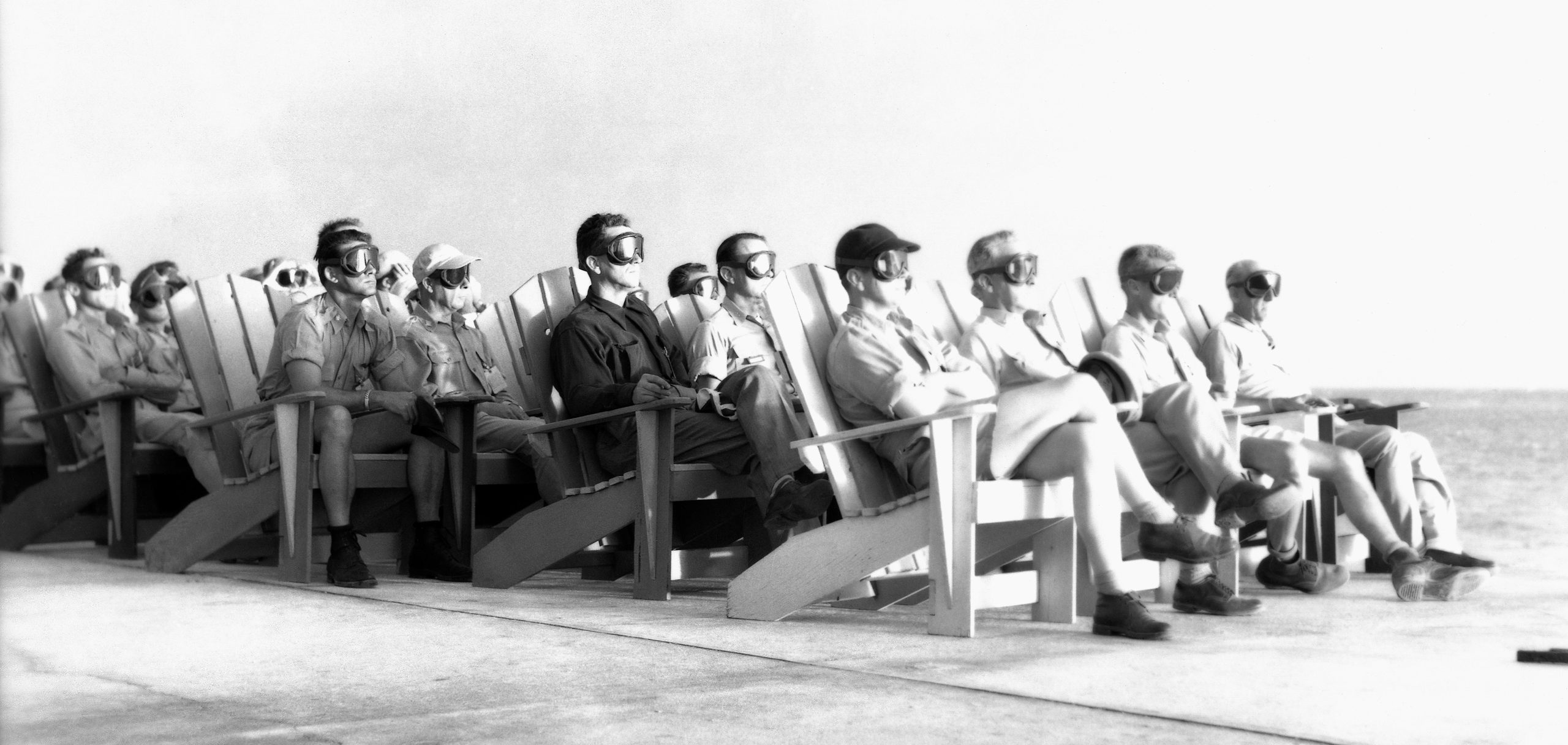
The tests began April 8 — as chronicled in the infamous photograph of military VIPs observing a detonation from the “Officer’s Beach Club Patio” like it was another day in paradise. (The U.S. would detonate the first hydrogen bomb about a year and half later, in November 1952.)
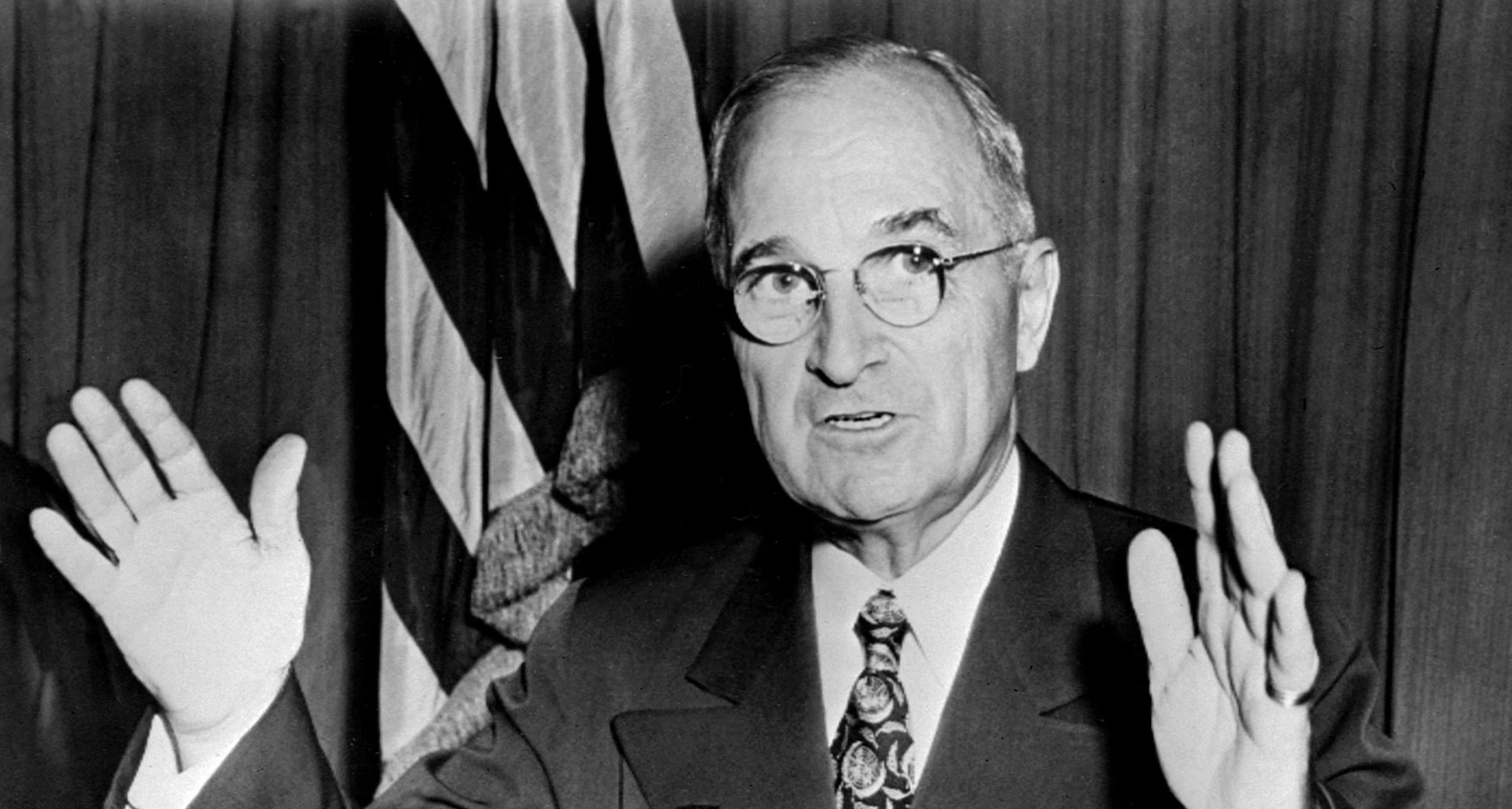
Meanwhile, the Korean War was still raging, but Stateside, much of the debate surrounded President Truman’s inflammatory firing of popular Gen. Douglas MacArthur in April. Senate committee hearings on the dismissal — pushed by Republicans who wanted to go after Truman, a Democrat — began in early May. The move actually backfired when MacArthur’s extremist, warhawk views became more widely understood, and the general’s popularity began to wane. History showed Truman’s move to be exceptionally gutsy and contributed to a retrospective re-evaluation of his presidency as one marked by integrity, toughness and accountability.
IN OTHER NEWS
— On May 21, Manhattan’s 9th Street Art Exhibition — also known as the Ninth Street Show — began. It was the formal debut of abstract expressionism and was the first American art movement — the New York School — with global impact. Jackson Pollock and Willem de Kooning became international stars as New York supplanted Paris as the center of artistic influence.
— Major League Baseball was seeing a gradual changing of the guard. It wasn’t clear yet, but New York Yankees star Joe DiMaggio, one of the greatest to ever set foot on a diamond, was in his final year. At the same time, the Yankees and New York Giants each featured a highly touted rookie looking to make an immediate impact: The Yankees had 19-year-old Mickey Mantle, who hit his first home run May 1. On May 25, 20-year-old Willie Mays would play his first game for the Giants. Both young men struggled early on, as rookies often do. You could say they both eventually got their acts together.
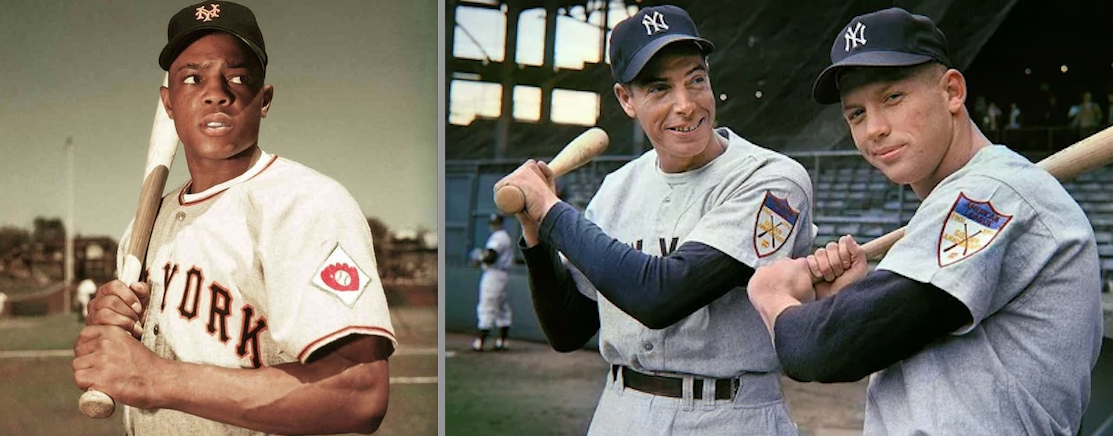
Mays, DiMaggio, Mantle in 1951
The Great Caruso, starring Mario Lanza, was the big hit at movie theaters. Other screen favorites included the comedy Father’s Little Dividend, starring Spencer Tracy, Joan Bennett, and Elizabeth Taylor; Fred Astaire and Jane Powell’s Royal Wedding; and the laugh-out-loud Born Yesterday with the larger-than-life Judy Holliday.
Uncle Miltie’s Texaco Star Theatre was far and away the most popular show on the growing medium of television, while The Lone Ranger was the top program that wasn’t a variety show or an anthology series. Radio was still the primary broadcast source in the home but it was only a matter of time before TV would overtake it. The Adventures of Ozzie and Harriet was the post popular radio show.
How High the Moon, by Les Paul and Mary Ford was the most popular song and Mario Lanza Sings Selections from The Great Caruso was the most popular album.
—
Dan Greenfield, editor, 13th Dimension
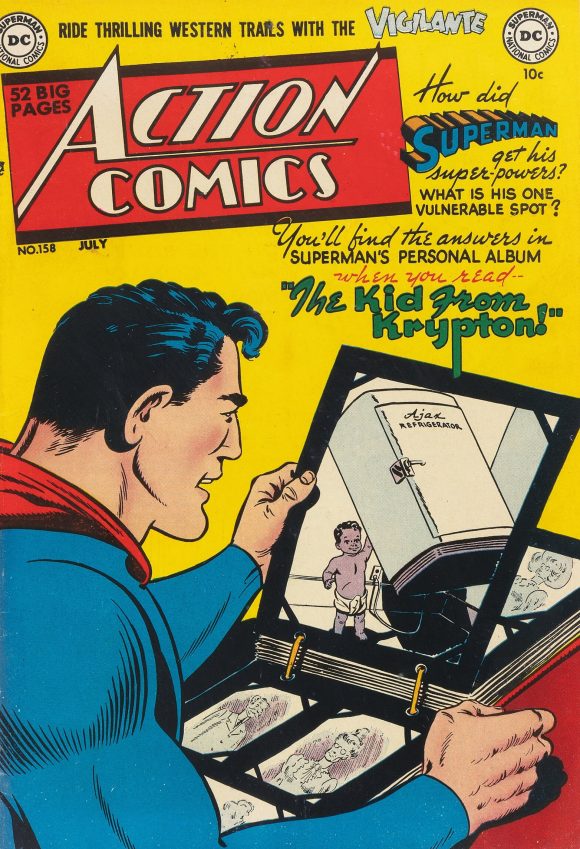
Action Comics #158, DC. A kryptonite meteor — colored orange, oddly — is set to hit a small town and the Man of Steel must figure what to do! Oh no! The story also recounts his origin. Congo Bill, Tommy Tomorrow, and Vigilante are among the other features.
—
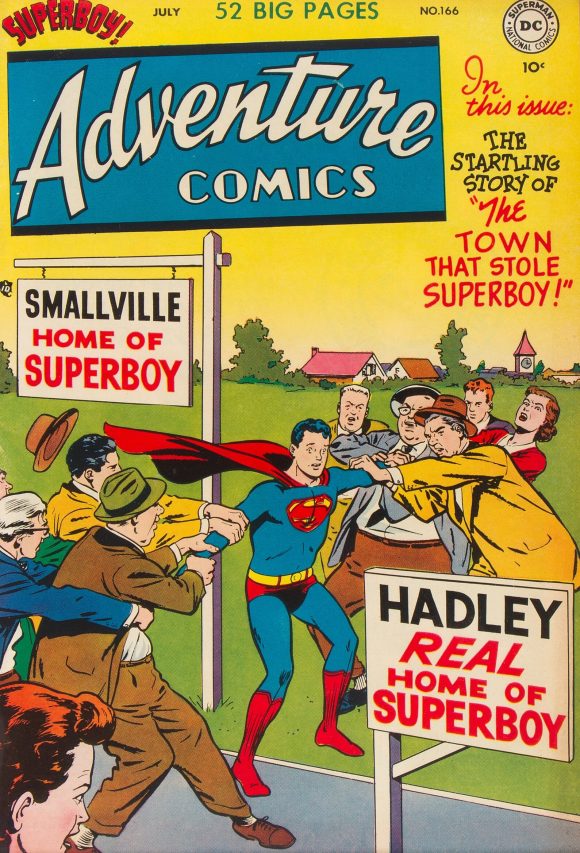
Adventure Comics #166, DC. Superboy also had the spotlight this week.
—
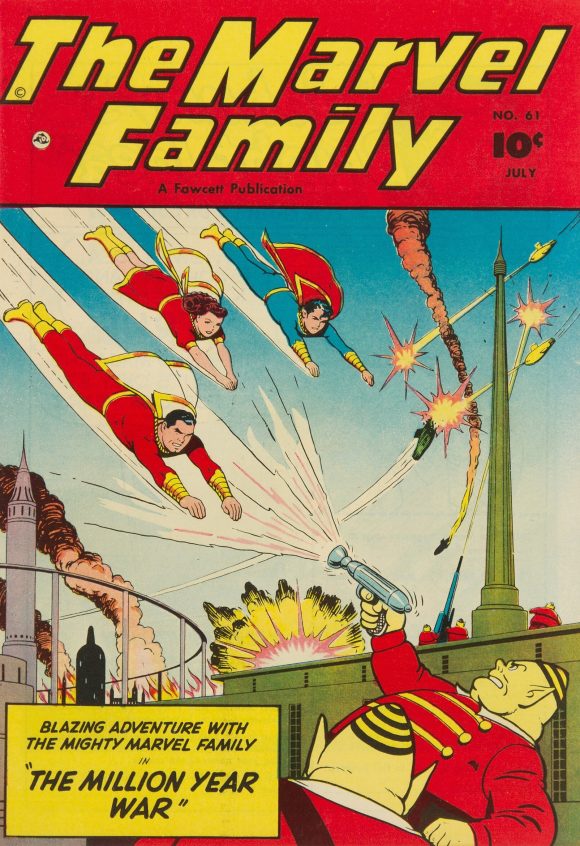
The Marvel Family #61, Fawcett. The Marvel Family’s days were already numbered. The latest round in a 12-year copyright-infringement legal battle between DC and Fawcett was held this month in a federal appeals court.
—
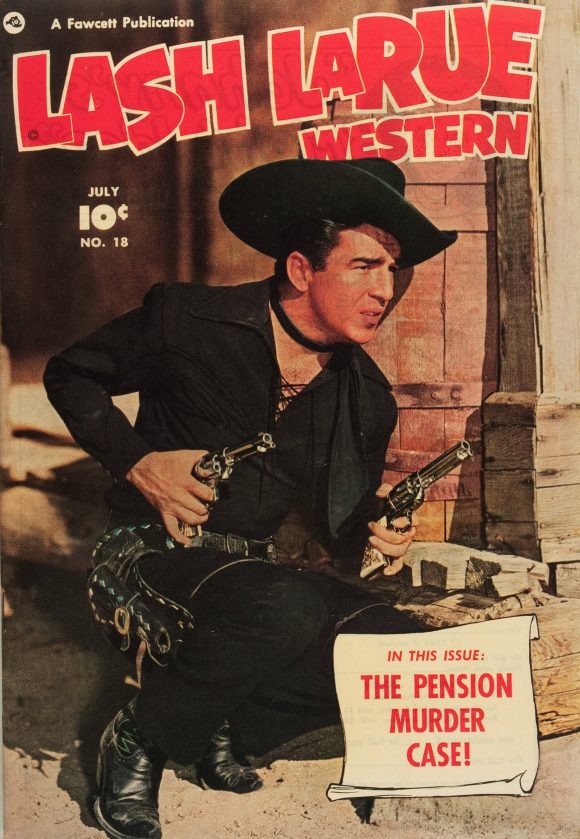
Lash LaRue Western #18, Fawcett. How about you, Lash LaRue? Can you keep your spurs from jingling and jangling?
—
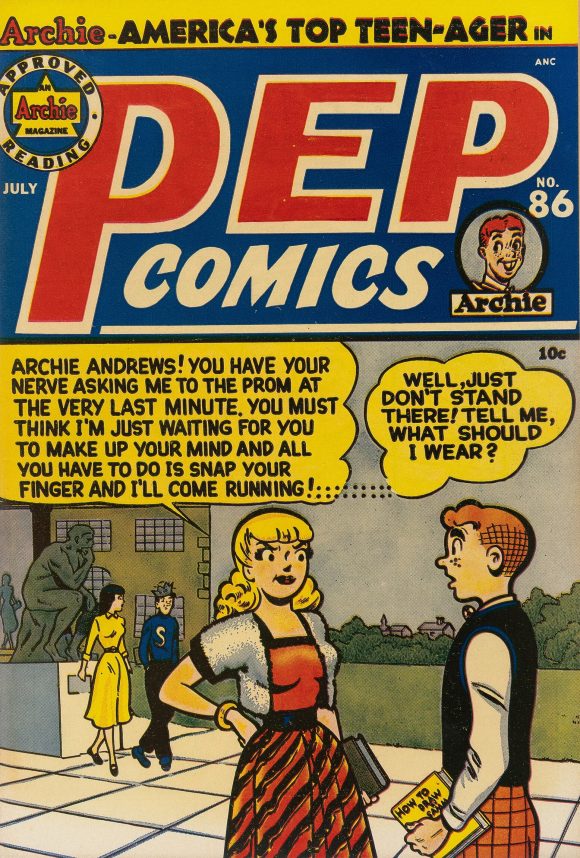
Pep Comics #86, Archie. I say it all the time: Archie does not deserve Betty. She could do SO much better.
—
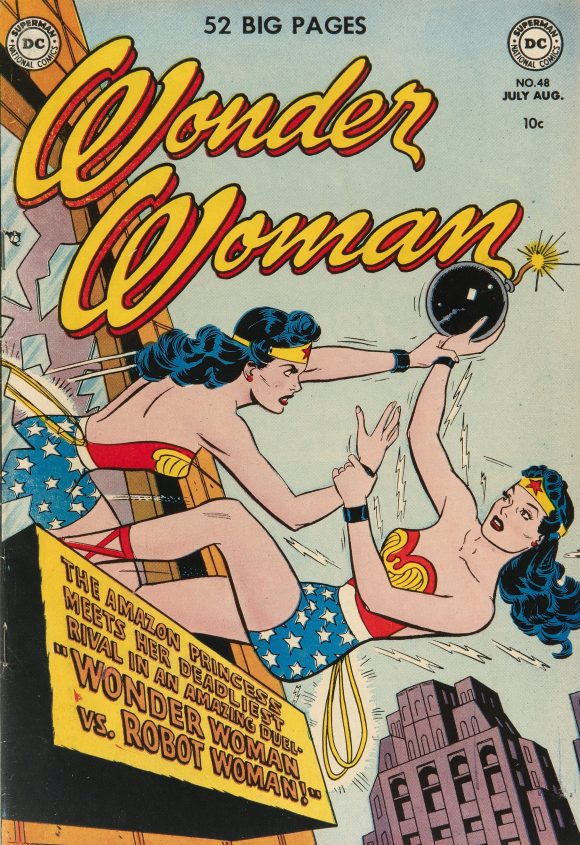
Wonder Woman #48, DC. Is it just me or did Wonder Woman fight a double more often than other superheroes? Am I right about that? It seems that way.
—
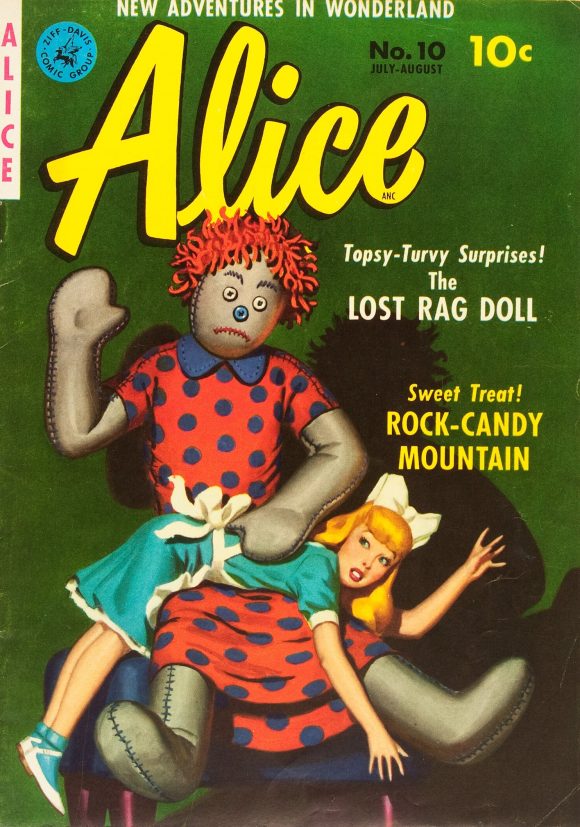
Alice #10, Ziff-Davis. What the absolute fuck?
—
Scott Tipton, contributor-at-large, 13th Dimension
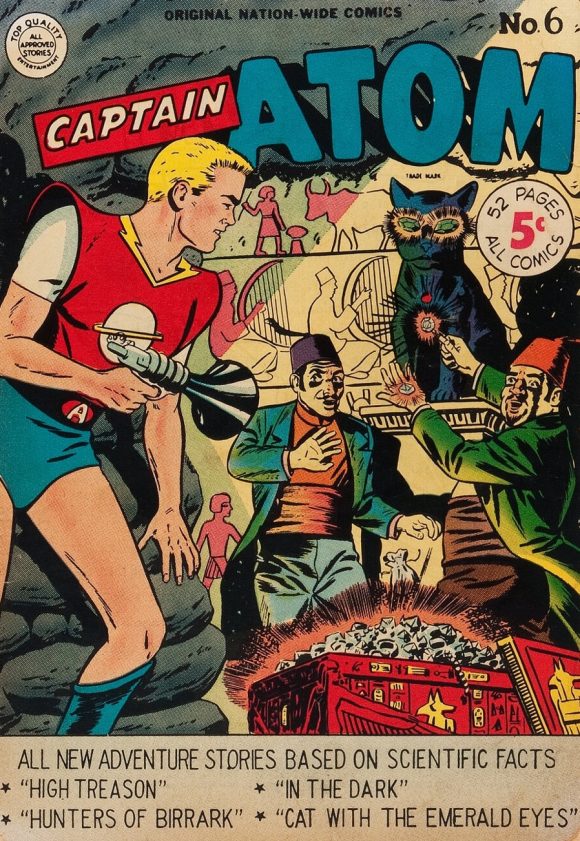
Captain Atom #6, Nation-Wide. I served with Captain Atom, I knew Captain Atom, Captain Atom was a friend of mine. You are no Captain Atom.
—
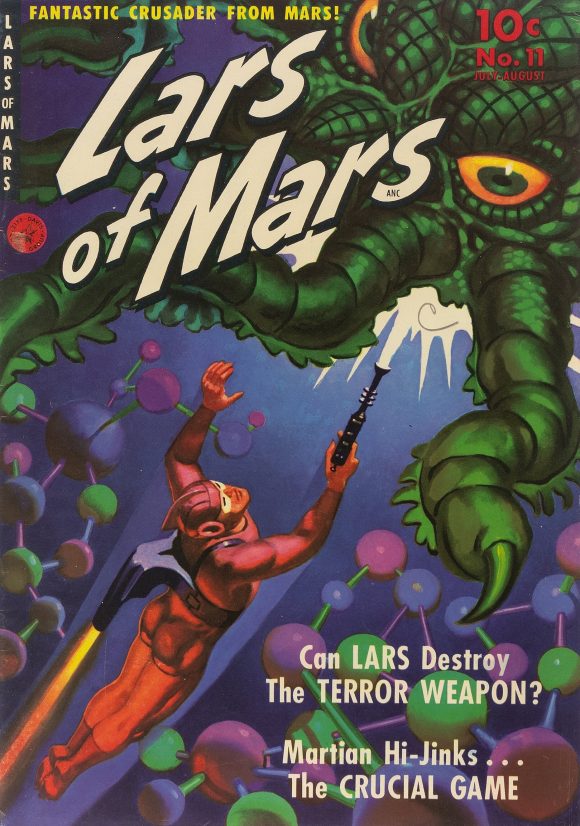
Lars of Mars #11, Ziff-Davis. A much better seller than their earlier effort, “Luranus of Uranus.”
—
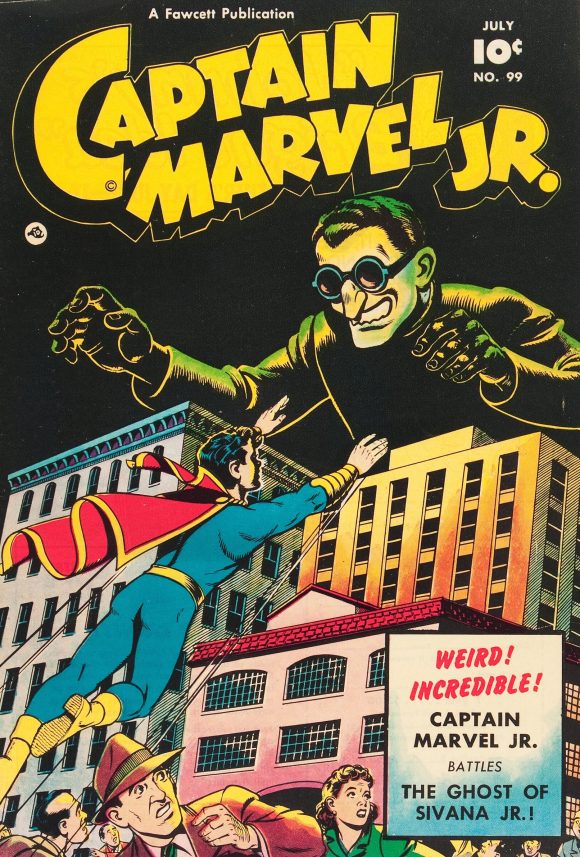
Captain Marvel, Jr. #99, Fawcett. A surprisingly moody cover for Junior, courtesy of Kurt Schaffenberger.
—
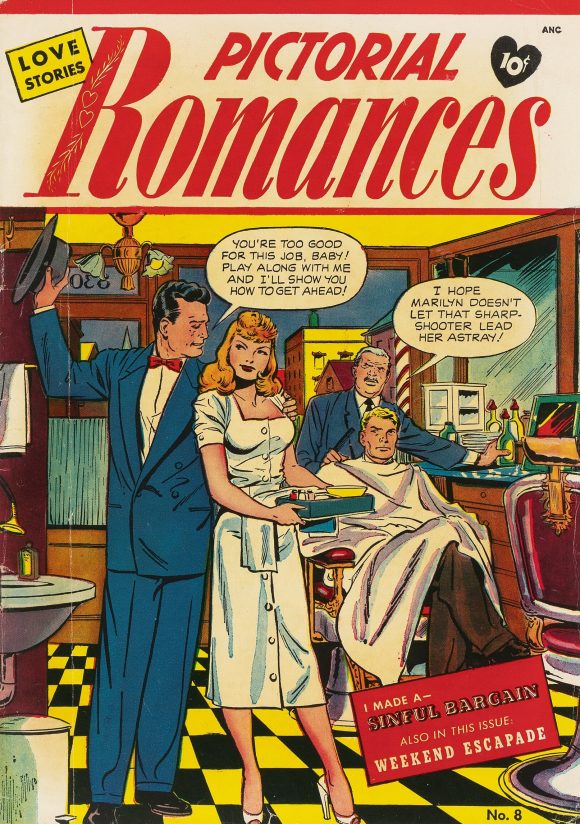
Pictorial Romances #8, St. John. How could she walk away from such a lucrative career as a barber’s assistant?
—
MORE
— RETRO HOT PICKS! On Sale The Week of May 13 — in 1984! Click here.
— RETRO HOT PICKS! On Sale The Week of May 6 — in 1977! Click here.
—
Comics sources: Mike’s Amazing World of Comics and the Grand Comics Database.

May 20, 2026
What a different world of comics than today!
That Lars of Mars cover is pretty awesome!
May 20, 2026
Jerry Siegel was the editor of the short lived Ziff-Davis line of comics. Clunky titles like “Lars of Mars” and that weird Alice cover give clues why it flopped.
There was a 5 cent comic in the 50s? The only one I knew of was Fawcett’s brief Nickel Comics, which introduced Bulletman.
May 21, 2026
Great setup of historical context! Thanks!
May 21, 2026
Thank you!