
PLUS: The first appearances of Phantom Lady, the Human Bomb, and MORE…
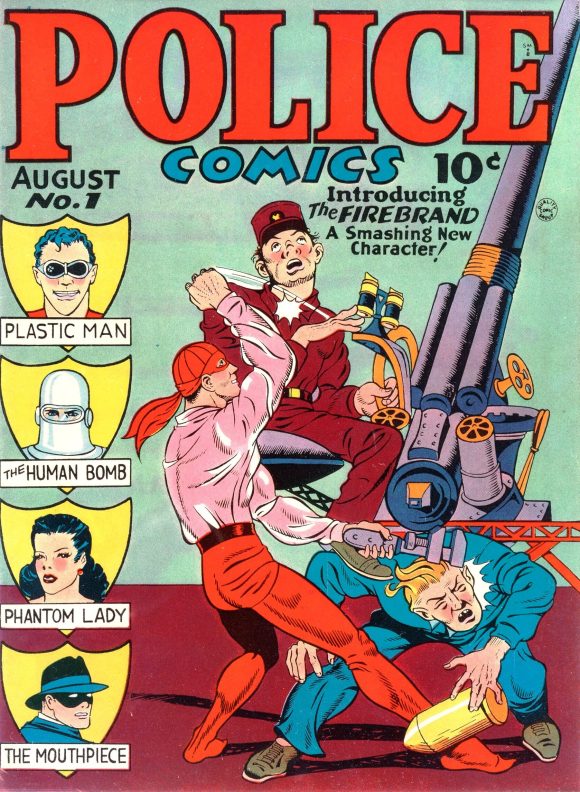
Cover art by Gill Fox. Cover dated August 1941.
—
(For POLICE COMICS: An 85th Anniversary Celebration in 13 COVERS, click here.)
—
By PETER BOSCH
Less than two weeks after Quality Comics released Military Comics #1 (which introduced Blackhawk), the publisher came out with another action winner in the form of Police Comics #1 on May 14, 1941, 85 years ago.
That first issue introduced a number of superheroes, including one that comic fans would cherish ever after — Plastic Man.
The contents of that first issue were:
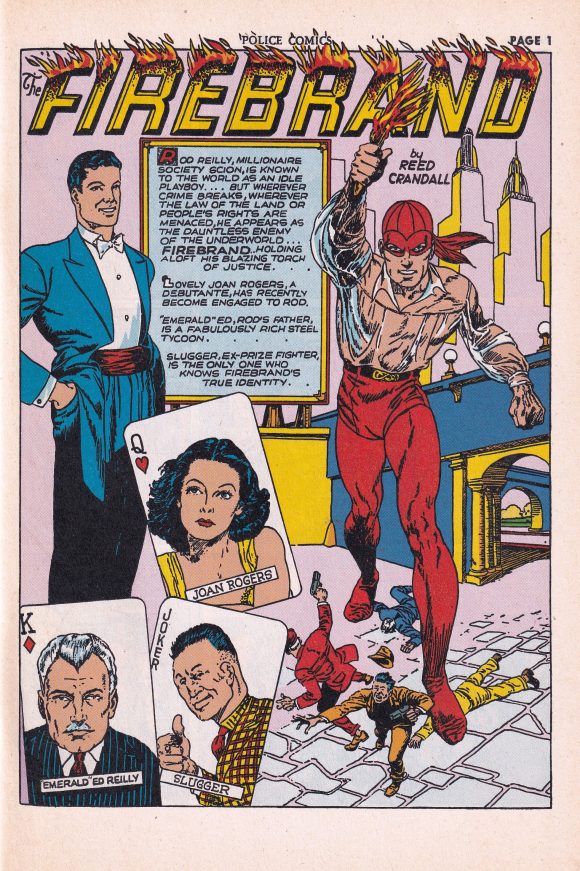
Firebrand, with script by I.M. Iger and art by Reed Crandall
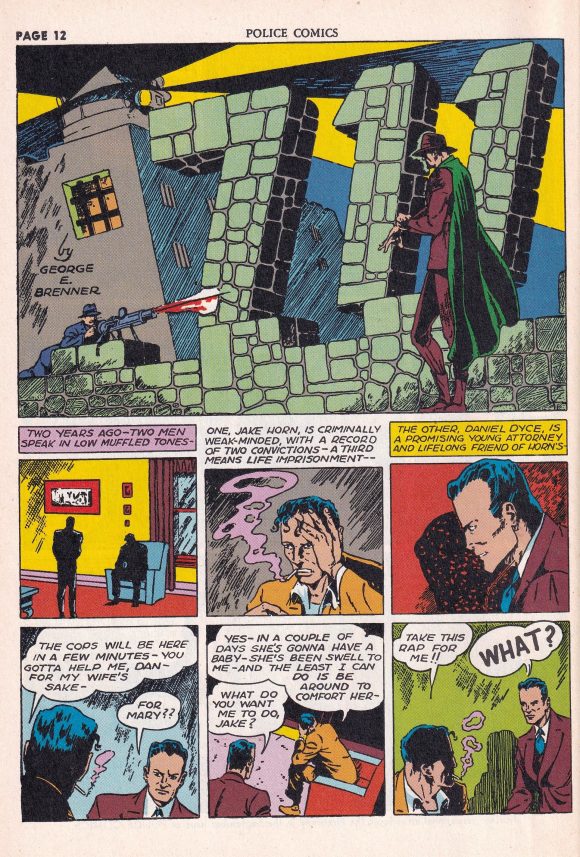
711, with story and art by George E. Brenner
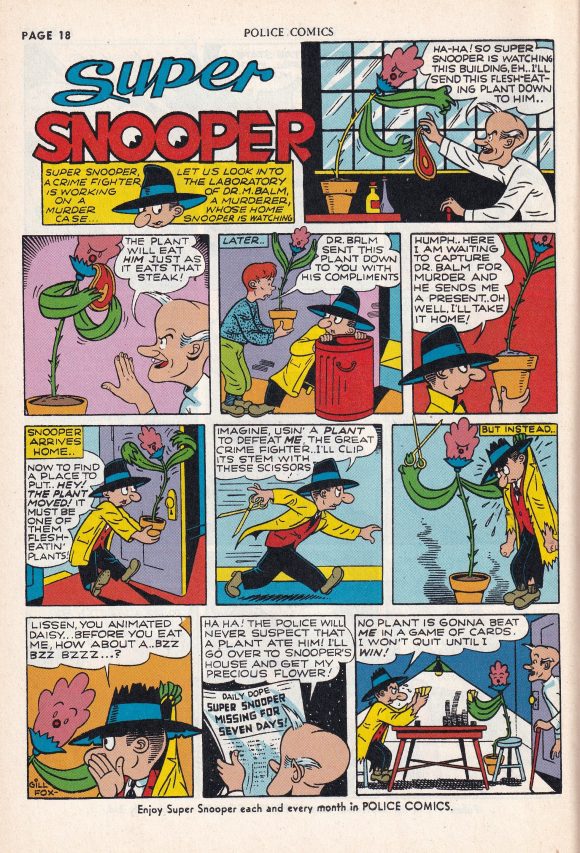
Super Snooper, written and drawn by Gill Fox
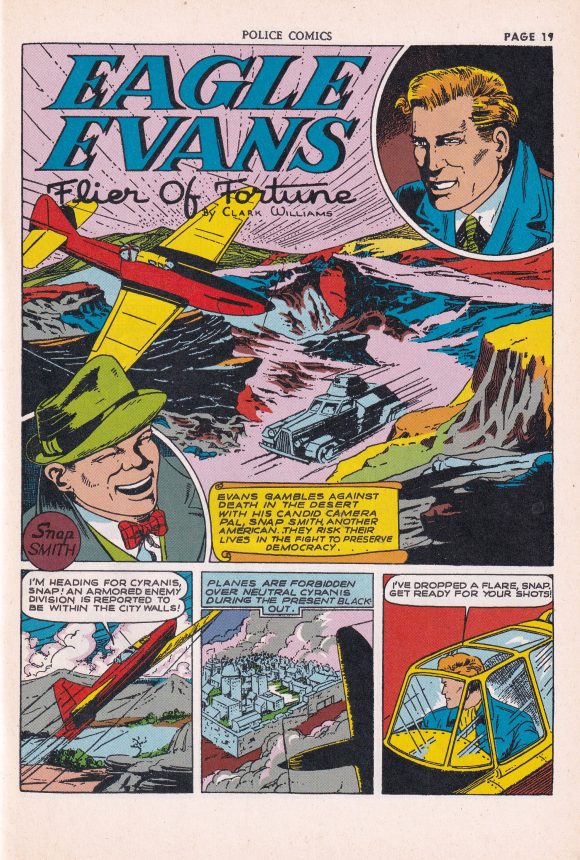
Eagle Evans, script and art by Clark Williams, a house name
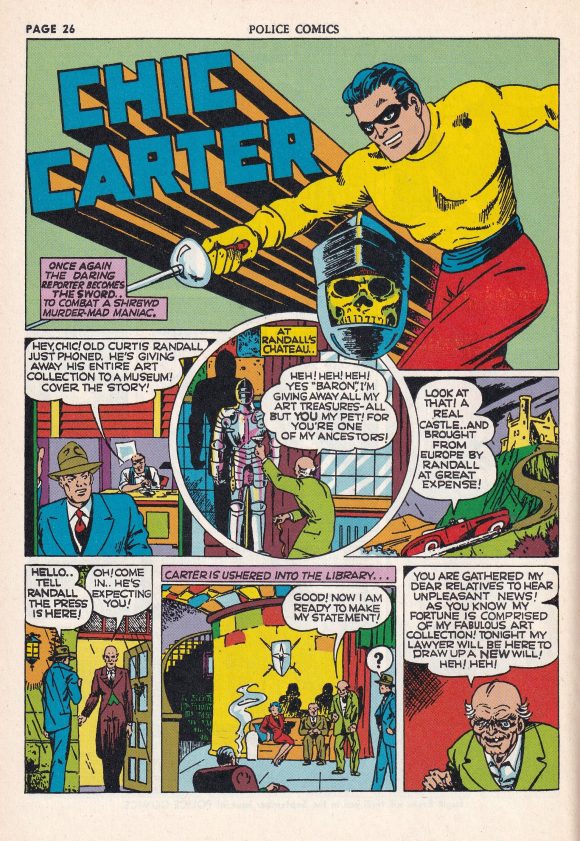
Chic Carter. In DC’s Millennium Edition: Police Comics #1 (Sept. 2000), Will Eisner is credited with story and art. However, the Grand Comics Database cites sources saying Vern Henkel wrote and drew the strip.
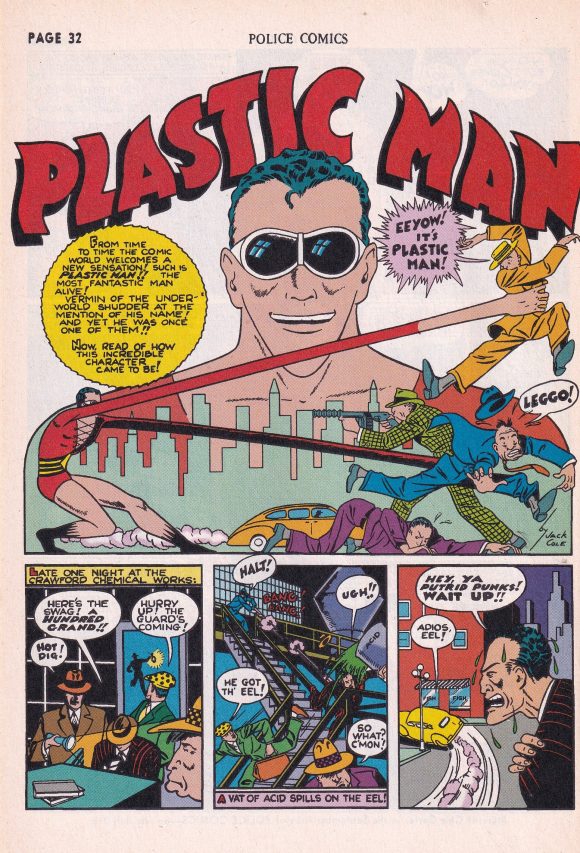
Plastic Man, created, written, and drawn by Jack Cole
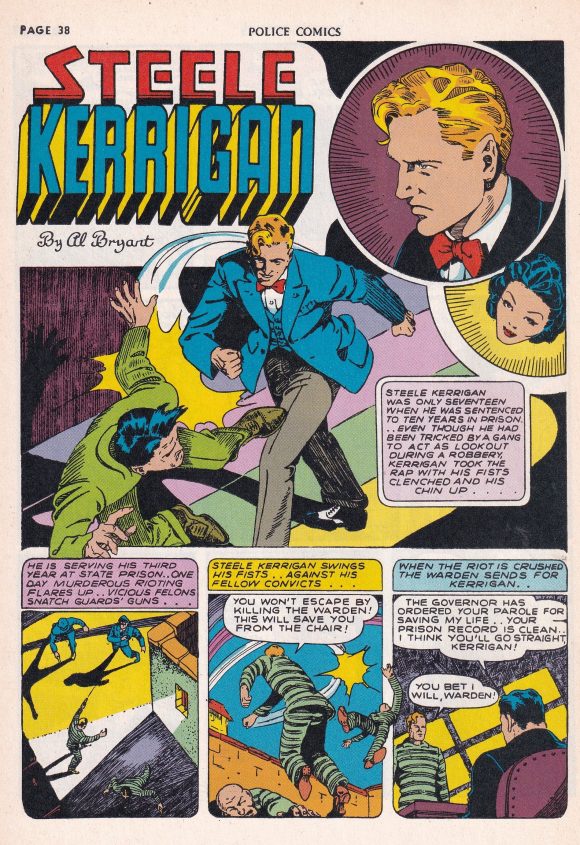
Steele Kerrigan, art by Al Bryant, scripter unknown
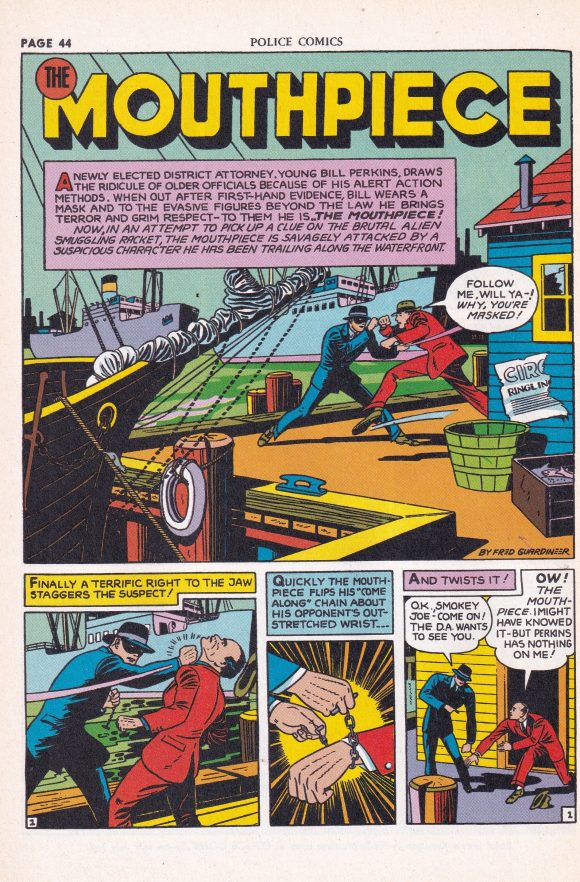
The Mouthpiece, with script and art by Fred Guardineer
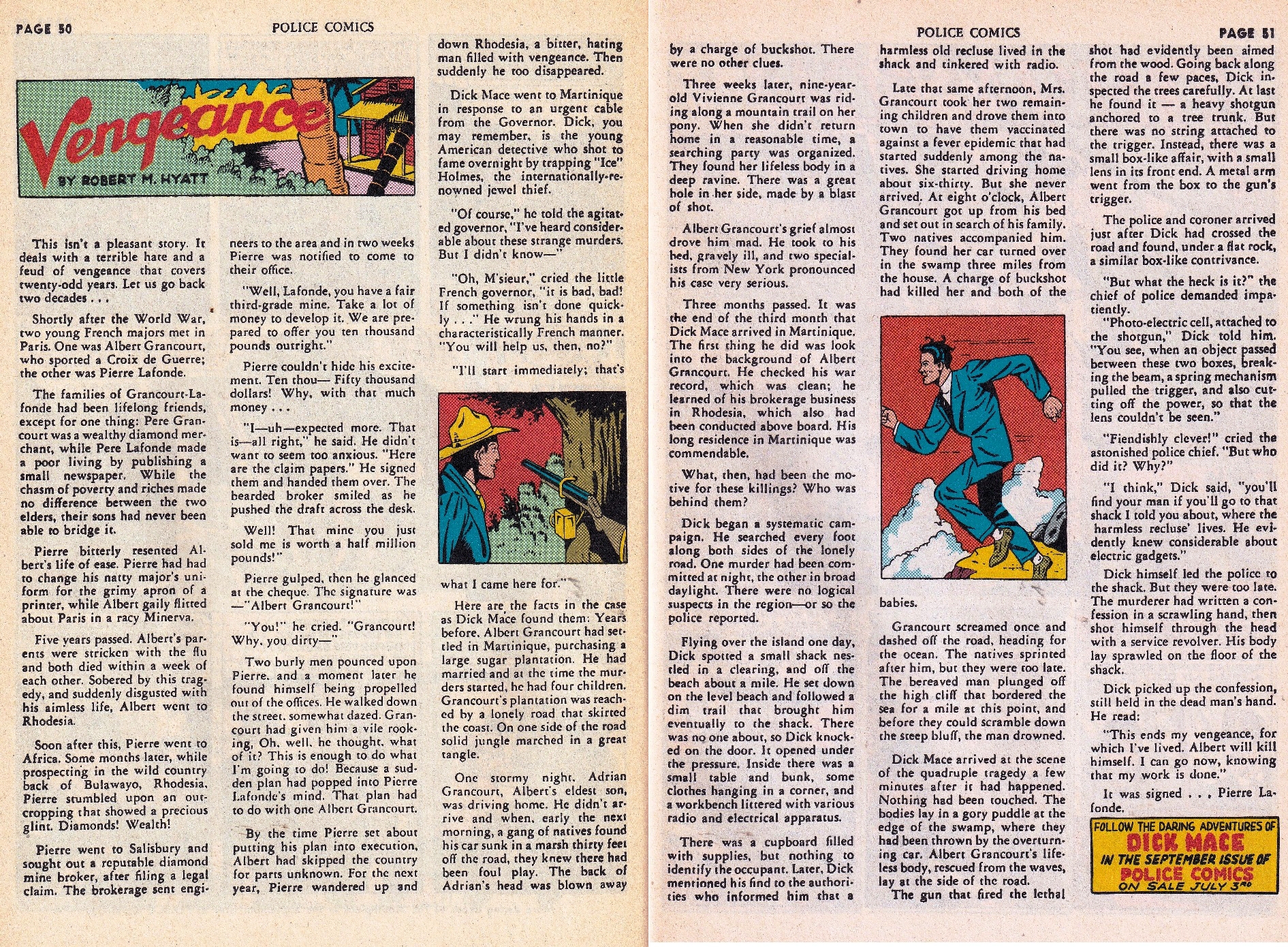
“Vengeance” text piece by Robert M. Hyatt, artist unconfirmed
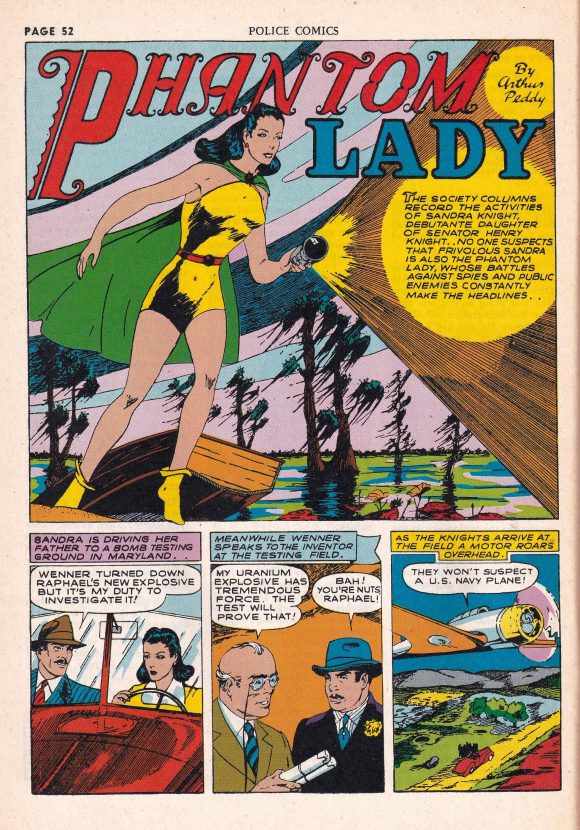
Phantom Lady. Art by Arthur Peddy, unknown writer
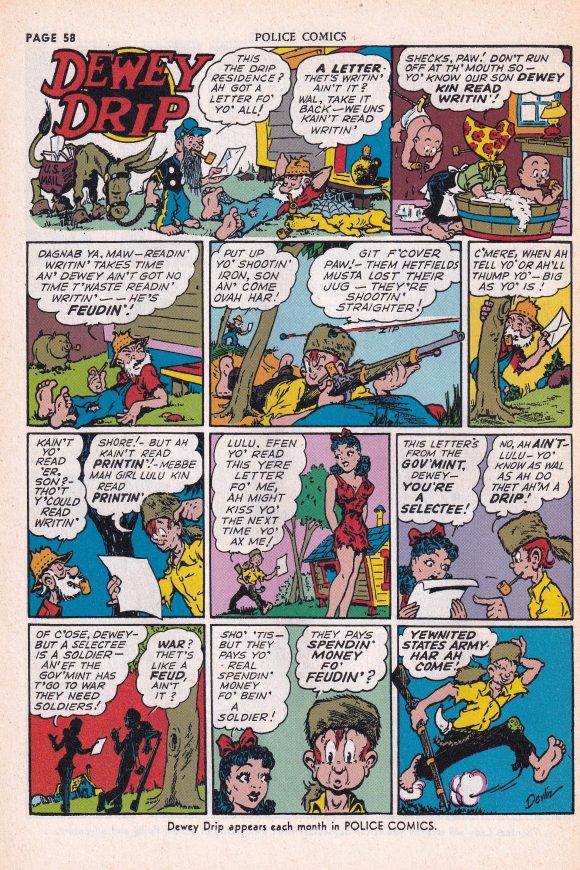
Dewey Drip, written and drawn by John Devlin
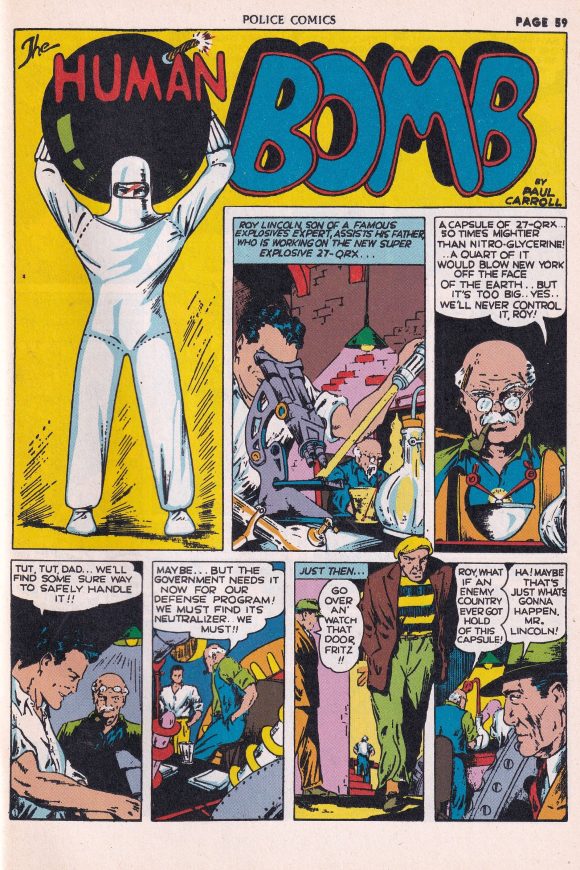
The Human Bomb. It is credited as written and drawn by Paul Carroll, a pseudonym for Paul Gustavson (real name: Karl Paul Gustafson).
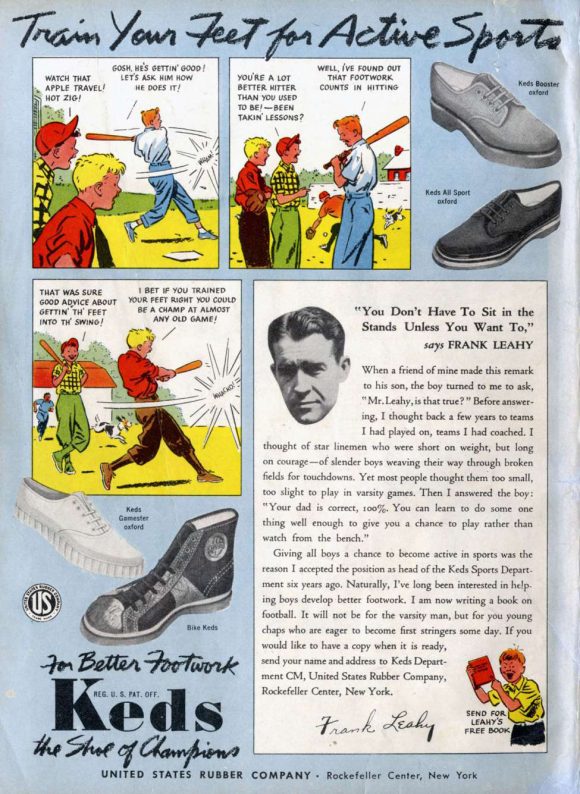
Back cover
Quality’s editors were quick to realize they were wrong in backing Firebrand for the cover feature and lead story. With Issue #5, his cover position was supplanted by Plastic Man, the book’s breakout star, who also took over the lead story spot in #9. Firebrand was out of the book completely after 1942’s Issue #13.
Creator Jack Cole’s wacky creativity made Plastic Man one of the best comic book features of the entire Golden Age. The popularity of the stretchable sleuth was such that he would continue to retain the cover spot through #102 (Oct. 1950). In addition, he was spun off into his own title for 64 issues.
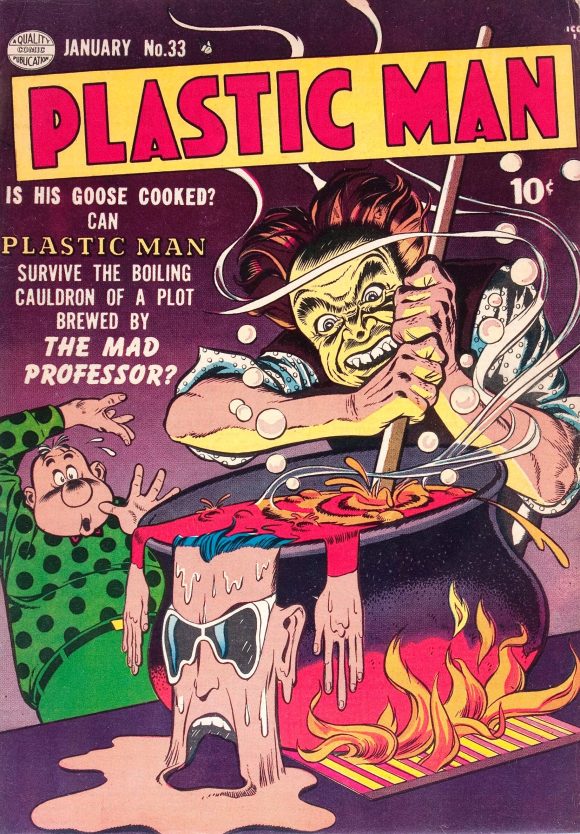
Plastic Man #33 (Jan. 1952). Cover art by Jack Cole (pencils) and Sam Burlockoff (inks).
The next major star of the series was Will Eisner’s The Spirit, who joined the title in Police Comics #11 (Sept. 1942). Though the strips were reprints from the character’s famed Sunday newspaper sections, he would remain a steady feature for almost all issues through #102. His adventures in Police Comics were supplemented by a separate Quality title of his own that ran for 22 issues between 1944 and 1950.
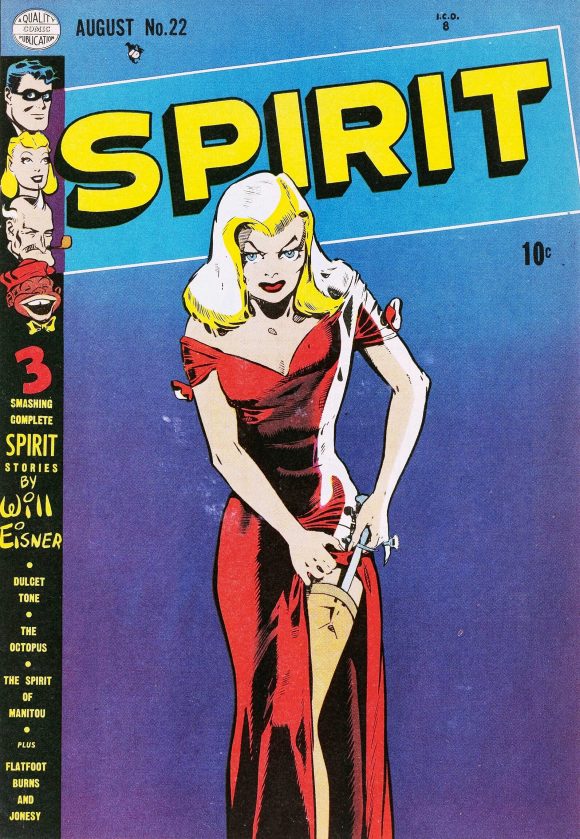
The Spirit #22 (Aug. 1950). Art by Will Eisner.
In late 1950, there was a major shift in Police Comics’ content. With Issue #103 (Dec. 1950), the series shelved costumed heroes and pivoted to tales of government agents, private detectives and, fittingly, police officers. The lead feature for the series was now “Ken Shannon, Private Eye,” with the other successful feature being “T-Man” (starring U.S. Treasury Agent Pete Trask). Both characters soon received their own titles.
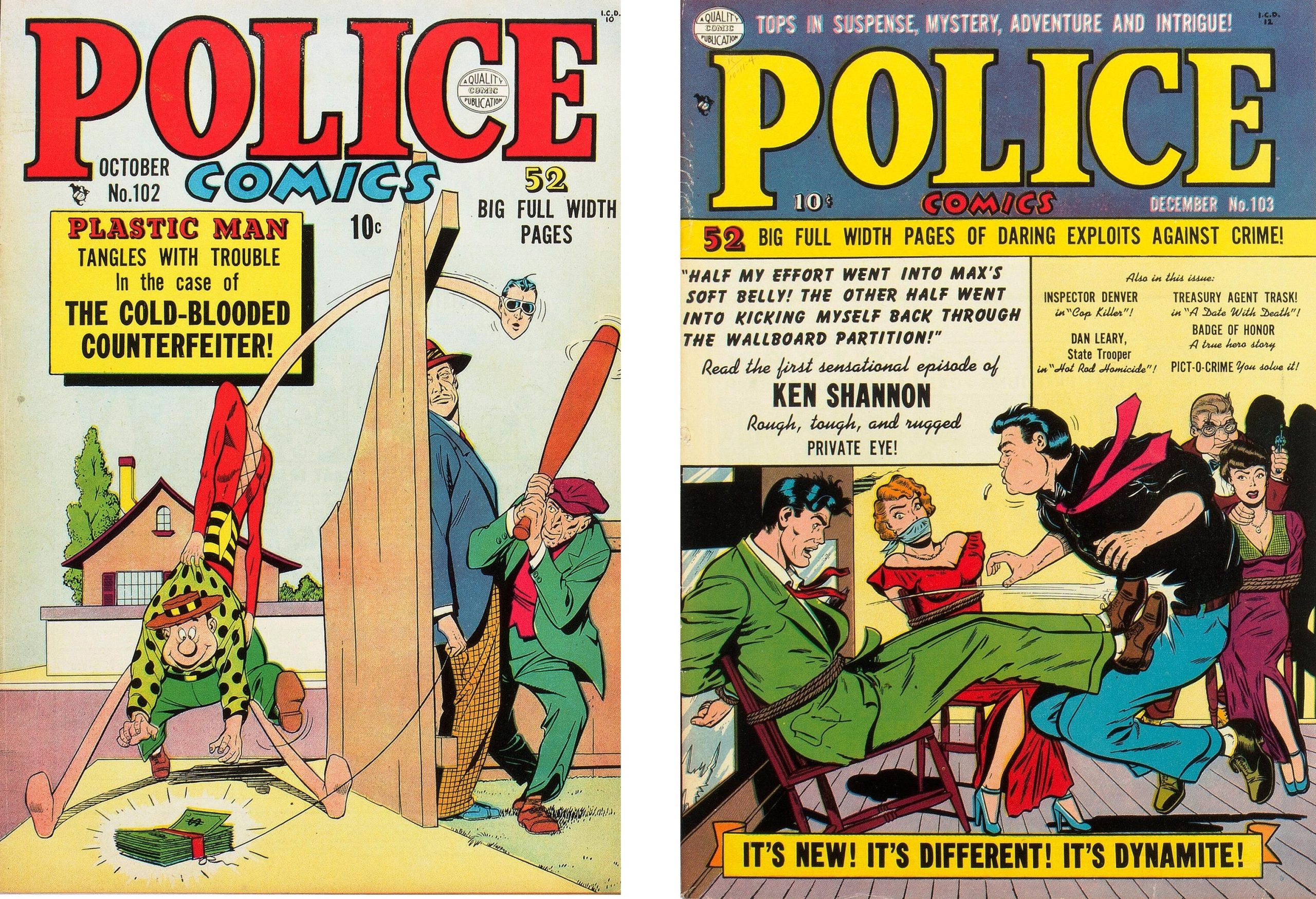
Police Comics #102 and #103. Artists unknown for both covers.
Police Comics finally came to an end with 1953’s Issue #127 (the only time “T-Man” got the cover).
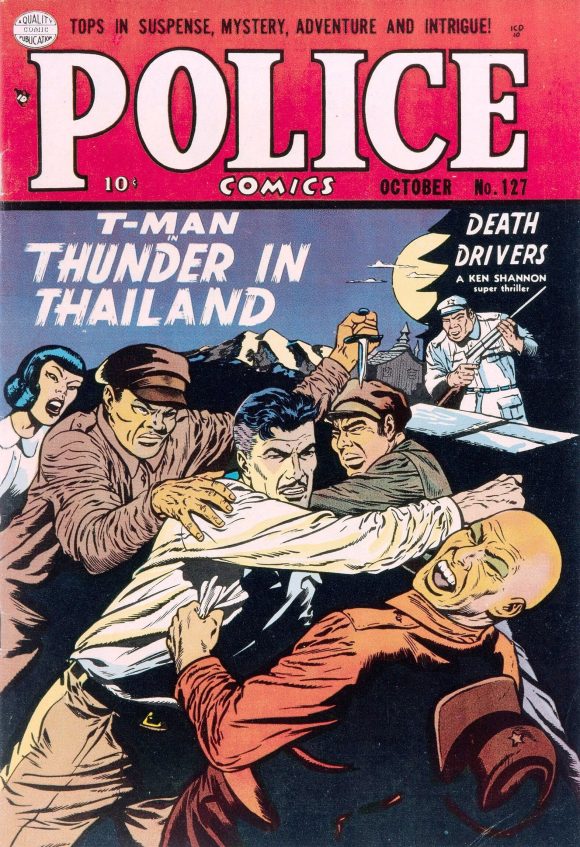
The penciler of the cover is unconfirmed but the inker is believed to be Chuck Cuidera.
Of course, this was not the end for many of the costumed heroes appearing in the title. When Quality decided to stop publishing comics in 1956, DC Comics acquired several of their properties — Blackhawk, G.I. Combat, Heart Throbs, and Robin Hood Tales — plus costumed heroes that appeared in Police Comics, Smash Comics, Crack Comics, and other titles.
Blackhawk was the first of these heroes to be embraced by the DC logo. The second hero came a decade later: In House of Mystery #160 (July 1966), when Robby Reed uses his “Dial H for Hero” device, he turns into Plastic Man.
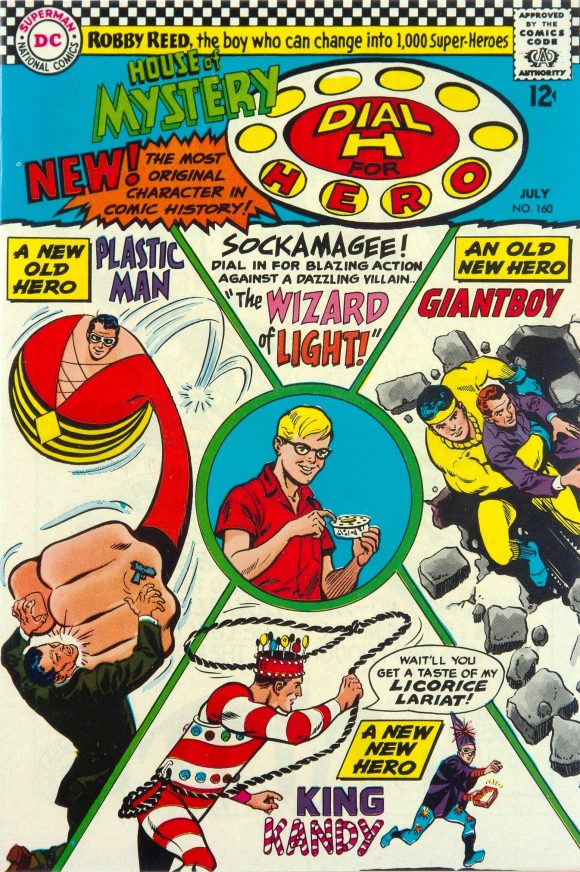
Cover art by Jim Mooney
DC created a new Plastic Man comic book series later in 1966. However, in Issue #7, (Nov.-Dec. 1967), we learn that the star of is actually the son of the original Plastic Man… who returned in that issue’s tale.
The Bronze Age saw the return of many Quality heroes who’d appeared in Police Comics and other titles; they showed up in the pages of Justice League of America, Freedom Fighters, All-Star Squadron, and other series.
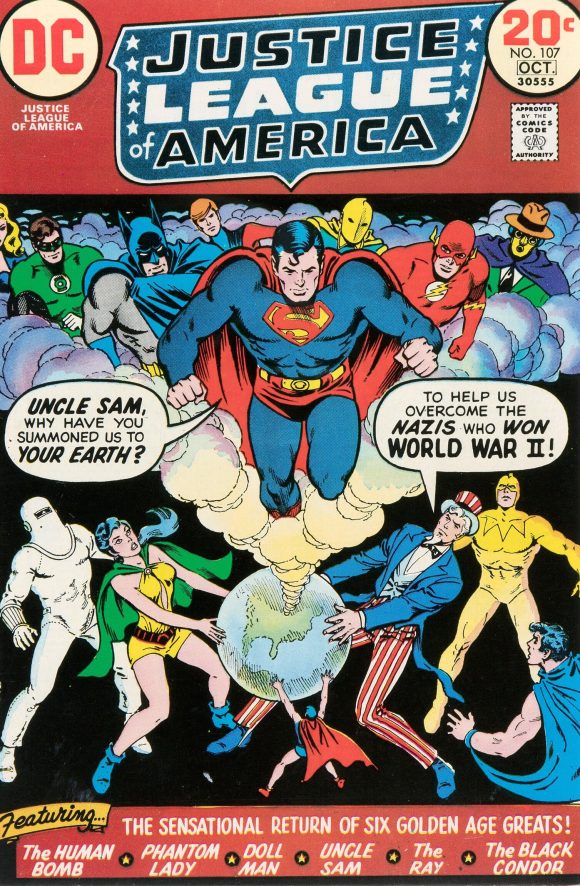
Justice League of America #107 (Sept.-Oct. 1973). Art by Nick Cardy.
And, in 1979, Plastic Man, who was buried in the middle of that first issue of Police Comics, became the star of his own animated series on ABC-TV, The Plastic Man Comedy/Adventure Show.
That’s quite a stretch!
—
MORE
— POLICE COMICS: An 85th Anniversary Celebration in 13 COVERS. Click here.
— 85 YEARS OF BLACKHAWK: An Anniversary Celebration of 1941’s MILITARY COMICS #1 — and Beyond. Click here.
—
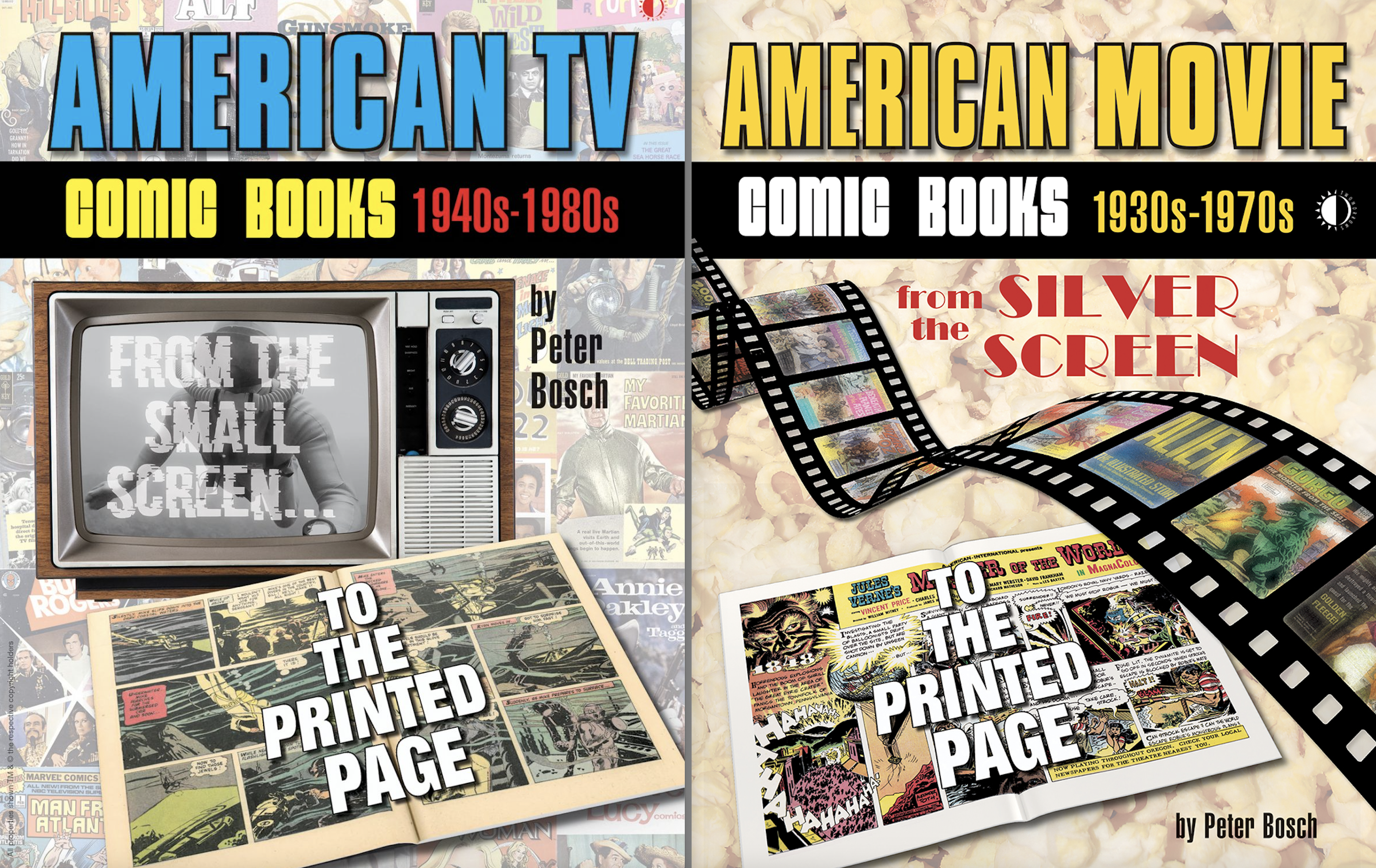
13th Dimension contributor-at-large PETER BOSCH’s first book, American TV Comic Books: 1940s-1980s – From the Small Screen to the Printed Page, was published by TwoMorrows. (You can buy it here.) A sequel, American Movie Comic Books: 1930s-1970s — From the Silver Screen to the Printed Page, is out now. (Buy it here.) Peter has written articles and conducted celebrity interviews for various magazines and newspapers. He lives in Hollywood.

May 15, 2026
That run of JLA with those classic Cardy covers was my start with those characters. And I loved the “introduction” of Quality heroes.
May 15, 2026
Police Comics – One of those titles that still hasn’t gotten a facsimile edition!
(Mentioned earlier this week: I just got a near-complete lot of DC Millennium Editions, which includes a reprint of Police Comics #1, as well as The Spirit #1. Next time we get facsimile solicitations, I’ll give a list of which Millennium Editions still haven’t gotten a facsimile equivalent–there’s a lot of them!)
May 15, 2026
A Police Comics #1 Facsimile Edition was released by DC on August 7, 2024. I’m glad to have picked up a copy! Now I’d love to see a DC Finest Humor book that would include in its contents Plastic Man 1966 issues as well as Inferior Five issues. That, and an All-Star Squadron DC Finest so we can see the Bronze Age versions of Police Comics characters.
May 15, 2026
Oy. Not only is there a Police Comics facsimile, but I own a copy! I stand corrected!
May 15, 2026
Just a couple of points: first, we find out in Justice League of America #107 that the original Plastic of Earth X died along with some other Quality heroes. And second, it’s interesting that Police Comics didn’t feature any character that was a part of the police for its first 100 issues (give or take a few issues).
May 15, 2026
Hi, Allen. Actually, that’s not correct. One of the long-running characters of Police Comics was Manhunter, whose secret identity was Dan Richards, a rookie cop.
May 15, 2026
So they had “a” police officer whose stories were about him acting as a masked hero. Still not a whole lot of police for a comic called “Police Comics”.
May 16, 2026
Great article.