
The celebrated Mr. K. pays tribute to the Bronze Age stalwart, who turns 79…
By PAUL KUPPERBERG
Jack C. Harris was my favorite kind of editor.
The kind that gave me work.
Back when I was getting started, when the grizzled old veteran editors like Julie Schwartz and Murray Boltinoff were working with their regular crews of experienced writers, and the New Wave editors like Dick Giordano and Joe Orlando were seeking out young talents with a lot more talent than this newbie, Jack was himself a relative newbie and more or less one of my contemporaries, as we discussed in our talk in my book Direct Conversations: Talks With Fellow DC Comics Bronze Age Creators.
If you need proof that comics fandom was a career path to becoming a comics pro, Jack C. Harris — born 79 years ago, on August 30, 1947 — is one of the people who made the case. Like so many of us who came of age during the Silver Age, Jack started out on the reader’s side of the stories. He bought the comics, read the letter columns, followed the creators, attended conventions, and immersed himself in the growing community of fans who believed comic books were worth taking seriously, not just as entertainment, but as a craft.
That enthusiasm eventually opened a professional door at DC Comics. Joining the editorial staff in the early 1970s, Jack arrived at a time when the company was changing. The veteran generation that had built DC was still in place, but younger editors, writers, and artists were beginning to leave their mark. Besides editing, he quickly became a dependable writer, turning out stories across a wide range of genres and characters, including Kamandi and Wonder Woman.
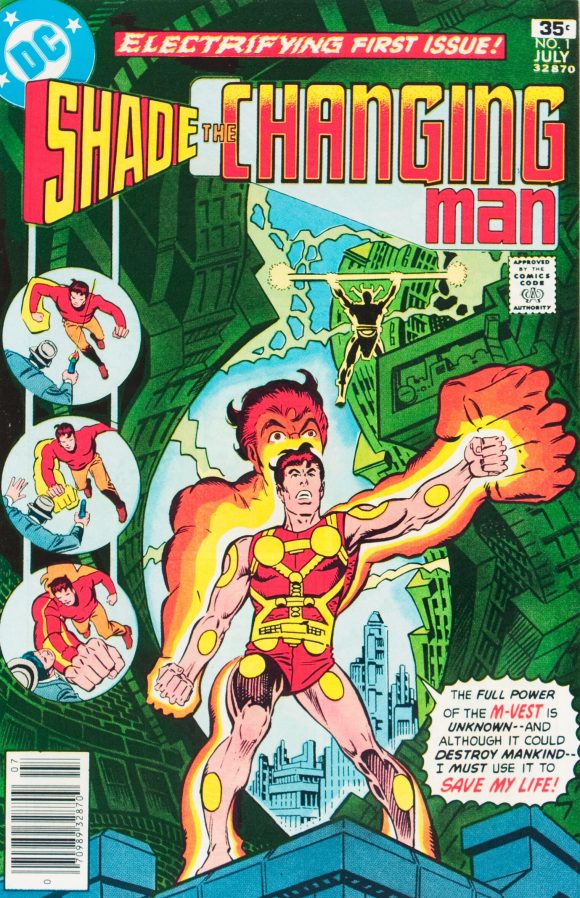
Over the years, his credits would also include Superman, Batman, Green Lantern, The Flash, Blackhawk, and a variety of licensed titles, while his editorial work touched dozens more, including Black Lightning, Shade the Changing Man, and Firestorm. Whether developing new material with freelancers or scripting stories himself, he became a dependable member of DC’s editorial and creative staff during a period of change for the company. Later, he turned to teaching in the BFA Cartooning Program at New York’s School of Visual Arts, inviting me a couple of times to speak to his class of young comics creators.
Along with his fair share of stories for anthology titles like House of Mystery and Weird War Tales, a valuable training ground for young writers, Jack was thrown head first into more mainstream, higher profile assignments, such as the TV tie-in licensed title Isis, the Supergirl feature in Superman Family, and Black Canary in World’s Finest.
And, by the way, Jack is the author of the most excellent Working With Ditko (TwoMorrows, 2025), chronicling his many collaborations as both editor and writer with the legendary artist, Steve Ditko.
Here then, MY 13 FAVORITE JACK C. HARRIS STORIES:
—
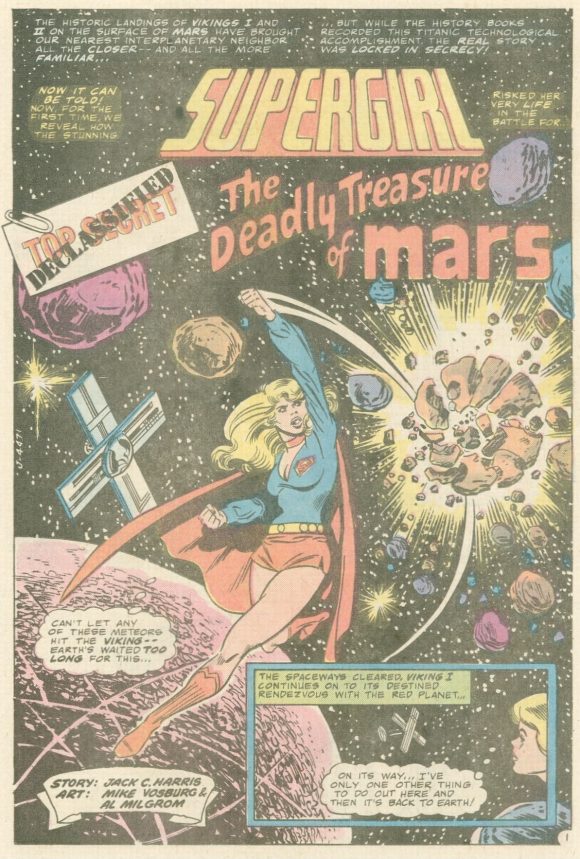
Superman Family #182 (March/April 1977). It’s a nest of newbies as one of Jack’s earliest stories is penciled and inked by a pair of only slightly more veteran artists, Mike Vosburg and Allen Milgrom. Just FYI, my first story for DC (A World of Krypton feature with art by Marshall Rogers and Frank Springer) appeared in this issue, the first of the DC Dollar Comics.
—
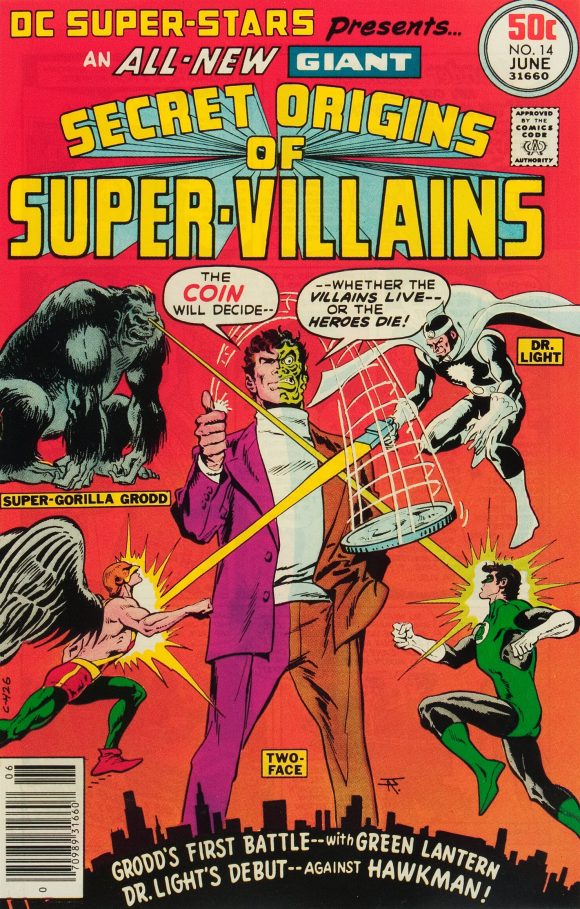
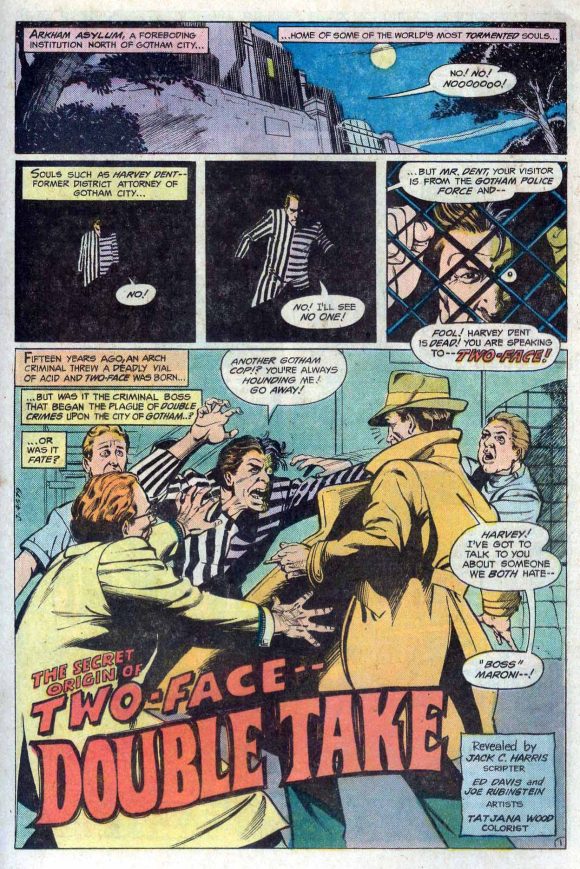
DC Super Stars #14: Secret Origins of Super-Villains (May/June 1977). Jack and I once again shared an anthology, with my Dr. Light origin with art by Dick Ayers and Jack Abel, and Jack’s much better “The Secret Origin of Two-Face—Double Take,” with art by Ed Davis and Joe Rubinstein. And colored by Tatjana Wood, which, if you know about such things, is pretty damn cool.
—
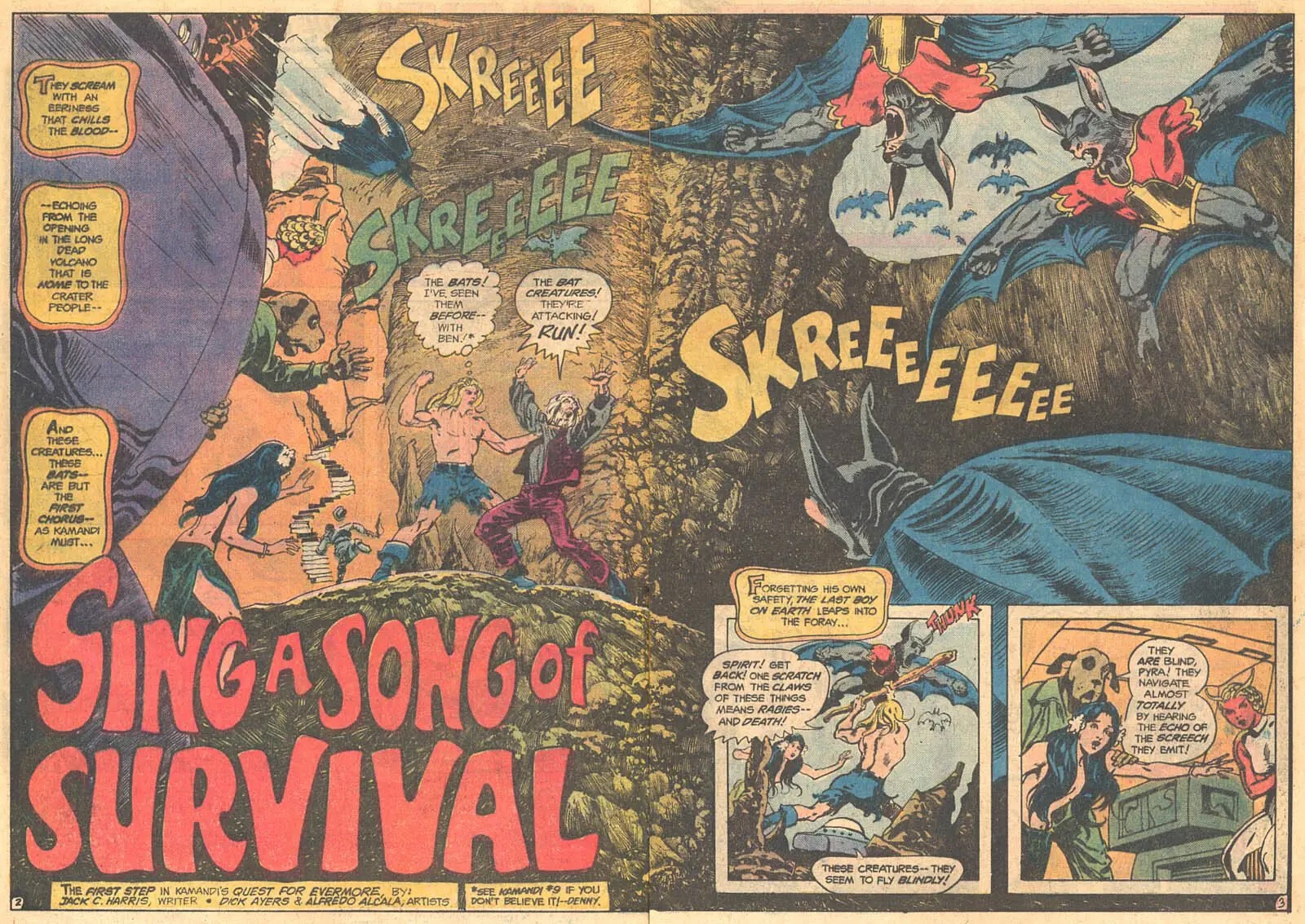
Kamandi, The Last Boy on Earth #52 (August/September 1977). After Jack Kirby’s 37-issue run as writer/artist (and 40 total as artist)—his longest run on any of his DC Comics works—Kamandi seemed to become something of a hot potato assignment, the next 15 issues bouncing between five writers before Jack caught it and held on, running out the title to its end with #59. Art by Dick Ayers and Alfredo Alcala.
—
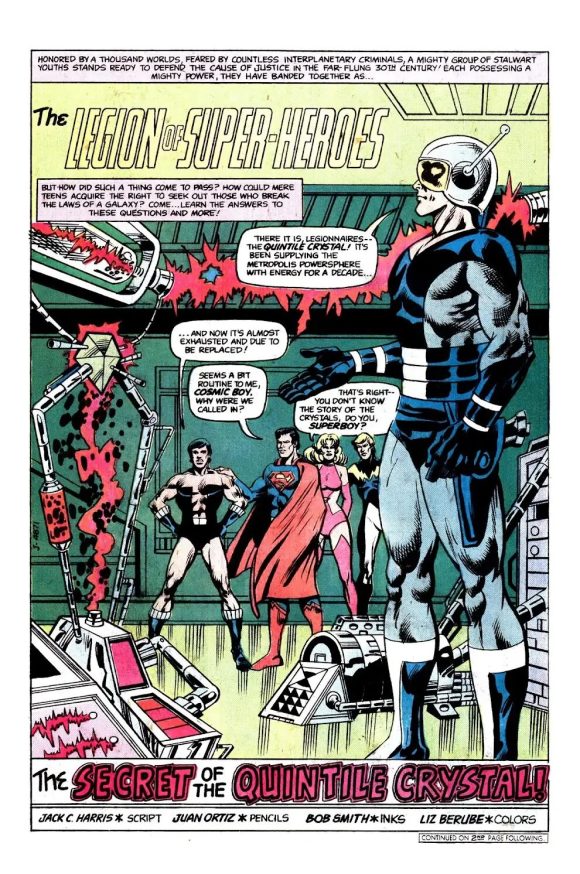
DC Super Stars #17: Secret Origins of Super-Heroes (November/December 1978). Jack revealed one of the Legion of Super-Heroes’ earliest cases in “The Secret of the Quintile Crystal,” with Juan Ortiz and Bob Smith on the art.
—
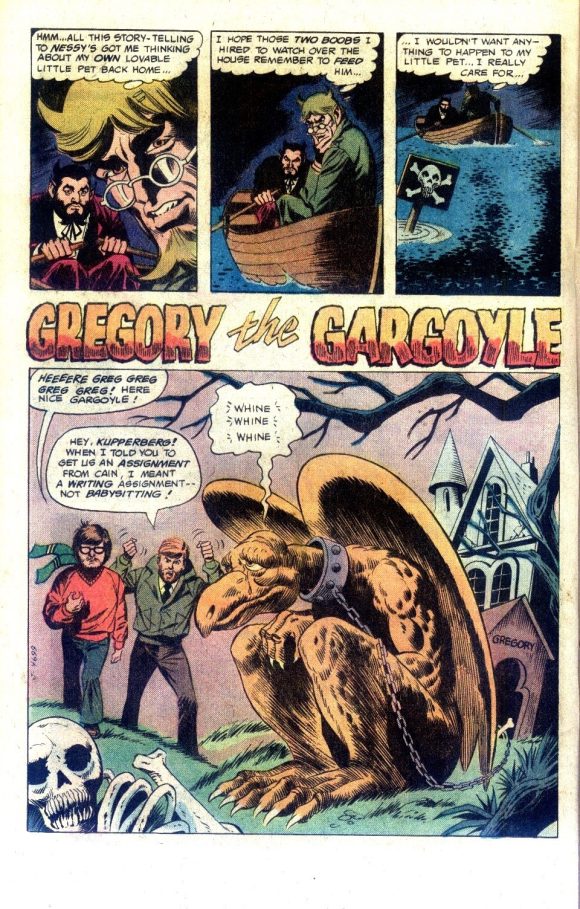
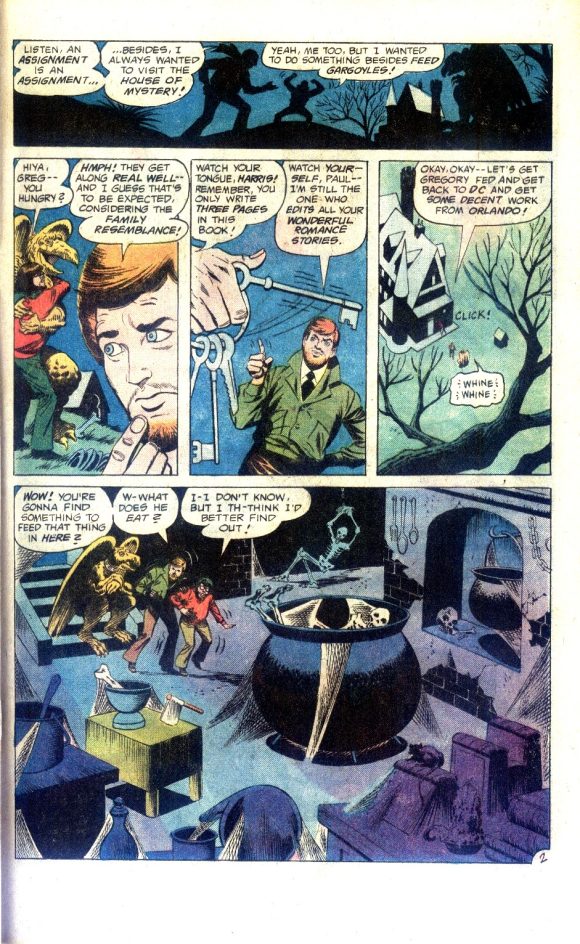
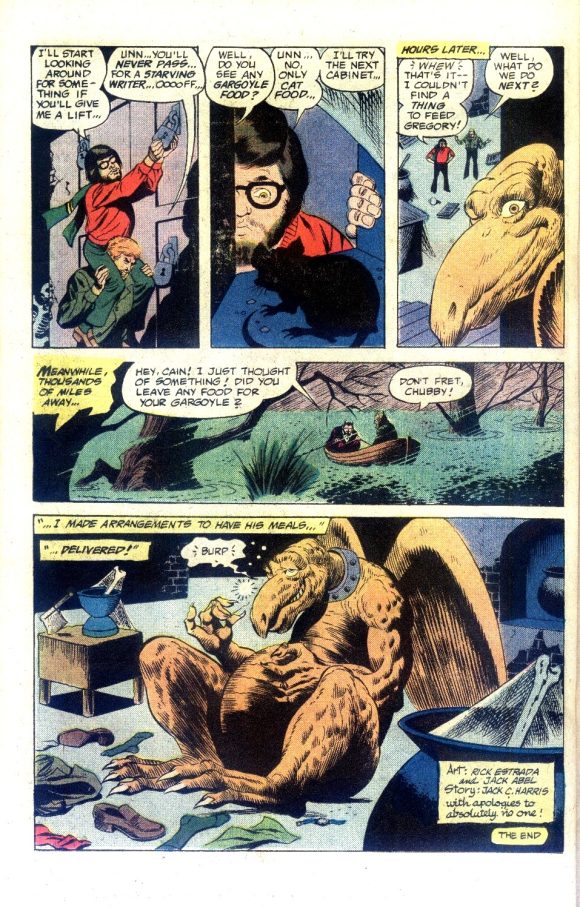
House of Mystery #254 (September/October 1977). During its days as an 80-Page Dollar Comic, House of Mystery featured five-page stories starring horror hosts Cain and Abel and their pet, Gregory the Gargoyle, that ran through the issues: three pages to introduce the issue, one page somewhere in the middle, and the last page to wrap it up. I wrote many of these five-pagers and Jack wrote us both into this three-page filler, with art by Ric Estrada and Jack Abel.
—
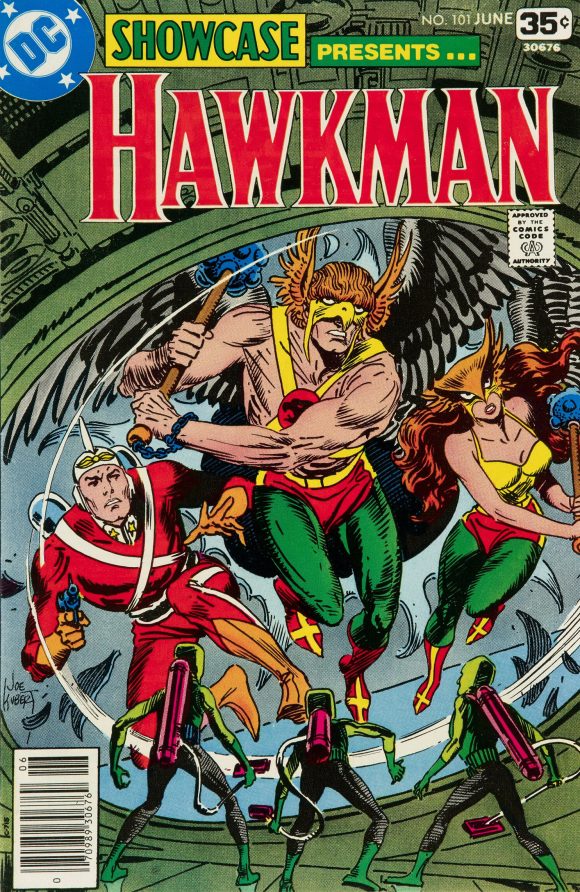
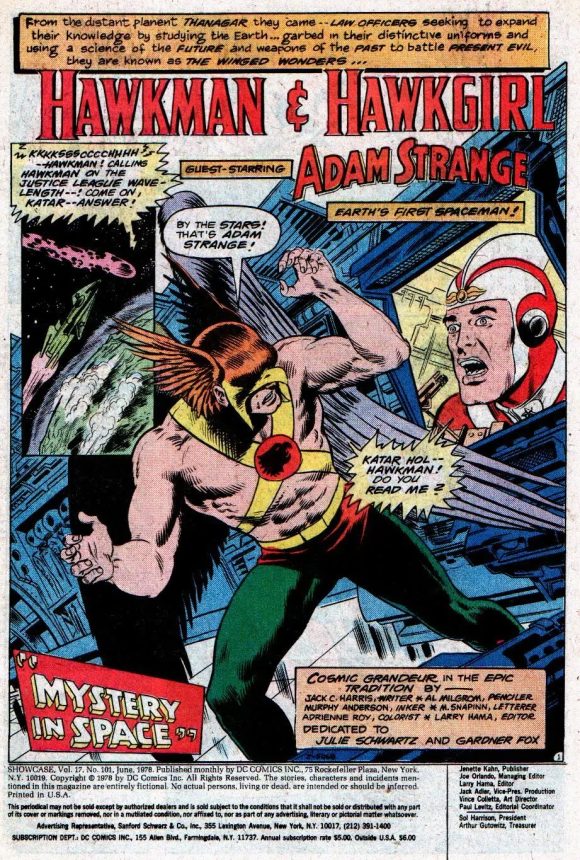
Showcase #101 (June 1978). Look! Up in the sky! It’s a bird… it’s Hawkman! Along with artists Allen Milgrom and Murphy Anderson, Jack brought the Winged Wonder back into the spotlight for a three-issue tryout.
—
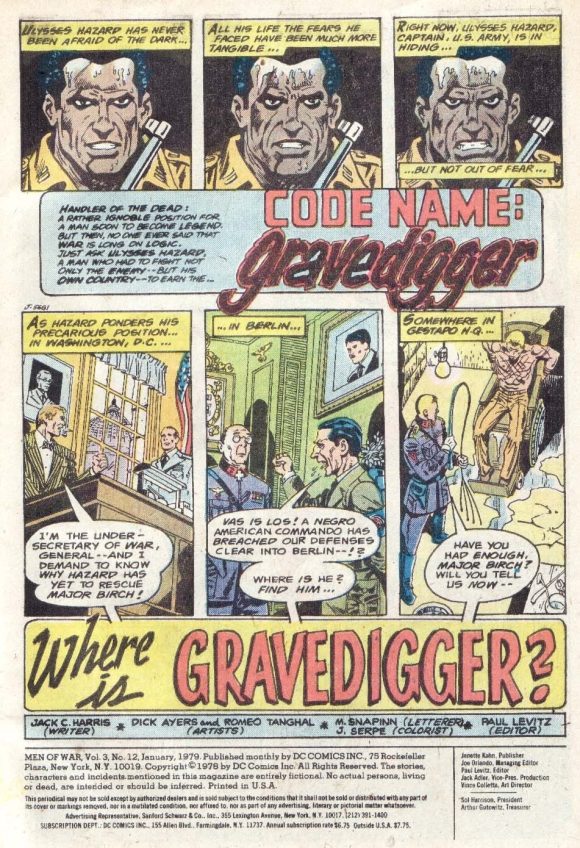
Men of War #12 (January 1979). Jack took over the Codename: Gravedigger feature about a black soldier in World War II restricted to the burial detail because of his race — but proves his superior combat skills to become a one-man special forces operative — and chronicled his adventures with artists Dick Ayers and Romeo Tanghal for the rest of the book’s run.
—
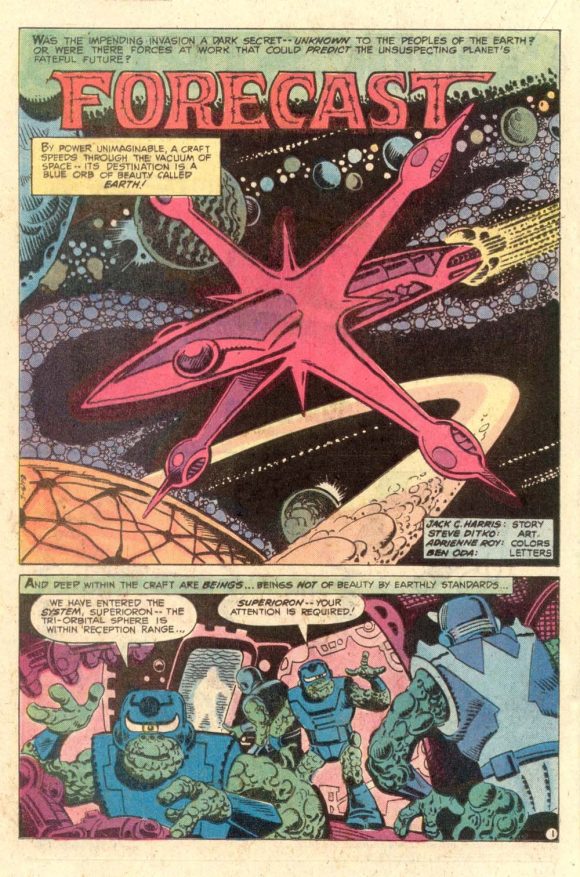
Time Warp #1 (October/November 1979). One of the many Harris/Ditko collaborations discussed in Jack’s Working With Ditko was this science fiction tale from the short-lived anthology series.
—
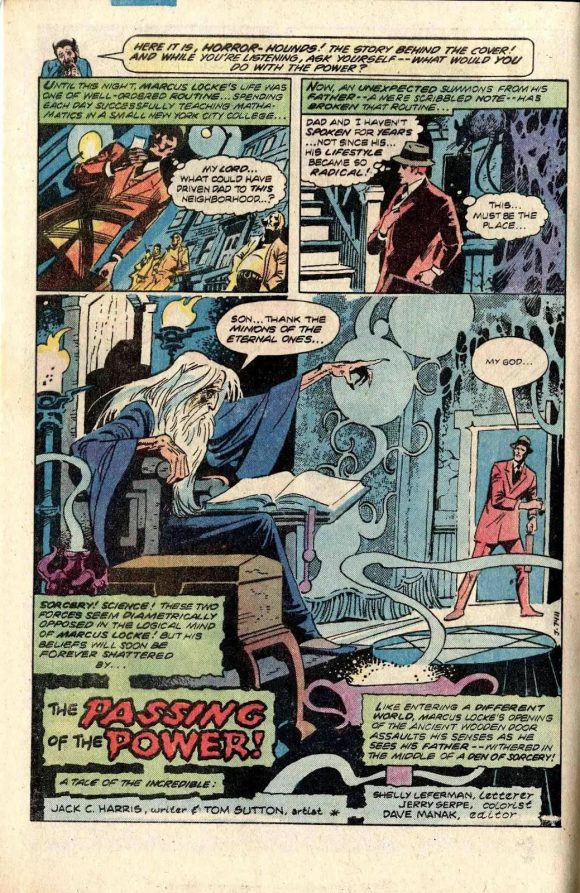
Secrets of Haunted House #45 (February 1982). Jack provided the script for this Tom Sutton-drawn tale that led off the penultimate issue of the fading horror anthology title.
—
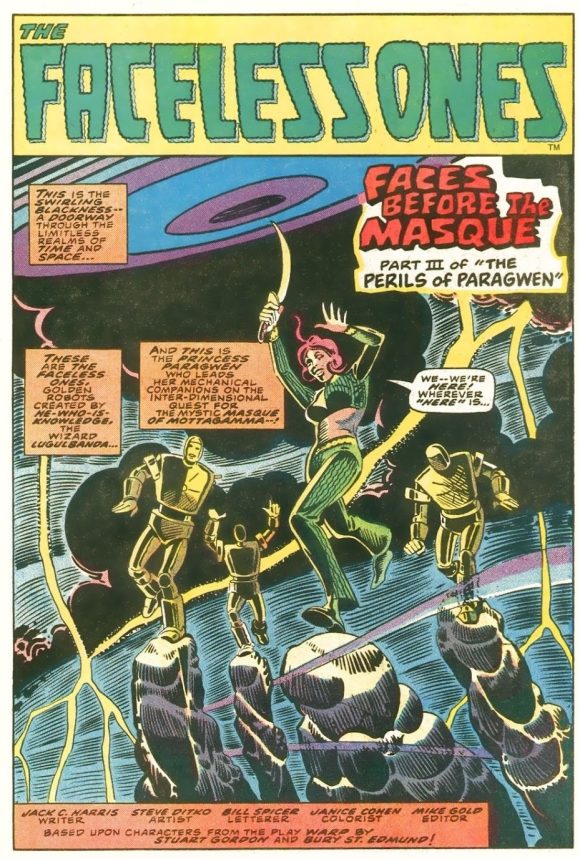
Warp! #4 (June 1983). More Harris & Ditko, this one from First Comics’ adaptation of the “the world’s first science fiction epic-adventure play in serial form.”
—
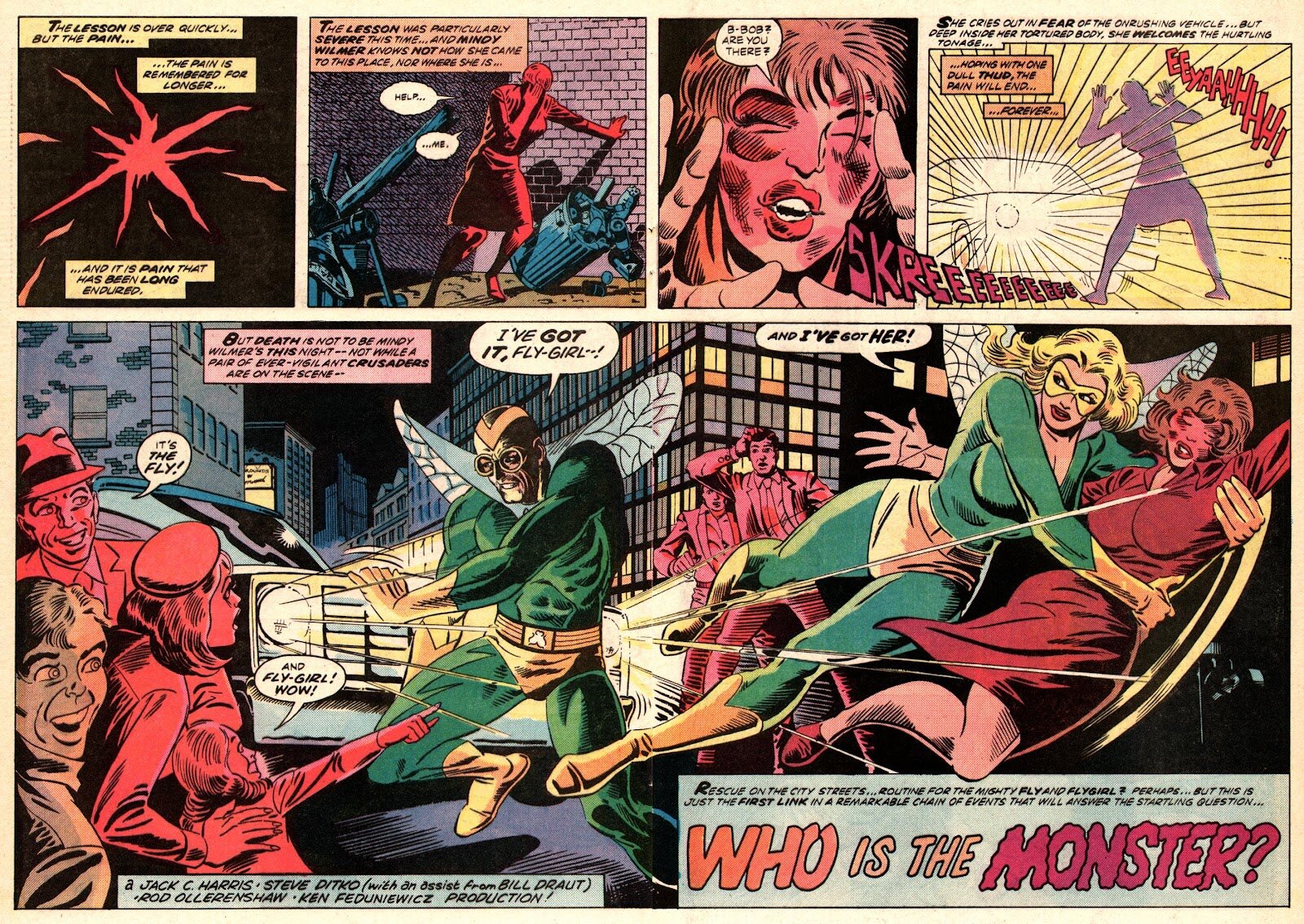
The Fly #3 (October 1983). Jack and Steve took their collaboration over to Archie Comics’ Blue Ribbon Comics for this new take on the Fly — a character that Joe Simon and Jack Kirby had earlier developed as a spider-themed hero concept called “Silver Spider” or “Spiderman” before recycling elements into Adventures of the Fly for Archie Comics in 1959. Just a little bit of funny book symmetry.
—
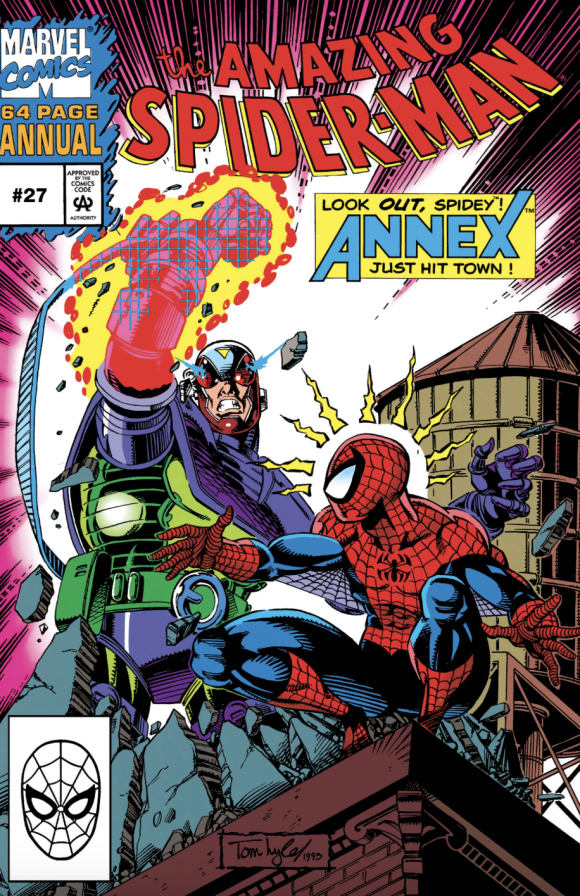
The Amazing Spider-Man Annual #27 (1983). While mostly a DC writer, Jack did dabble in some Spider-Man at Marvel, like “Prepare Yourself for… Annex,” with art by Tom Lyle and Scott Hanna, that led to a four-issue Annex miniseries.
—
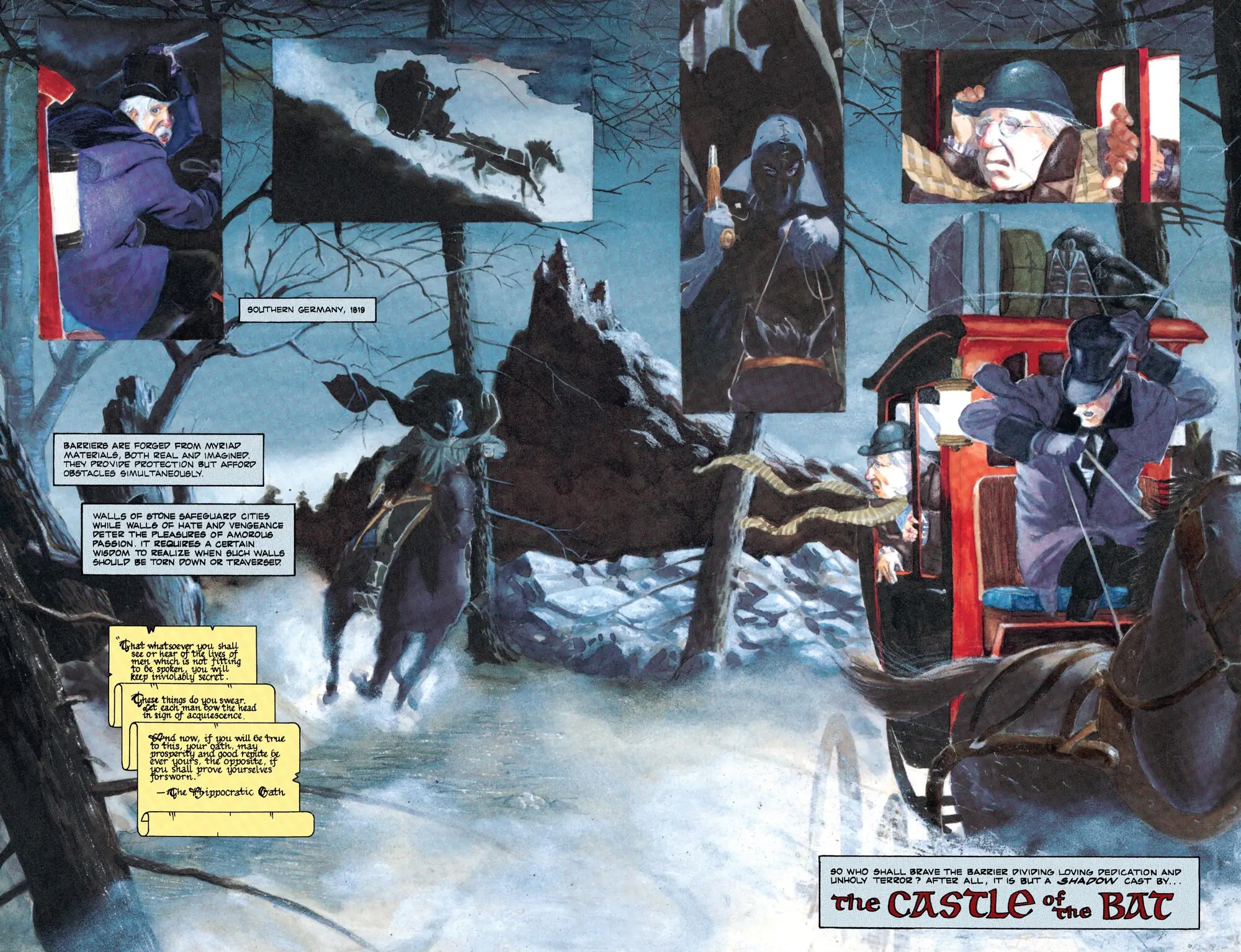
Batman: Castle of the Bat (1994). An epic Elseworlds graphic novel with painted art by Bo Hampton that reimagines the Caped Crusader in a gothic world based on Mary Shelley’s Frankenstein.
—
MORE
— PAUL KUPPERBERG: Inside the 1987 JACK KIRBY SURPRISE BIRTHDAY PARTY. Click here.
— PAUL KUPPERBERG: Dig These 13 EXCERPTS From JULIE NEWMAR’s Never-Published Memoir. Click here.
—
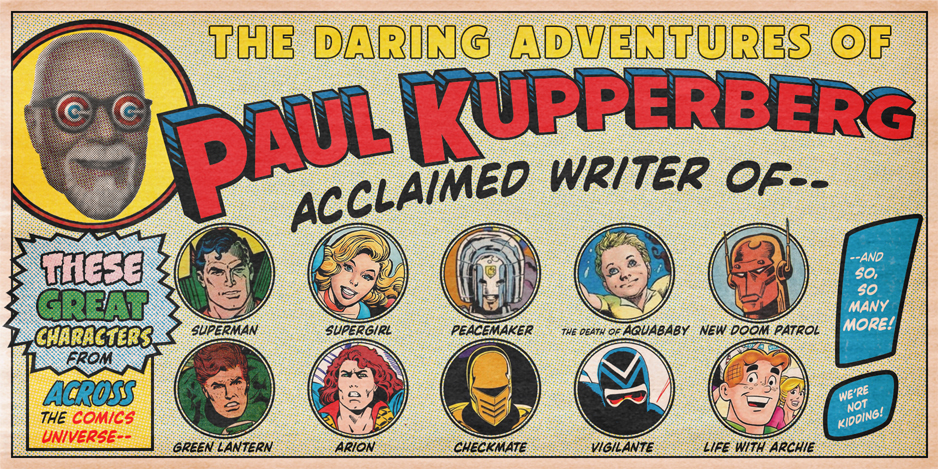
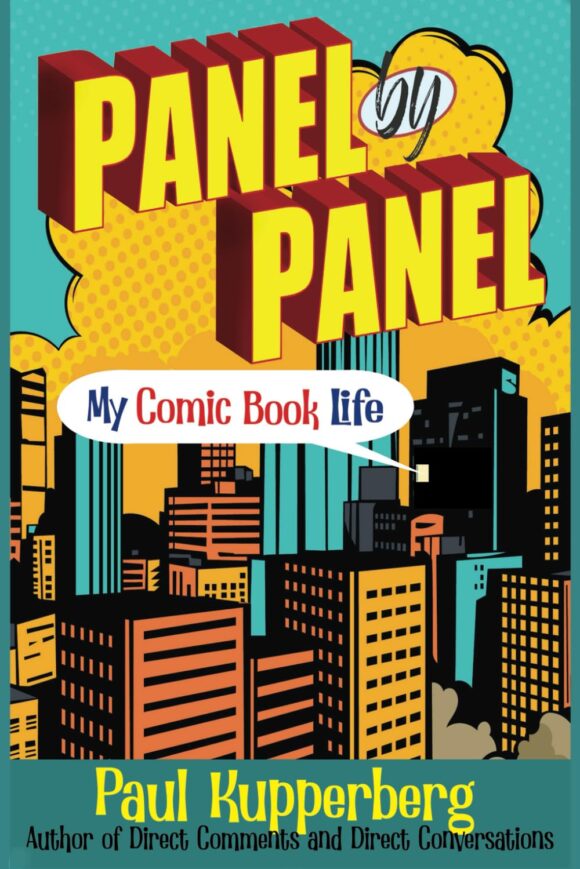
PAUL KUPPERBERG was a Silver Age fan who grew up to become a Bronze Age comic book creator, writer of Superman, the Doom Patrol, and Green Lantern, creator of Arion Lord of Atlantis, Checkmate, and Takion, and slayer of Aquababy, Archie, and Vigilante. He is the Harvey and Eisner Award nominated writer of Archie Comics’ Life with Archie, and his YA novel Kevin was nominated for a GLAAD media award and won a Scribe Award from the IAMTW. Check out his memoir, Panel by Panel: My Comic Book Life.
Website: https://www.paulkupperberg.net/
Shop: https://www.paulkupperberg.net/shop-1

August 30, 2026
One of my favorite storytellers… Jack’s Kamandi stories are some of my all-time favorite comics EXCELLENT!
August 30, 2026
I am humbled and honored. Thanks Paul. It’s a honor to call you friend!
August 31, 2026
I really enjoyed reading “Working with Ditko”. I followed it up looking for back issues of many of the titles mentioned like “Warp!” Some great comics that I simply wasn’t aware of due to my very limited comic budget as a kid. Happy birthday, Jack!
August 31, 2026
I enjoyed so many JCH stories, with a favourite being Wonder Woman #246, which began with Diana washing her superhero uniform in her building laundry room, and ended with a freaky demon – fantastic stuff. Also, it taught me the word ‘condominium’.
And I loved his Ray mini-series, with Joe Quesada and Art Nicholls – it was fantastic to finally see Jack get some well-deserved fan attention