
SCOTT SHAW! SATURDAYS…

—
It’s Halloween season, so for every Saturday this month, I’m going with the theme of spooky(ish) comics! — Scott
—
By SCOTT SHAW!
When I was a kid, I already had goals for my life. I wanted to become a cartoonist, a paleontologist, a TV kids’ show host, or a TV horror host. I realized that the last two were long shots, but I struggled with the first two. Therefore, I drew a lot of dinosaurs, and with science books and comic books, I had a lot of reference. Of the latter, much of the paleo-art was mediocre at best, so when I saw an outstanding painting of a herd of Triceratops by Charles R. Knight, I got giddy. And when I saw the cover of the first Kona comic, I absolutely had to own a copy. And the next one. And the next.
Years later, I became good friends with the cartoonist who drew every issue, Sam Glanzman. If you wonder why this ODDBALL COMICS column is longer than usual, I’m sharing with you a comic that still means a lot to me… and hoping that you’ll seek out a few issues to enjoy. So, let’s take a close look at one of my all-time favorite series, Dell’s Kona, a comic book fittingly subtitled, “The Monarch of Monster Isle”!
Dell Publishing in 1962 lost most of its licensed titles to Western Publishing’s newly formed Gold Key imprint, and Dell’s editors wisely felt the need to prepare new company-owned titles. Kona was one of the first of these. The introductory issue was published as Dell’s Four Color #1256, (February-April, 1962, and cover-priced at a then-outlandish 15 cents) and the series lasted 20 more issues on its own (the last one dated January-March, 1967).
Like many great comics, the most striking feature of Four Color #1256 is its cover illustration, a beautiful painting that depicts a pony-tailed, ax-wielding caveman facing off against a pair of the most ferocious-looking Tyrannosaurs ever seen. To complete the scene, the primitive man is apparently defending the honor of a jump-suited, modern-day woman who lays limp in his hairy arms.
The whole piece has a circular composition; no matter what the viewer notices first, it leads to more visual information like a clock. Tom Beecham’s cover is arguably one of the finest pieces of dinosaur art ever to appear in comics, or anywhere else, for that matter! This remains my favorite “realistic” comic cover ever:
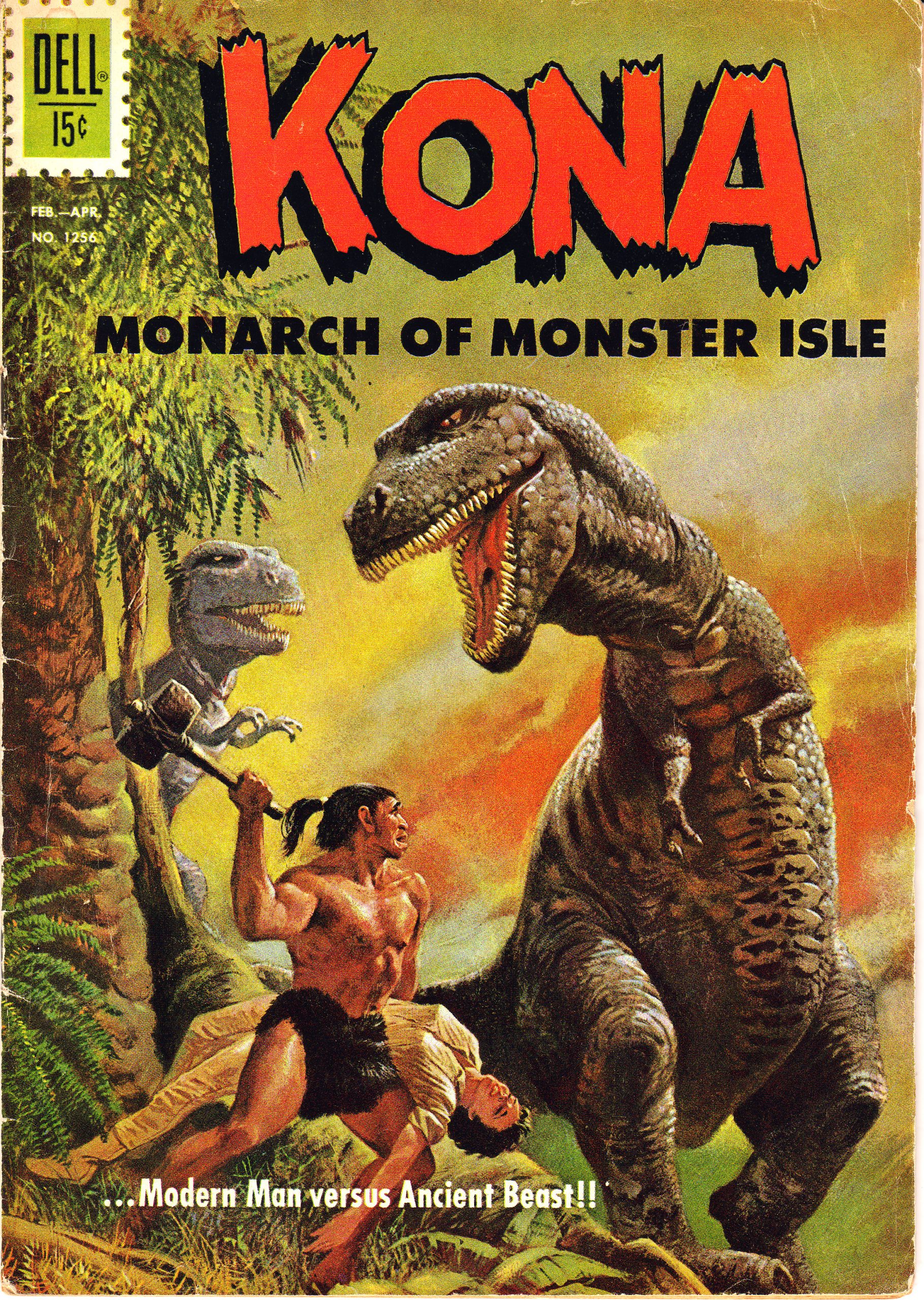
Four Color #1256
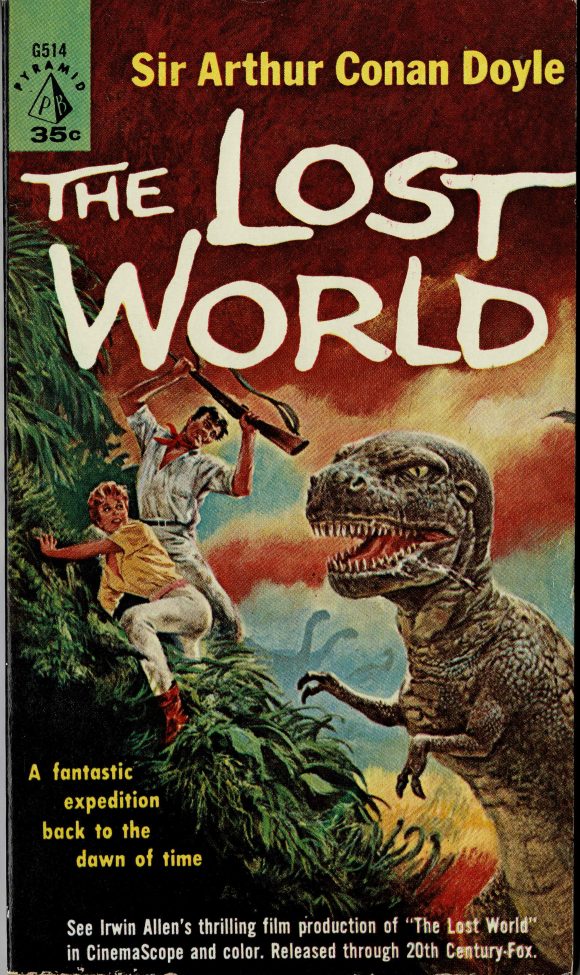
Beecham also painted the cover to the Pyramid paperback movie edition of Sir Arthur Conan Doyle’s The Lost World, published in 1960 to take advantage of Irwin Allen’s film adaptation of the novel, first published in 1912. Beecham did a lot of cover paintings and illustrations for men’s magazines, but eventually became a well-known wildlife painter.
The writer through the series’ 10th issue was Don Segall, with additional input by Glanzman. The artist, mostly known for his war comics, was the perfect choice to draw Kona. He had an uncanny ability to illustrate any type of animal in any sort of pose or situation without needing photo reference. Issue #3, for example, included a feature, “Physical Forms,” which had a huge impact on my thinking during my entire career as a cartoonist.
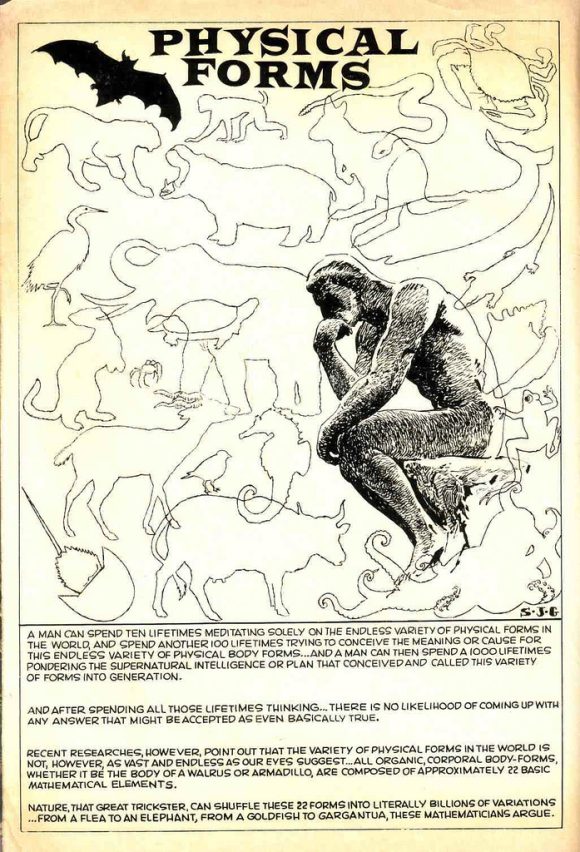
Glanzman
Originally edited by L. B. Cole, who oversaw a number of Oddball projects for Dell, Kona was a Cro-Magnon caveman and the leader of a prehistoric pocket beneath the bottom of the Pacific Ocean. (Why they named it an “isle” is anyone’s guess.) After scientist Dr. Henry Dodd, his widowed daughter Mary, and her two kids, Mason and Lily’s U.S. Army surplus blimp crashed on an island in the Pacific, a tunnel took them into the world of Kona, which represented everything that a typical 9-year-boy loved in 1962.
The storytelling is unique, like Edgar Rice Burroughs writing the script for Ray Harryhausen’s latest film, except everyone’s on LSD. About half the issues ended on a cliffhanger that sent the team to deal with yet another titanic monster located somewhere on the planet more exotic than the last place. (Those cliffhangers were damn frustrating for a kid trying to collect every issue of the quarterly series. Believe me.)
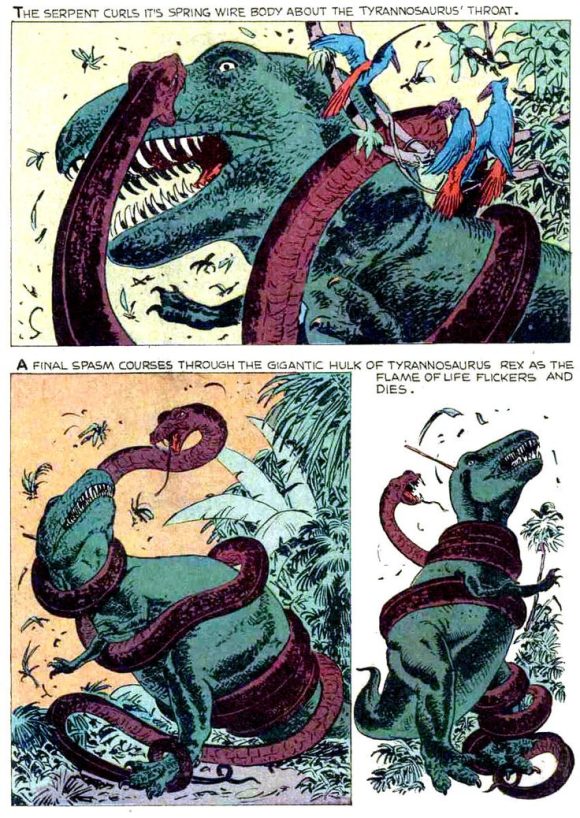
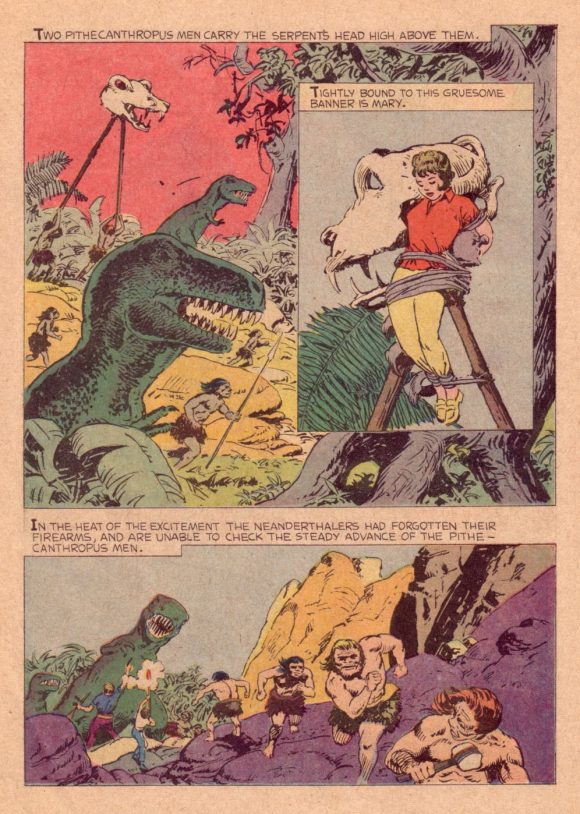
Vic Prezio likely provided the cover art for Kona #2, the solo series debut. Unfortunately, pteranodons were the least of Kona’s problems. After he and his tribesmen kill two giant snakes and dispose of their skins in their subterranean world’s lake, something in the remains infects the cavern’s only source of water. The results are terrifying.
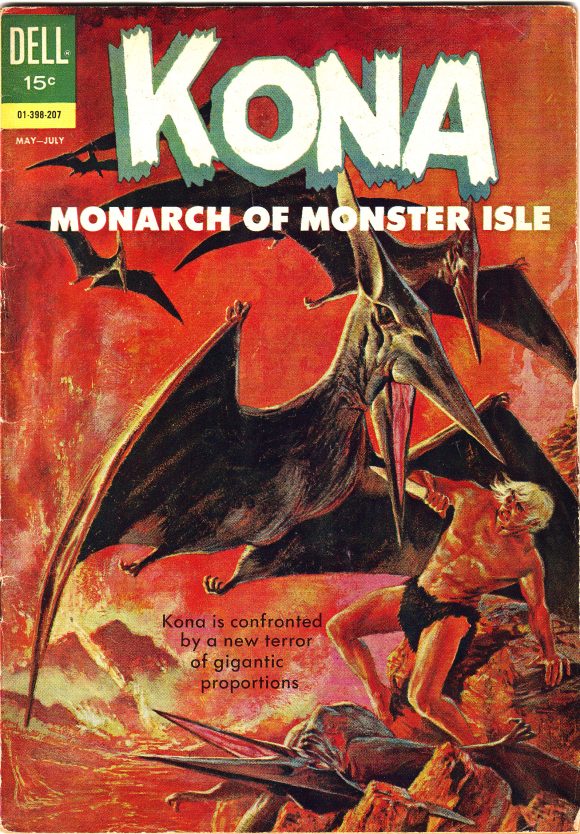
Kona #2
The snake-guts substance turns all of Monster Isle’s creatures into mega-monsters. Drinking from the lake immediately causes frogs, birds, and freshly-born dinosaurs to grow bigger than the biggest Tyrannosaurus rex. When an enlarged spider cracks open the roof of Kona’s geological pocket, the ocean water pours in — bringing hungry sharks with it. The predatory fish immediately grow in size, becoming as huge and hungry as megalodons. For the first time in his life, Monarch Kona doesn’t know what to do.
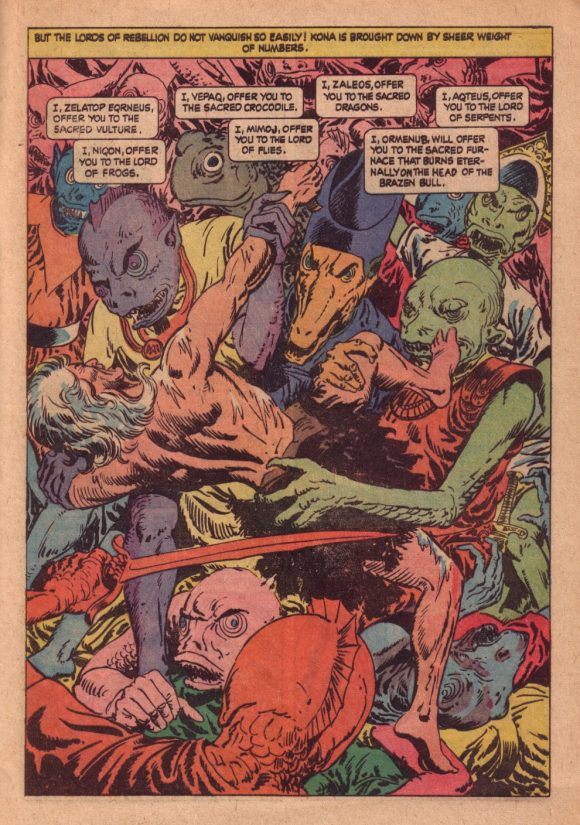
His kingdom in utter chaos, Kona desperately puts ideas together like a visual puzzle. The white-haired Cro-Magnon cracks open a secret cavern on the isle, releasing countless disturbing multi-species mutants to counteract the myriad disasters around his tribe. Glanzman’s mutants seem to have been inspired by the work of Dutch painter Hieronymus Bosch. It’s by far the freakiest story from the entire series.
But that’s not to say the other stories are sedate. In other issues:
— Kona’s crew emerges in the Arctic, where they discover a friendly tribe of yetis. Eventually, they all get hunted by a wolf pack irradiated by a Russian bomb test.
— Kona encounters a monstrous kitten, exposed to yet another bomb test. He’s cute and playful — but wants to kill everything smaller than he is. Kona lures it into swimming with sharks.
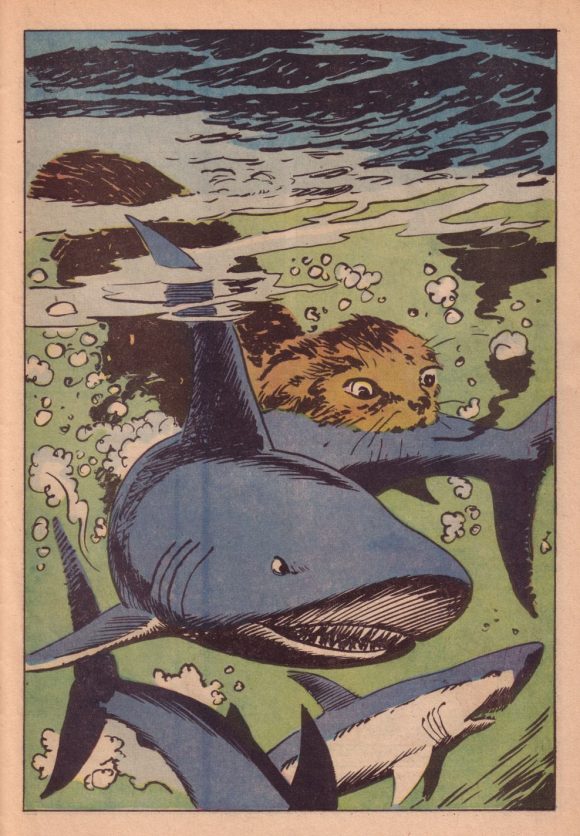
Kona #5
— A sea serpent takes Kona’s crew down to the domed city of Atlantis.
— Kona and the Dodd family make it to a desert island inhabited by giant red ants. A gigantic bird feather wafts by and they use it to carry them across the ocean.. But when a storm stuck, their safety was suddenly challenged.
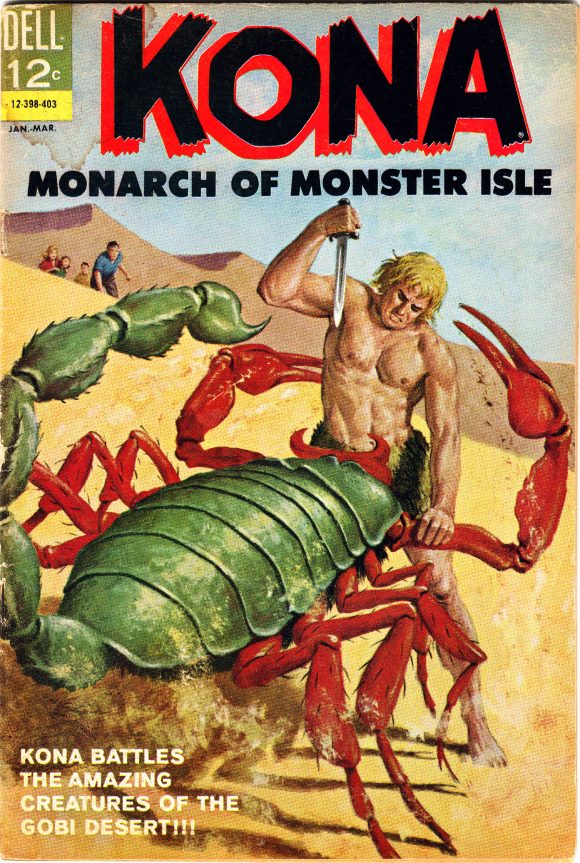
Kona #9. Likely Vic Prezio.
— The travelers deal with a giant beetle, a huge lizard, a monstrous land crab — and a freshly hatched Phoenix chick.
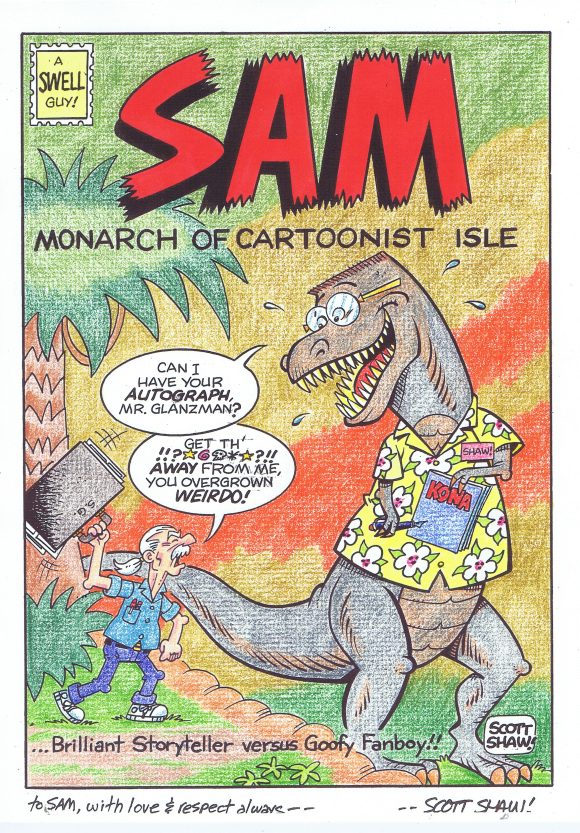
A gift for Glanzman
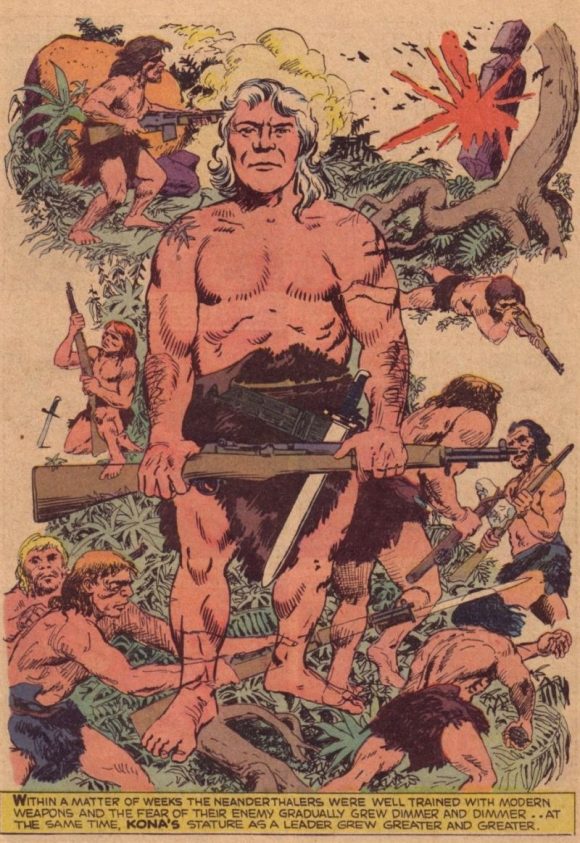
Eventually, Kona and his pals make it back to Monster Isle, but in their absence, a Neanderthal caveman — with a machine gun! — had taken over as monarch. Kona came out on top, and the Dodd family left in a sturdy boat toward civilization, bidding farewell to their prehistoric friend.
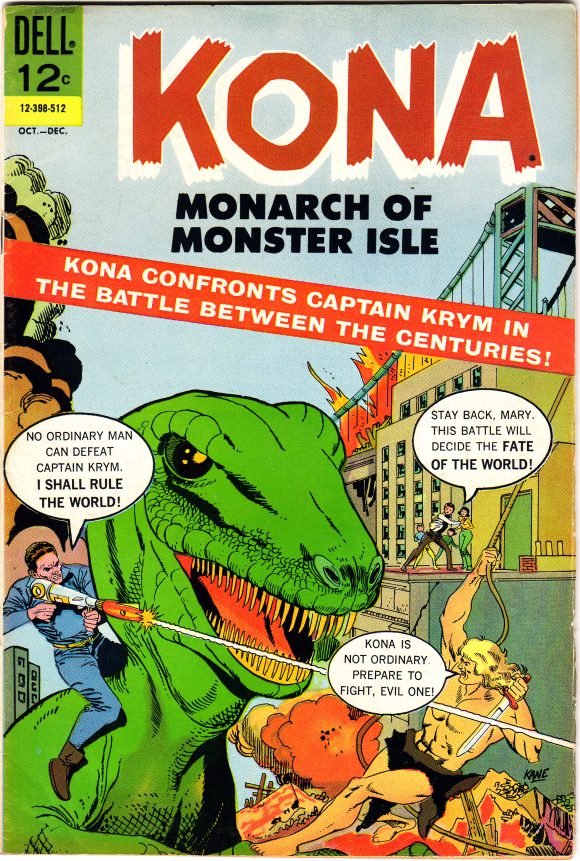
Kona #16. Gil Kane
There were other adventures, mostly written by Paul S. Newman, but they didn’t quite capture the weird magic of the earlier issues. Sales must have been slipping when Dell editor Don Arneson decided to add two things that had never been before in Kona – bizarre villains and American cities. In Kona #16, Captain Krym (as in, “crime”) was introduced to the series.
Strangely, a statue of Kona showed up in “Dell’s Hall of Heroes” in Superheroes #1. Although there weren’t any crossovers with said superheroes, it was the Cro-Mag’s second-to-last appearance.
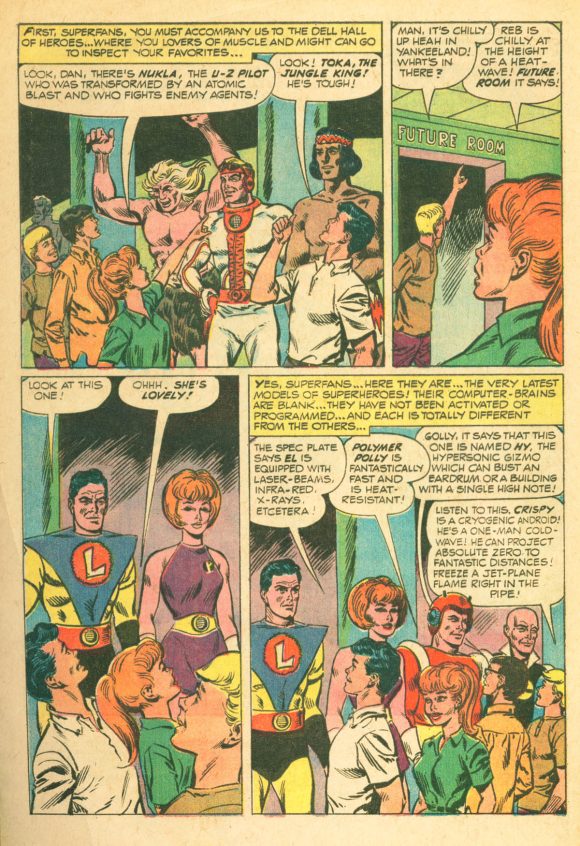
Bill Fraccio pencils, Sal Trapani inks
Kona‘s final issue, #21, was set in another underwater civilization. Unlike a lot of series at Dell, there were no reprints. By then, it was 1967, not long before I became a happy hippie, with a whole new appreciation for psychedelic stories and giant reptiles due to Hunter S. Thompson!
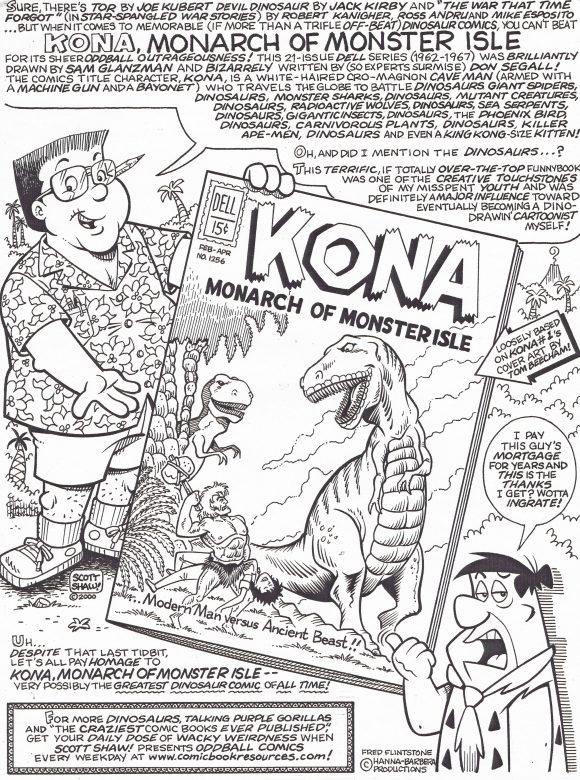
Tribute to Glanzman for the 2000 San Diego Comic-Con program
—
Want more ODDBALL COMICS? Come back next week!
And get this: Scott’s involved in a new, unauthorized documentary about San Diego Comic-Con! Click here for the scoop.
—
MORE
— ODDBALL COMICS: Dell’s Silver Age Monster Superheroes. Click here.
— ODDBALL COMICS: Dig These 13 Pre-Superhero MARVEL MONSTER COVERS. Click here.
—
For over half a century, SCOTT SHAW! has been a pro cartoonist/writer/designer of comic books, animation, advertising and toys. He is also a historian of all forms of cartooning. Scott has worked on many underground comix and mainstream comic books, including Simpsons Comics (Bongo); Weird Tales of the Ramones (Rhino); and his co-creation with Roy Thomas, Captain Carrot and his Amazing Zoo Crew! (DC). Scott also worked on numerous animated series, including producing/directing John Candy’s Camp Candy (NBC/DIC/Saban) and Martin Short’s The Completely Mental Misadventures of Ed Grimley. As senior art director for the Ogilvy & Mather advertising agency, Scott worked on dozens of commercials for Post Pebbles cereals with the Flintstones. He also designed a line of Hanna-Barbera action figures for McFarlane Toys. Scott was one of the comics fans who organized the first San Diego Comic-Con.
Need funny cartoons for any and all media? Scott does commissions! Email him at shawcartoons@gmail.com.

October 18, 2025
I wonder if Hanna-Barbara took this idea and adapted it for their series DINO BOY?
October 19, 2025
I enjoy hearing about these often forgotten series. They really show how much variety there was in comics of the past.