
A BIRTHDAY TRIBUTE…
BY CHRIS FRANKLIN
William Marshall Rogers (Jan. 22, 1950 – Mar. 24, 2007) is considered by many, including me, to be one of the greatest artists to ever draw Batman. This designation is no small feat, because some of the greatest comics illustrators of all time have famously drawn the Caped Crusader, and have left an equally indelible mark. But Rogers stands out from even these masters of graphite and India ink.
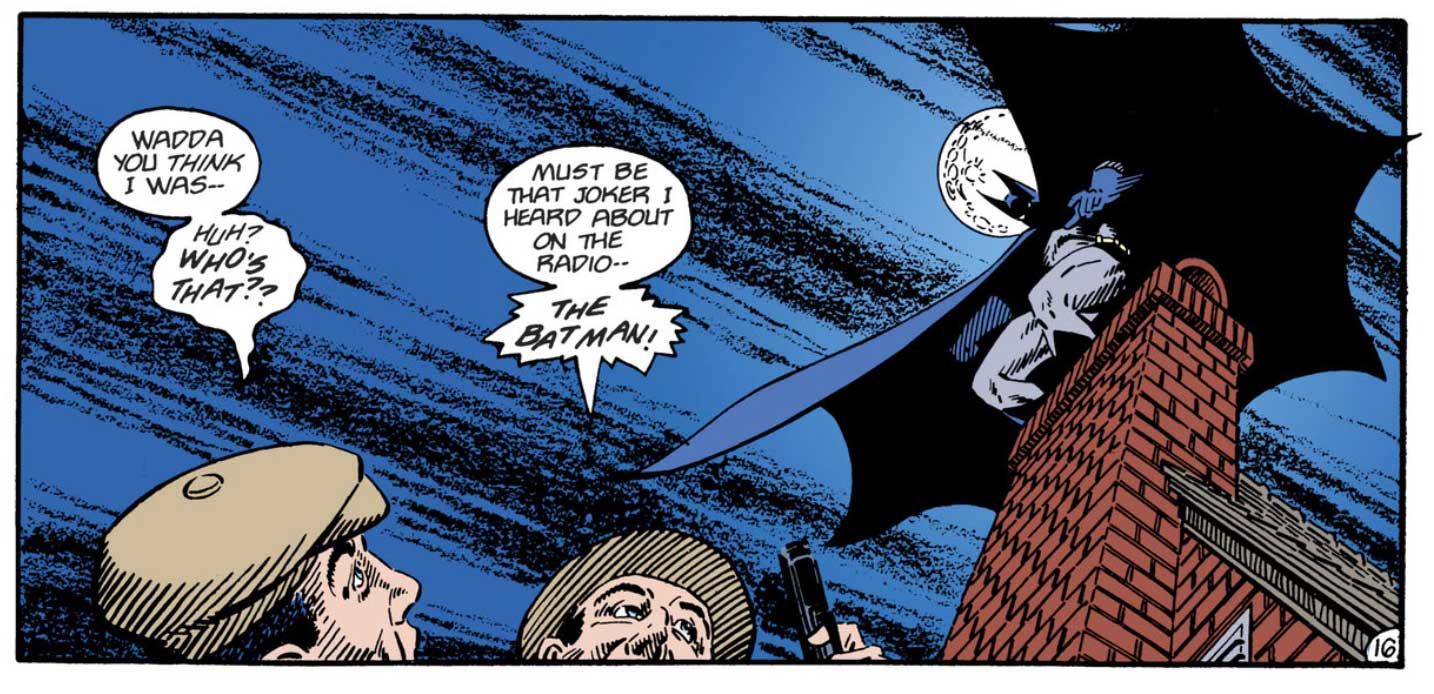
Panel from 1986’s Secret Origins #6. Story by Roy Thomas, art by Marshall Rogers and Terry Austin.
When he first illustrated a Bob Rozakis-written Batman story in Detective Comics #468 (Mar./Apr. 1977), aided by his frequent inking collaborator Terry Austin, he brought a young dynamism to the character that hadn’t been seen since Neal Adams first illustrated the hero nearly a decade prior. Rogers and Austin excelled at innovative panel layouts, working sound effects directly into the art, and applying zip-a-tone for added shadowy and textured effects.
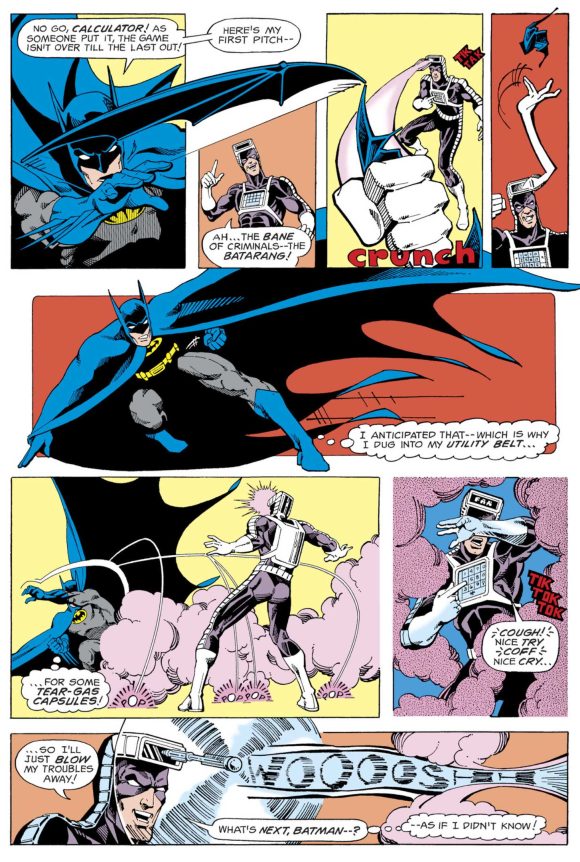
Page from Detective Comics #468, story by Bob Rozakis, art by Marshall Rogers and Terry Austin.
Many of the older staffers in the DC offices didn’t care for the experimental work Rogers and Austin applied to their one-off Batman tale, especially Joe Orlando. But editor Julius Schwartz saw something magic in the work and thanks to positive reader response, made the duo the regular art team on Detective Comics, illustrating a sprawling serial penned by Steve Engelhart. Although this dream team initially only lasted 6 issues, the serialized run is praised as one of the greatest Batman stories and has gone on to influence the Masked Manhunter’s mythos in comics and every media imaginable.
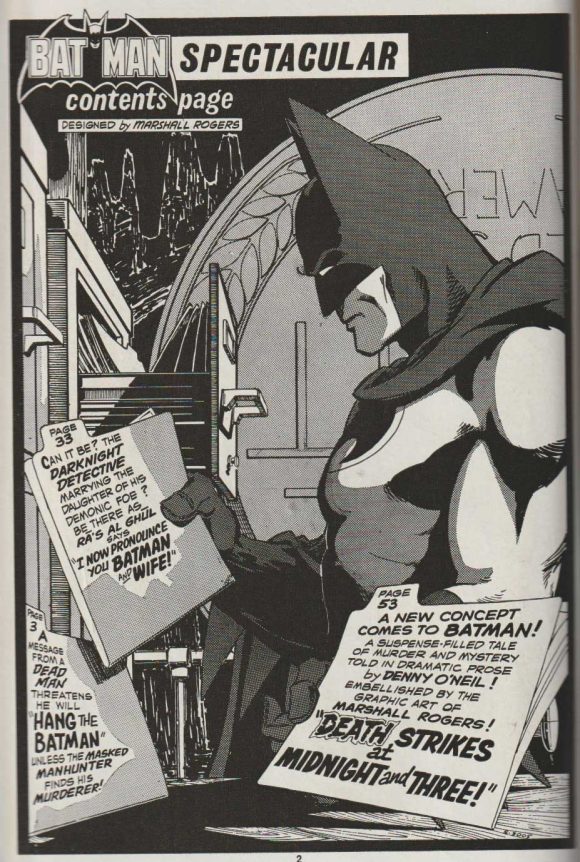
Contents page to DC Special Series #15 (Summer 1978) by Marshall Rogers.
Rogers stayed on Detective for a few more issues and would return to the character periodically over the next three decades, his visual take on the Darknight Detective coalescing into a vision that was singularly his own. To celebrate his birthday, let’s take a look at 13 visual contributions, big and small, that made Marshall Rogers a giant among giants, his run on the Caped Crusader legendary. With a major emphasis, of course, on his brief but definitive run on Detective Comics with Engelhart and Austin.
(Oh, and be sure to check out the highly recommended book Marshall Rogers: Brightest Days & Darkest Knights by Jeff Messer and Dewey Cassell from TwoMorrows Publishing for a deep-dive into the artist’s life and career, and an interview with Steve Engelhart conducted by our own Dan Greenfield!)
—
1. Batman: The Cape and Cowl
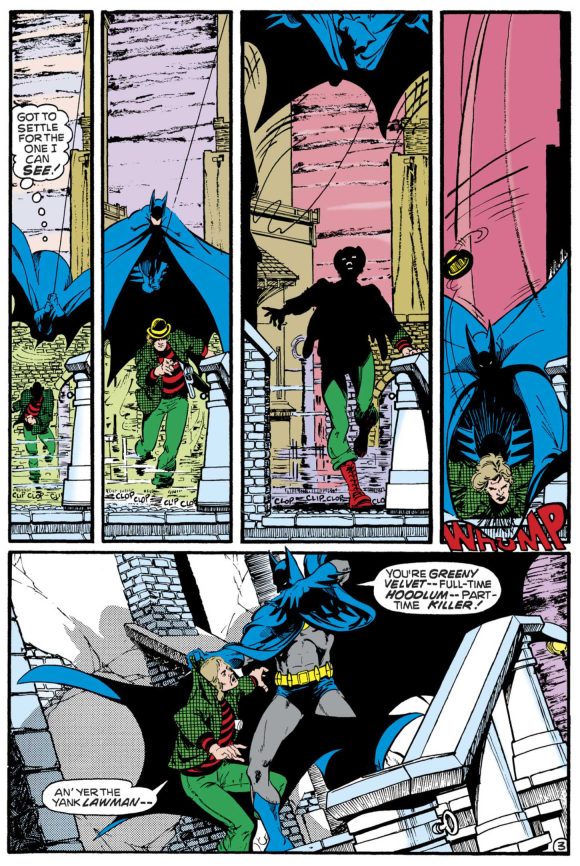
Page from Detective Comics #481, story by Denny O’Neil, art by Marshall Rogers.
For my money, no one has EVER drawn a better Batman cape. Rogers understood the heft and the weight of the cape; how it would drape on Batman’s shoulders, how it would flow when he leapt and swung; how the ends would twirl as he moved quickly.
Rogers frequently drew Batman with the cape completely enclosed around him, something Golden Age Batman artists often did in the early days of the strip. His cape was slightly elongated, but not unbelievably so. You could almost feel the fabric and imagine the sound it made as it billowed in the Gotham night wind.
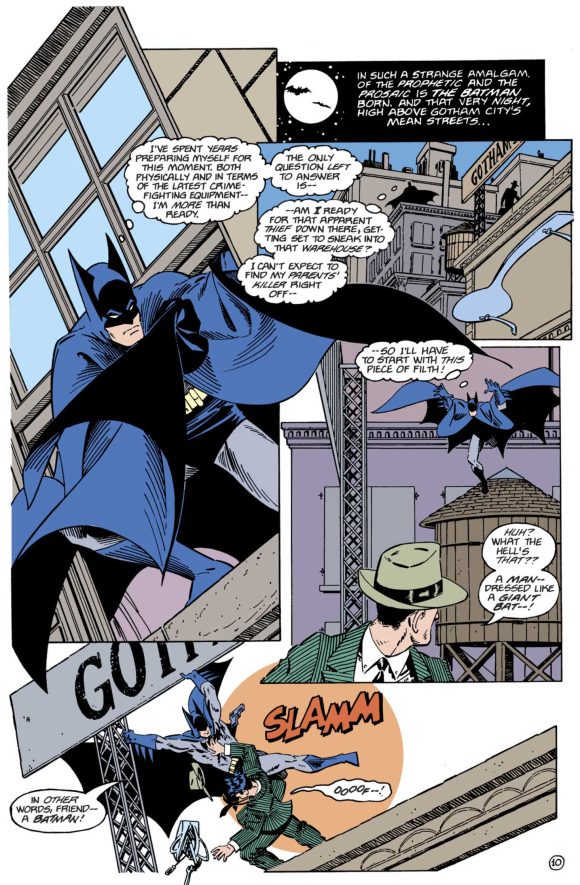
Page from Secret Origin #6.
Rogers initially drew Batman with very tall, but rather thin ears on his cowl. These eventually evolved, becoming much thicker at the base. No one else really drew the ears like this. It made Batman’s silhouette more intimidating and again brought a bit of real-world costuming into the design. I have always felt like the cowl in the first two Batman films from Tim Burton owed a lot to Rogers’ take on the character.
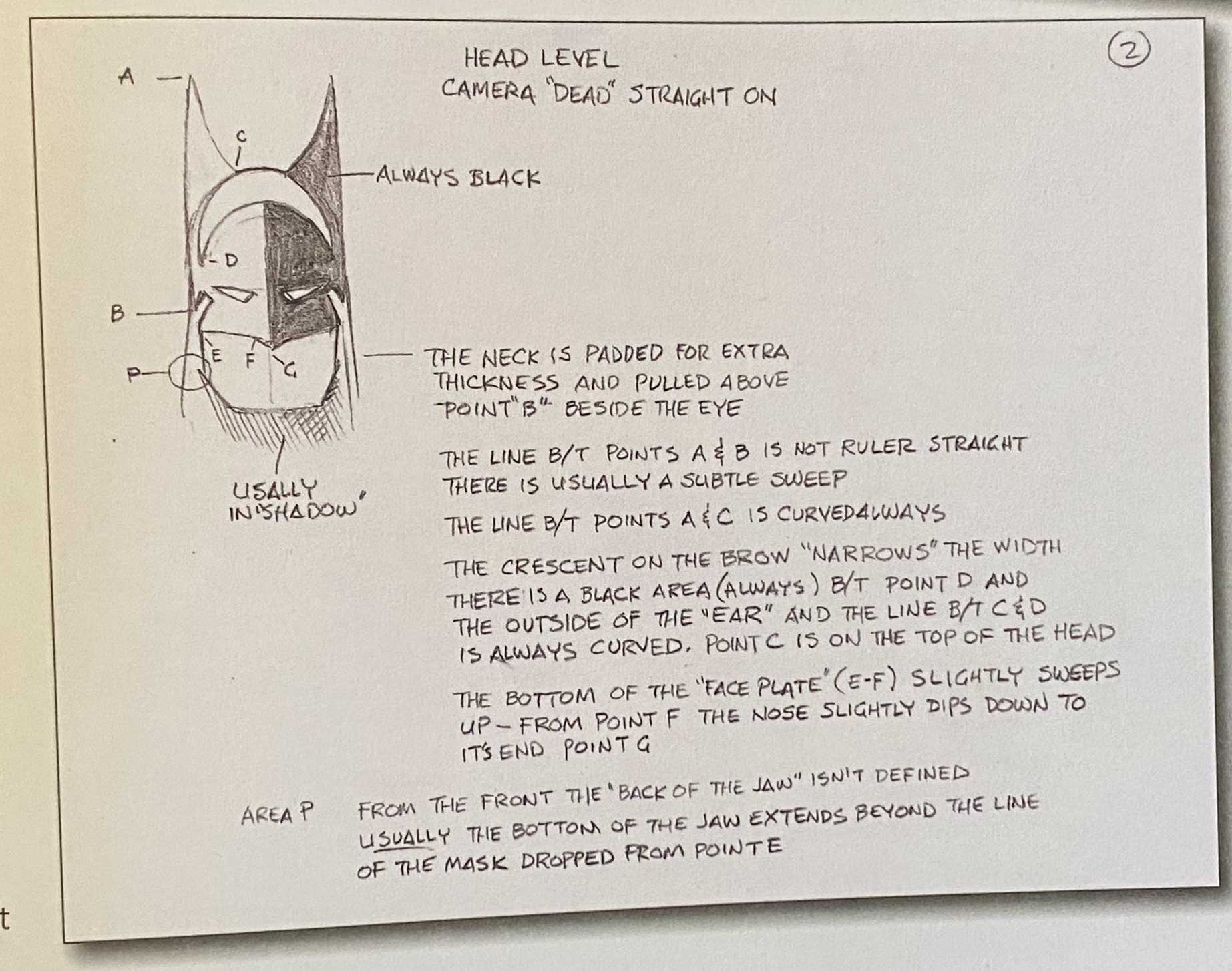
Rogers’ note to Terry Austin on his Batman cowl approach. From Marshall Rogers: Brightest Days & Darkest Knights by Jeff Messer and Dewey Cassell
Rogers’ Batman eventually evolved into a clearly defined model. Nowhere is this more evident in his treatment of the “perma-shadow” on the front of the Caped Crusader’s cowl. In notes sent to his artistic partner, Terry Austin, Rogers clearly detailed how he wanted the cowl’s ears and its shadowy areas to always be portrayed. Rogers was one of the first artists to forgo highlighting the nose of the cowl in blue, opting instead to leave it all black, for a more menacing look.
—
2. Silver St. Cloud

Select panels from Detective Comics #471, 474, and 476. Story by Steve Engelhart, art by Marshall Rogers and Terry Austin.
Although initially drawn by Walt Simonson and Al Milgrom in her debut appearance, the Engelhart-created St. Cloud came to life under Rogers and Austin. Silver was the first real love interest to make a dent in the Dark Knight’s armor in decades, and definitely the first to be fleshed out.
Also, she’s perhaps the smartest paramour in comics history, instantly deducing Batman was her boyfriend the minute she saw the Masked Manhunter in person. Rogers drew Silver as an alluring, powerful woman, who projected an aura of strength and grace whether she was in slacks, an evening gown, a hooded raincoat, or just a towel. The heat between her and Bruce Wayne was also very palpable, thanks to Rogers’ portrayal of the body language between the star-crossed lovers.
—
3. Gotham Architecture
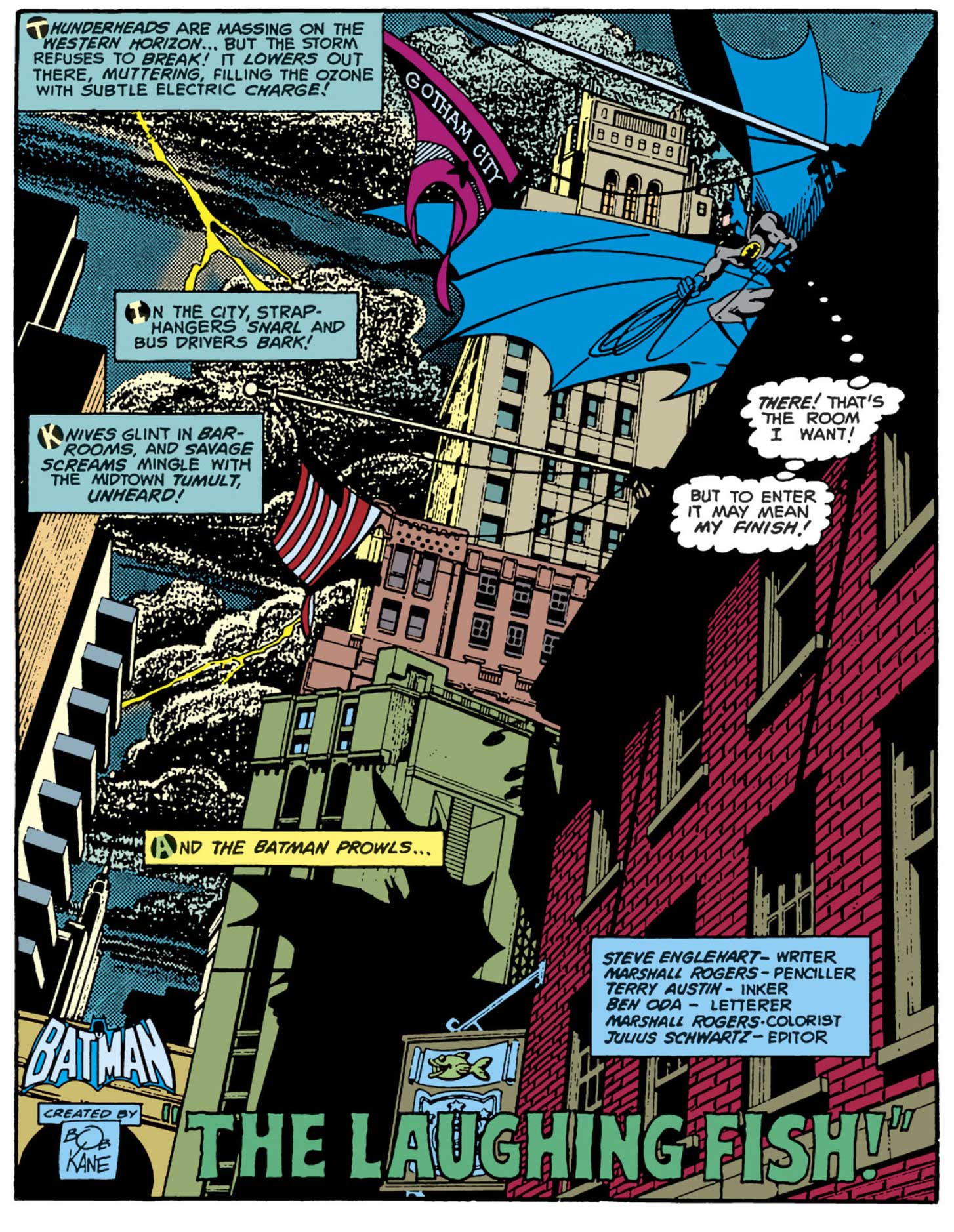
Splash from Detective Comics #475
Before comics called to him, Rogers had studied architecture in college. Those lessons served him well, allowing him to draw one of the most convincingly real depictions of Gotham City readers had ever seen. The splash page of Detective Comics #475 showing Batman perched atop a brick building is a prime example. Behind him are structures from across the decades and perhaps centuries, but Rogers drew them all as if he designed and erected them, completely up to code.
—
4. Professor Hugo Strange
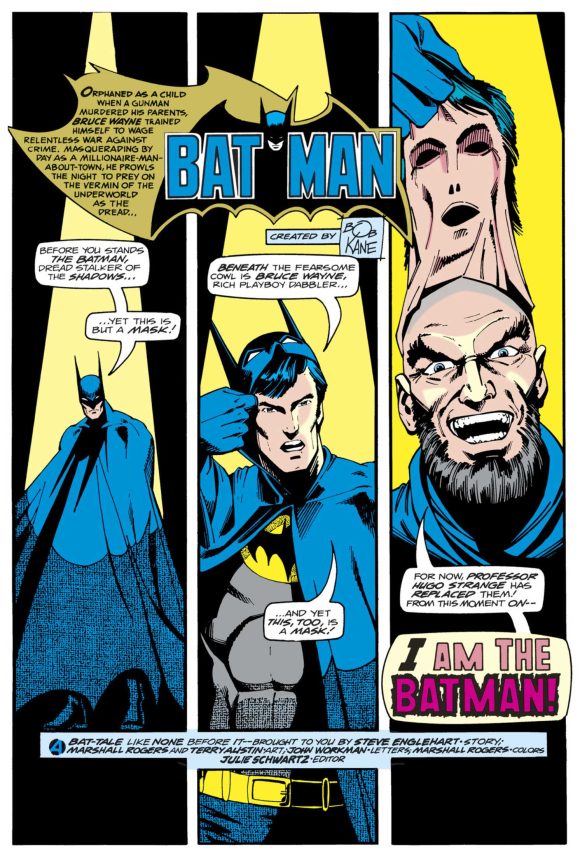
Splash from Detective Comics #472
Strange was the co-creation of Batman’s fathers Bob Kane and Bill Finger, making three appearances in the earliest days of the Batman feature. But Engelhart, Rogers and Austin revived him from obscurity, and he’s been around ever since.
Rogers followed Kane’s original design, but accentuated the massive beard, and gave a mad gleam to his eyes, when he wasn’t hidden behind those opaque glasses. The visual of the bearded Strange in Batman’s costume has become a part of the character, even resulting in action figures based on the look Rogers initiated.
—
5. Robin, The Grown-Up Wonder
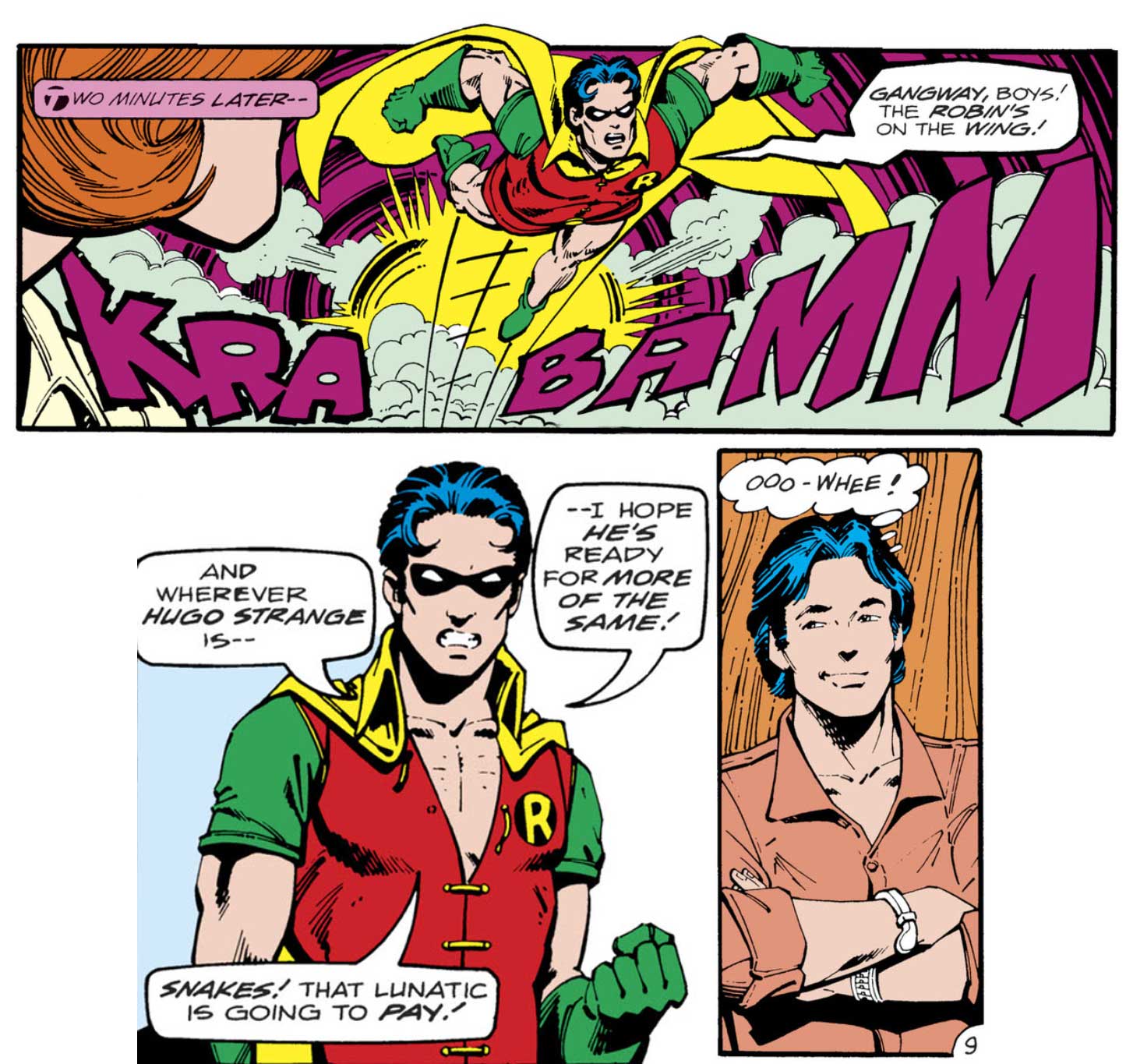
Select panels from Detective Comics #472-473. Story by Steve Engelhart, art by Marshall Rogers and Terry Austin.
Rogers had an interesting and innovative take on Robin. He portrayed him as a young adult, befitting his then-current college student status. This is no more evident than him literally ripping the laces of his tunic in battle with Hugo Strange’s monster men in Detective #472. He has clearly outgrown his costume!
But surprisingly, he gave Robin the double curled hairdo of his first 23 years of publication, and not the side-part he’d sported since 1964. His Dick Grayson also had a middle part, albeit not with the curls. This solves the problem many artists had in the ‘70s and ‘80s, when Bruce Wayne and Dick Grayson had the same hairdo, and often looked interchangeable standing next to one another.
—
6. Deadshot
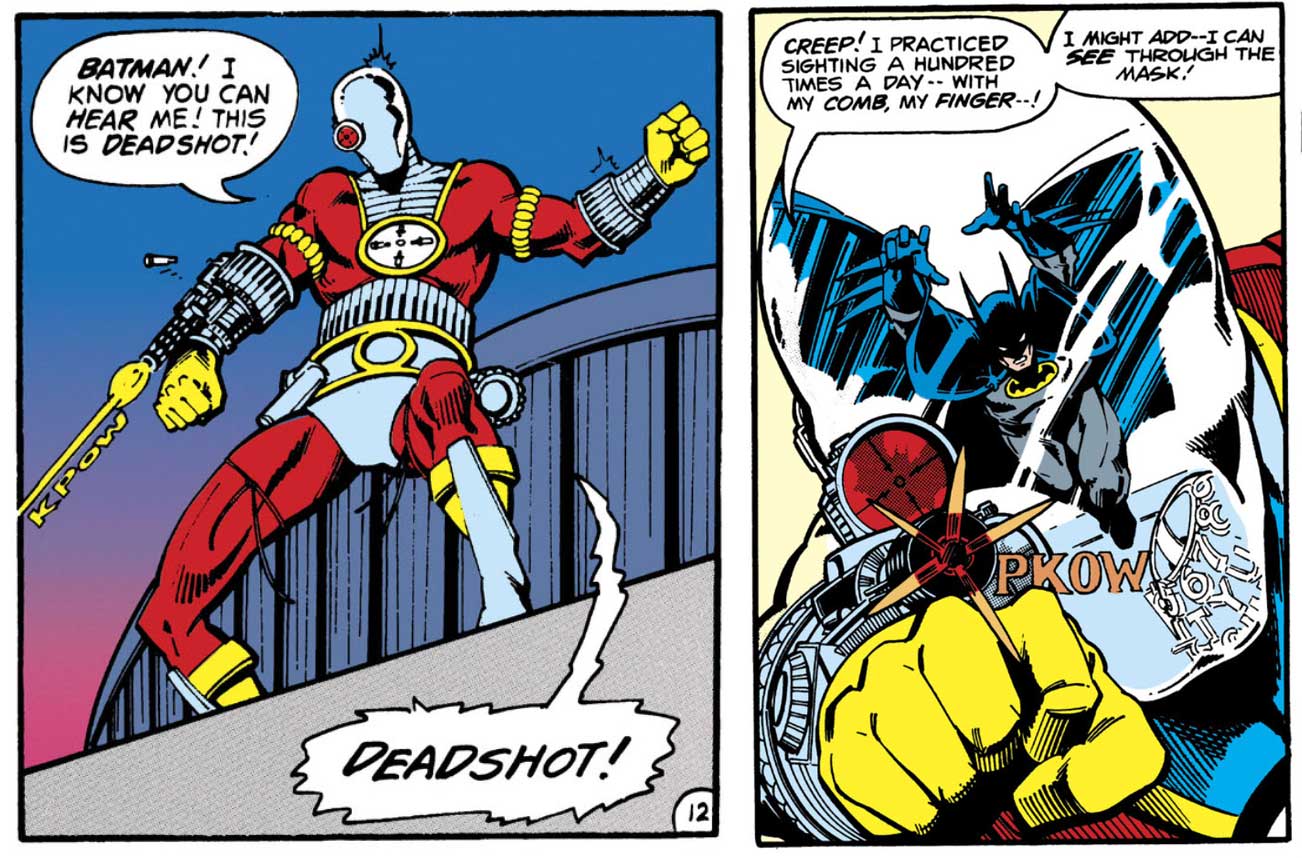
Select panels from Detective Comics #474. Story by Steve Engelhart, art by Marshall Rogers and Terry Austin.
For Detective Comics #474 (Dec. 1977) Rogers redesigned the forgotten Batman villain and made him unforgettable. Initially appearing in Batman #59 (Jun/Jul 1950) in a tuxedo, top hat and domino mask, Rogers reenvisioned Floyd Lawton as a faceless assassin behind a silver reflective mask and a built-in scope. The wrist-mounted guns proved that he meant deadly business in his revenge plot against Batman.
Deadshot made a few more appearances in Batman comics before being drafted into the Suicide Squad. There he would become a core member of nearly every iteration of that team, even in other media, such as the first feature film, played by Will Smith in costume clearly based on Rogers’ design.
—
7. The Laughing Fish
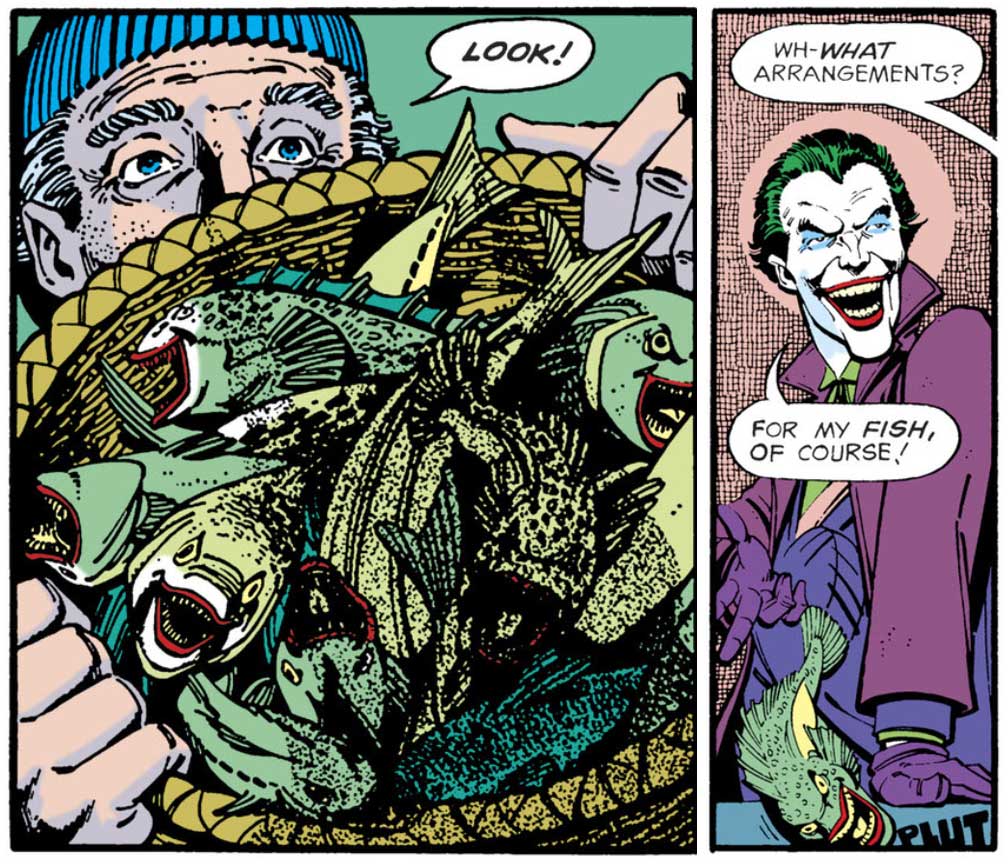
Select panels from Detective Comics #475. Story by Steve Engelhart, art by Marshall Rogers and Terry Austin.
Under lesser hands, the Joker’s latest scheme may have come across as… well, laughable. But Rogers and Austin managed to make the poisoned sea life look deeply disturbing, but still darkly funny. The story and the design have taken on lives of their own, being adapted into an episode of Batman: The Animated Series, and the fish themselves have wound up as accessories with many a Joker action figure in the past nearly 50 years.
—
8. The Joker
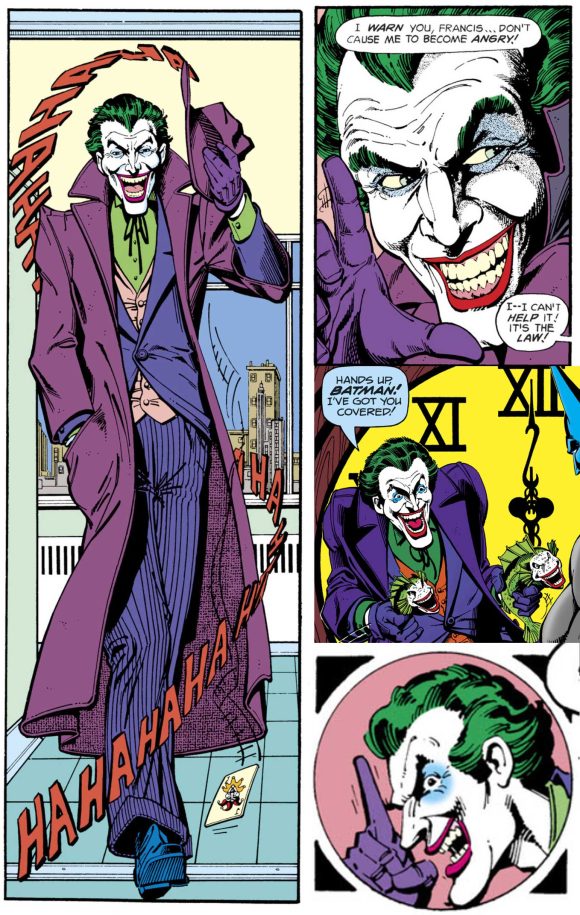
Select panels and portion of cover from Detective Comics #475. Story by Steve Engelhart, art by Marshall Rogers and Terry Austin.
Denny O’Neil and Neal Adams had re-established the Joker as a murderous menace in 1973’s Batman #251, but Engelhart, Rogers and Austin brought back the character’s more outrageous personality traits, marrying the two sides for a truly mad and unpredictable foe.
Visually Rogers’ Joker owes more to Dick Sprang’s more robust Clown Prince than Adams’ nearly skeletal Harlequin of Hate. And in several panels of Detective #475-476, Rogers seems to be capturing the likeness of actor Conrad Veidt, the lead in the film The Man Who Laughs, whose image influenced the creation of the Joker by Jerry Robinson, Bill Finger and Bob Kane decades before.
—
9. Clayface III

Page from Detective Comics #478. Story by Len Wein, art by Marshall Rogers and Dick Giordano.
Working with writer Len Wein, Rogers created a third version of Clayface for Detective Comics #478 (Jul/Aug 1978), wholly different from the masked killer and shapeshifter who each preceded him.
The alter ego of scientist Preston Payne was as tragic as he was horrific. Rogers brought a sleek, sci-fi design to Payne’s exosuit, but utilized a hooded cloak to both mask the terror and call back to gothic horror tropes. And what a monstrous visage Rogers devised. A melting face encased in a thick plastic bag. Clayface’s burning touch allowed Rogers to get pretty gruesome in a ‘70s Code-approved comic.
—
10. “Death Strikes at Midnight and Three”
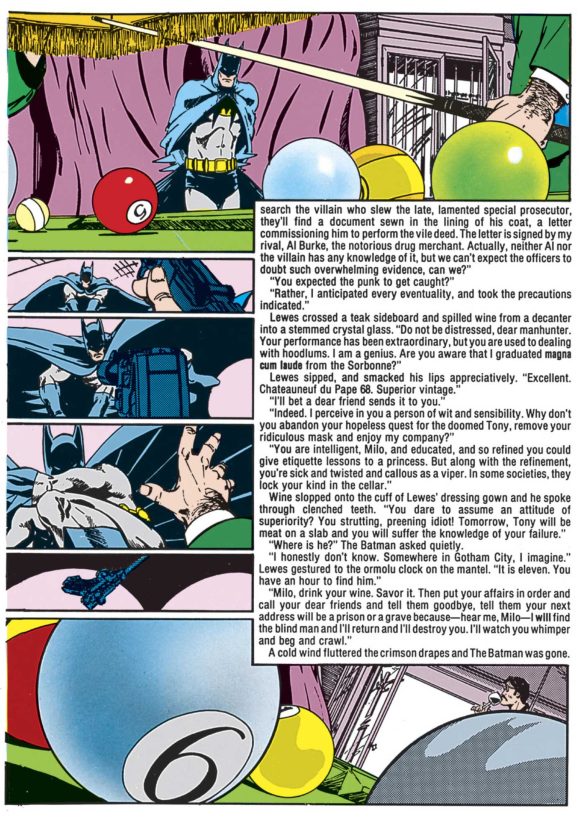
Page from DC Special Series #15. Story by Denny O’Neil, art by Marshall Rogers.
Rogers provided spot illustrations for this Denny O’Neil prose tale originally published in DC Special Series #15, (The Batman Spectacular, Summer 1978), the first of its kind in mainstream comics. From full-page splashes to panels the size of postage stamps, Rogers crammed loads of detail in to the most minute of images. The artist wasn’t particularly happy with how his work was presented or reproduced, but it remains a classic, making it into every version of The Greatest Batman Stories Ever Told.
Rogers and O’Neil collaborated on another Batman tale “Ticket to Tragedy” in Detective #481 (Dec./Jan. 1978), Rogers’ last Batman comic work for many years.
—
11. The Batman Portfolio #1
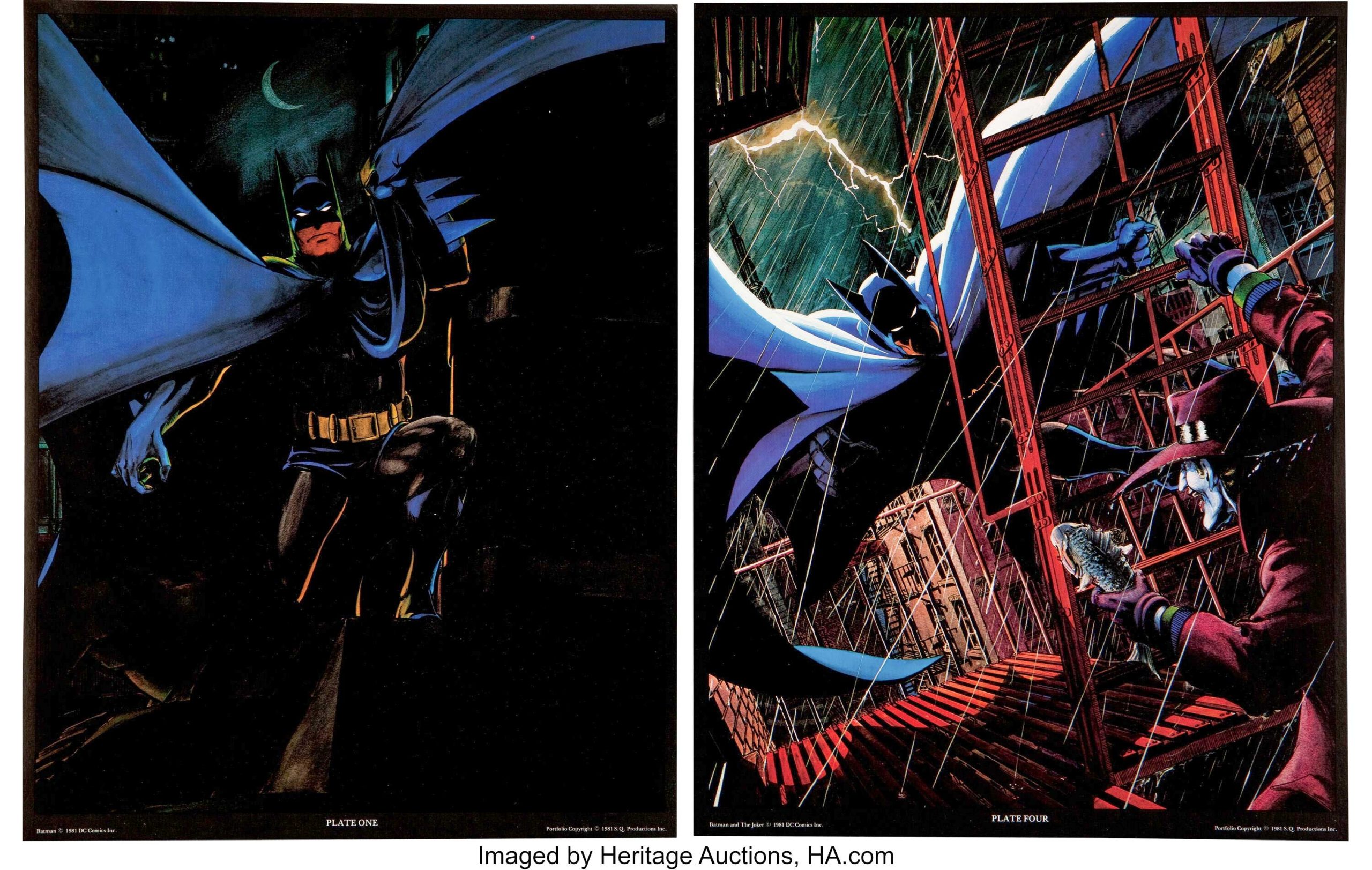
Portfolio images courtesy of Heritage Auctions
In 1981, S.Q. Productions released a portfolio of brand-new Batman illustrations by Rogers. An outside company licensing a character like Batman to spotlight a specific artist’s work was very rare for this time, and points toward just how well-regarded and influential Rogers’ take on Gotham’s denizens really was, at least among comics fans.
The four standard plates depict: a gorgeous hero shot of Batman; Batman overlooking Gotham with the silhouette of the Creeper visible in the distance; Batman being confronted by Catwoman’s trained panthers; and a recreation of Batman’s battle with the Joker from “The Laughing Fish” saga.
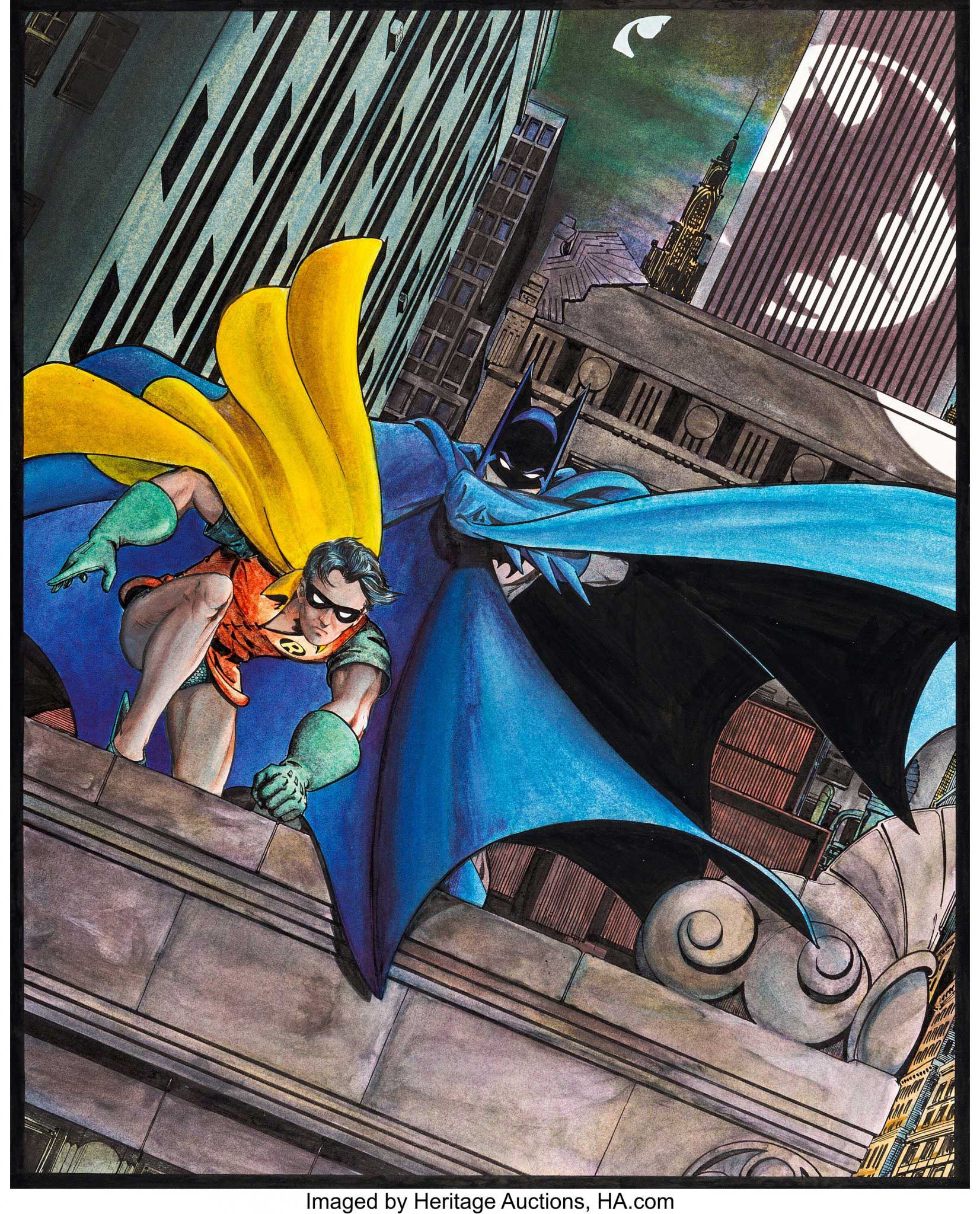
A fifth plate was also available in some editions, depicting Batman and Robin in a rooftop scene reminiscent of Rogers’ image from Detective Comics #473, which was Rogers’ take on the classic, recurring image of the Dynamic Duo perched on a rooftop.
—
12. The Batman Comic Strip
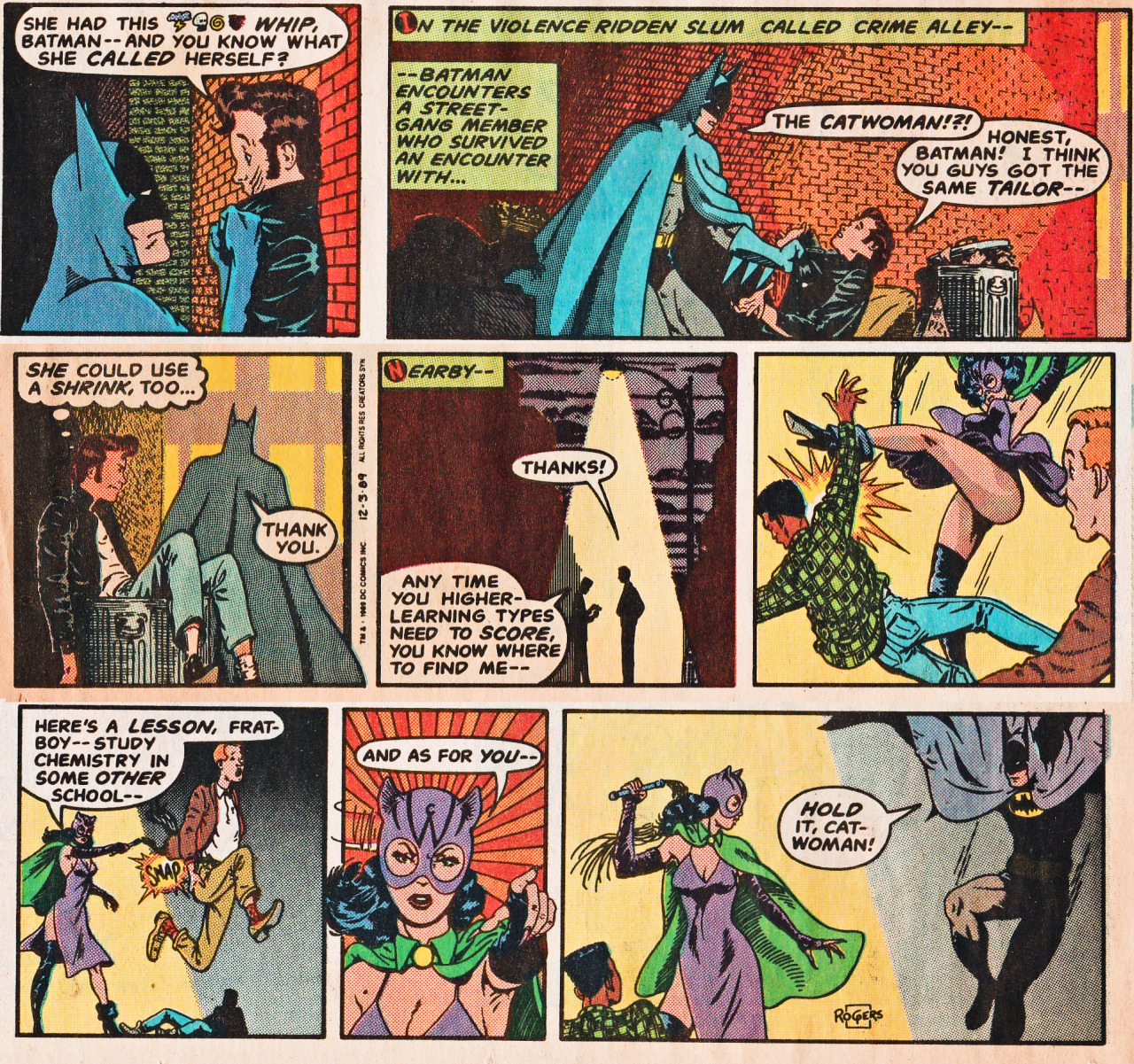
Image courtesy of https://batman-daily.tumblr.com/
In the wake of the success of Tim Burton’s Batman film in 1989, Rogers was tapped to draw a new comic strip, roughly following up the continuity of the film. But Rogers chose to draw Batman as he always had, with no reference to actor likenesses or movie costuming.
With Max Allan Collins, then-current scribe of the Dick Tracy comic strip, and former writer of the Batman comics series, on writing duties, Rogers drew the initial storyline featuring Catwoman across both the black and white dailies and color Sunday strips, in his usual shadowy style. He was replaced by another master Batman artist, Carmine Infantino, but the artistic whiplash must have been jarring to the few readers lucky enough to find this fairly obscure strip in their newspapers, due to limited distribution. It has never been officially collected, which is indeed a shame, although you can read the entirety of it here: https://batman-daily.tumblr.com/
—
13. Dark Detective
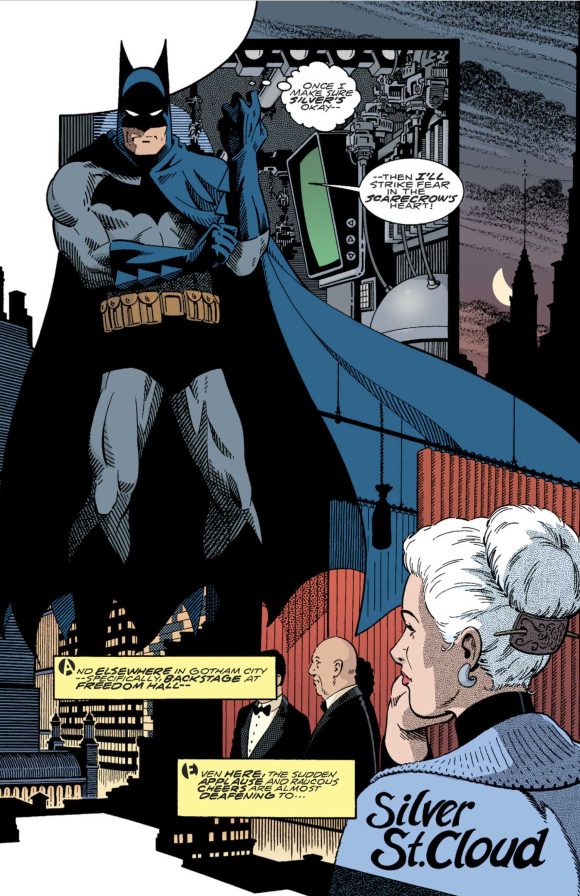
Page from Batman: Dark Detective #4. Story by Steve Engelhart, art by Marshall Rogers and Terry Austin.
After illustrating the origin of the Golden Age Batman by writer Roy Thomas in Secret Origins #6 (Sept. 1986), the strange Realworlds: Batman one-shot in 2000, and the storyline “Siege” with writers Archie Goodwin and James Robinson in Batman: Legends of the Dark Knight #132-136 (Aug.-Dec. 2000), Rogers finally reteamed with Engelhart and Austin on the Batman: Dark Detective mini-series in 2005.
The trio revisited many of the highlights of their original Detective run, including Bruce Wayne rekindling his romance with Silver St. Cloud, and the Joker returning to torment them. Rogers also got a chance to illustrate classic Batman characters he’d never touched, such as Two-Face and the Scarecrow.
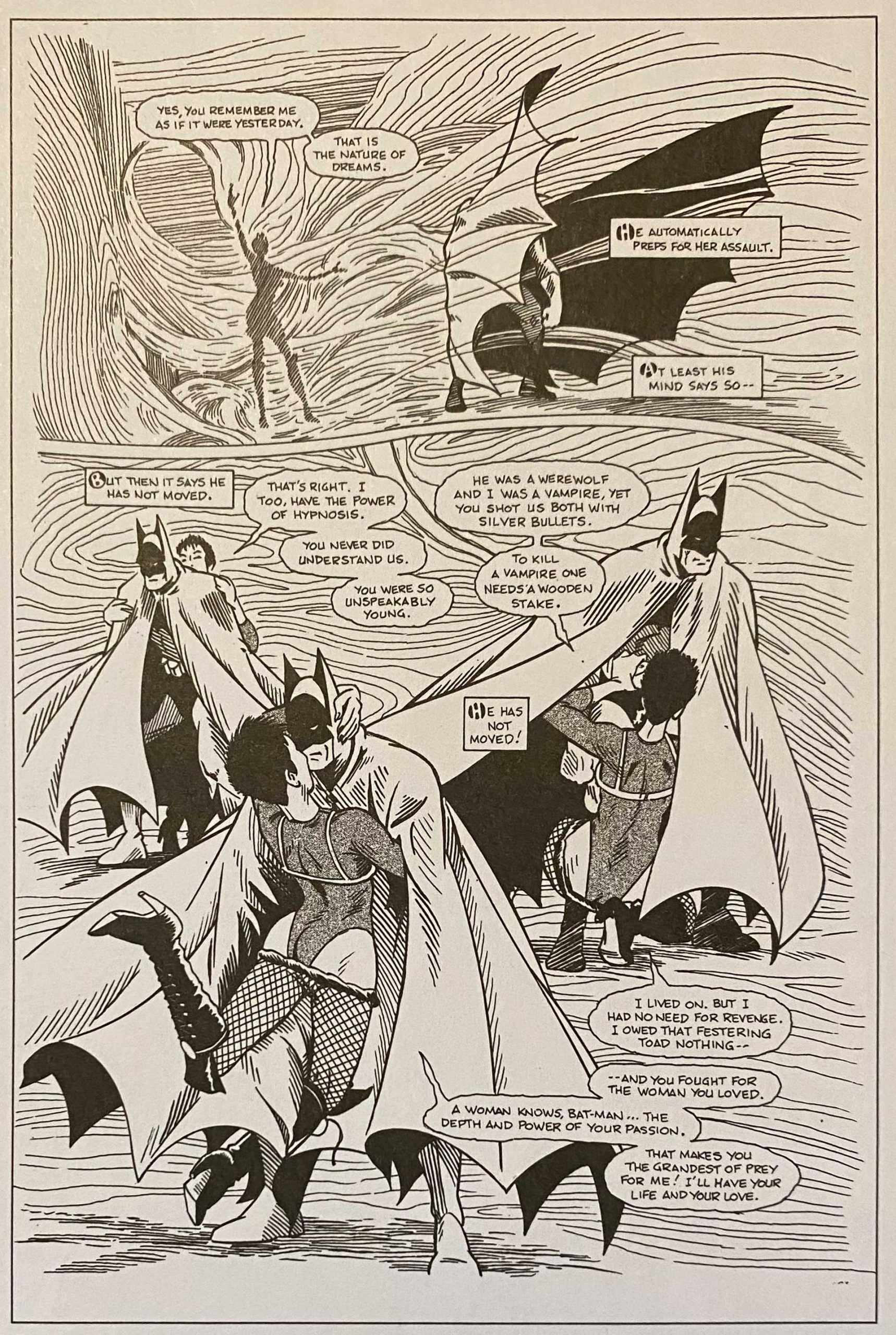
Page of the unpublished Batman: Dark Detective II #1. Story by Steve Engelhart, art by Marshall Rogers and Terry Austin. From Marshall Rogers: Brightest Days & Darkest Knights by Jeff Messer and Dewey Cassell
A follow-up mini-series was eventually greenlit by DC, but Rogers had only finished the first issue at the time of his death. Despite Terry Austin wrangling a who’s who of Rogers’ friends and peers to finish the remaining five issues, DC opted to cancel the series, never printing the completed first issue.
The recent Batman The Long Halloween: The Last Halloween, which had a similar who’s who of artists subbing for the departed Tim Sale seems like a perfect template to follow to get this series in readers’ waiting hands. Or perhaps a “fauxsimile” edition of Rogers’ completed issue, like the recently published alternate version of Batman #428 from the “A Death in the Family” storyline?
Englehart said recently that a project was in the offing, but alas, it doesn’t appear to be coming. But we can always hope.
—
MORE
— INSIDE THE BATMAN: The STEVE ENGLEHART INTERVIEWS. Click here.
— FIRST LOOK: Inside the Long-Awaited MARSHALL ROGERS Illustrated Biography. Click here.
—
13th Dimension contributor CHRIS FRANKLIN is a graphic designer, illustrator, writer, and podcaster, who co-hosts and produces several shows on the Fire and Water Podcast Network, including Batman: Knightcast. Check out his illustrative and design work at chrisfranklincreative.com.

January 22, 2026
Every time the subject of Marshall Rogers comes up, it brings the best articles. He is still sorely missed.
January 22, 2026
If there is any Batman artist that doesn’t get enough love and attention, it’s Marshall Rogers.
How many times has DC Comics announced a reprint of Batman Strange Apparitions, only to go and cancel it? That story deserves a deluxe hardcover. Or at least deserves a full reprint in facsimile and not just The Laughing Fish chapter.
Happy Birthday, sir! May your soul rest in peace.
January 22, 2026
I would love to also see his newspaper strip work. And if any original work exists, it needs an artist edition.
January 22, 2026
Thanks so much for the wonderful article. You really captured the essence of Marshall’s Batman. I have shared very detailed suggestions with DC editors for how they could publish Dark Detective 3, based on both the Last Halloween and the recent Robin Lives issues. I will keep pushing because I think it would be an amazing way for DC to mark the 50th anniversary of the original Engelhart-Rogers saga in 2027. So many artists would be ideal to finish off the other five issues of Dark Detective 3, but Vasco Georgiev and Hayden Sherman would be at the top of my list in terms of newer artists.
January 22, 2026
Why oh why has DC not reprinted more of Marshall Rogers’ Batman? Not only should Legends of the Dark Knight: Marshall Rogers be reprinted for more to enjoy, but there should be a second volume released. And yes, include that first story of the 1990 comic strip, and yes, that would be a fantastic artist’s edition. And a new, hardcover reprint of Strange Apparitions that would include the first two stories drawn by Walter Simonson would be most welcome! Or at least a Finest that would include it all. And how about a Finest that reprints the 1990 Batman strip in its entirety, not just Rogers’ first story, but also the remainder by Carmine Infantino?
January 22, 2026
… And for Heaven’s sake, don’t forget the short bridging story Wein and Rogers did in Detective Comics 477. Most (if not all) reprint collections have skipped over that one.
January 22, 2026
Although not in my personal top tier (it would be second tier for me), it still baffles me that DC has not collected the Englehart and Rogers (and Simonson and Wein) run (plus its sequel) in a Deluxe Edition or Omnibus.
January 22, 2026
The TwoMorrows book was an excellent insight to the man.
January 22, 2026
Still surprised that DC didn’t get Michael Golden to finish Dark Detective II when Marshall passed as he was Rogers’ contemporary on other Batman books while he was doing Detective Comics.
January 23, 2026
Then. Now. Forever my fave Batman artist (and Mr. Miracle too)
January 23, 2026
Thanks for the write-up, Chris.
The Rogers/Austin team has always been one of my favorites. When my family went on vacation in Panama City Florida, we always stopped at a store called The Carousel on the first night. I always got to buy a big stack of comics, and Detective 471 was one of those. To this day, I’m surprised that my mom let me get that cover since it looks like Hugo Strange is ripping his face off.
Even as young as I was at the time, I could tell the artwork on Detective (Rogers/Austin), Power Records (Neal Adams), Brave & the Bold (Jim Aparo) and the treasuries (Adams/Giordano and Irv Novick/Giordano) was much more enjoyable than what I was seeing in Batman (Chua and Calnan).
January 23, 2026
I got a happy surprise this week as I picked up the DC FINEST: Batman Red Skies.
I didn’t know ahead of the purchase that the SECRET ORIGINS Golden Age Batman story is included!
FYI to anyone looking for a new print of that little classic.
January 23, 2026
Wow, a lot of Batman by Rogers of which that I was unaware.
January 23, 2026
Yep, you can read more about this artistic contributions throughout his career. Check this link. https://www.thriftbooks.com/w/marshall-rogers-brightest-days–darkest-knights_dewey-cassell/54234549/item/74027873/?utm_source=google&utm_medium=cpc&utm_campaign=shopping_new_condition_books_high_14637440387&utm_adgroup=&utm_term=&utm_content=593819619485&gad_source=1&gad_campaignid=14637440387&gbraid=0AAAAADwY45gVtjoEwKybi1m_9n8sHf4UP&gclid=Cj0KCQiA1czLBhDhARIsAIEc7ugIXDS4KdTN8ut2oNjtFc1GtWWzTjUMcM_KaIcvzNS6KYbLHv9NE6QaAt8WEALw_wcB#idiq=74027873&edition=72139869
January 24, 2026
Right?! I somehow missed on “Batman: Legends of the Dark Knight #132-136“. Just ordered them and am looking forward to reading “new” Rogers’ work. Might add very reasonable prices too.
January 23, 2026
I get so irritated when I see all these big mainstream pop culture/comic book websites with listicles of “10 Best” or “25 Best Batman Stories of All Time” and Englehart & Rogers are nowhere to be found.
Their run is truly one of the very best, god-tier Batman runs of all time. I cannot believe we don’t have a Deluxe, Absolute, or Omnibus of their work. What an absolute disgrace on DC’s part.
January 23, 2026
I agree with you. DC, are you listening to us?