
Artistic brilliance inspired by the horror of war…
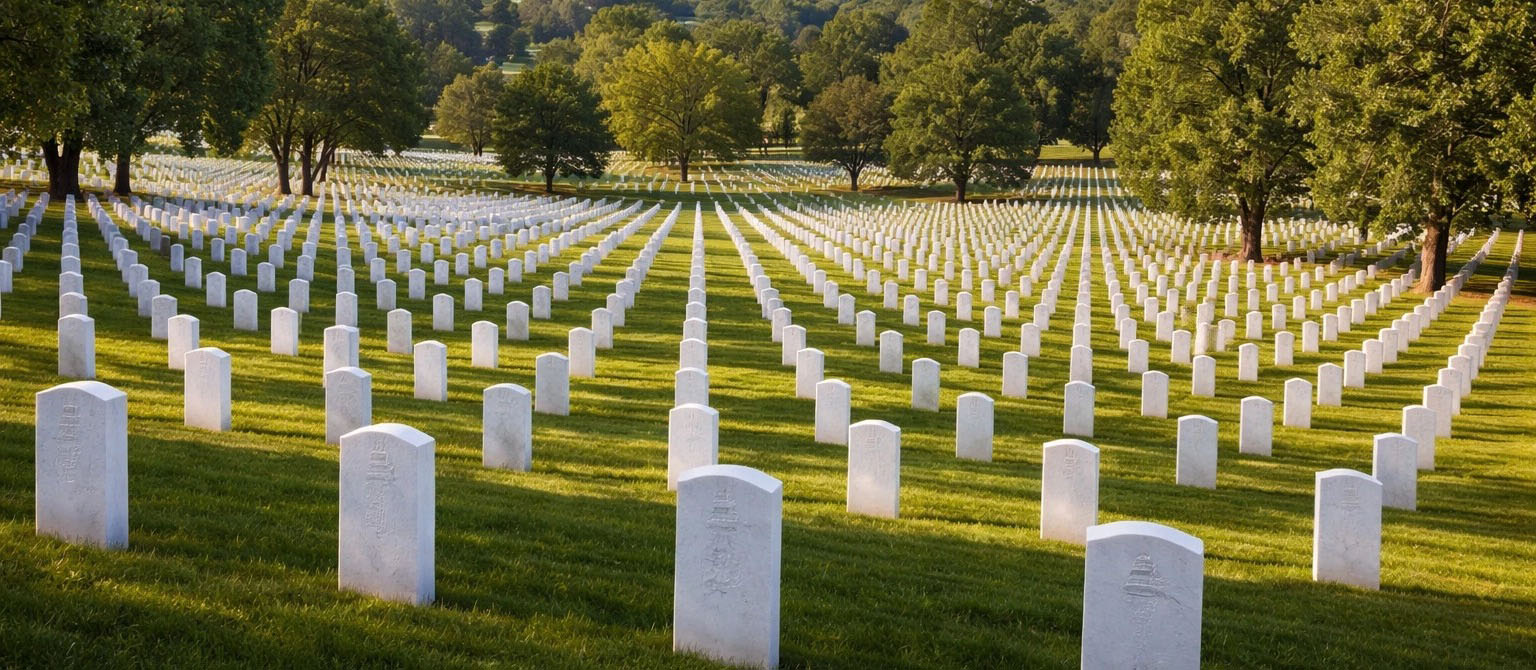
Arlington National Cemetery, Virginia.
By PETER BOSCH
Every November 11, America honors those who have fallen in service. Veterans Day is a tradition started in 1919, a year to the date after the signing of the World War I Armistice — the eleventh hour of the eleventh day of the eleventh month. In France and Belgium, today is Armistice Day. In Canada and the United Kingdom, it is Remembrance Day and on their lapel people wear a poppy (“In Flanders fields the poppies blow/Between the crosses, row on row”).
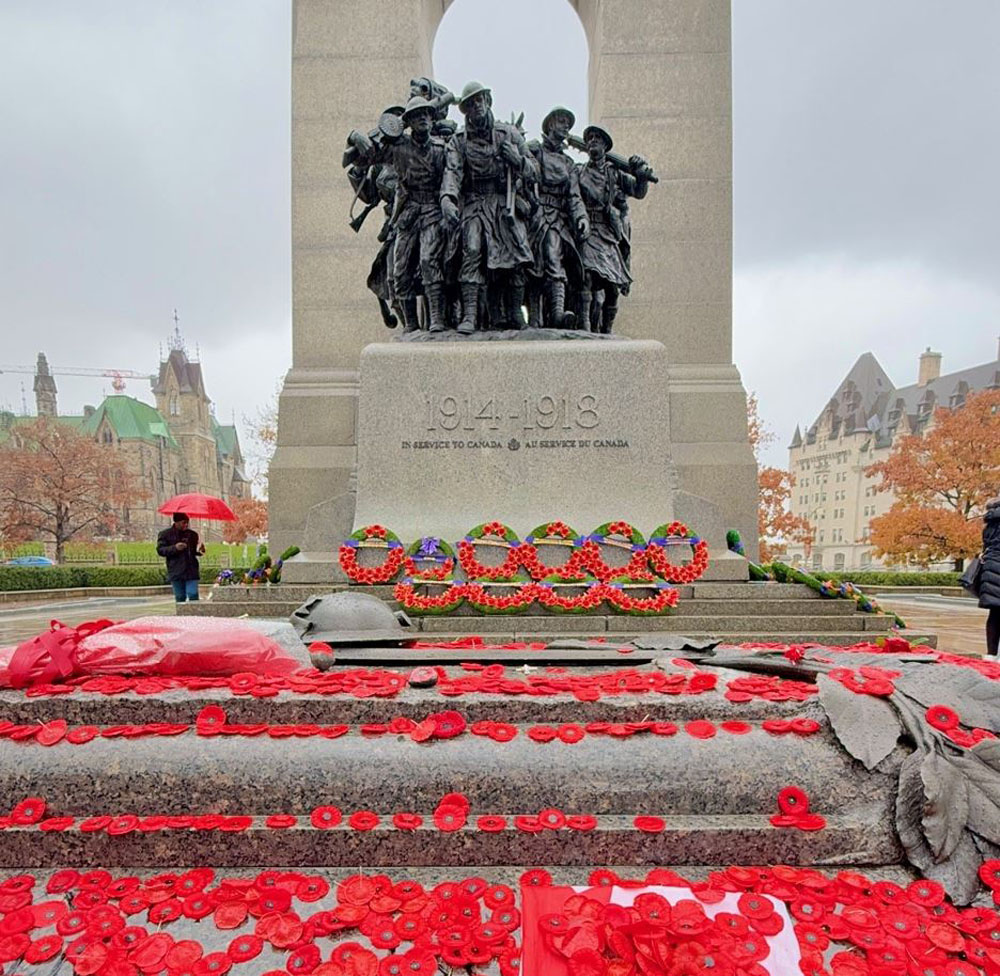
Remembrance Day in Canada at the Tomb of the Unknown Soldier in Ottawa, Ontario.
In other countries, it is held on different days, under various titles… but always with the same purpose of remembering the men and women who fought in wars for us. (My father was one of those who fought in World War II.)
To them, for their duty and our freedom, we say “Thank you.”
There are any number of comics and graphic novels about World War I and those who fought in it, but here are 13 we recommend.
—
Medal of Honor. The United States Medal of Honor was created in 1861, and it symbolizes our country’s greatest award for valor. Since 2018,tThe Association of the United States Army has published a series of comic-illustrated stories of the heroism of Medal of Honor winners. Though the AUSA calls these issues “graphic novels,” each is limited to eight pages (plus a cover and credit pages). However, even in that short a space, they focus on the heroics of recipients of the medal and their tales of courage. At present, there are 32 different issues covering heroes of different wars of the past. These can be read online or downloaded at no cost here.
Five of those issues tell of brave men of World War I. The first four below were written by Chuck Dixon (Batman, etc.). The fifth, about Eddie Rickenbacker, was scripted by Doug Murray (The ’Nam, etc.).
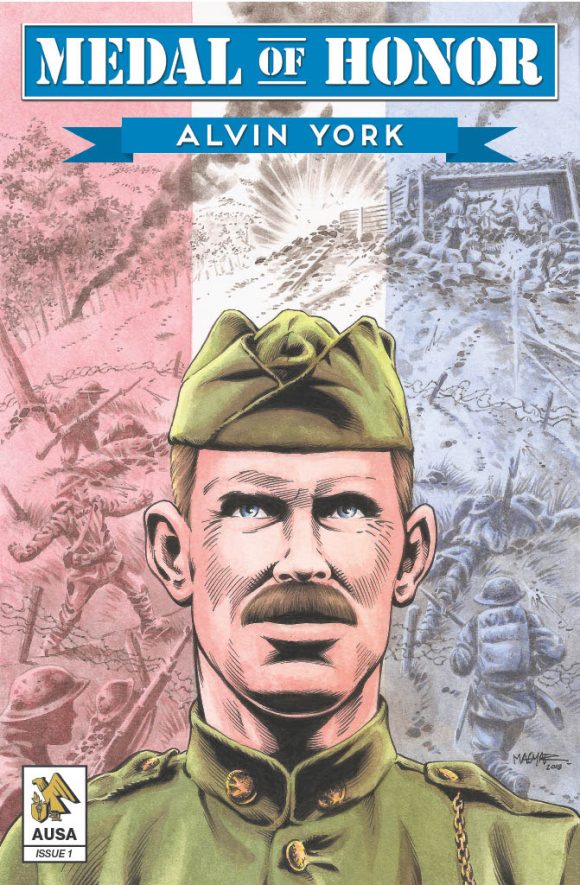
Cover art: Rick Magyar. (Oct. 2018)
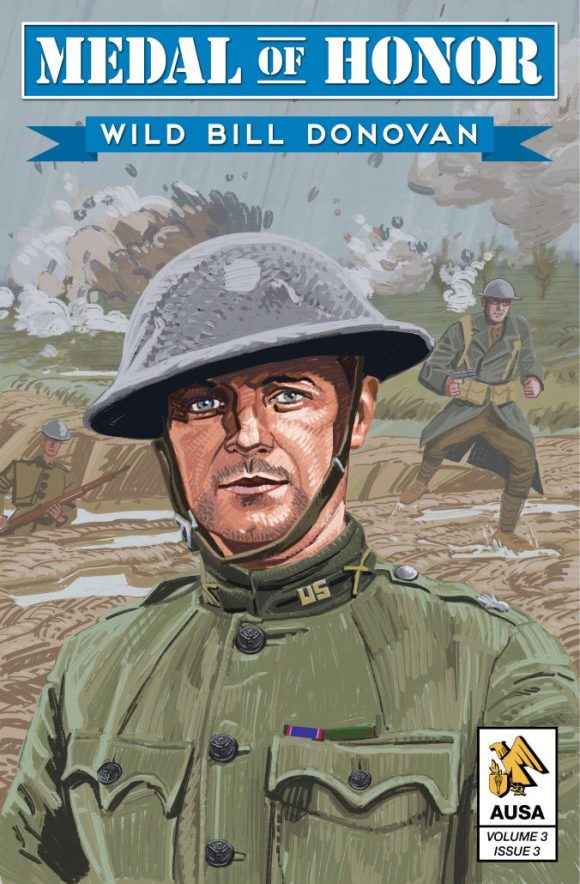
Andrew Paquette art. (Aug. 2021)
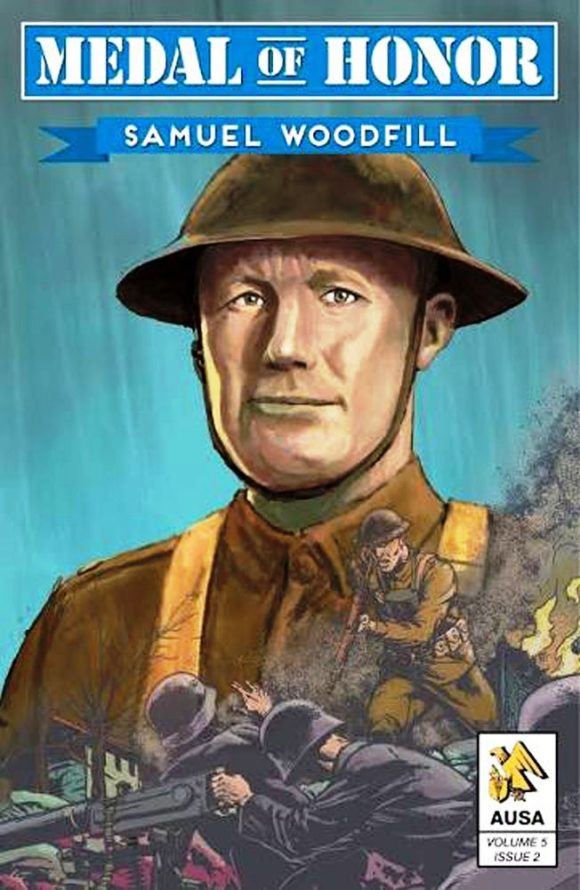
Geof Isherwood art. (May 2023)
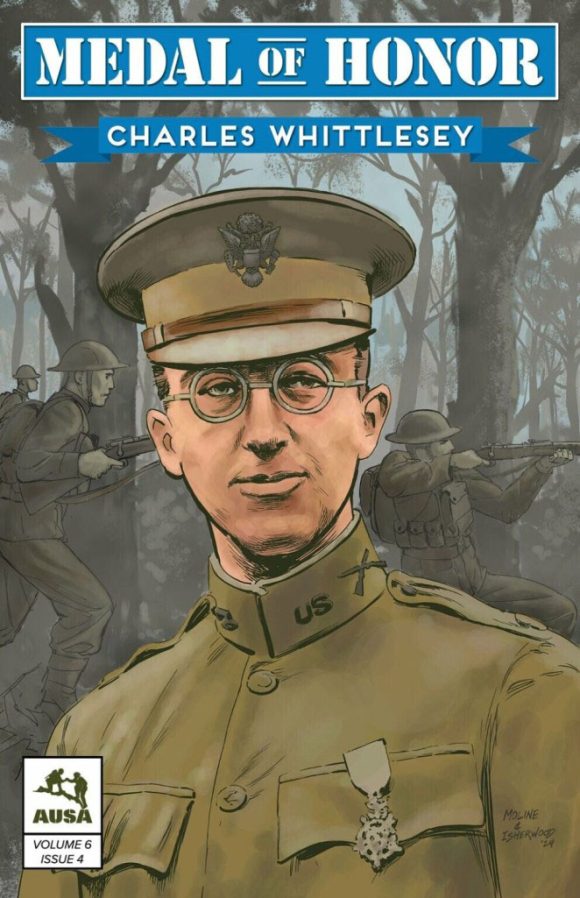
Karl Moline and Isherwood art. (Sept. 2024)
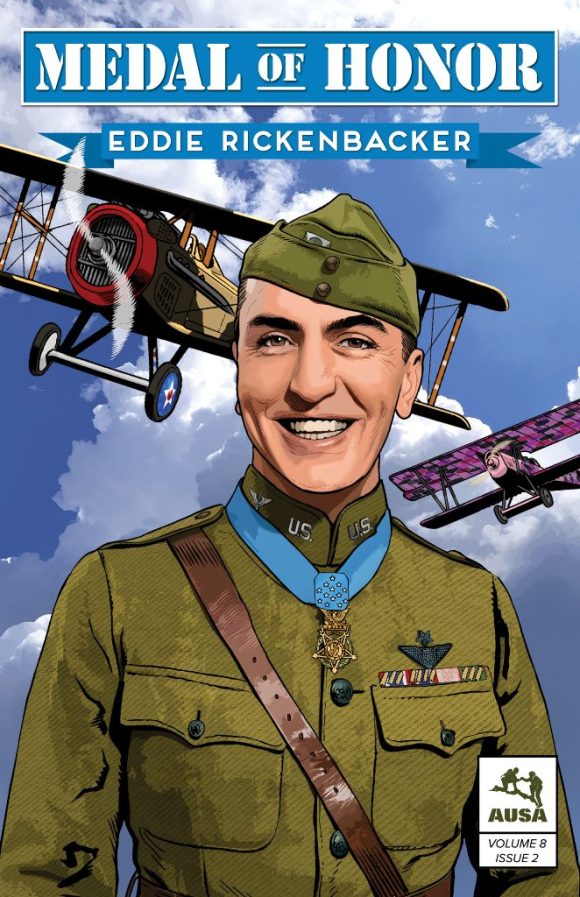
Gary Erskine art. (Sept. 2026).
—
The Harlem Hellfighters. While the 369th Infantry Regiment in World War I were not Medal of Honor winners (with one exception who is discussed later in this article), the entire unit was awarded the Congressional Gold Medal, as well as the Croix de Guerre (France’s medal for extraordinary bravery) and, in addition, the Distinguished Service Cross was awarded to many members of the regiment.
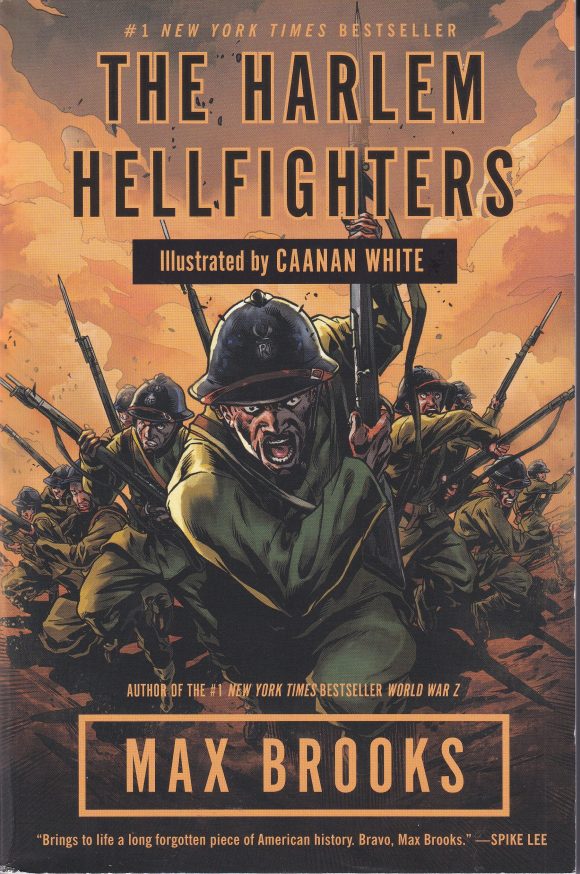
Cover design by Cardon Webb, illustrated by Caanan White. (Broadway Books, 2014).
—
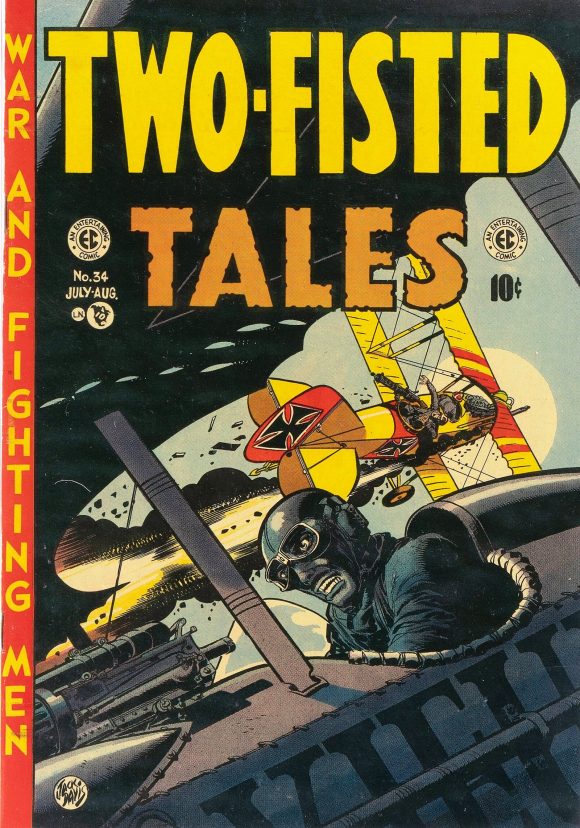
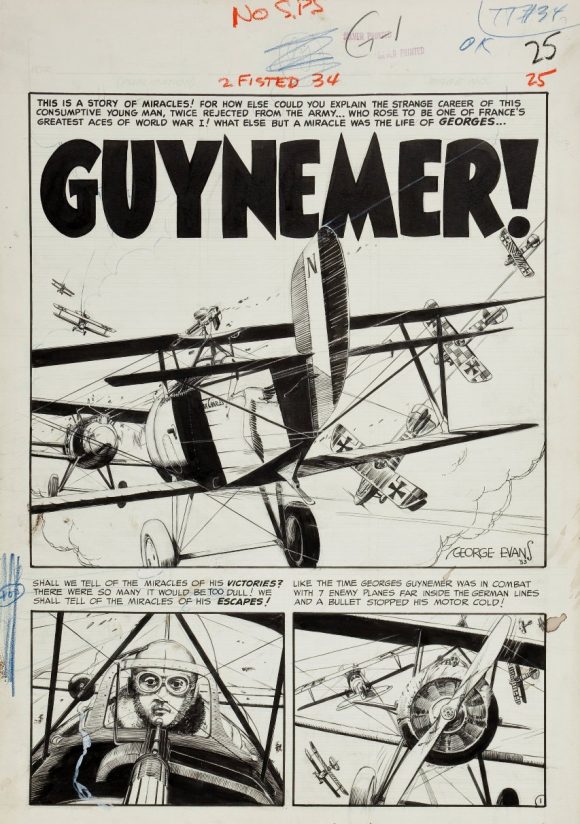
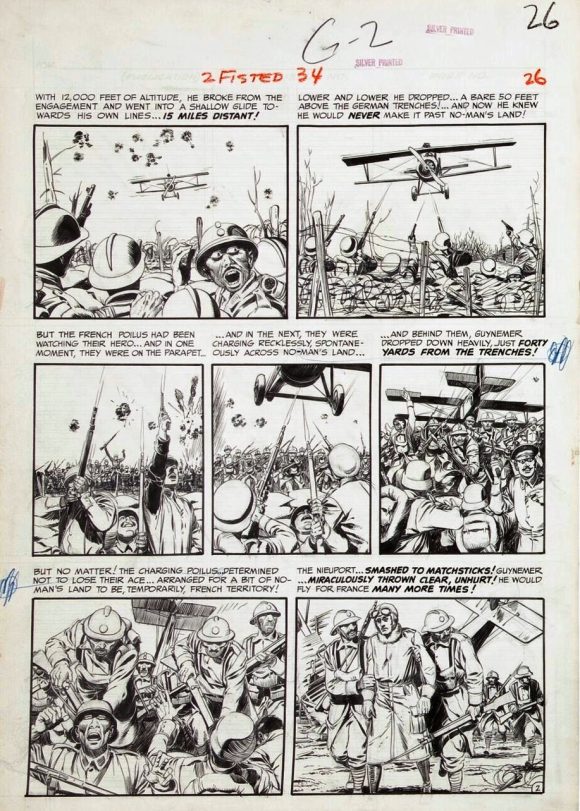
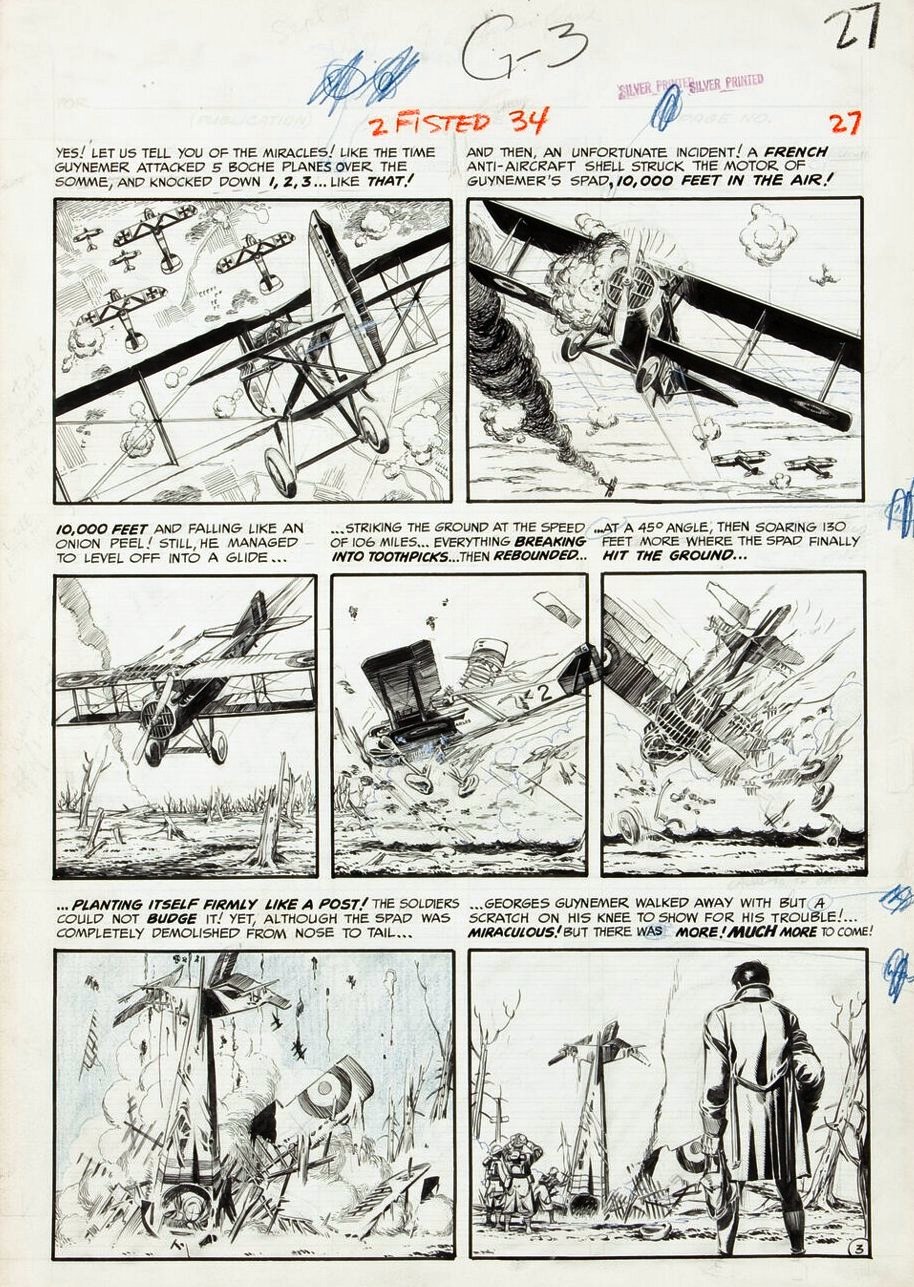
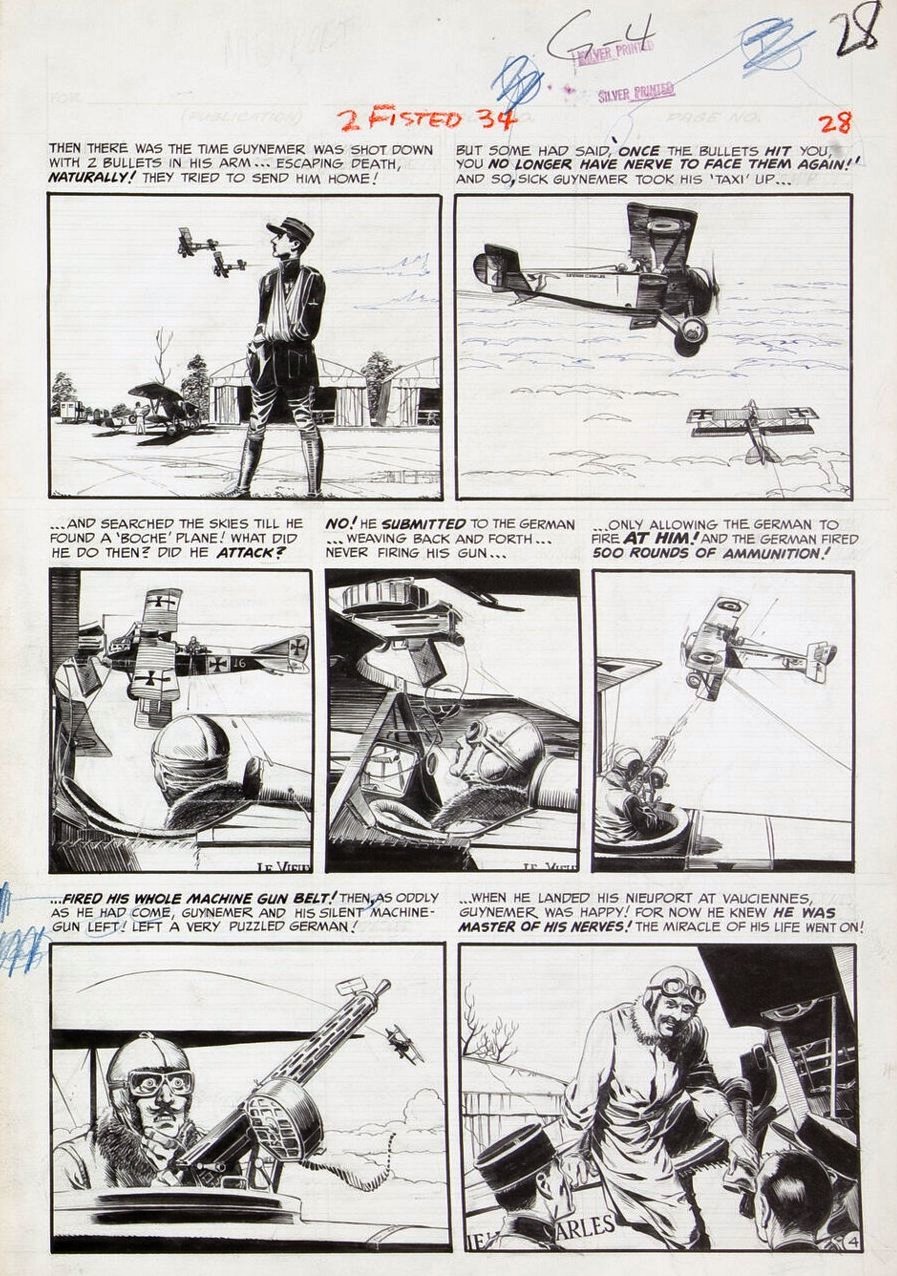
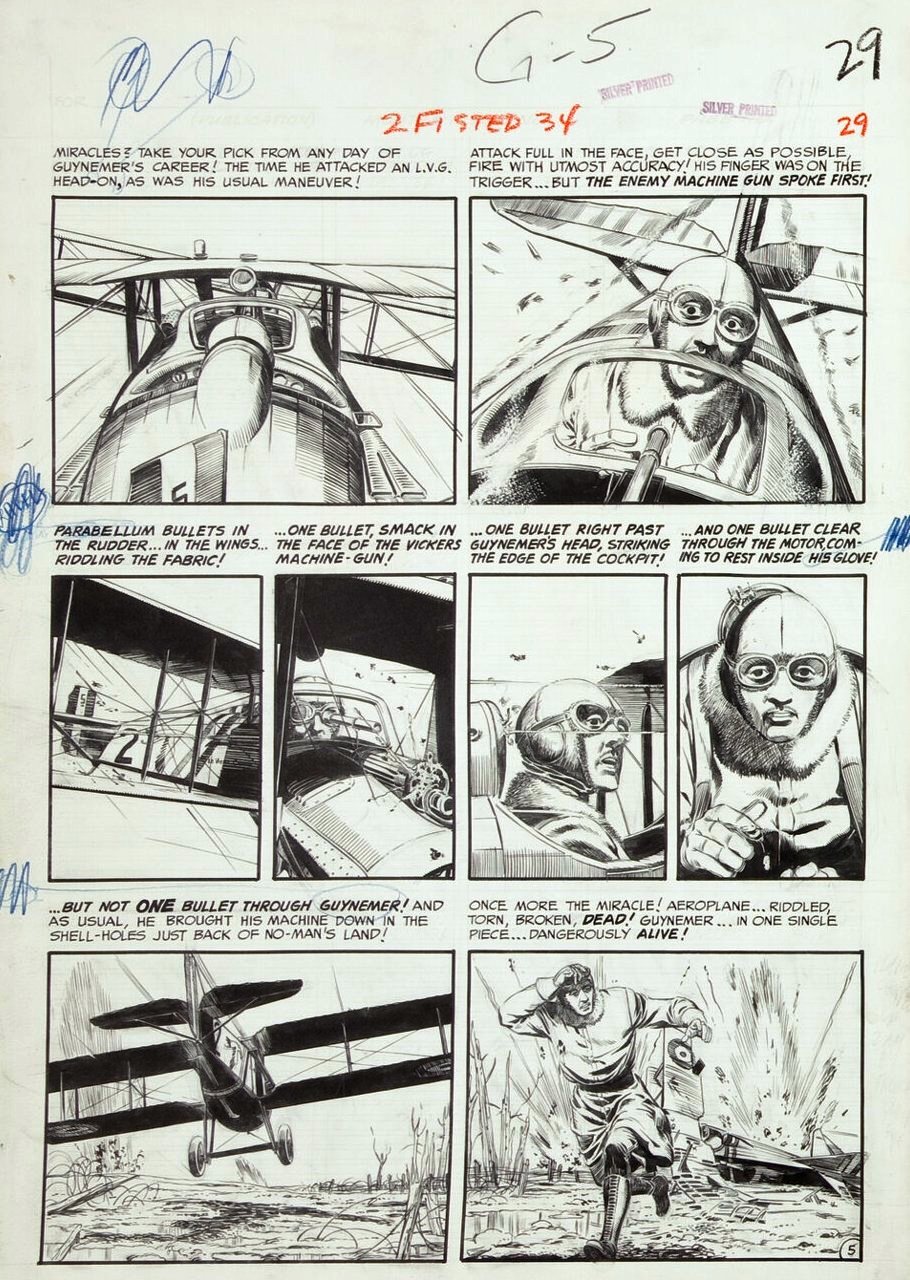
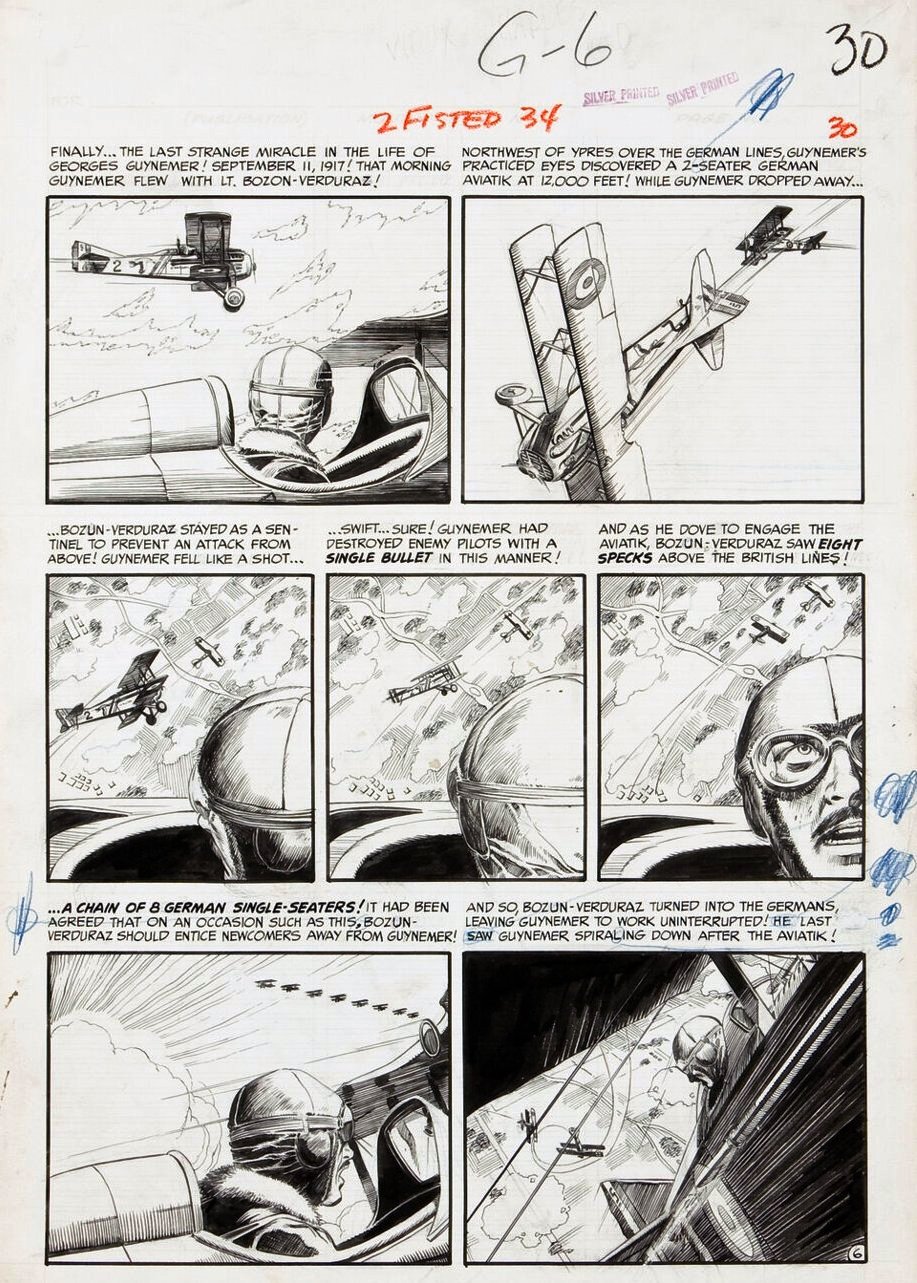
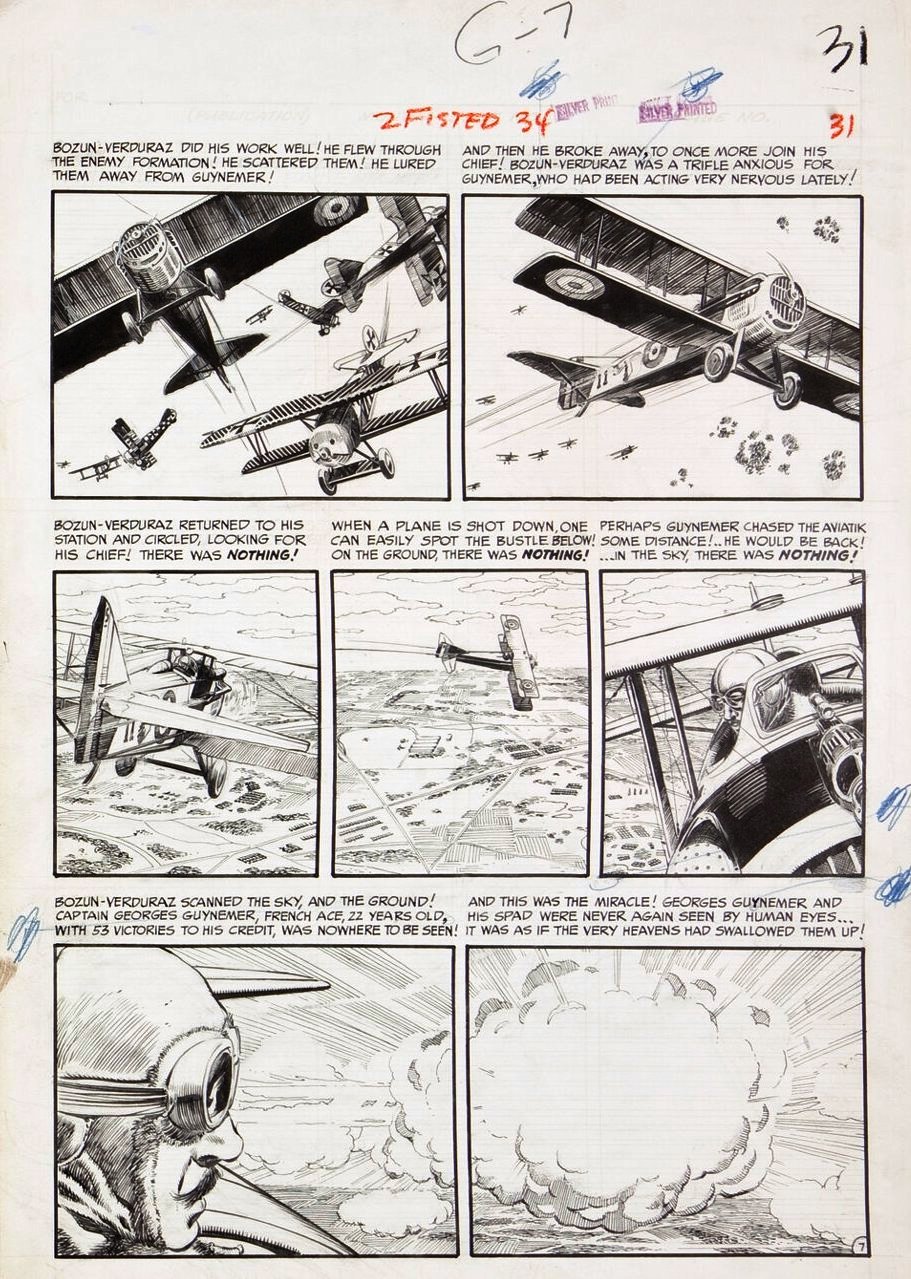
Guynemer. One of the most famous pilots in the First World War was Frenchman Georges Guynemer. By the time he was 22 years old, he had officially shot down over 50 planes… and then he vanished while on patrol, never to be heard from again.
Here is the original art for all seven pages by George Evans (written by Harvey Kurtzman) of “Guynemer!” in Two-Fisted Tales #34 (July-Aug. 1953, EC). The cover is by Jack Davis.
—
While the following are fictional works, their messages are strong:
Charley’s War: Possibly the most acclaimed British tale set in comic form about the First World War was that of Charley’s War, written by Pat Mills (Batman: Book of Shadows, Punisher 2099, etc.) and drawn by Joe Colquhoun. It was originally serialized between 1979-1985 in the UK’s comics weekly, Battle (aka Battle Action and Battle Action Force) and has been reprinted in 10 volumes from Titan Books, as well as three “Definitive Collection” volumes from Rebellion Publishing.
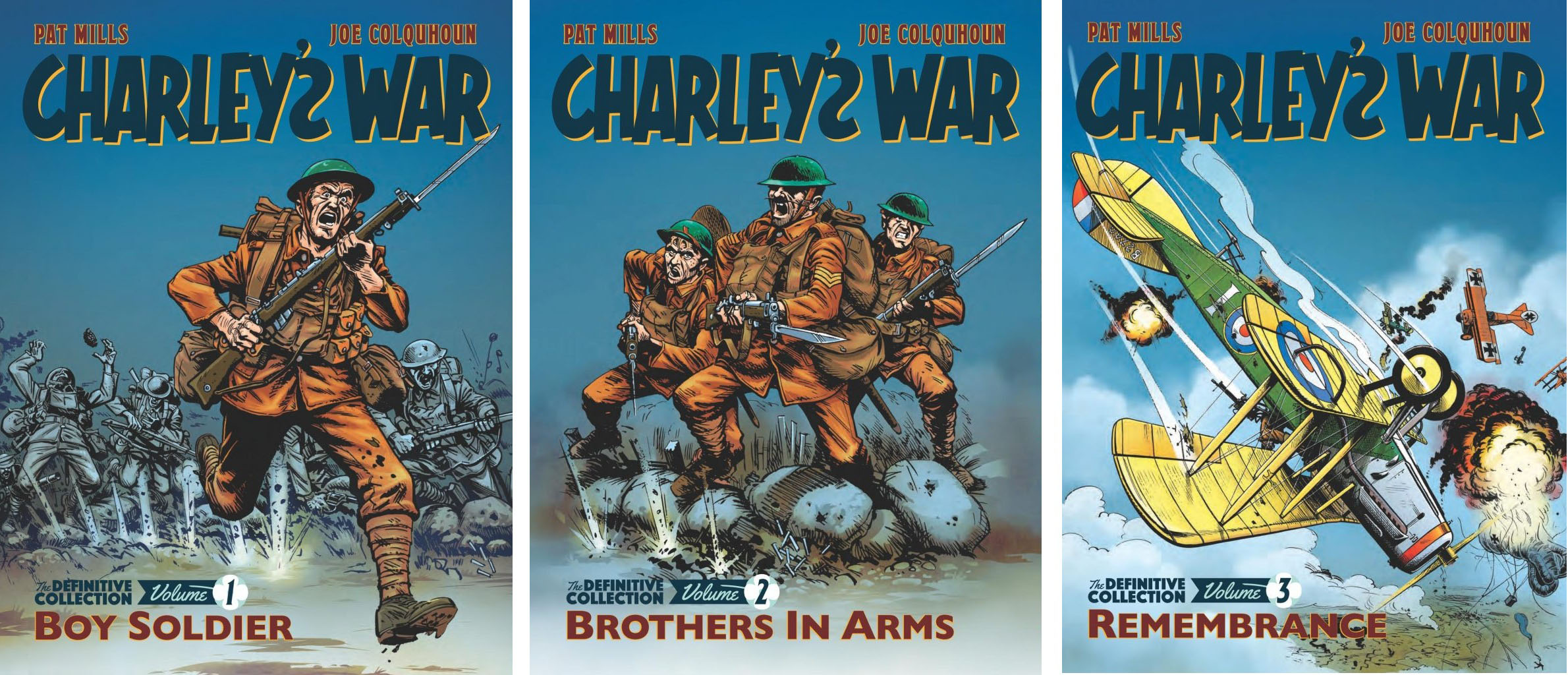
The Rebellion editions with cover art by Joe Colquhoun.
The story told of a new English recruit, 16-year-old Charley Bourne, who went from being idealistic about war (he lied about his age to enlist) to realizing the nightmare of serving on the front line. On one side of No Man’s Land were the Germans and on the other were the British, all with one thing in mind… stay alive by killing the enemy.
—
Aces High. The EC title only ran five issues, but it was a World War I aviation fan’s dream come true. Each issue told of the adventures of the pilots, but in adult terms that were more substantial than those of other companies’ war comic books. All five issues were reprinted in the Aces High Annual from Gemstone in 1999.
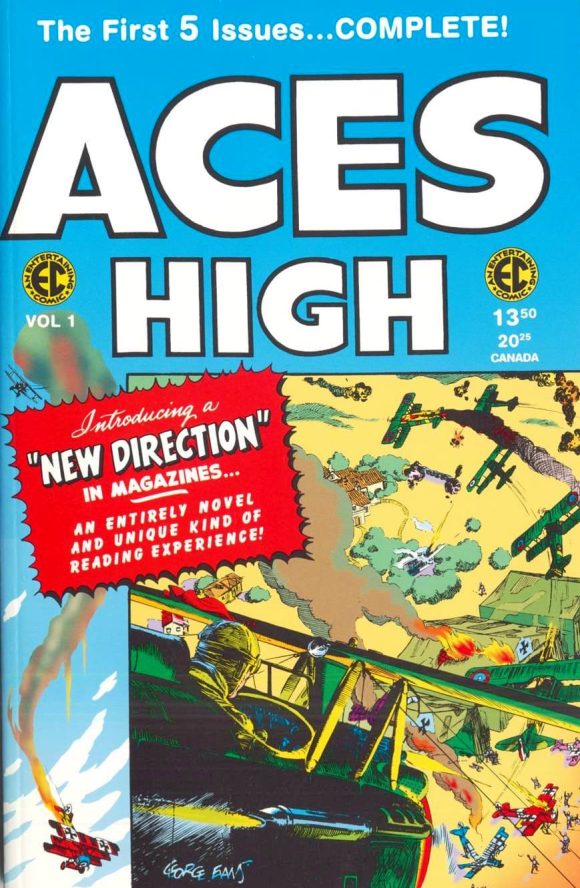
George Evans art.
—
All Quiet on the Western Front: The most famous novel about World War I was written by Erich Maria Remarque, an ex-German Army soldier (the original title of the 1929 book was Im Westen Nichts Neues). At the age of 19, Remarque was badly wounded from shrapnel from a British artillery shell and was hospitalized for a year and a half. When he recovered, he was told he could go back to the front.
In his book, Remarque chose to strip away the lies of glory about going to war. His prologue read: “This book is to be neither an accusation nor a confession, and least of all an adventure, for death is not an adventure to those who stand face to face with it. It will simply try to tell of a generation of men who, even though they may have escaped its shells, were destroyed by the war.”
When Hitler rose to power a few years later, All Quiet on the Western Front was ordered burned as being anti-war propaganda and Remarque’s German citizenship was revoked. He fled to the United States.
Classics Illustrated first adapted the novel in Issue #95 (May 1952) and it was reprinted several times after that.
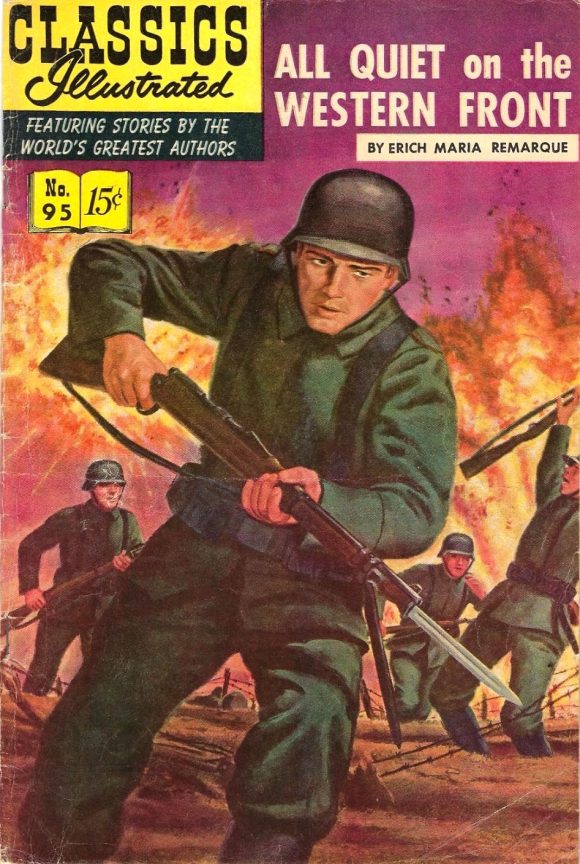
Maurice Del Bourgo painting. Gilberton Company, Inc.
—
Enemy Ace. Another look at the German side, wrapped in an anti-war message. One of DC Comics’ best series of stories, Enemy Ace was written by Robert Kanigher and illustrated by Joe Kubert. The hero – or, rather, the anti-hero – was Baron Hans von Hammer, the greatest of the Kaiser’s World War I pilots. While Germans praised him for his numerous kills in the air, he was a man who despised war and respected his enemies.
Enemy Ace first appeared in Our Army at War #151 (Feb. 1965), a title best associated with America’s Sgt. Rock. Following that issue, he appeared in #153 (Apr. 1965) and #155 (June 1965). The Hammer of Hell was next in Showcase #57 (July-Aug 1965) and #58 (Sept.-Oct. 1965), and then in a lengthy run as headliner of Star Spangled War Stories. The Enemy Ace Archives Volume 1 (2002) and Volume 2 (2006) contain all of these stories.
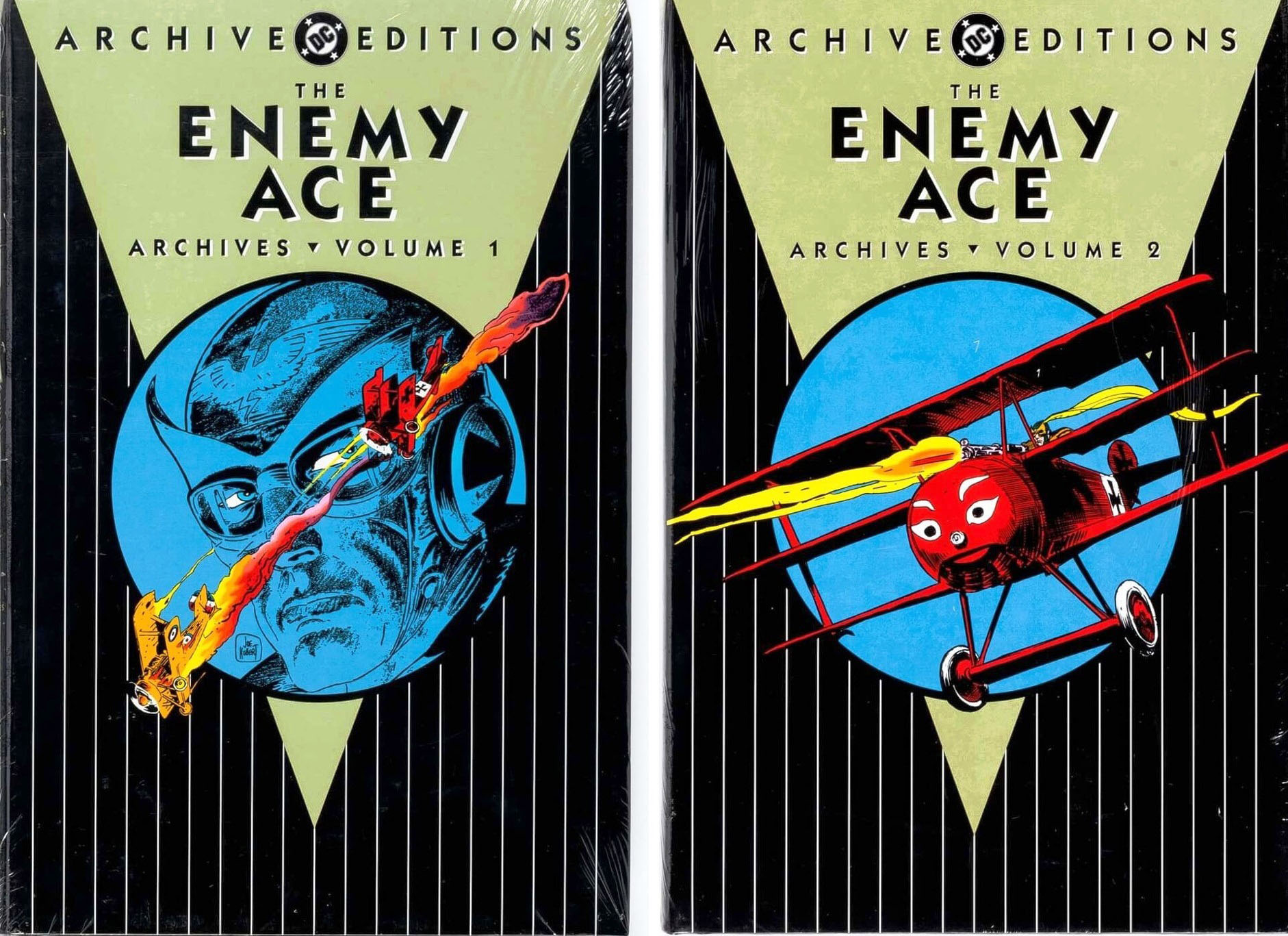
(Alternative pickup: Showcase Presents: Enemy Ace #1 (2008). It contains over 500 pages of reprints; however, they are in black and white.)
SIDE NOTE: DC had another World War I air ace, Lt. Steve Savage, better known as “the Balloon Buster,” who made his debut in All American Men of War #112 (Nov.-Dec. 1965). Over at Marvel, they had their own WW I flier, the Phantom Eagle, who debuted in Marvel Super-Heroes #16 (Sept. 1968). Neither gained much fan support and just flew away.)
—
It Was the War of the Trenches. A devastating look at the life of the foot soldiers of the French Army, this graphic novel (original title: C’était la Guerre des Tranchées) written and drawn by Jacques Tardi (with the English version edited and translated by Kim Thompson) won two Eisner Awards in 2011: “Best U.S. Edition of International Material” and “Best Reality-Based Work.”
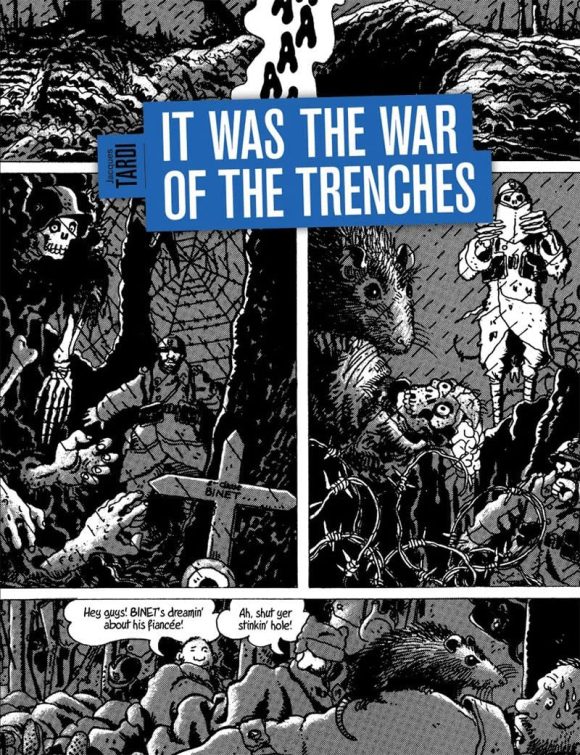
Jacques Tardi art (Feb. 2010, Fantagraphics)
—
To properly wrap up this list of 13, one more needs to be added:
Medal of Honor: Henry Johnson. Earlier in this article, I mentioned five WWI heroes who won the Medal of Honor (and received a “graphic novel” from the AUSA). The original presentations of those medals were done between the years of 1918and 1930. However, there was a sixth who showed his incredible courage under fire and yet would not be given the award during his lifetime.
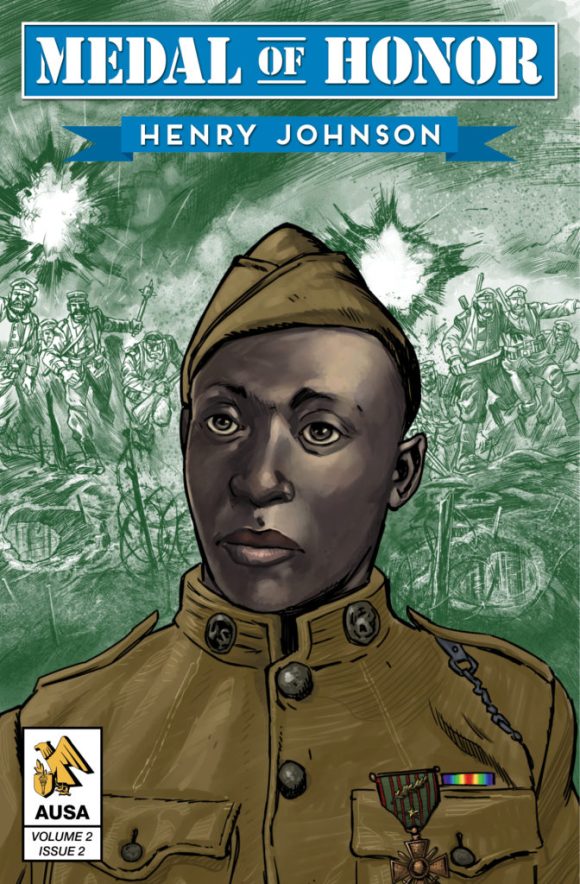
PJ Holden art. (June 2020)
Henry Johnson was a member of the 369th Infantry Regiment (the “Harlem Hellfighters,” above) and they were assigned to assist the French Army. Johnson and another of his unit were put on sentry duty in the dark, pre-dawn hours of May 15, 1918.
During the night, two dozen German soldiers tried a surprise, murderous raid on the French side of No Man’s Land. In order to save the French soldiers, Johnson killed many of the Germans — even when he was shot multiple times at close range. The Germans retreated, with far less men than they came with, thanks to Johnson, but they were taking a prisoner, the other sentry. Johnson, though wounded, went after the pair who were taking the man away and rescued him by defeating both men!
On June 2, 2015, almost 100 years after his action that saved many lives, Johnson was finally recognized, though posthumously, with the Medal of Honor:
—
On this Veterans Day, please take time to remember those who gave their lives for us, as well as those who served with honor and returned.
—
MORE
— VETERANS DAY: The Fabulous ARMY MAGAZINE Art of WILL EISNER and MURPHY ANDERSON. Click here.
— 13 COVERS: A VETERANS DAY Salute With MADEMOISELLE MARIE. Click here.
