
PERFECT FOR HALLOWEEN EVE: The first installment of a new feature on old-time radio programs and their links to comics — by PETER BOSCH!
—
Welcome to the inaugural “episode” of FOUR COLOR RADIO, our new, ongoing feature by PETER BOSCH that looks at old-school radio shows and their comics connections. For more info on this fancy new series, click here! (And dig that Walt Grogan banner!) — Dan
—
By PETER BOSCH
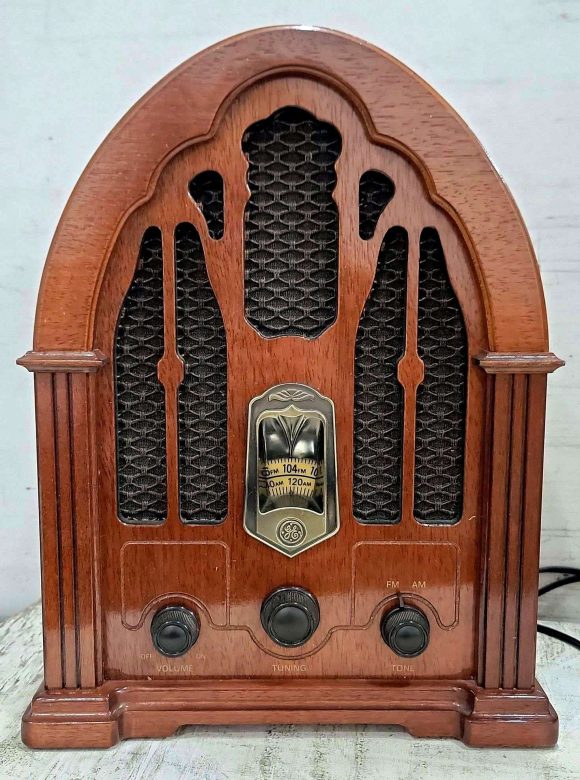
In the 1930s and 1940s, a radio was not only an essential item in the household, it was the most immediate connection that people had to the entire world. It was also what TV and the internet are today, the greatest provider of home entertainment for its time.
The radio itself (which came in all sizes and shapes) brought families together to listen to a night’s entertainment, whether it was a comedy such as Fibber McGee & Molly (with the closet’s overstuffed contents that fell on Fibber whenever he opened its door), a horror program where the host told the listeners to turn their Lights Out, a drama that kept them in terrifying Suspense, or the king of swing Benny Goodman whose big band sound made people say Let’s Dance.
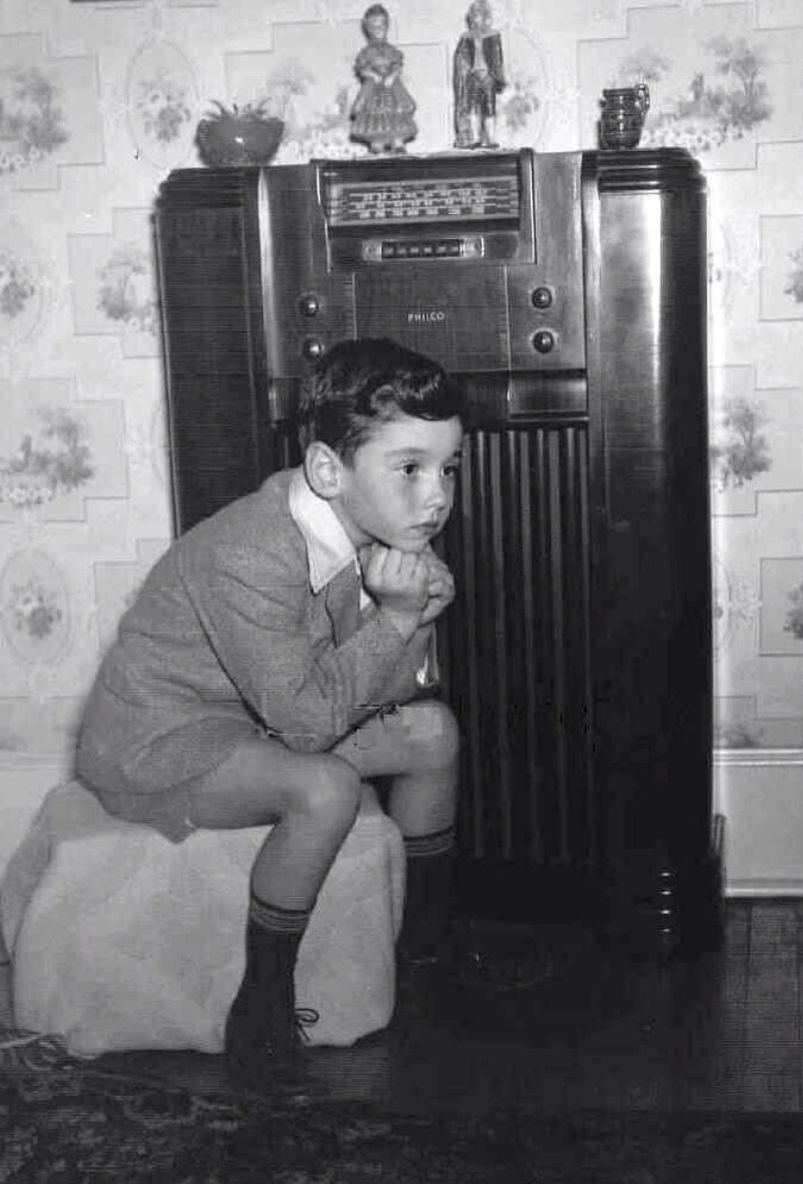
Daytime also had its own special fare: soap operas and game shows, just like today, and in the late afternoon and early evenings you could find boys and girls rushing to the glowing dial, finding their special station, and sitting themselves down for serialized adventure shows like Jack Armstrong, the All-American Boy to find out how the hero or heroine got out of the trap from the day before!
A number of old-time radio shows for kids had comics as their source, and that is what this new column — FOUR COLOR RADIO — will be about. Future “episodes” will cover The Adventures of Superman, Little Orphan Annie, Terry and the Pirates, Archie Andrews, The Black Hood, Dick Tracy, Flash Gordon, and more! But today, we start with a Halloween trick AND a treat (which would have comics later on) — The War of the Worlds!
Imagine. It was the night of Sunday, October 30, 1938. The world was still feeling the effects of the Great Depression. Germany had been defeated in World War I but now they were coming back, with Hitler expanding his power in Europe — and his influence in America, with the pro-Nazi German American Bund backing his evil cause. To say that the people of America were anxiety-wracked would be an understatement.
It was on this night that The Mercury Theater on the Air went on live with their adaptation of H.G. Wells’ The War of the Worlds. From the beginning of the broadcast, listeners got the imminent sense this was to be a scary tale… those, though, who knew it was just a radio play.
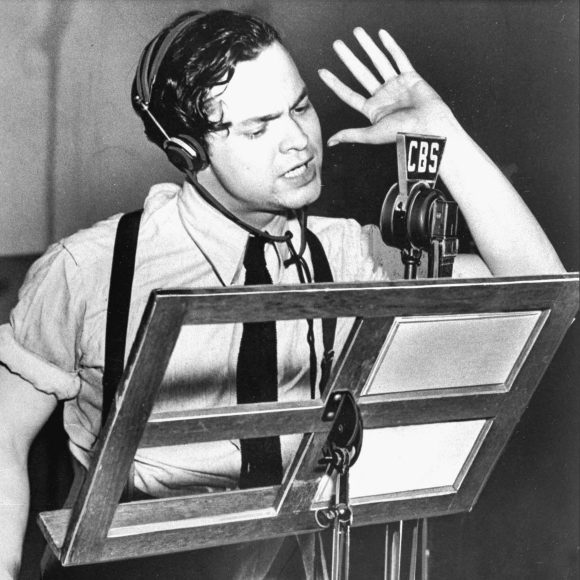
Orson Welles speaking at the opening of the program: “We know now that in the early years of the twentieth century, this world was being watched closely by intelligences greater than man’s and yet as mortal as his own. We know now that as human beings busied themselves about their various concerns, they were scrutinized and studied, perhaps almost as narrowly as a man with a microscope might scrutinize the transient creatures that swarm and multiply in a drop of water.
“With infinite complacence, people went to and fro over the Earth about their little affairs, serene in the assurance of their dominion over this small, spinning fragment of solar driftwood which, by chance or design, man has inherited out of the dark mystery of Time and Space,” he continued. “Yet across an immense ethereal gulf, minds that are to our minds as ours are to the beasts in the jungle, intellects vast, cool and unsympathetic, regarded this earth with envious eyes and slowly and surely drew their plans against us.”
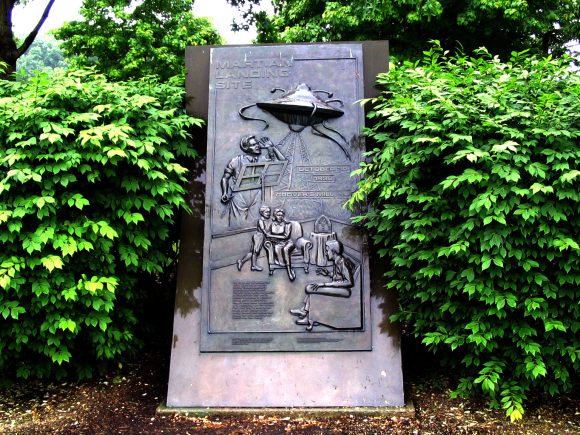
A monument to the show, in Grover’s Mill, N.J.
It was an hour that started slowly with a simulated program of music from a ballroom orchestra, which was interrupted occasionally at first by a news announcement of activity on the planet Mars and then more frequently by the newscaster saying that something like a meteor had crashed in Grover’s Mill, New Jersey.
From there, the suspense grew as a radio station reporter went to the site and joined the gathered bunch of onlookers there, and he told the radio audience it was a metal cylinder that had crashed. And then it opened to a reveal a horrific creature not of this world. A heat ray from the ship from outer space was turned on the people there and they burst into flames.
Whew! Heady stuff that carried with it the reminder of the broadcast by Herb Morrison as he witnessed the real crash a year earlier of the Hindenburg airship at the Lakeshore Naval Station, New Jersey. (It has been speculated that particular news recording was used as a pacing model for the reporter above.)
It’s best to let you hear for yourself the broadcast of Orson Welles’ War of the Worlds, written by Howard E. Koch, as aired that night over the CBS Radio Network.
It was reported the next day across the front pages of American newspapers, in screaming headlines, that people thought it was real and had been terrified.
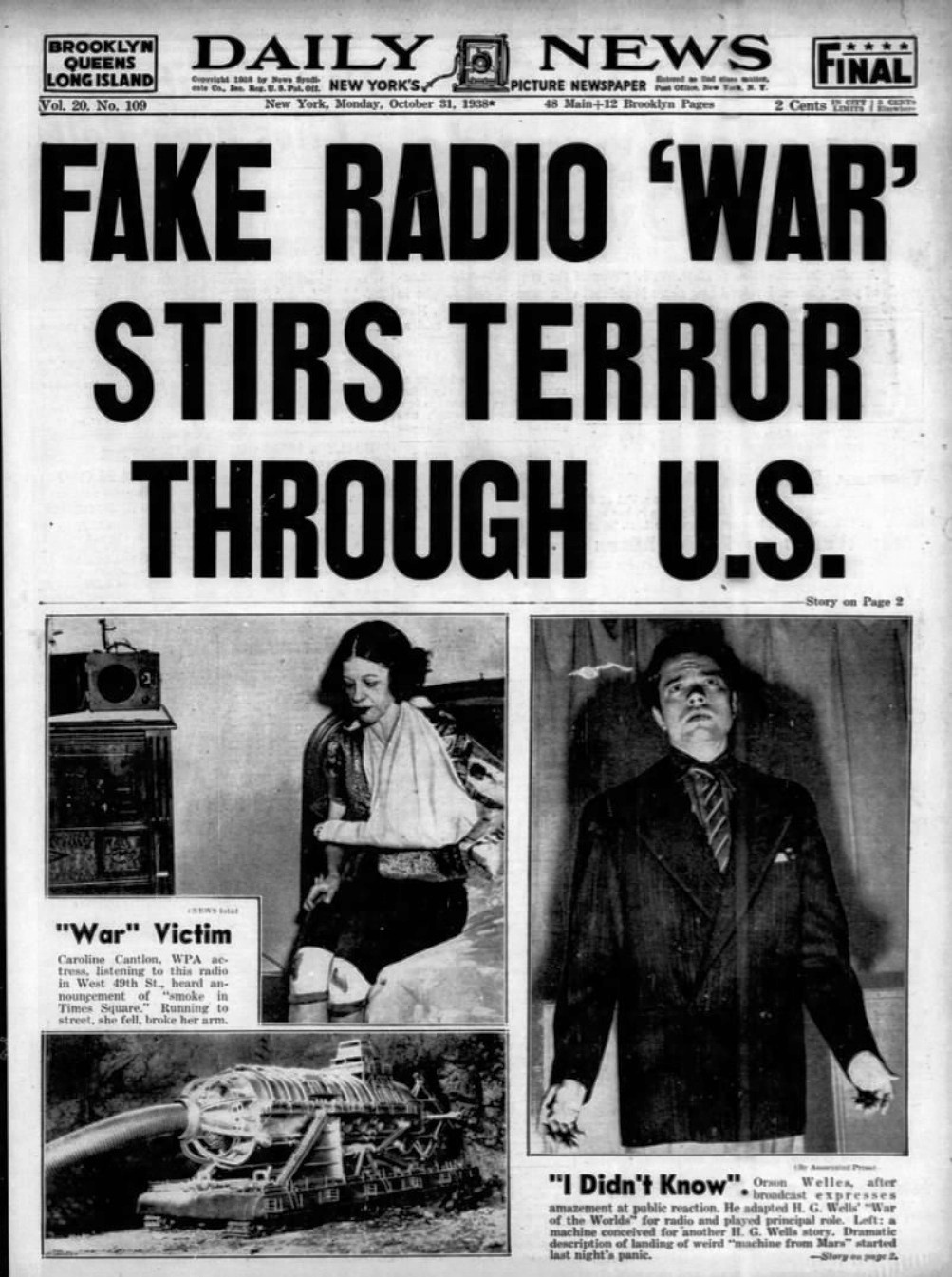
October 31, 1938
It has since been written about in books, newspapers, and magazine articles that the broadcast wasn’t as much believed as reported at the time, that the nation did not go rushing out into the streets in terror. Certainly, there were some believers, as recounted in A. Brad Schwartz’s book, Broadcast Hysteria (2015, Hill and Wang), but he doesn’t think there was mass hysteria.
Though I like to believe the legend, it’s not completely likely it happened as the news reported it. There were things to back this up, such as during the program when it was stated a few times it was a radio adaptation of H.G. Wells’ story.
Also, opposite the program on the NBC radio network that night was The Chase & Sanborn Hour featuring Edgar Bergen and Charlie McCarthy, the No. 1-rated show on Sunday nights by miles. However, it has been speculated that when that show’s singer came on near the beginning of their program, people turned the radio dial to hear what else was on… and caught the “news” from New Jersey about the landing of what turned out to be a spaceship.
Either way, the aftermath increased public interest in reading the original 1898 novel by H.G. Wells, which was actually a collection of the serialized chapters that first appeared in England (where the story was set) in Pearson’s Magazine, between April 1897 and December 1897. (It was also published in serial form in the United States that year in Cosmopolitan.) The book has never gone out of print since.
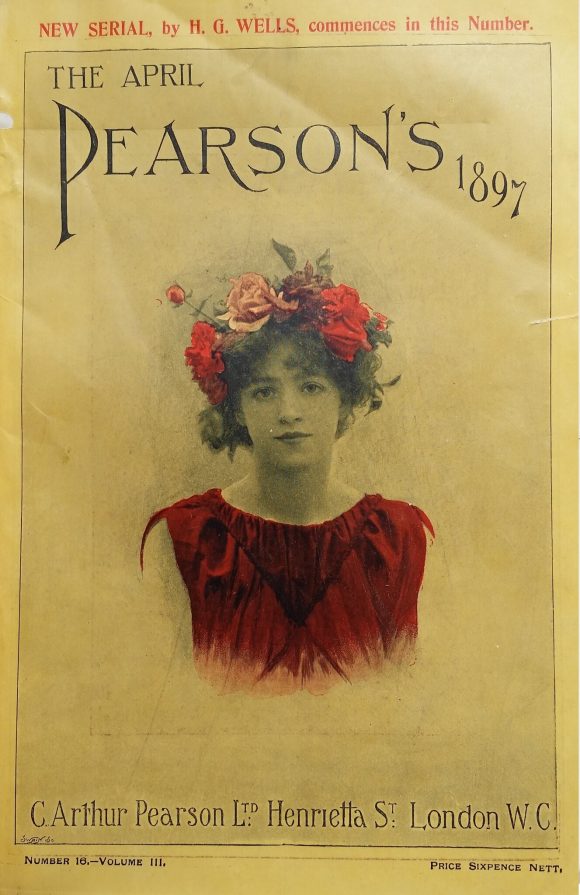
War of the Worlds began as a serialized novel in this April 1897 issue of Pearson’s Magazine in the UK.
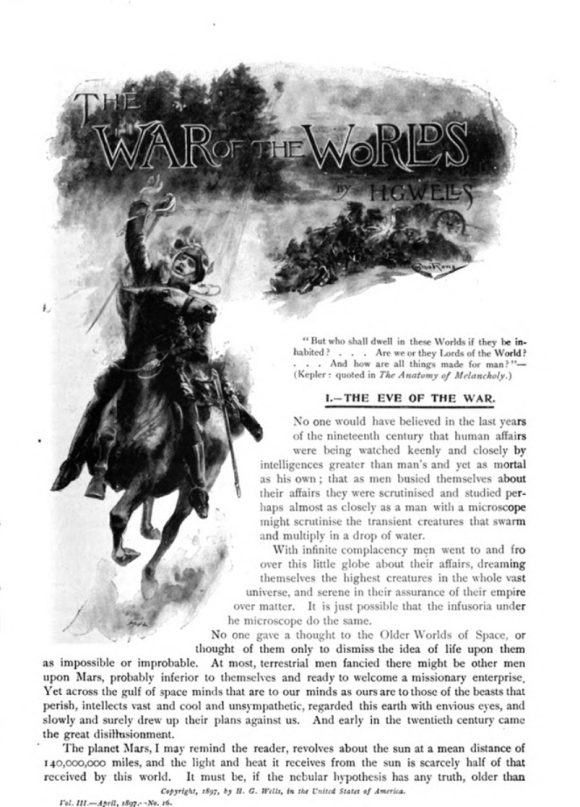
The first page of that serialized chapter.
Despite the blowback, it made Orson Welles a star. He had been a radio actor on various programs, including playing Lamont Cranston/the Shadow. Hollywood called and gave him carte blanche to make any motion picture he wanted. After a few years, we got Citizen Kane (1941), which has been hailed by some as the greatest movie of all time.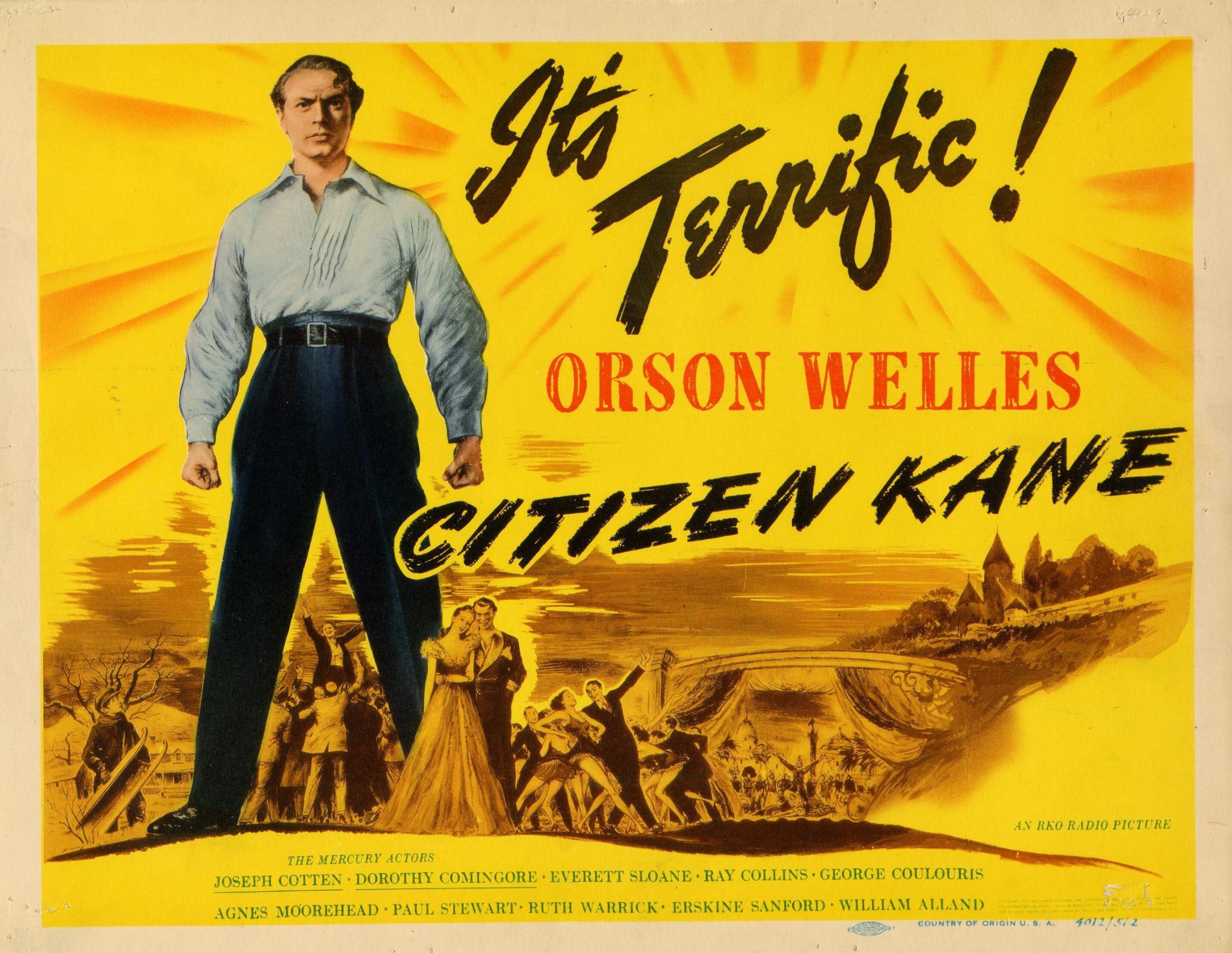
In 1940, when it was learned that Orson Welles and H.G. Wells were in San Antonio, Texas, for separate events, radio station KTSA got them together for a radio interview:
That’s all fascinating, right? But what about the comics?
Several years after the broadcast, DC Comics featured a story in Superman #62 (Jan.-Feb. 1950) in which Welles, just coming from the filming of his latest movie, Black Magic (1949), discovers a rocket and, filled with curiosity, enters it. Unbeknownst to him, however, on the other side of the hill are scientists ready to launch it by remote control to Mars for investigation of the planet.
They push the button and off the rocket goes, with Welles inside — destination: Mars. Upon landing, he’s brought before an Adolf Hitler-like Martian dictator about to start an invasion of Earth. Welles manages to break free of his captors and quickly broadcast a message to Earth to warn of the invasion, but everyone remembers the radio program and laughs it off. Only Superman, using his telescopic vision all the way to Mars, knows it is true and flies there to aid Welles in defeating the would-be conqueror.
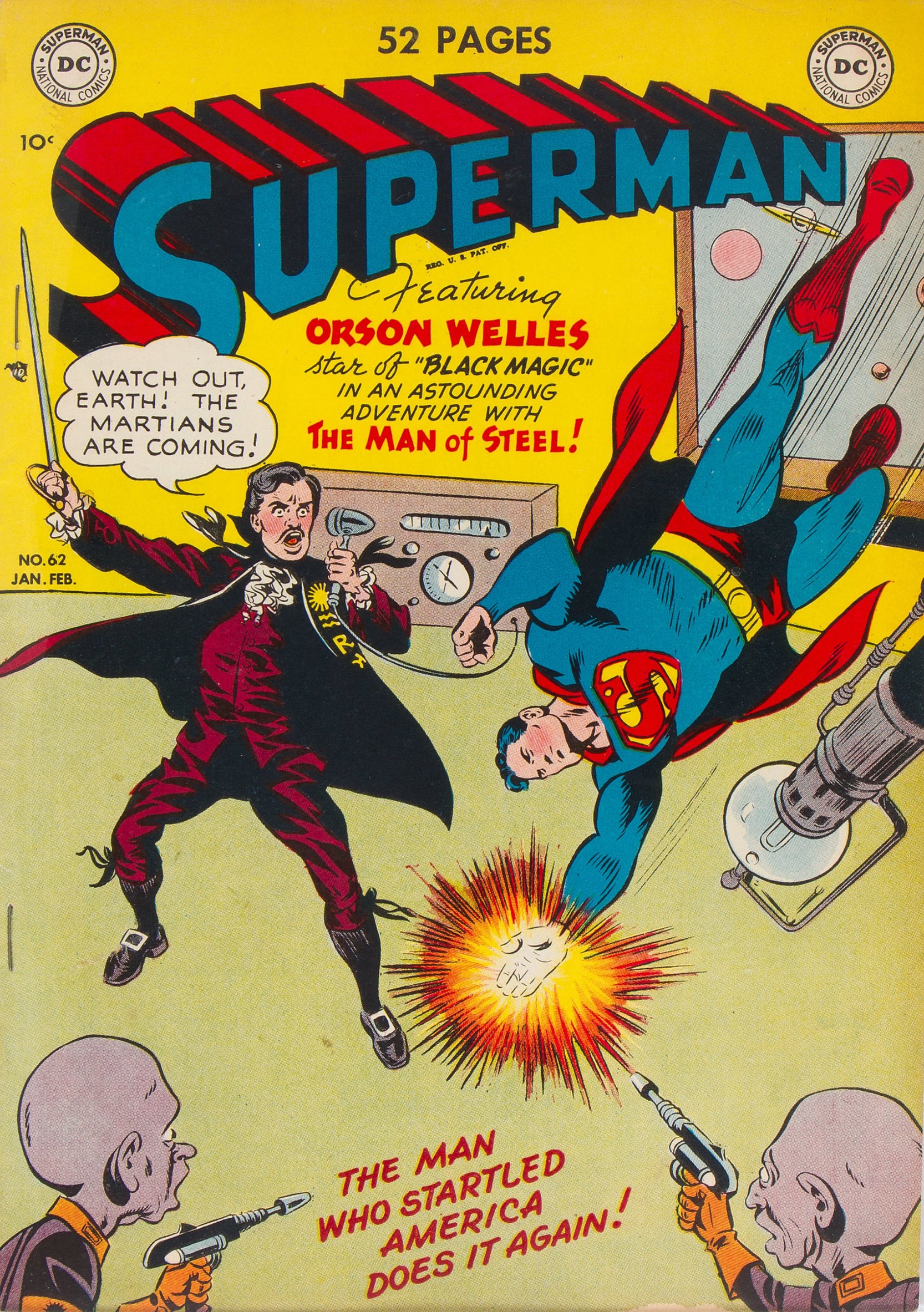
Superman #62 (Jan.-Feb. 1952). Pencils by Wayne Boring. Inks by Stan Kaye.
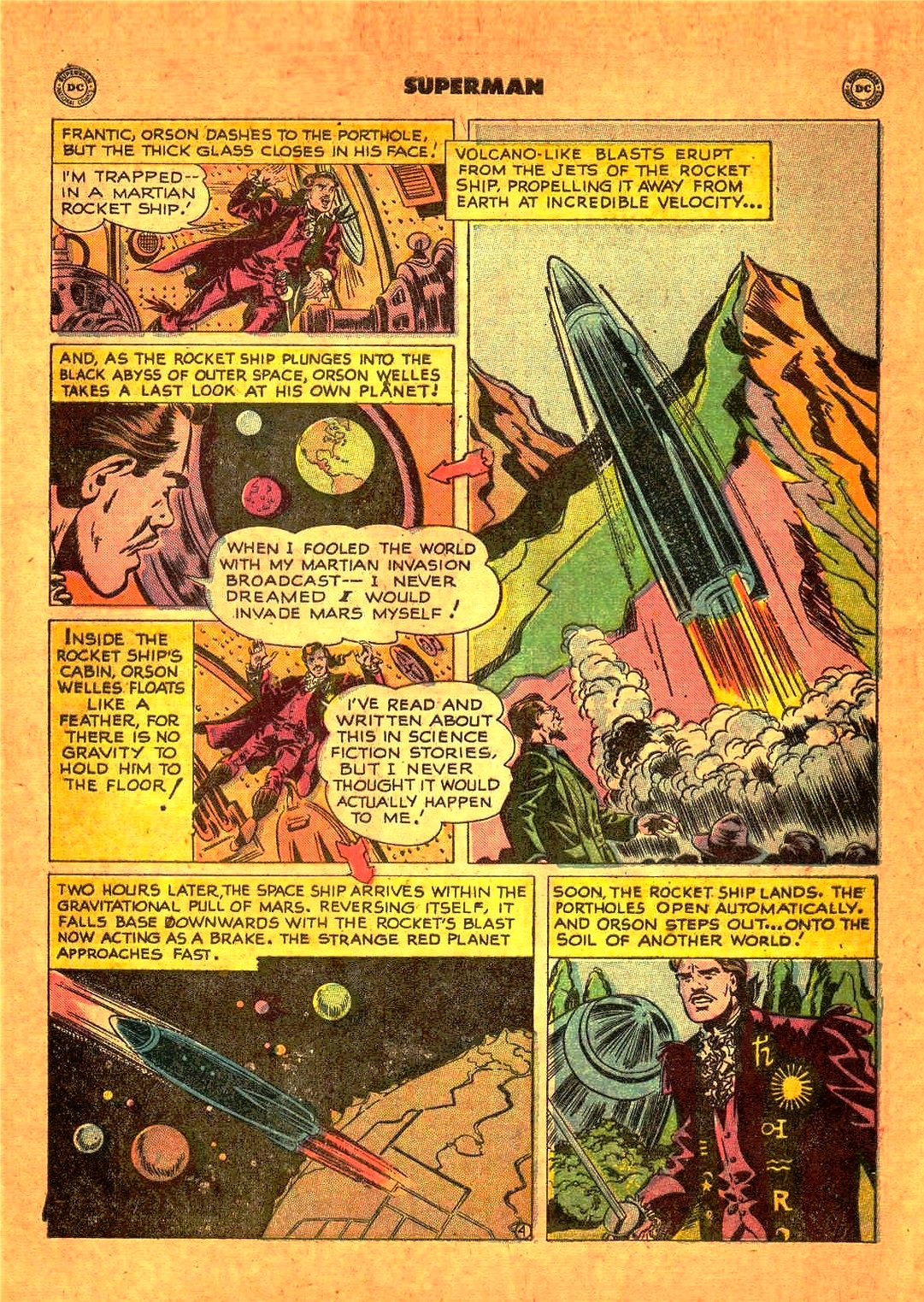
Superman #62. Pencils by Boring. Inks by Kaye.
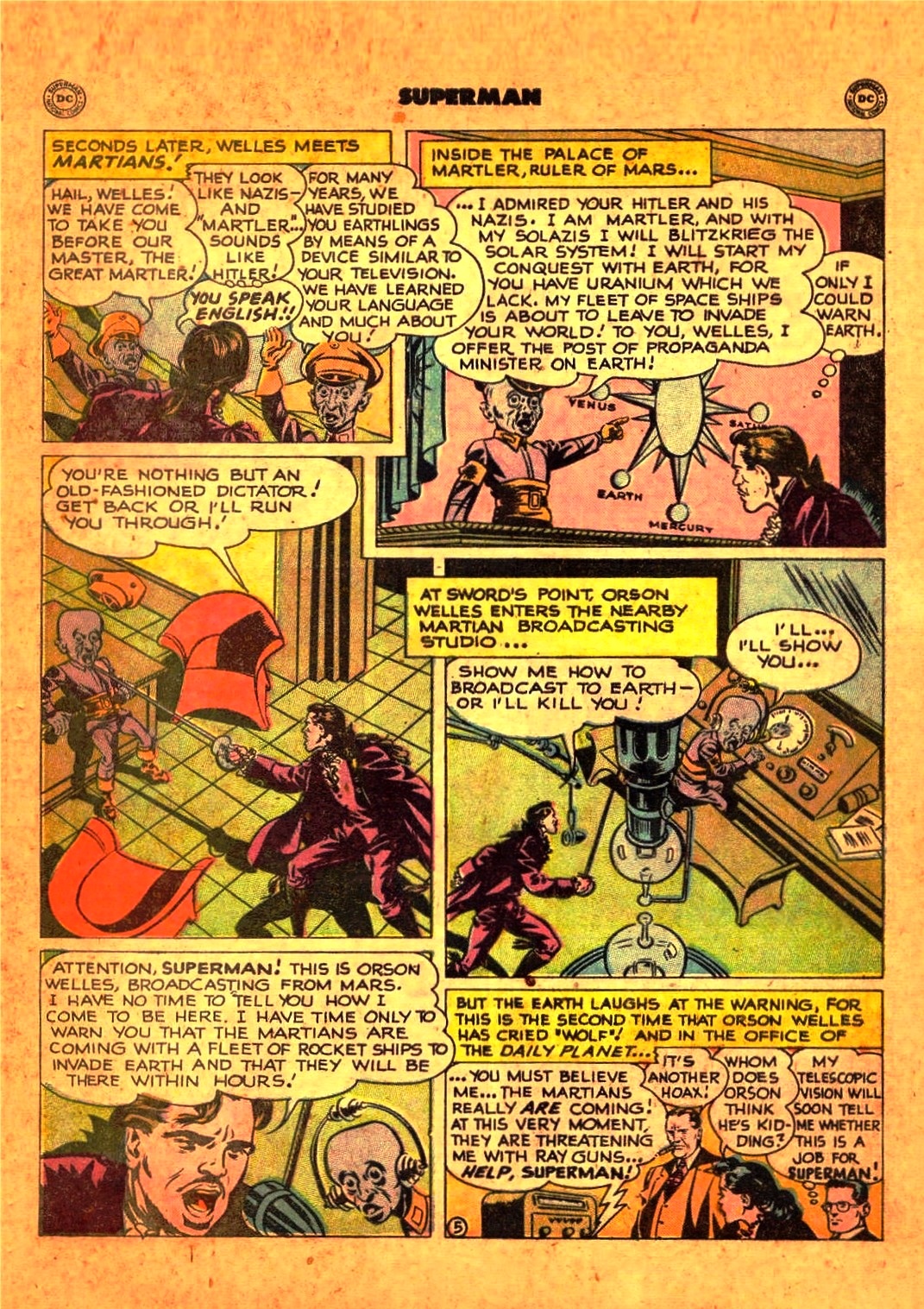
Superman #62. Pencils by Boring. Inks by Kaye.
In 1953, almost 60 years after the Wells book was first published, Hollywood made a movie of The War of the Worlds, starring Gene Barry. The George Pal production was filled with excellent special effects, which won the Oscar. (It was also nominated for film editing and for sound recording.)
Four years later, on September 9, 1957, the TV series Studio One presented “The Night America Trembled,” a one-hour drama about the making of the 1938 radio broadcast and the effect upon those listening who thought it was real. (The program’s story never mentioned Orson Welles by name in the teleplay.) The cast of the program included a number of up-and-coming actors, including Warren Beatty, Warren Oates, Ed Asner, James Coburn, Vincent Gardenia, and John Astin, with Edward R. Murrow serving as host.
In 1968, radio station WKBW in Buffalo, New York, decided to do an updated version of the original broadcast in recognition of its 30th anniversary. The new program ran longer than the initial one, perhaps trying to capture a more realistic approach, letting current hit songs play out entirely in the first part of the drama, along with lengthy advertising spiels for a local audio shop, both of which dragged out the proceedings. Welles and Koch clearly made the right decision in quickly cutting off the “ballroom orchestra” in order to focus entirely on the invasion.
In 1975, the same events of the 1957 Studio One production “The Night America Trembled” were given a redo in the ABC TV-movie The Night That Panicked America. Orson Welles was played by Paul Shenar. Also in the cast were Vic Morrow, Meredith Baxter, Tom Bosley, Eileen Brennan, and Will Geer. (Sorry for the blurriness of the following, but it was the only complete online version I could locate. Also included after the movie is a press interview Welles gave. Please excuse the extra non-Welles footage.)
Outside of Superman #62, there have been several comics involving The War of the Worlds storyline. Classics Illustrated #124 (Gilberton, various printings) is probably the one that many Baby Boomers remember. The issue also featured a text page about the 1938 broadcast.
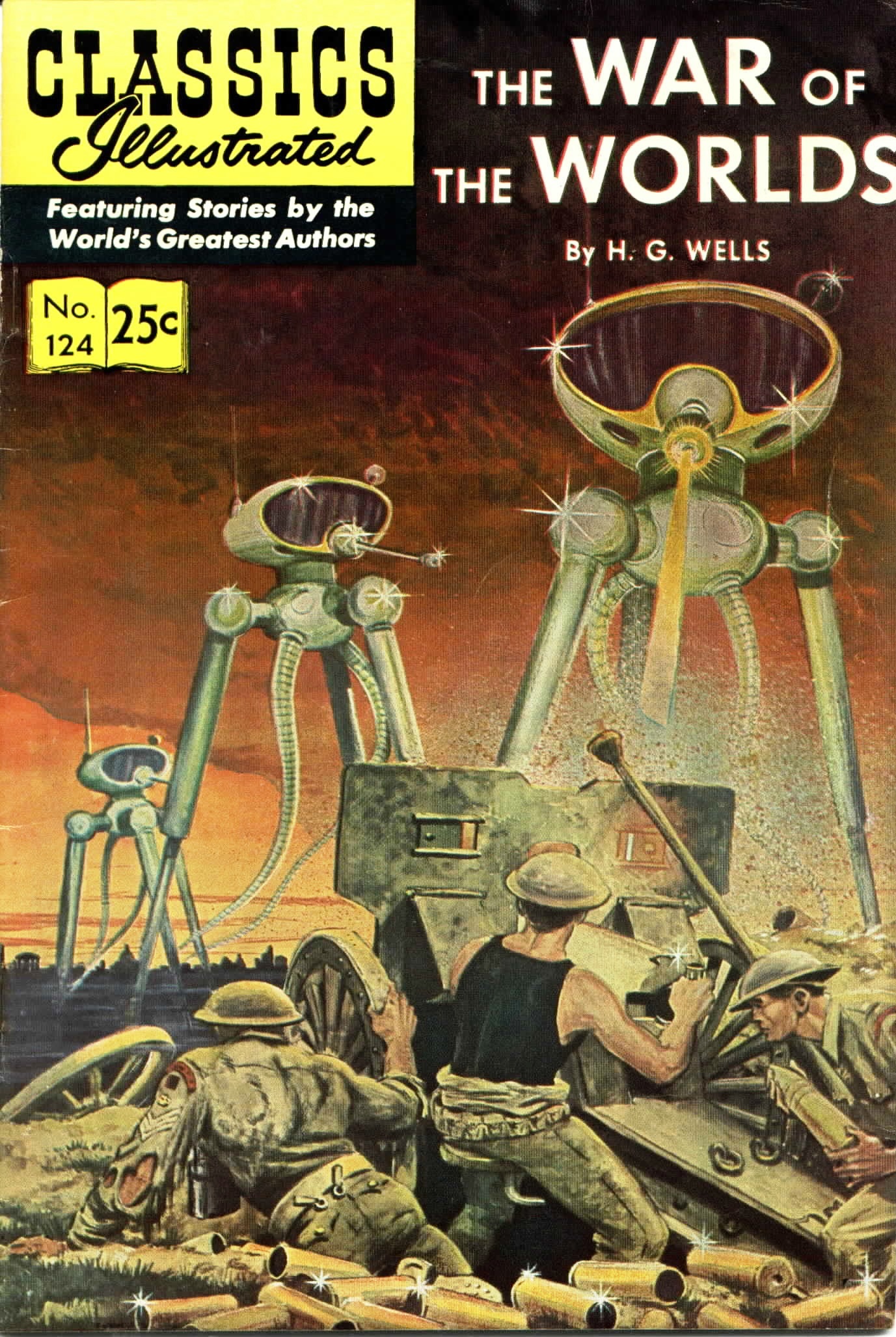
Classics Illustrated #124 cover by Lou Cameron (Gilberton)
Marvel Classics Library #14 (1976) gave it a shot in their version, with Chris Claremont adapting the novel.
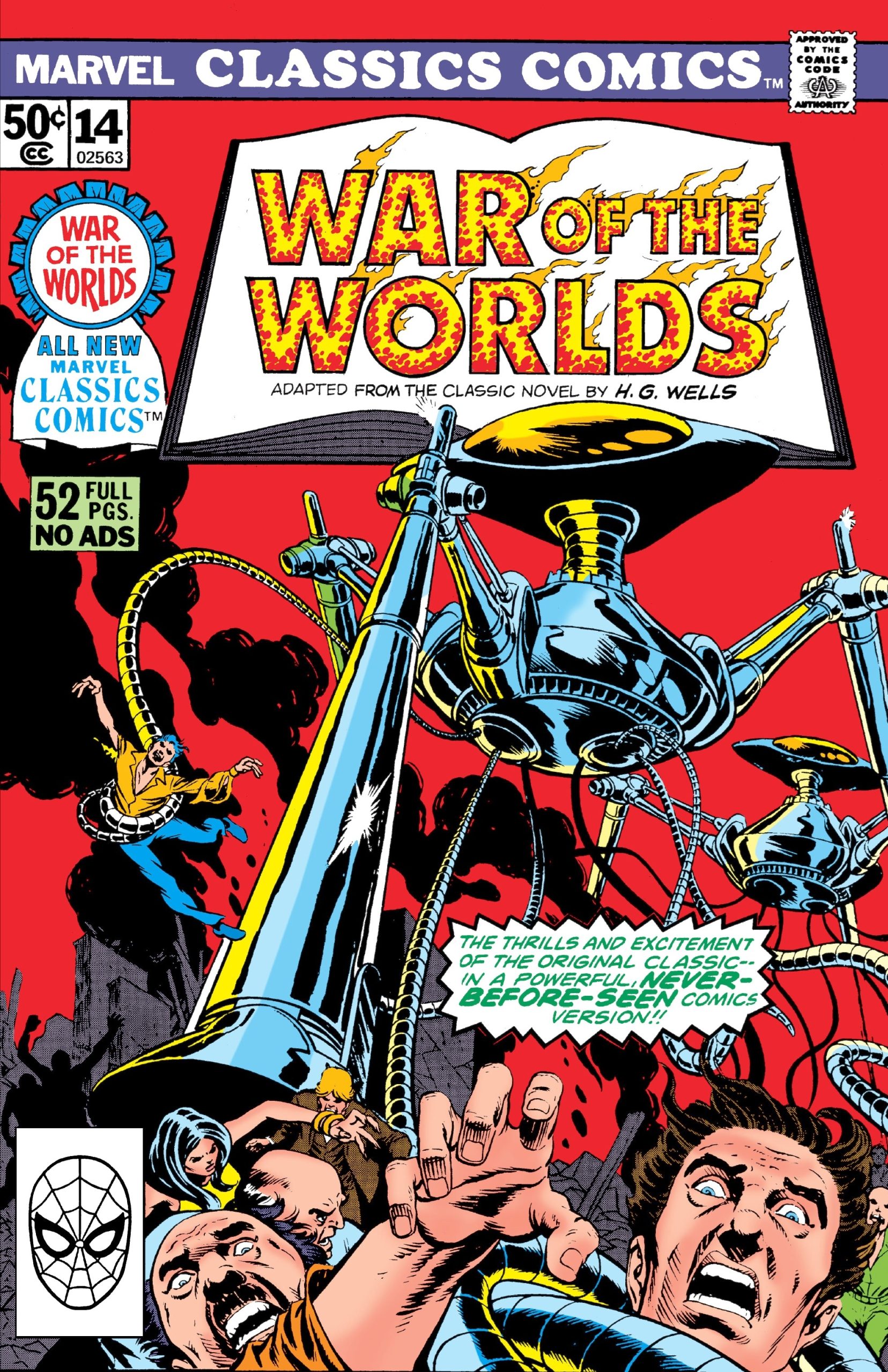
Marvel Classics Comics #14. Cover pencils by Gil Kane, inks by Dave Cockrum.
Marvel also used the story as a springboard to introduce a new character, Killraven, in Amazing Adventures #18 (May 1973), with the concept moved to a new century where the Martians had returned. (Click here for much more on this one — it happens to be artist P. Craig Russell’s birthday too!)
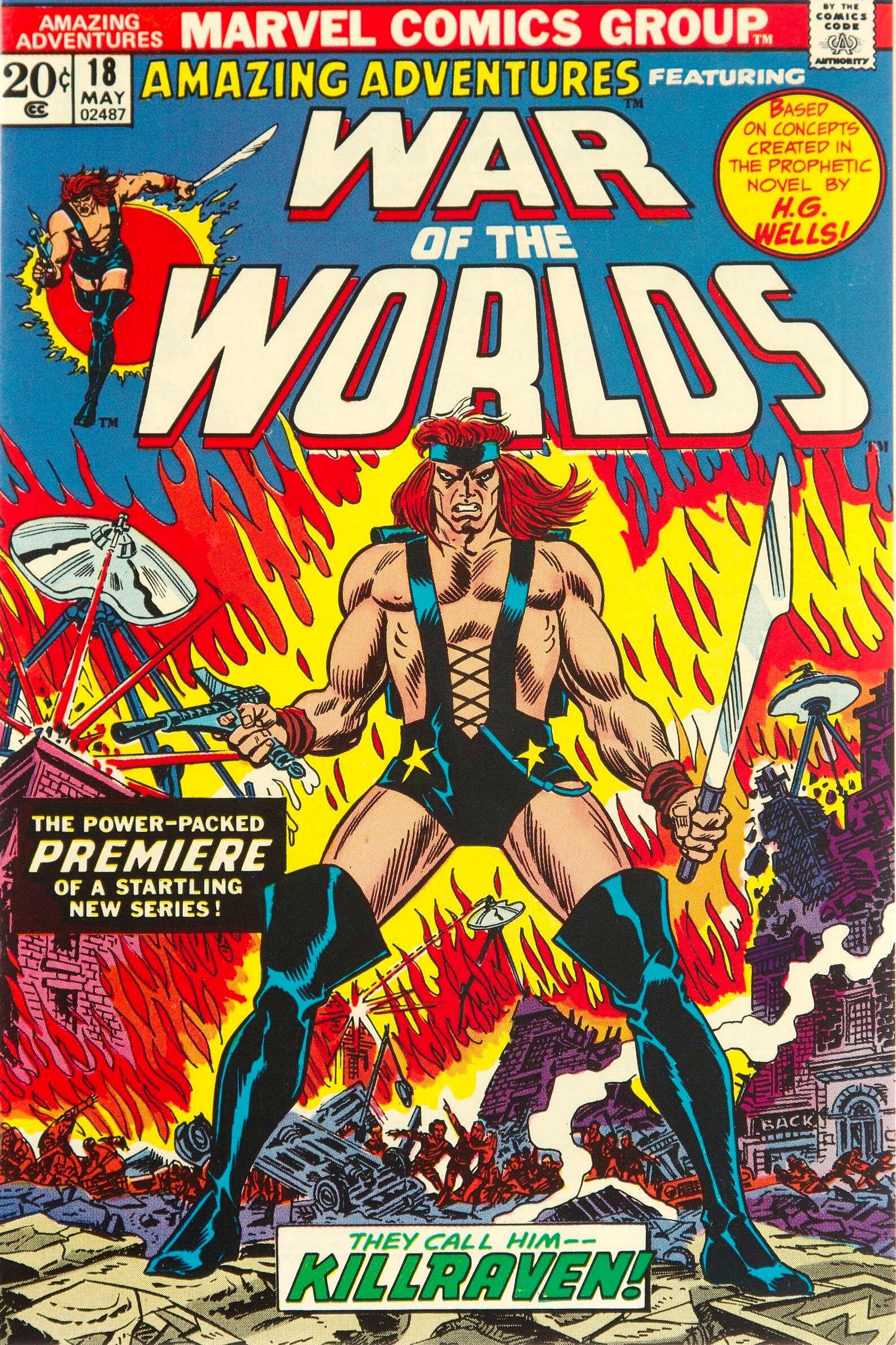
Amazing Adventures #18 (May 1973). Cover art by John Romita, with backgrounds by Tony Mortellaro.
There was even a title launched called Orson Welles: Warrior of the Worlds (2023, Scout), with the invasion being real and Welles taking part in defeating it. (Regrettably, that only ran the one issue, leaving the rest of the story unfinished.)
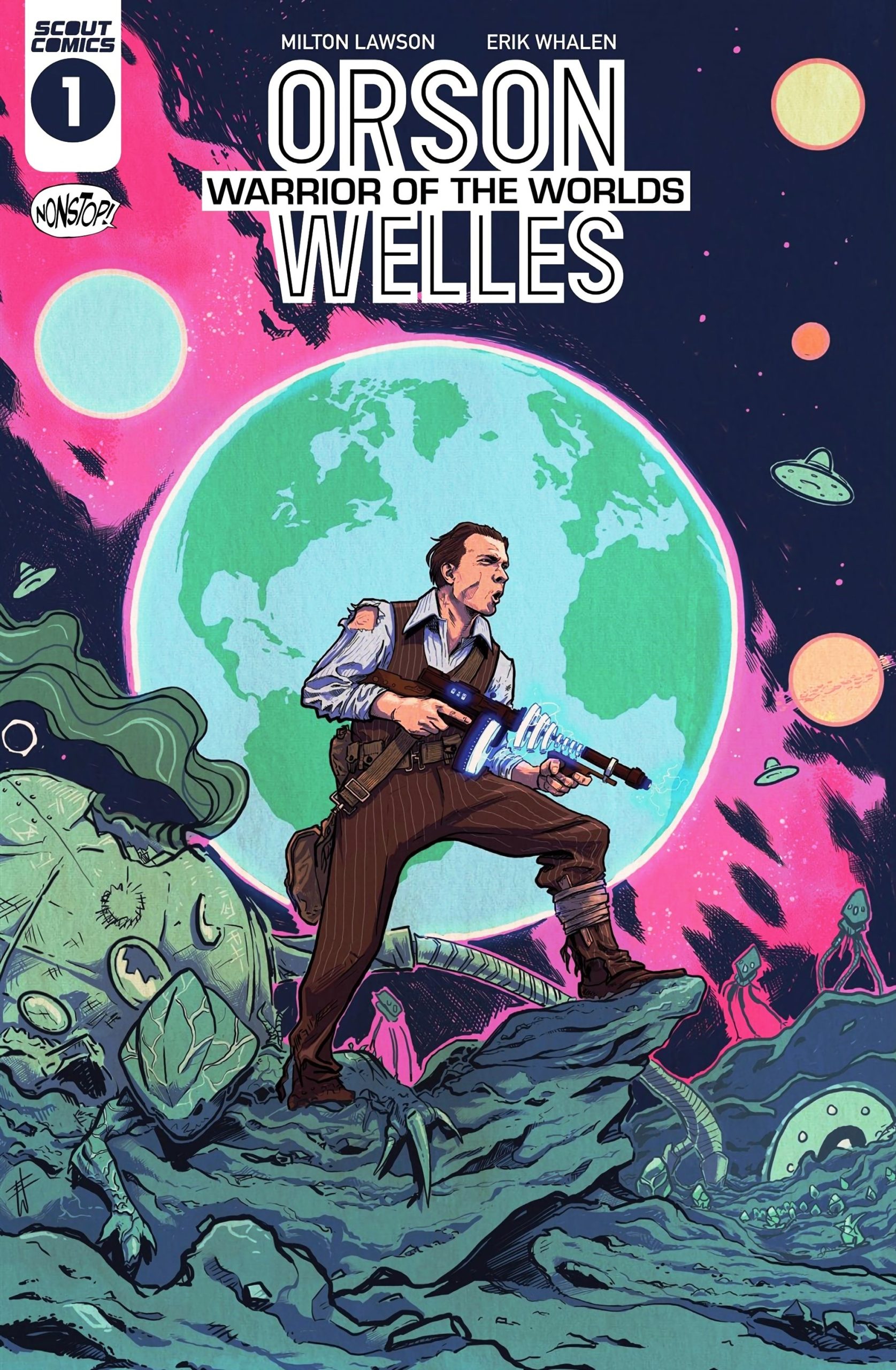
Orson Welles: Warrior of the Worlds #1 (2023, Scout). Art by Erik Whalen.
The most notable comic among all of these, though, was DC’s Superman: The War of the Worlds graphic novel (1999) written by Roy Thomas (who also conceived the Killraven series). In a brilliant move, Thomas set the Golden Age Superman (who was introduced in 1938, the same year as the radio broadcast) in battle against the Martian invaders. The art by Michael Lark was perfectly attuned to the drawings of that past comic book era.
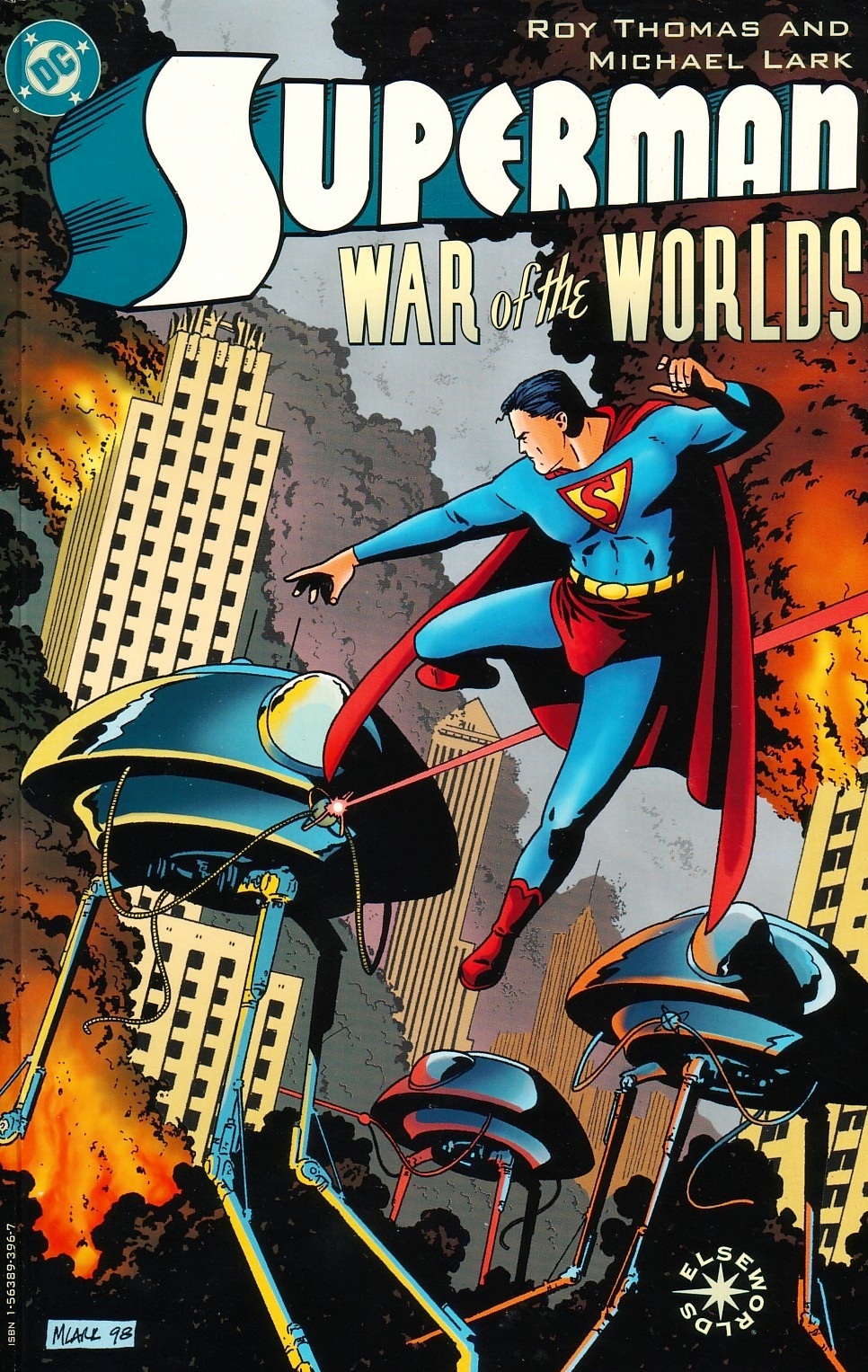
Superman: The War of the Worlds (1999, DC). Cover art by Michael Lark.
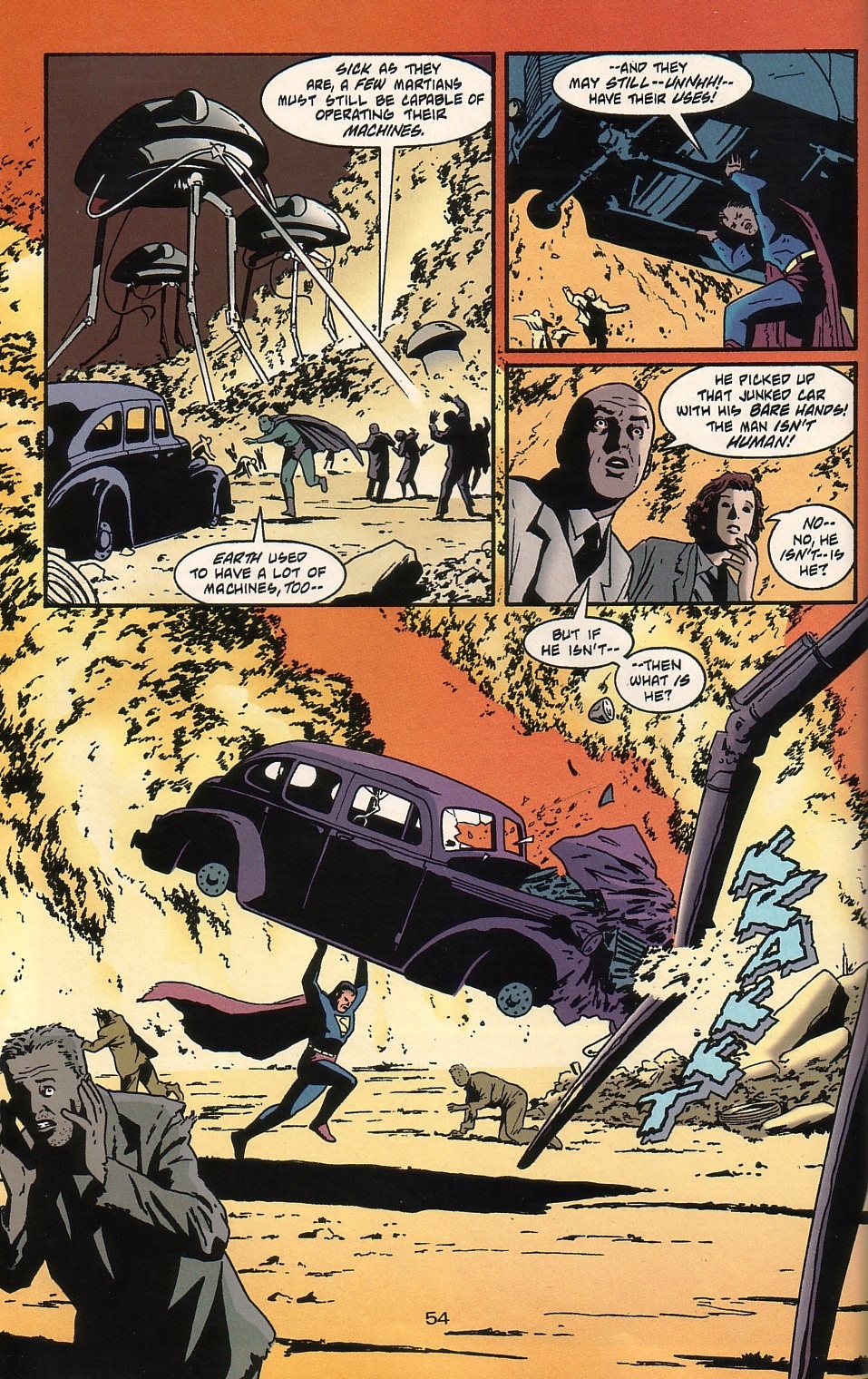
Written by Roy Thomas. Art by Lark.
There have been various movie adaptations since 1953, including the 2005 version directed by Steven Spielberg and starring Tom Cruise. Television, likewise, has seen several productions, the most recent being in 2025 with Ice Cube.
The War of the Worlds will never end. How do I know that? The fact that there was even a musical based on it created in 1978, with Richard Burton narrating.
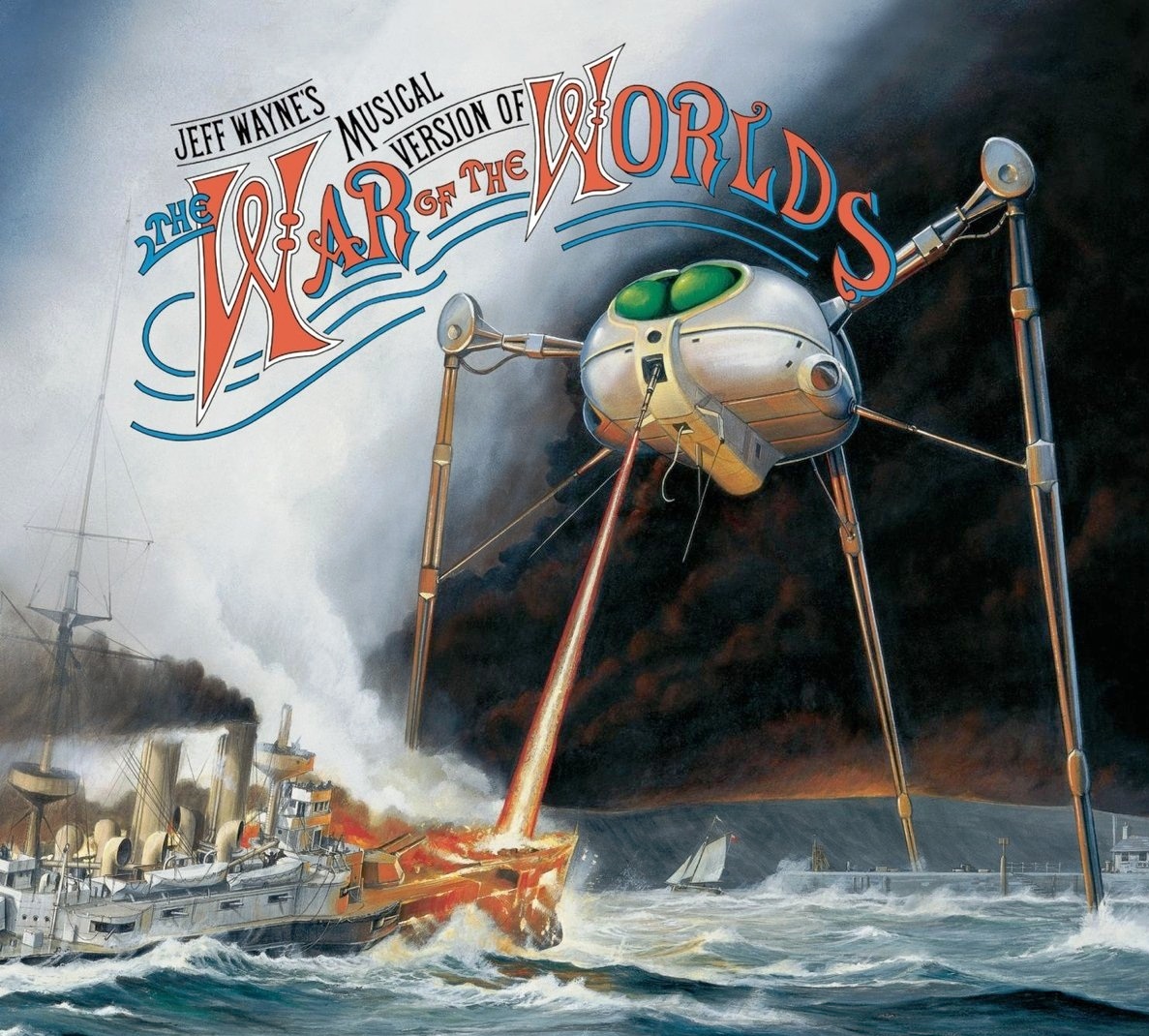
Jeff Wayne’s musical version of The War of the Worlds, original album cover (1978).
And it is still touring in 2025, with Liam Neeson narrating:
Now, let’s close with the afterword from the 1938 broadcast:
“This is Orson Welles, ladies and gentlemen, out of character to assure you that ‘The War of The Worlds’ has no further significance than as the holiday offering it was intended to be. The Mercury Theatre’s own radio version of dressing up in a sheet and jumping out of a bush and saying Boo! Starting now, we couldn’t soap all your windows and steal all your garden gates by tomorrow night… so we did the best next thing. We annihilated the world before your very ears, and utterly destroyed the CBS.
“You will be relieved, I hope, to learn that we didn’t mean it, and that both institutions are still open for business,” Welles added. “So, goodbye, everybody, and remember please, for the next day or so, the terrible lesson you learned tonight. That grinning, glowing, globular invader of your living room is an inhabitant of the pumpkin patch, and if your doorbell rings and nobody’s there, that was no Martian… it’s Halloween.”
—
MORE
— Introducing a New Feature… FOUR COLOR RADIO. Click here.
— THE WAR OF THE WORLDS — The TOP 13 KILLRAVEN Stories. Click here.
—
13th Dimension contributor-at-large PETER BOSCH’s first book, American TV Comic Books: 1940s-1980s – From the Small Screen to the Printed Page, was published by TwoMorrows. (You can buy it here.) A sequel, American Movie Comic Books: 1930s-1970s — From the Silver Screen to the Printed Page, is out now. (Buy it here.) Peter has written articles and conducted celebrity interviews for various magazines and newspapers. He lives in Hollywood.

October 30, 2025
Orson Welles: Warrior of the Worlds was completed as a graphic novel and offered via Kickstarter. Great read!
October 30, 2025
The Superman War of the Worlds Elseworlds is fantastic and deserves a retrospective of its own! (One thing that strikes me in the story is that it’s utterly devoid of any other Golden Age heroes–but then, Superman was really the first, and any other JSA members at the time hadn’t debuted yet and were probably eaten by the Martians. Ooop.)
October 30, 2025
Great article!
1986’s Secret Origins #5 also has a terrific homage to the Welles broadcast, as “Martians” invade a masked ball that the Crimson Avenger’s attending during the broadcast. Complete with great atmospheric Gene Colan art and a cameo by Welles himself. An excellent depiction of the origin of the “first superhero” (at least according to Post-Crisis DC continuity).
October 30, 2025
There’s also the 1973 LP with the great cover art by Wally Wood.
October 31, 2025
I got my copy in 1969, remaindered for a dollar. I believe that series of LPs with the great Wood/Adkins covers came out in 1966.
October 30, 2025
Great survey, Peter! Though many would say the most *notable* comics depictions of The War of the Worlds (as opposed to Killraven, which depicts its aftermath) is Alan Moore and Kevin O’Neill’s second volume of The League of Extraordinary Gentlemen.
October 30, 2025
Great look at “War of the Worlds.” As a long-time old-time radio fan, I look forward to future installments.
October 30, 2025
I remember in the 70s or 80s, there was also an adaption, I believe it was of a BBC production. It was syndicated to my local station and contained a lot of rock interludes in between scenes.
At least, if my memory isn’t failing me.
October 31, 2025
Hi, Hal, your memory isn’t failing you if you are thinking of the six-part 1967 BBC radio version: https://www.youtube.com/watch?v=WrrX6yWkk10broadcast
October 31, 2025
I would have added the excellent British series Scarlet Traces by Ian Edginton and illustrated by D’Israeli, a continuation of the novel published in 2002 (with sequels still running infrequently). They also did an adaptation of the novel itself: https://en.wikipedia.org/wiki/Scarlet_Traces
November 2, 2025
I’m the gentleman who left comments on Facebook, but I wanted to say here as well how much I LOVE this new feature. I’m visually disabled and love OTR.
There has never been anyone like Orson Welles. Can you imagine making both the most famous radio broadcast and what is arguably the greatest movie ever made?
My favorite thing about Orson appearances on Old Time Radio is it gave him a chance to do things he would never do on film. The best example is comedy. My favorite radio work by Orson is on the Jack Benny Program. In 1943, Jack Benny became very ill. So ill that he couldn’t do his radio show. When it became obvious that Jack wasn’t coming back for a few weeks, a new host was picked – Orson Welles. While it is an usual choice, Orson is wonderful. I HIGHLY recommend these shows.
November 3, 2025
Not sure where I read the story in Superman #62, but it reminds me of something a radio announcer in town told decades ago. It seems that he was broadcasting the night of the WOTW broadcast and he believed it and passed on bulletins to his radio audience. Oops!! A few years later he was on air again and got a bulletin about an attack at someplace called Pearl Harbor. “I’m not falling for that again,” he said and didn’t broadcast the story!!
November 3, 2025
Welles did a “Laugh-In” Halloween episode. Clips are on You Tube, especially the one of him as an old-time radio horror show announcer. Watch it and the blooper! Worth your time!