The World Series is here!
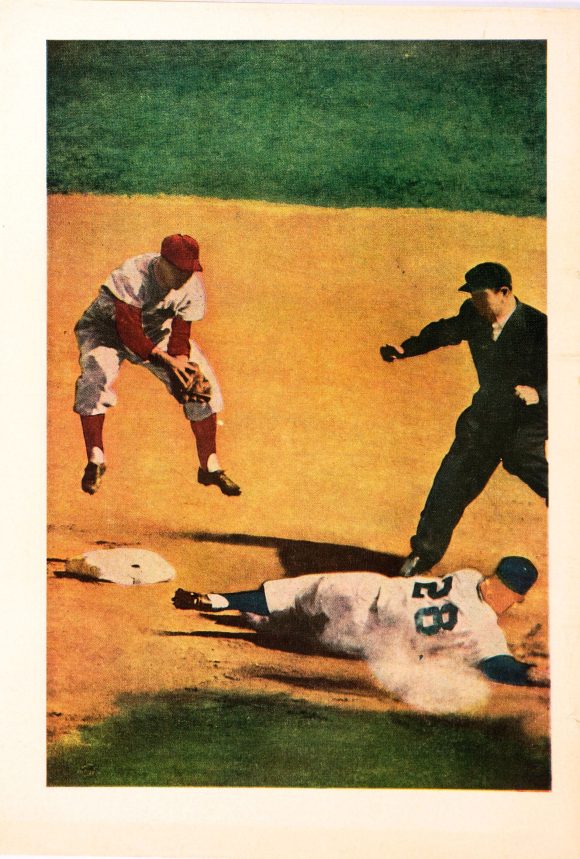
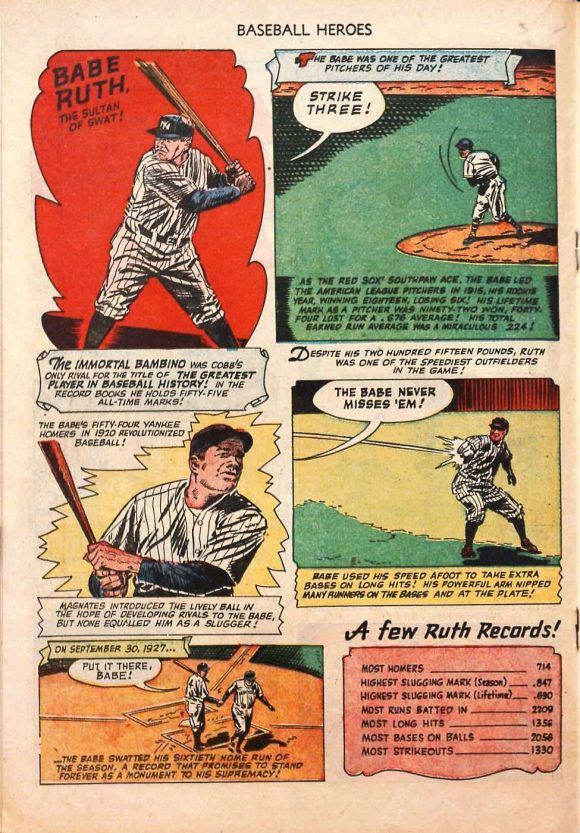
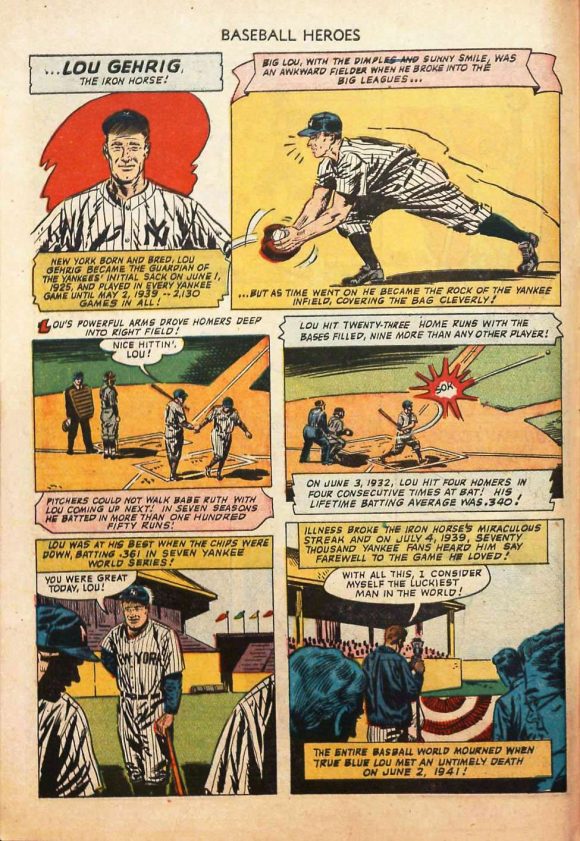
Back cover from the single issue of Baseball Heroes (1952, Fawcett)
By PETER BOSCH
As we enter World Series time again — Game 1 is Friday night — there is no better way to appreciate baseball than by learning more about the players who came before. And there were a number of publishers in the Golden and Silver Ages of comics that produced baseball-related titles that helped us know more about them — but none had more distinction than those of Fawcett Publications.
Between the late 1940s and the early 1950s, Fawcett published a series of comic book biographies of the greats of the time. Most were one-shots except for their initial offering — a six-issue series starring the trail-blazing, heroic Jackie Robinson that ran from 1949 to 1952.
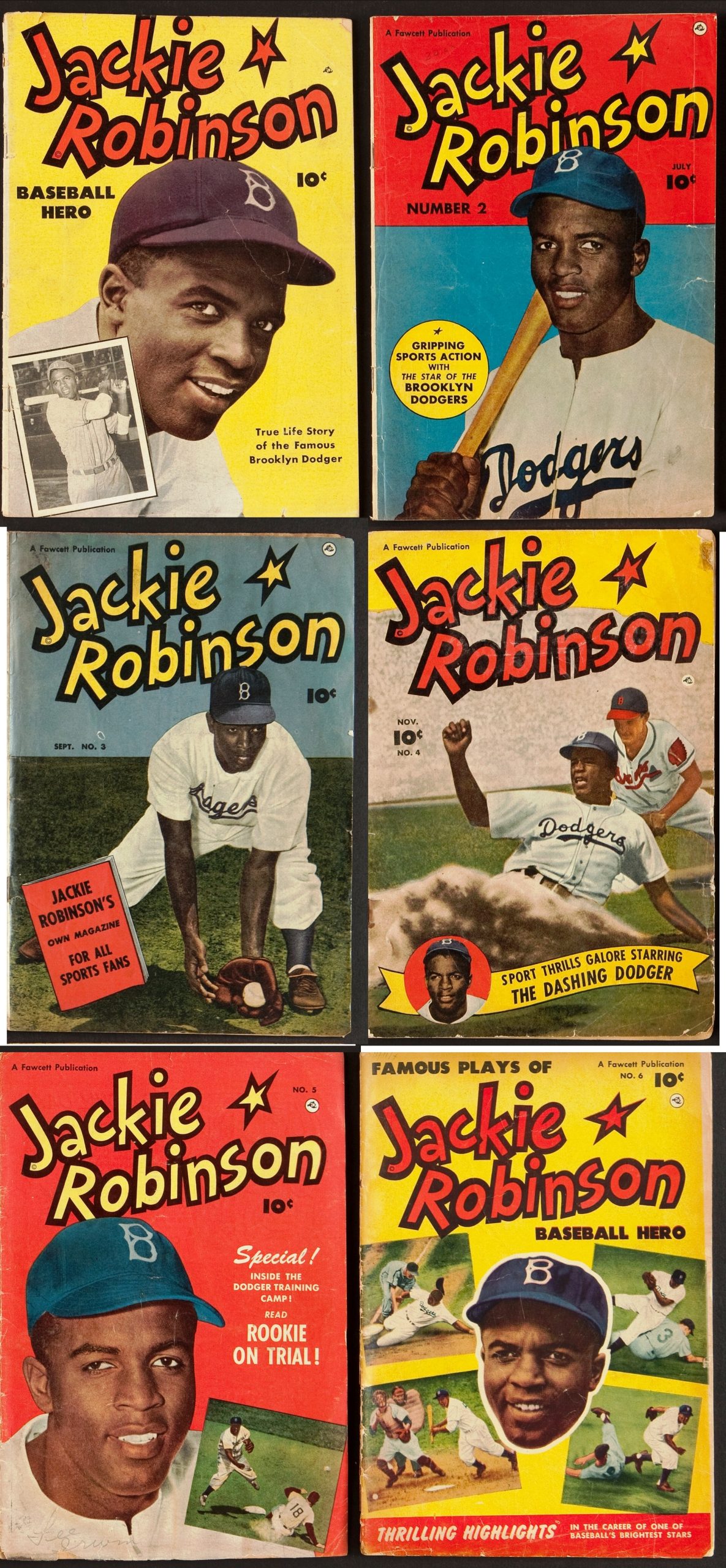
Here are the other baseball comic titles published by Fawcett (in order of release), plus a fun ad!
—
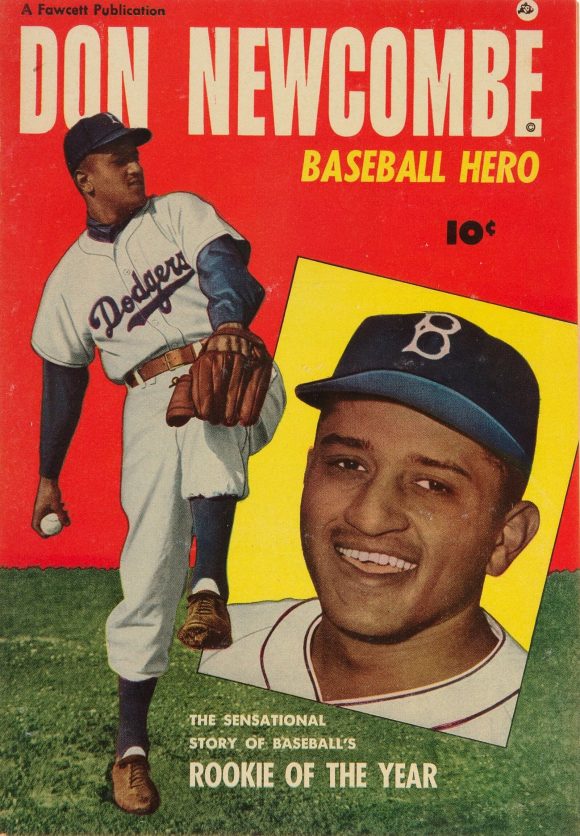
Don Newcombe (1950). Newcombe was also on the Brooklyn Dodgers, pitching for the club from 1949 to early 1958 (missing two seasons due to serving during the Korean War). Later in 1958, he was traded to the Cincinnati Reds. During his career, he became the first pitcher to win Rookie of the Year, Most Valuable Player, and the Cy Young Award.
—
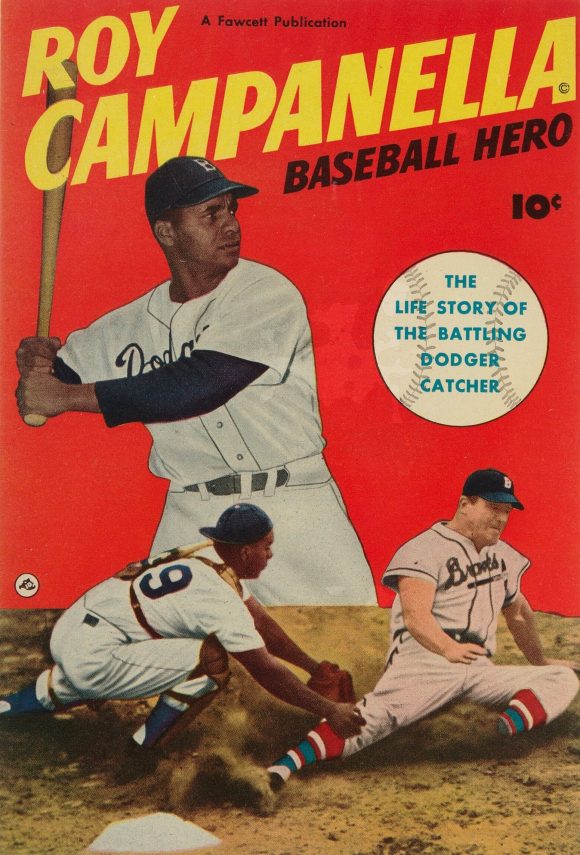
Roy Campanella, Baseball Hero (1950). The next batter up on the newsstand was also a member of the Dodgers. Campanella was a catcher and debuted in 1948. In 1958, he was in a car accident that broke his neck and damaged his spine, paralyzing him from the neck down. With physical therapy, over time, Campanella was again able to use his arms and hands; he was always confined to a wheelchair, however. “Campy” was the National League MVP in 1951, 1953, and 1955.
—
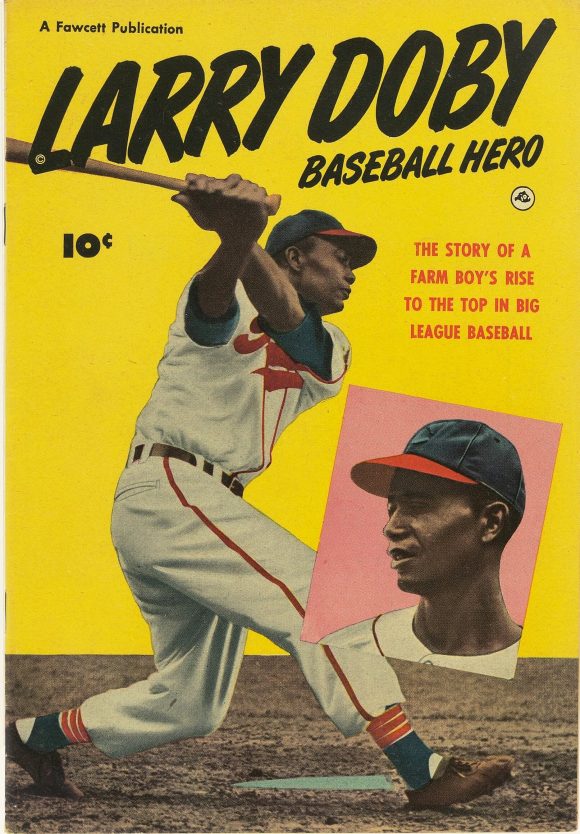
Larry Doby (1950). Doby was the first Black player in the American League, joining the Cleveland Indians a few months after Robinson broke the majors’ color barrier. During his time with the Indians, Doby appeared in a special sequence of the 1949 movie, The Kid from Cleveland. He was traded in 1955 to the Chicago White Sox, and also played for the Detroit Tigers. In his later years, he was a scout for the Montreal Expos.
—
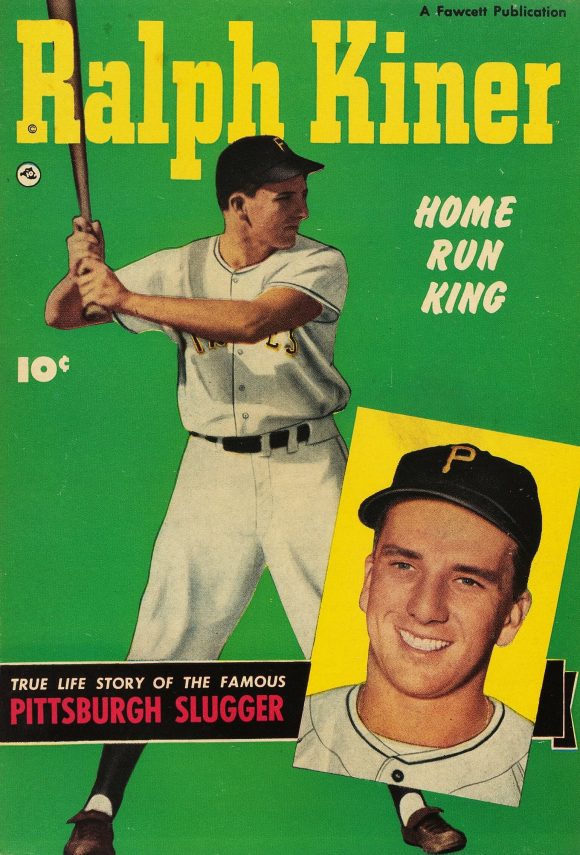
Ralph Kiner, Home Run King (1950). For the first eight seasons of his amazing career, which began in 1946, Kiner was left fielder for the Pittsburgh Pirates. In 1949, smacked 54 home runs and 127 runs batted in. In mid-1953, he was traded to the Chicago Cubs, and after that to the Cleveland Indians in 1955 for one season. After his playing career, the popular slugger became a beloved announcer, most notably with the New York Mets.
—
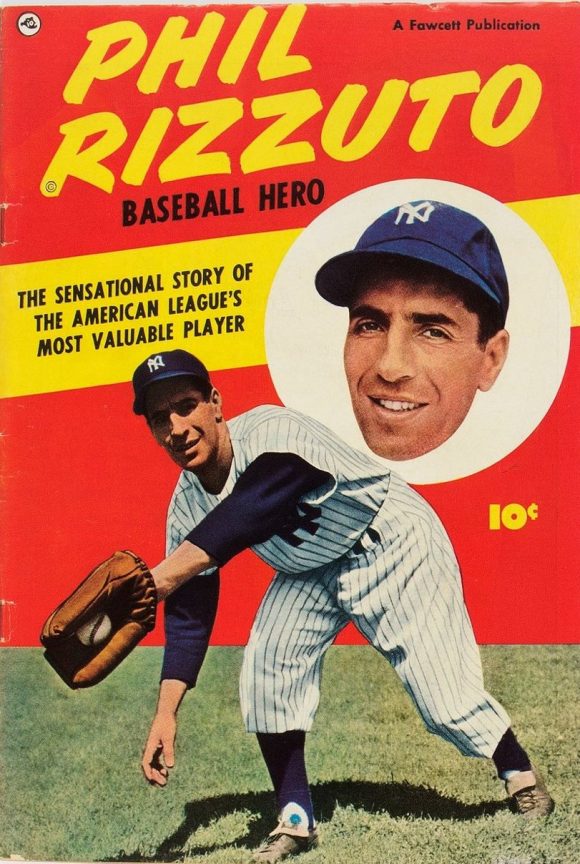
Phil Rizzuto, Baseball Hero (1951). Rizzuto was with the Yankees from 1941 to 1956, with a three-season gap during World War II, when he served in the Navy. A slick-fielding shortstop, he also showed punch at the plate, winning the AL MVP in 1950, with 200 hits and 125 runs. Years before Kiner entered the Mets booth, Rizzuto joined the Yankees broadcasting team and became one of the Bronx Bombers’ most legendary voices. (NOTE from Dan: Like Kiner, he was hilarious — both of them usually unintentionally.)
—
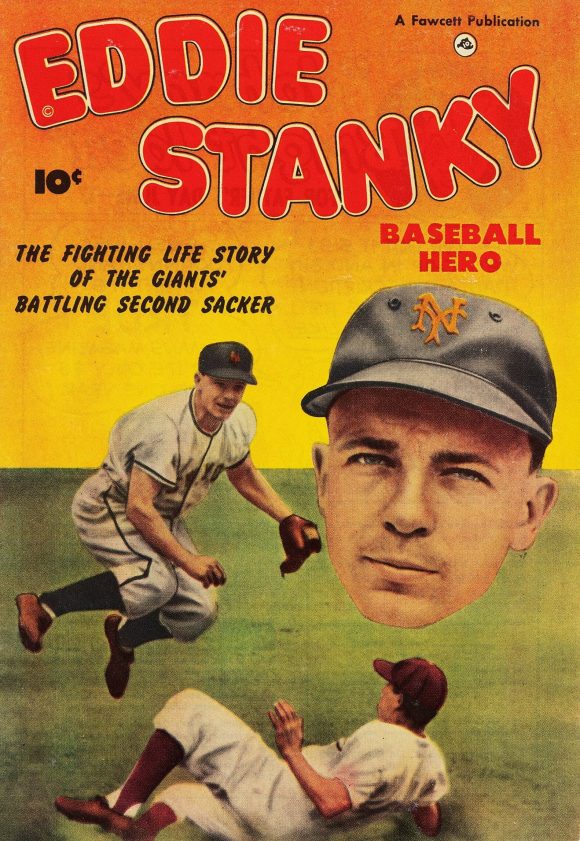
Eddie Stanky, Baseball Hero (1951). Stanky, a second baseman, started his major league career with the Chicago Cubs in 1943, before making his way to Brooklyn. A notoriously combative player, he opposed Jackie Robinson’s 1947 arrival on the team, but ultimately showed himself to be a loyal teammate — famously confronting Phillies manager Ben Chapman, a fellow Southern racist who targeted Robinson relentlessly with ugly verbal abuse early in the season. Stanky’s stand helped pave the way for Robinson’s acceptance among other white Dodgers. By the time Stanky’s comic came out, he was a member of the crosstown rival New York Giants.
—
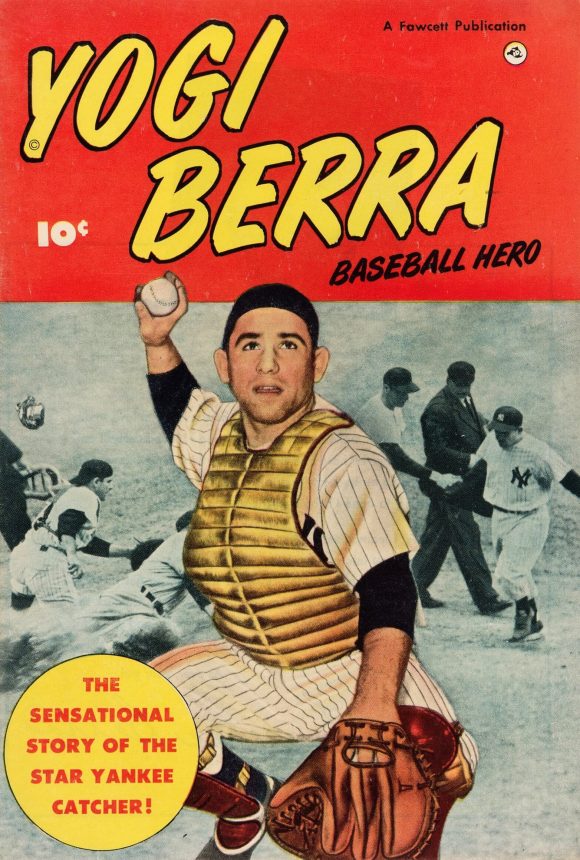
Yogi Berra, Baseball Hero (1951). Ah… Yogi Berra, the King of the Malapropism.
“Ninety percent of the game is half mental.”
“It’s déjà vu all over again.”
“The future ain’t what it used to be.”
(However, there’s some doubt that he said his most famous quote of all: “It ain’t over ’til it’s over.”)
Born Lorenzo Pietro Berra (and renamed Lawrence Peter Berra), Yogi was one of the most popular players in the history of the sport. Off the field, he was a decorated veteran who took part in the Allies’ D-Day invasion. On the field, he played a central role as the catcher for the dynastic New York Yankees, from the late ’40s through the early ’60s. He won the AL MVP three times and still holds the record for most World Series rings — the only player to have 10. He managed both the Yankees and the Mets — leading both teams to the World Series during his career.
—
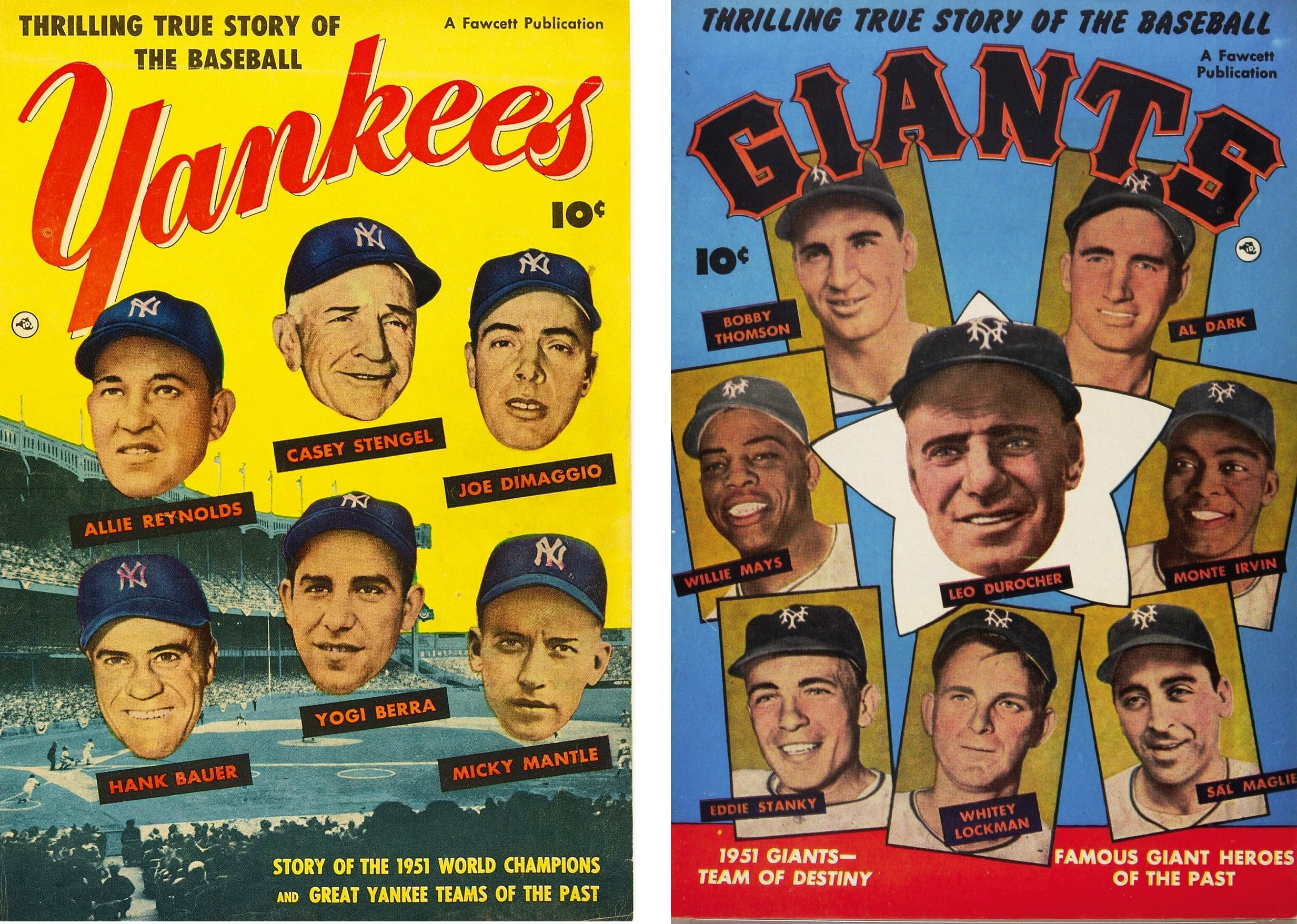
Thrilling True Story of the Baseball Yankees and Thrilling True Story of the Baseball Giants. In April 1952, Fawcett released a pair of special issues devoted to the two teams that had been rivals in the 1951 World Series (which the Yankees won).
—
Baseball Heroes (1952). This was the last of the Fawcett special baseball titles, and they finished off with a winning home run! Baseball Heroes covered the careers of more than 50 Hall of Famers, including Babe Ruth and Lou Gehrig. The issue was written by Charles Dexter, who also wrote several of the titles above, as well as a number of books on baseball. The artist is not identified, but it has been speculated it was Clem Weisbecker, with inks by Bob Powell.
—
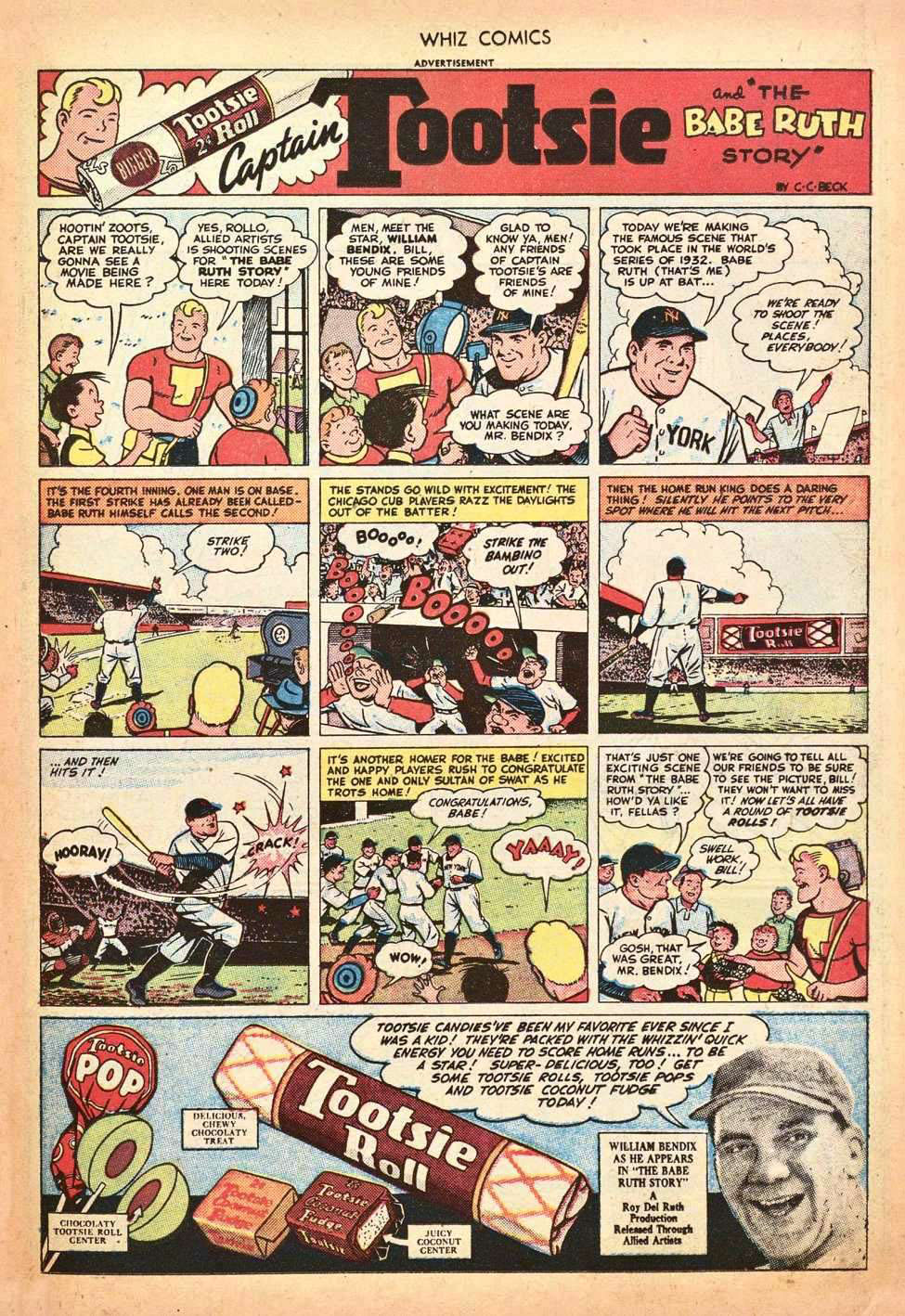
And just for fun, here’s a Tootsie Roll ad from Whiz Comics #103 (Nov. 1948) featuring Captain Tootsie visiting the set of The Babe Ruth Story, with actor William Bendix starring in the title role as the Great Bambino:
—
Now, let’s return to 2026 and the World Series, pitting the Milwaukee Brewers against the Tampa Bay Rays, with two words that are among the most thrilling of all: “PLAY BALL!”
—
MORE
— PLAY BALL! Dig These 13 SUPER BASEBALL COVERS to Celebrate the 2024 WORLD SERIES. Click here.
— FRED RAY’s Classic WORLD’S FINEST BASEBALL COVER — Two Seconds Later! Click here.
—
13th Dimension contributor-at-large PETER BOSCH’s first book, American TV Comic Books: 1940s-1980s – From the Small Screen to the Printed Page, was published by TwoMorrows. (You can buy it here.) A sequel, American Movie Comic Books: 1930s-1970s — From the Silver Screen to the Printed Page, is out now. (Buy it here.) Peter has written articles and conducted celebrity interviews for various magazines and newspapers. He lives in Hollywood.