
A BIRTHDAY SALUTE to the King, who was born 109 years ago, on Aug. 28, 1917…
By JIM BEARD
The Sandman #1 is not exactly one of the go-to books when there’s a celebration of Jack Kirby’s life and work, but take a seat and let me explain myself. It’s a little corner of the Kirby opus that means a lot to me, and I’m gonna tell you why.
According to online sources, The Sandman #1 hit newsstands Jan. 2, 1974. That means I was all of 9 1/2 years old and probably a good age for it, having been reading comics for a few years and seen a lot of superhero stuff by then. I was also still impressionable, and this one certainly made an impression on me, enough to last now for over 50 years.
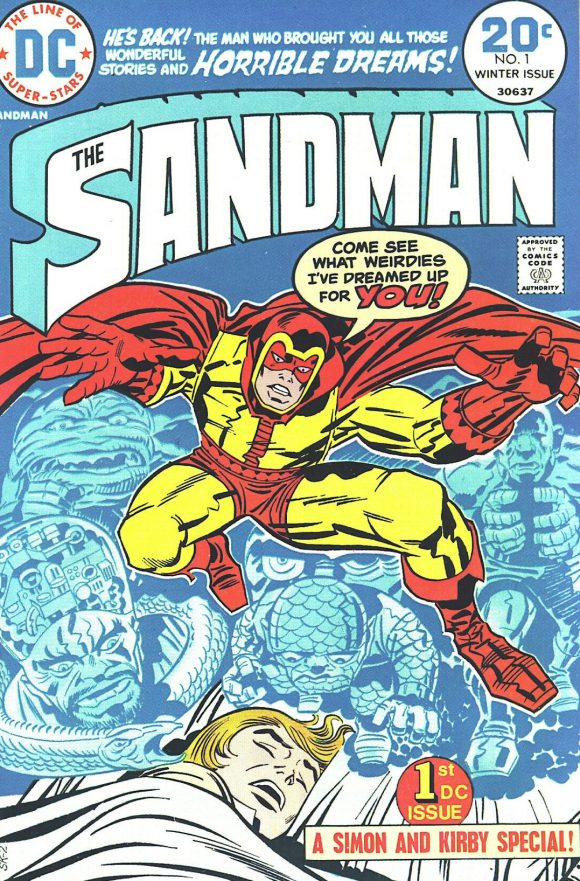
The cover proclaims it as “A Simon and Kirby Special!” and I’ll admit that in 1974 I didn’t have enough comics history under my belt to really know what that meant or to feel its impact. Jack’s credited as editor and artist on the story with Joe Simon as scripter, but I’m not truly aware of where one guy leaves off and the other picks up on the overall creation of the character and the large concepts.
With the utmost respect for Simon and his place in comics history (especially as a partner with Jack in the Golden Age), when I look at The Sandman #1, all I can really see is Kirby. And that’s OK. That’s all that matters here.
In 1974, I didn’t know much of Jack’s then-new work at DC. My dad didn’t pick up the Fourth World titles for me and all I really knew of the King at that time was reprints of his Marvel work. At DC, I saw his post-Fourth World offerings, stuff like his entries in 1st Issue Special and whatnot… and yeah, The Sandman. So, in a way, that all was my Kirby Fourth World.
Jack’s arguably known best for his superhero stuff, and if you have to narrow it down a little more, his merging of superheroes and the cosmic. That’s fine with me; I’d never debate that. But what I think he doesn’t get enough credit for is his blending of heroes with horror, a genre he did a fair amount of work in, but doesn’t seem to get a big enough nod from fans. The Sandman #1 is a great example, I think, of what I’m talking about.
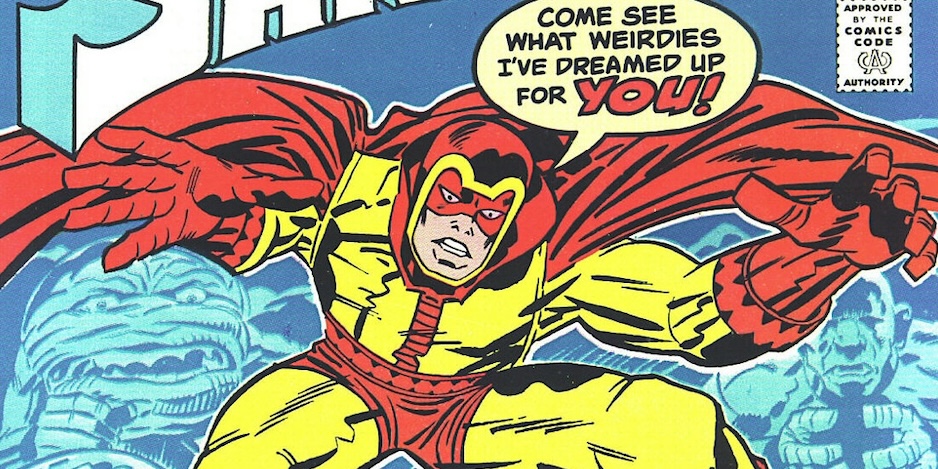
It begins, naturally, with the cover, one of his very best at DC. It’s got the dynamic pose of Sandman there, but it’s also hitting with that wall of nasties (or “weirdies”—a pure Kirbyism) inching its way toward our little hero, Jed, as the nightmare’s just beginning. Both super-stuff and horror is promised, and the emphasis of “Horrible Dreams” at the top of the cover’s text cements that promise. This ain’t gonna be just another long-underwear slugfest kind of thing, kids.
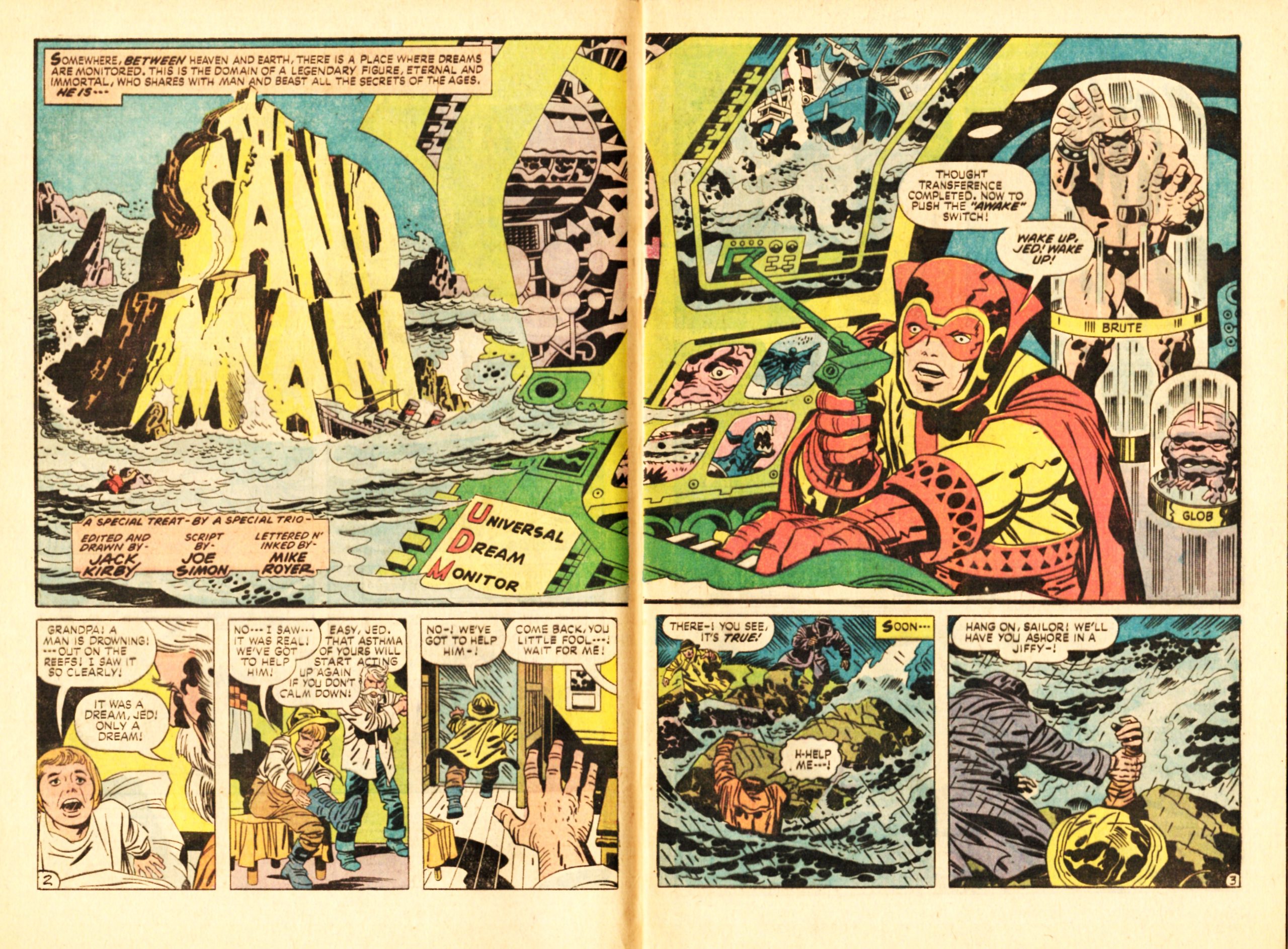
And the opening sequence proves that. A small boy dreaming of disaster, then waking to rush out into a blowing storm, and a strange, colorfully clad dude somehow looking in on it all from “between Heaven and Earth,” with monsters in glass cages behind him. What the hell’s going on? Turn the page, young Jim, and find out… if you dare!
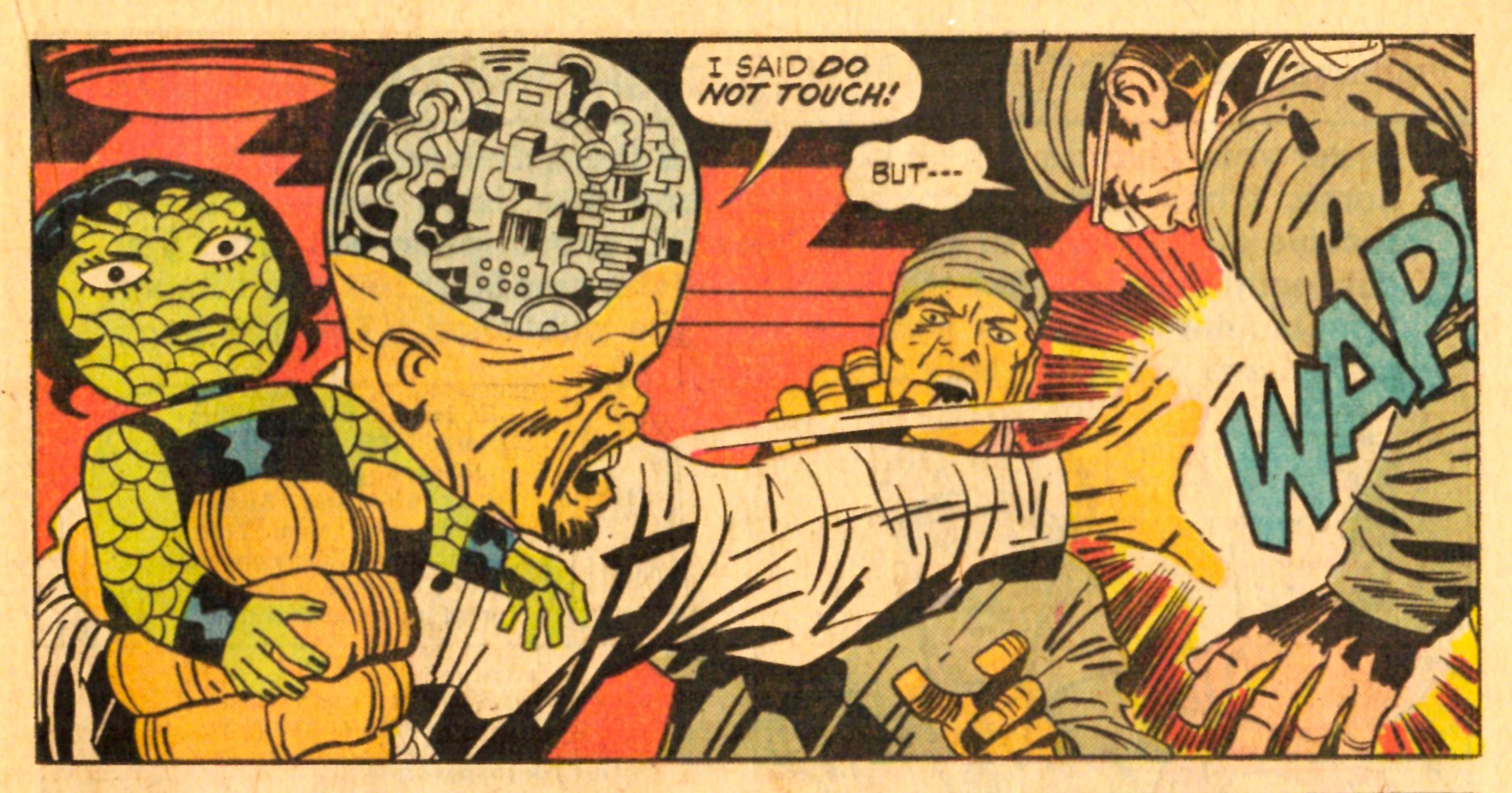
I dared. And I witnessed scenes that still haunt me to this day: a new hero like none I’d seen before, with a job and a base unlike the Batcave or the Fortress of Solitude, instead encompassing dreams and nightmares with creatures who demand a sacrifice…and then there are the Werblinks, too.
Oh, God—the Werblinks!
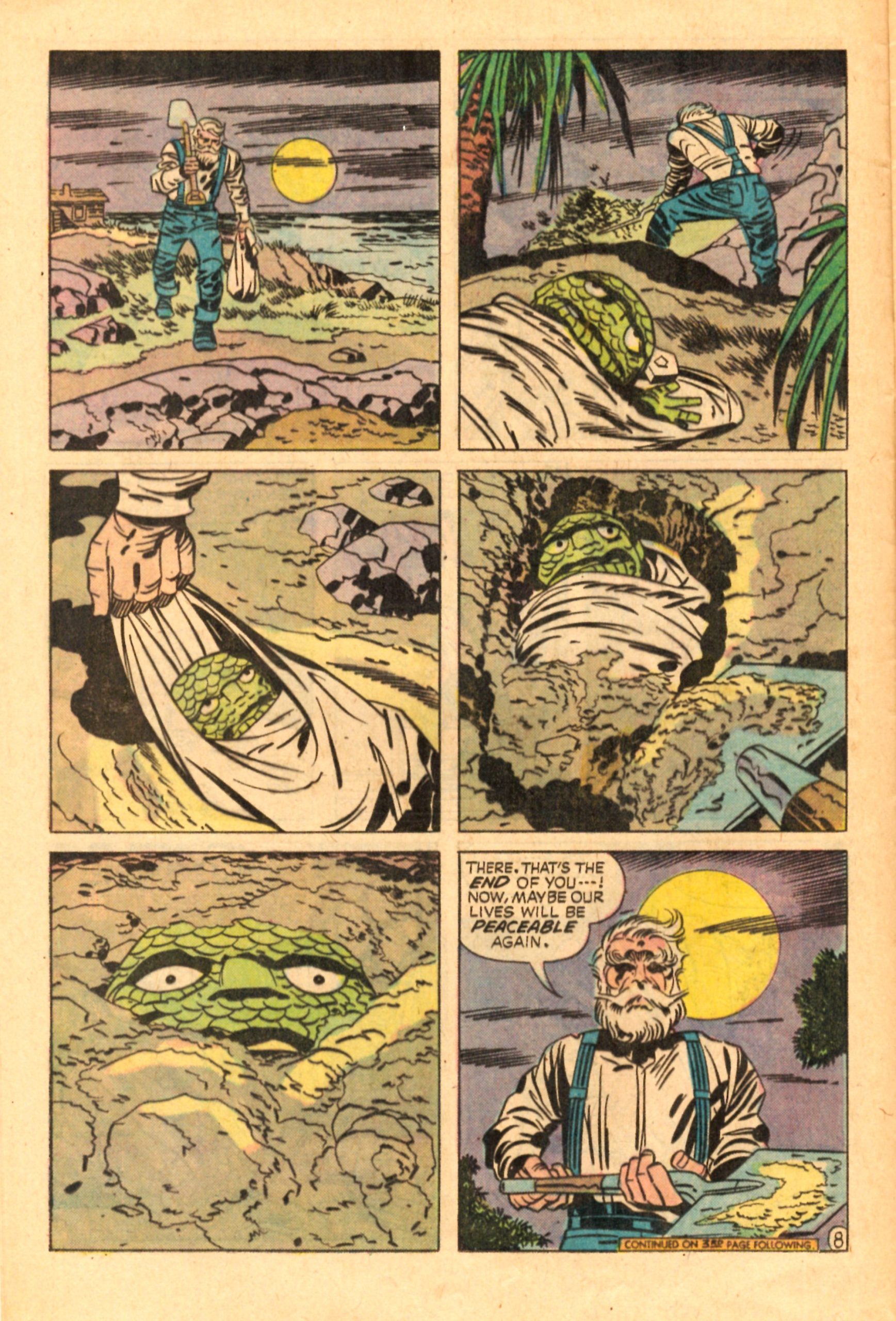
I will never forget Kirby’s nasty little devil-dolls, the Werblinks. I’ll never forget Jed’s immediate interest in one of them, his grandfather’s rage over it, and his subsequent destruction and burial of it. Yes, burial. The smashed Werblink is buried in a shallow grave in a silent series of panels sans Simon’s scripting where Jack proves he’s the master of sequential storytelling, and an artist who can wrest emotion from a reader even when he’s burying a devil deep in the ground.
Yet, the Werblink survives and crawls again, doing the bidding of his own master, General Electric, a villain with a very, very Kirby moniker and an admittedly goofy design (not to mention something of an unfortunate racial stereotype). But there’s something about the general that has also stayed with me through the decades, enough to wish he’d somehow survived to darken my doorstep again.
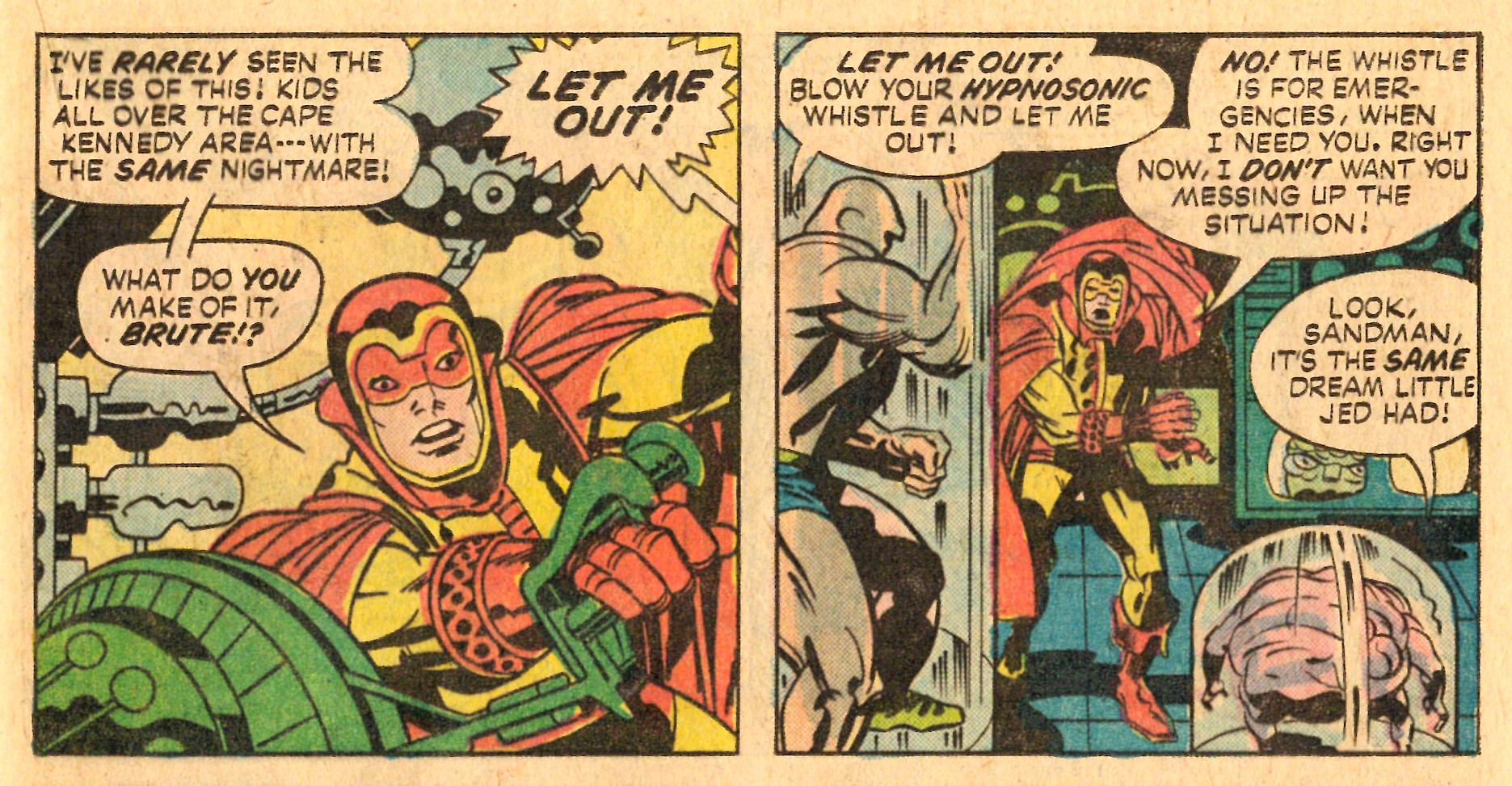
As it is, the Sandman and his chums Brute and Glob (inexplicably both his friends and his prisoners?) did survive, to continue their crusade, on and off, for a few years under different creators, ultimately succumbing to the rampant disease that seems to take hold of too many in comics — the urge to “explain” the unexplainable and deconstruct what should never be taken apart.
The Sandman and his Dream Dimension were and are just fine the way they exist in The Sandman #1.
The series went on for a few more issues with Jack floating in and out, but something was lost after the first installment. The creepiness and the awe and the wonder went away, leaving stories meant more for small children than anything.
I shrug it off today; that first issue is still a masterpiece and it stands on its own as a cool moment in time for me and my growing comics fandom in 1974. I re-read it now and then, recommend it when I can, and savor the look and the feel of it.
Heroes and horror. Horror and heroes. Hell of a mix.
Only Jack Kirby could’ve done it like he did.
—
MORE
— PAUL KUPPERBERG: Inside the 1987 JACK KIRBY SURPRISE BIRTHDAY PARTY. Click here.
— COMIC BOOK DEATH MATCH: Jack Kirby’s FANTASTIC FOUR vs. John Byrne’s FANTASTIC FOUR. Click here.
—
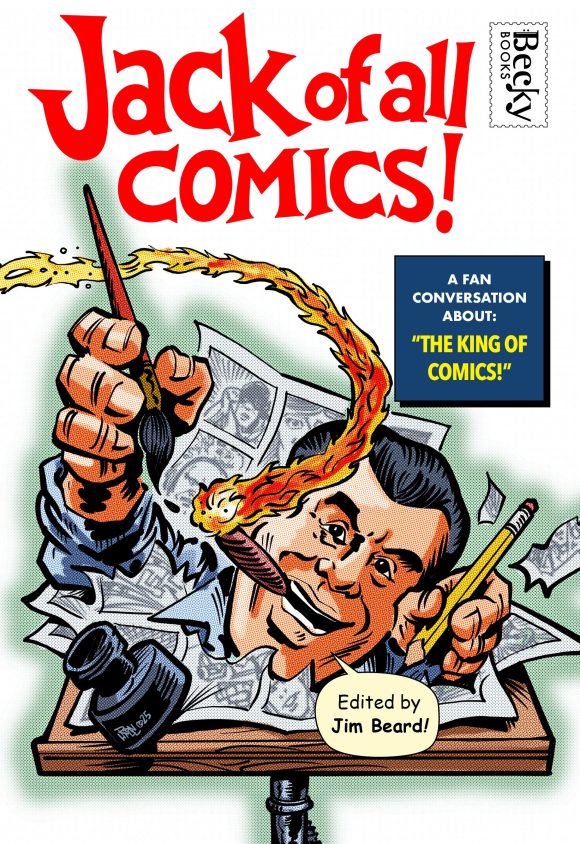
When JIM BEARD’s not editing and publishing through his two houses, Flinch Books and Becky Books, he’s pounding out adventure fiction with both original and licensed characters. In fact, he’s put words in the mouths of Luke Skywalker, Superman, Fox Mulder, Carl Kolchak, Peter Venkman and the Green Hornet… and lived to tell about it. Check out one of his best: Jack of All Comics.

August 28, 2026
I’m a little surprised. I have never heard of this character!
August 29, 2026
>> the cover, one of his very best at DC.
>>
Absolutely! For this reason my copy enjoys a rotation in my personal spinner rack. Great share, Jim. Always a joy to read your musings.
August 30, 2026
It’s always a good feeling hearing that, sir. Deeply appreciated. Many of my 13thD pieces come from a very deep place in me, expressions of my love for pop culture, so it’s cool to see other people on that same wavelength.
August 30, 2026
Could not agree more with your sentiments here about “13D”. I found this site through our mutual love of BATMAN’66 but I stayed for the shared loves and stories of its readers and contributors. For that reason, I try very hard to not comment on anything around polarizing subjects. I don’t want to risk it. Jim, I hope you continue to write more here and with your books.
August 30, 2026
I always liked this issue. Grabbed it off the rack because I saw Kirby did it. Never saw any of the other issues, but this one was a lot of fun.
September 25, 2026
One day of my favorite books from the early 70’s and I was fortunate enough to meet Kirby and have home sign it in the early 80’s.