
A BIRTHDAY TRIBUTE: The idiosyncratic comics creator was born 98 years ago!
By PAUL KUPPERBERG
Steve Ditko — born 98 years ago, on November 2, 1927 — didn’t draw like anyone else.
He had his influences, of course, some of them visible in his work (Jerry Robinson, Mort Meskin, Joe Kubert), others less obvious (Hal Foster, Will Eisner, Chester Gould), but however they all mixed together, they emerged from Ditko’s drawing hand onto paper in a unique synthesis that was totally his own.
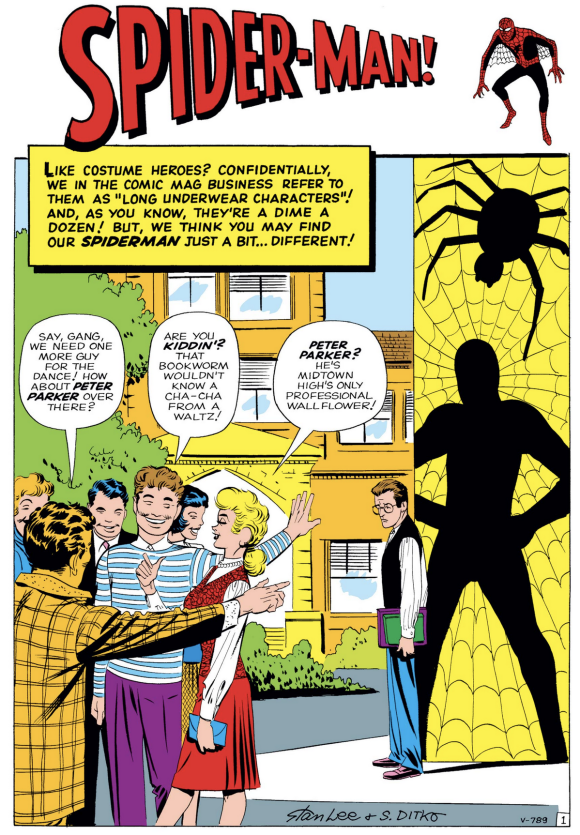
Everybody talks about his offbeat anatomy and, in particular, his expressive hands. Ditko hands, fingers wildly splayed or tightly curled, wrists bent at 90-degree angles, attached to figures that twist and stretch to reflect their physical, emotional, moral, or even metaphysical struggles. He rejected the explosive heroic action of contemporary comics and seemed to approach his characters from the inside out, giving them weight and substance, and defining them at a glance; even without the dialogue on the splash page of the Spider-Man origin story in Amazing Fantasy #15 telling us that Peter Parker is a “wallflower,” Ditko’s isolated, downcast figure in the background tells us everything we need to know about the character.
I first became aware of Ditko in the early 1960s from his work on Amazing Spider-Man and the Doctor Strange strip in Strange Tales, and in fact the first issue of ASM I bought off the newsstand (as opposed to reading someone else’s copy) was #38 in 1966, Ditko’s last on the title. But I soon discovered that though the artist had disappeared from the pages of current Marvel Comics, he was all over the comics published by Charlton. And once I discovered back-issue bins, I stumbled onto the world of the pre-Marvel Atlas Comics monster mags, which were chockablock with Ditko-drawn science fiction, horror, and creature stories, the writing mostly credited to Stan Lee, including some of my favorite work of his in Amazing Adult Fantasy #7 – 14 and the anthology stories that filled out the rest of Amazing Fantasy #15 (December 1961 – August 1962) behind the Spidey origin story.
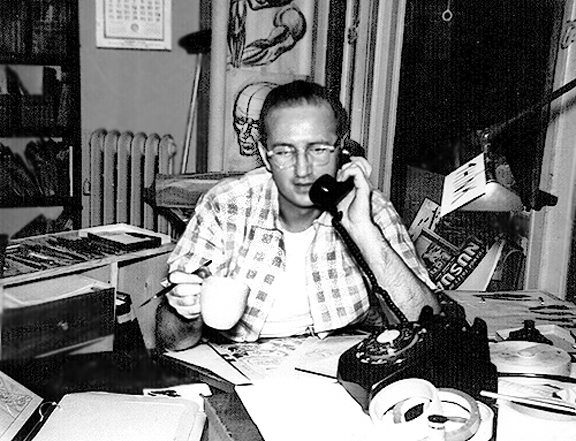
Steve Ditko was born in Johnstown, Pennsylvania, and later studied under Batman artist Jerry Robinson at the Cartoonists and Illustrators School in New York before getting into comics in the early 1950s. After a few jobs at Prize Comics, he started working for Charlton Comics and Atlas/Marvel, both of which would remain his main clients for the next dozen years during which he would create and/or co-create Spider-Man (and his amazing rogues gallery, including Doctor Octopus, Green Goblin, Sandman, Lizard, Electro, et al), Doctor Strange, Captain Atom, Blue Beetle (the Ted Kord version), and the Question.
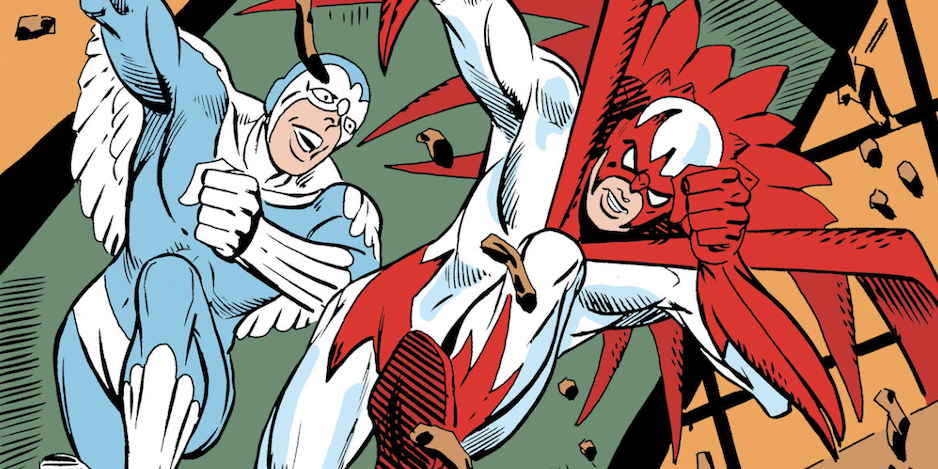
After famously splitting with Stan and Marvel Comics, Ditko maintained his relationship with Charlton and also began contributing to a wider range of publishers, including Warren Publishing, Tower Comics, and DC Comics, for which he would create Shade, the Changing Man and the Odd Man and co-create the Creeper with Don Segall, the Hawk and the Dove with Steve Skeates, and Stalker, and later a new Starman, with Paul Levitz.
Like Ditko himself, Charlton Comics was an outlier in the comics business. Based in Derby, Connecticut, the publisher was founded by two men who were in jail for white collar crimes in 1935 and, after their releases, started a publishing company. Their primary business was publishing song lyric magazines (Hit Parade and Big Song Magazine), but to keep their presses rolling they would get in on the hot publishing trends of the moment, which included comic books, paperback books, and men’s magazines. (Charlton uniquely owned and operated their own printing presses, which was part of their all-in-one operation, from editorial offices at one end of the factory to distribution and trucking at the other.)
Charlton had very little to recommend it as a showcase for a working artist. They paid the lowest page rates in a business already famous for crap wages and their four-color comic book printing presses were far from state-of-the-art, producing often smudged and off-register color printing on the cheapest newsprint available. But they did offer one thing Ditko valued: creative freedom. Comics were just a means to an end (i.e., keeping the presses rolling) so the publishers didn’t really care what they printed as long as there was something to print.
This freedom from the editorial interference and corporate pressures of larger publishers allowed Ditko to experiment with storytelling, art, and themes that reflected his growing interest in Objectivist philosophy and moral individualism. Titles like Blue Beetle, Captain Atom, The Question, and the eerie anthology Strange Suspense Stories gave him the opportunity to explore justice, integrity, and identity through characters who embodied his ideals of rational thought and self-determination. He would later explore these themes in great depth through his self-published work and characters like Mr. A, Missing Man, and Static.
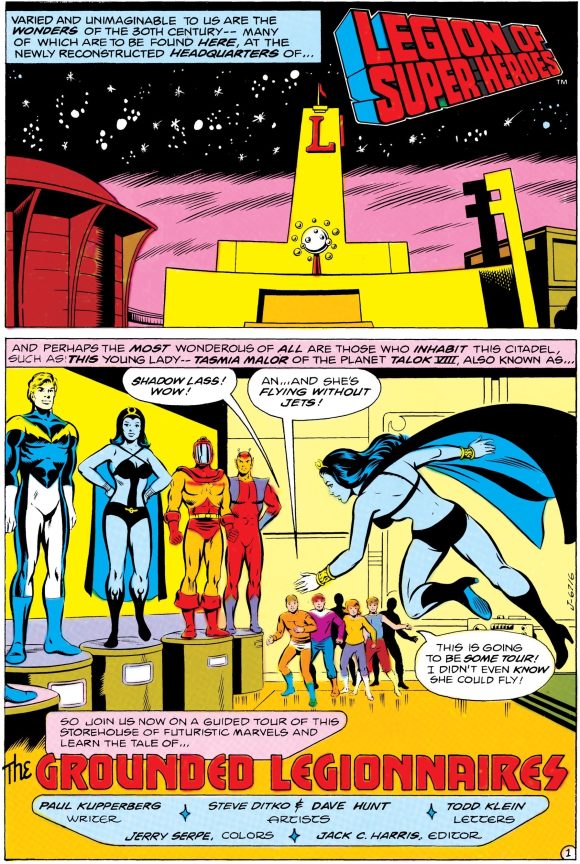
I would have two stories drawn by Ditko early in my career, a 7-pager in Charlton’s Ghostly Haunts #52 (October 1976) and an 8-page back-up he penciled in The Legion of Super-Heroes #267 (September 1980). The one time I would meet him was when he came to my office at DC when I was editing The New Gods in the 1990s, to pick up the script for a back-up story I had reached out to him to draw. He looked exactly like a character drawn by Steve Ditko, could not have been any more pleasant, and had absolutely no interest in engaging in small talk about his career or the past.
(By the way, Ditkomania lives! The artist’s nephew has made new editions of some of Steve’s classic creator-owned work available at Ditkoverse.com, and my old pal Jack C. Harris celebrated his collaborations with Ditko as both a writer and editor in his 2023 TwoMorrows book, Working With Ditko, which includes the rarely seen Steve Ditko designs and layouts for his proposed mid-1970s revamp of Batman, which the DC higher-ups deemed too violent.)
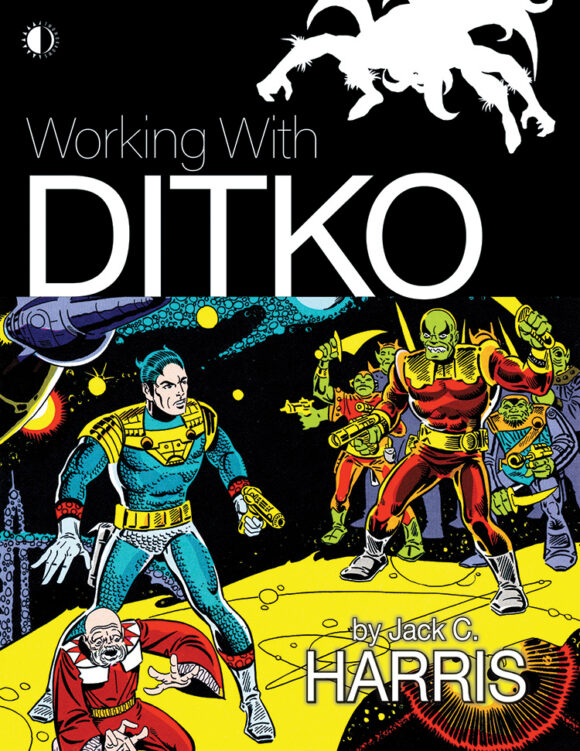
There are a lot of myths and legends surrounding Steve Ditko, who died in 2018, about his being an antisocial hermit, but the truth is, he was just a very private individual who put whatever he had to say into the work and let the work speak for itself. And some of that best work was, believe it or not, done for Charlton Comics, which never challenged his artistic instincts or tried to silence his voice. Nicola Cuti, one-time Charlton Comics editor and a frequent Ditko collaborator, once told me, “Whatever Steve sent in, we printed.”
But of course!
Here then, MY 13 FAVORITE STEVE DITKO CHARLTON COMICS COVERS:
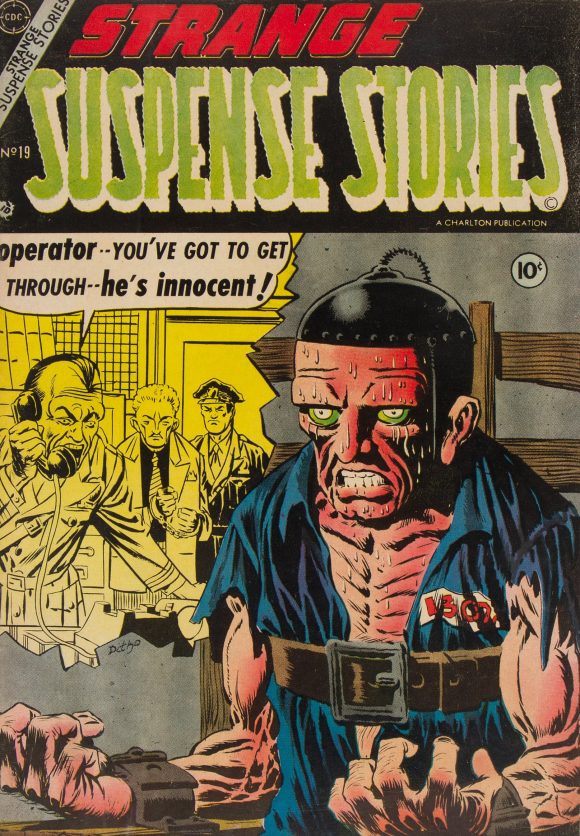
Strange Suspense #19 (July 1954). The intensity of this moment is off the charts… and talk about “Ditko hands!” These could tell the whole story just by themselves.
—
Out of This World #4 (June 1957). Ditko, making Charlton’s production department work for their money.

—
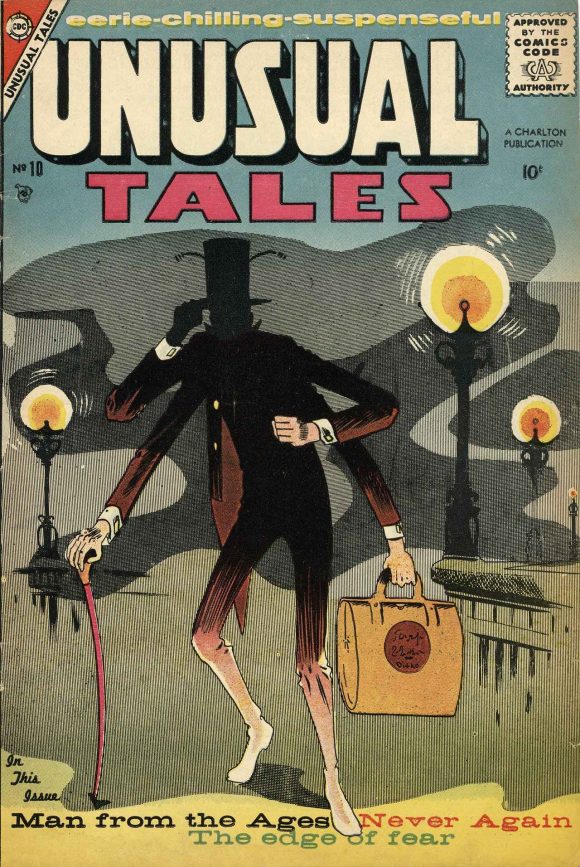
Unusual Tales #10 (January 1958). Sheer abstract absurdity! I would have loved to see an entire story in this style!
—
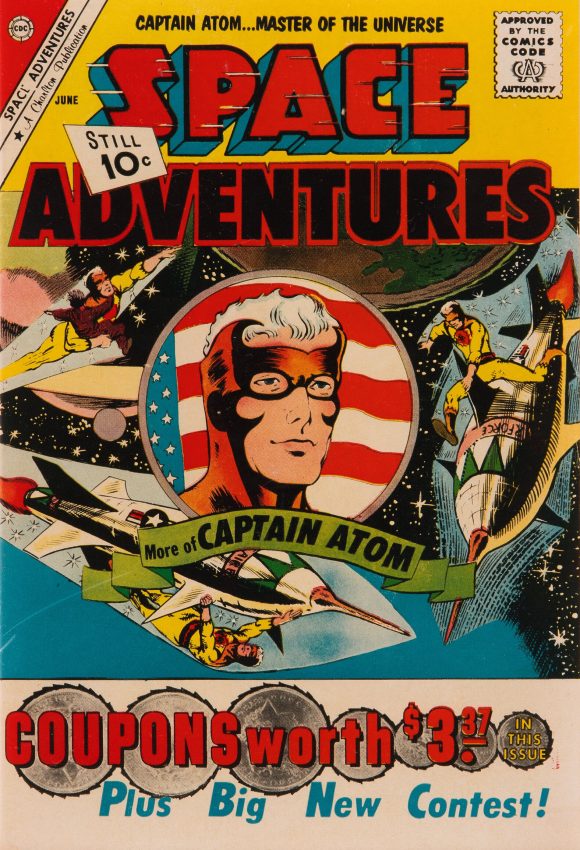
Space Adventures #40 (June 1961). Captain Atom by Ditko… and coupons worth $3.37? Take my 10 cents, please!
—
Konga #10 (January 1963). Don’t mess with the monkey!

—
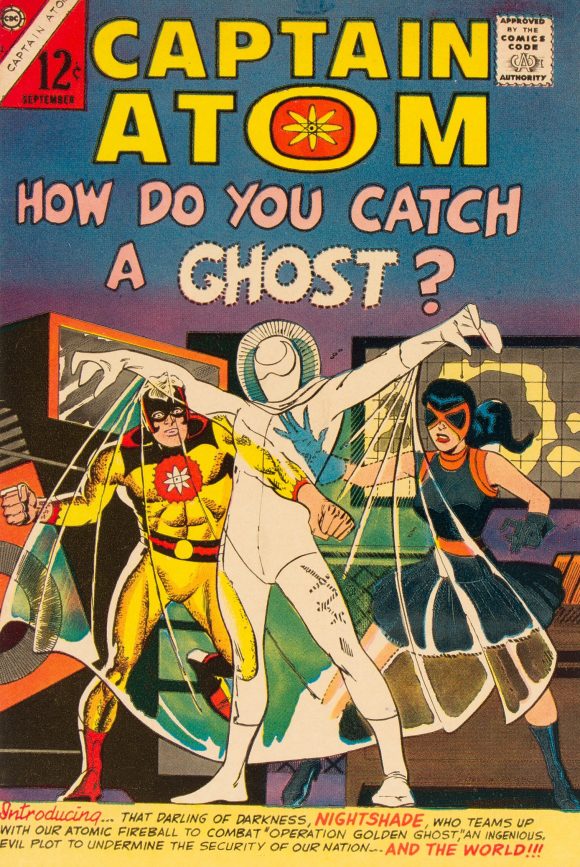
Captain Atom #82 (September 1966). A hauntingly well done special effect!
—
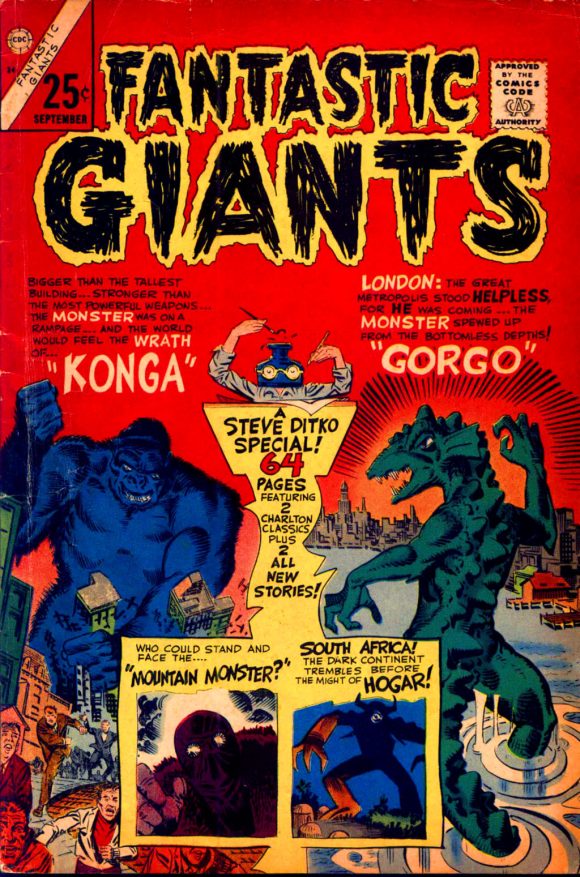
Fantastic Giants #1 (September 1966). “Steve Ditko” makes a special guest appearance on this classic cover.
—
Mysterious Suspense #1 (October 1968). From out the mists… early Ditko Randian Objectivism embodied by the Question!

—
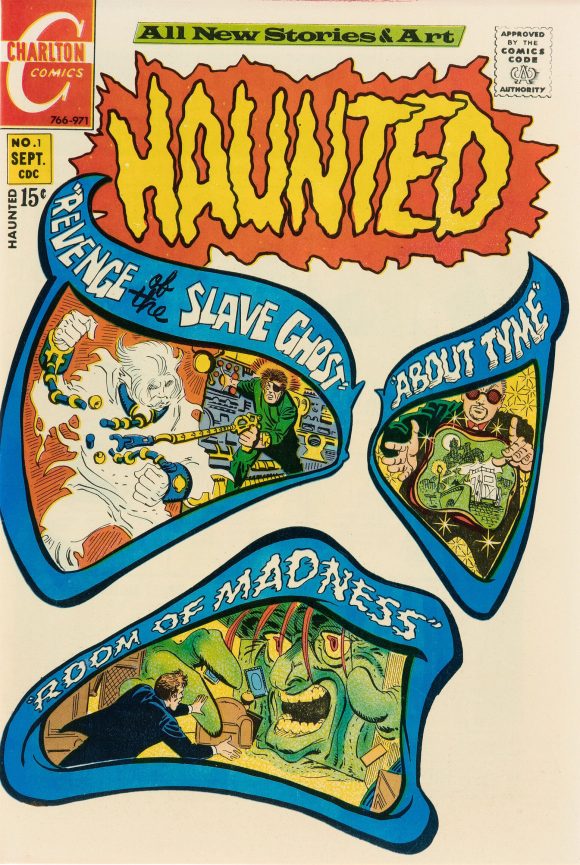
Haunted #1 (September 1971). You know what’s even better than this cover? All the stories inside are also by Ditko!
—
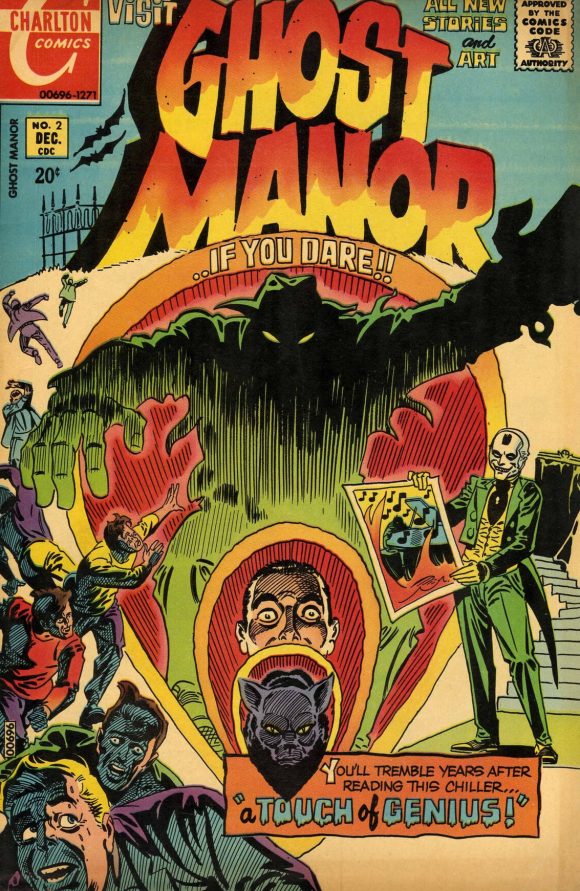
Ghost Manor #2 (December 1971). I dared!
—
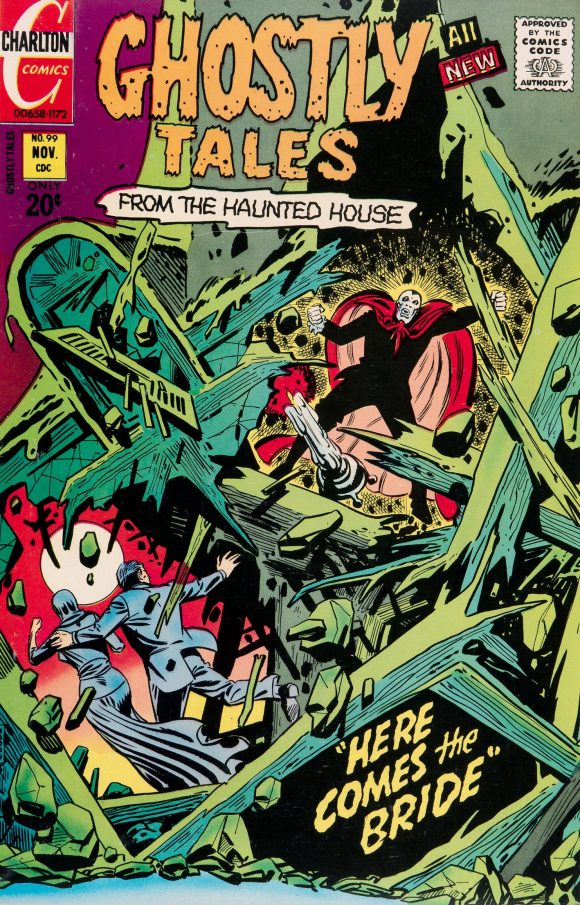
Ghostly Tales #99 (November 1972). Some beautifully crafted chaos by Ditko.
—
Haunted #16 (June 1974). Simple but effective!

—
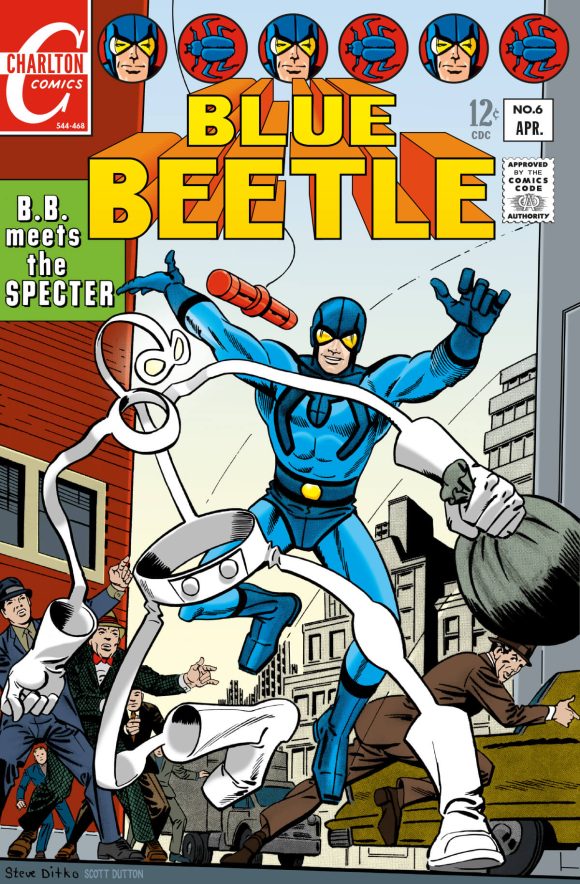
Blue Beetle #6 (1974). Originally scheduled for 1968, the Blue Beetle title was cancelled with the fifth issue, and this cover (and accompanying) story would eventually be published in 1974’s Charlton Portfolio. Better late than never!
—
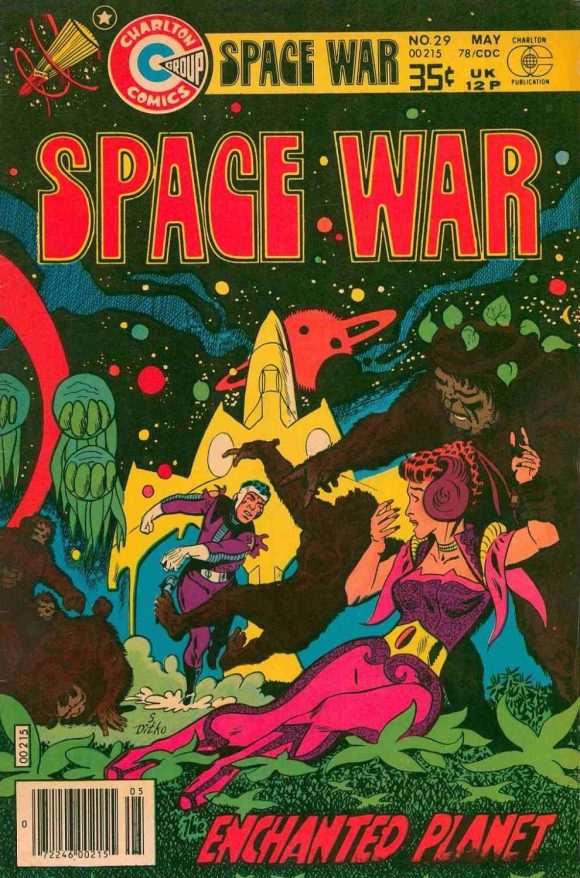
Space War #20 (May 1978). A whole ’nother sort of Planet of the Apes, Ditko-style.
—
UPDATED: Oops! An earlier version of this column had Ditko born in 1925. It was actually 1927. Sorry! — Dan
—-
MORE
— PAUL KUPPERBERG: When STEVE DITKO Joined DC — 55 YEARS LATER. Click here.
— STEVE DITKO AMAZING SPIDER-MAN Artist’s Edition Coming in 2026. Click here.
—
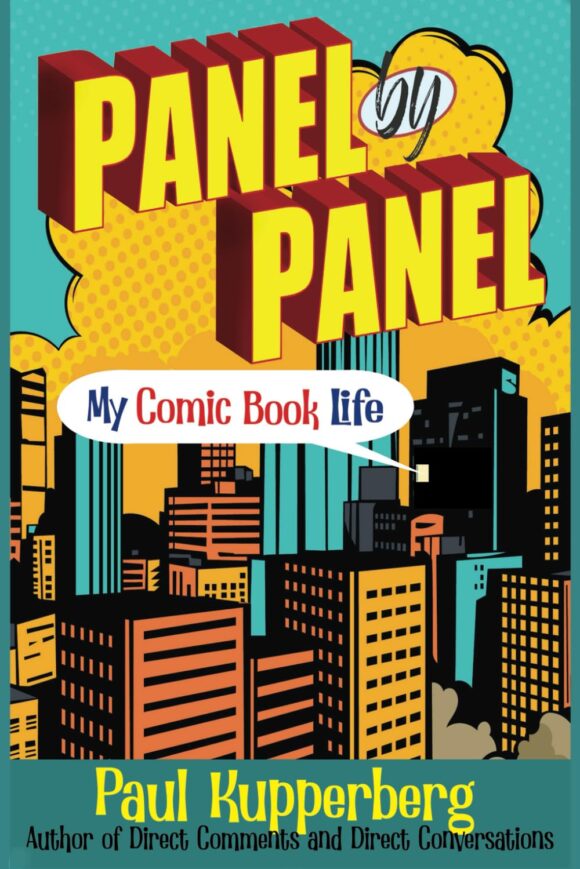
PAUL KUPPERBERG was a Silver Age fan who grew up to become a Bronze Age comic book creator, writer of Superman, the Doom Patrol, and Green Lantern, creator of Arion Lord of Atlantis, Checkmate, and Takion, and slayer of Aquababy, Archie, and Vigilante. He is the Harvey and Eisner Award nominated writer of Archie Comics’ Life with Archie, and his YA novel Kevin was nominated for a GLAAD media award and won a Scribe Award from the IAMTW. Check out his new memoir, Panel by Panel: My Comic Book Life.
Website: https://www.paulkupperberg.net/
Shop: https://www.paulkupperberg.net/shop-1

November 2, 2025
Every so often, someone (Thank you, Mr K!) showcases a few Ditko covers. They’re always welcome and never enough.
Charlton covers by Ditko were especially desirable. Not only were they a regular source of Ditko for my Ditko-hungry soul, but they were available everywhere, and quickly showed up in Picher’s junk shop “antique stores” for a nickel apiece. Even when distributors didn’t deliver them to one our normal spots, which led me to suspect distribution fraud.
I can’t praise these covers and stories enough, nor can I praise the inimitable Special K for reminding me how great much of Charlton comics were – usually despite the publishers.
– I always enjoyed correcting people who insisted Konga was an ape. (He was a mutated tailed monkey who looked like an ape made giant-sized) Most of my time went to following the gags of the home photos no matter what the home.
November 2, 2025
Ditko was born in 1927, not 1925.
November 3, 2025
Well, heck.
November 2, 2025
I had the Fantastic Giants when it first came out. I was a fan of Gorgo. Thought the artworks was amazing. Too bad that I don’t have the magazine anymore.
November 3, 2025
Ditko was unyieldingly, absolutely cool. But you knew that, right?
March 29, 2026
Space Adventures #40 https://comicbookplus.com/?dlid=24307