
A BIRTHDAY SALUTE…
By PETER BOSCH
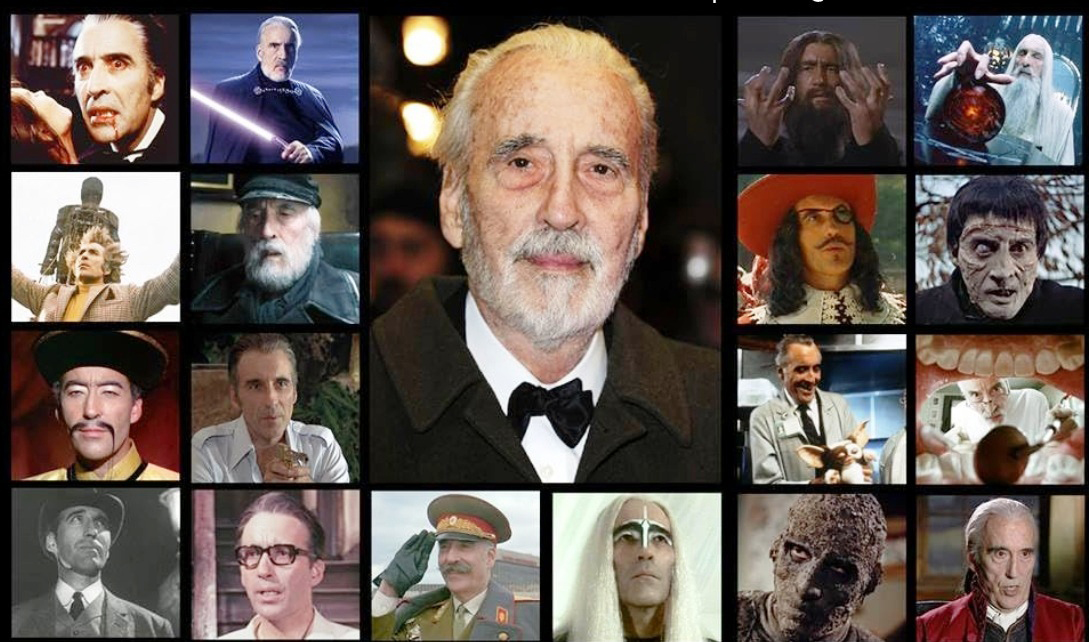
One of the great joys for me in going to see a Christopher Lee movie in the Sixties and Seventies was never knowing how he would look this time. What Lon Chaney was to the audiences of the Silent Era, and Boris Karloff was to the early days of sound, Christopher Lee was for us Baby Boomers — and, it turned out for generations after that. From Count Dracula to Count Dooku, he was the pleasure awaiting us onscreen when the lights went down.
With that in mind, we here at 13th Dimension would like to celebrate his birthday (born Christopher Frank Carandini Lee on May 27, 1922, in Belgravia, London, England) with a fun look at 13 of his best roles, in and out of makeups.
(SIDE NOTE: Check out Chris Franklin’s 13 GREAT CHRISTOPHER LEE HORROR ROLES THAT AREN’T DRACULA — RANKED. He also did a salute to Lee’s close friend, Peter Cushing, whose birthday was Tuesday.)
In chronological order:
—
1. Georges Seurat. By the time Lee appeared in Moulin Rouge (1952), he had already made almost 20 movies and was five years into his film career. Yet he was still relatively unknown to audiences. In this film about famous painter Henri de Toulouse-Lautrec (played by José Ferrer), Lee had a small, unbilled role portraying the post-Impressionist French artist Georges Seurat.
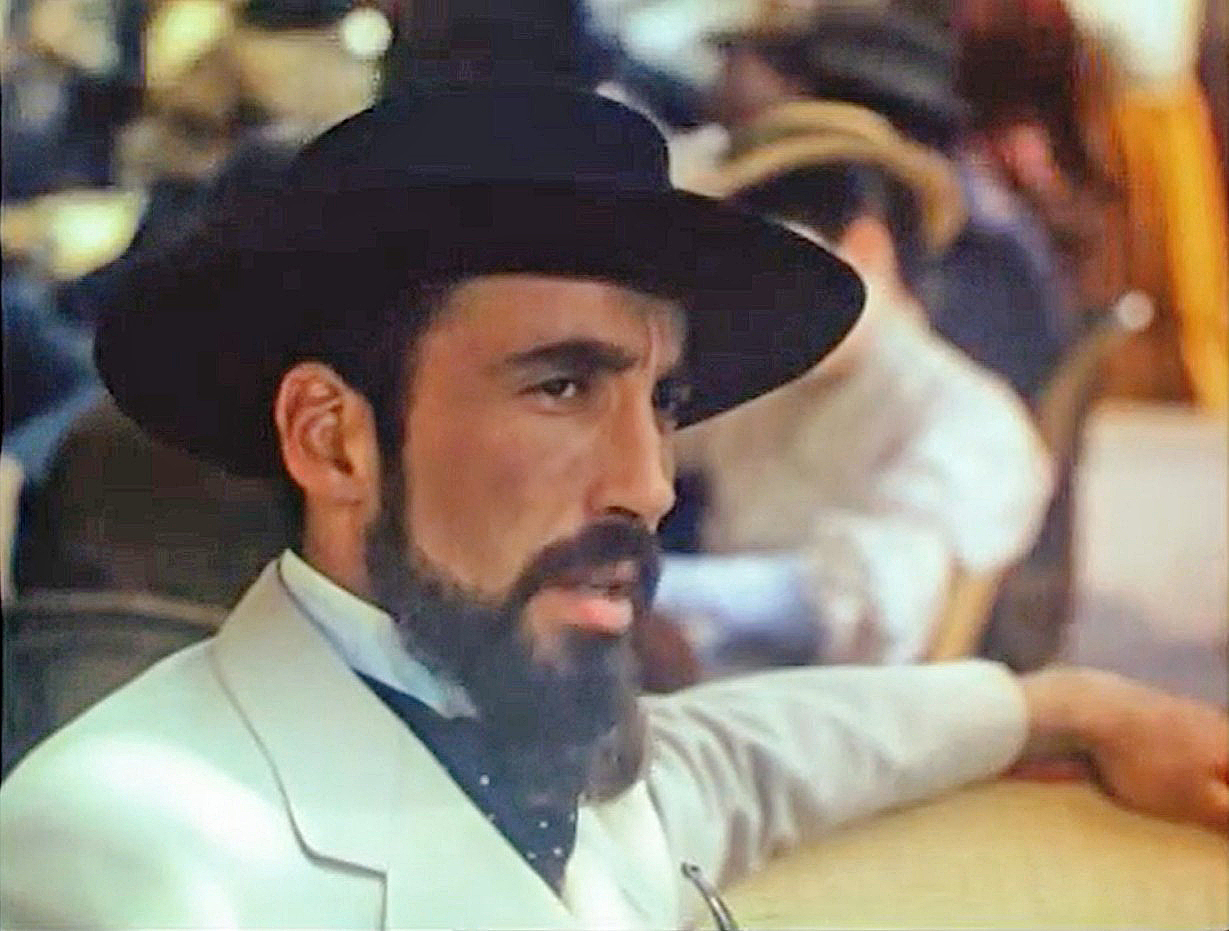
Christopher Lee as painter Georges Seurat in Moulin Rouge (1952)
—
2. The Frankenstein Monster. The role that made Boris Karloff a star was portrayed by Lee in The Curse of Frankenstein (1957), the first of England’s Hammer Film Productions’ revival of great horror movies. Though the studio had been in existence since 1934, when it specialized in comedies, it took two decades before they became well known, thanks to their deep dive into the ghastly and gruesome field of the macabre. Peter Cushing was Baron Frankenstein in the film and this would be just the first of 24 movies he and Lee would co-star in).
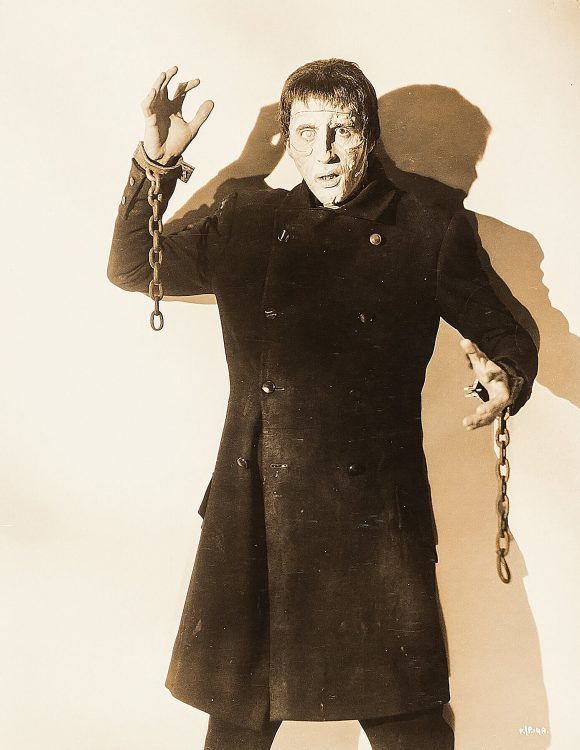
Lee as the Monster, Curse of Frankenstein (1957)
Lee wrote in his autobiography, Lord of Misrule (Orion, 2003), “Playing the Creature taught me to appreciate how great the skill was that Boris had used in creating his Monster. And, perhaps in a way, that helped me to adjust to the very notion of working in the horror genre. It was a case of inventing a being who was neither oneself nor anybody else, but a composite of pieces of other people, mostly dead.”
—
3. Dracula. Many film fans, including myself, consider Horror of Dracula (1958) — just Dracula in the U.K. — as the best version of the oft-told story of the bloodsucking Count. Lee’s own polish from his upper-class background (did you know that he was descended from Charlemagne?) transferred perfectly into his portrayal of Dracula, combining both the menace and the sophistication needed for the character. Cushing received top billing as Van Helsing, but Lee stole the show — and with just eight minutes of screen time. (Also to be seen in the movie was Michael Gough, who became more famous with another creature of the night, Batman, as Alfred in the first four movies of that ’80s-’90s franchise.)
Lee played Dracula in a total of 10 movies between 1958 and 1976, plus cameos in other pictures as a vampire, including the comedy The Magic Christian (1969).
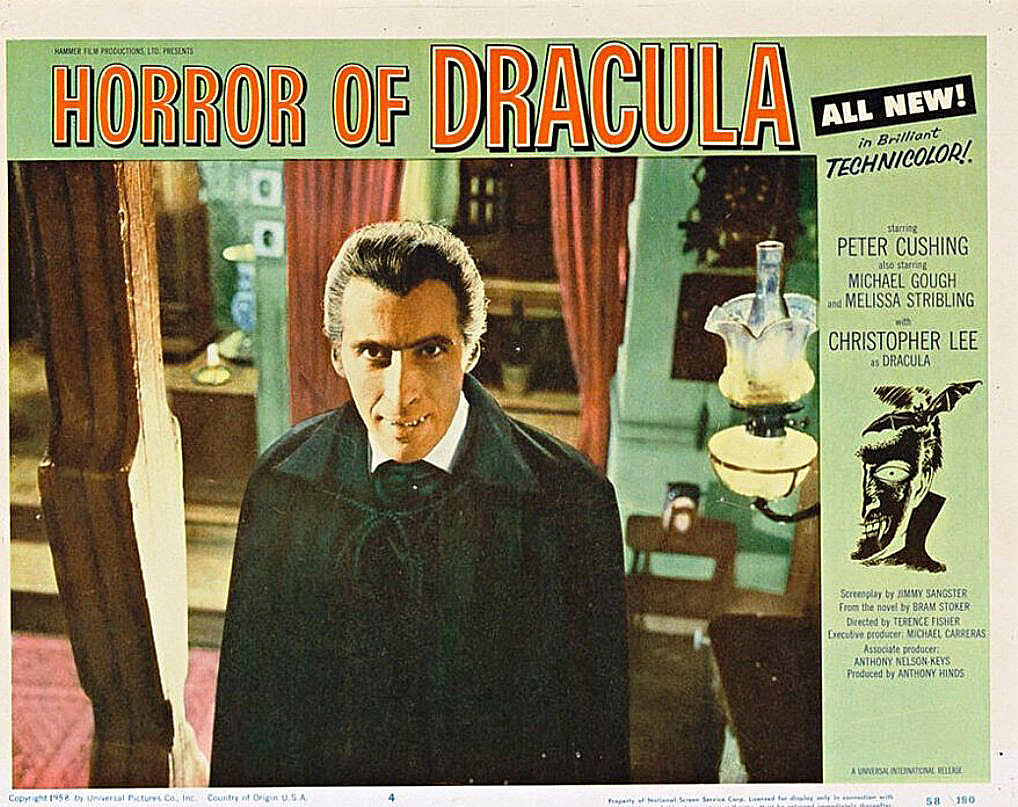
Lobby card for Horror of Dracula (1958)
—
4. Kharis/The Mummy. After playing the Frankenstein Monster, Lee got the chance to recreate another character originated by Karloff: The Mummy (1959). For Lee, though, playing the Mummy was one of the most grueling experiences he ever had as an actor. While in full bandages, he could only breathe through the eyeholes. He also crashed through real glass windows and a door that had been locked from the other side (without anyone telling him ahead of time — and he almost dislocated his shoulder). And then there were the explosive charges located within the bandages (to simulate being hit by a shotgun blast) and the tearing of his shoulder muscles by repeated takes of him carrying a damsel through a swamp. Unlike Dracula, he chose to play the Mummy only the one time, quite understandably.
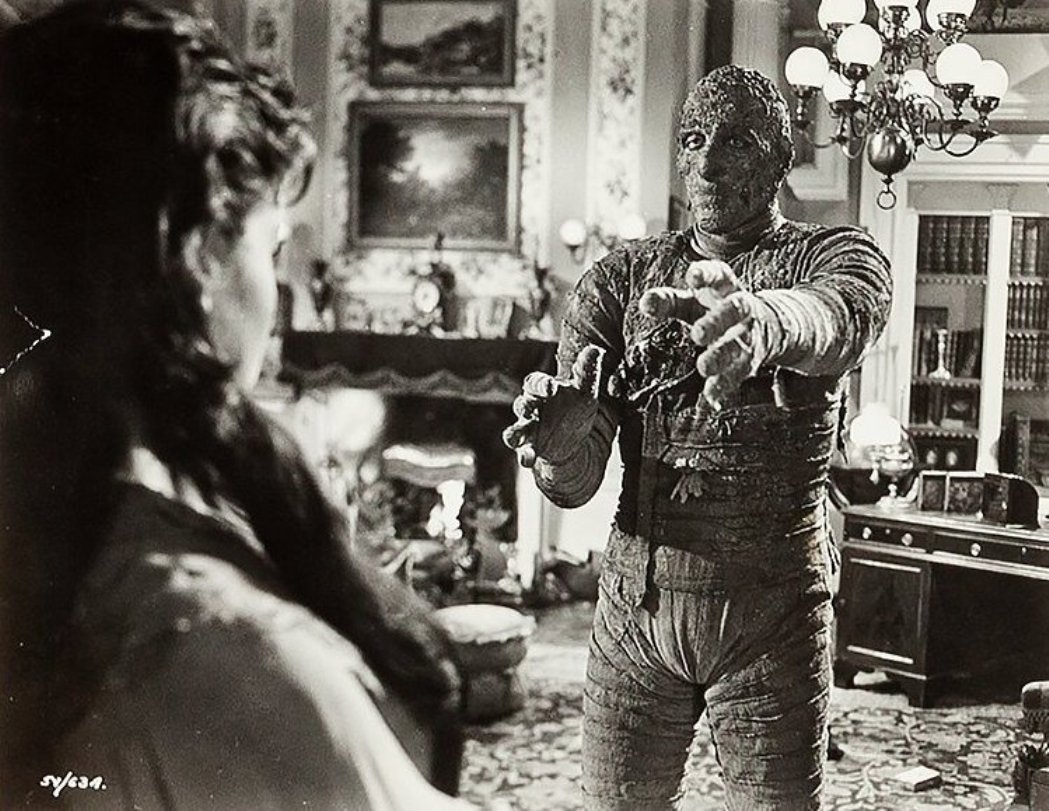
Lee in agony in The Mummy (1959)
—
5. Sherlock Holmes. With its Olde England atmosphere and Lee’s distinguished looks, it was only a matter of time before he would appear in tales of Sir Arthur Conan Doyle’s famous detective. In his first outing, he played Sir Henry Baskerville in The Hound of the Baskervilles (1959), with Cushing as Sherlock Holmes.
Lee then graduated to portraying the great detective himself in a German film production, Sherlock Holmes und das Halsband des Todes (Sherlock Holmes and the Deadly Necklace, 1962). Though it was directed by Terence Fisher (The Curse of Frankenstein, Horror of Dracula, and The Mummy) and had capable actors, it was a production nightmare.
The film was shot in German (Lee was multilingual), but the soundtrack proved to be unusable and the producers did not bring the actors back to postsynch it. Instead, they chose voice actors to dub all the parts, including Lee himself.
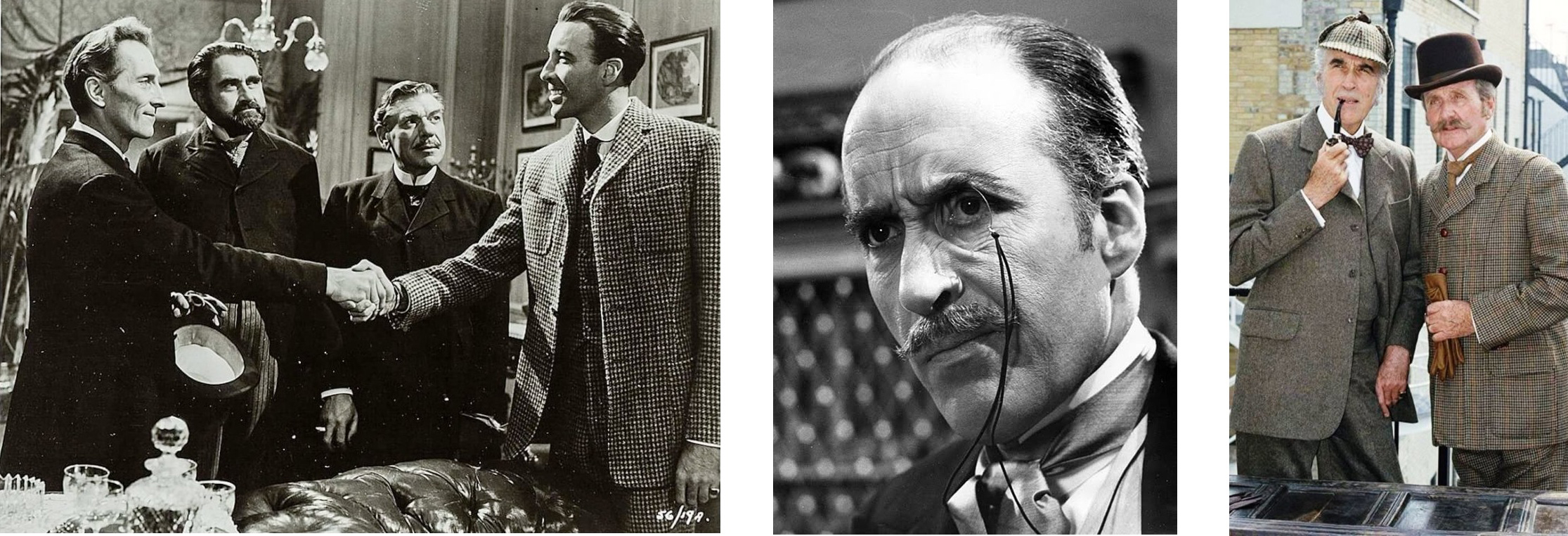
A trio of photos from three Holmes features with Lee. At left, Sherlock Holmes (Peter Cushing) shakes hands with Sir Henry Baskerville (Lee) in The Hound of the Baskervilles (1959); middle, Lee as Mycroft Holmes in The Private Life of Sherlock Holmes (1970); and, at right, as Holmes with Patrick Macnee as Dr. Watson in Sherlock Holmes and the Leading Lady (1991).
The next time Lee was involved with a Holmes production, it was as his brother Mycroft in The Private Life of Sherlock Holmes (1970). While it was written by the great team of I.A.L. Diamond and Billy Wilder, and directed by Wilder, it did not fare well with critics or the public.
It took 21 years before Lee was involved again as part of the Holmes canon, but this time returning to the role of Sherlock himself in two made-for-television movies. However, Sherlock Holmes and the Leading Lady (1991) had young-looking Morgan Fairchild as Irene Adler, Holmes’ famous love, and Lee at the time was 68 years old (as was his Dr. Watson, Patrick Macnee). And the next film as Holmes, Incident at Victoria Falls (1991) was made in temperatures of over 100 degrees Fahrenheit in Africa. Both were disasters.
—
6. Fu Manchu. Lee had a new franchise in 1965, playing yet another role originally essayed by Boris Karloff, in 1932’s The Mask of Fu Manchu. Lee starred five times as the master of evil, starting with The Face of Fu Manchu.
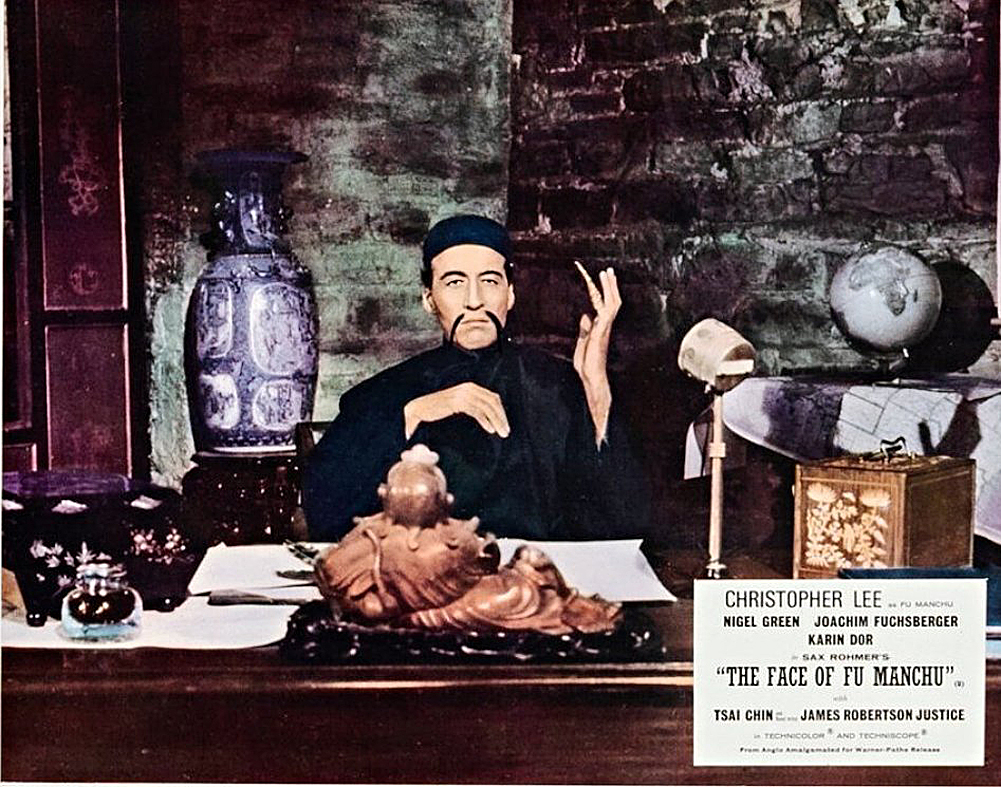
Oh, in case you are wondering, Lee and Karloff did make films together. Two, as a matter of fact: Corridors of Blood (made in 1958 but not released until 1962), and The Crimson Cult (aka Curse of the Crimson Altar, in 1968), which also had Michael Gough. In addition, Karloff and Lee were next-door neighbors in London and great friends, working together first in the 1954 “At Night All Cats Are Gray” episode of Karloff’s TV series, Colonel March of Scotland Yard.
—
7. Grigori Rasputin: Lee took on the role of the manipulative real-life Russian priest in Rasputin — the Mad Monk (1966). “Rasputin was a legendary enigma, a real actor’s part, one of the best I had,” Lee wrote in his autobiography. “And I had a long-drawn-out, exquisite death to get my teeth into.” However, Rasputin was not just a part on film for him. In Lee’s childhood, he was awakened by his mother to meet two of her society guests downstairs. They were Prince Felix Yusupoff and the Grand Duke Dmitri Pavlovich, both of whom took part in Rasputin’s assassination. (In 1976, Lee also met Rasputin’s daughter, Maria, who said he had her father’s expression.)
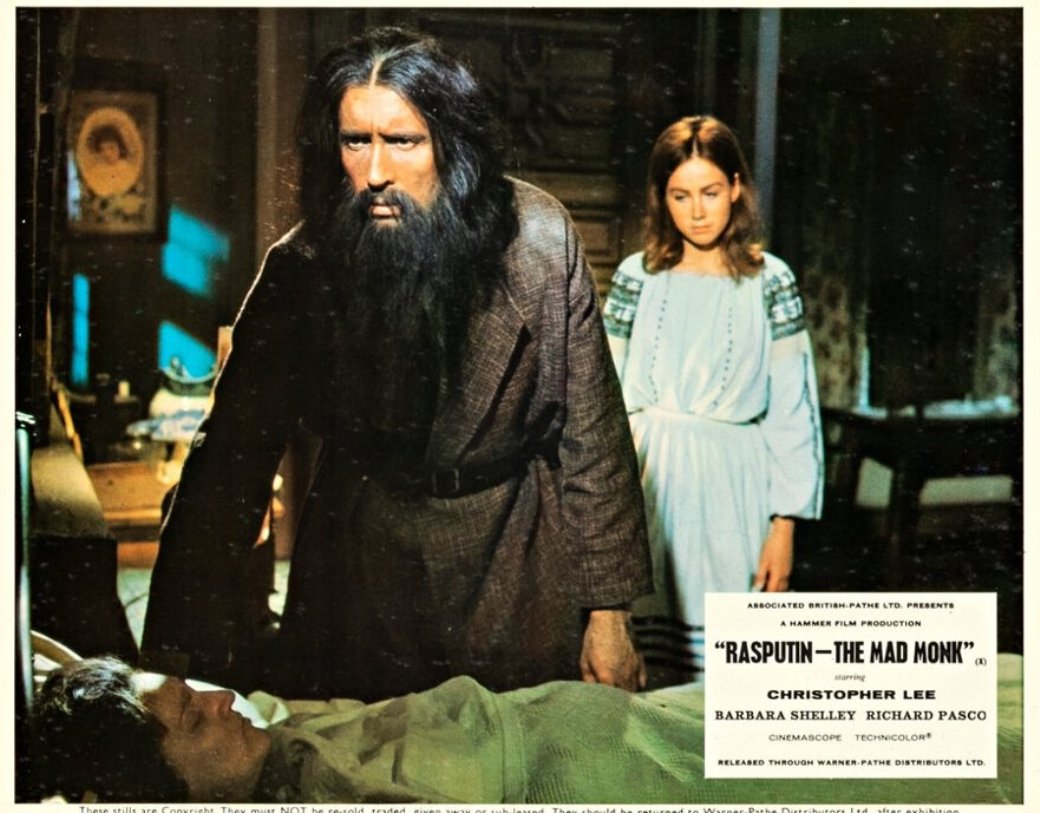
Rasputin — the Mad Monk (1966)
—
8. Comte de Rochefort. Lee holds the record for portraying D’Artagnan’s nemesis onscreen. The Three Musketeers (1973) introduced Lee to the role of the swordsman for Cardinal Richelieu and followed it in The Four Musketeers (1974). (Actually, the actors signed to make one movie, but the producers cut it into two films, and that led to a massive group lawsuit from the actors and crew.)
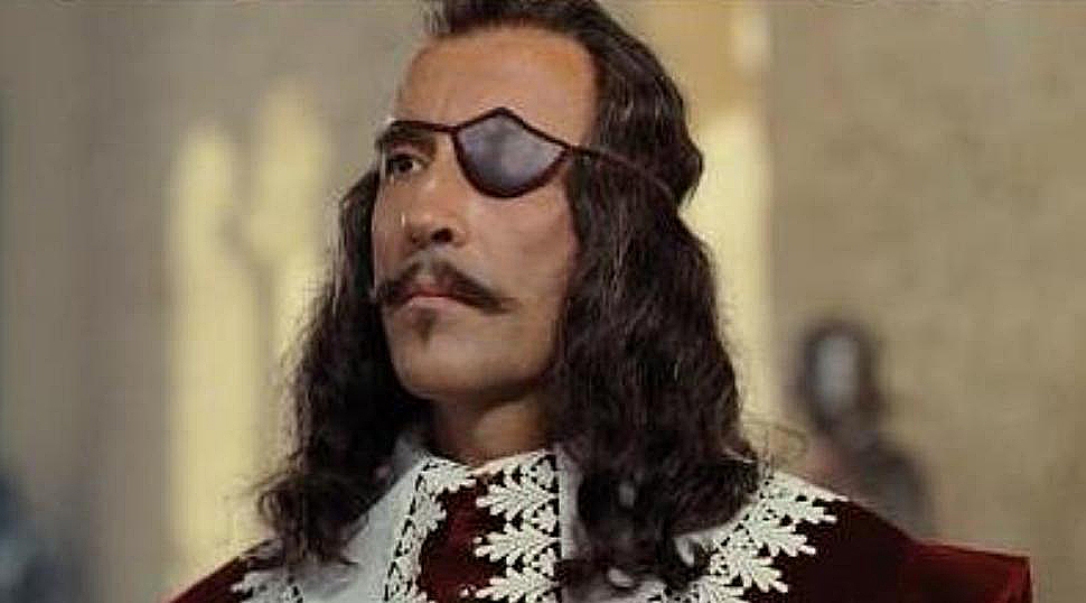
While most of us thought the villain’s demise in that second film was permanent, we must remember we are dealing with an actor who has risen from the grave more than once. The year 1989 saw The Return of the Musketeers — and it turned out Rochefort didn’t die. A sword through the heart just doesn’t seem to have the finality that it used to… at least not when it comes to the profitability of sequels. In the new film’s storyline, Rochefort had been in the Bastille for years and then released, giving Lee a chance at the role again.
(A note of tragedy, though. During the making of the third film, Roy Kinnear, who played D’Artagnan’s manservant, fell from his horse during the shooting of a scene and shattered his pelvis. He died soon after in a clinic from a heart attack brought on by the injuries. It was a film that Lee noted should never have been made.)
—
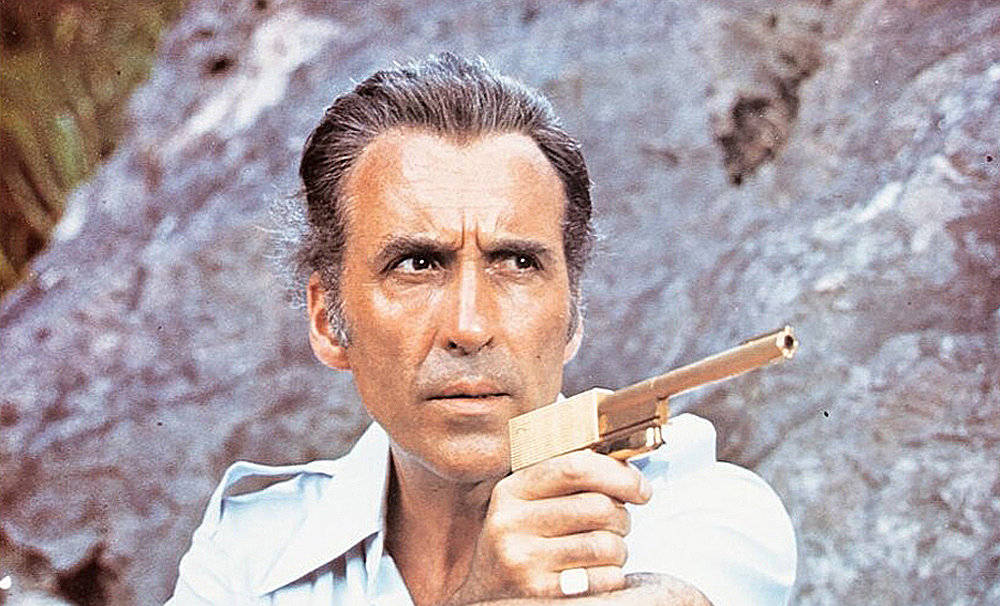
9. Francisco Scaramanga: Lee’s stepfather’s sister Evelyn was Ian Fleming’s mother, which made Lee and Fleming step-cousins. Prior to the casting of Dr. No, Fleming said to Lee he wanted him to play the title role and that he would tell producers Harry Saltzman and Albert Broccoli to hire him. However, they had already employed Joseph Wiseman, which was a disappointment for Lee. It was more than a dozen years later that Lee got a call from Broccoli, asking him to be part of the Bond universe by playing Scaramanga, the world’s deadliest assassin in The Man With the Golden Gun (1974).
—
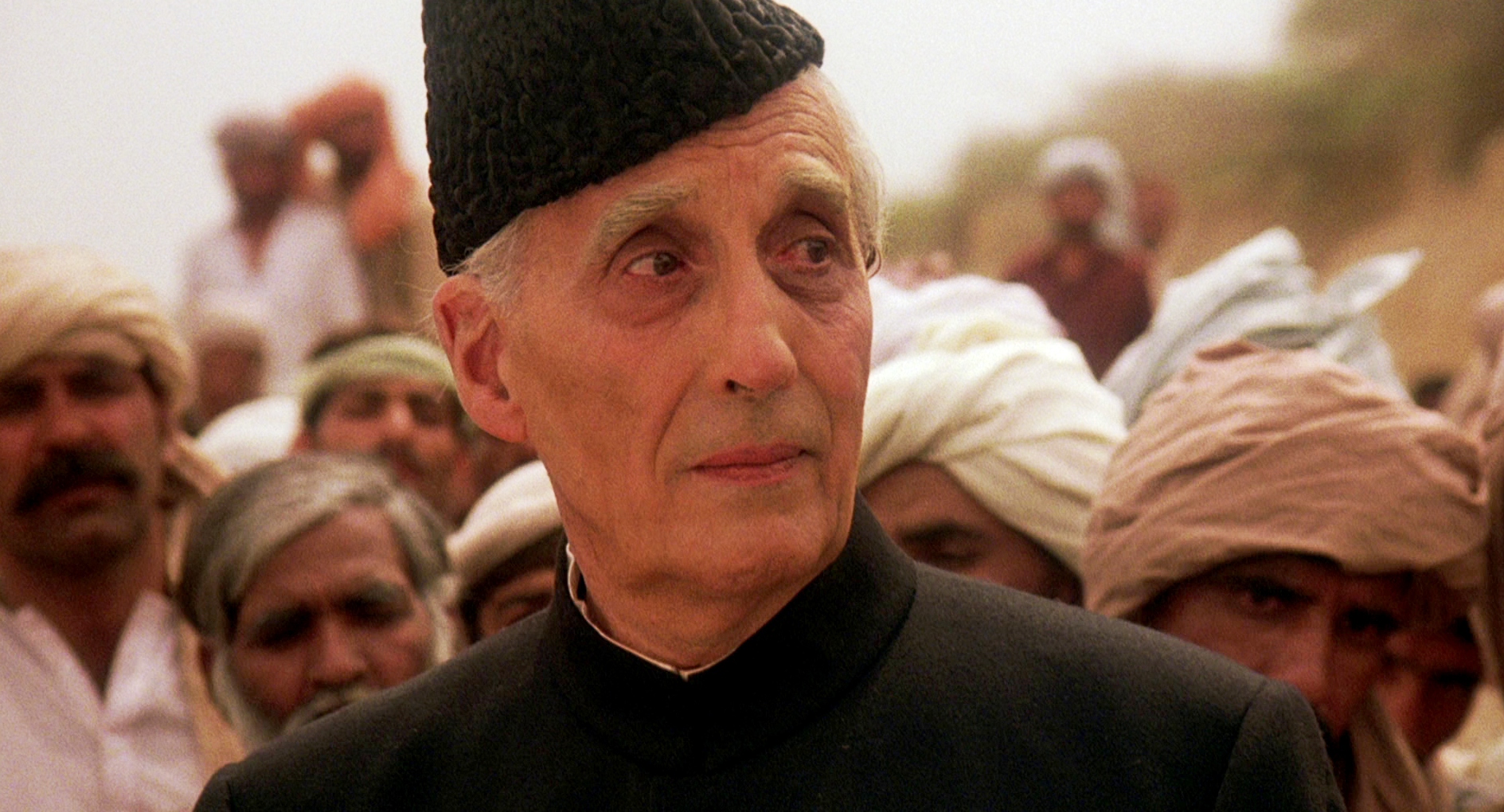
10. Muhammad Ali Jinnah: Lee said portraying the real-life leader of Pakistan in Jinnah (1998) was one of his greatest roles as an actor, but filming the production was a frightening experience. Local newspapers in Pakistan, where it was made, constantly turned up the heat among the country’s people by saying that a white man, a Christian, an actor who was famous for movie monsters, would be playing their hero, the father of Pakistan. Lee was largely confined to his hotel for the 10 weeks of filming in Karachi, as well always guarded by armed police.
“There was actually quite a lot to be scared of,” Lee said. “Karachi was and is a dangerous place. Apart from which there were the warnings of friends who couldn’t see a happy ending. But I could hardly back out of playing one of the great figures of the twentieth century, and in a way their pessimistic voices added fuel to my ambition.”
—
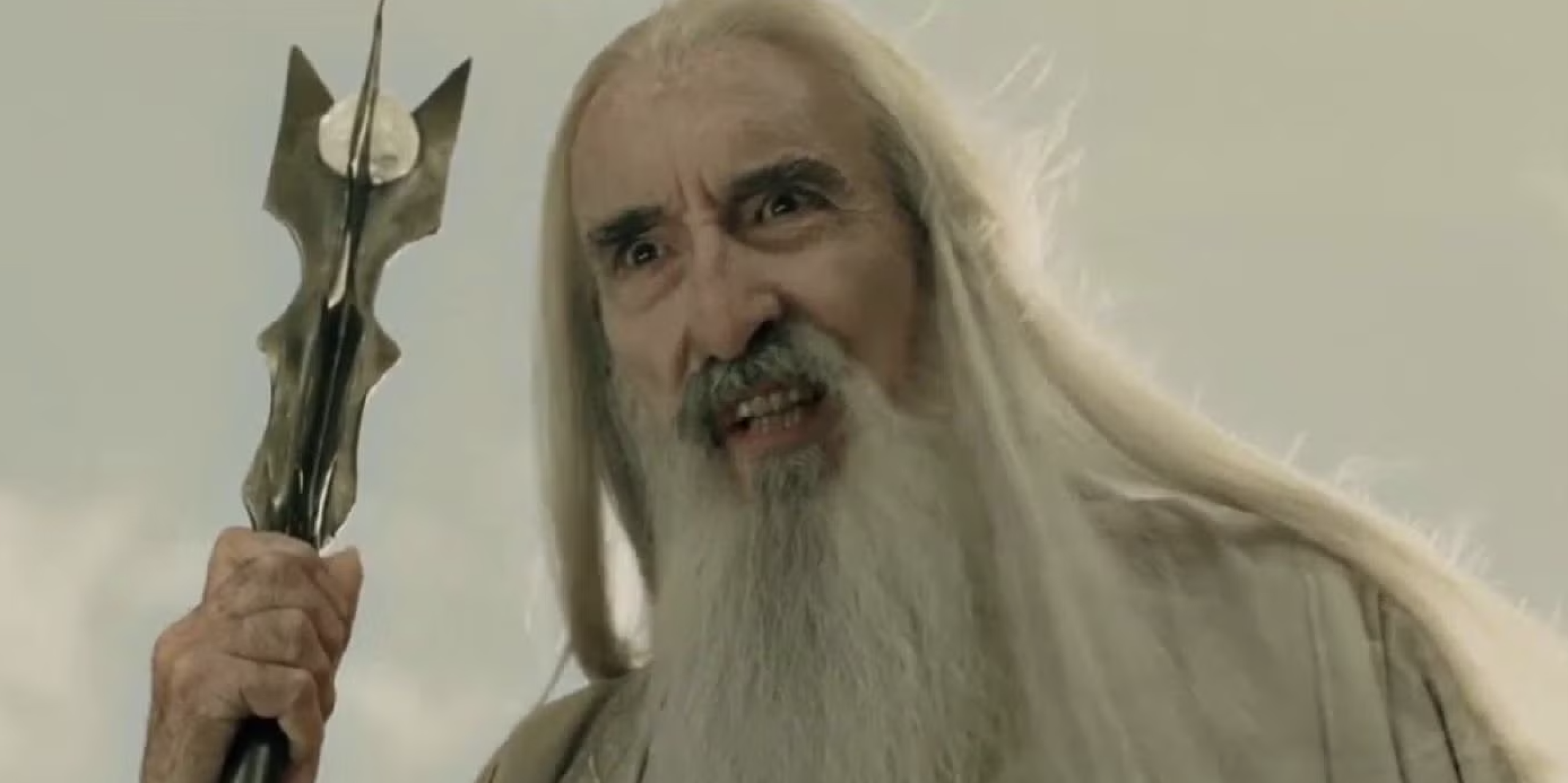
11. Saruman. In Lord of the Rings: The Fellowship of the Ring (2001), Lee had one of his meatiest roles and one that he counted as among his favorites. As we see him turn from good to absolute evil, Lee played him with as much intensity as he did with Count Dracula decades earlier. Lee was also in Lord of the Rings: The Two Towers (2002) but for the third film, Lord of the Rings: The Return of the King (2003), his scenes were cut from the original theatrical release (they were restored later in the Extended Edition). Lee was also Saruman in two of The Hobbit trilogy films: The Hobbit: An Unexpected Journey (2012) and The Hobbit: The Battle of the Five Armies (2014).
—
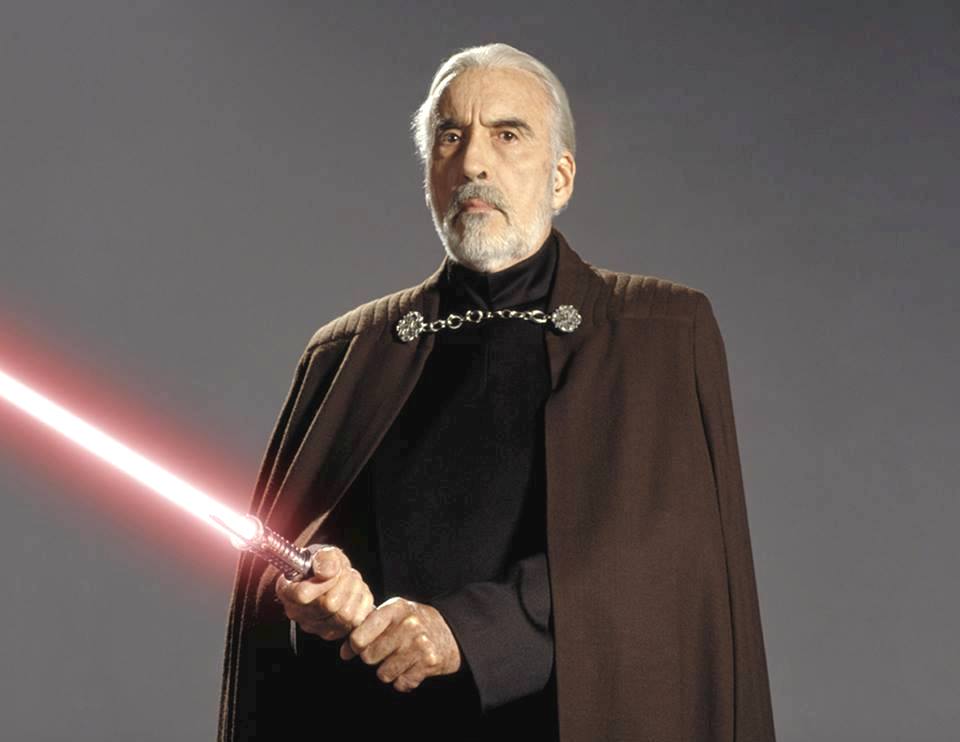
12. Count Dooku. When Lee was filming Star Wars II: Attack of the Clones in 2002, he was 79 years of age, but he was more than capable of bringing the frightening villainy of Count Dooku to the screen. Three years later, he did the same at 82 during the making of Star Wars III: Revenge of the Sith.
—
And, lastly, another role for which he was very proud…
13. Knight Bachelor and Commander of the Order of the British Empire. On October 30, 2009, Lee was knighted at Buckingham Palace by Prince (now King) Charles for his work in drama and for his services to charity, receiving the title of Knight Bachelor, making him “Sir Christopher Lee.”
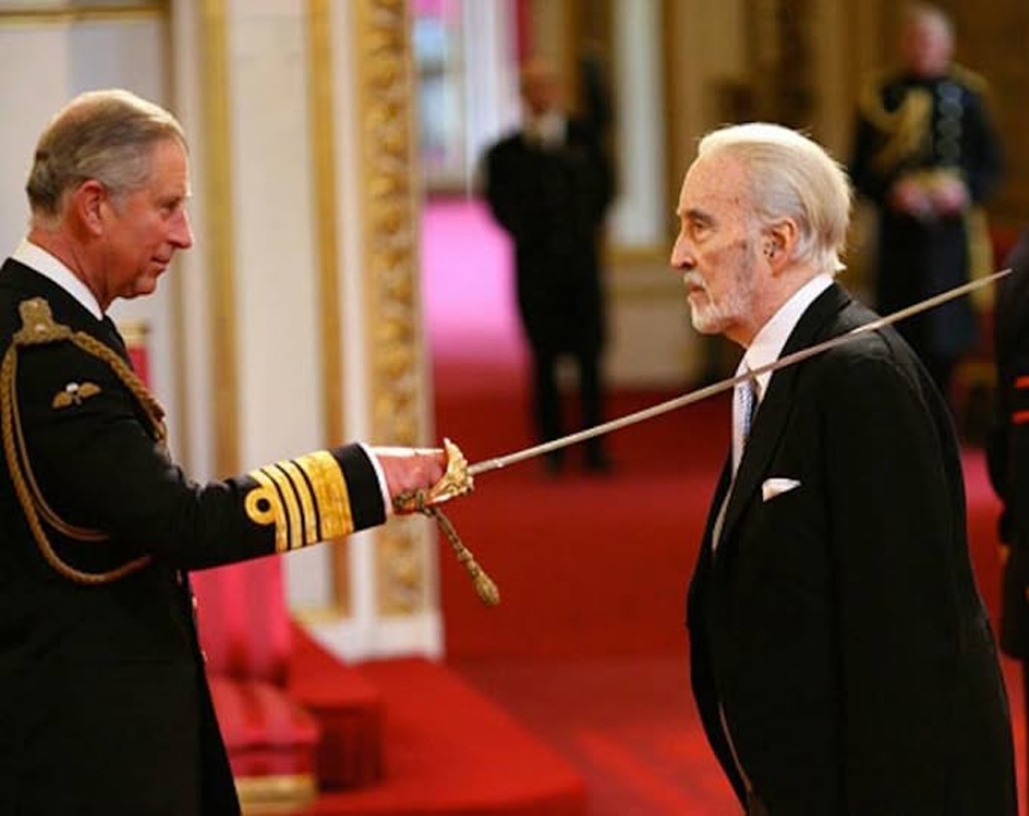
Prince Charles knights Christopher Lee on October 30, 2009.
It was his second title. In 2001, Lee had been made a Commander of the Order of the British Empire (CBE).
In addition to being seen on screen, Lee also did voice work for audiobooks, video games, and television specials… plus he narrated the home video documentary, Necessary Evil: Super-Villains of DC Comics.
Lee died June 7, 2015 at age 93, survived by his wife of 54 years, Birgit (nicknamed Gitte), and his daughter, Christina.
A fitting epitaph for the man could be what he once said about his reason for leaving England for a greater variety of roles in Hollywood: “I was no longer a ‘horror star.’ I was seen as an actor.”
—
MORE
— 13 Great CHRISTOPHER LEE Horror Roles That Aren’t DRACULA — RANKED. Click here.
— CHRISTOPHER LEE: The Greatest RA’S AL GHUL That Never Was. Click here.

May 27, 2026
Duke see Richleau in THE DEVIL RIDES OUT is my favorite Lee role, sort of a John Constantine battling Satan worshippers.
May 27, 2026
Lee is an absolute icon, thanks for posting this! Great news for Lee and Hammer fans recently dropped. An uncut version of HORROR OF DRACULA will be released by WB to theaters in October and a Blu-Ray will follow. More on this in TwoMorrows’ CRYPTOLOGY Magazine.
May 28, 2026
I’ll have to check out those Lee Sherlock Holmes films. I have seen “The Deadly Necklace,” though, and don’t recommend it. Simply out of nostalgia, I suggest “Return from Witch Mountain” because it was my introduction to Lee.
May 28, 2026
He was also a villain who faced Steed and Mrs. Peel. I believe he and Patrick Macnee were school friends.
May 28, 2026
I will have to check out the Lee Sherlock Holmes movies. I did see “The Deadly Necklace,” though, and don’t recommend it. I suggest “Return to Witch Mountain” out of nostalgia because it was my introduction to Lee.