
AN ANNIVERSARY CELEBRATION…
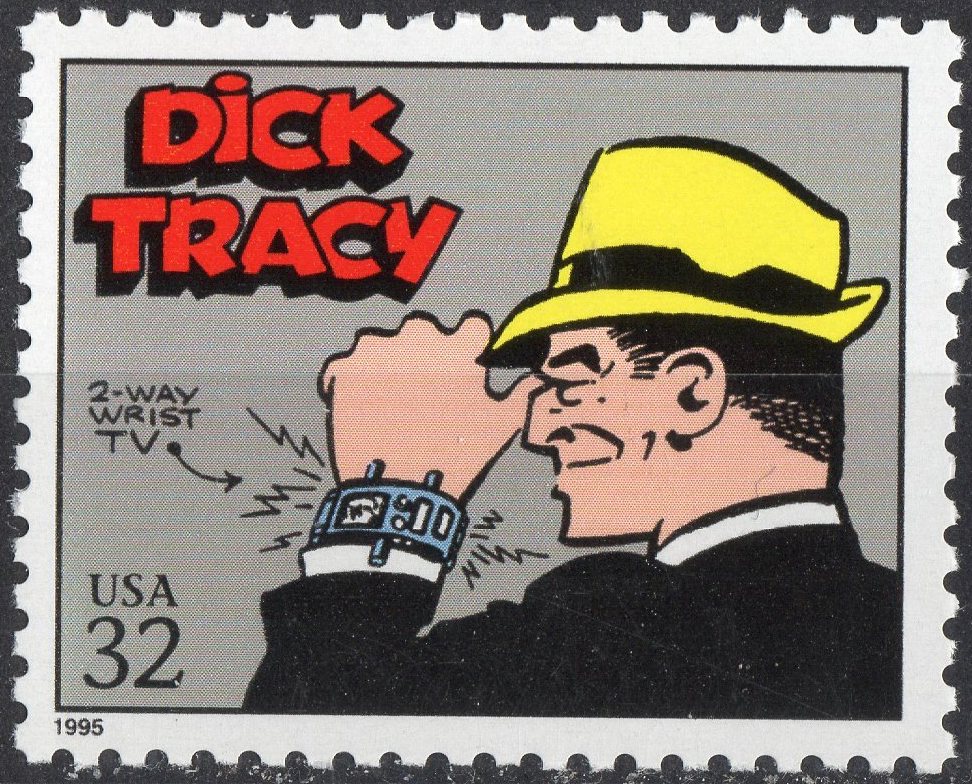
Dick Tracy postage stamp
By PETER BOSCH
It’s Dick Tracy’s 95th anniversary! His newspaper strip first appeared Oct. 4, 1931, and has been published continuously since.
Let’s go back in time to his origins.
Chester Gould was born Nov. 20, 1900, in Pawnee, Oklahoma. Drawing was always a part of his youth and he made his first sale to a man he sketched at a political event. Gould’s professional life as an artist began at that moment. He was 8 years old.
He continued to develop his talent by working for the Pawnee Courier-Dispatch (where his father was an editor) and by the time he was 21, he knew what he wanted to be (a comic strip cartoonist), where he wanted to work (the Chicago Tribune) and, in particular, who he wanted to work for (Joseph Patterson).
Patterson was not only the co-publisher of the Tribune, he was the creator and manager of the Chicago Tribune Syndicate, the distributing arm to other newspapers of the company’s features — including its comic strips. Patterson had a track record without equal for giving the green light to new ideas for strips… strips that became incredible successes: Gasoline Alley, Harold Teen, Winnie Winkle, Smitty, Moon Mullins, and Little Orphan Annie!
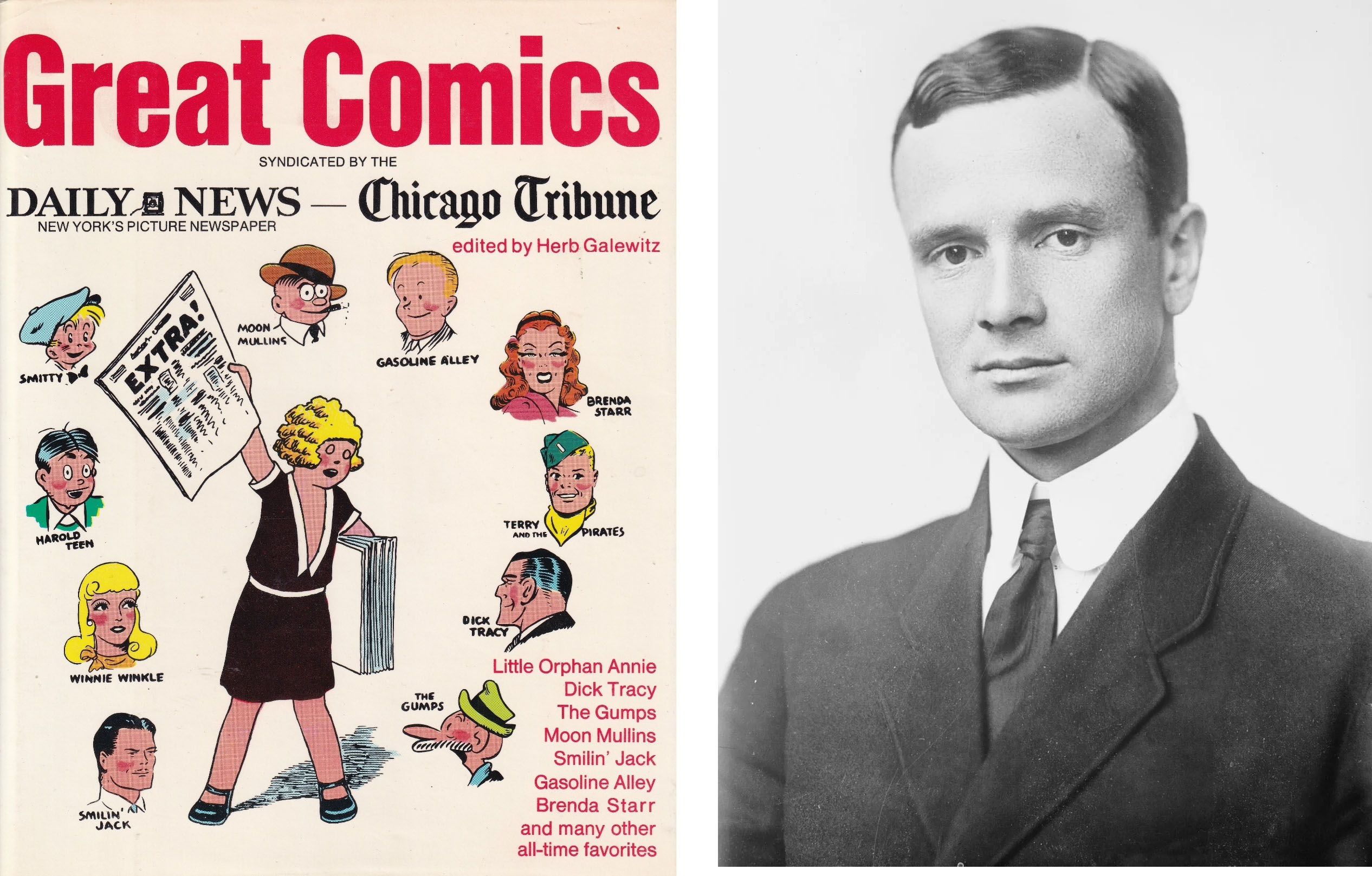
A collection of great comic strips, many of which were shepherded by Joseph Patterson (right). Crown Publishers, 1972.
Gould moved to Chicago in 1921, with a portfolio of drawings by his side and $50 in his pocket. Over the next decade, however, he sent Patterson dozens of strip ideas yet never sold one. But Patterson was not without a heart, writing Gould personally, telling him to not be discouraged — and to keep sending him strip ideas.
The aspiring cartoonist was still frustrated, though. For 10 years, he had worked for nearly every newspaper in town… but usually in their art departments. (He even got a job, temporarily, at the Tribune — illustrating ads). He did achieve a modicum of success as a cartoonist, drawing three different strips for the Chicago Evening American newspaper (Fillum Fables, The Radio Catts, and Why It’s a Windy City), as well as for the Chicago Daily News (The Girl Friends)… but they were all minor humor strips. And they weren’t in the Tribune.
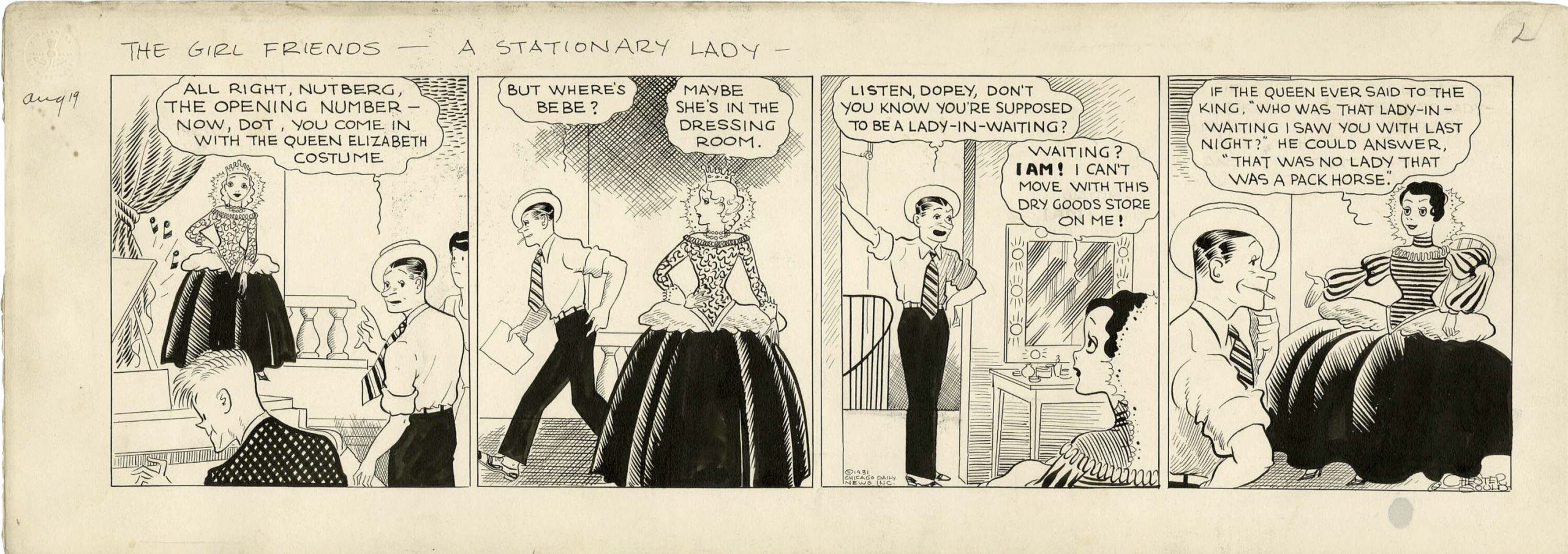
Original art for The Girl Friends, August 19, 1931 (less than two months before the first Dick Tracy strip).
He was no longer the young man who arrived in the city a decade earlier. He was married and the father of a 4-year-old girl, with ambitions unfulfilled.
He was also discouraged by what was happening in the country, as most people were. With the stock market crash of 1929 and the Great Depression that followed, America was now a land of despair, with millions out of work and hundreds of thousands who had lost their homes.
What angered him, though, was seeing how mobsters had the run of his city and were doing very well — especially Al Capone. Capone was being feted like he was the king of Chicago, a hero to some – all the while he was actually the head of the city’s most vicious rackets, including bootlegging, extortion, and gambling. He went unpunished because he was paying off police, judges, and politicians. But not everyone was fooled.
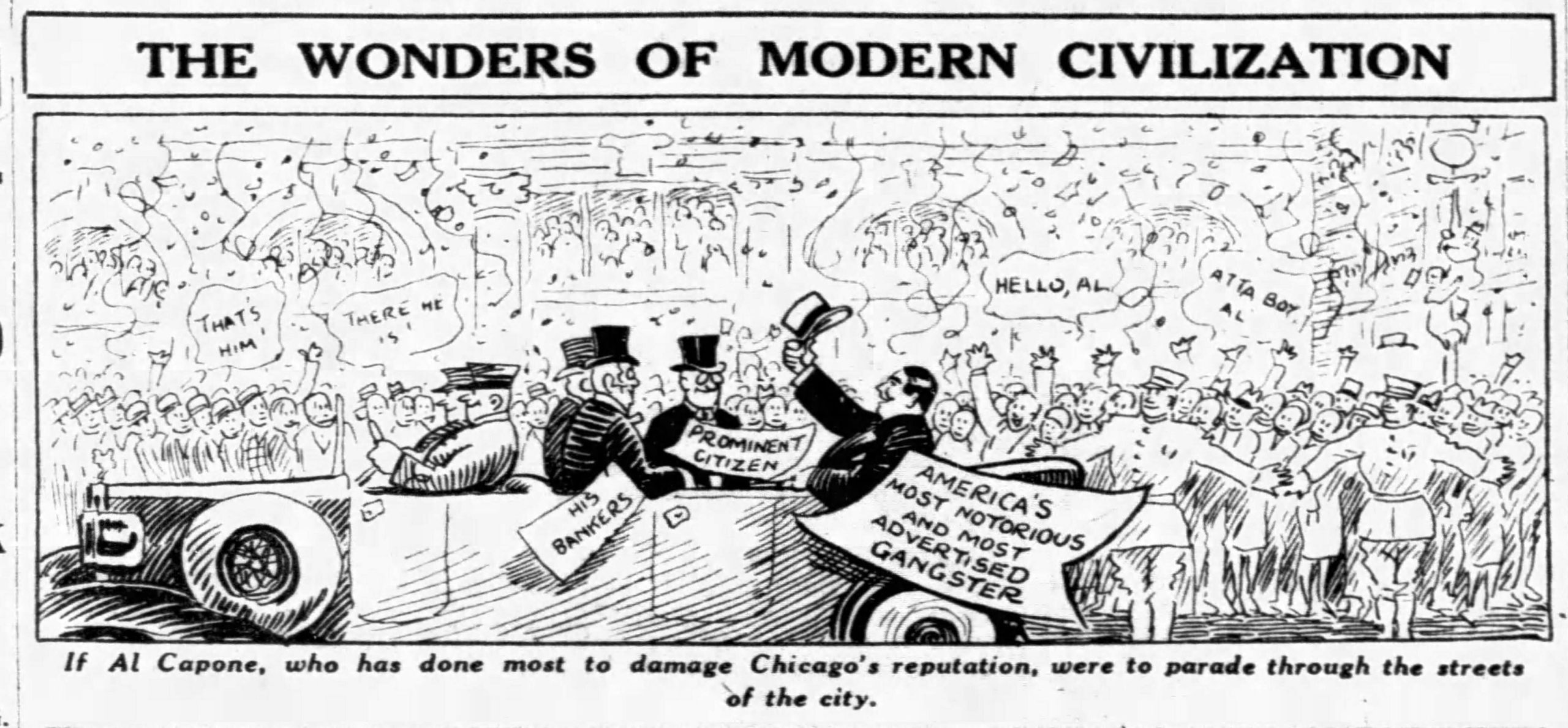
Chicago Tribune, July 14, 1930. Artist unknown.
Capone kept getting away with everything, including murder charges, and that could happen again with an indictment against him for tax evasion.
All of it sent Gould, filled with ire, to his drawing board. He created five sample daily strips about an honest cop (based on Eliot Ness) busting rackets, and he called it “Plainclothes Tracy.” He mailed these strips to Patterson:
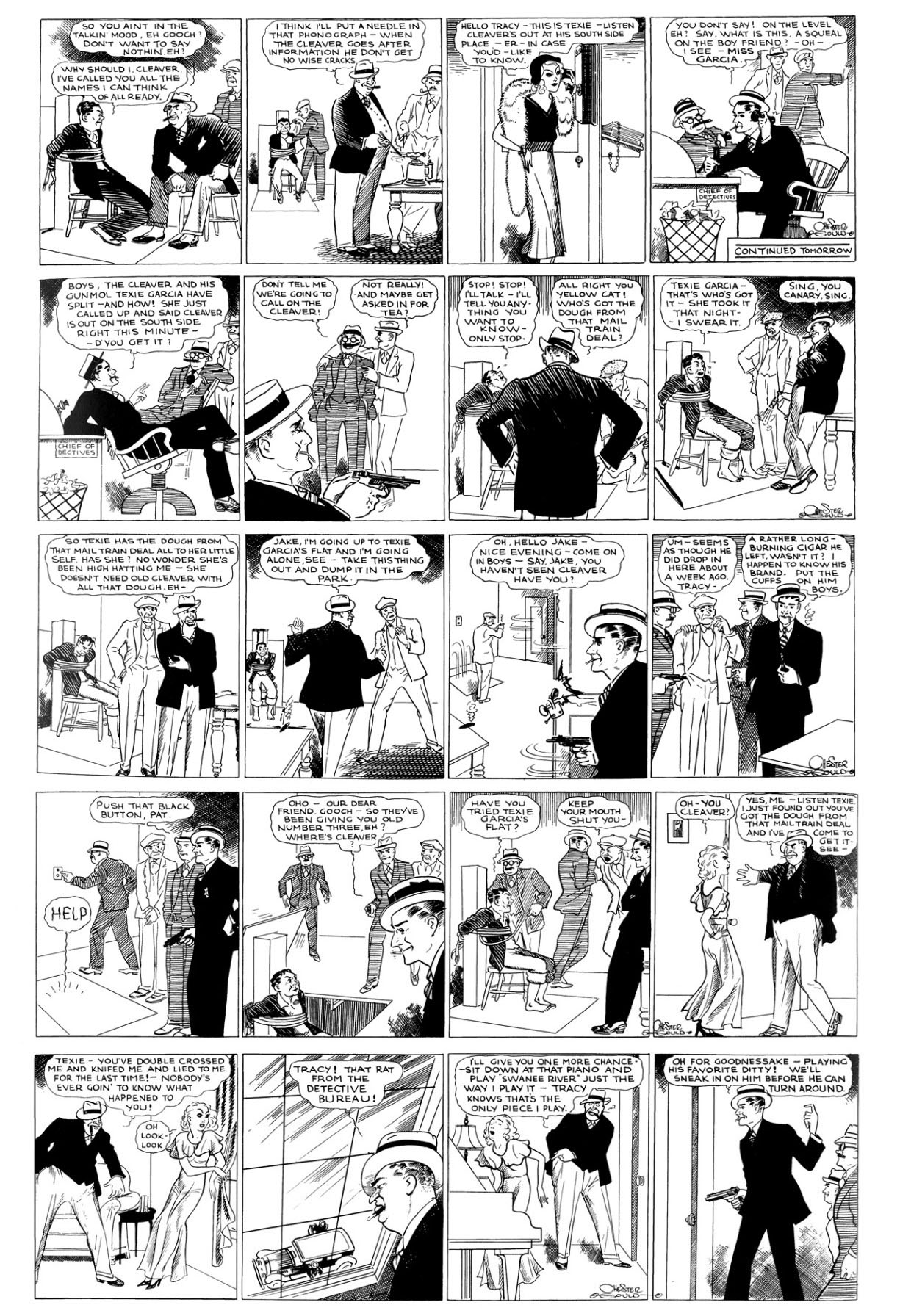
On August 13, 1931, Gould received a telegram that read:
CHESTER GOULD – YOUR PLAINCLOTHES TRACY HAS POSSIBILITIES STOP WOULD LIKE TO SEE YOU WHEN I GO TO CHICAGO NEXT STOP PLEASE CALL TRIBUNE OFFICE MONDAY ABOUT NOON FOR AN APPOINTMENT – J M PATTERSON
Gould dressed in his best suit to try to impress Patterson, but the meeting was businesslike and brief. However, it was very instructive to Gould — and it would end up changing his life forever.
Patterson said that “Plainclothes Tracy” was too long a title and suggested calling it something snappier, like “Dick Tracy” (since “dick” was slang for “detective”). Also, he didn’t want Tracy to already be a cop at the start of the strip; instead, Patterson told him to have Tracy join the force after witnessing the murder of Tess Trueheart’s father. Gould incorporated his suggestions into the strip. After all, Patterson was known for making strips better than they were originally pitched to him. For example, the submission by Harold Gray of “Little Orphan Otto,” about a boy, became — well, you know.
The first Dick Tracy strip was published Sunday, October 4, 1931 (though it actually appeared the day before in one newspaper, The Detroit Mirror, owned by the publishers of the Tribune). A humor strip, Cigarette Sadie, also by Gould, accompanied the Dick Tracy strip until June 4, 1933. (It was common practice at the time for a number of Sunday comic strips to have a smaller, secondary feature.)
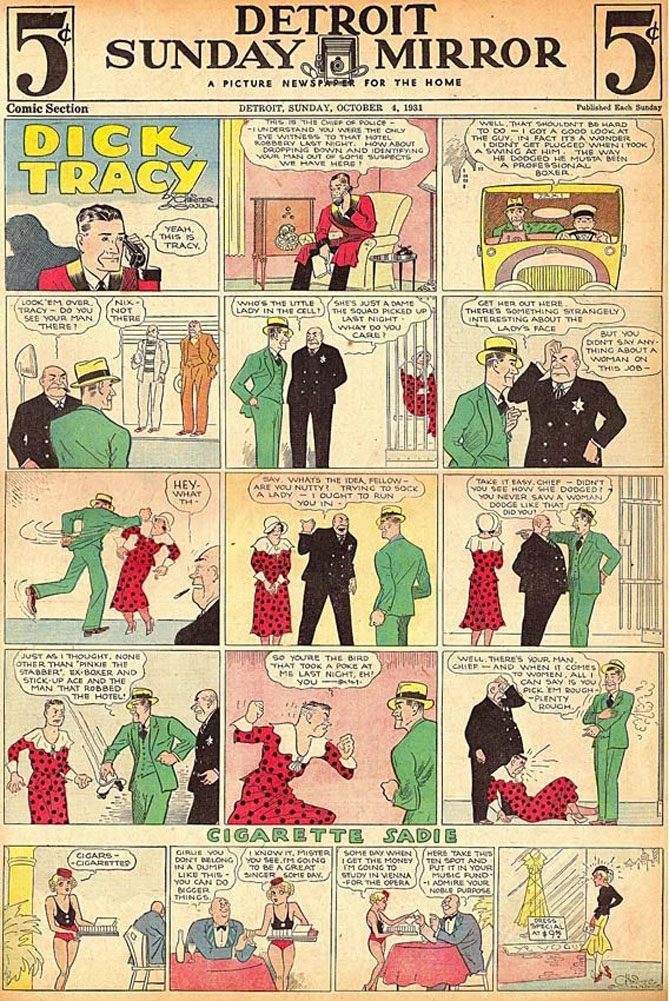
The first Dick Tracy strip, with Cigarette Sadie, Oct. 4, 1931.
The daily strip started a week later, on October 12, 1931, and, like the Sunday, it made its debut in just one newspaper, but this time it was the New York Daily News.
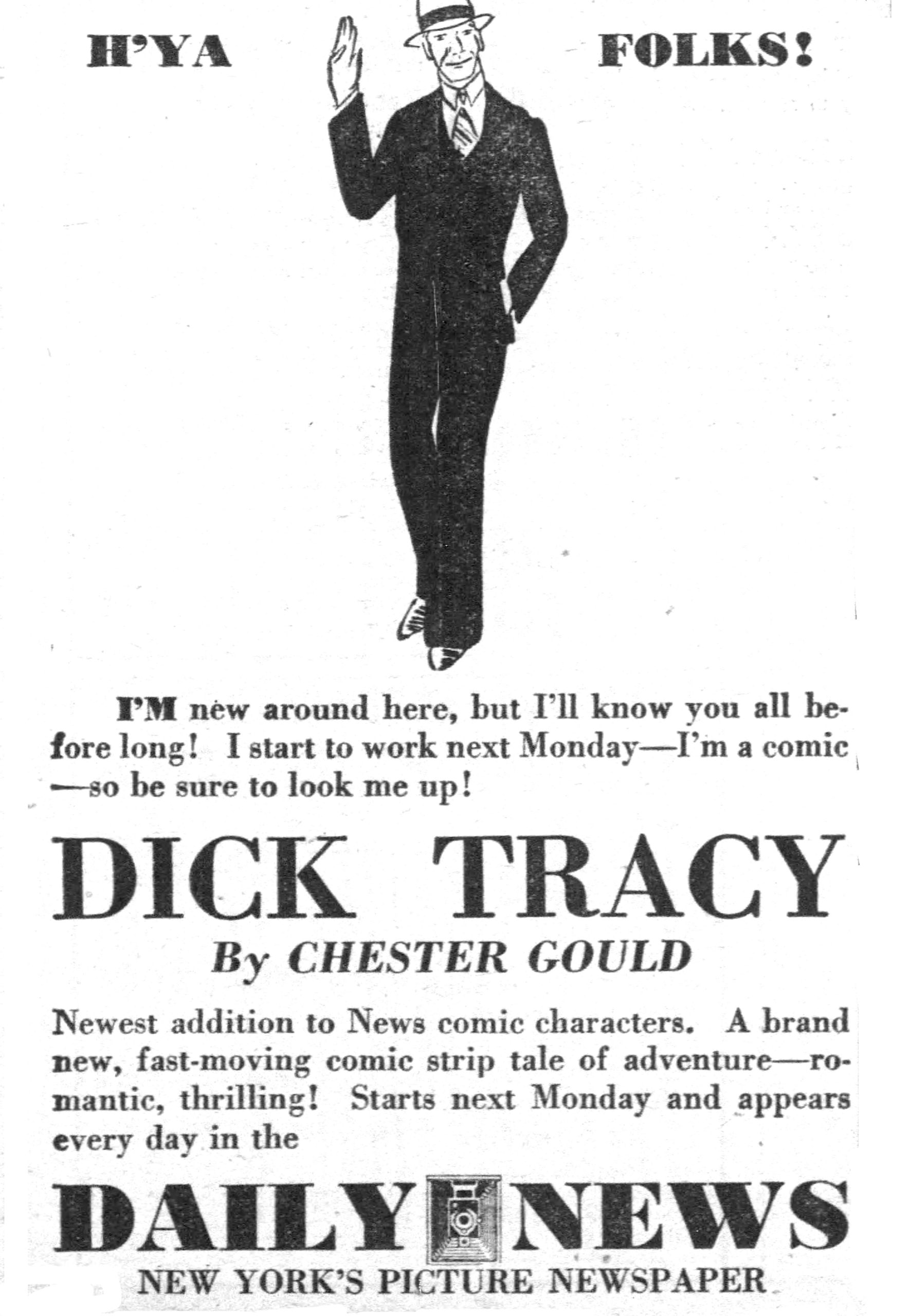
Advance announcement of the first daily strip
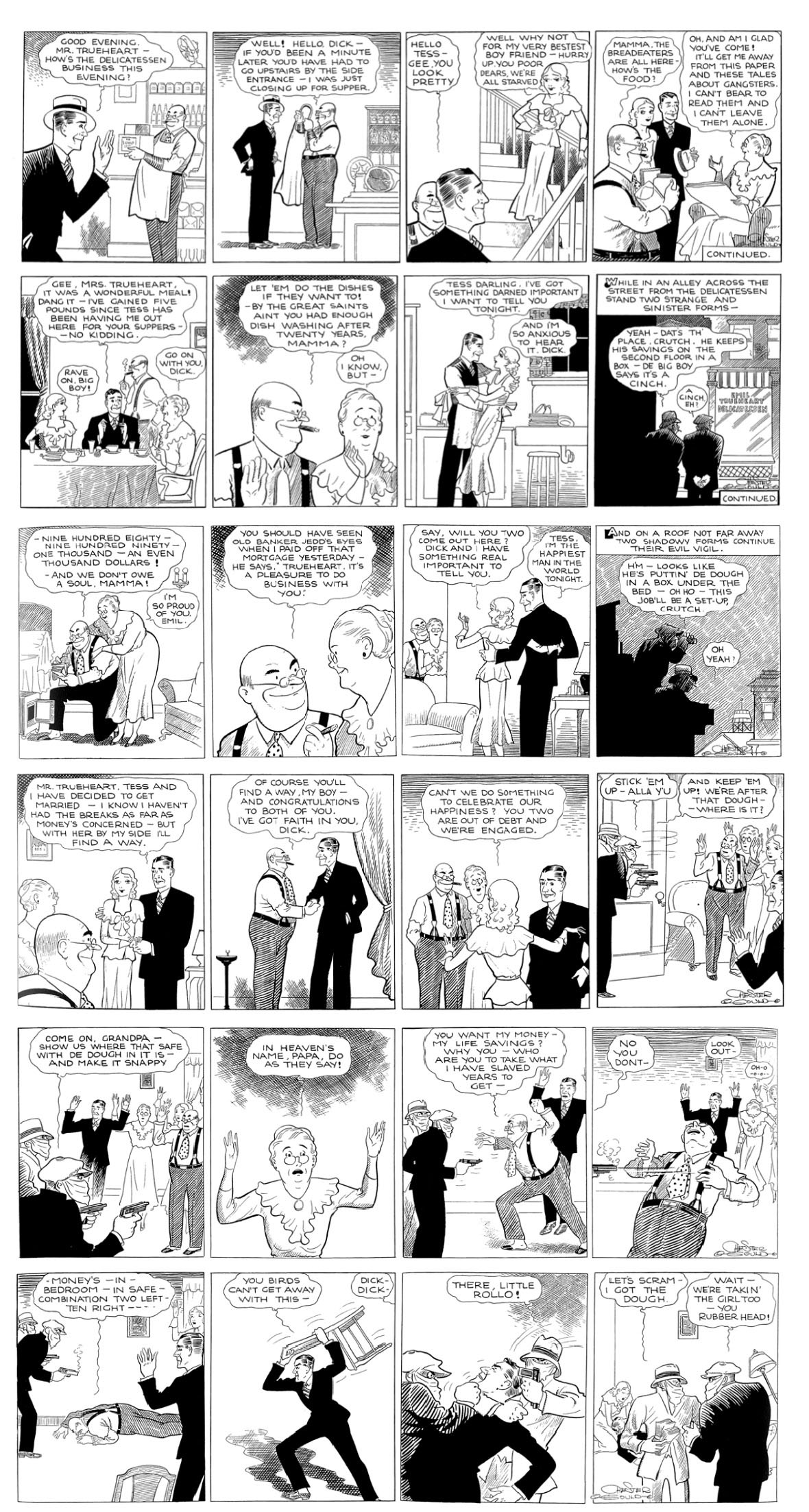
The first week of the daily newspaper strip, October 12-17, 1931
Patterson gave the strip a little time to build an audience. Syndication followed and by early 1932 Dick Tracy was a hit. One thing that made it so was another suggestion Patterson had given Gould: show actual violence and killing (as can be seen in the fifth strip of the first week above) because Patterson’s feeling about gangsters was the same as Gould’s. Patterson wanted to get across to readers that they were killers and they should not be glorified.
* * *
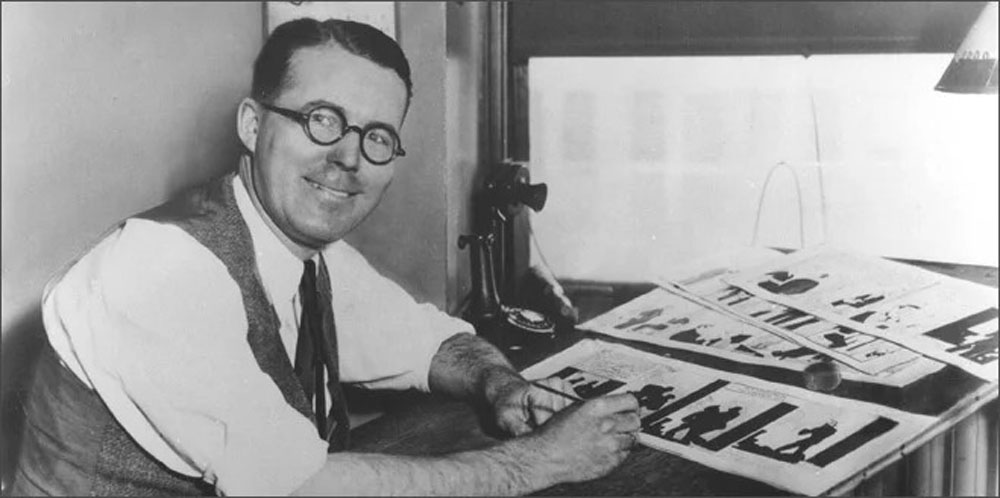
The strip was a success, all that Gould had hoped for, but could he have imagined all the merchandising that would come next, including a radio series?!
Here’s just a tiny amount of the items available over 95 years:
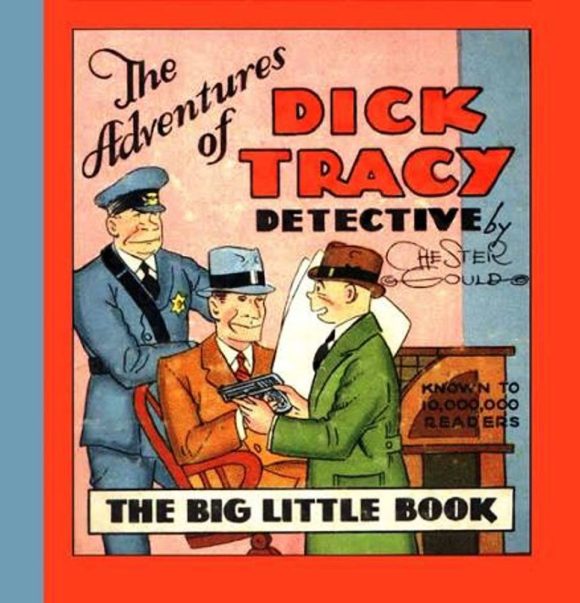
BIG LITTLE BOOKS: When Whitman Publishing started their line of Big Little Books (“Big” for thickness and “Little” to reflect the book’s dimensions) in late 1932, the very first character they chose was Dick Tracy. The book reprinted illustrations by Gould from Dick Tracy storylines from 1931 and 1932.
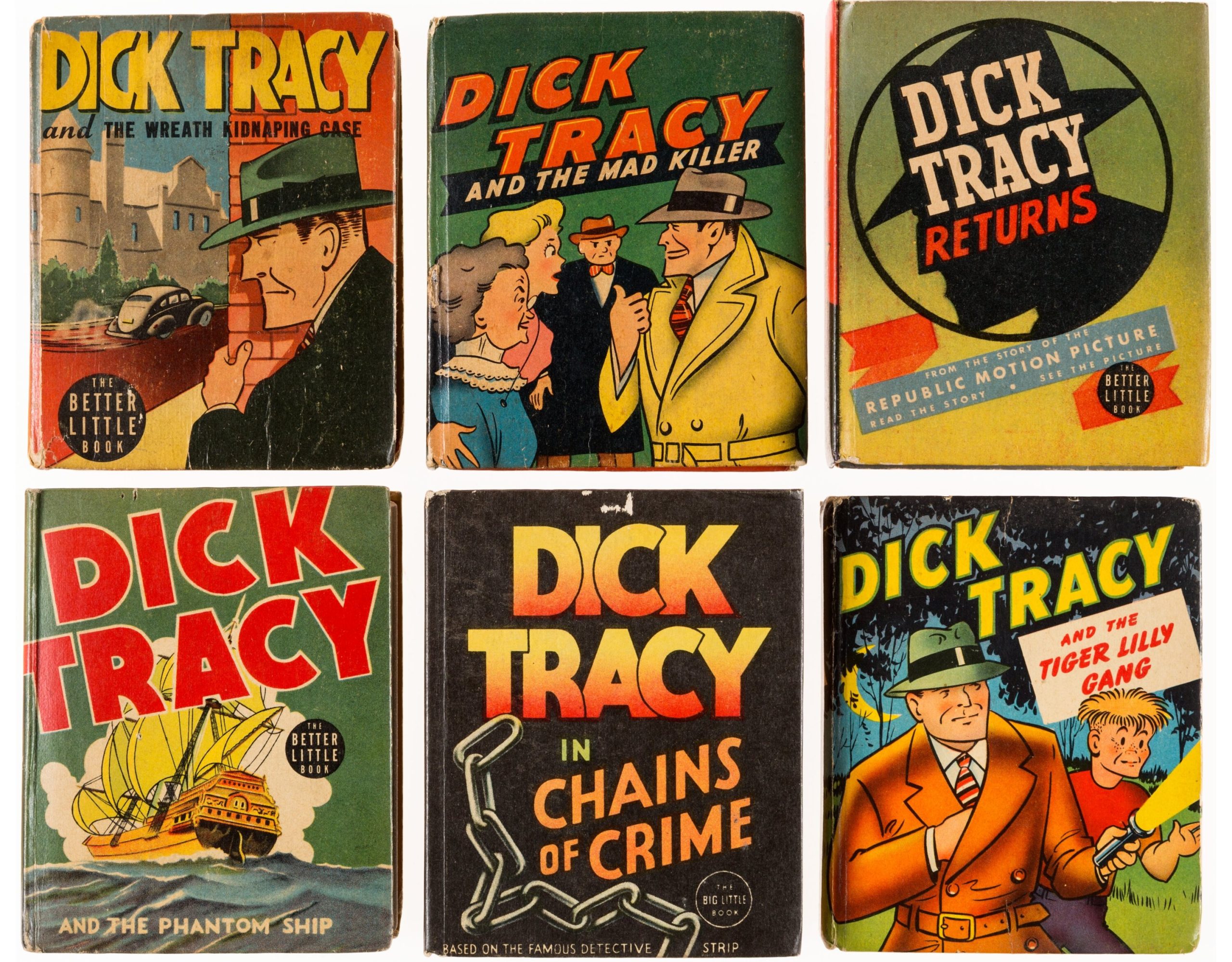
Whitman had a winner with Tracy and featured him in approximately two dozen more titles through 1949, a selection of which are below, each with strip reprint illustrations on pages opposite story text pages. (In the 1960s, Whitman would release one new Dick Tracy Big Little Book. Overall, the character had the second most editions, with only Mickey Mouse ahead of him.)
—
COMIC BOOKS
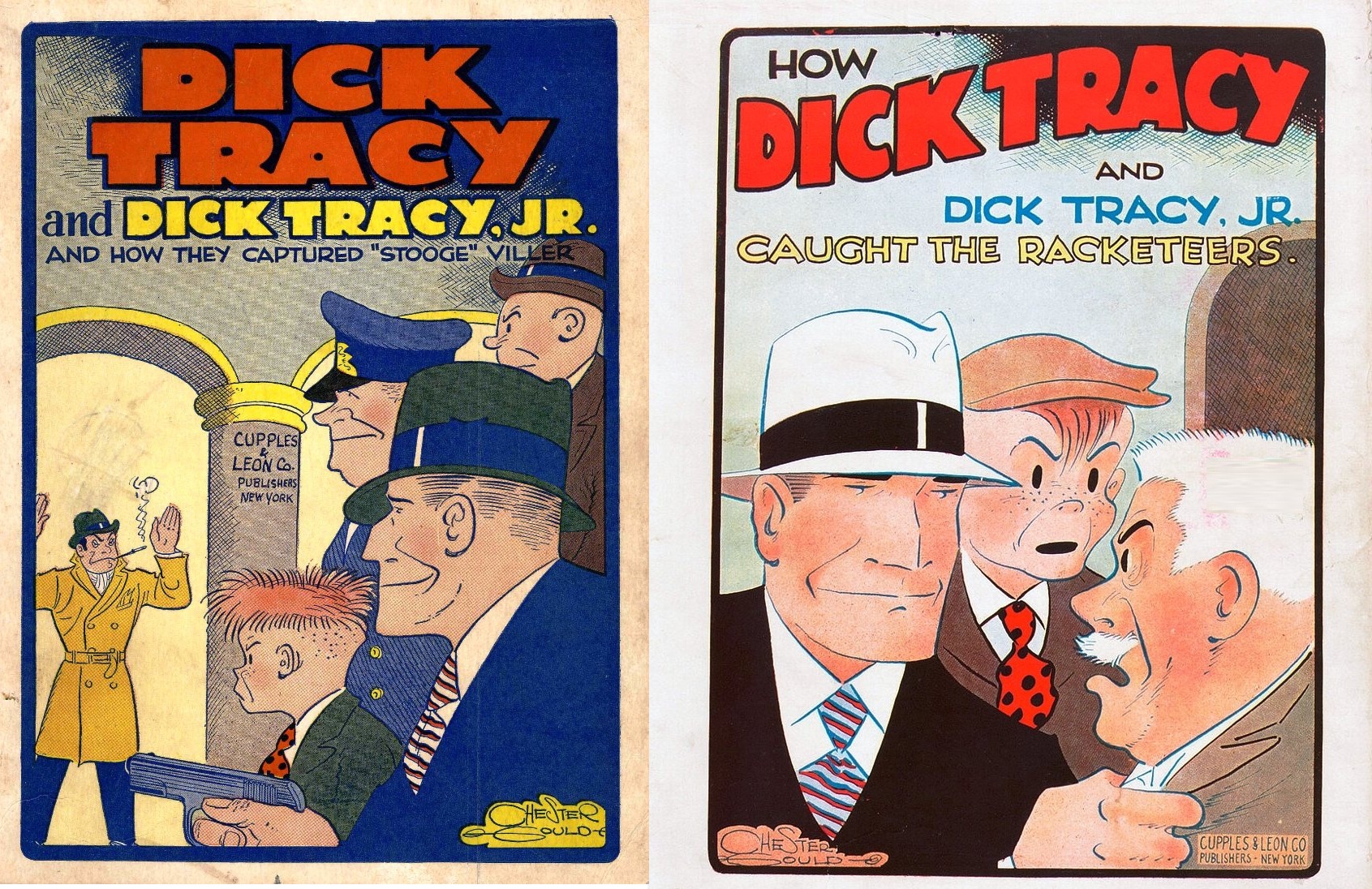
In 1933, Cupples & Leon Co. published the first two hardcover collections of full-strip reprints.
Dick Tracy’s first appearance in a regular comic book was Popular Comics #1 from Dell (Feb. 1936), again with reprints of the newspaper strip. After Issue #27 (Apr. 1938), Dell moved Tracy over to Super Comics #1 (May 1938), where he remained through #115 (Dec. 1947). They then transferred him one more time, but now into his own title, Dick Tracy Monthly. Dell published the first 24 issues (from Jan. 1948 to Dec. 1949) and then Harvey Publications picked up the license, continuing the numbering with #25 (Mar. 1950) and finally ending 11 years later with #145 (Apr. 1961).
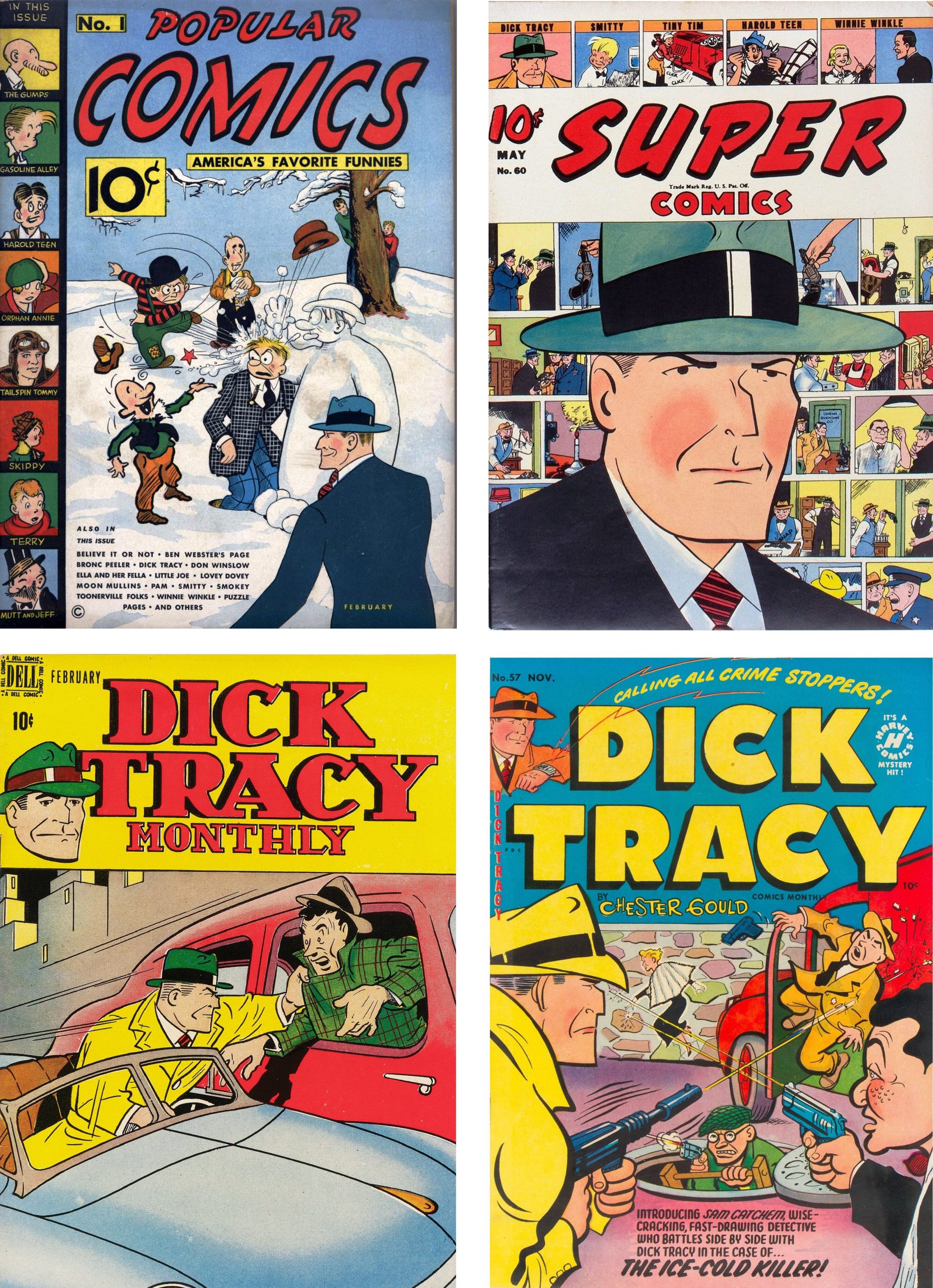
Many other publishers over the decades have continued reprinting the newspaper strip, and a few have new adventures. It’s a great mix of both. Among them have been Blackthorne, Disney, Gladstone, Hamilton, Checker, Shanda Fantasy Arts, IDW and, currently, Mad Cave (co-written by 13th Dimension pal Alex Segura).
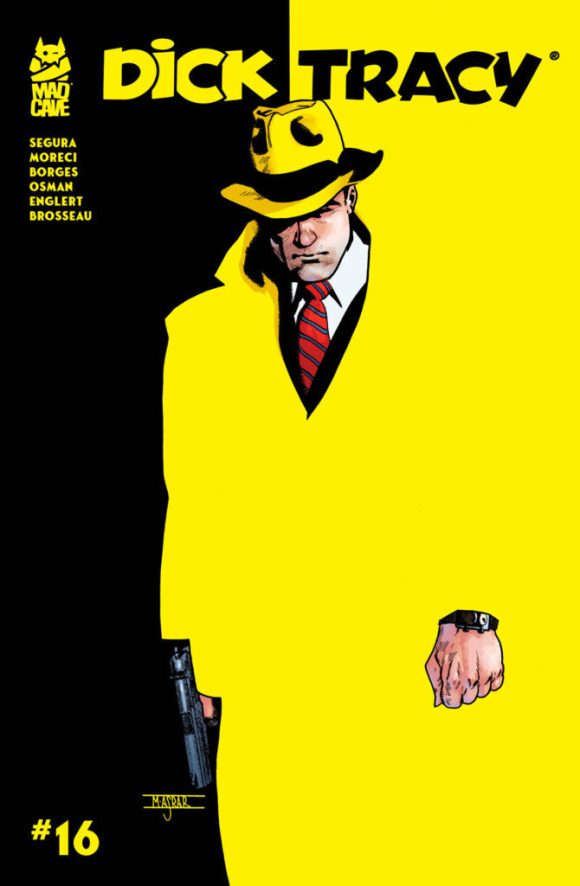
Cover by Mahmud Asrar
And then there was the one and only time DC Comics reprinted a collection of Dick Tracy strips:
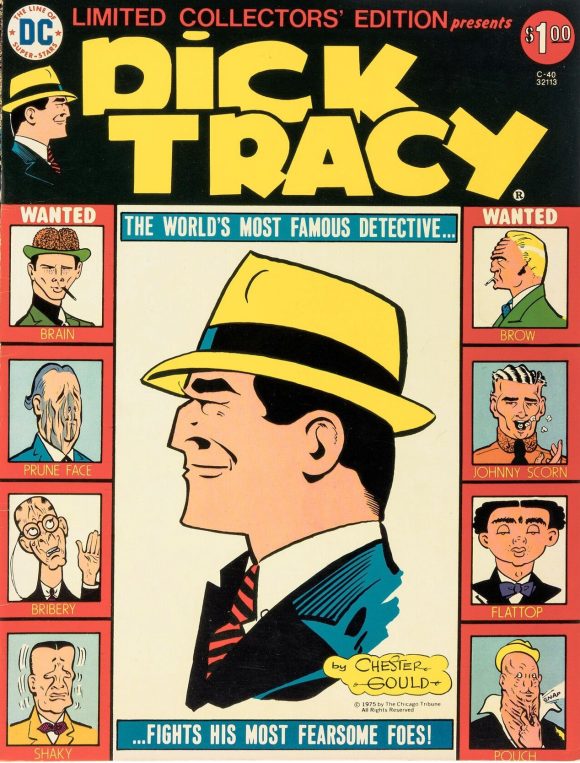
Dec. 1975-Jan. 1976
That same special edition also carried a center spread of Tracy’s grotesque Rogues’ Gallery:
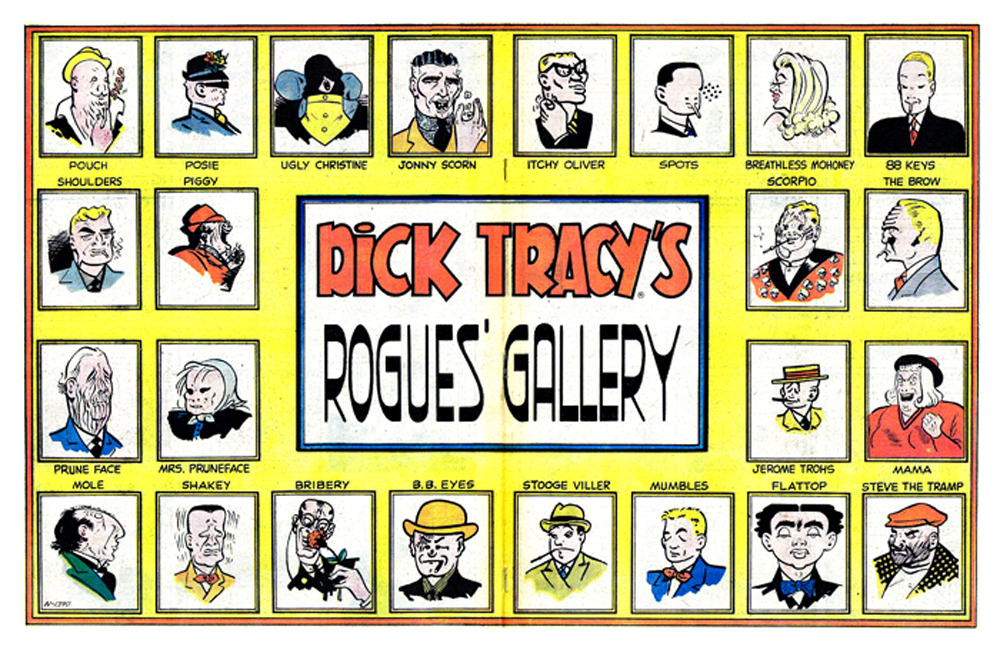
By the way, when it comes to a rogues’ gallery, Warner Bros.’ 1946 cartoon The Great Piggy Bank Robbery is a must for all Dick Tracy fans! Here is a clip of Daffy as “Duck Tracy” facing a line of villains inspired by Tracy’s own — (Flattop even makes an appearance!
—
MOVIE SERIALS
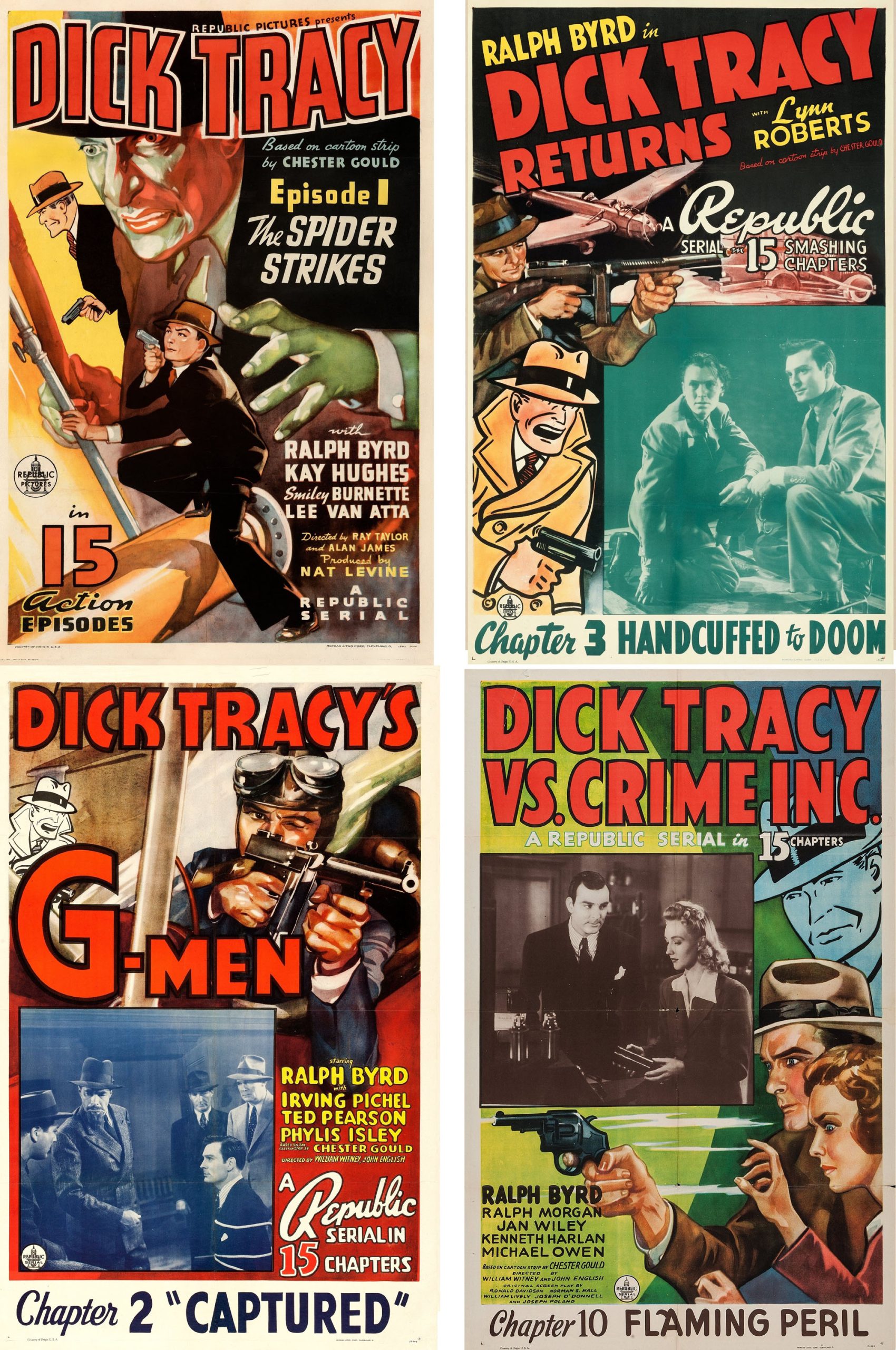
Four Republic chapter plays between 1937 and 1941 were all exceptional, with the great Ralph Byrd as Tracy (a role he would forever be identified with).
—
FEATURE FILMS
RKO Pictures picked up the license for four feature-length movies, which were released between 1945 and 1947. The first two starred Morgan Conway, but audiences demanded Byrd be brought back as Tracy.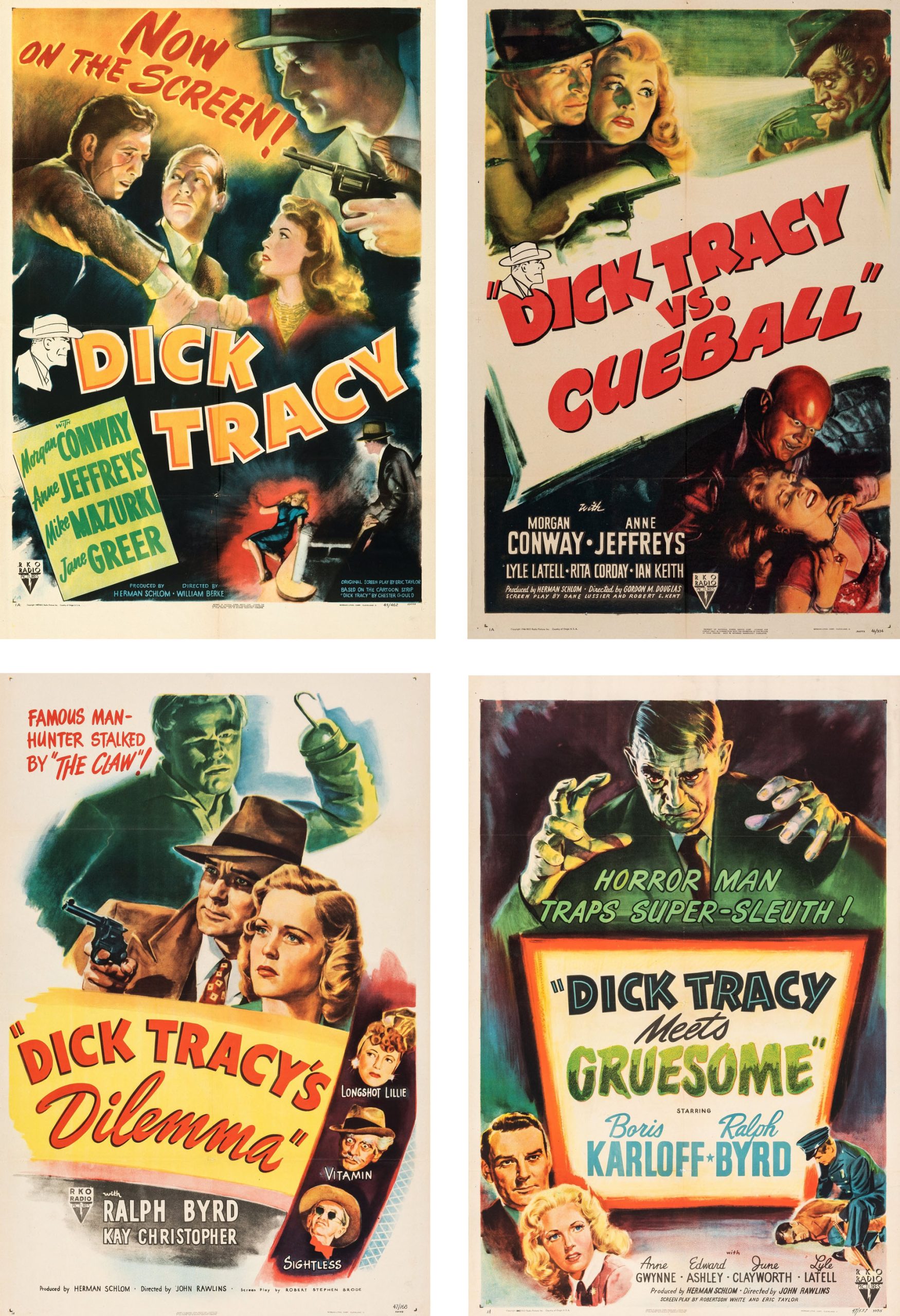
—
RADIO
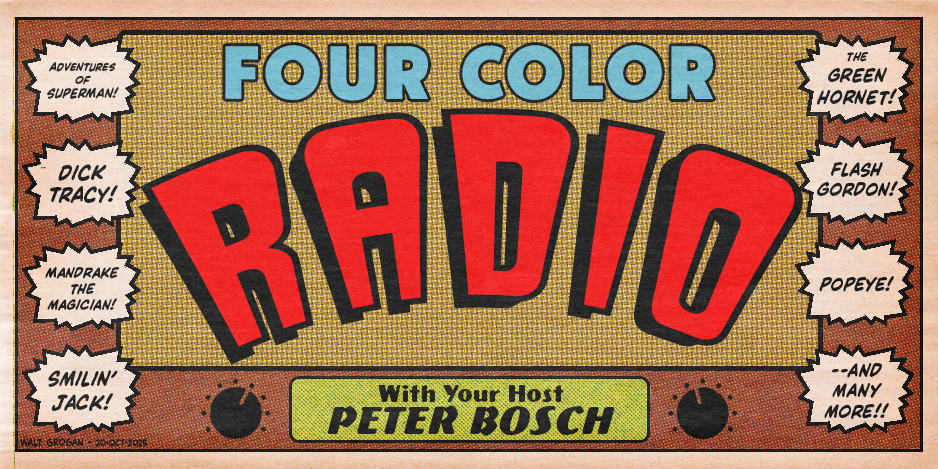
Check out my accompanying FOUR COLOR RADIO column!
—
TELEVISION
Byrd was also hired for the Dick Tracy TV series that first aired on ABC for the 1950-51 season. Following that, the producers made episodes for syndication. However, the pace was just too difficult for Byrd to maintain. He died of a heart attack on August 18, 1952. The series was cancelled.
Likely, the Tracy television series seen most by Baby Boomers was also the most embarrassing. A 1961 cartoon show included a talking police bulldog who commanded an inept Keystone Kops-like squad called the Retouchables. In addition, Tracy’s team included an Asian detective and martial arts master, Joe Jitsu, and “Go-Go” Gomez (voiced by Mel Blanc).
Ten years later, in 1971, Archie’s TV Funnies, another animated series, included short sections within the show that would feature individual popular newspaper strip characters, one of which was Dick Tracy. Storywise, the tales were a little more faithful to Gould’s strip — and, best of all, no Joe Jitsu, “Go Go” Gomez, or Retouchables.
In 1967, Batman TV producer William Dozier made a Dick Tracy live-action pilot starring Ray McDonnell that never sold.
* * *
Gould continued to write and draw Dick Tracy until his retirement, with his last daily and Sunday on December 24 and 25, 1977, respectively.
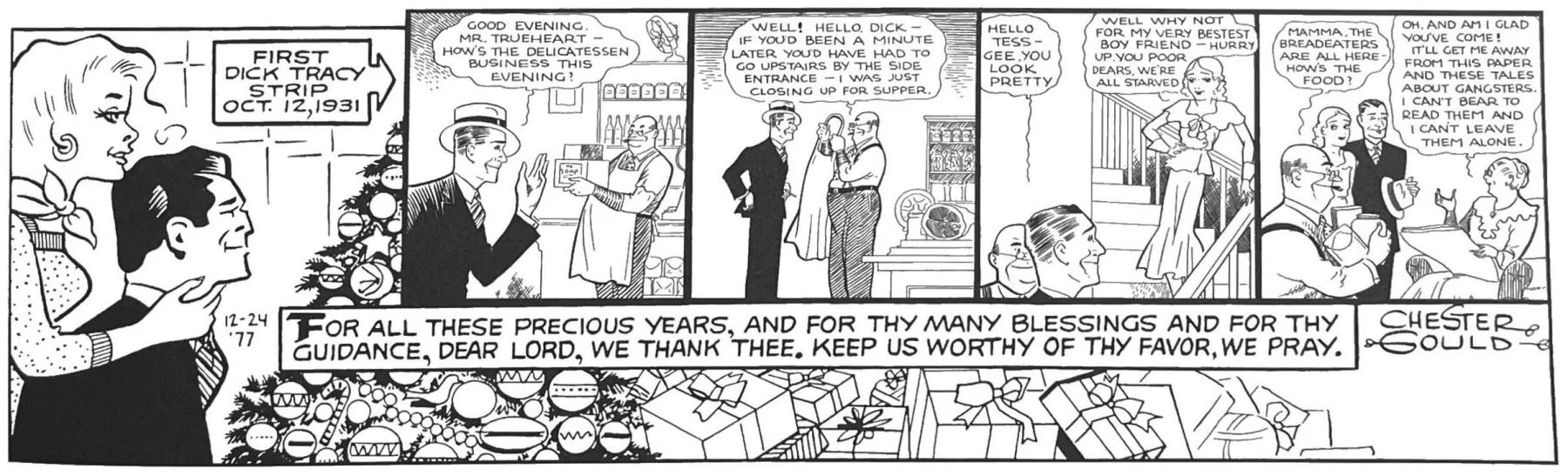
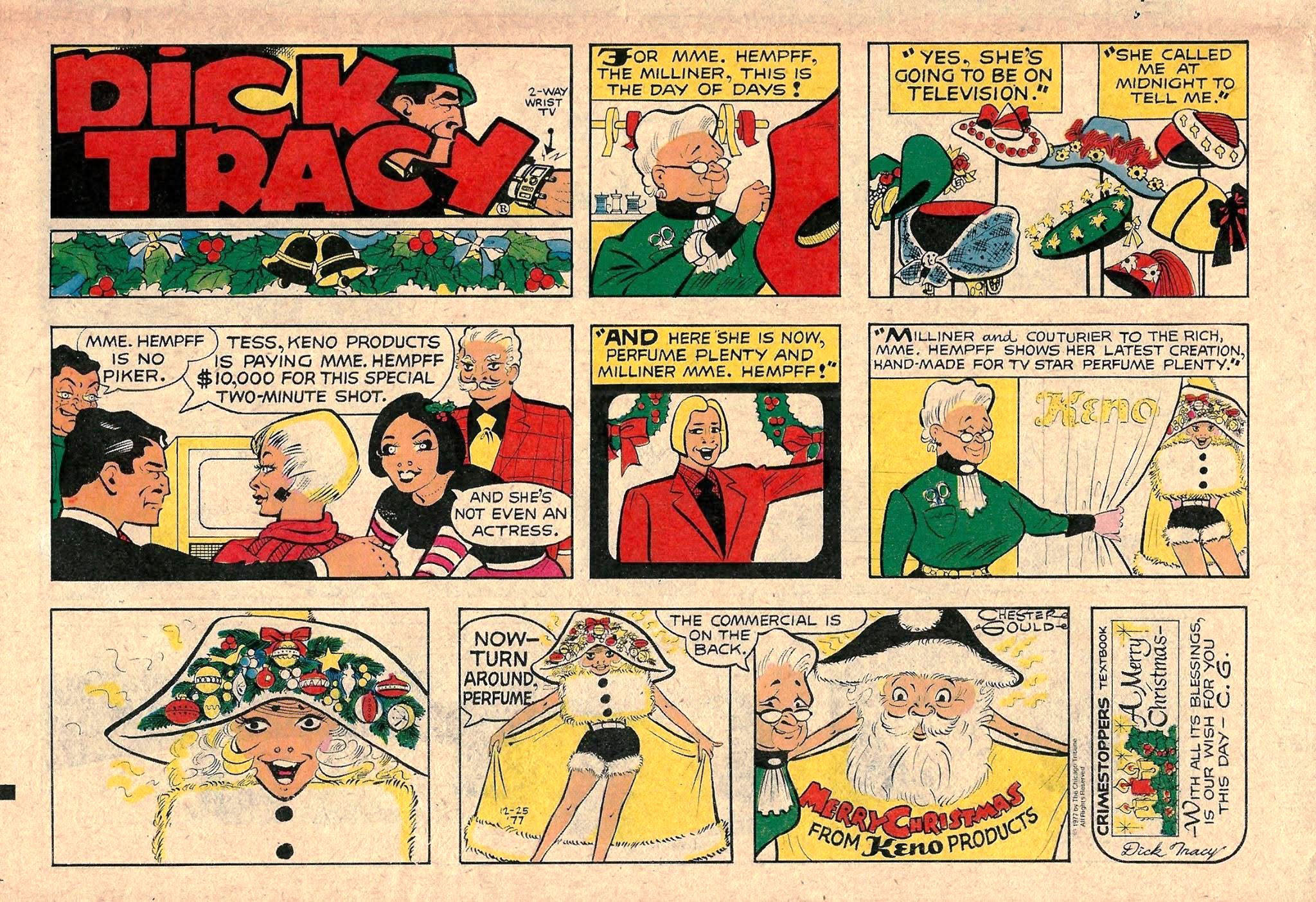
Following his departure, Gould’s assistant, Rick Fletcher, took over drawing the strip and Max Allan Collins became the new writer. When Fletcher died in 1983, the art was handled by Dick Locher. After that, other writers of the strip included (in turn) Mike Kilian and then Locher pulling double duty, and artists have been Jim Brozman, Joe Staton, and Shelley Pleger. (And to prove it was still a great adventure strip, it won the Harvey Award — named after Harvey Kurtzman – in 2013, 2014, and 2015 for “Best Syndicated Strip or Panel.”)
Tomorrow, Oct. 5, Howie Noel will take over as regular artist, with Mike Curtis remaining the writer.
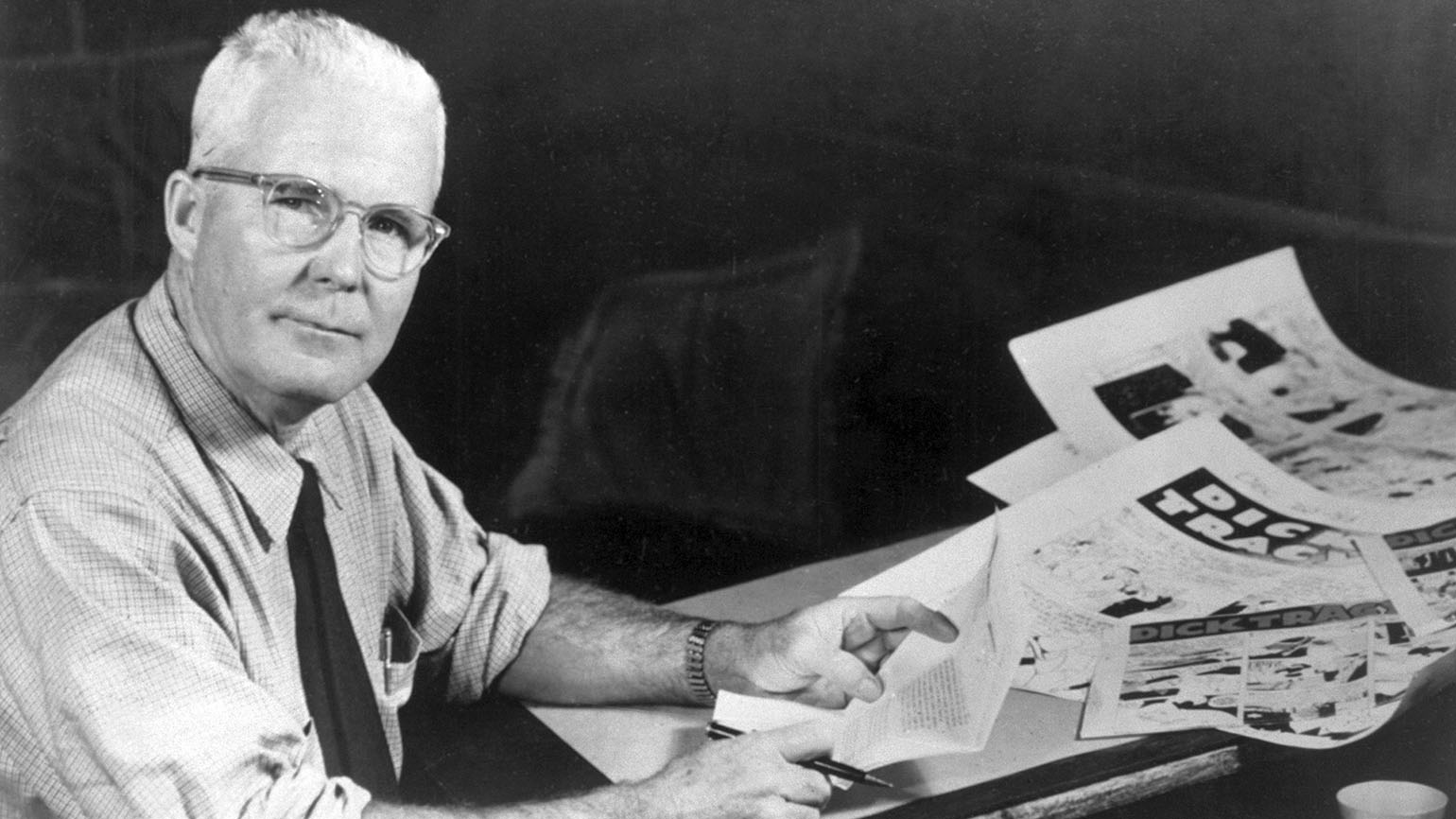
Chester Gould died on May 11, 1985 at the age of 84.
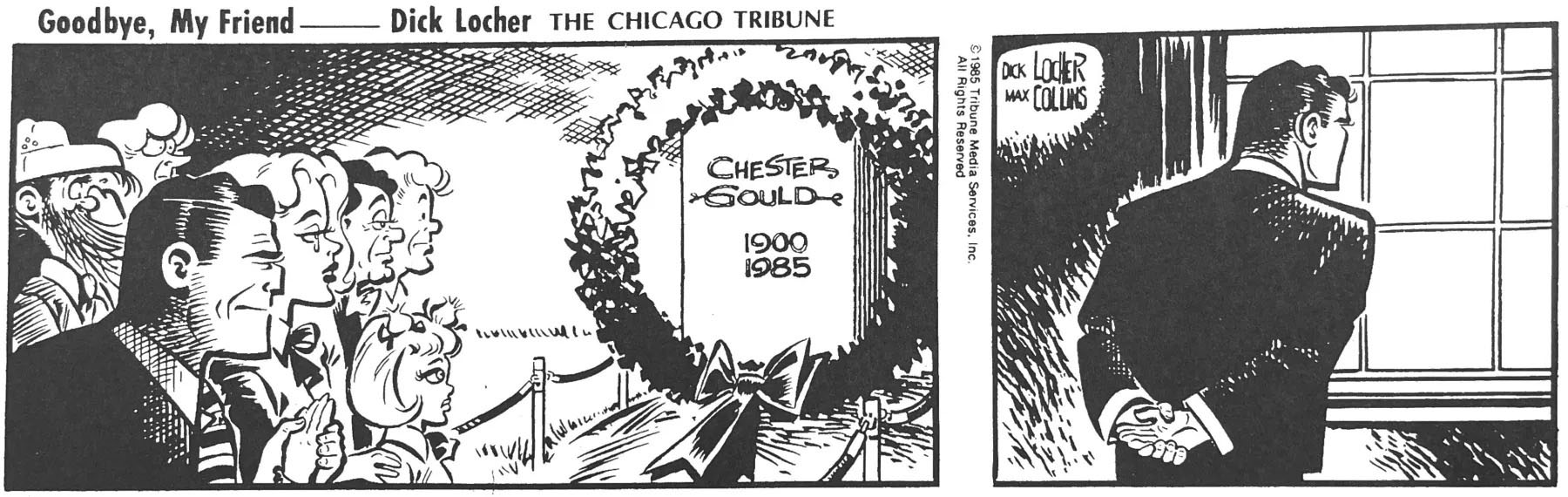
May 15, 1985
Five years later, the big-budget Dick Tracy movie starring Warren Beatty was released.
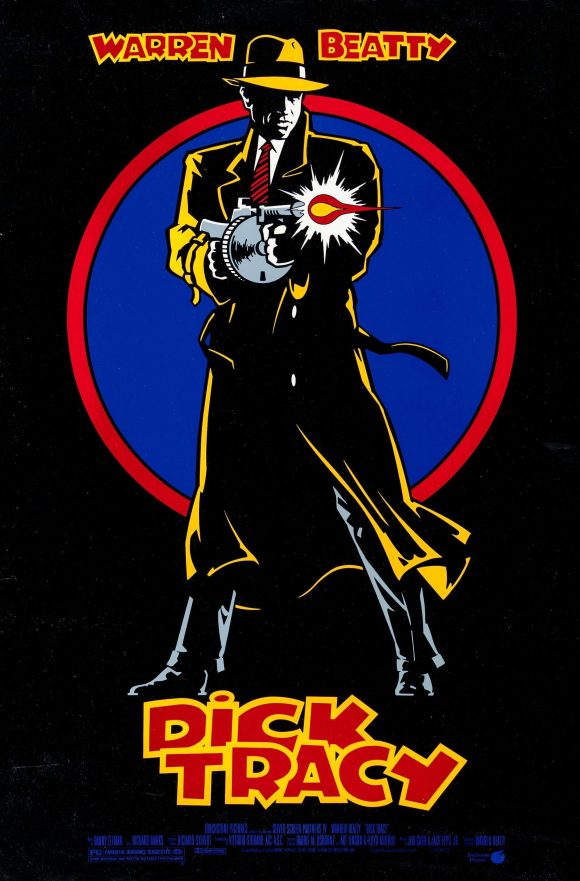
Merchandise-wise, per The New York Times, more than 600 items were licensed, including action figures, clothing, trading cards, comics, games, and so much more.
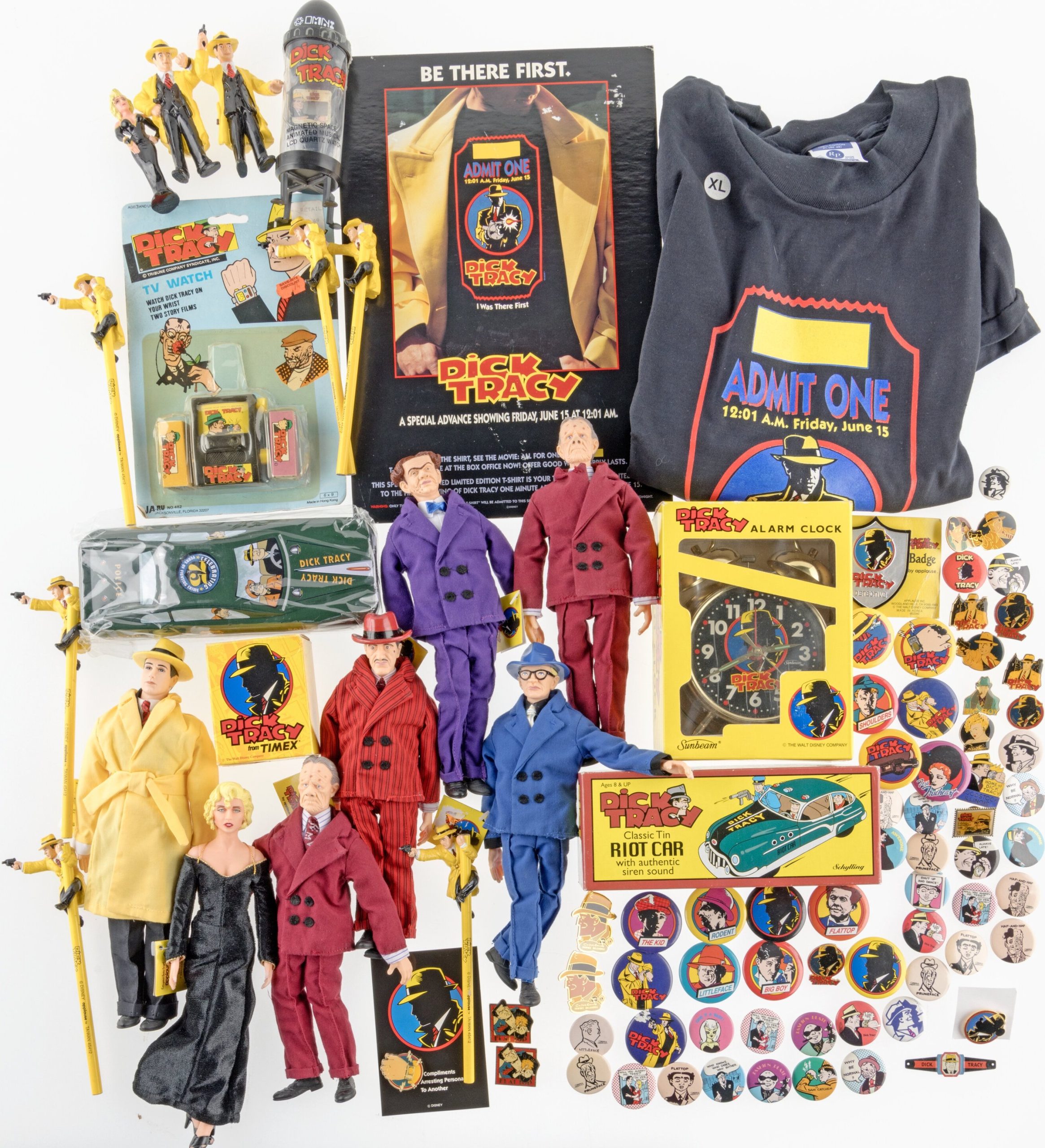
It is safe to say, for some time to come, we will continue to see Tracy answer the call — and say he is on his way!
P.S.: On October 17, 1931, exactly 13 days after the first Dick Tracy newspaper strip debuted, Al Capone was found guilty of tax evasion.
—
MORE
— FOUR COLOR RADIO: The Great DICK TRACY. Click here.
— RALPH BYRD: A Birthday Tribute to the DICK TRACY of the Serials — in 13 IMAGES. Click here.
—
13th Dimension contributor-at-large PETER BOSCH’s first book, American TV Comic Books: 1940s-1980s – From the Small Screen to the Printed Page, was published by TwoMorrows. (You can buy it here.) A sequel, American Movie Comic Books: 1930s-1970s — From the Silver Screen to the Printed Page, is out now. (Buy it here.) Peter has written articles and conducted celebrity interviews for various magazines and newspapers. He lives in Hollywood.

October 4, 2026
>>… Max Allan Collins became the new writer. When Fletcher died in 1983, the art was handled by Dick Locher. After that, other writers of the strip included
>>
You skipped over why Max was replaced. Any story there?
Peter, I always love your look at the old strips. Keep ‘em coming!
October 4, 2026
Hi, Buck. Actually, it didn’t fit within the main points of the Dick Tracy character’s history I was covering. However, you can look up that online, including on Collins’ own website.
October 4, 2026
Thanks for the nod to the current book!
October 4, 2026
I never read the Dick Tracy strip as a kid in the 60s and 70s but I’m glad that I finally discovered it with the DC treasury edition a few years ago. I now have several of the collected editions that go back to the beginning of the strip. I am almost through the 1930s and I’m enjoying the stories very much. Chester Gould vast knowledge of the subject matter shines through in every episode.
October 5, 2026
The movie Jungle Goddess, which stars Byrd and George Reeves, was shown on MST3K (episode 203). Joel and the bots made several jokes about Superman and none about Dick Tracy.
October 6, 2026
My gosh! I grew up reading the comics page ad for a while our paper carried Dick Tracy. (Which first appeared a few weeks before my Mom was born!)