
Late creator Hank Ketcham was born 106 years ago…
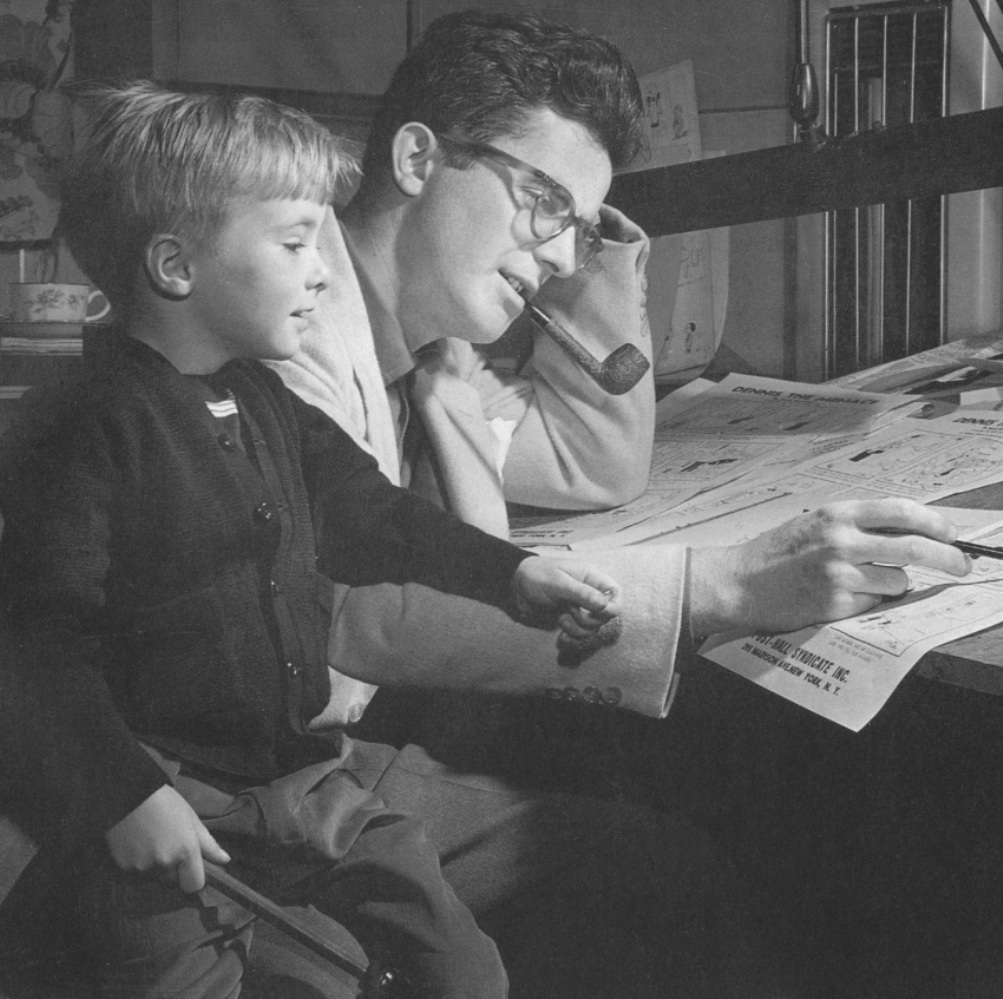
Dennis and Hank Ketcham
By PETER BOSCH
The Dennis the Menace newspaper strip, which was first published March 12, 1951, has for 75 years made people laugh. Except, perhaps, the boy who inspired him.
Before we get into that, though, some background.
Hank Ketcham’s history as a cartoonist dates back to when he was a child (born March 14, 1920 in Seattle). He loved to draw everything, and his classmates would ask him all the time to provide them with humorous caricatures. A decade later, while enrolled in the University of Washington, he abandoned his studies there and headed to Hollywood to get a job…which he did as an assistant illustrator working for Walter Lantz. Not long after that, he went to work for the Walt Disney Studios and became part of the team that produced the magic of Pinocchio, Fantasia, and Bambi.
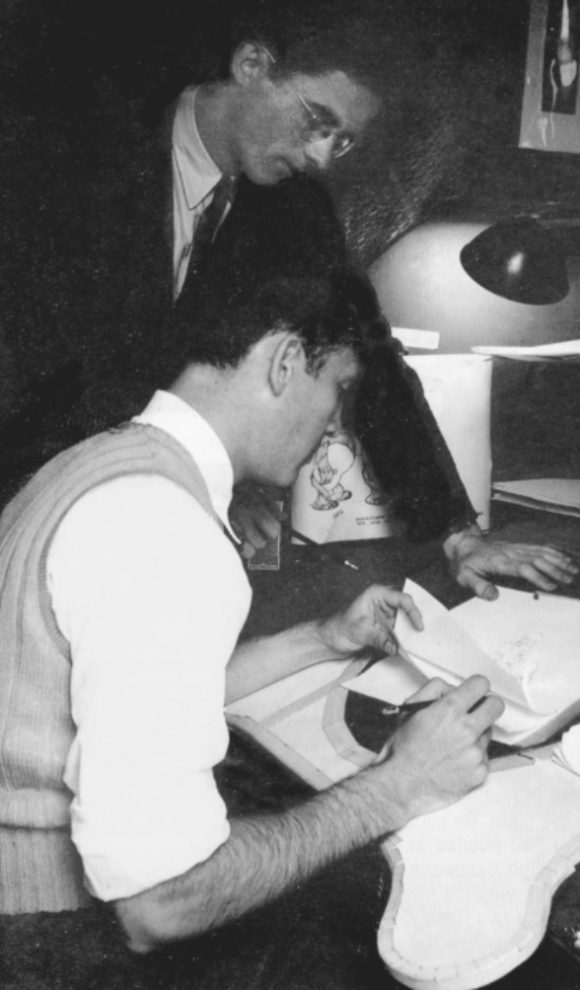
Ketcham (standing) with unknown “in-betweener” during his Walter Lantz days
When World War II broke out, he enlisted in the Navy and was transferred to Washington to illustrate posters and other items. On the side, Ketcham continued his cartoon drawing and sold gags to The Saturday Evening Post, Collier’s, and Liberty magazines.
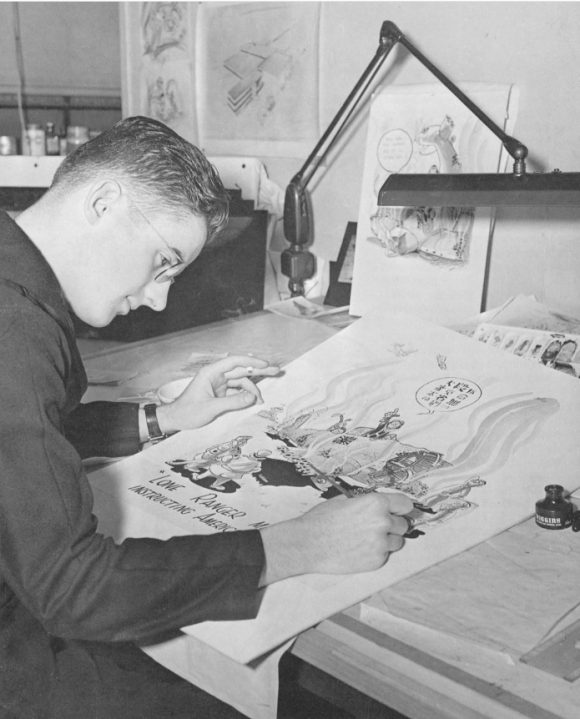
Ketcham in Washington, D.C., working on a World War II propaganda poster
While stationed in Washington, he met a young secretary, Alice Louise Mahar, and started courting her. In June 1942, they were wed. After the war’s end, they moved to Carmel, California, and set up home there. On September 11, 1946, Alice gave birth to a boy they named Dennis.
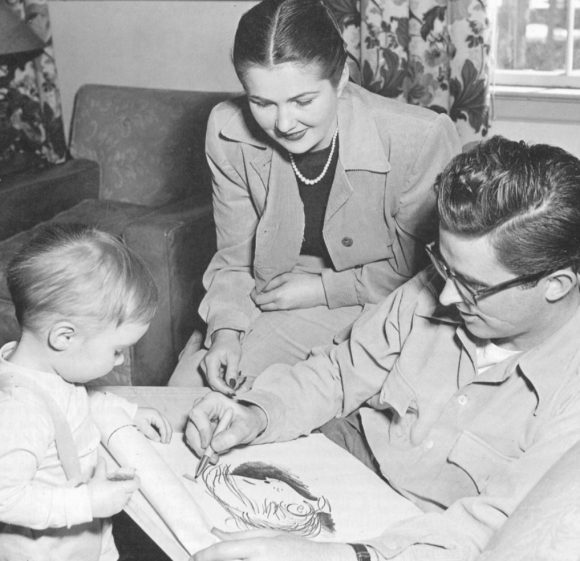
Dennis, Alice, and Hank Ketcham
Ketcham continued freelancing for magazines, but what he wanted to do was create a successful newspaper strip, which was the dream of many a comics artist. He pitched ideas to syndicates but got turned down. The ideas were just not right.
One day, in 1950, came a yell from Alice. Ketcham was working at his drawing board when she suddenly burst into the studio and screamed, “YOUR son is a menace!!!” The reason for this stressful moment was that young Dennis, instead of taking a nap, had taken apart his entire room’s furniture. (At least, that was one version of the story told years later.) While the “YOUR son” very clearly implied whose fault it was from her point of view, it was the rest – “a menace” – that suddenly lit up the lightbulb above Ketcham’s head. On March 12, 1951, Dennis the Menace debuted in newspapers across the country.
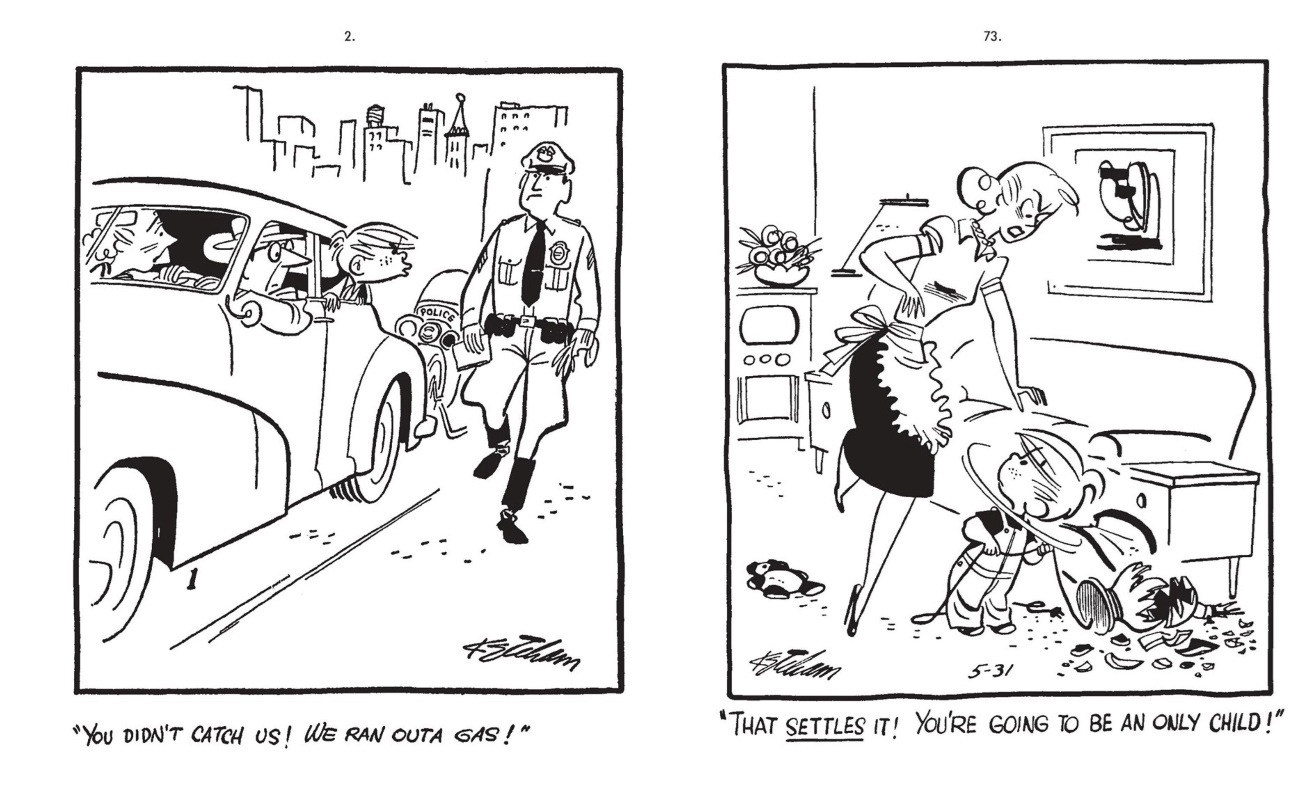
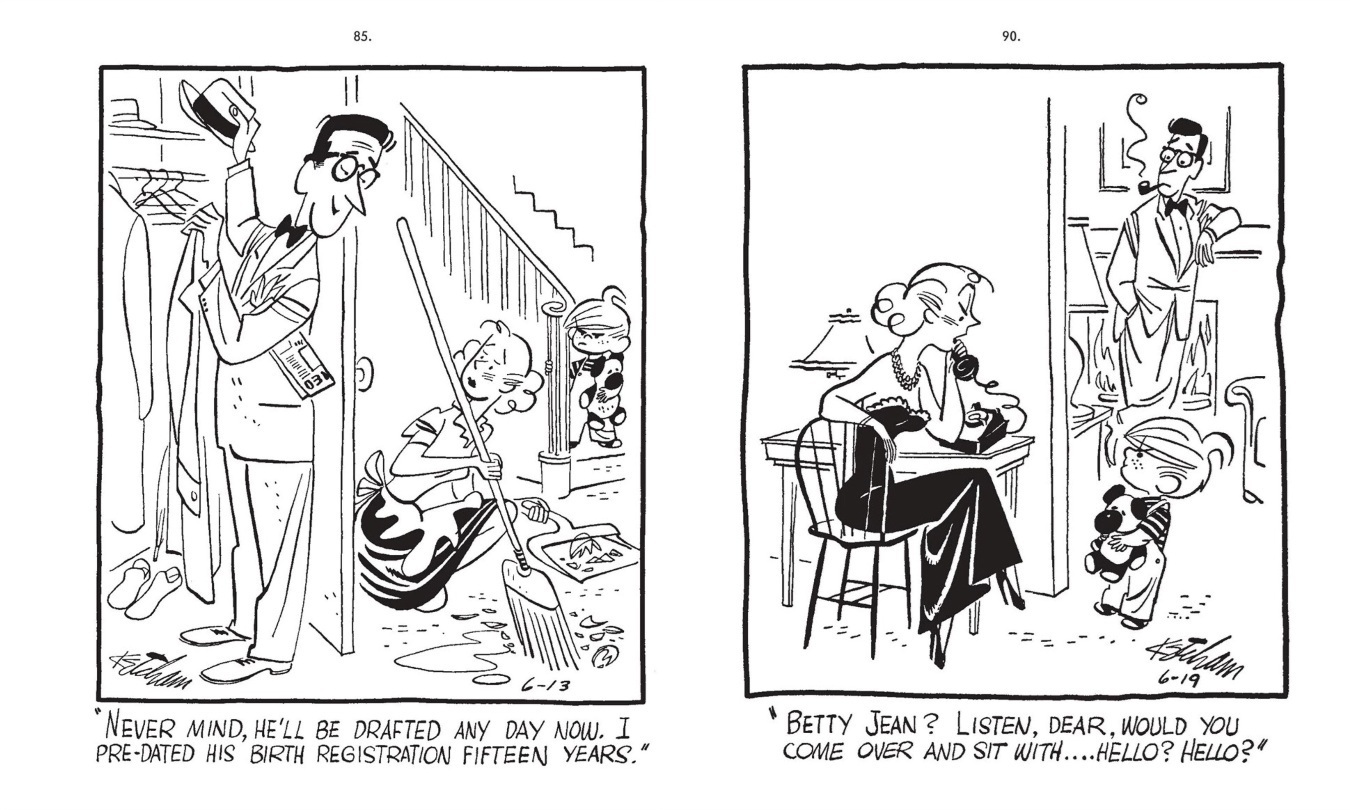
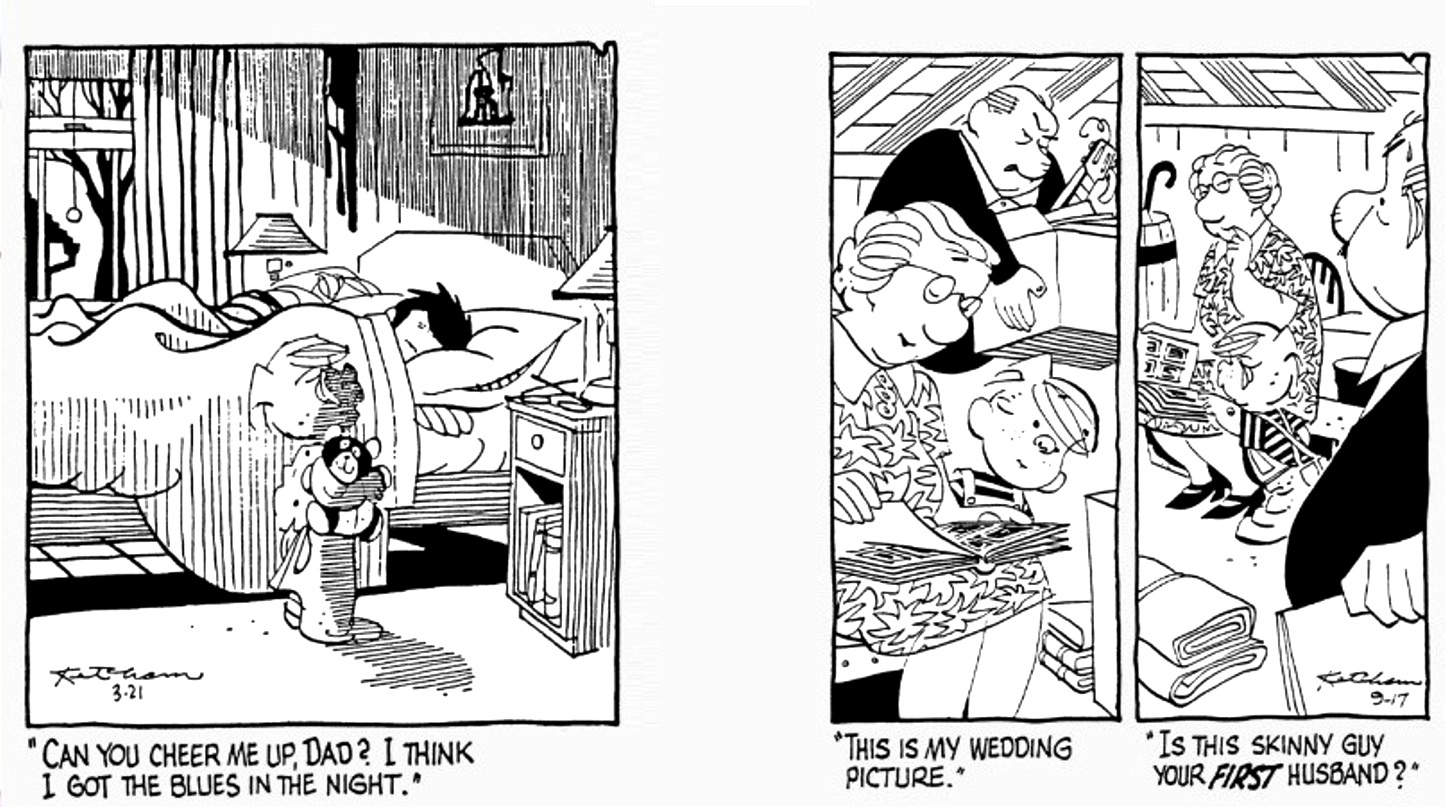
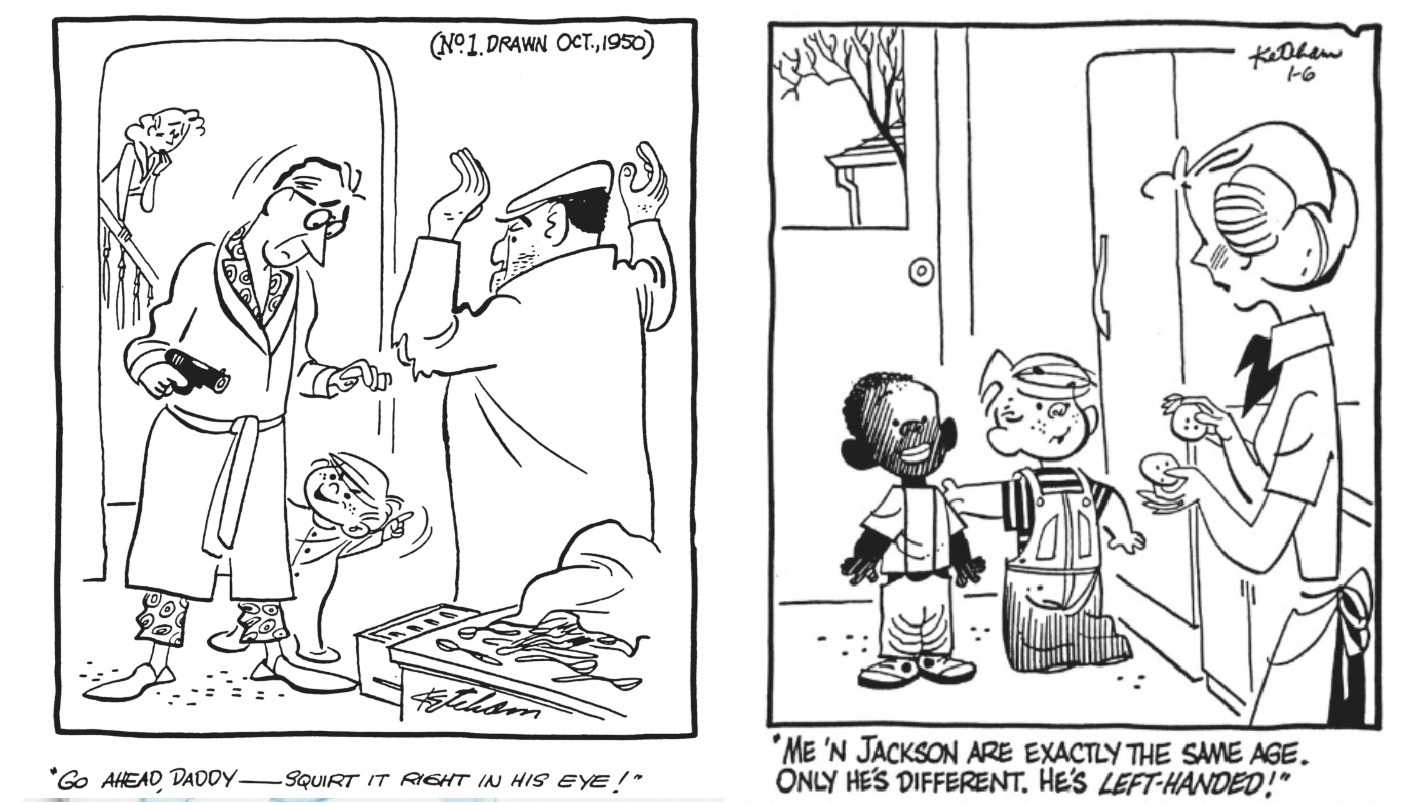
When the strip first appeared, it could be found in only 16 newspapers, but by year’s end, 100 papers across the county were carrying it.
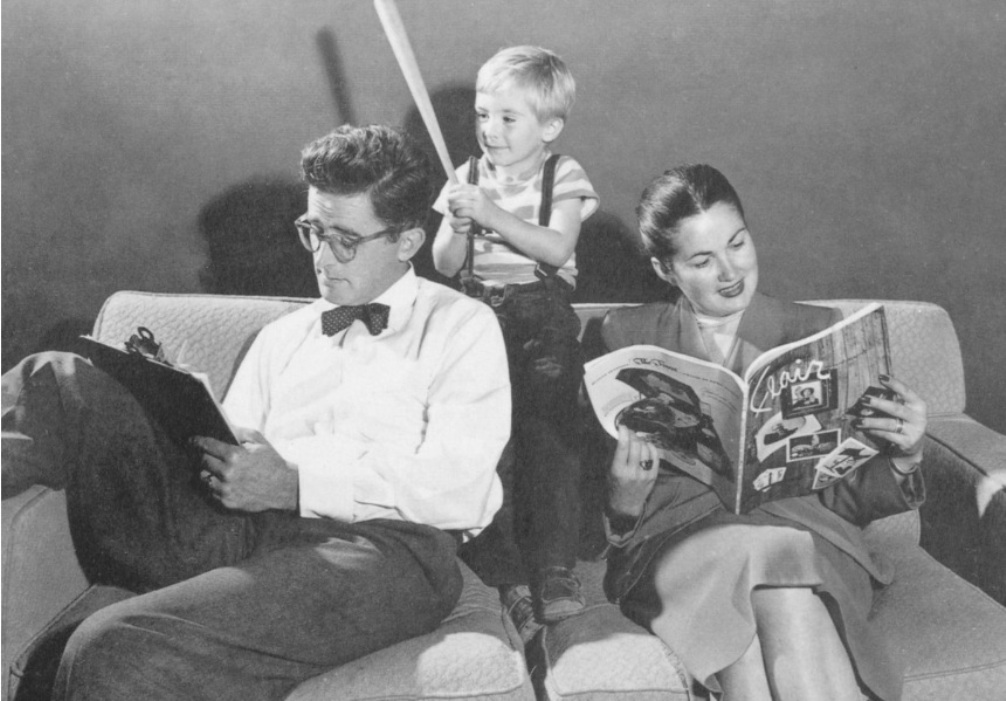
Promotional photo of the real Henry, Dennis, and Alice
The strip very quickly reached remarkable heights of success. Deals were made for merchandising, including a line of paperback reprints of the strip, as well as a comic book series introduced in 1951 that would run for 166 issues.
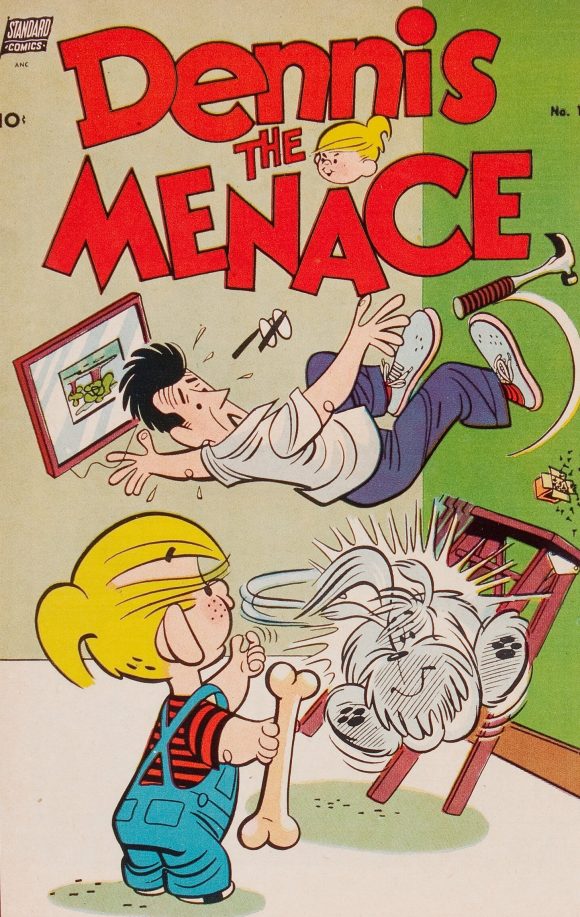
Dennis the Menace #1 (Aug. 1953, Pines/Standard). Art likely by Al Wiseman.
There was also a very popular group of comic book travel issues that could act as guidebooks (and be more entertaining than Fodor’s).
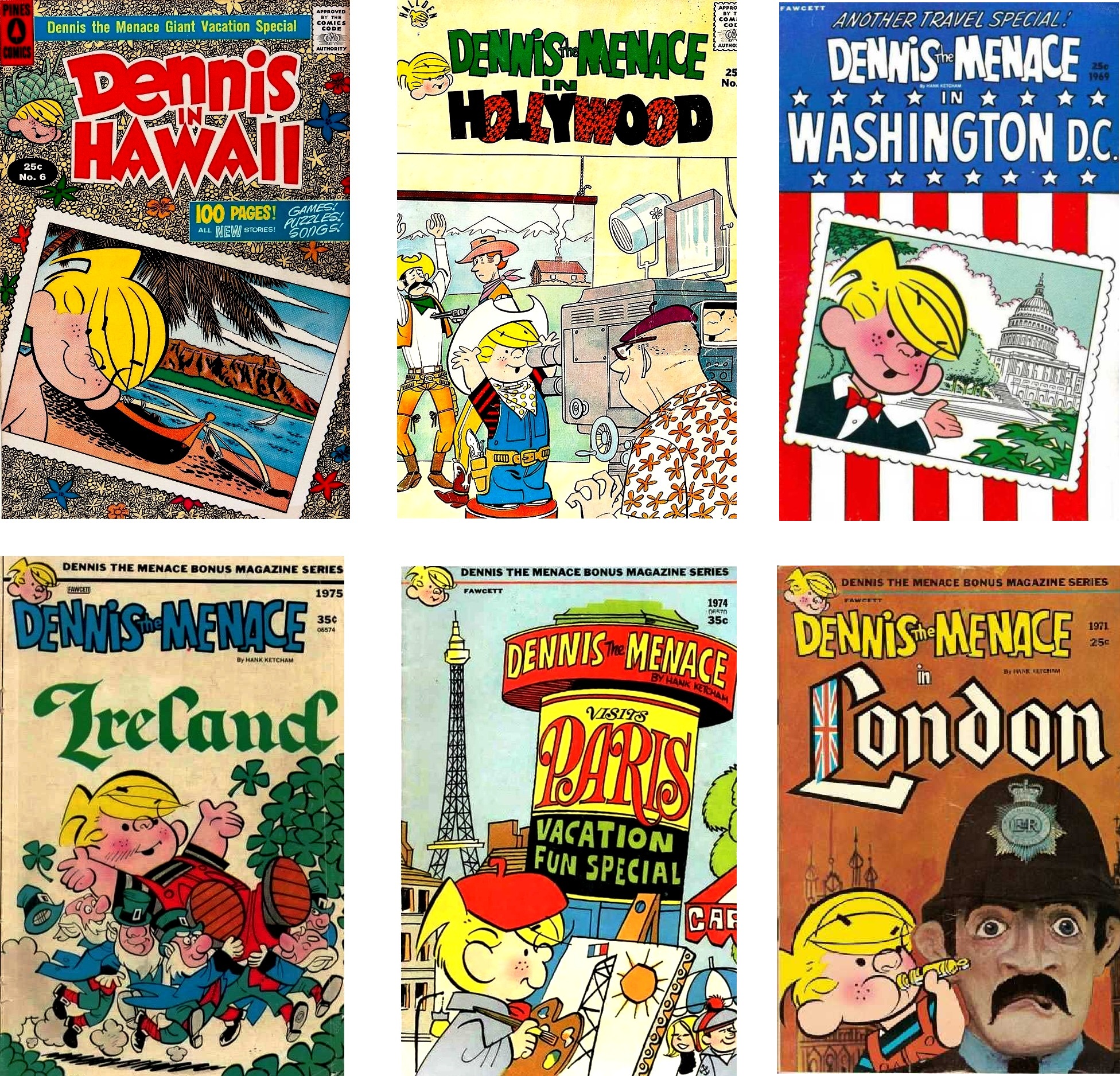
So many demands were coming to Ketcham for more and more Dennis the Menace material, he had to hire help, including writer Fred Toole and artist Al Wiseman.
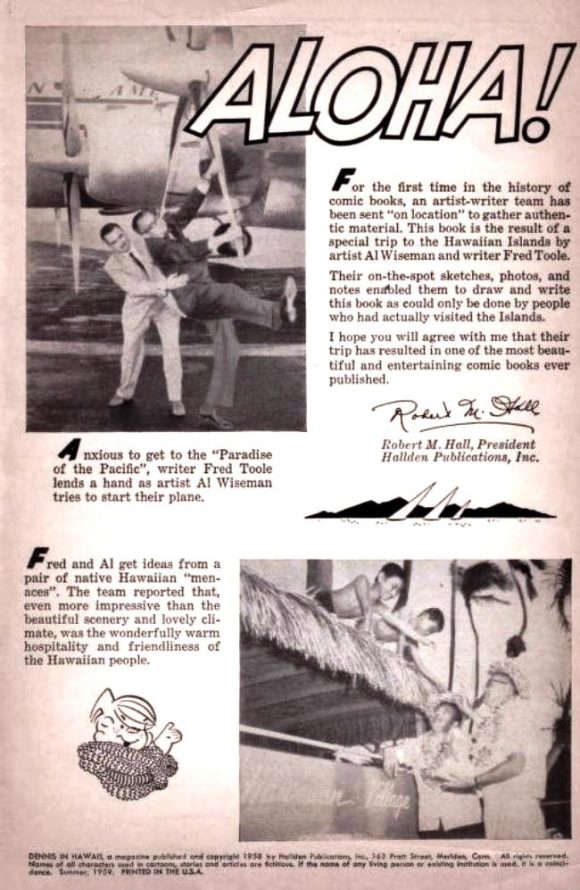
Inside front cover of Dennis in Hawaii (Summer 1958, Pines) with a humorous look at writer Fred Toole and illustrator Al Wiseman
And then, of course, along came the Dennis the Menace TV show (starring Jay North), which had its premiere on October 4, 1959.
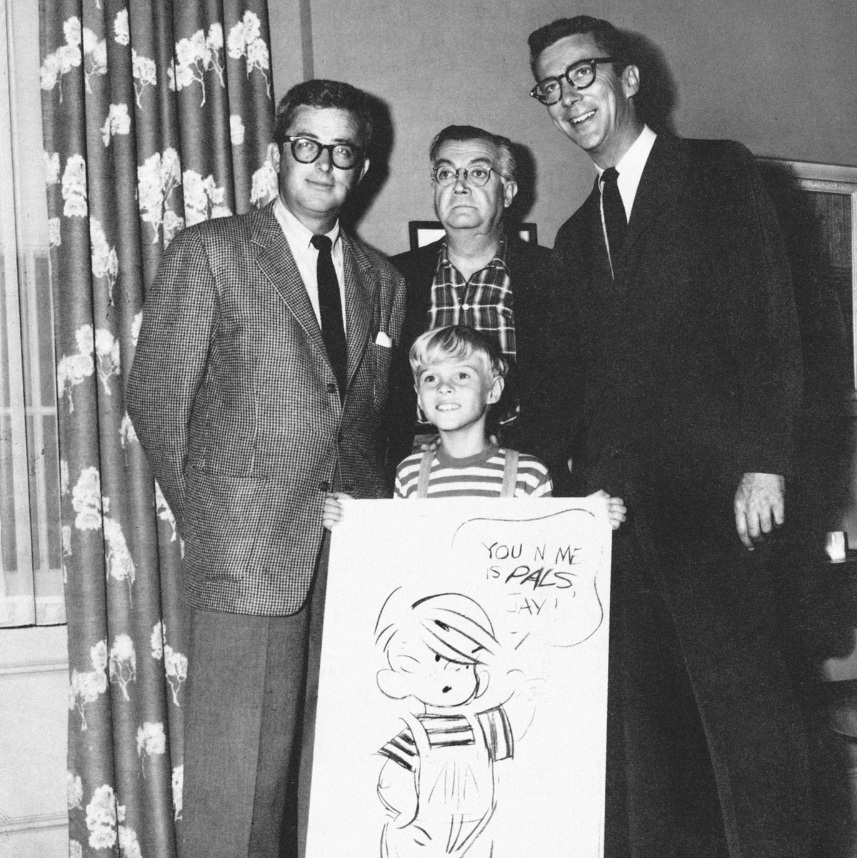
Hank Ketcham paid a visit to the Dennis the Menace TV series set. (Left to right) Ketcham, Jay North (as Dennis), Joseph Kearns (as Mr. Wilson), and Herbert Anderson (as Henry Mitchell).
However, it turns out there were two worlds: There was the funny world of Henry Mitchell, Alice, and Dennis, the one in the comic strip and the TV show. And then there was the real world of Hank Ketcham, Alice, and Dennis. This one was painful. Together, the different worlds were like the two faces of the Greek actors’ masks, comedy and tragedy.
In his autobiography, The Merchant of Dennis the Menace (1990, Abbeville Press, and reprinted by Fantagraphics Books in 2005), Hank Ketcham writes that “(Dennis’) mother, too caught up in luncheons, teas, and bouts with demon rum, couldn’t focus seriously on much of anything” — and that in 1959, she packed up her bags and moved out.
“She was a splendid wife and a loving mother,” Ketcham wrote, “but the world was spinning too quickly for her. She had nothing to hold her steady except the relief she found in barbiturates and alcohol… Tragically, she succumbed shortly after her fortieth birthday.”
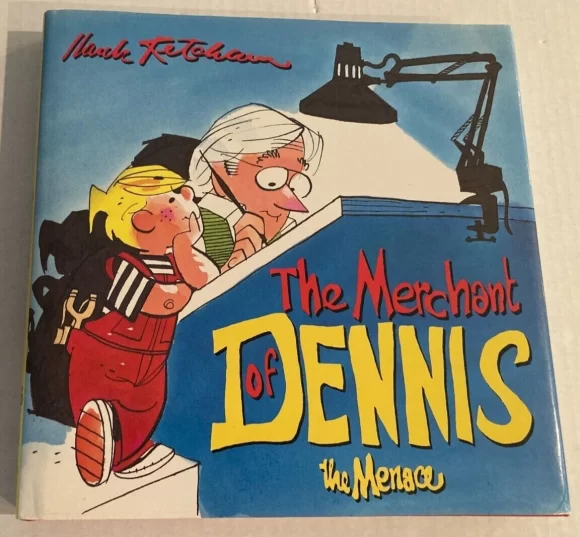
In the book, Ketcham also states Dennis had severe learning disabilities and suggests his own creative and financial activities kept him from spending time with Alice and Dennis, and thus he did not pay attention to their immediate needs.
But Ketcham leaves out of his memoir a terrible heartbreak for Dennis: After Alice died June 22, 1959, Ketcham did not tell the 12-year-old boy about it. It wasn’t until after she was buried that Dennis learned of it, so he never had the chance to attend his mother’s funeral. And a short time after she died (some say only three weeks after), Ketcham remarried (to Jo Anne Stevens, a flight attendant).
Ketcham uprooted the family – now consisting of Ketcham, Dennis, and new bride Jo Anne — by moving them all from America to Geneva, Switzerland. Dennis, though, had trouble fitting in with his Swiss school and had an antagonistic relationship with his stepmother, so Ketcham sent the boy back to the States to a boarding school in Connecticut.
In the latter part of autobiography, Dennis is noticeably absent. Almost 50 pages pass between the death of Alice to mentioning Dennis again, and even then it’s just a short sentence mentioning that he was in boarding school.
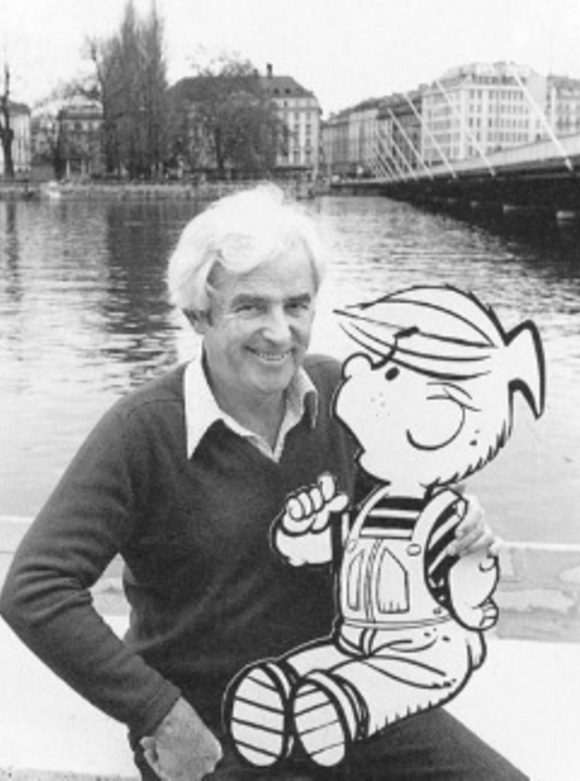
Ketcham in Geneva with his cardboard meal ticket
For the remainder of the book (nearly 90 more pages), Ketcham never speaks of his son again — but he does devote many pages to the glories of living in Switzerland. He also proudly writes of the celebrities and high-powered people that he met or played golf with. But nothing whatsoever of Dennis joining the U.S. Marine Corps in the mid-Sixties, serving in Vietnam — and returning to America with post-traumatic stress disorder.
In 1968, Ketcham divorced Jo Anne. Several months later, he met and wed Rolande Praepost, with whom he would have two children, Scott and Dania. They moved to Monterey, California, in 1977.
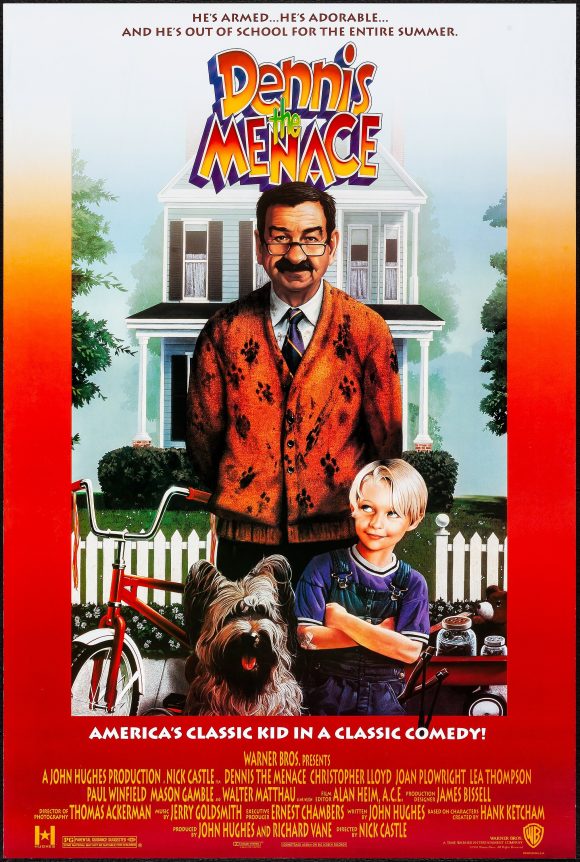
Still, during the time in Europe and again in America, Ketcham continued being the vital force of the comic strip, as well as its many side ventures, including the 1986-88 animated Dennis the Menace TV program, as well as the 1993 animated The All-New Dennis the Menace series — and that same year’s live-action Dennis the Menace movie with Walter Matthau. (Two direct-to-video sequels with different casts were also made.)
In 1994, Ketcham decided to retire and turned the strip over to his assistants. On June 1, 2001, he died rich at the age of 81, with the strip appearing in approximately 1,000 newspapers worldwide.
What happened to Dennis Ketcham has been little chronicled, other than online rumors that he went through several jobs, was married and divorced, estranged from a daughter, married again, and might still be living in Ohio and in a trailer park.
But the strip continues today through the talents of Marcus Hamilton, Ron Ferdinand… and Dennis Ketcham’s half-brother, Scott, who was born in Geneva.
—
MORE
— THE PHANTOM AT 90: 13 Highlights of the Ghost Who Walks. Click here.
— BURNE HOGARTH’S SPECTACULAR TARZAN: A Birthday Salute In 13 STRIPS AND COVERS. Click here.
—
13th Dimension contributor-at-large PETER BOSCH’s first book, American TV Comic Books: 1940s-1980s – From the Small Screen to the Printed Page, was published by TwoMorrows. (You can buy it here.) A sequel, American Movie Comic Books: 1930s-1970s — From the Silver Screen to the Printed Page, is out now. (Buy it here.) Peter has written articles and conducted celebrity interviews for various magazines and newspapers. He lives in Hollywood.


March 14, 2026
I have heard Dennis’ life wasn’t great, but I never knew the details. Thanks for this Peter, even though I probably won’t look at the strip the same way again. Just tragic.
March 14, 2026
Wow! I don’t think I had ever heard any of this. Maybe I did years ago…that is indeed so sad and tragic. Makes me echo the first comment left. Just makes me see it all now in a different light.
March 15, 2026
The only two Dennis comic books I had as a kid were the Bicentennial special and the trip to Washington, DC. Of course, I read the comic in the papers. Echoing others, the strip’s backstory is truly tragic.
March 17, 2026
Loved it