
A 40TH ANNIVERSARY salute…
By JASON CZERNICH
The Dark Knight Returns turns 40 today, March 20, and it changed the world of comics in numerous ways, particularly for the Batman franchise itself. It kicked off a period that I like to refer to as The Late ’80s Batman Renaissance, which included classic stories such as Son of the Demon; The Cult; Ten Nights of the Beast; The Killing Joke; A Death in the Family; Gotham by Gaslight; Arkham Asylum: A Serious House on Serious Earth; and the 1989 Batman film.
The mainstream media attention The Dark Knight Returns garnered even had a hand in greenlighting the film for production, as Executive Producer Michael Uslan told me in an online message:
“Its primary impact was on the (to me at the time) older generation of studio execs by opening their eyes to the fact that comic books and their super-heroes were no longer made for and read by 8-12 year old boys, but had evolved in story, art and format to appeal to high school, college and adult audiences globally. That lessened the risk to the studios of spending big money on a limiting kid’s movie or camp comedy.”
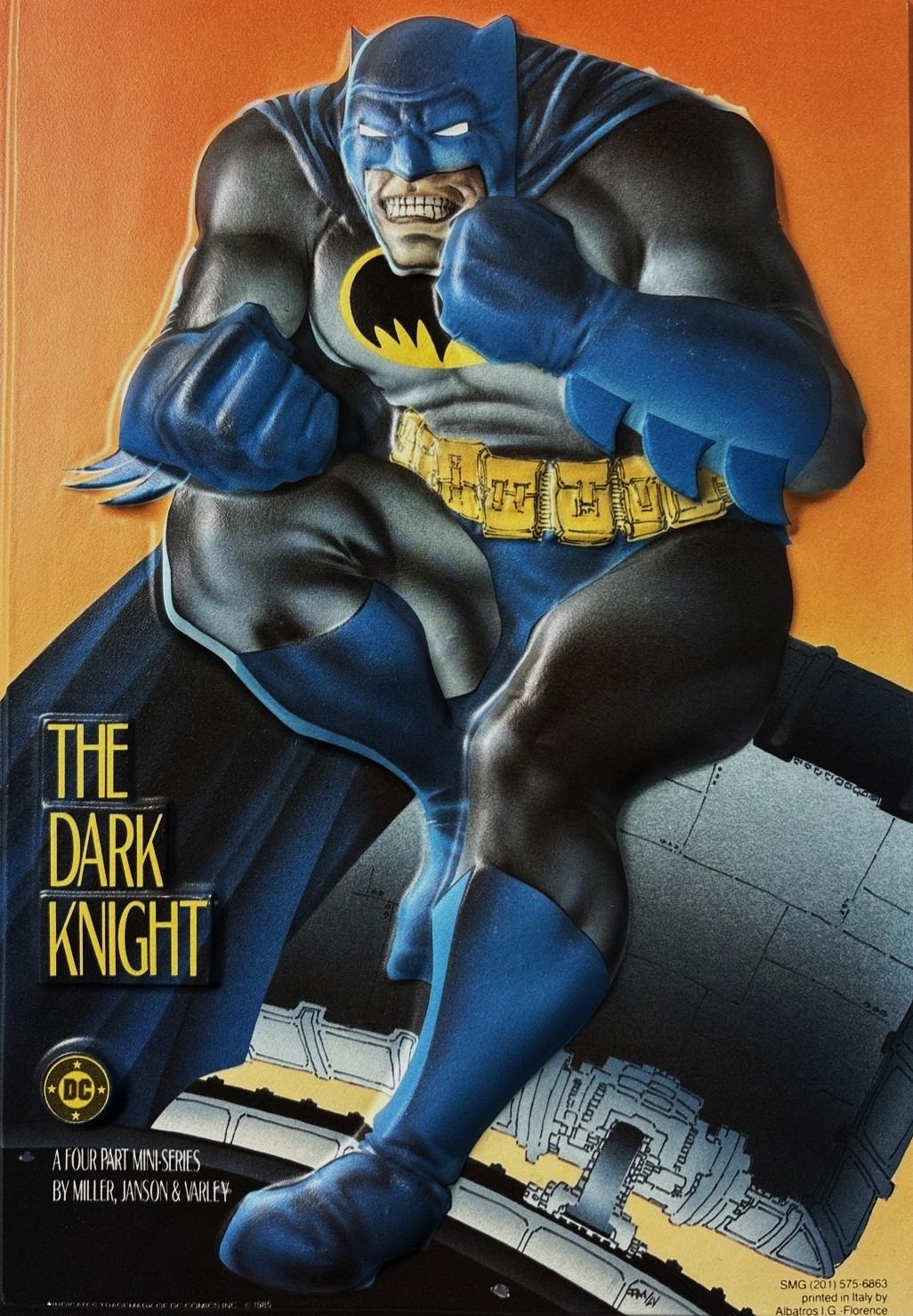
Even though The Dark Knight Returns was the project that brought the most attention, 1986 was a transitional year for the Masked Manhunter, shaping the course of his future, both on the page and in the public’s mind.
Here are 13 ways how:
—
1. Guest Appearances Increased. Batman seemed to be EVERYWHERE in comics in 1986. Whether that was due to the breakout success of The Dark Knight Returns, or it just turned out that way, Batman was getting out there!
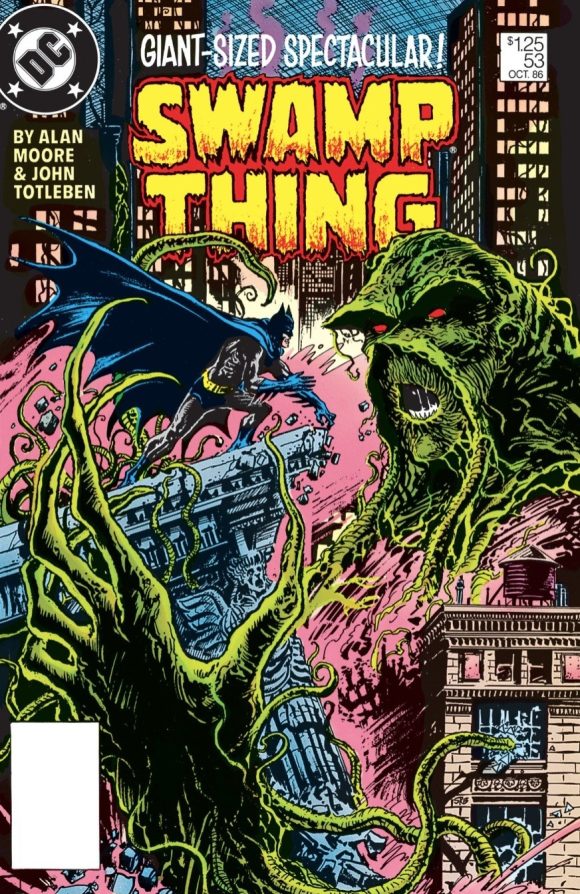
Batman left the Outsiders in Batman and the Outsiders #32 and rejoined the Justice League of America in Issue #250, even leading them for a few issues. He also co-starred with Superman and Lex Luthor in the all-star creator benefit book Heroes Against Hunger; appeared in Alan Moore’s classic Swamp Thing run for four issues; appeared in that year’s Super Powers mini-series; had a walk-on appearance in Action Comics #583 (Alan Moore’s “Whatever Happened to the Man of Tomorrow?”); showed up in The Man of Steel #3; and even did a guest shot in Outsiders Annual #1.
The Golden Age Batman got his origin retold in Secret Origins #6 and his Earth-One counterpart made an appearance in the other half of that issue, as it featured Halo of the Outsiders. That’s a lot of exposure compared to just a few years before.
—
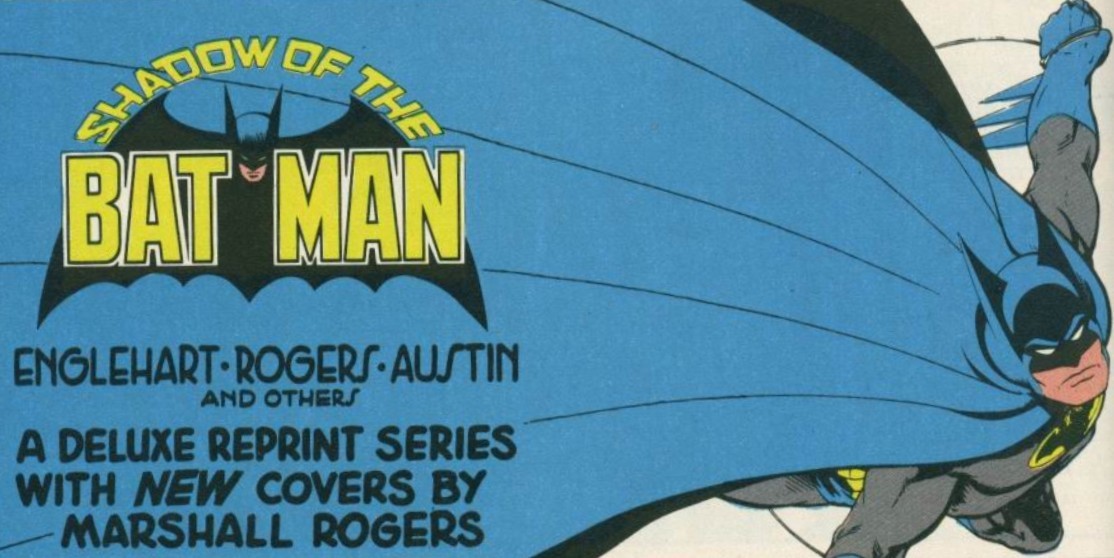
2. Marshall Rogers Briefly Returned to Batman. Iconic Batman artist Marshall Rogers produced new Batman work in 1986 with stunning wraparound covers for the Shadow of the Batman mini-series that reprinted his classic late 70’s Detective Comics run with writers Steve Englehart and Len Wein, and inker Terry Austin. Rogers even got to illustrate a new Batman story — the one in Secret Origins #6.
—
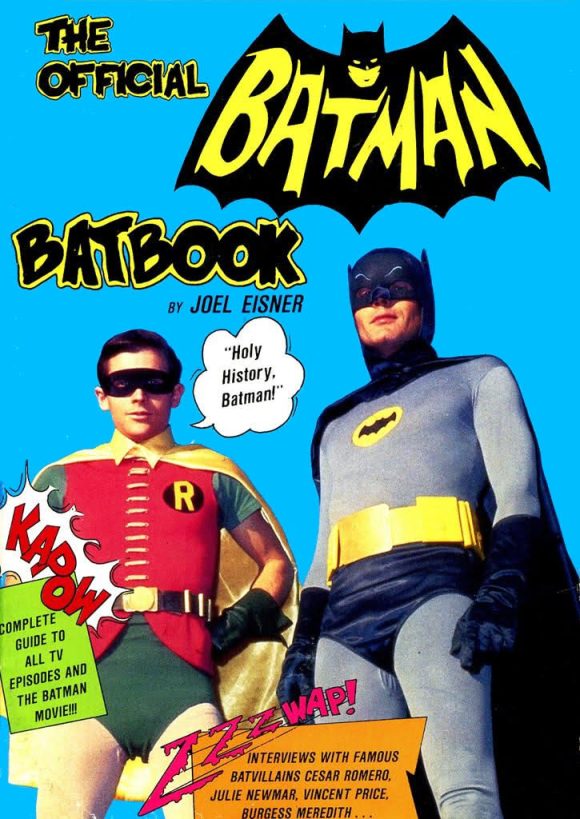
3. The Official Batman Batbook, by Joel Eisner. Just as Batman was getting darker than ever before in the comics, the first book detailing the production of the 1966 TV series came out. While this version of the Caped Crusader was not in vogue in the ’80s, it was the one that got most Batman fans of the era interested in the hero in the first place. A landmark book.
—
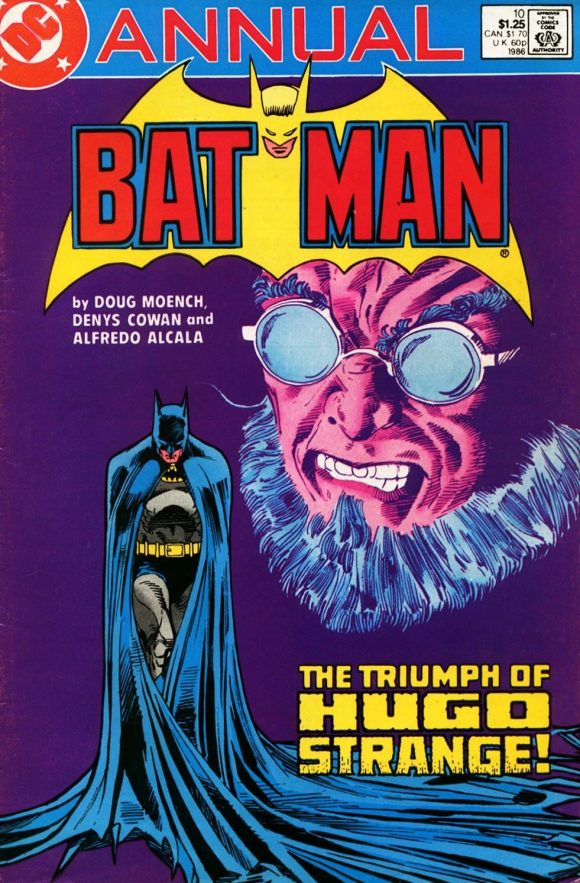
4. Batman Annual #10, The Final Triumph of Hugo Strange. Doug Moench, writer of the Batman monthlies since 1983, was leaving the titles but he sent his version of the Dark Knight out with a bang. Batman Annual #10 gave Golden/Bronze Age Hugo Strange a proper ending — until Moench brought him back with a rebooted history in 1990’s Legends of the Dark Knight arc, “Prey.”
—
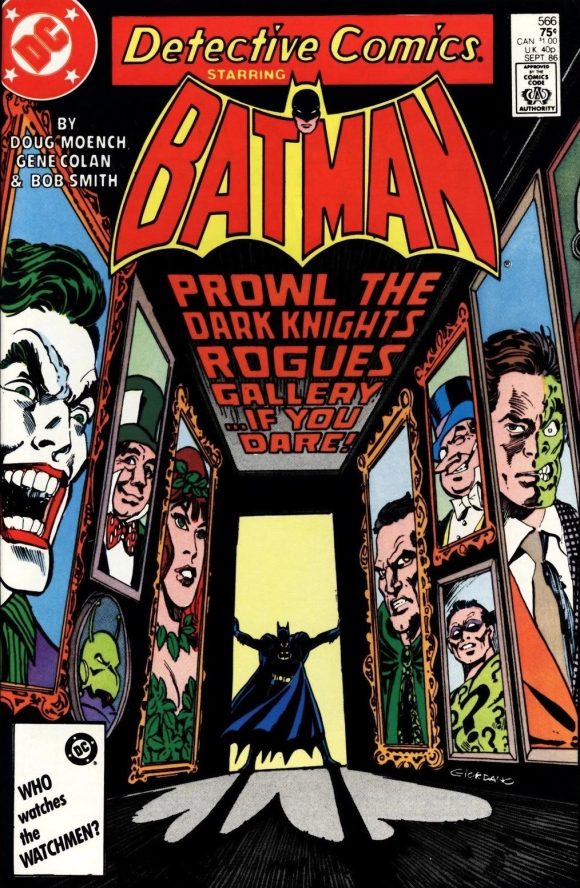
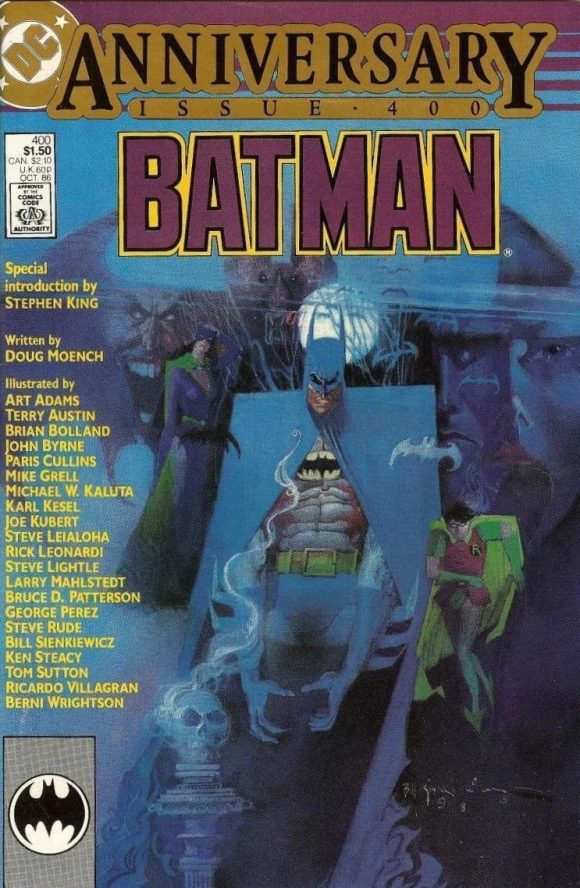
5. Detective Comics #566 and Batman #400. A couple months later, Moench officially closed out his run in the regular monthlies with a two-parter that began with a prelude in Detective Comics #566 and ended in the classic Batman #400.
To me, this is the gold standard of anniversary issues: It has appearances by almost all the ongoing Batman villains you can think of, includes all of the supporting cast, has extra pages, no ads, includes a Who’s Who of comics artists, and features an intro by Stephen King that comments on the recent success of Dark Knight Returns!
—
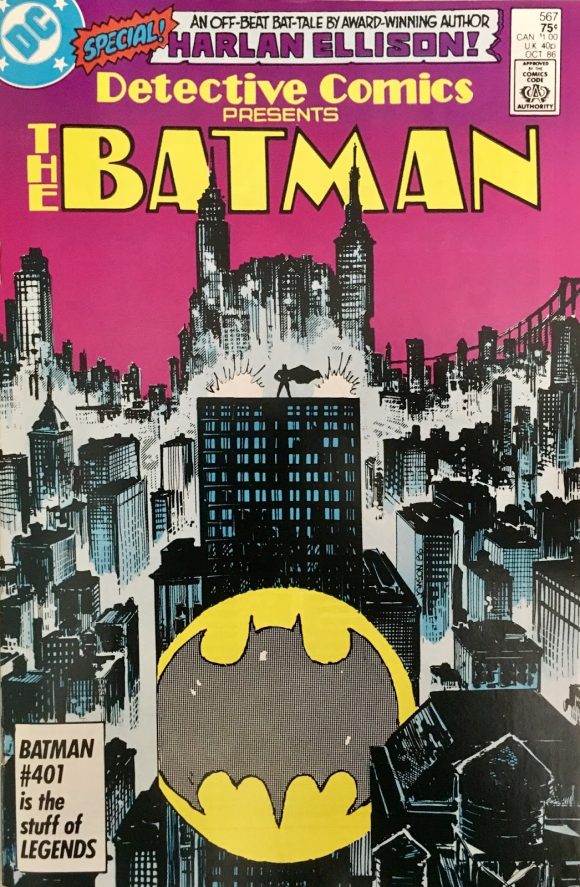
6. Detective Comics #567. This issue was important for a few reasons. It marked the last issue of the Batman monthlies under the editorial rein of Len Wein; it was the last issue for Gene Colan, who had been contributing art to the Batman monthlies since 1981; it was the end of Detective Comics having a backup feature or co-star, with the finale of the Green Arrow stories; it had a standout cover by Dark Knight Returns inker Klaus Janson, complete with a redesigned Detective Comics logo for that issue only; and it was an offbeat tale by guest writer Harlan Ellison.
—
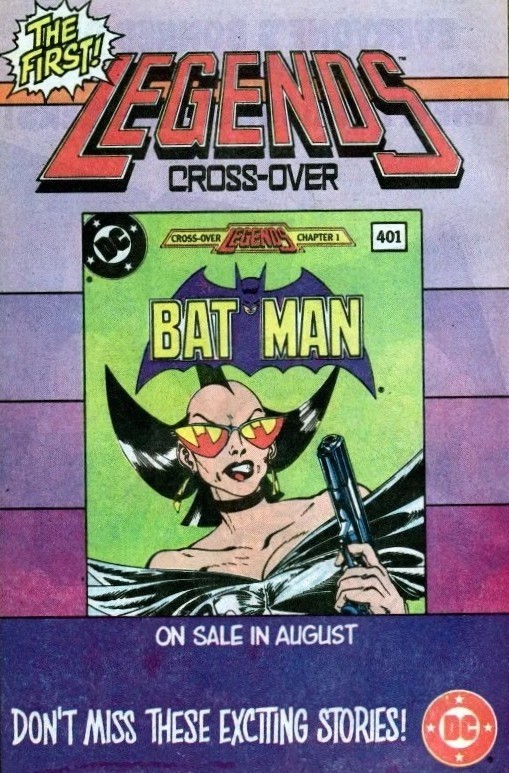
7. Batman Legends Crossovers. For the first issues of the Bat-monthlies after Moench, Wein, and co. departed — Batman #401 and Detective Comics #568 — DC decided to give the Dark Knight the honor of hosting the first two Legends crossovers. Detective #568 was especially good as it featured art by Janson.
—
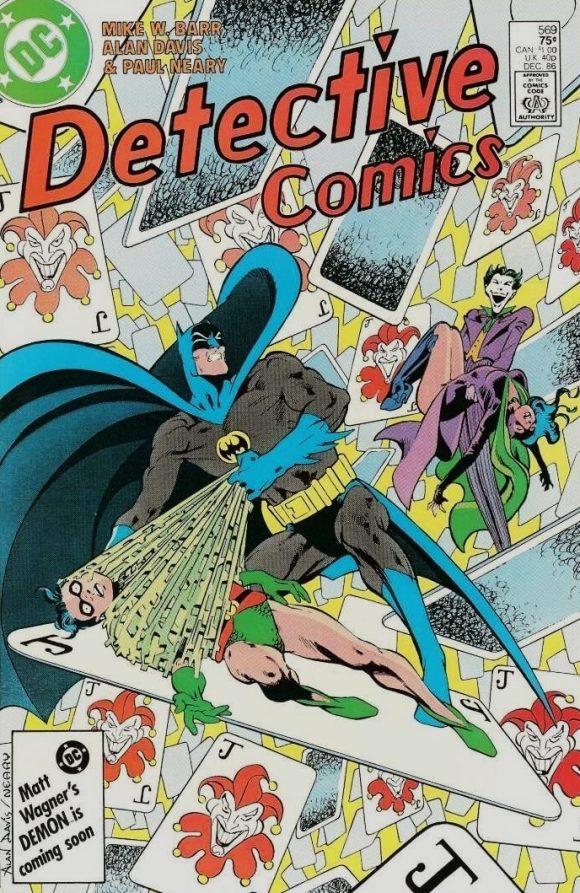
8. New Blood in the Batman Books. After the Legends crossovers, the Bat-titles would get new creative teams with Dick Tracy scribe Max Allan Collins taking over writing duties on the Batman flagship and writer Mike W. Barr, penciller Alan Davis, and inker Paul Neary starting a brief, but memorable run on Detective Comics.
—
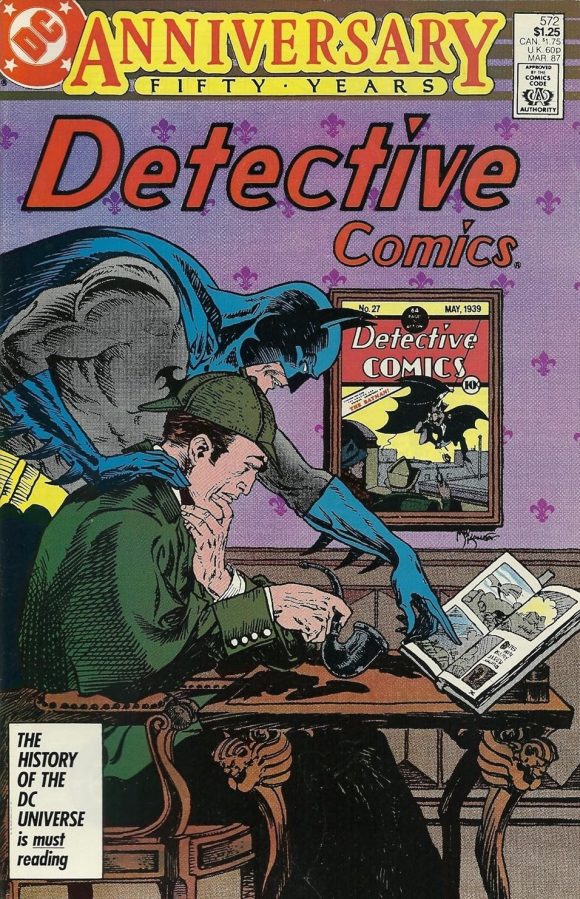
9. Detective Comics #572, Another Anniversary Issue. Detective Comics #572 was released late in 1986 and was the third anniversary issue featuring Batman that year. It was part of the classic Barr/Davis/Neary run and even had a special two-page Batman spread by Golden Age great Dick Sprang.
—
10. No Longer the World’s Finest Team. World’s Finest Comics, which regularly teamed Batman and Superman since the 1950s, was cancelled in 1985, and the two heavyweights were pitted against each other for the climax of Dark Knight Returns. John Byrne’s Man of Steel #3 would reinforce this uneasiness with their first post-Crisis meeting.
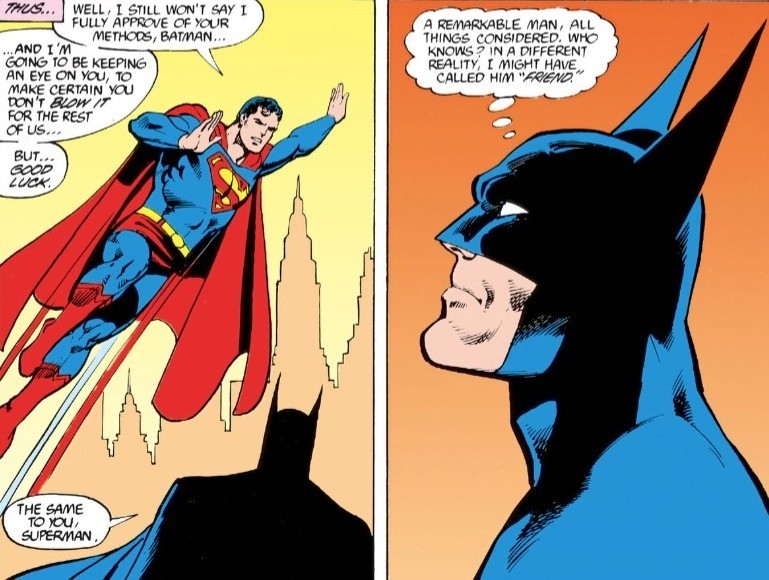
This friction would go on to be a hallmark of the Modern Age and would play out in such classic stories as A Death in the Family, the 1990 World’s Finest miniseries, and even Grant Morrison’s JLA run 10 years later.
—
11. Dennis O’Neil Starts as Regular Batman Editor. Of all the Batman developments that occurred in 1986, this was probably the most impactful outside of Dark Knight Returns (which O’Neil edited with Dick Giordano). Before ’86, Dennis O’Neil was known as the most influential Batman writer of the 1970s, instrumental in bringing Batman back to his creature-of-the-night roots, introducing Talia and Ra’s al Ghul, returning the Joker to his homicidal maniac persona, and bringing in other elements to the mythos, such as Crime Alley and Leslie Thompkins.
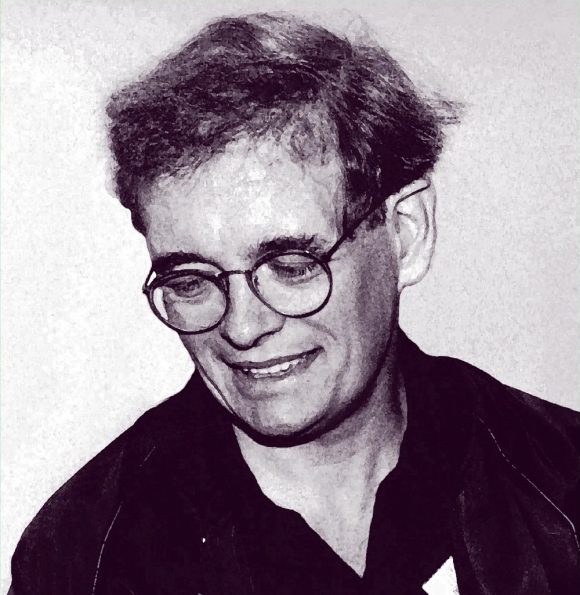
O’Neil taking the editorial helm initiated an era of tremendous growth, and included such landmark stories and special projects as Son of the Demon, The Cult, The Killing Joke, A Death in the Family, Knightfall, No Man’s Land and other memorable tales — not to mention Batman: Year One.
—
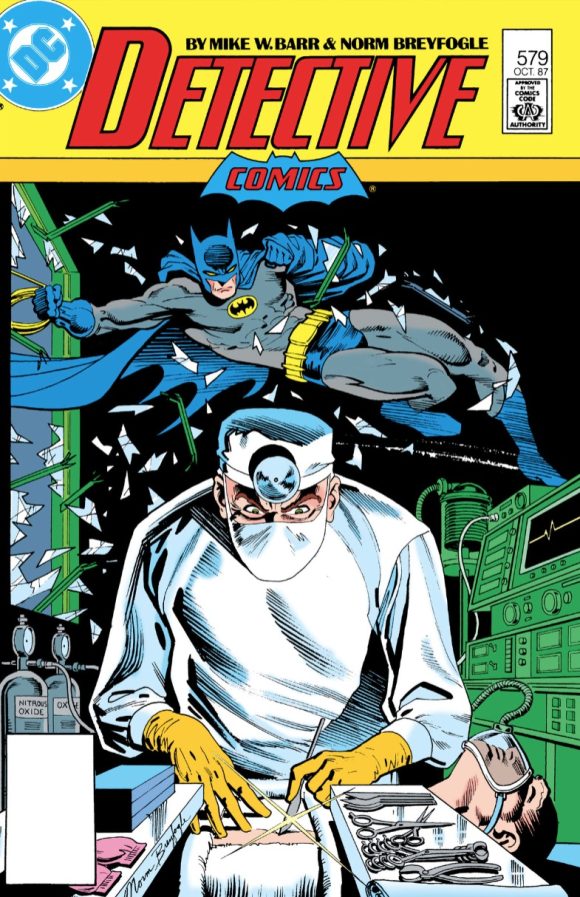
12. All That Talent. O’Neil also brought aboard a wealth of talent during his long tenure, including Jim Starlin, David Mazzucchelli, Jim Aparo, Todd McFarlane, Norm Breyfogle, Alan Grant, John Wagner, Peter Milligan, Graham Nolan, Kelley Jones, Chuck Dixon, Scott McDaniel, Tom Lyle, Tom Grummett, Jim Balent, Greg Rucka, and many more.
—
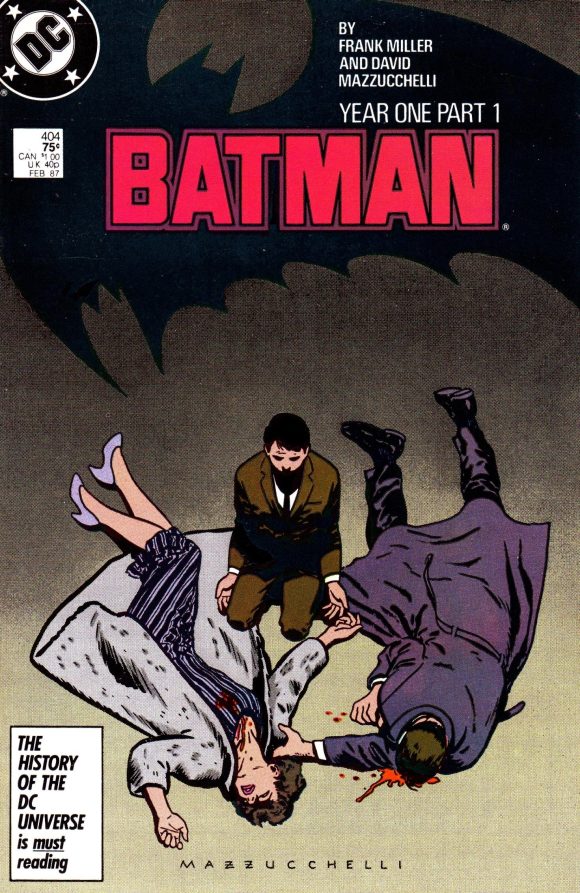
13. Batman: Year One. When Frank Miller conceived Batman: Year One, he intended it to be published as a graphic novel. O’Neil convinced Miller to serialize it as part of the regular Batman series instead. By doing so, it helped delineate between the pre- and post-Crisis versions of Batman, widened the audience for the story to include newsstand readers, and ultimately set the mood for the ongoing Batbooks.
With Dark Knight Returns completed earlier in 1986, Year One provided the perfect bookend to an extraordinary 10 months.
—
MORE
— 13 QUICK THOUGHTS: The Enduring Greatness of THE DARK KNIGHT RETURNS. Click here.
— Creators Pick Their DARK KNIGHT RETURNS ‘Hell Yeah!’ Moments. Click here.
— The Mindblowing Experience of Reading THE DARK KNIGHT RETURNS for the First Time in 1986. Click here.
— DC to Republish THE DARK KNIGHT RETURNS As Four Monthly FACSIMILE EDITIONS. Click here.
—
JASON CZERNICH was born smack dab in the middle of the Bronze Age of Comics. Early memories of Power Records and other Batman merchandise, as well as watching reruns of the 1966 Batman series on TV38 in Boston, imprinted on him heavily. Today, he lives and works as a clinical social worker in central Massachusetts with his wife, child, cat, and beloved French bulldog.

March 20, 2026
*Shadow of the Batman* reprinting the stories of Batman Strange Apparitions is an excellent mini series worth owning if you can find it for a reasonable price.
And to my next point- DC Comics, please just give us the Strange Apparitions deluxe edition already.
March 20, 2026
Later this year we are getting Batman by Neal Adams: Absolute Edition 1967-1970. My prediction is that if that book and any future volumes of it are successful enough, we will get Marshall Roger’s Batman work in the same format. My hope is that it contains all the contents of Legends of the Dark Knight: Marshall Rogers hardcover as well as the following unreprinted Batman material by him:
-His cover and framing sequence art for Detective Comics #477. Although this can be found digitally, it has never been physically reprinted. I find this odd as it brings closure to the Boss Thorne/Hugo Strange subplot from the classic Englehart/Rogers/Austin run. In it Len Wein explains where Thorne ended up, how Batman learned what happened to Hugo, and has the first true 1st appearance of Clayface 3 at the end of the issue in cameo form.
-His Batman portfolio from the early 80’s.
-His wraparound covers and promo poster art for the 80’s Shadow of the Batman reprint mini–art he did specifically for that project.
-His cover for the late 90’s Strange Apparitions TPB
-His Man-Bat work for the 70’s Batman Family series.
-Any Batman related Who’s Who entries he did for that 80’s series, which may just be the Joker and Bat-Mite entries.
-His Batman & Robin art from the 1986 DC Comics calendar.
-Sketches and art he did for the unpublished sequel to the Dark Detective II mini.
March 20, 2026
I remember wandering into my then local comic shop back in 1987. Pocket full of just a few dollars I’d made from raking peoples lawns.
So much good stuff there waiting to be bought. I remember spending every dollar I had and leaving with a big bag of awesomeness just waiting to be read.
March 20, 2026
This was a fun read! I co-wrote the TwoMorrows book THE BATCAVE COMPANION with my good friend Michael Eury and we had only one choice of who we wanted to write the book’s introduction, and that was Denny O’Neil. I interviewed Denny for my section of the book (about Batman in the 1970s) and he was an absolute delight. I titled that chapter with Denny’s interview, “Batman’s Conscious.” I also interviewed Neal Adams for the book about every Batman story he drew. Getting to spend time with both of those legends was “bucket list” stuff. They say don’t meet your heroes, they’ll disappoint you, when it came to Denny and Neal, that did not apply.
March 20, 2026
I have a copy of The Batcave Companion on my bookshelf and simply adore it! It is worthy of being reprinted in hardcover! Thank you and Mr. Eury for such a wonderful tome! Glad you got to work with both Denny and Neil!
I got to meet Denny at the Words and Pictures Museum in the late 90’s and it was wonderful to see him lecture and to interact with him briefly afterwards.
For my 40th birthday in 2017 I chose to visit Neal Adam’s Continuity Studios in NYC and tried to pick a day when he was supposed to be around. The studio tour itself was fun and educational! The thrill that went through me when Neal himself waved me into a conference room for a brief sit down visit at the end and to sign a Justice League print I purchased there was the highlight of my birthday that year! He was so welcoming and nice!
March 20, 2026
Hey DC
How about a facsimile reprint of BATMAN # 400?
March 20, 2026
I knew I wasn’t the only one who wanted to see that!
March 20, 2026
I’m down for that, if I can get my BATMAN #11.
March 20, 2026
I am all for that!
March 20, 2026
Batman #400: You may ask yourself, “Why such a big suit?” 😀
(Saturday Night Live skit, parodying David Byrne’s Stop Making Sense era.)
March 26, 2026
“You may ask yourself, were there no mirrors in the store?”
March 20, 2026
1986 was a year that I hold with a lot of fondness. A good portion of fondness for that year comes from the Batman comics that came out that year. To me, Batman 400 is one of the key comic stories of any Batman era. Pitting Batman, Robin, Catwoman, and Talia against much of Batman’s Rogues Gallery, Doug Moench’s finale of his first Batman run and the Bronze Age Batman was drawn by some of the best artists of the era at that point in time: Bill Sienkiewicz, George Perez, Art Adams, Brian Bolland, and more. This was an anniversary issue that could truly be defined as epic.
The other comic that I could argue as epic would be Secret Origins 6. I will not take anything away from the Halo origin story by Mike W. Barr and Dick Giordano. That was a fantastic story that helped me make sense of the character, especially since I had, at that point, not read much of Halo or of Batman and the Outsiders. The Giordano art was, as usual, gorgeous, especially with his interpretation of the newer character Looker. However, it was the headline story featuring the Golden Age Batman that made this one of my favorite comic books ever. The brief, but legendary art team of Marshall Rogers and Terry Austin complimented a story by Roy Thomas that combined the tragic deaths of Thomas and Martha Wayne, young Bruce’s vow and training, and then the first Batman story from Detective Comics #27. I read this book religiously, rarely raising my eyes from the immaculate artwork that looked modern, yet still gave a classic look that could have been the standard in Golden Age comic artwork. Whenever I see this book in a store, it takes a great effort to stop me from buying this comic all over again.
I do have a long history with the Dark Knight Returns, but I’ll only give part of it here. I was nine years old in 1986 and I got a copy of Batman 395 from my local newsstand. As I read the story featuring the first appearance of D-List villain The Film Freak, I noticed an ad near the second half of the book. That ad featured Batman with a orange-haired Robin and advertised a four-issue series called The Dark Knight. The image of Batman with a different Robin confused me, yet also intrigued me. I wanted this comic. I went to my mom and asked her could she mail out the form so I could get this series. She looked at the ad, then I think she saw the price of what would be for each issue, and said no. I was so disappointed then, but looking back now, it was the best decision. To use as an example of how I treated my comic books in 1986, the cover of that particular copy of Batman 395, which I still have, is split completely away from the comic itself. I do have a much better copy now, but I still have the original with an unclipped order form for the Dark Knight. I have those issues and two collected editions, but those are stories for another time.
March 21, 2026
Batman #400 was included in one DC Finest Batman, but without the Stephen King intro. I wonder if they have a legal issue about it
March 21, 2026
I was wondering that too. Batman #400 was also reprinted without the King intro in the Bronze Age Joker Omnibus.
March 21, 2026
Batmanassaince!