
A birthday tribute to the late actor…
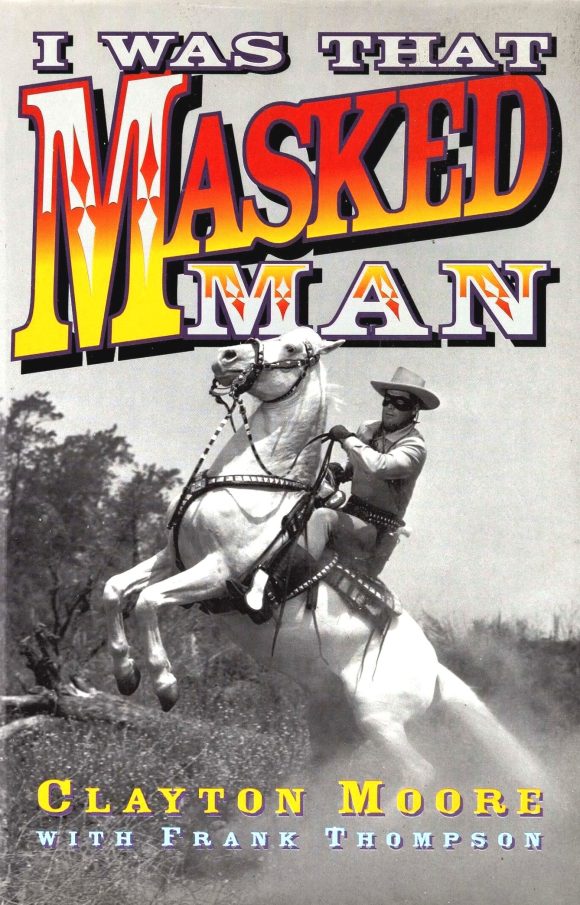
Clayton Moore’s 1996 autobiography, I Was That Masked Man (Taylor Publishing Company).
By PETER BOSCH
For the entire run of The Lone Ranger TV series, viewers were teased with never being able to see his full face. Normally, the Ranger would be wearing the mask. However, when he wanted to interact with townspeople unnoticed, he would assume a variety of disguises, such as the squinty-eyed, old prospector, with his upper face now seen but his lower face covered with a scruffy white beard and mustache. Fans wanted to see under the mask.
Jay Silverheels in a skit on The Tonight Show with Johnny Carson in 1969.
Who was that masked man? He was Clayton Moore! But even after the series was cancelled, Moore would wear the costume of the Lone Ranger for public appearances… including the mask. (And later, after the Wrather Corporation sued him to stop wearing the mask, he turned to appearing with sunglasses.)
So… what was the true face of the Lone Ranger? For that, we need to go back to when Moore was new to Hollywood and to movies, with a special focus on the 10 serials he made while there.
Jack Carlton Moore was born Sept. 14, 1914, in Chicago. He showed a leaning toward athletics and, even before reaching full adulthood, he was part of a youthful aerial trapeze act called the Flying Behrs.
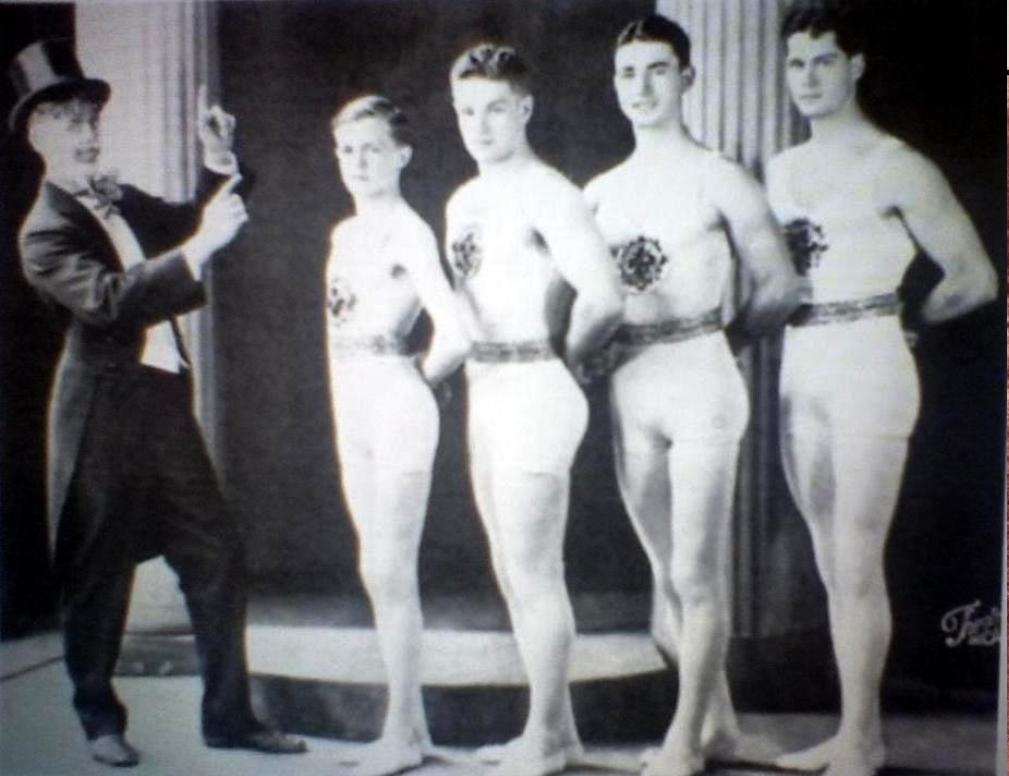
The Flying Behrs, with Moore on the right. Circa, early 1930s.
An injury to his knee on a trampoline sidelined that career and he became a model and then went to Hollywood. Though film researchers vary on which was his first movie, Moore (in his autobiography, I Was That Masked Man, co-written with Frank Thompson) says it was When Were You Born?, a 1938 mystery thriller from Warner Bros. His part as an assistant district attorney consisted of just one scene with less than a half dozen lines, not enough for him to be included in the screen credits.
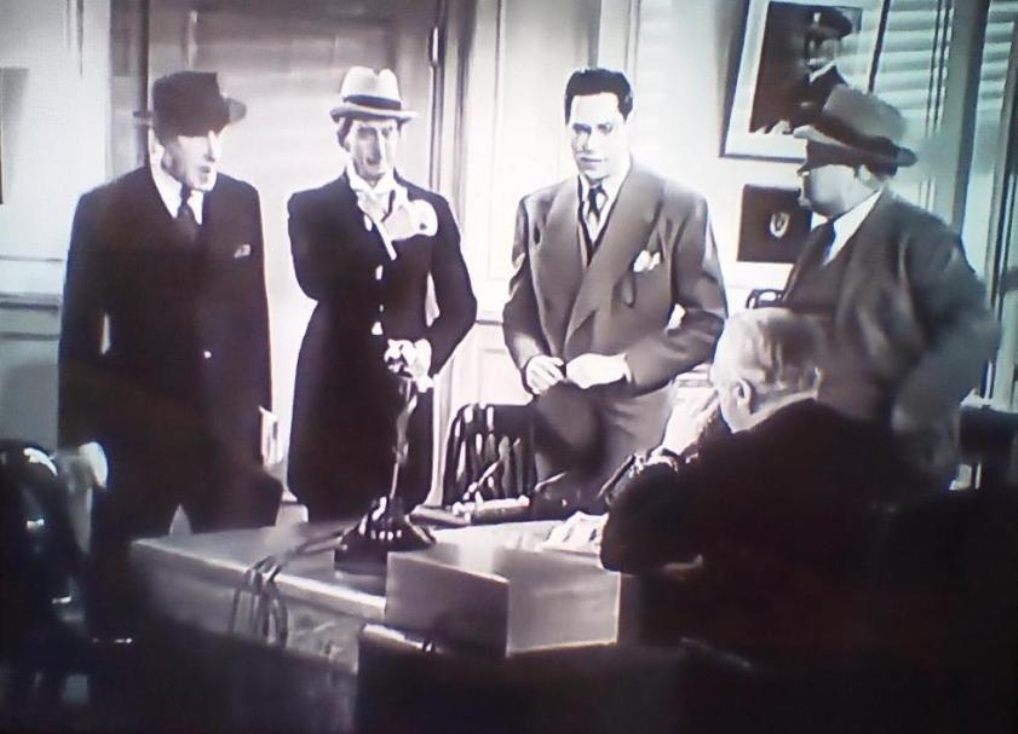
Moore, third from left, in When Were You Born? (1938, Warner Bros.)
Additional small roles followed at Warner Bros. and then at other studios, but he was working his way up slowly, first using the name “Jack Moore” and then “Jack Carlton.”
Between 1940 and 1941, he appeared in three movies for producer Edward Small. He was again in minor roles, but it was Small who was influential in the next part of his career, suggesting he change his acting name to “Clayton Moore.”
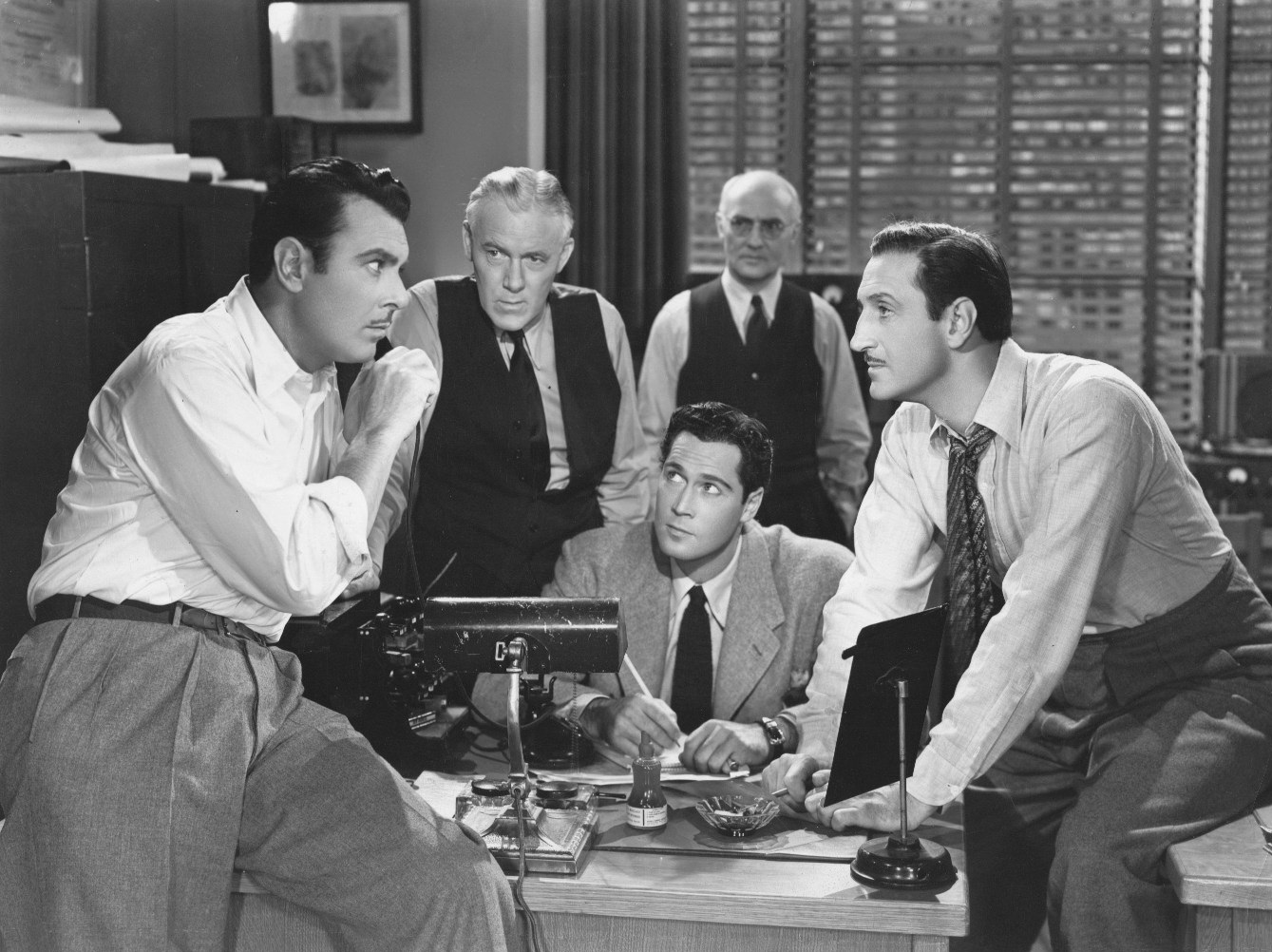
In this photo from the Edward Small production of International Lady (1941, United Artists), Moore sits center, flanked by stars George Brent and Basil Rathbone.
Still freelancing, he went over to Republic Pictures where he was cast in the supporting role of a probation officer in the B-picture Tuxedo Junction (1941). Following that, though, he was assigned to his first (and favorite) serial.
That 15-chapter serial was Perils of Nyoka (1942), a follow-up to the studio’s successful 1941 chapter play, Jungle Girl (with Nyoka, a creation of author Edgar Rice Burroughs, played in that first production by Frances Gifford). Moore’s role in the sequel was the male lead, archaeologist Dr. Larry Grayson, who aids Nyoka (played this time by Kay Aldridge) in her attempt to find the legendary Golden Tablets of Hippocrates, which was said to contain a cure for cancer.
Opposing them was one of the great villains of the Republic serial era, Vultura (portrayed by Lorna Gray), who had an evil group of worshippers doing her bidding, including Charles Middleton, best known as Ming the Merciless in the Flash Gordon serials, and Tristram Coffin, who would later play Captain Reid of the Texas Rangers, the older brother of Moore’s Lone Ranger in the show’s first episode.
In this first chapter of Perils of Nyoka, Moore shows his charm right in the opening credit sequence:
Moore and Aldridge also made the cover of this issue of Nyoka the Jungle Girl #25 (Nov. 1948, Fawcett), even if the comic did come out six years after the serial was released. (Note: The “two complete serials” referred to on the cover were not adaptations of the movies but, rather, two original serialized comics stories within.)
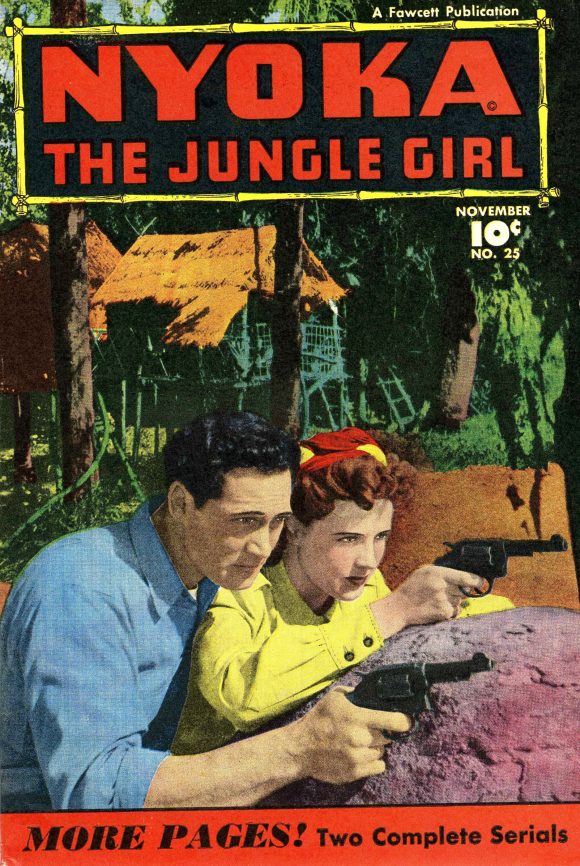
Nyoka the Jungle Girl #25
Before Moore had the chance to appear in another serial, however, he was drafted into World War II, serving in the Army Air Forces stateside because of his knee injury.
In 1946, he returned to Republic Pictures and was put in one of the studio’s best serials, The Crimson Ghost, but this time as the mysterious villain’s top henchman, the completely venomous Ashe who was very willing to sell out our country’s secrets to an enemy power.
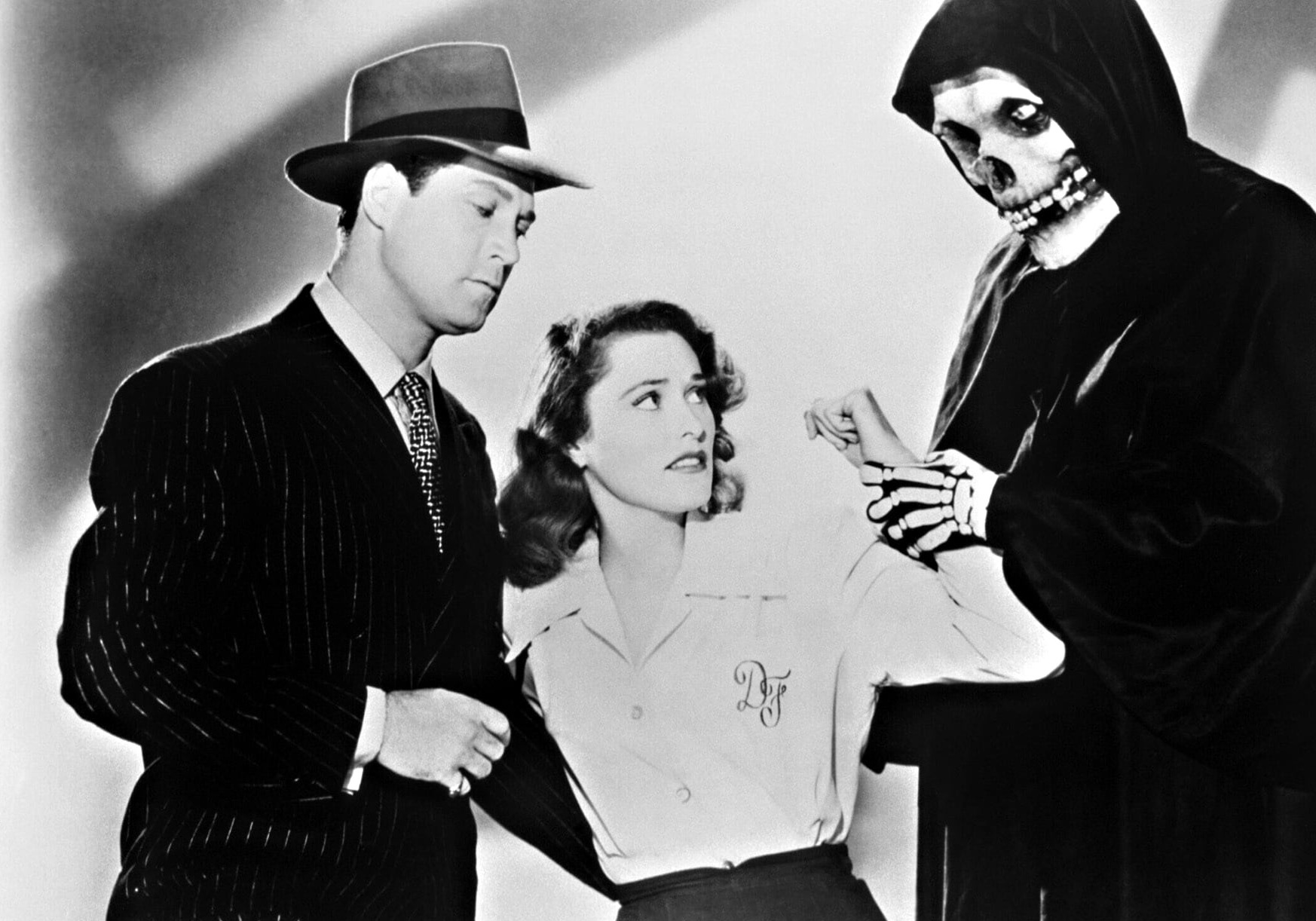
Publicity photo of heroine Linda Stirling caught in the clutches of bad guy Moore and The Crimson Ghost. (1946, Republic).
Moore’s next serial was Republic’s Jesse James Rides Again (1947). He was reunited with Linda Stirling and Tristram Coffin in the tale that Moore described in his autobiography as “nothing authentic in the story we told. Obviously the real Jesse James was a vicious outlaw, a bank robber and killer, but audiences didn’t seem to mind that we turned him into a sympathetic, law-abiding character. After all, it was only a serial and a very exciting one at that.”
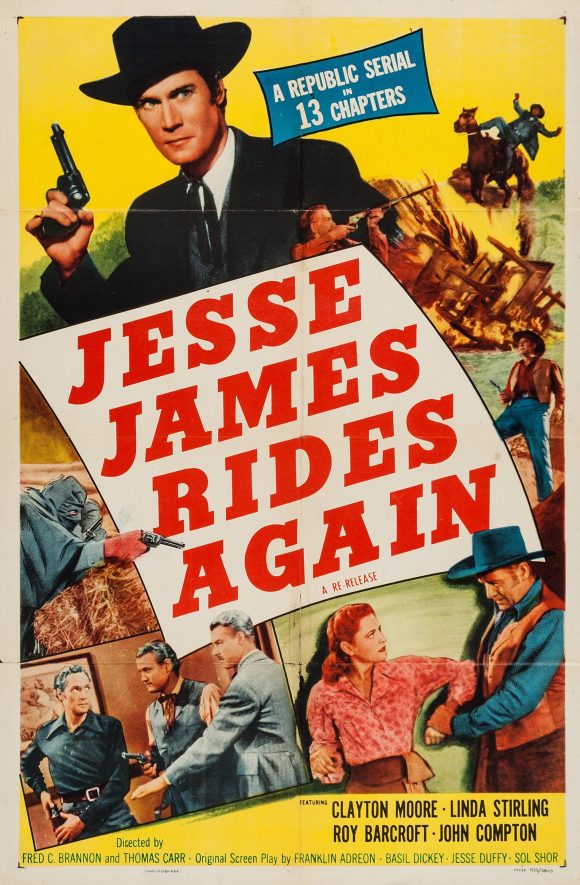
1947
In 1948, he starred in two Republic chapter plays. For G-Men Never Forget (1948), he was federal agent Ted O’Hara, out to capture an escaped convict (Roy Barcroft) who, unbeknownst to O’Hara, has used plastic surgery to look exactly like the police commissioner (also Roy Barcroft).
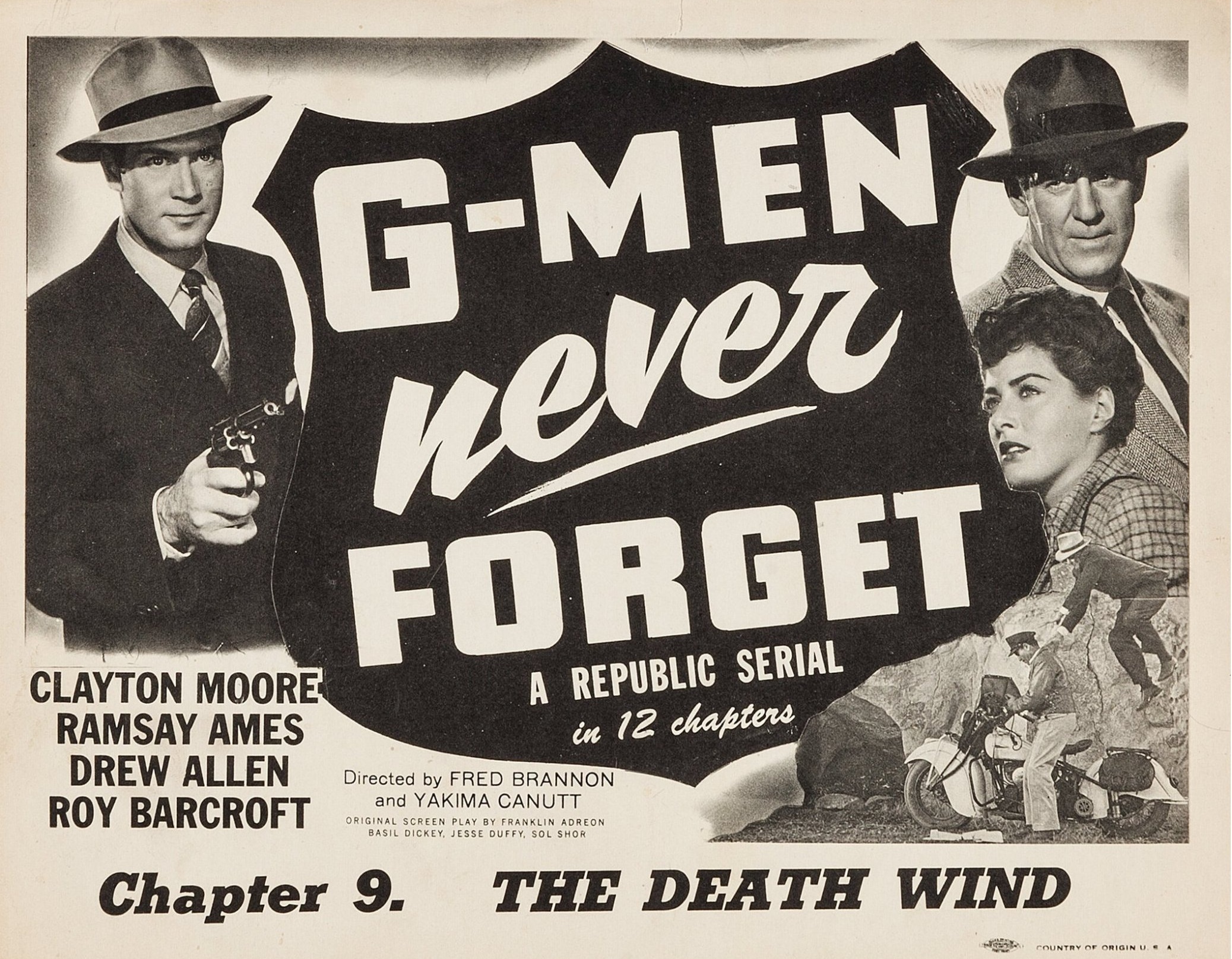
1948
Moore made a return to the Jesse James role in his next serial adventure, Adventures of Frank and Jesse James (1948). His female co-star was Noel Neill, better known to all of us as the first live-action Lois Lane.
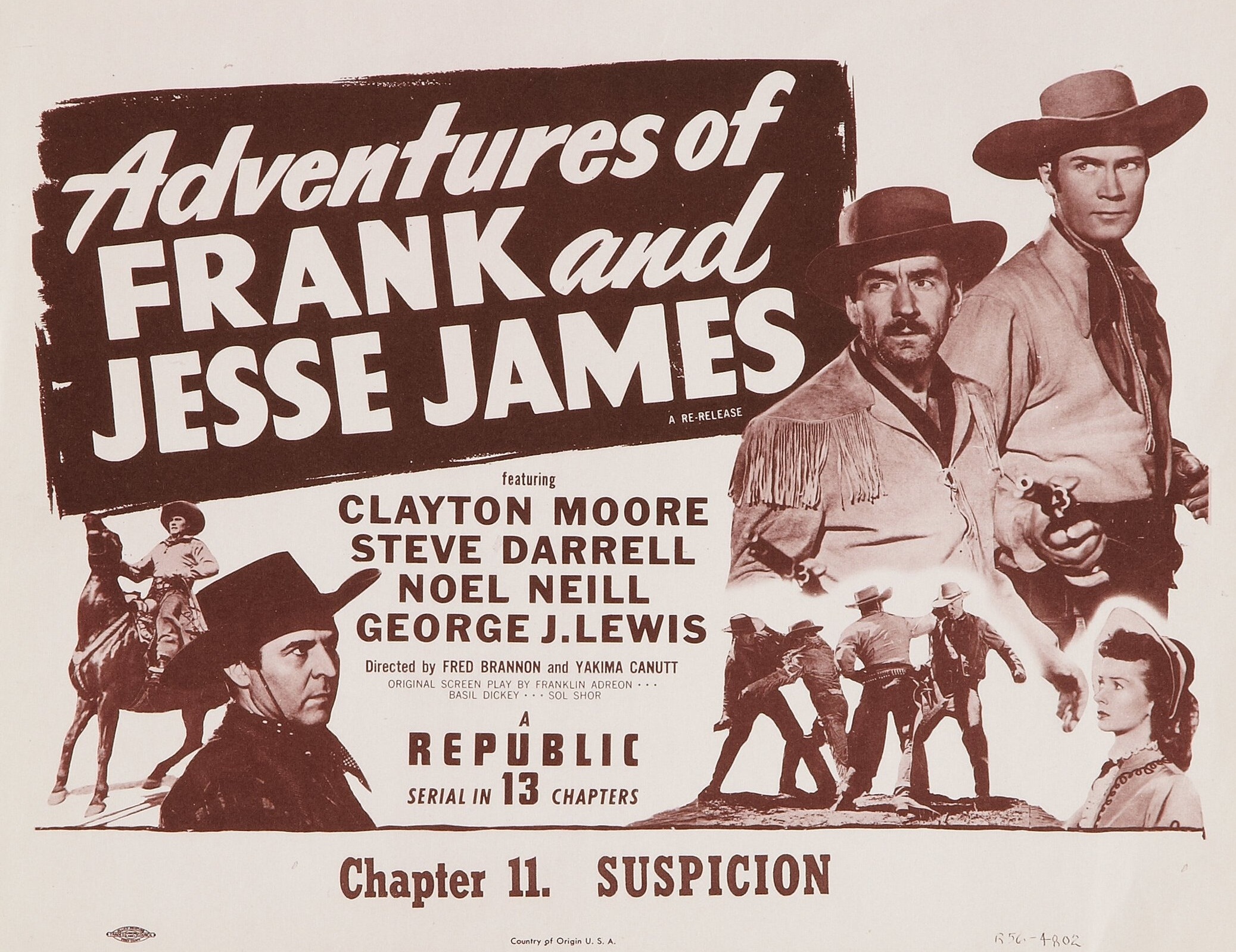
1948
The next serial was also a Western for Moore, but it would have the most profound change on his life. Not because of the content… but because of him.
Ghost of Zorro (1949) starred Moore as the grandson of the original masked rider of old Los Angeles. In the serial, when Moore was Zorro, the studio did something odd: They dubbed in another actor’s voice. But it didn’t really matter because even when he was covered from head to foot, including a full face mask, they could not hide the Clayton Moore stature, as this photo shows.
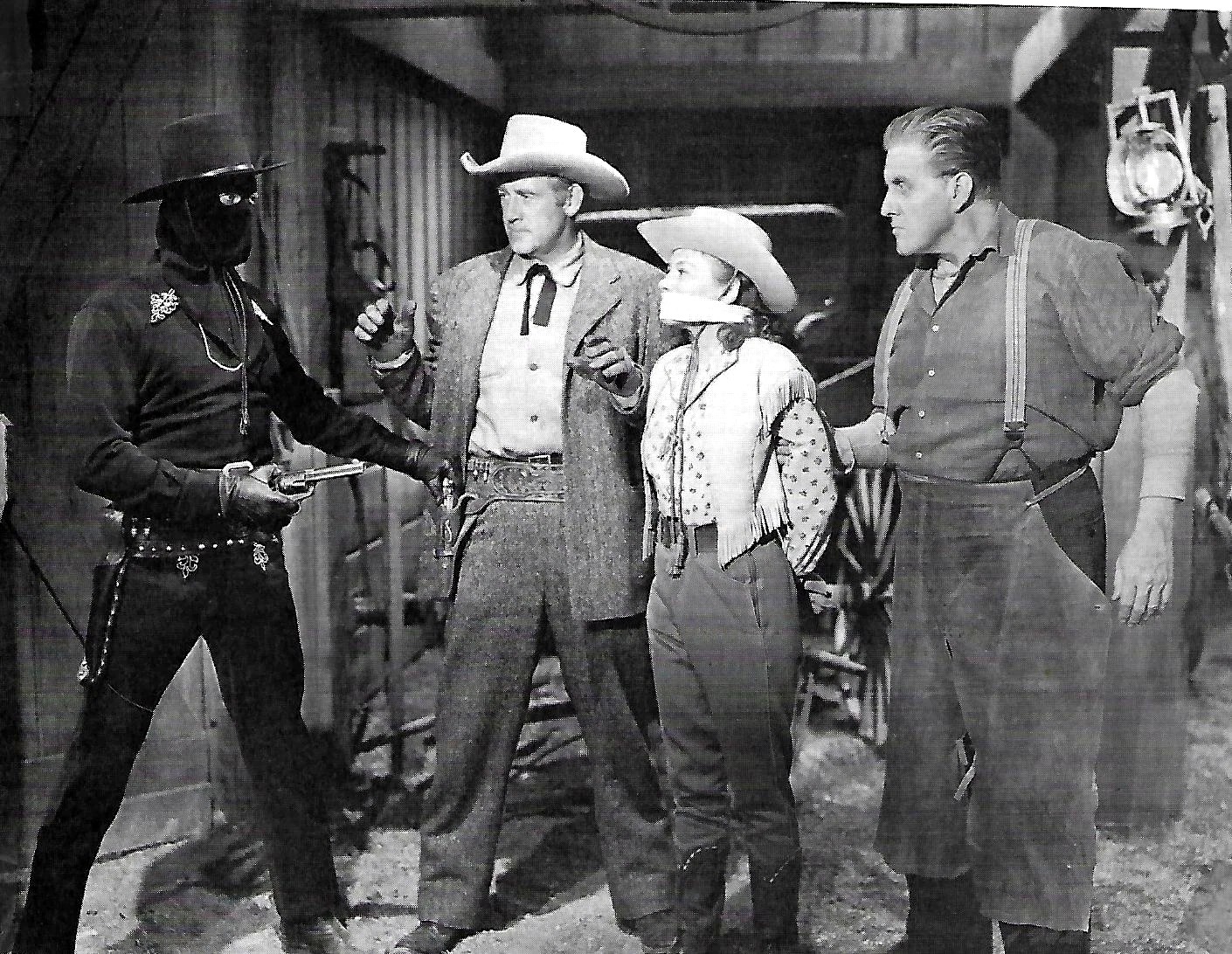
Was there anyone but Moore who had such a distinctive stance? Left to right: Moore, Roy Barcroft, Pamela Blake, and Gene Roth.
And that was just what the producers of a new TV series were looking for in casting their lead role. Moore was called in for an interview. Before he left the office, he was told he was to be the Lone Ranger!
In the run of movie serials, I’m skipping 1950’s Flying Disc Man from Mars because the footage of Moore was recycled from other serial work and he didn’t receive any screen credit. However, he did appear in a different alien-wants-to-conquer-Earth serial from Republic, Radar Men from the Moon (1952).
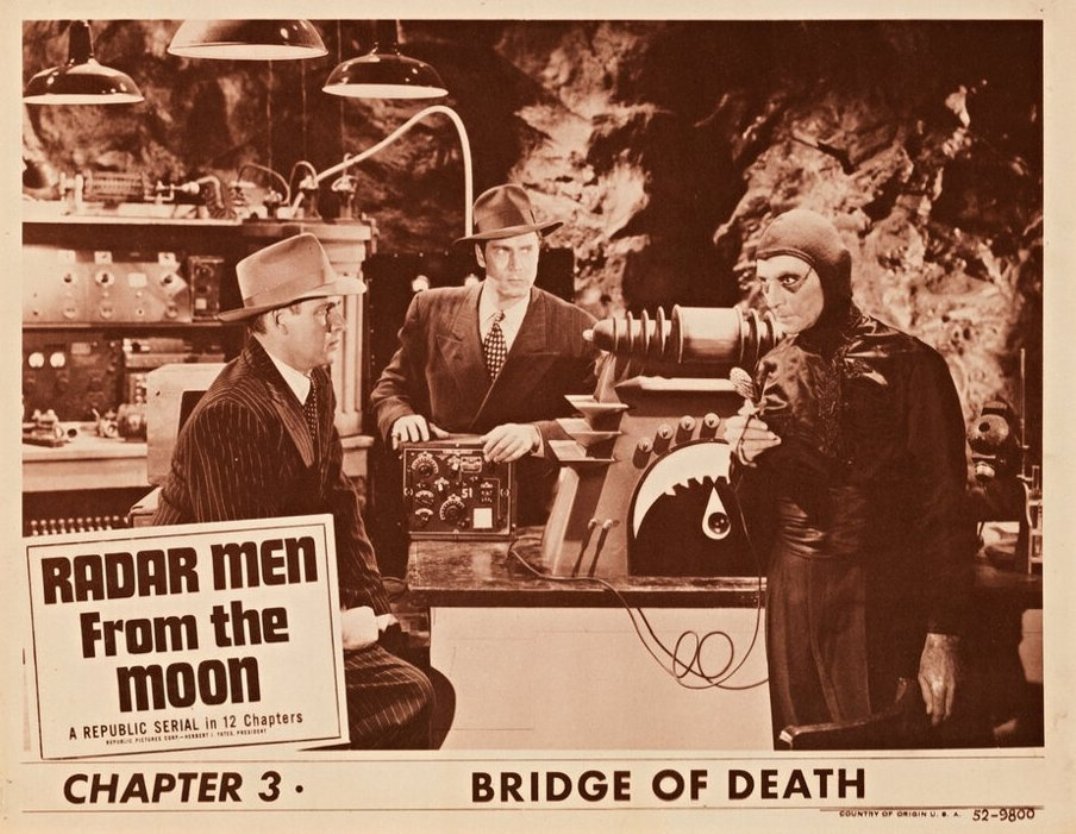
Radar Men from the Moon (1952, Republic), with (l-r) Bob Stephenson (credited as Bob Stevenson), Moore, and Peter Brocco.
Here, Moore was a gangster named Graber, the Earth henchman to Retik (Roy Barcroft), who was planning an invasion from the moon. He filmed the serial when he was absent from The Lone Ranger for a year. There are two versions of why he left: One is that Moore stayed away because he wanted an increase in salary and/or a cut of the merchandising. The actor said in his book, however, that he was fired and never knew why. John Hart replaced him and Moore returned to making to making movies and serials
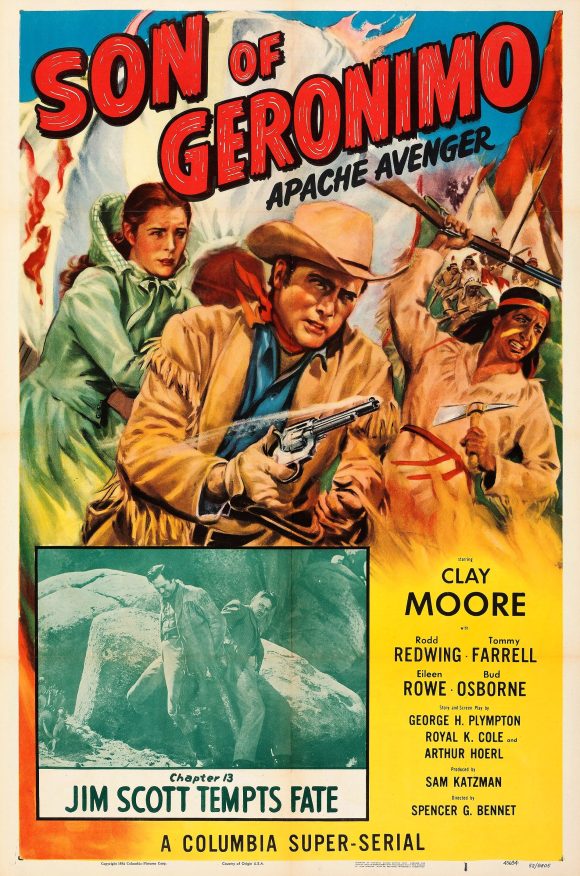
1952
One of those serials was Son of Geronimo: Apache Avenger (1952), where he had himself billed as Clay Moore. Though it was a Columbia Studios production, known for their incredible cheapness, it was directed by Spencer Bennet, who had helmed some of Republic’s greatest serials, including Manhunt of Mystery Island and The Purple Monster Strikes, both released in 1945. (Bennet also directed the 1948 Superman and 1950 Atom Man vs. Superman serials at Columbia, as well as the 1949 Batman and Robin and 1952 Blackhawk serials.)
Moore made just one more serial at Republic and it was Jungle Drums of Africa (1953), which he regarded as a disaster. (However, he did get to appear with another live-action Lois Lane, Phyllis Coates, but here with blonde hair as a missionary doctor.)
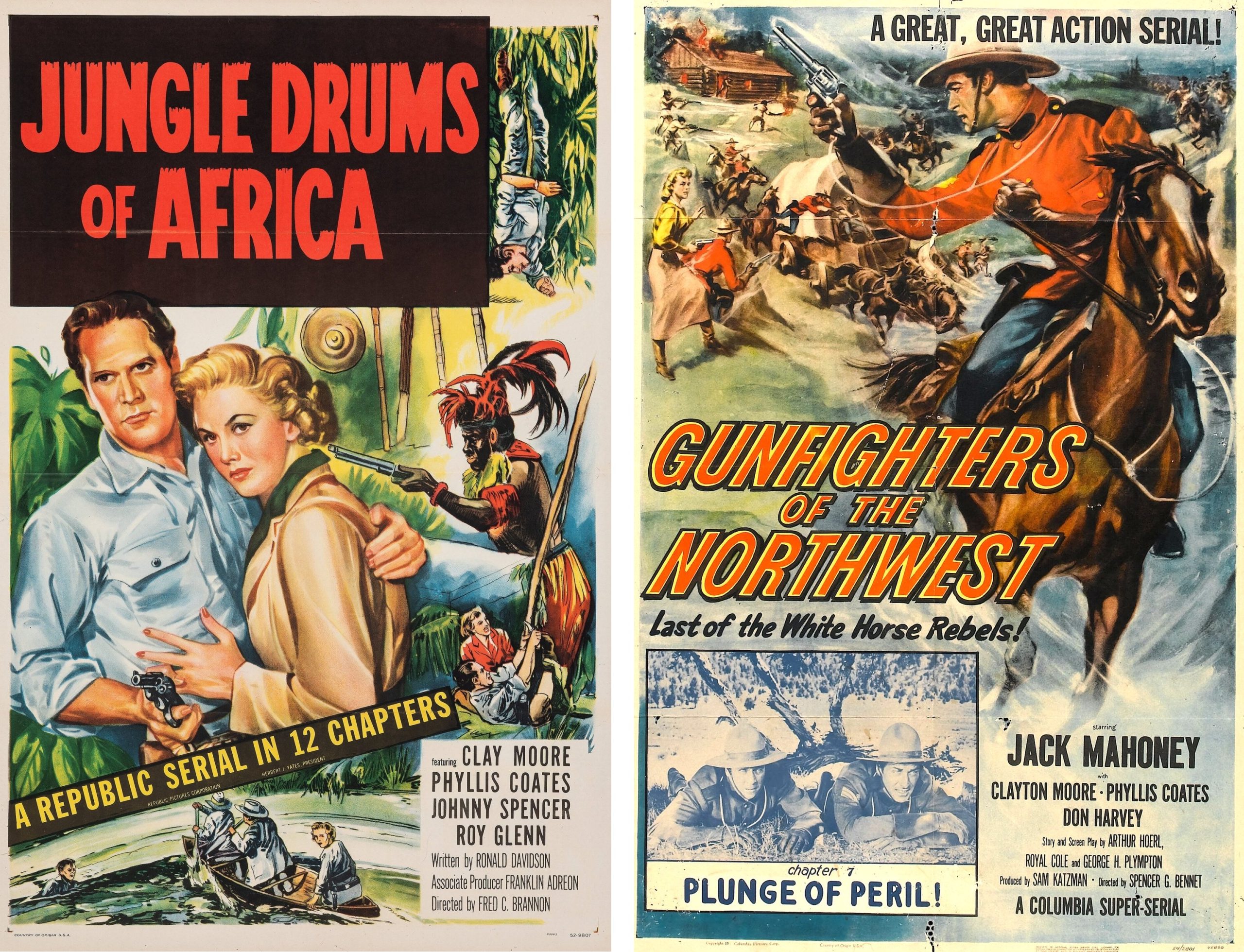
Clayton Moore’s last two serials.
His final serial, Gunfighters of the Northwest, another Columbia production, was released in 1954, with Moore playing another member of the law, this time a Canadian Mountie. Later in the year, he returned to the role that only he was meant to play, the Lone Ranger, and continued on as the Masked Rider of the Plains for the remainder of the series.
Moore would live to the age of 85, dying December 28, 1999. Three years earlier, he had concluded his 1996 autobiography with: “It doesn’t matter that I am Clayton Moore, an actor, and that the Lone Ranger is a legendary figure of folklore. In more ways than I can count, we have become one and the same. I have absorbed parts of him, and he has taken on the best elements of my personality. Until the day I am taken to that big ranch in the sky, I will continue to wear the mask proudly and try my best to live up to the standards of honesty, decency, respect, and patriotism that have defined the Lone Ranger since 1933.”
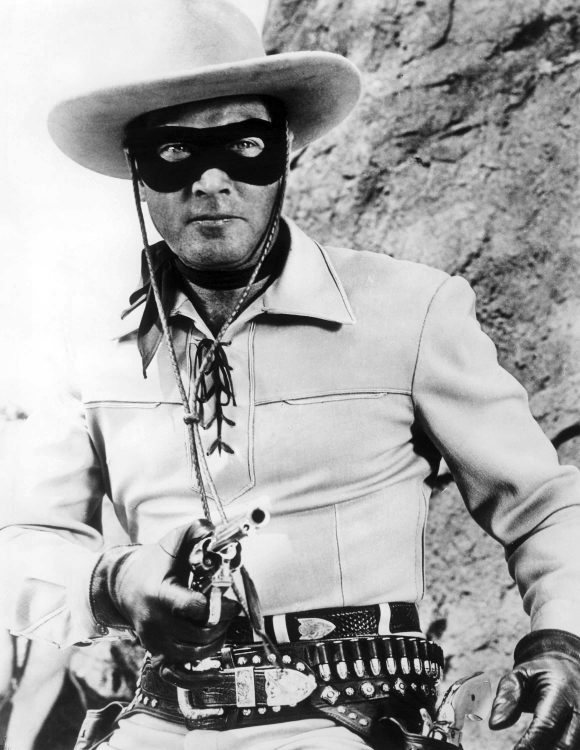
If I may add, I feel those of us who watched Moore as the Lone Ranger when we were children were influenced by his portrayal. And we, in turn, became better people because of it. To me, that is the true face of the Lone Ranger.
—
MORE
— 13 LONE RANGER COVERS: A CLAYTON MOORE Birthday Celebration. Click here.
— 13 MORE LONE RANGER COVERS: A CLAYTON MOORE Birthday Celebration. Click here.
—
13th Dimension contributor-at-large PETER BOSCH’s first book, American TV Comic Books: 1940s-1980s – From the Small Screen to the Printed Page, was published by TwoMorrows. (You can buy it here.) A sequel, American Movie Comic Books: 1930s-1970s — From the Silver Screen to the Printed Page, is out now. (Buy it here.) Peter has written articles and conducted celebrity interviews for various magazines and newspapers. He lives in Hollywood.


September 14, 2025
When we came to US, we stopped at a motel and while we were there, the manager set me in front of a TV, which I never seen before, and watched The Lone Ranger. He became first hero for me and second hero was Superman. That was in 1956.
September 14, 2025
And then there’s that great story Jay Thomas used to tell on Letterman about his Clayton Moore encounter.
September 15, 2025
Wasn’t Noell Neill the FIRST live action Lois in 1948’s SUPERMAN Serial from Columbia?
September 16, 2025
You are correct. I should have been more specific that I was talking about the Lois Lane order in the TV show. But serialwise, both of which were before the TV show, Neill was the first. I will get that fixed. Thank you.