Posted by Dan Greenfield on Mar 24, 2026
The TOP 13 DC/MARVEL Crossovers — RANKED
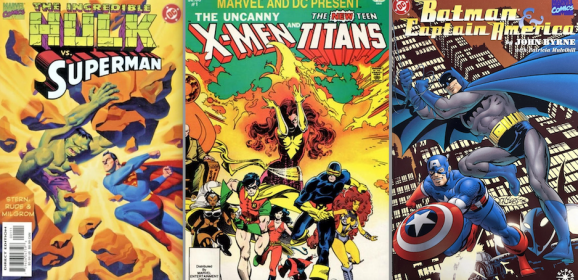
Superman/Spider-Man #1 is out this week! By JASON CZERNICH Fifty years ago, in January 1976, DC and Marvel gave us the very first crossover between their characters with the landmark Superman vs. The Amazing Spider-Man. I wasn’t born yet, let alone collecting and reading comics, but I can just imagine the feeling fandom had at the time. Perhaps it was something akin to the surprise I got when I watched Disney toons interact with their Warner Brothers counterparts in 1988’s Who Framed Roger Rabbit? Broadly, intercompany crossovers among a whole litany of publishers are commonplace now, but the first wave of DC/Marvel projects in the late ’70s and early ’80s were quite a thing for the industry, fans and pros alike, to behold. Since then, then Big Two have had a checkered relationship: There was a second wave (1994–2004) that produced a lot of material — not all of it great — and then… nothing. As of 2025’s Deadpool/Batman and Batman/Deadpool one-shots — plus the recent publication of omnibus collections and Facsimile Editions — we are now officially in the third wave of DC/Marvel crossovers. This week, it all comes full circle, with DC’s release of Superman/Spider-Man #1 — click here for a SNEAK PEEK — to be followed in April by Marvel’s Spider-Man/Superman #1. With that in mind, here are my picks for THE TOP 13 DC/MARVEL CROSSOVERS — RANKED: — 13. Superman/Fantastic Four (1999). I am a sucker for when Dan Jurgens writes and draws a story—especially if it is a Superman story. I am a sucker for oversize formats. I am a sucker for Alex Ross. Superman/Fantastic Four had all of this and more, as well as inventive ways to include Galactus and Cyborg Superman, aka Hank Henshaw They even take the time to reference how Henshaw’s origin is a dark mirror image of the Fantastic Four’s beginnings. The wraparound cover by Jurgens and Ross was just the icing on this cosmic cake. — 12. DC Versus Marvel Comics (1995). This will probably be the most controversial entry on this list due to the fan voting aspect of it alone. However, the four-issue miniseries actually had some genuinely good moments. Aside from the matches, writers Ron Marz and Peter David, teamed with pencillers Dan Jurgens and Claudio Castellini, gave us some fun character interactions we never thought...
Read more