
Or, maybe not buried, but still a treasure…
By PETER STONE
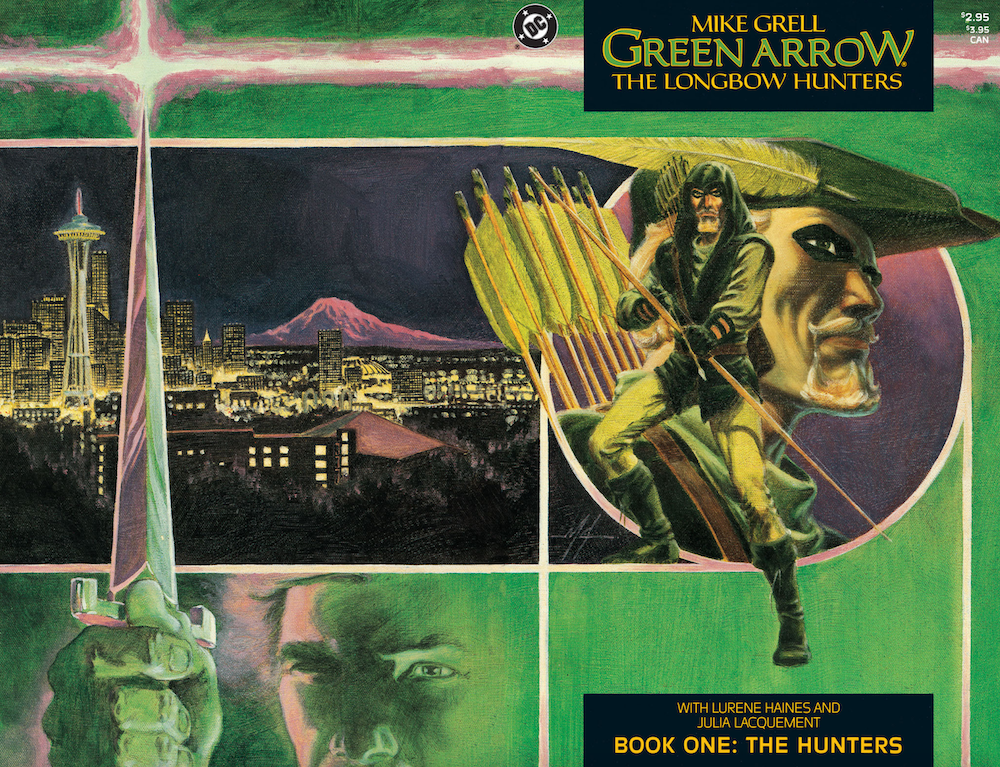
Neal Adams used to act out a story about the Mike Grell redesigned Green Arrow. He’d talk about the billowy sleeves firing a bow. (Anyone who has fired a bow knows this is a recipe for disaster.) Then he’d say, “Look! On your left!” And he would pretend to turn his head quickly, using his hand as the hood. Of course, he couldn’t see through the hood, so he’d say, “Where?! I can’t see it! Wait, I’ll have to take off the hood!” He would laugh and talk about why he designed Green Arrow the way he did.
Grell, having taken over Green Arrow after Neal, once said to him as they were eating together at a convention, “Dammit, Neal. I’m always following you.” They both thought that was funny.
That said, Neal liked Mike and respected his desire to tell his own stories outside the Big Two.
Mike Grell didn’t want to be drafted during the Vietnam War, so he took matters into his own hands and joined the Air Force, where he served for four years. During this enrollment, he spent a certain amount of time as an illustrator in Saigon. Before he enlisted, Grell had completed the Famous Artists School correspondence course created by Albert Dorne and featuring Norman Rockwell as a contributing creator. The course sprang from the artists at New York’s Society of Illustrators and featured the likes of Austin Briggs, Robert Fawcett, Al Parker, and John Whitcomb. It’s not a mystery why Grell was attracted to it, having already studied at the Chicago Academy of Fine Arts and a strong desire to make his dream of being a working artist a reality.
Coming soon
After his service and a stint working as Dale Messick’s assistant on Brenda Starr, he got work at DC Comics in the 1970s: Aquaman, the Phantom Stranger, Batman, the Legion of Super-Heroes, the first Batgirl-Robin story in Batman Family. He pencilled the revival of Neal and Denny O’Neil’s “Hard Traveling Heroes” — Green Lantern and Green Arrow.
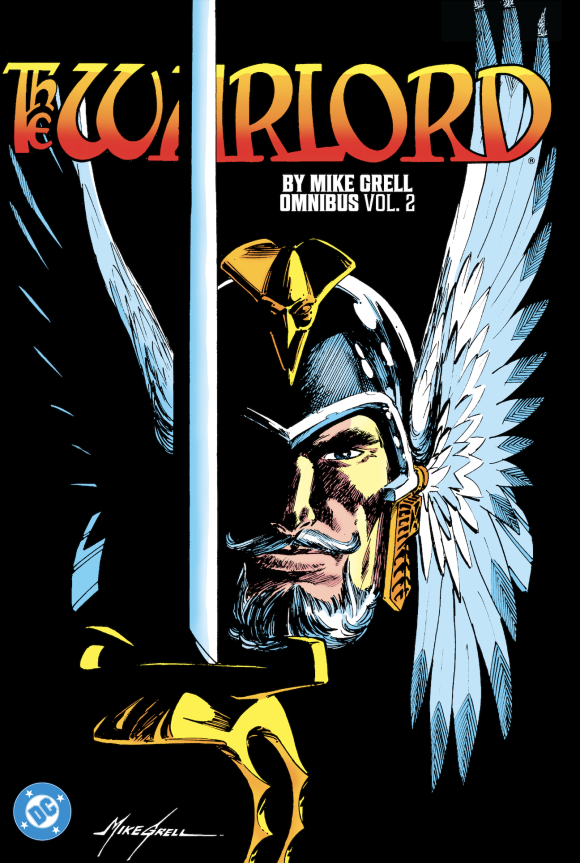
But Grell also delved into the world of creation. The Warlord became a fan favorite character… a man lost in a world much like Edgar Rice Burroughs’ Pellucidar. Travis Morgan was a modern-day man with a Thor-like helmet, a sword and .44 auto-mag. Warlord lasted for years and still brings a warm feeling to many fans.
In 1981, Grell spent two years drawing the Tarzan newspaper comic strip. Then, he created Starslayer, which had some elements of Warlord. Finally, he put it all together with his greatest work, Jon Sable, Freelance, originally published by First Comics.
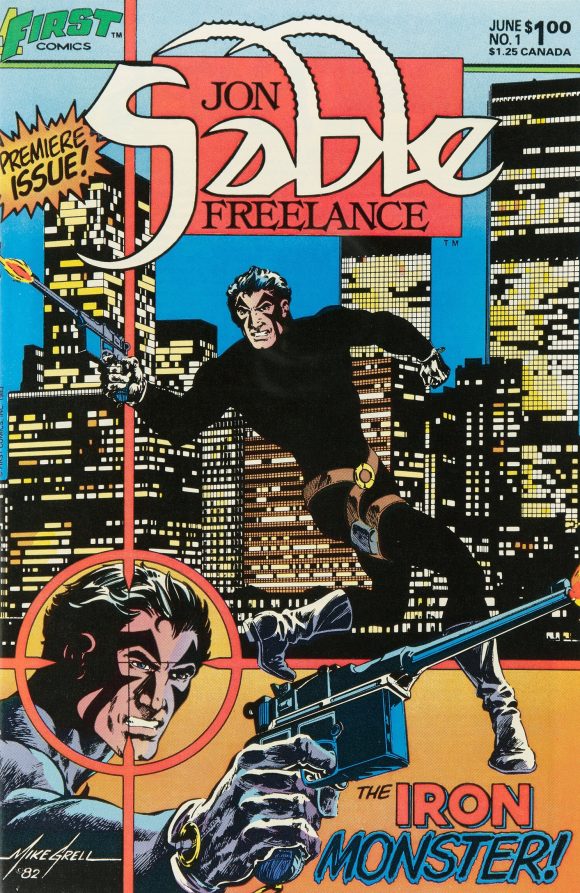
In interviews, Grell said Jon Sable was a combination of James Bond and Mike Hammer, but I think it was far more sophisticated than that. He started with a man who fit right into the time period America was going through. The Punisher, Dirty Harry, The Dogs of War, and even Wolverine were all of the new-antihero mold. Jon Sable was not afraid to use guns as his primary weapon. He was not a martial artist or a man with special powers. He was a well-trained soldier who knew how to use firearms expertly. The first few stories were simple and clear, derivative of Grell’s desire to make a Dashiell Hammet hero with an edge of old movies, thanks to an old friend who acts like Errol Flynn.
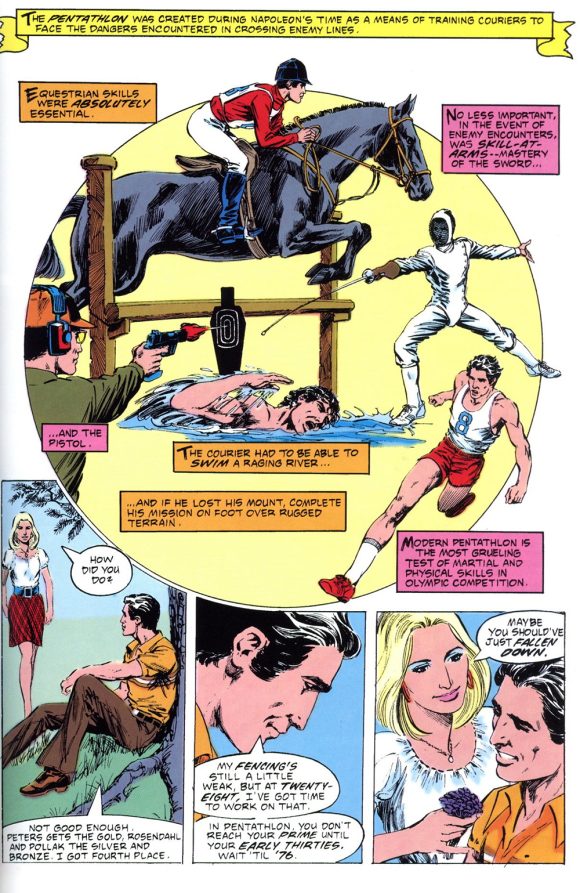
Then, Grell started to really get into the core of the character, his history, his back story, and most importantly, his driving force. He competed in the pentathlon (horse riding, swimming, fencing, running, and pistol shooting) in the 1972 Munich Olympics when the massacre of Israeli athletes shocked the world. While mourning their loss, Sable meets his wife and, after the Olympics, takes a job as a safari guide. But he also takes side work with the government to prevent poaching. It makes him plenty of enemies — who murder his beautiful wife and their two children. It’s a tragedy that will haunt Sable for the rest of his life.
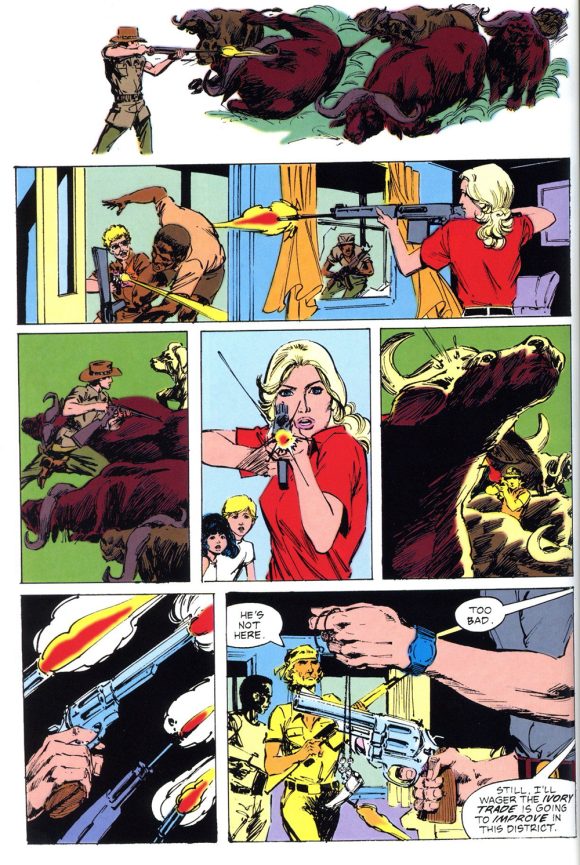
These were the most interesting parts of Sable — the underlying tragedy and the angst that ripped through the man. Sure, the plots of the individual issues were fun… the spin on The Maltese Falcon, the Maggie the Cat story, terrorists, sexy and willing women, interesting and unique weapons, and Myke Blackmon, the only woman Sable could ever love after his wife. (Myke is the artist who draws the pictures for Jon Sable’s children’s book. What? A children’s book? Yep. Sable writes stories… the kind he used to tell to his children at bedtime. It’s a bit of a cliché, sure, but it adds more to the character.)
Version 1.0.0
Jon Sable was successful enough that it was turned into a television show, starring Lewis Van Beren as Sable and Rene Russo as his editor. Unfortunately, the show only lasted seven episodes, maybe because the producers and writers never truly understood what Grell was trying to do. Jon Sable was not supposed to be Batman with guns. Despite the violence, Jon Sable is an extended character arc of an emotionally wounded man unwilling to change until the world presents him with a new way of living. Sometimes he fights to be a better man… and sometimes he just takes the money, the guns, and the girls.
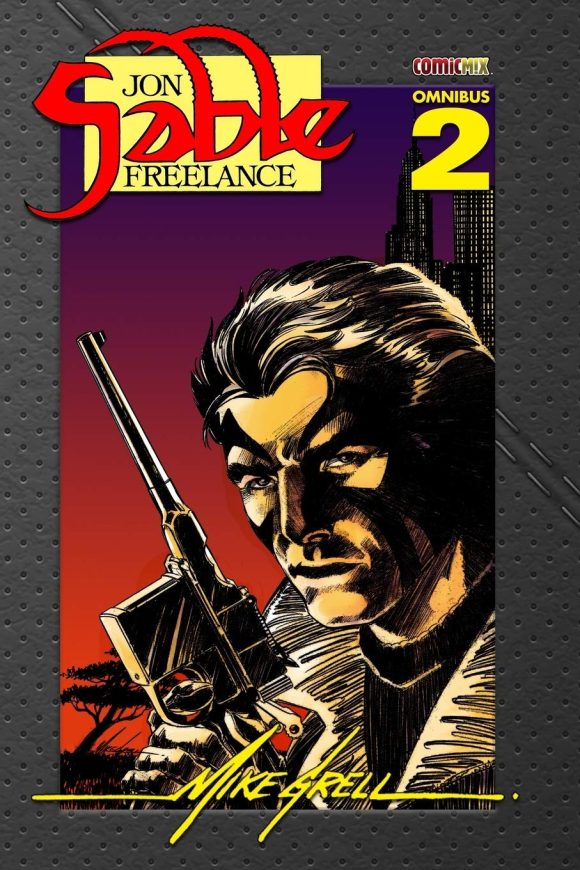
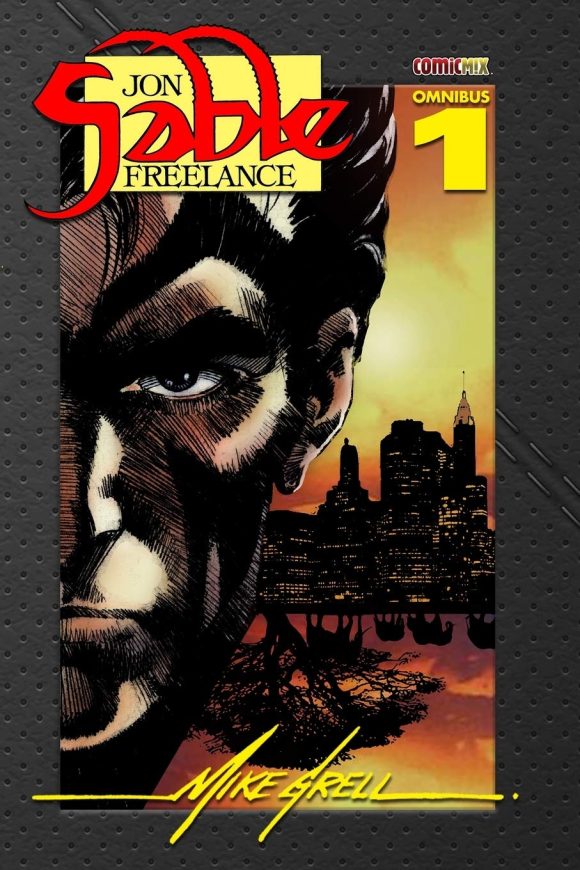
Grell has given us plenty of other stories, including the classic Green Arrow: The Longbow Hunters, but Sable, in my humble opinion, is the most personal of all his creations. After more than 40 years of publishing — the series debuted in 1983 and is now available as a series of omnibus editions — Jon Sable, Freelance remains popular with those of us who grew up with him.
And he’s still out there — even surfacing again in the last 10 years — waiting for Grell to have another story to tell.
—
MORE
— BURIED TREASURE: The Bronze Age Lives of MACHINE MAN. Click here.
— (Not Exactly) BURIED TREASURE: Waid and Hitch’s THE LAST DAYS OF LEX LUTHOR. Click here.
—
Peter Stone is a writer and son-in-law of the late Neal Adams. Be sure to check out the family’s online Facebook auctions, as well as the NealAdamsStore.com.

April 30, 2026
I was a bit too young for this series in the 1980s, but I’ve recently purchased the “Absolute Editions” (that’s not what they’re called, but they’re the same size) on Kickstarter. I’m still reading them, but I really like the series so far.
Regarding Grell’s redesign of Green Arrow, no offense to Neal Adams, but I never cared for Adams’ redesign of the character. As impractical as both costume designs may be, I much prefer Grell’s design.
April 30, 2026
Love Jon Sable. Have the whole First Comics run, IDW’s Complete Jon Sable series, and I highly recommend Grell’s Kickstarter collected volumes. Great stuff!
April 30, 2026
I became a fan after finding one of the earliest TPB collections in college. More so after interviewing Grell for a junior year paper assignment.
I actually once pondered the idea of, instead of that short-lived TV adaptation, we got a movie made a few years earlier, with Richard Gere as the lead…
April 30, 2026
I didn’t have have access to a comic shop until I went to college in the fall of ’86. I think I bought this entire run out of the quarter boxes at one of the comic shops I frequented in college probably in late ’87.
It’s a book that is so tied to the creator that nobody else who touched it was able to make it readable. But it is definitely one of Grell’s best.
April 30, 2026
I loved Grell’s run on Jon Sable – one of my all-time favourites. Also have the later Ashes Of Eden and Bloodtrail. And….the novel!
May 30, 2026
Yipes. Gotta get me to Kickstarter I guess. I was all-in on 80’s late 70’s/80’s Greel from Warlord to Starslayer to Sable…which led me to then dive into his Legion and GA/GL run