
MORRISON MONDAYS and the greatest of them all…
By BILL MORRISON
Tuesday marks the 60th anniversary of the first airing of A Charlie Brown Christmas on December 9, 1965. I was in front of the Morrison family Motorola on that day, and have been a fan of Charles “Sparky” Schulz’s comic-strip creation ever since. The special, which came about by happenstance and was considered a disaster by TV executives, went on to win both Emmy and Peabody awards and has become ingrained in the popular culture of the holiday season.
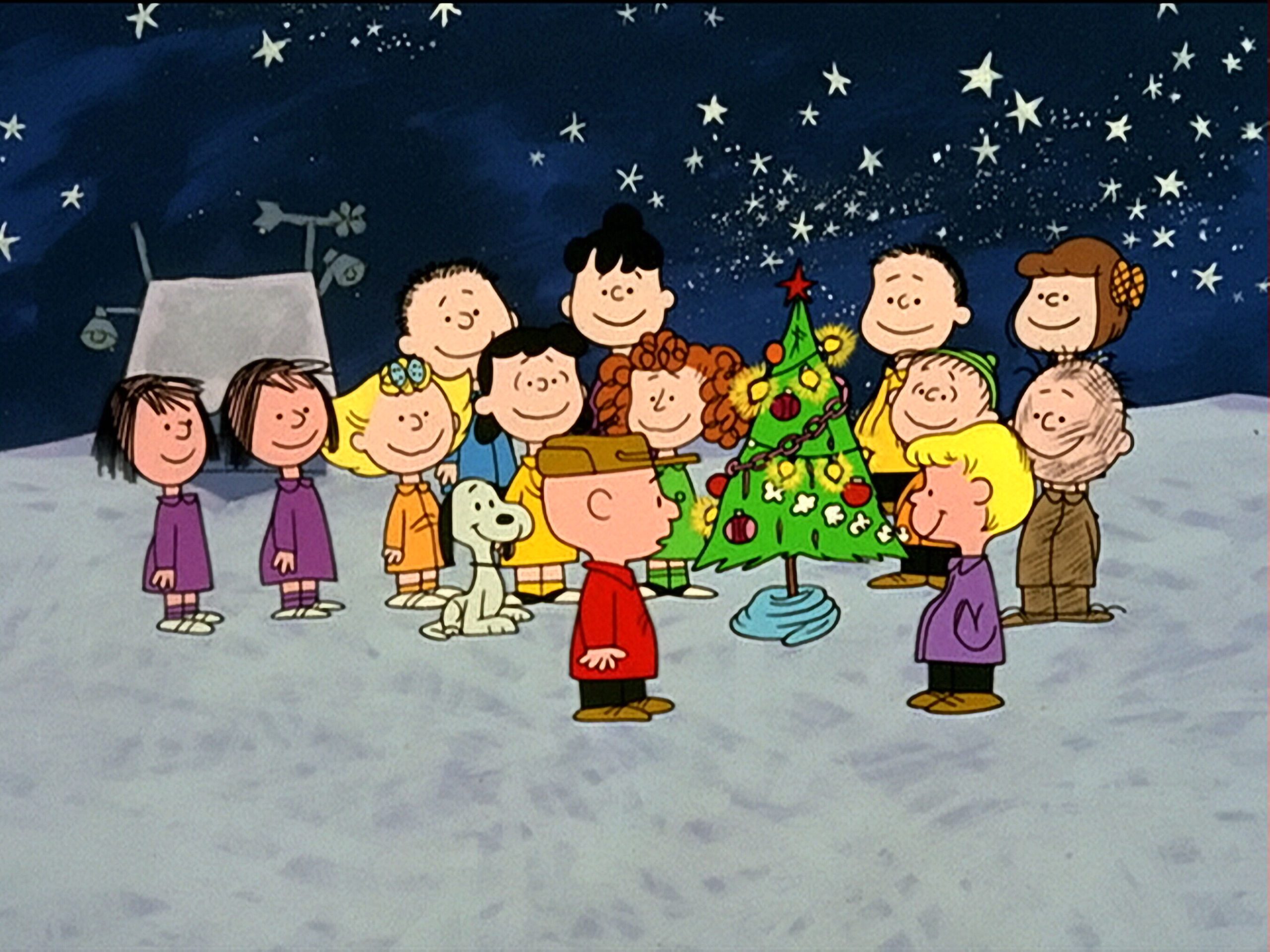
To commemorate this special day, here is A CHARLIE BROWN CHRISTMAS AT 60: 13 SECRETS BEHIND THE HOLIDAY CLASSIC:
—
1. The cherished holiday special began its life as a Peanuts documentary. Lee Mendelson, a producer of documentary films for television, approached Peanuts creator Charles Schulz about making a film focused on the popularity of his comic strip. Sparky was an avid baseball fan and had seen and enjoyed Mendelson’s film about Willie Mays, A Man Named Mays, and agreed to meet with the producer.
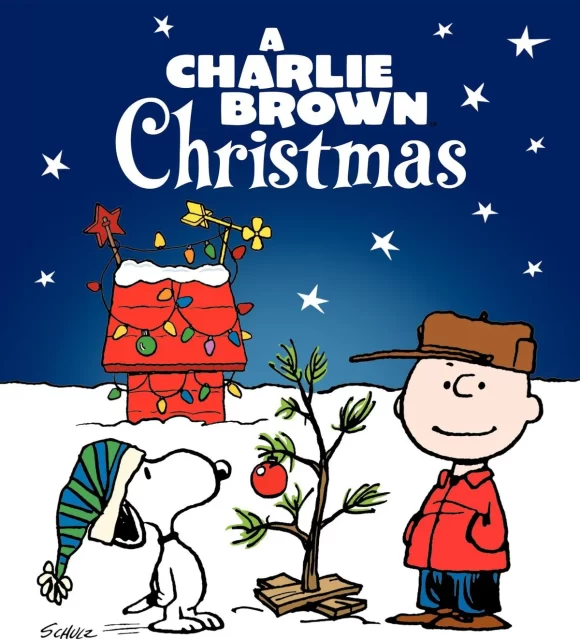
Despite the popularity of Peanuts, networks weren’t interested in the documentary, but in April of 1965, fate stepped in when Mendelson was approached by an executive at the McCann Erickson advertising agency named John Allen. Coca-Cola, a client of Allen’s, was looking for a Christmas special to sponsor, and Allen asked Mendelson if he had one. Mendelson said he absolutely did, even though he absolutely didn’t. The ad executive asked for an outline to be delivered in a few days, so Mendelson phoned Schulz and told him they had sold A Charlie Brown Christmas. Schulz replied, “What in the world is that?” to which Mendelson responded, “It’s something you’re going to write tomorrow.”
—
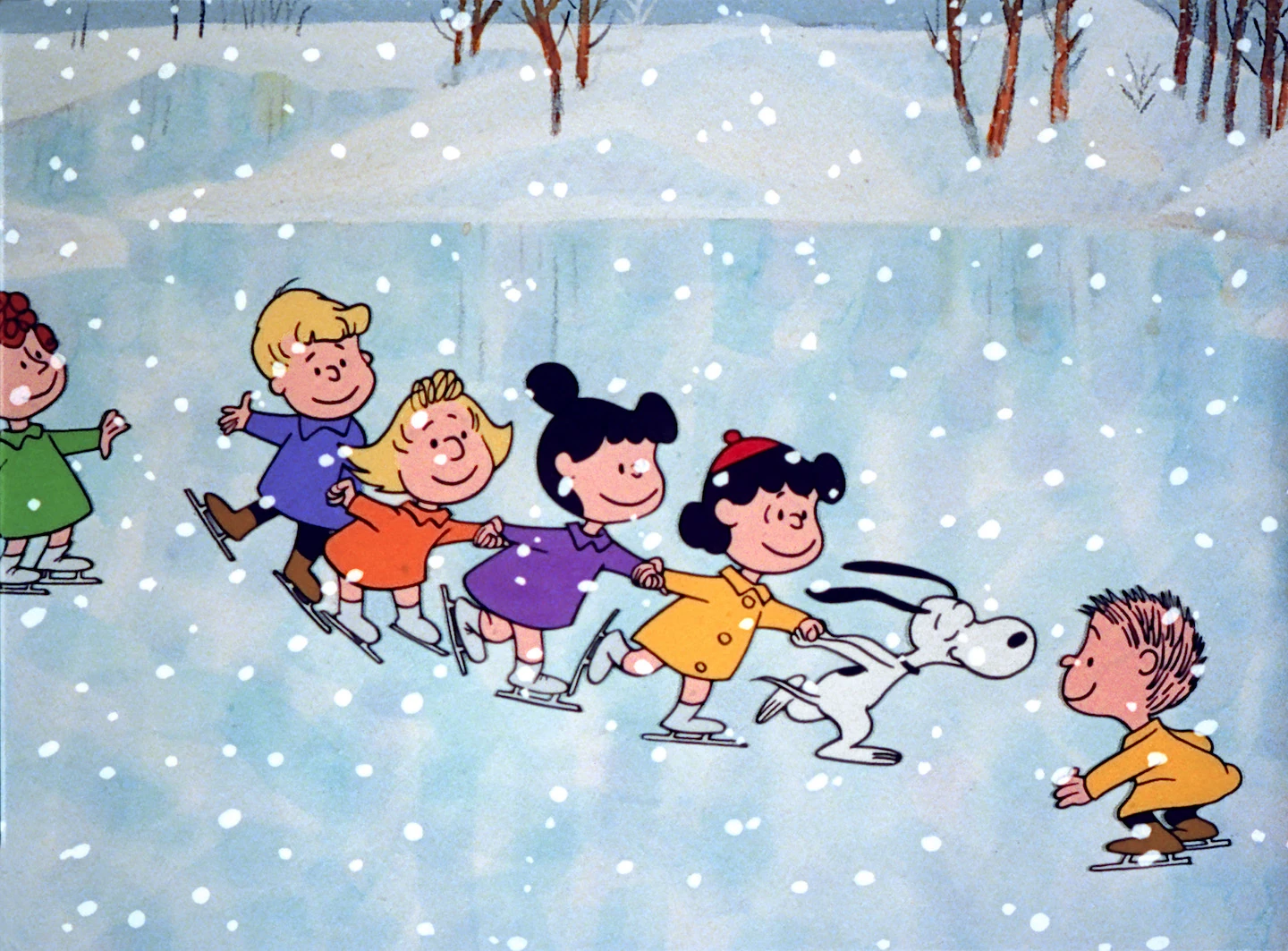
2. The original opening segment of the special included a Coke ad. In the scene, Snoopy skates around on the ice pond, grabs Linus’s security blanket, pulls him back and forth, and entangles Charlie Brown in the blanket as well. Then Snoopy whips them both around, sending Charlie Brown into a tree which dumps its load of snow onto our hapless hero, cueing the superimposed title. But what happened to Linus? Well, in the original sequence, after we see the title, we go back to the ice pond where Snoopy continues to whip Linus around, flinging him into a sign that reads “Brought to you by the people in your town who bottle Coca-Cola. You can see it here:
—
3. The version we’re used to is not the one that originally aired, in other ways. After the first showing in 1965, the special was edited to correct several mistakes or things that the animators didn’t have time to do initially. Did you know that Snoopy originally sang “Hark, The Herald Angels Sing” along with the kids at the end of the special? In the original version, his mouth animation clearly indicates that he’s singing the lyrics. Because Snoopy doesn’t talk, or sing, this was corrected to show him merely howling along. That version of the ending also included another Coca-Cola ad.
—
4. Although it was the first animated Peanuts special, it was not the first time the characters were animated. They appeared in a series of commercials for the Ford Motor Company from 1959 to 1964. The ad spots were directed by Bill Melendez who had previously worked for Disney, Warner Bros., and UPA. Schulz was originally opposed to seeing his characters animated, but Melendez’s work on the Ford spots convinced him they could work, and it was due to his trust in the animator that he agreed to go forward with the half-hour Christmas special.
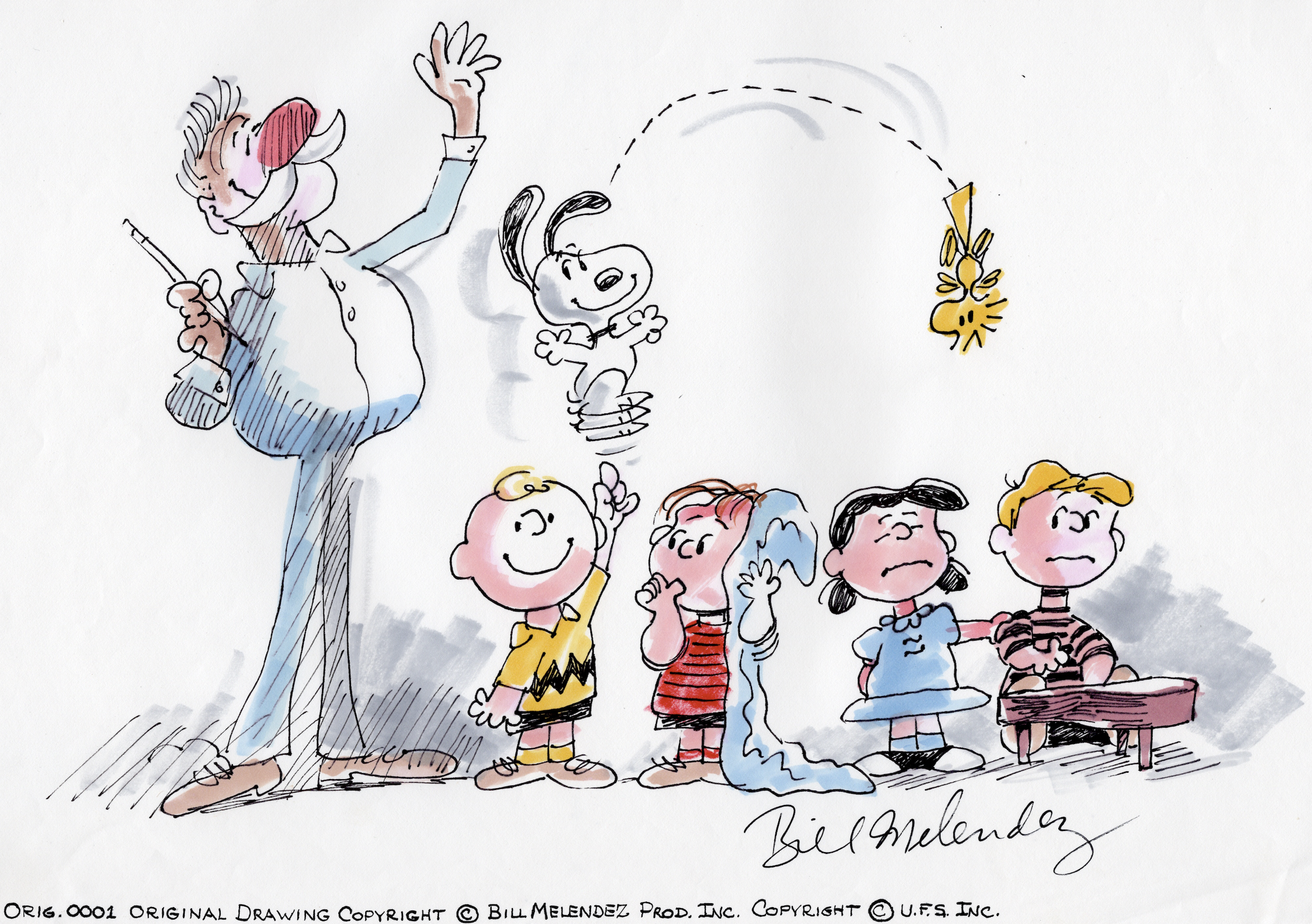
Melendez remained the only one Sparky trusted to animate his characters.
—
5. A hard line against a laugh track. After network executives demanded a laugh track be added to the animation, Schulz walked out of a meeting, standing firm on his conviction that they should “let the audience feel what they feel.” Though TV comedies without canned laughter are the norm today, they were extremely rare in the 1960s, other than those filmed before a live studio audience. Sparky won his standoff and proved that viewers don’t need prompts to tell them when something is funny. And of course, he was right. The lack of a laugh track in A Charlie Brown Christmas only enhances its simple honesty.
—
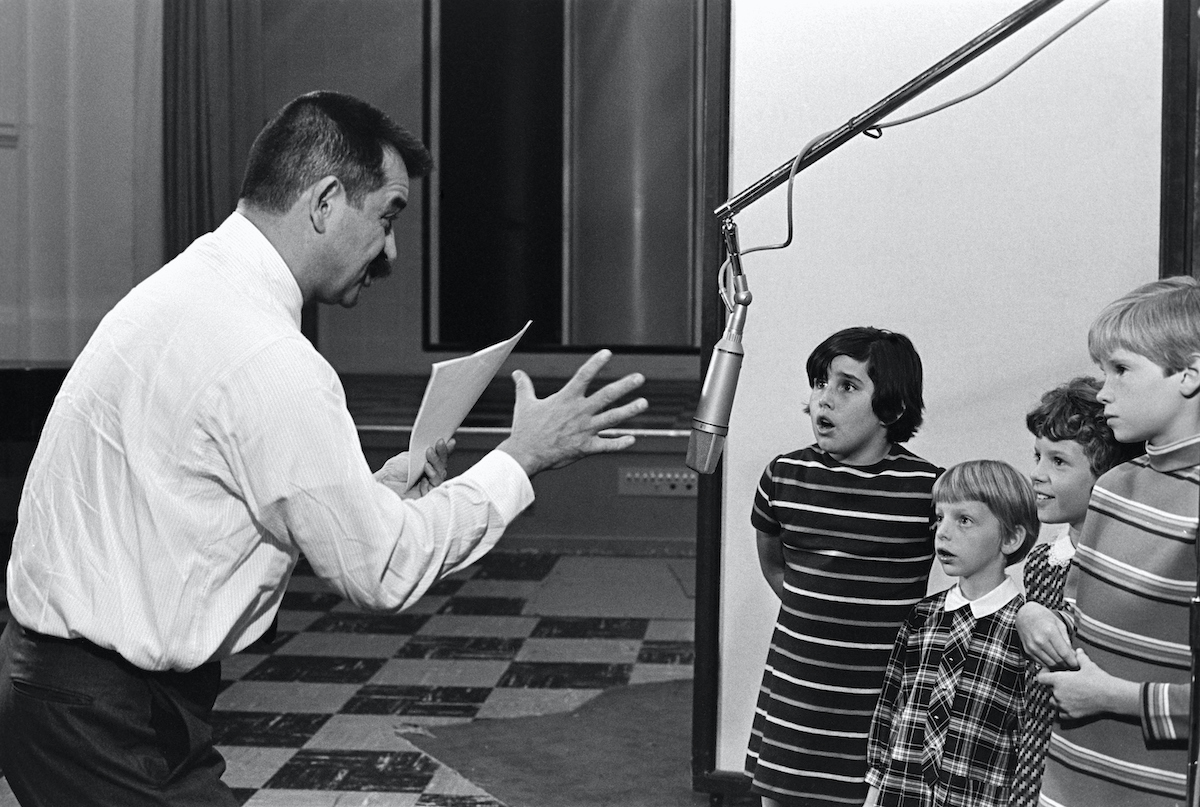
6. The cast is made up entirely of children, except for one adult, Melendez, who provided the various sounds uttered by Snoopy. Except for Peter Robbins (Charlie Brown) and Christopher Shea (Linus), who were professional child actors, non-professional kids were hired to round out the cast. Several of the kids were too young to read, so Melendez fed them their lines and they repeated them into the mics. This is why some of the deliveries sound a bit stilted, such as when Charlie Brown’s sister Sally makes her famous statement, “All I want is what’s coming to me. All I want is my fair share.”
—
7. Jefferson Airplane were big fans. Psychedelic rock band Jefferson Airplane was working in another room in the same San Francisco studio where the kids were being recorded, and popped in to get the children’s autographs. The band had formed in April 1965, around the same time that Mendelson fibbed to an ad exec about a Christmas special he didn’t have. They were still around nine months from releasing their first album, but did record their earliest demos in the fall of ’65 in hopes of getting a recording contract, so it may have been those demos they were putting down on tape that day. Lead vocalist Grace Slick had not yet joined the band, and would not have been one of the autograph hounds.
—
8. Composer Vince Guaraldi’s main theme from the special, “Linus and Lucy,” was originally written for the planned Peanuts documentary with no thought of Christmas at all. Due to the success of the special, it has since become not only a jazz standard, but a holiday classic that’s played in shopping malls and on radio stations at Christmas time, along with other Guaraldi compositions from the special, such as “Christmas Time is Here,” and “Skating.”
—
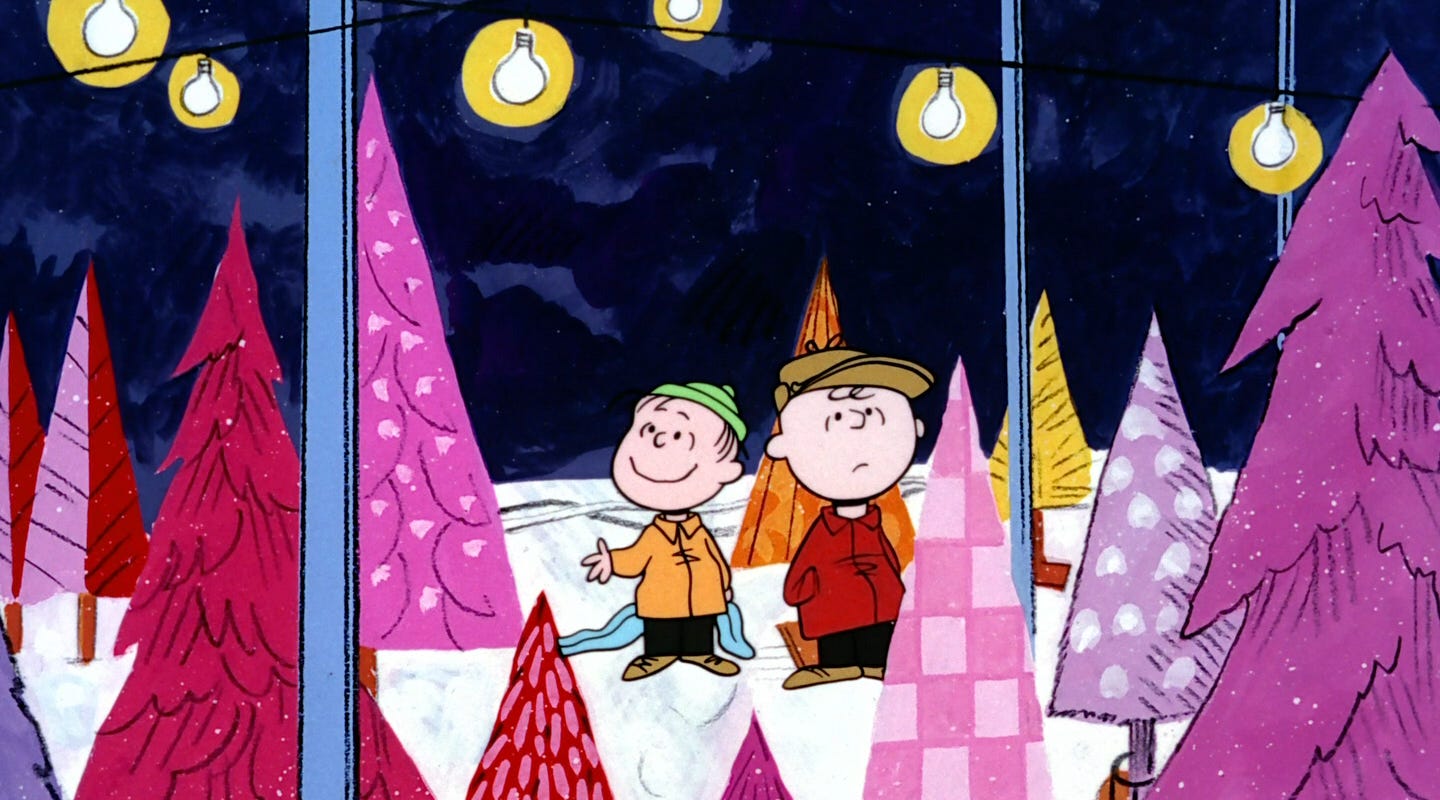
9. A Charlie Brown Christmas destroyed the aluminum Christmas tree market. Aluminum trees were extremely popular in the mid ’60s, but Charlie Brown’s disparagement of fake trees as a symbol of commercialism caused them to fall out of favor with the public. By 1969 metallic trees were no longer being produced.
—
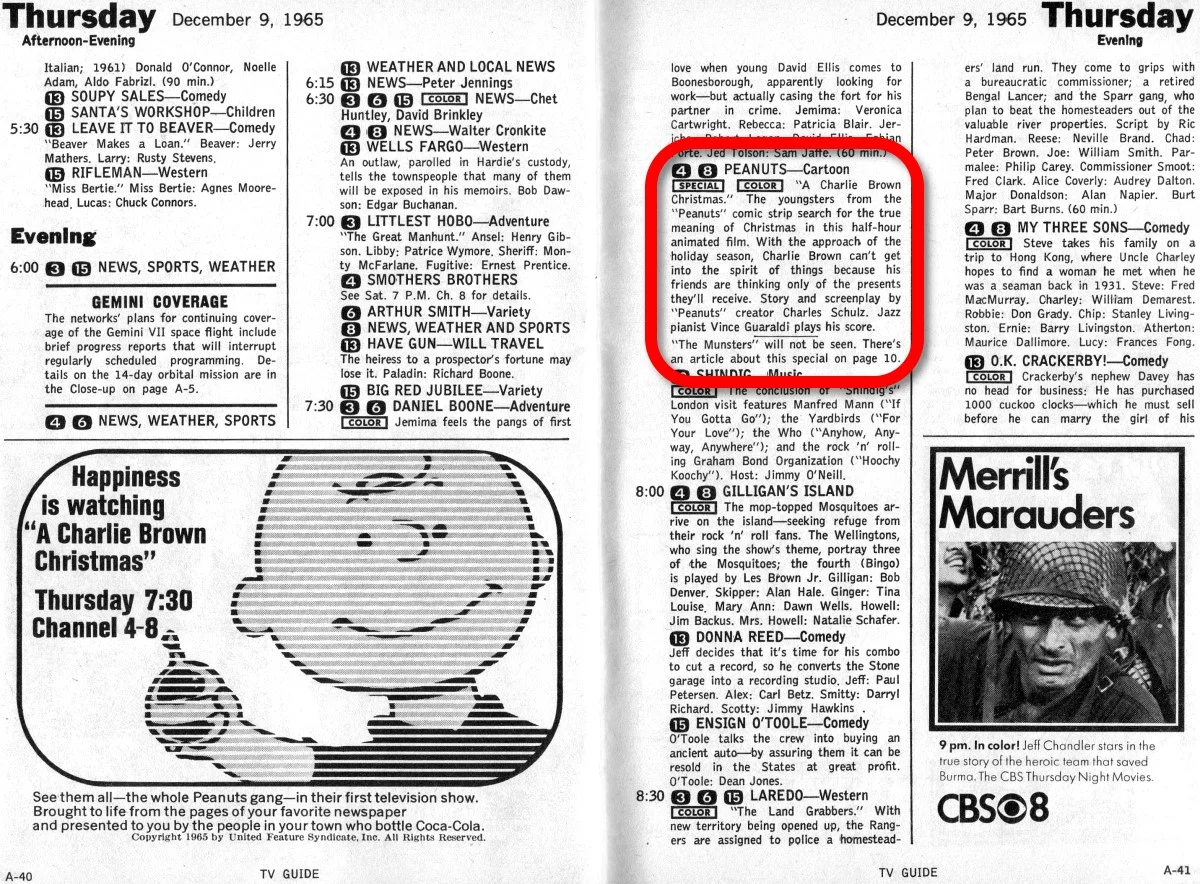
10. For those of you in the 13th Dimension Kids Club, before there was streaming on TV, specials often preempted regularly scheduled shows. The show that was preempted by the first broadcast of A Charlie Brown Christmas was The Munsters. In 1965, I was a fan of The Munsters, but I don’t think I had discovered Peanuts yet. I probably tuned in expecting to get my weekly fix of monster comedy, and was disappointed to discover that it wouldn’t be on that week. But of course, I watched the special and became an instant fan of the Peanuts characters, especially Snoopy.
—
11. Sparky got pushback from both Mendelson and Melendez when he introduced the scene where Linus delivers his recitation from the Gospel of Luke. But Schulz once again stood firm, responding “If we don’t do it, who will?” He knew that Charlie Brown’s strong desire to know the true meaning of Christmas was the main theme of the story, and it needed an honest answer, delivered word for word from the Bible. Linus’ spotlight speech from Luke 2:8-14 proved to be the most powerful moment of the show, and one of the most memorable. Sparky was right, yet again!
—
12. CBS executives hated the finished special and considered not airing it. They thought it was too slow, the jazz music didn’t work, the animation was too simple, the voices sounded amateurish… even Mendelson and Melendez felt that they had ruined Peanuts. Fortunately for the world, the TV Guide ads and listings had already gone to print, so CBS felt they had no choice but to put it on the air. They figured it would play once, and then that would be it. Everyone would forget about it.
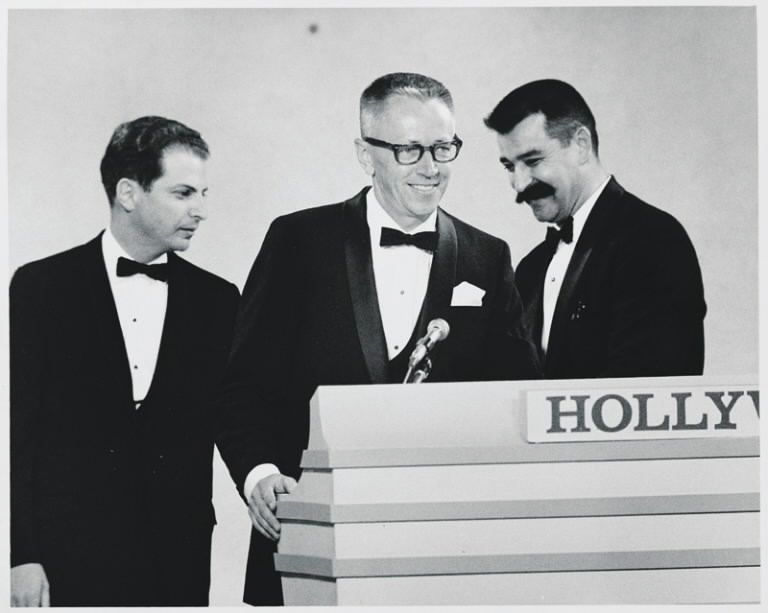
Lee Mendelson, Charles Schulz and Bill Melendez
But on its first airing, half of America watched A Charlie Brown Christmas, 15 million households. With such incredible ratings, the executives ordered a whole series of Peanuts specials, keeping Mendelson, Melendez, and Schulz in the animation business for decades.
—
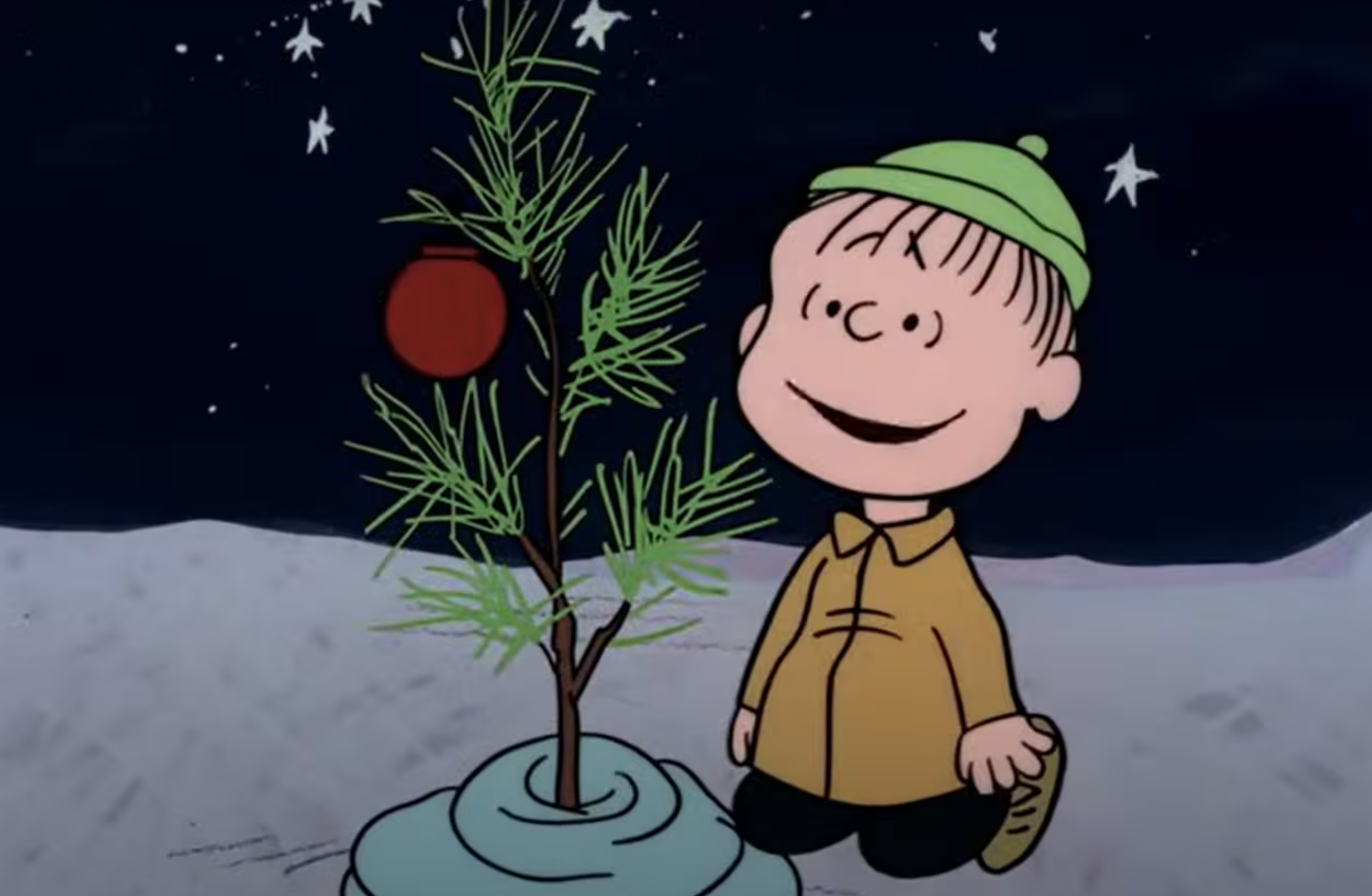
13. Here’s a not-so-fun fact. From 1965 to 2019, A Charlie Brown Christmas could be seen every year on network television for free, but in 2020, Apple TV+ acquired the exclusive rights to the special. So, if you are not a subscriber, you’re out of luck unless you own it on home video. But! You have a small window to see it without cost, as it will stream for free Dec. 13-14.
—
Want more MORRISON MONDAYS? Come back next week! Want a commission? See below!
Want more TOYHEM? Click here!
—
MORE
— Dig These 13 Fab BATMAN MODEL KITS From the ’60s to the ’90s. Click here.
— MERMAIDS, MICE AND MORE: The Stories Behind Classic Animated Movie Poster Art of the ’80s and ’90s. Click here.
—
Eisner winner BILL MORRISON has been working in comics and publishing since 1993 when he co-founded Bongo Entertainment with Matt Groening, Cindy Vance and Steve Vance. At Bongo, and later as Executive Editor of Mad Magazine, he parodied the comics images he loved as a kid every chance he got. Not much has changed.
Bill is on Instagram (@atomicbattery) and Facebook (Bill Morrison/Atomic Battery Studios), and regularly takes commissions and sells published art through 4C Comics.

December 8, 2025
What a fantastic job, Bill. Some great back room stories here.
As a third grader (when the special aired for the first time), I clearly recall our teacher requiring us to watch it. It was a homework assignment. It was all the buzz the next day, and me and my friends set about trying to draw the characters. It’s still a mystery how our teacher knew the program would have something important to say.
December 8, 2025
Much appreciated, Jeff! And yes, your teacher was very prescient!
December 8, 2025
Wow! I had never seen the Ford commercials. Thanks so for the great article, Bill!
December 8, 2025
Great story Bill! It’s worth noting that that issue of TV Guide featured a two-page color comic strip showing us the basic premise of the special. That likely gave the first airing of the show a nice boost.
December 8, 2025
I had discovered Peanuts at age 10 in 1963. Became a fanatic; devoured all the books I could in a year. I admit, I was disappointed by the special. The voices seemed to ruin the cache of the characters. And having no thought balloons for Snoopy changed the character completely.
December 8, 2025
I remember being so excited whenever the opening for a CBS special program came spinning on the screen. It was the word “special” spinning on the screen and then settling upright in the middle of the screen. Whenever that clip was played you knew the odds were you were about to watch a cartoon that was show once a year. Most of the time it was a Peanuts cartoon.
December 9, 2025
Yeoman’s service, Bill. It’s hard to even begin to describe what the special means to me.
December 14, 2025
Wonderful piece Bill, thank you! Of all the Bill Morrisons in the world, you’re the Bill Morrisoniest.
December 17, 2025
AND, I married a little red-headed girl!