
With the Facsimile Edition coming in December, the beloved issue’s editor takes you inside…
By PAUL LEVITZ
1980’s Detective Comics #500 — which will be re-released as a Facsimile Edition in December — was pretty much my farewell to comics editing, after eight years as an assistant editor and editor. I was about to shift to the business side of the company, and I really wanted to go out with a bang. I already had enough control over our publishing plans that I was able to schedule it for 80 pages — the largest original anniversary issue DC had ever celebrated (Superman Annual #7 was themed to the Man of Steel’s Silver Anniversary, but that was all reprint). And every page was going to be special…
Here are 13 THINGS I LOVED ABOUT PUTTING TOGETHER DETECTIVE COMICS #500:
—
1. It even had a spine! I loved comics with “perfect binding” spines, back to DC’s old 80-Page Giants that introduced me to so many classic stories, and the early Marvel annuals with their milestone stories like the wedding of Sue and Reed.
—
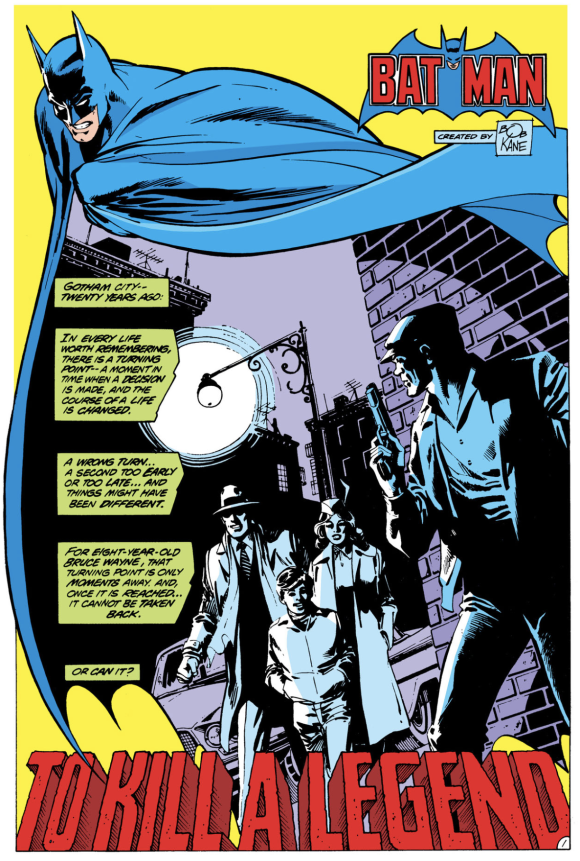
2. The lead story was by Alan Brennert, an old friend and award-winning television writer and novelist. “To Kill A Legend,” with art by Dick Giordano, my about-to-be successor as editor of the title, became the most often reprinted and praised story in the issue. It also gave the Phantom Stranger a moment in the book — the first character whose series I got to write.
—
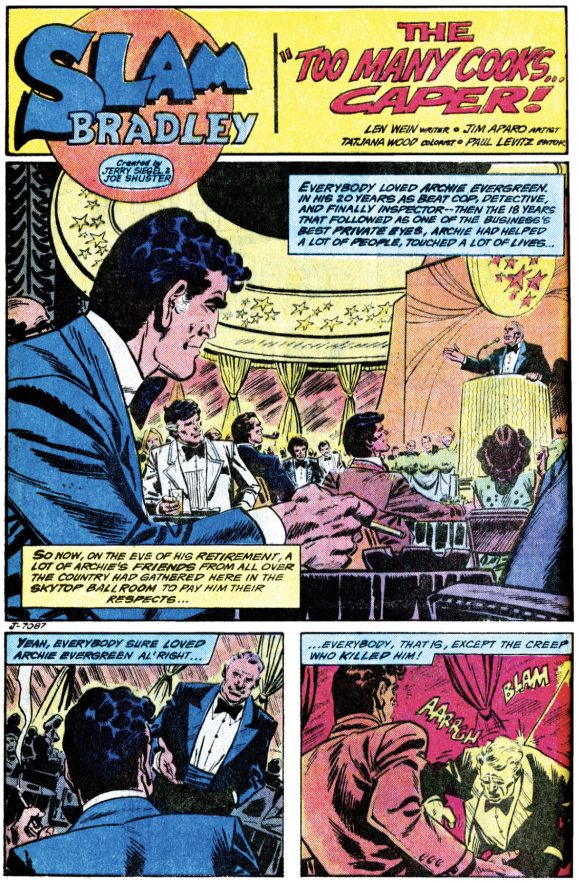
3. It was always a pleasure to work with Len Wein, my old poker buddy. Reuniting him with Jim Aparo, his collaborator on a great run of Phantom Stranger issues that established Len’s reputation as an important comics writer, was an extra treat. And they jammed a squad of detectives who had filled the comic’s pages over the years into a 13-page mystery — everyone from Roy Raymond to Pow-Wow Smith.
—
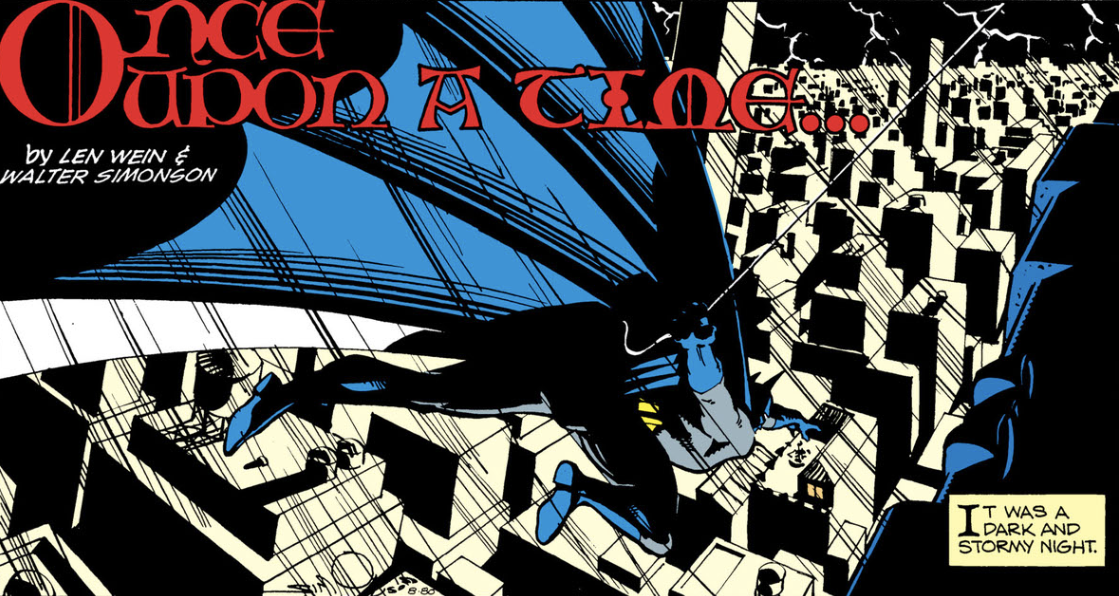
4. Speaking of Len, he borrowed from Snoopy (or Charles Schulz) for a sweet, swift two pager with Walt Simonson, whose reputation was made with is award-winning Manhunter run in Detective.
—
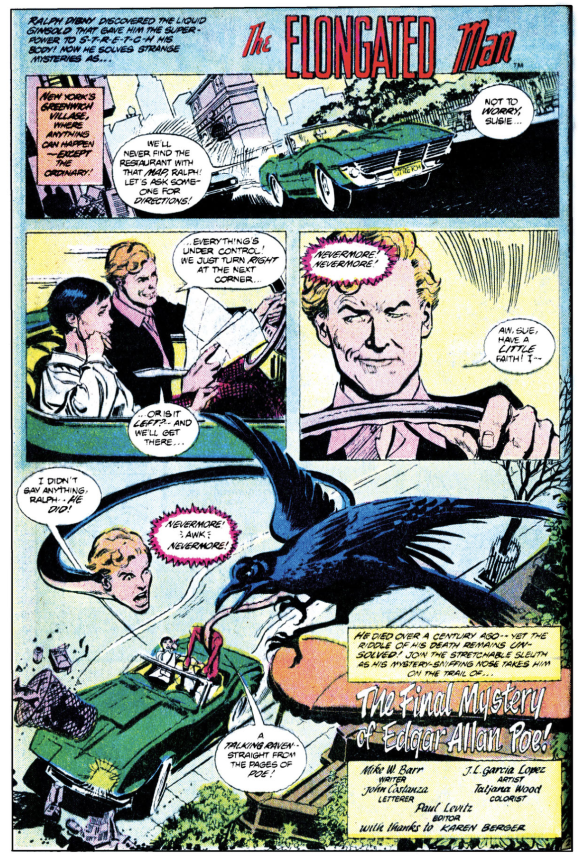
5. Mike W. Barr contributed a tale of Edgar Allan Poe, considered to be the father of the detective story, and the Elongated Man, whose more than 50 appearances in Detective stretched through most of my years buying comics off the newsstand. And Jose Luis Garcia-Lopez did his usual impeccable work illustrating the historical details.
—
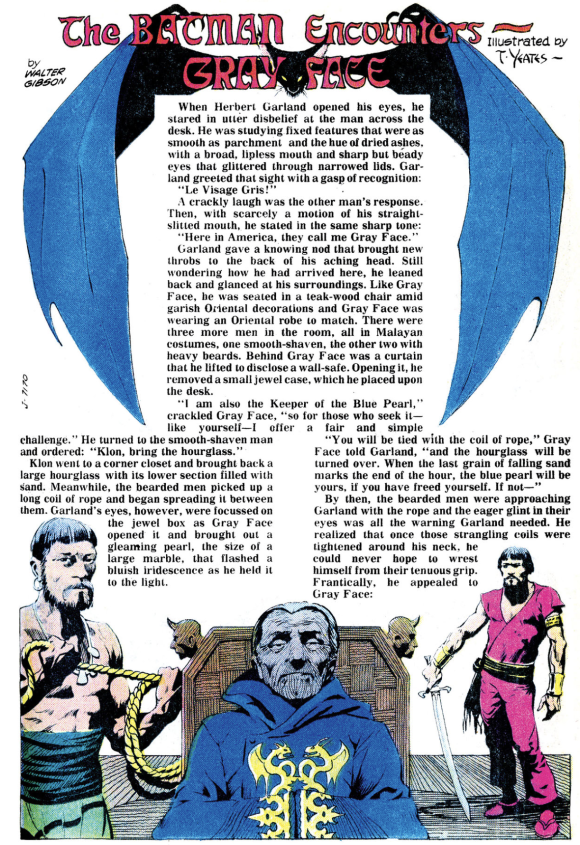
6. With the assistance of Shadow and old time radio expert Tony Tollin, I was able to talk Walter Gibson into doing a Batman text story. Gibson was the creator of the Shadow, a major inspiration for Batman, and an occasional comics writer. Sadly, it turned out to be his final story. Illustrations were provided by Tom Yeates, then a rising star, who would go on to become better known for his work on Tarzan and Prince Valiant, two properties that gained their fame in the years Gibson was churning out classic pulps under the name Maxwell Grant.
—
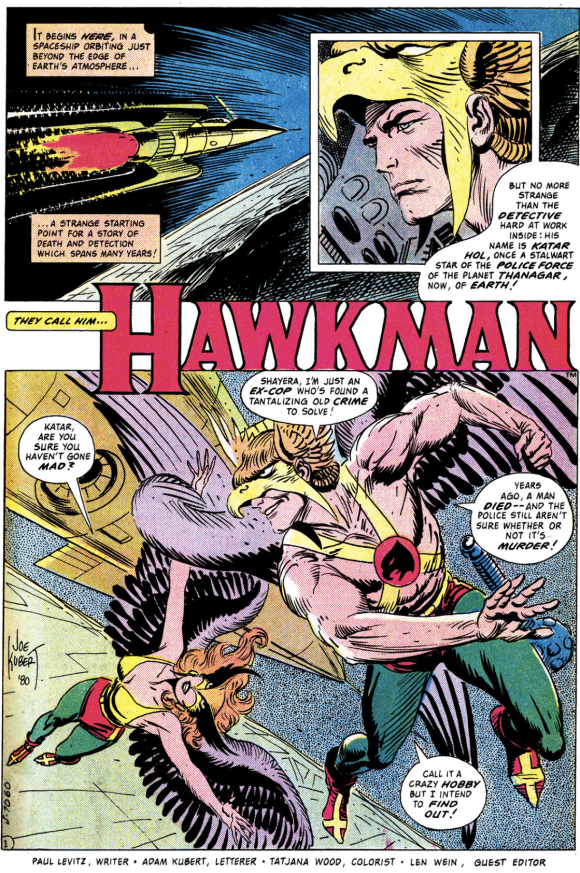
7. I got to write a Hawkman story for Joe Kubert to draw! It was a bit of a cheat — as the editor I shouldn’t have contributed to the issue, but I got Joe Orlando to sign off and edit it. Hawkman wasn’t one of the long-standing features in Detective either, but I centered the story’s mystery around J’onn J’onzz, and the Manhunter From Mars had a hundred issues of Detective under his red belt, more than any hero but Batman and Robin.
—
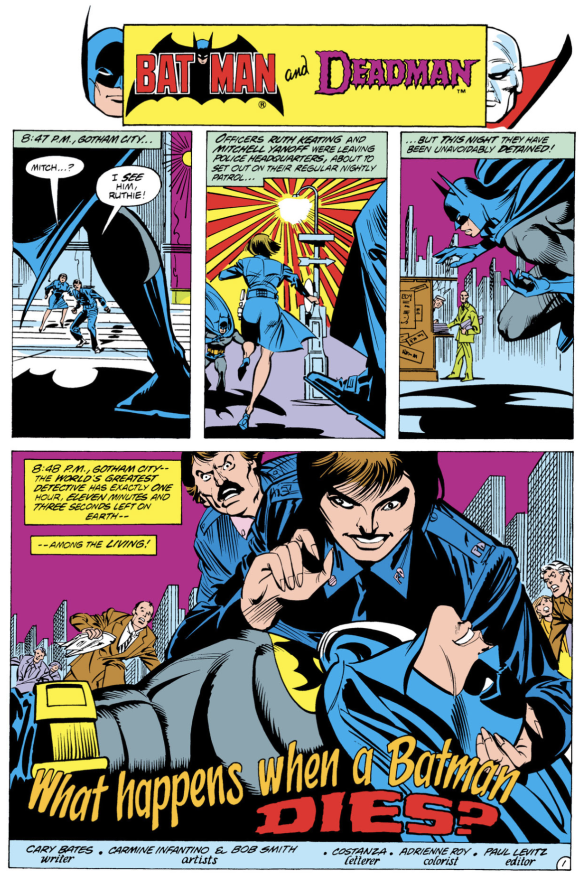
8. I got Carmine Infantino to draw a Batman story — his first in 13 years. Carmine was the artist who put drama back in Batman with the “New Look” in 1964, catching me at the magic moment of childhood. He got to work with Cary Bates, a writer he was friendly with, who was doing his first Batman story after a shelf full of Superman tales. And it was inked by Bob Smith, who got his first DC assignment in Carmine’s office. Plus it teamed Batman with Deadman, echoing the classic The Brave and the Bold #79, which began Neal Adams’ legendary run on that title. (Plus, Carmine was Deadman’s co-creator.)
—
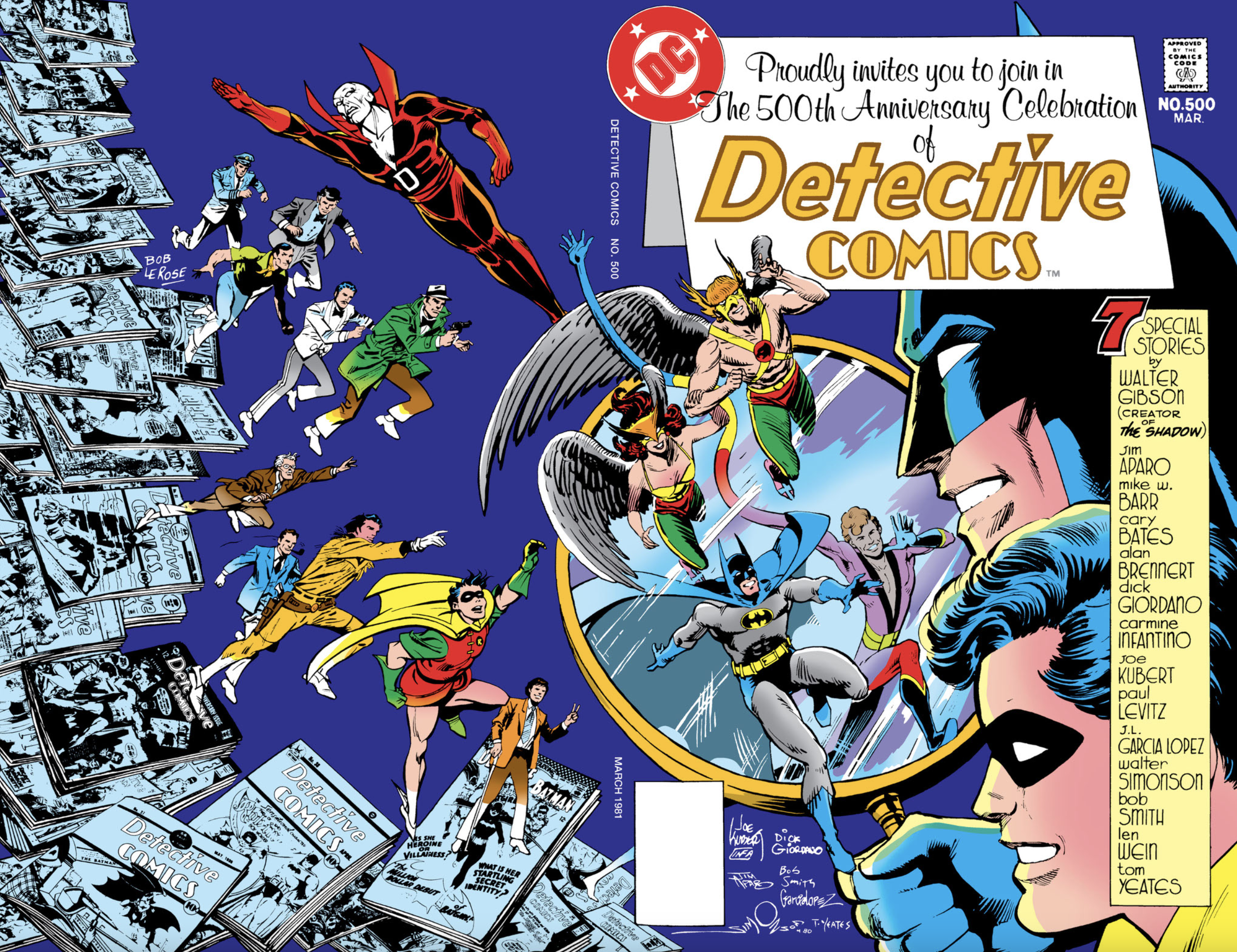
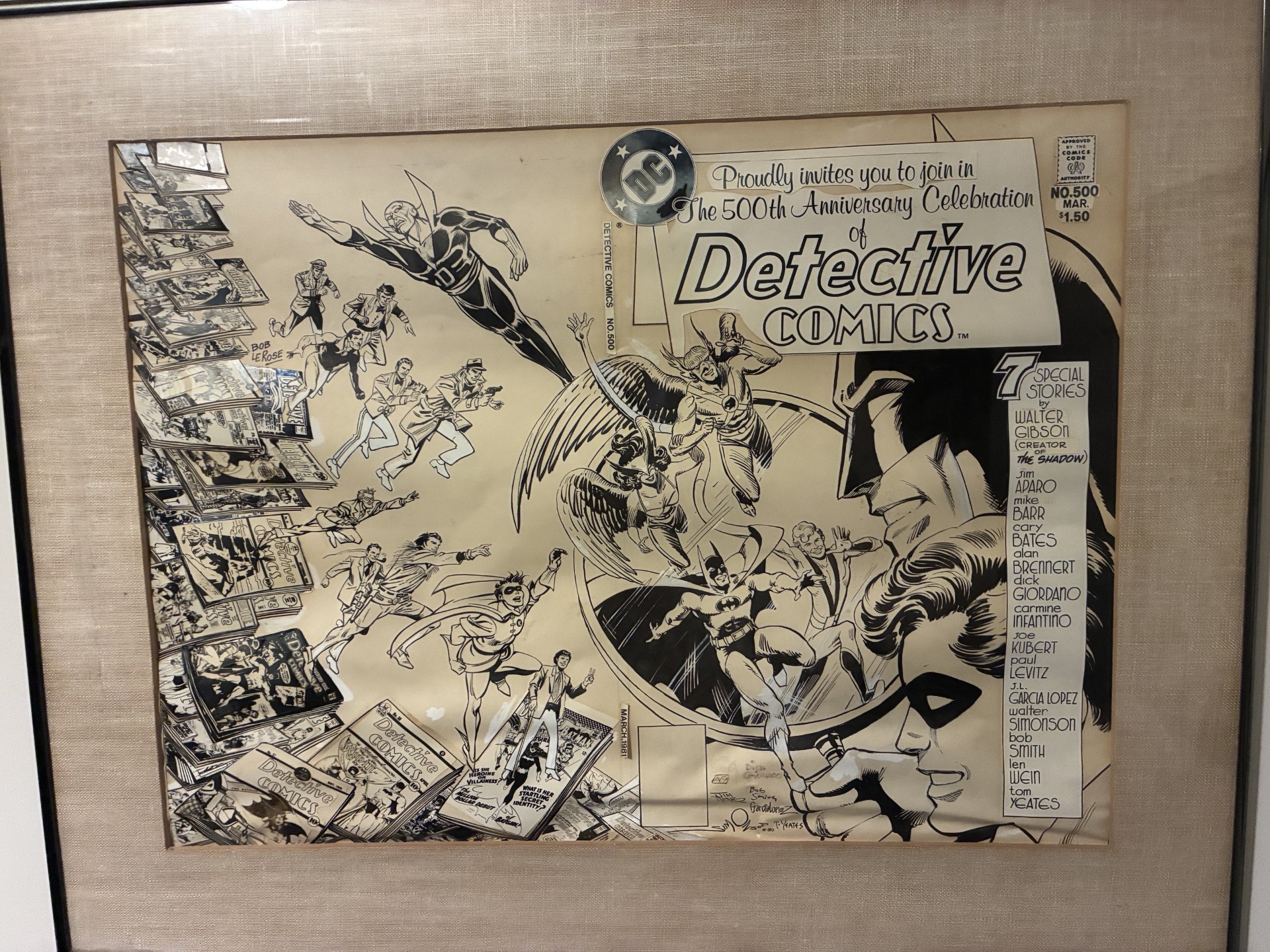
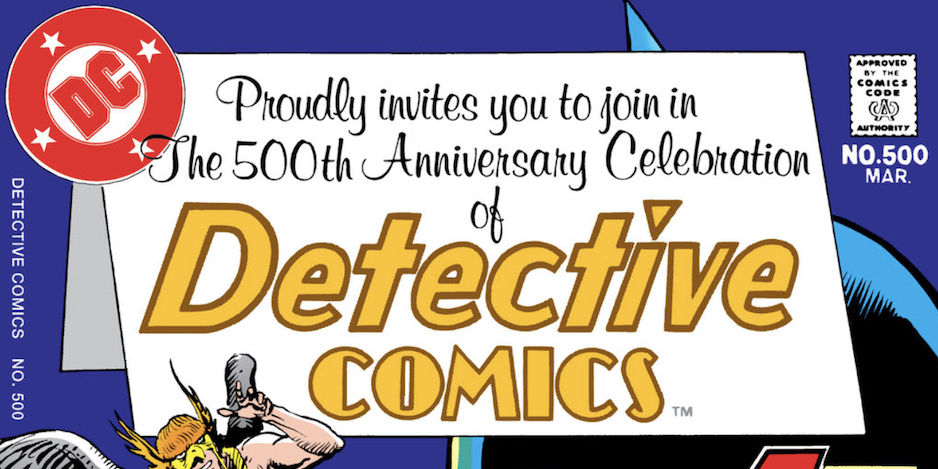
9. The cover. That cover. It’s the only jam cover that combined some of the most legendary artists of the Golden, Silver and Bronze Ages on one piece. Joe Kubert did the initial sketch layout, and the figures of the Hawk duo, and then it flew around the New York metro area to have each of the contributing artists add to it: Giordano, Infantino, Aparo, Garcia-Lopez, Simonson, Yeates, and Bob Smith inking Carmine. That’s five Eisner Hall of Fame artists on one piece, an extraordinary moment. You can see the progression on the inside back cover. The original hung in my DC offices, and now on the wall of my comics library office at home. (Well, we couldn’t cut it apart and return bits and pieces to each artist, could we?)
—
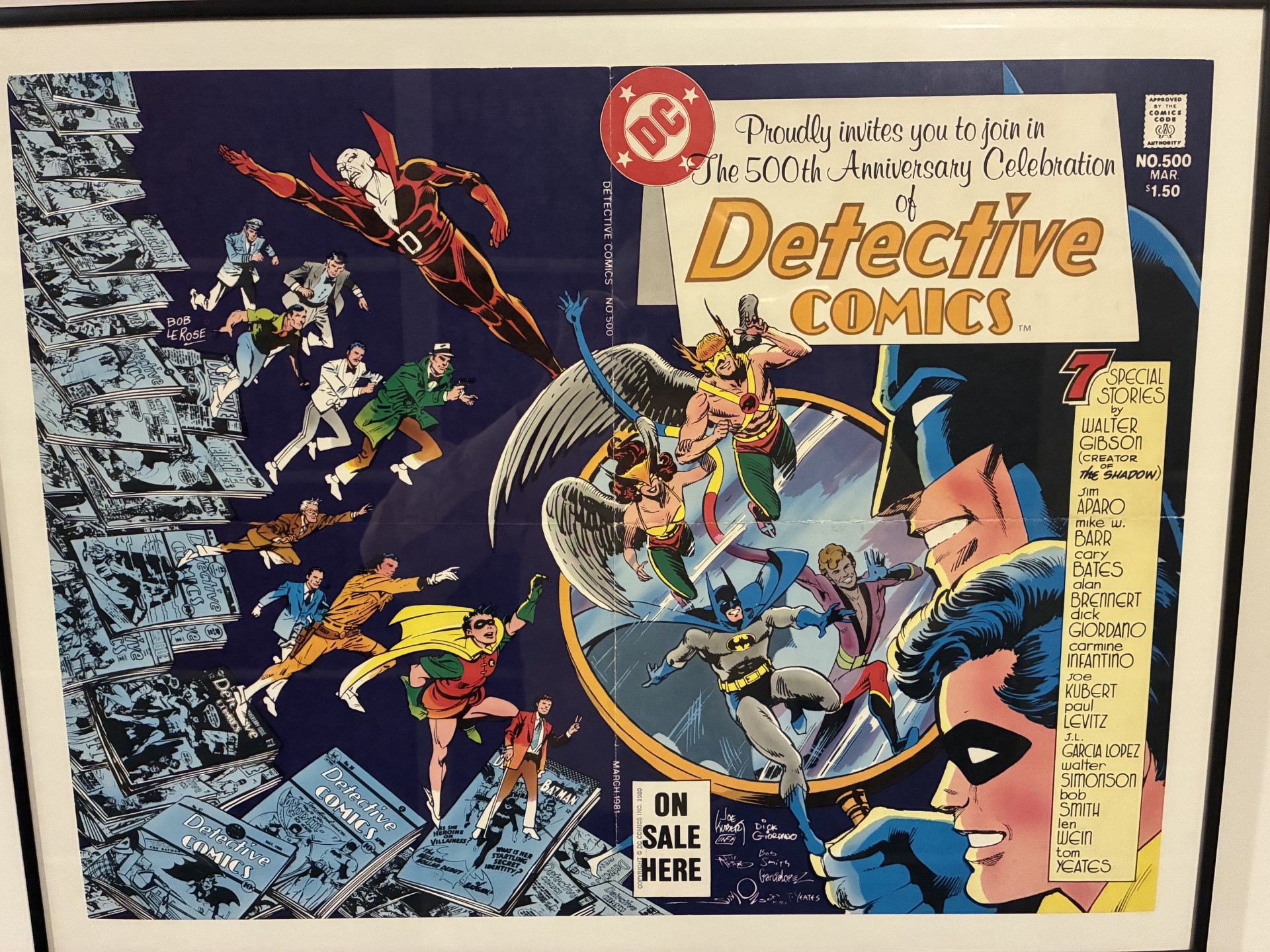
10. And the back cover. It looks easy now, with computer technology available, but each of the covers falling in a cascade down the back had to be individually photostatted and twisted into the right distortion. It was an enormous effort, beautifully executed by production artist (and frequent colorist) Bob LeRose. Bob was a legendary figure in his own right, having worked in the famous Johnstone & Cushing offices that produced early comics-style advertising, and befriending a very young Neal Adams. We allowed Bob to sign the back cover, the only time in DC’s long history that a production artist received that kind of credit.
11. Hanging next to the original art for the cover is another rarity: the very first promotional poster DC sent to comic shops for a new release. Not a triumph of copywriting, it simply put “On Sale Here” in the box where the UPC normally appeared. But with the tally of contributors already on the cover, what more really needed to be said?
—
12. If you read the fine print of the inside back cover of the issue, note that Batman is described as “the creation of Bob Kane and Bill Finger.” Probably not the first mention of Bill in Detective, but I’m happy that he was noted equally with Bob there.
13. The truth was, after five years as an editor, I didn’t think I could continue to feel challenged for as long a career doing that as, say, Julie Schwartz, who was almost four decades into his stint a few doors down in the DC offices. I was 24, restless, and while Jenette Kahn and I were in the process of changing the comics industry by instituting royalties for the creative talent, I couldn’t dream of the wider range of possibilities editors would have as a result. I think my editorial run stands up well by the standards of the late 1970s, but it’s the work I would do over the next three decades that I think was my more important contribution to the field I love. Still, Detective Comics #500… that’s a capstone.
—
MORE
— 1980’s Beloved DETECTIVE COMICS #500 to Get FACSIMILE EDITION. Click here.
— THE PAUL LEVITZ INTERVIEWS: We Went ‘All Out’ For DETECTIVE COMICS #500. Click here.
—
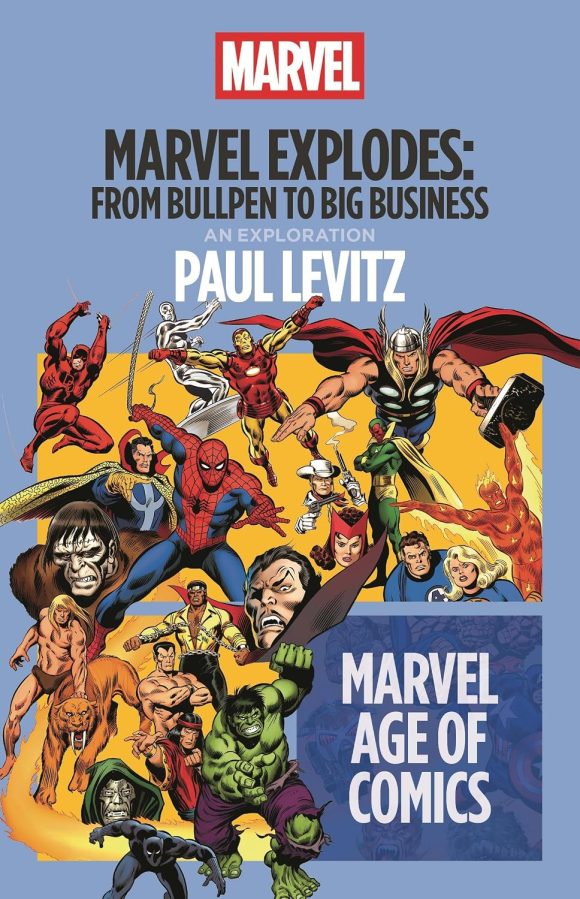
PAUL LEVITZ is the former president of DC Comics and an Eisner Hall of Famer. His latest book is Marvel Explodes: From Bullpen to Big Business, due in October from Bloomsbury.

September 20, 2026
Speaking of a spine, Paul, any chance DC will finally grow one and collect the rest of your post-Great Darkness Saga Legion of Super-Heroes run (particularly the Magic Wars)? Preferably in a volume that matches the Deluxe Edition volumes as opposed to an omnibus that’s too heavy to read easily? I sure hope so! (Sorry for being off-topic, but how often is there even a CHANCE Mr. Levitz will read my comment?)
September 20, 2026
I won’t speak for Paul, but I would wager that you’d be more likely to engender a response without the unnecessary, nasty shot at DC Comics.
September 20, 2026
Apologies. I wasn’t trying to offend anyone (I was looking for a hook for an off-topic reply, and “spine” was it), but I don’t understand DC’s strategy in collecting “Legion” stories. They did twelve volumes of the hardcover “Archives” series, and stopped in 2003. They then moved to trade paperbacks for “An Eye for an Eye” and “The More Things Change” in 2007 and 2008 respectively, which jumped into volume 3 of the series. Then came the deluxe editions of “The Great Darkness Saga” and “The Curse”. In 2012, they released volume 13 of the Archives. Five years later (heh) they did two “Superboy and the Legion” volumes in 2017 and 2018, and finally two “Before the Darkness” volumes in 2021 and 2022. Two omnibus volumes of “Five Years Later” came out in 2020 and 2022, which is in volume *4* of the series. I’d really like to see volume 3 collected and completed; it’s been many years since I could read those stories, but I’m sure they still hold up today.
September 21, 2026
You could show some love and pick up his latest book. Just pre-ordered myself.
September 21, 2026
Agreed. I pre-ordered on Sunday!
September 21, 2026
And I ordered it in May, not long now.
A great piece on a great comic, paving the way for a brilliant run of anniversary issues from DC. Thanks Paul!
September 22, 2026
>> were in the process of changing the comics industry by instituting royalties for the creative talent,
>>
Probably the best lasting thing you did in your career in comics. You certainly made things better.
I have my original copy of this issue. The owner of the bookstore held a copy for me so it didn’t sell out. There was a tiny tear in the cover. To a young fan it was all I could do… I have another that is graded and signed by Walt and Jose. I’ll be getting the foil version because that’s what we do now. (Thanks again, Dan.)
What an awesome issue! Front to back.
September 22, 2026
A phenomenal issue and milestone, but this part is even more amazing “The truth was, after five years as an editor, I didn’t think I could continue to feel challenged for as long a career doing that…I was 24.
And think of what was already done and how much more impact would come.
What a career Paul Levitz!