
MORRISON MONDAYS!
By BILL MORRISON
Recently, someone on the Comics Swipes Facebook page posted my cover to Bart Simpson #19 and the 1957 Hot Stuff #1 cover by Warren Kremer, side by side. A minor discussion ensued about whether my Bart drawing was a swipe or an homage, and someone asked, “Aren’t a swipe and an homage very close to the same thing?” I’ve heard variations on this question before, and although I’ve often made an effort to clear things up from my perspective, there still seems to be a good deal of confusion.
So, here’s my take on swipes vs. homages, tributes, parodies, etc.
I contend that an artist who swipes an image, layout, idea, or pose from another artist, usually does so with the idea that their intended audience may or may not recognize the source material. Probably more often than not, the artist hopes that they won’t. The artist may feel that the thing they’re swiping is so obscure that none will be the wiser, or they simply may not care if someone calls out their image as being derivative of another.
On the other hand, if an artist creates an homage to an idea or image, it’s with the assumption that the audience will recognize the source, and in fact sometimes the success of the art relies on that assumption.
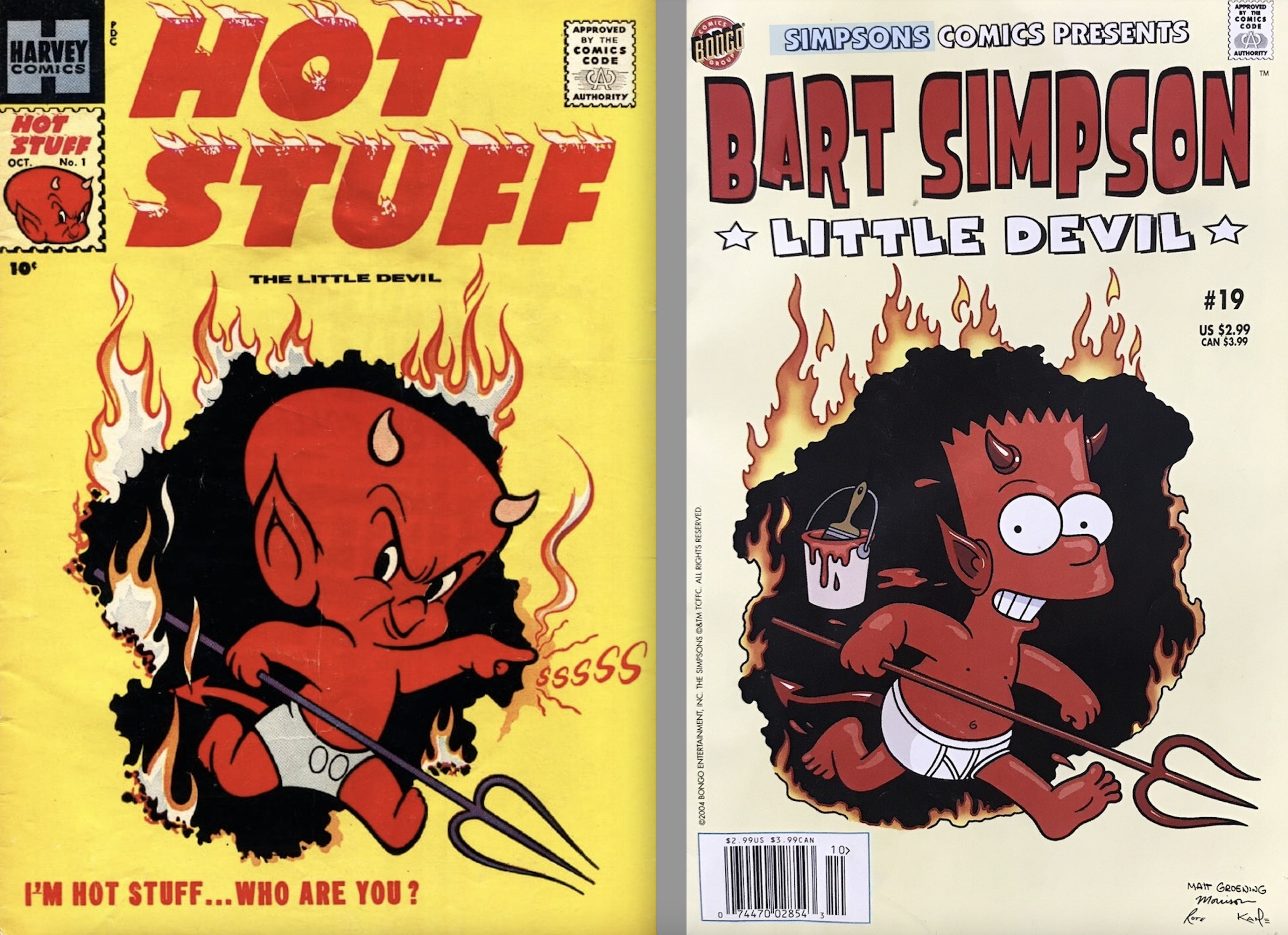
In the case of my Bartman #19 cover, I was hoping that our Bongo readers knew the Hot Stuff cover well enough to get the gag. In retrospect, I’m not sure that they did. And without that recognition, my cover doesn’t make a lot of sense. The most successful homage images are those that pay tribute to something so iconic that most of the intended audience can’t help but recognize the original image or idea, and that lets them in on the joke.
Three examples of iconic comic book covers that I’ve paid homage to are Fantastic Four #1/Simpsons Comics #1, Amazing Fantasy #15/Free Comic Book Day 2010, and Green Lantern #85/Radioactive Man #216. The covers from which I drew inspiration are all well known enough among comics fans to make my versions recognizable as tributes or parodies.
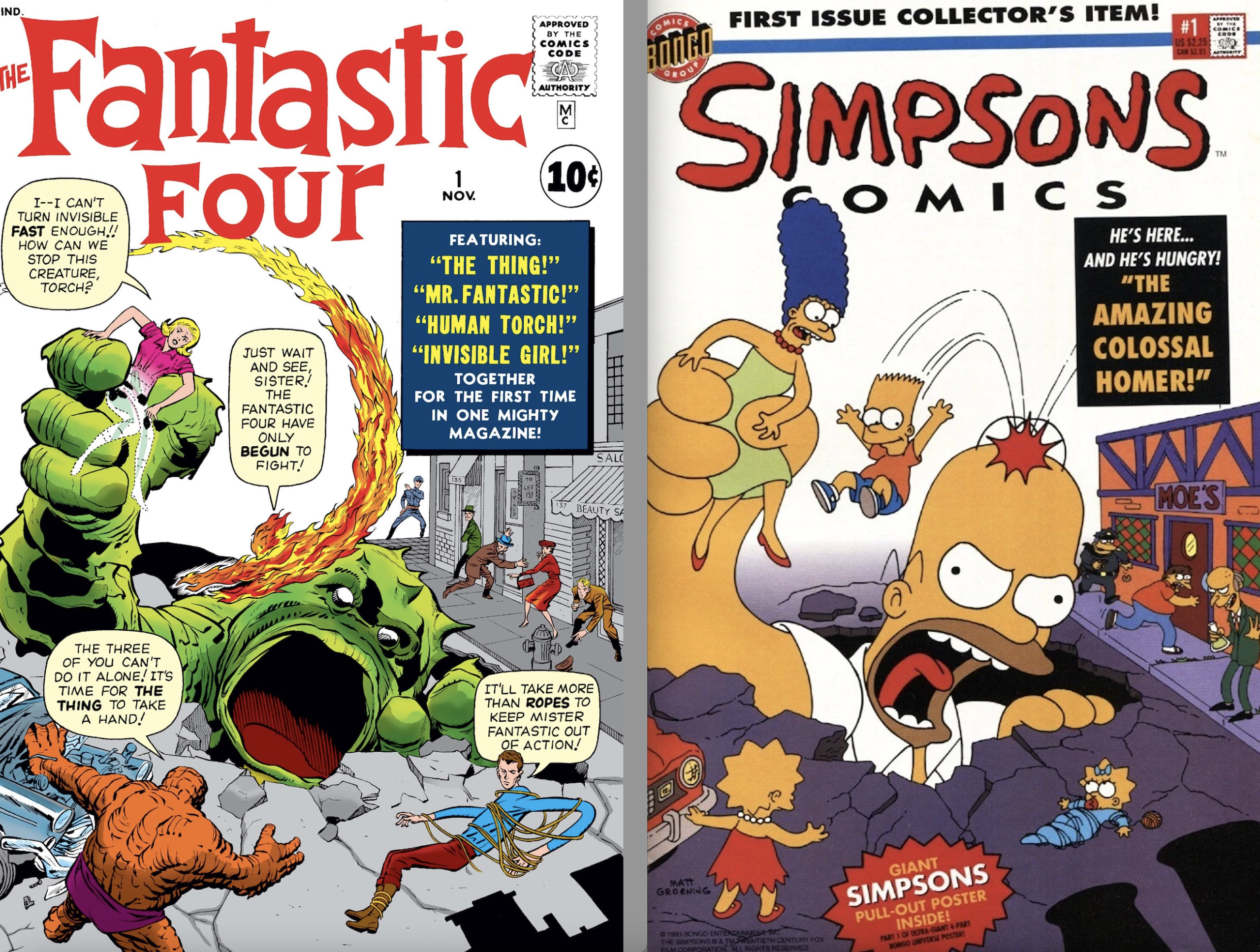
Jack Kirby and George Klein, 1963
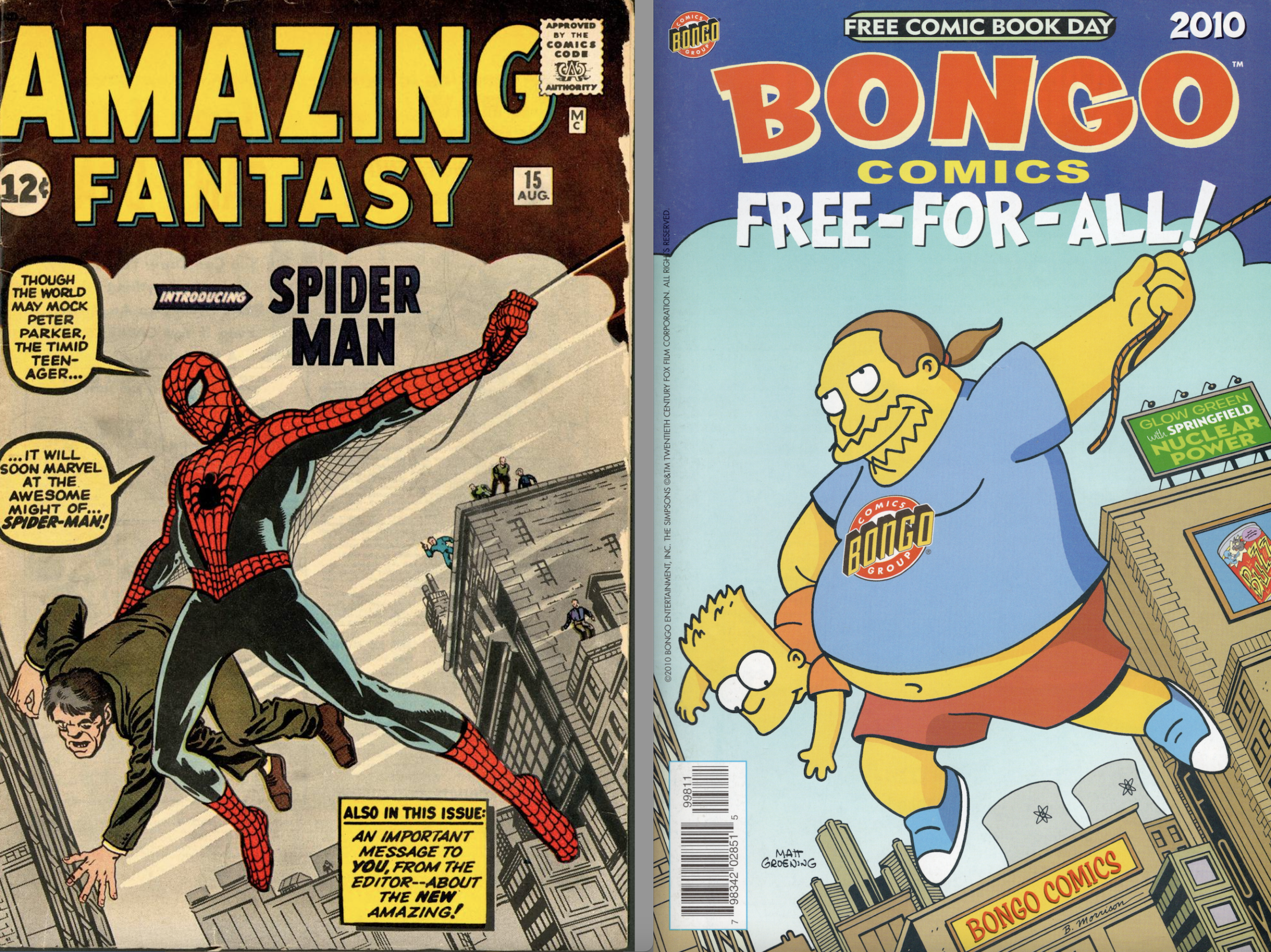
Jack Kirby and Steve Ditko, 1962
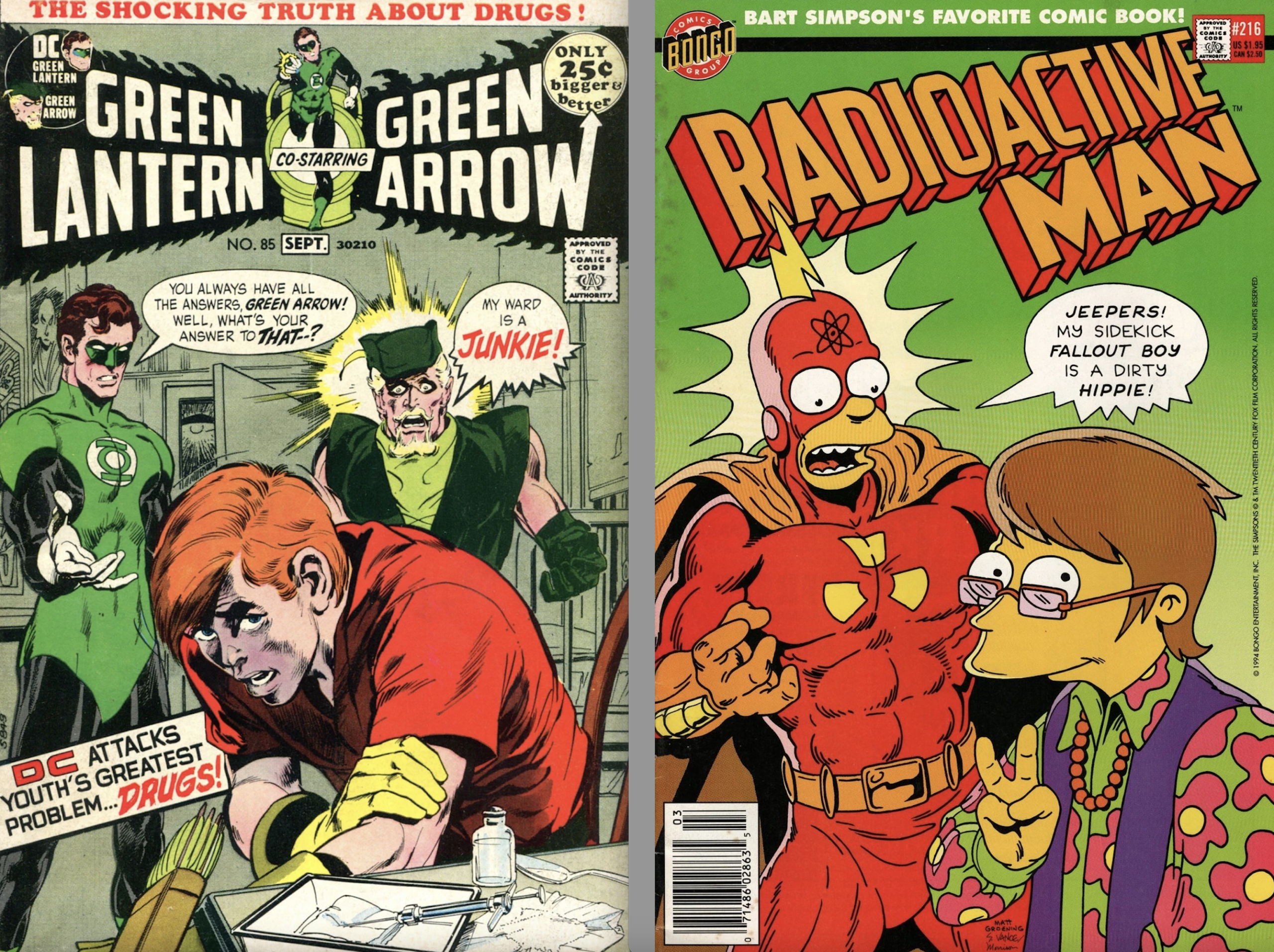
Neal Adams, 1971
A Simpsons Comics cover of mine that I would put into the swipe category is Issue #48 which was inspired by the cover to 1963’s Fantastic Four #23, by Jack Kirby and George Roussos. I don’t feel that the original FF cover is iconic enough to be recognizable to most Bongo readers as the source. However, in this case I was hoping that some Bongo-heads would get it, and for the rest, I think my cover worked well enough on its own, without any knowledge of the original (unlike my Hot Stuff #1 tribute.)
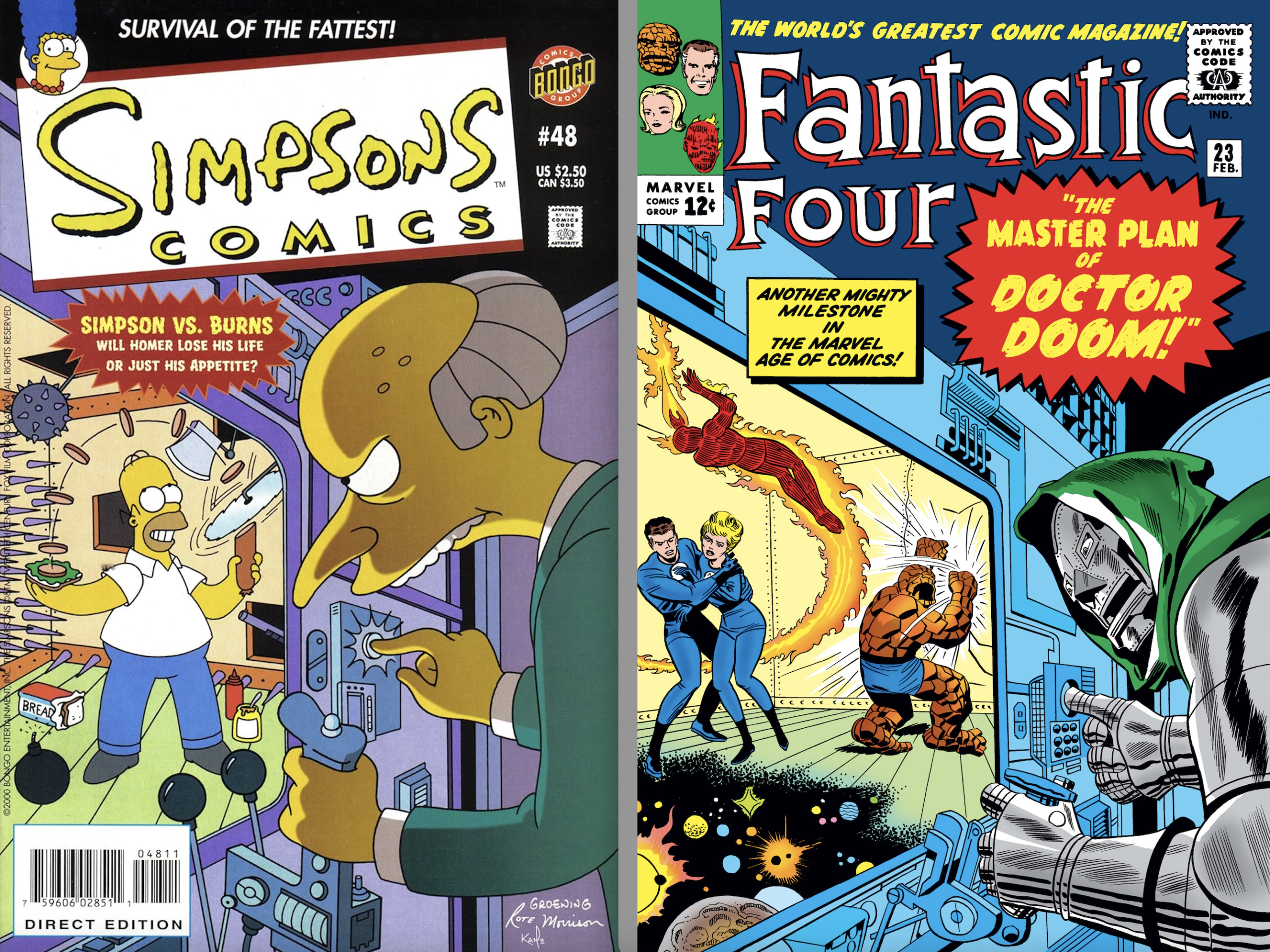
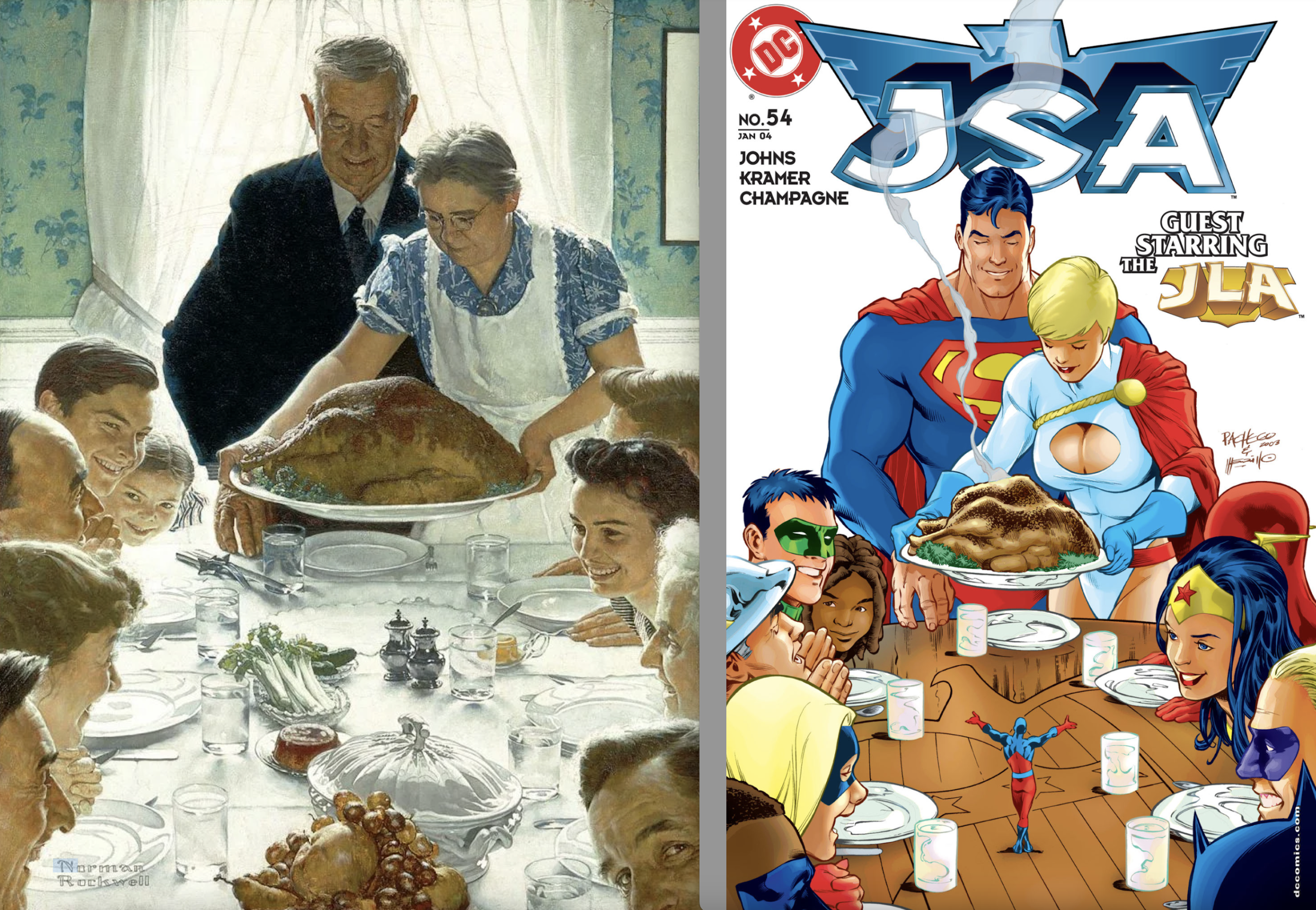
Even the best comic-book artists have resorted to basing drawings on the work of other artists, and I don’t want to swipe-shame my fellow pros with examples. You can find plenty of those at the Comics Swipes Facebook page. But here are a couple of great covers that are tributes and/or parodies of well-known images. In these cases, they are from the worlds of illustration and photography, instead of other comic book covers.
The first is the cover to 2003’s JSA #54, by Carlos Pacheco and Jésus Merino. It’s quite obviously based on Norman Rockwell’s iconic Thanksgiving-themed 1943 illustration, “Freedom From Want.” You would be hard pressed to find a person, especially an American, who is not familiar with the Rockwell painting. And though the success of this cover relies to a great extent on that fact, anyone not hip to the Rockwell piece would probably still find it to be a fabulous cover.
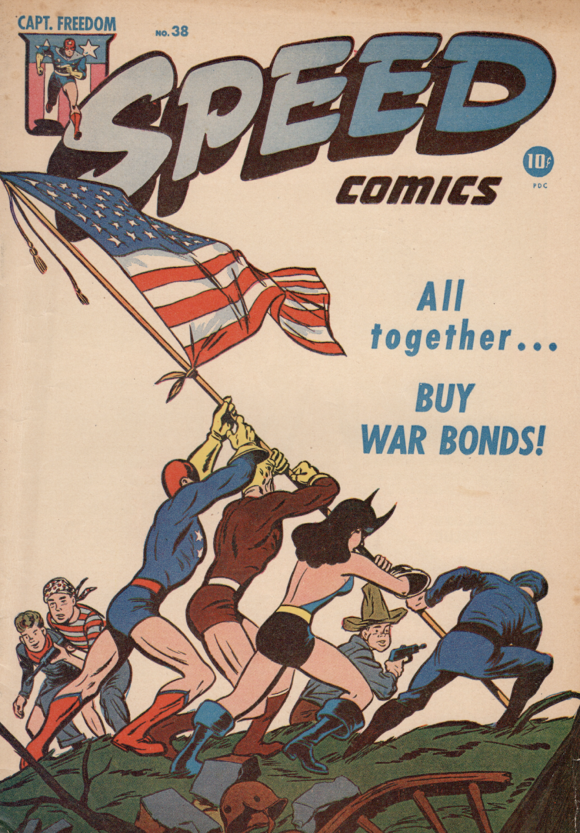
Reaching way back to the Golden Age of comics, I’d like to point out the cover to 1945’s Speed Comics #38, by Pierce Rice. This cover is based on the brilliant, Pulitzer Prize-winning picture by Associated Press photographer Joe Rosenthal, of the U.S. flag being raised on Mount Suribachi during the Battle of Iwo Jima.
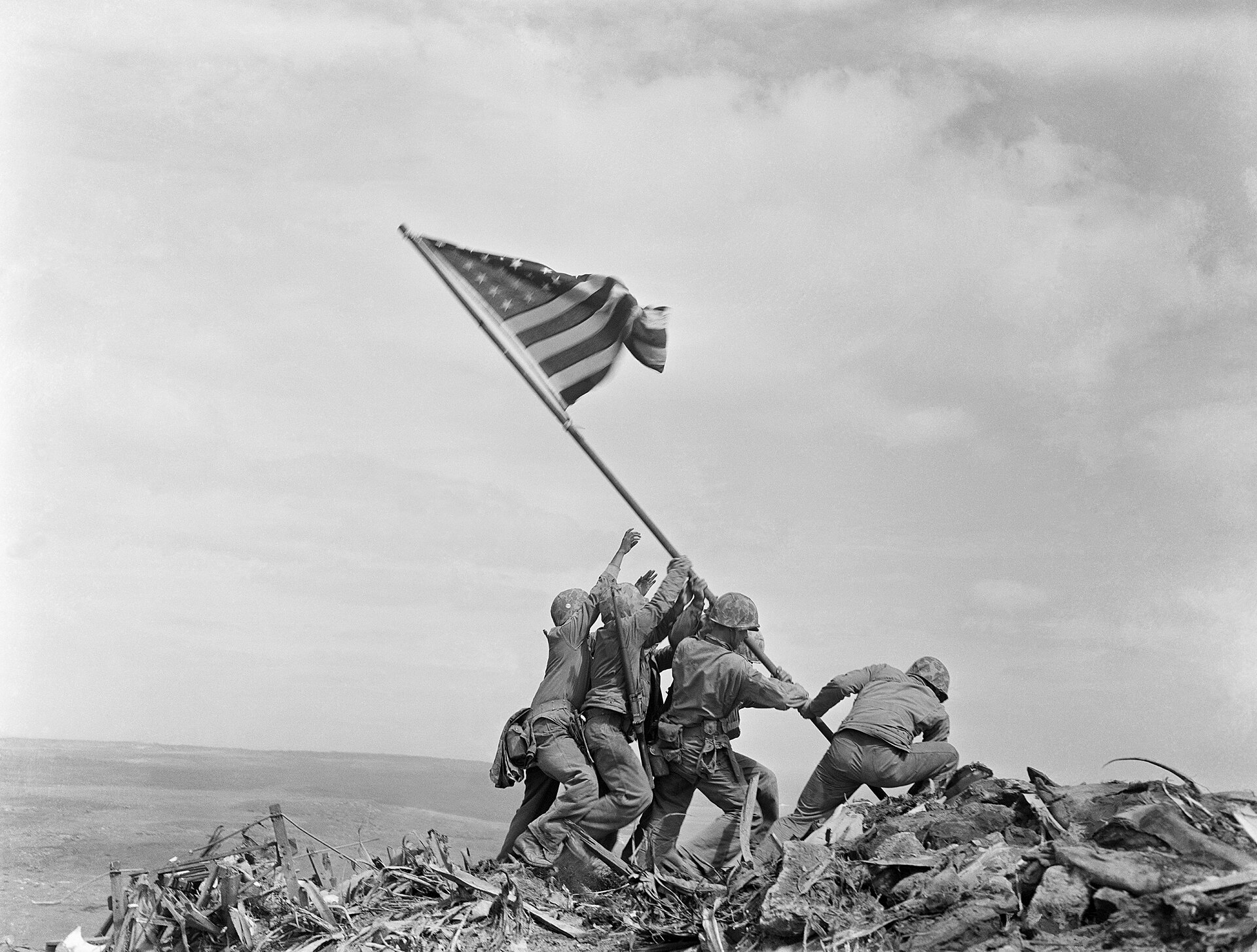
That photo was ubiquitous in 1945, and Harvey Comics took full advantage of its fame by replacing US soldiers with their characters, Captain Freedom, Shock Gibson, and Black Cat.
I’d like to underscore that the audience is key to whether an image is a swipe or an homage. Many artists take commissions from fans to parody a favorite cover that may be very obscure, but for that particular fan, the image is very well known. Thus, what might be considered a swipe to a broader audience, is definitely a tribute to the audience of one who commissions the artist.
My name is not Merriam Webster, so my definitions of these words are not definitive. This is just the way I see it, and I welcome further discussion. If you see things differently, let me know!
—
Want more MORRISON MONDAYS? Come back next week! Want a commission? See below!
—
MORE
— THE ART AND THE TOY: Bringing THE SIMPSONS’ KING HOMER to ‘Life.’ Click here.
— BAT-GIRL vs. BATGIRL: The 1960s DETECTIVE COMICS Issue That Should Have Been. Click here.
—
Eisner winner BILL MORRISON has been working in comics and publishing since 1993 when he co-founded Bongo Entertainment with Matt Groening, Cindy Vance and Steve Vance. At Bongo, and later as Executive Editor of Mad Magazine, he parodied the comics images he loved as a kid every chance he got. Not much has changed.
Bill is on Instagram (@atomicbattery) and Facebook (Bill Morrison/Atomic Battery Studios), and regularly takes commissions and sells published art through 4C Comics.
