
Superman/Spider-Man #1 is out this week!
By JASON CZERNICH
Fifty years ago, in January 1976, DC and Marvel gave us the very first crossover between their characters with the landmark Superman vs. The Amazing Spider-Man. I wasn’t born yet, let alone collecting and reading comics, but I can just imagine the feeling fandom had at the time. Perhaps it was something akin to the surprise I got when I watched Disney toons interact with their Warner Brothers counterparts in 1988’s Who Framed Roger Rabbit?
Broadly, intercompany crossovers among a whole litany of publishers are commonplace now, but the first wave of DC/Marvel projects in the late ’70s and early ’80s were quite a thing for the industry, fans and pros alike, to behold. Since then, then Big Two have had a checkered relationship: There was a second wave (1994–2004) that produced a lot of material — not all of it great — and then… nothing.
As of 2025’s Deadpool/Batman and Batman/Deadpool one-shots — plus the recent publication of omnibus collections and Facsimile Editions — we are now officially in the third wave of DC/Marvel crossovers.
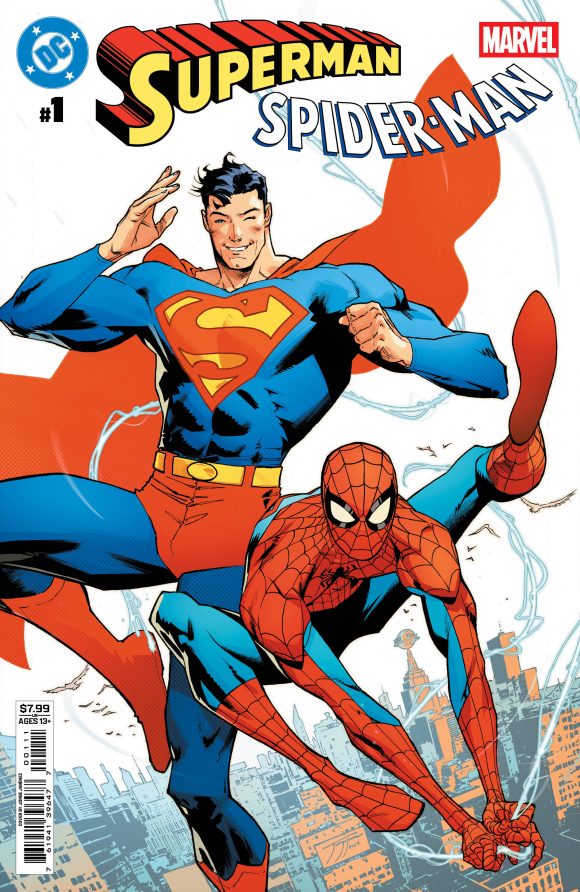
This week, it all comes full circle, with DC’s release of Superman/Spider-Man #1, to be followed in April by Marvel’s Spider-Man/Superman #1. With that in mind, here are my picks for THE TOP 13 DC/MARVEL CROSSOVERS — RANKED:
—
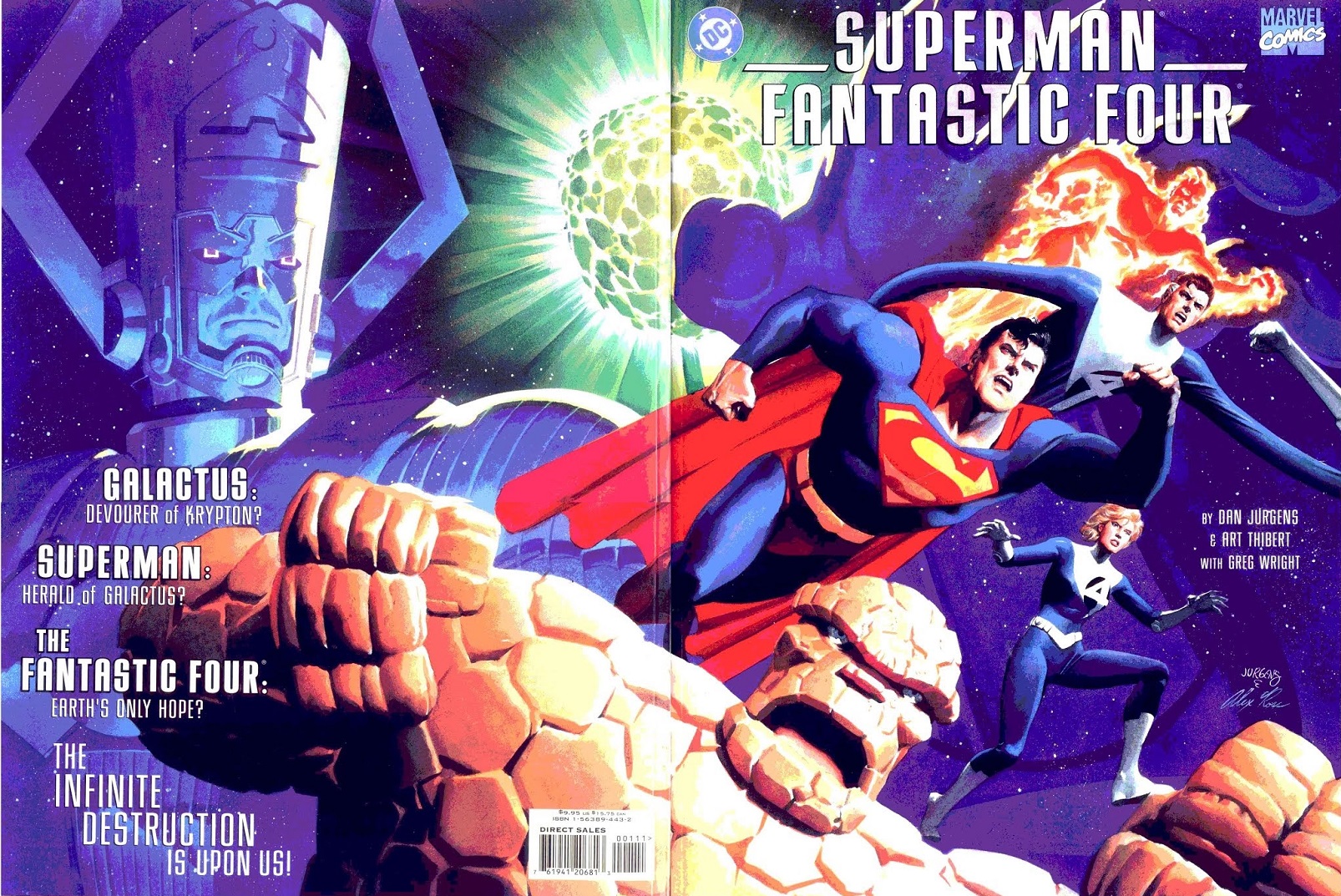
13. Superman/Fantastic Four (1999). I am a sucker for when Dan Jurgens writes and draws a story—especially if it is a Superman story. I am a sucker for oversize formats. I am a sucker for Alex Ross. Superman/Fantastic Four had all of this and more, as well as inventive ways to include Galactus and Cyborg Superman, aka Hank Henshaw They even take the time to reference how Henshaw’s origin is a dark mirror image of the Fantastic Four’s beginnings. The wraparound cover by Jurgens and Ross was just the icing on this cosmic cake.
—
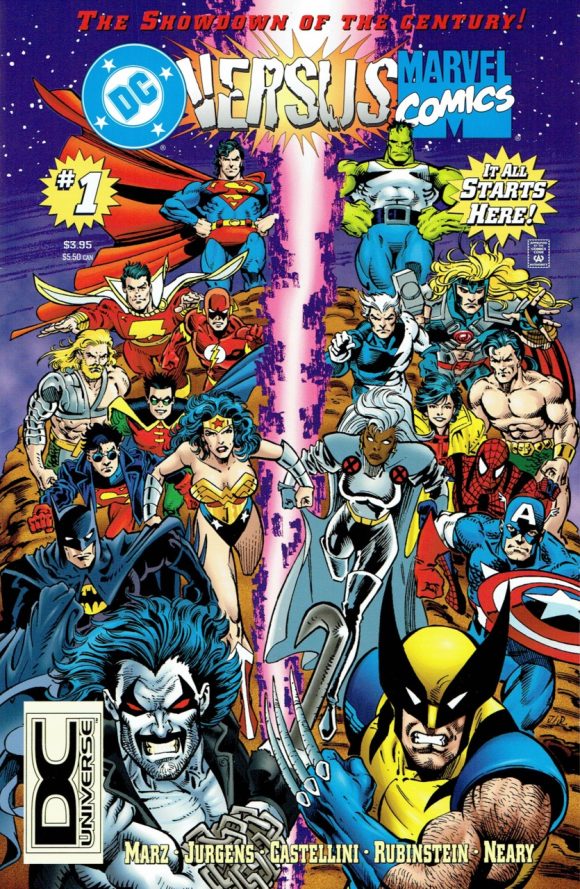
12. DC Versus Marvel Comics (1995). This will probably be the most controversial entry on this list due to the fan voting aspect of it alone. However, the four-issue miniseries actually had some genuinely good moments. Aside from the matches, writers Ron Marz and Peter David, teamed with pencillers Dan Jurgens and Claudio Castellini, gave us some fun character interactions we never thought we would see. Then there were all those Age of Amalgam one-shots between Issues #3 and #4. They even promoted the whole event with tie-in merchandise, such as a poster and two trading card sets. The whole enterprise overall felt very ’90s but some, such as myself, still fondly remember the whole affair as an exciting time.
—
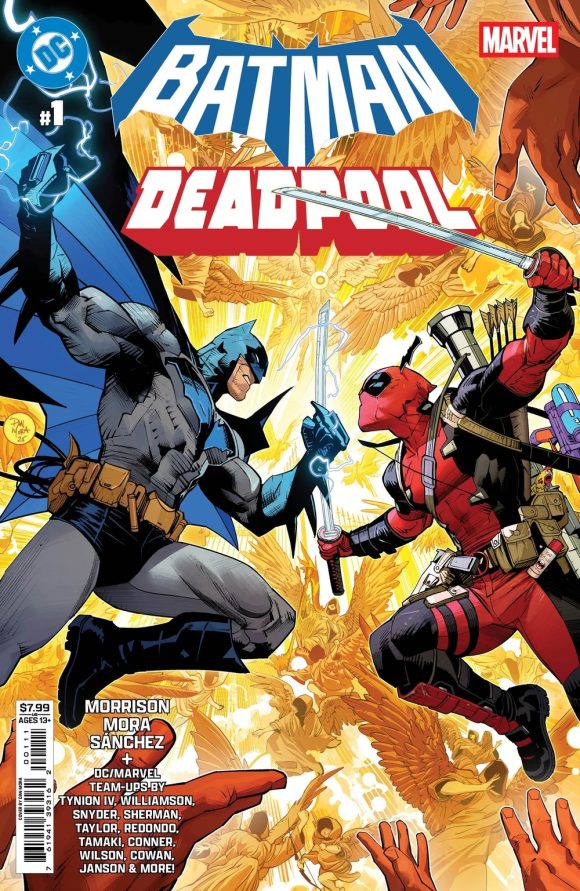
11. Batman/Deadpool #1 (2025). While the Marvel-published Deadpool/Batman one-shot from September had a very lacking and predictable lead story, DC’s half of the deal clearly came off much better two months better. Instead of going with the obvious choice of villain, such as the Joker, writer Grant Morrison utilized a threat from his run on the X-Men franchise to a very creepy degree. Throw in references to his late ’80s Animal Man stint and John Ostrander’s ’90s Suicide Squad, and you have an engaging read. Art by fan-favorite Dan Mora adds another layer of goodness to this one-shot.
—
10. Captain America/Wonder Woman (2025). Presented as a backup tale in Marvel’s Deadpool/Batman, this short glimpse of what an alliance between the Amazonian princess and everyone’s favorite super soldier could be like was not only a great read, but it left you wanting more! Are you listening, Marvel and DC? Can we please get a treasury-size one-shot featuring these two icons?
—
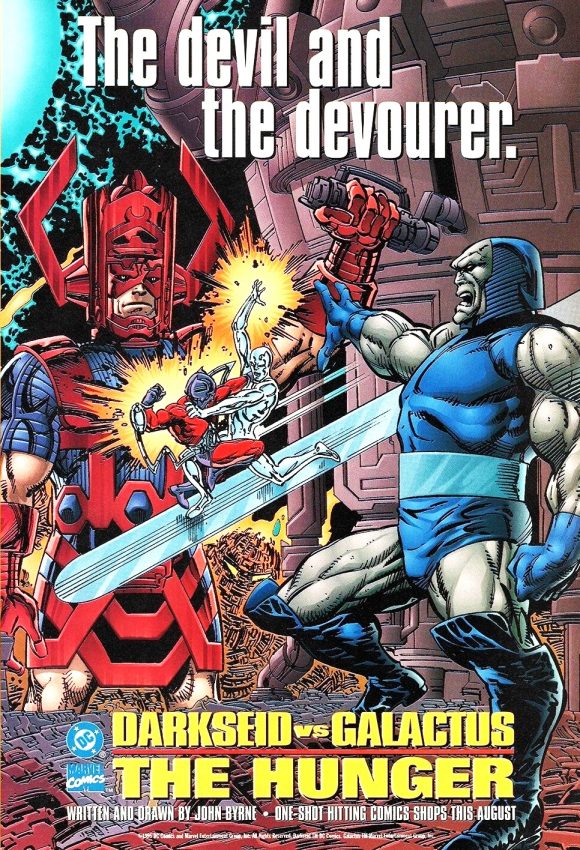
9. Darkseid vs. Galactus: The Hunger (1995). Can villains carry a crossover story? It really depends on which two you pick, doesn’t it? It also helps if one of the villains has something the other villain really wants and will fight to the death to keep it for himself. Oh yeah, it doesn’t hurt if both villains are Jack Kirby creations either. John Byrne’s first crack at an intercompany crossover poses the question: What if Galactus came for Darkseid’s home planet of Apokolips? Add Orion and Silver Surfer to the mix, and you get a tale that entertains you from cover to cover.
—
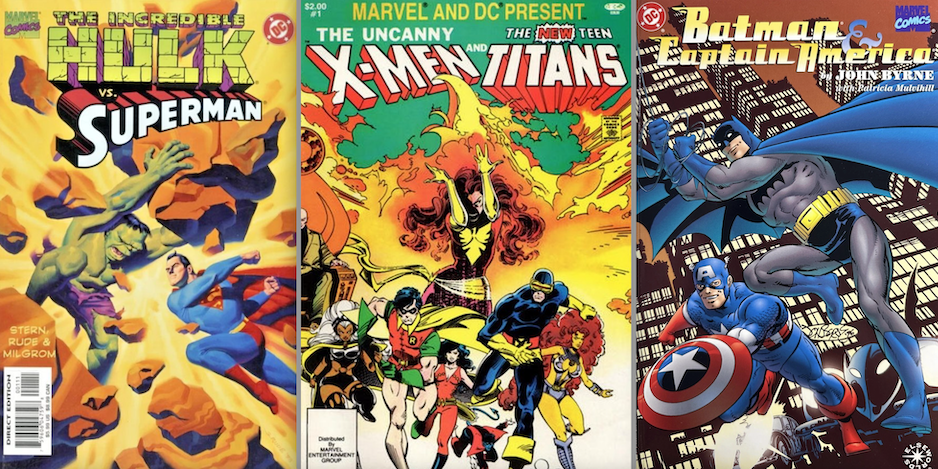
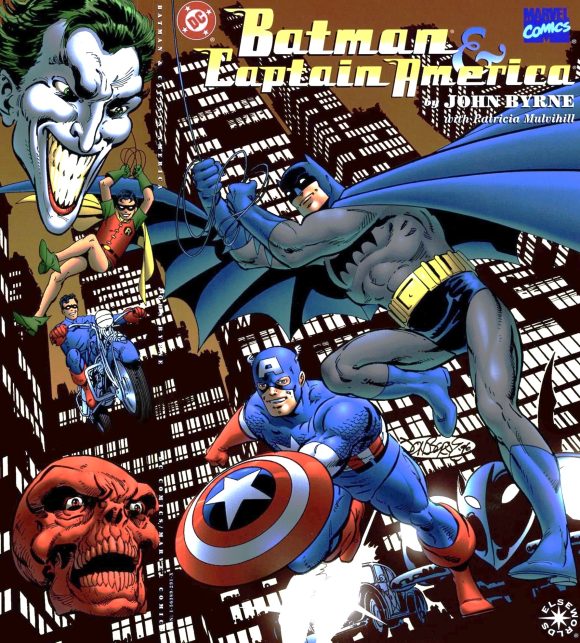
8. Batman & Captain America (1997). Probably the most asked crossover question is, “Who would win in a fight, Batman or Captain America?” It’s also the most obvious plot point to address whenever they have gotten together over the years. As this one-shot by John Byrne shows, the question does not actually have to be answered to make a Caped Crusader/Super Soldier outing good. Instead, Byrne sets the tale during the Golden Age, a time when both superheroes had sidekicks—Robin and Bucky—and their arch foes, the Joker and Red Skull, were already their biggest enemies. It all added up to a book that just screamed fun. Who won the superhero battle here? The readers.
—
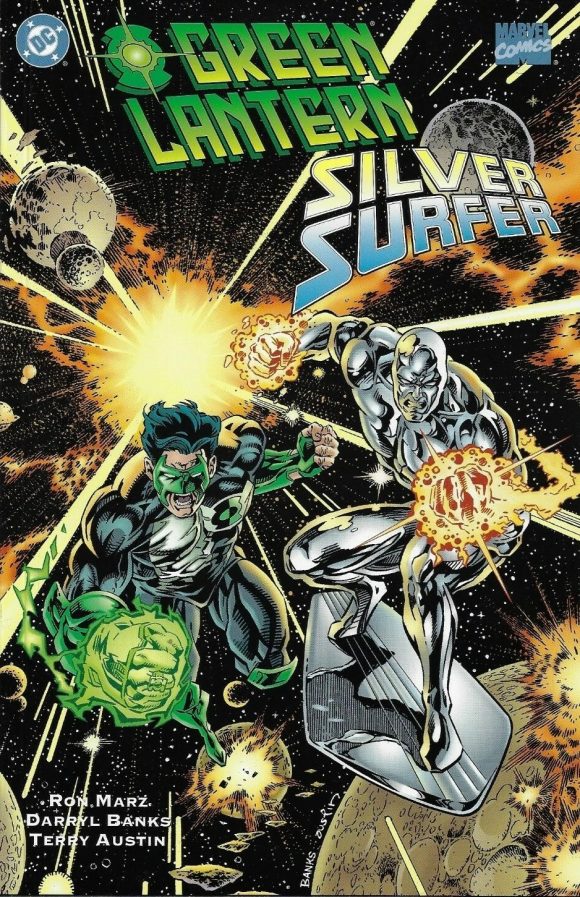
7. Green Lantern/Silver Surfer: Unholy Alliances (1995). This may be the most overlooked title on the list, as it was overshadowed by the DC Versus Marvel event it led directly into. Even without the last-page teaser, you have a very solid adventure in space where the heroes team up with each other’s foes — Kyle Rayner’s Green Lantern with Thanos, Silver Surfer with Parallax — before forming an alliance. Ron Marz, Darryl Banks, and Terry Austin form the perfect creative crew to give you the team-up you didn’t know you needed, while plotting it in a way you didn’t expect.
—
6. Batman vs. The Incredible Hulk (1981). Sometimes DC and Marvel characters aren’t paired in obvious ways. Batman fighting the Punisher, or Green Lantern encountering Silver Surfer in the vacuum of space, make sense. But sometimes heroes are thrown together simply because they’re bankable. This has resulted in Batman/Deadpool and Batman vs. The Incredible Hulk, with the latter featuring the second-most popular characters at their respective publishers at the time. The Man of Steel and Spidey already had their turn at bat twice, so the Dark Knight and the Green Goliath were naturally next on deck.
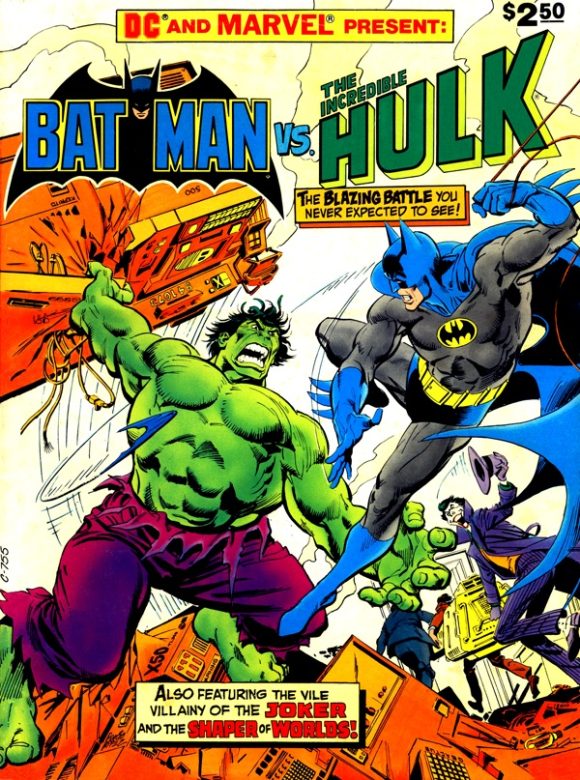
In the end, having such two disparate characters carry an oversize one-shot actually worked out, thanks to Len Wein and José Luis García-López, who were both at the top of their games for this effort. They kept the story full of action, suspense, and even humor, before injecting a whimsical dose of weirdness for the finale, all while making the visuals the best they could have possibly been for any book on the stands at that time. Batman vs. The Incredible Hulk is the perfect example of how you can bring almost any two franchises together and make it work if you have great creative talent.
—
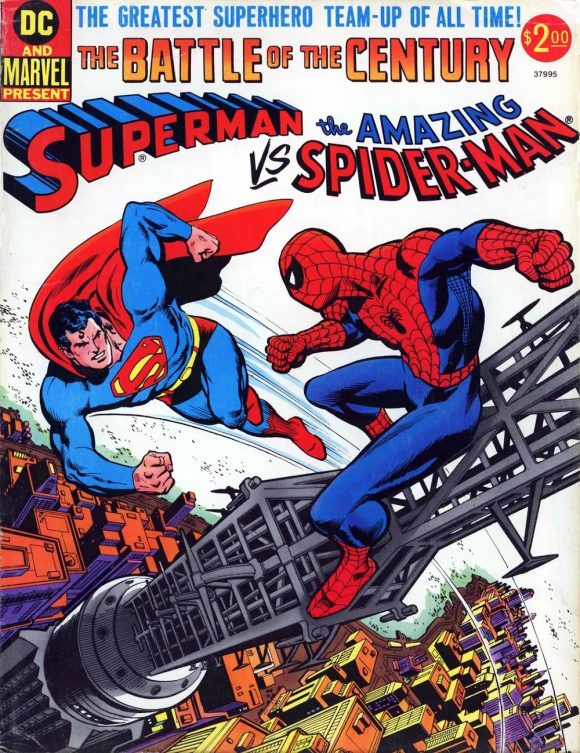
5. Superman vs. The Amazing Spider-Man (1976). This is the one that started it all and the template for the ones that directly followed. Staff at DC and Marvel worked extra hard to make sure both the heroes, their villains, and their respective supporting casts got equal face time in this unprecedented project. None of the other entries on this list can match the raw excitement this historical crossover generated because there had never been anything quite like it in comics before everyone’s favorite wall-crawler met the Last Son of Krypton.
—
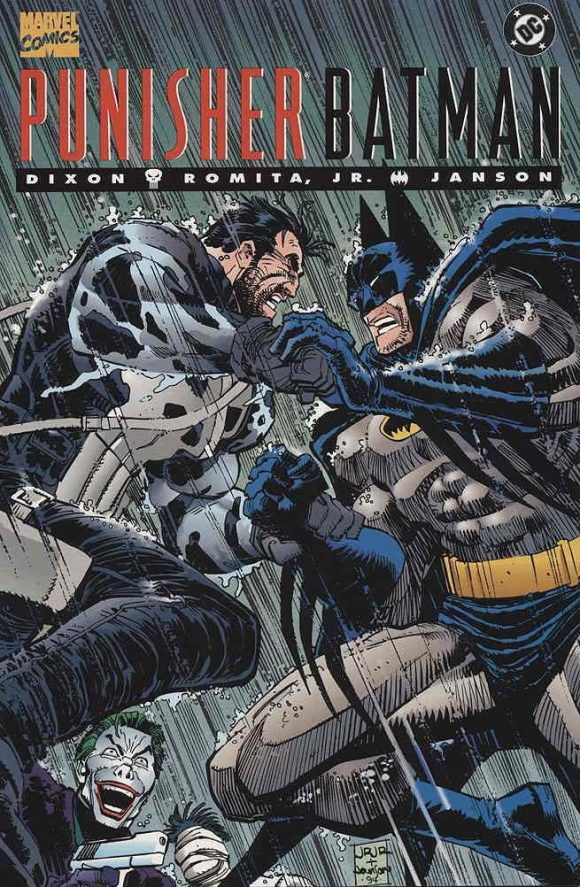
4. Punisher/Batman: Deadly Knights (1994). Sometimes characters are just destined to meet and Bruce Wayne and Frank Castle may be the best example. Take two non-powered, street-level protagonists, mix them up with their hideously deformed foes as written by Chuck Dixon — who had vast experience with all the involved players—and you get the most intense showdown on this list. John Romita Jr. on pencils and Klaus Janson on inks make this the most grim and gritty intercompany Marvel/DC crossover you will ever see. It wastes no time in showing how Bruce and Frank are very different, all the while Jigsaw and the Joker ratchet up the action as they all veer toward a violent and bloody showdown, where honest observations about the protagonists are made and Batman is forced to take action in a most unexpected way.
—
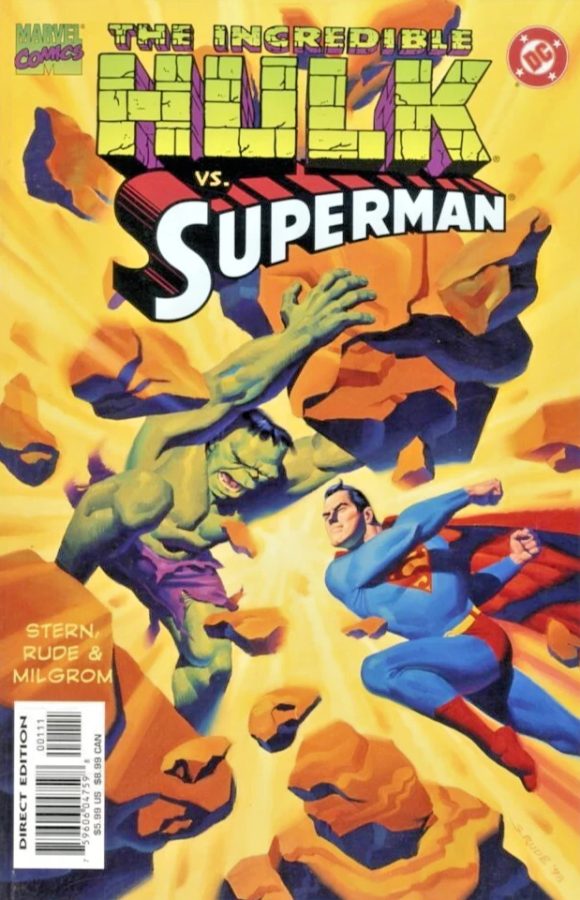
3. Incredible Hulk vs. Superman (1999). The twist with this tale is that it’s largely set in the early days of both characters’ alter egos. It’s a more innocent time that, thanks to the masterful pencils of Steve Rude, is evocative of Jack Kirby, Joe Shuster, and the Fleischer Bros. — sometimes all at once. Roger Stern’s story then brings the narrative back to a darker present. This is the best crossover for either Clark Kent or Doctor Banner, and one of the most overlooked of any published crossover.
—
2. The Uncanny X-Men and the New Teen Titans (1982). This may be DC and Marvel’s greatest example of pairing bestselling franchises of both universes that actually worked. This tale by Chris Claremont, Walt Simonson, and Terry Austin is nearly flawless. Having Darkseid and Dark Phoenix as the threats made this outing much larger in scale than the three prior crossovers.
This was the only one of the first wave of DC/Marvel epics not to be Treasury-size; however, the art job by Simonson is so dynamic and detailed that you can easily forget the format. The visuals often go from page edge to page edge, and the linework is rich and crisply enhanced by Austin’s inks—a big factor in why this book still stands the test of time.
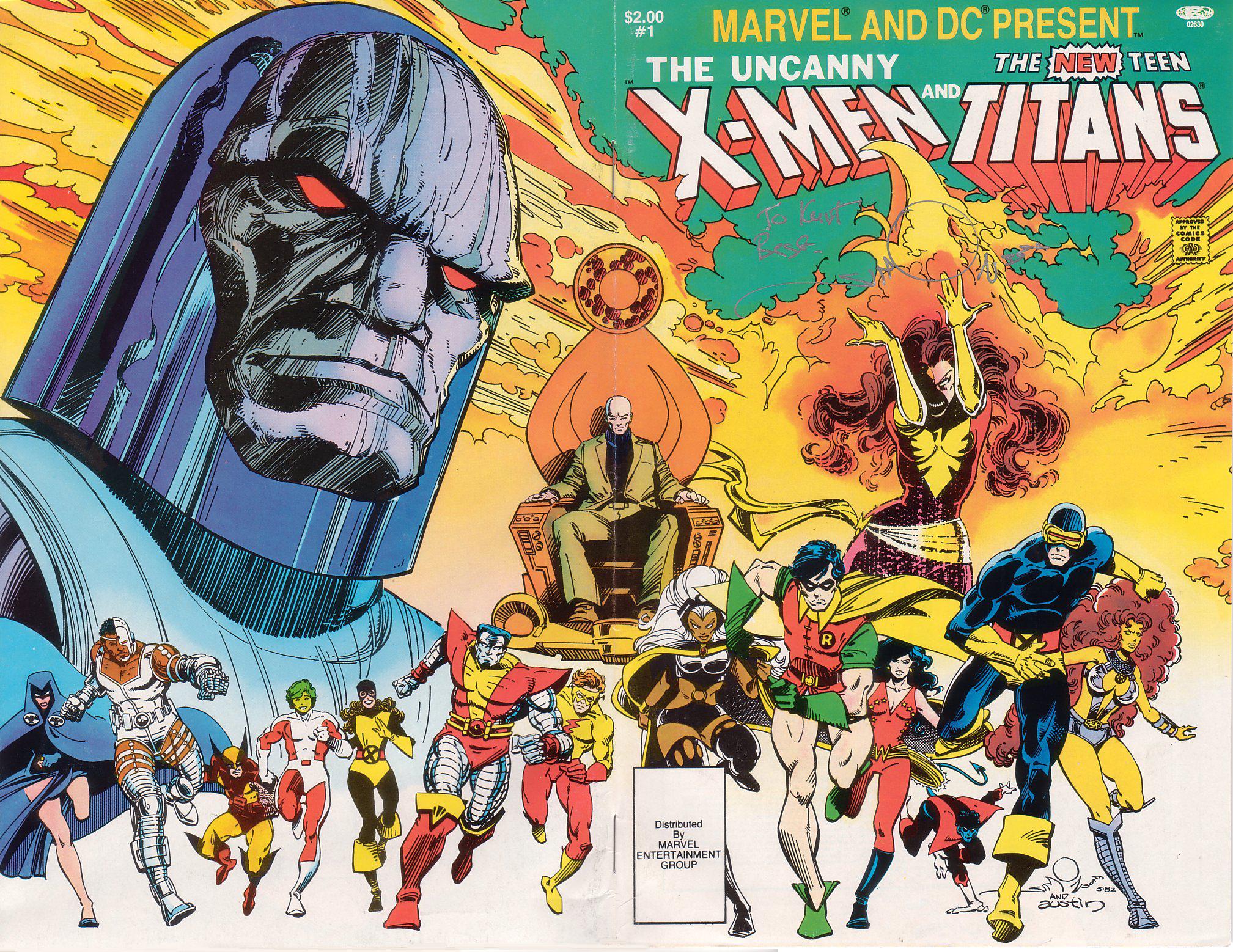
In a lesser writer’s hands, juggling an extended cast would be a cumbersome task. With Claremont onboard, everybody gets to shine: From Garfield Logan pestering Wolverine about having a similar name, to the way the main villains initially greet each other, everybody feels in character.
—
1. JLA/Avengers (2003-04). Did you really think the top-ranked crossover could be anything else? The largest in scale, with higher stakes than The Uncanny X-Men and the New Teen Titans, writer Kurt Busiek and superstar artist George Pérez made every fan’s dream come true when they produced the crossover to end all crossovers.
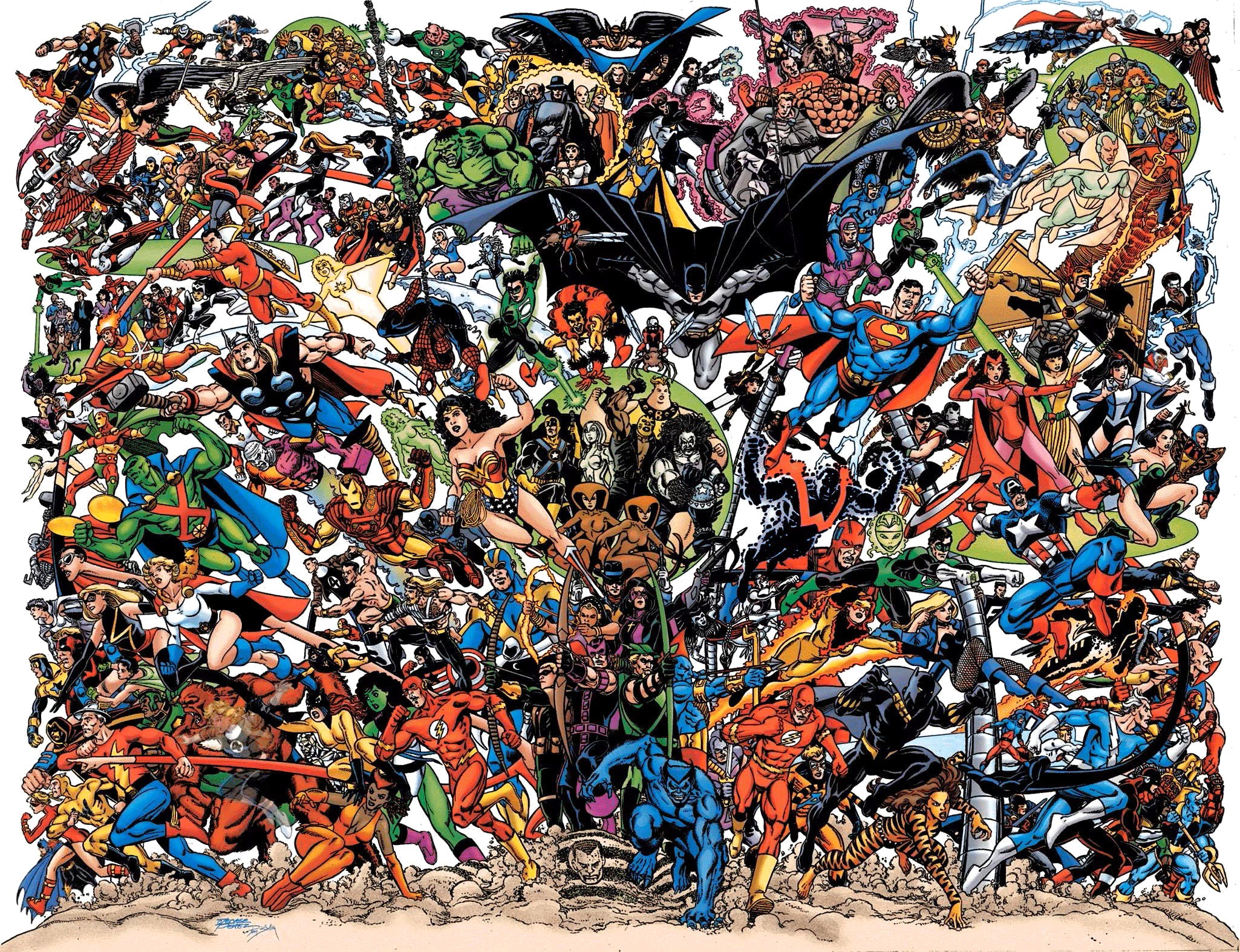
Busiek and Perez found a way to incorporate every character who had been an Avenger or JLA member into a four-part, prestige-format miniseries (soon to be re-released as Facsmile Editions) and crossed time and space to do just that. The story pretty much ignored all the developments of the prior DC and Marvel jaunts to bring you something that felt fresh and new to the crossover concept.
Sometimes I think it was a blessing in disguise that the first attempt at bringing these two teams together in the ’80s failed. The project seeing the light of day in 2003 gave it almost 20 more years of continuity, character development, and events to play with. It wasn’t just a mixing of worlds—it was a blending of both teams’ history and legacy that served as a tribute to the concept of crossovers itself.
Much has been said about the politics and rivalry that led DC and Marvel to stop working together. In my mind, though, I like to think it was because they were not going to top Busiek and Pérez’s JLA/Avengers anytime soon.
To this day, nobody has.
—
MORE
— SUPERMAN/SPIDER-MAN #1: DC Goes BRONZE AGE in NEW WAVE of Superb Variant Covers. Click here.
— JLA/AVENGERS: MARVEL and DC Set Dates for All Four FACSIMILE EDITIONS. Click here.
—
JASON CZERNICH was born smack dab in the middle of the Bronze Age of Comics. Early memories of Power Records and other Batman merchandise, as well as watching reruns of the 1966 Batman series on TV38 in Boston, imprinted on him heavily. Today, he lives and works as a clinical social worker in central Massachusetts with his wife, child, cat, and beloved French bulldog.
