
Alex Segura and Sara Century take you back to the ’80s and ’90s…
By SARA CENTURY and ALEX SEGURA
You remember those days, probably — biking to your local pharmacy, convenience store, or grocery. Not for food or medicine, but the comic-book spinner rack. The rainbow-colored, metal totem to your greatest obsession. Some days were good — you’d get your favorite titles all at once and have to really struggle to decide what to spend your five bucks on. Others were different, and you’d have to try something new. But one thing was constant — these stories were ongoing, long-running, intricately plotted, and soap operatic.
As lifelong comic fans in our 40s (it’s the new 30, don’t you know?), we have a special type of nostalgia for those kinds of novelistic comics series — the ones that feature subplots galore, aren’t written for the trade, and keep you on your toes. Characters die. Villains are born. Rosters change. While today’s market is driven by new #1s and “series of mini-series,” we seriously miss the comfort in knowing there’d be a new issue of books like Claremont’s Uncanny X-Men (with various A-list artists), Levitz and Giffen’s Legion of Super-Heroes, and more.
It was often more about the character interplay — the soap opera — than the villain of the month, and the continuity and complexity of the worlds was more often than not a feature rather than a bug. In those halcyon, pre-Wikipedia, pre-comic book reading order days, part of the joy was getting completely lost in a universe of characters and problems and digging your way out or through.
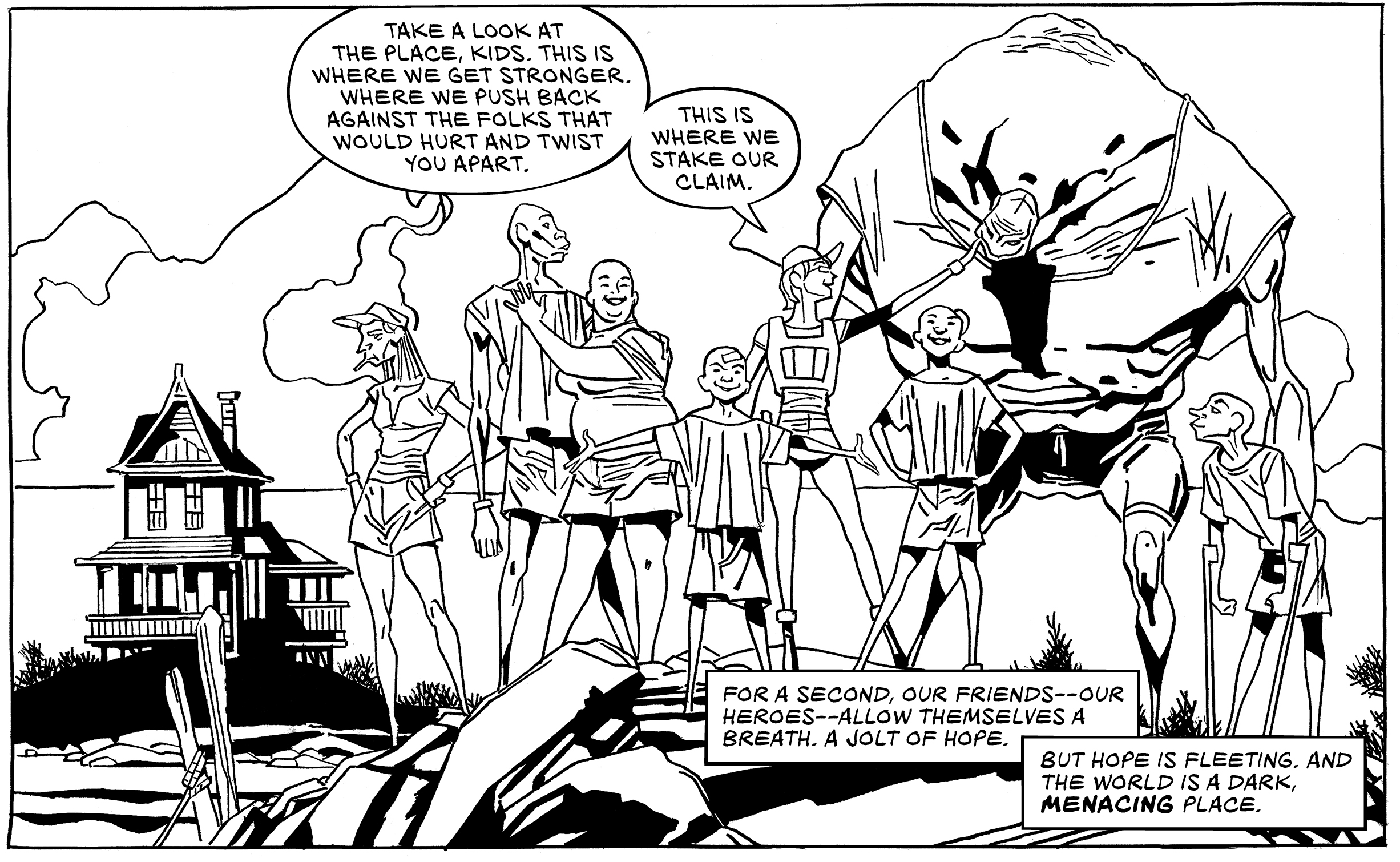
So, The Forgotten Five was born.
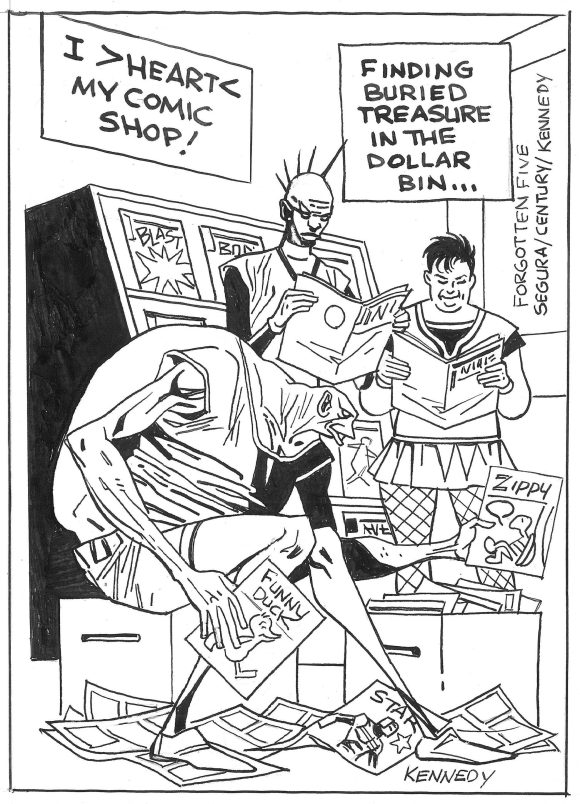
Business stuff first: We wanted to build a model that would allow us, and our amazing collaborators — Pat Kennedy, Dean Kotz, Chas! Pangburn, and editor Priya Saxena — to tell this story for as long as we wanted to. That’s where we landed on Patreon — a platform that lets folks sign up and support a project, get updates, and really become part of the team. Much love to self-publishing, independent pubs, and Kickstarter, but we didn’t want to work toward a product — we just wanted the story to live, and we’d worry about packaging it for different markets later. (We do have plans for a print edition, don’t you worry! More on that soon!)
But what is The Forgotten Five?
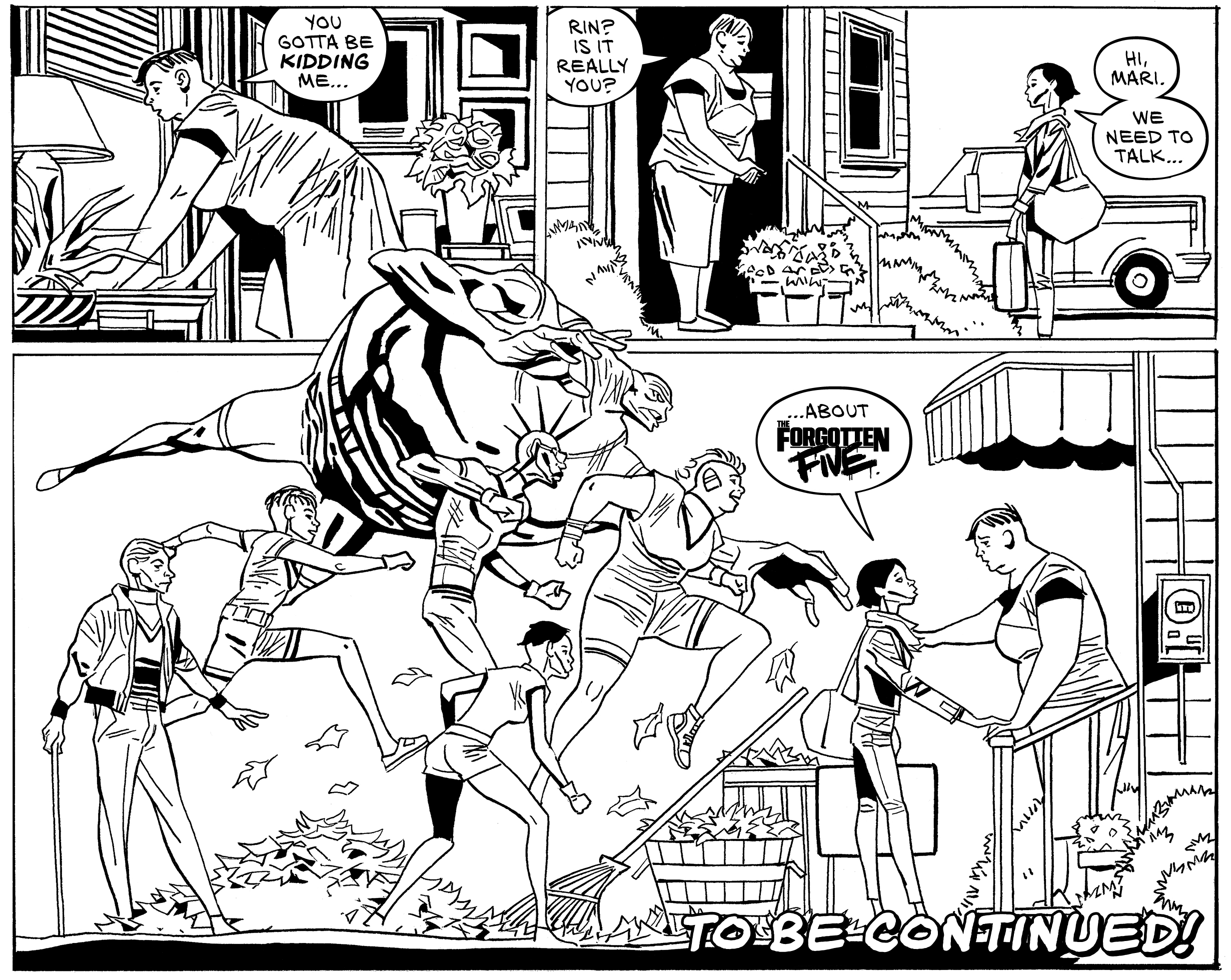
In a world much like our own, in the early 2000s, a handful of Miami teens are abducted by a mysterious, shadowy organization known as The Contingency. This militaristic group is hellbent on finding kids with the potential for great power — activating them, and then weaponizing them for their benefit. The problem? One of their own, Polly Napier, is on to the scheme and wants nothing to do with it. When we meet our kids, they’re frantically trying to escape the Contingency’s Everglades base — and they’re terrified by the new powers they’ve been cursed with. With Polly’s help, though, they just might make it.
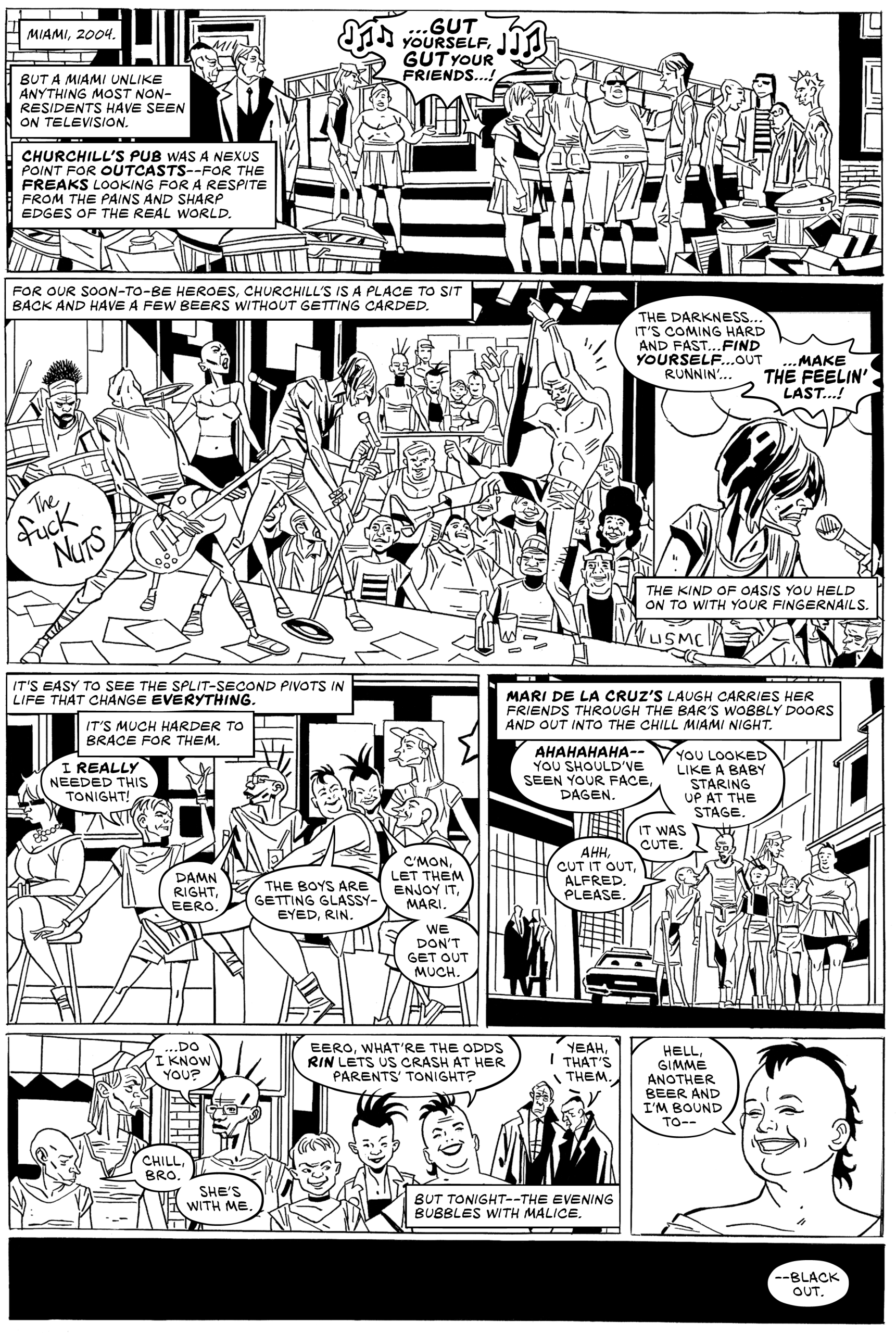
The Forgotten Five is a story told in two main timelines — the past, showcasing our heroes’ origins, and today. As we flash forward and reconnect with our friends, we learn that things didn’t go as well as they’d hoped, and a dangerous, powerful evil — a cosmic energy that is to blame for blanketing the planet with these potentially powered people — is heading back to Earth, and only the Forgotten Five can stop them. Are they ready for one last ride together? How did they get here? There’s one way to find out.
What are the ingredients that went into this idea? Well, glad you asked. Here, for your edification, are 13 stories/series that not only got us thinking about creating the series, but also serve as ongoing influences! Odds are, if you dig any of these, you’ll certainly enjoy what we’re doing. See you there!
—
UNCANNY X-MEN #229-238, The Outback Era (1988, Marvel)
(Words) Chris Claremont, (Pencils) Rick Leonardi, Marc Silvestri, (Inks) Terry Austin, Dan Green
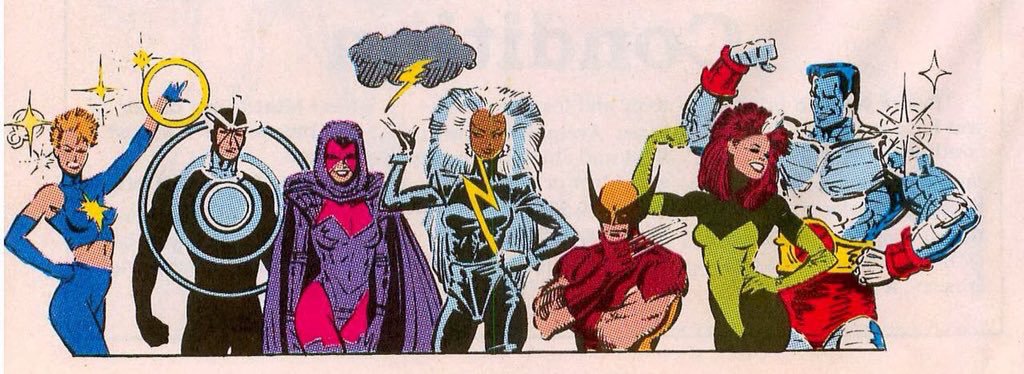
Summary: The X-Men are believed dead by the world, and they hide out in the Outback for a bit. Stories from this era focused on major development for characters like Longshot, Dazzler, Rogue, and Storm, and infused political commentary with stories like the Genosha arc.
Alex: I’m a total Claremont head. This is no secret to anyone that knows me. In my eyes, the man was writing a long novel in comic book form, with complex subplots, winding character arcs, and an adult narrative that treated these fantastic heroes like people first, super-beings second. The Outback era, in many ways, was the ramp-up to the apex (more on that below) — the kind of story that doesn’t give readers what they want — No mansion! No Xavier! No Magneto! — but what they need, and perfectly springs from the long-form story Claremont was unfurling, with stunning art by greats like Marc Silvestri and Rick Leonardi. Don’t listen to the haters — this is a true golden age for the book.
Sara: This is a decisive era for X-Men, but I’m definitely the type that loves it for all the reasons some fans hate it. I like that they’re removed from the other X-Books, and I love how scary and bleak it gets. The Genegineer and the Genosha arc are so upsetting in the best way, and it leads perfectly into — INFERNO!
—
INFERNO (1989, Marvel)
(Words) Louise Simonson, Chris Claremont, (Pencils) Walt Simonson, Bret Blevins, Marc Silvestri, (inks) Bob Wiacek, Dan Green
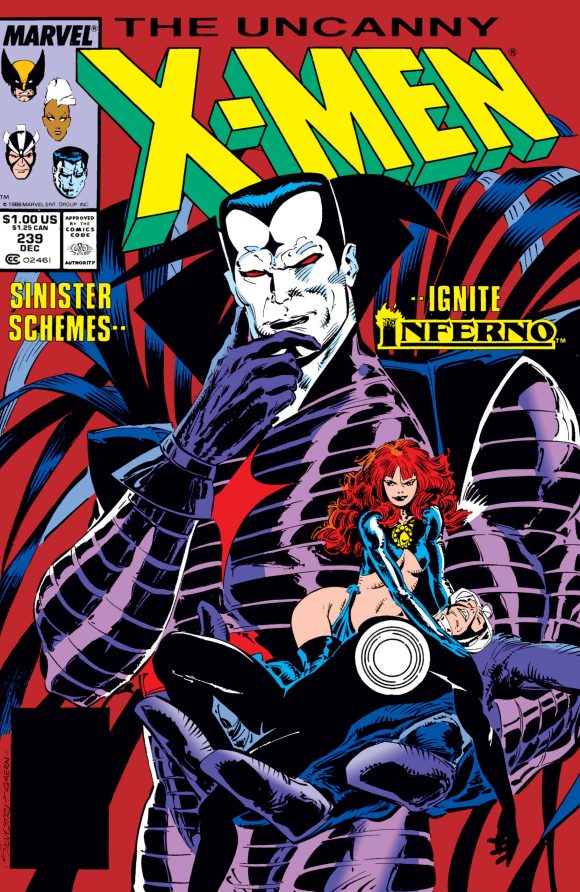
Summary: Jean Grey came back from the dead after the events of the Dark Phoenix Saga. That left Claremont and Weezie trying to figure out what to do with Scott’s new wife, Maddie. She joins forces with Limbo’s nastiest demons, and becomes the Goblin Queen! Meanwhile, in New Mutants, Illyana Rasputin has slowly begun to give into her own dark side. Inferno is the story of how the X-Men come back together, but it takes some serious falling apart to get there.
Alex: When folks ask me what the best X-Men comics are, Inferno is almost always atop the list. This is what Claremont and editor/writer Louise Simonson and editor Ann Nocenti were all building toward — an epic exploration of regret, pain, and heartache, bringing decades of lore to its natural culmination. Sure, the Maddie Pryor of it all is tough to deal with, but it’s handled well — and the art is top-flight. If you like your heroes messy, your problems complicated, and demons overrunning Manhattan, Inferno is very much your jam. The idea of long-running subplots, lived-in narratives, and a diverse cast is a big element we pulled here and made sure was a major element in TFF.
Sara: There is so much going on in Inferno. Claremont and Weezie are establishing a new status quo for the X-Books, so it’s effectively the end of an era. The X-Men are finally reunited with the other teams, the ongoing plot with Maddie and Scott wraps up in the most violent way imaginable, and Illyana is de-aged to her pre-Limbo self. All of New York is sieged by electronics given demonic life, so you get all of these cool, weird tie-ins with books like Daredevil and Power Pack. That sense of the deeply personal mixed with elements of cosmic horror, classic tragedy, and epic superhero brawls is what makes this such a special story. Those are the themes I feel in The Forgotten Five.
—
DOOM PATROL #89, “The Animal-Vegetable-Mineral Menace” (1964, DC)
(Words) Arnold Drake, (art) Bruno Premiani
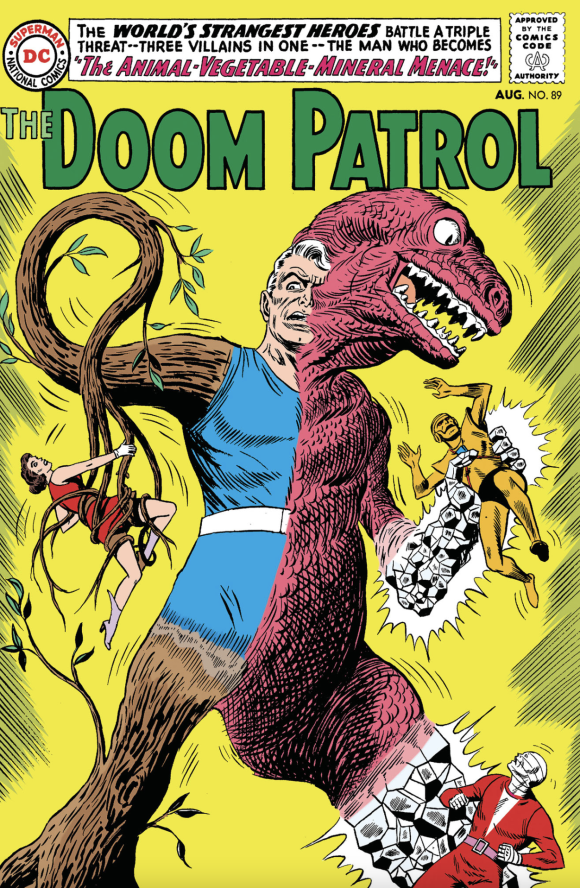
Summary: An old frenemy of Chief’s attempts to create life, only to accidentally fall into a chemical vat. And so was born the Animal-Vegetable-Mineral Man! The Doom Patrol has to figure out how to fight a guy who can transform into whatever element he chooses, and it’s a hoot.
Alex: Peak Silver Age weird drawn in a lovely, welcoming style. My kids love it, I love it. Just wild, bonkers comics in the best way. That weirdness presented in a clean, almost Archie-style, is a big influence on our work with the TFF teens — outcasts very much cut from the Silver Age Doom Patrol cloth.
Sara: Grant Morrison and others were able to reimagine the Doom Patrol as something really unique, so the classic era might not be everyone’s immediate go-to. This issue is a great example of how this team was bananas from the beginning, but any issue from this time is truly unlike any other comic. The big personalities, uneasy teamwork, and outrageous sci-fi is what makes this era a big inspiration when I’m thinking of TFF.
—
FANTASTIC FOUR #48-50, The Galactus Trilogy (1965-66, DC)
(Words) Stan Lee, (Pencils) Jack Kirby, (Inks) Joe Sinnott
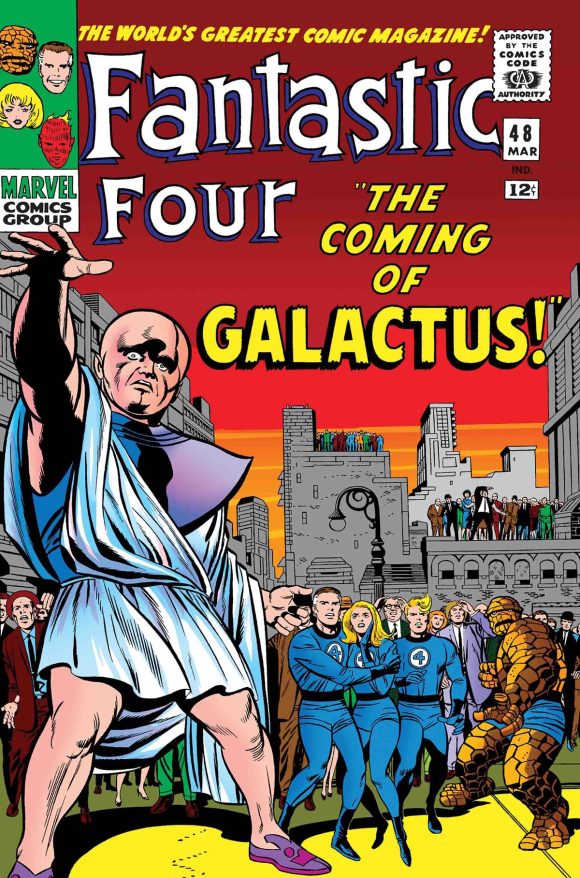
Summary: Galactus’ herald, the Silver Surfer, appears on Earth, warning that his master is coming to devour the planet. The FF have to scramble to defeat this cosmic threat against all odds. Meanwhile, the Surfer has a moral event horizon that turns him into one of Marvel’s most popular cosmic superheroes.
Alex: Superhero Team Comics 101, and Kirby at his finest. A primer for character dynamics in every comic, ad infinitum.
Sara: This story is some kind of master class in pacing. The Silver Surfer’s journey to Earth has such an ominous, cosmic feel. All of your favorite FF characters are at their complicated best here, and even the Surfer is so charmed by them that he agrees to turn on Galactus to fight by their sides. This story delivers pop art aesthetics imbued with sci-fi scale. That influence will show more as we get into TFF: Year 2.
—
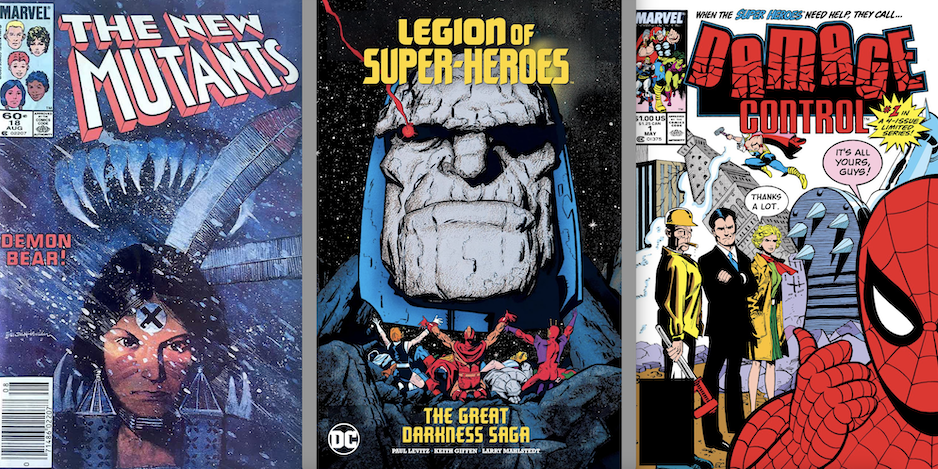
LEGION OF SUPER-HEROES #290-294, The Great Darkness Saga (1982, DC)
(Words) Paul Levitz, (Pencils) Keith Giffen, (Inks) Larry Mahlstedt
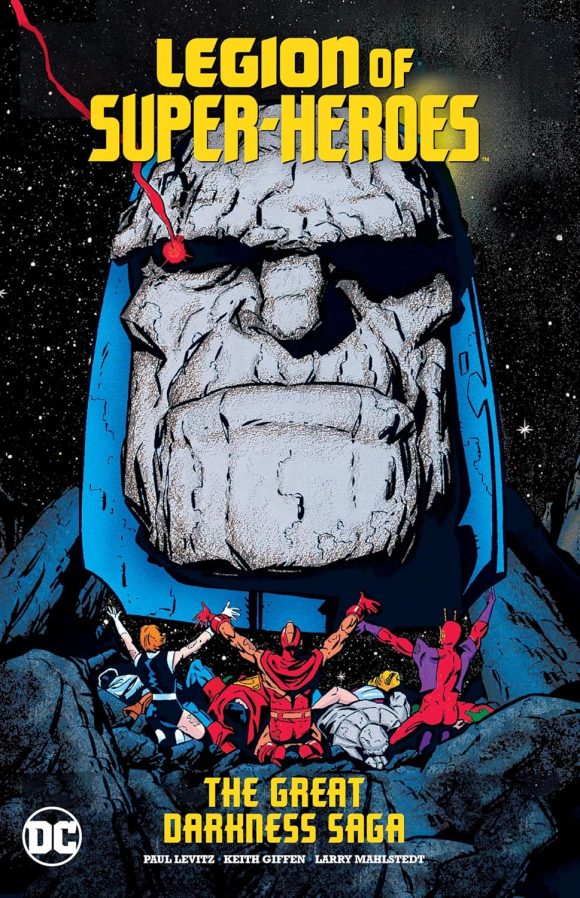
Summary: Legion vs. Darkseid. What more do you want?!
Alex: Reading the issues before Levitz returned to Legion and then picking up The Great Darkness Saga is a massive gear-shift, even in contrast to Paul’s first run on the book. It goes from quirky Bronze Age standard fare to an adult, complicated, and suspenseful space saga in just a few pages. Levitz’s knack for ramping up a dark sense of impending doom is unmatched, and this kicks off his most iconic run on the series with a roundhouse kick. My favorite bit, though, is this deep feeling of a lived-in world, where the heroes know each other and the landscape is thoughtfully crafted — something I consider a lot, particularly when working on TFF.
Sara: I consider most of the Levitz runs to be must-read, but there’s no denying this story brings something special. The foreboding intro, the reveal of Darkseid as the big bad, and the personal reactions from each Legionnaire are all so perfect. Levitz’s Legion inspires me to make space for every character in a story, no matter how many there are.
—
LEGION OF SUPER-HEROES #1-13, Five Years Later (1989-90, DC)
(Story and Art) Keith Giffen, (Script and Story Assist) Tom and Mary Bierbaum, (Inks and Story Assist) Al Gordon
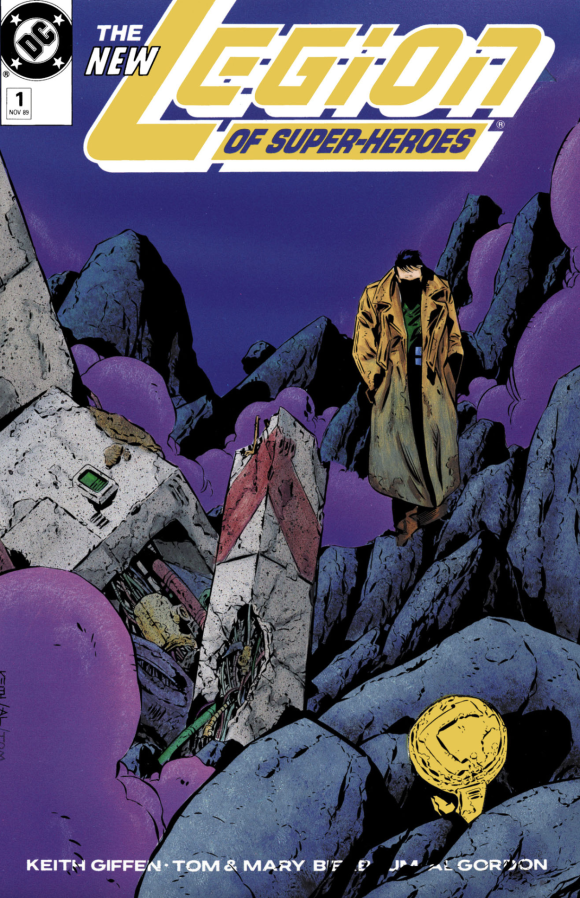
Summary: Aptly titled, this era of the Legion picks up five years after the end of the Levitz run, presenting readers with a (much) darker status quo. The Legion is gone. Earth is on the verge of a hostile Dominator takeover. And things, in general, are very, very bad. Can the remaining Legion members — strewn across the galaxy — pick up the pieces in time to save the day once more? The odds are not in their favor, but it’s gonna be a fun ride.
Alex: I wrote about this series at length at my newsletter, but for the newbies: This is not a comic for the faint of heart, nor is it going to spell everything out for you. It’s peak Giffen, with the auteur jettisoning comfort items like code names, editorial notes, and endless exposition to tell a dark, post-apocalyptic story about heroes trying to reclaim who they once were, during their lowest point. There’s a reason other creators tend to ignore this era — it’s almost impossible to pick up from (though, hey, call me, DC — I’ve got an idea). ‘
While I wouldn’t suggest STARTING here (I did!), it’s a great comic regardless of your Legion lore knowledge, and a testament to monthly comics and dealing with the challenges of writing for the Big Two. You can feel Giffen’s love for the characters as he snaps them in half. The idea of jumping forward to a much bleaker time, and showing the team no longer together was a big inspiration for TFF, and in Dean’s use of Giffen’s beloved nine-panel grid.
Sara: The story that precedes this one, “The Magic Wars,” is massively underrated for setting up a bleaker tone for the Legion so that this story could knock it out of the park. 5YL takes a lot of cues from Watchmen, but it succeeds because it’s still very much a Legion story. Looking back at the past from a dystopian future is very much what the middle-aged TFF is going through. This book was a big inspiration for that vibe.
—
LOVE & ROCKETS, Is This How You See Me? (2018, Fantagraphics)
By Jaime Hernandez
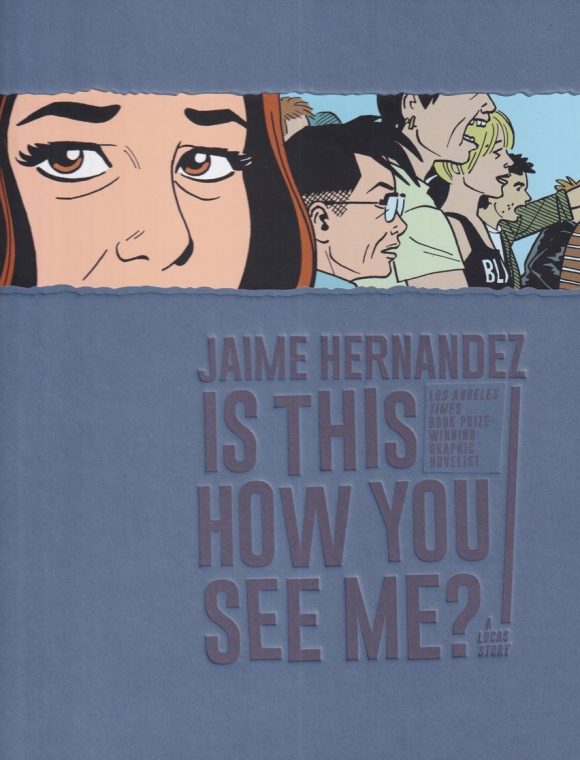
Summary: Maggie and Hopey attend a punk show in Hoppers like the old days. Now middle-aged, their current experiences are reflected in their shared past. The evolution of their love over many decades is the core theme of this beautiful story.
Alex: A powerful rumination on aging, love, missed opportunities, and trudging forward, Jaime shows why he’s a comics master — giving us nods to the Hopey and Maggie we first met and loved with the current versions, who are just as compelling. When folks ask me what comic I’d suggest to someone new to the medium, I immediately say Locas/Love and Rockets. The art is welcoming and beautiful, the stories are resonant, and the total package leaves you wanting more each time. One of my favorite graphic novels ever.
Sara: Locas is one of the first comics Alex and I talked about. No one does punk-rock soap opera better than Jaime, and this is one of the best. Weaving impactful flashbacks into a current narrative is our bread and butter on TFF, and this is Jaime basically teaching a masterclass on how to do it right.
—
DAREDEVIL #265-273, Lone Stranger (1989, Marvel)
(Words) Ann Nocenti, (Pencils) John Romita Jr., (Inks) Al Williamson
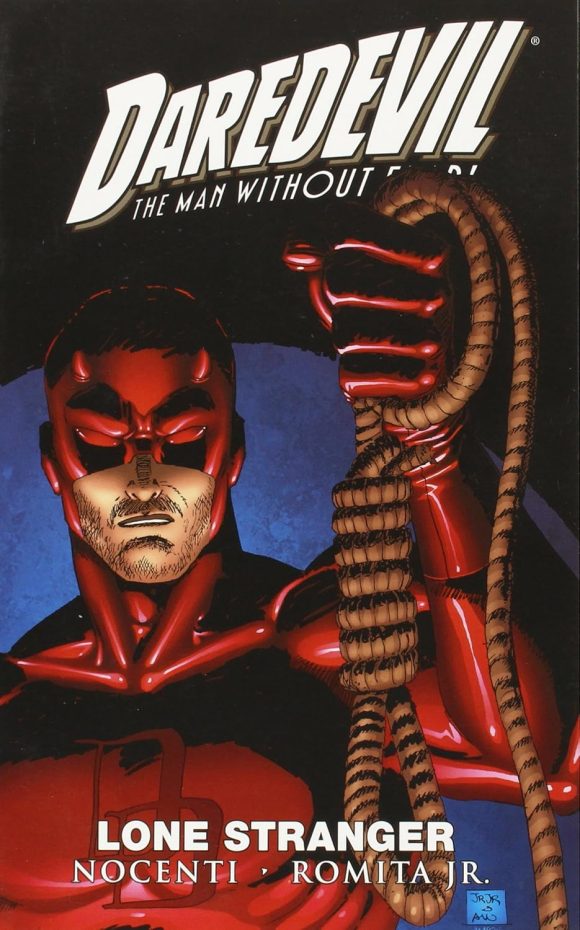
Summary: Daredevil gets caught up in Inferno, has a beer with Mephisto on Christmas, and decides maybe he needs a little break from New York. On a road trip, he encounters X-Men villains Blob and Pyro, fellow New Yorker Spider-Man, the Inhumans, and others.
Sara: This is where Matt pulls himself back together after the Typhoid Mary arc, or How Matty Got His Groove Back, if you will. The sense of working to reestablish your identity after a great loss hits home. The Typhoid Mary arc really screws with Matt’s head, and I love that there are these long-lasting repercussions explored here. In TFF, the kids also have to bounce back from a life-altering trauma. The attempts they make at healing are center focus, but, like Matt, they get derailed by supervillains from time to time.
—
NEW MUTANTS #18-21, Demon Bear Saga (1984, Marvel)
(Words) Chris Claremont, (Art) Bill Sienkiewicz
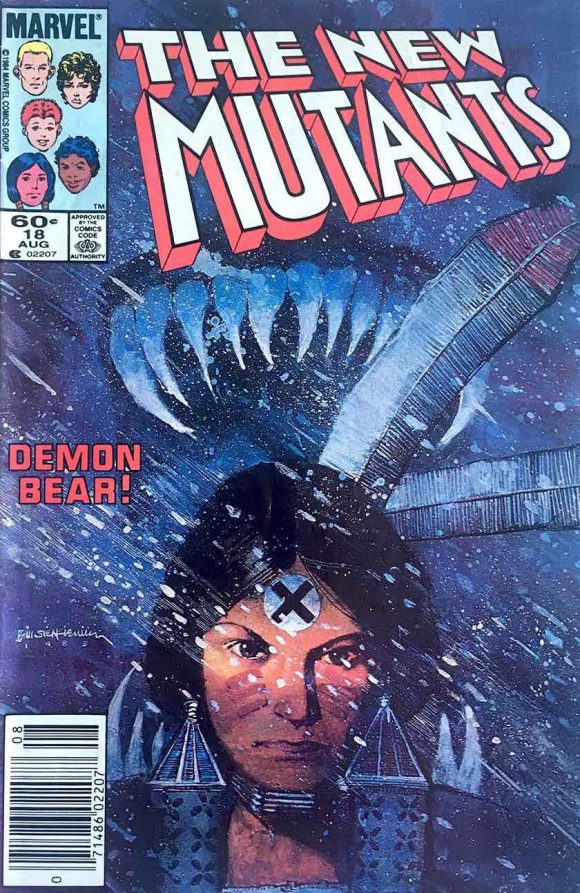
Summary: The co-leader of the Mutants, Dani Moonstar, is being haunted by a mystic entity known as the Demon Bear. Her friends doubt that the bear is real, leaving her to face it down on the psychic plane. When she inevitably falls, the New Mutants must join her in her fight against this ancient evil or lose their friend forever.
Alex: New Mutants will always be a fav because the first few years are just about the kids being kids and struggling to find purchase in a wild world, which is elemental to our TFF story. But Sienkiewicz elevates everything — every page feels like a work of art, and it’s no longer about tweaking standard superhero fare, it’s about carving out new ground. One of my favorite runs ever.
Sara: I love it when the X-Men are a horror story. Demon Bear reads like a high-concept slasher film in the vein of Suspiria or Nightmare on Elm Street. The image of Dani squaring off against the Bear is ingrained in my head. The New Mutants always feel like the forgotten class, and that sense of a group that is more adjacent to the X-Men than a part of it is really interesting to me. It fits TFF, who are connected by their status as outsiders.
—
THE NEW WARRIORS/X-FORCE, Child’s Play (1994, Marvel)
(Words) Fabian Nicieza, (Pencils) Tony Daniel, Darick Robertson, (Inks) Jon Holdredge, Larry Mahlstedt
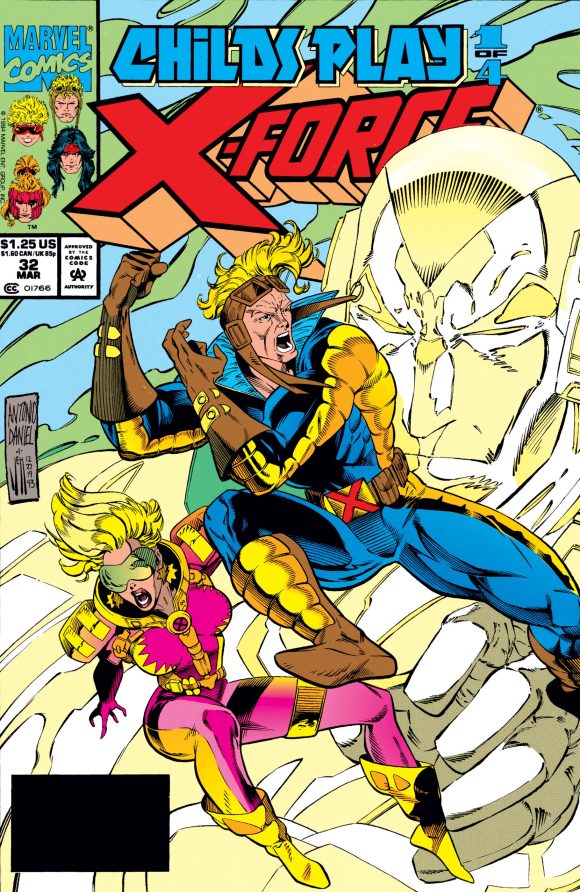
Summary: In this crossover, the Gamemaster has been assembling a group of bored, rich 20-somethings called the Upstarts. Pitting them against each other in a mysterious competition, Gamemaster assigns them the task of kidnapping several mutant superheroes. X-Force and the New Warriors team up to save their friends. (X-Force #32-33, The New Warriors #45-46.)
Alex: Fabian Nicieza is a huge influence on my work — not just because we have a similar background (marketing guys who turn into writers), but because I really respect his skills: a knack for tight, long-form plotting that builds off character. Fabian’s plots never feel gimmick-y or contrived, and that’s a huge accomplishment considering how long he’s been in the game. At the time this story hit, the idea of New Warriors and X-Force crossing over was huge — two of the hottest books being published. Just a fun, organic spinoff of what was happening in both books. A crossover that makes sense? It’s possible!
Sara: This story is kind of a convergence of everything I love about Fabian Nicieza. We have a classic Machiavellian villain, daytime soap-opera level dramatics, highly ’90s fights and one-liners, callbacks to other comics Nicieza wrote, and even Sienna Blaze. It’s a busy story with a ton of moving parts, but it never misses. We immediately introduced more characters to TFF, and that’s what I take from Fabian’s work in the 1990s. Don’t be afraid to throw people in at the deep end.
—
DAMAGE CONTROL #1-4 (1989, Marvel)
(Words) Dwayne McDuffie, (Pencils) Ernie Colon, (Inks) Bob Wiacek
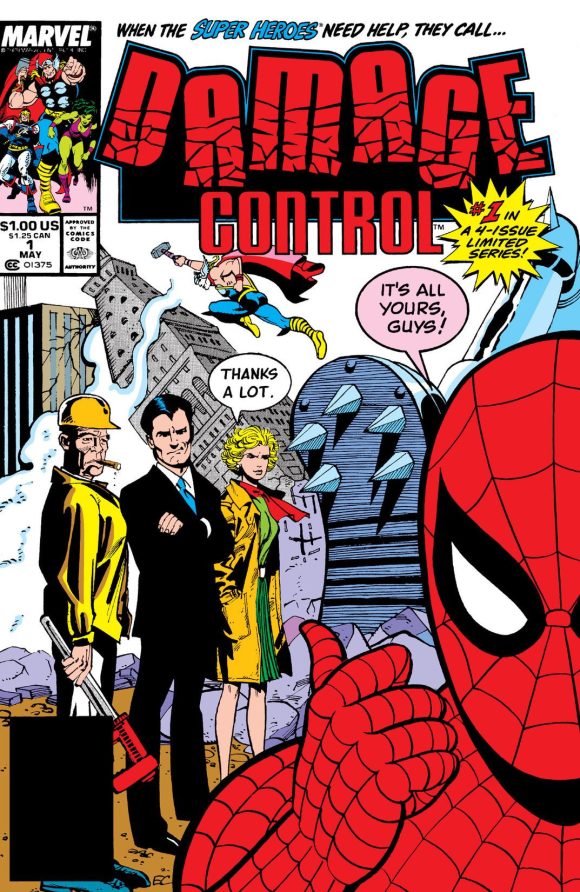
Summary: John Porter starts his new job with Damage Control, an organization that cleans up the messes that superhero brawls leave in their wake. Focusing on the mundane parts of Marvel New York, Damage Control answers questions like, “What’s it like to catch public transportation while superheroes punch each other right over your head?”
Sara: The McDuffie Damage Control minis are such love letters to the New York of the Marvel Universe. The way he makes me care about D-list villains like the Wrecking Crew is nothing short of masterful. TFF takes place in Miami, where I have never been but Alex is from, so that connection to environment is crucial. Some of the places we include are real, some aren’t, so Damage Control is a big inspiration for me when it comes to that kind of world-building.
—
Bill Mantlo’s ALPHA FLIGHT (1980s, Marvel)
(Words) Bill Mantlo, (Art, various but including) Jim Lee, David Ross, Mike Mignola, etc.
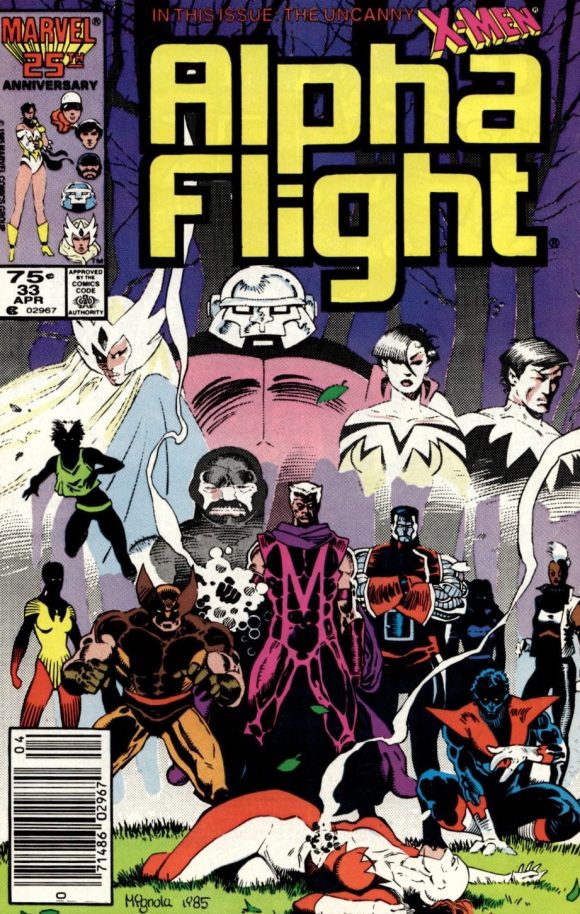
Summary: My god! So many things happen. Bill Mantlo was with Alpha Flight longer than any other creator, penning nearly 40 issues before passing the torch. Most people dipped out after creator John Byrne left the book, but Mantlo was where things got weird. Sometimes it’s good, sometimes it’s messy, but it’s always interesting, that’s for sure. (Alpha Flight #29-66, Annual #1-2.)
Sara: Though I think this is a bit of a sleeper hit for most comics readers, issues of Mantlo’s Alpha Flight were some of the first superhero comics I ever read. It’s also one of the first times where I distinctly recognized the writer as making choices unique to their individual brand. This book is nothing if not Mantlo’s brand! He’s always pushing the envelope, and even if it doesn’t always work, I think he deserves a ton of credit for that. His Alpha Flight is moody, and it’s problematic, and everyone is a little unlikable while still being somehow inherently loving and worthy of love. It remains one of the most downright fascinating runs on a book I’ve ever read.
—
Jim Shooter’s HARBINGER (1990s, Valiant), John Byrne’s NEXT MEN (1990s, Dark Horse), Chris Claremont’s SOVEREIGN SEVEN (1990s, DC)
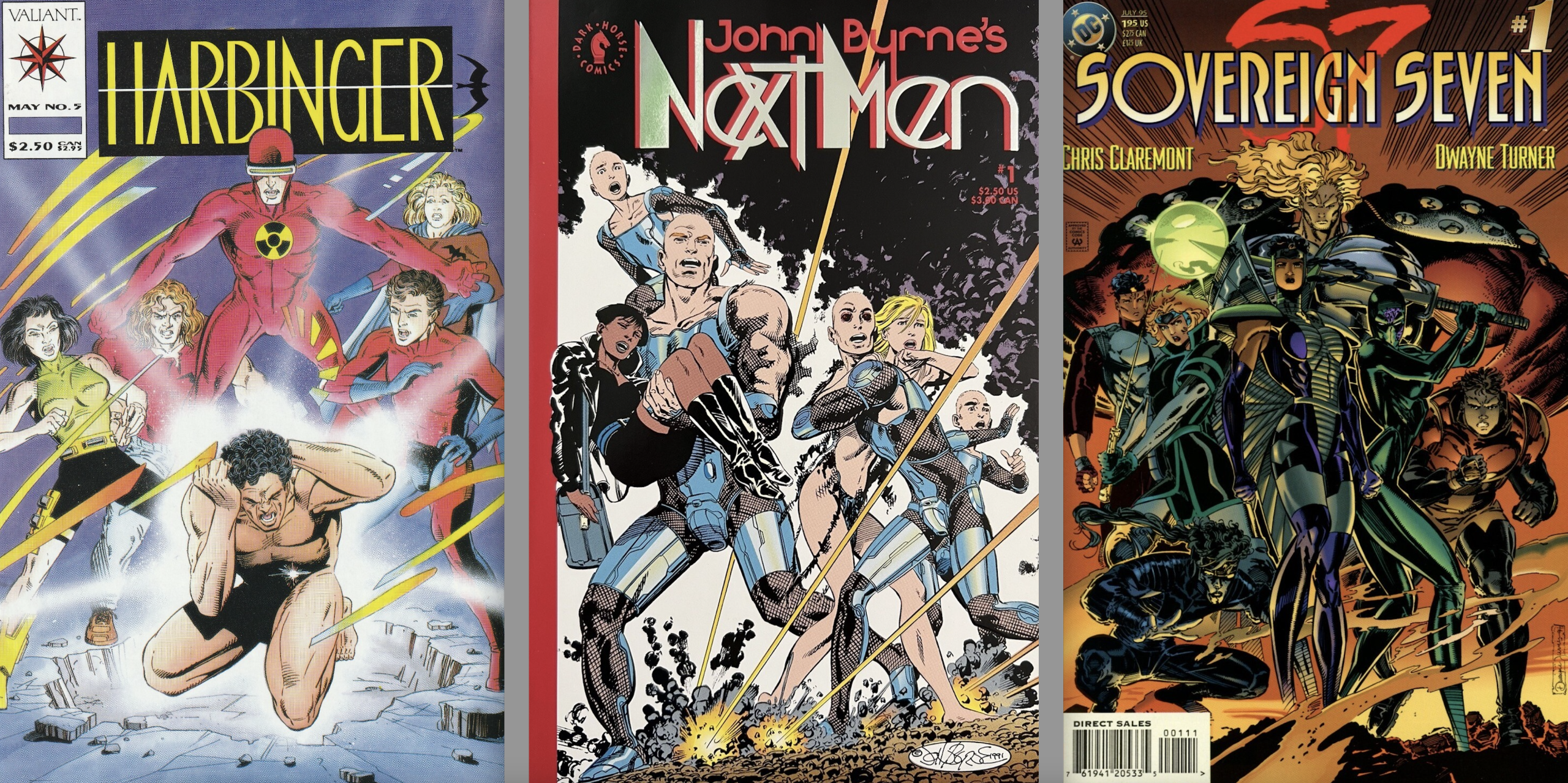
Alex: I’m fascinated by all three of these books for different reasons. Sovereign Seven feels like a lost chapter of Claremont’s library — his first big launch after being fired from X-Men, the book focuses on seven “sovereigns” who are left stranded on Earth after the Rapture destroys their planets. The book continued some of Claremont’s bigger themes and it was fascinating to see him build a story from zero, vs working off the Silver Age X-Men template. Added bonus: The story is very much embedded in the DCU! (Byrne had a similar project, Lab Rats, do the same — but not last nearly as long). Oddly enough, S7 was creator-owned, so the only way it can be reprinted is at DC, which might be tough since Claremont works mainly at Marvel these days. Legal and IP stuff aside, S7 is a fun book that feels like Claremont unleashed at arguably the peak of his powers. Forgotten Five? Sovereign Seven? There’s gotta be something there…
As for Shooter’s Harbinger and Byrne’s Next Men, both books have their charms and the “teens experimented-on escaping” is obviously a trope we share with NM, but I’m particularly fascinated by both because they strike me as the author’s “take” on modern X-Men, or X-Men done right (emphasis and extrapolation all mine). And while both are interesting tweaks on the idea of outcast teens on the run and their struggle to gain their agency, they lack the unique flair of Claremont’s original X-run, which leaned heavily on his female leads, a fearless look at social issues, and a diverse and complicated cast. Check them out, though, for a peek at their era and what Claremont’s contemporaries saw as the keys to making something like X-Men work.
—
Check out The Forgotten Five on Patreon.
—
MORE
— FAIRYTALE OF HELL’S KITCHEN, by Ann Nocenti. Click here.
— Fred Van Lente’s COMIC BOOK DEATH MATCH: X-Men vs. Doom Patrol. Click here.

September 28, 2025
A fascinating range of choices. I love alot of these myself.
September 28, 2025
I can never forgive Inferno for ruining Magik’s then-final story by replacing Belasco for no reason and reducing everything that had been built up with her since Uncanny 160 to a skippable side-story in Marvel’s 1 big Limbo crossover event. Thankfully her return was the story Inferno should have been in the first place, but the fact that Marvel needed to bring Marvel back to actually wrap up Magik’s storyarcs with Belasco and the Elder Gods shows how badly Inferno bungled the whole thing and gave her no closure whatsoever. Reading Inferno to me is like watching Return of the Jedi but Darth Vader never appears and is replaced with a brand-new villain who neither Luke nor the audience has ever met before. It would ruin the entire story, which is what N’Astirh’s existence and his replacement of Belasco does to Inferno for me.
September 28, 2025
I have to disagree on Mantlo’s Alpha Flight. The art was great, but the stories are middling.
September 28, 2025
Sienkiewicz’s run on New Mutants are the first comics that made me want to draw comic books myself. I really dug Madison Jeffries’ story arc in Mantlo & Mignola’s Alpha Flight – they were aiming to make some high-stakes Shakespearian storylines for those characters, a lot of them were misses (I can’t even remember what happened with Shaman and Talisman) but the Box/Jeffries/Scramble one hit the bullseye.
September 28, 2025
The Nocenti/JR Jr. DD run is a gap in my “literacy” of my first favorite Marvel character, so thanks for the reminder!
It may be a generational thing, but I’m surprised to see the Galactus Trilogy treated as “forgotten.” To my generation (early Gen X – class of ’86), it’s a foundational document of the Marvel universe and is the three issues of the Stan/Jack run that any Marvel reader at least knows is important, and has probably read in some form. It’s the Casablanca of Marvel comics.
Again though, that might be generational.
September 28, 2025
It’s not forgotten. The Forgotten Five is the name of their series. These are 13 classic inspirations. Says so in the headline and the intro.
September 28, 2025
Ah! Thanks for the clarification. My mistake. Most of the examples were kind of off the beaten path, so I slotted the list as “list of forgotten but influential series.”
And yet, how did I not realize that there were more than five examples? You’d think I’d have put two and two together.