
MORRISON MONDAYS meets BATMAN ’66 WEEK!
—
Welcome to BATMAN ’66 WEEK, celebrating the 60th anniversary of the beloved TV show starring Adam West! All week, we’ll be presenting daily tributes and features, leading up to Jan. 12 — the premiere date itself — when we’ll roll out a brand-new TOP 13 BATMAN ’66 EPISODE COUNTDOWN, voted upon by a panel of the most knowledgeable Bat-experts around. Click here for the COMPLETE INDEX. — Dan
—
By BILL MORRISON
One of the most prized items in my Batman collection is an original production script by Lorenzo Semple Jr. from the two-part, pilot episode of the 1966 Batman TV series. The script is a revised draft, dated September 3, 1965, a little over six weeks before shooting began on October 20. Simply titled “Batman Pilot Script,” the titles “Hi Diddle Riddle”/”Smack in the Middle” had not yet been assigned to the episodes.
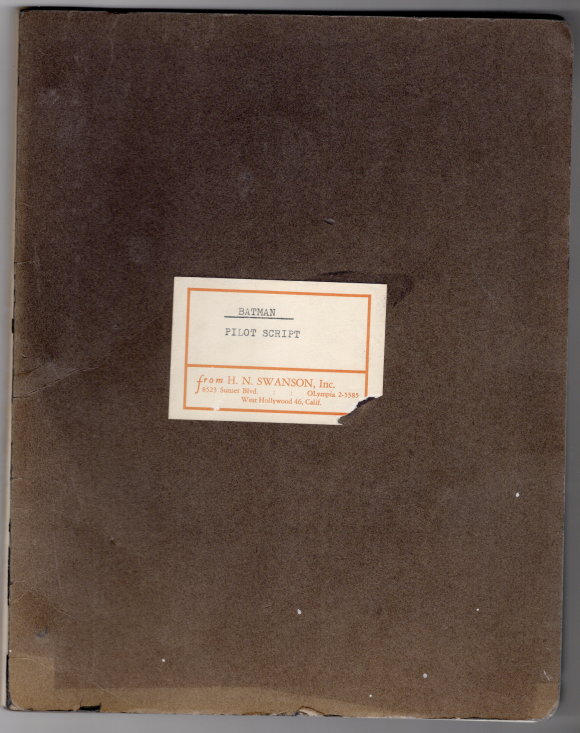
For years, I’ve thought about watching the episodes while following along with the script to see what things may have changed between this draft and the final aired version of the pilot. And in recognition of BATMAN ’66 WEEK, this column has given me the excuse to do just that.
Much of what changed is merely lines that were trimmed or cut altogether. There are too many to list, and frankly many are not all that interesting. Most seem to have been altered or eliminated to shorten running time, or to follow the general visual storytelling rule of “show, don’t tell.” But here are a few somewhat interesting examples.
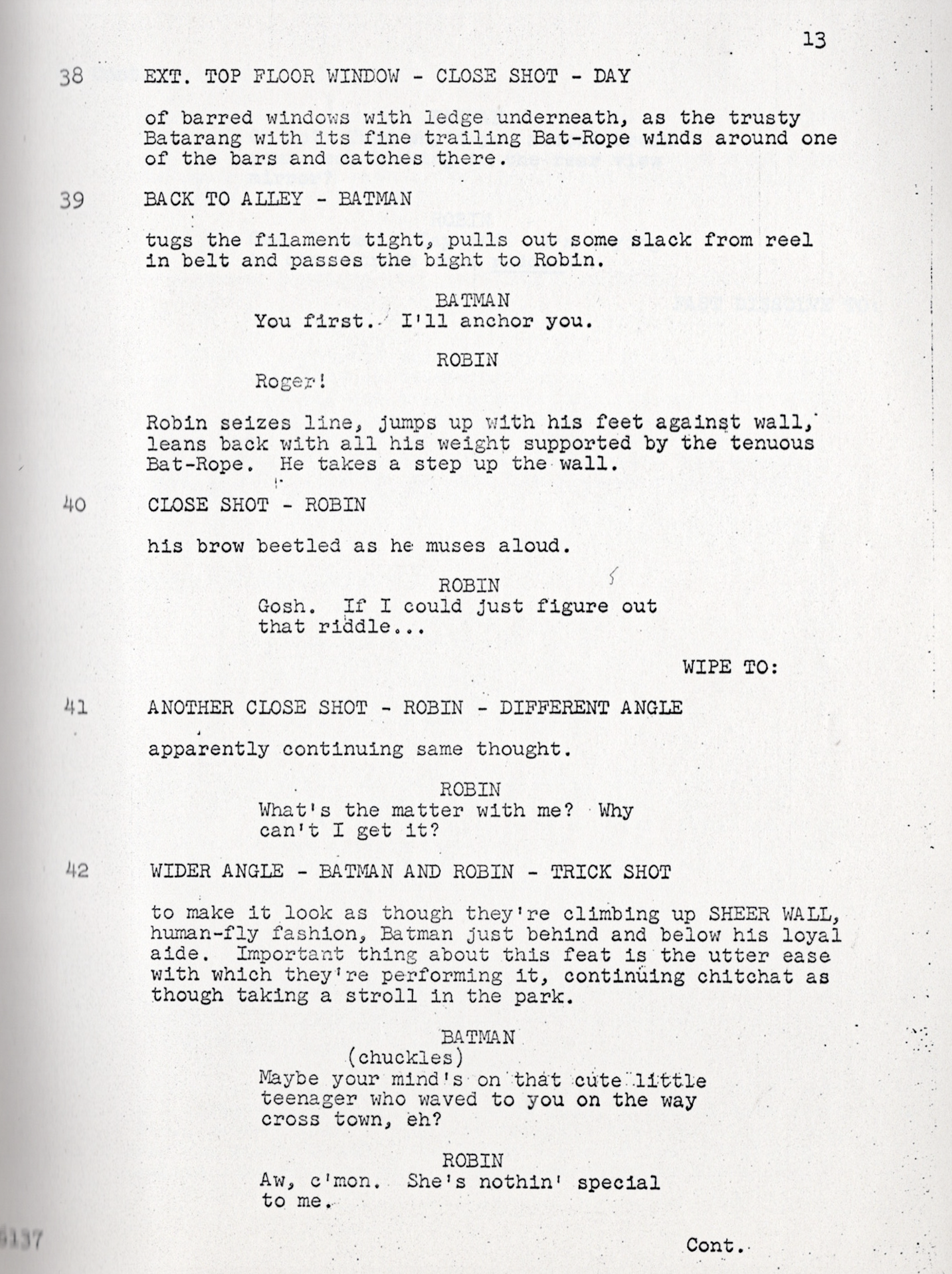
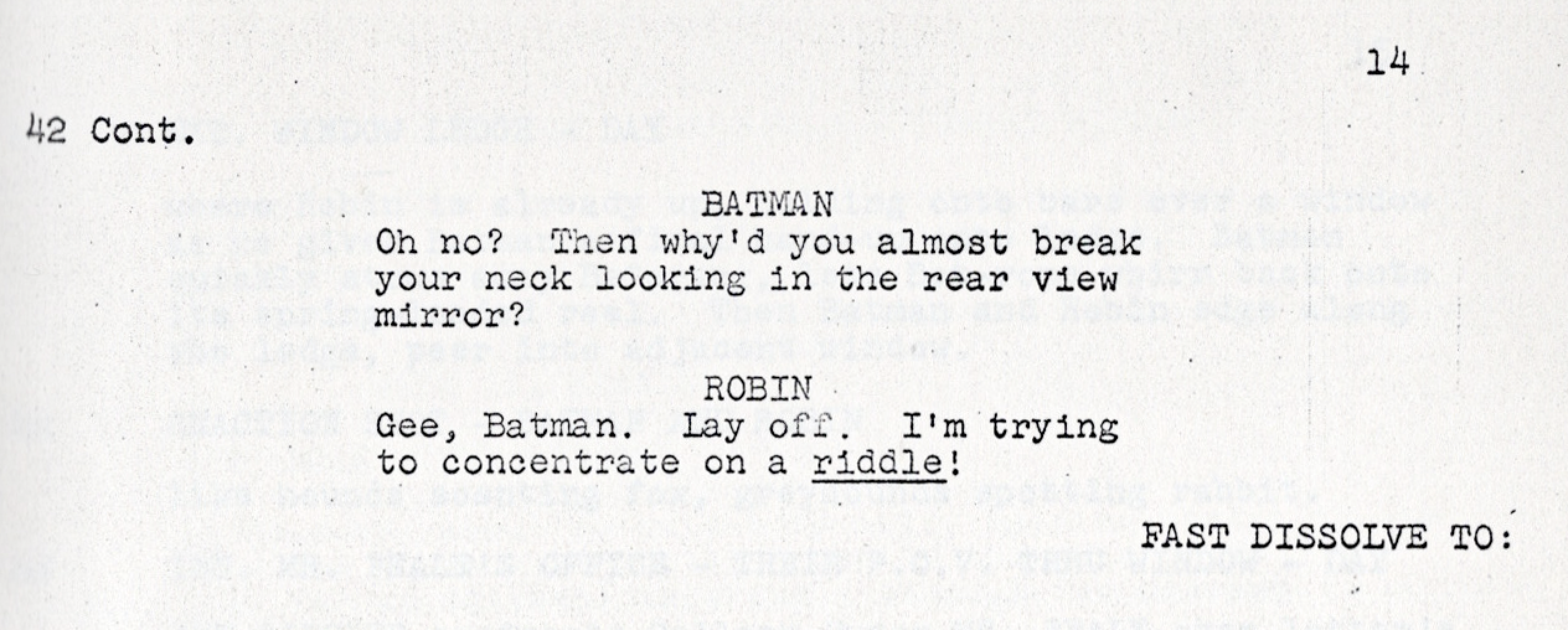
In the first-ever “Bat-climb,” Batman chides Robin about not being able to solve one of the Riddler’s clues due to the Boy Wonder having his mind on a cute girl that waved to him on their way to the Peale Art Gallery. In the aired version, Robin just responds “Aw, come on, Batman!” but in this draft, the Dynamic Duo’s exchange goes on a bit further.
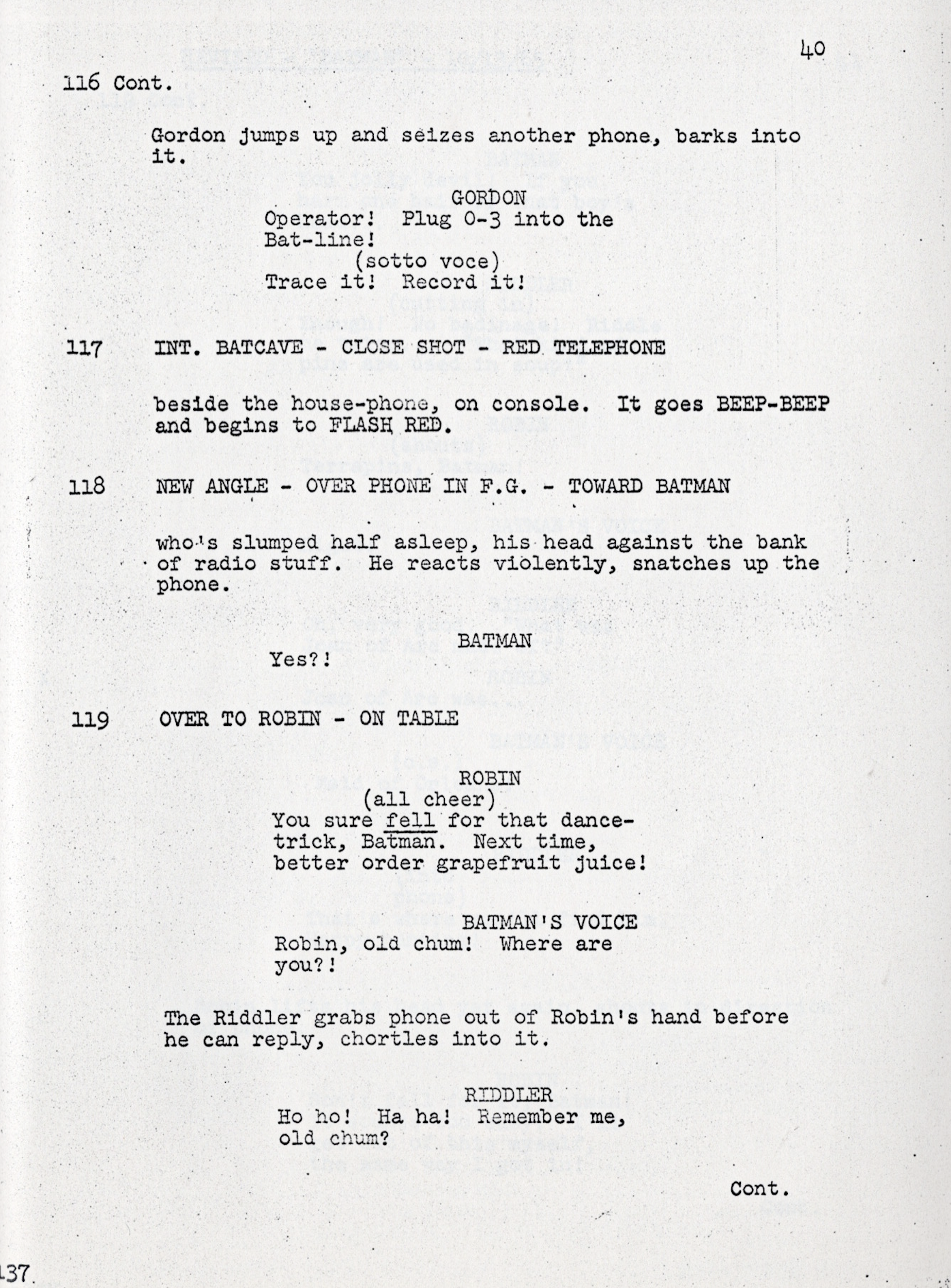
And here, when Commissioner Gordon patches the Riddler into the Batphone, allowing Batman to talk to the captured Boy Wonder, Robin has a line that was cut in which he teases Batman for falling for Molly’s orange juice trap at the What a Way to Go-Go nightclub.
Also of note on this page is Scene 118, which describes Batman as being “half asleep,” waiting by the Batphone. In the aired version, we see him jump up from a chair when the phone beeps and flashes, but there’s no indication that he was half asleep.
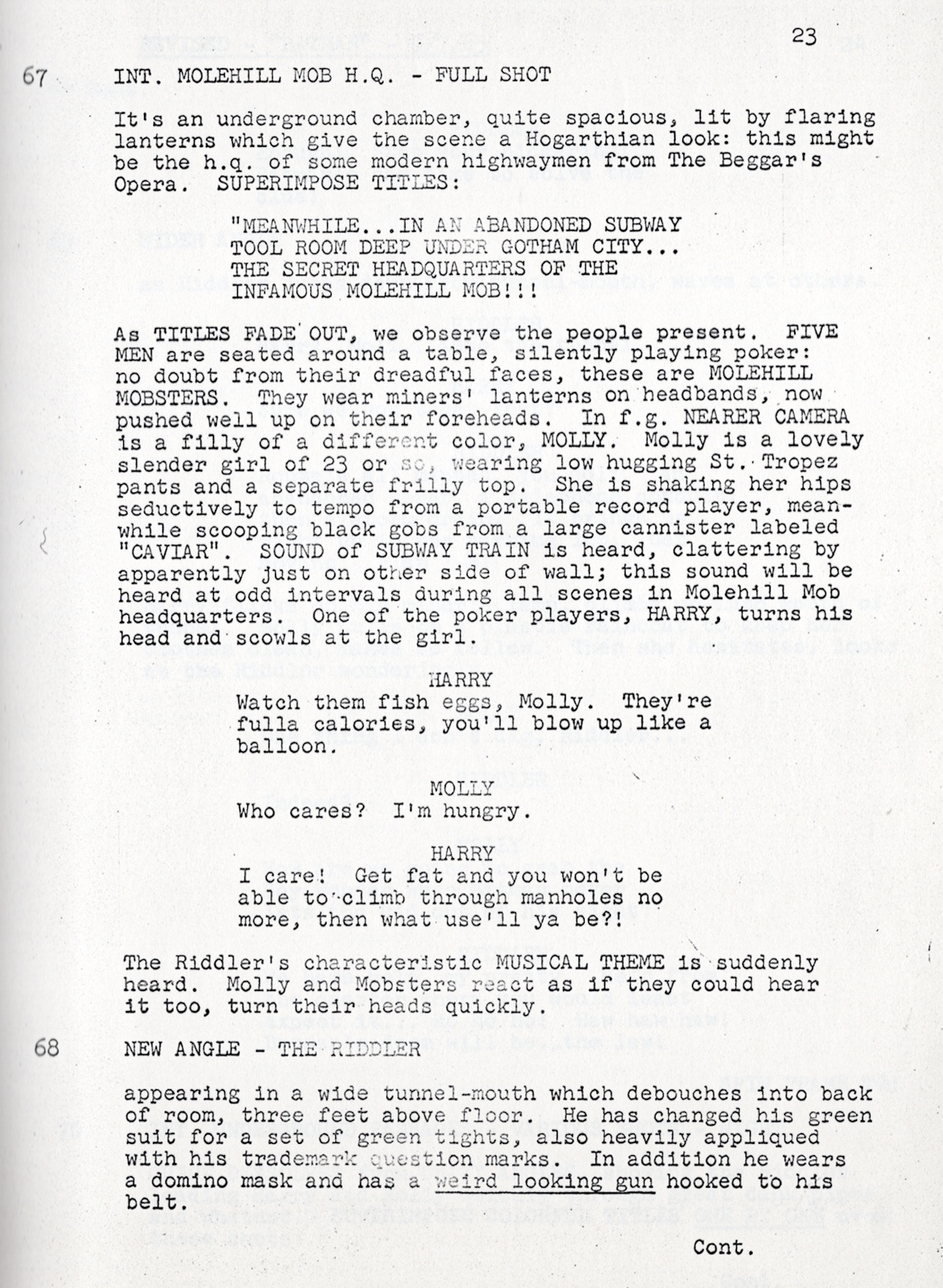
Another interesting change is not in the dialogue, but in the description of the Molehill Mob, the gang of thugs employed by the Riddler in this episode. In the filmed version, the gang is dressed like stereotypical mobsters, with their leader, Harry, in a pinstripe suit. But check out how Lorenzo Semple Jr. described them in this draft of the script.
Also of note on this page is the description of the narration as “Superimpose Titles” rather than the iconic William Dozier voice-over that was established in the finished pilot.
And it’s often been written that Frank Gorshin, who played the Riddler, disliked the green tights that came with the role, and took it upon himself to have a natty green suit festooned with question marks custom-made. But this page of the script clearly shows that both costumes were planned by the writer from the beginning.
One change that I find very fascinating is Bruce and Dick’s familiar descent down the Batpoles, into the Batcave. I think most fans of the show have wondered how the Caped Crusaders actually got into costume between the mansion and the cave, and this script gives us more of an idea about how that happened, albeit in a vague, sort of abstract way.
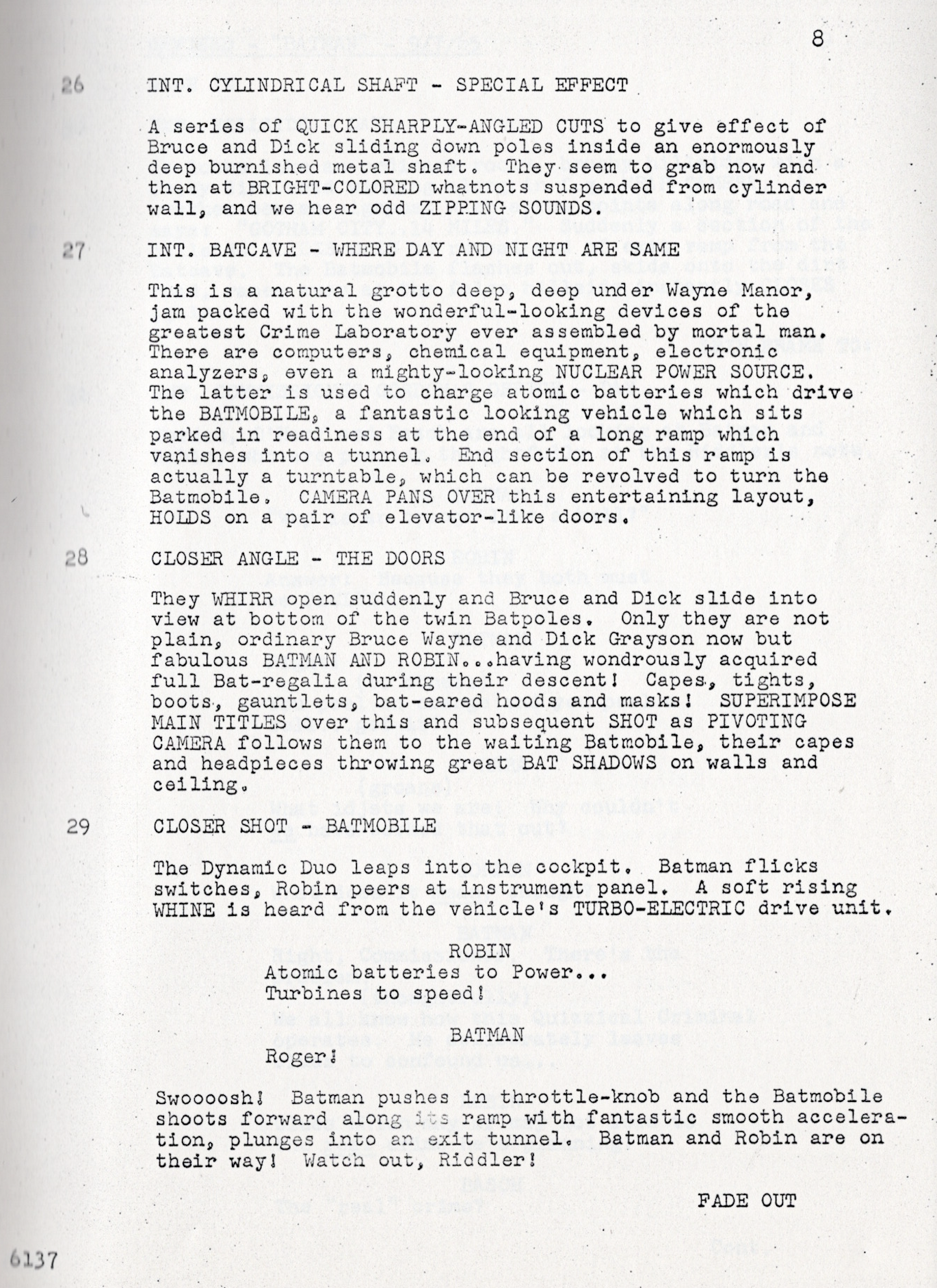
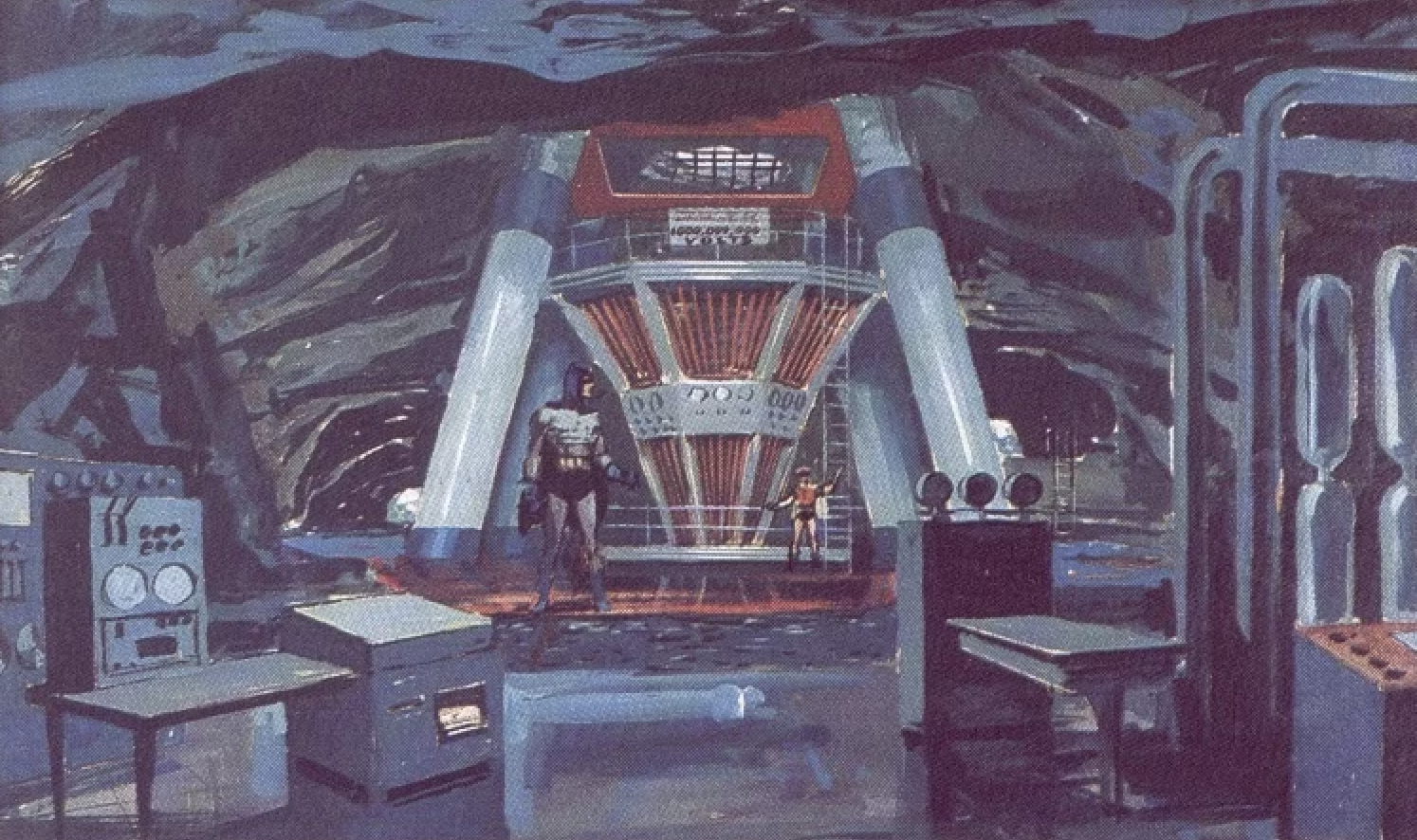
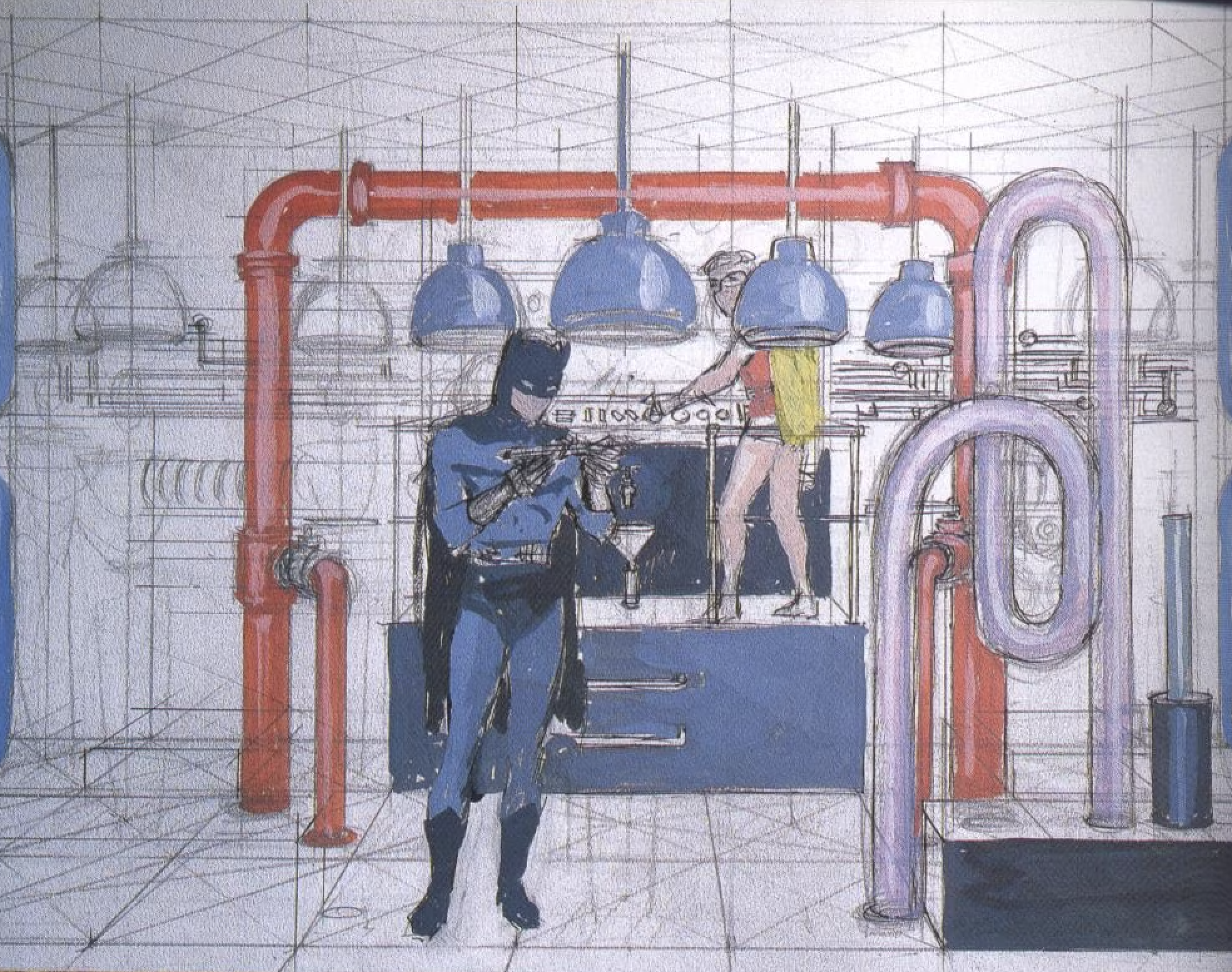
This page also describes in detail, the elements of the Batcave, “Where Day and Night Are Same” for the first time. The show’s art director, A. Leslie Thomas envisioned the Batcave from this description, and created these wonderful concept sketches.
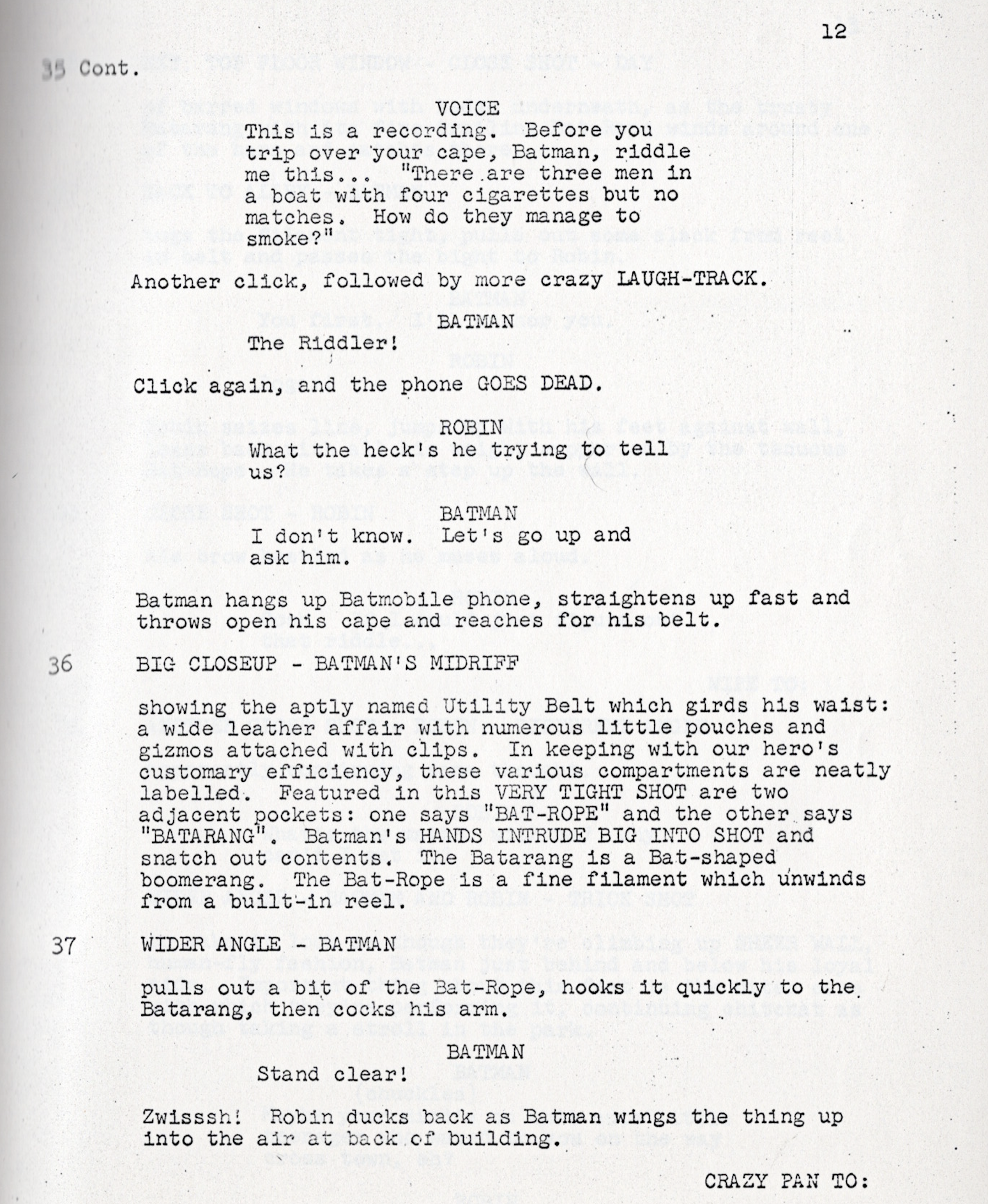
I also love Semple’s description of Batman’s utility belt, as seen on this page.
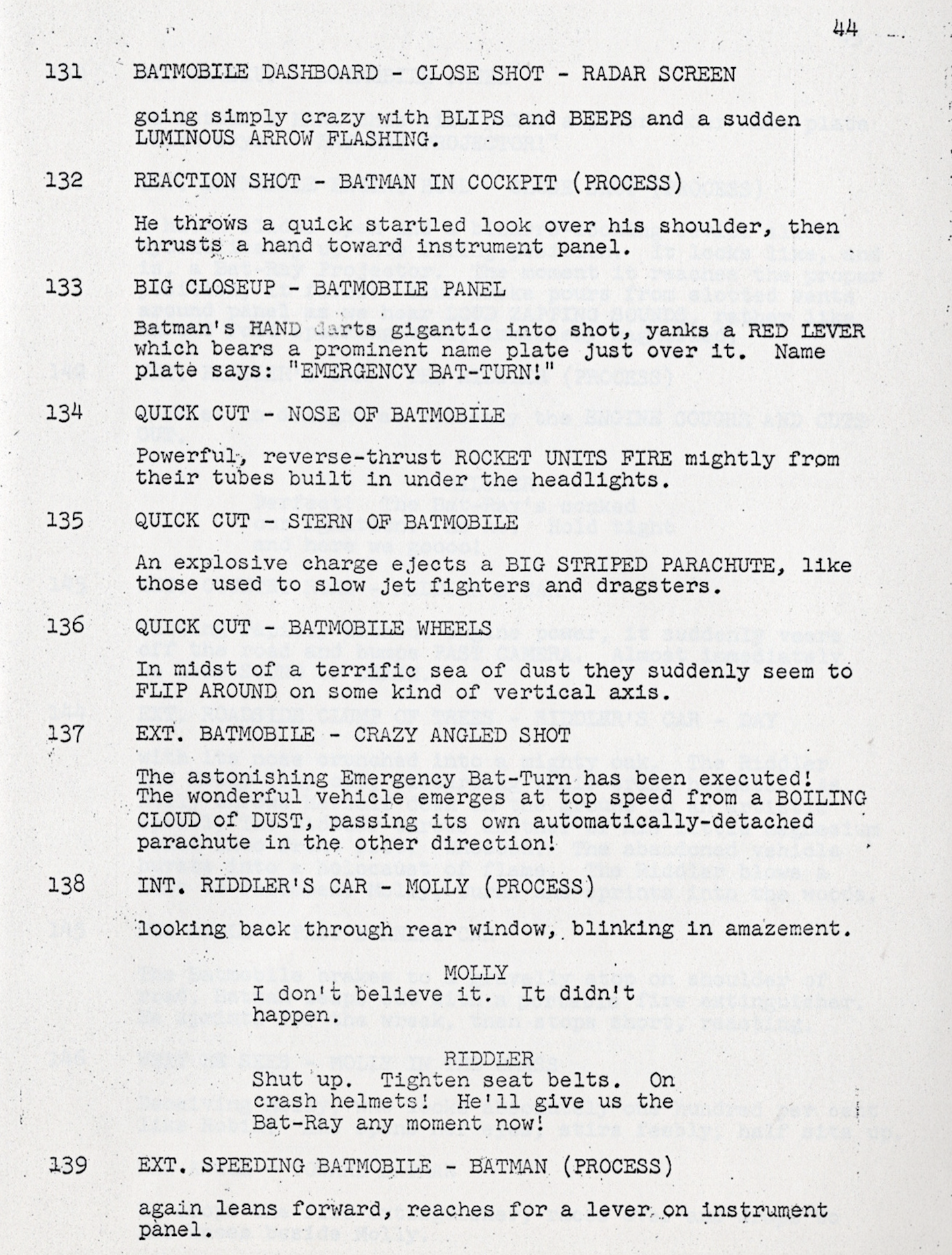
Likewise, here’s a dynamic, nearly full-page description of the how the Batmobile’s ingenious Bat-Turn was to be depicted. One thing that changed in the final pilot is that the parachutes went from simply being striped to having giant bat symbols printed on them.
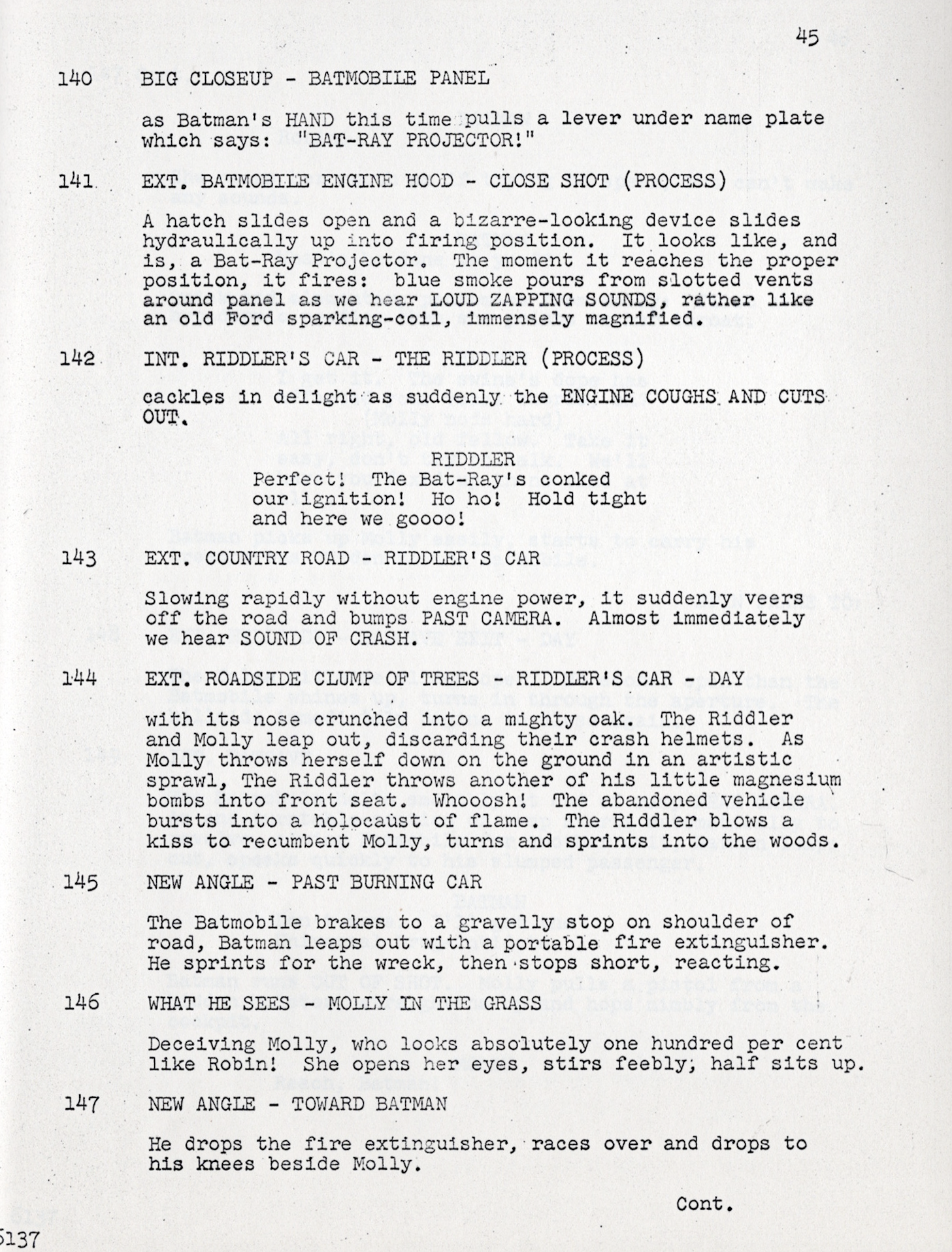
On the next page, we are introduced to the “bizarre-looking” Bat-Ray Projector, a device that emerges from the hood of the Batmobile to disable the Riddler’s car. However, either time or budget (or both) must have intervened, because what we end up seeing on screen instead are blue special effect laser beams that shoot from the Batmobile’s headlights.
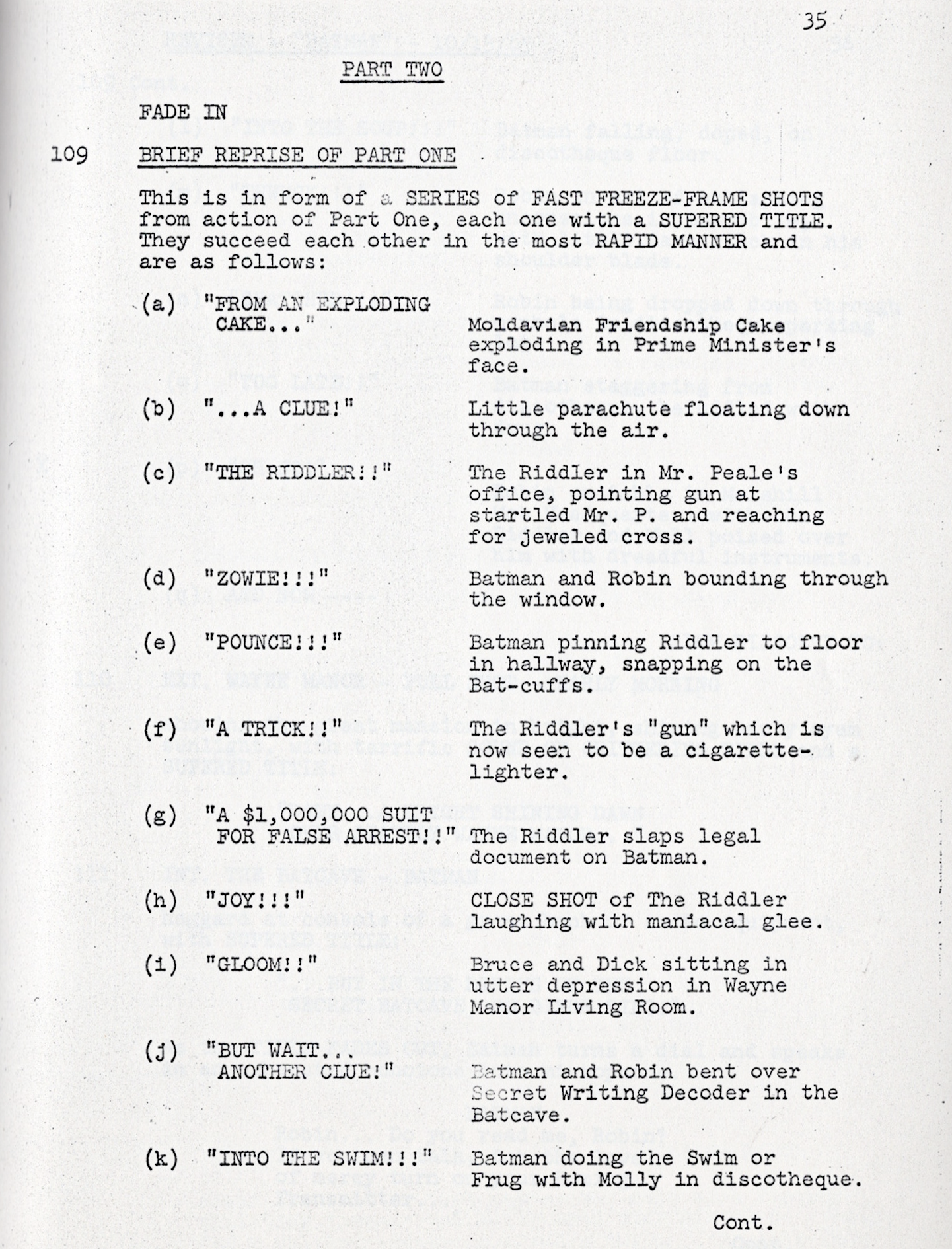
At the beginning of the second episode (Part Two in the script), we get what would become an iconic element of the series, the recap of what came before in Part One. Again, this is described without the familiar voice-over narration, only superimposed titles over quick shots from Part One. But these titles are very clipped and quite different from what ended up on screen. The final, more narrative version went like this:
In the previous Bat-adventure, we saw…
A prime minister’s exploding cake…
With a puzzling message from that rascal…
The Riddler!
The Dynamic Duo…
Pinned the Riddler’s ears back!
But he tricked them…
With a million-dollar lawsuit against Batman!
Glee for The Riddler!
Gloom for Batman!
But then, a fresh clue…
Which lead Batman into a Batusi trap…
Which laid him low!
And then Robin got it, in the arm!
The Riddler had it made!
Gotham City was aghast!
Robin seemed utterly doomed, but wait!
The worst is yet to come!
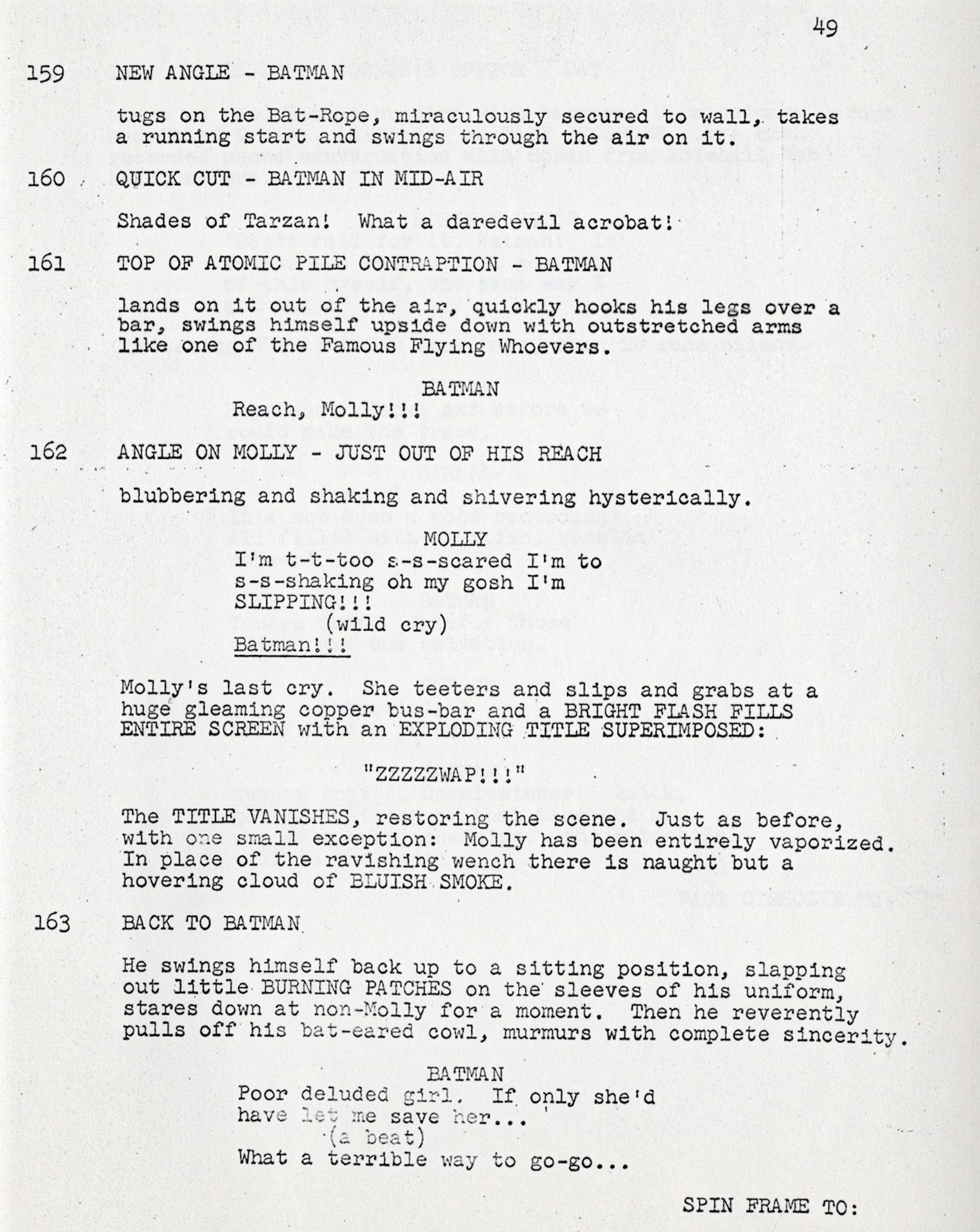
(SPOILER ALERT! I’m about to discuss a pivotal scene in the pilot. But if you haven’t seen the episode, c’mon man, it’s been 60 years!)
In this devastating scene where Molly, played by the vivacious Jill St. John, meets her demise, Semple described Batman swinging to her rescue in a heroic, Tarzan-like manner, up to the top of the atomic pile that powers the Batmobile, hooking his legs over a rail like a circus acrobat, and reaching for Molly upside down.
What we got on screen was more of an awkward shot from behind of Batman shimmying up the rope, landing on his feet above Molly, and scrambling to try and reach her. Don’t get me wrong, the final version was still exciting as hell, especially for a seven-year old, but I would love to have seen it happen the way it was described in the script.
Also, on this page, Molly’s fall is obscured by a bright flash and an exploding “ZZZZZWAP!!!” sound effect graphic. The filmed version, showing her actually falling into the atomic core, is far more devastating. And notice the description of Batman’s uniform being on fire from the blast, and his delivery of the final line of the scene, sans cowl.
Reading through this script while watching the final pilot was a fascinating and educational exercise for me, but I’m glad I got it out of my system. Now, I think I’d like to set aside the script, pour a large glass of fresh orange juice (hold the drugs), and just watch it for enjoyment.
—

Want more MORRISON MONDAYS? Come back next week! Want a commission? See below!
Want more BATMAN ’66 WEEK? Click here.
—
MORE
— FUTURAMA: One Man’s Toilet Paper Is Another Man’s Art. Click here.
— BATGIRL’S FIRST CHRISTMAS: Batman and Robin Give the IDEAL Gift. Click here.
—
Eisner winner BILL MORRISON has been working in comics and publishing since 1993 when he co-founded Bongo Entertainment with Matt Groening, Cindy Vance and Steve Vance. At Bongo, and later as Executive Editor of Mad Magazine, he parodied the comics images he loved as a kid every chance he got. Not much has changed.
Bill is on Instagram (@atomicbattery) and Facebook (Bill Morrison/Atomic Battery Studios), and regularly takes commissions and sells published art through 4C Comics.

January 5, 2026
Great article!
If there was a page of this script I’d like to see it’s the one where Bruce tells the reporter(s) he started the Wayne Foundation to prevent people turning to crime as programs like that in the past might have prevented his parents’ deaths. Such an economical way to give us Batman’s origin.
January 5, 2026
Love the 1960s Batman show, so a deep look into this kind of thing is awesome!
January 5, 2026
Bill, IIRC, the original script was broken down into four 15-minute segments instead of two 30-minute installments, right?
January 5, 2026
I’ve never heard that. I have read that the show was originally intended to be an hour long, aired once a week. But ABC didn’t have a one hour slot open, so they opted for two half hours per week with a cliff hanger. That would explain why there’s no cliff hanger in the pilot at the midway point. I also don’t know if the two half hours per week format was set when this draft of the script was written in September of ‘65.
January 9, 2026
Now, that’s really interesting! Thanks!!