
BIRTHDAY TRIBUTE: The late artist was born 112 years ago…
By PETER BOSCH
Walt Kelly, the creator of Pogo and of all the creatures living in the fictional version of Okefenokee Swamp in Georgia, was born Walter Crawford Kelly Jr. on August 25, 1913, in Philadelphia. In 1915, the family moved to Bridgeport, Connecticut, where later in his teens Kelly landed a job at The Bridgeport Post as a reporter, as well as an illustrator for the newspaper. By age 22, he was heading West to a waiting job at the Walt Disney Studio in California.
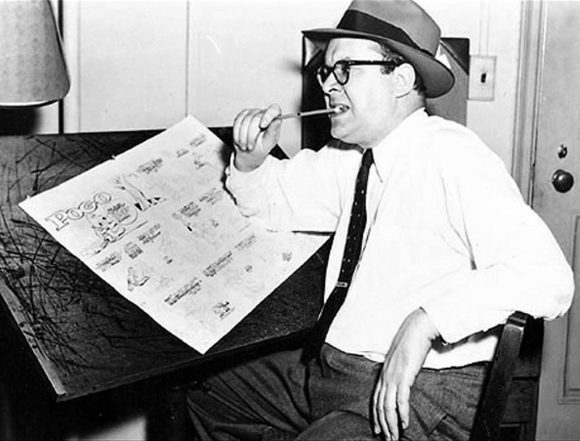
Kelly worked his way up inside the studio to the position of an animator and he would contribute to the classics Pinocchio, Fantasia, Dumbo, and The Reluctant Dragon. However, in 1941, employees of the studio went on strike and Kelly was torn emotionally due to having friends in both management and labor. He was spared which side to be on, though, because of a family emergency that took him back home temporarily. Being away from the studio allowed him to think of what he wanted to do in his life… and he realized he did not want to work in animation. When he returned to the studio, the strike was still on and he handed in his resignation. He left on good terms with the Disney organization, including with Walt himself. (The strike was settled two weeks later.)
His next step was getting work at Western Publishing, which produced comics for Dell, and he drew many of the Disney comics published by them. In the early-to-mid 1940s, he did the art for 83 covers of Walt Disney’s Comics and Stories.
NOTE: All art below by Walt Kelly, unless otherwise noted.
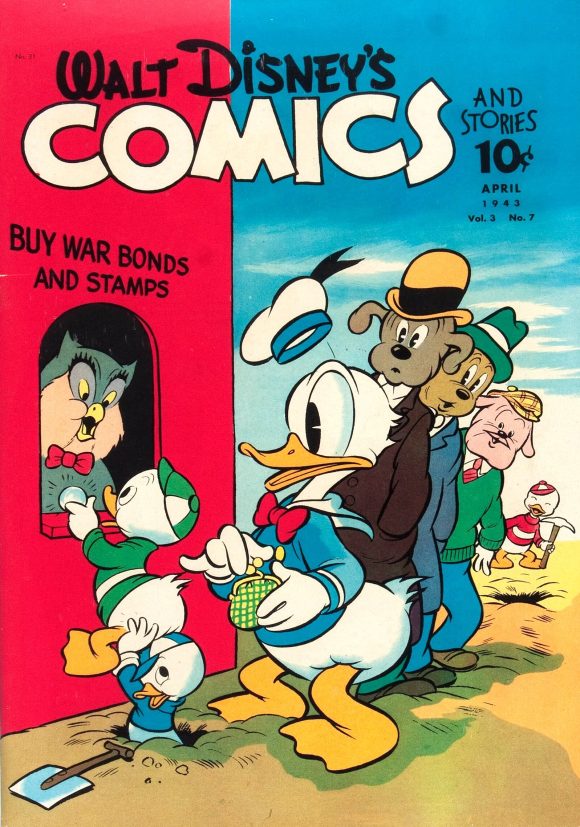
Walt Disney’s Comics and Stories #31 (Apr. 1943, Dell).
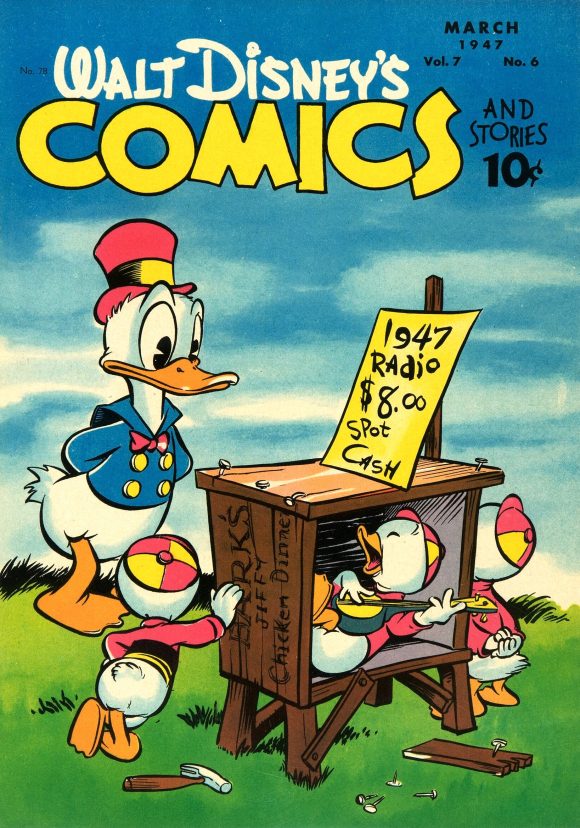
Walt Disney’s Comics and Stories #78 (Mar. 1947, Dell).
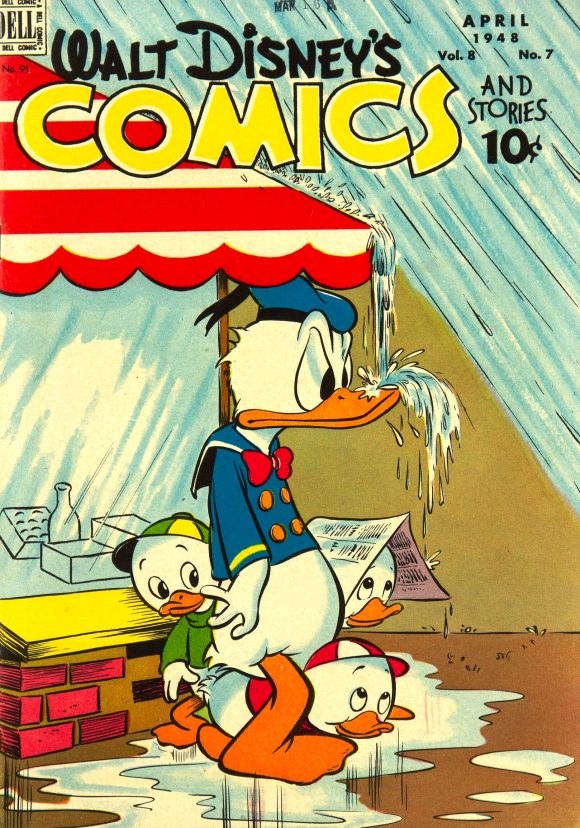
Walt Disney’s Comics and Stories #91 (Apr. 1948, Dell).
He also drew the cover for the comic book adaptation of Disney’s Snow White and the Seven Dwarfs.
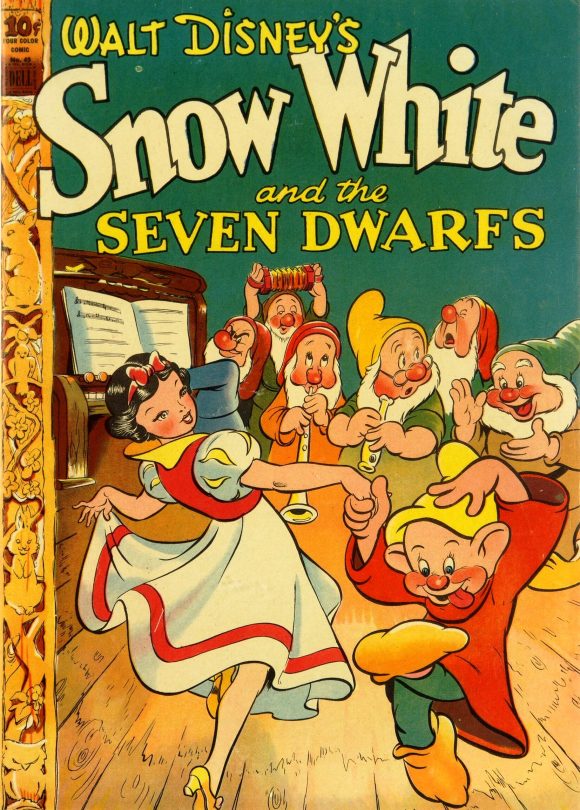
Four Color #49 (1944, Dell).
Western kept Kelly busy writing and drawing other Dell comics in the same period, including Fairy Tale Parade, Mother Goose and Nursery Rhyme Comics, and almost any comic that had cute animals and even cuter children.
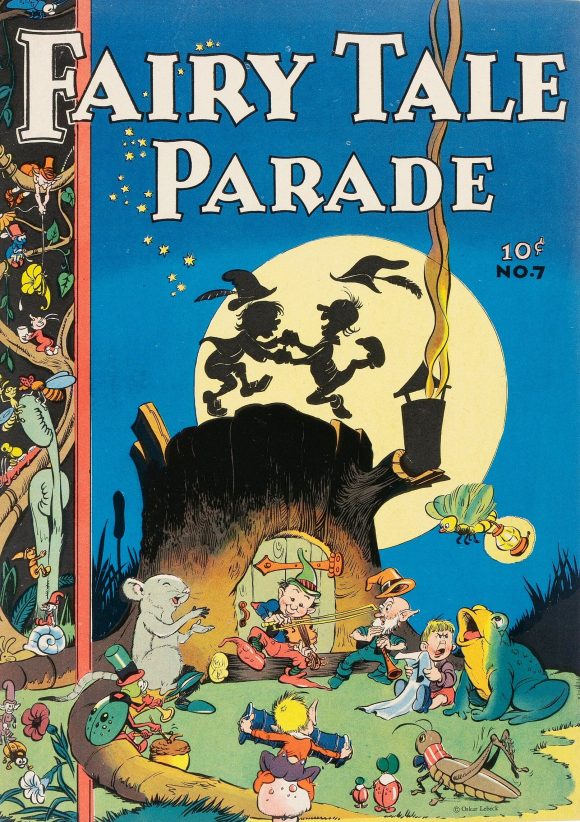
Fairy Tale Parade #7 (Aug.-Oct. 1943, Dell).
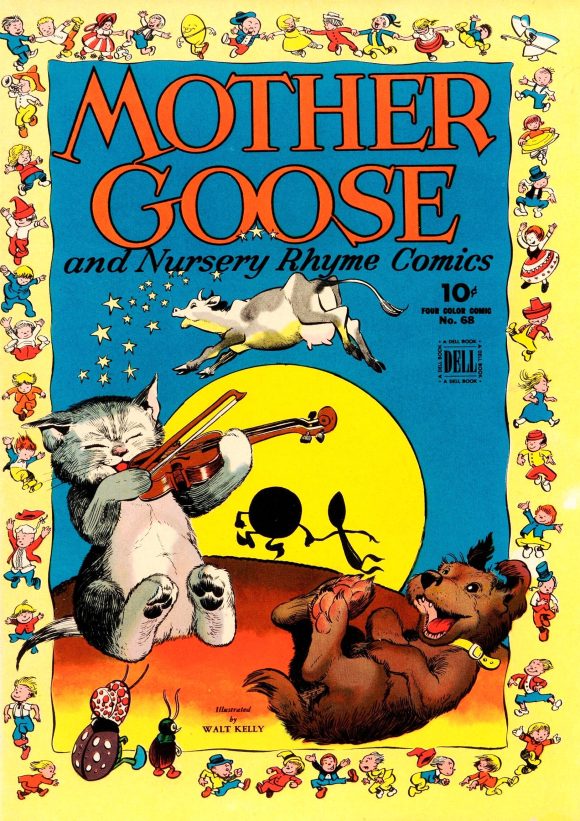
Four Color #68 (1945, Dell).
In particular, one Dell title did stand out. It wasn’t about fairy tales but it did feature the Our Gang kids, the youths from the poor side of the tracks in that collection of film shorts from the Metro-Goldwyn-Mayer studio. Our Gang Comics had Walt Kelly art from the first issue in 1942 all the way through the final “Our Gang” strip feature within #57 (Apr. 1949).
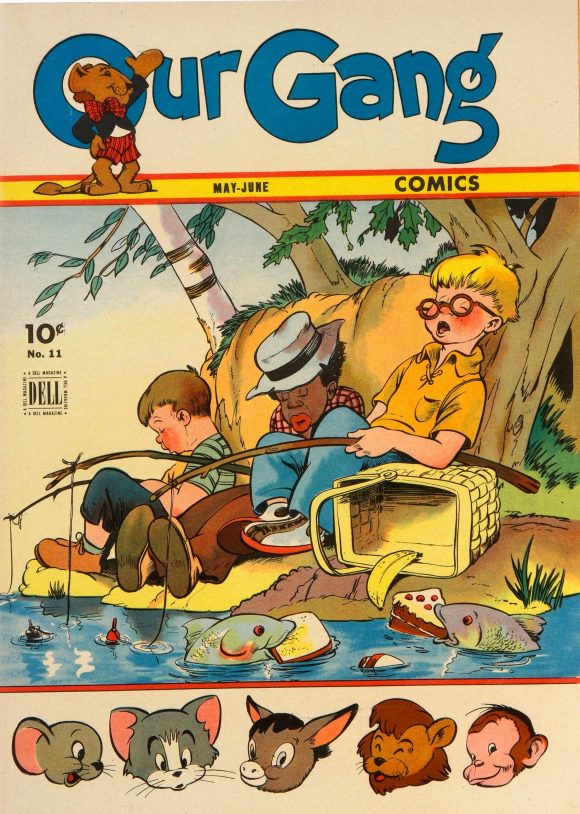
Our Gang Comics #11 (May-June 1944, Dell).
At the time of that final issue for him, he was already working on a comic strip that would shape the rest of his professional career. And that actually began a few years earlier… in 1942, to be exact, when he drew a new feature for a new Dell comic book
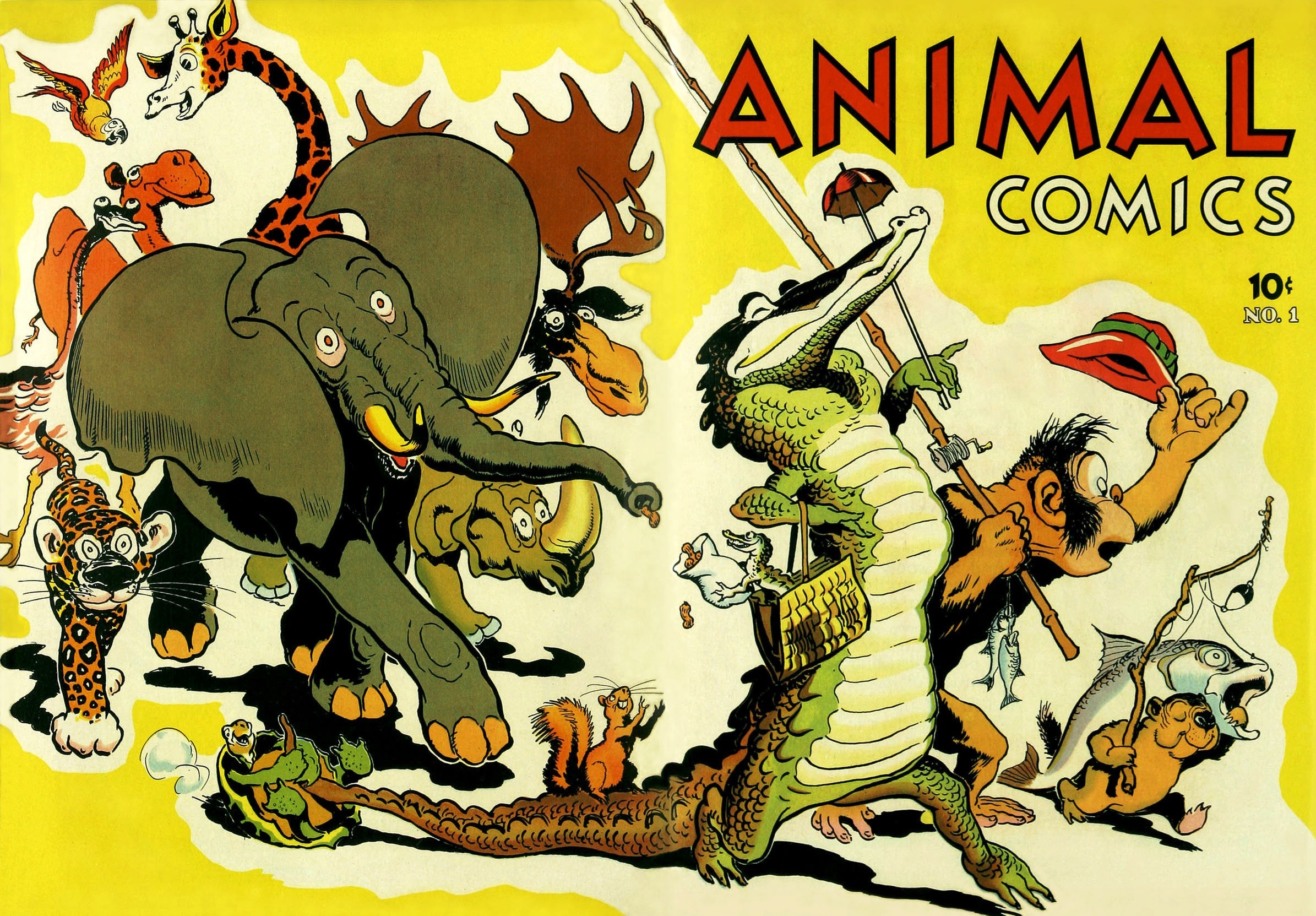
Animal Comics #1 (1942, Dell). Cover art by H.R. McBride.
On the first interior page of Animal Comics #1, readers were introduced to the star of the strip, Albert the Alligator… and in a small panel on the page was a supporting character named Pogo Possum, though looking very different from the Pogo the world would soon know.
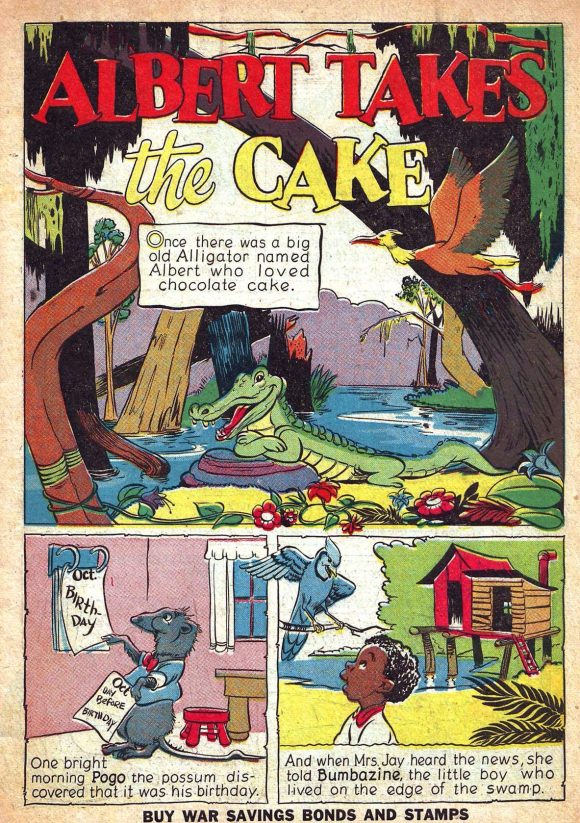
Animal Comics #1. The very first appearance of Pogo (and Albert).
For the first 14 issues of Animal Comics, Albert remained the title character of his feature within the comic, but with #15 (June-July 1945) it underwent a name change to “Albert and Pogo.” It would continue that way through the final issue, Animal Comics #30 (Dec. 1947-Jan. 1948). During that time, Pogo’s physical appearance was drastically changed to the more traditional Pogo. Dell also featured Albert and Pogo in two Four Color issues, #105 (in 1946) and #148 (in 1947).
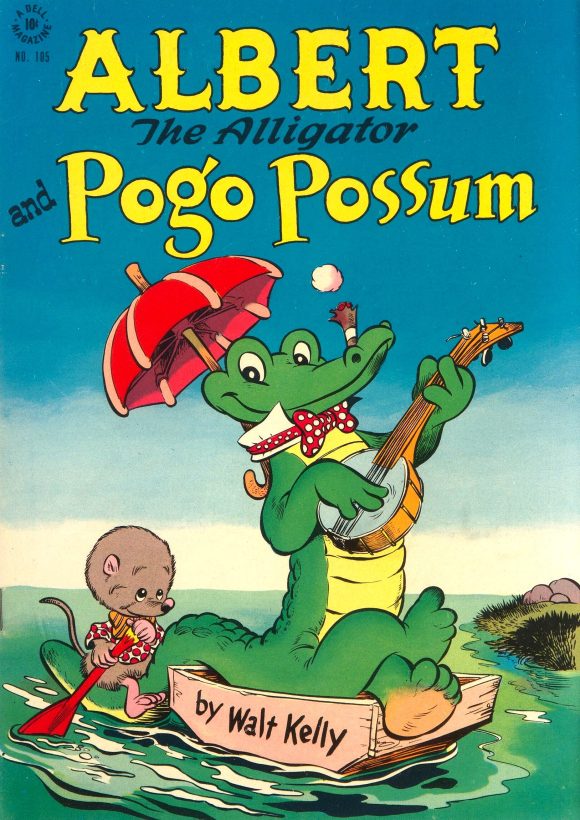
Four Color #105 (1946, Dell).
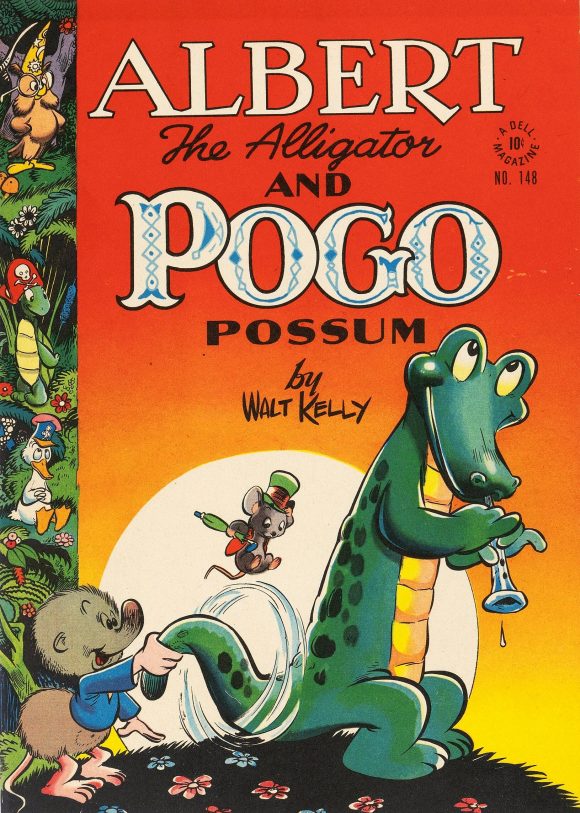
Four Color #148 (1947, Dell)
Through it all, Kelly managed to retain the rights to the characters — and that would prove to be a very smart decision.
In 1948, Kelly was hired by the New York Star newspaper, where he drew political cartoons for the then-current presidential election, including caricatures of candidate Thomas Dewey as an adding machine. And on October 4 of that year, Pogo made its first appearance in the Star as a comic strip. Unfortunately, just a few months later, the newspaper went belly up. Kelly knew he had something and shopped the strip around to newspaper syndicates, where each in turn failed to realize Pogo was going to be pure gold. However, the Hall Syndicate did — and with the initial strip that appeared in the Star redrawn, the feature began its new life on May 16, 1949.
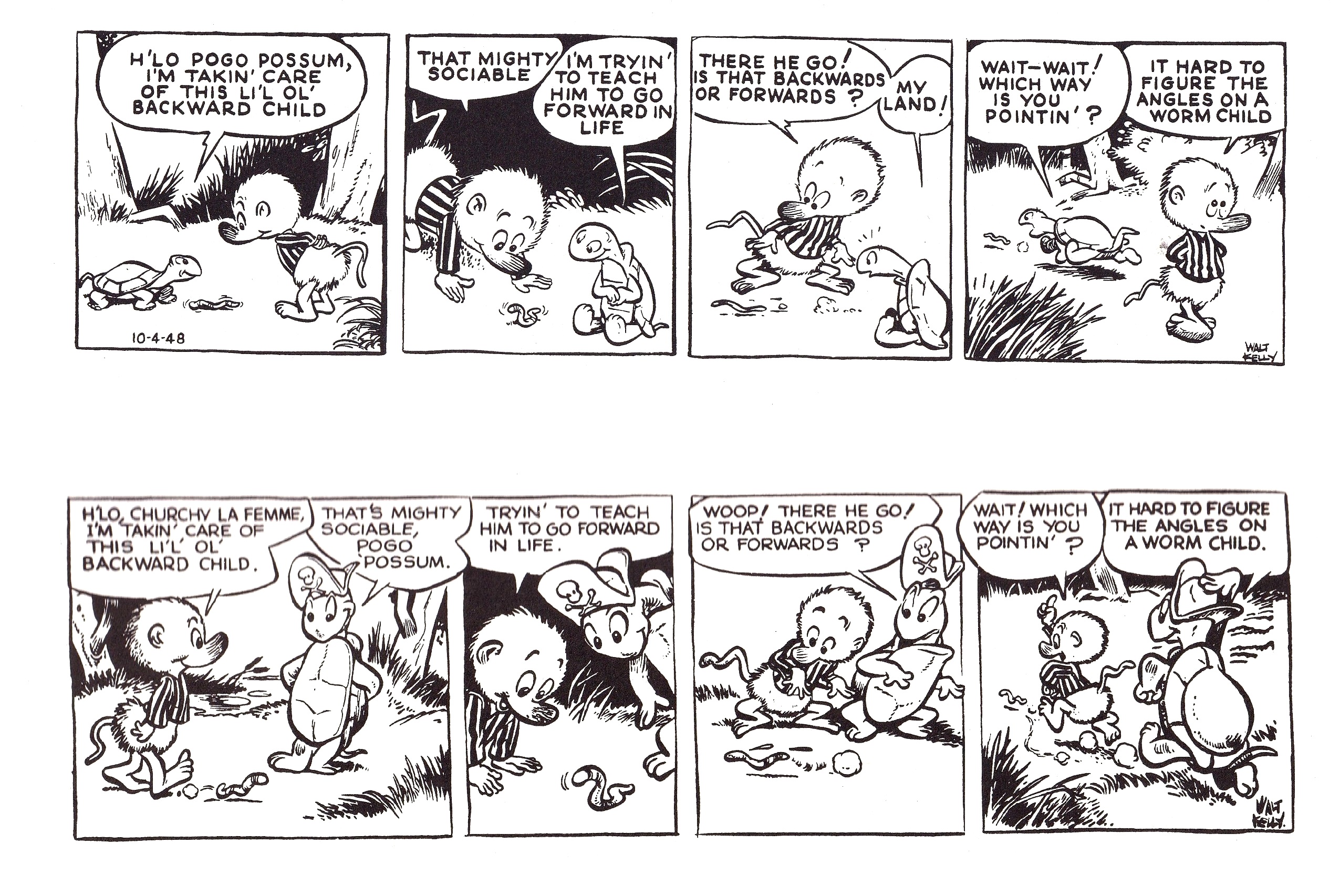
A comparison of the first Pogo strip for the New York Star in 1948 (above) and redrawn (bottom) for the Hall Syndicate.
(In 1950, a Sunday page was added.)
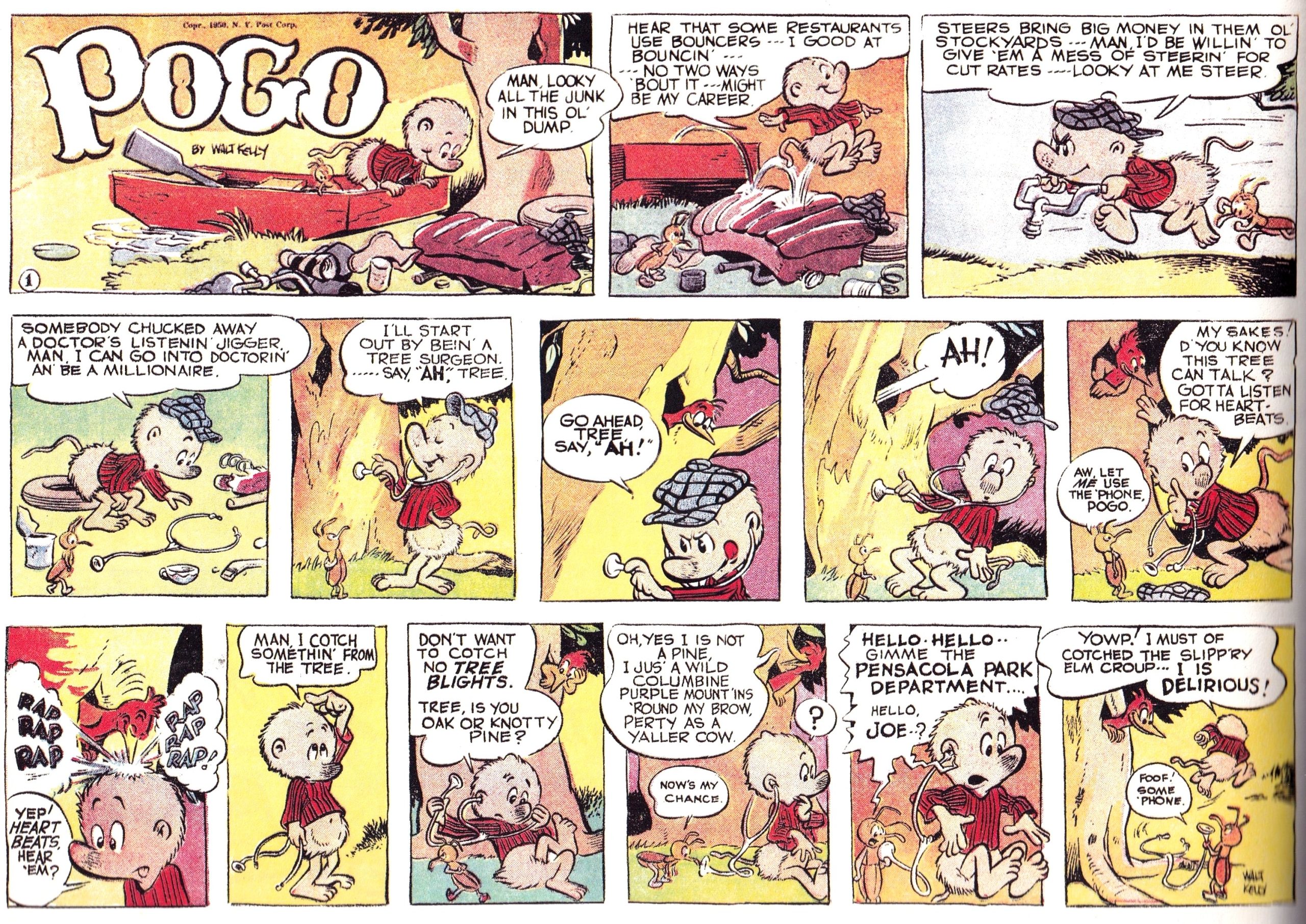
The first Pogo Sunday strip. January 29, 1950.
The daily Pogo strip would soon be syndicated to hundreds of newspapers across the country. However, to get the deal, Kelly had to sign the rights to the strip to the Hall Syndicate (though he did retain the rights to the characters). He soon felt rankled that the syndicate owned the strip and they would sometimes try to control the content. They even used their leverage by telling Kelly that he could be replaced. That was a very wrong move on their part as it started a campaign of rebellious behavior by Kelly for the latter part of 1951 when, instead of attaching his own name to the strip, he began signing with a series of nonsense names (such as “Goodny Waswa” and “Prudy Loobin”). For months on end…”What Fizzy,” “Thera Baddi,” “Wart Perry”… each day a different name.
The syndicate gave in and, starting with the daily strip on January 1, 1952, they stated on each strip that Kelly held the copyright and that they distributed it. It was a rare win that other comic creators appreciated.
Part of the reason for the syndicate agreeing to this was likely due to the millions of faithful readers who followed the strip every day, thanks to Kelly’s wit. There were also the popular Pogo paperback reprint collections from Simon & Schuster that sold in the hundreds of thousands, plus the popular series of original ongoing Pogo Possum comics from Dell, all of which were written and drawn by Kelly.
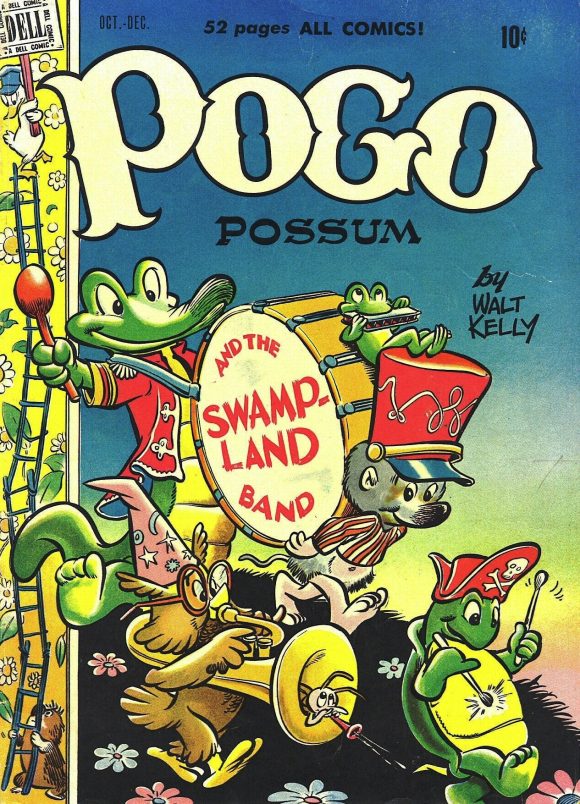
Pogo Possum #1 (Oct.-Dec. 1949, Dell).
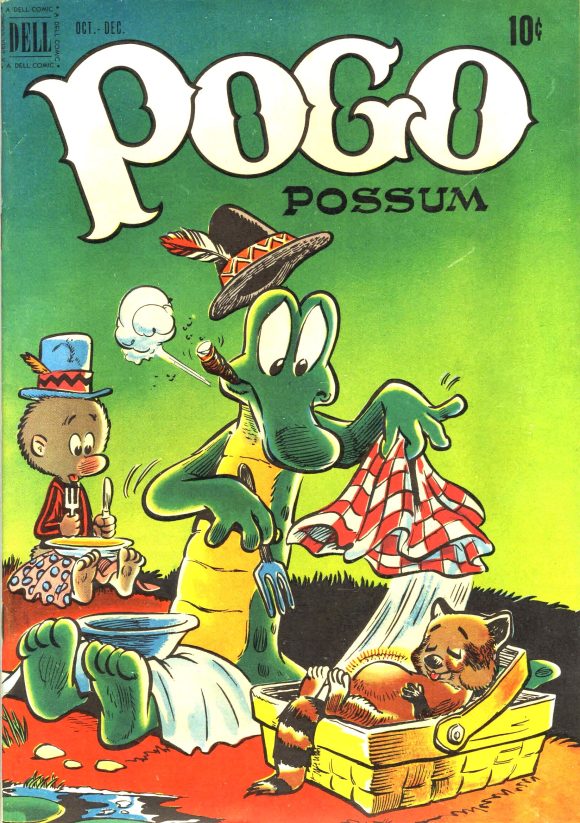
Pogo Possum #7 (Oct.-Dec. 1951, Dell)
In 1952, during the presidential election season, Kelly created a mock campaign to have Pogo elected to the White House and included the plotline within the strip. There was even a campaign button created that stated “I GO POGO” (a satirical take on the Dwight Eisenhower button, “I LIKE IKE”). That was a time when it was all in fun and meant to just draw attention to the strip. However, a year later, much attention was paid to the strip — and again due to politics. Kelly had decided to attack Sen. Joseph R. McCarthy.
McCarthy, a Republican, brought an incredible ugliness to the 1950s by launching a smear campaign against the Democratic administration of President Harry Truman. McCarthy claimed loudly to the press that he had a list of 205 active members of the Communist Party who were working within the administration. It was a lie, of course (later, McCarthy would say the number was 57 and on another occasion that it was 81). However, even with no proof given, just an accusation of being a Communist was enough to scare employers into firing people.
McCarthy was a powerful force in Washington and people feared him. In 1954, CBS and its newsman Edward R. Murrow began broadcasts exposing him. But Kelly was doing it a year earlier, starting with the introduction of a new character in the Pogo strip. On May 1, 1953, Kelly featured the debut of a wildcat named Simple J. Malarkey — who bore a very strong facial resemblance to McCarthy. For a few weeks, Kelly showed Malarkey (and, by extension, McCarthy) to be a menace.
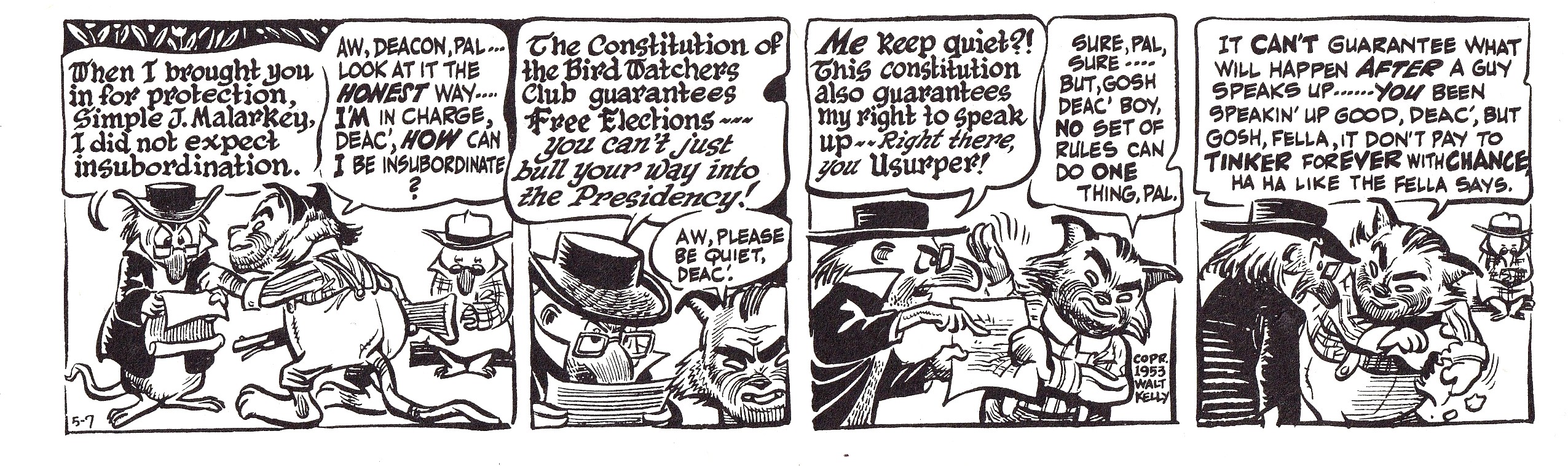
Pogo, May 7, 1953.
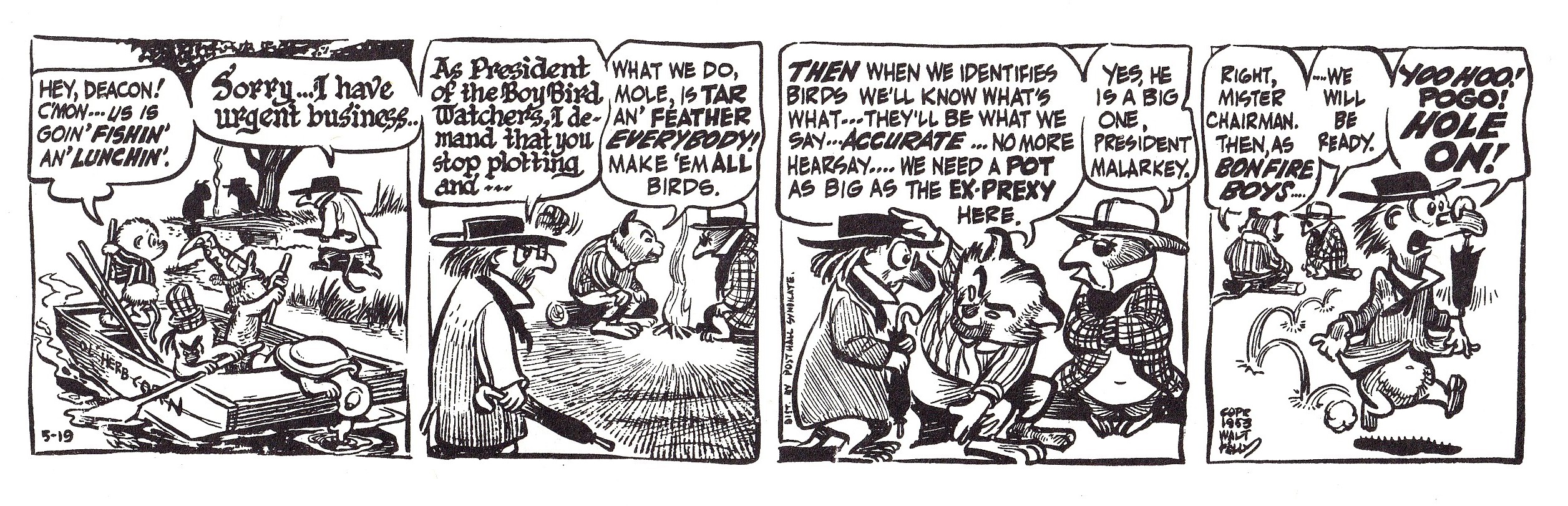
Pogo, May 19, 1953.
It wasn’t long before nervous newspaper editors, who were getting complaints from some readers, said they would refuse to publish the Pogo strip if it showed Malarkey’s caricatured face again. Kelly responded by first having the character put a bag over his head and, later, Malarkey’s head was covered by the same tar he tried to use on others.
As the years continued on after the McCarthy episode, Pogo didn’t shy away from other political figures. Pogo was a political strip! Future storylines included statesmen and world leaders adapted into the series, including (via caricature) Richard Nixon as a wind-up doll, Fidel Castro as a goat, Nikita Khrushchev as a bear, and Spiro Agnew as a hyena.
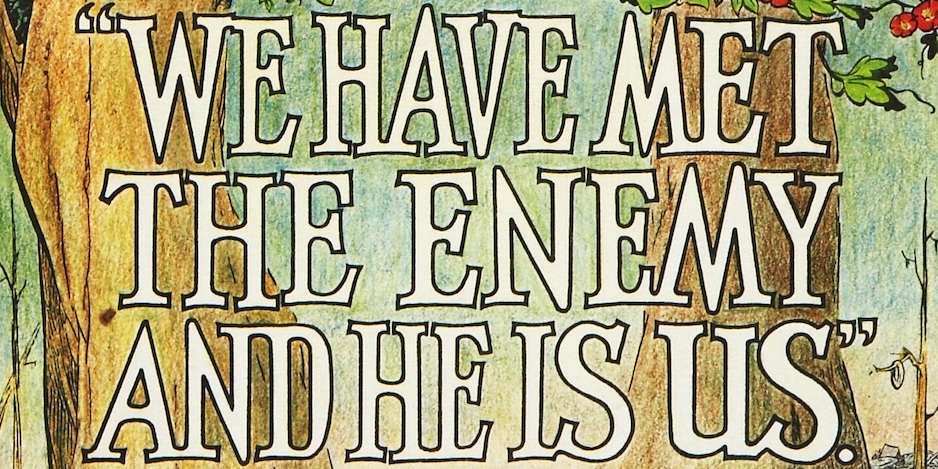
Despite all that, the U.S. government knew Kelly was in favor of protecting the environment and in 1970 had him draw a special poster about it, which included one of the lines that the Pogo strip is famous for: “We have met the enemy and he is us.”
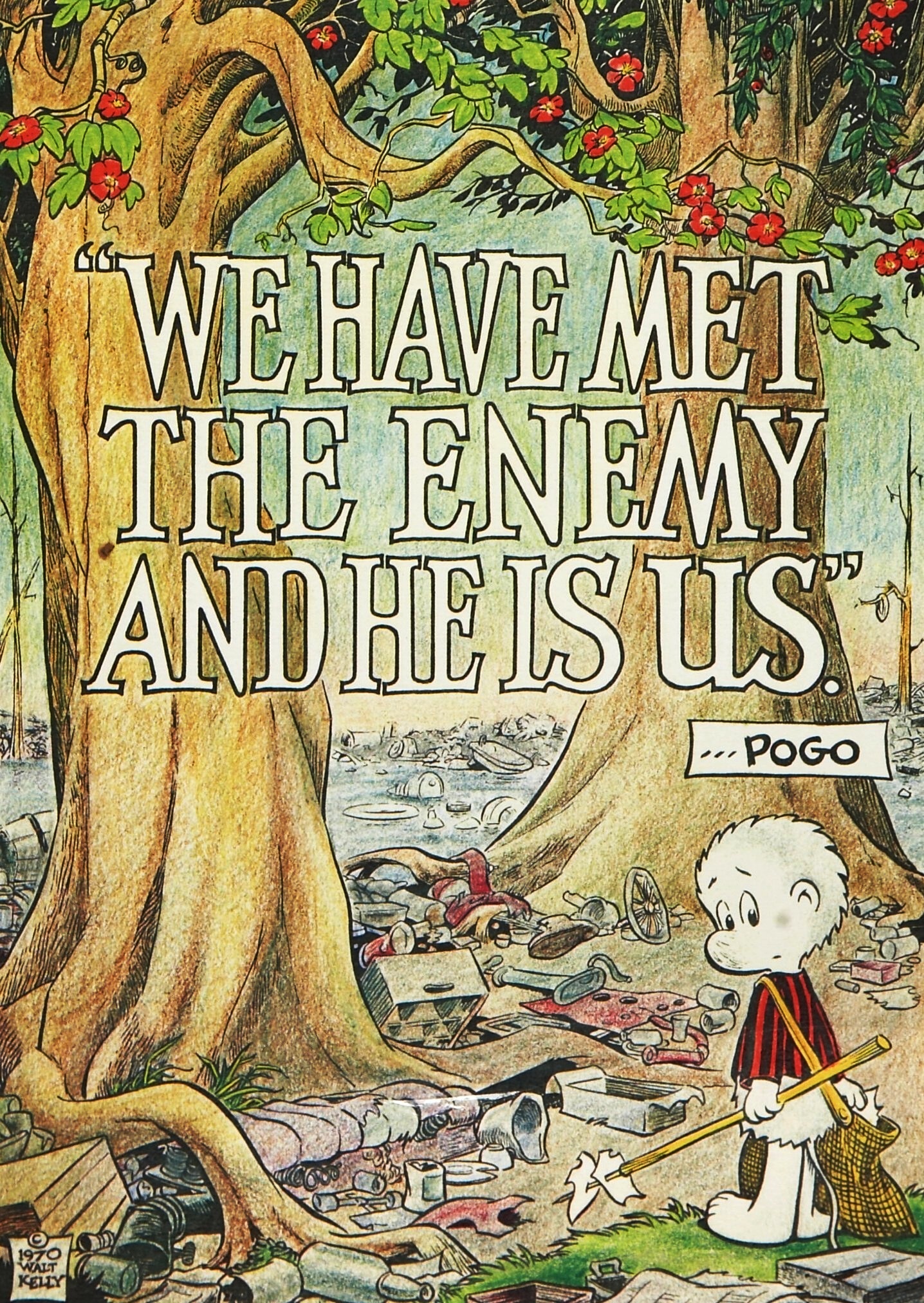
Kelly continued on the strip until 1972, when he had to withdraw due to ill health. During that time, his assistants turned out some new material and the syndicate slipped in reprints. Kelly hoped to recover and resume, but he died October 18, 1973, at the early age of 60, from diabetes complications. His third wife, Selby, took up the mantle and tried continuing the strip but, without Walt Kelly, newspapers everywhere were dropping it. She brought it to a close July 20, 1975.
Over the years of his professional career, Walt Kelly received many accolades, including winning the Cartoonist of the Year award in 1951 from the National Cartoonists Society, and then being elected as its president from 1954 to 1956. His work inspired many past and present artists and writers, among them Jules Feiffer, Jeff Smith, Charles Vess, Alan Moore, and, of course, Garry Trudeau, who has been putting the fire to the feet of politicians for over 50 years with his Doonesbury newspaper strip. I think, all in all, Walt Kelly would be very proud.
—
MORE
— AMERICAN MOVIE COMIC BOOKS: 13 Artists Who Helped Make Them Great. Click here.
— AMERICAN MOVIE COMIC BOOKS: 13 MORE Artists Who Helped Make Them Great. Click here.
—
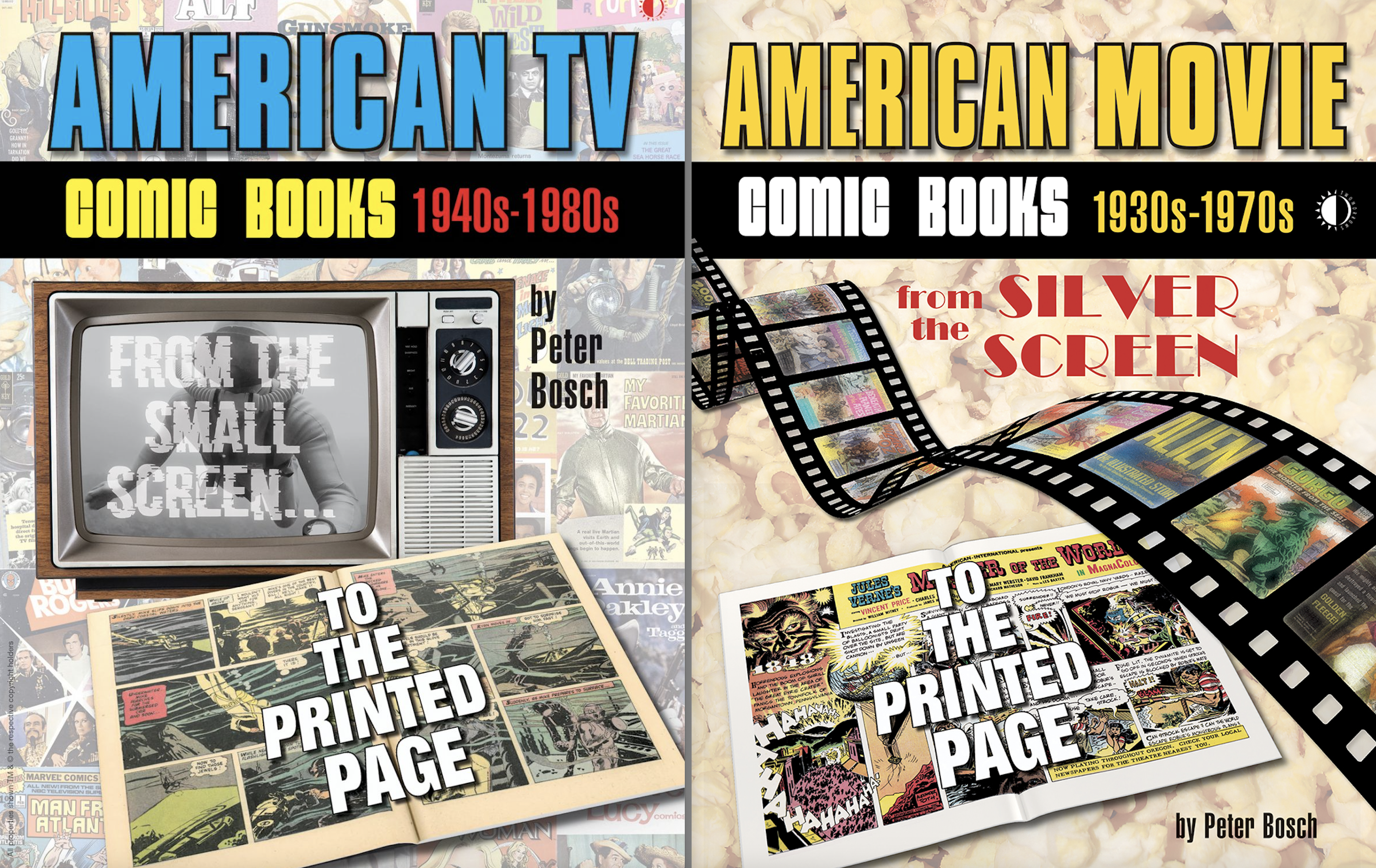
13th Dimension contributor-at-large PETER BOSCH’s first book, American TV Comic Books: 1940s-1980s – From the Small Screen to the Printed Page, was published by TwoMorrows. (You can buy it here.) A sequel, American Movie Comic Books: 1930s-1970s — From the Silver Screen to the Printed Page, is out now. (Buy it here.) Peter has written articles and conducted celebrity interviews for various magazines and newspapers. He lives in Hollywood.

August 25, 2025
I read Pogo in Grade School in the Sixties and early Seventies and even got a big book about the strip for Christmas one year. ‘Scuse me, I gotta get back to the swamp. We’re celebrating Christmas early: “Deck Us All With Boston Charlie…”
August 25, 2025
“…Walla Walla, Wash., and’Kalamazoo.”
August 25, 2025
Yes, I remember that carol from Pogo. Still cracks me up!