It’s According to Hoyle Day!
By PETER BOSCH
It’s According to Hoyle Day, an annual occasion in honor of Edmond Hoyle, who died August 29, 1769. Hoyle wrote several books on the rules of card games and chess, and the term “according to Hoyle” has come to mean doing things the way they are meant to be done (including in life itself). The opposite, “that’s not according to Hoyle,” usually refers to when someone goes against the norm.
Over the centuries, new books continue to be published using his name but expanded with rules for other games and sports, including bowling and billiards. So, to salute According to Hoyle Day, here are 13 examples of game comic covers.
I knew in picking the below, I’d be getting lots of other suggestions… but, hey, that’s the luck of the draw. (SPECIAL NOTE: I hereby request immunity for the remainder of the puns in this article.)
—
Justice League of America #1 (Oct.-Nov. 1960, DC). To paraphrase Mongo in Blazing Saddles: “The JLA are merely pawns in the game of life.”
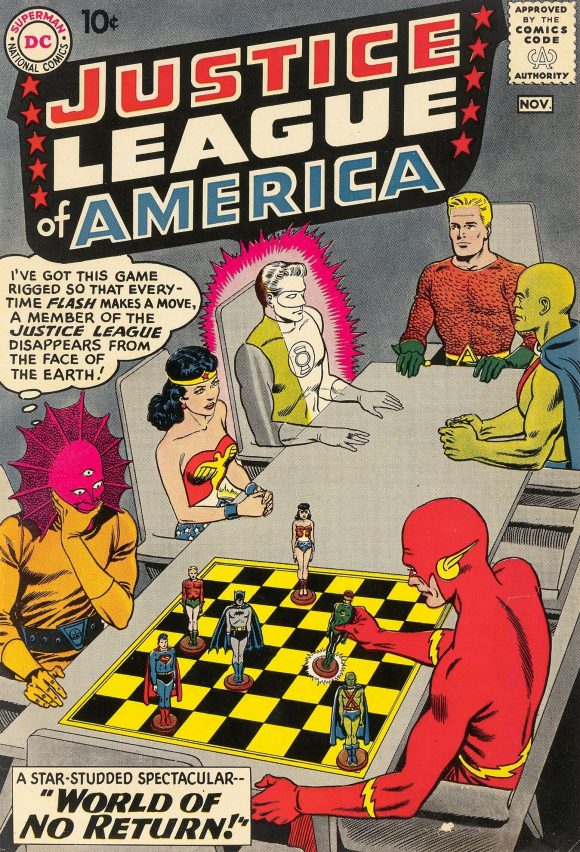
Murphy Anderson
—
Batman #23 (June-July 1944, DC). Knight and bishop cornering the king.
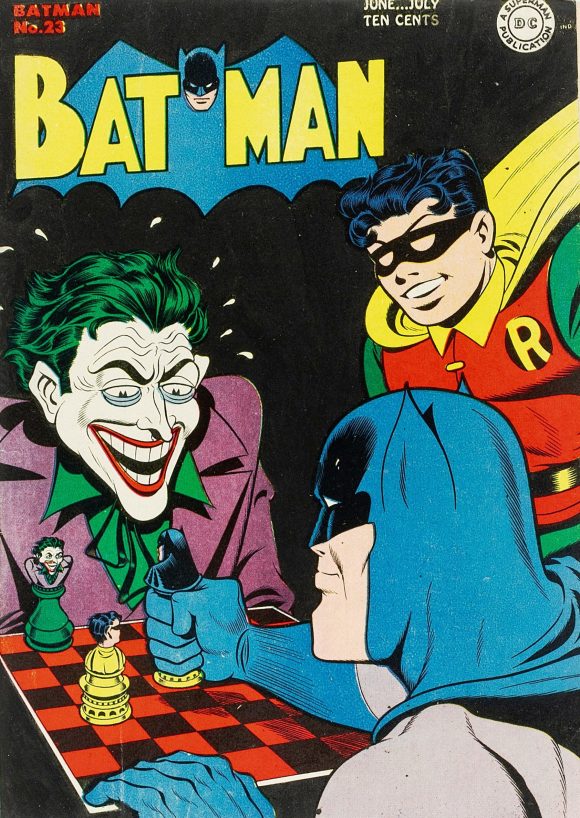
Dick Sprang
—
Captain America Comics #1 (Mar. 1941, Timely). Cap employing a “chess interrupt gambit” to disrupt a player’s plan.
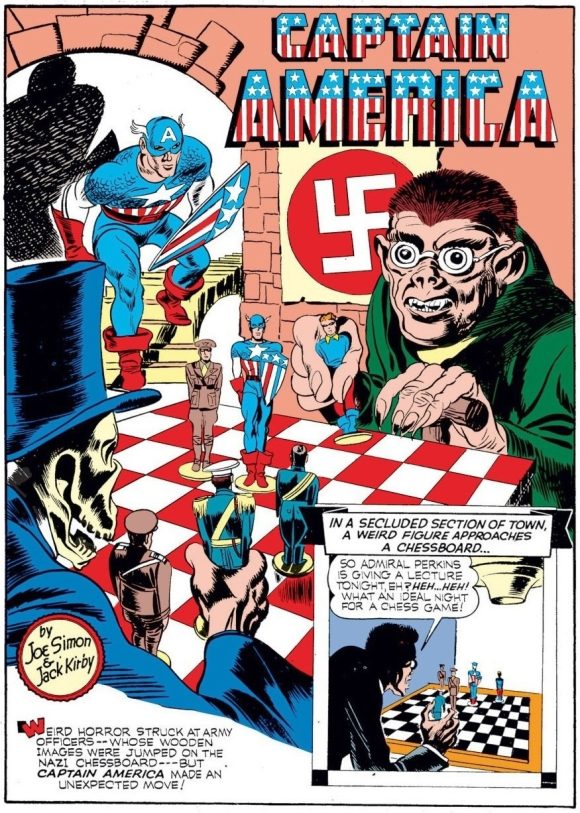
Art and script by Joe Simon and Jack Kirby.
—
Action Comics #112 (Sept. 1947, DC). Checking an opponent.
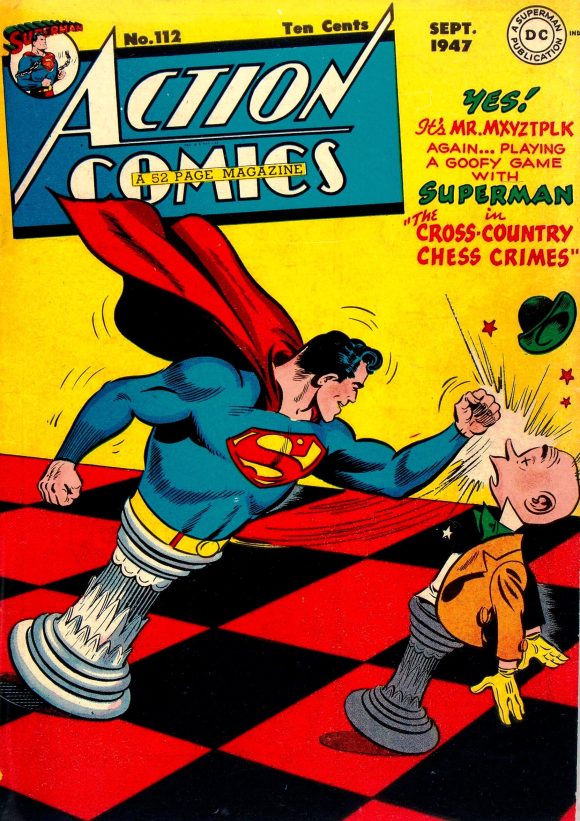
Pencils: Wayne Boring. Inks: Stan Kaye.
—
Adventure Comics #111 (Dec. 1946, DC). There’s nothing in the rules that says you can’t try blowing down the pins. I’ve seen plenty of players try it when one is still standing.
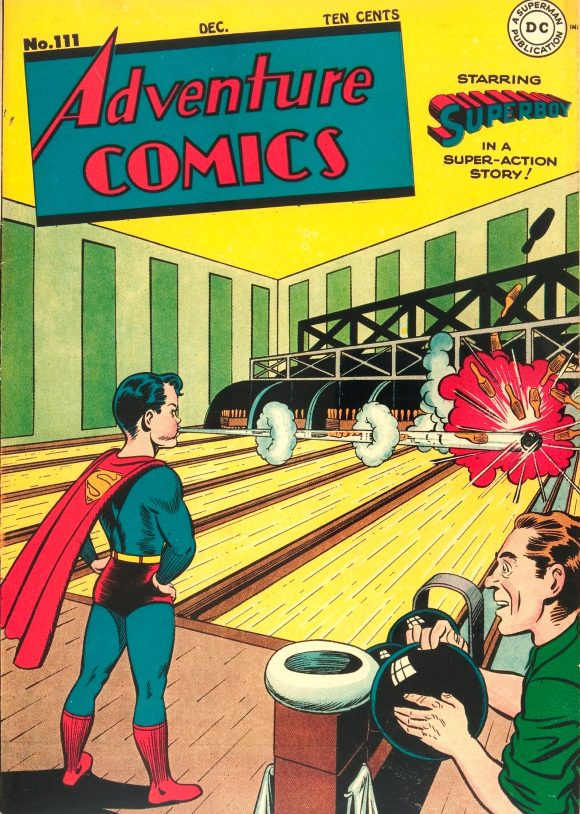
Pencils: Joe Shuster. Inker possibly Marvin Stein.
—
Batman #83 (April 1954, DC). For a bowling ball, this is clearly above the regulation size (27 inches circumference). However, Batman is so used to giant souvenirs in the Batcave, this is right up his alley. (Ouch, there goes my immunity.)
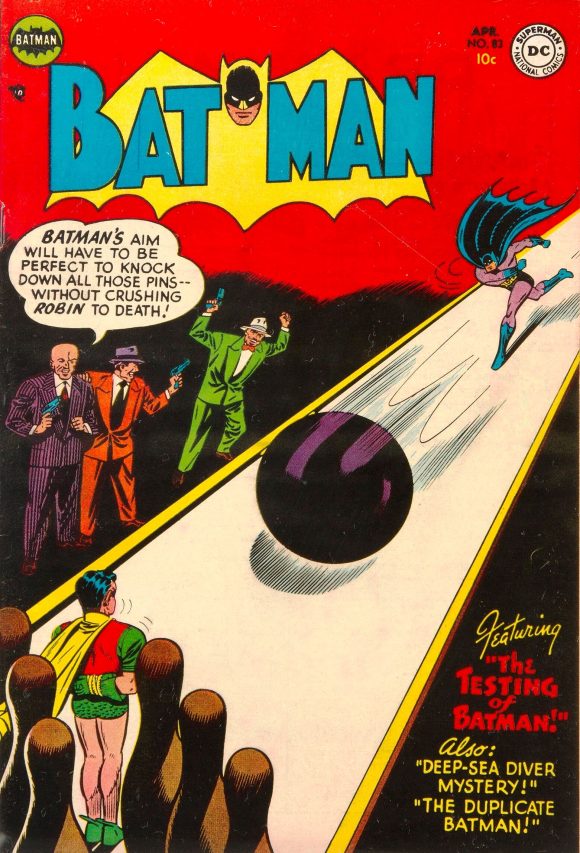
Pencils: Sprang. Inks: Charles Paris.
—
Justice League of America #14 (Sept. 1962, DC). Hey, if you do that, you’ll be bowling your eyes out! (Sorry, when it comes to bowling, I have puns to spare. Oops, that’s another.)
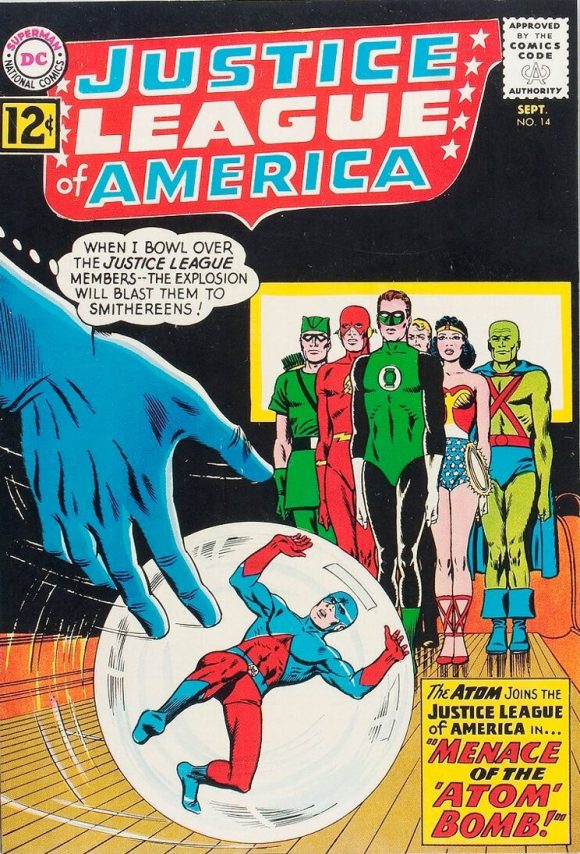
Anderson
—
Sensation Comics #13 (Jan. 1943, DC.) I don’t need a Hoyle rule book to tell me that Wonder Woman has committed a foul here by stepping way over the line. But, then, Hitler, Hirohito, and Mussolini were very foul and stepped WAY over the line.
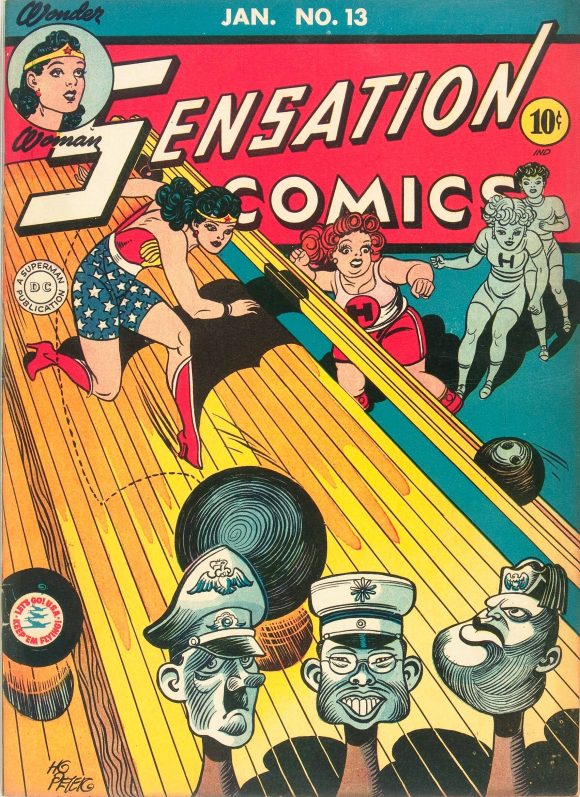
H.G. Peter
—
The Friendly Ghost, Casper #142 (June 1970, Harvey). A funny cover where even cue balls are afraid of ghosts. However, if Casper is floating up through the table, he is violating the rule about keeping one foot on the ground.
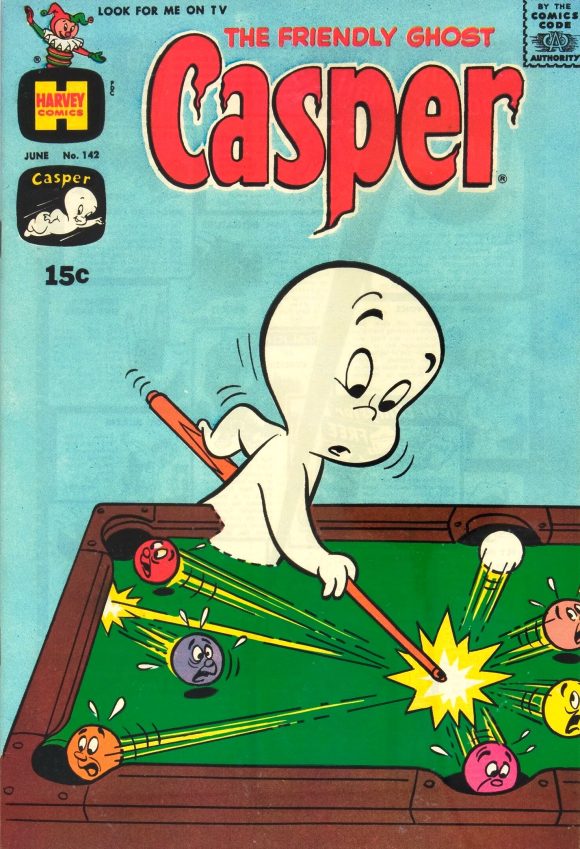
Artist unknown
—
Spider-Man’s Tangled Web #13 (June 2002, Marvel). A different meaning to a “pool party.”
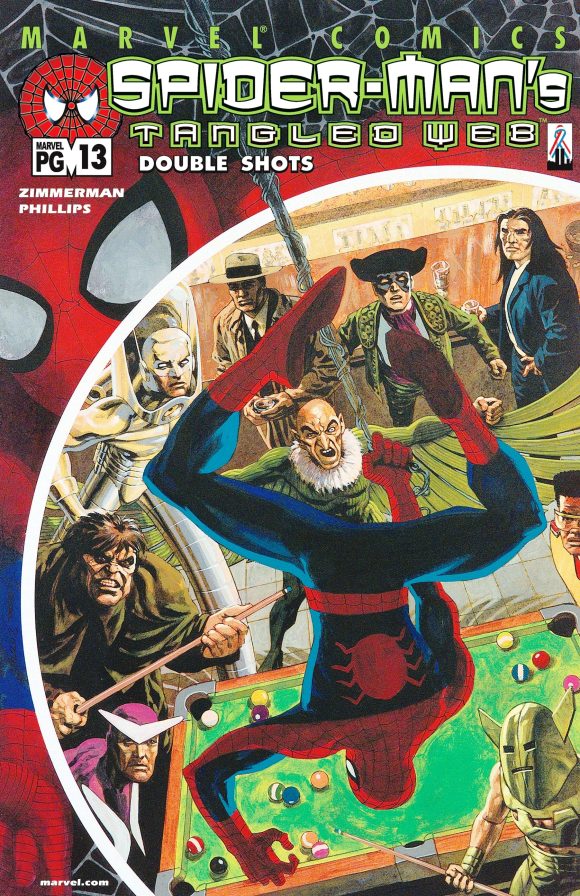
Sean Phillips
—
Batman #11 (June-July 1942, DC). Apparently, Batman thinks the Joker is not playing according to Hoyle.
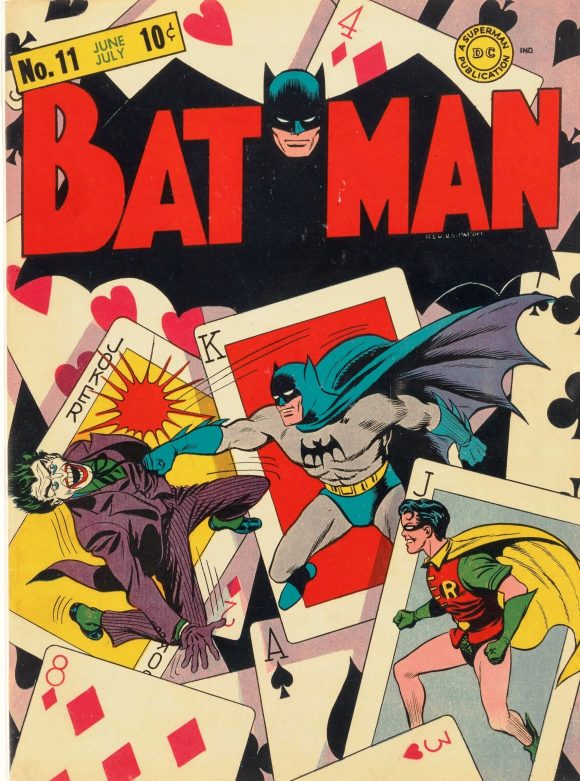
Pencils: Fred Ray. Inks: Jerry Robinson.
—
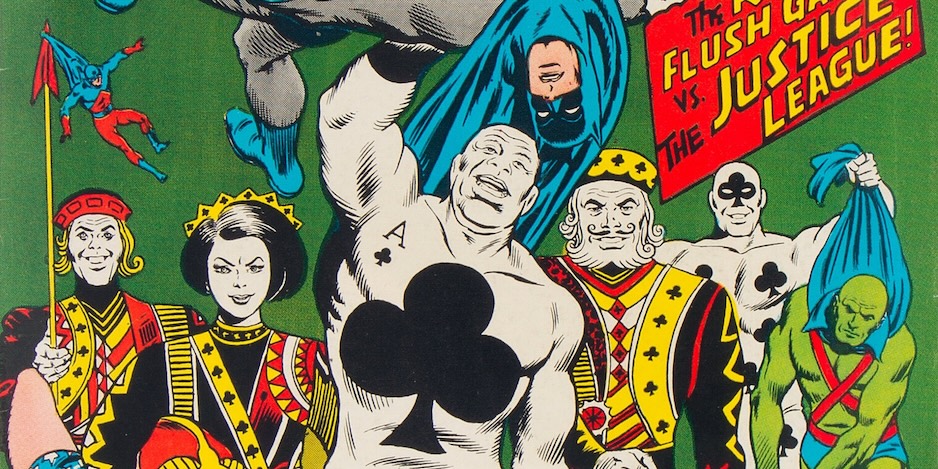
Justice League of America #54 (June 1967, DC). A royal flush is the mightiest hand in poker — but by suit. Spades is the highest, followed by hearts, then diamonds. The Royal Flush Gang are dressed as clubs, the lowest. No wonder they kept losing.
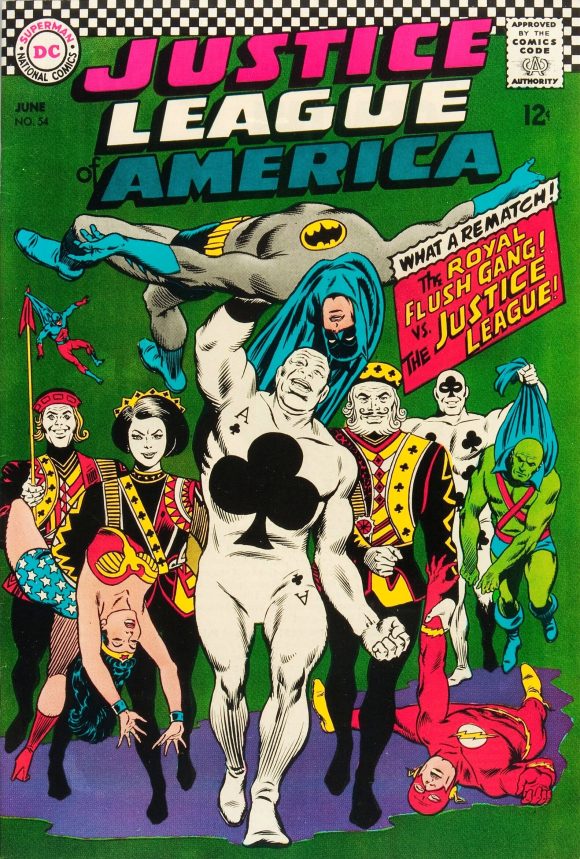
Pencils: Mike Sekowsky. Inks: Anderson.
—
The Thing Vol. 2 #8 (Sept. 2006, Marvel). All in!
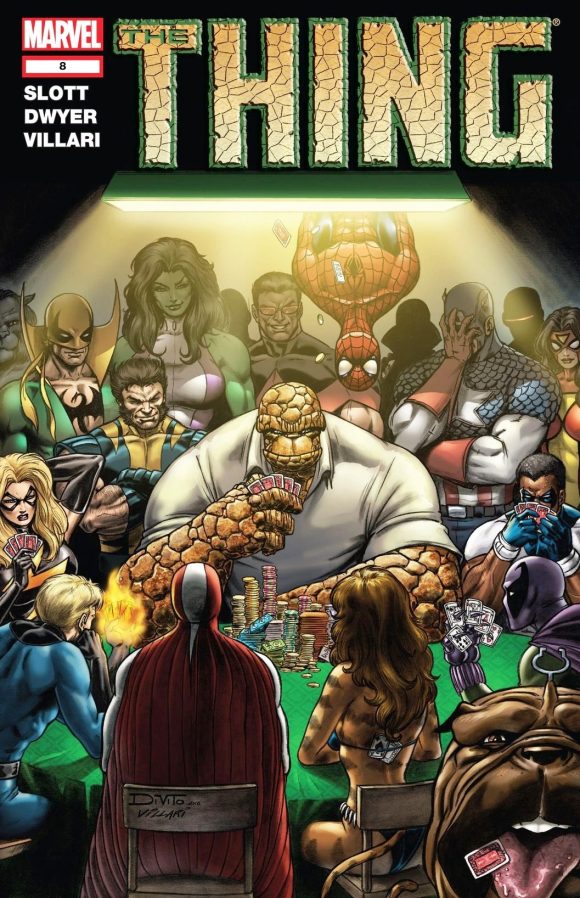
Andrea Di Vito
—
MORE
— AMERICAN MOVIE COMIC BOOKS: 13 Artists Who Helped Make Them Great. Click here.
— AMERICAN MOVIE COMIC BOOKS: 13 MORE Artists Who Helped Make Them Great. Click here.
—
13th Dimension contributor-at-large PETER BOSCH’s first book, American TV Comic Books: 1940s-1980s – From the Small Screen to the Printed Page, was published by TwoMorrows. (You can buy it here.) A sequel, American Movie Comic Books: 1930s-1970s — From the Silver Screen to the Printed Page, is out now. (Buy it here.) Peter has written articles and conducted celebrity interviews for various magazines and newspapers. He lives in Hollywood.