
MORRISON MONDAYS meets TOYHEM!

—
Welcome to TOYHEM! For the seventh straight holiday season, we’re bringing you a series of features and columns celebrating the toys of our youth, which often made for the best memories this time of year. Click here to check out the complete index of stories — and have a Merry Christmas, a Happy Chanukah and Happy Holidays! — Dan
—
By BILL MORRISON
I was born into the Golden Age of comic-book and comic-strip character figurines.
Of course, such shelf-sitting totems have existed nearly since the advent of comics themselves, but graven images of our favorite characters really proliferated in the latter half of the 20th century with dress-up dolls, action figures, statues, and of course, model kits.

I love all those things, but models are my favorite type of figurine because you don’t just take them out of the package and put them on display, you make them! As a kid in the 1960s who was starting to think about the possibility of a career as an artist someday, I was lured by the seductive box art of model kits, and then engaged creatively by the process of painting the parts and gluing them together to create a figure. Sure, I had fun playing with my Captain Action dolls, but assembling those Aurora kits got me really excited. And it wasn’t just due to the toxic airplane glue.
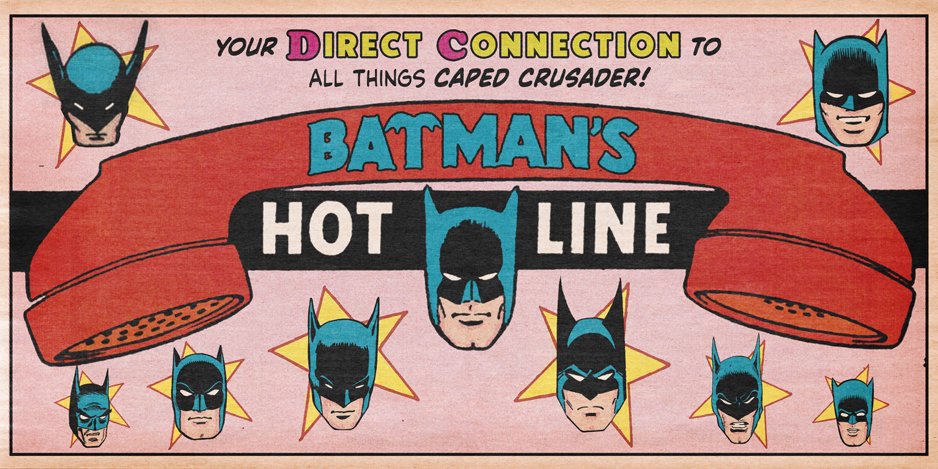
Though I loved the Aurora monster models and had nearly every one of them as a kid, I was a major Batmaniac and my favorite model kits were naturally those of the Bat-variety. Aurora Plastics Corp. produced seven Batman-related assembly kits between 1964 and 1967, and all of them are on my list of favorite Bat-models from over the years. But since this is 13thDimension, I’m adding six more to bring my list of faves to a full baker’s dozen!
—
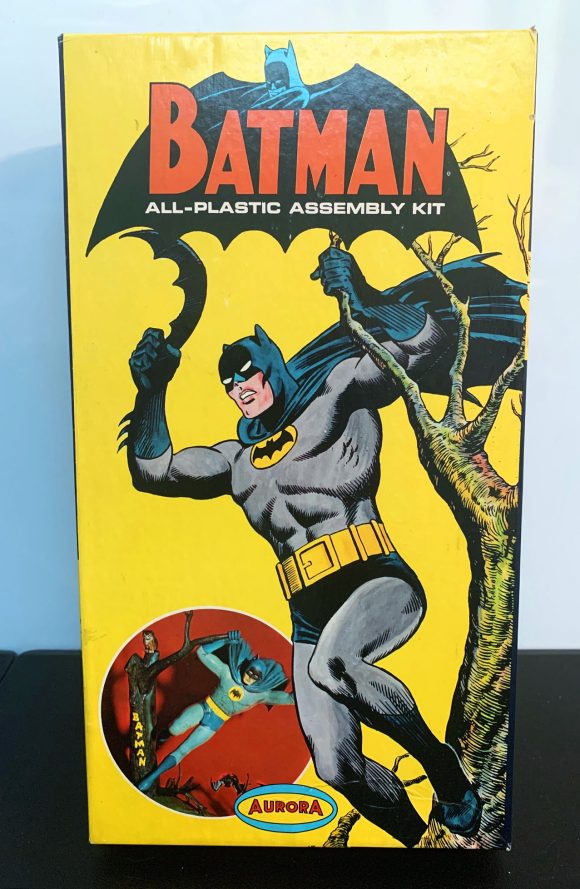
1. Batman. In 1964, Aurora produced a Superman “All Plastic Assembly Kit,” and though they had no idea a phenomenon known as “Batmania” would infect the world in just two years, they also came out with a Batman kit. The “New Look” for Batman that was introduced in Detective Comics #327 was still very, well, new.
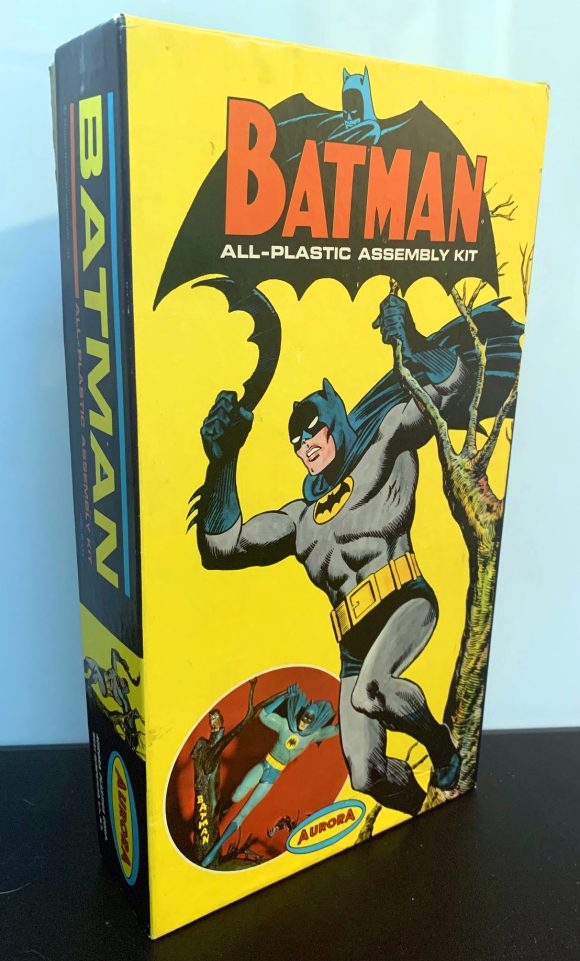
So, the cool, modern Carmine Infantino/Murphy Anderson box art seems like an odd choice, especially when you consider that much of the later 1966 Batman merchandise featured 1950s and early ‘60s images of the Caped Crusader. The more realistic Batman who swings from a dead tree on the kit box must have seemed unfamiliar to most kids. On the other hand, that didn’t stop me from shelling out my allowance money for one!
—
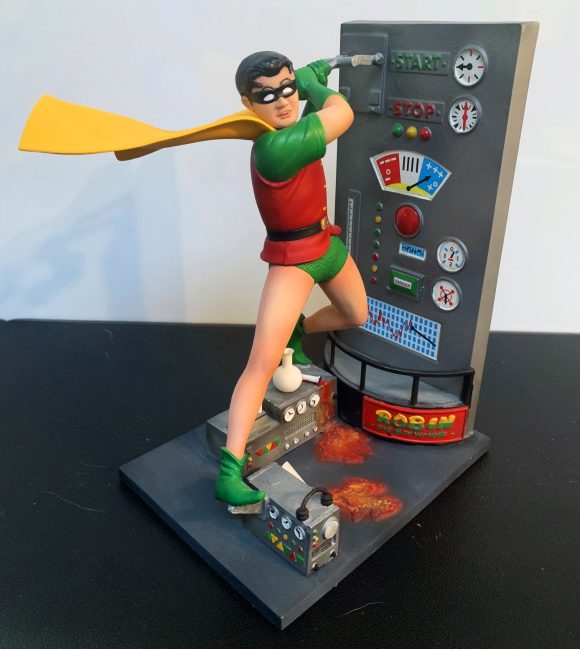
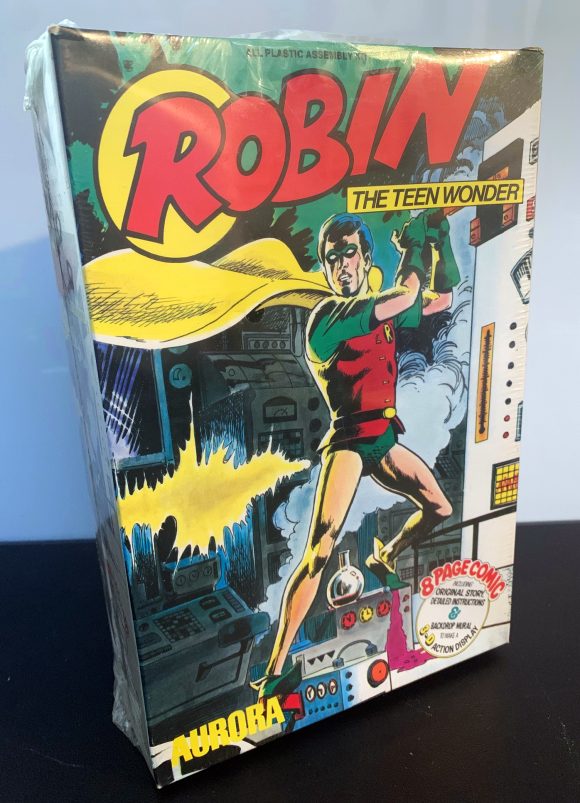
2. Robin. In contrast to the “New Look” Batman kit, Aurora’s Robin model has the Boy Wonder looking like he did in comics’ Golden Age, with twin spit curls gracing his forehead. However, the stunning Neal Adams box art goes a long way toward modernizing Robin’s look.
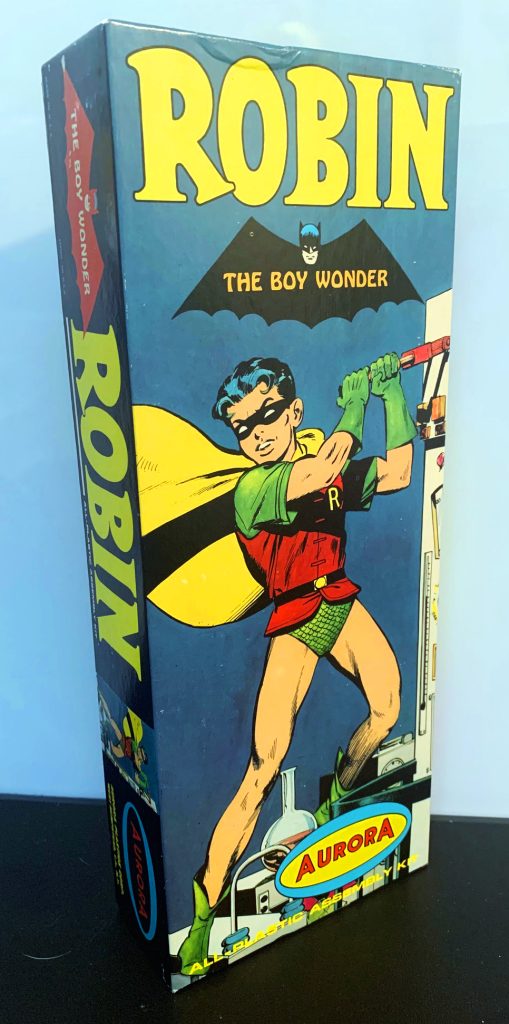
Neal’s first couple of jobs drawing Batman in the comics was not until October of 1967 — inking Carmine Infantino’s pencils on the cover of Detective Comics #370, and penciling and inking the cover of The Brave and the Bold #75. This makes his drawing of Robin for the Aurora box in 1966 his first work on a Batman character.
—
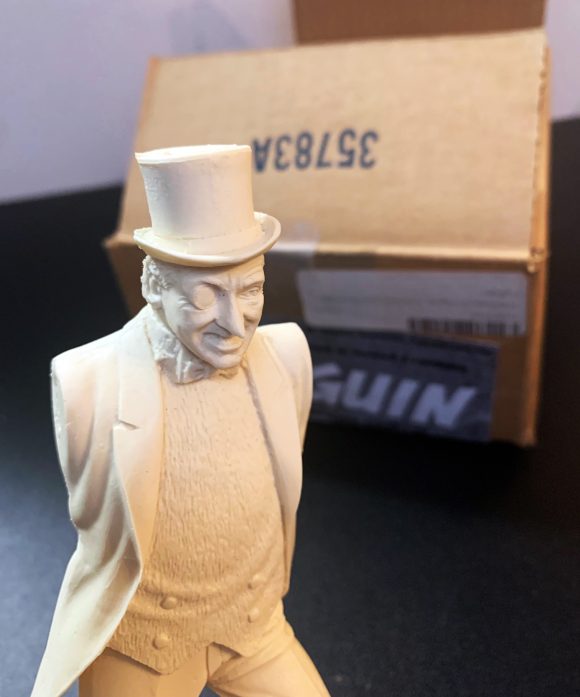
3. The Penguin. In 1967, after the smashing success of the Batman TV series, Aurora issued a model kit of the Dynamic Duo’s arch-nemesis, the Penguin. Though the box art depicts the Master of Fowl Play as he appears in the comics, the model itself bears a striking resemblance to actor Burgess Meredith in the TV role. Other villain kits were planned, but the Batman craze died out before they could be produced.
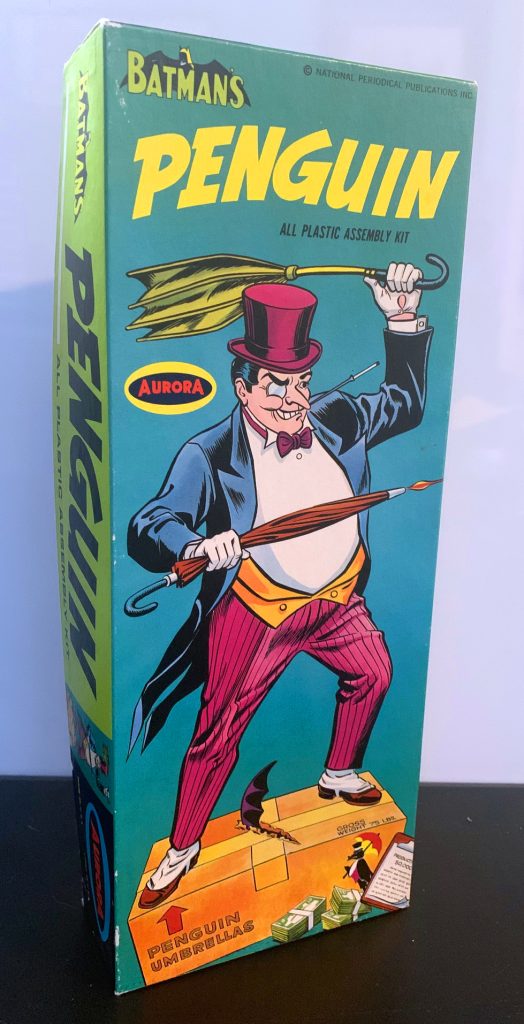
This kit is the most rare and sought-after of the Aurora Batman-related kits, which may explain why someone in the 1990s decided to make molds of it and market an unlicensed garage kit.
—
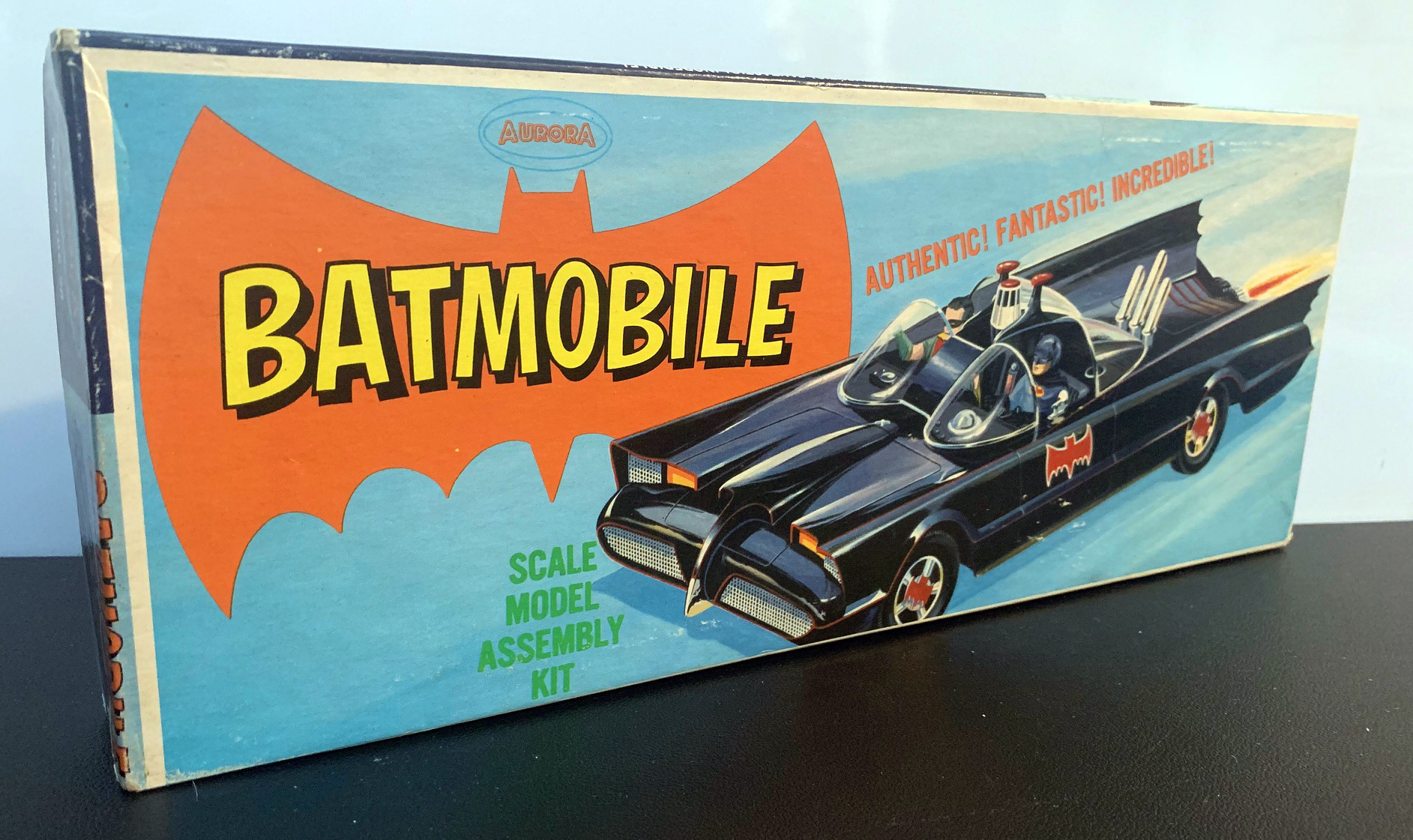
4. The Batmobile. The most ubiquitous of the Aurora Batman kits has to be the 1966 Batmobile, a beautiful scale replica of the famous George Barris car, as seen on TV! No Bat-kid worth a whiff of Bat-Sleep gas would be caught dead without one sitting on his or her bedroom shelf or dresser.
—
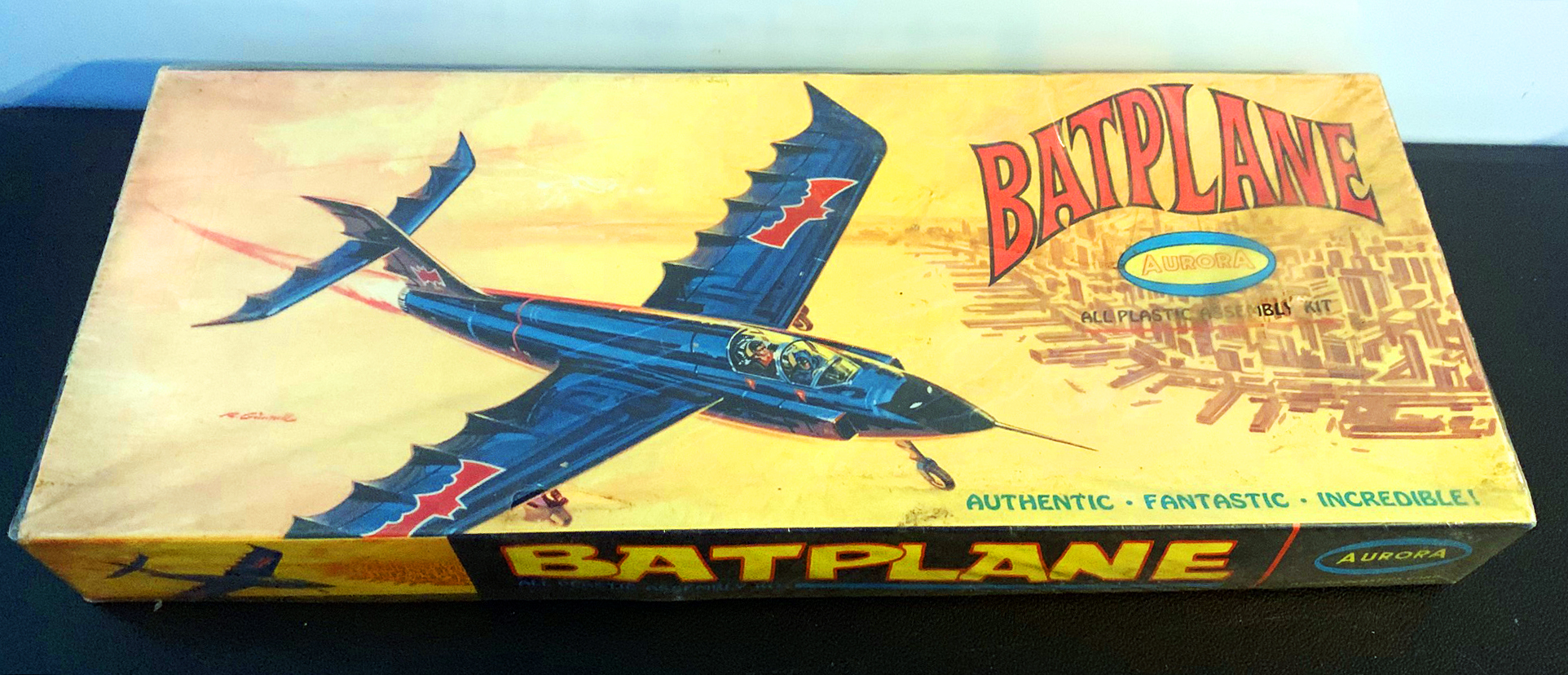
5. The Batplane. The Batman movie that came out in the summer of 1966 had a budget that allowed more Bat-vehicles to be built and later used in the TV series. However, the Batplane was not one of them. But that didn’t stop the Aurora Plastics Corp., which launched in 1952 with a line of 1/48-scale aircraft models, from making a kit of the Dynamic Duo’s famous air ride, similar to how appeared in comic books.
—
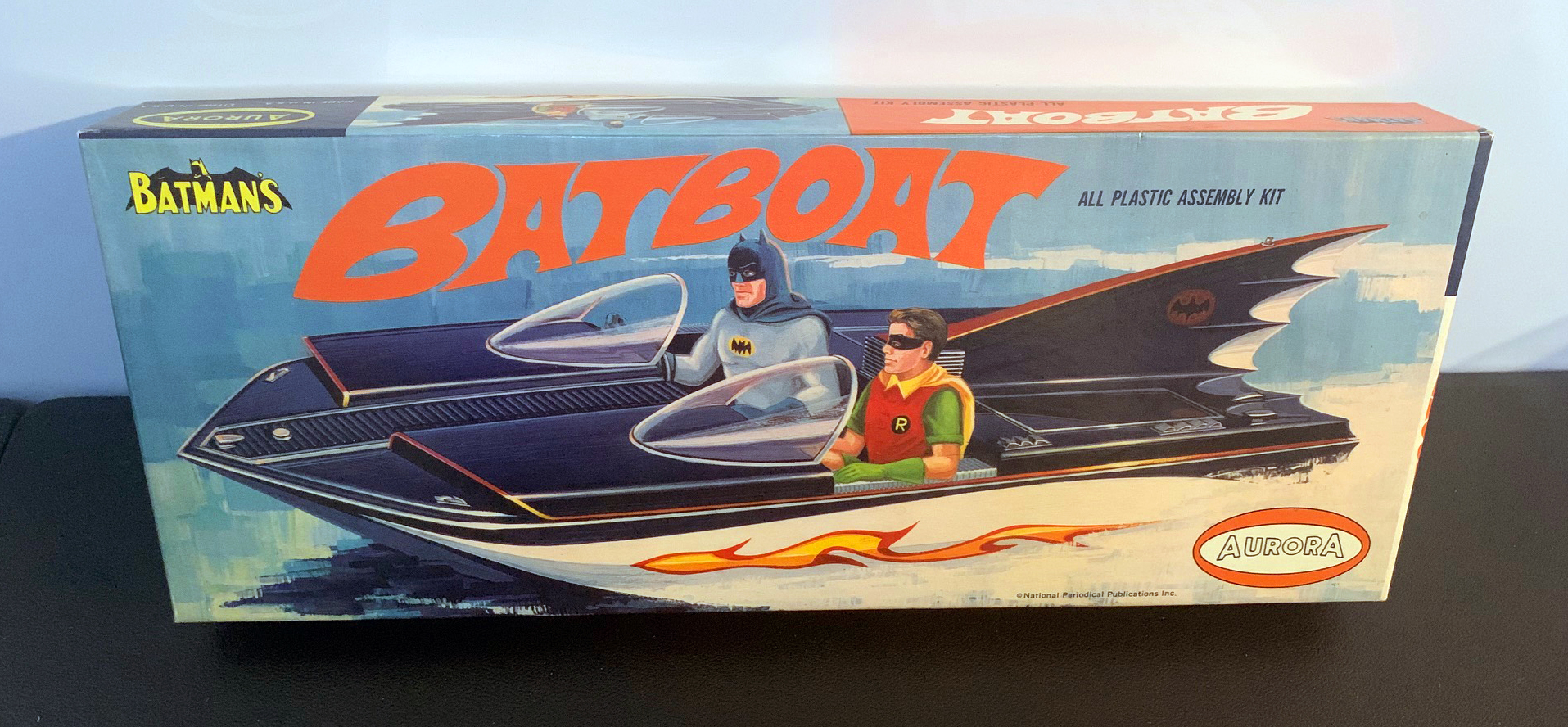
6. The Batboat was created for the 1966 movie and used in scenes where Batman and Robin had to travel to the bell buoy in Gotham Harbor to look for clues, and later when the Dynamic Duo go to battle with Penguin’s submarine. It was also used a few times in the TV series. The kit came with figures of Batman and Robin, and a sleek custom-made stand, so you didn’t have to display it in the bathtub!
—
7. The Batcycle may be the coolest of the Aurora Bat-vehicles for its Batman and Robin figures and go-kart sidecar that detaches. The Batcycle was also created for the ’66 movie and used in a scene where the Caped Crusaders trick the Penguin into stealing the Batmobile so they can use the hidden cycle to zoom to the airport, hop in the Batcopter, and track the felonious fowl to the villains’ hideout.
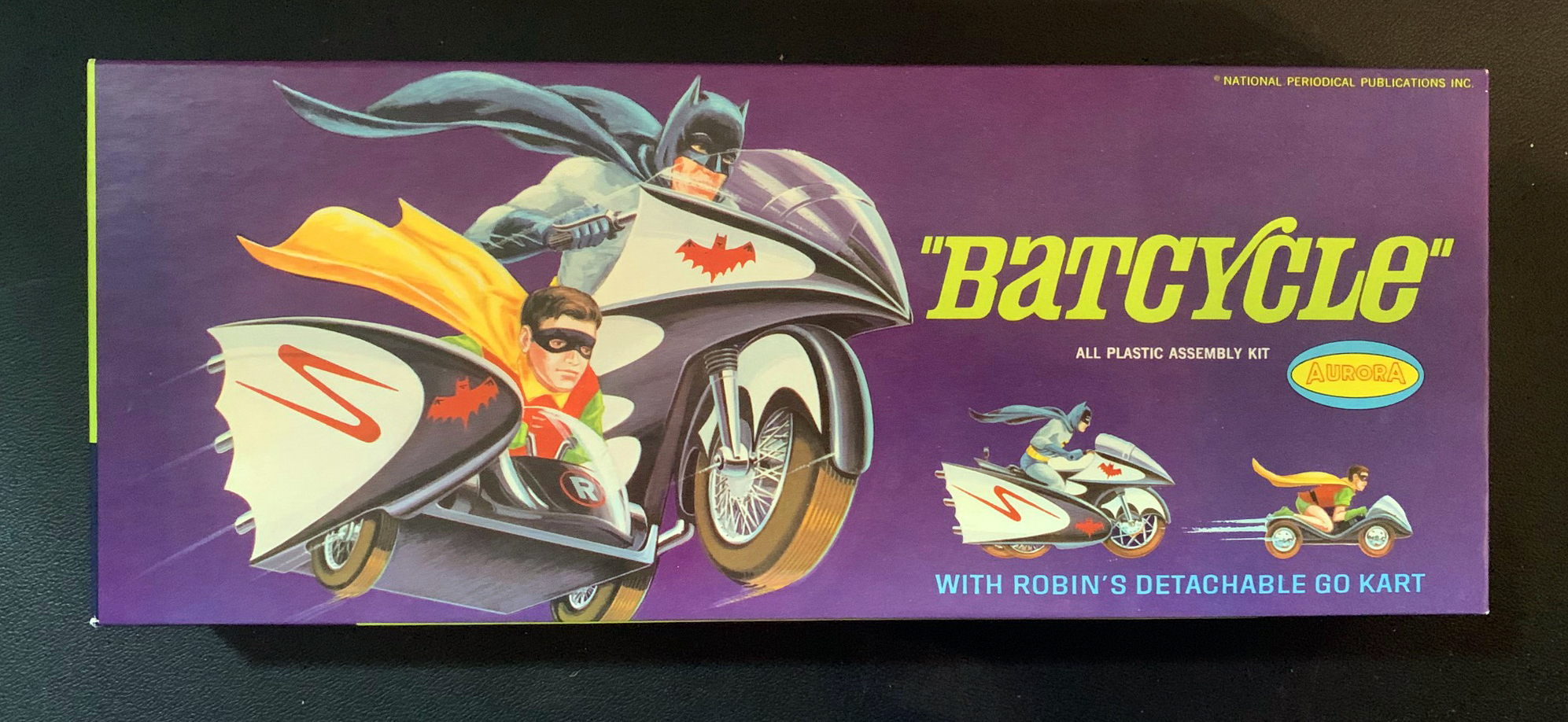
Sadly, Aurora never produced a Batcopter model kit. The box art for this kit is attributed to famed comics artist Bob Powell, who died the same year this set was produced, 1967.
—
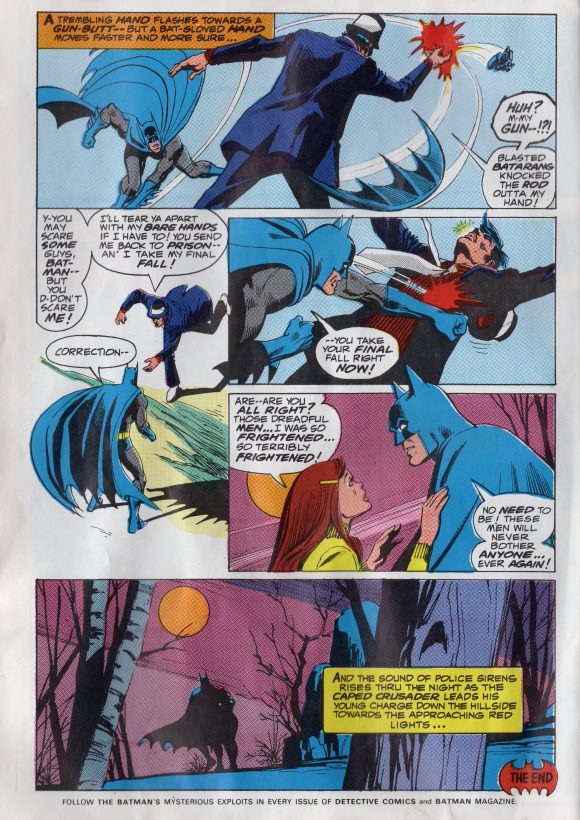
8. Comic Scenes Batman. Ten years after the original Aurora Batman kit was released, the company reissued the model with a new gimmick — Comic Scenes! The 1974 version was nearly identical to the original kit with a few minor differences, such as the lack of a sculpted chest emblem, removal of the Batman lettering on the tree, and lack of an owl.
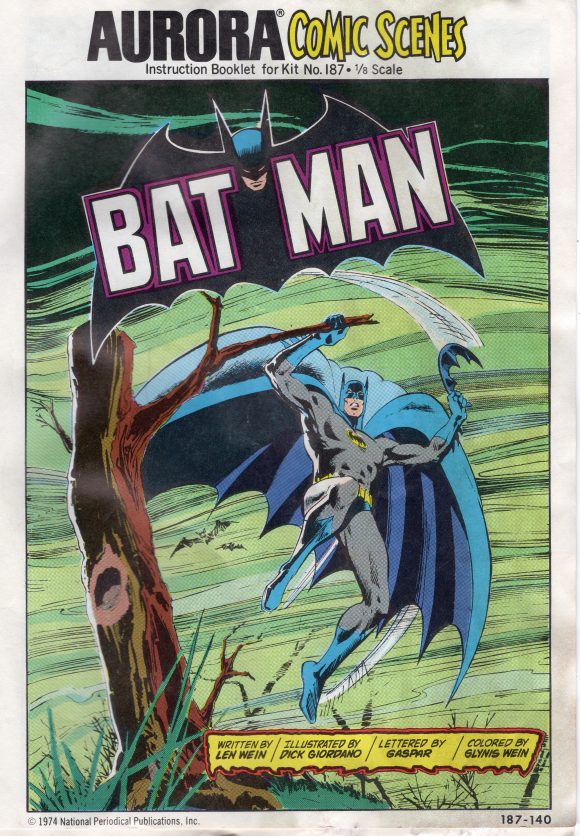
But what it did have was an eight-page comic book written by Len Wein and drawn by Dick Giordano that finally explains why the kit depicts the Caped Crusader swinging from a tree branch in the woods and not skulking on a Gotham City rooftop. The box art was also drawn by Giordano…
—
9. …as was that of the 1974 Robin reissue! The eight-page Robin comic was written by Marv Wolfman and Felton Marcus, and was also illustrated by Giordano. My kit is factory sealed, so I may never know why the Boy Wonder (now “Teen Wonder”) had to throw that big Frankenstein switch to shut down that machine.
—
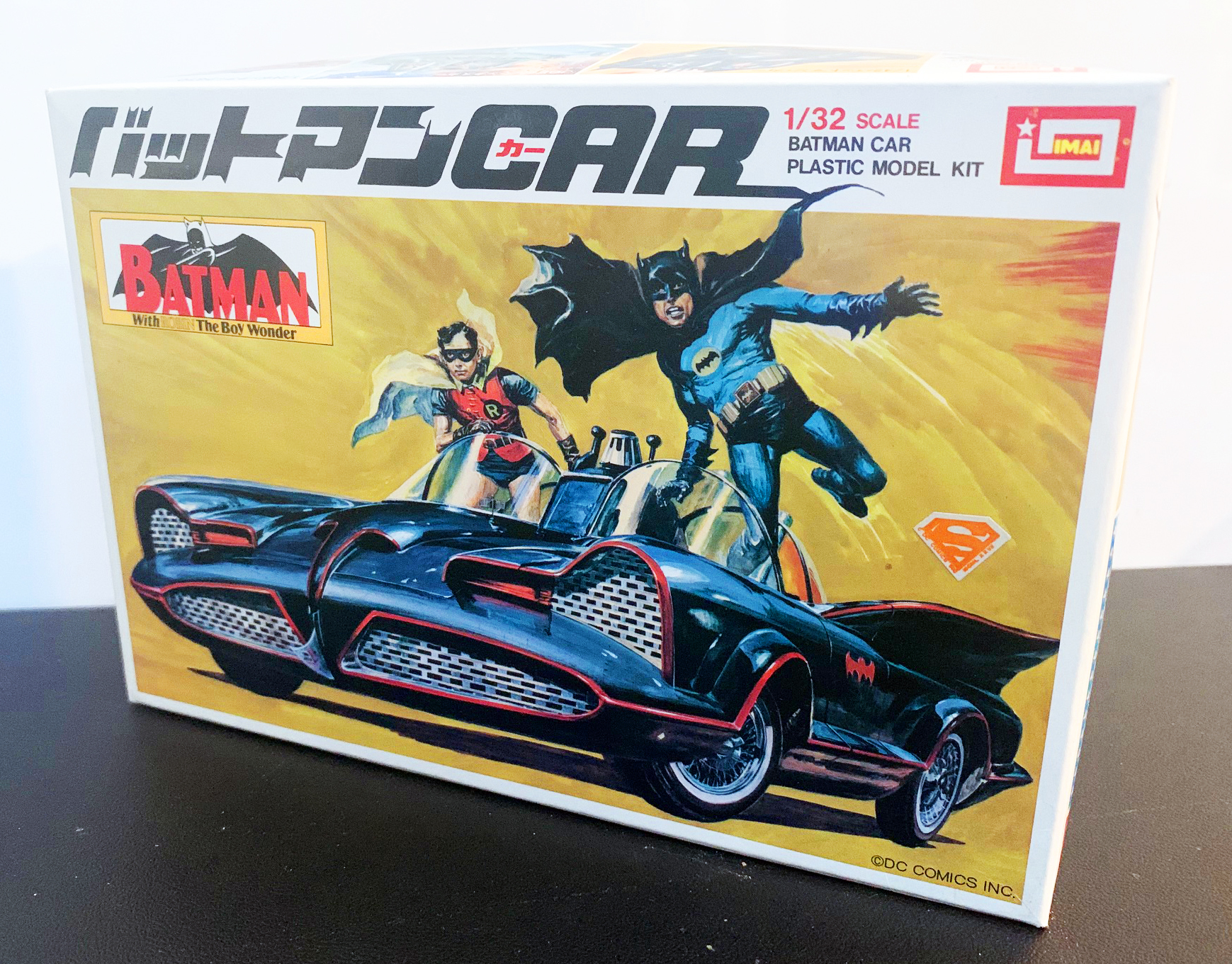
10. Batmobile Returns. In the ’70s and 80s, Japanese manufacturer Imai produced a cool 1/32-scale ’66 Batmobile kit. The box art alone makes this Barris Batmobile a favorite in my collection.
—
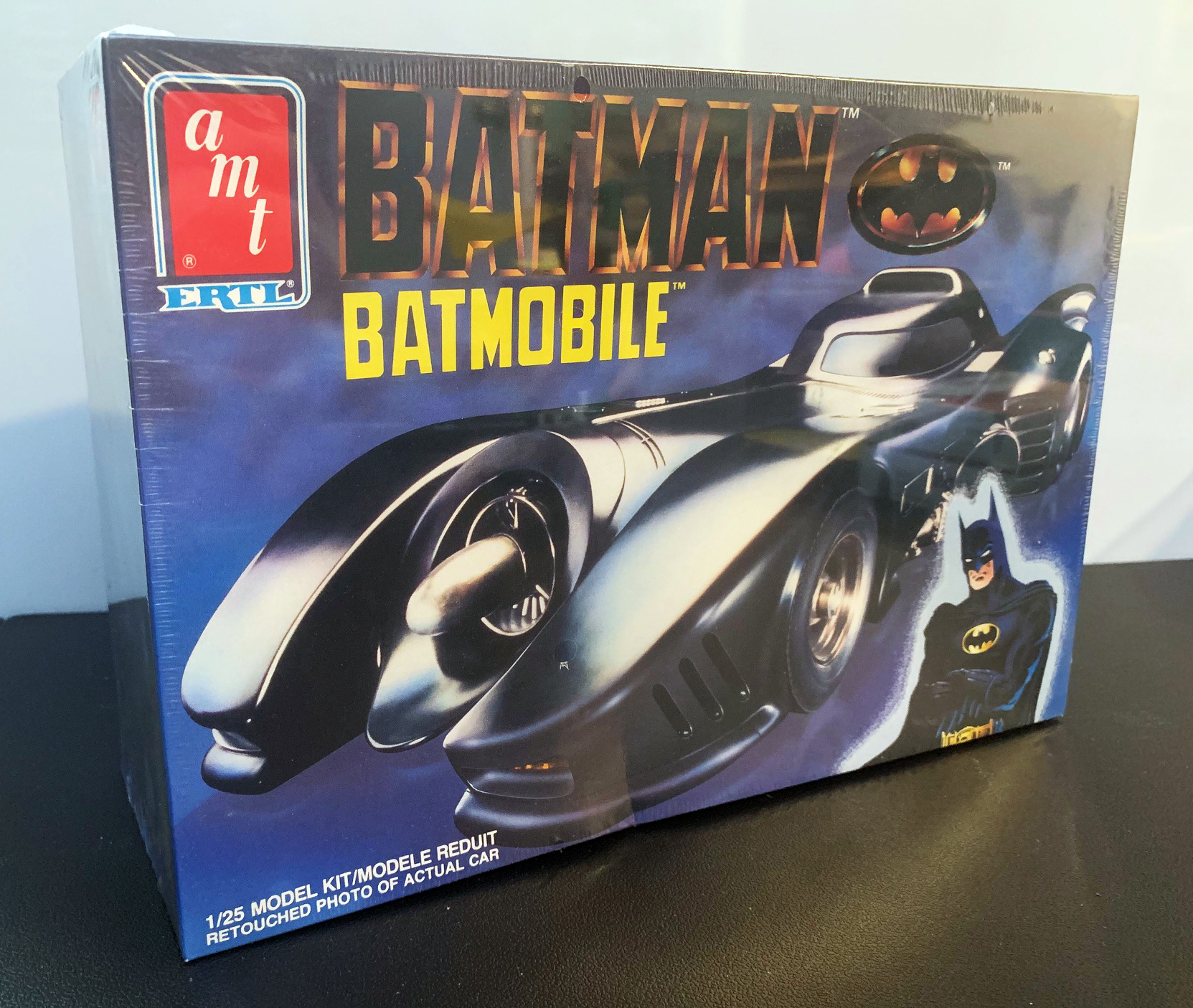
11. Batmobile ’89. In 1989, the second wave of Batmania swept the world when Tim Burton’s Batman movie was released. This era also produced some excellent model kits! I will always be on Team Barris Batmobile, but if you parked the ’89 movie version in my driveway and left me the keys, I’d drive that sucker into the ground! AMT produced an excellent model kit of the Burton Batmobile, designed by Julian Caldow.
—
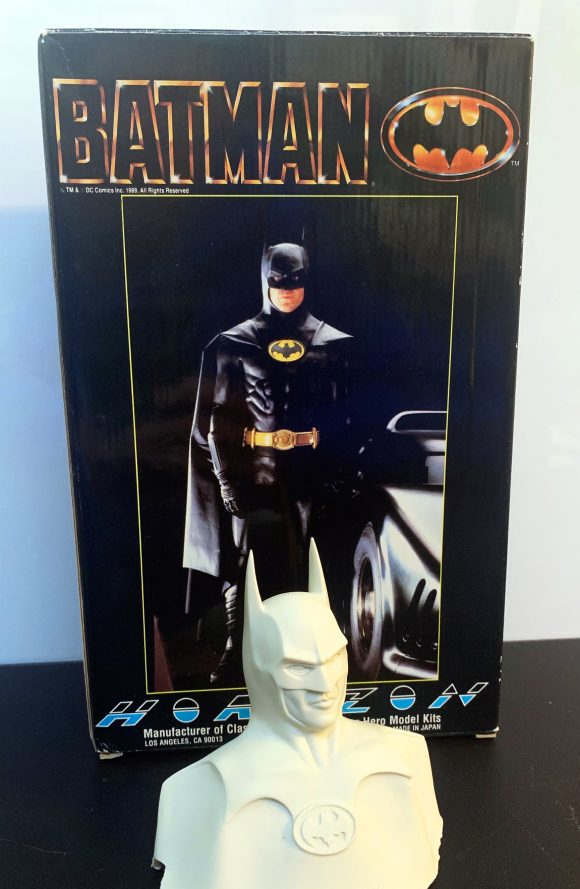
12. Batman ’89. Another cool kit based on the ’89 film is the Horizon 1/6-scale vinyl model of Michael Keaton in the Bat-suit. When assembled, this lifelike and very detailed model stands 14 inches tall. It also comes with an actual cloth cape, some ironing required. This kit requires a lot of cutting, in addition to painting and gluing, which is probably why I never took the time to put it together.
—
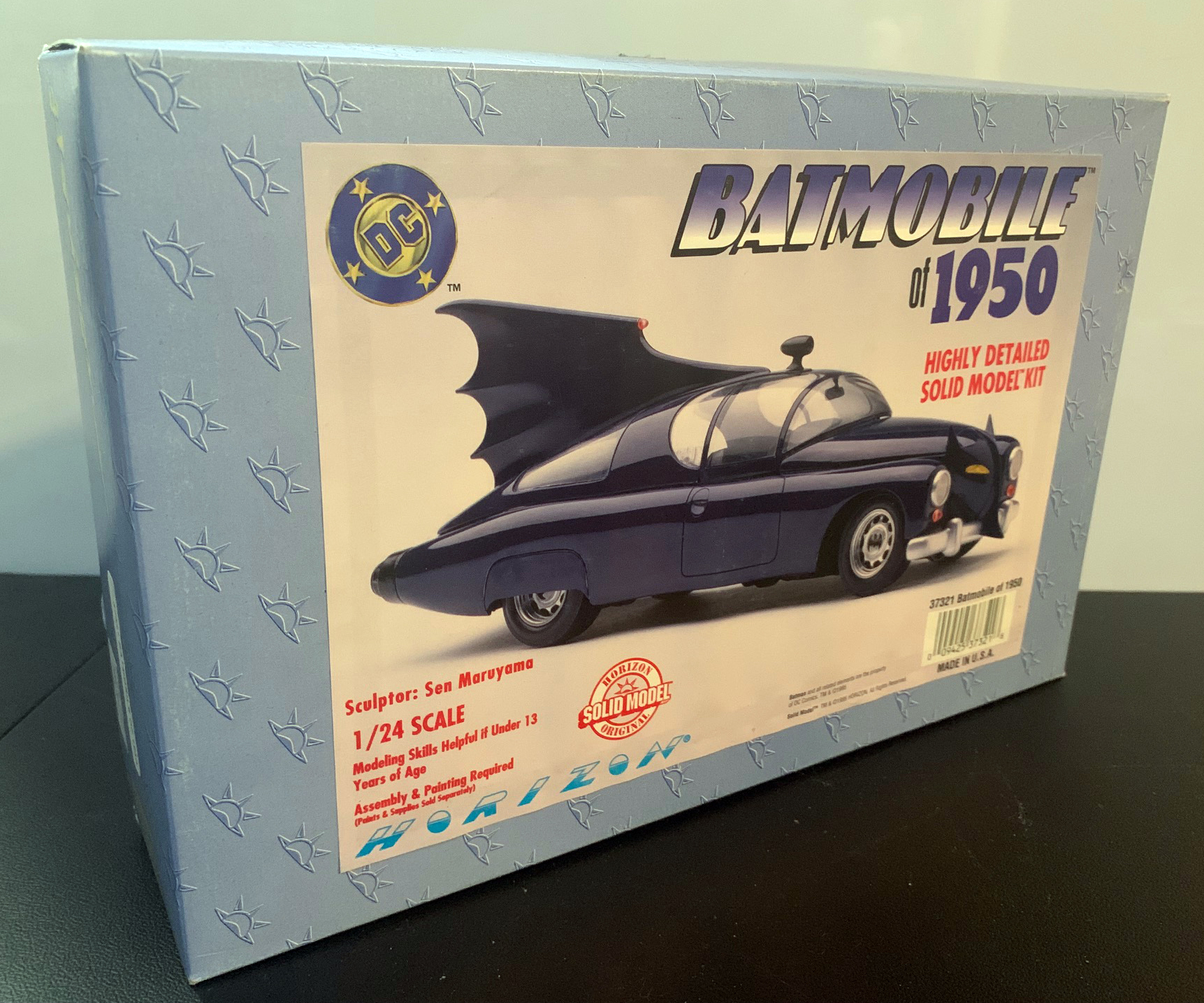
13. The Batmobile of 1950. The 13th entry on my list, also from Horizon, is the Batmobile of 1950! Next to the Barris Batmobile, this is my favorite. As the box claims, the kit is “highly detailed,” right down to the mobile crime lab in the back of the car. This incredible resin kit was released in 1995 and was sculpted by Sen Maruyama.
—
BONUS! I recently picked up the Polar Lights “Bad Guy Getaway Edition” of the ’66 Batmobile, with the Penguin and Catwoman figures. In the TV series, there were two storylines in which the Batmobile was stolen by a major Bat-villain. The Penguin purloined it in the Season 1 episode “Not Yet He Ain’t,” and Catwoman carried it off in the Season 2 episode, “Scat! Darn Catwoman.”
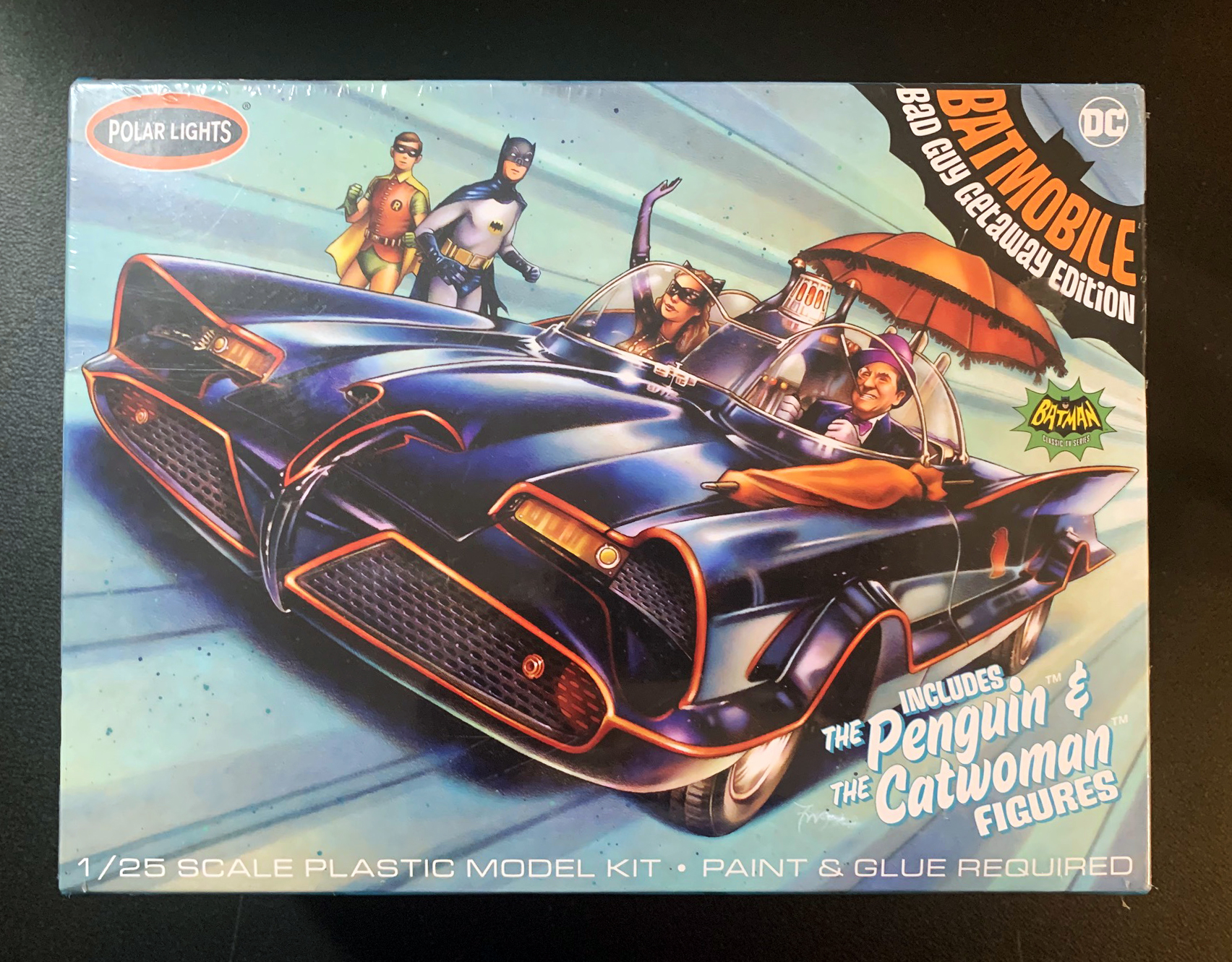
In 2023, Polar Lights decided to do a mashup of those episodes and depict the Princess of Plunder and the Felonious Fowl boosting Batman’s ride together.
—
Want more MORRISON MONDAYS? Come back next week! Want a commission? See below!
Want more TOYHEM? Click here!
—
MORE
— MERMAIDS, MICE AND MORE: The Stories Behind Classic Animated Movie Poster Art of the ’80s and ’90s. Click here.
— FORTNITE and the Art of THE SIMPSONS Video Games. Click here.
—
Eisner winner BILL MORRISON has been working in comics and publishing since 1993 when he co-founded Bongo Entertainment with Matt Groening, Cindy Vance and Steve Vance. At Bongo, and later as Executive Editor of Mad Magazine, he parodied the comics images he loved as a kid every chance he got. Not much has changed.
Bill is on Instagram (@atomicbattery) and Facebook (Bill Morrison/Atomic Battery Studios), and regularly takes commissions and sells published art through 4C Comics.

December 15, 2025
Love this! You might also add the Black Beauty as a #14 due to the crossover episodes. Did the teen wonder have a new head sculpt?