
Fred Van Lente’s back just in time for Superman/Spider-Man #1!
By FRED VAN LENTE
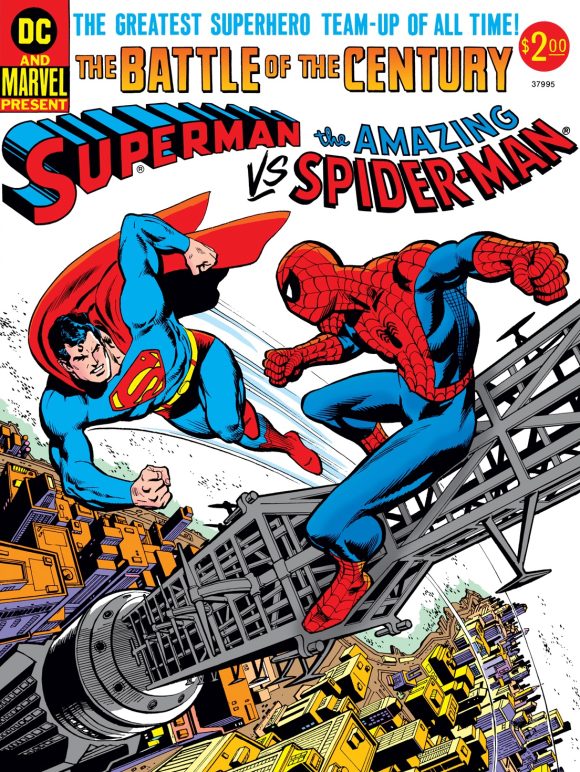
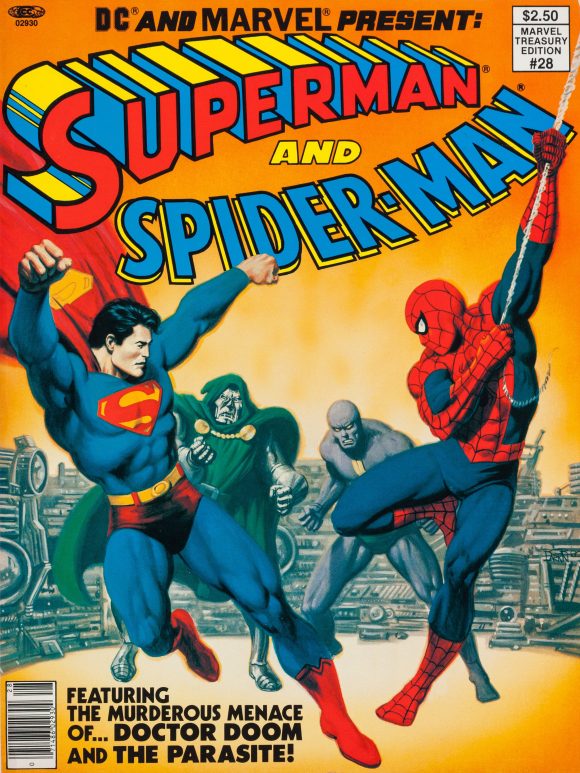
Welcome Back, Panel Pugilists! Fearless Leader Dan requested a very special COMIC BOOK DEATH MATCH from Yours Truly to commemorate the latest team-up between the Man of Steel and your Friendly Neighborhood Wall-Crawler! Today, I’ll be pitting 1976’s first-ever DC/Marvel superhero crossover, Superman vs Spider-Man, against its 1981 sequel, the slightly less confrontational Superman and Spider-Man.
For the first time, I’m pitting single issues against one another, as opposed to longer runs of two titles, so I thought I’d change up the formula a little bit. Rather than break each issue down individually, I’ll be looking at them side by side, comparing and contrasting mid-story en route to declaring a final winner. Along the way, I’ll be talking about how both reflect on the art of comics storytelling, a subject near and dear to my heart, and one I teach in an online course over at Domestika (shameless plug alert).
Even both though these comics came out when I was a kid, I have never read them before writing this column, likely because as a child I had an arguably irrational antipathy toward Superman. Will that affect my judgment? Of course not. I operate under the strict Code of Ethics of the North American Comic Book Death Match Association, of which I am founding chairman and sole member.
Are you ready to rumble? Even if you are not, we are doing it anyway! RING THAT BELL!
—
Prologue: First Principles
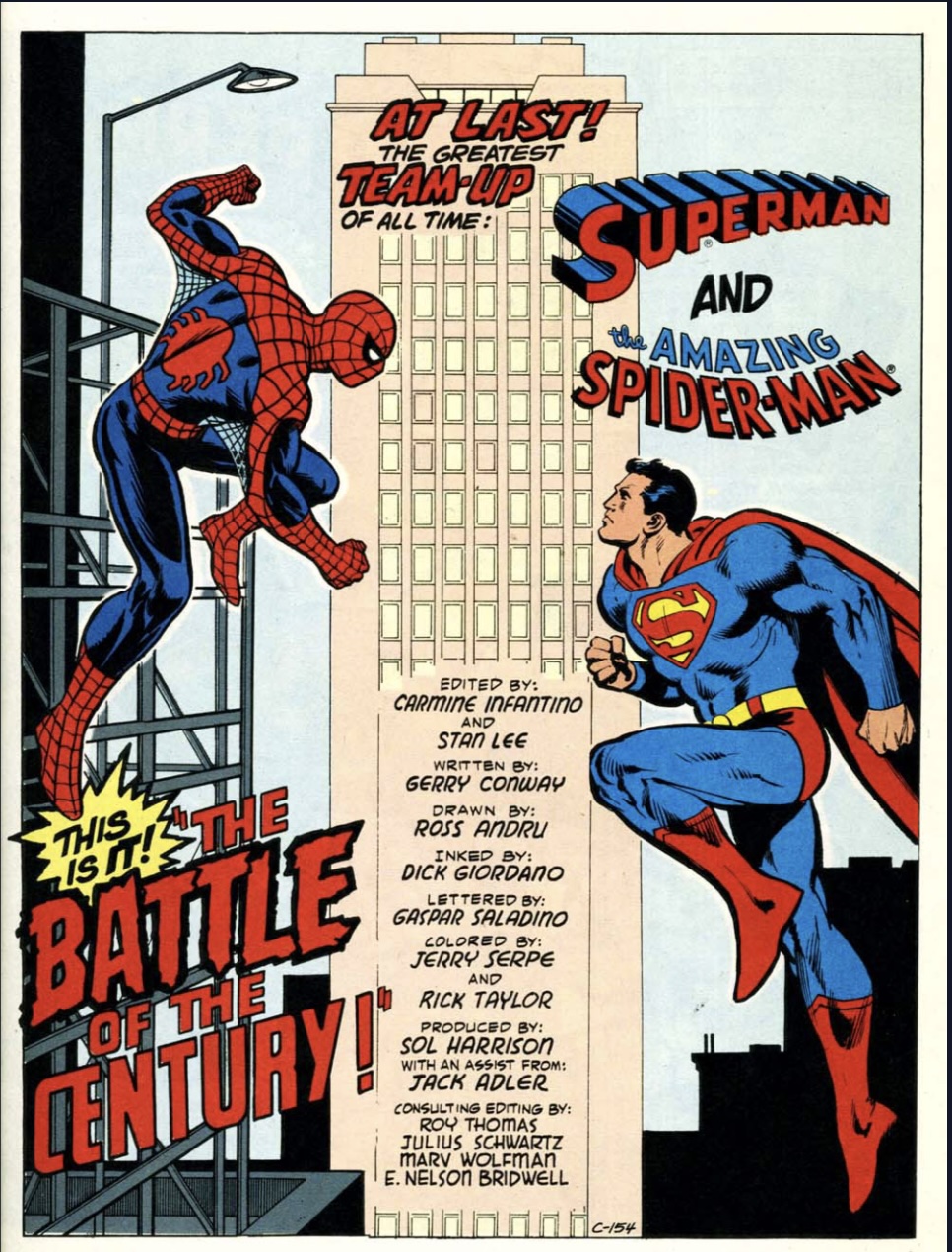
Billed as “The Battle of the Century!” the 1976 comic reunites one of the greatest Amazing Spider-Man creative teams of all time in writer Gerry Conway and artist Ross Andru, so we see how seriously the Big Two took this inaugural collaboration.
Conway makes sure both heroes are extensively introduced for the uninitiated, as if his audience is composed of equal halves DC fans who wouldn’t touch a Marvel comic if it cured cancer, and Marvel Zombies who turn their noses up at the Distinguished Competition like it had just crawled out of a sewer.
Superman vs. Spider-Man
I still run into people like to this from time to time (mostly in the latter category — Marvel diehards who sneer at DC) and I find them anthropologically fascinating. Only in comics is whoever publishes a comic an important data point for consumers. Do science fiction novel readers say, “I’ll buy anything from Orbit, but Tor can go jump off a cliff!” Do moviegoers really care whether what’s opening this weekend came from Warner Bros or Paramount?
Wait. Bad example.
The first thing I notice when I open up the 1981 comic is they dispense with the Elevator Pitch details of each hero on the inside front cover. Most amusingly, I see that Spider-Man has been “created by Stan Lee and Steve Ditko,” an unusually direct expression of authorship from the company that would slap “Stan Lee Presents:” on every title (including Star Wars) until the 21st century.
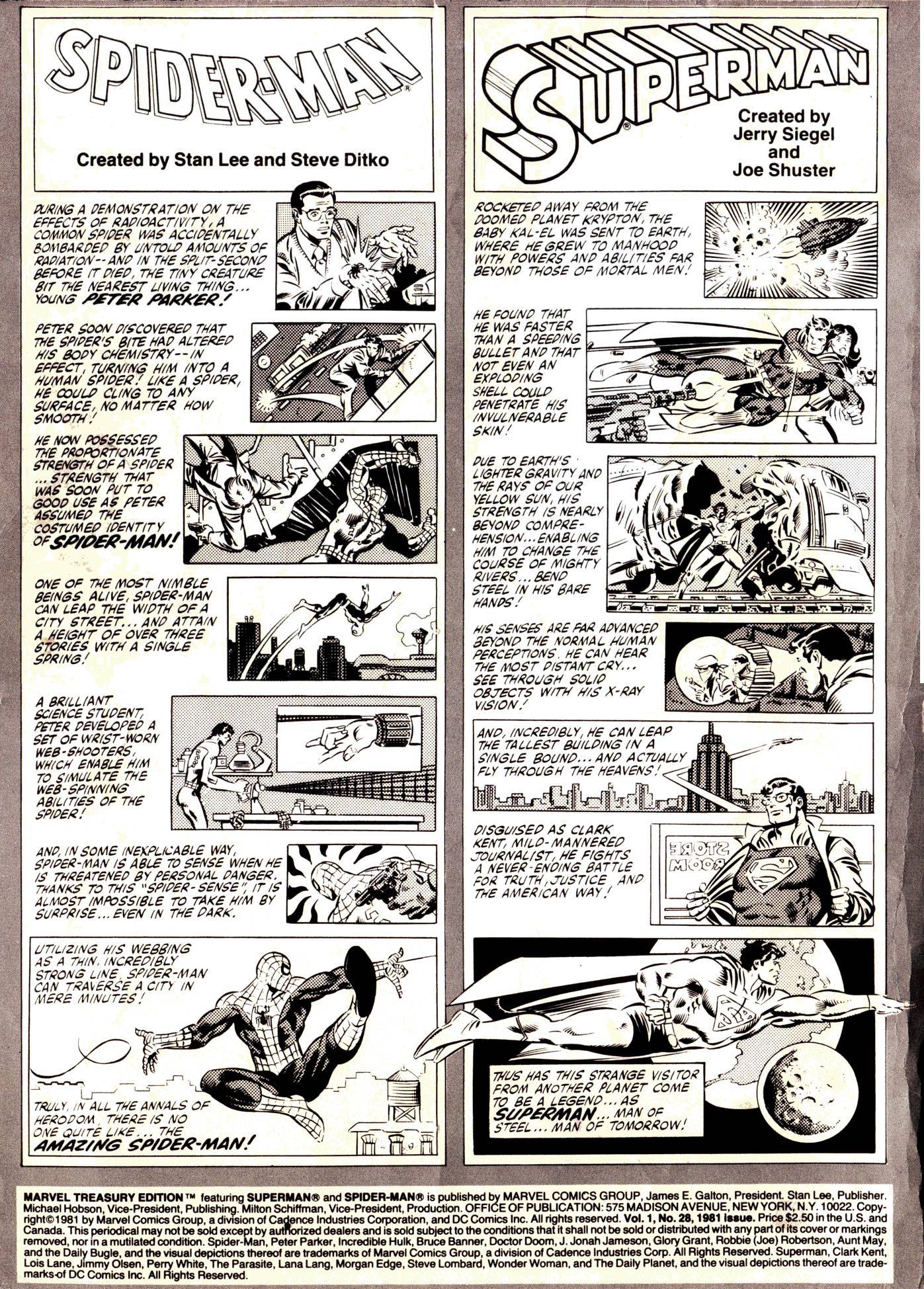
Superman and Spider-Man
I cannot help but assume this was the positive influence of DC finally agreeing to a deal with Siegel and Shuster years earlier to credit them on Superman products, including 1978’s Superman: The Movie. If Marvel didn’t use the more generous attribution, DC would have shown them up, at least in the creator-crediting department.
“The Heroes and the Holocaust!” is credited to Jim Shooter scripting, John Buscema pencilling, and Joe Sinnott inking, along with an army of background embellishers. Plus, Marv Wolfman gets a tip of the hat “for plot suggestions.”
—
Act One: The Set-Up
In 1976, we get extended prologues introducing our main heroes, their arch-nemeses, and supporting casts for the benefit for the 12 readers who have never seen them before. Superman defeats a Luthor-driven robot attacking the city, then goes to Galaxy Communications and foils a Steve Lombard prank on Clark Kent, then defeats Luthor himself. Already we see Andru is telling the story in mind-blowing spreads and splashes wherever he can.
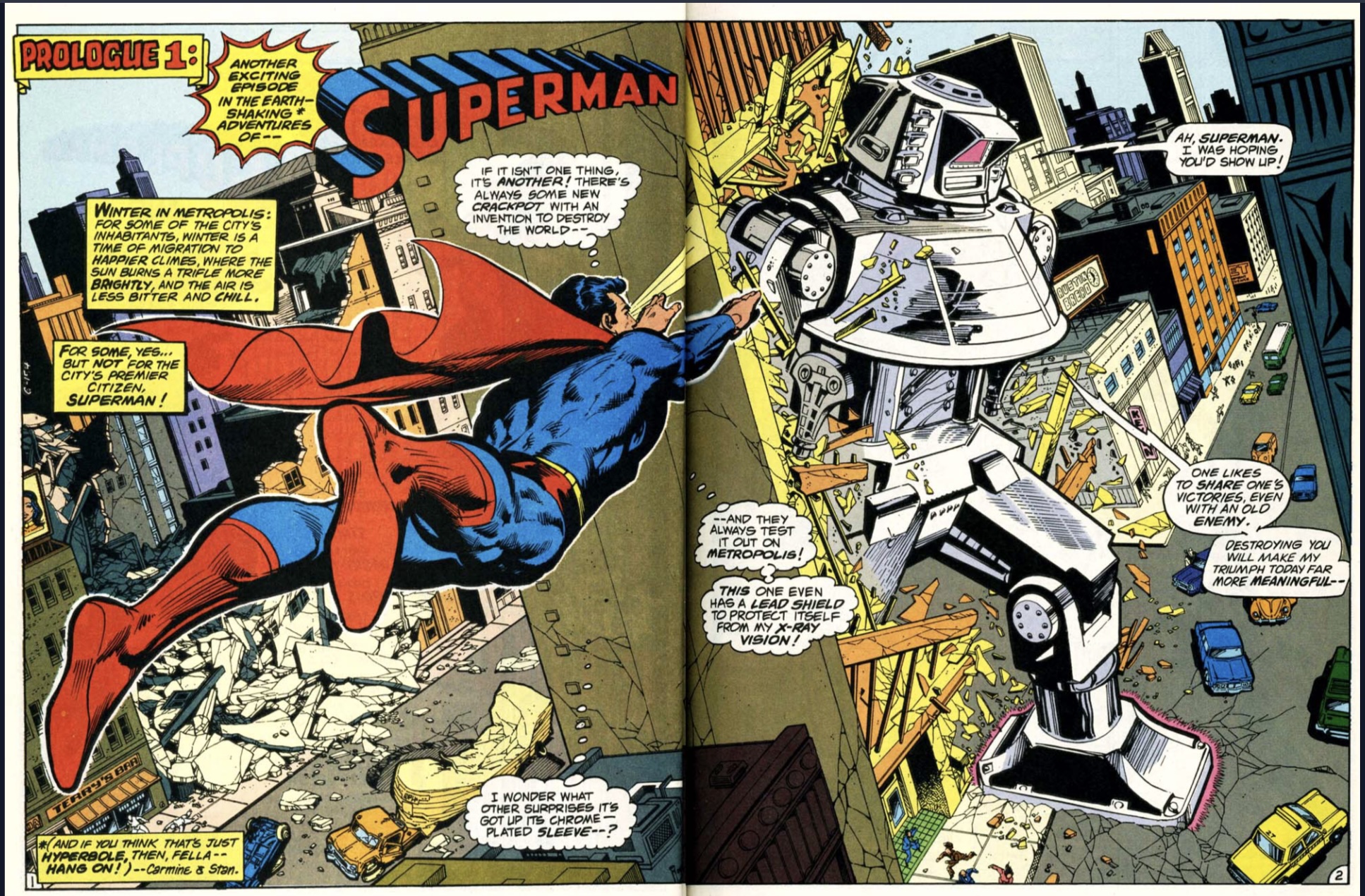
Superman vs. Spider-Man
Meanwhile, in New York, Spider-Man stops Doctor Octopus’ goons from ransacking a museum, and delivers the pictures of it to J. Jonah Jameson as Peter Parker. Jameson then orders The Daily Bugle production staff to run whatever is on Peter’s undeveloped film on the front page — before he or Peter has even looked at it — even though it’s a huge photo of nothing at all.
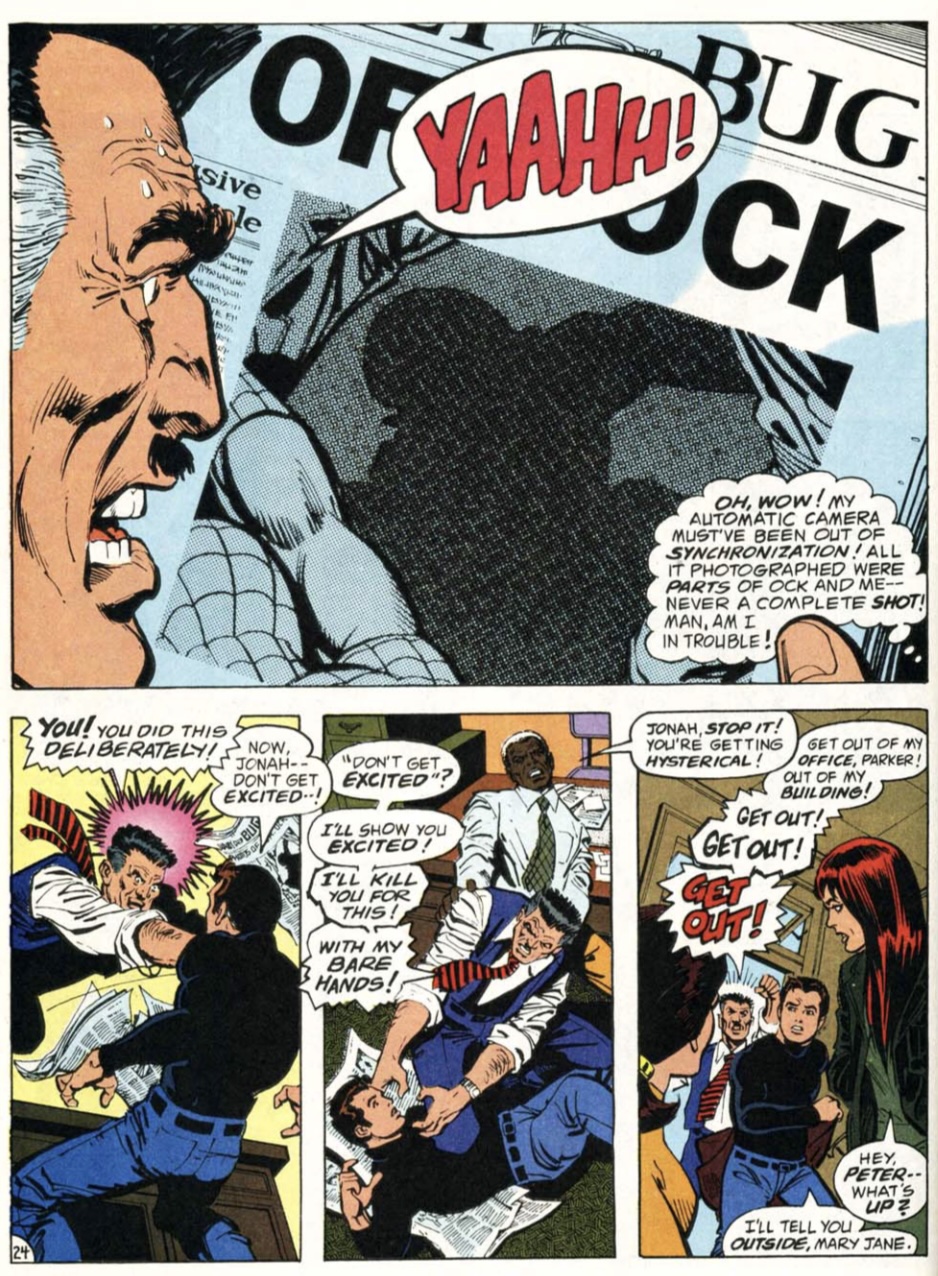
Superman vs. Spider-Man
Look, I know this is just a dumb throwaway gag in a standalone comic untethered from regular continuity, but one of the things that makes JJJ a compelling character is that he is always shown to be, for all his many faults, to be a competent-to-excellent newsman, and the sheer amount of stupidity all these characters show (least of all Peter Parker) for the sake of setting up this lame punchline irritates me. If this was the regular Amazing Spider-Man comic they never would have done this. I am annoyed, people. Annoyed!!!
Spider-Man, like Superman, tracks down his enemy, defeats him, and turns him over to the authorities, and in a shocking display of penal mismanagement, Doc Ock gets imprisoned across the hall from Luthor in the same New Mexico prison.
(I will also say I like that there’s no multidimensional shenanigans to explain these stories; DC’s Metropolis and Marvel’s Manhattan simply co-exist in the same world and we don’t waste any pages “explaining” how Supes and Spidey are just now encountering each other for the first time.)
Lex uses his mad science to break him and Otto out of the clink, and because the bad guys are teaming-up, can a team-up of their usual foes be very far behind? I think not.
Here, in the 1981 splash, we can already see the divergences between these two comics. The first heralded itself as an event (“The Battle of the Century!”); this, on the other hand, is a fairly humdrum splash of Spidey swinging down on some robbers—his back to us no less, no spider-symbol shining from his belt—that could have come out of any random Marvel comic.
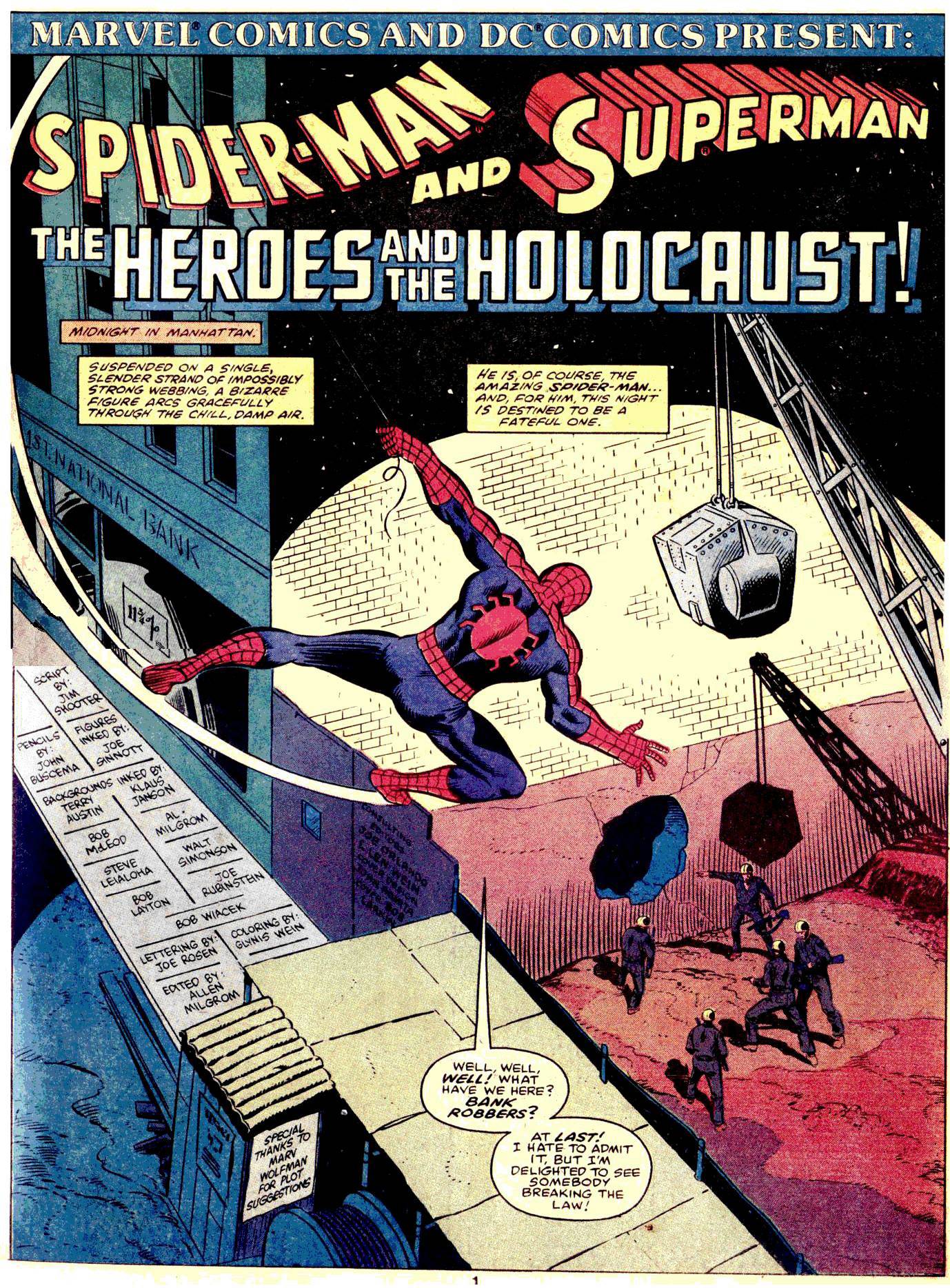
Superman and Spider-Man
The robbers turn out to be working for Dr. Doom. But of course this is just one part of yet another overly complicated plan for world domination: He has used invisible manipulation to send Hulk to the outskirts of Metropolis to just kind of maraud and be menacing; in fact, Metropolis is so used to super-powered menaces Clark Kent decides to just hover around in the Galaxy Communications traffic report helicopter until Jade Jaws breaches Midtown. Kent amusingly interrupts a Galaxy staff meeting by stomping one foot on the ground, causing newshounds to scatter in terror thinking the Hulk has arrived; he uses the distraction for a supply-closet transformation into Superman.
Peter arrives in Metropolis by bus to try and get work at The Daily Planet, J. Jonah Jameson having insulted him one too many times, just in time for the Superman/Hulk fight. He changes into his own red-and-blue union suit and we are off to the races.
—
Act Two: “I Thought You Were a Villain!”
After a “prologue” that encompasses almost the entire first half of the comic, our 1976 edition brings both casts together at “The World News Conference.” This allows Peter to flirt with Lois Lane to the annoyance of Mary Jane, at which point “Superman” shows up and blasts both ladies with his Omega Beams. Peter and Clark observe this, and separately decide to intervene.
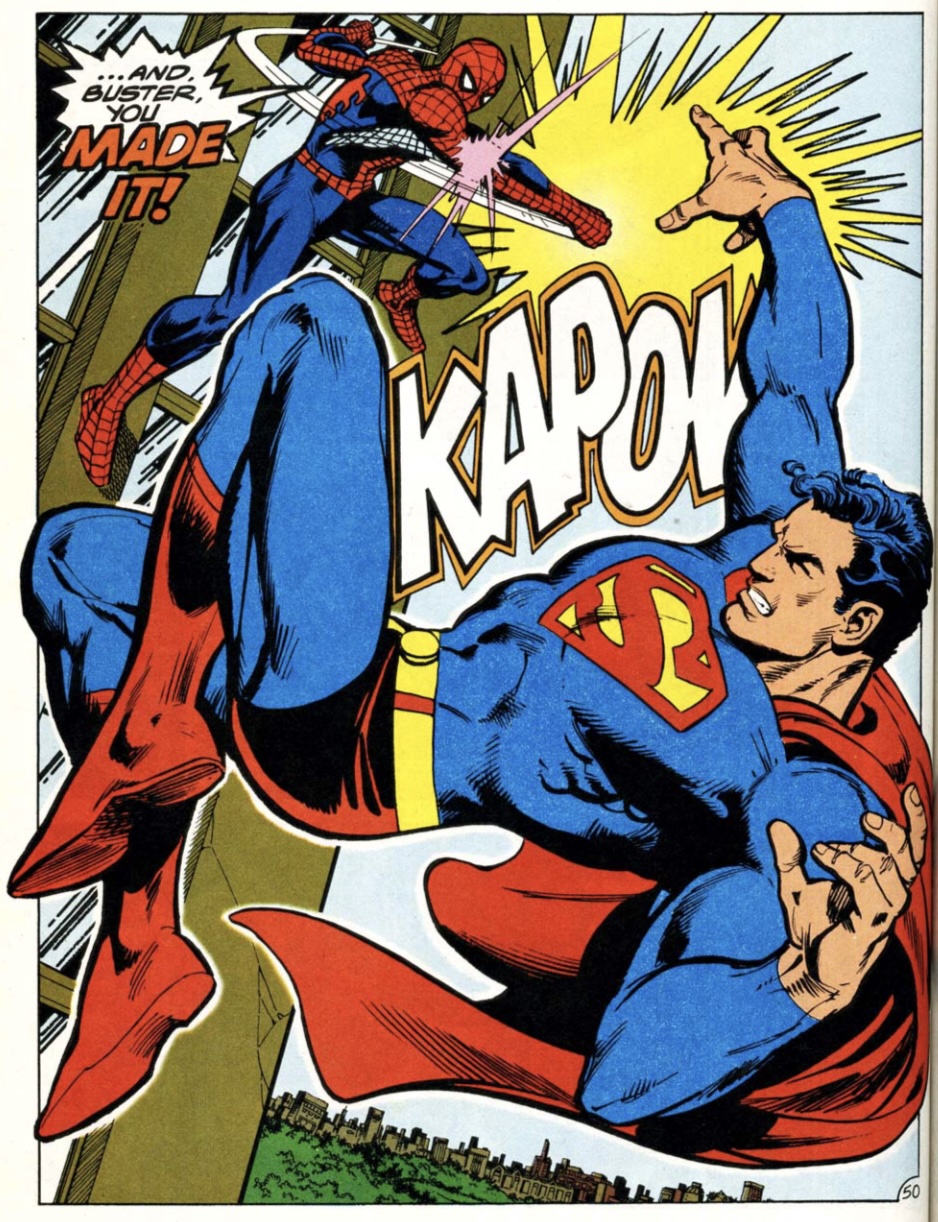
Superman, like every other hero prior to, say, 2005, upon meeting Spider-Man for the first time, assumes Spidey is the crook The Daily Bugle says he is, which is pretty rich since Spidey just saw Supes disintegrate two unarmed women before his eyes. That Supes was Luthor in disguise, and when he sees the two heroes face off he gets the bright idea to zap Spidey with Red Sun Energy to give him a Kryptonian-powered boost that he immediately takes advantage of.
Superman vs. Spider-Man
(See, I was under the impression it was Earth’s yellow sun that gave Kryptonians their powers, not the other way around. Why doesn’t Luthor perpetually bathe himself in red sun radiation so he can always kick Superman’s ass? Does it cause super-sunburns?)
Basically, Superman senses something’s fishy and talks Spider-Man down from the fight after his red sun mojo wears off and he busts his fists pounding Supes’ jaw.
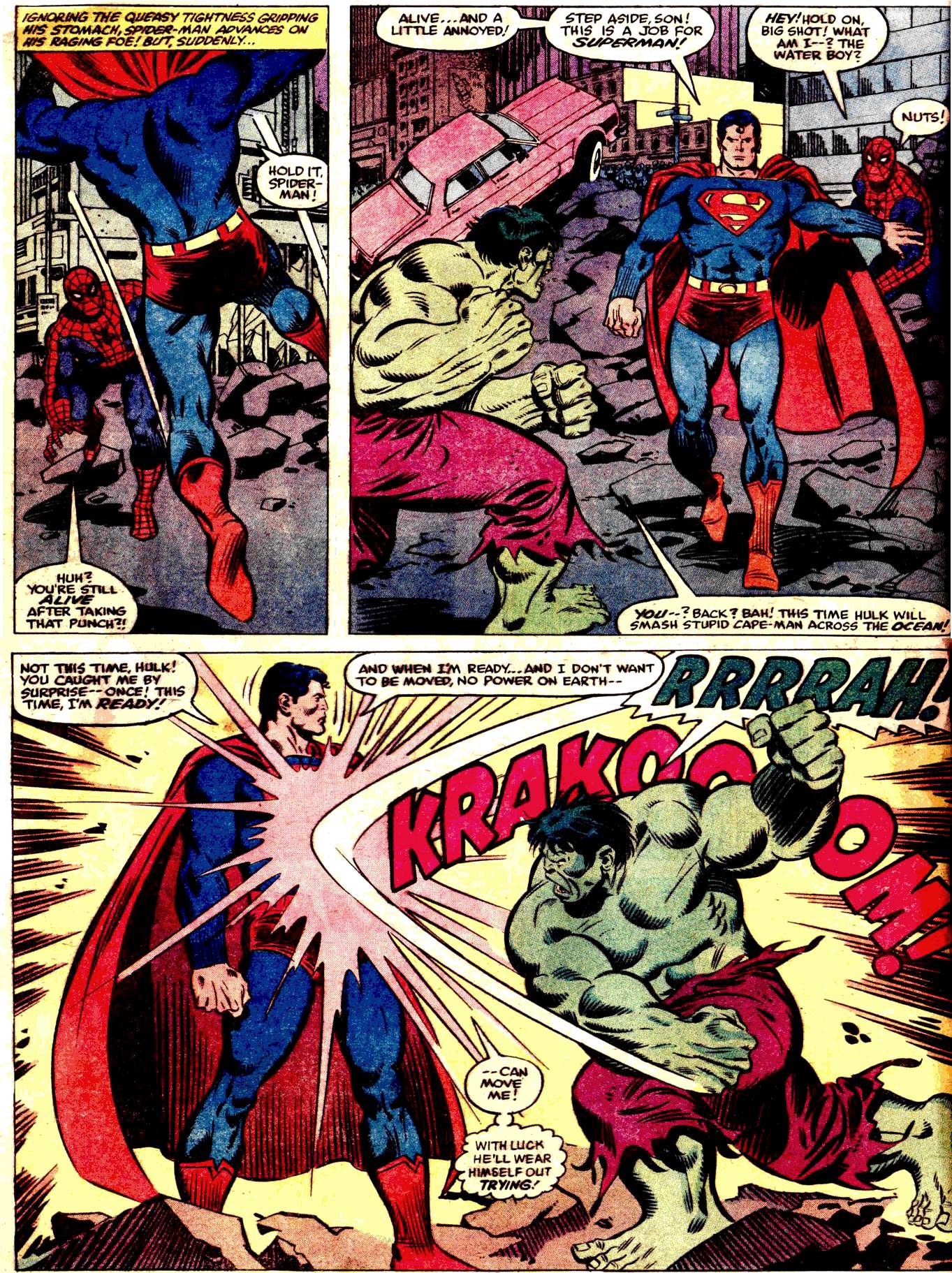
In 1981, the “I thought you were a villain” cop-out isn’t going to work for a second time on these two, but fortunately the Hulk is here to serve as a misunderstood combatant for both heroes. Spider-Man turns out to be totally useless against his frequent sparring partner, for it’s Superman who uses his super-senses to locate and destroy the miniature drone Doom was using to control the monster.
Superman and Spider-Man
After the heroes leave, we learn the method behind Doom’s madness: Hulk’s seemingly random rampage actually freed energy vampire the Parasite from his underground tomb, allowing him to hook up with the Latverian liege.
At this point, the 1981 version does something very clever, which is it has its heroes switch places: Peter Parker befriends peer Jimmy Olsen and he starts selling his photos to Perry White at a rate three times what JJJ paid. Clark Kent goes to New York, first to confront Dr. Doom at the Latverian Embassy about his Metropolis shenanigans—which ol’ Vic weasels out of with his usual “diplomatic immunity” dodge—then he goes and gets a job freelancing for The Daily Bugle so he can stick around New York. Glory Grant has the hots for Kent, and I must say this cross-pollination of casts is what I had the most fun with in either of these comics.
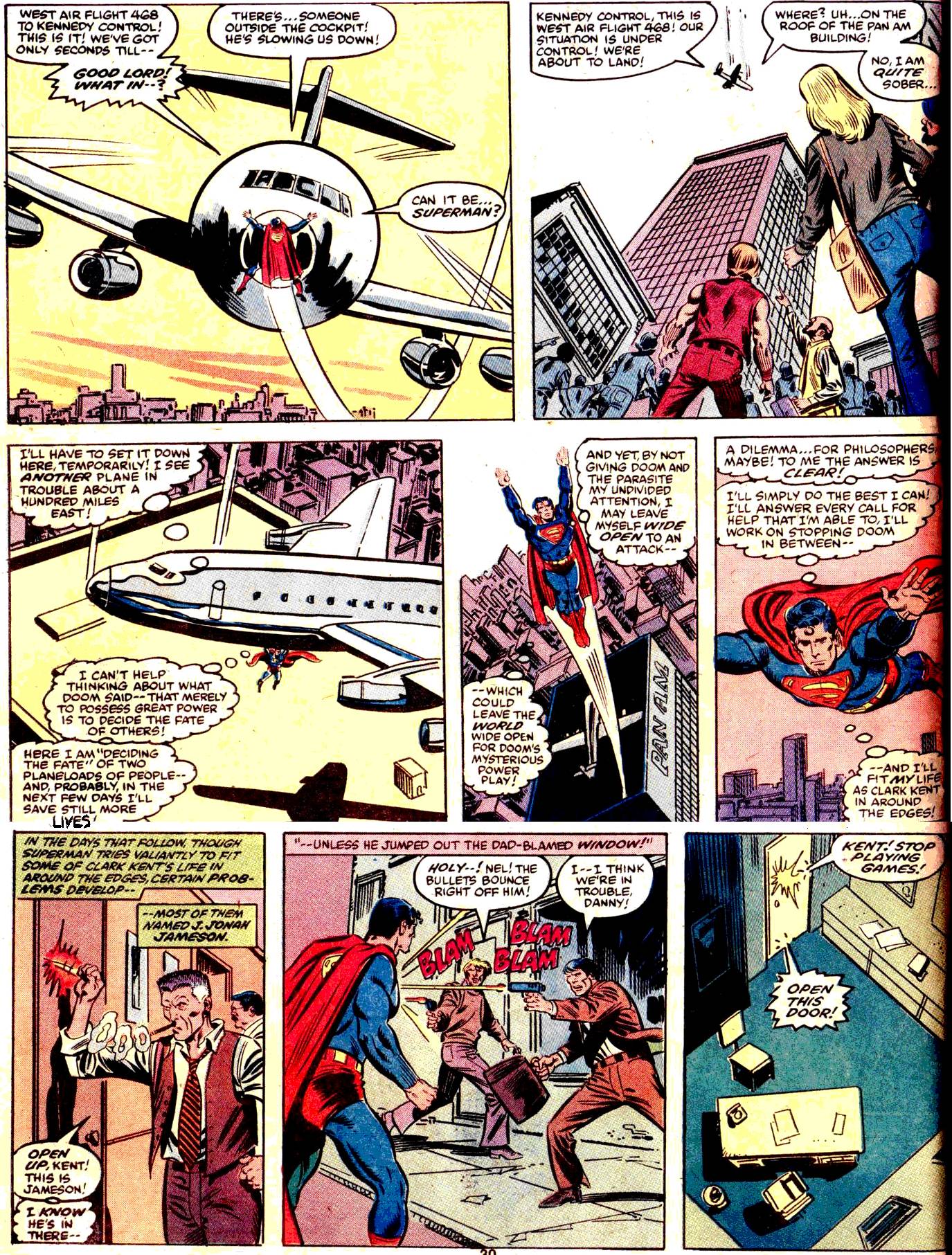
But, on that same page, the big difference between these one-shots is glaringly obvious: In the third panel on an eight-panel page, a jumbo jet plunges directly toward Manhattan, and Superman rather casually stops it and drops it off on a nearby building.
Superman and Spider-Man
As I like to say in my aforementioned course, the key to visual storytelling, in movies as well as in comics, lies in differentiating the relative sizes of objects in space. Put in simpler English, all that means is bigger things are more important than small things. Emphasis signifies emotional weight. The smaller something is, the less it matters in the story. There are numerous permutations of this (such as “bird’s eye shots” and “worm’s eye shots”), but a rather obvious one is demonstrated here.
One of the reasons people complain about superhero comics in general, and Superman specifically, is that they too often render the fantastical ho-hum. A jet crashing to New York City is, as we now know from traumatic experience, a really big deal! To treat it like just another Tuesday lunch hour saps it of all its power, and, here is the important thing for the comic — it saps Superman of all his storytelling power too. If you can’t give events the proper space to breathe relative to their emotional importance, it’s like they never happened in the first place.
Buscema, an all-time favorite artist of mine whose first run on The Avengers and Silver Surfer are nigh close to being perfect comics, made it clear later in his career his own personal disdain for the superhero genre (he vastly preferred the sword-and-sorcery of Conan) and I can’t but help but wonder if that’s what’s fueling this rather perfunctory sequence.
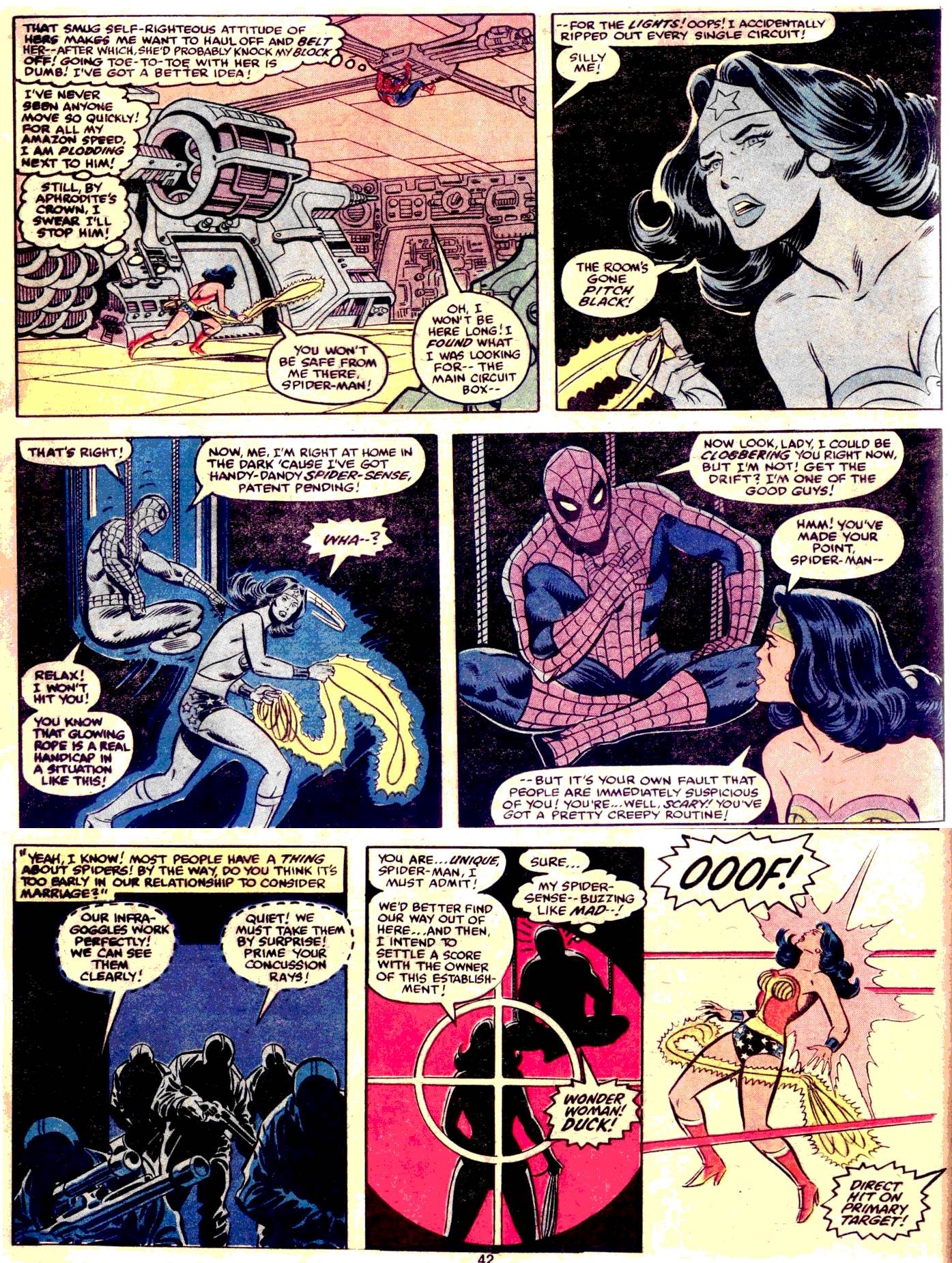
Anyway, our heroes fart around the other’s home city for a bit more, amusingly interacting with each other’s supporting cast (Flash Thompson ripoff Steve Lombard aptly puts a “I Struck Out with Lana Lang” sign on Peter’s back, his reward for which is getting his ass webbed to a chair) until finally Peter’s Spider-Sense leads him to an underground lair where another guest star, Wonder Woman, is being subdued by Dr. Doom’s goons to be lunch for Parasite, though Spidey manages to escape.
Superman and Spider-Man
—
Act Three: A Proper Team-Up
After tracking Luthor and Ock to an abandoned rail yard, the 1976 heroes see their girlfriends are still alive, just held hostage in an unknown location. The villains are holograms, forcing them to combine their Science Powers and figure out their signal is coming from Mount Kilimanjaro, of all places.
And here things get weird. Our heroes chat with the local Masai tribe and learn that some of their warriors disappeared near the peak. They discover a hidden lair, unleashing a mighty Masai warrior who has been hopped up on red sun goofballs. Inside the mountain they find a launch silo that has catapulted our villains into space.
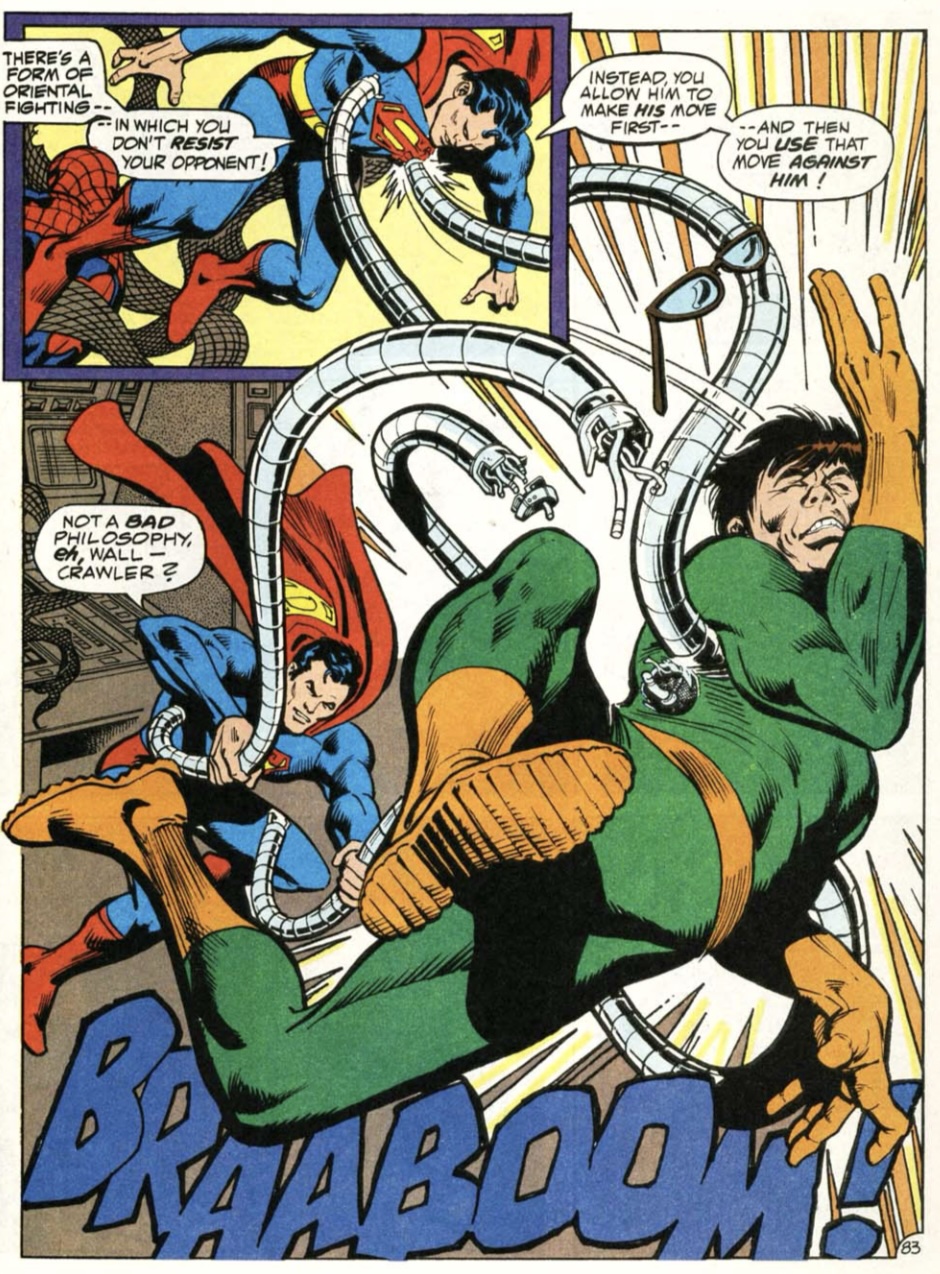
Luthor and Octopus, with their lady hostages in tow, take over the satellite headquarters of the Injustice Gang, which they use as a staging ground to take over “Com Lab,” a communications satellite. They’re going to use the lasers on the satellite to wreak havoc on Earth unless the USA gives them 10 billion dollars (or approximately 1.2 percent of Elon Musk’s current net worth). The fight goes poorly until the heroes realize they have to work as a team, leading to a particularly awesome Andru splash.
Superman vs. Spider-Man
Frustrated, Luthor declares screw it, he’s going to blow up Earth instead of extort it. Doctor Octopus objects to this on the perfectly reasonable grounds that Earth is where all his stuff is. Ock foils Luthor’s plan long enough for Spidey to knock him out and for Supes to turn back a tsunami threatening the US’s Eastern Seaboard. Clark and Lois and Peter and MJ walk off arm in arm, and everyone goes home happy.
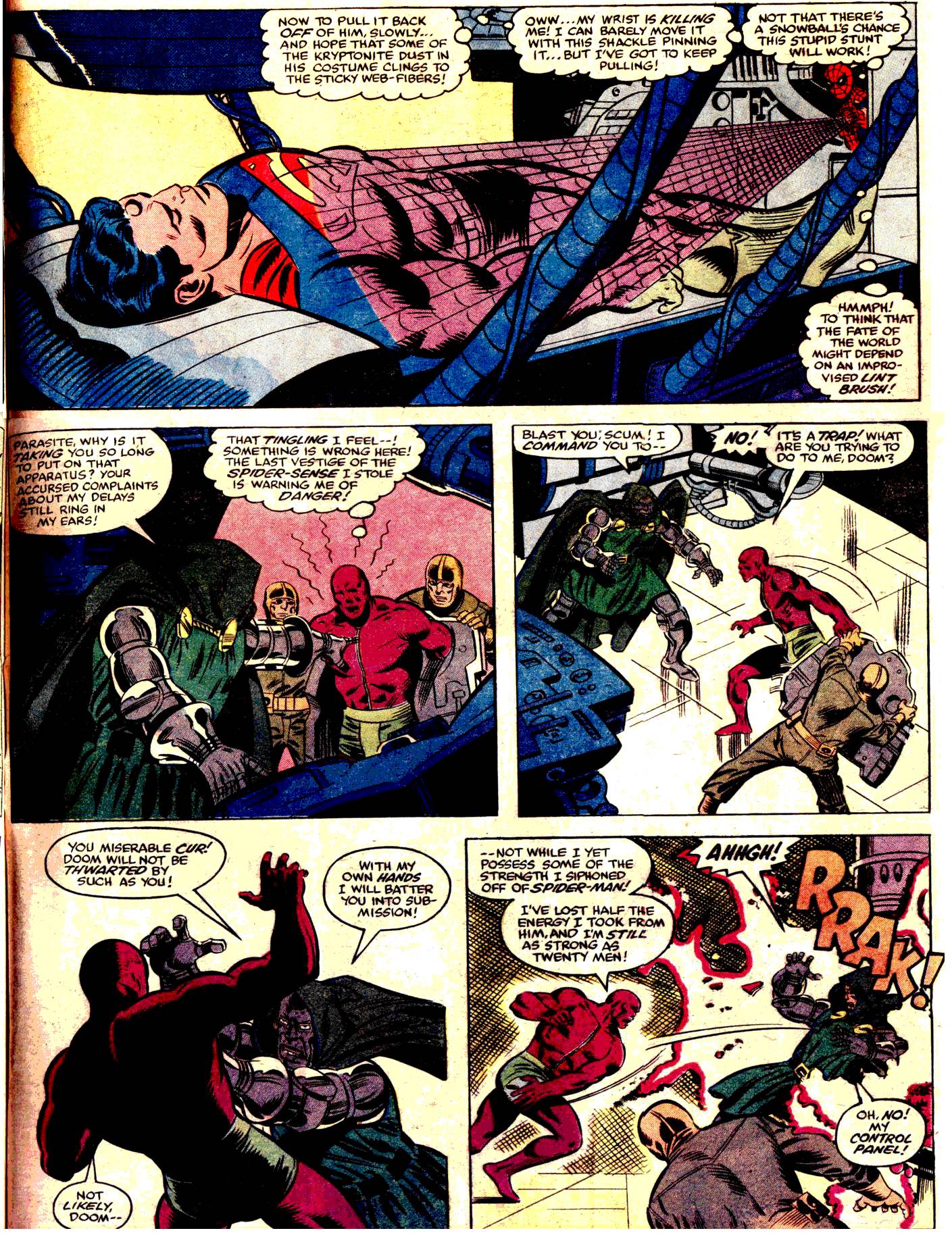
In 1981, Doom reveals his master plan to Parasite: using underground “Omega Stations” he’s going to destroy all the fossil and atomic fuels on Earth, making our beloved homeworld ripe for a Latverian takeover. Spidey and Supes team up to put a kibosh on this, even if being around the Man of Steel gives Peter serious imposter syndrome in the hero department.
The duo trashes a giant robot but Doom has some handy kryptonite lying around because of course he does and Parasite zaps Spider-Man unconscious. Amusingly, Parasite has absorbed Peter’s spider-sense as well, so when Doom tries to double cross him—because of course he does—his Para-Senses tingle and the villain rebels. In yet another clever bit, Spidey uses his webbing to drag Kryptonite dust off Superman to help free him. Doom flees to the safety of the Latverian Consulate while Peter and Clark return to their respective cities and everyone goes home happy.
Superman and Spider-Man
—
The Final Verdict
This is a tough one for me. Those of you who endured—uh, I mean, enjoyed—my 12-part Death Match pitting Crisis on Infinite Earths against Marvel Super Heroes Secret Wars know my fondness for Jim Shooter’s writing. Conway’s story in the first book is kind of by-the-numbers superhero stuff with a weird African tangent, and it’s the little bits in the Shooter story with the cross-pollination of the two franchises that I most got a kick out of.
But!! I have a Code of Ethics to follow here and I have to be impartial. There’s almost too much story in the second book, which leads to a lot of nine-panel grids and other economical layouts from Buscema. Andru, however, just brings the thunder with all his mind-blowing splash pages and spreads, really making the first book feel like the history-making event it truly is.
So I must declare the winner to be:
SUPERMAN VS. SPIDER-MAN (1976)
’Til next time, Fight Fans!
—
MORE
— The Complete COMIC BOOK DEATH MATCH Index. Click here.
— COMIC BOOK DEATH MATCH: CRISIS ON INFINITE EARTHS vs. MARVEL SUPER HEROES SECRET WARS. Click here.
—
Comics writer/playwright/bon vivant Fred Van Lente is a funny guy. Sign up for updates on his upcoming projects and check out the trailer for his comics-writing course at his web site, fredvanlente.com.
