MARSHALL ROGERS’ Covers Get Glorious Golden Age Revamp
BATMAN WEEK: These great covers just got better – thanks to artist Sandy Jarrell…
The Genius of Marshall Rogers, by KELLEY JONES
BATMAN WEEK: The enduring bond between an artist and inspiration…
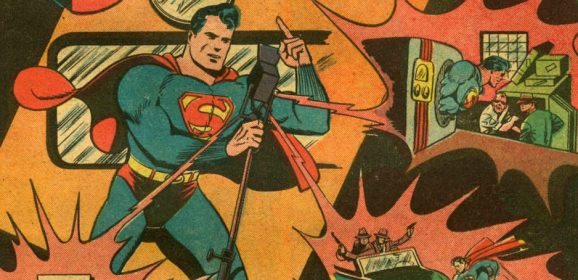
FOUR COLOR RADIO: Old-time radio programs — and their comics connections… By PETER BOSCH Welcome to my inner sanctum for another adventure in time travel, back to when radio was king in the home. What TV is today, radio was in the 1930s and ’40s. And — just like today — the airwaves were filled with programs with ties to comics, pulps, and science fiction. Since the above issue of Superman #39 appeared on the newsstands January 2, 1946 — 80 years ago — now would be a great time to discuss The Adventures of Superman radio show. After some trial episodes in 1938, the program ran from February 12, 1940, to March 1, 1951. It started out with three shows per week, then from 1943 to 1947, it was five. From there, it was back to three times a week, and two times, and even one show per week near the end. Here are 13 THINGS you may not know about the program: 1. If anyone ever asks you who played Superman more times than any other actor, be sure to tell them it was Clayton “Bud” Collyer (born Clayton Johnson Heermance Jr.). On radio – as well as in the cartoons of the 1940s and the 1960s – he was the voice of Superman and Clark Kent approximately 2,000 times. And though he was very hesitant to do the show in the beginning, his lengthy career as Superman and as the host of the TV game show To Tell the Truth became his well-deserved legacy. (On old-time radio, he also played Pat Ryan on Terry and the Pirates.) In 1950, the roles of Superman/Clark Kent were taken over by Michael Fitzmaurice, who stayed until the end of the program. — 2. There were three radio actresses who played Lois Lane: Rolly Bester, Helen Choate, and Joan Alexander. (Trivia time: Rolly’s husband, Alfred Bester, wrote Golden Age comic book adventures of Green Lantern, Starman, and Captain Marvel. He co-created Solomon Grundy as well as updated Alan Scott’s Green Lantern oath to, “In brightest day, in blackest night, no evil shall escape my sight. Let those who worship evil’s might, beware my power – Green Lantern’s light!” He was also a noted science-fiction writer.) And many of us remember Jackson Beck as the narrator of various DC TV cartoons...
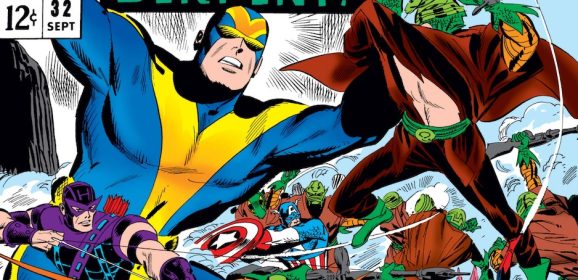
A BIRTHDAY TRIBUTE to a comics workhorse… By PAUL KUPPERBERG For every comic book Mount Rushmore, there’s a face just out of frame, quietly doing the heavy lifting while flashier names soak up the spotlight. In Marvel Comics’ formative years, that face belonged to Don Heck (January 2, 1929 – February 23, 1995), to my mind the most overlooked of the original Marvel artists working alongside Jack Kirby and Steve Ditko. Heck got his start working in the production department at Harvey Comics before following fellow employee Allen Hardy over to newly formed publisher Comic Media, where he produced his first work for comics, the cover and an 8-page story for War Fury #1 (September 1952). He freelanced for a variety of publishers, including Quality and Hillman, before arriving at Marvel (then Atlas) in 1954 and he would stay through the company’s explosive Silver Age growth, proving his versatility by working across an impressive range of genres. Don drew everything the company put in front of him: crime stories with hard, unsentimental edges; war tales that emphasized mood and human cost over spectacle; Westerns populated by weary lawmen and moral gray areas; and romance comics that required a deft touch with facial expression and body language. While Kirby thundered and Ditko brooded, Heck’s work was clean and clear — with distinctive characters, storytelling with expressive figures, and an intuitive sense of pacing. And while it was Jack Kirby who drew the cover to Tales of Suspense #39 (March 1963) and designed the gray armor that introduced Iron Man to the world, it was Don who “created the look of the characters, like Tony Stark and his secretary Pepper Potts,” according to the artist in Les Daniels’ Marvel: Five Fabulous Decades of the World’s Greatest Comics (Abrams, 1991). I liked Don Heck’s work in those early Marvel years. He wasn’t explosive like Kirby or idiosyncratic like Ditko, but his style was distinctive and solid, and he finally cemented his place in the Marvel Universe when he took over as penciller on The Avengers, beginning with the ninth issue (October 1964). He was all over that universe across the 1960s: In addition to Iron Man and The Avengers, he did the Ant-Man strip in Tales to Astonish; The X-Men, The Amazing Spider-Man, and Captain Marvel, as well as an endless stream...
BATMAN WEEK: These great covers just got better – thanks to artist Sandy Jarrell…
BATMAN WEEK: The enduring bond between an artist and inspiration…